
Ritual-PM by Ambrosia Ingredients, Side Effects and Drug Interactions
Dietary Supplement Capsule Botanical With Nutrients
UPC 6 02573 98885 5 Match it to the barcode on your bottle

Medically reviewed by Dr. Brian Staiger, PharmD, BCPS
Also reviewed by the HelloPharmacist Editorial Team
Updated Details about this page
- Label on file from the NIH Dietary Supplement Label Database, dated Sep 25, 2025.
- The interaction, evidence and safety records come from the Natural Medicines database, which we license, read against this label by our own system; the pharmacy team’s sections are written from those records.
- Dr. Brian Staiger, PharmD, BCPS, is a clinical pharmacist and pharmacotherapy specialist.
- Editorial policy Our sources
AI is used only to summarize verified clinical information, never the open internet. Our AI policy
Summary: The HelloPharmacist Team’s Take
- Form
- Capsule
- Serving Size
- 2 Capsules
- Servings
- 30 per container
- Container Holds
- 60 Capsules
What’s in it, whether it interacts with your drugs, its side effects, whether it works, and what our pharmacists would want you to know before you start it.
- What is Ritual-PM?A supplement from Ambrosia with five active ingredients, in capsule form.
- Active Ingredients 1 mineral, 3 plant ingredients and 1 other: Magnesium 100 mgMagnesium Lysinate Glycinate Chelate 1000 mgSensoril 125 mgAffron 28 mgCitrus Sinensis Fruit Extract 25 mg Five active ingredients. Each one can interact with drugs or cause side effects on its own, so we check every one. The full Supplement Facts
- Drug Interactions 1,544 drugs have a documented interaction with this supplement; the most serious is rated major. Of those, 1,092 are single drugs and 452 are combination products (two or more drugs in one), each listed under its own name. Ask your pharmacist first if you take a drug in any of these categories, the most serious of the 33 on record:
- Major · 47 drugs
- Levodopa/
Carbidopa (Sinemet) Major · 6 drugs - Celiprolol (Celicard)Major · 1 drug
- Ivermectin (Stromectol, others)Major · 1 drug
- Possible Side EffectsNausea 3 ingredientsDiarrhea 2 ingredientsHeadache 2 ingredientsUpset stomachDry mouthStomach cramping +9 moreCombined from the ingredients we have records for, Magnesium, Ashwagandha and Saffron. Not studied in this exact product.
- Well documented Why
Does Ritual-PM work?
What It Is Marketed For
Sleep support and stress and anxiety relief
From the claims on the product’s label.
The Closest Use the Research Grades
Ashwagandha
Some studies support it, but the evidence isn’t conclusive.
Its ingredients have stronger research for other uses:
- Magnesium
- Magnesium
- Ashwagandha
- Ashwagandha
- Magnesium
These grades are for each ingredient, not this exact product, and never a promise it will work for you.
And 4 more graded uses, in what the research says- Full Why
- AllergensNone of its ingredient names point to a major food allergen, and the label text we have carries no allergen statement
- Barcode (UPC)6 02573 98885 5Match it to the barcode on your bottle to be sure this is your product. Not your product? Search for it here
Who Might Consider It
- People looking for sleep support and stress and anxiety relief, which is what it is marketed for. The closest use the research grades is generalized anxiety disorder (GAD), rated Possibly Effective.
- People who want it for constipation, dyspepsia, insomnia, stress or another graded use: the other uses with research behind them. See each grade
- Ritual-PM may suit adults looking for a combination of magnesium, ashwagandha, and saffron, but it is not right for everyone.
Who Should Be Careful
- If you take levodopa/carbidopa, blood thinners, diabetes medicines, sedatives, blood pressure drugs, or thyroid hormone, or if you have kidney disease, are pregnant, or are breastfeeding, talk it over with your own doctor or pharmacist before starting.
More Before You Take It Show both answersHide Pregnancy and Breastfeeding The Label’s Directions
-
Pregnant or breastfeeding?
- Pregnancy Saffron
- ! When used orally in amounts exceeding those commonly found in foods.
- Breastfeeding Saffron
- Insufficient reliable information available; avoid using.
- Pregnancy and Breastfeeding Magnesium
- ! When used orally in excessive doses.
- Pregnancy Ashwagandha
- There is insufficient reliable information available about the safety of oral ashwagandha when used during pregnancy.
- Breastfeeding Ashwagandha
- Insufficient reliable information available; avoid using.
-
How does the label say to take it?
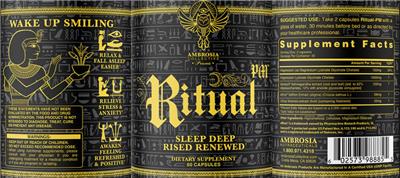
“Suggested use: Take 2 capsules Ritual-PM with a glass of water, 30 minutes before bed or as directed by your healthcare professional.”
The maker’s words. Your pharmacist or doctor may advise differently.
Everything the label says
From the label dated Sep 25, 2025: all five of its active ingredients were checked against our records. A summary of what is known, not a grade or a test of the product. How these ratings are computed
Ask Anything About This Supplement
Name a drug you take, or ask about side effects, ingredients or pregnancy.
AI answers come from this label and our own records, never the open internet. AI can make mistakes, so always check with your doctor or pharmacist. How we use AI
Ask the Pharmacist
A licensed pharmacist will answer your question by email — free, as soon as they can.
Got it — thank you!
A licensed pharmacist will answer as soon as they can. Keep an eye on your email (worth checking spam, just in case).
What’s Inside Ritual-PM by Ambrosia
Five Active Ingredients, Each Checked on Its Own
A supplement is often several ingredients in one bottle, and each one can interact with drugs or cause side effects on its own. We check every one of them against our records.
- MagnesiumDrug interactions on record, most serious: Major
- Magnesium Lysinate Glycinate ChelateDrug interactions on record, most serious: Major
- SensorilDrug interactions on record, most serious: Moderate
- AffronDrug interactions on record, most serious: Moderate
- Citrus Sinensis Fruit ExtractDrug interactions on record, most serious: Major
Why this rating?
The label gives an exact amount for every one of its five active ingredients, so you know how much of each you get in each serving. This rates what the label tells you, not the quality of the product.
Supplement Facts
| Amount Per Serving | % Daily Value | |
|---|---|---|
| Magnesium | 100 mg | 24% |
| Magnesium Lysinate Glycinate Chelate | 1000 mg | † |
| Sensoril | 125 mg | † |
| Affron | 28 mg | † |
| Citrus Sinensis Fruit Extract | 25 mg | † |
Other ingredients: Hypromellose, Cellulose, Magnesium Stearate
† Daily Value not established.
Daily Values for adults and children 4 or more years of age.
As the label prints it, from the NIH Dietary Supplement Label Database.
Each Ingredient and Its Drug Interactions
Tap one for more about it and its full guide. A drug can interact with this supplement through any one of them.
Ritual-PM contains five active ingredients: magnesium, magnesium lysinate glycinate chelate, saffron (Affron), sweet orange fruit extract (Citrus sinensis), and ashwagandha (Sensoril).
- The magnesium forms are the ones with rated uses for constipation, dyspepsia, low magnesium levels (hypomagnesemia), and pre-eclampsia, while the ashwagandha is rated for insomnia, stress, and generalized anxiety disorder.
-
Magnesium 100 mg Interacts with 298 drugs
Form on the label: Magnesium Lysinate Glycinate Chelate
Magnesium is an essential mineral your body needs for muscles, nerves, blood pressure, and many other functions, and supplements are useful for preventing or correcting deficiency.
- Some other uses, like easing constipation or preventing migraines, have reasonable support, while uses for sleep and anxiety are less proven.
- It is generally safe for most healthy people at recommended amounts, but talk to your pharmacist or doctor before starting, especially if you have kidney problems.
The full Magnesium guide: uses, dosage and safety Every Magnesium drug interaction
-
Magnesium Lysinate Glycinate Chelate 1000 mg Interacts with 298 drugs
Magnesium is an essential mineral your body needs for muscles, nerves, blood pressure, and many other functions, and supplements are useful for preventing or correcting deficiency.
- Some other uses, like easing constipation or preventing migraines, have reasonable support, while uses for sleep and anxiety are less proven.
- It is generally safe for most healthy people at recommended amounts, but talk to your pharmacist or doctor before starting, especially if you have kidney problems.
The full Magnesium guide: uses, dosage and safety Every Magnesium drug interaction
-
Sensoril 125 mg Interacts with 1,373 drugs
Form on the label: Ashwagandha Leaf, Root Extract
Ashwagandha is an Ayurvedic herb most often taken to help with stress, anxiety, and sleep, and some small studies suggest it may help, though the evidence is still limited.
- It is generally well tolerated for short-term use in healthy adults, but it should be avoided in pregnancy and used cautiously by people with thyroid or liver problems.
- Talk with your pharmacist or doctor before starting it.
The full Ashwagandha guide: uses, dosage and safety Every Ashwagandha drug interaction
-
Affron 28 mg Interacts with 612 drugs
Form on the label: Saffron Stigma Extract
Saffron is a costly spice that has shown promise in early studies for mild-to-moderate depression and some mood and PMS symptoms, but most research uses small trials, so results are not definitive.
- It is generally well tolerated in food and small supplement amounts, but high doses can be harmful and it should be avoided in pregnancy.
- Talk to your pharmacist or doctor before using saffron supplements.
The full Saffron guide: uses, dosage and safety Every Saffron drug interaction
-
Citrus Sinensis Fruit Extract 25 mg Interacts with 247 drugs
Form on the label: Nobiletin
Sweet orange is a common citrus fruit that is a good source of vitamin C, fiber, and antioxidants, and is enjoyed as a food worldwide.
- Its peel and essential oil are used in aromatherapy and traditional remedies, but strong scientific proof for most medicinal claims is limited.
- The fruit and juice are safe for most people as food, while concentrated oils and extracts deserve more caution.
The full Sweet Orange guide: uses, dosage and safety Every Sweet Orange drug interaction
Other Ingredients (Inactive)
The capsule or tablet itself, fillers, coatings and flavors. Not part of the drug interaction check; the allergen check below reads them.
- Hypromellose
- Cellulose
- Magnesium Stearate
Allergens in Ritual-PM
None of its ingredient names point to a major food allergen, and the label text we have carries no allergen statement.
Not named in the ingredients
- Milk
- Egg
- Fish
- Shellfish
- Tree nuts
- Peanuts
- Wheat or other gluten grains
- Soy
- Sesame
From the label text and ingredient names on file; we do not test products. With a serious allergy, check your bottle and ask the maker or your pharmacist.
What the Label Says
The maker’s own words, from the label. We do not verify or endorse them.
- Formulation
-
“Wake up smiling Relax & fall asleep easier Relieve stress and anxiety Awaken feeling refreshed & positive”
“Sleep deep Rised renewed”
“All Ambrosia products are manufactured in a certified cGMP facility”
- General statements
-
“Ambrosia Collective presents Ritual-PM”
- FDA Statement of Identity
-
“Dietary Supplement”
- Brand IP Statement(s)
-
“Affron is a trademark owned by Pharmactive Biotech Products, SL Sensoril is protected under US Patent Nos. 6,153,198 and 6,713,092 and is a registered trademark of Natreon, Inc.”
The Ritual-PM Label on File
The label scan on file at the NIH Dietary Supplement Label Database, dated September 2025. Always read the label on the bottle you have.
Product Facts
- Brand
- Ambrosia
- Barcode (UPC)
- 602573988855
- Net contents
- 60 Capsules
- Market status
- On market
- Date entered into DSLD
- Sep 25, 2025
- DSLD ID
- 334103
- Product type
- Botanical With Nutrients
- Supplement form
- Capsule
- Dietary claims / uses
- All Other, Structure/Function
- Intended target group(s)
- Adult (18 - 50 Years)
Is this label outdated? Report a formula or label change and our pharmacy team will review it.
Ritual-PM by Ambrosia Side Effects
Why this rating?
We look for three kinds of safety information on each ingredient: side effects reported in studies, a pregnancy and breastfeeding rating, and a safety write-up from our pharmacy team. All three are on file for each of the four ingredients we could check.
So this rates how much is known, not whether Ritual-PM is right for you.
Reported with four of its ingredients
- Most often
- Nausea, diarrhea, headache, upset stomach, dry mouth and stomach cramping
- !Rare but serious
- Liver problems, possible changes in thyroid function and hepatic encephalopathy See details
HelloPharmacist Team Summary: Ritual-PM by Ambrosia Side Effects
Ritual-PM is likely to cause mild digestive effects first, such as loose stools, stomach cramping, bloating, and nausea, mostly from its magnesium.
- Drowsiness from ashwagandha has also been reported, so see how it affects you before driving or doing anything that needs full alertness.
- The rare but serious reactions worth knowing about are an allergic reaction linked to saffron and liver problems linked to ashwagandha, and if you notice signs of either, call your doctor right away.
- If you have kidney disease, a thyroid condition, bipolar disorder, low blood pressure, or an autoimmune condition, or if you are pregnant or breastfeeding, talk with your own doctor or pharmacist before starting.
Side Effects, Ingredient by Ingredient
A supplement’s side effects come from its ingredients. Here is what is reported with each one.
Magnesium
Most reported
- Diarrhea
- Nausea
- Stomach cramping
- Bloating
Ashwagandha
Most reported
- Upset stomach, nausea, or diarrhea
- Drowsiness or sleepiness
- Headache
Saffron
Most reported
- Nausea
- Dry mouth
- Headache
- Dizziness
Sweet Orange has side-effect reports, but no list of the most common ones. Read them in the Sweet Orange guide
Ritual-PM Warnings: Who Should Be Careful
Ritual-PM has five active ingredients, and each can carry warnings of its own. We checked all five, and each warning below names the ingredient it comes from. If any of these apply to you, talk to your doctor or pharmacist before you start it.
- Magnesium3 warnings below
- Ashwagandha2 warnings below
- Saffron2 warnings below
- Sweet Orange2 warnings below
-
Bleeding Problems or Surgery
- AshwagandhaPeople with autoimmune conditions or those scheduled for surgery should also check with their doctor first.
- SaffronThose with low blood pressure or bleeding disorders should also check with a healthcare provider first.
-
Kidney Disease or Kidney Stones
- MagnesiumThe biggest safety concern is in people with kidney disease, because damaged kidneys cannot remove extra magnesium, which can build up to dangerous levels.
- MagnesiumIf you have kidney problems, do not take magnesium supplements unless your doctor tells you to.
-
Heart Conditions
- MagnesiumPeople with heart conduction problems or certain bowel conditions should also be cautious.
-
Stomach or Bowel Problems
- Sweet OrangePeople with citrus allergies, acid reflux, or sensitive stomachs may want to limit acidic citrus.
-
Thyroid Conditions
- AshwagandhaUse caution if you have a thyroid condition, since ashwagandha may affect thyroid hormone levels.
-
Mental Health Conditions
- SaffronPeople with bipolar disorder should be cautious, since saffron may affect mood.
-
Other Cautions
- Sweet OrangeOrange essential oil is for external or aromatherapy use and should not be swallowed unless a qualified professional advises it.
-
What the Label Warns
- “Warnings: Keep out of reach of children.”
- “Do not exceed recommended dose.”
- “When using nutritional supplements, please consult with your physician if you are undergoing treatment for a medical condition or if you are pregnant or lactating.”
The maker’s wording, from the product label.
-
Pregnant or Breastfeeding
Each ingredient’s rating for pregnancy and for breastfeeding, and what it covers.
Pregnancy
-
When used orally in amounts exceeding those commonly found in foods.
Larger amounts of saffron have uterine stimulant and abortifacient effects; avoid using.
Breastfeeding
-
Insufficient reliable information available; avoid using.
Pregnancy and Breastfeeding The record rates both the same
-
When used orally and appropriately.
Magnesium is safe for those pregnant and breast-feeding when used in doses below the tolerable upper intake level (UL) of 350 mg daily.
-
When used orally in excessive doses.
Tell patients to avoid exceeding the tolerable upper intake level (UL) of 350 mg daily.
Taking magnesium orally in higher doses can cause diarrhea.
2 more ratings for Magnesium used another way
This supplement is taken by mouth. These ratings are for Magnesium given another way.
-
When prescription magnesium sulfate is given intramuscularly and intravenously prior to delivery for up to 5 days.
However, due to potential adverse effects associated with intravenous and intramuscular magnesium, use during pregnancy is limited to patients with specific conditions such as severe pre-eclampsia or eclampsia.
5 more points on this rating
- There is some evidence that intravenous magnesium can increase fetal mortality and adversely affect neurological and skeletal development.
- However, a more recent analysis of clinical research shows that increased risk of fetal mortality seems to occur only in the studies where antenatal magnesium is used for tocolysis and not for fetal neuroprotection or pre-eclampsia/eclampsia.
- Furthermore, antenatal magnesium does not seem to be associated with increased risk of necrotizing enterocolitis in preterm infants.
- There is also concern that magnesium increases the risk of maternal adverse events.
- A meta-analysis of clinical research shows that magnesium sulfate might increase the risk of maternal adverse events, especially in Hispanic mothers compared to other racial and ethnic groups.
-
When prescription magnesium sulfate is given intramuscularly and intravenously prior to delivery for longer than 5 days.
Maternal exposure to magnesium for longer than 5-7 days is associated with an increase in neonatal bone abnormalities such as osteopenia and fractures.
The U.S. Food and Drug Administration (FDA) recommends that magnesium injection not be given for longer than 5-7 days.
Show 2 more ingredients
Pregnancy
-
There is insufficient reliable information available about the safety of oral ashwagandha when used during pregnancy.
Historically, ashwagandha has been linked to abortifacient effects; however, there are no reliable case reports of harm in pregnancy.
2 more points on this rating
- Although one clinical study in pregnant females in their second trimester reported no adverse events with use of ashwagandha 300 mg twice daily for 12 weeks, abortifacient activity, developmental outcomes, and fetal toxicity were not assessed.
- Until more is known about the safety of ashwagandha, avoid using during pregnancy.
Breastfeeding
-
Insufficient reliable information available; avoid using.
Pregnancy and Breastfeeding The record rates both the same
-
When sweet orange juice or fruit is used orally in amounts commonly found in foods.
Our pharmacy team’s notes
- AshwagandhaFor Ashwagandha, our pharmacists advise avoiding it during pregnancy and while breastfeeding, and its rare serious effects include liver problems and thyroid changes.
- Decisions about pregnancy or breastfeeding belong with your own doctor.
Ratings and the words beside them are from the Natural Medicines database, which we license.
-
Rare but Serious Side Effects
-
!
Magnesium
Rare but serious side effects happen mostly with very high doses or in people with poor kidney function.
Its most common side effects by mouth are diarrhea, stomach irritation, nausea, and vomiting, and serious effects are rare and mostly seen with very high doses or poor kidney function.
With toxic doses, loss of reflexes and respiratory depression can occur. High doses in pregnancy can increase risk of neonatal mortality and neurological defects.
-
!
Ashwagandha
Rare but serious effects include liver problems and possible changes in thyroid function.
Orally: Some case reports raise concerns about acute hepatitis, acute liver failure, hepatic encephalopathy, the need for liver transplantation, and death due to liver failure with ashwagandha treatment.
-
!
Saffron
Very large amounts (well above typical supplement doses) can be toxic and may cause vomiting, bleeding, yellowing of the skin, and other serious effects.
Orally: Anaphylaxis.
-
!
Sweet Orange
Allergic reactions to citrus are possible but uncommon.
When to get help: a serious allergic reaction, with trouble breathing or swelling of the face, lips or throat, needs emergency care: call 911. For any other side effect that worries you, call your doctor or pharmacist.
These reports describe each ingredient, not studies of this exact product. Not medical advice: a side effect you notice after starting a supplement is worth a word with your pharmacist or doctor.
Ritual-PM by Ambrosia Drug Interactions
We checked all five active ingredients in this supplement against every drug in our records. A drug can interact with it through any one of them.
A major interaction on record
3 of 3, on a scale from Minor or none to Major.Why this rating?
We rate this by the most serious interaction on record, not by how many there are. For Saffron, Sweet Orange, Ashwagandha and Magnesium, the most serious is rated major, which means the combination is best avoided, or used only under close supervision. Some involve kinds of drugs where a small change can matter, such as blood thinners, transplant drugs and diabetes drugs.
1,545 drugs are on the full list. What matters is whether one you take is on it, so check yours with the interaction checker on this page.
Four of its five active ingredients have drug interactions on record: Magnesium, Ashwagandha, Saffron and Sweet Orange.
- Interacts with
- 298 drugs
- Most serious
- Major
- The most serious interaction is rated Major: magnesium can reduce how much levodopa/carbidopa (Sinemet, a Parkinson's medication) your body absorbs, so less of the drug gets into your system.
- Moderate interactions cover magnesium with skeletal muscle relaxants, potassium-sparing diuretics, calcium channel blockers, antacids (which may weaken magnesium's laxative effect), sulfonylureas (which raise the risk of low blood sugar, or hypoglycemia), and bisphosphonates.
- Interacts with
- 612 drugs
- Most serious
- Moderate
- Saffron also adds caffeine and blood thinners (anticoagulants and antiplatelets).
- Interacts with
- 247 drugs
- Most serious
- Major
- Our sweet orange data comes from sweet orange juice rather than extract, so keep that in mind.
- Interacts with
- 1,373 drugs
- Most serious
- Moderate
- Most of its records involve Cytochrome P450 3A4 (CYP3A4) Substrates, Hepatotoxic Drugs and CNS Depressants.
From the HelloPharmacist Team
Our pharmacy team’s read on the supplement as a whole.
- Ritual-PM from Ambrosia does interact with some medications, through its magnesium (including the magnesium lysinate glycinate chelate), saffron, sweet orange, and ashwagandha ingredients.
- Major interactions also cover OATP substrates (drugs absorbed through a specific gut transporter), pravastatin (Pravachol), ivermectin, and celiprolol (Celicard), where juice can change how much of the drug you absorb or end up with.
- Fexofenadine (Allegra) is rated Moderate.
Summarized by the HelloPharmacist pharmacy team from the interaction records below. How it is written How we use AI
Why Ritual-PM Interacts, Ingredient by Ingredient
A product interacts through its ingredients. Each card: how many drugs, the most serious rating, and the kinds of drugs it affects most (tap a kind for what it means).
The ingredients driving the most interactions
-
Sensoril 1,373 drugs
Most serious: Moderate10 interaction records on file
The kinds of drugs it affects most
- 645 drugs
- 372 drugs
- 248 drugs
- 186 drugs
Every Ashwagandha drug interaction, 10 records The Ashwagandha records cite 32 references, listed in the Ashwagandha guide.
-
Affron 612 drugs
Most serious: Moderate5 interaction records on file
The kinds of drugs it affects most
- 248 drugs
- 172 drugs
- 122 drugs
- 86 drugs
Every Saffron drug interaction, 5 records The Saffron records cite 29 references, listed in the Saffron guide.
-
Magnesium 298 drugs
Most serious: Major16 interaction records on file
The kinds of drugs it affects most
- 122 drugs
- Skeletal Muscle Relaxants 36 drugs
- 23 drugs
- 22 drugs
Every Magnesium drug interaction, 16 records The Magnesium records cite 84 references, listed in the Magnesium guide.
-
Citrus Sinensis Fruit Extract 247 drugs
Most serious: Major7 interaction records on file
The kinds of drugs it affects most
- 202 drugs
- 47 drugs
- 21 drugs
- Fexofenadine (Allegra) 2 drugs
Every Sweet Orange drug interaction, 7 records The Sweet Orange records cite 17 references, listed in the Sweet Orange guide.
The Breakdown by Severity
Each drug counted once, at its most serious rating. Tap a tile to list those drugs.
Find Your Drug
Type a drug or brand name to see whether it is on the list.
- Only drugs with a documented interaction are listed, the most serious first.
- A drug with no known interaction is not listed, but searching its name tells you so.
- Open a drug to see which ingredient is responsible. Of those, 1,092 are single drugs and 452 are combination products (two or more drugs in one), each listed under its own name.
-
AtorvastatinAtorvaliq Major
The 2 ingredients responsible:
-
Citrus Sinensis Fruit Extract Major Atorvastatin is in the Organic Anion-transporting Polypeptide Substrates (OATP) category.
Consuming sweet orange juice can decrease oral absorption of OATP substrates.
The full Citrus Sinensis Fruit Extract + Atorvastatin interaction -
Sensoril Moderate Atorvastatin is in these Cytochrome P450 3A4 (CYP3A4) Substrates, Hepatotoxic Drugs categories.
Theoretically, ashwagandha might decrease the levels and clinical effects of CYP3A4 substrates.
The full Sensoril + Atorvastatin interaction
-
-
IvermectinMectizan, Sklice, Soolantra, Stromectol Major
The ingredient responsible:
-
Citrus Sinensis Fruit Extract Major Ivermectin is in the P-glycoprotein Substrates category.
Sweet orange juice seems to modulate P-glycoprotein (P-gp), which might affect the blood levels of P-gp substrates.
The full Citrus Sinensis Fruit Extract + Ivermectin interaction
-
-
MethotrexateOtrexup, Rasuvo, Reditrex, Rheumatrex Major
The 2 ingredients responsible:
-
Citrus Sinensis Fruit Extract Major Methotrexate is in the Organic Anion-transporting Polypeptide Substrates (OATP) category.
Consuming sweet orange juice can decrease oral absorption of OATP substrates.
The full Citrus Sinensis Fruit Extract + Methotrexate interaction -
Sensoril Moderate Methotrexate is in the Hepatotoxic Drugs category.
Theoretically, taking ashwagandha with hepatotoxic drugs might increase the risk of liver damage.
The full Sensoril + Methotrexate interaction
-
-
CiprofloxacinCiloxan, Cipro, Cipro IV, Cipro XR, Ciprobay and 1 more Major
The 3 ingredients responsible:
-
Citrus Sinensis Fruit Extract Major Ciprofloxacin is in these Organic Anion-transporting Polypeptide Substrates (OATP), Quinolone Antibiotics categories.
Consuming sweet orange juice can decrease oral absorption of OATP substrates.
The full Citrus Sinensis Fruit Extract + Ciprofloxacin interaction -
Sensoril Moderate Ciprofloxacin is in the Hepatotoxic Drugs category.
Theoretically, taking ashwagandha with hepatotoxic drugs might increase the risk of liver damage.
The full Sensoril + Ciprofloxacin interaction -
Magnesium Lysinate Glycinate Chelate Moderate Ciprofloxacin is in the Quinolone Antibiotics category.
Magnesium decreases absorption of quinolones.
The full Magnesium Lysinate Glycinate Chelate + Ciprofloxacin interaction
-
-
Atorvastatin CalciumLipitor Major
The 2 ingredients responsible:
-
Citrus Sinensis Fruit Extract Major Atorvastatin Calcium is in the Organic Anion-transporting Polypeptide Substrates (OATP) category.
Consuming sweet orange juice can decrease oral absorption of OATP substrates.
The full Citrus Sinensis Fruit Extract + Atorvastatin Calcium interaction -
Sensoril Moderate Atorvastatin Calcium is in these Cytochrome P450 3A4 (CYP3A4) Substrates, Hepatotoxic Drugs categories.
Theoretically, ashwagandha might decrease the levels and clinical effects of CYP3A4 substrates.
The full Sensoril + Atorvastatin Calcium interaction
-
-
SimvastatinZocor Major
The 2 ingredients responsible:
-
Citrus Sinensis Fruit Extract Major Simvastatin is in the Organic Anion-transporting Polypeptide Substrates (OATP) category.
Consuming sweet orange juice can decrease oral absorption of OATP substrates.
The full Citrus Sinensis Fruit Extract + Simvastatin interaction -
Sensoril Moderate Simvastatin is in these Hepatotoxic Drugs, Cytochrome P450 3A4 (CYP3A4) Substrates categories.
Theoretically, taking ashwagandha with hepatotoxic drugs might increase the risk of liver damage.
The full Sensoril + Simvastatin interaction
-
-
Methotrexate SodiumXatmep Major
The 2 ingredients responsible:
-
Citrus Sinensis Fruit Extract Major Methotrexate Sodium is in the Organic Anion-transporting Polypeptide Substrates (OATP) category.
Consuming sweet orange juice can decrease oral absorption of OATP substrates.
The full Citrus Sinensis Fruit Extract + Methotrexate Sodium interaction -
Sensoril Moderate Methotrexate Sodium is in the Hepatotoxic Drugs category.
Theoretically, taking ashwagandha with hepatotoxic drugs might increase the risk of liver damage.
The full Sensoril + Methotrexate Sodium interaction
-
-
LevofloxacinLeva-pak, Levaquin, Levaquin Injection Major
The 3 ingredients responsible:
-
Citrus Sinensis Fruit Extract Major Levofloxacin is in these Quinolone Antibiotics, Organic Anion-transporting Polypeptide Substrates (OATP) categories.
Calcium-fortified sweet orange juice might reduce quinolone absorption.
The full Citrus Sinensis Fruit Extract + Levofloxacin interaction -
Magnesium Lysinate Glycinate Chelate Moderate Levofloxacin is in the Quinolone Antibiotics category.
Magnesium decreases absorption of quinolones.
The full Magnesium Lysinate Glycinate Chelate + Levofloxacin interaction -
Sensoril Moderate Levofloxacin is in the Hepatotoxic Drugs category.
Theoretically, taking ashwagandha with hepatotoxic drugs might increase the risk of liver damage.
The full Sensoril + Levofloxacin interaction
-
-
GlyburideAlbert Glyburide, Diabeta, Glycron, Glynase, Glynase PresTab and 2 more Major
The 4 ingredients responsible:
-
Citrus Sinensis Fruit Extract Major Glyburide is in the Organic Anion-transporting Polypeptide Substrates (OATP) category.
Consuming sweet orange juice can decrease oral absorption of OATP substrates.
The full Citrus Sinensis Fruit Extract + Glyburide interaction -
Sensoril Moderate Glyburide is in these Antidiabetes Drugs, Hepatotoxic Drugs categories.
Theoretically, taking ashwagandha with antidiabetes drugs might increase the risk of hypoglycemia.
The full Sensoril + Glyburide interaction -
Affron Moderate Glyburide is in the Antidiabetes Drugs category.
Theoretically, concomitant use of saffron with antidiabetes drugs might increase the risk of hypoglycemia.
The full Affron + Glyburide interaction -
Magnesium Lysinate Glycinate Chelate Moderate Glyburide is in the Sulfonylureas category.
Magnesium increases the systemic absorption of sulfonylureas, increasing their effects and side effects.
The full Magnesium Lysinate Glycinate Chelate + Glyburide interaction
-
-
Simvastatin/ezetimibeVytorin Major
The 2 ingredients responsible:
-
Citrus Sinensis Fruit Extract Major Simvastatin/ezetimibe is in the Organic Anion-transporting Polypeptide Substrates (OATP) category.
Consuming sweet orange juice can decrease oral absorption of OATP substrates.
The full Citrus Sinensis Fruit Extract + Simvastatin/ezetimibe interaction -
Sensoril Moderate Simvastatin/ezetimibe is in these Cytochrome P450 3A4 (CYP3A4) Substrates, Hepatotoxic Drugs categories.
Theoretically, ashwagandha might decrease the levels and clinical effects of CYP3A4 substrates.
The full Sensoril + Simvastatin/ezetimibe interaction
-
-
LevodopaInbrija, Larodopa Major
The ingredient responsible:
-
Magnesium Lysinate Glycinate Chelate Major
Magnesium can reduce the bioavailability of levodopa/carbidopa.
The full Magnesium Lysinate Glycinate Chelate + Levodopa interaction
-
-
TorsemideDemadex, Soaanz Major
The 3 ingredients responsible:
-
Citrus Sinensis Fruit Extract Major Torsemide is in the Organic Anion-transporting Polypeptide Substrates (OATP) category.
Consuming sweet orange juice can decrease oral absorption of OATP substrates.
The full Citrus Sinensis Fruit Extract + Torsemide interaction -
Affron Moderate Torsemide is in the Antihypertensive Drugs category.
Theoretically, concomitant use of saffron with antihypertensive drugs might have additive effects.
The full Affron + Torsemide interaction -
Sensoril Moderate Torsemide is in the Antihypertensive Drugs category.
Theoretically, taking ashwagandha with antihypertensive drugs might increase the risk of hypotension.
The full Sensoril + Torsemide interaction
-
-
FexofenadineAllegra Major
The 2 ingredients responsible:
-
Citrus Sinensis Fruit Extract Major Fexofenadine is in these P-glycoprotein Substrates, Organic Anion-transporting Polypeptide Substrates (OATP) categories.
Sweet orange juice seems to modulate P-glycoprotein (P-gp), which might affect the blood levels of P-gp substrates.
The full Citrus Sinensis Fruit Extract + Fexofenadine interaction -
Sensoril Minor Fexofenadine is in the Cytochrome P450 3A4 (CYP3A4) Substrates category.
Theoretically, ashwagandha might decrease the levels and clinical effects of CYP3A4 substrates.
The full Sensoril + Fexofenadine interaction
-
-
LovastatinAltocor, Mevacor Major
The 2 ingredients responsible:
-
Citrus Sinensis Fruit Extract Major Lovastatin is in the Organic Anion-transporting Polypeptide Substrates (OATP) category.
Consuming sweet orange juice can decrease oral absorption of OATP substrates.
The full Citrus Sinensis Fruit Extract + Lovastatin interaction -
Sensoril Moderate Lovastatin is in these Cytochrome P450 3A4 (CYP3A4) Substrates, Hepatotoxic Drugs categories.
Theoretically, ashwagandha might decrease the levels and clinical effects of CYP3A4 substrates.
The full Sensoril + Lovastatin interaction
-
-
Pravastatin SodiumPravachol Major
The 2 ingredients responsible:
-
Citrus Sinensis Fruit Extract Major Pravastatin Sodium is in the Organic Anion-transporting Polypeptide Substrates (OATP) category.
Consuming sweet orange juice can decrease oral absorption of OATP substrates.
The full Citrus Sinensis Fruit Extract + Pravastatin Sodium interaction -
Sensoril Moderate Pravastatin Sodium is in the Hepatotoxic Drugs category.
Theoretically, taking ashwagandha with hepatotoxic drugs might increase the risk of liver damage.
The full Sensoril + Pravastatin Sodium interaction
-
-
CeliprololCelicard Major
The 3 ingredients responsible:
-
Citrus Sinensis Fruit Extract Major Celiprolol is in these P-glycoprotein Substrates, Organic Anion-transporting Polypeptide Substrates (OATP) categories.
Consuming sweet orange with celiprolol can decrease oral absorption of celiprolol.
The full Citrus Sinensis Fruit Extract + Celiprolol interaction -
Sensoril Moderate Celiprolol is in the Antihypertensive Drugs category.
Theoretically, taking ashwagandha with antihypertensive drugs might increase the risk of hypotension.
The full Sensoril + Celiprolol interaction -
Affron Moderate Celiprolol is in the Antihypertensive Drugs category.
Theoretically, concomitant use of saffron with antihypertensive drugs might have additive effects.
The full Affron + Celiprolol interaction
-
-
MoxifloxacinAvelox Major
The 3 ingredients responsible:
-
Citrus Sinensis Fruit Extract Major Moxifloxacin is in these Quinolone Antibiotics, Organic Anion-transporting Polypeptide Substrates (OATP) categories.
Calcium-fortified sweet orange juice might reduce quinolone absorption.
The full Citrus Sinensis Fruit Extract + Moxifloxacin interaction -
Magnesium Lysinate Glycinate Chelate Moderate Moxifloxacin is in the Quinolone Antibiotics category.
Magnesium decreases absorption of quinolones.
The full Magnesium Lysinate Glycinate Chelate + Moxifloxacin interaction -
Sensoril Moderate Moxifloxacin is in the Hepatotoxic Drugs category.
Theoretically, taking ashwagandha with hepatotoxic drugs might increase the risk of liver damage.
The full Sensoril + Moxifloxacin interaction
-
-
BosentanTracleer Major
The 3 ingredients responsible:
-
Citrus Sinensis Fruit Extract Major Bosentan is in the Organic Anion-transporting Polypeptide Substrates (OATP) category.
Consuming sweet orange juice can decrease oral absorption of OATP substrates.
The full Citrus Sinensis Fruit Extract + Bosentan interaction -
Sensoril Moderate Bosentan is in these Hepatotoxic Drugs, Cytochrome P450 3A4 (CYP3A4) Substrates, Antihypertensive Drugs categories.
Theoretically, taking ashwagandha with hepatotoxic drugs might increase the risk of liver damage.
The full Sensoril + Bosentan interaction -
Affron Moderate Bosentan is in the Antihypertensive Drugs category.
Theoretically, concomitant use of saffron with antihypertensive drugs might have additive effects.
The full Affron + Bosentan interaction
-
-
RifampinRifadin, Rifadin Injection, Rimactane, Rofactor Major
The 2 ingredients responsible:
-
Citrus Sinensis Fruit Extract Major Rifampin is in the Organic Anion-transporting Polypeptide Substrates (OATP) category.
Consuming sweet orange juice can decrease oral absorption of OATP substrates.
The full Citrus Sinensis Fruit Extract + Rifampin interaction -
Sensoril Moderate Rifampin is in these Cytochrome P450 3A4 (CYP3A4) Substrates, Hepatotoxic Drugs categories.
Theoretically, ashwagandha might decrease the levels and clinical effects of CYP3A4 substrates.
The full Sensoril + Rifampin interaction
-
-
EtoposideEtopophos, VePesid, VP16 Major
The 2 ingredients responsible:
-
Citrus Sinensis Fruit Extract Major Etoposide is in these Organic Anion-transporting Polypeptide Substrates (OATP), P-glycoprotein Substrates categories.
Consuming sweet orange juice can decrease oral absorption of OATP substrates.
The full Citrus Sinensis Fruit Extract + Etoposide interaction -
Sensoril Minor Etoposide is in the Cytochrome P450 3A4 (CYP3A4) Substrates category.
Theoretically, ashwagandha might decrease the levels and clinical effects of CYP3A4 substrates.
The full Sensoril + Etoposide interaction
-
-
PaclitaxelAbraxane, Taxol Major
The 2 ingredients responsible:
-
Citrus Sinensis Fruit Extract Major Paclitaxel is in these P-glycoprotein Substrates, Organic Anion-transporting Polypeptide Substrates (OATP) categories.
Sweet orange juice seems to modulate P-glycoprotein (P-gp), which might affect the blood levels of P-gp substrates.
The full Citrus Sinensis Fruit Extract + Paclitaxel interaction -
Sensoril Minor Paclitaxel is in the Cytochrome P450 3A4 (CYP3A4) Substrates category.
Theoretically, ashwagandha might decrease the levels and clinical effects of CYP3A4 substrates.
The full Sensoril + Paclitaxel interaction
-
-
Nalidixic AcidNegGram Major
The 3 ingredients responsible:
-
Citrus Sinensis Fruit Extract Major Nalidixic Acid is in these Organic Anion-transporting Polypeptide Substrates (OATP), Quinolone Antibiotics categories.
Consuming sweet orange juice can decrease oral absorption of OATP substrates.
The full Citrus Sinensis Fruit Extract + Nalidixic Acid interaction -
Sensoril Moderate Nalidixic Acid is in the Hepatotoxic Drugs category.
Theoretically, taking ashwagandha with hepatotoxic drugs might increase the risk of liver damage.
The full Sensoril + Nalidixic Acid interaction -
Magnesium Lysinate Glycinate Chelate Moderate Nalidixic Acid is in the Quinolone Antibiotics category.
Magnesium decreases absorption of quinolones.
The full Magnesium Lysinate Glycinate Chelate + Nalidixic Acid interaction
-
-
FluvastatinLescol, Lescol XL Major
The 2 ingredients responsible:
-
Citrus Sinensis Fruit Extract Major Fluvastatin is in the Organic Anion-transporting Polypeptide Substrates (OATP) category.
Consuming sweet orange juice can decrease oral absorption of OATP substrates.
The full Citrus Sinensis Fruit Extract + Fluvastatin interaction -
Sensoril Moderate Fluvastatin is in the Hepatotoxic Drugs category.
Theoretically, taking ashwagandha with hepatotoxic drugs might increase the risk of liver damage.
The full Sensoril + Fluvastatin interaction
-
-
EnoxacinPenetrex Major
The 2 ingredients responsible:
-
Citrus Sinensis Fruit Extract Major Enoxacin is in these Organic Anion-transporting Polypeptide Substrates (OATP), Quinolone Antibiotics categories.
Consuming sweet orange juice can decrease oral absorption of OATP substrates.
The full Citrus Sinensis Fruit Extract + Enoxacin interaction -
Magnesium Lysinate Glycinate Chelate Moderate Enoxacin is in the Quinolone Antibiotics category.
Magnesium decreases absorption of quinolones.
The full Magnesium Lysinate Glycinate Chelate + Enoxacin interaction
-
-
GemifloxacinFactive Major
The 2 ingredients responsible:
-
Citrus Sinensis Fruit Extract Major Gemifloxacin is in these Organic Anion-transporting Polypeptide Substrates (OATP), Quinolone Antibiotics categories.
Consuming sweet orange juice can decrease oral absorption of OATP substrates.
The full Citrus Sinensis Fruit Extract + Gemifloxacin interaction -
Magnesium Lysinate Glycinate Chelate Moderate Gemifloxacin is in the Quinolone Antibiotics category.
Magnesium decreases absorption of quinolones.
The full Magnesium Lysinate Glycinate Chelate + Gemifloxacin interaction
-
-
OfloxacinFloxin, Floxin Injection, Floxin Otic, Oflox Major
The 3 ingredients responsible:
-
Citrus Sinensis Fruit Extract Major Ofloxacin is in these Quinolone Antibiotics, Organic Anion-transporting Polypeptide Substrates (OATP) categories.
Calcium-fortified sweet orange juice might reduce quinolone absorption.
The full Citrus Sinensis Fruit Extract + Ofloxacin interaction -
Sensoril Moderate Ofloxacin is in the Hepatotoxic Drugs category.
Theoretically, taking ashwagandha with hepatotoxic drugs might increase the risk of liver damage.
The full Sensoril + Ofloxacin interaction -
Magnesium Lysinate Glycinate Chelate Moderate Ofloxacin is in the Quinolone Antibiotics category.
Magnesium decreases absorption of quinolones.
The full Magnesium Lysinate Glycinate Chelate + Ofloxacin interaction
-
-
IrinotecanCamptosar, Onivyde Major
The 2 ingredients responsible:
-
Citrus Sinensis Fruit Extract Major Irinotecan is in the Organic Anion-transporting Polypeptide Substrates (OATP) category.
Consuming sweet orange juice can decrease oral absorption of OATP substrates.
The full Citrus Sinensis Fruit Extract + Irinotecan interaction -
Sensoril Minor Irinotecan is in the Cytochrome P450 3A4 (CYP3A4) Substrates category.
Theoretically, ashwagandha might decrease the levels and clinical effects of CYP3A4 substrates.
The full Sensoril + Irinotecan interaction
-
-
CarbidopaLodosyn Major
The ingredient responsible:
-
Magnesium Lysinate Glycinate Chelate Major
Magnesium can reduce the bioavailability of levodopa/carbidopa.
The full Magnesium Lysinate Glycinate Chelate + Carbidopa interaction
-
-
GatifloxacinTequin, Tequin Injection Major
The 3 ingredients responsible:
-
Citrus Sinensis Fruit Extract Major Gatifloxacin is in these Organic Anion-transporting Polypeptide Substrates (OATP), Quinolone Antibiotics categories.
Consuming sweet orange juice can decrease oral absorption of OATP substrates.
The full Citrus Sinensis Fruit Extract + Gatifloxacin interaction -
Magnesium Lysinate Glycinate Chelate Moderate Gatifloxacin is in the Quinolone Antibiotics category.
Magnesium decreases absorption of quinolones.
The full Magnesium Lysinate Glycinate Chelate + Gatifloxacin interaction -
Sensoril Moderate Gatifloxacin is in the Hepatotoxic Drugs category.
Theoretically, taking ashwagandha with hepatotoxic drugs might increase the risk of liver damage.
The full Sensoril + Gatifloxacin interaction
-
-
SparfloxacinZagam Major
The 3 ingredients responsible:
-
Citrus Sinensis Fruit Extract Major Sparfloxacin is in these Quinolone Antibiotics, P-glycoprotein Substrates, Organic Anion-transporting Polypeptide Substrates (OATP) categories.
Calcium-fortified sweet orange juice might reduce quinolone absorption.
The full Citrus Sinensis Fruit Extract + Sparfloxacin interaction -
Magnesium Lysinate Glycinate Chelate Moderate Sparfloxacin is in the Quinolone Antibiotics category.
Magnesium decreases absorption of quinolones.
The full Magnesium Lysinate Glycinate Chelate + Sparfloxacin interaction -
Sensoril Moderate Sparfloxacin is in the Hepatotoxic Drugs category.
Theoretically, taking ashwagandha with hepatotoxic drugs might increase the risk of liver damage.
The full Sensoril + Sparfloxacin interaction
-
Does It Work? Ritual-PM by Ambrosia
How it rates in the research so far, then each ingredient on its own. A grade is the research so far, never an endorsement.
What It Is Marketed For
Sleep support and stress and anxiety relief
From the claims on the product’s label.
Closest match for what it is marketed for
Ashwagandha for generalized anxiety disorder (GAD)
Some studies support it, but the evidence isn’t conclusive.
Four uses we did not count
- Perioperative anxiety and postoperative sleep disturbance: they are treated by a doctor or in a hospital.
- Pre-procedural anxiety and stress: the research is for the ingredient used a different way than this product, such as by injection.
The Evidence, Ingredient by Ingredient
Each card holds our notes on one ingredient, then its uses graded effective, likely effective or possibly effective.
Ashwagandha
From our Ashwagandha guide
- People take ashwagandha for many reasons, but for most of these the evidence is limited or early.
Research suggests a benefit for
- Generalized anxiety disorder (GAD) (the use on its label), insomnia and stress
Magnesium
From our Magnesium guide
- The strongest reason to take magnesium is to prevent or correct a deficiency.
- People at higher risk include those with poorly controlled diabetes, long-term alcohol use, certain digestive diseases, or those taking medicines that lower magnesium.
Research suggests a benefit for
- Constipation and dyspepsia
- Diabetes, hypercholesterolemia, metabolic syndrome, osteoporosis and premenstrual syndrome (PMS)
Not counted here: five graded uses are for Magnesium injected or put on the skin (vasospastic angina, asthma, seizures and others), not for a product like this one. Six more are for conditions treated by a doctor or in a hospital (arrhythmia, cerebral palsy, colorectal cancer and others).
Every graded use, in the Magnesium guideSaffron
From our Saffron guide
- Saffron is most studied for mood and mental health.
- Several small clinical trials suggest that saffron supplements may help with mild-to-moderate depression, and some studies have compared it to standard antidepressants.
Not counted here: one graded use is for a condition treated by a doctor or in a hospital (Alzheimer disease).
Every graded use, in the Saffron guideSweet Orange
From our Sweet Orange guide
- People use sweet orange for many reasons, but the strength of the evidence varies a lot depending on the use.
No use is graded effective, likely effective or possibly effective for it yet.
Every graded use, in the Sweet Orange guideThe grades are the Natural Medicines database’s, which we license; tap a grade for what it means. They are about each ingredient, not this exact product.
About Ambrosia
Manufacturer and brand details for Ritual-PM, from the product label.
Ambrosia has 10 products in our supplement database, all of them on the market, with labels on file since 2020. Our database is built from the NIH’s Dietary Supplement Label Database and our pharmacy team’s own additions, so it covers the labels filed there, not every product the brand sells.
- Name
- Ambrosia Nutraceuticals
- City
- Costa Mesa
- State
- CA
- ZipCode
- 92626
- Phone Number
- 1.800.971.4318
- Web Address
- AmbrosiaCollective.com
Ritual-PM by Ambrosia: Common Questions
Does Ritual-PM by Ambrosia interact with any drugs?
What are the side effects of Ritual-PM by Ambrosia?
Who should be careful taking Ritual-PM by Ambrosia?
Can Ritual-PM by Ambrosia affect the liver?
Can Ritual-PM by Ambrosia affect the kidneys?
How can Ritual-PM by Ambrosia interact with so many drugs?
Where does the information about Ritual-PM by Ambrosia come from?
Can I take Ritual-PM by Ambrosia while pregnant?
Does the ashwagandha in Ritual-PM by Ambrosia help with sleep?
What is the magnesium in Ritual-PM by Ambrosia used for?
Will the magnesium upset my stomach?
Does saffron work for anxiety?
Written and reviewed by the HelloPharmacist Editorial Team. Our editorial policy
Still Have a Question About Ritual-PM?
Our pharmacists answer drug and supplement questions, free, by email.
Label information is sourced from the NIH Dietary Supplement Label Database and reflects the product version on file; always read your actual product label. This page is for education only and is not a substitute for professional medical advice. Confirm with your pharmacist or doctor before combining supplements and drugs.
Who Reviews This Page
The pharmacist behind it, and how it is checked.
Dr. Brian Staiger, PharmD, BCPS
Clinical pharmacist and founder of HelloPharmacist
A licensed pharmacist for more than 13 years, he built the system behind this page: it reads the label on file, matches each active ingredient to its record in the Natural Medicines database, checks those records against every drug we cover, and our pharmacy team writes the take and the interaction summary from those records.
- 13+ Years in PharmacyRetail and clinical pharmacy, medication safety and healthcare administration.
- Board Certified (BCPS)A pharmacotherapy specialist, certified by the Board of Pharmacy Specialties.
- Herbalist TrainingCertificates in medical ethnobotany, for the herbs and supplements people take.
Where This Page Comes From
Ritual-PM’s label data comes from the NIH Dietary Supplement Label Database; the ingredient interaction data is from the Natural Medicines database, reviewed by our pharmacists.
- NIH Dietary Supplement Label Database (DSLD)
- The official product label on file for this supplement.
- Natural Medicines (Therapeutic Research Center)
- The evidence-graded clinical reference behind the ingredient interaction, evidence and safety records, which we license.
- HelloPharmacist Editorial Team
- Content is reviewed by the HelloPharmacist Editorial Team, the pharmacists on our staff and those we contract. See our data sources and editorial standards for how this information is built and checked.
- The Pharmacy Team’s Take and Summaries
- Generated from HelloPharmacist’s pharmacist-curated databases and editorial rules. Clinical methodology reviewed by Dr. Brian Staiger, PharmD, BCPS. Last generated Oct 31, 2026. How we use AI
- The ratings in the Quick Summary
- They summarize available label information, ingredient evidence and known drug-safety records: a summary of what is known, not a grade of the product itself. They do not verify product identity, purity, potency, contamination or manufacturing quality. How these ratings are computed
The References Behind the Interaction Records
Every citation the ingredients’ records rest on is listed in that ingredient’s guide, in context: Magnesium, 84 references; Ashwagandha, 32 references; Saffron, 29 references; Sweet Orange, 17 references .
Parts of this content are provided by the Therapeutic Research Center, LLC.
DISCLAIMER: Currently this does not check for drug-drug interactions. This is not an all-inclusive comprehensive list of potential interactions and is for informational purposes only. Not all interactions are known or well-reported in the scientific literature, and new interactions are continually being reported. Input is needed from a qualified healthcare provider including a pharmacist before starting any therapy. Application of clinical judgment is necessary.
© 2021 Therapeutic Research Center, LLC
Keep Exploring
- Supplement interaction checkerCheck any supplement or product against your drugs
- Drug–drug interactionsCheck two or more of your drugs against each other
- Browse drugs A to ZEvery drug we have checked against herbs and supplements
- NDC and pricing lookupFind a drug’s NDCs, packaging and costs
- Ask a pharmacistA free, personal answer from our licensed team