
Caprylic Acid Drug Interactions, Uses, Effectiveness, Safety & More
What is this page for?
First and foremost: how Caprylic Acid interacts with medications. The heart of this page is the interaction list — every drug Caprylic Acid is known to interact with, and how serious each one is.
But these pages have grown well beyond that into a full monograph — what Caprylic Acid is, what people use it for and how strong the evidence is, its safety and side effects, and answers to the questions we’re asked most — written and reviewed by the clinical staff at HelloPharmacist. It’s educational information from our licensed clinical databases, not medical advice, and we don’t sell or endorse products. Our editorial policy
Check Caprylic Acid against your medication
Add one medicationDrugs that interact with Caprylic Acid
262 medications have a known interaction with Caprylic Acid, graded by severity. Select any drug for the full evidence-based detail.
Don’t want to scroll the list? Just ask.
Tell us the medications you take and we’ll check each one against Caprylic Acid using our pharmacist-reviewed interaction data.
AI summaries are generated from our Caprylic Acid interaction data for education only — always confirm with your pharmacist. How we use AI
No drugs match “”.
What Severity, Likelihood & Evidence Mean
Severity — How Serious It Can Be
- Major. Clinically significant; generally best avoided, or used only under direct professional supervision.
- Moderate. May need monitoring, a dose adjustment, or separating the times you take each one.
- Minor. Generally not clinically significant, but still worth noting and mentioning to your pharmacist.
- No known interaction. Checked against our sources with nothing documented — not the same as proven safety.
Likelihood — How Well It’s Documented
- Likely. Well-controlled human studies have demonstrated the likely existence of this interaction
- Probable. Interaction has not been documented in well-controlled studies, however, the interaction has been demonstrated in some small human studies or in controlled animal studies in conjunction with multiple case reports.
- Possible. Interaction has been documented in animal or in lab research, or the interaction has been documented in humans but is limited to case reports or conflicting clinical research exists
- Unlikely. Interaction has been demonstrated in animal or in lab research but has been shown not to occur in humans.
Where This Data Comes From
- Interaction records are evidence-graded and sourced from the Natural Medicines database (TRC Healthcare), the same reference used by pharmacists and hospitals.
- Each drug listed above links to the full report for that exact Caprylic Acid combination — clinical detail, likelihood, evidence level, and citations.
- Content is reviewed by licensed HelloPharmacist pharmacists — see our data sources and editorial standards.
The kinds of drugs Caprylic Acid affects
Every type of medication (drug category) Caprylic Acid is known to interact with. Open any category for the detail — or search your exact drug in the checker above.
Antihypertensive Drugs
Theoretically, caprylic acid might increase the risk of hypotension when used with antihypertensive drugs.
Animal research suggests that caprylic acid might have positive inotropic effects, resulting in reduced arterial pressure and vascular resistance and increased cardiac output.
Nonsteroidal Anti-Inflammatory Drugs (Nsaids)
Theoretically, caprylic acid might increase plasma concentrations of NSAIDs.
In vitro research suggests that caprylic acid might displace NSAIDs from binding sites on albumin. This effect has not been reported in humans.
Warfarin (Coumadin)
Theoretically, caprylic acid might increase plasma concentrations of warfarin.
In vitro research suggests that high doses of caprylic acid might displace warfarin from albumin binding sites. This effect has not been reported in humans.
Caprylic Acid: Uses, Safety & Side Effects
Caprylic acid is a medium-chain fatty acid found in coconut oil and palm kernel oil that is popularly used for yeast overgrowth and gut health. While laboratory studies show it has antimicrobial activity, strong human evidence for most supplement claims is limited. It is generally considered safe in food amounts, but talk with your pharmacist or doctor before using concentrated supplements.
- Part used
- Fatty acid derived from coconut and palm kernel oil; also found in milk fat
- Common forms
- Capsules, softgels, liquid oil, part of MCT oil blends
- Candida and yeast overgrowth
- Gut health support
- Antimicrobial
- Digestive health
- Part of ketogenic diets
Popular and traditional uses — not proof it works. See “Uses & effectiveness” below for the evidence.
Generally recognized as safe in food, but supplement doses are less well studied.
Insufficient reliable information available; avoid using in amounts greater than those found in foods.
Read the full pregnancy detailInsufficient reliable information available; avoid using in amounts greater than those found in foods.
Read the full breastfeeding detailPregnancy & breastfeeding ratings are from Natural Medicines (Therapeutic Research Center). Safety guidance is general; always confirm with your pharmacist or doctor for your situation.
Overview
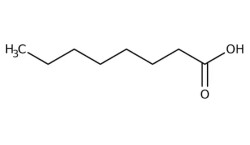
Caprylic acid, also called octanoic acid, is a medium-chain fatty acid. It is found naturally in coconut oil, palm kernel oil, and the milk of mammals, including human breast milk. Its name comes from the Latin word for goat, since it is also present in goat's milk.
Because it is a medium-chain fat, the body absorbs and uses it differently than longer fats. It is a common part of MCT (medium-chain triglyceride) oil blends. As a supplement, it is sold in capsules, softgels, and liquid form.
People most often take caprylic acid for yeast or Candida concerns and for general gut health. It is also used in the food and cosmetic industries.
How it works
Caprylic acid is thought to work mainly by interacting with the outer membranes of microbes. As a fatty acid, it may disrupt the cell walls or membranes of certain bacteria and yeasts, which can slow or stop their growth. Much of this evidence comes from laboratory studies.
Because it is a medium-chain fat, the body absorbs caprylic acid quickly and the liver can convert it into ketones, which some cells use for energy. This is why it appears in MCT and ketogenic products.
Researchers have also looked at whether caprylic acid affects gut bacteria, the gut lining, and inflammation, but these proposed effects are still being studied and are not fully proven in humans.
Does Caprylic Acid work?
How to read these evidence grades
Natural Medicines’ 7-point scale. We show each rating’s label word-for-word.
For Caprylic Acid, current evidence isn’t strong enough to rate any specific use. The conditions it has been studied for are listed below.
Also studied for 2 conditions — evidence insufficient to rate
Insufficient Reliable Evidence To Rate Epilepsy
Although there has been interest in using oral caprylic acid for epilepsy, there is insufficient reliable information about the clinical effects of caprylic acid for this purpose.
Insufficient Reliable Evidence To Rate Essential tremor
Small clinical studies suggest that oral caprylic acid may slightly improve symptoms of central and peripheral essential tremor, as well as essential voice tremor.
Source & disclaimer. Effectiveness ratings and evidence summaries are provided by Natural Medicines (Therapeutic Research Center) and shown as licensed. Where Natural Medicines hasn’t rated a use, HelloPharmacist’s pharmacists may add their own reviewed rating and evidence (each such entry is labeled). This is educational information, not medical advice — talk with your pharmacist or doctor before starting, stopping, or changing a supplement.
Safety & precautions
Caprylic acid is Generally Recognized as Safe (GRAS) by the U.S. FDA as a food ingredient, and the small amounts found in foods are not a concern for most people. Concentrated supplement doses are less well studied.
People with liver problems should be cautious, since medium-chain fats are processed by the liver. If you have any chronic health condition, check with your pharmacist or doctor first.
For pregnancy and breastfeeding, caprylic acid naturally appears in foods and even in breast milk, so normal dietary amounts are not a worry. However, the safety of concentrated supplements during these times has not been well studied, so it is best to avoid supplement doses unless your healthcare provider approves.
Side effects
When taken as a supplement, caprylic acid and MCT products may cause digestive side effects, especially in larger amounts. These can include nausea, stomach cramps, bloating, loose stools, or diarrhea.
Starting with a small amount and taking it with food may lower the chance of stomach upset. Serious side effects are uncommon, but stop using it and contact a healthcare provider if you have an allergic reaction or unusual symptoms.
Caprylic Acid: Reported Adverse Effects
Documented safety reports on Caprylic Acid from the evidence-graded Natural Medicines (TRC Healthcare) database, shown word-for-word from the licensed record.
Orally, caprylic acid seems to be well tolerated, short-term.
Most Common Adverse Effects:
Orally: Mild abdominal discomfort and change in taste perception.
Topically: Skin irritation.
Cluster headache Neurologic/CNS
Orally, caprylic acid has rarely been reported to cause mild dizziness, headache, and fatigue.
Adverse-effects data: Natural Medicines, Therapeutic Research Center
Dosing
There is no official, well-established dose for caprylic acid as a supplement. Products vary widely in strength and form, so the right amount depends on the specific product.
The safest approach is to follow the directions on the product label and start with a lower amount to see how your body responds. Because needs and tolerance vary, talk with your pharmacist or doctor before starting, especially if you take other medicines or have a health condition.
Caprylic Acid & Pregnancy
Caprylic Acid & Breastfeeding
© 2026 Therapeutic Research Center
Pregnancy & lactation ratings: Natural Medicines, Therapeutic Research Center
References & further reading
The 5 references that drive our Caprylic Acid monograph and interaction data, from the evidence-graded Natural Medicines (TRC Healthcare) database. Citations with a link open the study on PubMed or the publisher’s site.
- Massolini G, Aubry AF, McGann A, Wainer IW. Determination of the magnitude and enantioselectivity of ligand binding to rat and rabbit serum albumins using immobilized-protein high performance liquid chromatography stationary phases. Biochem Pharmacol 1993 PubMed
- Kristev A, Mitkov D, Lukanov Y, Chapkynov P. The effect of octanoic fatty acid on the cardiovascular system of the guinea pig. Cor Vasa 1989;31(4):321-7.
- Hayball PF, Holman JW, Nation RL. Influence of octanoic acid on the reversible protein binding of ketorolac enantiomers to human serum albumin (HSA): comparative liquid chromatographic studies using a HSA chiral stationary phase. J Chromatogr B Biomed App PubMed
- Noctor TA, Wainer IW, Hage DS. Allosteric and competitive displacement of drugs from human serum albumin by octanoic acid, as revealed by high-performance liquid affinity chromatography, on a human serum albumin-based stationary phase. J Chromatogr 1992;5 PubMed
- Voller B, Lines E, McCrossin G, et al. Dose-escalation study of octanoic acid in patients with essential tremor. J Clin Invest. 2016;126(4):1451-7. PubMed
This information is for education only and is not a substitute for professional medical advice. Always check with your pharmacist or doctor before starting, stopping, or combining supplements and medications.
Parts of this content are provided by the Therapeutic Research Center, LLC.
DISCLAIMER: Currently this does not check for drug-drug interactions. This is not an all-inclusive comprehensive list of potential interactions and is for informational purposes only. Not all interactions are known or well-reported in the scientific literature, and new interactions are continually being reported. Input is needed from a qualified healthcare provider including a pharmacist before starting any therapy. Application of clinical judgment is necessary.
© 2021 Therapeutic Research Center, LLC
Brands that make products with Caprylic Acid
197 brands in our database make a supplement containing Caprylic Acid.
Supplement products with Caprylic Acid
568 products in our database contain Caprylic Acid. Open any to see its full ingredient list and every drug interaction we check.
Caprylic Acid: Common Questions
What is Caprylic Acid used for, and does it work?
Does Caprylic Acid interact with prescription medications?
How are Caprylic Acid interactions rated?
Is it safe to take Caprylic Acid with my medications?
Where does this Caprylic Acid interaction information come from?
What is Caprylic Acid used for?
Is Caprylic Acid safe to take?
Can Caprylic Acid cause side effects?
Is Caprylic Acid the same as coconut oil?
Written and reviewed by the HelloPharmacist editorial staff. Our editorial policy
Products that contain Caprylic Acid
A rotating sample of real supplements in our database that list Caprylic Acid — open any to see its full ingredients and every drug interaction we check.
- Caprylic Acid 250 mg by Seeking Health
- Candida Cleanse by Balance One
- Caprylic Acid 600 mg by Health Thru Nutrition Naturally
- MCT/Butyrate Liquid by Douglas Laboratories
- MCT Oil by ALLMAX
- C8-Max Unflavored by Zenwise Health
- Creamy Caramel MCT Oil by Natural Force
- CandiSmart 1 by Renew Life
- Organic Coconut Oil 1,000 mg by NewtonEverett
- M.C.T. Medium Chain Triglycerides by Douglas Laboratories
Have a question about Caprylic Acid?
Our pharmacists answer your medication & supplement questions — free.