
Garlic Force Ingredients & Drug Interactions
by New Chapter
What is this page for?
First and foremost: checking Garlic Force against your medications. The heart of this page is the interaction checker and the full interaction report — how this product’s ingredients may interact with prescription and over-the-counter medicines you may be taking.
Around that, we add a pharmacist’s high-level view of the product as a whole — what’s inside, the evidence for its stated use, how transparent the label is, and what safety data exists — so you can see the full picture in one place. It’s educational information from our licensed clinical databases and the clinical staff at HelloPharmacist — not medical advice — and we don’t sell or endorse products. Our editorial policy
Garlic Force is a dietary supplement by New Chapter with 9 active ingredients. Its ingredients are commonly taken for high blood pressure, high cholesterol, heart health.Based on those ingredients, 1,287 medications have a known interaction with it, the most serious rated moderate. The ingredients most likely to interact are Ginger, Garlic (bulb) hydroethanolic extract, Clove. Use the checker below to test your specific medication, or read the full HelloPharmacist Interaction Report.
Check Your Meds Against Garlic Force by New Chapter
Ask about any prescription or over-the-counter medication and we check it for interactions with Garlic Force by New Chapter — and tell you which ingredient is responsible.
AI summaries are generated from our interaction database for education only — always confirm with your pharmacist. How we use AI
Ask the Pharmacist
A licensed pharmacist will answer your question by email — free, usually within 24 hours.
Got it — thank you!
A licensed pharmacist will answer within 24 hours. Keep an eye on your email (worth checking spam, just in case).
HelloPharmacist Scorecard of Garlic Force by New Chapter
Four independent checks of what is known — a summary of the available information, not a grade of the product itself.
By FDA rules, dietary supplements can’t claim to treat, cure, or prevent disease — so labels speak in careful marketing language. We discern each product’s intended use from its name, label claims, and label statements, then grade the clinical evidence for that use. How these ratings are computed
Some clinical evidence supports this product's ingredients for its stated purpose, but it isn't conclusive.
Why this rating?
- The label markets this product for: antioxidant protection and cardiovascular health.
- We looked for evidence on: Cardiovascular disease (CVD), Coronary heart disease (CHD), Atherosclerosis, Common cold, Cholesterol management, Immune function — and 1 related terms.
- The strongest evidence on file: Garlic is rated "Possibly Effective" for Atherosclerosis (Natural Medicines).
- Also on file: Garlic is rated "Insufficient Reliable Evidence To Rate" for Cardiovascular disease (CVD), Common cold, Coronary heart disease (CHD).
- Also on file: Peppermint is rated "Insufficient Reliable Evidence To Rate" for Common cold.
Most active ingredients don't disclose an individual amount — you can't tell how much of each you're getting.
Why this rating?
- The label discloses an exact amount for 2 of its 9 active ingredients.
- “Garlic (bulb) hydroethanolic extract” is listed as a grouped ingredient — the label gives one combined amount (160 mg) without saying how much of each component you get.
- “Garlic (bulb) supercritical extract” is listed as a grouped ingredient — the label gives one combined amount (80 mg) without saying how much of each component you get.
- “Supercritical Herbal Extract Blend” is a proprietary blend — the label gives one combined amount (22 mg) without saying how much of each component you get.
The most serious documented interaction for these ingredients is Moderate. Check your medications for a personalized result.
Why this rating?
- 7 of the 8 matched ingredients can interact with medications — Caraway, Clove, Garlic, Fennel, Peppermint, among others.
- The most serious interaction on file is rated Moderate.
- Some involve high-stakes drug classes: anticoagulant / antiplatelet drugs; immunosuppressants / transplant drugs; diabetes medications; lithium.
- For scale: 1,288 individual medications appear in the full list. A big number alone doesn't make a product dangerous — what matters is whether YOUR medication is on it, so run yours through the interaction checker on this page.
Adverse-effect, pregnancy, and general safety data are on file for most of these ingredients.
Why this rating?
- We hold adverse-effect (side-effect) data for 8 of the 8 matched ingredients.
- Pregnancy & breastfeeding safety ratings cover 8 of 8.
- General safety write-ups exist for 8 of 8.
- Remember: this measures how much safety information exists. Thin data is not the same as being safe.
HelloPharmacist summaryFormula with limited ingredient disclosure with some supporting evidence for its stated purpose. Moderate medication interactions have been identified, and safety information is well characterized.
Assessment coverage: 8 of 9 active ingredients matched to our full ingredient reviews (monographs). Based on the product label dated Oct 27, 2014.
This Scorecard evaluates available label information, ingredient evidence, and known medication-safety considerations. It does not independently verify product identity, purity, potency, contamination, or manufacturing quality. How these ratings are computed
General information
Key facts about Garlic Force, straight from the product label.
| Brand | New Chapter |
|---|---|
| Net contents | 30 Softgel(s) |
| Market status | Off market |
| Date entered into DSLD | Oct 27, 2014 |
| DSLD ID | 38549 |
| Product type | Botanical |
| Supplement form | Softgel Capsule |
| Dietary claims / uses | Structure/Function |
| Intended target group(s) | Adult (18 - 50 Years), Gluten Free |
Everything in this section is reproduced from the manufacturer’s own product label — it’s the label speaking, not HelloPharmacist. We show it so you can see exactly what the maker states; we don’t verify or endorse those statements.
Supplement Facts
The label details for Garlic Force by New Chapter, sourced from the NIH Dietary Supplement Label Database.
Supplement Facts
| Ingredient | Amount | % DV |
|---|---|---|
| Fennel | 0 NP | -- |
| Peppermint | 0 NP | -- |
| Ginger | 0 NP | -- |
| Clove | 0 NP | -- |
| Caraway | 0 NP | -- |
| Cardamom | 0 NP | -- |
| Parsley | 0 NP | -- |
| Garlic (bulb) hydroethanolic extract | 160 mg | -- |
| min. 0.3 mg Cysteine compounds | 0.3 mg | -- |
| Garlic (bulb) supercritical extract | 80 mg | -- |
| Garlic essential oil | 2.4 mg | -- |
| Supercritical Herbal Extract Blend | 22 mg | -- |
Other ingredients: Capsule, extra-virgin Olive Oil, yellow Beeswax, Silica
Tap any ingredient to jump to its full detail below.
These statements are the manufacturer’s wording, reproduced from the product label — the label is saying it, not HelloPharmacist. We don’t verify or endorse them.
Brand IP Statement(s)
New Chapter(R) delivers the wisdom of whole food.
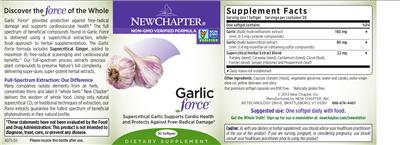
Discover the force of the Whole Garlic Force(R) provides protection against free-radical damage and supports cardiovascular health.*
(C) 2013 New Chapter, Inc.
General Statements
Using only natural supercritical CO2 or traditional techniques of extraction, our Force extracts guarantee the fullest spectrum of beneficial phytonutrients in their natural profile.
Get the Whole Truth!
Please recycle this bottle after use.
NON-GMO VERIFIED FORMULA
The full spectrum of beneficial compounds found in Garlic Force is delivered using a supercritical extraction, whole-food approach to herbal supplementation.
Our full-spectrum process extracts precious plant compounds to preserve Nature’s full complexity, delivering super-pure, super-potent herbal extracts. Full-Spectrum Extraction: Our Difference Many companies isolate elements from an herb, concentrate them, and label it “whole herb.”
Supercritical Garlic Supports Cardio Health and Protects Against Free-Radical Damage*
FDA Disclaimer Statement
*These statements have not been evaluated by the Food and Drug Administration. This product is not intended to diagnose, treat, cure, or prevent any disease.
Formula
The Garlic Force formula includes Supercritical Ginger, added to maximize its free-radical scavenging and cardiovascular benefits.*
Seals/Symbols
NON GMO Project VERIFIED
FDA Statement of Identity
DIETARY SUPPLEMENT
Formulation
Our premium softgel capsules are BSE free. Naturally gluten free.
Suggested/Recommended/Usage/Directions
Suggested use: One softgel daily with food.
Precautions
Caution: As with any dietary or herbal supplement, you should advise your healthcare practitioner of the use of this product. If you are nursing, pregnant, or considering pregnancy, you should consult your healthcare practitioner prior to using this product.
General
4075-05
Is this label outdated? Report a formula or label change and our pharmacy team will review it.
Garlic Force by New Chapter label
The label scan from the NIH Dietary Supplement Label Database. Tap to enlarge.
Label images are published by the NIH Dietary Supplement Label Database for the version of this product on file. Always read your actual product label.
View the full label (PDF)The Ingredients in Garlic Force by New Chapter
These are the 9 active ingredients this product is made of. Select any to open its full monograph.
Serving size1 Softgel(s) Dosage formSoftgel Capsule Servings per container30 Amounts shown are per serving.
Most supplement products combine several ingredients, and a medication can interact with the product through any one of them. Each ingredient below shows whether it has known drug interactions.
Garlic (bulb) hydroethanolic extract
Interacts with991 drugs
Garlic is a common food and supplement that may modestly help with blood pressure and cholesterol, though the evidence is mixed and effects are usuall...
Garlic (bulb) hydroethanolic extract monograph & interactions- › Min. 0.3 mg Cysteine compounds
Garlic (bulb) supercritical extract
Interacts with991 drugs
Garlic is a common food and supplement that may modestly help with blood pressure and cholesterol, though the evidence is mixed and effects are usuall...
Garlic (bulb) supercritical extract monograph & interactionsOther (inactive) ingredients: Capsule, Extra-virgin Olive Oil, Yellow Beeswax, Silica. These complete the product’s ingredient list but are not active constituents.
Garlic Force by New Chapter Drug Interactions
Garlic Force contains 9 ingredients, and 7 of them have known drug interactions. Altogether they interact with 1,287 medications. Here’s the picture, then you can look up your own drug.
Want to check YOUR meds against Garlic Force?
Ask about interactions with your drugs in plain English — “Can I take it with lisinopril?” — and we find you the answer in seconds, ingredient by ingredient.
Go to the checkerIngredients driving the most interactions
Individual Drug Interactions
The ingredients in Garlic Force interact with 1,287 drugs. Click any drug to see the details.
7 of the 9 ingredients in Garlic Force interact with drugs. Each result below shows which ingredient is responsible. Ginger Garlic (bulb) hydroethanolic extract Clove Peppermint Fennel Parsley Caraway
Ado-trastuzumab EmtansineKadcyla
How Ado-trastuzumab Emtansine interacts with Garlic Force — through 5 ingredients. Tap an ingredient for the detail:
Garlic Essential OilCytochrome P450 3a4 (cyp3a4) Substrates Moderate
Interaction Summary
Theoretically, garlic products containing allicin might induce intestinal CYP3A4 and inhibit hepatic CYP3A4.
Read the full Garlic Essential Oil + Ado-trastuzumab Emtansine interactionGingerCytochrome P450 3a4 (cyp3a4) Substrates Moderate
Interaction Summary
Ginger might increase or decrease the levels of CYP3A4 substrates.
Read the full Ginger + Ado-trastuzumab Emtansine interactionPeppermintCytochrome P450 3a4 (cyp3a4) Substrates Moderate
Interaction Summary
Theoretically, peppermint might increase the levels of CYP3A4 substrates.
Read the full Peppermint + Ado-trastuzumab Emtansine interactionFennelCytochrome P450 3a4 (cyp3a4) Substrates Moderate
Interaction Summary
Theoretically, fennel might increase levels of drugs metabolized by CYP3A4.
Read the full Fennel + Ado-trastuzumab Emtansine interactionCloveCytochrome P450 3a4 (cyp3a4) Substrates Moderate
Interaction Summary
Theoretically, concomitant use of clove may increase levels of drugs metabolized by CYP3A4.
Read the full Clove + Ado-trastuzumab Emtansine interactionAbciximabReoPro
How Abciximab interacts with Garlic Force — through 5 ingredients. Tap an ingredient for the detail:
GingerAnticoagulant/antiplatelet Drugs Moderate
Interaction Summary
Ginger may have antiplatelet effects and may increase the risk of bleeding if used with anticoagulant or antiplatelet drugs.
Read the full Ginger + Abciximab interactionParsleyAnticoagulant/antiplatelet Drugs Moderate
Interaction Summary
Theoretically, parsley might increase the risk of bleeding when taken with anticoagulant or antiplatelet drugs.
Read the full Parsley + Abciximab interactionFennelAnticoagulant/antiplatelet Drugs Moderate
Interaction Summary
Theoretically, fennel might increase the risk of bleeding when used with antiplatelet or anticoagulant drugs.
Read the full Fennel + Abciximab interactionGarlic Essential OilAnticoagulant/antiplatelet Drugs Moderate
Interaction Summary
Garlic may have antiplatelet effects and may increase the risk of bleeding if used with anticoagulant or antiplatelet drugs.
Read the full Garlic Essential Oil + Abciximab interactionCloveAnticoagulant/antiplatelet Drugs Minor
Interaction Summary
Theoretically, clove oil may increase the risk of bleeding if used with anticoagulant or antiplatelet drugs.
Read the full Clove + Abciximab interactionAbemaciclibVerzenio
How Abemaciclib interacts with Garlic Force — through 5 ingredients. Tap an ingredient for the detail:
Garlic Essential OilCytochrome P450 3a4 (cyp3a4) Substrates Moderate
Interaction Summary
Theoretically, garlic products containing allicin might induce intestinal CYP3A4 and inhibit hepatic CYP3A4.
Read the full Garlic Essential Oil + Abemaciclib interactionPeppermintCytochrome P450 3a4 (cyp3a4) Substrates Moderate
Interaction Summary
Theoretically, peppermint might increase the levels of CYP3A4 substrates.
Read the full Peppermint + Abemaciclib interactionFennelCytochrome P450 3a4 (cyp3a4) Substrates Moderate
Interaction Summary
Theoretically, fennel might increase levels of drugs metabolized by CYP3A4.
Read the full Fennel + Abemaciclib interactionGingerCytochrome P450 3a4 (cyp3a4) Substrates Moderate
Interaction Summary
Ginger might increase or decrease the levels of CYP3A4 substrates.
Read the full Ginger + Abemaciclib interactionCloveCytochrome P450 3a4 (cyp3a4) Substrates Moderate
Interaction Summary
Theoretically, concomitant use of clove may increase levels of drugs metabolized by CYP3A4.
Read the full Clove + Abemaciclib interactionAbiraterone
How Abiraterone interacts with Garlic Force — through 5 ingredients. Tap an ingredient for the detail:
FennelCytochrome P450 3a4 (cyp3a4) Substrates Moderate
Interaction Summary
Theoretically, fennel might increase levels of drugs metabolized by CYP3A4.
Read the full Fennel + Abiraterone interactionGarlic Essential OilCytochrome P450 3a4 (cyp3a4) Substrates Moderate
Interaction Summary
Theoretically, garlic products containing allicin might induce intestinal CYP3A4 and inhibit hepatic CYP3A4.
Read the full Garlic Essential Oil + Abiraterone interactionCloveCytochrome P450 3a4 (cyp3a4) Substrates Moderate
Interaction Summary
Theoretically, concomitant use of clove may increase levels of drugs metabolized by CYP3A4.
Read the full Clove + Abiraterone interactionGingerCytochrome P450 3a4 (cyp3a4) Substrates Moderate
Interaction Summary
Ginger might increase or decrease the levels of CYP3A4 substrates.
Read the full Ginger + Abiraterone interactionPeppermintCytochrome P450 3a4 (cyp3a4) Substrates Moderate
Interaction Summary
Theoretically, peppermint might increase the levels of CYP3A4 substrates.
Read the full Peppermint + Abiraterone interactionAbiraterone AcetateYonsa, Zytiga
How Abiraterone Acetate interacts with Garlic Force — through 5 ingredients. Tap an ingredient for the detail:
GingerCytochrome P450 3a4 (cyp3a4) Substrates Moderate
Interaction Summary
Ginger might increase or decrease the levels of CYP3A4 substrates.
Read the full Ginger + Abiraterone Acetate interactionFennelCytochrome P450 3a4 (cyp3a4) Substrates Moderate
Interaction Summary
Theoretically, fennel might increase levels of drugs metabolized by CYP3A4.
Read the full Fennel + Abiraterone Acetate interactionPeppermintCytochrome P450 3a4 (cyp3a4) Substrates Moderate
Interaction Summary
Theoretically, peppermint might increase the levels of CYP3A4 substrates.
Read the full Peppermint + Abiraterone Acetate interactionCloveCytochrome P450 3a4 (cyp3a4) Substrates Moderate
Interaction Summary
Theoretically, concomitant use of clove may increase levels of drugs metabolized by CYP3A4.
Read the full Clove + Abiraterone Acetate interactionGarlic Essential OilCytochrome P450 3a4 (cyp3a4) Substrates Moderate
Interaction Summary
Theoretically, garlic products containing allicin might induce intestinal CYP3A4 and inhibit hepatic CYP3A4.
Read the full Garlic Essential Oil + Abiraterone Acetate interactionAbrocitinibCibinqo
How Abrocitinib interacts with Garlic Force — through 6 ingredients. Tap an ingredient for the detail:
CloveCytochrome P450 2c9 (cyp2c9) Substrates, Anticoagulant/antiplatelet Drugs Moderate
Interaction Summary
Theoretically, concomitant use of clove may increase levels of drugs metabolized by CYP2C9.
Read the full Clove + Abrocitinib interactionGarlic Essential OilAnticoagulant/antiplatelet Drugs Moderate
Interaction Summary
Garlic may have antiplatelet effects and may increase the risk of bleeding if used with anticoagulant or antiplatelet drugs.
Read the full Garlic Essential Oil + Abrocitinib interactionPeppermintCytochrome P450 2c9 (cyp2c9) Substrates, Cytochrome P450 2c19 (cyp2c19) Substrates Moderate
Interaction Summary
Theoretically, peppermint might increase the levels of CYP2C9 substrates.
Read the full Peppermint + Abrocitinib interactionFennelAnticoagulant/antiplatelet Drugs Moderate
Interaction Summary
Theoretically, fennel might increase the risk of bleeding when used with antiplatelet or anticoagulant drugs.
Read the full Fennel + Abrocitinib interactionGingerCytochrome P450 2c9 (cyp2c9) Substrates, Anticoagulant/antiplatelet Drugs Moderate
Interaction Summary
Theoretically, ginger might increase the levels of CYP2C9 substrates.
Read the full Ginger + Abrocitinib interactionParsleyAnticoagulant/antiplatelet Drugs Moderate
Interaction Summary
Theoretically, parsley might increase the risk of bleeding when taken with anticoagulant or antiplatelet drugs.
Read the full Parsley + Abrocitinib interactionAcalabrutinibCalquence
How Acalabrutinib interacts with Garlic Force — through 5 ingredients. Tap an ingredient for the detail:
CloveCytochrome P450 3a4 (cyp3a4) Substrates Moderate
Interaction Summary
Theoretically, concomitant use of clove may increase levels of drugs metabolized by CYP3A4.
Read the full Clove + Acalabrutinib interactionPeppermintCytochrome P450 3a4 (cyp3a4) Substrates Moderate
Interaction Summary
Theoretically, peppermint might increase the levels of CYP3A4 substrates.
Read the full Peppermint + Acalabrutinib interactionFennelCytochrome P450 3a4 (cyp3a4) Substrates Moderate
Interaction Summary
Theoretically, fennel might increase levels of drugs metabolized by CYP3A4.
Read the full Fennel + Acalabrutinib interactionGarlic Essential OilCytochrome P450 3a4 (cyp3a4) Substrates Moderate
Interaction Summary
Theoretically, garlic products containing allicin might induce intestinal CYP3A4 and inhibit hepatic CYP3A4.
Read the full Garlic Essential Oil + Acalabrutinib interactionGingerCytochrome P450 3a4 (cyp3a4) Substrates, P-glycoprotein Substrates Moderate
Interaction Summary
Ginger might increase or decrease the levels of CYP3A4 substrates.
Read the full Ginger + Acalabrutinib interactionAcarboseGlucobay, Prandase, Precose
How Acarbose interacts with Garlic Force — through 5 ingredients. Tap an ingredient for the detail:
GingerAntidiabetes Drugs Moderate
Interaction Summary
Theoretically, taking ginger with antidiabetes drugs might increase the risk of hypoglycemia.
Read the full Ginger + Acarbose interactionParsleyAntidiabetes Drugs Moderate
Interaction Summary
Theoretically, parsley might increase the risk of hypoglycemia when taken with antidiabetes drugs.
Read the full Parsley + Acarbose interactionCloveAntidiabetes Drugs Moderate
Interaction Summary
Theoretically, concomitant use of clove extracts with antidiabetes drugs might increase the risk of hypoglycemia.
Read the full Clove + Acarbose interactionCarawayAntidiabetes Drugs Moderate
Interaction Summary
Theoretically, caraway might increase the risk of hypoglycemia when used with antidiabetes drugs.
Read the full Caraway + Acarbose interactionGarlic Essential OilAntidiabetes Drugs Moderate
Interaction Summary
Theoretically, taking garlic with antidiabetes drugs might increase the risk of hypoglycemia.
Read the full Garlic Essential Oil + Acarbose interactionAcebutololRhotral, Sectral
How Acebutolol interacts with Garlic Force — through 1 ingredient. Tap an ingredient for the detail:
Garlic Essential OilAntihypertensive Drugs Moderate
Interaction Summary
Theoretically, taking garlic with antihypertensive drugs might increase the risk of hypotension.
Read the full Garlic Essential Oil + Acebutolol interactionAcenocoumarolSintrom
How Acenocoumarol interacts with Garlic Force — through 5 ingredients. Tap an ingredient for the detail:
Garlic Essential OilAnticoagulant/antiplatelet Drugs Moderate
Interaction Summary
Garlic may have antiplatelet effects and may increase the risk of bleeding if used with anticoagulant or antiplatelet drugs.
Read the full Garlic Essential Oil + Acenocoumarol interactionParsleyAnticoagulant/antiplatelet Drugs Moderate
Interaction Summary
Theoretically, parsley might increase the risk of bleeding when taken with anticoagulant or antiplatelet drugs.
Read the full Parsley + Acenocoumarol interactionGingerAnticoagulant/antiplatelet Drugs Moderate
Interaction Summary
Ginger may have antiplatelet effects and may increase the risk of bleeding if used with anticoagulant or antiplatelet drugs.
Read the full Ginger + Acenocoumarol interactionFennelAnticoagulant/antiplatelet Drugs Moderate
Interaction Summary
Theoretically, fennel might increase the risk of bleeding when used with antiplatelet or anticoagulant drugs.
Read the full Fennel + Acenocoumarol interactionCloveAnticoagulant/antiplatelet Drugs Minor
Interaction Summary
Theoretically, clove oil may increase the risk of bleeding if used with anticoagulant or antiplatelet drugs.
Read the full Clove + Acenocoumarol interactionAcepromazineAtravet
How Acepromazine interacts with Garlic Force — through 1 ingredient. Tap an ingredient for the detail:
CarawayCns Depressants Moderate
Interaction Summary
Theoretically, caraway might increase the effects and adverse effects of CNS depressants.
Read the full Caraway + Acepromazine interactionAcetaminophenChildren's Tylenol, Children's Tylenol Meltaways, Tylenol, Tylenol Ex Strength
How Acetaminophen interacts with Garlic Force — through 5 ingredients. Tap an ingredient for the detail:
CloveCytochrome P450 1a2 (cyp1a2) Substrates Moderate
Interaction Summary
Theoretically, concomitant use of clove may increase levels of drugs metabolized by CYP1A2.
Read the full Clove + Acetaminophen interactionParsleyCytochrome P450 1a2 (cyp1a2) Substrates Moderate
Interaction Summary
Theoretically, parsley might increase serum levels of CYP1A2 substrates.
Read the full Parsley + Acetaminophen interactionGarlic Essential OilCytochrome P450 2e1 (cyp2e1) Substrates Moderate
Interaction Summary
Garlic might increase levels of drugs metabolized by CYP2E1.
Read the full Garlic Essential Oil + Acetaminophen interactionGingerCytochrome P450 1a2 (cyp1a2) Substrates Minor
Interaction Summary
Theoretically, ginger might increase the levels of CYP1A2 substrates.
Read the full Ginger + Acetaminophen interactionPeppermintCytochrome P450 1a2 (cyp1a2) Substrates Minor
Interaction Summary
Theoretically, peppermint might increase the levels of CYP1A2 substrates.
Read the full Peppermint + Acetaminophen interactionAcetaminophen, AspirinGemnisyn
How Acetaminophen, Aspirin interacts with Garlic Force — through 6 ingredients. Tap an ingredient for the detail:
FennelAnticoagulant/antiplatelet Drugs Moderate
Interaction Summary
Theoretically, fennel might increase the risk of bleeding when used with antiplatelet or anticoagulant drugs.
Read the full Fennel + Acetaminophen, Aspirin interactionParsleyCytochrome P450 1a2 (cyp1a2) Substrates, Aspirin +1 Moderate
Interaction Summary
Theoretically, parsley might increase serum levels of CYP1A2 substrates.
Read the full Parsley + Acetaminophen, Aspirin interactionGingerCytochrome P450 1a2 (cyp1a2) Substrates, Anticoagulant/antiplatelet Drugs Moderate
Interaction Summary
Theoretically, ginger might increase the levels of CYP1A2 substrates.
Read the full Ginger + Acetaminophen, Aspirin interactionCloveCytochrome P450 1a2 (cyp1a2) Substrates, Anticoagulant/antiplatelet Drugs Moderate
Interaction Summary
Theoretically, concomitant use of clove may increase levels of drugs metabolized by CYP1A2.
Read the full Clove + Acetaminophen, Aspirin interactionGarlic Essential OilCytochrome P450 2e1 (cyp2e1) Substrates, Anticoagulant/antiplatelet Drugs Moderate
Interaction Summary
Garlic might increase levels of drugs metabolized by CYP2E1.
Read the full Garlic Essential Oil + Acetaminophen, Aspirin interactionPeppermintCytochrome P450 1a2 (cyp1a2) Substrates Minor
Interaction Summary
Theoretically, peppermint might increase the levels of CYP1A2 substrates.
Read the full Peppermint + Acetaminophen, Aspirin interactionAcetaminophen, Aspirin, CaffeineExcedrin, Excedrin Extra Strength, Excedrin Migraine
How Acetaminophen, Aspirin, Caffeine interacts with Garlic Force — through 6 ingredients. Tap an ingredient for the detail:
Garlic Essential OilAnticoagulant/antiplatelet Drugs, Cytochrome P450 2e1 (cyp2e1) Substrates +1 Moderate
Interaction Summary
Garlic may have antiplatelet effects and may increase the risk of bleeding if used with anticoagulant or antiplatelet drugs.
Read the full Garlic Essential Oil + Acetaminophen, Aspirin, Caffeine interactionFennelCytochrome P450 3a4 (cyp3a4) Substrates, Anticoagulant/antiplatelet Drugs Moderate
Interaction Summary
Theoretically, fennel might increase levels of drugs metabolized by CYP3A4.
Read the full Fennel + Acetaminophen, Aspirin, Caffeine interactionParsleyAnticoagulant/antiplatelet Drugs, Cytochrome P450 1a2 (cyp1a2) Substrates +1 Moderate
Interaction Summary
Theoretically, parsley might increase the risk of bleeding when taken with anticoagulant or antiplatelet drugs.
Read the full Parsley + Acetaminophen, Aspirin, Caffeine interactionGingerCytochrome P450 1a2 (cyp1a2) Substrates, Anticoagulant/antiplatelet Drugs +1 Moderate
Interaction Summary
Theoretically, ginger might increase the levels of CYP1A2 substrates.
Read the full Ginger + Acetaminophen, Aspirin, Caffeine interactionPeppermintCytochrome P450 1a2 (cyp1a2) Substrates, Cytochrome P450 3a4 (cyp3a4) Substrates Moderate
Interaction Summary
Theoretically, peppermint might increase the levels of CYP1A2 substrates.
Read the full Peppermint + Acetaminophen, Aspirin, Caffeine interactionCloveAnticoagulant/antiplatelet Drugs, Cytochrome P450 3a4 (cyp3a4) Substrates +1 Moderate
Interaction Summary
Theoretically, clove oil may increase the risk of bleeding if used with anticoagulant or antiplatelet drugs.
Read the full Clove + Acetaminophen, Aspirin, Caffeine interactionAcetaminophen, Brompheniramine, PhenylpropanolamineDimetapp Cold and Flu
How Acetaminophen, Brompheniramine, Phenylpropanolamine interacts with Garlic Force — through 5 ingredients. Tap an ingredient for the detail:
CloveCytochrome P450 1a2 (cyp1a2) Substrates Moderate
Interaction Summary
Theoretically, concomitant use of clove may increase levels of drugs metabolized by CYP1A2.
Read the full Clove + Acetaminophen, Brompheniramine, Phenylpropanolamine interactionParsleyCytochrome P450 1a2 (cyp1a2) Substrates Moderate
Interaction Summary
Theoretically, parsley might increase serum levels of CYP1A2 substrates.
Read the full Parsley + Acetaminophen, Brompheniramine, Phenylpropanolamine interactionGarlic Essential OilCytochrome P450 2e1 (cyp2e1) Substrates Moderate
Interaction Summary
Garlic might increase levels of drugs metabolized by CYP2E1.
Read the full Garlic Essential Oil + Acetaminophen, Brompheniramine, Phenylpropanolamine interactionGingerCytochrome P450 1a2 (cyp1a2) Substrates Minor
Interaction Summary
Theoretically, ginger might increase the levels of CYP1A2 substrates.
Read the full Ginger + Acetaminophen, Brompheniramine, Phenylpropanolamine interactionPeppermintCytochrome P450 1a2 (cyp1a2) Substrates Minor
Interaction Summary
Theoretically, peppermint might increase the levels of CYP1A2 substrates.
Read the full Peppermint + Acetaminophen, Brompheniramine, Phenylpropanolamine interactionAcetaminophen, ButalbitalAxocet, Bancap, Bucet, Butex Forte, Esgic CF, Orbivan CF +5 more
How Acetaminophen, Butalbital interacts with Garlic Force — through 5 ingredients. Tap an ingredient for the detail:
ParsleyCytochrome P450 1a2 (cyp1a2) Substrates Moderate
Interaction Summary
Theoretically, parsley might increase serum levels of CYP1A2 substrates.
Read the full Parsley + Acetaminophen, Butalbital interactionCloveCytochrome P450 1a2 (cyp1a2) Substrates Moderate
Interaction Summary
Theoretically, concomitant use of clove may increase levels of drugs metabolized by CYP1A2.
Read the full Clove + Acetaminophen, Butalbital interactionGarlic Essential OilCytochrome P450 2e1 (cyp2e1) Substrates Moderate
Interaction Summary
Garlic might increase levels of drugs metabolized by CYP2E1.
Read the full Garlic Essential Oil + Acetaminophen, Butalbital interactionPeppermintCytochrome P450 1a2 (cyp1a2) Substrates Minor
Interaction Summary
Theoretically, peppermint might increase the levels of CYP1A2 substrates.
Read the full Peppermint + Acetaminophen, Butalbital interactionGingerCytochrome P450 1a2 (cyp1a2) Substrates Minor
Interaction Summary
Theoretically, ginger might increase the levels of CYP1A2 substrates.
Read the full Ginger + Acetaminophen, Butalbital interactionAcetaminophen, Butalbital, CaffeineEsgic, Esgic Plus, Fiogesic, Fioricet, Repan, Tecnal +1 more
How Acetaminophen, Butalbital, Caffeine interacts with Garlic Force — through 6 ingredients. Tap an ingredient for the detail:
Garlic Essential OilCytochrome P450 2e1 (cyp2e1) Substrates, Cytochrome P450 3a4 (cyp3a4) Substrates Moderate
Interaction Summary
Garlic might increase levels of drugs metabolized by CYP2E1.
Read the full Garlic Essential Oil + Acetaminophen, Butalbital, Caffeine interactionFennelCytochrome P450 3a4 (cyp3a4) Substrates Moderate
Interaction Summary
Theoretically, fennel might increase levels of drugs metabolized by CYP3A4.
Read the full Fennel + Acetaminophen, Butalbital, Caffeine interactionGingerCytochrome P450 1a2 (cyp1a2) Substrates, Cytochrome P450 3a4 (cyp3a4) Substrates Moderate
Interaction Summary
Theoretically, ginger might increase the levels of CYP1A2 substrates.
Read the full Ginger + Acetaminophen, Butalbital, Caffeine interactionParsleyCytochrome P450 1a2 (cyp1a2) Substrates Moderate
Interaction Summary
Theoretically, parsley might increase serum levels of CYP1A2 substrates.
Read the full Parsley + Acetaminophen, Butalbital, Caffeine interactionPeppermintCytochrome P450 3a4 (cyp3a4) Substrates, Cytochrome P450 1a2 (cyp1a2) Substrates Moderate
Interaction Summary
Theoretically, peppermint might increase the levels of CYP3A4 substrates.
Read the full Peppermint + Acetaminophen, Butalbital, Caffeine interactionCloveCytochrome P450 1a2 (cyp1a2) Substrates, Cytochrome P450 3a4 (cyp3a4) Substrates Moderate
Interaction Summary
Theoretically, concomitant use of clove may increase levels of drugs metabolized by CYP1A2.
Read the full Clove + Acetaminophen, Butalbital, Caffeine interactionAcetaminophen, Butalbital, Caffeine, CodeineEsgic with Codeine, Fioricet w/ Codeine
How Acetaminophen, Butalbital, Caffeine, Codeine interacts with Garlic Force — through 7 ingredients. Tap an ingredient for the detail:
CloveCytochrome P450 3a4 (cyp3a4) Substrates, Cytochrome P450 2d6 (cyp2d6) Substrates +1 Moderate
Interaction Summary
Theoretically, concomitant use of clove may increase levels of drugs metabolized by CYP3A4.
Read the full Clove + Acetaminophen, Butalbital, Caffeine, Codeine interactionCarawayCns Depressants Moderate
Interaction Summary
Theoretically, caraway might increase the effects and adverse effects of CNS depressants.
Read the full Caraway + Acetaminophen, Butalbital, Caffeine, Codeine interactionGingerCytochrome P450 3a4 (cyp3a4) Substrates, Cytochrome P450 1a2 (cyp1a2) Substrates Moderate
Interaction Summary
Ginger might increase or decrease the levels of CYP3A4 substrates.
Read the full Ginger + Acetaminophen, Butalbital, Caffeine, Codeine interactionParsleyCytochrome P450 1a2 (cyp1a2) Substrates Moderate
Interaction Summary
Theoretically, parsley might increase serum levels of CYP1A2 substrates.
Read the full Parsley + Acetaminophen, Butalbital, Caffeine, Codeine interactionGarlic Essential OilCytochrome P450 3a4 (cyp3a4) Substrates, Cytochrome P450 2e1 (cyp2e1) Substrates Moderate
Interaction Summary
Theoretically, garlic products containing allicin might induce intestinal CYP3A4 and inhibit hepatic CYP3A4.
Read the full Garlic Essential Oil + Acetaminophen, Butalbital, Caffeine, Codeine interactionFennelCytochrome P450 3a4 (cyp3a4) Substrates Moderate
Interaction Summary
Theoretically, fennel might increase levels of drugs metabolized by CYP3A4.
Read the full Fennel + Acetaminophen, Butalbital, Caffeine, Codeine interactionPeppermintCytochrome P450 1a2 (cyp1a2) Substrates, Cytochrome P450 3a4 (cyp3a4) Substrates Moderate
Interaction Summary
Theoretically, peppermint might increase the levels of CYP1A2 substrates.
Read the full Peppermint + Acetaminophen, Butalbital, Caffeine, Codeine interactionAcetaminophen, Butalbital, CodeineBancap w/ Codeine
How Acetaminophen, Butalbital, Codeine interacts with Garlic Force — through 6 ingredients. Tap an ingredient for the detail:
ParsleyCytochrome P450 1a2 (cyp1a2) Substrates Moderate
Interaction Summary
Theoretically, parsley might increase serum levels of CYP1A2 substrates.
Read the full Parsley + Acetaminophen, Butalbital, Codeine interactionCloveCytochrome P450 1a2 (cyp1a2) Substrates, Cytochrome P450 2d6 (cyp2d6) Substrates Moderate
Interaction Summary
Theoretically, concomitant use of clove may increase levels of drugs metabolized by CYP1A2.
Read the full Clove + Acetaminophen, Butalbital, Codeine interactionCarawayCns Depressants Moderate
Interaction Summary
Theoretically, caraway might increase the effects and adverse effects of CNS depressants.
Read the full Caraway + Acetaminophen, Butalbital, Codeine interactionGarlic Essential OilCytochrome P450 2e1 (cyp2e1) Substrates Moderate
Interaction Summary
Garlic might increase levels of drugs metabolized by CYP2E1.
Read the full Garlic Essential Oil + Acetaminophen, Butalbital, Codeine interactionPeppermintCytochrome P450 1a2 (cyp1a2) Substrates Minor
Interaction Summary
Theoretically, peppermint might increase the levels of CYP1A2 substrates.
Read the full Peppermint + Acetaminophen, Butalbital, Codeine interactionGingerCytochrome P450 1a2 (cyp1a2) Substrates Minor
Interaction Summary
Theoretically, ginger might increase the levels of CYP1A2 substrates.
Read the full Ginger + Acetaminophen, Butalbital, Codeine interactionAcetaminophen, Butalbital, Codeine PhosphatePhrenilin #3
How Acetaminophen, Butalbital, Codeine Phosphate interacts with Garlic Force — through 6 ingredients. Tap an ingredient for the detail:
Garlic Essential OilCytochrome P450 2e1 (cyp2e1) Substrates Moderate
Interaction Summary
Garlic might increase levels of drugs metabolized by CYP2E1.
Read the full Garlic Essential Oil + Acetaminophen, Butalbital, Codeine Phosphate interactionParsleyCytochrome P450 1a2 (cyp1a2) Substrates Moderate
Interaction Summary
Theoretically, parsley might increase serum levels of CYP1A2 substrates.
Read the full Parsley + Acetaminophen, Butalbital, Codeine Phosphate interactionCarawayCns Depressants Moderate
Interaction Summary
Theoretically, caraway might increase the effects and adverse effects of CNS depressants.
Read the full Caraway + Acetaminophen, Butalbital, Codeine Phosphate interactionCloveCytochrome P450 2d6 (cyp2d6) Substrates, Cytochrome P450 1a2 (cyp1a2) Substrates Moderate
Interaction Summary
Theoretically, concomitant use of clove may increase levels of drugs metabolized by CYP2D6.
Read the full Clove + Acetaminophen, Butalbital, Codeine Phosphate interactionGingerCytochrome P450 1a2 (cyp1a2) Substrates Minor
Interaction Summary
Theoretically, ginger might increase the levels of CYP1A2 substrates.
Read the full Ginger + Acetaminophen, Butalbital, Codeine Phosphate interactionPeppermintCytochrome P450 1a2 (cyp1a2) Substrates Minor
Interaction Summary
Theoretically, peppermint might increase the levels of CYP1A2 substrates.
Read the full Peppermint + Acetaminophen, Butalbital, Codeine Phosphate interactionAcetaminophen, Caffeine, Chlorpheniramine, Hydrocodone, PhenylephrineHycomine Compound
How Acetaminophen, Caffeine, Chlorpheniramine, Hydrocodone, Phenylephrine interacts with Garlic Force — through 7 ingredients. Tap an ingredient for the detail:
CarawayCns Depressants Moderate
Interaction Summary
Theoretically, caraway might increase the effects and adverse effects of CNS depressants.
Read the full Caraway + Acetaminophen, Caffeine, Chlorpheniramine, Hydrocodone, Phenylephrine interactionCloveCytochrome P450 1a2 (cyp1a2) Substrates, Cytochrome P450 3a4 (cyp3a4) Substrates +1 Moderate
Interaction Summary
Theoretically, concomitant use of clove may increase levels of drugs metabolized by CYP1A2.
Read the full Clove + Acetaminophen, Caffeine, Chlorpheniramine, Hydrocodone, Phenylephrine interactionGingerCytochrome P450 1a2 (cyp1a2) Substrates, Cytochrome P450 3a4 (cyp3a4) Substrates Moderate
Interaction Summary
Theoretically, ginger might increase the levels of CYP1A2 substrates.
Read the full Ginger + Acetaminophen, Caffeine, Chlorpheniramine, Hydrocodone, Phenylephrine interactionParsleyCytochrome P450 1a2 (cyp1a2) Substrates Moderate
Interaction Summary
Theoretically, parsley might increase serum levels of CYP1A2 substrates.
Read the full Parsley + Acetaminophen, Caffeine, Chlorpheniramine, Hydrocodone, Phenylephrine interactionGarlic Essential OilCytochrome P450 2e1 (cyp2e1) Substrates, Cytochrome P450 3a4 (cyp3a4) Substrates Moderate
Interaction Summary
Garlic might increase levels of drugs metabolized by CYP2E1.
Read the full Garlic Essential Oil + Acetaminophen, Caffeine, Chlorpheniramine, Hydrocodone, Phenylephrine interactionFennelCytochrome P450 3a4 (cyp3a4) Substrates Moderate
Interaction Summary
Theoretically, fennel might increase levels of drugs metabolized by CYP3A4.
Read the full Fennel + Acetaminophen, Caffeine, Chlorpheniramine, Hydrocodone, Phenylephrine interactionPeppermintCytochrome P450 1a2 (cyp1a2) Substrates, Cytochrome P450 3a4 (cyp3a4) Substrates Moderate
Interaction Summary
Theoretically, peppermint might increase the levels of CYP1A2 substrates.
Read the full Peppermint + Acetaminophen, Caffeine, Chlorpheniramine, Hydrocodone, Phenylephrine interactionAcetaminophen, Caffeine, CodeineGesic C15, Gesic C30, Gesic C8, Lenoltec 1, Lenoltec 2, Lenoltec 3 +1 more
How Acetaminophen, Caffeine, Codeine interacts with Garlic Force — through 7 ingredients. Tap an ingredient for the detail:
PeppermintCytochrome P450 3a4 (cyp3a4) Substrates, Cytochrome P450 1a2 (cyp1a2) Substrates Moderate
Interaction Summary
Theoretically, peppermint might increase the levels of CYP3A4 substrates.
Read the full Peppermint + Acetaminophen, Caffeine, Codeine interactionParsleyCytochrome P450 1a2 (cyp1a2) Substrates Moderate
Interaction Summary
Theoretically, parsley might increase serum levels of CYP1A2 substrates.
Read the full Parsley + Acetaminophen, Caffeine, Codeine interactionGingerCytochrome P450 1a2 (cyp1a2) Substrates, Cytochrome P450 3a4 (cyp3a4) Substrates Moderate
Interaction Summary
Theoretically, ginger might increase the levels of CYP1A2 substrates.
Read the full Ginger + Acetaminophen, Caffeine, Codeine interactionCloveCytochrome P450 2d6 (cyp2d6) Substrates, Cytochrome P450 1a2 (cyp1a2) Substrates +1 Moderate
Interaction Summary
Theoretically, concomitant use of clove may increase levels of drugs metabolized by CYP2D6.
Read the full Clove + Acetaminophen, Caffeine, Codeine interactionCarawayCns Depressants Moderate
Interaction Summary
Theoretically, caraway might increase the effects and adverse effects of CNS depressants.
Read the full Caraway + Acetaminophen, Caffeine, Codeine interactionFennelCytochrome P450 3a4 (cyp3a4) Substrates Moderate
Interaction Summary
Theoretically, fennel might increase levels of drugs metabolized by CYP3A4.
Read the full Fennel + Acetaminophen, Caffeine, Codeine interactionGarlic Essential OilCytochrome P450 2e1 (cyp2e1) Substrates, Cytochrome P450 3a4 (cyp3a4) Substrates Moderate
Interaction Summary
Garlic might increase levels of drugs metabolized by CYP2E1.
Read the full Garlic Essential Oil + Acetaminophen, Caffeine, Codeine interactionAcetaminophen, Caffeine, Codeine, SalicylamideCodalan No.1, Codalan No.2, Codalan No.3
How Acetaminophen, Caffeine, Codeine, Salicylamide interacts with Garlic Force — through 7 ingredients. Tap an ingredient for the detail:
FennelCytochrome P450 3a4 (cyp3a4) Substrates Moderate
Interaction Summary
Theoretically, fennel might increase levels of drugs metabolized by CYP3A4.
Read the full Fennel + Acetaminophen, Caffeine, Codeine, Salicylamide interactionGarlic Essential OilCytochrome P450 2e1 (cyp2e1) Substrates, Cytochrome P450 3a4 (cyp3a4) Substrates Moderate
Interaction Summary
Garlic might increase levels of drugs metabolized by CYP2E1.
Read the full Garlic Essential Oil + Acetaminophen, Caffeine, Codeine, Salicylamide interactionParsleyCytochrome P450 1a2 (cyp1a2) Substrates Moderate
Interaction Summary
Theoretically, parsley might increase serum levels of CYP1A2 substrates.
Read the full Parsley + Acetaminophen, Caffeine, Codeine, Salicylamide interactionGingerCytochrome P450 1a2 (cyp1a2) Substrates, Cytochrome P450 3a4 (cyp3a4) Substrates Moderate
Interaction Summary
Theoretically, ginger might increase the levels of CYP1A2 substrates.
Read the full Ginger + Acetaminophen, Caffeine, Codeine, Salicylamide interactionPeppermintCytochrome P450 1a2 (cyp1a2) Substrates, Cytochrome P450 3a4 (cyp3a4) Substrates Moderate
Interaction Summary
Theoretically, peppermint might increase the levels of CYP1A2 substrates.
Read the full Peppermint + Acetaminophen, Caffeine, Codeine, Salicylamide interactionCloveCytochrome P450 3a4 (cyp3a4) Substrates, Cytochrome P450 2d6 (cyp2d6) Substrates +1 Moderate
Interaction Summary
Theoretically, concomitant use of clove may increase levels of drugs metabolized by CYP3A4.
Read the full Clove + Acetaminophen, Caffeine, Codeine, Salicylamide interactionCarawayCns Depressants Moderate
Interaction Summary
Theoretically, caraway might increase the effects and adverse effects of CNS depressants.
Read the full Caraway + Acetaminophen, Caffeine, Codeine, Salicylamide interactionAcetaminophen, Caffeine, DihydrocodeineDHC Plus, Panlor DC, Panlor SS
How Acetaminophen, Caffeine, Dihydrocodeine interacts with Garlic Force — through 7 ingredients. Tap an ingredient for the detail:
CloveCytochrome P450 1a2 (cyp1a2) Substrates, Cytochrome P450 3a4 (cyp3a4) Substrates +1 Moderate
Interaction Summary
Theoretically, concomitant use of clove may increase levels of drugs metabolized by CYP1A2.
Read the full Clove + Acetaminophen, Caffeine, Dihydrocodeine interactionCarawayCns Depressants Moderate
Interaction Summary
Theoretically, caraway might increase the effects and adverse effects of CNS depressants.
Read the full Caraway + Acetaminophen, Caffeine, Dihydrocodeine interactionGingerCytochrome P450 3a4 (cyp3a4) Substrates, Cytochrome P450 1a2 (cyp1a2) Substrates Moderate
Interaction Summary
Ginger might increase or decrease the levels of CYP3A4 substrates.
Read the full Ginger + Acetaminophen, Caffeine, Dihydrocodeine interactionParsleyCytochrome P450 1a2 (cyp1a2) Substrates Moderate
Interaction Summary
Theoretically, parsley might increase serum levels of CYP1A2 substrates.
Read the full Parsley + Acetaminophen, Caffeine, Dihydrocodeine interactionGarlic Essential OilCytochrome P450 3a4 (cyp3a4) Substrates, Cytochrome P450 2e1 (cyp2e1) Substrates Moderate
Interaction Summary
Theoretically, garlic products containing allicin might induce intestinal CYP3A4 and inhibit hepatic CYP3A4.
Read the full Garlic Essential Oil + Acetaminophen, Caffeine, Dihydrocodeine interactionFennelCytochrome P450 3a4 (cyp3a4) Substrates Moderate
Interaction Summary
Theoretically, fennel might increase levels of drugs metabolized by CYP3A4.
Read the full Fennel + Acetaminophen, Caffeine, Dihydrocodeine interactionPeppermintCytochrome P450 3a4 (cyp3a4) Substrates, Cytochrome P450 1a2 (cyp1a2) Substrates Moderate
Interaction Summary
Theoretically, peppermint might increase the levels of CYP3A4 substrates.
Read the full Peppermint + Acetaminophen, Caffeine, Dihydrocodeine interactionAcetaminophen, Caffeine, IsomethepteneMigralam
How Acetaminophen, Caffeine, Isometheptene interacts with Garlic Force — through 6 ingredients. Tap an ingredient for the detail:
PeppermintCytochrome P450 1a2 (cyp1a2) Substrates, Cytochrome P450 3a4 (cyp3a4) Substrates Moderate
Interaction Summary
Theoretically, peppermint might increase the levels of CYP1A2 substrates.
Read the full Peppermint + Acetaminophen, Caffeine, Isometheptene interactionParsleyCytochrome P450 1a2 (cyp1a2) Substrates Moderate
Interaction Summary
Theoretically, parsley might increase serum levels of CYP1A2 substrates.
Read the full Parsley + Acetaminophen, Caffeine, Isometheptene interactionGingerCytochrome P450 3a4 (cyp3a4) Substrates, Cytochrome P450 1a2 (cyp1a2) Substrates Moderate
Interaction Summary
Ginger might increase or decrease the levels of CYP3A4 substrates.
Read the full Ginger + Acetaminophen, Caffeine, Isometheptene interactionCloveCytochrome P450 1a2 (cyp1a2) Substrates, Cytochrome P450 3a4 (cyp3a4) Substrates Moderate
Interaction Summary
Theoretically, concomitant use of clove may increase levels of drugs metabolized by CYP1A2.
Read the full Clove + Acetaminophen, Caffeine, Isometheptene interactionFennelCytochrome P450 3a4 (cyp3a4) Substrates Moderate
Interaction Summary
Theoretically, fennel might increase levels of drugs metabolized by CYP3A4.
Read the full Fennel + Acetaminophen, Caffeine, Isometheptene interactionGarlic Essential OilCytochrome P450 2e1 (cyp2e1) Substrates, Cytochrome P450 3a4 (cyp3a4) Substrates Moderate
Interaction Summary
Garlic might increase levels of drugs metabolized by CYP2E1.
Read the full Garlic Essential Oil + Acetaminophen, Caffeine, Isometheptene interactionAcetaminophen, Caffeine, PyrilamineMidol Max Strength Menstrual
How Acetaminophen, Caffeine, Pyrilamine interacts with Garlic Force — through 7 ingredients. Tap an ingredient for the detail:
Garlic Essential OilCytochrome P450 3a4 (cyp3a4) Substrates, Cytochrome P450 2e1 (cyp2e1) Substrates Moderate
Interaction Summary
Theoretically, garlic products containing allicin might induce intestinal CYP3A4 and inhibit hepatic CYP3A4.
Read the full Garlic Essential Oil + Acetaminophen, Caffeine, Pyrilamine interactionFennelCytochrome P450 3a4 (cyp3a4) Substrates Moderate
Interaction Summary
Theoretically, fennel might increase levels of drugs metabolized by CYP3A4.
Read the full Fennel + Acetaminophen, Caffeine, Pyrilamine interactionGingerCytochrome P450 1a2 (cyp1a2) Substrates, Cytochrome P450 3a4 (cyp3a4) Substrates Moderate
Interaction Summary
Theoretically, ginger might increase the levels of CYP1A2 substrates.
Read the full Ginger + Acetaminophen, Caffeine, Pyrilamine interactionParsleyCytochrome P450 1a2 (cyp1a2) Substrates, Diuretic Drugs Moderate
Interaction Summary
Theoretically, parsley might increase serum levels of CYP1A2 substrates.
Read the full Parsley + Acetaminophen, Caffeine, Pyrilamine interactionPeppermintCytochrome P450 3a4 (cyp3a4) Substrates, Cytochrome P450 1a2 (cyp1a2) Substrates Moderate
Interaction Summary
Theoretically, peppermint might increase the levels of CYP3A4 substrates.
Read the full Peppermint + Acetaminophen, Caffeine, Pyrilamine interactionCloveCytochrome P450 3a4 (cyp3a4) Substrates, Cytochrome P450 1a2 (cyp1a2) Substrates Moderate
Interaction Summary
Theoretically, concomitant use of clove may increase levels of drugs metabolized by CYP3A4.
Read the full Clove + Acetaminophen, Caffeine, Pyrilamine interactionCarawayDiuretic Drugs Moderate
Interaction Summary
Theoretically, caraway might increase the risk of hypokalemia when used with diuretics that deplete potassium.
Read the full Caraway + Acetaminophen, Caffeine, Pyrilamine interactionAcetaminophen, Chlorpheniramine Maleate, Dextromethorphan HbrVicks Formula 44M Cough, Cold & Flu Relief
How Acetaminophen, Chlorpheniramine Maleate, Dextromethorphan Hbr interacts with Garlic Force — through 6 ingredients. Tap an ingredient for the detail:
CloveCytochrome P450 2d6 (cyp2d6) Substrates, Cytochrome P450 1a2 (cyp1a2) Substrates +1 Moderate
Interaction Summary
Theoretically, concomitant use of clove may increase levels of drugs metabolized by CYP2D6.
Read the full Clove + Acetaminophen, Chlorpheniramine Maleate, Dextromethorphan Hbr interactionParsleyCytochrome P450 1a2 (cyp1a2) Substrates Moderate
Interaction Summary
Theoretically, parsley might increase serum levels of CYP1A2 substrates.
Read the full Parsley + Acetaminophen, Chlorpheniramine Maleate, Dextromethorphan Hbr interactionGingerCytochrome P450 3a4 (cyp3a4) Substrates, Cytochrome P450 1a2 (cyp1a2) Substrates Moderate
Interaction Summary
Ginger might increase or decrease the levels of CYP3A4 substrates.
Read the full Ginger + Acetaminophen, Chlorpheniramine Maleate, Dextromethorphan Hbr interactionGarlic Essential OilCytochrome P450 3a4 (cyp3a4) Substrates, Cytochrome P450 2e1 (cyp2e1) Substrates Moderate
Interaction Summary
Theoretically, garlic products containing allicin might induce intestinal CYP3A4 and inhibit hepatic CYP3A4.
Read the full Garlic Essential Oil + Acetaminophen, Chlorpheniramine Maleate, Dextromethorphan Hbr interactionPeppermintCytochrome P450 1a2 (cyp1a2) Substrates, Cytochrome P450 3a4 (cyp3a4) Substrates Moderate
Interaction Summary
Theoretically, peppermint might increase the levels of CYP1A2 substrates.
Read the full Peppermint + Acetaminophen, Chlorpheniramine Maleate, Dextromethorphan Hbr interactionFennelCytochrome P450 3a4 (cyp3a4) Substrates Moderate
Interaction Summary
Theoretically, fennel might increase levels of drugs metabolized by CYP3A4.
Read the full Fennel + Acetaminophen, Chlorpheniramine Maleate, Dextromethorphan Hbr interactionAcetaminophen, Chlorpheniramine, Codeine, PhenylephrineColrex
How Acetaminophen, Chlorpheniramine, Codeine, Phenylephrine interacts with Garlic Force — through 7 ingredients. Tap an ingredient for the detail:
PeppermintCytochrome P450 1a2 (cyp1a2) Substrates, Cytochrome P450 3a4 (cyp3a4) Substrates Moderate
Interaction Summary
Theoretically, peppermint might increase the levels of CYP1A2 substrates.
Read the full Peppermint + Acetaminophen, Chlorpheniramine, Codeine, Phenylephrine interactionGingerCytochrome P450 3a4 (cyp3a4) Substrates, Cytochrome P450 1a2 (cyp1a2) Substrates Moderate
Interaction Summary
Ginger might increase or decrease the levels of CYP3A4 substrates.
Read the full Ginger + Acetaminophen, Chlorpheniramine, Codeine, Phenylephrine interactionParsleyCytochrome P450 1a2 (cyp1a2) Substrates Moderate
Interaction Summary
Theoretically, parsley might increase serum levels of CYP1A2 substrates.
Read the full Parsley + Acetaminophen, Chlorpheniramine, Codeine, Phenylephrine interactionCarawayCns Depressants Moderate
Interaction Summary
Theoretically, caraway might increase the effects and adverse effects of CNS depressants.
Read the full Caraway + Acetaminophen, Chlorpheniramine, Codeine, Phenylephrine interactionCloveCytochrome P450 1a2 (cyp1a2) Substrates, Cytochrome P450 3a4 (cyp3a4) Substrates +1 Moderate
Interaction Summary
Theoretically, concomitant use of clove may increase levels of drugs metabolized by CYP1A2.
Read the full Clove + Acetaminophen, Chlorpheniramine, Codeine, Phenylephrine interactionGarlic Essential OilCytochrome P450 2e1 (cyp2e1) Substrates, Cytochrome P450 3a4 (cyp3a4) Substrates Moderate
Interaction Summary
Garlic might increase levels of drugs metabolized by CYP2E1.
Read the full Garlic Essential Oil + Acetaminophen, Chlorpheniramine, Codeine, Phenylephrine interactionFennelCytochrome P450 3a4 (cyp3a4) Substrates Moderate
Interaction Summary
Theoretically, fennel might increase levels of drugs metabolized by CYP3A4.
Read the full Fennel + Acetaminophen, Chlorpheniramine, Codeine, Phenylephrine interactionAcetaminophen, Chlorpheniramine, DextromethorphanCoricidin II Extra Strength Cold and Flu
How Acetaminophen, Chlorpheniramine, Dextromethorphan interacts with Garlic Force — through 6 ingredients. Tap an ingredient for the detail:
Garlic Essential OilCytochrome P450 2e1 (cyp2e1) Substrates, Cytochrome P450 3a4 (cyp3a4) Substrates Moderate
Interaction Summary
Garlic might increase levels of drugs metabolized by CYP2E1.
Read the full Garlic Essential Oil + Acetaminophen, Chlorpheniramine, Dextromethorphan interactionParsleyCytochrome P450 1a2 (cyp1a2) Substrates Moderate
Interaction Summary
Theoretically, parsley might increase serum levels of CYP1A2 substrates.
Read the full Parsley + Acetaminophen, Chlorpheniramine, Dextromethorphan interactionGingerCytochrome P450 1a2 (cyp1a2) Substrates, Cytochrome P450 3a4 (cyp3a4) Substrates Moderate
Interaction Summary
Theoretically, ginger might increase the levels of CYP1A2 substrates.
Read the full Ginger + Acetaminophen, Chlorpheniramine, Dextromethorphan interactionPeppermintCytochrome P450 3a4 (cyp3a4) Substrates, Cytochrome P450 1a2 (cyp1a2) Substrates Moderate
Interaction Summary
Theoretically, peppermint might increase the levels of CYP3A4 substrates.
Read the full Peppermint + Acetaminophen, Chlorpheniramine, Dextromethorphan interactionFennelCytochrome P450 3a4 (cyp3a4) Substrates Moderate
Interaction Summary
Theoretically, fennel might increase levels of drugs metabolized by CYP3A4.
Read the full Fennel + Acetaminophen, Chlorpheniramine, Dextromethorphan interactionCloveCytochrome P450 3a4 (cyp3a4) Substrates, Cytochrome P450 2d6 (cyp2d6) Substrates +1 Moderate
Interaction Summary
Theoretically, concomitant use of clove may increase levels of drugs metabolized by CYP3A4.
Read the full Clove + Acetaminophen, Chlorpheniramine, Dextromethorphan interactionAcetaminophen, Chlorpheniramine, Dextromethorphan HydrobromideCoricidin HBP Maximum Strength Flu
How Acetaminophen, Chlorpheniramine, Dextromethorphan Hydrobromide interacts with Garlic Force — through 6 ingredients. Tap an ingredient for the detail:
CloveCytochrome P450 1a2 (cyp1a2) Substrates, Cytochrome P450 3a4 (cyp3a4) Substrates +1 Moderate
Interaction Summary
Theoretically, concomitant use of clove may increase levels of drugs metabolized by CYP1A2.
Read the full Clove + Acetaminophen, Chlorpheniramine, Dextromethorphan Hydrobromide interactionGingerCytochrome P450 3a4 (cyp3a4) Substrates, Cytochrome P450 1a2 (cyp1a2) Substrates Moderate
Interaction Summary
Ginger might increase or decrease the levels of CYP3A4 substrates.
Read the full Ginger + Acetaminophen, Chlorpheniramine, Dextromethorphan Hydrobromide interactionParsleyCytochrome P450 1a2 (cyp1a2) Substrates Moderate
Interaction Summary
Theoretically, parsley might increase serum levels of CYP1A2 substrates.
Read the full Parsley + Acetaminophen, Chlorpheniramine, Dextromethorphan Hydrobromide interactionGarlic Essential OilCytochrome P450 3a4 (cyp3a4) Substrates, Cytochrome P450 2e1 (cyp2e1) Substrates Moderate
Interaction Summary
Theoretically, garlic products containing allicin might induce intestinal CYP3A4 and inhibit hepatic CYP3A4.
Read the full Garlic Essential Oil + Acetaminophen, Chlorpheniramine, Dextromethorphan Hydrobromide interactionFennelCytochrome P450 3a4 (cyp3a4) Substrates Moderate
Interaction Summary
Theoretically, fennel might increase levels of drugs metabolized by CYP3A4.
Read the full Fennel + Acetaminophen, Chlorpheniramine, Dextromethorphan Hydrobromide interactionPeppermintCytochrome P450 1a2 (cyp1a2) Substrates, Cytochrome P450 3a4 (cyp3a4) Substrates Moderate
Interaction Summary
Theoretically, peppermint might increase the levels of CYP1A2 substrates.
Read the full Peppermint + Acetaminophen, Chlorpheniramine, Dextromethorphan Hydrobromide interactionEach ingredient & the kinds of drugs it affects
For each ingredient in Garlic Force with known interactions, here are the types of medications they can affect. Open any type for the detail — or search your exact drug in the checker above.
Ginger
Anticoagulant/Antiplatelet Drugs
Ginger may have antiplatelet effects and may increase the risk of bleeding if used with anticoagulant or antiplatelet drugs. However, research is conflicting.
Laboratory research suggests that ginger inhibits thromboxane synthetase and decreases platelet aggregation. However, this has not been demonstrated unequivocally in humans, with mixed results from clinical trials. Theoretically, excessive amounts of ginger might increase the risk of bleeding when used with anticoagulant/antiplatelet drugs.
Antidiabetes Drugs
Theoretically, taking ginger with antidiabetes drugs might increase the risk of hypoglycemia.
Animal and human research suggests that ginger might increase insulin levels and/or decrease blood glucose levels.
Cytochrome P450 3A4 (Cyp3A4) Substrates
Ginger might increase or decrease the levels of CYP3A4 substrates.
In vitro research and some case reports suggest that ginger inhibits CYP3A4 activity. Three case reports from the World Health Organization (WHO) adverse drug reaction database describe increased toxicity in patients taking ginger and cancer medications that are CYP3A4 substrates (imatinib, dabrafenib, and crizotinib). However, the causality of this interaction is unclear due to the presence of multiple interacting drugs and routes of administration.
Conversely, other in vitro research suggests that ginger induces CYP3A4 activity, leading to reduced levels of CYP3A4 substrates. However, this interaction has not been reported in humans.
Losartan (Cozaar)
Theoretically, ginger might increase levels of losartan and the risk of hypotension.
In animal research, ginger increased the levels and hypotensive effects of a single dose of losartan. It is not clear if ginger alters the concentration or effects of losartan when taken continuously. Additionally, this interaction has not been shown in humans.
Nifedipine (Procardia)
Ginger may have antiplatelet effects and increase the risk of bleeding if used with nifedipine.
Clinical research shows that combined treatment with ginger 1 gram plus nifedipine 10 mg significantly inhibits platelet aggregation when compared to nifedipine or ginger alone.
P-Glycoprotein Substrates
Ginger might increase the absorption and blood levels of P-glycoprotein (P-gp) substrates.
In vitro research and case reports suggest that ginger inhibits drug efflux by P-gp, potentially increasing absorption and serum levels of P-gp substrates. Two case reports from the World Health Organization (WHO) adverse drug reaction database describe increased toxicity in patients taking ginger and cancer medications that are P-gp substrates (trametinib, crizotinib). However, the causality of this interaction is unclear due to the presence of multiple interacting drugs and routes of administration.
Phenprocoumon (Marcoumar, Others)
Ginger might increase the risk of bleeding with phenprocoumon.
Phenprocoumon, a warfarin-related anticoagulant, might increase the international normalized ratio (INR) when taken with ginger. There is one case report of a 76-year-old woman with a stable INR on phenprocoumon that increased to greater than 10 when she began consuming dried ginger and ginger tea.
Warfarin (Coumadin)
Ginger might increase the risk of bleeding with warfarin.
Laboratory research suggests that ginger might inhibit thromboxane synthetase and decrease platelet aggregation. In one case report, ginger increased the INR when taken with phenprocoumon, which has similar pharmacological effects as warfarin. In another case report, ginger increased the INR when taken with a combination of warfarin, hydrochlorothiazide, and acetaminophen. A longitudinal analysis suggests that taking ginger increases the risk of bleeding in patients taking warfarin for at least 4 months. However, research in healthy people suggests that ginger has no effect on INR, or the pharmacokinetics or pharmacodynamics of warfarin. Until more is known, monitor INRs closely in patients taking large amounts of ginger.
Calcium Channel Blockers
Theoretically, taking ginger with calcium channel blockers might increase the risk of hypotension.
Some animal and in vitro research suggests that ginger has hypotensive and calcium channel-blocking effects. Another animal study shows that concomitant administration of ginger and the calcium channel blocker amlodipine leads to greater reductions in blood pressure when compared with amlodipine alone.
Cyclosporine (Neoral, Sandimmune)
Theoretically, when taken prior to cyclosporine, ginger might decrease cyclosporine levels.
In an animal model, ginger juice taken 2 hours prior to cyclosporine administration reduced the maximum concentration and area under the curve of cyclosporine by 51% and 40%, respectively. This effect was not observed when ginger juice and cyclosporine were administered at the same time.
Cytochrome P450 1A2 (Cyp1A2) Substrates
Theoretically, ginger might increase the levels of CYP1A2 substrates.
In vitro research shows that ginger inhibits CYP1A2 activity. However, this interaction has not been reported in humans.
Cytochrome P450 2B6 (Cyp2B6) Substrates
Theoretically, ginger might increase the levels of CYP2B6 substrates.
In vitro research shows that ginger inhibits CYP2B6 activity. However, this interaction has not been reported in humans.
Cytochrome P450 2C9 (Cyp2C9) Substrates
Theoretically, ginger might increase the levels of CYP2C9 substrates.
In vitro research shows that ginger inhibits CYP2C9 activity. However, this interaction has not been reported in humans.
Metronidazole (Flagyl)
Theoretically, ginger might increase levels of metronidazole.
In an animal model, ginger increased the absorption and plasma half-life of metronidazole. In addition, the elimination rate and clearance of metronidazole was significantly reduced.
Garlic (bulb) hydroethanolic extract
Anticoagulant/Antiplatelet Drugs
Garlic may have antiplatelet effects and may increase the risk of bleeding if used with anticoagulant or antiplatelet drugs.
Raw garlic and a variety of garlic extracts have antiplatelet activity and can increase prothrombin time.
Antidiabetes Drugs
Theoretically, taking garlic with antidiabetes drugs might increase the risk of hypoglycemia.
Clinical research suggests that garlic and garlic extract lower blood glucose levels in healthy and diabetic individuals.
Antihypertensive Drugs
Theoretically, taking garlic with antihypertensive drugs might increase the risk of hypotension.
In human research, both garlic and garlic extracts have blood pressure-lowering effects.
Atazanavir (Reyataz)
Theoretically, garlic might decrease levels and effects of atazanavir.
In a case report, a patient consuming six stir-fried garlic cloves three times weekly developed suboptimal atazanavir levels and increases in HIV viral load. While the exact cause of this interaction is unclear, there is speculation that garlic might decrease the intestinal absorption of atazanavir or increase its metabolism by inducing cytochrome P450 3A4 (CYP3A4). Until more is known, advise patients not to consume large amounts of garlic while taking atazanavir.
Cytochrome P450 2E1 (Cyp2E1) Substrates
Garlic might increase levels of drugs metabolized by CYP2E1.
Clinical research suggests garlic oil can inhibit the activity of CYP2E1 by 39%. Use garlic oil cautiously in patients taking drugs metabolized by these enzymes.
Cytochrome P450 3A4 (Cyp3A4) Substrates
Theoretically, garlic products containing allicin might induce intestinal CYP3A4 and inhibit hepatic CYP3A4. This may increase or decrease levels of drugs metabolized by CYP3A4.
Some human research suggests that garlic may induce INTESTINAL CYP3A4, reducing levels of drugs metabolized by this enzyme. This is primarily based on a study showing that taking a specific allicin-containing garlic product (GarliPure Maximum Allicin Formula, Natrol Inc.) twice daily for 3 days reduces saquinavir levels by approximately 50%. It is speculated that the allicin constituent induced CYP3A4 in the gut mucosa. Another study shows that giving docetaxel intravenously, bypassing the CYP3A4 enzymes in the gut mucosa, along with the same specific garlic product for 12 consecutive days, does not affect docetaxel levels. Conversely, there is concern that garlic may inhibit HEPATIC CYP3A4. In a single case report, increased tacrolimus levels and liver injury occurred in a liver transplant patient after taking a specific garlic supplement (Garlicin Cardio, Nature's Way) at up to three times the manufacturer recommended dose for 7 days. Several other studies have evaluated the impact of other garlic formulations on CYP3A4 substrates and have found no effect. Most of the products in these studies provided little or no allicin.
Isoniazid
Theoretically, garlic might decrease levels of isoniazid.
Animal research suggests that an aqueous extract of garlic reduces isoniazid levels by about 65%. Garlic reduced the maximum concentration (Cmax) and area under the curve (AUC), but not the half-life, of isoniazid. This suggests that garlic extract might inhibit isoniazid absorption across the intestinal mucosa; however, the exact mechanism of this potential interaction is not known.
Protease Inhibitors (Pis)
Theoretically, garlic products containing allicin might decrease levels of PIs.
Protease inhibitors are metabolized by cytochrome P450 3A4 (CYP3A4) isoenzymes. There is concern that garlic products containing allicin might induce intestinal CYP3A4, reducing plasma levels of protease inhibitors. This is primarily based on a study showing that taking a specific garlic product (GarliPure Maximum Allicin Formula, Natrol Inc.) twice daily for 3 days reduces levels of saquinavir, a PI, by approximately 50%. It is speculated that the allicin constituent induce CYP3A4 in the gut mucosa. Several studies have evaluated the impact of other garlic formulations on CYP3A4 substrates and have found no effect. Most of the products in these studies provided little or no allicin.
Saquinavir (Fortovase, Invirase)
Theoretically, garlic containing allicin might decrease levels of saquinavir.
Saquinavir is a substrate of cytochrome P450 3A4 (CYP3A4) isoenzymes. There is concern that garlic products containing allicin might induce intestinal CYP3A4 and cause subtherapeutic levels of saquinavir. This is primarily based on a pharmacokinetic study showing that taking a specific garlic product (GarliPure Maximum Allicin Formula, Natrol Inc.) twice daily for 3 days reduces saquinavir levels by approximately 50%. It is speculated that the allicin constituent induces CYP3A4 in the gut mucosa. Several pharmacokinetic studies have evaluated the impact of other garlic formulations on CYP3A4 substrates and have found no effect. Most of the products in these studies provided little or no allicin. Until more is known about this potential interaction, use garlic containing allicin cautiously in patients taking saquinavir.
Sofosbuvir (Sovaldi)
Theoretically, taking garlic with sofosbuvir might decrease its effectiveness.
Animal research in rats shows that giving aged garlic extract 120 mg/kg orally daily for 14 days decreases the area under the concentration time curve (AUC) after a single sofosbuvir dose of 40 mg/kg by 36%, increases the clearance by 63%, and decreases the plasma concentrations at 1 and 8 hours by 35% and 58%, respectively. This interaction is hypothesized to be due to induction of intestinal P-glycoprotein expression by garlic.
Tacrolimus (Prograf)
Theoretically, garlic might increase levels of tacrolimus.
In one case report, a liver transplant patient taking tacrolimus experienced increased tacrolimus levels and liver injury after taking a specific garlic supplement (Garlicin Cardio, Nature's Way) at up to three times the manufacturer recommended dose for 7 days. It is speculated that garlic inhibited hepatic cytochrome P450 3A4 (CYP3A4), which increased plasma levels of tacrolimus.
Warfarin (Coumadin)
Theoretically, garlic might increase the risk of bleeding with warfarin.
Raw garlic and a variety of garlic extracts have antiplatelet activity and can increase prothrombin time. In addition, there is a report of two patients who experienced an increase in a previously stabilized international normalized ratio (INR) with concomitant garlic and warfarin use. However, this report has been subsequently debated due to limited clinical information. Other clinical studies have not identified an effect of garlic on INR, warfarin pharmacokinetics, or bleeding risk. More evidence is needed to determine the safety of using garlic with warfarin.
Clove
Antidiabetes Drugs
Theoretically, concomitant use of clove extracts with antidiabetes drugs might increase the risk of hypoglycemia.
Clinical and laboratory research suggest that polyphenol extracts from clove flower buds might lower blood glucose levels. Dosing adjustments for insulin or oral hypoglycemic agents may be necessary when taken with clove. Monitor blood glucose levels closely.
Cytochrome P450 1A2 (Cyp1A2) Substrates
Theoretically, concomitant use of clove may increase levels of drugs metabolized by CYP1A2.
In vitro research shows that eugenol, the principal constituent of clove, can inhibit CYP1A2 in a dose-dependent manner,. This effect has not been reported in humans.
Cytochrome P450 2C9 (Cyp2C9) Substrates
Theoretically, concomitant use of clove may increase levels of drugs metabolized by CYP2C9.
In vitro research shows that eugenol, the principal constituent of clove, inhibits CYP2C9 in a dose-dependent manner. This effect has not been reported in humans.
Cytochrome P450 2D6 (Cyp2D6) Substrates
Theoretically, concomitant use of clove may increase levels of drugs metabolized by CYP2D6.
In vitro research shows that eugenol, the principal constituent of clove, can inhibit CYP2D6 in a dose-dependent manner. This effect has not been reported in humans.
Cytochrome P450 3A4 (Cyp3A4) Substrates
Theoretically, concomitant use of clove may increase levels of drugs metabolized by CYP3A4.
In vitro research shows that eugenol, the principal constituent of clove, can inhibit CYP3A4 in a dose-dependent manner. This effect has not been reported in humans.
Anticoagulant/Antiplatelet Drugs
Theoretically, clove oil may increase the risk of bleeding if used with anticoagulant or antiplatelet drugs.
Laboratory research suggests that eugenol, a constituent of clove, has antiplatelet activity. This interaction has not been reported in humans.
Ibuprofen (Advil, Others)
Theoretically, topical application of clove oil with ibuprofen might increase the absorption and side effects of topical ibuprofen.
Laboratory research shows that topical application of clove oil increases the absorption of topical ibuprofen. This interaction has not been reported in humans.
Peppermint
Cyclosporine (Neoral, Sandimmune)
Theoretically, peppermint oil might increase the levels and adverse effects of cyclosporine.
In animal research, peppermint oil inhibits cyclosporine metabolism and increases cyclosporine levels. Inhibition of cytochrome P450 3A4 (CYP3A4) may be partially responsible for this interaction. An interaction between peppermint oil and cyclosporine has not been reported in humans.
Cytochrome P450 2C19 (Cyp2C19) Substrates
Theoretically, peppermint might increase the levels of CYP2C19 substrates.
In vitro research shows that peppermint oil inhibits CYP2C19. So far, this interaction has not been reported in humans.
Cytochrome P450 2C9 (Cyp2C9) Substrates
Theoretically, peppermint might increase the levels of CYP2C9 substrates.
In vitro research shows that peppermint oil inhibits CYP2C9. So far, this interaction has not been reported in humans.
Cytochrome P450 3A4 (Cyp3A4) Substrates
Theoretically, peppermint might increase the levels of CYP3A4 substrates.
Clinical research in healthy volunteers shows that a single dose of peppermint oil 600 mg inhibits CYP3A4 enzymes and increases the AUC of felodipine, a CYP3A4 substrate. However, in vitro research suggests that peppermint oil only inhibits CYP3A4 at very high concentrations.
Cytochrome P450 1A2 (Cyp1A2) Substrates
Theoretically, peppermint might increase the levels of CYP1A2 substrates.
In vitro and animal research shows that peppermint oil and peppermint leaf inhibit CYP1A2. However, in clinical research, peppermint tea did not significantly affect the metabolism of caffeine, a CYP1A2 substrate. It is possible that the 6-day duration of treatment may have been too short to identify a difference.
Fennel
Anticoagulant/Antiplatelet Drugs
Theoretically, fennel might increase the risk of bleeding when used with antiplatelet or anticoagulant drugs.
Animal research suggests that fennel oil has antithrombotic and antiplatelet effects.
Ciprofloxacin (Cipro)
Theoretically, fennel might decrease the levels and clinical effects of ciprofloxacin.
Animal research shows that fennel reduces ciprofloxacin bioavailability by nearly 50%, possibly due to the metal cations such as calcium, iron, and magnesium contained in fennel. This study also found that fennel increased tissue distribution and slowed elimination of ciprofloxacin.
Contraceptive Drugs
Theoretically, taking large amounts of fennel might decrease the effects of contraceptive drugs due to competition for estrogen receptors.
Some constituents of fennel have estrogenic activity.
Cytochrome P450 3A4 (Cyp3A4) Substrates
Theoretically, fennel might increase levels of drugs metabolized by CYP3A4.
In vitro research suggests that fennel inhibits CYP3A4 enzyme activity. This effect has not been reported in humans.
Estrogens
Theoretically, taking large amounts of fennel might interfere with hormone replacement therapy due to competition for estrogen receptors.
Some constituents of fennel have estrogenic activity.
Tamoxifen (Nolvadex)
Theoretically, taking large amounts of fennel might decrease the antiestrogenic effect of tamoxifen.
Some constituents of fennel have estrogenic activity, which may interfere with the antiestrogenic activity of tamoxifen.
Parsley
Anticoagulant/Antiplatelet Drugs
Theoretically, parsley might increase the risk of bleeding when taken with anticoagulant or antiplatelet drugs.
Animal research suggests that parsley has antiplatelet effects.
Antidiabetes Drugs
Theoretically, parsley might increase the risk of hypoglycemia when taken with antidiabetes drugs.
Animal research suggests that parsley might decrease blood glucose. Monitor blood glucose levels closely. Dose adjustments might be necessary.
Cytochrome P450 1A2 (Cyp1A2) Substrates
Theoretically, parsley might increase serum levels of CYP1A2 substrates.
Laboratory research suggests that parsley can inhibit CYP1A2.
Diuretic Drugs
Theoretically, parsley might enhance or interfere with the effects of diuretic drugs.
Animal research suggests that parsley seed extract increases urine elimination. Parsley leaf and root might also interfere with diuretic therapy due their purported aquaretic effects.
Pentobarbital (Nembutal)
Theoretically, parsley might increase the duration of pentobarbital effects.
Animal research suggests that parsley juice prolongs the action of pentobarbital, perhaps by decreasing cytochrome P450 levels. It is not known if this occurs in humans or if this applies to other barbiturates or sedatives.
Sirolimus (Rapamune)
Theoretically, large quantities of parsley might increase sirolimus levels.
In one case report, an adult female with a history of kidney transplant presented with elevated blood sirolimus levels, approximately 4-7 times greater than previous measures, after daily consumption of a juice containing approximately 30 grams of parsley for 7 days. Sirolimus levels returned to normal a week after the parsley juice was discontinued.
Warfarin (Coumadin)
Theoretically, large amounts of parsley leaf and root might decrease the effects of warfarin.
Parlsey contains vitamin K.
Aspirin
Theoretically, aspirin might increase the severity of allergic reactions to parsley.
In one case, severe urticaria and swelling were reported after taking aspirin with parsley in an individual with a known mild parsley allergy.
Caraway
Antidiabetes Drugs
Theoretically, caraway might increase the risk of hypoglycemia when used with antidiabetes drugs.
Animal research suggests that caraway can reduce blood glucose levels. Monitor blood glucose levels closely. Medication dose adjustments may be necessary.
Cns Depressants
Theoretically, caraway might increase the effects and adverse effects of CNS depressants.
Animal research suggests that (S)-(+)-carvone, a major constituent of caraway seed extract, has sedative effects.
Diuretic Drugs
Theoretically, caraway might increase the risk of hypokalemia when used with diuretics that deplete potassium.
Animal research suggests that a single dose of caraway fruit extract can promote diuresis and increase the urinary excretion of sodium and potassium. However, sub-chronic use of caraway fruit extract does not seem to significantly increase potassium excretion, although urine output continues to be increased for up to 6 days.
Lithium
Theoretically, caraway might reduce excretion and increase levels of lithium due to diuretic effects.
Animal research suggests that caraway fruit extract has diuretic properties.
Isoniazid
Theoretically, caraway might increase the effects and adverse effects of isoniazid.
Animal research suggests that a specific fraction of caraway seed extract (CC-1a) can increase plasma levels of isoniazid when administered concomitantly. This interaction has not been reported in humans.
Pyrazinamide
Theoretically, caraway might increase the effects and adverse effects of pyrazinamide.
Animal research suggests that a specific fraction of caraway seed extract (CC-1a) can increase plasma levels of pyrazinamide when administered concomitantly. This interaction has not been reported in humans.
Rifampin (Rifadin)
Theoretically, caraway might increase the effects and adverse effects of rifampin.
Animal research suggests that a specific fraction of caraway seed extract (CC-1a) can increase plasma levels of rifampin when administered concomitantly. This interaction has not been reported in humans.
Brand information
Manufacturer and brand details for Garlic Force, from the product label.
New Chapter
See all New Chapter products- Name
- New Chapter, Inc.
- Street Address
- 90 Technology Dr.
- City
- Brattleboro
- State
- VT
- ZipCode
- 05301
- Phone Number
- 888-874-4461
Garlic Force by New Chapter: Common Questions
Does Garlic Force by New Chapter interact with any medications?
How can one product interact with so many drugs?
Where does this information come from?
Written and reviewed by the HelloPharmacist editorial staff. Our editorial policy
Not sure if Garlic Force is safe with your meds?
Our pharmacists answer your medication & supplement questions — free.
Label information is sourced from the NIH Dietary Supplement Label Database and reflects the product version on file; always read your actual product label. This page is for education only and is not a substitute for professional medical advice. Confirm with your pharmacist or doctor before combining supplements and medications.
The Full Monographs Behind Garlic Force’s Ingredients
Every ingredient we hold a full HelloPharmacist monograph for — uses, evidence, safety, and the complete interaction list.
Garlic
Interacts with 991 drugsGarlic is a common food and supplement that may modestly help with blood pressure and cholesterol, though the evidence is mixed and effects are usually small. It is generally safe in food am...
Read the full Garlic monograph → Herb & supplement monographFennel
Interacts with 742 drugsFennel is a Mediterranean herb widely used as a food and spice, and traditionally taken for digestive complaints, colic, and menstrual cramps. Some small studies suggest possible benefit for...
Read the full Fennel monograph → Herb & supplement monographPeppermint
Interacts with 798 drugsPeppermint is a popular herb with the best evidence supporting enteric-coated peppermint oil for easing IBS symptoms. It is generally well tolerated for most adults, but it can cause heartbu...
Read the full Peppermint monograph → Herb & supplement monographGinger
Interacts with 1,008 drugsGinger is a widely used culinary spice with a long history in traditional medicine, and it has the strongest evidence for helping with nausea and vomiting, including from motion sickness, pr...
Read the full Ginger monograph → Herb & supplement monographClove
Interacts with 979 drugsClove is a common cooking spice that is also used in traditional medicine, especially as a topical numbing agent for tooth pain thanks to its main compound, eugenol. Food amounts are general...
Read the full Clove monograph → Herb & supplement monographCaraway
Interacts with 413 drugsCaraway is a common cooking spice that has long been used to ease gas, bloating, and indigestion. Some evidence suggests caraway oil—often combined with peppermint oil—may help with indigest...
Read the full Caraway monograph → Herb & supplement monographCardamom
Cardamom is a popular cooking spice that has long been used in traditional medicine for digestion and fresh breath. As a food, it is generally safe for most people, but high-dose supplements...
Read the full Cardamom monograph → Herb & supplement monographParsley
Interacts with 443 drugsParsley is a popular culinary herb that is safe to eat in normal food amounts and is a good source of vitamins K and C. It is traditionally used as a diuretic and for digestion, but solid hu...
Read the full Parsley monograph →Sources & How We Checked
Garlic Force's label data comes from the NIH Dietary Supplement Label Database; the ingredient interaction data is from the Natural Medicines database, reviewed by our pharmacists.
- NIH Dietary Supplement Label Database (DSLD) — The official product label on file for this supplement.
- Natural Medicines (Therapeutic Research Center) — Evidence-graded clinical reference behind the ingredient interaction data.
Content is written and reviewed by licensed HelloPharmacist pharmacists. See our data sources and editorial standards for how this information is built and checked.
The 336 references behind this product’s interaction data
Every citation that drives the interaction findings for this product’s ingredients, from the evidence-graded Natural Medicines (TRC Healthcare) database. Open an ingredient to browse its citations — links open the study on PubMed or the publisher’s site.
Fennel 17 references
- Leung AY, Foster S. Encyclopedia of Common Natural Ingredients Used in Food, Drugs and Cosmetics. 2nd ed. New York, NY: John Wiley & Sons, 1996.
- Brinker F. Herb Contraindications and Drug Interactions. 2nd ed. Sandy, OR: Eclectic Medical Publications, 1998.
- Zhu M, Wong PY, Li RC. Effect of oral administration of fennel (Foeniculum vulgare) on ciprofloxacin absorption and disposition in the rat. J Pharm Pharmacol 1999;51:1391-6.
- Gral N, Beani JC, Bonnot D, et al. [Plasma levels of psoralens after celery ingestion]. Ann Dermatol Venereol 1993;120:599-603.
- Burkhard PR, Burkhardt K, Haenggeli CA, Landis T. Plant-induced seizures: reappearance of an old problem. J Neurol 1999;246:667-70. PubMed
- Rosti L, Nardini A, Bettinelli ME, Rosti D. Toxic effects of a herbal tea mixture in two newborns. Acta Paediatrica 1994;83:683. PubMed
- Cuzzolin L, Zaffani S, and Benoni G. Safety implications regarding use of phytomedicines. Eur.J Clin Pharmacol. 2006;62:37-42. PubMed
- Tognolini, M., Ballabeni, V., Bertoni, S., Bruni, R., Impicciatore, M., and Barocelli, E. Protective effect of Foeniculum vulgare essential oil and anethole in an experimental model of thrombosis. Pharmacol.Res 2007;56(3):254-260. PubMed
- Subehan, Usia, T., Iwata, H., Kadota, S., and Tezuka, Y. Mechanism-based inhibition of CYP3A4 and CYP2D6 by Indonesian medicinal plants. J Ethnopharmacol. 5-24-2006;105(3):449-455. PubMed
- Tognolini, M., Barocelli, E., Ballabeni, V., Bruni, R., Bianchi, A., Chiavarini, M., and Impicciatore, M. Comparative screening of plant essential oils: phenylpropanoid moiety as basic core for antiplatelet activity. Life Sci. 2-23-2006;78(13):1419-1432. PubMed
- Subehan, Zaidi, S. F., Kadota, S., and Tezuka, Y. Inhibition on human liver cytochrome P450 3A4 by constituents of fennel (Foeniculum vulgare): identification and characterization of a mechanism-based inactivator. J Agric.Food Chem. 12-12-2007;55(25):101 PubMed
- LEVY, S. B. Bronchial asthma due to ingestion of fennel and fennel seed. Ann.Allergy 1948;6(4):415.
- Ottolenghi, A., De Chiara, A., Arrigoni, S., Terracciano, L., and De Amici, M. [Diagnosis of food allergy caused by fruit and vegetables in children with atopic dermatitis]. Pediatr Med Chir 1995;17(6):525-530.
- Trabace L, Tucci P, Ciuffreda L, et al. "Natural" relief of pregnancy-related symptoms and neonatal outcomes: above all do no harm. J Ethnopharmacol. 2015;174:396-402. PubMed
- Denaxa D, Arkwright PD. Fennel as a cause of immediate hypersensitivity to toothpaste. Ann Allergy Asthma Immunol. 2020;125(1):99-100. PubMed
- Lee HW, Ang L, Lee MS, Alimoradi Z, Kim E. Fennel for reducing pain in primary dysmenorrhea: a systematic review and meta-analysis of randomized controlled trials. Nutrients 2020;12(11):3438. PubMed
- Mathew T, John SK, Javali M, Vasireddy M, Nadig R, Sarma GRK. Substance use related cluster headache: A case series. Headache 2022;62(7):908-910. PubMed
Peppermint 41 references
- Liu JH, Chen GH, Yeh HZ, et al. Enteric-coated peppermint-oil capsules in the treatment of irritable bowel syndrome: a prospective, randomized trial. J Gastroenterol 1997;32:765-8. PubMed
- Pittler MH, Ernst E. Peppermint oil for irritable bowel syndrome: a critical review and metaanalysis. Am J Gastroenterol 1998;93:1131-5. PubMed
- Kline RM, Kline JJ, Di Palma J, Barbero GJ. Enteric-coated, pH-dependent peppermint oil capsules for the treatment of irritable bowel syndrome in children. J Pediatr 2001;138:125-8. PubMed
- Madisch A, Heydenreich CJ, Wieland V, et al. Treatment of functional dyspepsia with a fixed peppermint oil and caraway oil combination preparation as compared to cisapride. A multicenter, reference-controlled, double-blind equivalence study. Arzneimittel
- May B, Kuntz HD, Kieser M, Kohler S. Efficacy of a fixed peppermint oil/caraway oil combination in non-ulcer dyspepsia. Arzneimittelforschung 1996;46:1149-53.
- Micklefield GH, Greving I, May B. Effects of peppermint oil and caraway oil on gastroduodenal motility. Phytother Res 2000;14:20-3. DOI
- Morton CA, Garioch J, Todd P, et al. Contact sensitivity to menthol and peppermint in patients with intra-oral symptoms. Contact Dermatitis 1995;32:281-4. PubMed
- May B, Kohler S, Schneider B. Efficacy and tolerability of a fixed combination of peppermint oil and caraway oil in patients suffering from functional dyspepsia. Aliment Pharmacol Ther 2000;14:1671-7. PubMed
- Nash P, Gould SR, Bernardo DE. Peppermint oil does not relieve the pain of irritable bowel syndrome. Br J Clin Pract 1986;40:292-3. DOI
- Rees WD, Evans BK, Rhodes J. Treating irritable bowel syndrome with peppermint oil. Br Med J 1979;2:835-6. PubMed
- Davies SJ, Harding LM, Baranowski AP. A novel treatment of postherpetic neuralgia using peppermint oil. Clin J Pain 2002;18:200-2. PubMed
- Weston CF. Anal burning and peppermint oil. Postgrad Med J 1987;63:717. PubMed
- Dresser GK, Wacher V, Wong S, et al. Evaluation of peppermint oil and ascorbyl palmitate as inhibitors of cytochrome P4503A4 activity in vitro and in vivo. Clin Pharmacol Ther 2002;72:247-55. PubMed
- Wacher VJ, Wong S, Wong HT. Peppermint oil enhances cyclosporine oral bioavailability in rats: comparison with D-alpha-tocopheryl poly(ethylene glycol 1000) succinate (TPGS) and ketoconazole. J Pharm Sci 2002;91:77-90.
- Lawson MJ, Knight RE, Tran K, et al. Failure of enteric-coated peppermint oil in the irritable bowel syndrome: a randomized double-blind crossover study. J Gastroenterol Hepatol 1988;3:235-8. DOI
- Unger M, Frank A. Simultaneous determination of the inhibitory potency of herbal extracts on the activity of six major cytochrome P450 enzymes using liquid chromatography/mass spectrometry and automated online extraction. Rapid Commun Mass Spectrom 2004;1 PubMed
- Maliakal PP, Wanwimolruk S. Effect of herbal teas on hepatic drug metabolizing enzymes in rats. J Pharm Pharmacol 2001;53:1323-9. PubMed
- Rogers SN, Pahor AL. A form of stomatitis induced by excessive peppermint consumption. Dent Update 1995;22:36-7.
- Cappello G, Spezzaferro M, Grossi L, et al. Peppermint oil (Mintoil) in the treatment of irritable bowel syndrome: a prospective double blind placebo-controlled randomized trial. Dig Liver Dis 2007;39:530-6. PubMed
- Moghadam BK, Gier R, and Thurlow T. Extensive oral mucosal ulcerations caused by misuse of a commercial mouthwash. Cutis 1999;64:131-134.
- Andersen, K. E. Contact allergy to toothpaste flavors. Contact Dermatitis 1978;4(4):195-198. PubMed
- Barnard, D. R. Repellency of essential oils to mosquitoes (Diptera: Culicidae). J Med Entomol. 1999;36(5):625-629. PubMed
- Tamir, S., Davidovich, Z., Attal, P., and Eliashar, R. Peppermint oil chemical burn. Otolaryngol.Head Neck Surg. 2005;133(5):801-802. PubMed
- Kalavala, M., Hughes, T. M., Goodwin, R. G., Anstey, A. V., and Stone, N. M. Allergic contact dermatitis to peppermint foot spray. Contact Dermatitis 2007;57(1):57-58. PubMed
- Vermaat, H., van Meurs, T., Rustemeyer, T., Bruynzeel, D. P., and Kirtschig, G. Vulval allergic contact dermatitis due to peppermint oil in herbal tea. Contact Dermatitis 2008;58(6):364-365. PubMed
- Merat, S., Khalili, S., Mostajabi, P., Ghorbani, A., Ansari, R., and Malekzadeh, R. The effect of enteric-coated, delayed-release peppermint oil on irritable bowel syndrome. Dig.Dis.Sci. 2010;55(5):1385-1390. PubMed
- Tran, A., Pratt, M., and DeKoven, J. Acute allergic contact dermatitis of the lips from peppermint oil in a lip balm. Dermatitis 2010;21(2):111-115. DOI
- Hitz, Lindenmuller, I and Lambrecht, J. T. Oral care. Curr Probl.Dermatol 2011;40:107-115.
- Shavakhi, A., Ardestani, S. K., Taki, M., Goli, M., and Keshteli, A. H. Premedication with peppermint oil capsules in colonoscopy: a double blind placebo-controlled randomized trial study. Acta Gastroenterol Belg 2012;75(3):349-353.
- Lech, Y., Olesen, K. M., Hey, H., Rask-Pedersen, E., Vilien, M., and Ostergaard, O. [Treatment of irritable bowel syndrome with peppermint oil. A double- blind study with a placebo]. Ugeskr.Laeger 10-3-1988;150(40):2388-2389.
- Parys, B. T. Chemical burns resulting from contact with peppermint oil mar: a case report. Burns Incl.Therm.Inj. 1983;9(5):374-375. PubMed
- Bayat R, Borici-Mazi R. A case of anaphylaxis to peppermint. Allergy Asthma Clin Immunol. 2014;10(1):6. PubMed
- Rich G, Shah A, Koloski N, et al. A randomized placebo-controlled trial on the effects of Menthacarin, a proprietary peppermint- and caraway-oil-preparation, on symptoms and quality of life in patients with functional dyspepsia. Neurogastroenterol Motil 2 PubMed
- Douros A, Bronder E, Andersohn F, et al. Herb-Induced Liver Injury in the Berlin Case-Control Surveillance Study. Int J Mol Sci 2016;17(1). PubMed
- Begas E, Tsioutsiouliti A, Kouvaras E, et al. Effects of peppermint tea consumption on the activities of CYP1A2, CYP2A6, Xanthine Oxidase, N-acetyltranferase-2 and UDP-glucuronosyltransferases-1A1/1A6 in healthy volunteers. Food Chem Toxicol 2017;100:80-9 PubMed
- Cash BD, Epstein MS, Shah SM. A Novel Delivery System of Peppermint Oil Is an Effective Therapy for Irritable Bowel Syndrome Symptoms. Dig Dis Sci 2016;61(2):560-71. PubMed
- Elsaie LT, El Mohsen AM, Ibrahim IM, Mohey-Eddin MH, Elsaie ML. Effectiveness of topical peppermint oil on symptomatic treatment of chronic pruritus. Clin Cosmet Investig Dermatol 2016;9:333-8. PubMed
- Wu J, Xu R, Zhan R, et al. Effective symptomatic treatment for severe and intractable pruritus associated with severe burn-induced hypertrophic scars: A prospective, multicenter, controlled trial. Burns 2016;42(5):1059-66. PubMed
- Weerts ZZRM, Masclee AAM, Witteman BJM, et al. Efficacy and safety of peppermint oil in a randomized, double-blind trial of patients with irritable bowel syndrome. Gastroenterology. 2020;158(1):123-136. PubMed
- Nee J, Ballou S, Kelley JM, et al. Peppermint Oil Treatment for Irritable Bowel Syndrome: A Randomized Placebo-Controlled Trial. Am J Gastroenterol 2021;116(11):2279-2285. PubMed
- Ingrosso MR, Ianiro G, Nee J, et al. Systematic review and meta-analysis: efficacy of peppermint oil in irritable bowel syndrome. Aliment Pharmacol Ther 2022;56(6):932-41. PubMed
Ginger 64 references
- Fischer-Rasmussen W, Kjaer SK, Dahl C, Asping U. Ginger treatment of hyperemesis gravidarum. Eur J Obstet Gynecol Reprod Biol 1991;38:19-24. PubMed
- Jewell D, Young G. Interventions for nausea and vomiting in early pregnancy. Cochrane Database Syst Rev 2000;(2):CD000145. PubMed
- Vutyavanich T, Kraisarin T, Ruangsri R. Ginger for nausea and vomiting in pregnancy: randomized, double-masked, placebo-controlled trial. Obstet Gynecol 2001;97:577-82. DOI
- Backon J. Ginger in preventing nausea and vomiting of pregnancy; a caveat due to its thromboxane synthetase activity and effect on testosterone binding. Eur J Obstet Gynecol Reprod Biol 1991;42:163-4. PubMed
- Srivastava KC. Effect of onion and ginger consumption on platelet thromboxane production in humans. Prostaglandins Leukot Essent Fatty Acids 1989;35:183-5. PubMed
- Stewart JJ, Wood MJ, Wood CD, Mims ME. Effects of ginger on motion sickness susceptibility and gastric function. Pharmacology 1991;42:111-20. PubMed
- Smith C, Crowther C, Willson K, et al. A randomized controlled trial of ginger to treat nausea and vomiting in pregnancy. Obstet Gynecol 2004;103:639-45. PubMed
- Portnoi G, Chng LA, Karimi-Tabesh L, et al. Prospective comparative study of the safety and effectiveness of ginger for the treatment of nausea and vomiting in pregnancy. Am J Obstet Gynecol 2003;189:1374-7.. PubMed
- Wigler I, Grotto I, Caspi D, Yaron M. The effects of Zintona EC (a ginger extract) on symptomatic gonarthritis. Osteoarthritis Cartilage 2003;11:783-9. PubMed
- Ghayur MN, Gilani AH. Ginger lowers blood pressure through blockade of voltage-dependent calcium channels. J Cardiovasc Pharmacol 2005;45:74-80. PubMed
- Thomson M, Al-Qattan KK, Al-Sawan SM, et al. The use of ginger (Zingiber officinale Rosc.) as a potential anti-inflammatory and antithrombotic agent. Prostaglandins Leukot Essent Fatty Acids 2002;67:475-8. PubMed
- Kanerva L, Estlander T, Jolanki R. Occupational allergic contact dermatitis from spices. Contact Dermatitis 1996;35:157-62. PubMed
- Akhani SP, Vishwakarma SL, Goyal RK. Anti-diabetic activity of Zingiber officinale in streptozotocin-induced type I diabetic rats. J Pharm Pharmacol 2004;56:101-5.
- Kruth P, Brosi E, Fux R, et al. Ginger-associated overanticoagulation by phenprocoumon. Ann Pharmacother 2004;38:257-60. PubMed
- Jiang X, Williams KM, Liauw WS, et al. Effect of ginkgo and ginger on the pharmacokinetics and pharmacodynamics of warfarin in healthy subjects. Br J Clin Pharmacol 2005;59:425-32. PubMed
- Borrelli F, Capasso R, Aviello G, et al. Effectiveness and safety of ginger in the treatment of pregnancy-induced nausea and vomiting. Obstet Gynecol 2005;105:849-56. PubMed
- Smith C, Crowther C, Wilson K et al. A randomized controlled trial of ginger to treat nausea and vomiting in pregnancy. Obstet Gynecol 2004;103:639-45. PubMed
- Jiang X, Blair EY, McLachlan AJ. Investigation of the effects of herbal medicines on warfarin response in healthy subjects: a population pharmacokinetic-pharmacodynamic modeling approach. J Clin Pharmacol 2006;46:1370-8. PubMed
- Chittumma P, Kaewkiattikun K, Wiriyasiriwach B. Comparison of the effectiveness of ginger and vitamin B6 for treatment of nausea and vomiting in early pregnancy: a randomized double-blind controlled trial. J Med Assoc Thai 2007;90:15-20.
- Ozgoli G, Goli M, Moattar F. Comparison of effects of ginger, mefenamic acid, and ibuprofen on pain in women with primary dysmenorrhea. J Altern Complement Med 2009;15:129-32. PubMed
- Black CD, Herring MP, Hurley DJ, O'Connor PJ. Ginger (Zingiber officinale) reduces muscle pain caused by eccentric exercise. J Pain 2010;11:894-903. PubMed
- Heitmann K, Nordeng H, Holst L. Safety of ginger use in pregnancy: results from a large population-based cohort study. Eur J Clin Pharmacol 2012 Jun 17. PubMed
- Ryan JL, Heckler CE, Roscoe JA, et al. Ginger (Zingiber officinale) reduces acute chemotherapy-induced nausea: a URCC CCOP study of 576 patients. Support Care Cancer. 2012;20:1479-89. PubMed
- Backon J. Ginger as an antiemetic: possible side effects due to its thromboxane synthetase activity. Anaesthesia. 1991;46(8):705-6.. PubMed
- Abebe W. Herbal medication: potential for adverse interactions with analgesic drugs. J Clin Pharm Ther. 2002;27:391-401. PubMed
- Argento A, Tiraferri E, Marzaloni M. [Oral anticoagulants and medicinal plants. An emerging interaction]. Ann Ital Med Int. 2000;15:139-43.
- Young HY, Liao JC, Chang YS, et al. Synergistic effect of ginger and nifedipine on human platelet aggregation: a study in hypertensive patients and normal volunteers. Am J Chin Med. 2006;34:545-51. PubMed
- Greenway FL, Liu Z, Martin CK, et al. Safety and efficacy of NT, an herbal supplement, in treating human obesity. Int J Obes (Lond). 2006;30:1737-41. PubMed
- Shalansky S, Lynd L, Richardson K, et al. Risk of warfarin-related bleeding events and supratherapeutic international normalized ratios associated with complementary and alternative medicine: a longitudinal analysis. Pharmacotherapy. 2007;27:1237-47. PubMed
- Lesho EP, Saullo L, Udvari-Nagy S. A 76-year-old woman with erratic anticoagulation. Cleve Clin J Med. 2004;71:651-6. PubMed
- Okonta JM, Uboh M, Obonga WO. Herb-Drug Interaction: A Case Study of Effect of Ginger on the Pharmacokinetic of Metronidazole in Rabbit. Indian Journal of Pharmaceutical Sciences (India) 2008;70(230):232. PubMed
- Chiang HM, Chao PD, Hsiu SL, et al. Ginger significantly decreased the oral bioavailability of cyclosporine in rats. Am J Chin Med. 2006;34:845-55. PubMed
- Bhandari U, Kanojia R, Pillai KK. Effect of ethanolic extract of Zingiber officinale on dyslipidaemia in diabetic rats. J Ethnopharmacol. 2005;97:227-30. PubMed
- Ojewole JA. Analgesic, antiinflammatory and hypoglycaemic effects of ethanol extract of Zingiber officinale (Roscoe) rhizomes (Zingiberaceae) in mice and rats. Phytother Res. 2006;20:764-72.
- Al-Amin ZM, Thomson M, Al-Qattan KK, et al. Anti-diabetic and hypolipidaemic properties of ginger (Zingiber officinale) in streptozotocin-induced diabetic rats. Br J Nutr. 2006;96:660-6.
- Islam MS, Choi H. Comparative effects of dietary ginger (Zingiber officinale) and garlic (Allium sativum) investigated in a type 2 diabetes model of rats. J Med Food. 2008;11:152-9.
- Cady RK, Goldstein J, Nett R, et al. A double-blind placebo-controlled pilot study of sublingual feverfew and ginger (LipiGesic M) in the treatment of migraine. Headache 2011;51:1078-86.
- Futrell, J. M. and Rietschel, R. L. Spice allergy evaluated by results of patch tests. Cutis 1993;52(5):288-290.
- Sripramote, M. and Lekhyananda, N. A randomized comparison of ginger and vitamin B6 in the treatment of nausea and vomiting of pregnancy. J Med Assoc.Thai. 2003;86(9):846-853.
- Lohsiriwat, S., Rukkiat, M., Chaikomin, R., and Leelakusolvong, S. Effect of ginger on lower esophageal sphincter pressure. J.Med.Assoc.Thai. 2010;93(3):366-372.
- Liu, P. H. and Ho, H. L. Ginger and drug bezoar induced small bowel obstruction. J R.Coll.Surg.Edinb. 1983;28(6):397-398.
- Maghbooli M, Golipour F, Moghimi Esfandabadi A, Yousefi M. Comparison between the efficacy of ginger and sumatriptan in the ablative treatment of the common migraine. Phytother Res 2014;28(3):412-5. PubMed
- Mahluji S, Attari VE, Mobasseri M, Payahoo L, Ostadrahimi A, Golzari SE. Effects of ginger (Zingiber officinale) on plasma glucose level, HbA1c and insulin sensitivity in type 2 diabetic patients. Int J Food Sci Nutr 2013;64(6):682-6.
- Mozaffari-Khosravi H, Talaei B, Jalali BA, Najarzadeh A, Mozayan MR. The effect of ginger powder supplementation on insulin resistance and glycemic indices in patients with type 2 diabetes: a randomized, double-blind, placebo-controlled trial. Complement PubMed
- Paramdeep G. Efficacy and tolerability of ginger (Zingiber officinale) in patients of osteoarthritis of knee. Indian J Physiol Pharmacol 2013;57(2):177-83.
- Rahnama P, Montazeri A, Huseini HF, Kianbakht S, Naseri M. Effect of Zingiber officinale R. rhizomes (ginger) on pain relief in primary dysmenorrhea: a placebo randomized trial. BMC Complement Altern Med 2012;12:92. PubMed
- Viljoen E, Visser J, Koen N, Musekiwa A. A systematic review and meta-analysis of the effect and safety of ginger in the treatment of pregnancy-associated nausea and vomiting. Nutr J 2014;13:20. PubMed
- Bartels EM, Folmer VN, Bliddal H, et al. Efficacy and safety of ginger in osteoarthritis patients: a meta-analysis of randomized placebo-controlled trials. Osteoarthritis Cartilage. 2015;23(1):13-21. PubMed
- Choi JS, Han JY, Ahn HK, et al. Assessment of fetal and neonatal outcomes in the offspring of women who had been treated with dried ginger (Zingiberis rhizoma siccus) for a variety of illnesses during pregnancy. J Obstet Gynaecol. 2015;35(2):125-30.
- Marx W, McKavanagh D, McCarthy AL, Bird R, Ried K, Chan A, Isenring L. The effect of ginger (Zingiber officinale) on platelet aggregation: A systematic literature review. PLoS One. 2015;10(10):e0141119. PubMed
- Crichton M, Marshall S, Marx W, McCarthy AL, Isenring E. Efficacy of ginger (Zingiber officinale) in ameliorating chemotherapy-induced nausea and vomiting and chemotherapy-related outcomes: A systematic review update and meta-analysis. J Acad Nutr Diet. 2 PubMed
- Martins LB, Rodrigues AMDS, Monteze NM, et al. Double-blind placebo-controlled randomized clinical trial of ginger (Zingiber officinale Rosc.) in the prophylactic treatment of migraine. Cephalalgia. 2020;40(1):88-95.
- Martins LB, Rodrigues AMDS, Rodrigues DF, Dos Santos LC, Teixeira AL, Ferreira AVM. Double-blind placebo-controlled randomized clinical trial of ginger (Zingiber officinale Rosc.) addition in migraine acute treatment. Cephalalgia. 2019;39(1):68-76.
- Ahad A, Raish M, Bin Jardan YA, Alam MA, Al-Mohizea AM, Al-Jenoobi FI. Effect of Hibiscus sabdariffa and Zingiber officinale on the antihypertensive activity and pharmacokinetic of losartan in hypertensive rats. Xenobiotica. 2020:1-11.
- Okuhira H, Nakatani Y, Furukawa F, Kanazawa N. Anaphylaxis to ginger induced by herbal medicine. Allergol Int. 2020;69(1):159-160. PubMed
- Yamprasert R, Chanvimalueng W, Mukkasombut N, Itharat A. Ginger extract versus Loratadine in the treatment of allergic rhinitis: a randomized controlled trial. BMC Complement Med Ther. 2020;20(1):116. PubMed
- Ebrahimzadeh A, Ebrahimzadeh A, Mirghazanfari SM, Hazrati E, Hadi S, Milajerdi A. The effect of ginger supplementation on metabolic profiles in patients with type 2 diabetes mellitus: a systematic review and meta-analysis of randomized controlled trials. PubMed
- Alam MA, Bin Jardan YA, Alzenaidy B, et al. Effect of Hibiscus sabdariffa and Zingiber officinale on pharmacokinetics and pharmacodynamics of amlodipine. J Pharm Pharmacol 2021;73(9):1151-60.
- Akbarzadeh E, Heydari M, Atarzadeh F, Jaladat AM. Chronic dysuria following ginger (Zingiber officinale) use: a case report. Galen Med J 2018;7:e1086. DOI
- Haron MH, Dale O, Martin K, et al. Evaluation of the Herb-Drug Interaction Potential of Commonly Used Botanicals on the US Market with Regard to PXR- and AhR-Mediated Influences on CYP3A4 and CYP1A2. J Diet Suppl 2022. PubMed
- Rostamkhani H, Veisi P, Niknafs B, Jafarabadi MA, Ghoreishi Z. The effect of zingiber officinale on prooxidant-antioxidant balance and glycemic control in diabetic patients with ESRD undergoing hemodialysis: a double-blind randomized control trial. BMC Co PubMed
- Husain I, Dale OR, Idrisi M, et al. Evaluation of the Herb-Drug Interaction (HDI) Potential of Zingiber officinale and Its Major Phytoconstituents. J Agric Food Chem. 2023;71(19):7521-7534.
- Committee on Practice Bulletins-Obstetrics. ACOG Practice Bulletin No. 189: Nausea And Vomiting Of Pregnancy. Obstet Gynecol. 2018;131(1):e15-e30. PubMed
- Pochet S, Lechon AS, Lescrainier C, et al. Herb-anticancer drug interactions in real life based on VigiBase, the WHO global database. Sci Rep 2022;12(1):14178. PubMed
Clove 26 references
- The Review of Natural Products by Facts and Comparisons. St. Louis, MO: Wolters Kluwer Co., 1999.
- Electronic Code of Federal Regulations. Title 21. Part 182 -- Substances Generally Recognized As Safe. Available at: https://www.accessdata.fda.gov/scripts/cdrh/cfdocs/cfcfr/CFRSearch.cfm?CFRPart=182
- Kanerva L, Estlander T, Jolanki R. Occupational allergic contact dermatitis from spices. Contact Dermatitis 1996;35:157-62. PubMed
- Chen SJ, Wang MH, Chen IJ. Antiplatelet and calcium inhibitory properties of eugenol and sodium eugenol acetate. Gen Pharmacol 1996;27:629-33. PubMed
- Malson JL, Lee EM, Murty R, et al. Clove cigarette smoking: biochemical, physiological, and subjective effects. Pharmacol Biochem Behav 2003;74:739-45. PubMed
- Kirsch CM, Yenokida GG, Jensen WA, et al. Non-cardiogenic pulmonary oedema due to the intravenous administration of clove oil. Thorax 1990;45:235-6. PubMed
- Pallares, D. E. Link between clove cigarettes and urticaria? Postgrad.Med 10-1-1999;106(4):153. PubMed
- Barnard, D. R. Repellency of essential oils to mosquitoes (Diptera: Culicidae). J Med Entomol. 1999;36(5):625-629. PubMed
- Sanchez-Perez, J. and Garcia-Diez, A. Occupational allergic contact dermatitis from eugenol, oil of cinnamon and oil of cloves in a physiotherapist. Contact Dermatitis 1999;41(6):346-347. PubMed
- Andersen, K. E., Johansen, J. D., Bruze, M., Frosch, P. J., Goossens, A., Lepoittevin, J. P., Rastogi, S., White, I., and Menne, T. The time-dose-response relationship for elicitation of contact dermatitis in isoeugenol allergic individuals. Toxicol.Appl PubMed
- Alqareer, A., Alyahya, A., and Andersson, L. The effect of clove and benzocaine versus placebo as topical anesthetics. J Dent 2006;34(10):747-750. PubMed
- Lane, B. W., Ellenhorn, M. J., Hulbert, T. V., and McCarron, M. Clove oil ingestion in an infant. Hum.Exp Toxicol. 1991;10(4):291-294. PubMed
- Quirce, S., Fernandez-Nieto, M., del, Pozo, V, Sastre, B., and Sastre, J. Occupational asthma and rhinitis caused by eugenol in a hairdresser. Allergy 2008;63(1):137-138. PubMed
- Srivastava, K. C. and Malhotra, N. Acetyl eugenol, a component of oil of cloves (Syzygium aromaticum L.) inhibits aggregation and alters arachidonic acid metabolism in human blood platelets. Prostaglandins Leukot.Essent.Fatty Acids 1991;42(1):73-81. PubMed
- Dyrbye, B. A., Dubois, L., Vink, R., and Horn, J. A patient with clove oil intoxication. Anaesth.Intensive Care 2012;40(2):365-366.
- Guidotti, T. L., Laing, L., and Prakash, U. B. Clove cigarettes. The basis for concern regarding health effects. West J Med 1989;151(2):220-228.
- Anonymous. Evaluation of the health hazard of clove cigarettes. Council on Scientific Affairs. JAMA 12-23-1988;260(24):3641-3644. DOI
- Romaguera, C., Alomar, A., Camarasa, J. M., Garcia, Bravo B., Garcia, Perez A., Grimalt, F., Guerra, P., Lopez, Gorretcher B., Pascual, A. M., Miranda, A., and . Contact dermatitis in children. Contact Dermatitis 1985;12(5):283-284. PubMed
- Hackett, P. H., Rodriguez, G., and Roach, R. C. Clove cigarettes and high-altitude pulmonary edema. JAMA 6-28-1985;253(24):3551-3552. DOI
- Isaacs, G. Permanent local anaesthesia and anhidrosis after clove oil spillage. Lancet 4-16-1983;1(8329):882. PubMed
- Saeed, S. A. and Gilani, A. H. Antithrombotic activity of clove oil. J Pak Med Assoc 1994;44(5):112-115.
- Hartnoll, G., Moore, D., and Douek, D. Near fatal ingestion of oil of cloves. Arch.Dis Child 1993;69(3):392-393. PubMed
- Srivastava, K. C. Antiplatelet principles from a food spice clove (Syzygium aromaticum L) [corrected]. Prostaglandins Leukot.Essent.Fatty Acids 1993;48(5):363-372.
- Jiang Q, Wu Y, Zhang H, et al. Development of essential oils as skin permeation enhancers: penetration enhancement effect and mechanism of action. Pharmaceutical Biol. 2017;55(1):1592-1600. PubMed
- Mohan R, Jose S, Mulakkal J, Karpinsky-Semper D, Swick AG, Krishnakumar IM. Water-soluble polyphenol-rich clove extract lowers pre- and post-prandial blood glucose levels in healthy and prediabetic volunteers: an open label pilot study. BMC Complement Alt PubMed
- Alharbi NFM, Ahad A, Bin Jardan YA, Al-Jenoobi FI. Effect of eugenol on cytochrome P450 1A2, 2C9, 2D6, and 3A4 activity in human liver microsomes. Saudi Pharm J 2024;32(7):102118. PubMed
Caraway 11 references
- Electronic Code of Federal Regulations. Title 21. Part 182 -- Substances Generally Recognized As Safe. Available at: https://www.accessdata.fda.gov/scripts/cdrh/cfdocs/cfcfr/CFRSearch.cfm?CFRPart=182
- May B, Kuntz HD, Kieser M, Kohler S. Efficacy of a fixed peppermint oil/caraway oil combination in non-ulcer dyspepsia. Arzneimittelforschung 1996;46:1149-53.
- Micklefield GH, Greving I, May B. Effects of peppermint oil and caraway oil on gastroduodenal motility. Phytother Res 2000;14:20-3. DOI
- Herb Info Canada. Caraway website. www.herb.plant.org/caraway.htm (Accessed 11 September 2000).
- May B, Kohler S, Schneider B. Efficacy and tolerability of a fixed combination of peppermint oil and caraway oil in patients suffering from functional dyspepsia. Aliment Pharmacol Ther 2000;14:1671-7. PubMed
- Eddouks M, Lemhardri A, Michel JB. Caraway and caper: potential anti-hyperglycaemic plants in diabetic rats. J Ethnopharmacol 2004;94:143-8. PubMed
- Sachin BS, Monica P, Sharma SC, et al. Pharmacokinetic interaction of some antitubercular drugs with caraway: implications in the enhancement of drug bioavailability. Hum Exp Toxicol. 2009;28(4):175-84. PubMed
- Lahlou, S., Tahraoui, A., Israili, Z., and Lyoussi, B. Diuretic activity of the aqueous extracts of Carum carvi and Tanacetum vulgare in normal rats. J Ethnopharmacol. 4-4-2007;110(3):458-463. PubMed
- de Sousa, D. P., Farias Nobrega, F. F., and de Almeida, R. N. Influence of the chirality of (R)-(-)- and (S)-(+)-carvone in the central nervous system: a comparative study. Chirality 5-5-2007;19(4):264-268.
- Modu S, Gohla K Umar IA. The hypoglycaemic and hypocholrsterolaemic properties of black caraway (Carum carvi L.) oil in alloxan diabetic rats. Biokemistri (Nigeria) 1997;7:91-97.
- Rich G, Shah A, Koloski N, et al. A randomized placebo-controlled trial on the effects of Menthacarin, a proprietary peppermint- and caraway-oil-preparation, on symptoms and quality of life in patients with functional dyspepsia. Neurogastroenterol Motil 2 PubMed
Cardamom 2 references
- Mobacken, H. and Fregert, S. Allergic contact dermatitis from cardamom. Contact Dermatitis 1975;1(3):175-176. PubMed
- Aghasi M, Koohdani F, Qorbani M, et al. Beneficial effects of green cardamom on serum SIRT1, glycemic indices and triglyceride levels in patients with type 2 diabetes mellitus: a randomized double-blind placebo controlled clinical trial. J Sci Food Agri PubMed
Parsley 21 references
- Newall CA, Anderson LA, Philpson JD. Herbal Medicine: A Guide for Healthcare Professionals. London, UK: The Pharmaceutical Press, 1996.
- Leung AY, Foster S. Encyclopedia of Common Natural Ingredients Used in Food, Drugs and Cosmetics. 2nd ed. New York, NY: John Wiley & Sons, 1996.
- McGuffin M, Hobbs C, Upton R, Goldberg A, eds. American Herbal Products Association's Botanical Safety Handbook. Boca Raton, FL: CRC Press, LLC 1997.
- Brinker F. Herb Contraindications and Drug Interactions. 2nd ed. Sandy, OR: Eclectic Medical Publications, 1998.
- Robbers JE, Tyler VE. Tyler's Herbs of Choice: The Therapeutic Use of Phytomedicinals. New York, NY: The Haworth Herbal Press, 1999.
- Foster S, Tyler VE. Tyler's Honest Herbal, 4th ed., Binghamton, NY: Haworth Herbal Press, 1999. DOI
- Eberhard P, Gall HM, Muller I, Moller R. Dramatic augmentation of a food allergy by acetylsalicylic acid. J Allergy Clin Immunol 2000;105:844 PubMed
- Tunali T, Yarat A, Yanardag R, et al. Effect of parsley (Petroselinum crispum) on the skin of STZ induced diabetic rats. Phytother Res 1999;13:138-41.. DOI
- Chuang CH, Doyle P, Wang JD, et al. Herbal medicines used during the first trimester and major congenital malformations: an analysis of data from a pregnancy cohort study. Drug Saf 2006;29:537-48. PubMed
- Ciganda C, and Laborde A. Herbal infusions used for induced abortion. J Toxicol.Clin Toxicol. 2003;41:235-239. PubMed
- Jakovljevic, V., Raskovic, A., Popovic, M., and Sabo, J. The effect of celery and parsley juices on pharmacodynamic activity of drugs involving cytochrome P450 in their metabolism. Eur.J Drug Metab Pharmacokinet. 2002;27(3):153-156. PubMed
- Kreydiyyeh, S. I. and Usta, J. Diuretic effect and mechanism of action of parsley. J Ethnopharmacol 2002;79(3):353-357. PubMed
- Yanardag, R., Bolkent, S., Tabakoglu-Oguz, A., and Ozsoy-Sacan, O. Effects of Petroselinum crispum extract on pancreatic B cells and blood glucose of streptozotocin-induced diabetic rats. Biol Pharm Bull. 2003;26(8):1206-1210. PubMed
- Bolkent, S., Yanardag, R., Ozsoy-Sacan, O., and Karabulut-Bulan, O. Effects of parsley (Petroselinum crispum) on the liver of diabetic rats: a morphological and biochemical study. Phytother.Res 2004;18(12):996-999.
- Ozsoy-Sacan, O., Yanardag, R., Orak, H., Ozgey, Y., Yarat, A., and Tunali, T. Effects of parsley (Petroselinum crispum) extract versus glibornuride on the liver of streptozotocin-induced diabetic rats. J Ethnopharmacol 3-8-2006;104(1-2):175-181. PubMed
- Peterson, S., Lampe, J. W., Bammler, T. K., Gross-Steinmeyer, K., and Eaton, D. L. Apiaceous vegetable constituents inhibit human cytochrome P-450 1A2 (hCYP1A2) activity and hCYP1A2-mediated mutagenicity of aflatoxin B1. Food Chem.Toxicol. 2006;44(9):147 PubMed
- Gadi, D., Bnouham, M., Aziz, M., Ziyyat, A., Legssyer, A., Legrand, C., Lafeve, F. F., and Mekhfi, H. Parsley extract inhibits in vitro and ex vivo platelet aggregation and prolongs bleeding time in rats. J Ethnopharmacol 8-17-2009;125(1):170-174. PubMed
- Arslan S, Ucar R, Caliskaner AZ. A Cases of Near-fatal Anaphylaxis: Parsley "Over-use" as an Herbal Remedy. Med Arch. 2014;68(6):426-7.
- Foti C, Cassano N, Mistrello G, Amato S, Romita P, Vena GA. Contact urticaria to raw arugula and parsley. Ann Allergy Asthma Immunol. 2011 May;106(5):447-8. PubMed
- Farzaei MH, Abbasabadi Z, Ardekani MR, Rahimi R, Farzaei F. Parsley: a review of ethnopharmacology, phytochemistry and biological activities. J Tradit Chin Med. 2013;33(6):815-26. PubMed
- Kurtaran M, Koc NS, Aksun MS, Yildirim T, Yilmaz SR, Erdem Y. Petroselinum crispum, a commonly consumed food, affects sirolimus level in a renal transplant recipient: a case report. Ther Adv Drug Saf 2021;12:20420986211009358.
Garlic 154 references
- Silagy CA, Neil HA. A meta-analysis of the effect of garlic on blood pressure. J Hypertens 1994;12:463-8. DOI
- McMahon FG, Vargas R. Can garlic lower blood pressure? A pilot study. Pharmacotherapy 1993;13:406-7. DOI
- Auer W, Eiber A, Hertkorn E, et al. Hypertension and hyperlipidaemia: garlic helps in mild cases. Br J Clin Pract Suppl 1990;69:3-6.
- Garty BZ. Garlic burns. Pediatrics 1993;91:658-9.
- Rose KD, Croissant PD, Parliament CF, Levin MB. Spontaneous spinal epidural hematoma with associated platelet dysfunction from excessive garlic ingestion: a case report. Neurosurg 1990;26:880-2. PubMed
- Burnham BE. Garlic as a possible risk for postoperative bleeding. Plast Reconstr Surg 1995;95:213.
- Sunter WH. Warfarin and garlic. Pharm J 1991;246:722.
- Berthold HK, Sudhop T, von Bergmann K. Effect of a garlic oil preparation on serum lipoproteins and cholesterol metabolism. JAMA 1998;279:1900-2.
- Steiner M, Khan AH, Holbert D, Lin RI. A double-blind crossover study in moderately hypercholesterolemic men that compared the effect of aged garlic extract and placebo administration on blood lipids. Am J Clin Nutr 1996;64:866-70. PubMed
- Steiner M, Lin RS. Changes in platelet function and susceptibility of lipoproteins to oxidation associated with administration of aged garlic extract. J Cardiovasc Pharmacol 1998;31:904-8. PubMed
- Gwilt PR, Lear CL, Tempero MA, et al. The effect of garlic extract on human metabolism of acetaminophen. Cancer Epidemiol Biomarkers Prev 1994;3:155-60.
- Rahman K, Billington D. Dietary supplementation with aged garlic extract inhibits ADP-induced platelet aggregation in humans. J Nutr 2000;130:2662-5. PubMed
- Bloch AS. Pushing the Envelope of Nutrition Support: Complementary Therapies. Nutrition 2000;16:236-9. PubMed
- Steiner M, Li W. Aged garlic extract, a modulator of cardiovascular risk factors: a dose-finding study on the effects of AGE on platelet functions. J Nutr 2001;131:980S-4S. PubMed
- Mader FH. Treatment of hyperlipidaemia with garlic-powder tablets. Evidence from the German Association of General Practitioners' multicentric placebo-controlled double-blind study. Arzneimittelforschung 1990;40:1111-6.
- Vorberg G, Schneider B. Therapy with garlic: results of a placebo-controlled, double-blind study. Br J Clin Pract Symp Suppl 1990;69:7-11.
- Simons LA, Balasubramaniam S, von Konigsmark M, et al. On the effect of garlic on plasma lipids and lipoproteins in mild hypercholesterolaemia. Atherosclerosis 1995;113:219-25. PubMed
- Neil HA, Silagy CA, Lancaster T, et al. Garlic powder in the treatment of moderate hyperlipidaemia: a controlled trial and meta-analysis. J R Coll Physicians Lond 1996;30:329-34. DOI
- Koscielny J, Klussendorf D, Latza R, et al. The antiatherosclerotic effect of Allium sativum. Atherosclerosis 1999;144:237-49. PubMed
- Kiesewetter H, Jung F, Jung EM, et al. Effects of garlic coated tablets in peripheral arterial occlusive disease. Clin Investig 1993;71:383-6. PubMed
- Kiesewetter H, Jung F, Jung EM, et al. Effect of garlic on platelet aggregation in patients with increased risk of juvenile ischaemic attack. Eur J Clin Pharmacol 1993;45:333-6. PubMed
- Legnani C, Frascaro M, Guazzaloca G, et al. Effects of a dried garlic preparation on fibrinolysis and platelet aggregation in healthy subjects. Arzneimittelforschung 1993;43:119-22.
- Mennella JA, Johnson A, Beauchamp GK. Garlic ingestion by pregnant women alters the odor of amniotic fluid. Chem Senses 1995;20:207-9. PubMed
- Mennella JA, Beauchamp GK. Maternal diet alters the sensory qualities of human milk and the nursling's behavior. Pediatrics 1991;88:737-44. DOI
- Mennella JA, Beauchamp GK. The effects of repeated exposure to garlic-flavored milk on the nursling's behavior. Pediatr Res 1993;34:805-8. PubMed
- Cronin E. Dermatitis of the hands in caterers. Contact Dermatitis 1987;17:265-9. PubMed
- Lee TY, Lam TH. Contact dermatitis due to topical treatment with garlic in Hong Kong. Contact Dermatitis 1991;24:193-6. PubMed
- Bruynzeel DP. Bulb dermatitis. Dermatological problems in the flower bulb industries. Contact Dermatitis 1997;37:70-7.
- Stevinson C, Pittler MH, Ernst E. Garlic for treating hypercholesterolemia: a meta-analysis of randomized clinical trials. Ann Intern Med 2000;133:420-9. PubMed
- Ackermann RT, Mulrow CD, Ramirez G, et al. Garlic shows promise for improving some cardiovascular risk factors. Arch Intern Med 2001;161:813-24. PubMed
- Piscitelli SC, Burstein AH, Welden N, et al. The effect of garlic supplements on the pharmacokinetics of saquinavir. Clin Infect Dis 2002;34:234-8. PubMed
- Ziaei S, Hantoshzadeh S, Rezasoltani P, Lamyian M. The effect of garlic tablet on plasma lipids and platelet aggregation in nulliparous pregnants at high risk of preeclampsia. Eur J Obstet Gynecol Reprod Biol 2001;99:201-6.. PubMed
- Markowitz JS, Devane CL, Chavin KD, et al. Effects of garlic (Allium sativum L.) supplementation on cytochrome P450 2D6 and 3A4 activity in healthy volunteers. Clin Pharmacol Ther 2003;74:170-7.. PubMed
- Josling P. Preventing the common cold with a garlic supplement: a double-blind, placebo-controlled survey. Adv Ther 2001;18:189-93. PubMed
- Gurley BJ, Gardner SF, Hubbard MA, et al. Cytochrome P450 phenotypic ratios for predicting herb-drug interactions in humans. Clin Pharmacol Ther 2002;72:276-87.. PubMed
- Farnsworth N, Bingel A, Cordell G, et al. Potential value of plants as sources of new antifertility agents I. J Pharm Sci 1975;64:535-98. DOI
- Carden SM, Good WV, Carden PA, Good RM. Garlic and the strabismus surgeon. Clin Experiment Ophthalmol 2002;30:303-4. PubMed
- Kanerva L, Estlander T, Jolanki R. Occupational allergic contact dermatitis from spices. Contact Dermatitis 1996;35:157-62. PubMed
- Dehghani F, Merat A, Panjehshahin MR, Handjani F. Healing effect of garlic extract on warts and corns. Int J Dermatol 2005;44:612-5. PubMed
- Dhamija P, Malhotra S, Pandhi P. Effect of oral administration of crude aqueous extract of garlic on pharmacokinetic parameters of isoniazid and rifampicin in rabbits. Pharmacology 2006;77:100-4. PubMed
- Macan H, Uykimpang R, Alconcel M, et al. Aged garlic extract may be safe for patients on warfarin therapy. J Nutr 2006;136(3 Suppl):793S-795S. PubMed
- Hubbard VG, Goldsmith P. Garlic-fingered chefs. Contact Dermatitis 2005;52:165-6. PubMed
- Mohammed Abdul MI, Jiang X, Williams KM, et al. Pharmacodynamic interaction of warfarin with cranberry but not with garlic in healthy subjects. Br J Pharmacol 2008;154:1691-700. PubMed
- Ried K, Frank OR, Stocks NP, et al. Effect of garlic on blood pressure: A systematic review and meta-analysis. BMC Cardiovasc Disord 2008;8:13. PubMed
- Cox MC, Low J, Lee J, et al. Influence of garlic (Allium sativum) on the pharmacokinetics of docetaxel. Clin Cancer Res 2006;12:4636-40.
- van der Walt, A., Lopata, A. L., Nieuwenhuizen, N. E., and Jeebhay, M. F. Work-related allergy and asthma in spice mill workers - The impact of processing dried spices on IgE reactivity patterns. Int Arch.Allergy Immunol. 2010;152(3):271-278. PubMed
- Huang, J., Frohlich, J., and Ignaszewski, A. P. The impact of dietary changes and dietary supplements on lipid profile. Can J Cardiol 2011;27(4):488-505. PubMed
- Hasani-Ranjbar, S., Nayebi, N., Moradi, L., Mehri, A., Larijani, B., and Abdollahi, M. The efficacy and safety of herbal medicines used in the treatment of hyperlipidemia; a systematic review. Curr.Pharm.Des 2010;16(26):2935-2947. PubMed
- Eming, S. A., Piontek, J. O., Hunzelmann, N., Rasokat, H., and Scharffetter-Kachanek, K. Severe toxic contact dermatitis caused by garlic. Br J Dermatol. 1999;141(2):391-392. PubMed
- Seuri, M., Taivanen, A., Ruoppi, P., and Tukiainen, H. Three cases of occupational asthma and rhinitis caused by garlic. Clin Exp.Allergy 1993;23(12):1011-1014. PubMed
- Rafaat, M. and Leung, A. K. Garlic burns. Pediatr Dermatol. 2000;17(6):475-476.
- Vaes, L. P. and Chyka, P. A. Interactions of warfarin with garlic, ginger, ginkgo, or ginseng: nature of the evidence. Ann Pharmacother 2000;34(12):1478-1482. PubMed
- Hviid, K. and Alsbjorn, B. ["Burns" caused by local application of garlic]. Ugeskr.Laeger 12-11-2000;162(50):6853-6854.
- Baruchin, A. M., Sagi, A., Yoffe, B., and Ronen, M. Garlic burns. Burns 2001;27(7):781-782.
- Pereira, F., Hatia, M., and Cardoso, J. Systemic contact dermatitis from diallyl disulfide. Contact Dermatitis 2002;46(2):124. PubMed
- Hughes, T. M., Varma, S., and Stone, N. M. Occupational contact dermatitis from a garlic and herb mixture. Contact Dermatitis 2002;47(1):48. PubMed
- Dillon, S. A., Burmi, R. S., Lowe, G. M., Billington, D., and Rahman, K. Antioxidant properties of aged garlic extract: an in vitro study incorporating human low density lipoprotein. Life Sci. 2-21-2003;72(14):1583-1594. PubMed
- Groppo, F. C., Ramacciato, J. C., Simoes, R. P., Florio, F. M., and Sartoratto, A. Antimicrobial activity of garlic, tea tree oil, and chlorhexidine against oral microorganisms. Int.Dent.J. 2002;52(6):433-437. PubMed
- Lachter, J., Babich, J. P., Brookman, J. C., and Factor, A. Y. Garlic: a way out of work. Mil.Med 2003;168(6):499-500. DOI
- Hjorth, N. and Roed-Petersen, J. Occupational protein contact dermatitis in food handlers. Contact Dermatitis 1976;2(1):28-42. PubMed
- van Ketel, W. G. and de Haan, P. Occupational eczema from garlic and onion. Contact Dermatitis 1978;4(1):53-54. PubMed
- McFadden, J. P., White, I. R., and Rycroft, R. J. Allergic contact dermatitis from garlic. Contact Dermatitis 1992;27(5):333-334. PubMed
- Tanamai, J., Veeramanomai, S., and Indrakosas, N. The efficacy of cholesterol-lowering action and side effects of garlic enteric coated tablets in man. J Med Assoc.Thai. 2004;87(10):1156-1161.
- Ashraf, R., Aamir, K., Shaikh, A. R., and Ahmed, T. Effects of garlic on dyslipidemia in patients with type 2 diabetes mellitus. J Ayub.Med Coll.Abbottabad. 2005;17(3):60-64.
- Laing, M. E., Barry, J., Buckley, A. M., and Murphy, G. M. Immediate and delayed hypersensitivity reactions to food and latex in a chef. Contact Dermatitis 2006;55(3):193-194. PubMed
- Friedman, T., Shalom, A., and Westreich, M. Self-inflicted garlic burns: our experience and literature review. Int.J Dermatol. 2006;45(10):1161-1163. PubMed
- van Doorn, M. B., Espirito Santo, S. M., Meijer, P., Kamerling, I. M., Schoemaker, R. C., Dirsch, V., Vollmar, A., Haffner, T., Gebhardt, R., Cohen, A. F., Princen, H. M., and Burggraaf, J. Effect of garlic powder on C-reactive protein and plasma lipids
- Ekeowa-Anderson, A. L., Shergill, B., and Goldsmith, P. Allergic contact cheilitis to garlic. Contact Dermatitis 2007;56(3):174-175. PubMed
- Gadkari JV, Joshi VD. Effect of ingestion of raw garlic on serum cholesterol level, clotting time and fibrinolytic activity in normal subjects. J Postgrad.Med 1991;37:128-131.
- McFadden, J. P., White, J. M., Basketter, D. A., and Kimber, I. Reduced allergy rates in atopic eczema to contact allergens used in both skin products and foods: atopy and the 'hapten-atopy hypothesis'. Contact Dermatitis 2008;58(3):156-158. PubMed
- Lembo, G., Balato, N., Patruno, C., Auricchio, L., and Ayala, F. Allergic contact dermatitis due to garlic (Allium sativum). Contact Dermatitis 1991;25(5):330-331.
- Bordel-Gomez, M. T. and Miranda-Romero, A. Sensitivity to diallyl disulfide in a Spanish population. Contact Dermatitis 2008;59(2):125-126. PubMed
- Reinhart, K. M., Coleman, C. I., Teevan, C., Vachhani, P., and White, C. M. Effects of garlic on blood pressure in patients with and without systolic hypertension: a meta-analysis. Ann.Pharmacother. 2008;42(12):1766-1771. PubMed
- Bagga, S., Thomas, B. S., and Bhat, M. Garlic burn as self-inflicted mucosal injury--a case report and review of the literature. Quintessence.Int. 2008;39(6):491-494.
- Shakeel, M., Trinidade, A., McCluney, N., and Clive, B. Complementary and alternative medicine in epistaxis: a point worth considering during the patient's history. Eur.J.Emerg.Med. 2010;17(1):17-19. PubMed
- Smyth, A. R., Cifelli, P. M., Ortori, C. A., Righetti, K., Lewis, S., Erskine, P., Holland, E. D., Givskov, M., Williams, P., Camara, M., Barrett, D. A., and Knox, A. Garlic as an inhibitor of Pseudomonas aeruginosa quorum sensing in cystic fibrosis--a p
- Russell, J. E. Chinese complementary therapy for stress causing bilateral chemical burns to the feet. Emerg.Med.J. 2010;27(10):787. PubMed
- Adachi, A. [Two cases of eosinophilic gastroenteritis whose causative allergens are usefully diagnosed by patch test]. Arerugi 2010;59(5):545-551.
- Ried, K., Frank, O. R., and Stocks, N. P. Aged garlic extract lowers blood pressure in patients with treated but uncontrolled hypertension: a randomised controlled trial. Maturitas 2010;67(2):144-150. PubMed
- Hansanugrum, A. and Barringer, S. A. Effect of milk on the deodorization of malodorous breath after garlic ingestion. J.Food Sci. 8-1-2010;75(6):C549-C558. PubMed
- Hurley, M. N., Forrester, D. L., and Smyth, A. R. Antibiotic adjuvant therapy for pulmonary infection in cystic fibrosis. Cochrane.Database.Syst.Rev. 2010;(10):CD008037. PubMed
- Nahas, R. and Balla, A. Complementary and alternative medicine for prevention and treatment of the common cold. Can.Fam.Physician 2011;57(1):31-36.
- Takeuchi, S., Matsuzaki, Y., Ikenaga, S., Nishikawa, Y., Kimura, K., Nakano, H., and Sawamura, D. Garlic-induced irritant contact dermatitis mimicking nail psoriasis. J.Dermatol. 2011;38(3):280-282. PubMed
- Davis, L. E., Shen, J. K., and Cai, Y. Antifungal activity in human cerebrospinal fluid and plasma after intravenous administration of Allium sativum. Antimicrob.Agents Chemother. 1990;34(4):651-653. PubMed
- Ashraf, R., Khan, R. A., and Ashraf, I. Garlic (Allium sativum) supplementation with standard antidiabetic agent provides better diabetic control in type 2 diabetes patients. Pak.J.Pharm.Sci. 2011;24(4):565-570.
- Bakhshi, M., Taheri, J. B., Shabestari, S. B., Tanik, A., and Pahlevan, R. Comparison of therapeutic effect of aqueous extract of garlic and nystatin mouthwash in denture stomatitis. Gerodontology. 2012;29(2):e680-e684. PubMed
- Kianoush, S., Balali-Mood, M., Mousavi, S. R., Moradi, V., Sadeghi, M., Dadpour, B., Rajabi, O., and Shakeri, M. T. Comparison of therapeutic effects of garlic and d-Penicillamine in patients with chronic occupational lead poisoning. Basic Clin.Pharmacol
- Filobbos, G., Chapman, T., and Gesakis, K. Iatrogenic burns from garlic. J.Burn Care Res. 2012;33(1):e21. PubMed
- Nantz, M. P., Rowe, C. A., Muller, C. E., Creasy, R. A., Stanilka, J. M., and Percival, S. S. Supplementation with aged garlic extract improves both NK and gammadelta-T cell function and reduces the severity of cold and flu symptoms: a randomized, double
- Fedder, S. L. Spinal epidural hematoma and garlic ingestion. Neurosurgery 1990;27(4):659. DOI
- Lissiman, E., Bhasale, A. L., and Cohen, M. Garlic for the common cold. Cochrane.Database.Syst.Rev. 2012;3:CD006206. PubMed
- Kaplan, B., Schewach-Millet, M., and Yorav, S. Factitial dermatitis induced by application of garlic. Int J Dermatol. 1990;29(1):75-76. PubMed
- Harenberg, J., Giese, C., and Zimmermann, R. Effect of dried garlic on blood coagulation, fibrinolysis, platelet aggregation and serum cholesterol levels in patients with hyperlipoproteinemia. Atherosclerosis 1988;74(3):247-249. PubMed
- Parish, R. A., McIntire, S., and Heimbach, D. M. Garlic burns: a naturopathic remedy gone awry. Pediatr.Emerg.Care 1987;3(4):258-260.
- Bojs, G. and Svensson, A. Contact allergy to garlic used for wound healing. Contact Dermatitis 1988;18(3):179-181. PubMed
- Bleumink, E. and Nater, J. P. Contact dermatitis to garlic; crossreactivity between garlic, onion and tulip. Arch.Dermatol.Forsch 8-15-1973;247(2):117-124. PubMed
- Yoshikawa, K., Hadame, K., Saitoh, K., and Hijikata, T. Patch tests with common vegetables in hand dermatitis patients. Contact Dermatitis 1979;5(4):274-275. PubMed
- Bleumink, E., Doeglas, H. M., Klokke, A. H., and Nater, J. P. Allergic contact dermatitis to garlic. Br.J Dermatol. 1972;87(1):6-9. PubMed
- Papageorgiou, C., Corbet, J. P., Menezes-Brandao, F., Pecegueiro, M., and Benezra, C. Allergic contact dermatitis to garlic (Allium sativum L.). Identification of the allergens: the role of mono-, di-, and trisulfides present in garlic. A comparative stu DOI
- anonymous. Garlic in cryptococcal meningitis: a preliminary report of 21 cases. Chin Med J (Engl.) 1980;93(2):123-126.
- Szybejko, J., Zukowski, A., and Herbec, R. [Unusual cause of obturation of the small intestine]. Wiad.Lek. 4-15-1982;35(2):163-164.
- Mitchell, J. C. Contact sensitivity to garlic (Allium). Contact Dermatitis 1980;6(5):356-357. PubMed
- German, K., Kumar, U., and Blackford, H. N. Garlic and the risk of TURP bleeding. Br J Urol 1995;76(4):518. PubMed
- Petry, J. J. Garlic and postoperative bleeding. Plast.Reconstr.Surg 1995;96(2):483-484. PubMed
- Canduela, V., Mongil, I., Carrascosa, M., Docio, S., and Cagigas, P. Garlic: always good for the health? Br J Dermatol. 1995;132(1):161-162. PubMed
- Farrell, A. M. and Staughton, R. C. Garlic burns mimicking herpes zoster. Lancet 4-27-1996;347(9009):1195. PubMed
- Delaney, T. A. and Donnelly, A. M. Garlic dermatitis. Austr J Dermatol 1996;37(2):109-110.
- Ruocco, V., Brenner, S., and Lombardi, M. L. A case of diet-related pemphigus. Dermatology 1996;192(4):373-374. PubMed
- Jain, R. C. Effect of garlic on serum lipids, coagulability and fibrinolytic activity of blood. Am J Clin Nutr 1977;30(9):1380-1381. PubMed
- Rance, F. and Dutau, G. Labial food challenge in children with food allergy. Pediatr Allergy Immunol. 1997;8(1):41-44. PubMed
- Roberge, R. J., Leckey, R., Spence, R., and Krenzelok, E. J. Garlic burns of the breast. Am J Emerg.Med 1997;15(5):548. PubMed
- Kumar, M. and Berwal, J. S. Sensitivity of food pathogens to garlic (Allium sativum). J Appl.Microbiol. 1998;84(2):213-215. PubMed
- Bimmermann A, Weingart K, and Schwartzkopff W. Allium sativum: Studie zur Wirksamkeit bei Hyperlipoproteinamie. Therapiewoche 1988;38:3885-3890.
- Czerny B and Samochowiec J. Klinische Untersuchungen mit einem Knoblauch-Lezithin-Präparat. Arztezeitschr Naturheilverf 1996;37:126-129.
- Yeh YY, Lin RI, Yeh SM, and et al. Garlic reduces plasma cholesterol in hypercholesterolemic men maintaining habitual diets. In: Ohigashi H, Osawa T, Terao J, and et al. Food Factors for Cancer Prevention. Tokyo, Japan: Springer-Verlag;1997. DOI
- Edelstein AJ and Johnstown PA. Dermatitis caused by garlic. Arch Dermatol 1950;61:111. PubMed
- Fleischer S, Bayerl C, and Jung EG. [Occupational allergic hand dermatitis to garlic in a pizza baker]. Aktuelle Dermatol 1996;22:278-279.
- Gaddoni G, Selvi M, Resta F, and et al. Allergic contact dermatitis to garlic in a cook. Ann Ital Dermatol Clin Sperimentale 1994;48:120-121.
- Ince DI, Sonmez GT, and Ince ML. Effects garlic on aerobic performance. Turkish Journal of Medical Sciences 2000;30(6):557-561.
- Soltani PR. Preecampisia [sic] is an important complication of pregnancy which can result in morbidity and mortality in mother, fetus and the neonate. Journal of Medical Council of Islamic Republic of Iran (J MED COUNC ISLAMIC REPUB IRAN) 2005;23(3):319.
- Gravas S, Tzortzis V Rountas C Melekos MD. Extracorporeal shock-wave lithotripsy and garlic consumption: a lesson to learn. Urol Res. 2010;38(1):61-63. PubMed
- Sunter WH. Warfarin and garlic. Pharm J 1991;246:722.
- Jeyaraj S, Shivaji G, and Jeyaraj SD. Effect of a combined supplementation of fish oil (MEGA-3) with garlic pearls on the serum lipid profile, blood pressure and body mass index of hypercholesterolemic subjects. Heart 2000;83(suppl 2):A4.
- Ashraf R, Khan RA, Ashraf I, Qureshi AA. Effects of Allium sativum (garlic) on systolic and diastolic blood pressure in patients with essential hypertension. Pak J Pharm Sci 2013;26(5):859-63.
- Duncan A, Mills J. An unusual case of HIV virologic failure during treatment with boosted atazanavir. AIDS 2013;27:1361-2. PubMed
- Ergul B, Cakal B. Dysphagia caused by garlic induced esophagitis. Clin Res Hepatol Gastroenterol 2012;36(6):e134. PubMed
- Karabacak E, Aydin E, Kutlu A, Dogan B. An unusual garlic burn occurring on an unexpected area. BMJ Case Rep 2014. PubMed
- Ma S, Yin J. Anaphylaxis induced by ingestion of raw garlic. Foodborne Pathog Dis 2012;9(8):773-5. PubMed
- Mane SK, Jordan PA, Bahna SL. Eosinophilic esophagitis to unsuspected rare food allergen. Ann Allergy Asthma Immunol 2013;111(1):64-5. PubMed
- Ried K, Frank OR, Stocks NP. Aged garlic extract reduces blood pressure in hypertensives: a dose-response trial. Eur J Clin Nutr 2013;67(1):64-70. PubMed
- Roussos AP, Hirsch AR. Alliaceous migraines. Headache 2014;54(2):378-82. PubMed
- Watson CJ, Grando D, Fairley CK, et al. The effects of oral garlic on vaginal candida colony counts: a randomised placebo controlled double-blind trial. BJOG 2014;121(4):498-506. PubMed
- Xu S, Heller M, Wu PA, Nambudri VE. Chemical burn caused by topical application of garlic under occlusion. Dermatol Online J 2014;20(1):21261. DOI
- Jalloh MA, Gregory PJ, Hein D, et al. Dietary supplement interactions with antiretrovirals: a systematic review. Int J STD AIDS. 2017 Jan;28(1):4-15. PubMed
- Gallicano K, Foster B, Choudhri S. Effect of short-term administration of garlic supplements on single-dose ritonavir pharmacokinetics in healthy volunteers. Br J Clin Pharmacol. 2003;55(2):199-202. PubMed
- Hou LQ, Liu YH, Zhang YY. Garlic intake lowers fasting blood glucose: meta-analysis of randomized controlled trials. Asia Pac J Clin Nutr. 2015;24(4):575-82.
- Oberle M, Wachs T, Brisson P. Garlic burn to the face. J Spec Oper Med. Winter 2016;16(4):80-81. PubMed
- Ried K. Garlic lowers blood pressure in hypertensive individuals, regulates serum cholesterol, and stimulates immunity: An updated meta-analysis and review. J Nutr. 2016;146(2):389S-396S. PubMed
- Shaikh SA, Tischer S, Choi EK, Fontana RJ. Good for the lung but bad for the liver? Garlic-induced hepatotoxicity following liver transplantation. J Clin Pharm Ther. 2017;42(5):646-648. PubMed
- Suzuki Y, Saito J, Misa K, Fukuhara N, Fukuhara A, Munakata M. A case of black garlic-induced pneumonia as an adverse reaction. Allergol Int. 2016;65(3):353-5. PubMed
- Treudler R, Reuter A, Engin AM, Simon JC. A case of anaphylaxis after garlic ingestion: Is alliinase the only culprit allergen? J Investig Allergol Clin Immunol. 2015;25(5):374-5.
- Woodbury A, Sniecinski R. Garlic-induced surgical bleeding: How much is too much? A Case Rep. 2016;7(12):266-269. PubMed
- Yagami A, Suzuki K, Sano A, et al. Immediate allergy due to raw garlic (Allium sativum L.). J Dermatol. 2015;42(10):1026-7.
- Gandomkar H, Mahmoodzadeh H, Tavakoli H, Fazeli M, Rezaei J. Garlic-induced esophageal perforation: A case series. Asian J Surg. 2020;43(6):696-697. PubMed
- Dev T, Bharti P, Patel U, Bhari N. Chronic paronychia and nail dystrophy: an atypical presentation of allergic contact dermatitis to garlic. Int J Dermatol 2021 Feb 11. doi: 10.1111/ijd.15430. PubMed
- Jafari F, Tabarrai M, Abbassian A, Jafari F, Ayati MH. Effect of Garlic (Allium sativum) Supplementation on Premenstrual Disorders: A Randomized, Double-Blind, Placebo-Controlled Trial. Evid Based Complement Alternat Med 2021;2021:9965064. PubMed
- Tomo S, Santos IDS, Cruz TMD, Miyahara GI, Simonato LE. Garlic burn trauma of the oral mucosa in a patient with trigeminal neuralgia: A case report. Dent Traumatol 2022. PubMed
- Wasef AK, Wahdan SA, Saeed NM, El-Demerdash E. Effects of aged garlic and ginkgo biloba extracts on the pharmacokinetics of sofosbuvir in rats. Biopharm Drug Dispos. 2022;43(4):152-62. PubMed
- Sangouni AA, Alizadeh M, Jamalzehi A, Hosseinzadeh M, Parastouei K. Garlic supplementation improves intestinal transit time, lipid accumulation product and cardiometabolic indices in subjects with metabolic syndrome: A randomized controlled trial. Phytoth PubMed
- Taghavi MR, Tavanaei Tamanaei T, Oghazian MB, et al. Effectiveness of fortified garlic extract oral capsules as adjuvant therapy in hospitalized patients with coronavirus disease 2019: A triple-blind randomized controlled clinical trial. Curr Ther Res Cli PubMed
- Jamaluddin J, Jamil SN. An unexpected reaction to topical garlic medicament - A case report of irritant contact dermatitis successfully managed in primary care. Cureus 2023;15(1):e33657. PubMed
- Nair A, Abdelqader B, Sureshkumar S, Katmawai-Sabbagh S. Hematuria and dietary supplements - A case report on pronounced bleeding following a minimally invasive urological intervention in a patient on long term garlic supplements. Urol Case Rep 2023;50:10 PubMed
- Zhao X, Cheng T, Xia H, Yang Y, Wang S. Effects of Garlic on Glucose Parameters and Lipid Profile: A Systematic Review and Meta-Analysis on Randomized Controlled Trials. Nutrients 2024;16(11):1692. PubMed
- Bhat GS, Shastry A. Prospective, randomized, placebo-controlled, two-arm study to evaluate the efficacy of coadministration of garlic as a hydrogen sulfide donor and tadalafil in patients with erectile dysfunction not responding to tadalafil alone - A pil
Parts of this content are provided by the Therapeutic Research Center, LLC.
DISCLAIMER: Currently this does not check for drug-drug interactions. This is not an all-inclusive comprehensive list of potential interactions and is for informational purposes only. Not all interactions are known or well-reported in the scientific literature, and new interactions are continually being reported. Input is needed from a qualified healthcare provider including a pharmacist before starting any therapy. Application of clinical judgment is necessary.
© 2021 Therapeutic Research Center, LLC