
Menoprin PM Ingredients & Drug Interactions
What is this page for?
First and foremost: checking Menoprin PM against your medications. The heart of this page is the interaction checker and the full interaction report — how this product’s ingredients may interact with prescription and over-the-counter medicines you may be taking.
Around that, we add a pharmacist’s high-level view of the product as a whole — what’s inside, the evidence for its stated use, how transparent the label is, and what safety data exists — so you can see the full picture in one place. It’s educational information from our licensed clinical databases and the clinical staff at HelloPharmacist — not medical advice — and we don’t sell or endorse products. Our editorial policy
Menoprin PM is a dietary supplement by Approved Science with 10 active ingredients. Its ingredients are commonly taken for sleep quality and insomnia, relaxation, cognitive function.Based on those ingredients, 1,636 medications have a known interaction with it, the most serious rated major. The ingredients most likely to interact are Melatonin, Valerian, Passionflower Extract. Use the checker below to test your specific medication, or read the full HelloPharmacist Interaction Report.
Check Your Meds Against Menoprin PM by Approved Science
Ask about any prescription or over-the-counter medication and we check it for interactions with Menoprin PM by Approved Science — and tell you which ingredient is responsible.
AI summaries are generated from our interaction database for education only — always confirm with your pharmacist. How we use AI
Ask the Pharmacist
A licensed pharmacist will answer your question by email — free, usually within 24 hours.
Got it — thank you!
A licensed pharmacist will answer within 24 hours. Keep an eye on your email (worth checking spam, just in case).
HelloPharmacist Scorecard of Menoprin PM by Approved Science
Our pharmacy team’s full take, with four database checks built into the cards below — a summary of what is known, not a grade of the product itself.
What’s inside
Full disclosure
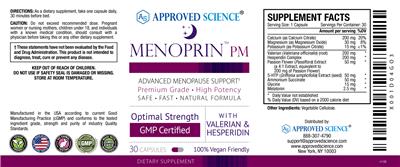
Menoprin PM contains 10 active ingredients. Glycine is an amino acid; calcium and magnesium are minerals that support bone and muscle function; 5-HTP is a precursor to serotonin; melatonin is a hormone that regulates sleep; potassium is an electrolyte; hesperidin is a bioflavonoid from citrus; valerian and passionflower extract are herbal ingredients traditionally used for relaxation and sleep support.
One ingredient, ammonium succinate, could not be fully evaluated. The product also contains cellulose as an inactive ingredient.
Does it work?
Strong evidence
Evidence for this product's effectiveness is mixed and often limited. Melatonin is likely effective for non-24-hour sleep-wake disorder and delayed sleep phase syndrome.
Valerian and passionflower are both possibly effective for insomnia and pre-procedural anxiety, though the data isn't as robust. Glycine is possibly effective for schizophrenia but shows insufficient evidence for other conditions it's sometimes used for.
5-HTP is possibly effective for depression. Hesperidin appears possibly ineffective for obesity and cholesterol, with insufficient evidence for fatty liver disease.
Magnesium and calcium have established roles in correcting specific deficiencies, but the evidence supporting this product as a whole for menopause-related sleep isn't detailed in our data.
How safe is it?
Well-documented data
Overall, Menoprin PM's ingredients are generally well tolerated at recommended doses, though each carries caveats. Glycine, 5-HTP, melatonin, and valerian can cause drowsiness, dizziness, headache, and gastrointestinal upset in some people—these tend to be mild and dose-dependent.
Calcium and magnesium are safe at recommended amounts but can cause constipation, diarrhea, or stomach upset, and very high doses of calcium may carry concerns about kidney stones and prostate cancer risk. Potassium supplements carry a serious risk if kidney function is impaired or if you take certain blood pressure medications.
Hesperidin and passionflower are generally well tolerated short-term; a rare case of allergic skin reaction was reported with topical hesperidin. Long-term safety data for valerian, melatonin, and 5-HTP are limited.
For pregnancy, the data varies: calcium and magnesium have reasonable safety profiles at normal intake, but 5-HTP, melatonin, hesperidin, valerian, and passionflower all lack sufficient safety data and should be avoided unless your doctor approves. Breastfeeding safety is similarly uncertain for most of these ingredients.
Meds to double-check
Major interaction found
Before taking Menoprin PM, check with your pharmacist if you take HIV integrase inhibitors (dolutegravir or elvitegravir—Major severity), levodopa/carbidopa for Parkinson's disease (Major), blood thinners or antiplatelet drugs, thyroid medication (levothyroxine), heart or blood pressure medications (especially calcium channel blockers like diltiazem or verapamil, or beta-blockers like sotalol), diabetes drugs, ACE inhibitors or ARBs, potassium-sparing diuretics, seizure medication, antacids, antibiotics (especially quinolones), bone medications (bisphosphonates), or any sedating drugs (antihistamines, opioids, benzodiazepines, sleeping pills, alcohol). These represent the main categories at risk.
The bottom line
Scorecard at a glanceFully disclosed formula with clinical evidence supporting its stated purpose. Major medication interactions have been identified, and safety information is well characterized.
Menoprin PM may help some people with sleep during menopause, especially if valerian, passionflower, and melatonin are the main active ingredients. However, if you take any prescription medications—particularly blood pressure drugs, thyroid medication, blood thinners, diabetes drugs, HIV medications, or central nervous system depressants—you need to check your specific drugs against the interaction tool below.
The calcium and magnesium content alone can significantly reduce the effectiveness of several important medications. Talk to your pharmacist before starting this product.
Educational only — not medical advice; always confirm with your pharmacist. Our editorial policy · How we use AI
Assessment coverage: 9 of 10 active ingredients matched to our full ingredient reviews (monographs). Based on the product label dated Nov 22, 2024.
This Scorecard evaluates available label information, ingredient evidence, and known medication-safety considerations. It does not independently verify product identity, purity, potency, contamination, or manufacturing quality. How these ratings are computed
General information
Key facts about Menoprin PM, straight from the product label.
| Brand | Approved Science |
|---|---|
| Barcode (UPC) | X001D04GO3 |
| Net contents | 30 Capsule(s) |
| Market status | On market |
| Date entered into DSLD | Nov 22, 2024 |
| DSLD ID | 319789 |
| Product type | Other Combinations |
| Supplement form | Capsule |
| Dietary claims / uses | All Other, Structure/Function |
| Intended target group(s) | Vegan, Vegetarian, Adult Female (18 - 50 Years), Menopause, Seniors/Mature (>50 Years) - Women ONLY, Dairy Free |
Everything in this section is reproduced from the manufacturer’s own product label — it’s the label speaking, not HelloPharmacist. We show it so you can see exactly what the maker states; we don’t verify or endorse those statements.
Supplement Facts
The label details for Menoprin PM by Approved Science, sourced from the NIH Dietary Supplement Label Database.
Supplement Facts
| Ingredient | Amount | % DV |
|---|---|---|
| Glycine | 15 mg | -- |
| Calcium | 200 mg | 20% |
| 5-HTP | 50 mg | -- |
| Melatonin | 2.5 mg | -- |
| Magnesium | 30 mg | 8% |
| Potassium | 15 mg | 1% |
| Ammonium Succinate | 50 mg | -- |
| Hesperidin Complex | 200 mg | -- |
| Valerian | 200 mg | -- |
| Passionflower Extract | 50 mg | -- |
Other ingredients: Cellulose
Tap any ingredient to jump to its full detail below.
These statements are the manufacturer’s wording, reproduced from the product label — the label is saying it, not HelloPharmacist. We don’t verify or endorse them.
Suggested/Recommended/Usage/Directions
Directions: As a dietary supplement, take one capsule daily, 30 minutes before bed.
Precautions
Caution: Do not exceed recommended dose. Do not use if safety seal is damaged or missing.
Pregnant women or nursing mothers, children under 18, and individuals with a known medical condition, should consult with a physician before taking this or any other dietary supplement.
Pregnant women or nursing mothers, children under 18, and individuals with a known medical condition, should consult with a physician before taking this or any other dietary supplement. Keep out of reach of children.
FDA Disclaimer Statement
These statements have not been evaluated by the Food and Drug Administration. This product is not intended to diagnose, treat, cure or prevent any disease.
Storage
Store at room temperature.
Formulation
Manufactured in the USA according to Good Manufacturing Practice (cGMP) and conforms to the tested ingredients grade, strength and purity of industry Quality Standards.
Vegan friendly
Made with GMO free ingredients
Advanced menopause support Premium grade High potency Safe Fast Natural formula Optimal strength GMP Certified
100% vegan friendly
Seals/Symbols
Vegan friendly Made in USA No animal testing GMP Good Manufacturing Practice Quality Product
Formula
Menoprin PM with valerian & hesperidin
FDA Statement of Identity
Dietary Supplement
Is this label outdated? Report a formula or label change and our pharmacy team will review it.
Menoprin PM by Approved Science label
The label scan from the NIH Dietary Supplement Label Database. Tap to enlarge.
Label images are published by the NIH Dietary Supplement Label Database for the version of this product on file. Always read your actual product label.
View the full label (PDF)The Ingredients in Menoprin PM by Approved Science
These are the 10 active ingredients this product is made of. Select any to open its full monograph.
Serving size1 Capsule(s) Dosage formCapsule Servings per container30 Amounts shown are per serving.
Most supplement products combine several ingredients, and a medication can interact with the product through any one of them. Each ingredient below shows whether it has known drug interactions.
Glycine
Interacts with1 drug
Glycine is a non-essential amino acid your body makes on its own and that also appears in protein-rich foods. It is most studied for improving sleep q...
Glycine monograph & interactionsCalcium
Interacts with168 drugs
Calcium is an essential mineral your body needs for strong bones, nerve signaling, and muscle function, and supplements can help fill gaps when diet f...
Calcium monograph & interactions5-HTP
Interacts with398 drugs
5-HTP is a compound your body uses to make serotonin, and people take it as a supplement hoping to improve mood, sleep, and headaches. Some early rese...
5-HTP monograph & interactionsMelatonin
Interacts with1,463 drugs
Melatonin is a hormone your body makes naturally to help control your sleep-wake cycle, and the supplement form is widely used to help with sleep timi...
Melatonin monograph & interactionsMagnesium
Interacts with295 drugs
Magnesium is an essential mineral your body needs for muscles, nerves, blood pressure, and many other functions, and supplements are useful for preven...
Magnesium monograph & interactionsPotassium
Interacts with62 drugs
Potassium is an essential mineral your body needs for nerve signals, muscle function, and a steady heartbeat, and most people get enough from a balanc...
Potassium monograph & interactionsAmmonium Succinate
Hesperidin Complex
Interacts with703 drugs
Hesperidin is a flavonoid found in citrus fruits that is often combined with diosmin and used for vein and circulation problems like hemorrhoids and v...
Hesperidin Complex monograph & interactionsValerian
Interacts with904 drugs
Valerian is an herb whose root is widely used as a natural sleep aid and for calming nerves. The evidence is mixed and often weak, so it may help some...
Valerian monograph & interactionsPassionflower Extract
Interacts with838 drugs
Passion flower is a traditional calming herb that many people use for anxiety and sleep. Early studies hint it may help with mild anxiety and restless...
Passionflower Extract monograph & interactionsOther (inactive) ingredients: Cellulose. These complete the product’s ingredient list but are not active constituents.
Menoprin PM by Approved Science Drug Interactions
HelloPharmacist Interaction Report
Menoprin PM by Approved Science contains several ingredients with documented interactions with medications.
The most serious concern is calcium, which can dangerously reduce levels of two HIV integrase inhibitors—dolutegravir (Tivicay) and elvitegravir (Vitekta)—both rated Major severity. Calcium also poses a Major risk if given intravenously alongside the antibiotic ceftriaxone (Rocephin), which can cause life-threatening precipitation in the lungs and kidneys.
Read the full breakdown — every affected drug type, severity by severity
Other Major interactions include magnesium with levodopa/carbidopa (Sinemet), used for Parkinson's disease, where magnesium can cut levodopa levels by 35%. Calcium has several Moderate interactions affecting thyroid medication (levothyroxine), heart rhythm drugs (sotalol), blood pressure medication (diltiazem), another integrase inhibitor (raltegravir), and a vitamin D analog (calcipotriene).
Magnesium interacts Moderately with skeletal muscle relaxants, potassium-sparing diuretics, calcium channel blockers, antacids, diabetes drugs (sulfonylureas), antibiotics (quinolones), and bone medications (bisphosphonates). Potassium can raise levels dangerously when combined with potassium-sparing diuretics, ACE inhibitors, or ARBs.
5-HTP, melatonin, hesperidin, valerian, and passionflower all carry Moderate interactions with central nervous system depressants (sedating drugs), and may add to drowsiness. 5-HTP and melatonin can also interact with serotonergic drugs and antidiabetes medication respectively.
Melatonin further interacts with blood thinners, immunosuppressants, anti-seizure medication, and blood pressure drugs. Hesperidin may affect certain heart medications (verapamil, diltiazem) and anticoagulants.
Valerian interacts with alcohol and has minor interactions with certain enzyme-metabolized drugs. We could not check ammonium succinate—no data is on file for it.
Altogether, these interactions span 1,616 individual medications. Run your exact medications through the checker below before starting this product.
Check your own medications below · Editorial policy · How we use AI
Want to check YOUR meds against Menoprin PM?
Ask about interactions with your drugs in plain English — “Can I take it with lisinopril?” — and we find you the answer in seconds, ingredient by ingredient.
Go to the checkerIngredients driving the most interactions
Individual Drug Interactions
The ingredients in Menoprin PM interact with 1,636 drugs. Click any drug to see the details.
9 of the 10 ingredients in Menoprin PM interact with drugs. Each result below shows which ingredient is responsible. Melatonin Valerian Passionflower Extract Hesperidin Complex 5-HTP Magnesium Calcium Potassium Glycine
Benserazide, LevodopaMadopar, Prolopa
How Benserazide, Levodopa interacts with Menoprin PM — through 2 ingredients. Tap an ingredient for the detail:
MagnesiumLevodopa/carbidopa (sinemet) Major
Interaction Summary
Magnesium can reduce the bioavailability of levodopa/carbidopa.
Read the full Magnesium + Benserazide, Levodopa interactionMelatoninSeizure Threshold Lowering Drugs Moderate
Interaction Summary
Theoretically, taking melatonin with drugs that lower the seizure threshold might increase the risk of seizure activity.
Read the full Melatonin + Benserazide, Levodopa interactionCarbidopaLodosyn
How Carbidopa interacts with Menoprin PM — through 2 ingredients. Tap an ingredient for the detail:
MagnesiumLevodopa/carbidopa (sinemet) Major
Interaction Summary
Magnesium can reduce the bioavailability of levodopa/carbidopa.
Read the full Magnesium + Carbidopa interaction5-htpCarbidopa (lodosyn) Moderate
Interaction Summary
Combining 5-HTP and carbidopa can increase the risk of serotonergic side effects.
Read the full 5-htp + Carbidopa interactionCarbidopa, LevodopaDhivy, Rytary, Sinemet, Sinemet CR
How Carbidopa, Levodopa interacts with Menoprin PM — through 3 ingredients. Tap an ingredient for the detail:
MagnesiumLevodopa/carbidopa (sinemet) Major
Interaction Summary
Magnesium can reduce the bioavailability of levodopa/carbidopa.
Read the full Magnesium + Carbidopa, Levodopa interaction5-htpCarbidopa (lodosyn) Moderate
Interaction Summary
Combining 5-HTP and carbidopa can increase the risk of serotonergic side effects.
Read the full 5-htp + Carbidopa, Levodopa interactionMelatoninSeizure Threshold Lowering Drugs Moderate
Interaction Summary
Theoretically, taking melatonin with drugs that lower the seizure threshold might increase the risk of seizure activity.
Read the full Melatonin + Carbidopa, Levodopa interactionCarbidopa, Levodopa, EntacaponeStalevo
How Carbidopa, Levodopa, Entacapone interacts with Menoprin PM — through 4 ingredients. Tap an ingredient for the detail:
MagnesiumLevodopa/carbidopa (sinemet) Major
Interaction Summary
Magnesium can reduce the bioavailability of levodopa/carbidopa.
Read the full Magnesium + Carbidopa, Levodopa, Entacapone interaction5-htpCarbidopa (lodosyn) Moderate
Interaction Summary
Combining 5-HTP and carbidopa can increase the risk of serotonergic side effects.
Read the full 5-htp + Carbidopa, Levodopa, Entacapone interactionValerianGlucuronidated Drugs Moderate
Interaction Summary
Valerian might weakly inhibit glucuronidation and increase concentrations of drugs metabolized by UGT1A1 and UGT2B7.
Read the full Valerian + Carbidopa, Levodopa, Entacapone interactionMelatoninSeizure Threshold Lowering Drugs Moderate
Interaction Summary
Theoretically, taking melatonin with drugs that lower the seizure threshold might increase the risk of seizure activity.
Read the full Melatonin + Carbidopa, Levodopa, Entacapone interactionCeftriaxoneRocephin
How Ceftriaxone interacts with Menoprin PM — through 2 ingredients. Tap an ingredient for the detail:
CalciumCeftriaxone (rocephin) Major
Interaction Summary
Co-administration of intravenous calcium and ceftriaxone can result in precipitation of a ceftriaxone-calcium salt in the lungs and kidneys.
Read the full Calcium + Ceftriaxone interactionMelatoninSeizure Threshold Lowering Drugs Moderate
Interaction Summary
Theoretically, taking melatonin with drugs that lower the seizure threshold might increase the risk of seizure activity.
Read the full Melatonin + Ceftriaxone interactionCobicistat, Elvitegravir, Emtricitabine, Tenofovir Alafenamide FumarateGenvoya
How Cobicistat, Elvitegravir, Emtricitabine, Tenofovir Alafenamide Fumarate interacts with Menoprin PM — through 6 ingredients. Tap an ingredient for the detail:
CalciumElvitegravir (vitekta), Bictegravir/emtricitabine/tenofovir Alafenamide (biktarvy) Major
Interaction Summary
Calcium seems to reduce levels of elvitegravir.
Read the full Calcium + Cobicistat, Elvitegravir, Emtricitabine, Tenofovir Alafenamide Fumarate interactionMagnesiumBictegravir/emtricitabine/tenofovir Alafenamide (biktarvy) Moderate
Interaction Summary
Magnesium might decrease levels of bictegravir/emtricitabine/tenofovir alafenamide by reducing its absorption.
Read the full Magnesium + Cobicistat, Elvitegravir, Emtricitabine, Tenofovir Alafenamide Fumarate interactionHesperidin ComplexP-glycoprotein Substrates Moderate
Interaction Summary
Theoretically, hesperidin might inhibit P-glycoprotein-mediated drug efflux and potentially increase levels of drugs that are substrates of P-glycoprotein.
Read the full Hesperidin Complex + Cobicistat, Elvitegravir, Emtricitabine, Tenofovir Alafenamide Fumarate interactionMelatoninCytochrome P450 3a4 (cyp3a4) Substrates Minor
Interaction Summary
Theoretically, melatonin might increase levels of drugs metabolized by CYP3A4.
Read the full Melatonin + Cobicistat, Elvitegravir, Emtricitabine, Tenofovir Alafenamide Fumarate interactionPassionflower ExtractCytochrome P450 3a4 (cyp3a4) Substrates Minor
Interaction Summary
Theoretically, passion flower might decrease the effects of CYP3A4 substrates.
Read the full Passionflower Extract + Cobicistat, Elvitegravir, Emtricitabine, Tenofovir Alafenamide Fumarate interactionValerianCytochrome P450 3a4 (cyp3a4) Substrates Minor
Interaction Summary
Valerian does not seem to have a clinically relevant effect on levels of drugs metabolized by CYP3A4.
Read the full Valerian + Cobicistat, Elvitegravir, Emtricitabine, Tenofovir Alafenamide Fumarate interactionDolutegravirTivicay
How Dolutegravir interacts with Menoprin PM — through 3 ingredients. Tap an ingredient for the detail:
CalciumDolutegravir (tivicay) Major
Interaction Summary
Calcium seems to reduce levels of dolutegravir.
Read the full Calcium + Dolutegravir interactionValerianGlucuronidated Drugs Moderate
Interaction Summary
Valerian might weakly inhibit glucuronidation and increase concentrations of drugs metabolized by UGT1A1 and UGT2B7.
Read the full Valerian + Dolutegravir interactionHesperidin ComplexP-glycoprotein Substrates Moderate
Interaction Summary
Theoretically, hesperidin might inhibit P-glycoprotein-mediated drug efflux and potentially increase levels of drugs that are substrates of P-glycoprotein.
Read the full Hesperidin Complex + Dolutegravir interactionDolutegravir, Emtricitabine, Tenofovir AlafenamideDolutegravir, Emtricitabine, Tenofovir Alafenamide
How Dolutegravir, Emtricitabine, Tenofovir Alafenamide interacts with Menoprin PM — through 4 ingredients. Tap an ingredient for the detail:
CalciumDolutegravir (tivicay), Bictegravir/emtricitabine/tenofovir Alafenamide (biktarvy) Major
Interaction Summary
Calcium seems to reduce levels of dolutegravir.
Read the full Calcium + Dolutegravir, Emtricitabine, Tenofovir Alafenamide interactionMagnesiumBictegravir/emtricitabine/tenofovir Alafenamide (biktarvy) Moderate
Interaction Summary
Magnesium might decrease levels of bictegravir/emtricitabine/tenofovir alafenamide by reducing its absorption.
Read the full Magnesium + Dolutegravir, Emtricitabine, Tenofovir Alafenamide interactionHesperidin ComplexP-glycoprotein Substrates Moderate
Interaction Summary
Theoretically, hesperidin might inhibit P-glycoprotein-mediated drug efflux and potentially increase levels of drugs that are substrates of P-glycoprotein.
Read the full Hesperidin Complex + Dolutegravir, Emtricitabine, Tenofovir Alafenamide interactionValerianGlucuronidated Drugs Moderate
Interaction Summary
Valerian might weakly inhibit glucuronidation and increase concentrations of drugs metabolized by UGT1A1 and UGT2B7.
Read the full Valerian + Dolutegravir, Emtricitabine, Tenofovir Alafenamide interactionDolutegravir, RilpivirineJuluca
How Dolutegravir, Rilpivirine interacts with Menoprin PM — through 5 ingredients. Tap an ingredient for the detail:
CalciumDolutegravir (tivicay) Major
Interaction Summary
Calcium seems to reduce levels of dolutegravir.
Read the full Calcium + Dolutegravir, Rilpivirine interactionValerianGlucuronidated Drugs, Cytochrome P450 3a4 (cyp3a4) Substrates Moderate
Interaction Summary
Valerian might weakly inhibit glucuronidation and increase concentrations of drugs metabolized by UGT1A1 and UGT2B7.
Read the full Valerian + Dolutegravir, Rilpivirine interactionHesperidin ComplexP-glycoprotein Substrates Moderate
Interaction Summary
Theoretically, hesperidin might inhibit P-glycoprotein-mediated drug efflux and potentially increase levels of drugs that are substrates of P-glycoprotein.
Read the full Hesperidin Complex + Dolutegravir, Rilpivirine interactionPassionflower ExtractCytochrome P450 3a4 (cyp3a4) Substrates Minor
Interaction Summary
Theoretically, passion flower might decrease the effects of CYP3A4 substrates.
Read the full Passionflower Extract + Dolutegravir, Rilpivirine interactionMelatoninCytochrome P450 3a4 (cyp3a4) Substrates Minor
Interaction Summary
Theoretically, melatonin might increase levels of drugs metabolized by CYP3A4.
Read the full Melatonin + Dolutegravir, Rilpivirine interactionElvitegravirVitekta
How Elvitegravir interacts with Menoprin PM — through 4 ingredients. Tap an ingredient for the detail:
CalciumElvitegravir (vitekta) Major
Interaction Summary
Calcium seems to reduce levels of elvitegravir.
Read the full Calcium + Elvitegravir interactionMelatoninCytochrome P450 3a4 (cyp3a4) Substrates Minor
Interaction Summary
Theoretically, melatonin might increase levels of drugs metabolized by CYP3A4.
Read the full Melatonin + Elvitegravir interactionPassionflower ExtractCytochrome P450 3a4 (cyp3a4) Substrates Minor
Interaction Summary
Theoretically, passion flower might decrease the effects of CYP3A4 substrates.
Read the full Passionflower Extract + Elvitegravir interactionValerianCytochrome P450 3a4 (cyp3a4) Substrates Minor
Interaction Summary
Valerian does not seem to have a clinically relevant effect on levels of drugs metabolized by CYP3A4.
Read the full Valerian + Elvitegravir interactionElvitegravir, Cobicistat, Emtricitabine, Tenofovir Disoproxil FumarateStribild
How Elvitegravir, Cobicistat, Emtricitabine, Tenofovir Disoproxil Fumarate interacts with Menoprin PM — through 5 ingredients. Tap an ingredient for the detail:
CalciumElvitegravir (vitekta), Bictegravir/emtricitabine/tenofovir Alafenamide (biktarvy) Major
Interaction Summary
Calcium seems to reduce levels of elvitegravir.
Read the full Calcium + Elvitegravir, Cobicistat, Emtricitabine, Tenofovir Disoproxil Fumarate interactionMagnesiumBictegravir/emtricitabine/tenofovir Alafenamide (biktarvy) Moderate
Interaction Summary
Magnesium might decrease levels of bictegravir/emtricitabine/tenofovir alafenamide by reducing its absorption.
Read the full Magnesium + Elvitegravir, Cobicistat, Emtricitabine, Tenofovir Disoproxil Fumarate interactionValerianCytochrome P450 3a4 (cyp3a4) Substrates Minor
Interaction Summary
Valerian does not seem to have a clinically relevant effect on levels of drugs metabolized by CYP3A4.
Read the full Valerian + Elvitegravir, Cobicistat, Emtricitabine, Tenofovir Disoproxil Fumarate interactionMelatoninCytochrome P450 3a4 (cyp3a4) Substrates Minor
Interaction Summary
Theoretically, melatonin might increase levels of drugs metabolized by CYP3A4.
Read the full Melatonin + Elvitegravir, Cobicistat, Emtricitabine, Tenofovir Disoproxil Fumarate interactionPassionflower ExtractCytochrome P450 3a4 (cyp3a4) Substrates Minor
Interaction Summary
Theoretically, passion flower might decrease the effects of CYP3A4 substrates.
Read the full Passionflower Extract + Elvitegravir, Cobicistat, Emtricitabine, Tenofovir Disoproxil Fumarate interactionLevodopaInbrija, Larodopa
How Levodopa interacts with Menoprin PM — through 2 ingredients. Tap an ingredient for the detail:
MagnesiumLevodopa/carbidopa (sinemet) Major
Interaction Summary
Magnesium can reduce the bioavailability of levodopa/carbidopa.
Read the full Magnesium + Levodopa interactionMelatoninSeizure Threshold Lowering Drugs Moderate
Interaction Summary
Theoretically, taking melatonin with drugs that lower the seizure threshold might increase the risk of seizure activity.
Read the full Melatonin + Levodopa interactionLevodopa, CarbidopaDuodopa
How Levodopa, Carbidopa interacts with Menoprin PM — through 3 ingredients. Tap an ingredient for the detail:
MagnesiumLevodopa/carbidopa (sinemet) Major
Interaction Summary
Magnesium can reduce the bioavailability of levodopa/carbidopa.
Read the full Magnesium + Levodopa, Carbidopa interactionMelatoninSeizure Threshold Lowering Drugs Moderate
Interaction Summary
Theoretically, taking melatonin with drugs that lower the seizure threshold might increase the risk of seizure activity.
Read the full Melatonin + Levodopa, Carbidopa interaction5-htpCarbidopa (lodosyn) Moderate
Interaction Summary
Combining 5-HTP and carbidopa can increase the risk of serotonergic side effects.
Read the full 5-htp + Levodopa, Carbidopa interaction6-mercaptopurinePurinethol
How 6-mercaptopurine interacts with Menoprin PM — through 1 ingredient. Tap an ingredient for the detail:
MelatoninImmunosuppressants Moderate
Interaction Summary
Theoretically, melatonin might interfere with immunosuppressive therapy.
Read the full Melatonin + 6-mercaptopurine interactionAbciximabReoPro
How Abciximab interacts with Menoprin PM — through 3 ingredients. Tap an ingredient for the detail:
MelatoninAnticoagulant/antiplatelet Drugs Moderate
Interaction Summary
Theoretically, melatonin may have anticoagulant effects and may increase the risk of bleeding if used with anticoagulant or antiplatelet drugs.
Read the full Melatonin + Abciximab interactionHesperidin ComplexAnticoagulant/antiplatelet Drugs Moderate
Interaction Summary
Theoretically, hesperidin may increase the risk of bleeding if used with anticoagulant or antiplatelet drugs.
Read the full Hesperidin Complex + Abciximab interactionMagnesiumAnticoagulant/antiplatelet Drugs Minor
Interaction Summary
Theoretically, magnesium may have antiplatelet effects, but the evidence is conflicting.
Read the full Magnesium + Abciximab interactionAbrocitinibCibinqo
How Abrocitinib interacts with Menoprin PM — through 3 ingredients. Tap an ingredient for the detail:
MelatoninCytochrome P450 2c19 (cyp2c19) Substrates, Anticoagulant/antiplatelet Drugs +1 Moderate
Interaction Summary
Theoretically, melatonin might increase levels of drugs metabolized by CYP2C19.
Read the full Melatonin + Abrocitinib interactionHesperidin ComplexAnticoagulant/antiplatelet Drugs Moderate
Interaction Summary
Theoretically, hesperidin may increase the risk of bleeding if used with anticoagulant or antiplatelet drugs.
Read the full Hesperidin Complex + Abrocitinib interactionMagnesiumAnticoagulant/antiplatelet Drugs Minor
Interaction Summary
Theoretically, magnesium may have antiplatelet effects, but the evidence is conflicting.
Read the full Magnesium + Abrocitinib interactionAcalabrutinibCalquence
How Acalabrutinib interacts with Menoprin PM — through 4 ingredients. Tap an ingredient for the detail:
Hesperidin ComplexP-glycoprotein Substrates Moderate
Interaction Summary
Theoretically, hesperidin might inhibit P-glycoprotein-mediated drug efflux and potentially increase levels of drugs that are substrates of P-glycoprotein.
Read the full Hesperidin Complex + Acalabrutinib interactionMelatoninCytochrome P450 3a4 (cyp3a4) Substrates Minor
Interaction Summary
Theoretically, melatonin might increase levels of drugs metabolized by CYP3A4.
Read the full Melatonin + Acalabrutinib interactionValerianCytochrome P450 3a4 (cyp3a4) Substrates Minor
Interaction Summary
Valerian does not seem to have a clinically relevant effect on levels of drugs metabolized by CYP3A4.
Read the full Valerian + Acalabrutinib interactionPassionflower ExtractCytochrome P450 3a4 (cyp3a4) Substrates Minor
Interaction Summary
Theoretically, passion flower might decrease the effects of CYP3A4 substrates.
Read the full Passionflower Extract + Acalabrutinib interactionAcarboseGlucobay, Prandase, Precose
How Acarbose interacts with Menoprin PM — through 1 ingredient. Tap an ingredient for the detail:
MelatoninAntidiabetes Drugs Moderate
Interaction Summary
Theoretically, taking melatonin with antidiabetes drugs might increase the risk of hypoglycemia.
Read the full Melatonin + Acarbose interactionAcebutololRhotral, Sectral
How Acebutolol interacts with Menoprin PM — through 2 ingredients. Tap an ingredient for the detail:
Hesperidin ComplexAntihypertensive Drugs Moderate
Interaction Summary
Theoretically, taking hesperidin with antihypertensive drugs might increase the risk of hypotension.
Read the full Hesperidin Complex + Acebutolol interactionMelatoninAntihypertensive Drugs Moderate
Interaction Summary
Theoretically, taking melatonin with antihypertensive drugs might increase the risk of hypotension or hypertension.
Read the full Melatonin + Acebutolol interactionAcenocoumarolSintrom
How Acenocoumarol interacts with Menoprin PM — through 3 ingredients. Tap an ingredient for the detail:
MelatoninAnticoagulant/antiplatelet Drugs Moderate
Interaction Summary
Theoretically, melatonin may have anticoagulant effects and may increase the risk of bleeding if used with anticoagulant or antiplatelet drugs.
Read the full Melatonin + Acenocoumarol interactionHesperidin ComplexAnticoagulant/antiplatelet Drugs Moderate
Interaction Summary
Theoretically, hesperidin may increase the risk of bleeding if used with anticoagulant or antiplatelet drugs.
Read the full Hesperidin Complex + Acenocoumarol interactionMagnesiumAnticoagulant/antiplatelet Drugs Minor
Interaction Summary
Theoretically, magnesium may have antiplatelet effects, but the evidence is conflicting.
Read the full Magnesium + Acenocoumarol interactionAcepromazineAtravet
How Acepromazine interacts with Menoprin PM — through 5 ingredients. Tap an ingredient for the detail:
Hesperidin ComplexCns Depressants Moderate
Interaction Summary
Theoretically, concomitant use with CNS depressants may cause additive sedative effects.
Read the full Hesperidin Complex + Acepromazine interactionMelatoninCns Depressants Moderate
Interaction Summary
Theoretically, taking melatonin might increase the sedative effects of CNS depressants.
Read the full Melatonin + Acepromazine interactionPassionflower ExtractCns Depressants Moderate
Interaction Summary
Concomitant use of passion flower with sedative drugs might cause additive effects and side effects.
Read the full Passionflower Extract + Acepromazine interactionValerianCns Depressants Moderate
Interaction Summary
Valerian can have additive sedative effects when used concomitantly with CNS depressant drugs.
Read the full Valerian + Acepromazine interaction5-htpCns Depressants Moderate
Interaction Summary
Theoretically, concomitant use of 5-HTP with medications that cause sedation might have additive effects.
Read the full 5-htp + Acepromazine interactionAcetaminophenChildren's Tylenol, Children's Tylenol Meltaways, Tylenol, Tylenol Ex Strength
How Acetaminophen interacts with Menoprin PM — through 2 ingredients. Tap an ingredient for the detail:
ValerianGlucuronidated Drugs Moderate
Interaction Summary
Valerian might weakly inhibit glucuronidation and increase concentrations of drugs metabolized by UGT1A1 and UGT2B7.
Read the full Valerian + Acetaminophen interactionMelatoninCytochrome P450 1a2 (cyp1a2) Substrates Moderate
Interaction Summary
Theoretically, melatonin might increase levels of drugs metabolized by CYP1A2.
Read the full Melatonin + Acetaminophen interactionAcetaminophen, AspirinGemnisyn
How Acetaminophen, Aspirin interacts with Menoprin PM — through 4 ingredients. Tap an ingredient for the detail:
MelatoninCytochrome P450 1a2 (cyp1a2) Substrates, Anticoagulant/antiplatelet Drugs Moderate
Interaction Summary
Theoretically, melatonin might increase levels of drugs metabolized by CYP1A2.
Read the full Melatonin + Acetaminophen, Aspirin interactionHesperidin ComplexAnticoagulant/antiplatelet Drugs Moderate
Interaction Summary
Theoretically, hesperidin may increase the risk of bleeding if used with anticoagulant or antiplatelet drugs.
Read the full Hesperidin Complex + Acetaminophen, Aspirin interactionValerianGlucuronidated Drugs Moderate
Interaction Summary
Valerian might weakly inhibit glucuronidation and increase concentrations of drugs metabolized by UGT1A1 and UGT2B7.
Read the full Valerian + Acetaminophen, Aspirin interactionMagnesiumAnticoagulant/antiplatelet Drugs Minor
Interaction Summary
Theoretically, magnesium may have antiplatelet effects, but the evidence is conflicting.
Read the full Magnesium + Acetaminophen, Aspirin interactionAcetaminophen, Aspirin, CaffeineExcedrin, Excedrin Extra Strength, Excedrin Migraine
How Acetaminophen, Aspirin, Caffeine interacts with Menoprin PM — through 5 ingredients. Tap an ingredient for the detail:
ValerianGlucuronidated Drugs, Cytochrome P450 3a4 (cyp3a4) Substrates Moderate
Interaction Summary
Valerian might weakly inhibit glucuronidation and increase concentrations of drugs metabolized by UGT1A1 and UGT2B7.
Read the full Valerian + Acetaminophen, Aspirin, Caffeine interactionMelatoninCytochrome P450 1a2 (cyp1a2) Substrates, Cytochrome P450 3a4 (cyp3a4) Substrates +2 Moderate
Interaction Summary
Theoretically, melatonin might increase levels of drugs metabolized by CYP1A2.
Read the full Melatonin + Acetaminophen, Aspirin, Caffeine interactionHesperidin ComplexAnticoagulant/antiplatelet Drugs Moderate
Interaction Summary
Theoretically, hesperidin may increase the risk of bleeding if used with anticoagulant or antiplatelet drugs.
Read the full Hesperidin Complex + Acetaminophen, Aspirin, Caffeine interactionPassionflower ExtractCytochrome P450 3a4 (cyp3a4) Substrates Minor
Interaction Summary
Theoretically, passion flower might decrease the effects of CYP3A4 substrates.
Read the full Passionflower Extract + Acetaminophen, Aspirin, Caffeine interactionMagnesiumAnticoagulant/antiplatelet Drugs Minor
Interaction Summary
Theoretically, magnesium may have antiplatelet effects, but the evidence is conflicting.
Read the full Magnesium + Acetaminophen, Aspirin, Caffeine interactionAcetaminophen, Brompheniramine, PhenylpropanolamineDimetapp Cold and Flu
How Acetaminophen, Brompheniramine, Phenylpropanolamine interacts with Menoprin PM — through 2 ingredients. Tap an ingredient for the detail:
MelatoninCytochrome P450 1a2 (cyp1a2) Substrates, Seizure Threshold Lowering Drugs Moderate
Interaction Summary
Theoretically, melatonin might increase levels of drugs metabolized by CYP1A2.
Read the full Melatonin + Acetaminophen, Brompheniramine, Phenylpropanolamine interactionValerianGlucuronidated Drugs Moderate
Interaction Summary
Valerian might weakly inhibit glucuronidation and increase concentrations of drugs metabolized by UGT1A1 and UGT2B7.
Read the full Valerian + Acetaminophen, Brompheniramine, Phenylpropanolamine interactionAcetaminophen, ButalbitalAxocet, Bancap, Bucet, Butex Forte, Esgic CF, Orbivan CF +5 more
How Acetaminophen, Butalbital interacts with Menoprin PM — through 2 ingredients. Tap an ingredient for the detail:
ValerianGlucuronidated Drugs Moderate
Interaction Summary
Valerian might weakly inhibit glucuronidation and increase concentrations of drugs metabolized by UGT1A1 and UGT2B7.
Read the full Valerian + Acetaminophen, Butalbital interactionMelatoninCytochrome P450 1a2 (cyp1a2) Substrates Moderate
Interaction Summary
Theoretically, melatonin might increase levels of drugs metabolized by CYP1A2.
Read the full Melatonin + Acetaminophen, Butalbital interactionAcetaminophen, Butalbital, CaffeineEsgic, Esgic Plus, Fiogesic, Fioricet, Repan, Tecnal +1 more
How Acetaminophen, Butalbital, Caffeine interacts with Menoprin PM — through 3 ingredients. Tap an ingredient for the detail:
MelatoninCytochrome P450 1a2 (cyp1a2) Substrates, Cytochrome P450 3a4 (cyp3a4) Substrates +1 Moderate
Interaction Summary
Theoretically, melatonin might increase levels of drugs metabolized by CYP1A2.
Read the full Melatonin + Acetaminophen, Butalbital, Caffeine interactionValerianGlucuronidated Drugs, Cytochrome P450 3a4 (cyp3a4) Substrates Moderate
Interaction Summary
Valerian might weakly inhibit glucuronidation and increase concentrations of drugs metabolized by UGT1A1 and UGT2B7.
Read the full Valerian + Acetaminophen, Butalbital, Caffeine interactionPassionflower ExtractCytochrome P450 3a4 (cyp3a4) Substrates Minor
Interaction Summary
Theoretically, passion flower might decrease the effects of CYP3A4 substrates.
Read the full Passionflower Extract + Acetaminophen, Butalbital, Caffeine interactionAcetaminophen, Butalbital, Caffeine, CodeineEsgic with Codeine, Fioricet w/ Codeine
How Acetaminophen, Butalbital, Caffeine, Codeine interacts with Menoprin PM — through 5 ingredients. Tap an ingredient for the detail:
ValerianCytochrome P450 3a4 (cyp3a4) Substrates, Cns Depressants +2 Moderate
Interaction Summary
Valerian does not seem to have a clinically relevant effect on levels of drugs metabolized by CYP3A4.
Read the full Valerian + Acetaminophen, Butalbital, Caffeine, Codeine interaction5-htpCns Depressants Moderate
Interaction Summary
Theoretically, concomitant use of 5-HTP with medications that cause sedation might have additive effects.
Read the full 5-htp + Acetaminophen, Butalbital, Caffeine, Codeine interactionMelatoninCns Depressants, Cytochrome P450 3a4 (cyp3a4) Substrates +4 Moderate
Interaction Summary
Theoretically, taking melatonin might increase the sedative effects of CNS depressants.
Read the full Melatonin + Acetaminophen, Butalbital, Caffeine, Codeine interactionPassionflower ExtractCytochrome P450 3a4 (cyp3a4) Substrates, Cns Depressants Moderate
Interaction Summary
Theoretically, passion flower might decrease the effects of CYP3A4 substrates.
Read the full Passionflower Extract + Acetaminophen, Butalbital, Caffeine, Codeine interactionHesperidin ComplexCns Depressants Moderate
Interaction Summary
Theoretically, concomitant use with CNS depressants may cause additive sedative effects.
Read the full Hesperidin Complex + Acetaminophen, Butalbital, Caffeine, Codeine interactionAcetaminophen, Butalbital, CodeineBancap w/ Codeine
How Acetaminophen, Butalbital, Codeine interacts with Menoprin PM — through 5 ingredients. Tap an ingredient for the detail:
Hesperidin ComplexCns Depressants Moderate
Interaction Summary
Theoretically, concomitant use with CNS depressants may cause additive sedative effects.
Read the full Hesperidin Complex + Acetaminophen, Butalbital, Codeine interactionPassionflower ExtractCns Depressants Moderate
Interaction Summary
Concomitant use of passion flower with sedative drugs might cause additive effects and side effects.
Read the full Passionflower Extract + Acetaminophen, Butalbital, Codeine interactionMelatoninCns Depressants, Cytochrome P450 2d6 (cyp2d6) Substrates +2 Moderate
Interaction Summary
Theoretically, taking melatonin might increase the sedative effects of CNS depressants.
Read the full Melatonin + Acetaminophen, Butalbital, Codeine interactionValerianGlucuronidated Drugs, Cytochrome P450 2d6 (cyp2d6) Substrates +1 Moderate
Interaction Summary
Valerian might weakly inhibit glucuronidation and increase concentrations of drugs metabolized by UGT1A1 and UGT2B7.
Read the full Valerian + Acetaminophen, Butalbital, Codeine interaction5-htpCns Depressants Moderate
Interaction Summary
Theoretically, concomitant use of 5-HTP with medications that cause sedation might have additive effects.
Read the full 5-htp + Acetaminophen, Butalbital, Codeine interactionAcetaminophen, Butalbital, Codeine PhosphatePhrenilin #3
How Acetaminophen, Butalbital, Codeine Phosphate interacts with Menoprin PM — through 5 ingredients. Tap an ingredient for the detail:
MelatoninCytochrome P450 1a2 (cyp1a2) Substrates, Seizure Threshold Lowering Drugs +2 Moderate
Interaction Summary
Theoretically, melatonin might increase levels of drugs metabolized by CYP1A2.
Read the full Melatonin + Acetaminophen, Butalbital, Codeine Phosphate interactionValerianGlucuronidated Drugs, Cytochrome P450 2d6 (cyp2d6) Substrates +1 Moderate
Interaction Summary
Valerian might weakly inhibit glucuronidation and increase concentrations of drugs metabolized by UGT1A1 and UGT2B7.
Read the full Valerian + Acetaminophen, Butalbital, Codeine Phosphate interactionPassionflower ExtractCns Depressants Moderate
Interaction Summary
Concomitant use of passion flower with sedative drugs might cause additive effects and side effects.
Read the full Passionflower Extract + Acetaminophen, Butalbital, Codeine Phosphate interactionHesperidin ComplexCns Depressants Moderate
Interaction Summary
Theoretically, concomitant use with CNS depressants may cause additive sedative effects.
Read the full Hesperidin Complex + Acetaminophen, Butalbital, Codeine Phosphate interaction5-htpCns Depressants Moderate
Interaction Summary
Theoretically, concomitant use of 5-HTP with medications that cause sedation might have additive effects.
Read the full 5-htp + Acetaminophen, Butalbital, Codeine Phosphate interactionEach ingredient & the kinds of drugs it affects
For each ingredient in Menoprin PM with known interactions, here are the types of medications they can affect. Open any type for the detail — or search your exact drug in the checker above.
Melatonin
Anticoagulant/Antiplatelet Drugs
Theoretically, melatonin may have anticoagulant effects and may increase the risk of bleeding if used with anticoagulant or antiplatelet drugs.
There are isolated case reports of minor bleeding and decreased prothrombin activity in people taking melatonin with warfarin (Coumadin). The mechanism, if any, of this interaction is unknown. Taking melatonin orally seems to decrease coagulation activity within one hour of dosing in healthy men.
Anticonvulsants
Theoretically, melatonin may reduce the effects of anticonvulsants. Some clinical research suggests that melatonin may increase the frequency of seizures in certain patients, particularly children with neurological impairment.
Antidiabetes Drugs
Theoretically, taking melatonin with antidiabetes drugs might increase the risk of hypoglycemia.
Some clinical research shows that melatonin reduces levels of fasting blood glucose and improves glycemic control. However, other research suggests that melatonin might impair glucose utilization and increase insulin resistance, while other research has found no effect on glucose levels. Until more is known, use melatonin cautiously in combination with antidiabetes drugs.
Antihypertensive Drugs
Theoretically, taking melatonin with antihypertensive drugs might increase the risk of hypotension or hypertension.
Some clinical research suggests that taking melatonin decreases blood pressure in healthy adults. Also, melatonin seems to lower systolic and diastolic blood pressure in individuals with high blood pressure at nighttime or untreated essential hypertension. However, melatonin seems to worsen blood pressure in patients who are taking antihypertensive medications. Immediate-release melatonin 5 mg at night in combination with nifedipine GITS (Procardia XL) increases systolic blood pressure an average of 6.5 mmHg, diastolic blood pressure by an average of 4.9 mmHg, and heart rate by 3.9 bpm. Also, results from animal research suggest that melatonin reduces the effectiveness of certain antihypertensive drugs, including methoxamine and clonidine.
Caffeine
Theoretically, taking caffeine with melatonin might increase levels of melatonin.
Some evidence suggests that caffeine consumption can decrease endogenous melatonin levels, while other evidence suggests that caffeine increases endogenous melatonin levels. When administered in combination with melatonin supplements, caffeine seems to increase melatonin effects and levels. The reason for this discrepancy is not completely clear. Part of the discrepancy may result from the fact that caffeine can inhibit melatonin synthesis as well as inhibit melatonin metabolism. By functioning as an adenosine receptor antagonist, caffeine may indirectly inhibit the synthesis of melatonin. Conversely, because melatonin and caffeine are both metabolized by cytochrome P450 1A2 (CYP1A2) enzyme, concomitant use of melatonin and caffeine may reduce the metabolism of melatonin, resulting in higher serum levels.
Cns Depressants
Theoretically, taking melatonin might increase the sedative effects of CNS depressants.
Melatonin has sedative effects. Theoretically, concomitant use of melatonin with alcohol, benzodiazepines, or other sedative drugs might cause additive sedation.
Contraceptive Drugs
Theoretically, taking contraceptive drugs with melatonin might increase the effects and adverse effects of melatonin.
Contraceptive drugs can increase the levels of endogenous melatonin. Theoretically, these drugs may increase the effects and adverse effects of oral melatonin.
Cytochrome P450 1A2 (Cyp1A2) Substrates
Theoretically, melatonin might increase levels of drugs metabolized by CYP1A2. Also, other CYP1A2 substrates might decrease the metabolism of melatonin, increasing melatonin levels.
Melatonin is metabolized in the liver primarily by the CYP2C19 and CYP1A2 enzymes. Theoretically, combined administration of melatonin with drugs metabolized by the CYP1A2 enzyme might reduce the metabolism of these drugs, resulting in increased serum levels. Conversely, some drugs metabolized by CYP1A2 may inhibit the metabolism of melatonin, resulting in increased serum levels of melatonin. Until more is known, use melatonin cautiously in patients taking drugs metabolized by these enzymes.
Cytochrome P450 2C19 (Cyp2C19) Substrates
Theoretically, melatonin might increase levels of drugs metabolized by CYP2C19. Also, other CYP2C19 substrates might decrease the metabolism of melatonin, increasing melatonin levels.
Melatonin is metabolized in the liver primarily by the CYP2C19 and CYP1A2 enzymes. Theoretically, combined administration of melatonin with certain drugs metabolized by the CYP2C19 enzyme may reduce the metabolism of these drugs, resulting in increased serum levels. Conversely, some drugs metabolized by CYP2C19 may inhibit the metabolism of melatonin, resulting in increased serum levels of melatonin. Until more is known, use melatonin cautiously in patients taking drugs metabolized by these enzymes.
Fluvoxamine (Luvox)
Theoretically, taking fluvoxamine with melatonin might increase levels of melatonin.
Fluvoxamine can significantly increase melatonin levels. In some cases, fluvoxamine might increase bioavailability of exogenously administered melatonin by up to 20 times. Some researchers think this might be a beneficial interaction and be potentially useful for cases of refractory insomnia. However, this interaction might also cause unwanted excessive drowsiness and possibly other adverse effects. Fluvoxamine is known to increase endogenous melatonin secretion. It seems to increase serum levels of exogenously administered melatonin possibly by decreasing melatonin metabolism by inhibiting cytochrome P450 (CYP450) 1A2 and 2C19 or by inhibiting melatonin elimination. This effect has been found in healthy people taking fluvoxamine 50-75 mg and melatonin 5 mg.
Immunosuppressants
Theoretically, melatonin might interfere with immunosuppressive therapy.
Melatonin can stimulate immune function. Theoretically, melatonin might interfere with immunosuppressive therapy.
Methamphetamine (Desoxyn)
Theoretically, taking melatonin with methamphetamine may increase the adverse effects of methamphetamine.
Animal research suggests that melatonin exacerbates the adverse effects of methamphetamine, resulting in greater depression of tryptophan hydroxylase (TPH) and tyrosine hydroxylase (TH) activity, as well as a significant reduction in dopamine levels. This has not been shown in humans.
Nifedipine Gits (Procardia Xl)
Theoretically, taking melatonin with extended release nifedipine reduces the effects of nifedipine.
Melatonin can decrease the effectiveness of extended release nifedipine (GITS). Immediate-release melatonin 5 mg at night in combination with nifedipine GITS 30-60 mg daily increases systolic and blood pressure by an average of 6.5 mmHg and 4.9 mmHg, respectively. Concomitant use with melatonin also increases heart rate by 3.9 bpm. The mechanism of this interaction is not known.
Seizure Threshold Lowering Drugs
Theoretically, taking melatonin with drugs that lower the seizure threshold might increase the risk of seizure activity.
Some clinical evidence suggests that melatonin may increase the frequency of seizures in certain patients, particularly children with neurological disabilities.
Warfarin (Coumadin)
Theoretically, melatonin may have antiplatelet effects and may increase the risk of bleeding with warfarin.
Three cases of increased prothrombin time have been reported for patients aged 48-72 years who took melatonin orally in combination with warfarin. However, three cases of decreased prothrombin time have also been reported for patients aged 51-84 years who took melatonin orally in combination with warfarin. Until more is known, use melatonin cautiously in patients taking warfarin.
Cytochrome P450 2D6 (Cyp2D6) Substrates
Theoretically, melatonin might increase levels of drugs metabolized by CYP2D6.
Laboratory research suggests that certain lots of melatonin inhibit CYP2D6. Theoretically, combined administration of melatonin with certain drugs metabolized by the CYP2D6 enzyme may reduce the metabolism of these drugs, resulting in increased serum levels. Until more is known, use melatonin cautiously in patients taking drugs metabolized by these enzymes.
Cytochrome P450 3A4 (Cyp3A4) Substrates
Theoretically, melatonin might increase levels of drugs metabolized by CYP3A4.
Laboratory research shows that certain lots of melatonin inhibit CYP3A4. Theoretically, combined administration of melatonin with certain drugs metabolized by CYP3A4 may reduce the metabolism of these drugs, resulting in increased serum levels. Until more is known, use melatonin cautiously in patients taking drugs metabolized by these enzymes.
Flumazenil (Romazicon)
Theoretically, taking flumazenil with melatonin might reduce the effects of melatonin.
Animal research shows that flumazenil may inhibit the effect of melatonin.
Valerian
Alcohol (Ethanol)
Valerian can have additive sedative effects when used concomitantly with alcohol.
Valerian has sedative effects. Theoretically, valerian might have an additive sedative effect when combined with alcohol. Excessive sedation has been reported in an alcohol-abusing individual who took valerian and Gingko biloba. However, the potential interaction between valerian and alcohol has been disputed in other research. Limited evidence suggests that a combination of valerian 160 mg and lemon balm 80 mg (Euvegal) does not cause further deterioration in reaction ability and reaction rate when taken with alcohol as compared to the effects of alcohol alone.
Alprazolam (Xanax)
Valerian can have additive sedative effects when used with alprazolam. Also, valerian in high doses might modestly increase alprazolam levels, though this is not likely to be clinically significant.
Valerian has sedative effects. Theoretically, valerian might cause additive sedation when combined with alprazolam. Also, a small pharmacokinetic study shows that taking valerian extract 1000 mg daily (providing 11 mg valerenic acid) might increase alprazolam levels by about 19%. This might be due to valerian's mild inhibition of cytochrome P450 3A4 (CYP3A4). Despite being statistically significant, this increase is not likely to be clinically significant.
Cns Depressants
Valerian can have additive sedative effects when used concomitantly with CNS depressant drugs.
Theoretically, concomitant use of valerian and drugs with sedative and anesthetic properties may cause additive therapeutic and adverse effects.
Glucuronidated Drugs
Valerian might weakly inhibit glucuronidation and increase concentrations of drugs metabolized by UGT1A1 and UGT2B7.
In vitro research shows that methanolic valerian extract and valerenic acid might competitively inhibit UDP-glucuronosyltransferase (UGT) 1A1 (UGT1A1) and UGT2B7.
Cytochrome P450 2D6 (Cyp2D6) Substrates
Valerian does not seem to have a clinically relevant effect on levels of drugs metabolized by CYP2D6.
Although some in vitro evidence suggests that valerian affects CYP2D6, clinical pharmacokinetic (PK) studies show that valerian is unlikely to affect the CYP2D6 enzyme. In one PK study, taking valerian 1000 mg (providing about 11 mg valerenic acid) nightly for 14 days did not affect the metabolism of dextromethorphan, a CYP2D6 substrate. In another PK study, taking valerian 125 mg three times daily for 28 days did not affect metabolism of debrisoquine, an accepted CYP2D6 probe-substrate.
Cytochrome P450 3A4 (Cyp3A4) Substrates
Valerian does not seem to have a clinically relevant effect on levels of drugs metabolized by CYP3A4.
Although some in vitro evidence suggests that valerian extract might inhibit or induce CYP3A4, clinical pharmacokinetic (PK) studies show that valerian does not have a clinically significant effect on the CYP3A4 enzyme. In one PK study, taking valerian 125 mg three times daily for 28 days did not affect metabolism of midazolam, an accepted CYP3A4 probe-substrate. In another PK study, taking valerian 1000 mg (providing about 11 mg valerenic acid) nightly for 14 days modestly increases levels of alprazolam, a CYP3A4 substrate, suggesting mild inhibition of CYP3A4. However, this mild inhibition is unlikely to be clinically relevant.
Passionflower Extract
Cns Depressants
Concomitant use of passion flower with sedative drugs might cause additive effects and side effects.
Research in animals and humans shows that passion flower has sedative effects which can be additive when used with sedative medications like lorazepam.
Cytochrome P450 3A4 (Cyp3A4) Substrates
Theoretically, passion flower might decrease the effects of CYP3A4 substrates.
In vitro research suggests that passion flower can induce CYP3A4 enzymes, albeit to a much lower degree than rifampin, a known CYP3A4 inducer.
Organic Anion-Transporting Polypeptide Substrates (Oatp)
Theoretically, passion flower might reduce the bioavailability of OATP2B1 and OATP1A2 substrates.
In vitro research shows that the passion flower constituents apigenin and vitexin inhibit OATP2B1 and OATP1A2. This inhibition may be dose-dependent. One specific high-flavonoid passion flower extract (Valverde) seems to inhibit OATP2B1 and OATP1A2, while another extract with a lower flavonoid concentration (Arkocaps) shows less potent inhibition. OATPs are responsible for the uptake of drugs and other compounds into the body; however, the specific activities of OATP2B1 and OATP1A2 are not well characterized.
Hesperidin Complex
Anticoagulant/Antiplatelet Drugs
Theoretically, hesperidin may increase the risk of bleeding if used with anticoagulant or antiplatelet drugs.
Animal research suggests that hesperetin, a bioflavonoid aglycone derivative of hesperidin, may have antiplatelet activity.
Antihypertensive Drugs
Theoretically, taking hesperidin with antihypertensive drugs might increase the risk of hypotension.
Some clinical and animal research shows that hesperidin can decrease blood pressure. However, other clinical research shows that hesperidin does not affect blood pressure.
Celiprolol (Celicard)
Theoretically, hesperidin may decrease the levels and clinical effects of celiprolol.
Animal research shows that concomitant use of hesperidin may reduce the plasma area under the curve of celiprolol by up to 75%. This effect has not been reported in humans.
Cns Depressants
Theoretically, concomitant use with CNS depressants may cause additive sedative effects.
Animal studies show that hesperidin has sedative effects, due to opioid receptor activity and can increase sedation when used with diazepam. This effect has not been reported in humans.
Diltiazem (Cardizem, Others)
Theoretically, hesperidin may increase the levels and clinical effects of diltiazem.
Animal research suggests that hesperidin may enhance the bioavailability of diltiazem, increasing the plasma area under the curve of diltiazem by up to 65.3%. This effect has not been reported in humans.
P-Glycoprotein Substrates
Theoretically, hesperidin might inhibit P-glycoprotein-mediated drug efflux and potentially increase levels of drugs that are substrates of P-glycoprotein.
In vitro research shows that hesperidin can inhibit P-glycoprotein efflux. This effect has not been reported in humans.
Verapamil (Calan, Others)
Theoretically, hesperidin might increase the levels and clinical effects of verapamil.
Animal research suggests that hesperidin may enhance the bioavailability of verapamil, increasing the plasma area under the curve of verapamil by 96.8%. This effect has not been reported in humans
5-HTP
Carbidopa (Lodosyn)
Combining 5-HTP and carbidopa can increase the risk of serotonergic side effects.
Carbidopa is sometimes used with 5-HTP to minimize peripheral 5-HTP metabolism and boost the amount that reaches the brain. However, this combination might also increase the risk of some side effects including hypomania, restlessness, rapid speech, anxiety, insomnia, and aggressiveness. Combining carbidopa and 5-HTP might also increase the risk of scleroderma-like skin changes due to elevated serotonin levels.
Cns Depressants
Theoretically, concomitant use of 5-HTP with medications that cause sedation might have additive effects.
In clinical trials, 5-HTP has been associated with drowsiness and somnolence.
Serotonergic Drugs
Combining serotonergic drugs with 5-HTP might cause additive serotonergic effects.
5-HTP can increase serotonin levels and cause serotonergic effects. Theoretically, combining serotonergic drugs with 5-HTP might increase the risk of serotonergic side effects, including serotonin syndrome and cerebral vasoconstrictive disorders. However, serotonin syndrome with 5-HTP has not yet been reported in humans. Monitor patients for signs of serotonin syndrome and other serotonergic side effects if using 5-HTP with serotonergic drugs.
Magnesium
Levodopa/Carbidopa (Sinemet)
Magnesium can reduce the bioavailability of levodopa/carbidopa.
Clinical research in healthy volunteers shows that taking magnesium oxide 1000 mg with levodopa 100 mg/carbidopa 10 mg reduces the area under the curve (AUC) of levodopa by 35% and of carbidopa by 81%. In vitro and animal research shows that magnesium produces an alkaline environment in the digestive tract, which might lead to degradation and reduced bioavailability of levodopa/carbidopa.
Aminoglycoside Antibiotics
Concomitant use of aminoglycoside antibiotics and magnesium can increase the risk for neuromuscular weakness.
Both aminoglycosides and magnesium reduce presynaptic acetylcholine release, which can lead to neuromuscular blockade and possible paralysis. This is most likely to occur with high doses of magnesium given intravenously.
Antacids
Use of acid reducers may reduce the laxative effect of magnesium oxide.
A retrospective analysis shows that, in the presence of H2 receptor antagonists (H2RAs) or proton pump inhibitors (PPIs), a higher dose of magnesium oxide is needed for a laxative effect. This may also occur with antacids. Under acidic conditions, magnesium oxide is converted to magnesium chloride and then to magnesium bicarbonate, which has an osmotic laxative effect. By reducing acidity, antacids may reduce the conversion of magnesium oxide to the active bicarbonate salt.
Bictegravir/Emtricitabine/Tenofovir Alafenamide (Biktarvy)
Magnesium might decrease levels of bictegravir/emtricitabine/tenofovir alafenamide by reducing its absorption.
Advise patients that bictegravir/emtricitabine/tenofovir alafenamide should be taken at least 2 hours before or 6 hours after magnesium containing products.
Bisphosphonates
Magnesium can decrease absorption of bisphosphonates.
Cations, including magnesium, can decrease bisphosphonate absorption. Advise patients to separate doses of magnesium and these drugs by at least 2 hours.
Calcium Channel Blockers
Magnesium can have additive effects with calcium channel blockers, although evidence is conflicting.
Magnesium inhibits calcium entry into smooth muscle cells and may therefore have additive effects with calcium channel blockers. Severe hypotension and neuromuscular blockades may occur when nifedipine is used with intravenous magnesium, although some contradictory evidence suggests that concurrent use of magnesium with nifedipine does not increase the risk of neuromuscular weakness. High doses of magnesium could theoretically have additive effects with other calcium channel blockers.
Digoxin
Magnesium salts may reduce absorption of digoxin.
Clinical evidence suggests that treatment with oral magnesium hydroxide or magnesium trisilicate reduces absorption of digoxin from the intestines. This may reduce the blood levels of digoxin and decrease its therapeutic effects.
Potassium-Sparing Diuretics
Potassium-sparing diuretics decrease excretion of magnesium, possibly increasing magnesium levels.
Potassium-sparing diuretics also have magnesium-sparing properties, which can counteract the magnesium losses associated with loop and thiazide diuretics. Theoretically, increased magnesium levels could result from concomitant use of potassium-sparing diuretics and magnesium supplements.
Quinolone Antibiotics
Magnesium decreases absorption of quinolones.
Magnesium can form insoluble complexes with quinolones and decrease their absorption. Advise patients to take these drugs at least 2 hours before, or 4 to 6 hours after, magnesium supplements.
Skeletal Muscle Relaxants
Parenteral magnesium alters the pharmacokinetics of skeletal muscle relaxants, increasing their effects and accelerating the onset of effect.
Parenteral magnesium shortens the time to onset of skeletal muscle relaxants by about 1 minute and prolongs the duration of action by about 2 minutes. Magnesium potentiates the effects of skeletal muscle relaxants by decreasing calcium-mediated release of acetylcholine from presynaptic nerve terminals, reducing postsynaptic sensitivity to acetylcholine, and having a direct effect on the membrane potential of myocytes. Magnesium also has vasodilatory actions and increases cardiac output, allowing a greater amount of muscle relaxant to reach the motor end plate. A clinical study found that low-dose rocuronium (0.45 mg/kg), when given after administration of magnesium 30 mg/kg over 10 minutes, has an accelerated onset of effect, which matches the onset of effect seen with a full-dose rocuronium regimen (0.6 mg/kg). In another clinical study, onset times for rocuronium doses of 0.3, 0.6, and 1.2 mg/kg were 86, 76, and 50 seconds, respectively, when given alone, but were reduced to 66, 44, and 38 seconds, respectively, when the doses were given after a 15-minute infusion of magnesium sulfate 60 mg/kg. Giving intraoperative intravenous magnesium sulfate, 50 mg/kg loading dose followed by 15 mg/kg/hour, reduces the onset time of rocuronium, enhances its clinical effects, reduces the dose of intraoperative opiates, and prolongs the spontaneous recovery time. It does not affect the activity of subsequently administered neostigmine.
Sulfonylureas
Magnesium increases the systemic absorption of sulfonylureas, increasing their effects and side effects.
Clinical research shows that administration of magnesium hydroxide with glyburide increases glyburide absorption, increases maximal insulin response by 35-fold, and increases the risk of hypoglycemia, when compared with glyburide alone. A similar interaction occurs between magnesium hydroxide and glipizide. The mechanism of this effect appears to be related to the elevation of gastrointestinal pH by magnesium-based antacids, increasing solubility and enhancing absorption of sulfonylureas.
Tetracycline Antibiotics
Magnesium decreases absorption of tetracyclines.
Magnesium can form insoluble complexes with tetracyclines in the gut and decrease their absorption and antibacterial activity. Advise patients to take these drugs 1 hour before or 2 hours after magnesium supplements.
Anticoagulant/Antiplatelet Drugs
Theoretically, magnesium may have antiplatelet effects, but the evidence is conflicting.
In vitro evidence shows that magnesium sulfate inhibits platelet aggregation, even at low concentrations. Some preliminary clinical evidence shows that infusion of magnesium sulfate increases bleeding time by 48% and reduces platelet activity. However, other clinical research shows that magnesium does not affect platelet aggregation, although inhibition of platelet-dependent thrombosis can occur.
Gabapentin (Neurontin)
Gabapentin absorption can be decreased by magnesium.
Clinical research shows that giving magnesium oxide orally along with gabapentin decreases the maximum plasma concentration of gabapentin by 33%, time to maximum concentration by 36%, and area under the curve by 43%. Advise patients to take gabapentin at least 2 hours before, or 4 to 6 hours after, magnesium supplements.
Sevelamer (Renagel, Renvela)
Sevelamer may increase serum magnesium levels.
In patients on hemodialysis, sevelamer use was associated with a 0.28 mg/dL increase in serum magnesium. The mechanism of this interaction remains unclear.
Calcium
Ceftriaxone (Rocephin)
Co-administration of intravenous calcium and ceftriaxone can result in precipitation of a ceftriaxone-calcium salt in the lungs and kidneys.
Avoid administering intravenous calcium in any form, such as parenteral nutrition or Lactated Ringers, within 48 hours of intravenous ceftriaxone. Case reports in neonates show that administering intravenous ceftriaxone and calcium can result in precipitation of a ceftriaxone-calcium salt in the lungs and kidneys. In several cases, neonates have died as a result of this interaction. So far there are no reports in adults; however, there is still concern that this interaction might occur in adults.
Dolutegravir (Tivicay)
Calcium seems to reduce levels of dolutegravir.
Advise patients to take dolutegravir either 2 hours before or 6 hours after taking calcium supplements. Pharmacokinetic research suggests that taking calcium carbonate 1200 mg concomitantly with dolutegravir 50 mg reduces plasma levels of dolutegravir by almost 40%. Calcium appears to decrease levels of dolutegravir through chelation.
Elvitegravir (Vitekta)
Calcium seems to reduce levels of elvitegravir.
Advise patients to take elvitegravir either 2 hours before or 2 hours after taking calcium supplements. Pharmacokinetic research suggests that taking calcium along with elvitegravir can reduce blood levels of elvitegravir through chelation.
Aluminum
Calcium citrate might increase aluminum absorption and toxicity. Other types of calcium do not increase aluminum absorption.
Calcium citrate can increase the absorption of aluminum when taken with aluminum hydroxide. The increase in aluminum levels may become toxic, particularly in individuals with kidney disease. However, the effect of calcium citrate on aluminum absorption is due to the citrate anion rather than calcium cation. Calcium acetate does not appear to increase aluminum absorption.
Bictegravir/Emtricitabine/Tenofovir Alafenamide (Biktarvy)
Calcium might decrease levels of bictegravir/emtricitabine/tenofovir alafenamide by reducing its absorption when taken in a fasting state.
Advise patients that bictegravir/emtricitabine/tenofovir alafenamide and calcium can be taken together if taken with food. However, if taken on an empty stomach, bictegravir/emtricitabine/tenofovir alafenamide should not be taken with, or 2 hours after, calcium containing products.
Bisphosphonates
Calcium reduces the absorption of bisphosphonates.
Advise patients to take bisphosphonates at least 30 minutes before calcium, but preferably at a different time of day. Calcium supplements decrease absorption of bisphosphonates.
Calcipotriene (Dovonex)
Taking calcipotriene with calcium might increase the risk for hypercalcemia.
Calcipotriene is a vitamin D analog used topically for psoriasis. It can be absorbed in sufficient amounts to cause systemic effects, including hypercalcemia. Theoretically, combining calcipotriene with calcium supplements might increase the risk of hypercalcemia.
Digoxin (Lanoxin)
Using intravenous calcium with digoxin might increase the risk of fatal cardiac arrhythmias.
Hypercalcemia increases the risk of fatal cardiac arrhythmias with digoxin. However, one retrospective analysis of clinical data suggests that intravenous calcium does not increase the risk of dysrhythmias or mortality in patients receiving digoxin.
Diltiazem (Cardizem, Others)
Theoretically, calcium may reduce the therapeutic effects of diltiazem.
Hypercalcemia can reduce the effectiveness of verapamil in atrial fibrillation. Theoretically, calcium might increase this risk of hypercalcemia and reduce the effectiveness of diltiazem.
Levothyroxine (Synthroid, Others)
Calcium seems to reduce the absorption and effectiveness of levothyroxine.
Advise patients to take levothyroxine and calcium supplements at least 4 hours apart. Calcium reduces levothyroxine absorption, probably by forming insoluble complexes. Calcium carbonate supplements reduce effectiveness of levothyroxine in patients with hypothyroidism.
Lithium
Theoretically, concomitant use of calcium and lithium may increase this risk of hypercalcemia.
Clinical research suggests that long-term use of lithium may cause hypercalcemia in 10% to 60% of patients. Theoretically, concomitant use of lithium and calcium supplements may further increase this risk.
Quinolone Antibiotics
Calcium seems to reduce the absorption of quinolone antibiotics.
Advise patients to take oral quinolones at least 2 hours before or 4-6 hours after calcium supplements or calcium-fortified foods. Taking calcium at the same time as oral quinolones can reduce quinolone absorption. Calcium binds to quinolones in the gut.
Raltegravir (Isentress)
Calcium may reduce levels of raltegravir.
Pharmacokinetic research shows that taking a single dose of calcium carbonate 3000 mg along with raltegravir 400 mg twice daily modestly decreases the mean area under the curve of raltegravir, but the decrease does not necessitate a dose adjustment of raltegravir. However, a case of elevated HIV-1 RNA levels and documented resistance to raltegravir has been reported for a patient taking calcium carbonate 1 gram three times daily plus vitamin D3 (cholecalciferol) 400 IU three times daily in combination with raltegravir 400 mg twice daily for 11 months. It is thought that calcium reduced raltegravir levels by chelation, leading to treatment failure.
Sotalol (Betapace)
Calcium seems to reduce the absorption of sotalol.
Advise patients to separate doses by at least 2 hours before or 4-6 hours after calcium. Calcium appears to reduce the absorption of sotalol, probably by forming insoluble complexes.
Tetracycline Antibiotics
Calcium seems to reduce the absorption of tetracycline antibiotics.
Advise patients to take oral tetracyclines at least 2 hours before, or 4-6 hours after calcium supplements. Taking calcium at the same time as oral tetracyclines can reduce tetracycline absorption. Calcium binds to tetracyclines in the gut.
Thiazide Diuretics
Taking calcium along with thiazides might increase the risk of hypercalcemia and renal failure.
Thiazides reduce calcium excretion by the kidneys. Using thiazides along with moderately large amounts of calcium carbonate increases the risk of milk-alkali syndrome (hypercalcemia, metabolic alkalosis, renal failure). Patients may need to have their serum calcium levels and/or parathyroid function monitored regularly.
Verapamil (Calan, Others)
Theoretically, calcium may reduce the therapeutic effects of verapamil.
Hypercalcemia can reduce the effectiveness of verapamil in atrial fibrillation. Theoretically, use of calcium supplements may increase this risk of hypercalcemia and reduce the effectiveness of verapamil.
Calcium Channel Blockers
Intravenous calcium may decrease the effects of calcium channel blockers; oral calcium is unlikely to have this effect.
Intravenous calcium is used to decrease the effects of calcium channel blockers in the management of overdose. Intravenous calcium gluconate has been used before intravenous verapamil (Isoptin) to prevent or reduce the hypotensive effects without affecting the antiarrhythmic effects. But there is no evidence that dietary or supplemental calcium when taken orally interacts with calcium channel blockers.
Potassium
Ace Inhibitors (Aceis)
Using ACEIs with high doses of potassium increases the risk of hyperkalemia.
ACEIs block the actions of the renin-angiotensin-aldosterone system and reduce potassium excretion. Concomitant use of these drugs with potassium supplements increases the risk of hyperkalemia. However, concomitant use of these drugs with moderate dietary potassium intake (about 3775-5200 mg daily) does not increase serum potassium levels.
Angiotensin Receptor Blockers (Arbs)
Using ARBs with high doses of potassium increases the risk of hyperkalemia.
ARBs block the actions of the renin-angiotensin-aldosterone system and reduce potassium excretion. Concomitant use of these drugs with potassium supplements increases the risk of hyperkalemia. However, concomitant use of these drugs with moderate dietary potassium intake (about 3775-5200 mg daily) does not increase serum potassium levels.
Potassium-Sparing Diuretics
Concomitant use increases the risk of hyperkalemia.
Using potassium-sparing diuretics with potassium supplements increases the risk of hyperkalemia.
Glycine
Clozapine (Clozaril)
Theoretically, glycine might decrease the effectiveness of clozapine.
One small clinical study in patients with schizophrenia shows that adding glycine to clozapine therapy worsens symptoms of schizophrenia when compared with clozapine alone. The mechanism of this interaction is unclear.
Brand information
Manufacturer and brand details for Menoprin PM, from the product label.
Approved Science
See all Approved Science products- Name
- Approved Science
- City
- New York
- State
- NY
- ZipCode
- 10003
- Phone Number
- 888-307-4790
- Web Address
- www.approvedscience.com
Menoprin PM by Approved Science: Common Questions
Does Menoprin PM by Approved Science interact with any medications?
How can one product interact with so many drugs?
Where does this information come from?
Can I take Menoprin PM if I'm on birth control or hormone therapy?
Will Menoprin PM make me drowsy?
Is this safe to take long-term?
Can I take this while pregnant or breastfeeding?
What are the most common side effects?
Can I take this with alcohol?
Written and reviewed by the HelloPharmacist editorial staff. Our editorial policy
Not sure if Menoprin PM is safe with your meds?
Our pharmacists answer your medication & supplement questions — free.
Label information is sourced from the NIH Dietary Supplement Label Database and reflects the product version on file; always read your actual product label. This page is for education only and is not a substitute for professional medical advice. Confirm with your pharmacist or doctor before combining supplements and medications.
The Full Monographs Behind Menoprin PM’s Ingredients
Every ingredient we hold a full HelloPharmacist monograph for — uses, evidence, safety, and the complete interaction list.
Glycine
Interacts with 1 drugGlycine is a non-essential amino acid your body makes on its own and that also appears in protein-rich foods. It is most studied for improving sleep quality, where early research is promisin...
Read the full Glycine monograph → Herb & supplement monographCalcium
Interacts with 168 drugsCalcium is an essential mineral your body needs for strong bones, nerve signaling, and muscle function, and supplements can help fill gaps when diet falls short. Most people do best getting...
Read the full Calcium monograph → Herb & supplement monograph5-htp
Interacts with 398 drugs5-HTP is a compound your body uses to make serotonin, and people take it as a supplement hoping to improve mood, sleep, and headaches. Some early research is promising, but the overall evide...
Read the full 5-htp monograph → Herb & supplement monographMelatonin
Interacts with 1,463 drugsMelatonin is a hormone your body makes naturally to help control your sleep-wake cycle, and the supplement form is widely used to help with sleep timing problems and jet lag. The evidence is...
Read the full Melatonin monograph → Herb & supplement monographMagnesium
Interacts with 295 drugsMagnesium is an essential mineral your body needs for muscles, nerves, blood pressure, and many other functions, and supplements are useful for preventing or correcting deficiency. Some othe...
Read the full Magnesium monograph → Herb & supplement monographPotassium
Interacts with 62 drugsPotassium is an essential mineral your body needs for nerve signals, muscle function, and a steady heartbeat, and most people get enough from a balanced diet rich in fruits and vegetables. P...
Read the full Potassium monograph → Herb & supplement monographHesperidin
Interacts with 703 drugsHesperidin is a flavonoid found in citrus fruits that is often combined with diosmin and used for vein and circulation problems like hemorrhoids and varicose veins. Some evidence supports th...
Read the full Hesperidin monograph → Herb & supplement monographValerian
Interacts with 904 drugsValerian is an herb whose root is widely used as a natural sleep aid and for calming nerves. The evidence is mixed and often weak, so it may help some people sleep but does not work reliably...
Read the full Valerian monograph → Herb & supplement monographPassion Flower
Interacts with 838 drugsPassion flower is a traditional calming herb that many people use for anxiety and sleep. Early studies hint it may help with mild anxiety and restlessness, but the evidence is limited and mo...
Read the full Passion Flower monograph →Sources & How We Checked
Menoprin PM's label data comes from the NIH Dietary Supplement Label Database; the ingredient interaction data is from the Natural Medicines database, reviewed by our pharmacists.
- NIH Dietary Supplement Label Database (DSLD) — The official product label on file for this supplement.
- Natural Medicines (Therapeutic Research Center) — Evidence-graded clinical reference behind the ingredient interaction data.
Content is written and reviewed by licensed HelloPharmacist pharmacists. See our data sources and editorial standards for how this information is built and checked.
The 381 references behind this product’s interaction data
Every citation that drives the interaction findings for this product’s ingredients, from the evidence-graded Natural Medicines (TRC Healthcare) database. Open an ingredient to browse its citations — links open the study on PubMed or the publisher’s site.
Glycine 5 references
- Heresco-Levy U, Javitt DC, Ermilov M, et al. Efficacy of high-dose glycine in the treatment of enduring negative symptoms of schizophrenia. Arch Gen Psychiatry 1999;56:29-36.. PubMed
- Potkin SG, Jin Y, Bunney BG, Costa J, Gulasekaram B. Effect of clozapine and adjunctive high-dose glycine in treatment-resistant schizophrenia. Am J Psychiatry 1999;156:145-7.. PubMed
- Gusev EI, Skvortsova VI, Dambinova SA, et al. Neuroprotective effects of glycine for therapy of acute ischaemic stroke. Cerebrovasc Dis 2000;10:49-60. PubMed
- Inagawa K, Kawai N, Ono K, Sukegawa E, Tsubuku S, Takahashi M. Assessment of acute adverse effects of glycine ingestion at a high dose in human volunteers. Seikatsu Eisei. 2006; 50:27-32.
- Woods SW, Walsh BC, Hawkins KA, Miller TJ, Saksa JR, D'Souza DC, Pearlson GD, Javitt DC, McGlashan TH, Krystal JH. Glycine treatment of the risk syndrome for psychosis: report of two pilot studies. Eur Neuropsychopharmacol. 2013 Aug;23(8):931-40. PubMed
Calcium 62 references
- Shils M, Olson A, Shike M. Modern Nutrition in Health and Disease. 8th ed. Philadelphia, PA: Lea and Febiger, 1994.
- Hernandez-Avila M, Gonzalez-Cossio T, Hernandez-Avila JE, et al. Dietary calcium supplements to lower blood lead levels in lactating women: a randomized placebo-controlled trial. Epidemiology 2003;14:206-12.. PubMed
- Thys-Jacobs S, Ceccarelli S, Bierman A, et al. Calcium supplementation in premenstrual syndrome: a randomized crossover trial. J Gen Intern Med 1989;4:183-9. PubMed
- Maton PN, Burton ME. Antacids revisited: a review of their clinical pharmacology and recommended therapeutic use. Drugs 1999;57:855-70.
- Clemens JD, Feinstein AR. Calcium carbonate and constipation: a historical review of medical mythopoeia. Gastroenterology 1977;72:957-61. DOI
- Saunders D, Sillery J, Chapman R. Effect of calcium carbonate and aluminum hydroxide on human intestinal function. Dig Dis Sci 1988;33:409-13. PubMed
- Friedman PA, Bushinsky DA. Diuretic effects on calcium metabolism. Semin Nephrol 1999;19:551-6.
- Koo WK, Walters JC, Esterlitz J, et al. Maternal calcium supplementation and fetal bone mineralization. Obstet Gynecol 1999;94:577-82. DOI
- Raman L, Rajalakshmi K, Krishnamachari KAVR, et al. Effect of calcium supplementation to undernourished mothers during pregnancy on the bone density of the neonates. Am J Clin Nutr 1978; 31:466-9. DOI
- Murry JJ, Healy MD. Drug-mineral interactions: a new responsibility for the hospital dietician. J Am Diet Assoc 1991;91:66-73.
- Chan JM, Giovannucci E, Andersson SO, et al. Dairy products, calcium, phosphorous, vitamin D, and risk of prostate cancer. Cancer Causes Control 1998;9:559-66.
- Butner LE, Fulco PP, Feldman G, et al. Calcium carbonate-induced hypothyroidism. Ann Intern Med 2000:132:595. PubMed
- Schneyer CR. Calcium carbonate and reduction of levothyroxine efficacy. JAMA 1998;279:750. PubMed
- Moser LR, Smythe MA, Tisdale JE. The use of calcium salts in the prevention and management of verapamil-induced hypotension. Ann Pharmacother 2000;34:622-9. PubMed
- Singh N, Singh PN, Hershman JM. Effect of calcium carbonate on the absorption of levothyroxine. JAMA 2000;283:2822-5. PubMed
- Kahela P, Anttila M, Tikkanen R, Sundquist H. Effect of food, food constituents and fluid volume on the bioavailability of sotalol. Acta Pharmacol Toxicol (Copenh) 1979;44:7-12.. PubMed
- Pletz MW, Petzold P, Allen A, et al. Effect of calcium carbonate on bioavailability of orally administered gemifloxacin. Antimicrob Agents Chemother 2003;47:2158-60.. PubMed
- Bar-Or D, Yoel G. Calcium and calciferol antagonize effect of verapamil in atrial fibrillation. Br Med J 1981;282:1585-6.
- Decktor DL, Robinson M, Maton PN, et al. Effects of aluminum/magnesium hydroxide and calcium carbonate on esophageal and gastric pH in subjects with heartburn. Am J Ther 1995;2:546-52. PubMed
- Simoneau G. Absence of rebound effect with calcium carbonate. Eur J Drug Metab Pharmacokinet 1996;21:351-7. PubMed
- Peters ML, Leonard M, Licata AA. Role of alendronate and risedronate in preventing and treating osteoporosis. Cleve Clin J Med 2001;68:945-51. PubMed
- Bourke JF, Mumford R, Whittaker P, et al. The effects of topical calcipotriol on systemic calcium homeostasis in patients with chronic plaque psoriasis. J Am Acad Dermatol 1997;37:929-34.
- Gueguen L, Pointillart A. The bioavailability of dietary calcium. J Am Coll Nutr 2000;19:119s-136s. PubMed
- Vella A, Gerber TC, Hayes DL, Reeder GS. Digoxin, hypercalcaemia, and cardiac conduction. Postgrad Med J 1999;75:554-6. PubMed
- Bania TC, Blaufeux B, Hughes S, et al. Calcium and digoxin vs. calcium alone for severe verapamil toxicity. Acad Emerg Med 2000;7:1089-96. PubMed
- Tseng M, Breslow RA, Graubard BI, Ziegler RG. Dairy, calcium, and vitamin D intakes and prostate cancer risk in the National Health and Nutrition Examination Epidemiologic Follow-up Study cohort. Am J Clin Nutr 2005;81:1147-54. PubMed
- Weingarten MA, Zalmanovici A, Yaphe J. Dietary calcium supplementation for preventing colorectal cancer and adenomatous polyps. Cochrane Database Syst Rev 2004;(1):CD003548. PubMed
- Tavani A, Bertuccio P, Bosetti C, et al. Dietary intake of calcium, vitamin D, phosphorus and the risk of prostate cancer. Eur Urol 2005;48:27-33. PubMed
- Giovannucci E, Liu Y, Stampfer MJ, Willett WC. A prospective study of calcium intake and incident and fatal prostate cancer. Cancer Epidemiol Biomarkers Prev 2006;15:203-10. PubMed
- Rocephin (ceftriaxone) and calcium interaction. Pharmacist's Letter / Prescriber's Letter 2007;23(10):231005.
- Bolland MJ, Barber PA, Doughty RN, et al. Vascular events in healthy older women receiving calcium supplementation: randomised control trial. BMJ 2008;336:262-6.
- Bolland MJ, Avenell A, Baron JA, et al. Effect of calcium supplements on risk of myocardial infarction and cardiovascular events: meta-analysis. BMJ 2010;341:c3691. PubMed
- Calcium supplementation and vascular events. Pharmacist's Letter / Prescriber's Letter 2008;24(3):240306.
- Dietary reference intakes for calcium and vitamin D. Institute of Medicine, November 30, 2010. Available at: http://www.iom.edu/~/media/Files/Report%20Files/2010/Dietary-Reference-Intakes-for-Calcium-and-Vitamin-D/Vitamin%20D%20and%20Calcium%202010%20Repo
- Coburn JW, Mischel MG, Goodman WG, et al. Calcium citrate markedly enhances aluminum absorption from aluminum hydroxide. Am J Kidney Dis. 1991;17(6):708-11. PubMed
- Bradley JS, Wassel RT, Lee L, et al. Intravenous ceftriaxone and calcium in the neonate: assessing the risk for cardiopulmonary adverse events. Pediatrics. 2009;123(4):e609-13. PubMed
- Kays MB, Overholser BR, Mueller BA, et al. Effects of sevelamer hydrochloride and calcium acetate on the oral bioavailability of ciprofloxacin. Am J Kidney Dis. 2003;42(6):1253-9. PubMed
- Neuhofel, A. L., Wilton, J. H., Victory, J. M., Hejmanowsk, L. G., and Amsden, G. W. Lack of bioequivalence of ciprofloxacin when administered with calcium-fortified orange juice: a new twist on an old interaction. J Clin Pharmacol. 2002;42(4):461-466. DOI
- Dickinson, H. O., Nicolson, D. J., Cook, J. V., Campbell, F., Beyer, F. R., Ford, G. A., and Mason, J. Calcium supplementation for the management of primary hypertension in adults. Cochrane.Database.Syst.Rev. 2006;(2):CD004639. PubMed
- Jones, B. J. and Twomey, P. J. Requesting patterns for serum calcium concentration in patients on long-term lithium therapy. Int J Clin Pract. 2009;63(1):170-172. PubMed
- Levine, M., Nikkanen, H., and Pallin, D. J. The effects of intravenous calcium in patients with digoxin toxicity. J Emerg.Med. 2011;40(1):41-46. PubMed
- Castelo-Branco, C., Ciria-Recasens, M., Cancelo-Hidalgo, M. J., Palacios, S., Haya-Palazuelos, J., Carbonell-Abello, J., Blanch-Rubio, J., Martinez-Zapata, M. J., Manasanch, J., and Perez-Edo, L. Efficacy of ossein-hydroxyapatite complex compared with ca
- Li K, Kaaks R, Linseisen J, Rohrmann S. Associations of dietary calcium intake and calcium supplementation with myocardial infarction and stroke risk and overall cardiovascular mortality in the Heidelberg cohort of the European Prospective Investigation i
- Chung M, Tang AM, Fu Z. Calcium Intake and Cardiovascular Disease Risk: An Updated Systematic Review and Meta-analysis. Ann Intern Med. 2016 Oct 25. PubMed
- Nolan CR, Califano JR, Butzin CA. Influence of calcium acetate or calcium citrate on intestinal aluminum absorption. Kidney Int. 1990;38(5):937-41. PubMed
- Lewis JR, Radavelli-Bagatini S, Rejnmark L, et al. The effects of calcium supplementation on verified coronary heart disease hospitalization and death in postmenopausal women: a collaborative meta-analysis of randomized controlled trials. J Bone Miner Res PubMed
- Jalloh MA, Gregory PJ, Hein D, et al. Dietary supplement interactions with antiretrovirals: a systematic review. Int J STD AIDS. 2017 Jan;28(1):4-15. PubMed
- Lappe J, Watson P, Travers-Gustafson D, Recker R, Garland C, Gorham E, Baggerly K, McDonnell SL. Effect of Vitamin D and Calcium Supplementation on Cancer Incidence in Older Women: A Randomized Clinical Trial. JAMA. 2017 Mar 28;317(12):1234-1243. PubMed
- Grove ML, Cook D. Calcium and heart attacks. Doesn't apply to most calcium prescriptions. BMJ. 2010;341:c5003. PubMed
- Insentress [package insert]. Whitehouse Station, NJ: Merck Sharp & Dohme Corp.; 2014.
- Roberts JL, Kiser JJ, Hindman JT, Meditz AL. Virologic failure with a raltegravir-containing antiretroviral regimen and concomitant calcium administration. Pharmacotherapy 2011;31(10):298e-302e. DOI
- Vitekta [package insert]. Foster City, CA: Gilead Sciences, Inc.; 2014.
- Storan ER, O'Gorman SM, Murphy A, Laing M. Case Report of Calciphylaxis Secondary to Calcium and Vitamin D<sub>3</sub> Supplementation. J Cutan Med Surg. 2017;21(2):162-163. DOI
- Jenkins DJA, Spence JD, Giovannucci EL, et al. Supplemental vitamins and minerals for CVD prevention and treatment. J Am Coll Cardiol 2018;71(22):2570-84. PubMed
- Borkenhagen JF, Connor EL, Stafstrom CE. Neonatal hypocalcemic seizures due to excessive maternal calcium ingestion. Pediatr Neurol 2013;48(6):469-71. PubMed
- WHO recommendations on antenatal care for a positive pregnancy experience. Geneva: World Health Organization; 2016 (http://www.who.int/reproductivehealth/publications/maternal_perinatal_health/ anc-positive-pregnancy-experience/en/).
- Aune D, Navarro Rosenblatt DA, Chan DS, et al. Dairy products, calcium, and prostate cancer risk: a systematic review and meta-analysis of cohort studies. Am J Clin Nutr. 2015;101(1):87-117. PubMed
- Lan T, Park Y, Colditz GA, et al. Adolescent dairy product and calcium intake in relation to later prostate cancer risk and mortality in the NIH-AARP Diet and Health Study. Cancer Causes Control. 2020;31(10):891-904. PubMed
- Zhang Y, Li Y, Liu J, et al. Association of Vitamin D or Calcium Supplementation with Cardiovascular Outcomes and Mortality: A Meta-Analysis with Trial Sequential Analysis. J Nutr Health Aging 2021;25(2):263-270. PubMed
- Myung SK, Kim HB, Lee YJ, Choi YJ, Oh SW. Calcium Supplements and Risk of Cardiovascular Disease: A Meta-Analysis of Clinical Trials. Nutrients 2021;13(2):368. PubMed
- Hetaimish B. Neonatal Calcinosis Cutis After Treatment of Hypocalcemia with Calcium Gluconate: A Report of 2 Cases. Am J Case Rep 2024;25:e943397. PubMed
- US Food and Drug Administration (FDA). Biktarvy Prescribing Information. October 2024. Available at: https://www.accessdata.fda.gov/drugsatfda_docs/label/2024/210251Orig1s020lbl.pdf. Accessed July 16, 2025.
5-htp 32 references
- Birdsall TC. 5-Hydroxytryptophan: A Clinically-Effective Serotonin Precursor. Altern Med Rev 1998;3:271-80.
- Michelson D, Page SW, Casey R, et al. An eosinophilia-myalgia syndrome related disorder associated with exposure to L-5-hydroxytryptophan. J Rheumatol 1994;21:2261-5.
- Cangiano C, Ceci F, Cancino A, et al. Eating behavior and adherence to dietary prescriptions in obese adult subjects treated with 5-hydroxytryptophan. Am J Clin Nutr 1992;56:863-7. PubMed
- U.S. Food and Drug Administration. Impurities confirmed in dietary supplement 5-hydroxy-L-tryptophan. FDA Talk Paper, August 31, 1998; T98-48.
- Sternberg EM, Van Woert MH, Young SN, et al. Development of a scleroderma-like illness during therapy with L-5-hydroxytryptophan and carbidopa. N Engl J Med 1980;303:782-7. PubMed
- Poldinger W, Calanchini B, Schwarz W. A functional-dimensional approach to depression: serotonin deficiency as a target syndrome in a comparison of 5-hydroxytryptophan and fluvoxamine. Psychopathology 1991;24:53-81.
- Ribeiro CA. L-5-Hydroxytryptophan in the prophylaxis of chronic tension-type headache: a double-blind, randomized, placebo-controlled study. Headache 2000;40:451-6.
- U. S. Food and Drug Administration, Center for Food Safety and Applied Nutrition, Office of Nutritional Products, Labeling, and Dietary Supplements. Information Paper on L-Tryptophan and 5-hydroxy-L-tryptophan, February 2001.
- Singhal AB, Caviness VS, Begleiter AF, et al. Cerebral vasoconstriction and stroke after use of serotonergic drugs. Neurology 2002;58:130-3. PubMed
- Johnson KL, Klarskov K, Benson LM, et al. Presence of peak X and related compounds: the reported contaminant in case related 5-hydroxy-L-tryptophan associated with eosinophilia-myalgia syndrome. J Rheumatol 1999;26:2714-7.
- Takahashi S, Kondo H, Kato N. Effect of l-5-hydroxytryptophan on brain monoamine metabolism and evaluation of its clinical effect in depressed patients. J Psychiatr Res 1975;12:177-87. PubMed
- Iovieno, N., Dalton, E. D., Fava, M., and Mischoulon, D. Second-tier natural antidepressants: review and critique. J Affect.Disord. 2011;130(3):343-357. PubMed
- den Boer JA, Westenberg HG. Behavioral, neuroendocrine, and biochemical effects of 5-hydroxytryptophan administration in panic disorder. Psychiatry Res 1990;31:267-78. PubMed
- Jangid P, Malik P, Singh P, Sharma M, Gulia AK. Comparative study of efficacy of l-5-hydroxytryptophan and fluoxetine in patients presenting with first depressive episode. Asian J Psychiatr 2013;6:29-34. PubMed
- Ceci F, Cangiano C, Cairella M, et al. The effects of oral 5-hydroxytryptophan administration on feeding behavior in obese adult female subjects. J Neural Transm 1989;76:109-17. PubMed
- Angst J, Woggon B, Schoepf J. The treatment of depression with L-5-hydroxytryptophan versus imipramine. Results of two open and one double-blind study. Arch Psychiatr Nervenkr 1977;224:175-86. DOI
- Titus F, Dávalos A, Alom J, Codina A. 5-Hydroxytryptophan versus methysergide in the prophylaxis of migraine. Randomized clinical trial. Eur Neurol 1986;25:327-9. PubMed
- De Benedittis G, Massei R. Serotonin precursors in chronic primary headache. A double-blind cross-over study with L-5-hydroxytryptophan vs. placebo. J Neurosurg Sci 1985;29:239-48.
- Van Woert, M. H., Rosenbaum, D., Howieson, J., and Bowers, M. B., Jr. Long-term therapy of myoclonus and other neurologic disorders with L-5- hydroxytryptophan and carbidopa. N Engl J Med 1-13-1977;296(2):70-75. PubMed
- Wyatt, R. J., Vaughan, T., Galanter, M., Kaplan, J., and Green, R. Behavioral changes of chronic schizophrenic patients given L-5- hydroxytryptophan. Science 9-22-1972;177(54):1124-1126. PubMed
- Chase, T. N., Ng, L. K., and Watanabe, A. M. Parkinson's disease. Modification by 5-hydroxytryptophan. Neurology 1972;22(5):479-484.
- van Hiele LJ. l-5-Hydroxytryptophan in depression: the first substitution therapy in psychiatry? The treatment of 99 out-patients with 'therapy-resistant' depressions. Neuropsychobiology 1980;6:230-40. PubMed
- Pranzatelli, M. R., Tate, E., Huang, Y., Haas, R. H., Bodensteiner, J., Ashwal, S., and Franz, D. Neuropharmacology of progressive myoclonus epilepsy: response to 5- hydroxy-L-tryptophan. Epilepsia 1995;36(8):783-791. PubMed
- Trouillas P, Serratrice G, Laplane D, et al. Levorotatory form of 5-hydroxytryptophan in Friedreich's ataxia. Results of a double-blind drug-placebo cooperative study. Arch Neurol 1995;52:456-60. PubMed
- Bastard, J., Truelle, J. L., and Emile, J. [Effectiveness of 5 hydroxy-tryptophan in Parkinson's disease]. Nouv Presse Med 9-11-1976;5(29):1836-1837.
- Auffret, M., Comte, H., and Bene, J. Eosinophilia-myalgia syndrome induced by L-5 hydroxytryptophane: about three cases. Fund Clin Pharmacol 2013;Suppl 1(120):poster P2-204.
- Wyatt, R. J., Vaughan, T., Kaplan, J., Galanter, M., and Green, R. 5-Hydroxytryptophan and chronic schizophrenia. In: Barchas J and Usdin E. Serotonin and Behavior. New York: Acedemic Press;1973.
- Das YT, Bagchi M, Bagchi D, Preuss HG. Safety of 5-hydroxy-L-tryptophan. Toxicol Lett 2004;150:111-22. PubMed
- Pardo JV. Mania following addition of hydroxytryptophan to monoamine oxidase inhibitor. Gen Hosp Psychiatry 2012;34(1):102.e13-4. PubMed
- Michelson D, Page SW, Casey R, et al. An eosinophilia-myaligia syndrome related disorder associated with exposure to l-5-hydroxytryptophan. J Rheumatol 1994;21(12):2261-5.
- Yousefzadeh F, Sahebolzamani E, Sadri A, et al. 5-Hydroxytryptophan as adjuvant therapy in treatment of moderate to severe obsessive-compulsive disorder: a double-blind randomized trial with placebo control. Int Clin Psychopharmacol. 2020;35(5):254-262. PubMed
- Maffei ME. 5-Hydroxytryptophan (5-HTP): Natural Occurrence, Analysis, Biosynthesis, Biotechnology, Physiology and Toxicology. Int J Mol Sci. 2020;22(1):181. PubMed
Melatonin 118 references
- Voordouw BC, Euser R, Verdonk RE, et al. Melatonin and melatonin-progestin combinations alter pituitary-ovarian function in women and can inhibit ovulation. J Clin Endocrinol Metab 1992;74:108-17. DOI
- Ellis CM, Lemmens G, Parkes JD. Melatonin and insomnia. J Sleep Res 1996;5:61-5. PubMed
- Petrie K, Dawson AG, Thompson L, Brook R. A double-blind trial of melatonin as a treatment for jet lag in international cabin crew. Biol Psychiatr 1993;33:526-30. PubMed
- Claustrat B, Brun J, David M, et al. Melatonin and jet lag: confirmatory result using a simplified protocol. Biol Psychiatr 1992;32:705-11.
- Fauteck J, Schmidt H, Lerchl A, et al. Melatonin in epilepsy: first results of replacement therapy and first clinical results. Biol Signals Recept 1999;8:105-10. PubMed
- Arangino S, Cagnacci A, Angiolucci M, et al. Effects of melatonin on vascular reactivity, catecholamine levels, and blood pressure in healthy men. Am J Cardiol 1999;83:1417-9. PubMed
- Pierce A. The American Pharmaceutical Association Practical Guide to Natural Medicines. New York: The Stonesong Press, 1999:19.
- Lancioni GE, O'Reilly MF, Basili G. Review of strategies for treating sleep problems in persons with severe or profound mental retardation or multiple handicaps. Am J Ment Retard 1999;104:170-86. PubMed
- Carman JS, Post RM, Buswell R, et al. Negative effects of melatonin on depression. Am J Psychiatry 1976;133:1181-1186. PubMed
- Hartter S, Grozinger M, Weigmann H, et al. Increased bioavailability of oral melatonin after fluvoxamine coadministration. Clin Pharmacol Ther 2000;67:1-6.
- Fetrow CW, Avila JR. Professional's Handbook of Complementary & Alternative Medicines. 1st ed. Springhouse, PA: Springhouse Corp., 1999.
- Lusardi P, et al. Cardiovascular effects of melatonin in hypertensive patients well controlled by nifedipine: a 24-hour study. Br J Clin Pharmacol 2000;49:423-7. PubMed
- von Bahr C, Ursing C, Yasui N, et al. Fluvoxamine but not citalopram increases serum melatonin in healthy subjects – an indication that cytochrome P450 CYP1A2 and CYP2C19 hydroxylate melatonin. Eur J Clin Pharmacol 2000;56:123-7.
- Grozinger M, Hartter S, Wang X, et al. Fluvoxamine strongly inhibits melatonin metabolism in a patient with low-amplitude melatonin profile. Arch Gen Psychiatry 2000 Aug;57:812-3. PubMed
- Lissoni P, Barni S, Mandala M, et al. Decreased toxicity and increased efficacy of cancer chemotherapy using the pineal hormone melatonin in metastatic solic tumor patients with poor clinical status. Eur J Cancer 1999;35:1688-92.
- Sheldon SH. Pro-convulsant effects of oral melatonin in neurologically disabled children. Lancet 1998;351:1254. PubMed
- Hartter S, Grozinger M, Weigmann H, et al. Increased bioavailability of oral melatonin after fluvoxamine coadministration. Clin Pharmacol Ther 2000;67:1-6.
- Wright KP Jr, Myers BL, Plenzler SC, et al. Acute effects of bright light and caffeine on nighttime melatonin and temperature levels in women taking and not taking oral contraceptives. Brain Res 2000;873:310-7.
- Herxheimer A, Petrie KJ. Melatonin for preventing and treating jet lag. Cochrane Database Syst Rev 2001;(1):CD001520.
- Briggs, Freeman, Yafee. Update Drugs in Pregnancy and Lactation. Lippincott Williams & Wilkins, 2001.
- Suhner A, Schlagenhauf P, Johnson R, et al. Comparative study to determine the optimal melatonin dosage form for the alleviation of jet lag. Chronobiol Int 1998;15:655-66. PubMed
- Herxheimer A, Petrie KJ. Melatonin for the prevention and treatment of jet lag. Cochrane Database Syst Rev 2002;2:CD001520. PubMed
- Munoz-Hoyos A, Sanchez-Forte M, Molina-Carballo A, et al. Melatonin's role as an anticonvulsant and neuronal protector: experimental and clinical evidence. J Child Neurol 1998;13:501-9.. PubMed
- Sandyk R, Tsagas N, Anninos PA. Melatonin as a proconvulsive hormone in humans. Int J Neurosci 1992;63:125-35.. PubMed
- Golombek DA, Escolar E, Burin LJ, et al. Chronopharmacology of melatonin: inhibition by benzodiazepine antagonism. Chronobiol Int 1992;9:124-31.. PubMed
- Smits MG, Nagtegaal EE, van der Heijden J, et al. Melatonin for chronic sleep onset insomnia in children: a randomized placebo-controlled trial. J Child Neurol 2001;16:86-92.. PubMed
- Cagnacci A, Arangino S, Renzi A, et al. Influence of melatonin administration on glucose tolerance and insulin sensitivity of postmenopausal women. Clin Endocrinol (Oxf) 2001;54:339-46.. PubMed
- Williamson BL, Tomlinson AJ, Naylor S, Gleich GJ. Contaminants in commercial preparations of melatonin. Mayo Clin Proc 1997;72:1094-5. PubMed
- Williamson BL, Tomlinson AJ, Mishra PK, et al. Structural characterization of contaminants found in commercial preparations of melatonin: similarities to case-related compounds from L-tryptophan associated with eosinophilia-myalgia syndrome. Chem Res To
- Stewart LS. Endogenous melatonin and epileptogenesis: facts and hypothesis. Int J Neurosci 2001;107:77-85.. PubMed
- Molina-Carballo A, Munoz-Hoyos A, Reiter RJ, et al. Utility of high doses of melatonin as adjunctive anticonvulsant therapy in a child with severe myoclonic epilepsy: two years' experience. J Pineal Res 1997;23:97-105.. PubMed
- Tjon Pian Gi CV, Broeren JP, Starreveld JS, A Versteegh FG. Melatonin for treatment of sleeping disorders in children with attention deficit/hyperactivity disorder: a preliminary open label study. Eur J Pediatr 2003;162:554-5. PubMed
- Secreto G, Chiechi LM, Amadori A, et al. Soy isoflavones and melatonin for the relief of climacteric symptoms: a multicenter, double-blind, randomized study. Maturitas 2004;47:11-20. PubMed
- Weiss MD, Wasdell MB, Bomben MM, et al. Sleep hygiene and melatonin treatment for children and adolescents with ADHD and initial insomnia. J Am Acad Child Adolesc Psychiatry 2006;45:512-9. DOI
- Saha L, Malhotra S, Rana S, et al. A preliminary study of melatonin in irritable bowel syndrome. J Clin Gastroenterol 2007;41:29-32. PubMed
- Hussain, SA, Khadim, HM, Khalaf, BH, et al. Effects of melatonin and zinc on glycemic control in type 2 diabetic patients poorly controlled with metformin. Saudi Med J 2006;27:1483-8. DOI
- Kadhim, HM, Ismail, SH, Hussein, KI, et al. Effects of melatonin and zinc on lipid profile and renal function in type 2 diabetic patients poorly controlled with metformin. J Pineal Res 2006;41:189-93. PubMed
- Mutluay R. Elbeg S. Karakus R. et al. The Impact of Melatonin on Glucose Homeostasis. Turkish Journal of Endocrinology and Metabolism 2009;13:52-55.
- Wright KP Jr, Badia P, Myers BL, et al. Caffeine and light effects on nighttime melatonin and temperature levels in sleep-deprived humans. Brain Res. 1997;747(1):78-84. PubMed
- Peuhkuri K, Sihvola N, Korpela R. Dietary factors and fluctuating levels of melatonin. Food Nutr Res. 2012;56. doi: 10.3402/fnr.v56i0.17252. Epub 2012 Jul 20. PubMed
- Gibb JW, Bush L, Hanson GR. Exacerbation of methamphetamine-induced neurochemical deficits by melatonin. J Pharmacol Exp Ther. 1997;283(2):630-5. DOI
- Sunami E, Usuda K, Nishiyama Y, et al. A preliminary study of fluvoxamine maleate on depressive state and serum melatonin levels in patients after cerebral infarction. Intern Med. 2012;51(10):1187-93. PubMed
- Babkoff, H., French, J., Whitmore, J., and Sutherlin, R. Single-dose bright light and/or caffeine effect on nocturnal performance. Aviat.Space Environ.Med. 2002;73(4):341-350.
- Rossignol, D. A. Novel and emerging treatments for autism spectrum disorders: a systematic review. Ann.Clin Psychiatry 2009;21(4):213-236. DOI
- Yeleswaram, K., Vachharajani, N., and Santone, K. Involvement of cytochrome P-450 isozymes in melatonin metabolism and clinical implications. J Pineal Res 1999;26(3):190-191. PubMed
- Jan, J. E., Connolly, M. B., Hamilton, D., Freeman, R. D., and Laudon, M. Melatonin treatment of non-epileptic myoclonus in children. Dev.Med Child Neurol. 1999;41(4):255-259. PubMed
- Edwards, B. J., Atkinson, G., Waterhouse, J., Reilly, T., Godfrey, R., and Budgett, R. Use of melatonin in recovery from jet-lag following an eastward flight across 10 time-zones. Ergonomics 2000;43(10):1501-1513. PubMed
- Cagnacci, A., Arangino, S., Angiolucci, M., Melis, G. B., Facchinetti, F., Malmusi, S., and Volpe, A. Effect of exogenous melatonin on vascular reactivity and nitric oxide in postmenopausal women: role of hormone replacement therapy. Clin Endocrinol (Oxf PubMed
- Wakatsuki, A., Okatani, Y., Ikenoue, N., Kaneda, C., and Fukaya, T. Effects of short-term melatonin administration on lipoprotein metabolism in normolipidemic postmenopausal women. Maturitas 4-20-2001;38(2):171-177. PubMed
- Kitajima, T., Kanbayashi, T., Saitoh, Y., Ogawa, Y., Sugiyama, T., Kaneko, Y., Sasaki, Y., Aizawa, R., and Shimisu, T. The effects of oral melatonin on the autonomic function in healthy subjects. Psychiatry Clin Neurosci. 2001;55(3):299-300. PubMed
- Calvo, J. R., Guerrero, J. M., Osuna, C., Molinero, P., and Carrillo-Vico, A. Melatonin triggers Crohn's disease symptoms. J Pineal Res 2002;32(4):277-278. PubMed
- Luboshitzky, R., Shen-Orr, Z., Nave, R., Lavi, S., and Lavie, P. Melatonin administration alters semen quality in healthy men. J Androl 2002;23(4):572-578. DOI
- Rufo-Campos, M. [Melatonin and epilepsy]. Rev Neurol. 2002;35 Suppl 1:S51-S58.
- Ursing, C., Wikner, J., Brismar, K., and Rojdmark, S. Caffeine raises the serum melatonin level in healthy subjects: an indication of melatonin metabolism by cytochrome P450(CYP)1A2. J.Endocrinol.Invest 2003;26(5):403-406. PubMed
- Smits, M. G., van Stel, H. F., van der, Heijden K., Meijer, A. M., Coenen, A. M., and Kerkhof, G. A. Melatonin improves health status and sleep in children with idiopathic chronic sleep-onset insomnia: a randomized placebo-controlled trial. J Am Acad.Chi PubMed
- Boeve, B. F., Silber, M. H., and Ferman, T. J. Melatonin for treatment of REM sleep behavior disorder in neurologic disorders: results in 14 patients. Sleep Med. 2003;4(4):281-284. PubMed
- Hartter, S., Nordmark, A., Rose, D. M., Bertilsson, L., Tybring, G., and Laine, K. Effects of caffeine intake on the pharmacokinetics of melatonin, a probe drug for CYP1A2 activity. Br.J.Clin.Pharmacol. 2003;56(6):679-682. PubMed
- Scheer, F. A., Van Montfrans, G. A., van Someren, E. J., Mairuhu, G., and Buijs, R. M. Daily nighttime melatonin reduces blood pressure in male patients with essential hypertension. Hypertension 2004;43(2):192-197. PubMed
- Buscemi, N., Vandermeer, B., Pandya, R., Hooton, N., Tjosvold, L., Hartling, L., Baker, G., Vohra, S., and Klassen, T. Melatonin for treatment of sleep disorders. Evid.Rep.Technol.Assess.(Summ.) 2004;(108):1-7.
- Cavallo, A., Ris, M. D., Succop, P., and Jaskiewicz, J. Melatonin treatment of pediatric residents for adaptation to night shift work. Ambul.Pediatr. 2005;5(3):172-177. PubMed
- Faber, M. S., Jetter, A., and Fuhr, U. Assessment of CYP1A2 activity in clinical practice: why, how, and when? Basic Clin Pharmacol Toxicol. 2005;97(3):125-134. PubMed
- Cagnacci, A., Cannoletta, M., Renzi, A., Baldassari, F., Arangino, S., and Volpe, A. Prolonged melatonin administration decreases nocturnal blood pressure in women. Am J Hypertens. 2005;18(12 Pt 1):1614-1618. PubMed
- Weekley, L. B. Melatonin-induced relaxation of rat aorta: interaction with adrenergic agonists. J Pineal Res 1991;11(1):28-34. PubMed
- Grossman, E., Laudon, M., Yalcin, R., Zengil, H., Peleg, E., Sharabi, Y., Kamari, Y., Shen-Orr, Z., and Zisapel, N. Melatonin reduces night blood pressure in patients with nocturnal hypertension. Am J Med 2006;119(10):898-902. PubMed
- van der Heijden, K. B., Smits, M. G., van Someren, E. J., Ridderinkhof, K. R., and Gunning, W. B. Effect of melatonin on sleep, behavior, and cognition in ADHD and chronic sleep-onset insomnia. J Am Acad.Child Adolesc.Psychiatry 2007;46(2):233-241. PubMed
- Klupinska, G., Poplawski, T., Drzewoski, J., Harasiuk, A., Reiter, R. J., Blasiak, J., and Chojnacki, J. Therapeutic effect of melatonin in patients with functional dyspepsia. J.Clin.Gastroenterol. 2007;41(3):270-274. PubMed
- Bjorvatn, B., Stangenes, K., Oyane, N., Forberg, K., Lowden, A., Holsten, F., and Akerstedt, T. Randomized placebo-controlled field study of the effects of bright light and melatonin in adaptation to night work. Scand.J Work Environ.Health 2007;33(3):204 PubMed
- Wirtz, P. H., Spillmann, M., Bartschi, C., Ehlert, U., and von Kanel, R. Oral melatonin reduces blood coagulation activity: a placebo-controlled study in healthy young men. J Pineal Res 2008;44(2):127-133. PubMed
- Bendz, L. M. and Scates, A. C. Melatonin treatment for insomnia in pediatric patients with attention-deficit/hyperactivity disorder. Ann.Pharmacother. 2010;44(1):185-191. PubMed
- Elkhayat, H. A., Hassanein, S. M., Tomoum, H. Y., Abd-Elhamid, I. A., Asaad, T., and Elwakkad, A. S. Melatonin and sleep-related problems in children with intractable epilepsy. Pediatr.Neurol. 2010;42(4):249-254. PubMed
- van Geijlswijk, I. M., van der Heijden, K. B., Egberts, A. C., Korzilius, H. P., and Smits, M. G. Dose finding of melatonin for chronic idiopathic childhood sleep onset insomnia: an RCT. Psychopharmacology (Berl) 2010;212(3):379-391. PubMed
- Wade AG, Ford I, Crawford G, et al. Nightly treatment of primary insomnia with prolonged release melatonin for 6 months: a randomized placebo controlled trial on age and endogenous melatonin as predictors of efficacy and safety. BMC Med 2010;8:51. PubMed
- Al-Aama, T., Brymer, C., Gutmanis, I., Woolmore-Goodwin, S. M., Esbaugh, J., and Dasgupta, M. Melatonin decreases delirium in elderly patients: a randomized, placebo-controlled trial. Int.J.Geriatr.Psychiatry 2011;26(7):687-694. PubMed
- Alstadhaug, K. B., Odeh, F., Salvesen, R., and Bekkelund, S. I. Prophylaxis of migraine with melatonin: a randomized controlled trial. Neurology 10-26-2010;75(17):1527-1532. PubMed
- Wade, A. G., Crawford, G., Ford, I., McConnachie, A., Nir, T., Laudon, M., and Zisapel, N. Prolonged release melatonin in the treatment of primary insomnia: evaluation of the age cut-off for short- and long-term response. Curr.Med.Res.Opin. 2011;27(1):87 PubMed
- van Geijlswijk, I. M., Korzilius, H. P., and Smits, M. G. The use of exogenous melatonin in delayed sleep phase disorder: a meta-analysis. Sleep 2010;33(12):1605-1614. PubMed
- Guenole, F., Godbout, R., Nicolas, A., Franco, P., Claustrat, B., and Baleyte, J. M. Melatonin for disordered sleep in individuals with autism spectrum disorders: systematic review and discussion. Sleep Med.Rev. 2011;15(6):379-387. PubMed
- Rossignol, D. A. and Frye, R. E. Melatonin in autism spectrum disorders: a systematic review and meta-analysis. Dev.Med.Child Neurol. 2011;53(9):783-792. PubMed
- Eryilmaz, O. G., Devran, A., Sarikaya, E., Aksakal, F. N., Mollamahmutoglu, L., and Cicek, N. Melatonin improves the oocyte and the embryo in IVF patients with sleep disturbances, but does not improve the sleeping problems. J.Assist.Reprod.Genet. 2011;28 PubMed
- Batioglu, A. S., Sahin, U., Gurlek, B., Ozturk, N., and Unsal, E. The efficacy of melatonin administration on oocyte quality. Gynecol.Endocrinol. 2012;28(2):91-93.
- Grossman, E., Laudon, M., and Zisapel, N. Effect of melatonin on nocturnal blood pressure: meta-analysis of randomized controlled trials. Vasc.Health Risk Manag. 2011;7:577-584. PubMed
- Nickelsen, T., Demisch, L., Demisch, K., Radermacher, B., and Schoffling, K. Influence of subchronic intake of melatonin at various times of the day on fatigue and hormonal levels: a placebo-controlled, double-blind trial. J Pineal Res 1989;6(4):325-334. PubMed
- Wright, J., Aldhous, M., Franey, C., English, J., and Arendt, J. The effects of exogenous melatonin on endocrine function in man. Clin Endocrinol (Oxf) 1986;24(4):375-382. PubMed
- Papavasiliou, P. S., Cotzias, G. C., Duby, S. E., Steck, A. J., Bell, M., and Lawrence, W. H. Melatonin and parkinsonism. JAMA 7-3-1972;221(1):88-89. DOI
- Middleton, B. A., Stone, B. M., and Arendt, J. Melatonin and fragmented sleep patterns. Lancet 8-24-1996;348(9026):551-552. PubMed
- Holliman, B. J. and Chyka, P. A. Problems in assessment of acute melatonin overdose. South.Med J 1997;90(4):451-453. PubMed
- Hong, Y. G. and Riegler, J. L. Is melatonin associated with the development of autoimmune hepatitis? J Clin Gastroenterol 1997;25(1):376-378. PubMed
- Cagnacci, A., Arangino, S., Angiolucci, M., Maschio, E., and Melis, G. B. Influences of melatonin administration on the circulation of women. Am J Physiol 1998;274(2 Pt 2):R335-R338. PubMed
- U.S.Food and Drug Administration. Special Nutritionals Adverse Events Monitoring System: registered case reports.
- Brueske V, Allen J, Kepic T, and et al. Melatonin inhibition of seizure activity in man [abstract]. Electroencephalog Clin Neurophysiol 1981;51:20P.
- Siddiqui MA, Nazmi AS, Karim S, and et al. Effect of melatonin and valproate in epilepsy and depression. Indian J Pharmacol 2001;33:378-381.
- Appleton RE, Jones AP, Gamble C, et al. The use of MElatonin in children with neurodevelopmental disorders and impaired sleep: a randomised, double-blind, placebo-controlled, parallel study (MENDS). Health Technol Assess. 2012;16(40):i-239. PubMed
- Bardazzi F, Placucci F, Neri I, D'Antuono A, Patrizi A. Fixed drug eruption due to melatonin. Acta Derm Venereol. 1998 Jan;78(1):69-70. PubMed
- Eckerberg B, Lowden A, Nagai R, Akerstedt T. Melatonin treatment effects on adolescent students' sleep timing and sleepiness in a placebo-controlled crossover study. Chronobiol Int. 2012;29(9):1239-48.
- Khezri MB, Merate H. The effects of melatonin on anxiety and pain scores of patients, intraocular pressure, and operating conditions during cataract surgery under topical anesthesia. Indian J Ophthalmol. 2013;61(7):319-24. PubMed
- Khezri MB, Oladi MR, Atlasbaf A. Effect of melatonin and gabapentin on anxiety and pain associated with retrobulbar eye block for cataract surgery: a randomized double-blind study. Indian J Pharmacol. 2013;45(6):581-6. PubMed
- Nishihara T, Hashimoto S, Ito K, et al. Oral melatonin supplementation improves oocyte and embryo quality in women undergoing in vitro fertilization-embryo transfer. Gynecol Endocrinol. 2014;30(5):359-62.
- De Bleecker JL, Lamont BH, Verstraete AG, Schelfhout VJ. Melatonin and painful gynecomastia. Neurology. 1999 Jul 22;53(2):435-6. PubMed
- Waldron DL, Bramble D, Gringras P. Melatonin: prescribing practices and adverse events. Arch Dis Child. 2005 Nov;90(11):1206-7. PubMed
- Chojnacki C, Walecka-Kapica E, Lokiec K, et al. Influence of melatonin on symptoms of irritable bowel syndrome in postmenopausal women. Endokrynol Pol. 2013;64(2):114-20.
- Kim MK, Park EA, Kim HJ, et al. Does supplementation of in-vitro culture medium with melatonin improve IVF outcome in PCOS? Reprod Biomed Online. 2013;26(1):22-9. PubMed
- Silman RE. Melatonin: a contraceptive for the nineties. Eur J Obstet Gynecol Reprod Biol. 1993;49(1-2):3-9. PubMed
- Briggs GG, Freeman RK, Forinash AB, Towers CV. Drugs in Pregnancy and Lactation. 11th ed. Philadelphia, PA: Wolters Kluwer, 2017.
- Onseng K, Johns NP, Khuayjarernpanishk T, et al. Beneficial Effects of Adjuvant Melatonin in Minimizing Oral Mucositis Complications in Head and Neck Cancer Patients Receiving Concurrent Chemoradiation. J Altern Complement Med 2017;23(12):957-63. PubMed
- Foster BC, Cvijovic K, Boon HS, et al. Melatonin Interaction Resulting in Severe Sedation. J Pharm Pharm Sci 2015;18(2):124-31. PubMed
- Gonçalves AL, Martini Ferreira A, Ribeiro RT, Zukerman E, Cipolla-Neto J, Peres MF. Randomised clinical trial comparing melatonin 3 mg, amitriptyline 25 mg and placebo for migraine prevention. J Neurol Neurosurg Psychiatry 2016;87(10):1127-32. PubMed
- Gringras P, Nir T, Breddy J, Frydman-Marom A, Findling RL. Efficacy and Safety of Pediatric Prolonged-Release Melatonin for Insomnia in Children With Autism Spectrum Disorder. J Am Acad Child Adolesc Psychiatry 2017;56(11):948-57.e4. PubMed
- Baandrup L, Lindschou J, Winkel P, Gluud C, Glenthoj BY. Prolonged-release melatonin versus placebo for benzodiazepine discontinuation in patients with schizophrenia or bipolar disorder: A randomised, placebo-controlled, blinded trial. World J Biol Psychi PubMed
- Lui MFG, Chow HKD, Wong WMK, Tsang WNW. Melatonin affects postural control in community-dwelling older adults while dual-tasking: a randomized observation study. J Aging Phys Act. 2018 May 29:1-24. PubMed
- Fallah R, Shoroki FF, Ferdosian F. Safety and efficacy of melatonin in pediatric migraine prophylaxis. Curr Drug Saf. 2015;10(2):132-5. PubMed
- Scheuer C, Pommergaard HC, Rosenberg J, Gogenur I. Effect of topical application of melatonin cream 12.5% on cognitive parameters: a randomized, placebo-controlled, double-blind crossover study in healthy volunteers. J Dermatolog Treat. 2016 Nov;27(6):488 PubMed
- Doosti-Irani A, Ostadmohammadi V, Mirhosseini N et al. The effects of melatonin supplementation on glycemic control: A systematic review and meta-analysis of randomized controlled trials. Horm Metab Res. 2018;50(11):783-790. PubMed
- Farrokhian A, Tohidi M, Ahanchi NS, et al. Effect of bedtime melatonin administration in patients with type 2 diabetes: A triple-blind, placebo-controlled, randomized trial. Iran J Pharm Res. 2019;18(Suppl1):258-268.
- Hayashi M, Mishima K, Fukumizu M, et al. Melatonin treatment and adequate sleep hygiene interventions in children with autism spectrum disorder: A randomized controlled trial. J Autism Dev Disord 2021. PubMed
- Esmaeili A, Nassiri Toosi M, Taher M, et al. A pilot randomized, clinical trial of the anti-pruritus effect of melatonin in patients with chronic liver disease. Iran J Pharm Res 2021;20(2):462-472.
- Yan W, Li C, Song X, Zhou W, Chen Z. Prophylactic melatonin for delirium in critically ill patients: A systematic review and meta-analysis with trial sequential analysis. Medicine (Baltimore) 2022;101(43):e31411. PubMed
- Ameri A, Frouz Asadi M, Ziaei A, et al. Efficacy and safety of oral melatonin in patients with severe COVID-19: a randomized controlled trial. Inflammopharmacology 2023;31(1):265-274. PubMed
- Ha M, Yoon D, Lee CY, et al. Investigating the safety profiles of exogenous melatonin and associated adverse events: A pharmacovigilance study using WHO-VigiBase. J Pineal Res 2024;76(2):e12949. PubMed
Magnesium 82 references
- Rodin SM, Johnson BF. Pharmacokinetic interactions with digoxin. Clin Pharmacokinet 1988;15:227-44.
- Covington TR, et al. Handbook of Nonprescription Drugs. 11th ed. Washington, DC: American Pharmaceutical Association, 1996.
- Dahle LO, Berg G, Hammar M, et al. The effect of oral magnesium substitution on pregnancy-induced leg cramps. Am J Obstet Gynecol 1995;173:175-80. PubMed
- Hansten PD, Horn JR. Drug Interactions Analysis and Management. Vancouver, WA: Applied Therapeutics Inc., 1997 and updates.
- Peikert A, Wilimzig C, Kohne-Volland R. Prophylaxis of migraine with oral magnesium: results from a prospective, multi-center, placebo-controlled and double-blind randomized study. Cephalalgia 1996;16:257-63. PubMed
- Food and Nutrition Board, Institute of Medicine. Dietary Reference Intakes for Calcium, Phosphorus, Magnesium, Vitamin D, and Fluoride. Washington, DC: National Academy Press, 1999. Available at: http://books.nap.edu/books/0309063507/html/index.html.
- Birrer RB, Shallash AJ, Totten V. Hypermagnesemia-induced fatality following epsom salt gargles. J Emerg Med 2002;22:185-8. PubMed
- Ryan MP. Diuretics and potassium/magnesium depletion. Directions for treatment. Am J Med 1987;82:38-47.. PubMed
- Hollifield JW. Magnesium depletion, diuretics, and arrhythmias. Am J Med 1987;82:30-7.. PubMed
- Heidenreich O. Mode of action of conventional and potassium-sparing diuretics--aspects with relevance to Mg-sparing effects. Magnesium 1984;3:248-56..
- Pfaffenrath V, Wessely P, Meyer C, et al. Magnesium in the prophylaxis of migraine--a double-blind placebo-controlled study. Cephalalgia 1996;16:436-40.. PubMed
- Wang F, Van Den Eeden SK, Ackerson LM, et al. Oral magnesium oxide prophylaxis of frequent migrainous headache in children: a randomized, double-blind, placebo-controlled trial. Headache 2003;43:601-10.. PubMed
- Sompolinsky D, Samra Z. Influence of magnesium and manganese on some biological and physical properties of tetracycline. J Bacteriol 1972;110:468-76.. PubMed
- Jeyabalan A, Caritis SN. Pharmacologic inhibition of preterm labor. Clin Obstet Gynecol 2002;45:99-113. PubMed
- Mittendorf R, Dambrosia J, Pryde PG, et al. Association between the use of antenatal magnesium sulfate in preterm labor and adverse health outcomes in infants. Am J Obstet Gynecol 2002;186:1111-8.. PubMed
- Witlin AG, Sibai BM. Magnesium sulfate therapy in preeclampsia and eclampsia. Obstet Gynecol 1998;92:883-9.. DOI
- Crowther CA, Hiller JE, Doyle LW. Magnesium sulphate for preventing preterm birth in threatened preterm labour. Cochrane Database Syst Rev 2002;4:CD001060. . PubMed
- Davey MJ, Teubner D. A randomized controlled trial of magnesium sulfate, in addition to usual care, for rate control in atrial fibrillation. Ann Emerg Med 2005;45:347-53.. PubMed
- L'Hommedieu CS, Nicholas D, Armes DA, et al. Potentiation of magnesium sulfate--induced neuromuscular weakness by gentamicin, tobramycin, and amikacin. J Pediatr 1983;102:629-31..
- Dunn CJ, Goa KL. Risedronate: a review of its pharmacological properties and clinical use in resorptive bone disease. Drugs 2001;61:685-712..
- Kass L, Weekes J, Carpenter L. Effect of magnesium supplementation on blood pressure: a meta-analysis. Eur J Clin Nutr 2012;66:411-8. PubMed
- Koontz SL, Friedman SA, Schwartz ML. Symptomatic hypocalcemia after tocolytic therapy with magnesium sulfate and nifedipine. Am J Obstet Gynecol. 2004;190(6):1773-6. PubMed
- Snyder SW, Cardwell MS. Neuromuscular blockade with magnesium sulfate and nifedipine. Am J Obstet Gynecol. 1989;161(1):35-6. PubMed
- Waisman GD, Mayorga LM, Cámera MI, et al. Magnesium plus nifedipine: potentiation of hypotensive effect in preeclampsia? Am J Obstet Gynecol. 1988;159(2):308-9. PubMed
- Brown DD, Juhl RP. Decreased bioavailability of digoxin due to antacids and kaolin-pectin. N Engl J Med. 1976;295(19):1034-7. PubMed
- Allen MD, Greenblatt DJ, Harmatz JS, et al. Effect of magnesium--aluminum hydroxide and kaolin--pectin on absorption of digoxin from tablets and capsules. J Clin Pharmacol. 1981;21(1):26-30. PubMed
- Ravn HB, Vissinger H, Kristensen SD, et al. Magnesium inhibits platelet activity--an in vitro study. Thromb Haemost. 1996;76(1):88-93. DOI
- Ravn HB, Kristensen SD, Vissinger H, et al. Magnesium inhibits human platelets. Blood Coagul Fibrinolysis. 1996;7(2):241-4. PubMed
- Ravn HB, Vissinger H, Kristensen SD, et al. Magnesium inhibits platelet activity--an infusion study in healthy volunteers. Thromb Haemost. 1996;75(6):939-44. DOI
- Neuvonen PJ, Kivistö KT. The effects of magnesium hydroxide on the absorption and efficacy of two glibenclamide preparations. Br J Clin Pharmacol. 1991;32(2):215-20. PubMed
- Kivistö KT, Neuvonen PJ. Enhancement of absorption and effect of glipizide by magnesium hydroxide. Clin Pharmacol Ther. 1991;49(1):39-43. PubMed
- Neuvonen PJ, Kivistö KT. Enhancement of drug absorption by antacids. An unrecognised drug interaction. Clin Pharmacokinet. 1994;27(2):120-8. PubMed
- Shechter, M., Merz, C. N., Paul-Labrador, M., Meisel, S. R., Rude, R. K., Molloy, M. D., Dwyer, J. H., Shah, P. K., and Kaul, S. Beneficial antithrombotic effects of the association of pharmacological oral magnesium therapy with aspirin in coronary heart
- Ganzevoort, J. W., Hoogerwaard, E. M., and van der Post, J. A. [Hypocalcemic delirium due to magnesium sulphate therapy in a pregnant woman with pre-eclampsia]. Ned.Tijdschr.Geneeskd. 8-3-2002;146(31):1453-1456.
- Horner, S. M. Efficacy of intravenous magnesium in acute myocardial infarction in reducing arrhythmias and mortality. Meta-analysis of magnesium in acute myocardial infarction. Circulation 1992;86(3):774-779. PubMed
- Azria, E., Tsatsaris, V., Goffinet, F., Kayem, G., Mignon, A., and Cabrol, D. [Magnesium sulfate in obstetrics: current data]. J Gynecol.Obstet.Biol.Reprod.(Paris) 2004;33(6 Pt 1):510-517.
- Magee, L. A., Miremadi, S., Li, J., Cheng, C., Ensom, M. H., Carleton, B., Cote, A. M., and von Dadelszen, P. Therapy with both magnesium sulfate and nifedipine does not increase the risk of serious magnesium-related maternal side effects in women with p
- Henyan, N. N., Gillespie, E. L., White, C. M., Kluger, J., and Coleman, C. I. Impact of intravenous magnesium on post-cardiothoracic surgery atrial fibrillation and length of hospital stay: a meta-analysis. Ann.Thorac.Surg. 2005;80(6):2402-2406. PubMed
- Li, J., Zhang, Q., Zhang, M., and Egger, M. Intravenous magnesium for acute myocardial infarction. Cochrane.Database.Syst.Rev. 2007;(2):CD002755. PubMed
- Doyle, L. W., Crowther, C. A., Middleton, P., Marret, S., and Rouse, D. Magnesium sulphate for women at risk of preterm birth for neuroprotection of the fetus. Cochrane.Database.Syst.Rev. 2009;(1):CD004661. PubMed
- Han, S., Crowther, C. A., and Moore, V. Magnesium maintenance therapy for preventing preterm birth after threatened preterm labour. Cochrane.Database.Syst.Rev. 2010;(7):CD000940. PubMed
- Duley, L., Gulmezoglu, A. M., Henderson-Smart, D. J., and Chou, D. Magnesium sulphate and other anticonvulsants for women with pre-eclampsia. Cochrane.Database.Syst.Rev. 2010;(11):CD000025. PubMed
- Conde-Agudelo, A., Romero, R., and Kusanovic, J. P. Nifedipine in the management of preterm labor: a systematic review and metaanalysis. Am J Obstet.Gynecol. 2011;204(2):134-20. PubMed
- Wong, G. K., Boet, R., Poon, W. S., Chan, M. T., Gin, T., Ng, S. C., and Zee, B. C. Intravenous magnesium sulphate for aneurysmal subarachnoid hemorrhage: an updated systemic review and meta-analysis. Crit Care 2011;15(1):R52. PubMed
- Magee, L., Sawchuck, D., Synnes, A., and von, Dadelszen P. SOGC Clinical Practice Guideline. Magnesium sulphate for fetal neuroprotection. J Obstet.Gynaecol.Can. 2011;33(5):516-529.
- Doyle, L. W. Antenatal magnesium sulfate and neuroprotection. Curr Opin Pediatr 2012;24(2):154-159. PubMed
- McDonald, S. D., Lutsiv, O., Dzaja, N., and Duley, L. A systematic review of maternal and infant outcomes following magnesium sulfate for pre-eclampsia/eclampsia in real-world use. Int J Gynaecol.Obstet. 2012;118(2):90-96. PubMed
- Gordon, M., Naidoo, K., Akobeng, A. K., and Thomas, A. G. Osmotic and stimulant laxatives for the management of childhood constipation. Cochrane.Database.Syst.Rev. 2012;7:CD009118. PubMed
- Dodd, J. M., Crowther, C. A., and Middleton, P. Oral betamimetics for maintenance therapy after threatened preterm labour. Cochrane.Database.Syst.Rev. 2012;12:CD003927. PubMed
- Wu, X., Wang, C., Zhu, J., Zhang, C., Zhang, Y., and Gao, Y. Meta-analysis of randomized controlled trials on magnesium in addition to beta-blocker for prevention of postoperative atrial arrhythmias after coronary artery bypass grafting. BMC.Cardiovasc.D PubMed
- Thorp, J. M., Jr., Katz, V. L., Campbell, D., and Cefalo, R. C. Hypersensitivity to magnesium sulfate. Am.J.Obstet.Gynecol. 1989;161(4):889-890. PubMed
- Duley L and Gulmezoglu AM. Magnesium sulphate versus lytic cocktail for eclampsia. Cochrane Database of Systematic Reviews 2000;(3) PubMed
- Gibbins KJ, Browning KR, Lopes VV, Anderson BL, Rouse DJ. Evaluation of the clinical use of magnesium sulfate for cerebral palsy prevention. Obstet Gynecol 2013;121(2 Pt 1):235-40. PubMed
- Ji D. Oral magnesium sulfate causes perforation during bowel preparation for fiberoptic colonoscopy in patients with colorectal cancer. J Emerg Med 2012;43(4):716-7. PubMed
- Yagi T, Naito T, Mino Y, Umemura K, Kawakami J. Impact of concomitant antacid administration on gabapentin plasma exposure and oral bioavailability in healthy adult subjects. Drug Metab Pharmacokinet 2012;27(2):248-54. PubMed
- Yamasaki M, Funakoshi S, Matsuda S, Imazu T, Takeda Y, Murakami T, Maeda Y. Interaction of magnesium oxide with gastric acid secretion inhibitors in clinical pharmacotherapy. Eur J Clin Pharmacol 2014;70(8):921-4. PubMed
- Choi ES, Jeong WJ, Ahn SH, Oh AY, Jeon YT, Do SH. Magnesium sulfate accelerates the onset of low-dose rocuronium in patients undergoing laryngeal microsurgery. J Clin Anesth. 2017 Feb;36:102-106. PubMed
- Ikee R, Toyoyama T, Endo T, Tsunoda M, Hashimoto N. Impact of sevelamer hydrochloride on serum magnesium concentrations in hemodialysis patients. Magnes Res. 2016 Apr 1;29(4):184-90. PubMed
- Miller ES, Sakowicz A, Leger E. Lange E, Yee LM. The association between receipt of intrapartum magnesium and postpartum hemorrhage. Am J Obstet Gynecol 2018;218(1 Suppl):S165.
- Rodríguez-Rubio L, Solis Garcia Del Pozo J, Nava E, Jordán J. Interaction between magnesium sulfate and neuromuscular blockers during the perioperative period. A systematic review and meta-analysis. J Clin Anesth. 2016;34:524-34. PubMed
- Brown RS. Magnesium Sulfate: Another Cause of a Solute Diuresis. Am J Kidney Dis. 2017;69(4):550-551. PubMed
- Park H, Qin R, Smith TJ, et al. North Central Cancer Treatment Group N10C2 (Alliance): a double-blind placebo-controlled study of magnesium supplements to reduce menopausal hot flashes. Menopause. 2015;22(6):627-32. PubMed
- Sakanoue M, Sanada J, Kanekura T. Skin eruption elicited by magnesium oxide (Maglax). J Dermatol. 2016;43(2):221-2.
- Iwamuro M, Saito S, Yoshioka M, et al. A Magnesium Oxide Bezoar. Intern Med. 2018;57(21):3087-3091. PubMed
- Vilchez G, Dai J, Kumar K, Mundy D, Kontopoulos E, Sokol RJ. Racial/ethnic disparities in magnesium sulfate neuroprotection: a subgroup analysis of a multicenter randomized controlled trial. J Matern Fetal Neonatal Med. 2018;31(17):2304-2311. PubMed
- Drug Safety Communication: FDA Recommends Against Prolonged Use of Magnesium Sulfate to Stop Pre-term Labor Due to Bone Changes in Exposed Babies. U.S. Food and Drug Administration (FDA), May 30, 2013. https://www.fda.gov/downloads/Drugs/DrugSafety/UCM353
- Committee Opinion: Magnesium Sulfate Use in Obstetrics. The American College of Obstetricians and Gynecologists Committee on Obstetric Practice Society for Maternal-Fetal Medicine, Number 652, January 2016. https://www.acog.org/Clinical-Guidance-and-Publi
- Kashihara Y, Terao Y, Yoda K, et al. Effects of magnesium oxide on pharmacokinetics of L-dopa/carbidopa and assessment of pharmacodynamic changes by a model-based simulation. Eur J Clin Pharmacol. 2019;75(3):351-361. PubMed
- Shepherd E, Salam RA, Manhas D, et al. Antenatal magnesium sulphate and adverse neonatal outcomes: A systematic review and meta-analysis. PLoS Med. 2019;16(12):e1002988. PubMed
- Hong JY, Hong JY, Choi YS, et al. Antenatal magnesium sulfate treatment and risk of necrotizing enterocolitis in preterm infants born at less than 32 weeks of gestation. Sci Rep. 2020;10(1):12826. PubMed
- Schuh S, Sweeney J, Rumantir M, et al. Effect of nebulized magnesium vs placebo added to albuterol on hospitalization among children with refractory acute asthma treated in the emergency department: a randomized clinical trial. JAMA. 2020;324(20):2038-20 PubMed
- Almeida CED, Carvalho LR, Andrade CVC, Nascimento PD Jr, Barros GAM, Modolo NSP. Effects of magnesium sulphate on the onset time of rocuronium at different doses: a randomized clinical trial. Braz J Anesthesiol. 2021;71(5):482-8. PubMed
- Gochi Valdovinos A, Arriaga-Redondo M, Dejuan Bitriá E, Pérez Rodríguez I, Márquez Isidro E, Blanco Bravo D. Prenatal therapy with magnesium sulphate and intestinal obstruction due to meconium in preterm newborns. An Pediatr (Engl Ed). 2022 Feb;96(2):138- PubMed
- Iio K, Kondo E, Shibata E, et al. Long-term tocolysis with magnesium sulfate as a risk factor for low bone mass: a case series. J Med Cases. 2022 Feb;13(2):47-50. PubMed
- Eiraku K, Uozumi Y, Hieda M, Maruyama T, Nomura H. A senile case of heart failure associated with hypermagnesemia induced by magnesium-containing laxative agent. Geriatr Gerontol Int. 2022;22(10):897-899.
- Enayati A, Gin JH, Sajeev JK, et al. Efficacy of intravenous magnesium for the management of non-post operative atrial fibrillation with rapid ventricular response: A systematic review and meta-analysis. J Cardiovasc Electrophysiol 2023;34(5):1286-1295. PubMed
- Su YH, Luo DC, Pang Y. Effects of intraoperative Magnesium sulfate infusion on emergency agitation during general anesthesia in patients undergoing radical mastectomy: a randomized controlled study. BMC Anesthesiol 2023;23(1):326. PubMed
- Han J, Park HY, Shin HJ, Chung SH, Do SH. Effects of magnesium sulphate on neostigmine-induced recovery from moderate neuromuscular blockade with rocuronium: a randomized controlled trial. Magnes Res 2023;36(2):31-39. PubMed
- Lee AT, Cordova JC, Jamplis RP, Pomicter GR. Posterior Reversible Encephalopathy Syndrome and Eclampsia in the Setting of Magnesium Toxicity: A Case Report. A A Pract 2023;17(11):e01726. PubMed
- Darmawan D, Rengganis I, Rumende CM, et al. Effectiveness and Safety of Nebulized Magnesium as Last Line Treatment in Adults with Acute Asthma Attack: A Systematic Review and Meta-Analysis. Acta Med Indones 2024;56(1):3-12.
- Shepherd ES, Goldsmith S, Doyle LW, et al. Magnesium sulphate for women at risk of preterm birth for neuroprotection of the fetus. Cochrane Database Syst Rev 2024;5(5):CD004661. PubMed
- US Food and Drug Administration (FDA). Biktarvy Prescribing Information. October 2024. Available at: https://www.accessdata.fda.gov/drugsatfda_docs/label/2024/210251Orig1s020lbl.pdf. Accessed July 16, 2025.
Potassium 12 references
- McEvoy GK, ed. AHFS Drug Information. Bethesda, MD: American Society of Health-System Pharmacists, 1998.
- Gennaro A. Remington: The Science and Practice of Pharmacy. 19th ed. Lippincott: Williams & Wilkins, 1996.
- Whelton PK, He J, Cutler JA, et al. Effects of oral potassium on blood pressure. Meta-analysis of randomized controlled clinical trials. JAMA 1997;277:1624-32. PubMed
- Phillips, C. O., Kashani, A., Ko, D. K., Francis, G., and Krumholz, H. M. Adverse effects of combination angiotensin II receptor blockers plus angiotensin-converting enzyme inhibitors for left ventricular dysfunction: a quantitative review of data from ra DOI
- Altieri, P. I., Herrero, C., Suero, R., and Ortiz, A. Bleeding duodenal ulcer in a patient taking slow-releasing potassium tablets. Bol.Asoc.Med P.R. 1977;69(8):276.
- Raf, L. E. Enteric-coated potassium chloride tablets and ulcer of the small intestine. Acta Chir Scand Suppl 1967;(374):1-87.
- Potassium chloride oral solution [package insert]. Allentown, PA: Lehigh Valley Technologies, Inc.; 2014.
- Potassium chloride injection [package insert]. Lake Forest, IL: Hospira Inc.; 2009.
- Patel RB, Tannenbaum S, Viana-Tejedor A, et al. Serum potassium levels, cardiac arrhythmias, and mortality following non-ST-elevation myocardial infarction or unstable angina: insights from MERLIN-TIMI 36. Eur Heart J Acute Cardiovasc Care 2017 Feb;6(1):1 PubMed
- Malta D, Arcand J, Ravindran A, Floras V, Allard JP, Newton GE. Adequate intake of potassium does not cause hyperkalemia in hypertensive individuals taking medications that antagonize the renin angiotensin aldosterone system. Am J Clin Nutr 2016 Oct;104(4 PubMed
- Keskin M, Kaya A, Tatlisu MA, et al. The effect of serum potassium level on in-hospital and long-term mortality in ST elevation myocardial infarction. Int J cardiol. 2016 Oct 15;221:505-10.
- Stallings VA, Harrison M, Oria M; Committee to Review the Dietary Reference Intakes for Sodium and Potassium, Food and Nutrition Board, Health and Medicine Division, National Academies of Sciences, Engineering, and Medicine. Washington (DC): National Acad
Hesperidin 14 references
- Fernandez, S. P., Wasowski, C., Paladini, A. C., and Marder, M. Synergistic interaction between hesperidin, a natural flavonoid, and diazepam. Eur.J.Pharmacol. 4-11-2005;512(2-3):189-198. PubMed
- Jin, Y. R., Han, X. H., Zhang, Y. H., Lee, J. J., Lim, Y., Chung, J. H., and Yun, Y. P. Antiplatelet activity of hesperetin, a bioflavonoid, is mainly mediated by inhibition of PLC-gamma2 phosphorylation and cyclooxygenase-1 activity. Atherosclerosis 200
- Loscalzo, L. M., Wasowski, C., Paladini, A. C., and Marder, M. Opioid receptors are involved in the sedative and antinociceptive effects of hesperidin as well as in its potentiation with benzodiazepines. Eur.J.Pharmacol. 2-12-2008;580(3):306-313. PubMed
- Yamamoto, M., Suzuki, A., Jokura, H., Yamamoto, N., and Hase, T. Glucosyl hesperidin prevents endothelial dysfunction and oxidative stress in spontaneously hypertensive rats. Nutrition 2008;24(5):470-476. PubMed
- El-Readi, M. Z., Hamdan, D., Farrag, N., El-Shazly, A., and Wink, M. Inhibition of P-glycoprotein activity by limonin and other secondary metabolites from Citrus species in human colon and leukaemia cell lines. Eur.J.Pharmacol. 1-25-2010;626(2-3):139-145 PubMed
- Buckshee, K., Takkar, D., and Aggarwal, N. Micronized flavonoid therapy in internal hemorrhoids of pregnancy. Int J Gynaecol Obstet 1997;57(2):145-151. PubMed
- Uesawa, Y. and Mohri, K. Hesperidin in orange juice reduces the absorption of celiprolol in rats. Biopharm Drug Dispos. 2008;29(3):185-188. PubMed
- Cho, YA, Choi, DH, and Choi, JS. Effect of hesperidin on the oral pharmacokinetics of diltiazem and its main metabolite, desacetyldiltiazem, in rats. J Pharm Pharmacol. 2009;61(6):825-829. PubMed
- Piao, YJ and Choi, JS. Enhanced bioavailability of verapamil after oral administration with hesperidin in rats. Arch Pharm Res. 2008;31(4):518-522. PubMed
- Andersen KE. Hesperidin methyl chalcone?-?a new cosmetic contact allergen. Contact Dermatitis. 2015;72(6):402-4. PubMed
- Morand C, Dubray C, Milenkovic D, et al. Hesperidin contributes to the vascular protective effects of orange juice: a randomized crossover study in healthy volunteers. Am J Clin Nutr 2011;93(1):73-80. PubMed
- Homayouni F, Haidari F, Hedayati M, Zakerkish M, Ahmadi K. Blood pressure lowering and anti-inflammatory effects of hesperidin in type 2 diabetes; a randomized double-blind controlled clinical trial. Phytother Res. 2018;32(6):1073-1079. PubMed
- Mohammadi M, Ramezani-Jolfaie N, Lorzadeh E, Khoshbakht Y, Salehi-Abargouei A. Hesperidin, a major flavonoid in orange juice, might not affect lipid profile and blood pressure: A systematic review and meta-analysis of randomized controlled clinical trials PubMed
- Valls RM, Pedret A, Calderón-Pérez L, et al. Effects of hesperidin in orange juice on blood and pulse pressures in mildly hypertensive individuals: a randomized controlled trial (Citrus study). Eur J Nutr. 2021;60(3):1277-1288. PubMed
Valerian 37 references
- Willey LB, Mady SP, Cobaugh DJ, Wax PM. Valerian overdose: a case report. Vet Hum Toxicol 1995;37:364-5.
- Kuhlmann J, Berger W, Podzuweit H, Schmidt U. The influence of valerian treatment on "reaction time, alertness and concentration" in volunteers. Pharmacopsychiatry 1999;32:235-41. PubMed
- Klepser TB, Klepser ME. Unsafe and potentially safe herbal therapies. Am J Health Syst Pharm 1999;56:125-38. PubMed
- Houghton PJ. The scientific basis for the reputed activity of Valerian. J Pharm Pharmacol 1999;51:505-12. PubMed
- Garges HP, Varia I, Doraiswamy PM. Cardiac complications and delirium associated with Valerian root withdrawal. [Letter to the Editor]. JAMA 1998;280:1566-7. PubMed
- Budzinski JW, Foster BC, Vandenhoek S, Arnason JT. An in vitro evaluation of human cytochrome P450 3A4 inhibition by selected commercial herbal extracts and tinctures. Phytomedicine 2000;7:273-82. PubMed
- MacGregor FB, Abernethy VE, Dahabra S, et al. Hepatotoxicity of herbal remedies. BMJ 1989;299:1156-7. PubMed
- Leathwood PD, Chauffard F. Aqueous extract of valerian reduces latency to fall asleep in man. Planta Med 1985;2:144-8. PubMed
- Hadley S, Petry JJ. Valerian. Am Fam Physician 2003;67:1755-8..
- Glass JR, Sproule BA, Herrmann N, et al. Acute pharmacological effects of temazepam, diphenhydramine, and valerian in healthy elderly subjects. J Clin Psychopharmacol 2003;23:260-8. PubMed
- Lefebvre T, Foster BC, Drouin CE, et al. In vitro activity of commercial valerian root extracts against human cytochrome P450 3A4. J Pharm Pharmaceut Sci 2004;7:265-73.
- Yuan CS, Mehendale S, Xiao Y, et al. The gamma-aminobutyric acidergic effects of valerian and valerenic acid on rat brainstem neuronal activity. Anesth Analg 2004;98:353-8. PubMed
- Donovan JL, DeVane CL, Chavin KD, et al. Multiple night-time doses of valerian (Valeriana officinalis) had minimal effects on CYP3A4 activity and no effect on CYP2D6 activity in healthy volunteers. Drug Metab Dispos 2004;32:1333-6. PubMed
- Gurley BJ, Gardner SF, Hubbard MA, et al. In vivo effects of goldenseal, kava kava, black cohosh, and valerian on human cytochrome P450 1A2, 2D6, 2E1, and 3A4/5 phenotypes. Clin Pharmacol Ther 2005;77:415-26. PubMed
- Gutierrez S, Ang-Lee MK, Walker DJ, Zacny JP. Assessing subjective and psychomotor effects of the herbal medication valerian in healthy volunteers. Pharmacol Biochem Behav 2004;78:57-64. PubMed
- Jacobs BP, Bent S, Tice JA, et al. An internet-based randomized, placebo-controlled trial of kava and valerian for anxiety and insomnia. Medicine (Baltimore) 2005;84:197-207. PubMed
- National Toxicology Program, US Department of Health and Human Services. Chemical Information Review Document for Valerian (Valeriana officinalis L.) [CAS No. 8057-49-6] and Oils [CAS No. 8008-88-6]. Supporting Nomination for Toxicological Evaluation by t
- Fernández-San-Martín MI, Masa-Font R, Palacios-Soler L, et al. Effectiveness of Valerian on insomnia: a meta-analysis of randomized placebo-controlled trials. Sleep Med. 2010 Jun;11:505-11. PubMed
- Coxeter PD, Schluter PJ, Eastwood HL, et al. Valerian does not appear to reduce symptoms for patients with chronic insomnia in general practice using a series of randomised n-of-1 trials. Complement Ther Med. 2003 Dec;11:215-22. PubMed
- Diaper A, Hindmarch I. A double-blind, placebo-controlled investigation of the effects of two doses of a valerian preparation on the sleep, cognitive and psychomotor function of sleep-disturbed older adults. Phytother Res. 2004 Oct;18:831-6. PubMed
- Cuellar NG, Ratcliffe SJ. Does valerian improve sleepiness and symptom severity in people with restless legs syndrome? Altern Ther Health Med 2009;15:22-8.
- Chen D, Klesmer J, Giovanniello A, et al. Mental status changes in an alcohol abuser taking valerian and gingko biloba. Am J Addict. 2002 Winter;11:75-7. PubMed
- Albrecht M, Berger W, Laux P, Schmidt U, et al. Psychopharmaka und Verkehrssicherheit. Der Einfluß von Euvegal® - Dragees forte auf die Fahrtüchtigkeit und Kombinationswirkungen mit Alkohol Z Allg Med 1995;71:1215-25.
- Carrasco MC, Vallejo JR, Pardo-de-Santayana M, et al. Interactions of Valeriana officinalis L. and Passiflora incarnata L. in a patient treated with lorazepam. Phytother Res. 2009 Dec;23:1795-6.
- Hellum BH, Nilsen OG. The in vitro inhibitory potential of trade herbal products on human CYP2D6-mediated metabolism and the influence of ethanol. Basic Clin Pharmacol Toxicol. 2007 Nov;101:350-8.
- Hellum BH, Hu Z, Nilsen OG. The induction of CYP1A2, CYP2D6 and CYP3A4 by six trade herbal products in cultured primary human hepatocytes. Basic Clin Pharmacol Toxicol. 2007 Jan;100:23-30. PubMed
- Alkharfy, K. M. and Frye, R. F. Effect of valerian, valerian/hops extracts, and valerenic acid on glucuronidation in vitro. Xenobiotica 2007;37(2):113-123.
- Vassiliadis, T., Anagnostis, P., Patsiaoura, K., Giouleme, O., Katsinelos, P., Mpoumponaris, A., and Eugenidis, N. Valeriana hepatotoxicity. Sleep Med 2009;10(8):935. PubMed
- Muller, Z., Sarkany, A., Altorjay, A., Szilagyi, A., Tura, T., and Ozsvar, Z. [Liver failure a la Eastern Europe]. Orv.Hetil. 3-22-2009;150(12):555-557. PubMed
- National Toxicology Program, US Department of Health and Human Services. Chemical Information Review Document for Valerian (Valeriana officinalis L.) [CAS No. 8057-49-6] and Oils [CAS No. 8008-88-6]. 2009;
- Wells SR. International intravenous administration of a crude valerian root extract. NACCT 1995;33:542.
- Aydinoglu U, Özcan H, Yücel A, Yücel N, Mutlu M. Valerian induced hypomania: a case report. Bull Clin Psychopharma 2012;22(Suppl. 1):S63.
- Mirabi P, Mojab F. The effects of valerian root on hot flashes in menopausal women. Iran J Pharm Res 2013;12(1):217-22.
- Thomas K, Canedo J, Perry PJ, et al. Effects of valerian on subjective sedation, field sobriety testing and driving simulator performance. Accid Anal Prev. 2016 Jul;92:240-4. PubMed
- Kia YH, Alexander S, Dowling D, Standish R. A case of steroid-responsive valerian-associated hepatitis. Intern Med J. 2016 Jan;46(1):118-9. PubMed
- Burke H, Jiang S, Chatham P, Stern TA. Delirium After Withdrawal From Valerian Root: A Case Report. Psychosomatics. 2020;61(6):787-790. PubMed
- Hajizadeh I, Jamshidi M, Kazemi M, Kargar H, Sadeghi T. Comparison the effect of valerian and gabapentin on RLS and sleep quality in hemodialysis patients: A randomized clinical trial. Ther Apher Dial 2023.
Passion Flower 19 references
- Newall CA, Anderson LA, Philpson JD. Herbal Medicine: A Guide for Healthcare Professionals. London, UK: The Pharmaceutical Press, 1996.
- The Review of Natural Products by Facts and Comparisons. St. Louis, MO: Wolters Kluwer Co., 1999.
- Fisher AA, Purcell P, Le Couteur DG. Toxicity of Passiflora incarnata L. J Toxicol Clin Toxicol 2000;38:63-6.
- Akhondzadeh S, Naghavi HR, Shayeganpour A, et al. Passionflower in the treatment of generalized anxiety: a pilot double-blind randomized controlled trial with oxazepam. J Clin Pharm Ther 2001;26:363-7. PubMed
- Farnsworth N, Bingel A, Cordell G, et al. Potential value of plants as sources of new antifertility agents I. J Pharm Sci 1975;64:535-98. DOI
- Mori A, Hasegawa K, Murasaki M, et al. Clinical evaluation of Passiflamin (passiflora extract) on neurosis - multicenter double blind study in comparison with mexazolam. Rinsho Hyoka (Clinical Evaluation) 1993;21:383-440.
- Miyasaka LS, Atallah AN, Soares BG. Passiflora for anxiety disorder. Cochrane Database Syst Rev 2007;(1):CD004518. DOI
- Speroni E., Minghetti A. Neuropharmacological activity of extracts from Passiflora incarnata. Planta Med. 1988;54:488-91.
- Capasso A., Sorrentino L. Pharmacological studies on the sedative and hypnotic effect of Kava kava and Passiflora extracts combination. Phytomedicine. 2005;12:39-45. PubMed
- Carrasco MC, Vallejo JR, Pardo-de-Santayana M, et al. Interactions of Valeriana officinalis L. and Passiflora incarnata L. in a patient treated with lorazepam. Phytother Res. 2009 Dec;23:1795-6.
- Smith, G. W., Chalmers, T. M., and Nuki, G. Vasculitis associated with herbal preparation containing Passiflora extract. Br J Rheumatol. 1993;32(1):87-88.
- Soulimani, R., Younos, C., Jarmouni, S., Bousta, D., Misslin, R., and Mortier, F. Behavioural effects of Passiflora incarnata L. and its indole alkaloid and flavonoid derivatives and maltol in the mouse. J Ethnopharmacol. 1997;57(1):11-20. PubMed
- Nojoumi M, Ghaeli P, Salimi S, Sharifi A, Raisi F. Effects of Passion Flower Extract, as an Add-On Treatment to Sertraline, on Reaction Time in Patients ?with Generalized Anxiety Disorder: A Double-Blind Placebo-Controlled Study. Iran J Psychiatry. 2016;1
- Rokhtabnak F, Ghodraty MR, Kholdebarin A, et al. Comparing the Effect of Preoperative Administration of Melatonin and Passiflora incarnata on Postoperative Cognitive Disorders in Adult Patients Undergoing Elective Surgery. Anesth Pain Med. 2016;7(1):e4123 PubMed
- Dantas LP, de Oliveira-Ribeiro A, de Almeida-Souza LM, Groppo FC. Effects of passiflora incarnata and midazolam for control of anxiety in patients undergoing dental extraction. Med Oral Patol Oral Cir Bucal. 2017;22(1):e95-e101. PubMed
- Ozturk Z, Kalayci CC. Pregnancy outcomes in psychiatric patients treated with passiflora incarnata. Complement Ther Med. 2018 Feb;36:30-32. PubMed
- da Cunha RS, Amorim KS, Gercina AC, et al. Herbal medicines as anxiolytics prior to third molar surgical extraction. A randomized controlled clinical trial. Clin Oral Investig. 2020. PubMed
- Schäfer AM, Gilgen PM, Spirgi C, et al. Constituents of Passiflora incarnata, but Not of Valeriana officinalis, Interact with the Organic Anion Transporting Polypeptides (OATP)2B1 and OATP1A2. Planta Med. 2021. PubMed
- Mazzari ALDA, Lacerda MG, Milton FA, et al. In vitro effects of European and Latin-American medicinal plants in CYP3A4 gene expression, glutathione levels, and P-glycoprotein activity. Front Pharmacol 2022;13:826395. PubMed
Parts of this content are provided by the Therapeutic Research Center, LLC.
DISCLAIMER: Currently this does not check for drug-drug interactions. This is not an all-inclusive comprehensive list of potential interactions and is for informational purposes only. Not all interactions are known or well-reported in the scientific literature, and new interactions are continually being reported. Input is needed from a qualified healthcare provider including a pharmacist before starting any therapy. Application of clinical judgment is necessary.
© 2021 Therapeutic Research Center, LLC