
Terraflora Ingredients & Drug Interactions
by Enviromedica
What is this page for?
First and foremost: checking Terraflora against your medications. The heart of this page is the interaction checker and the full interaction report — how this product’s ingredients may interact with prescription and over-the-counter medicines you may be taking.
Around that, we add a pharmacist’s high-level view of the product as a whole — what’s inside, the evidence for its stated use, how transparent the label is, and what safety data exists — so you can see the full picture in one place. It’s educational information from our licensed clinical databases and the clinical staff at HelloPharmacist — not medical advice — and we don’t sell or endorse products. Our editorial policy
Terraflora is a dietary supplement by Enviromedica with 8 active ingredients. Its ingredients are commonly taken for digestive health and balance, diarrhea (including antibiotic-related), vaginal yeast and bacterial infections.Based on those ingredients, 674 medications have a known interaction with it, the most serious rated moderate. The ingredients most likely to interact are Reishi extract, Chaga Fruiting Body Extract, Wild-Harvested, Probiotic Bio-Complex. Use the checker below to test your specific medication, or read the full HelloPharmacist Interaction Report.
Check Your Meds Against Terraflora by Enviromedica
Ask about any prescription or over-the-counter medication and we check it for interactions with Terraflora by Enviromedica — and tell you which ingredient is responsible.
AI summaries are generated from our interaction database for education only — always confirm with your pharmacist. How we use AI
Ask the Pharmacist
A licensed pharmacist will answer your question by email — free, usually within 24 hours.
Got it — thank you!
A licensed pharmacist will answer within 24 hours. Keep an eye on your email (worth checking spam, just in case).
HelloPharmacist Scorecard of Terraflora by Enviromedica
Our pharmacy team’s full take, with four database checks built into the cards below — a summary of what is known, not a grade of the product itself.
What’s inside
Low disclosure
Terraflora contains 12 ingredients, most of them live probiotic bacteria and mushroom or plant extracts. The active ingredients are two Bacillus species (coagulans and subtilis) — live organisms meant to support your gut — plus reishi mushroom extract, humic acids, chaga fruiting body extract, larch arabinogalactan (a prebiotic fiber), and several others including wild-harvested seaweed extracts and additional probiotic strains.
The product also includes plant cellulose as an inactive ingredient.
Does it work?
Moderate evidence
The evidence here is mixed and mostly incomplete. Bacillus coagulans is possibly effective for constipation and IBS, but we don't have enough reliable data yet on whether it helps with antibiotic-associated diarrhea, athletic performance, cancer prevention, or fatty liver disease.
Bacillus subtilis shows possibly effective evidence for antibiotic-associated diarrhea, but insufficient evidence for athletic performance, liver disease, constipation, eczema, and diabetes. Reishi mushroom appears possibly ineffective for high cholesterol, and we lack evidence on whether it helps with altitude sickness, Alzheimer's disease, or athletic performance.
Chaga and larch arabinogalactan have insufficient evidence for the conditions they're associated with — cardiovascular disease, diabetes, and common cold for chaga; cold and cholesterol for arabinogalactan. We hold no effectiveness data for the other ingredients.
How safe is it?
Well-documented data
The live probiotic bacteria in this product — Bacillus coagulans and subtilis — are generally well tolerated in healthy adults, but safety varies by product and strain, and long-term data are limited. There's a theoretical risk that these organisms could cause serious infection in people who are severely ill, immunocompromised, have central lines or other indwelling catheters, or are premature infants; however, healthy people with intact immune systems appear to be at low risk.
One trial participant reported a headache with Bacillus subtilis, and rare cases of diarrhea have been reported. Reishi mushroom is generally well tolerated short-term and can cause dizziness, dry mouth, itching, nausea, rash, stomach upset, sore throat, or runny nose; long-term safety isn't well studied.
Chaga has been linked to kidney problems in cases of very high intake due to its oxalate content. Larch arabinogalactan may cause bloating and gas.
We hold limited or no safety data for humic acids and several of the other ingredients.
Meds to double-check
Moderate interaction found
Before you start Terraflora, double-check with your pharmacist if you take antibiotics (these may reduce the probiotic's effectiveness), blood thinners or antiplatelet drugs (chaga and reishi may increase bleeding risk), blood-pressure medications (reishi may lower it further), diabetes drugs (reishi and chaga may increase low-blood-sugar risk), or immunosuppressant medications (arabinogalactan and chaga may interfere). No interactions are documented for several ingredients we could not check.
The bottom line
Scorecard at a glanceFormula with limited ingredient disclosure with some supporting evidence for its stated purpose. Moderate medication interactions have been identified, and safety information is well characterized.
If you're a generally healthy adult with no serious immune issues or indwelling catheters and you're not on antibiotics, blood thinners, blood-pressure drugs, diabetes medications, or immunosuppressants, this product might be worth trying — but talk to your pharmacist first about your specific situation. If you take any of those drug classes, check your exact medications in the tool below before starting.
And if you're pregnant or breastfeeding, the safety data aren't complete enough; ask your doctor or pharmacist for personalized advice.
Educational only — not medical advice; always confirm with your pharmacist. Our editorial policy · How we use AI
Assessment coverage: 6 of 12 active ingredients matched to our full ingredient reviews (monographs). Based on the product label dated Nov 19, 2021.
This Scorecard evaluates available label information, ingredient evidence, and known medication-safety considerations. It does not independently verify product identity, purity, potency, contamination, or manufacturing quality. How these ratings are computed
General information
Key facts about Terraflora, straight from the product label.
| Brand | Enviromedica |
|---|---|
| Barcode (UPC) | 853956003980 |
| Net contents | 60 Veggie Capsule(s) |
| Market status | On market |
| Date entered into DSLD | Nov 19, 2021 |
| DSLD ID | 263356 |
| Product type | Other Combinations |
| Supplement form | Capsule |
| Dietary claims / uses | All Other, Structure/Function |
| Intended target group(s) | Adult (18 - 50 Years), Gluten Free, Dairy Free, Sugar Free |
Everything in this section is reproduced from the manufacturer’s own product label — it’s the label speaking, not HelloPharmacist. We show it so you can see exactly what the maker states; we don’t verify or endorse those statements.
Supplement Facts
The label details for Terraflora by Enviromedica, sourced from the NIH Dietary Supplement Label Database.
Supplement Facts
| Ingredient | Amount | % DV |
|---|---|---|
| Bacillus coagulans | 0 NP | -- |
| Bacillus subtillis | 0 NP | -- |
| Reishi extract | 0 NP | -- |
| Humic Acids | 0 NP | -- |
| Lactococcus lactis strain plasma | 50 mg | -- |
| Bacillus clausii | 0 NP | -- |
| Probiotic Bio-Complex | 0 NP | -- |
| Ribospore | 0 NP | -- |
| Bacillus megaterium EM144 | 0 NP | -- |
| Prebiotic Bio-Complex | 800 mg | -- |
| Arabinogalactan | 0 NP | -- |
| Chaga Fruiting Body Extract, Wild-Harvested | 0 NP | -- |
| Nova Scotian Bladderwrack Extract, Wild-Harvested | 0 NP | -- |
| Patagonian Wakame Sporophyll Extract, Wild-Harvested | 0 NP | -- |
Other ingredients: Plant Cellulose
Tap any ingredient to jump to its full detail below.
These statements are the manufacturer’s wording, reproduced from the product label — the label is saying it, not HelloPharmacist. We don’t verify or endorse them.
Formulation
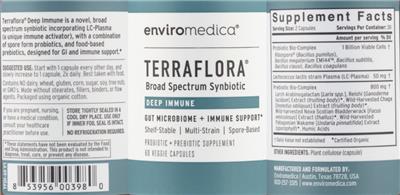
Terraflora Deep Immune is a novel, broad spectrum synbiotic incorporating LC-Plasma (a unique immune activator), with a combination of spore form probiotics, and food-based prebiotics, designed for GI and immune support.
Contains no dairy, wheat, gluten, corn, sugar, soy, tree nuts, or GMO's. Made without stearates, fillers, binders, or flow agents.
Packaged using organic cotton.
Broad spectrum synbiotic Deep immune Gut microbiome + immune support Shelf stable Multi-strain Spore-based
Suggested/Recommended/Usage/Directions
Suggested Use: Start with 1 capsule every other day,and slowly increase to 1 capsule, 2x daily. Best taken with food.
Precautions
If you are pregnant, nursing, or have a medical condition, consult your healthcare practitioner before use.
Use only if inner seal is intact.
Storage
Store tightly sealed in a cool dry place.
No refrigeration required.
FDA Disclaimer Statement
These statements have not been evaluated by the Food and Drug Administration. This product is not intended to diagnose, treat, cure or prevent any disease.
FDA Statement of Identity
Probiotic + Prebiotic Supplement
Is this label outdated? Report a formula or label change and our pharmacy team will review it.
Terraflora by Enviromedica label
The label scan from the NIH Dietary Supplement Label Database. Tap to enlarge.
Label images are published by the NIH Dietary Supplement Label Database for the version of this product on file. Always read your actual product label.
View the full label (PDF)The Ingredients in Terraflora by Enviromedica
These are the 8 active ingredients this product is made of. Select any to open its full monograph.
Serving size1 Capsule(s) Dosage formCapsule Servings per container30 Amounts shown are per serving.
Most supplement products combine several ingredients, and a medication can interact with the product through any one of them. Each ingredient below shows whether it has known drug interactions.
Lactococcus lactis strain plasma
Probiotic Bio-Complex
Interacts with182 drugs
Lactobacillus acidophilus is a 'friendly' bacterium used as a probiotic to support gut and vaginal health. It is generally well tolerated in healthy p...
Probiotic Bio-Complex monograph & interactions- › Bacillus coagulans
- › Bacillus subtillis
- › Bacillus clausii
- › Ribospore
- › Bacillus megaterium EM144
Prebiotic Bio-Complex
- › Reishi extract
- › Humic Acids
- › Arabinogalactan
- › Chaga Fruiting Body Extract, Wild-Harvested
- › Nova Scotian Bladderwrack Extract, Wild-Harvested
- › Patagonian Wakame Sporophyll Extract, Wild-Harvested
Other (inactive) ingredients: Plant Cellulose. These complete the product’s ingredient list but are not active constituents.
Terraflora by Enviromedica Drug Interactions
HelloPharmacist Interaction Report
Terraflora by Enviromedica contains several active ingredients that interact with medications, so you'll want to check your prescriptions before starting.
Read the full breakdown — every affected drug type, severity by severity
The most serious interaction involves the Bacillus coagulans and Bacillus subtilis — both live probiotic organisms. If you take antibiotics, these bacteria can be killed off before they have a chance to work in your gut.
You'll need to space out your antibiotic doses and this supplement by several hours.
Reishi extract can affect blood pressure, blood thinners, and diabetes medications. If you're on drugs to lower blood pressure, reishi might push it down further.
At higher doses, it may increase bleeding risk if you take blood thinners (anticoagulants) like warfarin. And while animal research suggests reishi lowers blood sugar, the human evidence is mixed — still, theoretically it could add to the effect of diabetes drugs.
Chaga fruiting body extract carries similar concerns: it may increase bleeding risk with anticoagulants or antiplatelet drugs, interfere with medications that suppress your immune system, and theoretically increase the risk of low blood sugar (hypoglycemia) if you take diabetes medications. Larch arabinogalactan (arabinogalactan) may interfere with immunosuppressant drugs due to its immune-stimulating effects.
We couldn't check interaction data for several ingredients in this product: Lactococcus lactis strain plasma, Bacillus clausii, Ribospore, Bacillus megaterium EM144, and the two seaweed extracts. Altogether, these interactions span 667 individual medications.
Run your exact prescriptions through the checker below before you start.
Check your own medications below · Editorial policy · How we use AI
Want to check YOUR meds against Terraflora?
Ask about interactions with your drugs in plain English — “Can I take it with lisinopril?” — and we find you the answer in seconds, ingredient by ingredient.
Go to the checkerIngredients driving the most interactions
Individual Drug Interactions
The ingredients in Terraflora interact with 674 drugs. Click any drug to see the details.
4 of the 8 ingredients in Terraflora interact with drugs. Each result below shows which ingredient is responsible. Reishi extract Chaga Fruiting Body Extract, Wild-Harvested Probiotic Bio-Complex Arabinogalactan
6-mercaptopurinePurinethol
How 6-mercaptopurine interacts with Terraflora — through 2 ingredients. Tap an ingredient for the detail:
Chaga Fruiting Body Extract, Wild-harvestedImmunosuppressants Moderate
Interaction Summary
Theoretically, chaga might interfere with immunosuppressive therapy.
Read the full Chaga Fruiting Body Extract, Wild-harvested + 6-mercaptopurine interactionArabinogalactanImmunosuppressants Moderate
Interaction Summary
Theoretically, larch arabinogalactan might interfere with immunosuppression therapy due to immunostimulant effects.
Read the full Arabinogalactan + 6-mercaptopurine interactionAbciximabReoPro
How Abciximab interacts with Terraflora — through 2 ingredients. Tap an ingredient for the detail:
Chaga Fruiting Body Extract, Wild-harvestedAnticoagulant/antiplatelet Drugs Moderate
Interaction Summary
Theoretically, chaga may increase the risk of bleeding if used with anticoagulant or antiplatelet drugs.
Read the full Chaga Fruiting Body Extract, Wild-harvested + Abciximab interactionReishi ExtractAnticoagulant/antiplatelet Drugs Moderate
Interaction Summary
Theoretically, high doses of reishi mushroom might increase the risk of bleeding.
Read the full Reishi Extract + Abciximab interactionAbrocitinibCibinqo
How Abrocitinib interacts with Terraflora — through 3 ingredients. Tap an ingredient for the detail:
Reishi ExtractAnticoagulant/antiplatelet Drugs Moderate
Interaction Summary
Theoretically, high doses of reishi mushroom might increase the risk of bleeding.
Read the full Reishi Extract + Abrocitinib interactionArabinogalactanImmunosuppressants Moderate
Interaction Summary
Theoretically, larch arabinogalactan might interfere with immunosuppression therapy due to immunostimulant effects.
Read the full Arabinogalactan + Abrocitinib interactionChaga Fruiting Body Extract, Wild-harvestedAnticoagulant/antiplatelet Drugs, Immunosuppressants Moderate
Interaction Summary
Theoretically, chaga may increase the risk of bleeding if used with anticoagulant or antiplatelet drugs.
Read the full Chaga Fruiting Body Extract, Wild-harvested + Abrocitinib interactionAcarboseGlucobay, Prandase, Precose
How Acarbose interacts with Terraflora — through 2 ingredients. Tap an ingredient for the detail:
Chaga Fruiting Body Extract, Wild-harvestedAntidiabetes Drugs Moderate
Interaction Summary
Theoretically, taking chaga with antidiabetes drugs might increase the risk of hypoglycemia.
Read the full Chaga Fruiting Body Extract, Wild-harvested + Acarbose interactionReishi ExtractAntidiabetes Drugs Moderate
Interaction Summary
Theoretically, reishi mushroom might have additive effects with antidiabetes drugs.
Read the full Reishi Extract + Acarbose interactionAcebutololRhotral, Sectral
How Acebutolol interacts with Terraflora — through 1 ingredient. Tap an ingredient for the detail:
Reishi ExtractAntihypertensive Drugs Moderate
Interaction Summary
Theoretically, concurrent use of reishi mushroom with antihypertensive drugs might increase the risk of hypotension.
Read the full Reishi Extract + Acebutolol interactionAcenocoumarolSintrom
How Acenocoumarol interacts with Terraflora — through 2 ingredients. Tap an ingredient for the detail:
Reishi ExtractAnticoagulant/antiplatelet Drugs Moderate
Interaction Summary
Theoretically, high doses of reishi mushroom might increase the risk of bleeding.
Read the full Reishi Extract + Acenocoumarol interactionChaga Fruiting Body Extract, Wild-harvestedAnticoagulant/antiplatelet Drugs Moderate
Interaction Summary
Theoretically, chaga may increase the risk of bleeding if used with anticoagulant or antiplatelet drugs.
Read the full Chaga Fruiting Body Extract, Wild-harvested + Acenocoumarol interactionAcetaminophen, AspirinGemnisyn
How Acetaminophen, Aspirin interacts with Terraflora — through 2 ingredients. Tap an ingredient for the detail:
Chaga Fruiting Body Extract, Wild-harvestedAnticoagulant/antiplatelet Drugs Moderate
Interaction Summary
Theoretically, chaga may increase the risk of bleeding if used with anticoagulant or antiplatelet drugs.
Read the full Chaga Fruiting Body Extract, Wild-harvested + Acetaminophen, Aspirin interactionReishi ExtractAnticoagulant/antiplatelet Drugs Moderate
Interaction Summary
Theoretically, high doses of reishi mushroom might increase the risk of bleeding.
Read the full Reishi Extract + Acetaminophen, Aspirin interactionAcetaminophen, Aspirin, CaffeineExcedrin, Excedrin Extra Strength, Excedrin Migraine
How Acetaminophen, Aspirin, Caffeine interacts with Terraflora — through 2 ingredients. Tap an ingredient for the detail:
Reishi ExtractAnticoagulant/antiplatelet Drugs Moderate
Interaction Summary
Theoretically, high doses of reishi mushroom might increase the risk of bleeding.
Read the full Reishi Extract + Acetaminophen, Aspirin, Caffeine interactionChaga Fruiting Body Extract, Wild-harvestedAnticoagulant/antiplatelet Drugs Moderate
Interaction Summary
Theoretically, chaga may increase the risk of bleeding if used with anticoagulant or antiplatelet drugs.
Read the full Chaga Fruiting Body Extract, Wild-harvested + Acetaminophen, Aspirin, Caffeine interactionAcetaminophen, IbuprofenCombogesic
How Acetaminophen, Ibuprofen interacts with Terraflora — through 2 ingredients. Tap an ingredient for the detail:
Chaga Fruiting Body Extract, Wild-harvestedAnticoagulant/antiplatelet Drugs Moderate
Interaction Summary
Theoretically, chaga may increase the risk of bleeding if used with anticoagulant or antiplatelet drugs.
Read the full Chaga Fruiting Body Extract, Wild-harvested + Acetaminophen, Ibuprofen interactionReishi ExtractAnticoagulant/antiplatelet Drugs Moderate
Interaction Summary
Theoretically, high doses of reishi mushroom might increase the risk of bleeding.
Read the full Reishi Extract + Acetaminophen, Ibuprofen interactionAcetazolamideAk-Zol, Diamox
How Acetazolamide interacts with Terraflora — through 1 ingredient. Tap an ingredient for the detail:
Reishi ExtractAntihypertensive Drugs Moderate
Interaction Summary
Theoretically, concurrent use of reishi mushroom with antihypertensive drugs might increase the risk of hypotension.
Read the full Reishi Extract + Acetazolamide interactionAcetohexamideDymelor
How Acetohexamide interacts with Terraflora — through 2 ingredients. Tap an ingredient for the detail:
Reishi ExtractAntidiabetes Drugs Moderate
Interaction Summary
Theoretically, reishi mushroom might have additive effects with antidiabetes drugs.
Read the full Reishi Extract + Acetohexamide interactionChaga Fruiting Body Extract, Wild-harvestedAntidiabetes Drugs Moderate
Interaction Summary
Theoretically, taking chaga with antidiabetes drugs might increase the risk of hypoglycemia.
Read the full Chaga Fruiting Body Extract, Wild-harvested + Acetohexamide interactionAcetylsalicylic AcidEntrophen
How Acetylsalicylic Acid interacts with Terraflora — through 2 ingredients. Tap an ingredient for the detail:
Chaga Fruiting Body Extract, Wild-harvestedAnticoagulant/antiplatelet Drugs Moderate
Interaction Summary
Theoretically, chaga may increase the risk of bleeding if used with anticoagulant or antiplatelet drugs.
Read the full Chaga Fruiting Body Extract, Wild-harvested + Acetylsalicylic Acid interactionReishi ExtractAnticoagulant/antiplatelet Drugs Moderate
Interaction Summary
Theoretically, high doses of reishi mushroom might increase the risk of bleeding.
Read the full Reishi Extract + Acetylsalicylic Acid interactionAdalimumabHumira
How Adalimumab interacts with Terraflora — through 2 ingredients. Tap an ingredient for the detail:
Chaga Fruiting Body Extract, Wild-harvestedImmunosuppressants Moderate
Interaction Summary
Theoretically, chaga might interfere with immunosuppressive therapy.
Read the full Chaga Fruiting Body Extract, Wild-harvested + Adalimumab interactionArabinogalactanImmunosuppressants Moderate
Interaction Summary
Theoretically, larch arabinogalactan might interfere with immunosuppression therapy due to immunostimulant effects.
Read the full Arabinogalactan + Adalimumab interactionAdalimumab-adazHyrimoz
How Adalimumab-adaz interacts with Terraflora — through 2 ingredients. Tap an ingredient for the detail:
ArabinogalactanImmunosuppressants Moderate
Interaction Summary
Theoretically, larch arabinogalactan might interfere with immunosuppression therapy due to immunostimulant effects.
Read the full Arabinogalactan + Adalimumab-adaz interactionChaga Fruiting Body Extract, Wild-harvestedImmunosuppressants Moderate
Interaction Summary
Theoretically, chaga might interfere with immunosuppressive therapy.
Read the full Chaga Fruiting Body Extract, Wild-harvested + Adalimumab-adaz interactionAdalimumab-adbmCyltezo
How Adalimumab-adbm interacts with Terraflora — through 2 ingredients. Tap an ingredient for the detail:
Chaga Fruiting Body Extract, Wild-harvestedImmunosuppressants Moderate
Interaction Summary
Theoretically, chaga might interfere with immunosuppressive therapy.
Read the full Chaga Fruiting Body Extract, Wild-harvested + Adalimumab-adbm interactionArabinogalactanImmunosuppressants Moderate
Interaction Summary
Theoretically, larch arabinogalactan might interfere with immunosuppression therapy due to immunostimulant effects.
Read the full Arabinogalactan + Adalimumab-adbm interactionAdalimumab-afzbAbrilada
How Adalimumab-afzb interacts with Terraflora — through 2 ingredients. Tap an ingredient for the detail:
ArabinogalactanImmunosuppressants Moderate
Interaction Summary
Theoretically, larch arabinogalactan might interfere with immunosuppression therapy due to immunostimulant effects.
Read the full Arabinogalactan + Adalimumab-afzb interactionChaga Fruiting Body Extract, Wild-harvestedImmunosuppressants Moderate
Interaction Summary
Theoretically, chaga might interfere with immunosuppressive therapy.
Read the full Chaga Fruiting Body Extract, Wild-harvested + Adalimumab-afzb interactionAdalimumab-attoAmjevita
How Adalimumab-atto interacts with Terraflora — through 2 ingredients. Tap an ingredient for the detail:
Chaga Fruiting Body Extract, Wild-harvestedImmunosuppressants Moderate
Interaction Summary
Theoretically, chaga might interfere with immunosuppressive therapy.
Read the full Chaga Fruiting Body Extract, Wild-harvested + Adalimumab-atto interactionArabinogalactanImmunosuppressants Moderate
Interaction Summary
Theoretically, larch arabinogalactan might interfere with immunosuppression therapy due to immunostimulant effects.
Read the full Arabinogalactan + Adalimumab-atto interactionAdalimumab-bwwdHadlima
How Adalimumab-bwwd interacts with Terraflora — through 2 ingredients. Tap an ingredient for the detail:
ArabinogalactanImmunosuppressants Moderate
Interaction Summary
Theoretically, larch arabinogalactan might interfere with immunosuppression therapy due to immunostimulant effects.
Read the full Arabinogalactan + Adalimumab-bwwd interactionChaga Fruiting Body Extract, Wild-harvestedImmunosuppressants Moderate
Interaction Summary
Theoretically, chaga might interfere with immunosuppressive therapy.
Read the full Chaga Fruiting Body Extract, Wild-harvested + Adalimumab-bwwd interactionAdalimumab-fkjpHulio
How Adalimumab-fkjp interacts with Terraflora — through 2 ingredients. Tap an ingredient for the detail:
Chaga Fruiting Body Extract, Wild-harvestedImmunosuppressants Moderate
Interaction Summary
Theoretically, chaga might interfere with immunosuppressive therapy.
Read the full Chaga Fruiting Body Extract, Wild-harvested + Adalimumab-fkjp interactionArabinogalactanImmunosuppressants Moderate
Interaction Summary
Theoretically, larch arabinogalactan might interfere with immunosuppression therapy due to immunostimulant effects.
Read the full Arabinogalactan + Adalimumab-fkjp interactionAlbiglutideTanzeum
How Albiglutide interacts with Terraflora — through 2 ingredients. Tap an ingredient for the detail:
Reishi ExtractAntidiabetes Drugs Moderate
Interaction Summary
Theoretically, reishi mushroom might have additive effects with antidiabetes drugs.
Read the full Reishi Extract + Albiglutide interactionChaga Fruiting Body Extract, Wild-harvestedAntidiabetes Drugs Moderate
Interaction Summary
Theoretically, taking chaga with antidiabetes drugs might increase the risk of hypoglycemia.
Read the full Chaga Fruiting Body Extract, Wild-harvested + Albiglutide interactionAlefaceptAmevive
How Alefacept interacts with Terraflora — through 2 ingredients. Tap an ingredient for the detail:
Chaga Fruiting Body Extract, Wild-harvestedImmunosuppressants Moderate
Interaction Summary
Theoretically, chaga might interfere with immunosuppressive therapy.
Read the full Chaga Fruiting Body Extract, Wild-harvested + Alefacept interactionArabinogalactanImmunosuppressants Moderate
Interaction Summary
Theoretically, larch arabinogalactan might interfere with immunosuppression therapy due to immunostimulant effects.
Read the full Arabinogalactan + Alefacept interactionAlemtuzumabCampath
How Alemtuzumab interacts with Terraflora — through 2 ingredients. Tap an ingredient for the detail:
ArabinogalactanImmunosuppressants Moderate
Interaction Summary
Theoretically, larch arabinogalactan might interfere with immunosuppression therapy due to immunostimulant effects.
Read the full Arabinogalactan + Alemtuzumab interactionChaga Fruiting Body Extract, Wild-harvestedImmunosuppressants Moderate
Interaction Summary
Theoretically, chaga might interfere with immunosuppressive therapy.
Read the full Chaga Fruiting Body Extract, Wild-harvested + Alemtuzumab interactionAliskirenTekturna
How Aliskiren interacts with Terraflora — through 1 ingredient. Tap an ingredient for the detail:
Reishi ExtractAntihypertensive Drugs Moderate
Interaction Summary
Theoretically, concurrent use of reishi mushroom with antihypertensive drugs might increase the risk of hypotension.
Read the full Reishi Extract + Aliskiren interactionAlogliptinNesina
How Alogliptin interacts with Terraflora — through 2 ingredients. Tap an ingredient for the detail:
Chaga Fruiting Body Extract, Wild-harvestedAntidiabetes Drugs Moderate
Interaction Summary
Theoretically, taking chaga with antidiabetes drugs might increase the risk of hypoglycemia.
Read the full Chaga Fruiting Body Extract, Wild-harvested + Alogliptin interactionReishi ExtractAntidiabetes Drugs Moderate
Interaction Summary
Theoretically, reishi mushroom might have additive effects with antidiabetes drugs.
Read the full Reishi Extract + Alogliptin interactionAlogliptin, MetforminKazano
How Alogliptin, Metformin interacts with Terraflora — through 2 ingredients. Tap an ingredient for the detail:
Reishi ExtractAntidiabetes Drugs Moderate
Interaction Summary
Theoretically, reishi mushroom might have additive effects with antidiabetes drugs.
Read the full Reishi Extract + Alogliptin, Metformin interactionChaga Fruiting Body Extract, Wild-harvestedAntidiabetes Drugs Moderate
Interaction Summary
Theoretically, taking chaga with antidiabetes drugs might increase the risk of hypoglycemia.
Read the full Chaga Fruiting Body Extract, Wild-harvested + Alogliptin, Metformin interactionAlogliptin, PioglitazoneOseni
How Alogliptin, Pioglitazone interacts with Terraflora — through 2 ingredients. Tap an ingredient for the detail:
Chaga Fruiting Body Extract, Wild-harvestedAntidiabetes Drugs Moderate
Interaction Summary
Theoretically, taking chaga with antidiabetes drugs might increase the risk of hypoglycemia.
Read the full Chaga Fruiting Body Extract, Wild-harvested + Alogliptin, Pioglitazone interactionReishi ExtractAntidiabetes Drugs Moderate
Interaction Summary
Theoretically, reishi mushroom might have additive effects with antidiabetes drugs.
Read the full Reishi Extract + Alogliptin, Pioglitazone interactionAlteplase, TpaActilyse, Activase
How Alteplase, Tpa interacts with Terraflora — through 2 ingredients. Tap an ingredient for the detail:
Reishi ExtractAnticoagulant/antiplatelet Drugs Moderate
Interaction Summary
Theoretically, high doses of reishi mushroom might increase the risk of bleeding.
Read the full Reishi Extract + Alteplase, Tpa interactionChaga Fruiting Body Extract, Wild-harvestedAnticoagulant/antiplatelet Drugs Moderate
Interaction Summary
Theoretically, chaga may increase the risk of bleeding if used with anticoagulant or antiplatelet drugs.
Read the full Chaga Fruiting Body Extract, Wild-harvested + Alteplase, Tpa interactionAluminum Hydroxide, Aspirin, Codeine Phosphate, Magnesium HydroxideAscriptin Codeine #2
How Aluminum Hydroxide, Aspirin, Codeine Phosphate, Magnesium Hydroxide interacts with Terraflora — through 2 ingredients. Tap an ingredient for the detail:
Reishi ExtractAnticoagulant/antiplatelet Drugs Moderate
Interaction Summary
Theoretically, high doses of reishi mushroom might increase the risk of bleeding.
Read the full Reishi Extract + Aluminum Hydroxide, Aspirin, Codeine Phosphate, Magnesium Hydroxide interactionChaga Fruiting Body Extract, Wild-harvestedAnticoagulant/antiplatelet Drugs Moderate
Interaction Summary
Theoretically, chaga may increase the risk of bleeding if used with anticoagulant or antiplatelet drugs.
Read the full Chaga Fruiting Body Extract, Wild-harvested + Aluminum Hydroxide, Aspirin, Codeine Phosphate, Magnesium Hydroxide interactionAluminum Hydroxide, Aspirin, Magnesium HydroxideAscriptin
How Aluminum Hydroxide, Aspirin, Magnesium Hydroxide interacts with Terraflora — through 2 ingredients. Tap an ingredient for the detail:
Chaga Fruiting Body Extract, Wild-harvestedAnticoagulant/antiplatelet Drugs Moderate
Interaction Summary
Theoretically, chaga may increase the risk of bleeding if used with anticoagulant or antiplatelet drugs.
Read the full Chaga Fruiting Body Extract, Wild-harvested + Aluminum Hydroxide, Aspirin, Magnesium Hydroxide interactionReishi ExtractAnticoagulant/antiplatelet Drugs Moderate
Interaction Summary
Theoretically, high doses of reishi mushroom might increase the risk of bleeding.
Read the full Reishi Extract + Aluminum Hydroxide, Aspirin, Magnesium Hydroxide interactionAmbrisentanLetairis, Volibris
How Ambrisentan interacts with Terraflora — through 1 ingredient. Tap an ingredient for the detail:
Reishi ExtractAntihypertensive Drugs Moderate
Interaction Summary
Theoretically, concurrent use of reishi mushroom with antihypertensive drugs might increase the risk of hypotension.
Read the full Reishi Extract + Ambrisentan interactionEach ingredient & the kinds of drugs it affects
For each ingredient in Terraflora with known interactions, here are the types of medications they can affect. Open any type for the detail — or search your exact drug in the checker above.
Reishi extract
Anticoagulant/Antiplatelet Drugs
Theoretically, high doses of reishi mushroom might increase the risk of bleeding.
A dose of 1.5 grams daily of reishi mushroom does not seem to decrease platelet aggregation, but a higher dose of 3 grams daily does.
Antidiabetes Drugs
Theoretically, reishi mushroom might have additive effects with antidiabetes drugs.
Animal research suggests that reishi mushroom decreases blood sugar. However, in patients with type 2 diabetes, taking reishi mushroom does not reduce fasting glucose levels, and its effects on glycated hemoglobin are inconsistent.
Antihypertensive Drugs
Theoretically, concurrent use of reishi mushroom with antihypertensive drugs might increase the risk of hypotension.
Reishi mushroom has shown hypotensive activity in animal research. Clinical evidence suggests that reishi mushroom reduces blood pressure in some, but not all, patients with hypertension.
Chaga Fruiting Body Extract, Wild-Harvested
Anticoagulant/Antiplatelet Drugs
Theoretically, chaga may increase the risk of bleeding if used with anticoagulant or antiplatelet drugs.
In vitro and animal research suggests that chaga extract can inhibit platelet aggregation. This effect has not been reported in humans.
Antidiabetes Drugs
Theoretically, taking chaga with antidiabetes drugs might increase the risk of hypoglycemia.
Animal research suggests that chaga might decrease blood glucose levels and increase insulin levels. This has not been reported in humans.
Immunosuppressants
Theoretically, chaga might interfere with immunosuppressive therapy.
In vitro research suggests that certain constituents of chaga stimulate immune function. This has not been reported in humans.
Probiotic Bio-Complex
Antibiotic Drugs
Theoretically, taking Lactobacillus acidophilus with antibiotic drugs might decrease the effectiveness of L. acidophilus.
L. acidophilus preparations usually contain live and active organisms. Therefore, simultaneously taking antibiotics might kill a significant number of the organisms. Tell patients to separate administration of antibiotics and L. acidophilus preparations by at least two hours.
Arabinogalactan
Immunosuppressants
Theoretically, larch arabinogalactan might interfere with immunosuppression therapy due to immunostimulant effects. Immunosuppressant drugs include azathioprine (Imuran), basiliximab (Simulect), cyclosporine (Neoral, Sandimmune), daclizumab (Zenapax), muromonab-CD3 (OKT3, Orthoclone OKT3), mycophenolate (CellCept), tacrolimus (FK506, Prograf), sirolimus (Rapamune), prednisone (Deltasone, Orasone), corticosteroids (glucocorticoids), and other drugs.
Brand information
Manufacturer and brand details for Terraflora, from the product label.
Enviromedica
See all Enviromedica products- Name
- Enviromedica
- City
- Austin
- State
- Texas
- ZipCode
- 78728
- Phone Number
- 800-257-3315
- Web Address
- www.enviromedica.com
Terraflora by Enviromedica: Common Questions
Does Terraflora by Enviromedica interact with any medications?
How can one product interact with so many drugs?
Where does this information come from?
Can I take this if I'm on antibiotics?
What are the live bacteria actually supposed to do?
Is this safe during pregnancy?
Can I take it while breastfeeding?
What side effects might I notice?
Does this product have any fillers?
Written and reviewed by the HelloPharmacist editorial staff. Our editorial policy
Not sure if Terraflora is safe with your meds?
Our pharmacists answer your medication & supplement questions — free.
Label information is sourced from the NIH Dietary Supplement Label Database and reflects the product version on file; always read your actual product label. This page is for education only and is not a substitute for professional medical advice. Confirm with your pharmacist or doctor before combining supplements and medications.
The Full Monographs Behind Terraflora’s Ingredients
Every ingredient we hold a full HelloPharmacist monograph for — uses, evidence, safety, and the complete interaction list.
Lactobacillus Acidophilus
Interacts with 182 drugsLactobacillus acidophilus is a 'friendly' bacterium used as a probiotic to support gut and vaginal health. It is generally well tolerated in healthy people, and there is reasonable evidence...
Read the full Lactobacillus Acidophilus monograph → Herb & supplement monographBacillus Coagulans
Interacts with 182 drugsBacillus coagulans is a spore-forming probiotic that survives stomach acid well and may help with some digestive problems such as IBS, constipation, and certain types of diarrhea. The eviden...
Read the full Bacillus Coagulans monograph → Herb & supplement monographBacillus Subtilis
Interacts with 182 drugsBacillus subtilis is a spore-forming probiotic bacterium found in soil and some fermented foods, and it is used mainly to support gut health and digestion. Early research is promising for ce...
Read the full Bacillus Subtilis monograph → Herb & supplement monographReishi Mushroom
Interacts with 375 drugsReishi is a traditional Asian mushroom widely used to support the immune system and overall wellness. Human evidence for most of its claimed benefits is limited or low-quality, so it should...
Read the full Reishi Mushroom monograph → Herb & supplement monographHumic Acid
Humic acid is a natural substance formed when plant and animal matter break down in soil, peat, and coal-like deposits, and it is sold as a supplement marketed for immune, gut, and 'detox' s...
Read the full Humic Acid monograph → Herb & supplement monographLarch Arabinogalactan
Interacts with 121 drugsLarch arabinogalactan is a soluble fiber from larch trees that is mainly used as a prebiotic and for immune support. Early research is interesting but limited, and most claims are not yet fi...
Read the full Larch Arabinogalactan monograph → Herb & supplement monographChaga
Interacts with 327 drugsChaga is a fungus that grows mostly on birch trees and is used as a tea or supplement, mainly for immune and antioxidant support. Human evidence for its benefits is very limited, and it may...
Read the full Chaga monograph →Sources & How We Checked
Terraflora's label data comes from the NIH Dietary Supplement Label Database; the ingredient interaction data is from the Natural Medicines database, reviewed by our pharmacists.
- NIH Dietary Supplement Label Database (DSLD) — The official product label on file for this supplement.
- Natural Medicines (Therapeutic Research Center) — Evidence-graded clinical reference behind the ingredient interaction data.
Content is written and reviewed by licensed HelloPharmacist pharmacists. See our data sources and editorial standards for how this information is built and checked.
The 82 references behind this product’s interaction data
Every citation that drives the interaction findings for this product’s ingredients, from the evidence-graded Natural Medicines (TRC Healthcare) database. Open an ingredient to browse its citations — links open the study on PubMed or the publisher’s site.
Bacillus Coagulans 20 references
- Saxelin M, Chuang NH, Chassy B, et al. Lactobacilli and bacteremia in southern Finland 1989-1992. Clin Infect Dis 1996;22:564-6. PubMed
- Tynkkynen S, Singh KV, Varmanen P. Vancomycin resistance factor of Lactobacillus rhamnosus GG in relation to enterococcal vancomycin resistance (van) genes. Int J Food Microbiol 1998;41:195-204. PubMed
- Klein G, Zill E, Schindler R, et al. Peritonitis associated with vancomycin-resistant Lactobacillus rhamnosus in a continuous ambulatory peritoneal dialysis patient; organism identification, antibiotic therapy, and case report. J Clin Microbiol 1998;36:
- Kalima P, Masterton RG, Roddie PH, et al. Lactobacillus rhamnosus infection in a child following bone marrow transplant. J Infect 1996;32:165-7. PubMed
- Goldin BR. Health Benefits of probiotics. Br J Nutr 1998;80:S203-7. DOI
- Rautio M, Jousimies-Somer H, Kauma H, et al. Liver abscess due to Lactobacillus rhamnosus strain indistinguishable from L. rhamnosus strain GG. Clin Infect Dis 1999;28:1159-60.
- MacGregor G, Smith AJ, Thakker B, Kinsella J. Yoghurt biotherapy: contraindicated in immunosuppressed patients? Postgrad Med J 2002;78:366-7. PubMed
- Land MH, Rouster-Stevens K, Woods CR, et al. Lactobacillus sepsis associated with probiotic therapy. Pediatrics 2005;115:178-81.
- De Groote MA, Frank DN, Dowell E, et al. Lactobacillus rhamnosus GG bacteremia associated with probiotic use in a child with short gut syndrome. Pediatr Infect Dis J 2005;24:278-80. PubMed
- Vahabnezhad E, Mochon AB, Wozniak LJ, Ziring DA. Lactobacillus bacteremia associated with probiotic use in a pediatric patient with ulcerative colitis. J Clin Gastroenterol. 2013;47(5):437-9. PubMed
- Pruccoli G, Silvestro E, Pace Napoleone C, Aidala E, Garazzino S, Scolfaro C. Are probiotics safe? Bifidobacterium bacteremia in a child with severe heart failure. Infez Med. 2019;27(2):175-178.
- Sendil S, Shrimanker I, Mansoora Q, Goldman J, Nookala VK. Lactobacillus rhamnosus bacteremia in an immunocompromised renal transplant patient. Cureus. 2020;12(2):e6887. PubMed
- Albarillo FS, Shah U, Joyce C, Slade D. Lactobacillus rhamnosus Infection: A single-center 4-year descriptive analysis. J Glob Infect Dis. 2020;12(3):119-123. PubMed
- Pasala S, Singer L, Arshad T, Roach K. Lactobacillus endocarditis in a healthy patient with probiotic use. IDCases. 2020;22:e00915. PubMed
- Agrawal S, Tuchman ES, Bruce MJ, Theodorou ME. Fatal Lactobacillus endocarditis in a patient with transcatheter aortic valve replacement. BMJ Case Rep. 2020;13(11):e236835.
- Antoun M, Hattab Y, Akhrass FA, Hamilton LD. Uncommon pathogen, Lactobacillus, causing infective endocarditis: Case report and review. Case Rep Infect Dis. 2020;2020:8833948. PubMed
- Rossi F, Amadoro C, Gasperi M, Colavita G. Lactobacilli infection case reports in the last three years and safety implications. Nutrients. 2022;14(6):1178. PubMed
- Franko B, Vaillant M, Recule C, Vautrin E, et al. Lactobacillus paracasei endocarditis in a consumer of probiotics. Med Mal Infect. 2013;43(4):171-3. PubMed
- Campbell RE, Miller A, Afroze A. Native valve endocarditis secondary to Lactobacillus paracasei bacteremia. Consultant. 2020;60(9):27-8. DOI
- Kato K, Funabashi N, Takaoka H, et al. Lactobacillus paracasei endocarditis in a consumer of probiotics with advanced and severe bicuspid aortic valve stenosis complicated with diffuse left ventricular mid-layer fibrosis. Int J Cardiol. 2016;224:157-161. PubMed
Bacillus Subtilis 10 references
- Pierce A. The American Pharmaceutical Association Practical Guide to Natural Medicines. New York: The Stonesong Press, 1999:19.
- Lampropoulos PK, Gkentzi D, Tzifas S, Dimitriou G. Neonatal sepsis due to Bacillus subtilis. Cureus 2021;13(9):e17692. PubMed
- La Jeon Y, Yang JJ, Kim MJ, et al. Combined Bacillus licheniformis and Bacillus subtilis infection in a patient with oesophageal perforation. J Med Microbiol 2012;61(Pt 12):1766-1769. PubMed
- Wallet F, Crunelle V, Roussel-Delvallez M, Fruchart A, Saunier P, Courcol RJ. Bacillus subtilis as a cause of cholangitis in polycystic kidney and liver disease. Am J Gastroenterol 1996;91(7):1477-8.
- Velasco E, Martins CA, Tabak D, Bouzas LF. "Bacillus subtilis" infection in a patient submitted to a bone marrow transplantation. Rev Paul Med 1992;110(3):116-7.
- Kato A, Yoshifuji A, Komori K, et al. A case of Bacillus subtilis var. natto bacteremia caused by ingestion of natto during COVID-19 treatment in a maintenance hemodialysis patient with multiple myeloma. J Infect Chemother 2022;28(8):1212-1215. PubMed
- Freedman KE, Hill JL, Wei Y, et al. Examining the gastrointestinal and immunomodulatory effects of the novel probiotic Bacillus subtilis DE111. Int J Mol Sci 2021;22(5):2453. PubMed
- Lefevre M, Racedo SM, Denayrolles M, et al. Safety assessment of Bacillus subtilis CU1 for use as a probiotic in humans. Regul Toxicol Pharmacol 2017;83:54-65. PubMed
- Hanifi A, Culpepper T, Mai V, et al. Evaluation of Bacillus subtilis R0179 on gastrointestinal viability and general wellness: a randomised, double-blind, placebo-controlled trial in healthy adults. Benef Microbes 2015;6(1):19-27. PubMed
- Tokano M, Tarumoto N, Imai K, et al. A case of bacterial meningitis caused by Bacillus subtilis var. natto. Intern Med. 2022. Epub ahead of print.
Reishi Mushroom 17 references
- McGuffin M, Hobbs C, Upton R, Goldberg A, eds. American Herbal Products Association's Botanical Safety Handbook. Boca Raton, FL: CRC Press, LLC 1997.
- Tao J, Feng KY. Experimental and clinical studies on inhibitory effect of ganoderma lucidum on platelet aggregation. J Tongji Med Univ 1990;10:240-3. PubMed
- Singh AB, Gupta SK, Pereira BM, Prakash D. Sensitization to Ganoderma lucidum in patients with respiratory allergy in India. Clin Exp Allergy 1995;25:440-7.
- Lee SY, Rhee HM. Cardiovascular effects of mycelium extract of Ganoderma lucidum: inhibition of sympathetic outflow as a mechanism of its hypotensive action. Chem Pharm Bull (Tokyo) 1990;38:1359-64. PubMed
- Kwok Y, Ng KFJ, Li, CCF, et al. A prospective, randomized, double-blind, placebo-controlled study of the platelet and global hemostatic effects of Ganoderma lucidum (Ling-Zhi) in healthy volunteers. Anesth Analg 2005;101:423-6. PubMed
- Wanmuang, H., Leopairut, J., Kositchaiwat, C., Wananukul, W., and Bunyaratvej, S. Fatal fulminant hepatitis associated with Ganoderma lucidum (Lingzhi) mushroom powder. J Med Assoc Thai. 2007;90(1):179-181.
- Seto, S. W., Lam, T. Y., Tam, H. L., Au, A. L., Chan, S. W., Wu, J. H., Yu, P. H., Leung, G. P., Ngai, S. M., Yeung, J. H., Leung, P. S., Lee, S. M., and Kwan, Y. W. Novel hypoglycemic effects of Ganoderma lucidum water-extract in obese/diabetic (+db/+db
- Chu, T. T., Benzie, I. F., Lam, C. W., Fok, B. S., Lee, K. K., and Tomlinson, B. Study of potential cardioprotective effects of Ganoderma lucidum (Lingzhi): results of a controlled human intervention trial. Br.J.Nutr. 2012;107(7):1017-1027.
- Jin, X., Ruiz, Beguerie J., Sze, D. M., and Chan, G. C. Ganoderma lucidum (Reishi mushroom) for cancer treatment. Cochrane.Database.Syst.Rev. 2012;6:CD007731.
- Kabir, Y., Kimura, S., and Tamura, T. Dietary effect of Ganoderma lucidum mushroom on blood pressure and lipid levels in spontaneously hypertensive rats (SHR). J Nutr Sci Vitaminol.(Tokyo) 1988;34(4):433-438. PubMed
- Kanmatsuse, K., Kajiwara, N., Hayashi, K., Shimogaichi, S., Fukinbara, I., Ishikawa, H., and Tamura, T. [Studies on Ganoderma lucidum. I. Efficacy against hypertension and side effects]. Yakugaku Zasshi 1985;105(10):942-947. PubMed
- Gao, Y., Lan, J., Dai, X., Ye, J., and Zhou, S. A Phase I/II Study of Ling Zhi Mushroom Ganoderma lucidum(W.Curt: Fr.) Lloyd (Aphyllophoromycetideae) Extract in Patients with Type II Diabetes Mellitus. International Journal of Medicinal Mushrooms 2004;6. DOI
- Jin H, Zhang G, Cao X, and et al. Treatment of hypertension by linzhi combined with hypotensor and its effects on arterial, arteriolar and capillary pressure and microcirculation. In: Niimi H, Xiu RJ, Sawada T, and et al. Microcirculatory Approach to Asi
- Klupp NL, Chang D, Hawke F, Kiat H, Cao H, Grant SJ, Bensoussan A. Ganoderma lucidum mushroom for the treatment of cardiovascular risk factors. Cochrane Database Syst Rev. 2015 Feb 17;2:CD007259. PubMed
- Zhao H, Zhang Q, Zhao L, Huang X, Wang J, Kang X. Spore Powder of Ganoderma lucidum Improves Cancer-Related Fatigue in Breast Cancer Patients Undergoing Endocrine Therapy: A Pilot Clinical Trial. Evid Based Complement Alternat Med. 2012;2012:809614.
- Pazzi F, Adsuar JC, Domínguez-Muñoz FJ, García-Gordillo MA, Gusi N, Collado-Mateo D. Ganoderma lucidum effects on mood and health-related quality of life in women with fibromyalgia. Healthcare (Basel) 2020;8(4):520. PubMed
- Kogure T, Koiwai A, Fukushi D, et al. Hypereosinophilia with hepatic nodule formation caused by Ganoderma lucidum. Intern Med 2021;60(24):3897-3903.
Humic Acid 3 references
Lactobacillus Acidophilus 15 references
- Pierce A. The American Pharmaceutical Association Practical Guide to Natural Medicines. New York: The Stonesong Press, 1999:19.
- Begtrup LM, de Muckadell OB, Kjeldsen J, Christensen RD, Jarbøl DE. Long-term treatment with probiotics in primary care patients with irritable bowel syndrome--a randomised, double-blind, placebo controlled trial. Scand J Gastroenterol 2013;48(10):1127-35 PubMed
- Chatterjee S, Kar P, Das T, Ray S, Gangulyt S, Rajendiran C, Mitra M. Randomised placebo-controlled double blind multicentric trial on efficacy and safety of Lactobacillus acidophilus LA-5 and Bifidobacterium BB-12 for prevention of antibiotic-associated
- Shavakhi A, Tabesh E, Yaghoutkar A, Hashemi H, Tabesh F, Khodadoostan M,Minakari M, Shavakhi S, Gholamrezaei A. The effects of multistrain probiotic compound on bismuth-containing quadruple therapy for Helicobacter pylori infection: a randomized placebo-c
- Karamali M, Dadkhah F, Sadrkhanlou M, et al. Effects of probiotic supplementation on glycaemic control and lipid profiles in gestational diabetes: a randomized, double-blind, placebo-controlled trial. Diabetes Metab 2016;42(4):234-41. PubMed
- Badehnoosh B, Karamali M, Zarrati M, et al. The effects of probiotic supplementation on biomarkers of inflammation, oxidative stress and pregnancy outcomes in gestational diabetes. J Matern Fetal Neonatal Med. 2018 May;31(9):1128-1136.
- Kumar S, Kumar R, Rohilla L, Jacob N, Yadav J, Sachdeva N. A high potency multi-strain probiotic improves glycemic control in children with new-onset type 1 diabetes mellitus: A randomized, double-blind, and placebo-controlled pilot study. Pediatr Diabete
- Shahriari A, Karimi E, Shahriari M, Aslani N, Khooshideh M, Arab A. The effect of probiotic supplementation on the risk of gestational diabetes mellitus among high-risk pregnant women: A parallel double-blind, randomized, placebo-controlled clinical trial PubMed
- Xiao SD, Zhang DZ, Lu H, et al. Multicenter, randomized, controlled trial of heat-killed Lactobacillus acidophilus LB in patients with chronic diarrhea. Adv Ther. 2003;20(5):253-60.
- Rossi F, Amadoro C, Gasperi M, Colavita G. Lactobacilli infection case reports in the last three years and safety implications. Nutrients. 2022;14(6):1178. PubMed
- Ozer M, Goksu SY, Shahverdiani A, Mustafa M. Lactobacillus acidophilus-induced endocarditis and associated splenic abscess. Case Rep Infect Dis 2020;2020:1382709.
- Sadrin S, Sennoune S, Gout B, et al. A 2-strain mixture of Lactobacillus acidophilus in the treatment of irritable bowel syndrome: A placebo-controlled randomized clinical trial. Dig Liver Dis 2020;52(5):534-540. PubMed
- Stoffer JN, Slingsby TJ, Giuliari GP. Lactobacillus acidophilus endophthalmitis after intravitreal bevacizumab injection requiring intraocular lens explantation. Can J Ophthalmol 2022;57(1):e21-e22. PubMed
- Cukovic-Cavka S, Likic R, Francetic I, Rustemovic N, Opacic M, Vucelic B. Lactobacillus acidophilus as a cause of liver abscess in a NOD2/CARD15-positive patient with Crohn's disease. Digestion 2006;73(2-3):107-10.
- Hui J, Ren Y, Wang Y, Han Q. Lactobacillus acidophilus endophthalmitis postcataract operation: A case report with a literature review. Ocul Immunol Inflamm 2023.
See these in context on the Lactobacillus Acidophilus monograph →
Larch Arabinogalactan 8 references
- D'Adamo P. Larch arabinogalactan. J Naturopath Med 1996;6:33-7.
- Kelly GS. Larch arabinogalactan: Clinical relevance of a novel immune-enhancing polysaccharide. Alt Med Rev 1999;4:96-103.
- Marett R, Slavin JL. No long-term benefits of supplementation with arabinogalactan on serum lipids and glucose. J Am Diet Assoc 2004;104:636-9.
- Robinson RR, Feirtag J, Slavin JL. Effects of dietary arabinogalactan on gastrointestinal and blood parameters in healthy human subjects. J Am Coll Nutr 2001;20:279-85. PubMed
- Udani JK, Singh BB, Barrett ML, Singh VJ. Proprietary arabinogalactan extract increases antibody response to the pneumonia vaccine: a randomized, double-blind, placebo-controlled, pilot study in healthy volunteers. Nutr J 2010;9:32. PubMed
- Grube B, Stier H, Riede L, Gruenwald J. Tolerability of a proprietary larch arabinogalactan extract: a randomized, double-blind, placebo-controlled clinical trial in healthy subjects. Food Nutr Sci 2012;3:1533-8. DOI
- Dion C, Chappuis E, Ripoll C. Does larch arabinogalactan enhance immune function? A review of mechanistic and clinical trials. Nutr Metab (Lond) 2016;13:28. PubMed
- Riede L, Grube B, Gruenwald J. Larch arabinogalactan effects on reducing incidence of upper respiratory tract infections. Curr Med Res Opin 2013;29(3):251-8.
See these in context on the Larch Arabinogalactan monograph →
Chaga 9 references
- Sun JE, Ao ZH, Lu ZM, et al. Antihyperglycemic and antilipidperoxidative effects of dry matter of culture broth of Inonotus obliquus in submerged culture on normal and alloxan-diabetes mice. J Ethnopharmacol 2008;118(1):7-13. PubMed
- Hyun KW, Jeong SC, Lee DH, et al. Isolation and characterization of a novel platelet aggregation inhibitory peptide from the medicinal mushroom, Inonotus obliquus. Peptides 2006;27(6):1173-8. PubMed
- Kim YO, Han SB, Lee HW, et al. Immuno-stimulating effect of the endo-polysaccharide produced by submerged culture of Inonotus obliquus. Life Sci 2005;77(19):2438-56. PubMed
- Kikuchi Y, Seta K, Ogawa Y, et al. Chaga mushroom-induced oxalate nephropathy. Clin Nephrol 2014;81(6):440-4. PubMed
- Lee S, Lee HY, Park Y, et al. Development of end stage renal disease after long-term ingestion of chaga mushroom: case report and review of literature. J Korean Med Sci. 2020;35(19):e122.
- Kwon O, Kim Y, Paek JH, et al. Chaga mushroom-induced oxalate nephropathy that clinically manifested as nephrotic syndrome: A case report. Medicine (Baltimore) 2022;101(10):e28997. PubMed
- Su L, Xin C, Yang J, et al. A polysaccharide from Inonotus obliquus ameliorates intestinal barrier dysfunction in mice with type 2 diabetes mellitus. Int J Biol Macromol 2022;214:312-323. PubMed
- Chen S, Ma Y, Li H, et al. Anti-diabetic e?ects of Inonotus obliquus extract in high fat diet combined streptozotocin-induced type 2 diabetic mice. Nutr Hosp 2022;39(6):1256-1263. PubMed
- Ye X, Wu K, Xu L, et al. Methanol extract of Inonotus obliquus improves type 2 diabetes mellitus through modifying intestinal flora. Front Endocrinol (Lausanne) 2023;13:1103972. PubMed
Parts of this content are provided by the Therapeutic Research Center, LLC.
DISCLAIMER: Currently this does not check for drug-drug interactions. This is not an all-inclusive comprehensive list of potential interactions and is for informational purposes only. Not all interactions are known or well-reported in the scientific literature, and new interactions are continually being reported. Input is needed from a qualified healthcare provider including a pharmacist before starting any therapy. Application of clinical judgment is necessary.
© 2021 Therapeutic Research Center, LLC