
Test-Stack Ingredients & Drug Interactions
What is this page for?
First and foremost: checking Test-Stack against your medications. The heart of this page is the interaction checker and the full interaction report — how this product’s ingredients may interact with prescription and over-the-counter medicines you may be taking.
Around that, we add a pharmacist’s high-level view of the product as a whole — what’s inside, the evidence for its stated use, how transparent the label is, and what safety data exists — so you can see the full picture in one place. It’s educational information from our licensed clinical databases and the clinical staff at HelloPharmacist — not medical advice — and we don’t sell or endorse products. Our editorial policy
Test-Stack is a dietary supplement by Good 'N Natural with 6 active ingredients. Its ingredients are commonly taken for replacing fluids and electrolytes, preventing dehydration during exercise or illness, treating low blood sodium (under medical care).Based on those ingredients, 1,094 medications have a known interaction with it, the most serious rated moderate. The ingredients most likely to interact are Horny Goat Weed, Chrysin, Indole-3-Carbinol. Use the checker below to test your specific medication, or read the full HelloPharmacist Interaction Report.
Check Your Meds Against Test-Stack by Good 'N Natural
Ask about any prescription or over-the-counter medication and we check it for interactions with Test-Stack by Good 'N Natural — and tell you which ingredient is responsible.
AI summaries are generated from our interaction database for education only — always confirm with your pharmacist. How we use AI
Ask the Pharmacist
A licensed pharmacist will answer your question by email — free, usually within 24 hours.
Got it — thank you!
A licensed pharmacist will answer within 24 hours. Keep an eye on your email (worth checking spam, just in case).
HelloPharmacist Scorecard of Test-Stack by Good 'N Natural
Four independent checks of what is known — a summary of the available information, not a grade of the product itself.
By FDA rules, dietary supplements can’t claim to treat, cure, or prevent disease — so labels speak in careful marketing language. We discern each product’s intended use from its name, label claims, and label statements, then grade the clinical evidence for that use. How these ratings are computed
The stated purpose hasn't been mapped to our evidence data yet.
Why this rating?
- We haven't mapped this product's purpose to our evidence data yet — it'll be graded on the next content refresh.
Most active ingredients don't disclose an individual amount — you can't tell how much of each you're getting.
Why this rating?
- The label discloses an exact amount for 1 of its 6 active ingredients.
- “Balancing Complex” is a proprietary blend — the label gives one combined amount (500 mg) without saying how much of each component you get.
- “Flavone Complex” is a proprietary blend — the label gives one combined amount (400 mg) without saying how much of each component you get.
- “Pro-Test Complex” is a proprietary blend — the label gives one combined amount (750 mg) without saying how much of each component you get.
The most serious documented interaction for these ingredients is Moderate. Check your medications for a personalized result.
Why this rating?
- 5 of the 5 matched ingredients can interact with medications — Tribulus, Horny Goat Weed, Indole-3-carbinol, Chrysin, Sodium.
- The most serious interaction on file is rated Moderate.
- Some involve high-stakes drug classes: anticoagulant / antiplatelet drugs; diabetes medications; lithium.
- For scale: 1,095 individual medications appear in the full list. A big number alone doesn't make a product dangerous — what matters is whether YOUR medication is on it, so run yours through the interaction checker on this page.
Adverse-effect, pregnancy, and general safety data are on file for most of these ingredients.
Why this rating?
- We hold adverse-effect (side-effect) data for 4 of the 5 matched ingredients.
- Pregnancy & breastfeeding safety ratings cover 5 of 5.
- General safety write-ups exist for 5 of 5.
- Remember: this measures how much safety information exists. Thin data is not the same as being safe.
HelloPharmacist summaryFormula with limited ingredient disclosure with no assessable stated purpose. Moderate medication interactions have been identified, and safety information is well characterized.
Assessment coverage: 5 of 6 active ingredients matched to our full ingredient reviews (monographs). Based on the product label dated Jun 24, 2016.
This Scorecard evaluates available label information, ingredient evidence, and known medication-safety considerations. It does not independently verify product identity, purity, potency, contamination, or manufacturing quality. How these ratings are computed
General information
Key facts about Test-Stack, straight from the product label.
| Brand | Good 'N Natural |
|---|---|
| Barcode (UPC) | 698138148727 |
| Net contents | 90 Tablet(s) |
| Market status | Off market |
| Date entered into DSLD | Jun 24, 2016 |
| DSLD ID | 60447 |
| Product type | Other Combinations |
| Supplement form | Tablet Or Pill |
| Dietary claims / uses | All Other |
| Intended target group(s) | Vegan, Vegetarian, Adult Male (18-50 Years), Gluten Free, Dairy Free, Sugar Free |
Everything in this section is reproduced from the manufacturer’s own product label — it’s the label speaking, not HelloPharmacist. We show it so you can see exactly what the maker states; we don’t verify or endorse those statements.
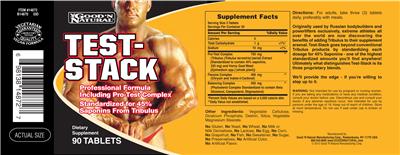
Supplement Facts
The label details for Test-Stack by Good 'N Natural, sourced from the NIH Dietary Supplement Label Database.
Supplement Facts
| Ingredient | Amount | % DV |
|---|---|---|
| Calories | 5 {Calories} | -- |
| Total Carbohydrates | 1 Gram(s) | 1% |
| Sodium | 10 mg | 1% |
| Chrysin | 0 NP | -- |
| Indole-3-Carbinol | 0 NP | -- |
| Balancing Complex | 500 mg | -- |
| Phytosterol Complex | 0 NP | -- |
| Flavone Complex | 400 mg | -- |
| Pro-Test Complex | 750 mg | -- |
| Horny Goat Weed | 0 NP | -- |
| Tribulus (Tribulus terrestris) (aerial) extract | 0 NP | -- |
Other ingredients: Vegetable Cellulose, Dicalcium Phosphate, Dextrin, Silica, Vegetable Magnesium Stearate
Tap any ingredient to jump to its full detail below.
These statements are the manufacturer’s wording, reproduced from the product label — the label is saying it, not HelloPharmacist. We don’t verify or endorse them.
General
Item #14872 B14870 03D
Seals/Symbols
Vegetarian vegan formula Guaranteed quality Laboratory tested
General Statements
Actual size
Originally used by Russian bodybuilders and powerlifters exclusively, extreme athletes all over the world are now discovering the benefits of adding Tribulus to their supplement arsenal.Test-Stack goes beyond conventional Tribulus products by standardizing each dosage for 45% Steroidal Saponins - one of the highest standardized amounts you’ll find anywhere!
Ultimately what distinguishes Test-Stack is its three proprietary blends.
We’ll provide the edge - if you’re willing to step up to it.
Formula
Professional formula including Pro-Test Complex
Standardized for 45% Saponins from Tribulus
FDA Statement of Identity
Dietary Supplement
Formulation
No Gluten, No Yeast, No Wheat, No Milk or Milk Derivatives, No Lactose, No Egg, No Corn, No Grapefruit, No Fish, No Sweetener, No Sugar, No Preservatives, No Artificial Color, No Artificial Flavor.
Suggested/Recommended/Usage/Directions
Directions: For adults, take three (3) tablets daily, preferably with meals.
Precautions
Warning: Not intended for use by pregnant or nursing women. If you are taking any medications or have any medical condition, consult your doctor before use.
Discontinue use and consult your doctor if any adverse reactions occur.
Not intended for use by persons under the age of 18. Keep out of reach of children.
Do not use if seal under cap is broken or missing.
Storage
Store at room temperature.
Brand IP Statement(s)
2013 Good 'N Natural Manufacturing Corp.
Is this label outdated? Report a formula or label change and our pharmacy team will review it.
Test-Stack by Good 'N Natural label
The label scan from the NIH Dietary Supplement Label Database. Tap to enlarge.
Label images are published by the NIH Dietary Supplement Label Database for the version of this product on file. Always read your actual product label.
View the full label (PDF)The Ingredients in Test-Stack by Good 'N Natural
These are the 6 active ingredients this product is made of. Select any to open its full monograph.
Serving size3 Tablet(s) Dosage formTablet Or Pill Servings per container30 Amounts shown are per serving.
Most supplement products combine several ingredients, and a medication can interact with the product through any one of them. Each ingredient below shows whether it has known drug interactions.
Sodium
Interacts with205 drugs
Sodium is an essential mineral and electrolyte your body needs to balance fluids, support nerves, and help muscles work. Most people in modern diets g...
Sodium monograph & interactionsBalancing Complex
- › Phytosterol Complex
Flavone Complex
Pro-Test Complex
Other (inactive) ingredients: Vegetable Cellulose, Dicalcium Phosphate, Dextrin, Silica, Vegetable Magnesium Stearate. These complete the product’s ingredient list but are not active constituents.
Test-Stack by Good 'N Natural Drug Interactions
Test-Stack contains 6 ingredients, and 5 of them have known drug interactions. Altogether they interact with 1,094 medications. Here’s the picture, then you can look up your own drug.
Want to check YOUR meds against Test-Stack?
Ask about interactions with your drugs in plain English — “Can I take it with lisinopril?” — and we find you the answer in seconds, ingredient by ingredient.
Go to the checkerIngredients driving the most interactions
Individual Drug Interactions
The ingredients in Test-Stack interact with 1,094 drugs. Click any drug to see the details.
5 of the 6 ingredients in Test-Stack interact with drugs. Each result below shows which ingredient is responsible. Horny Goat Weed Chrysin Indole-3-Carbinol Tribulus (Tribulus terrestris) (aerial) extract Sodium
Ado-trastuzumab EmtansineKadcyla
How Ado-trastuzumab Emtansine interacts with Test-Stack — through 1 ingredient. Tap an ingredient for the detail:
Horny Goat WeedCytochrome P450 3a4 (cyp3a4) Substrates Moderate
Interaction Summary
Theoretically, horny goat weed might increase the effects and side effects of CYP3A4 substrates.
Read the full Horny Goat Weed + Ado-trastuzumab Emtansine interactionAbciximabReoPro
How Abciximab interacts with Test-Stack — through 3 ingredients. Tap an ingredient for the detail:
ChrysinAnticoagulant/antiplatelet Drugs Moderate
Interaction Summary
Theoretically, chrysin might increase the risk of bleeding when taken with anticoagulant or antiplatelet drugs.
Read the full Chrysin + Abciximab interactionIndole-3-carbinolAnticoagulant/antiplatelet Drugs Moderate
Interaction Summary
Theoretically, indole-3-carbinol might increase the risk of bleeding when used with antiplatelet or anticoagulant drugs.
Read the full Indole-3-carbinol + Abciximab interactionHorny Goat WeedAnticoagulant/antiplatelet Drugs Moderate
Interaction Summary
Theoretically, horny goat weed might increase the risk of bleeding.
Read the full Horny Goat Weed + Abciximab interactionAbemaciclibVerzenio
How Abemaciclib interacts with Test-Stack — through 1 ingredient. Tap an ingredient for the detail:
Horny Goat WeedCytochrome P450 3a4 (cyp3a4) Substrates Moderate
Interaction Summary
Theoretically, horny goat weed might increase the effects and side effects of CYP3A4 substrates.
Read the full Horny Goat Weed + Abemaciclib interactionAbiraterone
How Abiraterone interacts with Test-Stack — through 1 ingredient. Tap an ingredient for the detail:
Horny Goat WeedCytochrome P450 3a4 (cyp3a4) Substrates Moderate
Interaction Summary
Theoretically, horny goat weed might increase the effects and side effects of CYP3A4 substrates.
Read the full Horny Goat Weed + Abiraterone interactionAbiraterone AcetateYonsa, Zytiga
How Abiraterone Acetate interacts with Test-Stack — through 1 ingredient. Tap an ingredient for the detail:
Horny Goat WeedCytochrome P450 3a4 (cyp3a4) Substrates Moderate
Interaction Summary
Theoretically, horny goat weed might increase the effects and side effects of CYP3A4 substrates.
Read the full Horny Goat Weed + Abiraterone Acetate interactionAbrocitinibCibinqo
How Abrocitinib interacts with Test-Stack — through 3 ingredients. Tap an ingredient for the detail:
Indole-3-carbinolAnticoagulant/antiplatelet Drugs Moderate
Interaction Summary
Theoretically, indole-3-carbinol might increase the risk of bleeding when used with antiplatelet or anticoagulant drugs.
Read the full Indole-3-carbinol + Abrocitinib interactionChrysinAnticoagulant/antiplatelet Drugs Moderate
Interaction Summary
Theoretically, chrysin might increase the risk of bleeding when taken with anticoagulant or antiplatelet drugs.
Read the full Chrysin + Abrocitinib interactionHorny Goat WeedAnticoagulant/antiplatelet Drugs Moderate
Interaction Summary
Theoretically, horny goat weed might increase the risk of bleeding.
Read the full Horny Goat Weed + Abrocitinib interactionAcalabrutinibCalquence
How Acalabrutinib interacts with Test-Stack — through 1 ingredient. Tap an ingredient for the detail:
Horny Goat WeedCytochrome P450 3a4 (cyp3a4) Substrates Moderate
Interaction Summary
Theoretically, horny goat weed might increase the effects and side effects of CYP3A4 substrates.
Read the full Horny Goat Weed + Acalabrutinib interactionAcarboseGlucobay, Prandase, Precose
How Acarbose interacts with Test-Stack — through 1 ingredient. Tap an ingredient for the detail:
Tribulus (tribulus Terrestris) (aerial) ExtractAntidiabetes Drugs Moderate
Interaction Summary
Taking tribulus with antidiabetes drugs might increase the risk of hypoglycemia.
Read the full Tribulus (tribulus Terrestris) (aerial) Extract + Acarbose interactionAcebutololRhotral, Sectral
How Acebutolol interacts with Test-Stack — through 3 ingredients. Tap an ingredient for the detail:
Tribulus (tribulus Terrestris) (aerial) ExtractAntihypertensive Drugs Moderate
Interaction Summary
Theoretically, taking tribulus with antihypertensive drugs might increase the risk of hypotension.
Read the full Tribulus (tribulus Terrestris) (aerial) Extract + Acebutolol interactionHorny Goat WeedAntihypertensive Drugs Moderate
Interaction Summary
Theoretically, horny goat weed might increase the risk of hypotension.
Read the full Horny Goat Weed + Acebutolol interactionSodiumAntihypertensive Drugs Moderate
Interaction Summary
Theoretically, a high intake of dietary sodium might reduce the effectiveness of antihypertensive drugs.
Read the full Sodium + Acebutolol interactionAcenocoumarolSintrom
How Acenocoumarol interacts with Test-Stack — through 3 ingredients. Tap an ingredient for the detail:
Horny Goat WeedAnticoagulant/antiplatelet Drugs Moderate
Interaction Summary
Theoretically, horny goat weed might increase the risk of bleeding.
Read the full Horny Goat Weed + Acenocoumarol interactionIndole-3-carbinolAnticoagulant/antiplatelet Drugs Moderate
Interaction Summary
Theoretically, indole-3-carbinol might increase the risk of bleeding when used with antiplatelet or anticoagulant drugs.
Read the full Indole-3-carbinol + Acenocoumarol interactionChrysinAnticoagulant/antiplatelet Drugs Moderate
Interaction Summary
Theoretically, chrysin might increase the risk of bleeding when taken with anticoagulant or antiplatelet drugs.
Read the full Chrysin + Acenocoumarol interactionAcetaminophenChildren's Tylenol, Children's Tylenol Meltaways, Tylenol, Tylenol Ex Strength
How Acetaminophen interacts with Test-Stack — through 3 ingredients. Tap an ingredient for the detail:
Horny Goat WeedCytochrome P450 1a2 (cyp1a2) Substrates Moderate
Interaction Summary
Theoretically, horny goat weed might increase the effects and side effects of CYP1A2 substrates.
Read the full Horny Goat Weed + Acetaminophen interactionIndole-3-carbinolCytochrome P450 1a2 (cyp1a2) Substrates Moderate
Interaction Summary
Theoretically, indole-3-carbinol might increase the metabolism of CYP1A2 substrates and lower serum concentrations.
Read the full Indole-3-carbinol + Acetaminophen interactionChrysinGlucuronidated Drugs, Cytochrome P450 1a2 (cyp1a2) Substrates Minor
Interaction Summary
Theoretically, chrysin might increase the clearance of drugs that are UGT1A1 substrates, thereby reducing their effectiveness.
Read the full Chrysin + Acetaminophen interactionAcetaminophen, AspirinGemnisyn
How Acetaminophen, Aspirin interacts with Test-Stack — through 3 ingredients. Tap an ingredient for the detail:
Indole-3-carbinolCytochrome P450 1a2 (cyp1a2) Substrates, Anticoagulant/antiplatelet Drugs Moderate
Interaction Summary
Theoretically, indole-3-carbinol might increase the metabolism of CYP1A2 substrates and lower serum concentrations.
Read the full Indole-3-carbinol + Acetaminophen, Aspirin interactionHorny Goat WeedAnticoagulant/antiplatelet Drugs, Cytochrome P450 1a2 (cyp1a2) Substrates Moderate
Interaction Summary
Theoretically, horny goat weed might increase the risk of bleeding.
Read the full Horny Goat Weed + Acetaminophen, Aspirin interactionChrysinGlucuronidated Drugs, Anticoagulant/antiplatelet Drugs +1 Moderate
Interaction Summary
Theoretically, chrysin might increase the clearance of drugs that are UGT1A1 substrates, thereby reducing their effectiveness.
Read the full Chrysin + Acetaminophen, Aspirin interactionAcetaminophen, Aspirin, CaffeineExcedrin, Excedrin Extra Strength, Excedrin Migraine
How Acetaminophen, Aspirin, Caffeine interacts with Test-Stack — through 3 ingredients. Tap an ingredient for the detail:
Indole-3-carbinolAnticoagulant/antiplatelet Drugs, Cytochrome P450 1a2 (cyp1a2) Substrates Moderate
Interaction Summary
Theoretically, indole-3-carbinol might increase the risk of bleeding when used with antiplatelet or anticoagulant drugs.
Read the full Indole-3-carbinol + Acetaminophen, Aspirin, Caffeine interactionHorny Goat WeedCytochrome P450 1a2 (cyp1a2) Substrates, Cytochrome P450 3a4 (cyp3a4) Substrates +1 Moderate
Interaction Summary
Theoretically, horny goat weed might increase the effects and side effects of CYP1A2 substrates.
Read the full Horny Goat Weed + Acetaminophen, Aspirin, Caffeine interactionChrysinAnticoagulant/antiplatelet Drugs, Glucuronidated Drugs +1 Moderate
Interaction Summary
Theoretically, chrysin might increase the risk of bleeding when taken with anticoagulant or antiplatelet drugs.
Read the full Chrysin + Acetaminophen, Aspirin, Caffeine interactionAcetaminophen, Brompheniramine, PhenylpropanolamineDimetapp Cold and Flu
How Acetaminophen, Brompheniramine, Phenylpropanolamine interacts with Test-Stack — through 3 ingredients. Tap an ingredient for the detail:
Indole-3-carbinolCytochrome P450 1a2 (cyp1a2) Substrates Moderate
Interaction Summary
Theoretically, indole-3-carbinol might increase the metabolism of CYP1A2 substrates and lower serum concentrations.
Read the full Indole-3-carbinol + Acetaminophen, Brompheniramine, Phenylpropanolamine interactionHorny Goat WeedCytochrome P450 1a2 (cyp1a2) Substrates Moderate
Interaction Summary
Theoretically, horny goat weed might increase the effects and side effects of CYP1A2 substrates.
Read the full Horny Goat Weed + Acetaminophen, Brompheniramine, Phenylpropanolamine interactionChrysinCytochrome P450 1a2 (cyp1a2) Substrates, Glucuronidated Drugs Minor
Interaction Summary
Theoretically, chrysin might increase levels of drugs metabolized by CYP1A2.
Read the full Chrysin + Acetaminophen, Brompheniramine, Phenylpropanolamine interactionAcetaminophen, ButalbitalAxocet, Bancap, Bucet, Butex Forte, Esgic CF, Orbivan CF +5 more
How Acetaminophen, Butalbital interacts with Test-Stack — through 3 ingredients. Tap an ingredient for the detail:
Horny Goat WeedCytochrome P450 1a2 (cyp1a2) Substrates Moderate
Interaction Summary
Theoretically, horny goat weed might increase the effects and side effects of CYP1A2 substrates.
Read the full Horny Goat Weed + Acetaminophen, Butalbital interactionIndole-3-carbinolCytochrome P450 1a2 (cyp1a2) Substrates Moderate
Interaction Summary
Theoretically, indole-3-carbinol might increase the metabolism of CYP1A2 substrates and lower serum concentrations.
Read the full Indole-3-carbinol + Acetaminophen, Butalbital interactionChrysinCytochrome P450 1a2 (cyp1a2) Substrates, Glucuronidated Drugs Minor
Interaction Summary
Theoretically, chrysin might increase levels of drugs metabolized by CYP1A2.
Read the full Chrysin + Acetaminophen, Butalbital interactionAcetaminophen, Butalbital, CaffeineEsgic, Esgic Plus, Fiogesic, Fioricet, Repan, Tecnal +1 more
How Acetaminophen, Butalbital, Caffeine interacts with Test-Stack — through 3 ingredients. Tap an ingredient for the detail:
Horny Goat WeedCytochrome P450 1a2 (cyp1a2) Substrates, Cytochrome P450 3a4 (cyp3a4) Substrates Moderate
Interaction Summary
Theoretically, horny goat weed might increase the effects and side effects of CYP1A2 substrates.
Read the full Horny Goat Weed + Acetaminophen, Butalbital, Caffeine interactionIndole-3-carbinolCytochrome P450 1a2 (cyp1a2) Substrates Moderate
Interaction Summary
Theoretically, indole-3-carbinol might increase the metabolism of CYP1A2 substrates and lower serum concentrations.
Read the full Indole-3-carbinol + Acetaminophen, Butalbital, Caffeine interactionChrysinGlucuronidated Drugs, Cytochrome P450 1a2 (cyp1a2) Substrates Minor
Interaction Summary
Theoretically, chrysin might increase the clearance of drugs that are UGT1A1 substrates, thereby reducing their effectiveness.
Read the full Chrysin + Acetaminophen, Butalbital, Caffeine interactionAcetaminophen, Butalbital, Caffeine, CodeineEsgic with Codeine, Fioricet w/ Codeine
How Acetaminophen, Butalbital, Caffeine, Codeine interacts with Test-Stack — through 3 ingredients. Tap an ingredient for the detail:
Horny Goat WeedCytochrome P450 3a4 (cyp3a4) Substrates, Cytochrome P450 1a2 (cyp1a2) Substrates Moderate
Interaction Summary
Theoretically, horny goat weed might increase the effects and side effects of CYP3A4 substrates.
Read the full Horny Goat Weed + Acetaminophen, Butalbital, Caffeine, Codeine interactionIndole-3-carbinolCytochrome P450 1a2 (cyp1a2) Substrates Moderate
Interaction Summary
Theoretically, indole-3-carbinol might increase the metabolism of CYP1A2 substrates and lower serum concentrations.
Read the full Indole-3-carbinol + Acetaminophen, Butalbital, Caffeine, Codeine interactionChrysinCytochrome P450 1a2 (cyp1a2) Substrates, Glucuronidated Drugs Minor
Interaction Summary
Theoretically, chrysin might increase levels of drugs metabolized by CYP1A2.
Read the full Chrysin + Acetaminophen, Butalbital, Caffeine, Codeine interactionAcetaminophen, Butalbital, CodeineBancap w/ Codeine
How Acetaminophen, Butalbital, Codeine interacts with Test-Stack — through 3 ingredients. Tap an ingredient for the detail:
Indole-3-carbinolCytochrome P450 1a2 (cyp1a2) Substrates Moderate
Interaction Summary
Theoretically, indole-3-carbinol might increase the metabolism of CYP1A2 substrates and lower serum concentrations.
Read the full Indole-3-carbinol + Acetaminophen, Butalbital, Codeine interactionHorny Goat WeedCytochrome P450 1a2 (cyp1a2) Substrates Moderate
Interaction Summary
Theoretically, horny goat weed might increase the effects and side effects of CYP1A2 substrates.
Read the full Horny Goat Weed + Acetaminophen, Butalbital, Codeine interactionChrysinCytochrome P450 1a2 (cyp1a2) Substrates, Glucuronidated Drugs Minor
Interaction Summary
Theoretically, chrysin might increase levels of drugs metabolized by CYP1A2.
Read the full Chrysin + Acetaminophen, Butalbital, Codeine interactionAcetaminophen, Butalbital, Codeine PhosphatePhrenilin #3
How Acetaminophen, Butalbital, Codeine Phosphate interacts with Test-Stack — through 3 ingredients. Tap an ingredient for the detail:
Horny Goat WeedCytochrome P450 1a2 (cyp1a2) Substrates Moderate
Interaction Summary
Theoretically, horny goat weed might increase the effects and side effects of CYP1A2 substrates.
Read the full Horny Goat Weed + Acetaminophen, Butalbital, Codeine Phosphate interactionIndole-3-carbinolCytochrome P450 1a2 (cyp1a2) Substrates Moderate
Interaction Summary
Theoretically, indole-3-carbinol might increase the metabolism of CYP1A2 substrates and lower serum concentrations.
Read the full Indole-3-carbinol + Acetaminophen, Butalbital, Codeine Phosphate interactionChrysinCytochrome P450 1a2 (cyp1a2) Substrates, Glucuronidated Drugs Minor
Interaction Summary
Theoretically, chrysin might increase levels of drugs metabolized by CYP1A2.
Read the full Chrysin + Acetaminophen, Butalbital, Codeine Phosphate interactionAcetaminophen, Caffeine, Chlorpheniramine, Hydrocodone, PhenylephrineHycomine Compound
How Acetaminophen, Caffeine, Chlorpheniramine, Hydrocodone, Phenylephrine interacts with Test-Stack — through 3 ingredients. Tap an ingredient for the detail:
Indole-3-carbinolCytochrome P450 1a2 (cyp1a2) Substrates Moderate
Interaction Summary
Theoretically, indole-3-carbinol might increase the metabolism of CYP1A2 substrates and lower serum concentrations.
Read the full Indole-3-carbinol + Acetaminophen, Caffeine, Chlorpheniramine, Hydrocodone, Phenylephrine interactionHorny Goat WeedCytochrome P450 1a2 (cyp1a2) Substrates, Cytochrome P450 3a4 (cyp3a4) Substrates Moderate
Interaction Summary
Theoretically, horny goat weed might increase the effects and side effects of CYP1A2 substrates.
Read the full Horny Goat Weed + Acetaminophen, Caffeine, Chlorpheniramine, Hydrocodone, Phenylephrine interactionChrysinCytochrome P450 1a2 (cyp1a2) Substrates, Glucuronidated Drugs Minor
Interaction Summary
Theoretically, chrysin might increase levels of drugs metabolized by CYP1A2.
Read the full Chrysin + Acetaminophen, Caffeine, Chlorpheniramine, Hydrocodone, Phenylephrine interactionAcetaminophen, Caffeine, CodeineGesic C15, Gesic C30, Gesic C8, Lenoltec 1, Lenoltec 2, Lenoltec 3 +1 more
How Acetaminophen, Caffeine, Codeine interacts with Test-Stack — through 3 ingredients. Tap an ingredient for the detail:
Horny Goat WeedCytochrome P450 3a4 (cyp3a4) Substrates, Cytochrome P450 1a2 (cyp1a2) Substrates Moderate
Interaction Summary
Theoretically, horny goat weed might increase the effects and side effects of CYP3A4 substrates.
Read the full Horny Goat Weed + Acetaminophen, Caffeine, Codeine interactionIndole-3-carbinolCytochrome P450 1a2 (cyp1a2) Substrates Moderate
Interaction Summary
Theoretically, indole-3-carbinol might increase the metabolism of CYP1A2 substrates and lower serum concentrations.
Read the full Indole-3-carbinol + Acetaminophen, Caffeine, Codeine interactionChrysinGlucuronidated Drugs, Cytochrome P450 1a2 (cyp1a2) Substrates Minor
Interaction Summary
Theoretically, chrysin might increase the clearance of drugs that are UGT1A1 substrates, thereby reducing their effectiveness.
Read the full Chrysin + Acetaminophen, Caffeine, Codeine interactionAcetaminophen, Caffeine, Codeine, SalicylamideCodalan No.1, Codalan No.2, Codalan No.3
How Acetaminophen, Caffeine, Codeine, Salicylamide interacts with Test-Stack — through 3 ingredients. Tap an ingredient for the detail:
Horny Goat WeedCytochrome P450 1a2 (cyp1a2) Substrates, Cytochrome P450 3a4 (cyp3a4) Substrates Moderate
Interaction Summary
Theoretically, horny goat weed might increase the effects and side effects of CYP1A2 substrates.
Read the full Horny Goat Weed + Acetaminophen, Caffeine, Codeine, Salicylamide interactionIndole-3-carbinolCytochrome P450 1a2 (cyp1a2) Substrates Moderate
Interaction Summary
Theoretically, indole-3-carbinol might increase the metabolism of CYP1A2 substrates and lower serum concentrations.
Read the full Indole-3-carbinol + Acetaminophen, Caffeine, Codeine, Salicylamide interactionChrysinCytochrome P450 1a2 (cyp1a2) Substrates, Glucuronidated Drugs Minor
Interaction Summary
Theoretically, chrysin might increase levels of drugs metabolized by CYP1A2.
Read the full Chrysin + Acetaminophen, Caffeine, Codeine, Salicylamide interactionAcetaminophen, Caffeine, DihydrocodeineDHC Plus, Panlor DC, Panlor SS
How Acetaminophen, Caffeine, Dihydrocodeine interacts with Test-Stack — through 3 ingredients. Tap an ingredient for the detail:
Horny Goat WeedCytochrome P450 3a4 (cyp3a4) Substrates, Cytochrome P450 1a2 (cyp1a2) Substrates Moderate
Interaction Summary
Theoretically, horny goat weed might increase the effects and side effects of CYP3A4 substrates.
Read the full Horny Goat Weed + Acetaminophen, Caffeine, Dihydrocodeine interactionIndole-3-carbinolCytochrome P450 1a2 (cyp1a2) Substrates Moderate
Interaction Summary
Theoretically, indole-3-carbinol might increase the metabolism of CYP1A2 substrates and lower serum concentrations.
Read the full Indole-3-carbinol + Acetaminophen, Caffeine, Dihydrocodeine interactionChrysinGlucuronidated Drugs, Cytochrome P450 1a2 (cyp1a2) Substrates Minor
Interaction Summary
Theoretically, chrysin might increase the clearance of drugs that are UGT1A1 substrates, thereby reducing their effectiveness.
Read the full Chrysin + Acetaminophen, Caffeine, Dihydrocodeine interactionAcetaminophen, Caffeine, IsomethepteneMigralam
How Acetaminophen, Caffeine, Isometheptene interacts with Test-Stack — through 3 ingredients. Tap an ingredient for the detail:
Horny Goat WeedCytochrome P450 1a2 (cyp1a2) Substrates, Cytochrome P450 3a4 (cyp3a4) Substrates Moderate
Interaction Summary
Theoretically, horny goat weed might increase the effects and side effects of CYP1A2 substrates.
Read the full Horny Goat Weed + Acetaminophen, Caffeine, Isometheptene interactionIndole-3-carbinolCytochrome P450 1a2 (cyp1a2) Substrates Moderate
Interaction Summary
Theoretically, indole-3-carbinol might increase the metabolism of CYP1A2 substrates and lower serum concentrations.
Read the full Indole-3-carbinol + Acetaminophen, Caffeine, Isometheptene interactionChrysinCytochrome P450 1a2 (cyp1a2) Substrates, Glucuronidated Drugs Minor
Interaction Summary
Theoretically, chrysin might increase levels of drugs metabolized by CYP1A2.
Read the full Chrysin + Acetaminophen, Caffeine, Isometheptene interactionAcetaminophen, Caffeine, PyrilamineMidol Max Strength Menstrual
How Acetaminophen, Caffeine, Pyrilamine interacts with Test-Stack — through 3 ingredients. Tap an ingredient for the detail:
Horny Goat WeedCytochrome P450 3a4 (cyp3a4) Substrates, Cytochrome P450 1a2 (cyp1a2) Substrates Moderate
Interaction Summary
Theoretically, horny goat weed might increase the effects and side effects of CYP3A4 substrates.
Read the full Horny Goat Weed + Acetaminophen, Caffeine, Pyrilamine interactionIndole-3-carbinolCytochrome P450 1a2 (cyp1a2) Substrates Moderate
Interaction Summary
Theoretically, indole-3-carbinol might increase the metabolism of CYP1A2 substrates and lower serum concentrations.
Read the full Indole-3-carbinol + Acetaminophen, Caffeine, Pyrilamine interactionChrysinCytochrome P450 1a2 (cyp1a2) Substrates, Glucuronidated Drugs Minor
Interaction Summary
Theoretically, chrysin might increase levels of drugs metabolized by CYP1A2.
Read the full Chrysin + Acetaminophen, Caffeine, Pyrilamine interactionAcetaminophen, Chlorpheniramine Maleate, Dextromethorphan HbrVicks Formula 44M Cough, Cold & Flu Relief
How Acetaminophen, Chlorpheniramine Maleate, Dextromethorphan Hbr interacts with Test-Stack — through 3 ingredients. Tap an ingredient for the detail:
Horny Goat WeedCytochrome P450 3a4 (cyp3a4) Substrates, Cytochrome P450 1a2 (cyp1a2) Substrates Moderate
Interaction Summary
Theoretically, horny goat weed might increase the effects and side effects of CYP3A4 substrates.
Read the full Horny Goat Weed + Acetaminophen, Chlorpheniramine Maleate, Dextromethorphan Hbr interactionIndole-3-carbinolCytochrome P450 1a2 (cyp1a2) Substrates Moderate
Interaction Summary
Theoretically, indole-3-carbinol might increase the metabolism of CYP1A2 substrates and lower serum concentrations.
Read the full Indole-3-carbinol + Acetaminophen, Chlorpheniramine Maleate, Dextromethorphan Hbr interactionChrysinGlucuronidated Drugs, Cytochrome P450 1a2 (cyp1a2) Substrates Minor
Interaction Summary
Theoretically, chrysin might increase the clearance of drugs that are UGT1A1 substrates, thereby reducing their effectiveness.
Read the full Chrysin + Acetaminophen, Chlorpheniramine Maleate, Dextromethorphan Hbr interactionAcetaminophen, Chlorpheniramine, Codeine, PhenylephrineColrex
How Acetaminophen, Chlorpheniramine, Codeine, Phenylephrine interacts with Test-Stack — through 3 ingredients. Tap an ingredient for the detail:
Horny Goat WeedCytochrome P450 1a2 (cyp1a2) Substrates, Cytochrome P450 3a4 (cyp3a4) Substrates Moderate
Interaction Summary
Theoretically, horny goat weed might increase the effects and side effects of CYP1A2 substrates.
Read the full Horny Goat Weed + Acetaminophen, Chlorpheniramine, Codeine, Phenylephrine interactionIndole-3-carbinolCytochrome P450 1a2 (cyp1a2) Substrates Moderate
Interaction Summary
Theoretically, indole-3-carbinol might increase the metabolism of CYP1A2 substrates and lower serum concentrations.
Read the full Indole-3-carbinol + Acetaminophen, Chlorpheniramine, Codeine, Phenylephrine interactionChrysinCytochrome P450 1a2 (cyp1a2) Substrates, Glucuronidated Drugs Minor
Interaction Summary
Theoretically, chrysin might increase levels of drugs metabolized by CYP1A2.
Read the full Chrysin + Acetaminophen, Chlorpheniramine, Codeine, Phenylephrine interactionAcetaminophen, Chlorpheniramine, DextromethorphanCoricidin II Extra Strength Cold and Flu
How Acetaminophen, Chlorpheniramine, Dextromethorphan interacts with Test-Stack — through 3 ingredients. Tap an ingredient for the detail:
Horny Goat WeedCytochrome P450 3a4 (cyp3a4) Substrates, Cytochrome P450 1a2 (cyp1a2) Substrates Moderate
Interaction Summary
Theoretically, horny goat weed might increase the effects and side effects of CYP3A4 substrates.
Read the full Horny Goat Weed + Acetaminophen, Chlorpheniramine, Dextromethorphan interactionIndole-3-carbinolCytochrome P450 1a2 (cyp1a2) Substrates Moderate
Interaction Summary
Theoretically, indole-3-carbinol might increase the metabolism of CYP1A2 substrates and lower serum concentrations.
Read the full Indole-3-carbinol + Acetaminophen, Chlorpheniramine, Dextromethorphan interactionChrysinCytochrome P450 1a2 (cyp1a2) Substrates, Glucuronidated Drugs Minor
Interaction Summary
Theoretically, chrysin might increase levels of drugs metabolized by CYP1A2.
Read the full Chrysin + Acetaminophen, Chlorpheniramine, Dextromethorphan interactionAcetaminophen, Chlorpheniramine, Dextromethorphan HydrobromideCoricidin HBP Maximum Strength Flu
How Acetaminophen, Chlorpheniramine, Dextromethorphan Hydrobromide interacts with Test-Stack — through 3 ingredients. Tap an ingredient for the detail:
Indole-3-carbinolCytochrome P450 1a2 (cyp1a2) Substrates Moderate
Interaction Summary
Theoretically, indole-3-carbinol might increase the metabolism of CYP1A2 substrates and lower serum concentrations.
Read the full Indole-3-carbinol + Acetaminophen, Chlorpheniramine, Dextromethorphan Hydrobromide interactionHorny Goat WeedCytochrome P450 3a4 (cyp3a4) Substrates, Cytochrome P450 1a2 (cyp1a2) Substrates Moderate
Interaction Summary
Theoretically, horny goat weed might increase the effects and side effects of CYP3A4 substrates.
Read the full Horny Goat Weed + Acetaminophen, Chlorpheniramine, Dextromethorphan Hydrobromide interactionChrysinGlucuronidated Drugs, Cytochrome P450 1a2 (cyp1a2) Substrates Minor
Interaction Summary
Theoretically, chrysin might increase the clearance of drugs that are UGT1A1 substrates, thereby reducing their effectiveness.
Read the full Chrysin + Acetaminophen, Chlorpheniramine, Dextromethorphan Hydrobromide interactionAcetaminophen, Chlorpheniramine, Dextromethorphan, PhenylpropanolamineMulti Symptom Cold Relief
How Acetaminophen, Chlorpheniramine, Dextromethorphan, Phenylpropanolamine interacts with Test-Stack — through 3 ingredients. Tap an ingredient for the detail:
Horny Goat WeedCytochrome P450 1a2 (cyp1a2) Substrates, Cytochrome P450 3a4 (cyp3a4) Substrates Moderate
Interaction Summary
Theoretically, horny goat weed might increase the effects and side effects of CYP1A2 substrates.
Read the full Horny Goat Weed + Acetaminophen, Chlorpheniramine, Dextromethorphan, Phenylpropanolamine interactionIndole-3-carbinolCytochrome P450 1a2 (cyp1a2) Substrates Moderate
Interaction Summary
Theoretically, indole-3-carbinol might increase the metabolism of CYP1A2 substrates and lower serum concentrations.
Read the full Indole-3-carbinol + Acetaminophen, Chlorpheniramine, Dextromethorphan, Phenylpropanolamine interactionChrysinCytochrome P450 1a2 (cyp1a2) Substrates, Glucuronidated Drugs Minor
Interaction Summary
Theoretically, chrysin might increase levels of drugs metabolized by CYP1A2.
Read the full Chrysin + Acetaminophen, Chlorpheniramine, Dextromethorphan, Phenylpropanolamine interactionEach ingredient & the kinds of drugs it affects
For each ingredient in Test-Stack with known interactions, here are the types of medications they can affect. Open any type for the detail — or search your exact drug in the checker above.
Horny Goat Weed
Anticoagulant/Antiplatelet Drugs
Theoretically, horny goat weed might increase the risk of bleeding.
In vitro research and animal research shows that horny goat weed can inhibit platelet aggregation and thrombus formation. This effect has not been reported in humans.
Antihypertensive Drugs
Theoretically, horny goat weed might increase the risk of hypotension.
Laboratory research suggests that horny goat weed might have hypotensive effects. This effect has not been reported in humans.
Cytochrome P450 1A2 (Cyp1A2) Substrates
Theoretically, horny goat weed might increase the effects and side effects of CYP1A2 substrates.
In vitro, horny goat weed leaf extract inhibits CYP1A2. This effect has not been reported in humans.
Cytochrome P450 2B6 (Cyp2B6) Substrates
Theoretically, horny goat weed might increase the effects and side effects of CYP2B6 substrates.
In vitro, horny goat weed leaf extract inhibits CYP2B6. This effect has not been reported in humans.
Cytochrome P450 3A4 (Cyp3A4) Substrates
Theoretically, horny goat weed might increase the effects and side effects of CYP3A4 substrates.
In vitro, horny goat weed extract inhibits CYP3A4 and suppresses CYP3A4 mRNA expression. This effect has not been reported in humans.
Estrogens
Theoretically, concomitant use of horny goat weed with estrogens might increase their therapeutic and adverse effects.
In vitro evidence suggests that horny goat weed has estrogenic activity. In clinical research, horny goat weed has been shown to increase blood levels of estrogen in some females.
Chrysin
Anticoagulant/Antiplatelet Drugs
Theoretically, chrysin might increase the risk of bleeding when taken with anticoagulant or antiplatelet drugs.
In vitro evidence suggests that chrysin might inhibit platelet aggregation.
Aromatase Inhibitors
Theoretically, chrysin might increase the effects and adverse effects of aromatase inhibitors.
In vitro research suggests that chrysin might decrease estrogen synthesis by acting as an aromatase (estrogen synthetase) inhibitor..
Contraceptive Drugs
Theoretically, chrysin might reduce the efficacy of estrogen-containing contraceptive drugs.
In vitro research suggests that chrysin might have antiestrogenic activity.
Diclofenac (Voltaren, Others)
Theoretically, chrysin might increase the effects and adverse effects of diclofenac.
In vitro research suggests that chrysin and its sulfate conjugate inhibit diclofenac metabolism. It is speculated that chrysin and its sulfate conjugate reduce the metabolism of diclofenac by inhibiting cytochrome P450 2C9. This effect has not been reported in humans.
Estrogens
Theoretically, chrysin might decrease the effects of estrogen therapy.
In vitro research suggests that chrysin might have antiestrogenic activity.
Mephenytoin (Mesantoin)
Theoretically, chrysin might increase the effects and adverse effects of mephenytoin.
In vitro research suggests that chrysin and its sulfate and glucuronide conjugates inhibit S-mephenytoin metabolism. It is speculated that chrysin and its conjugates reduce the metabolism of S-mephenytoin by inhibiting cytochrome P450 2C19. This effect has not been reported in humans.
Cytochrome P450 1A2 (Cyp1A2) Substrates
Theoretically, chrysin might increase levels of drugs metabolized by CYP1A2.
In vitro research suggests that chrysin inhibits CYP1A2 isozymes. However, chrysin does not appear to inhibit CYP1A2-dependent caffeine metabolism in animals. Due to chrysin's low bioavailability and rapid metabolism to glucuronide and sulfate conjugates, this interaction is unlikely.
Glucuronidated Drugs
Theoretically, chrysin might increase the clearance of drugs that are UGT1A1 substrates, thereby reducing their effectiveness.
In vitro research suggests that chrysin might induce UDP-glucuronosyltransferase 1A1 (UGT1A1).
Testosterone
Theoretically, chrysin might increase the effects and adverse effects of testosterone.
In vitro research suggests that chrysin and its sulfate conjugate inhibit testosterone metabolism. It is speculated that chrysin and its sulfate conjugate reduce the metabolism of testosterone by inhibiting cytochrome P450 3A4. This effect has not been reported in humans.
Indole-3-Carbinol
Anticoagulant/Antiplatelet Drugs
Theoretically, indole-3-carbinol might increase the risk of bleeding when used with antiplatelet or anticoagulant drugs.
In vitro research shows that indole-3-carbinol inhibits platelet aggregation.
Cytochrome P450 1A2 (Cyp1A2) Substrates
Theoretically, indole-3-carbinol might increase the metabolism of CYP1A2 substrates and lower serum concentrations.
Animal research shows that indole-3-carbinol induces CYP1A2 enzymes.
Estrogens
Indole-3-carbinol might interfere with the effects of estrogen therapy.
Preliminary clinical and in vitro evidence shows that indole-3-carbinol has antiestrogenic activity.
Tribulus (Tribulus terrestris) (aerial) extract
Antidiabetes Drugs
Taking tribulus with antidiabetes drugs might increase the risk of hypoglycemia.
Clinical research shows that Tribulus can lower blood glucose levels in adults with type 2 diabetes who are taking antidiabetes medications.
Antihypertensive Drugs
Theoretically, taking tribulus with antihypertensive drugs might increase the risk of hypotension.
Animal research shows that tribulus can lower blood pressure by inhibiting angiotensin-converting enzyme (ACE). Tribulus has also demonstrated hypotensive effects in pre-hypertensive adults.
Lithium
Theoretically, tribulus might increase the levels and clinical effects of lithium.
Tribulus is thought to have diuretic properties. Due to these potential diuretic effects, tribulus might reduce excretion and increase levels of lithium. The dose of lithium might need to be decreased.
Sodium
Antihypertensive Drugs
Theoretically, a high intake of dietary sodium might reduce the effectiveness of antihypertensive drugs.
High intake of dietary sodium can increase systolic and diastolic blood pressure. Also, high intake of sodium may necessitate increased use of antihypertensive medications to achieve blood pressure control in some patients, such as those with chronic kidney disease.
Corticosteroids
Concomitant use of mineralocorticoids and some glucocorticoids with sodium supplements might increase the risk of hypernatremia.
Mineralocorticoids and some glucocorticoids (corticosteroids) cause sodium retention. This effect is dose-related and depends on mineralocorticoid potency. It is most common with hydrocortisone, cortisone, and fludrocortisone, followed by prednisone and prednisolone.
Didanosine (Videx)
Concomitant use of didanosine with additional sodium from dietary or supplemental sources may increase the risk of hypernatremia.
Didanosine formulations contain a significant amount of sodium.
Lithium
Altering dietary intake of sodium might alter the levels and clinical effects of lithium.
High sodium intake can reduce plasma concentrations of lithium by increasing lithium excretion. Reducing sodium intake can significantly increase plasma concentrations of lithium and cause lithium toxicity in patients being treated with lithium carbonate. Stabilizing sodium intake is shown to reduce the percentage of patients with lithium level fluctuations above 0.8 mEq/L. Patients taking lithium should avoid significant alterations in their dietary intake of sodium.
Sodium Phosphates
Theoretically, concomitant use of sodium phosphate with sodium supplements might increase the risk of hypernatremia.
Use of high doses (> 45 mL in 24 hours) of sodium phosphate, such as those used for bowel cleansing before surgery, can lead to serious electrolyte disturbances, including hypernatremia. The risk of hypernatremia is highest in the elderly and people with other risk factors for electrolyte disturbances.
Sodium-Containing Drugs
Concomitant use of sodium-containing drugs with additional sodium from dietary or supplemental sources may increase the risk of hypernatremia and long-term sodium-related complications.
The Chronic Disease Risk Reduction (CDRR) intake level of 2.3 grams of sodium daily indicates the intake at which it is believed that chronic disease risk increases for the apparently healthy population. Some medications contain high quantities of sodium. When used in conjunction with sodium supplements or high-sodium diets, the CDRR may be exceeded. Additionally, concomitant use may increase the risk for hypernatremia; this risk is highest in the elderly and people with other risk factors for electrolyte disturbances.
Tolvaptan (Samsca)
Theoretically, concomitant use of tolvaptan with sodium might increase the risk of hypernatremia.
Tolvaptan is a vasopressin receptor 2 antagonist that is used to increase sodium levels in patients with hyponatremia. Patients taking tolvaptan should use caution with the use of sodium salts such as sodium chloride.
Brand information
Manufacturer and brand details for Test-Stack, from the product label.
Good 'N Natural
See all Good 'N Natural products- Name
- Good 'N Natural Manufacturing Corp.
- City
- Ronkonkoma
- State
- NY
- ZipCode
- 11779
- Phone Number
- 800-544-0095
- Web Address
- www.goodnnatural.com
Test-Stack by Good 'N Natural: Common Questions
Does Test-Stack by Good 'N Natural interact with any medications?
How can one product interact with so many drugs?
Where does this information come from?
Written and reviewed by the HelloPharmacist editorial staff. Our editorial policy
Not sure if Test-Stack is safe with your meds?
Our pharmacists answer your medication & supplement questions — free.
Label information is sourced from the NIH Dietary Supplement Label Database and reflects the product version on file; always read your actual product label. This page is for education only and is not a substitute for professional medical advice. Confirm with your pharmacist or doctor before combining supplements and medications.
The Full Monographs Behind Test-Stack’s Ingredients
Every ingredient we hold a full HelloPharmacist monograph for — uses, evidence, safety, and the complete interaction list.
Sodium
Interacts with 205 drugsSodium is an essential mineral and electrolyte your body needs to balance fluids, support nerves, and help muscles work. Most people in modern diets get more than enough—often too much—from...
Read the full Sodium monograph → Herb & supplement monographChrysin
Interacts with 358 drugsChrysin is a plant flavonoid sold mainly as a bodybuilding supplement claimed to raise testosterone or block estrogen, but human studies have not shown these benefits, largely because the bo...
Read the full Chrysin monograph → Herb & supplement monographIndole-3-carbinol
Interacts with 294 drugsIndole-3-carbinol (I3C) is a compound formed when you eat cruciferous vegetables like broccoli and cabbage, and it is sold as a supplement mainly for hormone-related and cell-protective effe...
Read the full Indole-3-carbinol monograph → Herb & supplement monographHorny Goat Weed
Interacts with 963 drugsHorny goat weed (Epimedium) is a traditional Chinese herb most often marketed for low libido and erectile problems, but solid human evidence for these uses is lacking. While short-term use s...
Read the full Horny Goat Weed monograph → Herb & supplement monographTribulus
Interacts with 259 drugsTribulus is a plant supplement most often marketed to boost libido, testosterone, and athletic performance, but the human evidence behind these claims is weak and inconsistent. It is general...
Read the full Tribulus monograph →Sources & How We Checked
Test-Stack's label data comes from the NIH Dietary Supplement Label Database; the ingredient interaction data is from the Natural Medicines database, reviewed by our pharmacists.
- NIH Dietary Supplement Label Database (DSLD) — The official product label on file for this supplement.
- Natural Medicines (Therapeutic Research Center) — Evidence-graded clinical reference behind the ingredient interaction data.
Content is written and reviewed by licensed HelloPharmacist pharmacists. See our data sources and editorial standards for how this information is built and checked.
The 91 references behind this product’s interaction data
Every citation that drives the interaction findings for this product’s ingredients, from the evidence-graded Natural Medicines (TRC Healthcare) database. Open an ingredient to browse its citations — links open the study on PubMed or the publisher’s site.
Sodium 38 references
- Garabedian-Ruffalo SM, Ruffalo RL. Drug and nutrient interactions. Am Fam Physician 1986;33:165-74.
- Food and Drug Administration Science Background: Safety of Sodium Phosphates Oral Solution. September 17, 2001. Available at: http://www.fda.gov/cder/drug/safety/sodiumphospate.htm
- Coton T, Mallaret C, Coilliot C, Carre D, Guisset M. Severe acute ulcerated gastritis induced by salt. Presse Med 2009;38(3):499-500. PubMed
- Frings-Meuthen P, Buehlmeier J, Baecker N, et al. High sodium chloride intake exacerbates immobilization-induced bone resorption and protein losses. J Appl Physiol 2011;111(2):537-542. PubMed
- Frings-Meuthen P, Baecker N, Heer M. Low-grade metabolic acidosis may be the cause of sodium chloride-induced exaggerated bone resorption. J Bone Miner Res 2008;23(4):517-524. PubMed
- Alam S, Johnson AG. A meta-analysis of randomised controlled trials (RCT) among healthy normotensive and essential hypertensive elderly patients to determine the effect of high salt (NaCl) diet of blood pressure. J Hum Hypertens 1999;13(6):367-74.
- Boudville N, Ward S, Benaroia M, House AA. Increased sodium intake correlates with greater use of antihypertensive agents by subjects with chronic kidney disease. Am J Hypertens 2005;18(10):1300-5. PubMed
- Bennett WM. Drug interactions and consequences of sodium restriction. Am J Clin Nutr 1997;65(2 Suppl):678S-681S. PubMed
- Okusa MD, Crystal LJ. Clinical manifestations and management of acute lithium intoxication. Am J Med 1994;97(4):383-9. PubMed
- Food and Nutrition Board, Institute of Medicine. Dietary reference intakes for water, potassium, sodium, chloride, and sulfate. Washington, DC: National Academy Press, 2005. Available at: http://www.nap.edu/openbook.php?record_id=10925. DOI
- D'Elia L, Rossi G, Ippolito R, Cappuccio FP, Strazzullo P. Habitual salt intake and risk of gastric cancer: a meta-analysis of prospective studies. Clin Nutr 2012;31(4):489-98. PubMed
- Goldsmith SR. Hyponatremia in heart failure: time for a trial. J Card Fail 2013;19(6):398-400. PubMed
- Willocks L, Brettle R, Keen J, Valentine C, Pinching AJ. Formulations of didanosine (ddI) and salt overload. Lancet 1992;339(8786):190.
- Chen L, Zhang Z, Chen W, Whelton PK, Appel LJ. Lower Sodium Intake and Risk of Headaches: Results From the Trial of Nonpharmacologic Interventions in the Elderly. Am J Public Health. 2016;106(7):1270-5. PubMed
- Cook NR, Appel LJ, Whelton PK. Lower levels of sodium intake and reduced cardiovascular risk. Circulation. 2014;129(9):981-9. PubMed
- Cook NR, Appel LJ, Whelton PK. Sodium Intake and All-Cause Mortality Over 20 Years in the Trials of Hypertension Prevention. J Am Coll Cardiol. 2016;68(15):1609-1617. PubMed
- Mente A, O'Donnell M, Rangarajan S, et al. Associations of urinary sodium excretion with cardiovascular events in individuals with and without hypertension: a pooled analysis of data from four studies. Lancet. 2016;388(10043):465-75. PubMed
- Moosavian SP, Haghighatdoost F, Surkan PJ, Azadbakht L. Salt and obesity: a systematic review and meta-analysis of observational studies. Int J Food Sci Nutr. 2017;68(3):265-277. PubMed
- O'Donnell M, Mente A, Rangarajan S, et al. Urinary sodium and potassium excretion, mortality, and cardiovascular events. N Engl J Med. 2014;371(7):612-23. DOI
- Poggio R, Gutierrez L, Matta MG, Elorriaga N, Irazola V, Rubinstein A. Daily sodium consumption and CVD mortality in the general population: systematic review and meta-analysis of prospective studies. Public Health Nutr. 2015;18(4):695-704. PubMed
- Stallings VA, Harrison M, Oria M; Committee to Review the Dietary Reference Intakes for Sodium and Potassium, Food and Nutrition Board, Health and Medicine Division, National Academies of Sciences, Engineering, and Medicine. Washington (DC): National Acad
- Mahtani KR, Heneghan C, Onakpoya I, et al. Reduced Salt Intake for Heart Failure: A Systematic Review. JAMA Intern Med. 2018 Dec 1;178(12):1693-1700. PubMed
- Yancy CW. Sodium Restriction in Heart Failure: Too Much Uncertainty-Do the Trials. JAMA Intern Med. 2018 Dec 1;178(12):1700-1701. PubMed
- He FJ, Campbell NRC, Ma Y, MacGregor GA, Cogswell ME, Cook NR. Errors in estimating usual sodium intake by the Kawasaki formula alter its relationship with mortality: implications for public health. Int J Epidemiol. 2018;47(6):1784-1795. PubMed
- Murthy K, Ondrey GJ, Malkani N, et al. THE EFFECTS OF HYPONATREMIA ON BONE DENSITY AND FRACTURES: A SYSTEMATIC REVIEW AND META-ANALYSIS. Endocr Pract. 2019;25(4):366-378. PubMed
- Messerli FH, Hofstetter L, Syrogiannouli L, et al. Sodium intake, life expectancy, and all-cause mortality. Eur Heart J 2021;42(21):2103-2112. PubMed
- Graudal NA, Hubeck-Graudal T, Jurgens G. Effects of low sodium diet versus high sodium diet on blood pressure, renin, aldosterone, catecholamines, cholesterol, and triglyceride. Cochrane Database Syst Rev 2020;12(12):CD004022. PubMed
- Giatti S, Santos RB, Aielo AN, et al. Association of sodium with obstructive sleep apnea. The ELSA-Brasil study. Ann Am Thorac Soc 2021;18(3):502-510. PubMed
- Nan X, Lu H, Wu J, et al. The interactive association between sodium intake, alcohol consumption and hypertension among elderly in northern China: a cross-sectional study. BMC Geriatr 2021;21(1):135. PubMed
- Kyozuka H, Fukusda T, Murata T, et al. Impact of preconception sodium intake on hypertensive disorders of pregnancy: The Japan Environment and Children's study. Pregnancy Hypertens 2021;23:66-72. PubMed
- Zhao L, Ogden CL, Yang Q, et al. Association of usual sodium intake with obesity among US children and adolescents, NHANES 2009-2016. Obesity (Silver Spring) 2021;29(3):587-594. PubMed
- Ma Y, He FJ, Sun Q, et al. 24-Hour urinary sodium and potassium excretion and cardiovascular risk. N Engl J Med 2022;386(3):252-263. PubMed
- Liu J, Yang X, Zhang P, et al. Association of urinary sodium excretion and left ventricular hypertrophy in people with type 2 diabetes mellitus: A cross-sectional study. Front Endocrinol (Lausanne) 2021;12:728493. PubMed
- Filippini T, Malavolti M, Whelton PK, Vinceti M. Sodium intake and risk of hypertension: A systematic review and dose-response meta-analysis of observational cohort studies. Curr Hypertens Rep 2022;24(5):133-144. PubMed
- Wang DD, Li Y, Nguyen XT, et al. Dietary sodium and potassium intake and risk of non-fatal cardiovascular diseases: The million veteran program. Nutrients 2022;14(5):1121. PubMed
- Kwak JH, Park CH, Eun CS, et al. The associations of dietary intake of high sodium and low zinc with gastric cancer mortality: A prospective cohort study in Korea. Nutr Cancer 2022;74(10):3501-3508. PubMed
- George S, Maiti R, Mishra BR, Jena M, Mohapatra D. Effect of regulated add-on sodium chloride intake on stabilization of serum lithium concentration in bipolar disorder: A randomized controlled trial. Bipolar Disord 2023;25(1):66-75. PubMed
- Zhou TL, Schütten MTJ, Kroon AA, et al. Urinary Sodium Excretion and Salt Intake Are Not Associated With Blood Pressure Variability in a White General Population. J Am Heart Assoc 2023;12(1):e026578. PubMed
Chrysin 23 references
- Galijatovic A, Otake Y, Walle UK, Walle T. Extensive metabolism of the flavonoid chrysin by human Caco-2 and Hep G2 cells. Xenobiotica 1999;29:1241-56. PubMed
- Lee H, Yeom H, Kim YG, et al. Structure-related inhibition of human hepatic caffeine N3-demethylation by naturally occurring flavonoids. Biochem Pharmacol 1998;55:1369-75. PubMed
- Galijatovic A, Walle UK, Walle T. Induction of UDP-glucuronosyltransferase by the flavonoids chrysin and quercetin in Caco-2 cells. Pharm Res 2000;17:21-6.
- Walle UK, Galijatovic A, Walle T. Transport of the flavonoid chrysin and its conjugated metabolites by the human intestinal cell line Caco-2. Biochem Pharmacol 1999;58:431-8. PubMed
- Kao YC, Zhou C, Sherman M, et al. Molecular basis of the inhibition of human aromatase (estrogen synthetase) by flavone and isoflavone phytoestrogens: A site-directed mutagenesis study. Environ Health Perspect 1998;106:85-92. PubMed
- Jeong HJ, Shin YG, Kim IH, Pezzuto JM. Inhibition of aromatase activity by flavonoids. Arch Pharm Res 1999;22:309-12. PubMed
- Walle T, Otake Y, Galijatovic A, et al. Induction of UDP-glucuronosyltransferase UGT1A1 by the flavonoid chrysin in the human hepatoma cell line hep G2. Drug Metab Dispos 2000;28:1077-82. DOI
- Walle T, Otake Y, Brubaker JA, et al. Disposition and metabolism of the flavonoid chrysin in normal volunteers. Br J Clin Pharmacol 2001;51:143-6. DOI
- Galijatovic A, Otake Y, Walle UK, Walle T. Induction of UDP-glucuronosyltransferase UGT1A1 by the flavonoid chrysin in Caco-2 cells--potential role in carcinogen bioinactivation. Pharm Res 2001;18:374-9. PubMed
- Lautraite S, Musonda AC, Doehmer J, et al. Flavonoids inhibit genetic toxicity produced by carcinogens in cells expressing CYP1A2 and CYP1A1. Mutagenesis 2002;17:45-53. PubMed
- Han, D. H., Denison, M. S., Tachibana, H., and Yamada, K. Relationship between estrogen receptor-binding and estrogenic activities of environmental estrogens and suppression by flavonoids. Biosci.Biotechnol.Biochem 2002;66(7):1479-1487. PubMed
- O'Leary, K. A., de Pascual-Tereasa, S., Needs, P. W., Bao, Y. P., O'Brien, N. M., and Williamson, G. Effect of flavonoids and vitamin E on cyclooxygenase-2 (COX-2) transcription. Mutat.Res 7-13-2004;551(1-2):245-254. PubMed
- Woodman, O. L. and Chan, E. C. Vascular and anti-oxidant actions of flavonols and flavones. Clin Exp Pharmacol Physiol 2004;31(11):786-790. PubMed
- Simons, A. L., Renouf, M., Hendrich, S., and Murphy, P. A. Human gut microbial degradation of flavonoids: structure-function relationships. J Agric.Food Chem 5-18-2005;53(10):4258-4263. PubMed
- Kim, H. J., Lee, S. B., Park, S. K., Kim, H. M., Park, Y. I., and Dong, M. S. Effects of hydroxyl group numbers on the B-ring of 5,7-dihydroxyflavones on the differential inhibition of human CYP 1A and CYP1B1 enzymes. Arch Pharm Res 2005;28(10):1114-1121 PubMed
- Moon, Y. J., Wang, X., and Morris, M. E. Dietary flavonoids: effects on xenobiotic and carcinogen metabolism. Toxicol In Vitro 2006;20(2):187-210. PubMed
- Landolfi, R., Mower, R. L., and Steiner, M. Modification of platelet function and arachidonic acid metabolism by bioflavonoids. Structure-activity relations. Biochem Pharmacol 5-1-1984;33(9):1525-1530. PubMed
- Tsyrlov, I. B., Mikhailenko, V. M., and Gelboin, H. V. Isozyme- and species-specific susceptibility of cDNA-expressed CYP1A P-450s to different flavonoids. Biochim.Biophys Acta 4-13-1994;1205(2):325-335. PubMed
- Collins, B. M., McLachlan, J. A., and Arnold, S. F. The estrogenic and antiestrogenic activities of phytochemicals with the human estrogen receptor expressed in yeast. Steroids 1997;62(4):365-372. PubMed
- Kuiper, G. G., Lemmen, J. G., Carlsson, B., Corton, J. C., Safe, S. H., van der Saag, P. T., van der Burg, B., and Gustafsson, J. A. Interaction of estrogenic chemicals and phytoestrogens with estrogen receptor beta. Endocrinology 1998;139(10):4252-4263. PubMed
- Liu G, Xie W, He AD, et al. Antiplatelet activity of chrysin via inhibiting platelet aIIbß3-mediated signaling pathway. Mol Nutr Food Res 2016;60(9):1984-93.
- Noh K, Oh do G, Nepal MR, et al. Pharmacokinetic interaction of chrysin with caffeine in rats. Biomol Ther (Seoul) 2016;24(4):446-52. PubMed
- Mohos V, Fliszár-Nyúl E, Ungvári O, et al. Effects of Chrysin and Its Major Conjugated Metabolites Chrysin-7-Sulfate and Chrysin-7-Glucuronide on Cytochrome P450 Enzymes and on OATP, P-gp, BCRP, and MRP2 Transporters. Drug Metab Dispos 2020;48(10):1064-10 PubMed
Indole-3-carbinol 9 references
- Rosen CA, Woodson GE, Thompson JW, et al. Preliminary results of the use of indole-3-carbinol for recurrent respiratory papillomatosis. Otolaryngol Head Neck Surg 1998;118:810-5. PubMed
- Bell MC, Crowley-Nowick P, Bradlow HL, et al. Placebo-controlled trial of indole-3-carbinol in the treatment of CIN. Gynecol Oncol 2000;78:123-9. PubMed
- He YH, Friesen MD, Ruch RJ, Schut HA. Indole-3-carbinol as a chemopreventive agent in 2-amino-1-methyl-6-phenylimidazo[4,5-b]pyridine (PhIP) carcinogenesis: inhibition of PhIP-DNA adduct formation, acceleration of PhIP metabolism, and induction of cytoch
- Kim, Y. S. and Milner, J. A. Targets for indole-3-carbinol in cancer prevention. J.Nutr.Biochem. 2005;16(2):65-73. PubMed
- Anon. Indole-3-carbinol. Monograph. Alternative Medicine Review 2005;10(4):337-42.
- McAlindon TE, Gulin J, Chen T, et al. Indole-3-carbinol in women with SLE: effect on estrogen metabolism and disease activity. Lupus 2001;10:779-83. PubMed
- Reed GA, Peterson KS, Smith HJ, et al. A phase I study of indole-3-carbinol in women: tolerability and effects. Cancer Epidemiol Biomarkers Prev 2005;14:1953-60. PubMed
- Bradlow HL, Michnovicz JJ, Halper M, et al. Long-term responses of women to indole-3-carbinol or a high fiber diet. Cancer Epidemiol Biomarkers Prev 1994;3:591-5.
- Paliwal P, Chauhan G, Gautam D, Dash D, Patne SCU, Krishnamurthy S. Indole-3-carbinol improves neurobehavioral symptoms in a cerebral ischemic stroke model. Naunyn Schmiedebergs Arch Pharmacol. 2018;391(6):613-625. PubMed
Horny Goat Weed 11 references
- Cirigliano MD, Szapary PO. Horny goat weed for erectile dysfunction. Alt Med Alert 2001;4:19-22.
- Partin JF, Pushkin YR. Tachyarrhythmia and hypomania with horny goat weed. Psychosomatics 2004;45:536-7. PubMed
- De Naeyer A, Pocock V, Milligan S, De Keukeleire D. Estrogenic activity of a polyphenolic extract of the leaves of Epimedium brevicornum. Fitoterapia 2005;76:35-40. PubMed
- Zhang CZ, Wang SX, Zhang Y, et al. In vitro estrogenic activities of Chinese medicinal plants traditionally used for the management of menopausal symptoms. J Ethnopharmacol 2005;98:295-300. PubMed
- Yap SP, Shen P, Li J, et al. Molecular and pharmacodynamic properties of estrogenic extracts from the traditional Chinese medicinal herb, Epimedium. J Ethnopharmacol 2007;113:218-24. PubMed
- Yan, F. F., Liu, Y., Liu, Y. F., and Zhao, Y. X. Herba Epimedii water extract elevates estrogen level and improves lipid metabolism in postmenopausal women. Phytother.Res. 2008;22(9):1224-1228. PubMed
- Ramanathan VS, Mitropoulos E, Shlopov B, et al. An Enzyte'ing' case of acute hepatitis. J Clin Gastroenterol 2011;45(9):834-5. PubMed
- Zhong Q, Shi Z, Zhang L, et al. The potential of Epimedium koreanum Nakai for herb-drug interaction. J Pharm Pharmacol 2017;69(10):1398-408. doi: 10.1111/jphp.12773.
- Irfan M, Kwon TH, Lee DH, et al. Antiplatelet and Antithrombotic Effects of Epimedium koreanum Nakai. Evid Based Complement Alternat Med. Apr 2021;2021:7071987. PubMed
- Tan K, Yang W, Pang L, Hou F. Differences in clinical characteristics among 726 patients with Chinese herbal medicine- or Western medicine-induced liver injury. Medicine (Baltimore) 2022;101(32):e29909. PubMed
- Li K, Yu XH, Maskey AR, et al. Cytochrome P450 3A4 suppression by epimedium and active compound kaempferol leads to synergistic anti-inflammatory effect with corticosteroid. Front Pharmacol 2023;13:1042756. PubMed
Tribulus 10 references
- Sharifi AM, Darabi R, Akbarloo N. Study of antihypertensive mechanism of Tribulus terrestris in 2K1C hypertensive rats: role of tissue ACE activity. Life Sci 2003;73:2963-71. PubMed
- Walker D, Bird A, Flora T, O'Sullivan B. Some effects of feeding Tribulus terrestris, Ipomoea lonchophylla and the seed of Abelmoschus ficulneus on fetal development and the outcome of pregnancy in sheep. Reprod Fertil Dev 1992;4:135-44. PubMed
- Al-Ali M, Wahbi S, Twaij H, Al-Badr A. Tribulus terrestris: preliminary study of its diuretic and contractile effects and comparison with Zea mays. J Ethnopharmacol 2003;85:257-60. PubMed
- Tabakova, P., Dimitrov, M., Ognyanov, K., and et al. Clinical study of Tribestan in females with endocrine sterility. Documentation for Registration (unpublished) 1999.
- Akhtari E, Raisi F, Keshavarz M, et al. Tribulus terrestris for treatment of sexual dysfunction in women: randomized double-blind placebo-controlled study. Daru 2014;22:40. PubMed
- Ryan M, Lazar I, Nadasdy GM, et al. Acute kidney injury and hyperbilirubinemia in a young male after ingestion of Tribulus terrestris. Clin Nephrol 2015;83(3):177-83. PubMed
- Postigo S, Lima SM, Yamada SS, et al. Assessment of the effects of Tribulus terrestris on sexual function of menopausal women. Rev Bras Ginecol Obstet 2016;38(3):140-6. PubMed
- Talasaz AH, Abbasi MR, Abkhiz S, Dashti-Khavidaki S. Tribulus terrestris-induced severe nephrotoxicity in a young healthy male. Nephrol Dial Tranplant 2010;25(11):3792-3. PubMed
- Samani NB, Jokar A, Soveid M, Heydari M, Mosavat SH. Efficacy of the hydroalcoholic extract of Tribulus terrestris on the serum glucose and lipid profile of women with diabetes mellitus: a double-blind randomized placebo-controlled clinical trial. J Evid
- Siddiqui MA, Itrat M, Mobeen A, Khan MI. Efficacy of khar-i-khasak (Tribulus terrestris Linn.) in prehypertension: a randomized, double-blind, placebo-controlled trial. J Complement Integr Med. 2021.
Parts of this content are provided by the Therapeutic Research Center, LLC.
DISCLAIMER: Currently this does not check for drug-drug interactions. This is not an all-inclusive comprehensive list of potential interactions and is for informational purposes only. Not all interactions are known or well-reported in the scientific literature, and new interactions are continually being reported. Input is needed from a qualified healthcare provider including a pharmacist before starting any therapy. Application of clinical judgment is necessary.
© 2021 Therapeutic Research Center, LLC