
Magnolia Drug Interactions, Uses, Effectiveness, Safety & More
What is this page for?
First and foremost: how Magnolia interacts with medications. The heart of this page is the interaction list — every drug Magnolia is known to interact with, and how serious each one is.
But these pages have grown well beyond that into a full monograph — what Magnolia is, what people use it for and how strong the evidence is, its safety and side effects, and answers to the questions we’re asked most — written and reviewed by the clinical staff at HelloPharmacist. It’s educational information from our licensed clinical databases, not medical advice, and we don’t sell or endorse products. Our editorial policy
Check Magnolia against your medication
Add one medicationMagnolia Drug Interactions: The Bottom Line
From the HelloPharmacist Editorial Team · Updated July 2026Based on the available evidence, the overall risk of a clinically significant Magnolia drug interaction appears low for most people, since none of its known interactions are rated major and none have been confirmed in human studies. Although magnolia is listed with a long roster of medications, every interaction carries a moderate rating and rests on laboratory or animal research rather than human evidence.
The combinations worth the most care involve blood thinners and antiplatelet drugs and CNS depressants such as sedatives. Lab studies suggest compounds in magnolia bark may reduce platelet activity, which could theoretically add to bleeding risk, though the effect appeared with some triggers of clotting and not others. Animal and lab work also shows these compounds have calming effects, so large doses of magnolia bark could in theory add to the drowsiness caused by sedating medicines. Neither effect has been shown to cause problems in people.
The long list of interacting medications comes from applying these two theoretical concerns across every drug in those categories, not from separate evidence for each medicine. In other words, most entries describe what might happen based on lab findings, not harm that has actually been observed in people taking these combinations.
Based on HelloPharmacist’s Magnolia interaction data and reviewed under our editorial standards.
Drugs that interact with Magnolia
351 medications have a known interaction with Magnolia, graded by severity. Select any drug for the full evidence-based detail.
Don’t want to scroll the list? Just ask.
Tell us the medications you take and we’ll check each one against Magnolia using our pharmacist-reviewed interaction data.
AI summaries are generated from our Magnolia interaction data for education only — always confirm with your pharmacist. How we use AI
No drugs match “”.
What Severity, Likelihood & Evidence Mean
Severity — How Serious It Can Be
- Major. Clinically significant; generally best avoided, or used only under direct professional supervision.
- Moderate. May need monitoring, a dose adjustment, or separating the times you take each one.
- Minor. Generally not clinically significant, but still worth noting and mentioning to your pharmacist.
- No known interaction. Checked against our sources with nothing documented — not the same as proven safety.
Likelihood — How Well It’s Documented
- Likely. Well-controlled human studies have demonstrated the likely existence of this interaction
- Probable. Interaction has not been documented in well-controlled studies, however, the interaction has been demonstrated in some small human studies or in controlled animal studies in conjunction with multiple case reports.
- Possible. Interaction has been documented in animal or in lab research, or the interaction has been documented in humans but is limited to case reports or conflicting clinical research exists
- Unlikely. Interaction has been demonstrated in animal or in lab research but has been shown not to occur in humans.
Where This Data Comes From
- Interaction records are evidence-graded and sourced from the Natural Medicines database (TRC Healthcare), the same reference used by pharmacists and hospitals.
- Each drug listed above links to the full report for that exact Magnolia combination — clinical detail, likelihood, evidence level, and citations.
- Content is reviewed by licensed HelloPharmacist pharmacists — see our data sources and editorial standards.
The kinds of drugs Magnolia affects
Every type of medication (drug category) Magnolia is known to interact with. Open any category for the detail — or search your exact drug in the checker above.
Anticoagulant/Antiplatelet Drugs
Theoretically, magnolia might have additive effects and increase the risk of bleeding when used with anticoagulant or antiplatelet drugs.
In vitro research shows that the chemicals magnolol and honokiol, isolated from magnolia bark, inhibit platelet aggregation that is experimentally induced by collagen and arachidonic acid. However, they do not inhibit platelet aggregation that is induced by adenosine diphosphate, platelet-activating factor, or thrombin. This interaction has not been reported in humans.
Cns Depressants
Theoretically, concomitant use of large doses of magnolia bark and CNS depressants might have additive effects.
In vitro and animal research shows that constituents extracted from magnolia bark, especially honokiol and magnolol, have sedative effects. These effects may be due to the inhibition of catecholamine release and modulation of gamma-aminobutyric acid-A (GABA-A) receptors.
Magnolia: Uses, Safety & Side Effects
Magnolia bark and flower buds have a long history in traditional Chinese and Japanese medicine, often for stress, sleep, and digestion. Modern human research is still limited, so we can't be sure how well it works for most uses. Talk with your pharmacist or doctor before trying it, especially if you take other medicines or are pregnant.
- Scientific name
- Magnolia officinalis
- Family
- Magnoliaceae
- Part used
- Bark and flower buds
- Common forms
- Capsules, tablets, tea, tinctures, and some toothpastes or skin products
- Anxiety and stress
- Sleep problems
- Digestive upset
- Inflammation
- Nasal congestion and allergies (flower bud)
Popular and traditional uses — not proof it works. See “Uses & effectiveness” below for the evidence.
May be okay short-term for many adults, but human safety data is limited.
When the magnolia flower bud is used orally due to reports of uterine stimulant activity. There is insufficient reliable information available about t...
Read the full pregnancy detailInsufficient reliable information available; avoid using.
Read the full breastfeeding detailPregnancy & breastfeeding ratings are from Natural Medicines (Therapeutic Research Center). Safety guidance is general; always confirm with your pharmacist or doctor for your situation.
Overview
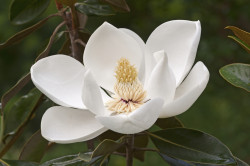
Magnolia is a group of flowering trees and shrubs in the Magnoliaceae family. Different species grow in parts of Asia, North America, and South America, and they are known for large, fragrant flowers.
In traditional Chinese and Japanese medicine, two parts are used most often: the bark (called Hou Po or Cortex Magnoliae Officinalis) and the dried flower buds (called Flos Magnoliae or Xin Yi). The bark is commonly used for stress, low mood, sleep, and stomach problems, while the flower bud is more often used for stuffy nose and sinus complaints.
Today Magnolia is sold as capsules, teas, tinctures, and is sometimes added to combination products for sleep, relaxation, or oral and skin care.
How it works
Magnolia bark contains compounds called magnolol and honokiol, which are thought to be the main active ingredients. Laboratory and animal research suggests they may act on certain brain receptors (such as GABA pathways) that can produce calming effects, and that they may reduce inflammation and act as antioxidants.
The flower bud contains aromatic oils that are traditionally believed to help open the nasal passages.
It is important to remember that most of this work is from test-tube and animal studies. Effects seen in a lab do not always carry over to people at the doses found in supplements.
Does Magnolia work?
How to read these evidence grades
Natural Medicines’ 7-point scale. We show each rating’s label word-for-word.
Possibly Effective Gingivitis
Magnolia bark extract might modestly reduce gum bleeding and inflammation when added to gum or toothpaste.
Also studied for 10 conditions — evidence insufficient to rate
Insufficient Reliable Evidence To Rate Aging skin
Although there is interest in using topical magnolia for aging skin, there is insufficient reliable information about the clinical effects of magnolia for this purpose.
Insufficient Reliable Evidence To Rate Allergic rhinitis (hay fever)
Although there is interest in using oral magnolia for hay fever, there is insufficient reliable information about the clinical effects of magnolia for this condition.
Insufficient Reliable Evidence To Rate Anxiety
Oral magnolia has only been evaluated in combination with other ingredients; its effect when used alone is unclear.
Insufficient Reliable Evidence To Rate Dental plaque
It is unclear if oral magnolia is beneficial in patients with dental plaque.
Insufficient Reliable Evidence To Rate Diabetes
Although there is interest in using oral magnolia for diabetes, there is insufficient reliable information about the clinical effects of magnolia for this condition.
Insufficient Reliable Evidence To Rate Headache
Although there is interest in using oral magnolia for headache, there is insufficient reliable information about the clinical effects of magnolia for this condition.
Insufficient Reliable Evidence To Rate Menopausal symptoms
Oral magnolia has only been evaluated in combination with other ingredients; its effect when used alone is unclear.
Insufficient Reliable Evidence To Rate Obesity
Oral magnolia has only been evaluated in combination with other ingredients; its effect when used alone is unclear.
Insufficient Reliable Evidence To Rate Postpartum depression
It is unclear if oral magnolia tea is beneficial for preventing postpartum depression.
Insufficient Reliable Evidence To Rate Stress
Oral magnolia has only been evaluated in combination with other ingredients; its effect when used alone is unclear.
Source & disclaimer. Effectiveness ratings and evidence summaries are provided by Natural Medicines (Therapeutic Research Center) and shown as licensed. Where Natural Medicines hasn’t rated a use, HelloPharmacist’s pharmacists may add their own reviewed rating and evidence (each such entry is labeled). This is educational information, not medical advice — talk with your pharmacist or doctor before starting, stopping, or changing a supplement.
Safety & precautions
Magnolia has been used traditionally for a long time, and short-term use appears to be reasonably well tolerated by many adults. Still, high-quality, long-term safety data in humans is limited.
Because it may have calming or sedating effects, use caution if you have a condition affected by drowsiness, are about to drive, or are scheduled for surgery (it may add to the effects of anesthesia). People with liver problems should be cautious, and anyone with a chronic condition should check with a healthcare professional first.
Pregnancy and breastfeeding: Avoid Magnolia. There is not enough safety information, and some traditional sources caution that it may affect the uterus. Without good data, the safest choice is to not use it during pregnancy or while breastfeeding.
Side effects
Reported side effects are usually mild and may include drowsiness, headache, dizziness, stomach upset, or heartburn. Because of its calming effects, it could make you feel more tired than expected.
Allergic reactions are possible with any plant product. Stop using it and seek medical care if you notice a rash, swelling, trouble breathing, or other signs of a serious reaction.
Long-term safety is not well studied, so it is wise not to take it for extended periods without medical guidance.
Magnolia: Reported Adverse Effects
Documented safety reports on Magnolia from the evidence-graded Natural Medicines (TRC Healthcare) database, shown word-for-word from the licensed record.
Orally, magnolia seems to be well tolerated.
Most Common Adverse Effects:
Topically: Contact dermatitis.
Antidepressant-induced sexual dysfunction Psychiatric
In a clinical trial of an oral combination product containing extracts of magnolia and phellodendron, one patient reported sexual dysfunction. However, it's not known if this side effect is related to magnolia or some other factor.
Cluster headache Neurologic/CNS
In a clinical trial of an oral combination product containing extracts of magnolia and phellodendron, one patient reported shaking hands and perilabial numbness. Another patient reported fatigue and headache. However, it's not known if these side effects are related to magnolia or some other factor.
Dermatitis Dermatologic
Topically, magnolia bark has been associated with reports of allergic contact dermatitis. In several cases, the use of anti-aging facial creams containing magnolia bark extract was associated with allergic contact dermatitis of the face. In one case, the use of a vaginal gel containing magnolia bark extract was associated with allergic contact dermatitis of the vulva. Symptoms typically resolve with the use of topical corticosteroids and discontinuation of magnolia bark extract. Patch testing suggests that the magnolia bark extract constituents magnolol and honokiol are responsible for this adverse effect.
- Ghys K, De Palma A, Vandevenne A, Werbrouck J, Goossens A. Magnolia officinalis bark extract, a recently identified contact allergen in 'anti-ageing' cosmetics. Contact Dermatitis. 2015 Aug;73(2):130-2.
- Raison-Peyron N, Césaire A, Du-Thanh A, Dereure O. Allergic contact dermatitis caused by Magnolia officinalis bark extract in a facial anti-ageing cream. Contact Dermatitis. 2015 Jun;72(6):416-7.
- Nilausen TD, Johansen JD, Thyssen JP. Allergic contact dermatitis of the face caused by Magnolia officinalis bark extract. Contact Dermatitis. 2016;75(6):385-87.
- Amat-Samaranch V, López-Sánchez C, Tubau C, Puig L, Serra-Baldrich E. Vulvar allergic contact dermatitis caused by Magnolia officinalis bark extract. Contact Dermatitis 2022;87(1):96-97.
Dyspepsia Gastrointestinal
In a clinical trial of an oral combination product containing extracts of magnolia and phellodendron, one patient reported heartburn. However, it's not known if this side effect is related to magnolia or some other factor.
Adverse-effects data: Natural Medicines, Therapeutic Research Center
Dosing
There is no well-established standard dose of Magnolia. Products vary widely in how they are prepared and how concentrated they are, and many supplements combine Magnolia with other ingredients.
The safest approach is to follow the directions on the product label and not exceed the recommended amount. Because doses and product quality differ, talk with your pharmacist or doctor before starting, especially if you take other medicines or have a health condition.
Magnolia & Pregnancy
Magnolia & Breastfeeding
© 2026 Therapeutic Research Center
Pregnancy & lactation ratings: Natural Medicines, Therapeutic Research Center
References & further reading
The 9 references that drive our Magnolia monograph and interaction data, from the evidence-graded Natural Medicines (TRC Healthcare) database. Citations with a link open the study on PubMed or the publisher’s site.
- Kuribara H, Kishi E, Hattori N, et al. The anxiolytic effect of two oriental herbal drugs in Japan attributed to honokiol from magnolia bark. J Pharm Pharmacol 2000;52:1425-9. PubMed
- Tachikawa E, Takahashi M, Kashimoto T. Effects of extract and ingredients isolated from Magnolia obovata thunberg on catecholamine secretion from bovine adrenal chromaffin cells. Biochem Pharmacol 2000;60:433-40. PubMed
- Jung KY, Kim DS, Oh SR, et al. Magnone A and B, novel anti-PAF tetrahydrofuran lignans from the flower buds of Magnolia fargesii. J Nat Prod 1998;61:808-11.
- Garrison R, Chambliss WG. Effect of a proprietary Magnolia and Phellodendron extract on weight management: a pilot, double-blind, placebo-controlled clinical trial. Altern Ther Health Med 2006;12:50-4.
- Teng CM, Chen CC, Ko FN, et al. Two antiplatelet agents from Magnolia officinalis. Thromb Res 1988;50:757-65. PubMed
- Ghys K, De Palma A, Vandevenne A, Werbrouck J, Goossens A. Magnolia officinalis bark extract, a recently identified contact allergen in 'anti-ageing' cosmetics. Contact Dermatitis. 2015 Aug;73(2):130-2.
- Raison-Peyron N, Césaire A, Du-Thanh A, Dereure O. Allergic contact dermatitis caused by Magnolia officinalis bark extract in a facial anti-ageing cream. Contact Dermatitis. 2015 Jun;72(6):416-7.
- Nilausen TD, Johansen JD, Thyssen JP. Allergic contact dermatitis of the face caused by Magnolia officinalis bark extract. Contact Dermatitis. 2016;75(6):385-87.
- Amat-Samaranch V, López-Sánchez C, Tubau C, Puig L, Serra-Baldrich E. Vulvar allergic contact dermatitis caused by Magnolia officinalis bark extract. Contact Dermatitis 2022;87(1):96-97.
This information is for education only and is not a substitute for professional medical advice. Always check with your pharmacist or doctor before starting, stopping, or combining supplements and medications.
Parts of this content are provided by the Therapeutic Research Center, LLC.
DISCLAIMER: Currently this does not check for drug-drug interactions. This is not an all-inclusive comprehensive list of potential interactions and is for informational purposes only. Not all interactions are known or well-reported in the scientific literature, and new interactions are continually being reported. Input is needed from a qualified healthcare provider including a pharmacist before starting any therapy. Application of clinical judgment is necessary.
© 2021 Therapeutic Research Center, LLC
Brands that make products with Magnolia
209 brands in our database make a supplement containing Magnolia.
Supplement products with Magnolia
750 products in our database contain Magnolia. Open any to see its full ingredient list and every drug interaction we check.
Magnolia: Common Questions
What is Magnolia used for, and does it work?
Does Magnolia interact with prescription medications?
How are Magnolia interactions rated?
Is it safe to take Magnolia with my medications?
Where does this Magnolia interaction information come from?
What is Magnolia used for?
Is Magnolia safe to take?
Can I take Magnolia while pregnant or breastfeeding?
Does Magnolia make you sleepy?
Written and reviewed by the HelloPharmacist editorial staff. Our editorial policy
Products that contain Magnolia
A rotating sample of real supplements in our database that list Magnolia — open any to see its full ingredients and every drug interaction we check.
- Xin Yi Sugar Free Alcohol Free by Herbal Terra
- Kidney Activator by Nature's Sunshine
- Digestive Comfort by Planetary Herbals
- Boost Energy Matrix Vanilla Mint Flavor by BioSource Labs
- P.M. by EXOS Performance Nutrition
- Seditol Plus by Douglas Laboratories
- Digestive Comfort by Planetary Herbals
- ClearMood by AdvoCare
- Upper Chamber Teapills by Plum Flower
- Ping Wei Pian Stomach Damplcear 200 mg by Guang Ci Tang
Have a question about Magnolia?
Our pharmacists answer your medication & supplement questions — free.