
Memory & Mental Support Ingredients & Drug Interactions
What is this page for?
First and foremost: checking Memory & Mental Support against your medications. The heart of this page is the interaction checker and the full interaction report — how this product’s ingredients may interact with prescription and over-the-counter medicines you may be taking.
Around that, we add a pharmacist’s high-level view of the product as a whole — what’s inside, the evidence for its stated use, how transparent the label is, and what safety data exists — so you can see the full picture in one place. It’s educational information from our licensed clinical databases and the clinical staff at HelloPharmacist — not medical advice — and we don’t sell or endorse products. Our editorial policy
Memory & Mental Support is a dietary supplement by Pathway To Healing with 9 active ingredients. Its ingredients are commonly taken for morning sickness in pregnancy, premenstrual syndrome (pms), preventing or treating b6 deficiency.Based on those ingredients, 1,303 medications have a known interaction with it, the most serious rated major. The ingredients most likely to interact are Bacopa whole plant extract, Phosphatidyl Serine, Huperzine A. Use the checker below to test your specific medication, or read the full HelloPharmacist Interaction Report.
Check Your Meds Against Memory & Mental Support by Pathway To Healing
Ask about any prescription or over-the-counter medication and we check it for interactions with Memory & Mental Support by Pathway To Healing — and tell you which ingredient is responsible.
AI summaries are generated from our interaction database for education only — always confirm with your pharmacist. How we use AI
Ask the Pharmacist
A licensed pharmacist will answer your question by email — free, usually within 24 hours.
Got it — thank you!
A licensed pharmacist will answer within 24 hours. Keep an eye on your email (worth checking spam, just in case).
HelloPharmacist Scorecard of Memory & Mental Support by Pathway To Healing
Our pharmacy team’s full take, with four database checks built into the cards below — a summary of what is known, not a grade of the product itself.
What’s inside
Full disclosure
Memory & Mental Support contains 9 active ingredients: vitamin B6, vitamin B12, folate, vinpocetine, phosphatidyl serine, American ginseng root extract, bacopa whole plant extract, citicoline, and huperzine A. The product also includes inactive ingredients—gelatin, microcrystalline cellulose, magnesium stearate, and silicon dioxide—which serve as the capsule material and binders.
Each ingredient is included for cognitive or mental support: B vitamins support nerve function and energy metabolism; vinpocetine is included for blood flow; phosphatidyl serine and citicoline support cell membranes; herbal extracts like American ginseng and bacopa have traditional and studied roles in cognitive health; and huperzine A works on acetylcholine, a key brain chemical.
Does it work?
Moderate evidence
The evidence for these ingredients is mixed. Vitamin B6 is effective for B6 deficiency itself and certain forms of anemia, and possibly effective for pregnancy-related nausea; vitamin B12 is effective for B12 deficiency and certain rare conditions.
Vinpocetine is possibly effective for dementia but has insufficient evidence for stroke, tinnitus, or chronic fatigue. Phosphatidyl serine is possibly effective for age-related cognitive decline and Alzheimer disease.
American ginseng is possibly effective for upper respiratory infections but has insufficient evidence for cognitive decline. Bacopa and huperzine A are rated as possibly effective for Alzheimer disease, but evidence for general cognitive function, ADHD, or memory is insufficient in the data we hold.
Citicoline is possibly effective for age-related cognitive decline and glaucoma. Overall, while individual ingredients have some supporting research, the product as a whole is designed for memory support rather than proven to treat a diagnosed cognitive condition.
How safe is it?
Well-documented data
Vitamin B6 is generally well tolerated at normal doses but can cause nerve damage (sensory neuropathy) at high doses, especially above 1,000 mg daily or with long-term use. Common side effects include abdominal pain, headache, nausea, and loss of appetite.
Vitamin B12 is generally very safe with no established upper limit. Vinpocetine is generally well tolerated short-term but has limited long-term safety data; common side effects include anxiety, dizziness, headache, and sleep disturbances.
Phosphatidyl serine, bacopa, citicoline, and huperzine A are generally well tolerated in studies but have limited long-term safety data. Huperzine A is particularly pharmacologically active and can cause dose-dependent cholinergic side effects—nausea, vomiting, diarrhea, blurred vision, constipation, and sweating.
For pregnancy and breastfeeding: vitamin B6 is rated likely safe in pregnancy at normal amounts but possibly unsafe at high doses; vitamin B12 is likely safe in both pregnancy and lactation. Vinpocetine is possibly unsafe in pregnancy and should be avoided if you could become pregnant; safety while breastfeeding is unknown.
Phosphatidyl serine, bacopa, citicoline, and huperzine A all have insufficient safety data for pregnancy and breastfeeding — avoidance is recommended, though talk with your doctor or pharmacist for personalized advice. American ginseng is possibly unsafe in pregnancy and should be avoided if you could become pregnant.
Meds to double-check
Major interaction found
Before taking this product, check with your doctor or pharmacist if you take warfarin or other blood thinners and antiplatelet drugs — American ginseng can significantly reduce how well blood thinners work (Major). Also confirm any use of seizure medications like phenobarbital or phenytoin, blood pressure medications, amiodarone (a heart rhythm drug), diabetes medications, immunosuppressants, MAOIs (older antidepressants), anticholinergic or cholinergic drugs, cevimeline, thyroid hormone, metformin, or any drugs metabolized by CYP1A2, CYP2C9, CYP2C19, or CYP3A4 enzymes—all carry documented Moderate or Minor interactions.
The bottom line
Scorecard at a glanceFully disclosed formula with some supporting evidence for its stated purpose. Major medication interactions have been identified, and safety information is well characterized.
This product is aimed at people interested in cognitive and memory support, particularly those concerned with age-related decline. However, because it contains ingredients with multiple drug interactions — especially the Major warfarin interaction with American ginseng — you should not start it without checking your medications first with your doctor or pharmacist.
If you take blood thinners, heart medications, seizure drugs, diabetes medications, or any blood pressure medication, a discussion with your healthcare provider is essential before taking this supplement.
Educational only — not medical advice; always confirm with your pharmacist. Our editorial policy · How we use AI
Assessment coverage: 8 of 9 active ingredients matched to our full ingredient reviews (monographs). Based on the product label dated Feb 23, 2012.
This Scorecard evaluates available label information, ingredient evidence, and known medication-safety considerations. It does not independently verify product identity, purity, potency, contamination, or manufacturing quality. How these ratings are computed
General information
Key facts about Memory & Mental Support, straight from the product label.
| Brand | Pathway To Healing |
|---|---|
| Barcode (UPC) | 647125432400 |
| Net contents | 60 Capsule(s) |
| Market status | On market |
| Date entered into DSLD | Feb 23, 2012 |
| DSLD ID | 5903 |
| Product type | Other Combinations |
| Supplement form | Capsule |
| Dietary claims / uses | All Other, Structure/Function |
| Intended target group(s) | Adult (18 - 50 Years) |
Everything in this section is reproduced from the manufacturer’s own product label — it’s the label speaking, not HelloPharmacist. We show it so you can see exactly what the maker states; we don’t verify or endorse those statements.
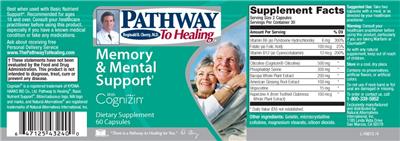
Supplement Facts
The label details for Memory & Mental Support by Pathway To Healing, sourced from the NIH Dietary Supplement Label Database.
Supplement Facts
| Ingredient | Amount | % DV |
|---|---|---|
| Vitamin B6 | 6 mg | 300% |
| Vitamin B12 | 12 mcg | 200% |
| Folate | 100 mcg | 25% |
| Vinpocetine | 15 mg | -- |
| Phosphatidyl Serine | 300 mg | -- |
| American Ginseng root extract | 100 mg | -- |
| Bacopa whole plant extract | 200 mg | -- |
| Citicoline | 500 mg | -- |
| Huperzine A | 100 mcg | -- |
Other ingredients: Gelatin, Microcrystalline Cellulose, Magnesium Stearate, Silicon Dioxide
Tap any ingredient to jump to its full detail below.
These statements are the manufacturer’s wording, reproduced from the product label — the label is saying it, not HelloPharmacist. We don’t verify or endorse them.
Seals/Symbols
Bible/caduceus(R)
General Statements
Recommended for ages 18 and over.
"There is a Pathway to Healing for You." Dr. Cherry
Reginald B. Cherry, M.D.
Precautions
Consult your healthcare practitioner before using this product, especially if you have a known medical condition or take any medications.
Do not use if neck band or foil seal are damaged or missing.
Warning: Consult your healthcare practitioner before using this product, particularly if you are taking Warfarin or Coumadin(R).
As with any natural supplement, keep out of reach of children.
FDA Disclaimer Statement
These statements have not been evaluated by the Food and Drug Administration. This product is not intended to diagnose, treat, cure or prevent any disease.
Storage
Store in a cool, dry place.
General
L-F6613 /4
Formula
With Cognizin(R)
Brand IP Statement(s)
Cognizin(R) is a registered trademark of KYOWA HAKKO BIO Co., Ltd. Pathway to Healing(R), Basic Nutrient Support(R), Bible/caduceus logo, NAI logo and marks, and Natural Alternatives(R) are registered trademarks of Natural Alternatives International, Inc.
Best when used with Basic Nutrient Support(TM).
Formulation
Contains no preservatives, artificial flavors, or artificial colors.
FDA Statement of Identity
Dietary Supplement
Suggested/Recommended/Usage/Directions
Suggested Use: Take two capsules with a meal, or as directed by your healthcare practitioner.
Is this label outdated? Report a formula or label change and our pharmacy team will review it.
Memory & Mental Support by Pathway To Healing label
The label scan from the NIH Dietary Supplement Label Database. Tap to enlarge.
Label images are published by the NIH Dietary Supplement Label Database for the version of this product on file. Always read your actual product label.
View the full label (PDF)The Ingredients in Memory & Mental Support by Pathway To Healing
These are the 9 active ingredients this product is made of. Select any to open its full monograph.
Serving size2 Capsule(s) Dosage formCapsule Servings per container30 Amounts shown are per serving.
Most supplement products combine several ingredients, and a medication can interact with the product through any one of them. Each ingredient below shows whether it has known drug interactions.
Vitamin B6
Interacts with210 drugs
Vitamin B6 (pyridoxine) is an essential water-soluble vitamin that your body needs for metabolism, brain function, and making red blood cells. It is b...
Vitamin B6 monograph & interactionsVitamin B12
Interacts with20 drugs
Vitamin B12 (cobalamin) is an essential nutrient your body needs to make red blood cells, keep nerves healthy, and support DNA. Supplements are very h...
Vitamin B12 monograph & interactionsFolate
Vinpocetine
Interacts with209 drugs
Vinpocetine is a lab-made compound based on a chemical from the periwinkle plant, and it is marketed mainly for memory and brain health. The evidence...
Vinpocetine monograph & interactionsPhosphatidyl Serine
Interacts with219 drugs
Phosphatidylserine is a natural fat-like compound found in cell membranes, especially in the brain, and it is sold mainly to support memory and thinki...
Phosphatidyl Serine monograph & interactionsAmerican Ginseng root extract
Interacts with217 drugs
American ginseng is an herbal root used as an 'adaptogen' to support energy, stress, immune function, and blood sugar. Some uses—such as reducing the...
American Ginseng root extract monograph & interactionsBacopa whole plant extract
Interacts with932 drugs
Bacopa is an Ayurvedic herb most often used for memory and thinking. Some small studies suggest it may modestly help memory when taken regularly for s...
Bacopa whole plant extract monograph & interactionsCiticoline
No knowninteractions
Citicoline is a naturally occurring compound involved in making brain cell membranes and the messenger chemical acetylcholine. It is popularly taken f...
Citicoline monograph & interactionsHuperzine A
Interacts with219 drugs
Huperzine A is a purified compound from a Chinese clubmoss that acts like a mild cholinesterase inhibitor, similar in mechanism to some prescription A...
Huperzine A monograph & interactionsOther (inactive) ingredients: Gelatin, Microcrystalline Cellulose, Magnesium Stearate, Silicon Dioxide. These complete the product’s ingredient list but are not active constituents.
Memory & Mental Support by Pathway To Healing Drug Interactions
HelloPharmacist Interaction Report
Memory & Mental Support by Pathway To Healing contains multiple ingredients that interact with medications.
Through its vitamin B6, American ginseng root extract, and bacopa whole plant extract, the product carries a Major interaction: American ginseng significantly reduces how well warfarin (a blood thinner) works, lowering INR levels and potentially raising clot risk.
Read the full breakdown — every affected drug type, severity by severity
Vitamin B6 poses Moderate interactions with blood pressure medications (which it may strengthen), amiodarone (a heart rhythm drug — it may worsen light sensitivity), and certain seizure medications like phenobarbital and phenytoin (high doses may weaken their effectiveness). Vinpocetine contributes Moderate interactions with blood thinners and antiplatelet drugs, raising bleeding risk, plus theoretical effects on drugs processed through the CYP2C9 enzyme pathway.
Phosphatidyl serine and huperzine A theoretically interfere with anticholinergic medications and may boost effects of cholinergic drugs.
Bacopa carries the broadest Moderate interaction profile — it may raise levels of drugs broken down by CYP1A2, CYP2C19, CYP2C9, and CYP3A4 enzymes, and theoretically affects both anticholinergic and cholinergic medications. One case reported serious symptoms (sweating, nausea, rapid heart rate) when bacopa was combined with cevimeline.
Vitamin B12 shows a Minor interaction with metformin, which can lower B12 levels over time.
Altogether, these interactions span 1,302 individual medications. Folate could not be checked — we hold no data for it.
Use the medication checker below to confirm your exact medications before starting this product, and discuss it with your doctor or pharmacist if you take any blood thinners, heart rhythm drugs, seizure medications, blood pressure drugs, or enzyme-processed medications.
Check your own medications below · Editorial policy · How we use AI
Want to check YOUR meds against Memory & Mental Support?
Ask about interactions with your drugs in plain English — “Can I take it with lisinopril?” — and we find you the answer in seconds, ingredient by ingredient.
Go to the checkerIngredients driving the most interactions
Individual Drug Interactions
The ingredients in Memory & Mental Support interact with 1,303 drugs. Click any drug to see the details.
7 of the 9 ingredients in Memory & Mental Support interact with drugs. Each result below shows which ingredient is responsible. Bacopa whole plant extract Phosphatidyl Serine Huperzine A American Ginseng root extract Vitamin B6 Vinpocetine Vitamin B12
WarfarinWarfarin
How Warfarin interacts with Memory & Mental Support — through 3 ingredients. Tap an ingredient for the detail:
American Ginseng Root ExtractWarfarin (coumadin) Major
Interaction Summary
American ginseng seems to decrease the effectiveness of warfarin therapy.
Read the full American Ginseng Root Extract + Warfarin interactionBacopa Whole Plant ExtractCytochrome P450 2c19 (cyp2c19) Substrates, Cytochrome P450 2c9 (cyp2c9) Substrates +2 Moderate
Interaction Summary
Theoretically, bacopa might increase the levels and adverse effects of CYP2C19 substrates.
Read the full Bacopa Whole Plant Extract + Warfarin interactionVinpocetineWarfarin (coumadin), Cytochrome P450 2c9 (cyp2c9) Substrates +1 Moderate
Interaction Summary
Vinpocetine might modestly increase the risk of bleeding when taken with warfarin.
Read the full Vinpocetine + Warfarin interactionWarfarin SodiumCoumadin, Panwarfin, Sofarin
How Warfarin Sodium interacts with Memory & Mental Support — through 3 ingredients. Tap an ingredient for the detail:
American Ginseng Root ExtractWarfarin (coumadin) Major
Interaction Summary
American ginseng seems to decrease the effectiveness of warfarin therapy.
Read the full American Ginseng Root Extract + Warfarin Sodium interactionVinpocetineWarfarin (coumadin), Cytochrome P450 2c9 (cyp2c9) Substrates +1 Moderate
Interaction Summary
Vinpocetine might modestly increase the risk of bleeding when taken with warfarin.
Read the full Vinpocetine + Warfarin Sodium interactionBacopa Whole Plant ExtractCytochrome P450 1a2 (cyp1a2) Substrates, Cytochrome P450 2c19 (cyp2c19) Substrates +2 Moderate
Interaction Summary
Theoretically, bacopa might increase the levels and adverse effects of CYP1A2 substrates.
Read the full Bacopa Whole Plant Extract + Warfarin Sodium interaction6-mercaptopurinePurinethol
How 6-mercaptopurine interacts with Memory & Mental Support — through 1 ingredient. Tap an ingredient for the detail:
American Ginseng Root ExtractImmunosuppressants Moderate
Interaction Summary
Theoretically, American ginseng use might interfere with immunosuppressive therapy.
Read the full American Ginseng Root Extract + 6-mercaptopurine interactionAdo-trastuzumab EmtansineKadcyla
How Ado-trastuzumab Emtansine interacts with Memory & Mental Support — through 1 ingredient. Tap an ingredient for the detail:
Bacopa Whole Plant ExtractCytochrome P450 3a4 (cyp3a4) Substrates Moderate
Interaction Summary
Theoretically, bacopa might increase the levels and adverse effects of CYP3A4 substrates.
Read the full Bacopa Whole Plant Extract + Ado-trastuzumab Emtansine interactionAbciximabReoPro
How Abciximab interacts with Memory & Mental Support — through 1 ingredient. Tap an ingredient for the detail:
VinpocetineAnticoagulant/antiplatelet Drugs Moderate
Interaction Summary
Vinpocetine might increase the risk of bleeding when taken with anticoagulant or antiplatelet drugs.
Read the full Vinpocetine + Abciximab interactionAbemaciclibVerzenio
How Abemaciclib interacts with Memory & Mental Support — through 1 ingredient. Tap an ingredient for the detail:
Bacopa Whole Plant ExtractCytochrome P450 3a4 (cyp3a4) Substrates Moderate
Interaction Summary
Theoretically, bacopa might increase the levels and adverse effects of CYP3A4 substrates.
Read the full Bacopa Whole Plant Extract + Abemaciclib interactionAbiraterone
How Abiraterone interacts with Memory & Mental Support — through 1 ingredient. Tap an ingredient for the detail:
Bacopa Whole Plant ExtractCytochrome P450 3a4 (cyp3a4) Substrates Moderate
Interaction Summary
Theoretically, bacopa might increase the levels and adverse effects of CYP3A4 substrates.
Read the full Bacopa Whole Plant Extract + Abiraterone interactionAbiraterone AcetateYonsa, Zytiga
How Abiraterone Acetate interacts with Memory & Mental Support — through 1 ingredient. Tap an ingredient for the detail:
Bacopa Whole Plant ExtractCytochrome P450 3a4 (cyp3a4) Substrates Moderate
Interaction Summary
Theoretically, bacopa might increase the levels and adverse effects of CYP3A4 substrates.
Read the full Bacopa Whole Plant Extract + Abiraterone Acetate interactionAbrocitinibCibinqo
How Abrocitinib interacts with Memory & Mental Support — through 3 ingredients. Tap an ingredient for the detail:
VinpocetineCytochrome P450 2c9 (cyp2c9) Substrates, Anticoagulant/antiplatelet Drugs Moderate
Interaction Summary
Theoretically, vinpocetine might increase levels of drugs metabolized by CYP2C9.
Read the full Vinpocetine + Abrocitinib interactionAmerican Ginseng Root ExtractImmunosuppressants Moderate
Interaction Summary
Theoretically, American ginseng use might interfere with immunosuppressive therapy.
Read the full American Ginseng Root Extract + Abrocitinib interactionBacopa Whole Plant ExtractCytochrome P450 2c19 (cyp2c19) Substrates, Cytochrome P450 2c9 (cyp2c9) Substrates Moderate
Interaction Summary
Theoretically, bacopa might increase the levels and adverse effects of CYP2C19 substrates.
Read the full Bacopa Whole Plant Extract + Abrocitinib interactionAcalabrutinibCalquence
How Acalabrutinib interacts with Memory & Mental Support — through 1 ingredient. Tap an ingredient for the detail:
Bacopa Whole Plant ExtractCytochrome P450 3a4 (cyp3a4) Substrates Moderate
Interaction Summary
Theoretically, bacopa might increase the levels and adverse effects of CYP3A4 substrates.
Read the full Bacopa Whole Plant Extract + Acalabrutinib interactionAcarboseGlucobay, Prandase, Precose
How Acarbose interacts with Memory & Mental Support — through 1 ingredient. Tap an ingredient for the detail:
American Ginseng Root ExtractAntidiabetes Drugs Moderate
Interaction Summary
Theoretically, taking American ginseng with antidiabetes drugs might increase the risk of hypoglycemia.
Read the full American Ginseng Root Extract + Acarbose interactionAcebutololRhotral, Sectral
How Acebutolol interacts with Memory & Mental Support — through 1 ingredient. Tap an ingredient for the detail:
Vitamin B6Antihypertensive Drugs Moderate
Interaction Summary
Theoretically, vitamin B6 may have additive effects when used with antihypertensive drugs.
Read the full Vitamin B6 + Acebutolol interactionAcenocoumarolSintrom
How Acenocoumarol interacts with Memory & Mental Support — through 1 ingredient. Tap an ingredient for the detail:
VinpocetineAnticoagulant/antiplatelet Drugs Moderate
Interaction Summary
Vinpocetine might increase the risk of bleeding when taken with anticoagulant or antiplatelet drugs.
Read the full Vinpocetine + Acenocoumarol interactionAcepromazineAtravet
How Acepromazine interacts with Memory & Mental Support — through 3 ingredients. Tap an ingredient for the detail:
Phosphatidyl SerineAnticholinergic Drugs Moderate
Interaction Summary
Theoretically, phosphatidylserine might decrease the effectiveness anticholinergic drugs.
Read the full Phosphatidyl Serine + Acepromazine interactionBacopa Whole Plant ExtractAnticholinergic Drugs Moderate
Interaction Summary
Theoretically, concurrent use might decrease the effectiveness of both agents.
Read the full Bacopa Whole Plant Extract + Acepromazine interactionHuperzine AAnticholinergic Drugs Moderate
Interaction Summary
Theoretically, huperzine A might decrease the effects of anticholinergic drugs.
Read the full Huperzine A + Acepromazine interactionAcetaminophenChildren's Tylenol, Children's Tylenol Meltaways, Tylenol, Tylenol Ex Strength
How Acetaminophen interacts with Memory & Mental Support — through 1 ingredient. Tap an ingredient for the detail:
Bacopa Whole Plant ExtractCytochrome P450 1a2 (cyp1a2) Substrates Moderate
Interaction Summary
Theoretically, bacopa might increase the levels and adverse effects of CYP1A2 substrates.
Read the full Bacopa Whole Plant Extract + Acetaminophen interactionAcetaminophen, AspirinGemnisyn
How Acetaminophen, Aspirin interacts with Memory & Mental Support — through 2 ingredients. Tap an ingredient for the detail:
Bacopa Whole Plant ExtractCytochrome P450 1a2 (cyp1a2) Substrates Moderate
Interaction Summary
Theoretically, bacopa might increase the levels and adverse effects of CYP1A2 substrates.
Read the full Bacopa Whole Plant Extract + Acetaminophen, Aspirin interactionVinpocetineAnticoagulant/antiplatelet Drugs Moderate
Interaction Summary
Vinpocetine might increase the risk of bleeding when taken with anticoagulant or antiplatelet drugs.
Read the full Vinpocetine + Acetaminophen, Aspirin interactionAcetaminophen, Aspirin, CaffeineExcedrin, Excedrin Extra Strength, Excedrin Migraine
How Acetaminophen, Aspirin, Caffeine interacts with Memory & Mental Support — through 2 ingredients. Tap an ingredient for the detail:
VinpocetineAnticoagulant/antiplatelet Drugs Moderate
Interaction Summary
Vinpocetine might increase the risk of bleeding when taken with anticoagulant or antiplatelet drugs.
Read the full Vinpocetine + Acetaminophen, Aspirin, Caffeine interactionBacopa Whole Plant ExtractCytochrome P450 1a2 (cyp1a2) Substrates, Cytochrome P450 3a4 (cyp3a4) Substrates Moderate
Interaction Summary
Theoretically, bacopa might increase the levels and adverse effects of CYP1A2 substrates.
Read the full Bacopa Whole Plant Extract + Acetaminophen, Aspirin, Caffeine interactionAcetaminophen, Brompheniramine, PhenylpropanolamineDimetapp Cold and Flu
How Acetaminophen, Brompheniramine, Phenylpropanolamine interacts with Memory & Mental Support — through 1 ingredient. Tap an ingredient for the detail:
Bacopa Whole Plant ExtractCytochrome P450 1a2 (cyp1a2) Substrates Moderate
Interaction Summary
Theoretically, bacopa might increase the levels and adverse effects of CYP1A2 substrates.
Read the full Bacopa Whole Plant Extract + Acetaminophen, Brompheniramine, Phenylpropanolamine interactionAcetaminophen, ButalbitalAxocet, Bancap, Bucet, Butex Forte, Esgic CF, Orbivan CF +5 more
How Acetaminophen, Butalbital interacts with Memory & Mental Support — through 1 ingredient. Tap an ingredient for the detail:
Bacopa Whole Plant ExtractCytochrome P450 1a2 (cyp1a2) Substrates Moderate
Interaction Summary
Theoretically, bacopa might increase the levels and adverse effects of CYP1A2 substrates.
Read the full Bacopa Whole Plant Extract + Acetaminophen, Butalbital interactionAcetaminophen, Butalbital, CaffeineEsgic, Esgic Plus, Fiogesic, Fioricet, Repan, Tecnal +1 more
How Acetaminophen, Butalbital, Caffeine interacts with Memory & Mental Support — through 1 ingredient. Tap an ingredient for the detail:
Bacopa Whole Plant ExtractCytochrome P450 1a2 (cyp1a2) Substrates, Cytochrome P450 3a4 (cyp3a4) Substrates Moderate
Interaction Summary
Theoretically, bacopa might increase the levels and adverse effects of CYP1A2 substrates.
Read the full Bacopa Whole Plant Extract + Acetaminophen, Butalbital, Caffeine interactionAcetaminophen, Butalbital, Caffeine, CodeineEsgic with Codeine, Fioricet w/ Codeine
How Acetaminophen, Butalbital, Caffeine, Codeine interacts with Memory & Mental Support — through 1 ingredient. Tap an ingredient for the detail:
Bacopa Whole Plant ExtractCytochrome P450 1a2 (cyp1a2) Substrates, Cytochrome P450 3a4 (cyp3a4) Substrates Moderate
Interaction Summary
Theoretically, bacopa might increase the levels and adverse effects of CYP1A2 substrates.
Read the full Bacopa Whole Plant Extract + Acetaminophen, Butalbital, Caffeine, Codeine interactionAcetaminophen, Butalbital, CodeineBancap w/ Codeine
How Acetaminophen, Butalbital, Codeine interacts with Memory & Mental Support — through 1 ingredient. Tap an ingredient for the detail:
Bacopa Whole Plant ExtractCytochrome P450 1a2 (cyp1a2) Substrates Moderate
Interaction Summary
Theoretically, bacopa might increase the levels and adverse effects of CYP1A2 substrates.
Read the full Bacopa Whole Plant Extract + Acetaminophen, Butalbital, Codeine interactionAcetaminophen, Butalbital, Codeine PhosphatePhrenilin #3
How Acetaminophen, Butalbital, Codeine Phosphate interacts with Memory & Mental Support — through 1 ingredient. Tap an ingredient for the detail:
Bacopa Whole Plant ExtractCytochrome P450 1a2 (cyp1a2) Substrates Moderate
Interaction Summary
Theoretically, bacopa might increase the levels and adverse effects of CYP1A2 substrates.
Read the full Bacopa Whole Plant Extract + Acetaminophen, Butalbital, Codeine Phosphate interactionAcetaminophen, Caffeine, Chlorpheniramine, Hydrocodone, PhenylephrineHycomine Compound
How Acetaminophen, Caffeine, Chlorpheniramine, Hydrocodone, Phenylephrine interacts with Memory & Mental Support — through 3 ingredients. Tap an ingredient for the detail:
Bacopa Whole Plant ExtractCytochrome P450 1a2 (cyp1a2) Substrates, Cytochrome P450 3a4 (cyp3a4) Substrates +1 Moderate
Interaction Summary
Theoretically, bacopa might increase the levels and adverse effects of CYP1A2 substrates.
Read the full Bacopa Whole Plant Extract + Acetaminophen, Caffeine, Chlorpheniramine, Hydrocodone, Phenylephrine interactionHuperzine AAnticholinergic Drugs Moderate
Interaction Summary
Theoretically, huperzine A might decrease the effects of anticholinergic drugs.
Read the full Huperzine A + Acetaminophen, Caffeine, Chlorpheniramine, Hydrocodone, Phenylephrine interactionPhosphatidyl SerineAnticholinergic Drugs Moderate
Interaction Summary
Theoretically, phosphatidylserine might decrease the effectiveness anticholinergic drugs.
Read the full Phosphatidyl Serine + Acetaminophen, Caffeine, Chlorpheniramine, Hydrocodone, Phenylephrine interactionAcetaminophen, Caffeine, CodeineGesic C15, Gesic C30, Gesic C8, Lenoltec 1, Lenoltec 2, Lenoltec 3 +1 more
How Acetaminophen, Caffeine, Codeine interacts with Memory & Mental Support — through 1 ingredient. Tap an ingredient for the detail:
Bacopa Whole Plant ExtractCytochrome P450 1a2 (cyp1a2) Substrates, Cytochrome P450 3a4 (cyp3a4) Substrates Moderate
Interaction Summary
Theoretically, bacopa might increase the levels and adverse effects of CYP1A2 substrates.
Read the full Bacopa Whole Plant Extract + Acetaminophen, Caffeine, Codeine interactionAcetaminophen, Caffeine, Codeine, SalicylamideCodalan No.1, Codalan No.2, Codalan No.3
How Acetaminophen, Caffeine, Codeine, Salicylamide interacts with Memory & Mental Support — through 1 ingredient. Tap an ingredient for the detail:
Bacopa Whole Plant ExtractCytochrome P450 3a4 (cyp3a4) Substrates, Cytochrome P450 1a2 (cyp1a2) Substrates Moderate
Interaction Summary
Theoretically, bacopa might increase the levels and adverse effects of CYP3A4 substrates.
Read the full Bacopa Whole Plant Extract + Acetaminophen, Caffeine, Codeine, Salicylamide interactionAcetaminophen, Caffeine, DihydrocodeineDHC Plus, Panlor DC, Panlor SS
How Acetaminophen, Caffeine, Dihydrocodeine interacts with Memory & Mental Support — through 1 ingredient. Tap an ingredient for the detail:
Bacopa Whole Plant ExtractCytochrome P450 1a2 (cyp1a2) Substrates, Cytochrome P450 3a4 (cyp3a4) Substrates Moderate
Interaction Summary
Theoretically, bacopa might increase the levels and adverse effects of CYP1A2 substrates.
Read the full Bacopa Whole Plant Extract + Acetaminophen, Caffeine, Dihydrocodeine interactionAcetaminophen, Caffeine, IsomethepteneMigralam
How Acetaminophen, Caffeine, Isometheptene interacts with Memory & Mental Support — through 1 ingredient. Tap an ingredient for the detail:
Bacopa Whole Plant ExtractCytochrome P450 3a4 (cyp3a4) Substrates, Cytochrome P450 1a2 (cyp1a2) Substrates Moderate
Interaction Summary
Theoretically, bacopa might increase the levels and adverse effects of CYP3A4 substrates.
Read the full Bacopa Whole Plant Extract + Acetaminophen, Caffeine, Isometheptene interactionAcetaminophen, Caffeine, PyrilamineMidol Max Strength Menstrual
How Acetaminophen, Caffeine, Pyrilamine interacts with Memory & Mental Support — through 3 ingredients. Tap an ingredient for the detail:
Bacopa Whole Plant ExtractCytochrome P450 1a2 (cyp1a2) Substrates, Cytochrome P450 3a4 (cyp3a4) Substrates +1 Moderate
Interaction Summary
Theoretically, bacopa might increase the levels and adverse effects of CYP1A2 substrates.
Read the full Bacopa Whole Plant Extract + Acetaminophen, Caffeine, Pyrilamine interactionPhosphatidyl SerineAnticholinergic Drugs Moderate
Interaction Summary
Theoretically, phosphatidylserine might decrease the effectiveness anticholinergic drugs.
Read the full Phosphatidyl Serine + Acetaminophen, Caffeine, Pyrilamine interactionHuperzine AAnticholinergic Drugs Moderate
Interaction Summary
Theoretically, huperzine A might decrease the effects of anticholinergic drugs.
Read the full Huperzine A + Acetaminophen, Caffeine, Pyrilamine interactionAcetaminophen, Chlorpheniramine Maleate, Dextromethorphan HbrVicks Formula 44M Cough, Cold & Flu Relief
How Acetaminophen, Chlorpheniramine Maleate, Dextromethorphan Hbr interacts with Memory & Mental Support — through 3 ingredients. Tap an ingredient for the detail:
Bacopa Whole Plant ExtractAnticholinergic Drugs, Cytochrome P450 1a2 (cyp1a2) Substrates +1 Moderate
Interaction Summary
Theoretically, concurrent use might decrease the effectiveness of both agents.
Read the full Bacopa Whole Plant Extract + Acetaminophen, Chlorpheniramine Maleate, Dextromethorphan Hbr interactionHuperzine AAnticholinergic Drugs Moderate
Interaction Summary
Theoretically, huperzine A might decrease the effects of anticholinergic drugs.
Read the full Huperzine A + Acetaminophen, Chlorpheniramine Maleate, Dextromethorphan Hbr interactionPhosphatidyl SerineAnticholinergic Drugs Moderate
Interaction Summary
Theoretically, phosphatidylserine might decrease the effectiveness anticholinergic drugs.
Read the full Phosphatidyl Serine + Acetaminophen, Chlorpheniramine Maleate, Dextromethorphan Hbr interactionEach ingredient & the kinds of drugs it affects
For each ingredient in Memory & Mental Support with known interactions, here are the types of medications they can affect. Open any type for the detail — or search your exact drug in the checker above.
Bacopa whole plant extract
Anticholinergic Drugs
Theoretically, concurrent use might decrease the effectiveness of both agents.
Bacopa seems to inhibit acetylcholinesterase and might increase acetylcholine levels, which could counteract the effects of anticholinergic drugs. Similarly, anticholinergic drugs might counteract the cholinergic effects of bacopa.
Cevimeline (Evoxac)
Theoretically, bacopa might increase the effects and adverse effects of cevimeline.
In one case, a 58-year-old female taking cevimeline long-term for Sjogren syndrome experienced hyperhidrosis, malaise, nausea, and tachycardia shortly after taking a single dose of bacopa. Symptoms resolved after two days. Cevimeline is metabolized by cytochrome P450 (CYP) 2D6 and CYP3A4, and researchers theorize that bacopa may have inhibited these isoenzymes. However, it is unclear if bacopa causes clinically significant inhibition of either CYP2D6 or CYP3A4.
Cholinergic Drugs
Theoretically, concurrent use of bacopa with other cholinergic drugs might have additive effects.
Bacopa seems to inhibit acetylcholinesterase and might increase acetylcholine levels. Theoretically, this could result in additive cholinergic effects when used with cholinergic drugs.
Cytochrome P450 1A2 (Cyp1A2) Substrates
Theoretically, bacopa might increase the levels and adverse effects of CYP1A2 substrates.
Research on the effects of bacopa extracts on CYP1A2 enzymes is conflicting. Some in vitro evidence shows that bacopa extract can moderately and non-competitively inhibit CYP1A2, while other in vitro evidence suggests that any effect is unlikely to be clinically significant.
Cytochrome P450 2C19 (Cyp2C19) Substrates
Theoretically, bacopa might increase the levels and adverse effects of CYP2C19 substrates.
In vitro evidence suggests that bacopa extract can moderately and non-competitively inhibit CYP2C19 enzymes. It is not known whether this is clinically significant.
Cytochrome P450 2C9 (Cyp2C9) Substrates
Theoretically, bacopa might increase the levels and adverse effects of CYP2C9 substrates.
Research on the effect of bacopa extracts on CYP2C9 enzymes is conflicting. Some in vitro evidence suggests that bacopa extract can moderately and non-competitively inhibit CYP2C9, while other in vitro evidence suggests that any effect is unlikely to be clinically significant.
Cytochrome P450 3A4 (Cyp3A4) Substrates
Theoretically, bacopa might increase the levels and adverse effects of CYP3A4 substrates.
Research on the effects of bacopa extracts on CYP3A4 enzymes is conflicting. Some in vitro evidence suggests that bacopa extract can moderately and competitively inhibit CYP3A4, while other in vitro evidence suggests that any effect is unlikely to be clinically significant.
Thyroid Hormone
Theoretically, bacopa might have additive effects when used with thyroid hormone.
Animal research suggests that bacopa increases thyroxine (T4) levels in mice by about 40%.
Phosphatidyl Serine
Anticholinergic Drugs
Theoretically, phosphatidylserine might decrease the effectiveness anticholinergic drugs.
Phosphatidylserine is thought to increase acetylcholine levels, which could theoretically interfere with the activity of anticholinergic agents.
Cholinergic Drugs
Theoretically, phosphatidylserine might have additive effects with cholinergic drugs.
Phosphatidylserine is thought to increase acetylcholine levels, which could theoretically lead to additive cholinergic effects when used with cholinergic drugs.
Huperzine A
Anticholinergic Drugs
Theoretically, huperzine A might decrease the effects of anticholinergic drugs.
Huperzine A has acetylcholinesterase (AChE) inhibiting effects. In animal models, huperzine A reversed cognitive deficits induced by scopolamine, an anticholinergic drug.
Cholinergic Drugs
Theoretically, concurrent use of huperzine A with cholinergic drugs might increase the effects and side effects of these medications.
Huperzine A can inhibit acetylcholinesterase (AChE) and might cause cumulative effects if used with cholinergic drugs.
American Ginseng root extract
Warfarin (Coumadin)
American ginseng seems to decrease the effectiveness of warfarin therapy.
Healthy patients receiving warfarin 5 mg daily, who also take American ginseng 1 gram twice daily, seem to have a significantly reduced international normalized ratio (INR).
Antidiabetes Drugs
Theoretically, taking American ginseng with antidiabetes drugs might increase the risk of hypoglycemia.
American ginseng seems to lower postprandial blood glucose. Theoretically, concomitant use with antidiabetes drugs might enhance blood glucose lowering effects and possibly cause hypoglycemia.
Immunosuppressants
Theoretically, American ginseng use might interfere with immunosuppressive therapy.
American ginseng seems to stimulate immune function. Theoretically, American ginseng might decrease the effectiveness of immunosuppressant drugs.
Monoamine Oxidase Inhibitors (Maois)
Theoretically, American ginseng can interfere with MAOI therapy.
There is one case report of insomnia, headache, and tremors when an unspecified ginseng product was used with phenelzine (Nardil), an MAOI. There is also one case report of hypomania when an unspecified ginseng product was used with phenelzine. Theoretically, American ginseng may interfere with MAOI therapy.
Vitamin B6
Amiodarone (Cordarone)
Theoretically, vitamin B6 might increase the photosensitivity caused by amiodarone.
Despite initial case reports suggesting that pyridoxine may have a protective effect against amiodarone-induced photosensitivity, preliminary clinical research suggests that pyridoxine may actually exacerbate this adverse effect.
Antihypertensive Drugs
Theoretically, vitamin B6 may have additive effects when used with antihypertensive drugs.
Research in hypertensive rats shows that vitamin B6 can decrease systolic blood pressure. Similarly, clinical research in patients with hypertension shows that taking high doses of vitamin B6 may reduce systolic and diastolic blood pressure, possibly by reducing plasma levels of epinephrine and norepinephrine.
Phenobarbital (Luminal)
High doses of vitamin B6 may reduce the levels and clinical effects of phenobarbital.
Preliminary clinical evidence suggests that vitamin B6 200 mg daily can reduce plasma levels of phenobarbital, possibly by increasing metabolism. It is not known whether lower doses have any effect. Advise people taking phenobarbital to avoid high doses of vitamin B6.
Phenytoin (Dilantin)
High doses of vitamin B6 may reduce the levels and clinical effects of phenytoin.
Preliminary clinical evidence suggests that vitamin B6 200 mg daily can reduce plasma levels of phenytoin, possibly by increasing metabolism. It is not known whether lower doses have any effect. Advise people taking phenytoin to avoid high doses of vitamin B6.
Levodopa
Vitamin B6 may increase the metabolism of levodopa when taken alone, but not when taken in conjunction with carbidopa.
Vitamin B6 (pyridoxine) enhances the metabolism of levodopa, reducing its clinical effects. However, this interaction does not occur when carbidopa is used concurrently with levodopa (Sinemet). Therefore, it is not likely to be a problem in most people.
Vinpocetine
Anticoagulant/Antiplatelet Drugs
Vinpocetine might increase the risk of bleeding when taken with anticoagulant or antiplatelet drugs.
Clinical research shows that vinpocetine decreases red blood cell aggregation, as well as plasma and whole blood viscosity. This effect has been seen with intravenous vinpocetine 1 mg/kg and oral vinpocetine 30 mg daily. Vinpocetine also seems to have antiplatelet effects.
Cytochrome P450 2C9 (Cyp2C9) Substrates
Theoretically, vinpocetine might increase levels of drugs metabolized by CYP2C9.
In vitro research shows that vinpocetine weakly inhibits CYP2C9. However, this effect has not been reported in humans.
Warfarin (Coumadin)
Vinpocetine might modestly increase the risk of bleeding when taken with warfarin.
Clinical research shows that the combination of warfarin and vinpocetine leads to slight increases in prothrombin time and the area under the concentration curve for warfarin. However, these increases were small, and researchers suggest that this interaction is not likely to be clinically significant in most patients.
Vitamin B12
Metformin (Glucophage)
Metformin, a common medication used to manage type 2 diabetes, has been associated with lower vitamin B12 levels in some individuals. Prolonged use of metformin can interfere with the absorption of B12 in the digestive system, potentially leading to a deficiency in this essential vitamin.
Brand information
Manufacturer and brand details for Memory & Mental Support, from the product label.
Memory & Mental Support by Pathway To Healing: Common Questions
Does Memory & Mental Support by Pathway To Healing interact with any medications?
How can one product interact with so many drugs?
Where does this information come from?
Does this product work for memory loss?
Can I take this while pregnant or breastfeeding?
What are the most common side effects?
What is huperzine A and what does it do?
Is this product safe to use long-term?
Can I take this with my blood pressure medication?
Written and reviewed by the HelloPharmacist editorial staff. Our editorial policy
Not sure if Memory & Mental Support is safe with your meds?
Our pharmacists answer your medication & supplement questions — free.
Label information is sourced from the NIH Dietary Supplement Label Database and reflects the product version on file; always read your actual product label. This page is for education only and is not a substitute for professional medical advice. Confirm with your pharmacist or doctor before combining supplements and medications.
The Full Monographs Behind Memory & Mental Support’s Ingredients
Every ingredient we hold a full HelloPharmacist monograph for — uses, evidence, safety, and the complete interaction list.
Vitamin B6
Interacts with 210 drugsVitamin B6 (pyridoxine) is an essential water-soluble vitamin that your body needs for metabolism, brain function, and making red blood cells. It is best known for helping with pregnancy-rel...
Read the full Vitamin B6 monograph → Herb & supplement monographVitamin B12
Interacts with 20 drugsVitamin B12 (cobalamin) is an essential nutrient your body needs to make red blood cells, keep nerves healthy, and support DNA. Supplements are very helpful for people who are deficient — su...
Read the full Vitamin B12 monograph → Herb & supplement monographVinpocetine
Interacts with 209 drugsVinpocetine is a lab-made compound based on a chemical from the periwinkle plant, and it is marketed mainly for memory and brain health. The evidence behind these uses is limited and not str...
Read the full Vinpocetine monograph → Herb & supplement monographPhosphatidylserine
Interacts with 219 drugsPhosphatidylserine is a natural fat-like compound found in cell membranes, especially in the brain, and it is sold mainly to support memory and thinking. Some research suggests possible bene...
Read the full Phosphatidylserine monograph → Herb & supplement monographAmerican Ginseng
Interacts with 217 drugsAmerican ginseng is an herbal root used as an 'adaptogen' to support energy, stress, immune function, and blood sugar. Some uses—such as reducing the chance or length of colds and modestly l...
Read the full American Ginseng monograph → Herb & supplement monographBacopa
Interacts with 932 drugsBacopa is an Ayurvedic herb most often used for memory and thinking. Some small studies suggest it may modestly help memory when taken regularly for several weeks, but the evidence is limite...
Read the full Bacopa monograph → Herb & supplement monographCiticoline
Citicoline is a naturally occurring compound involved in making brain cell membranes and the messenger chemical acetylcholine. It is popularly taken for memory, focus, and brain aging, and s...
Read the full Citicoline monograph → Herb & supplement monographHuperzine A
Interacts with 219 drugsHuperzine A is a purified compound from a Chinese clubmoss that acts like a mild cholinesterase inhibitor, similar in mechanism to some prescription Alzheimer's drugs. Some small studies sug...
Read the full Huperzine A monograph →Sources & How We Checked
Memory & Mental Support's label data comes from the NIH Dietary Supplement Label Database; the ingredient interaction data is from the Natural Medicines database, reviewed by our pharmacists.
- NIH Dietary Supplement Label Database (DSLD) — The official product label on file for this supplement.
- Natural Medicines (Therapeutic Research Center) — Evidence-graded clinical reference behind the ingredient interaction data.
Content is written and reviewed by licensed HelloPharmacist pharmacists. See our data sources and editorial standards for how this information is built and checked.
The 146 references behind this product’s interaction data
Every citation that drives the interaction findings for this product’s ingredients, from the evidence-graded Natural Medicines (TRC Healthcare) database. Open an ingredient to browse its citations — links open the study on PubMed or the publisher’s site.
Vitamin B6 32 references
- Hansten PD, Horn JR. Drug Interactions Analysis and Management. Vancouver, WA: Applied Therapeutics Inc., 1997 and updates.
- Yates AA, Schlicker SA, Suitor CW. Dietary reference intakes: The new basis for recommendations for calcium and related nutrients, B vitamins, and choline. J Am Diet Assoc 1998;98:699-706. PubMed
- Geerling BJ, Dagnelie PC, Badart-Smook A, et al. Diet as a risk factor for the development of ulcerative colitis. Am J Gastroenterol 2000;95:1008-13. PubMed
- South M. Neonatal seizures after pyridoxine use -- reply. Lancet 1999;354:2083. PubMed
- Food and Nutrition Board, Institute of Medicine. Dietary Reference Intakes for Thiamin, Riboflavin, Niacin, Vitamin B6, Folate, Vitamin B12, Pantothenic Acid, Biotin, and Choline (2000). Washington, DC: National Academy Press, 2000. Available at: http://b
- Baxter P, Aicardi J. Neonatal seizures after pyridoxine use. Lancet 1999;354:2082-3. PubMed
- Bendich A, Cohen M. Vitamin B6 safety issues. Ann N Y Acad Sci 1990;585:321-30.
- Schaumburg H, Kaplan J, Windebank A. Sensory neuropathy from pyridoxine abuse. A new megavitamin syndrome. N Engl J Med 1983;309:445-8. PubMed
- Gordon N. Pyridoxine dependency: an update. Dev Med Child Neurol 1997;39:63-5. PubMed
- Lewis PJ. Pain in the hand and wrist. Pyridoxine supplements may help patients with carpal tunnel syndrome. BMJ 1995;310:1534. PubMed
- Kaufman G. Pyridoxine against amiodarone-induced photosensitivity (letter). Lancet 1984;1:51-2. PubMed
- Mulrow JP, Mulrow CD, McKenna WJ. Pyridoxine and amiodarone-induced photosensitivity. Ann Intern Med 1985;103:68-9. PubMed
- Kawada A, Kashima A, Shiraishi H, et al. Pyridoxine-induced photosensitivity and hypophosphatasia. Dermatology 2000;201:356-60.. PubMed
- Vasile A, Goldberg R, Kornberg B. Pyridoxine toxicity: report of a case. J Am Osteopath Assoc 1984;83:790-1. DOI
- Hansson O, Sillanpaa M. Pyridoxine and serum concentration of phenytoin and phenobarbitone. Lancet 1976;1:256. DOI
- Jansen T, Romiti R, Kreuter A, Altmeyer P. Rosacea fulminans triggered by high-dose vitamins B6 and B12. J Eur Acad Dermatol Venereol 2001;15:484-5..
- Chittumma P, Kaewkiattikun K, Wiriyasiriwach B. Comparison of the effectiveness of ginger and vitamin B6 for treatment of nausea and vomiting in early pregnancy: a randomized double-blind controlled trial. J Med Assoc Thai 2007;90:15-20.
- Hatzitolios, A., Iliadis, F., Katsiki, N., and Baltatzi, M. Is the anti-hypertensive effect of dietary supplements via aldehydes reduction evidence based? A systematic review. Clin Exp.Hypertens. 2008;30(7):628-639. PubMed
- Vasdev, S., Ford, C. A., Parai, S., Longerich, L., and Gadag, V. Dietary vitamin B6 supplementation attenuates hypertension in spontaneously hypertensive rats. Mol.Cell Biochem. 1999;200(1-2):155-162.
- de, Vogel S., Dindore, V., van, Engeland M., Goldbohm, R. A., van den Brandt, P. A., and Weijenberg, M. P. Dietary folate, methionine, riboflavin, and vitamin B-6 and risk of sporadic colorectal cancer. J Nutr 2008;138(12):2372-2378. PubMed
- Hagen, I., Nesheim, B. I., and Tuntland, T. No effect of vitamin B-6 against premenstrual tension. A controlled clinical study. Acta Obstet.Gynecol.Scand. 1985;64(8):667-670. PubMed
- Aybak, M., Sermet, A., Ayyildiz, M. O., and Karakilcik, A. Z. Effect of oral pyridoxine hydrochloride supplementation on arterial blood pressure in patients with essential hypertension. Arzneimittelforschung. 1995;45(12):1271-1273.
- Lal, K. J., Dakshinamurti, K., and Thliveris, J. The effect of vitamin B6 on the systolic blood pressure of rats in various animal models of hypertension. J Hypertens. 1996;14(3):355-363. PubMed
- Lauritzen CH, Reuter HD, Repges R, Bohnert K, and Schmidt U. Treatment of premenstrual tension syndrome with Vitex agnus castus. Controlled, double-blind study versus pyridoxine. Phytomed 1997;4(3):183-189. PubMed
- Fonseca VA, Lavery LA, Thethi TK, et al. Metanx in type 2 diabetes with peripheral neuropathy: A randomized trial. Am J Med 2013;126(2):141-9. PubMed
- Hankey GJ, Eikelboom JW, Yi Q, et al. Treatment with B vitamins and incidence of cancer in patients with previous stroke or transient ischemic attack: Results of a randomized placebo-controlled trial. Stroke 2012;43(6):1572-7. PubMed
- Hoyer-Kuhn H, Kohbrok S, Volland R, Franklin J, Hero B, Beck BB, Hoppe B. Vitamin B6 in primary hyperoxaluria I: first prospective trial after 40 years of practice. Clin J Am Soc Nephrol. 2014 Mar;9(3):468-77. PubMed
- Mahmoud A, Tabassum S, Al Enazi S, et al. Amelioration of levetiracetam-induced behavioral side effects by pyridoxine. A randomized double blind controlled study. Pediatr Neurol 2021;119:15-21. PubMed
- Gupta M, Gallante B, Bamberger JN, et al. Prospective randomized evaluation of idiopathic hyperoxaluria treatments. J Endourol 2021;35(12):1844-1851. PubMed
- Li H, Chen M, Liang S, et al. Excessive vitamin B6 during treatment is related to poor prognosis of patients with nasopharyngeal carcinoma: A U-shaped distribution suggests low dose supplement. Clin Nutr 2021;40(4):2293-2300. PubMed
- Tanigawa J, Nabatame S, Tominaga K, et al. High-dose pyridoxine treatment for inherited glycosylphosphatidylinositol deficiency. Brain Dev 2021;43(6):680-687. PubMed
- Committee on Practice Bulletins-Obstetrics. ACOG Practice Bulletin No. 189: Nausea And Vomiting Of Pregnancy. Obstet Gynecol. 2018;131(1):e15-e30. PubMed
Vitamin B12 30 references
- Food and Nutrition Board, Institute of Medicine. Dietary Reference Intakes for Thiamin, Riboflavin, Niacin, Vitamin B6, Folate, Vitamin B12, Pantothenic Acid, Biotin, and Choline (2000). Washington, DC: National Academy Press, 2000. Available at: http://b
- Hartman TJ, Woodson K, Stolzenberg-Solomon R, et al. Association of the B-vitamins pyridoxal 5'-phosphate (B6), B12, and folate with lung cancer risk in older men. Am J Epidemiol 2001;153:688-94.. DOI
- Jansen T, Romiti R, Kreuter A, Altmeyer P. Rosacea fulminans triggered by high-dose vitamins B6 and B12. J Eur Acad Dermatol Venereol 2001;15:484-5..
- Lange H, Suryapranata H, De Luca G, et al. Folate therapy and in-stent restenosis after coronary stenting. N Engl J Med 2004;350:2673-81. PubMed
- Collin, S. M., Metcalfe, C., Refsum, H., Lewis, S. J., Zuccolo, L., Smith, G. D., Chen, L., Harris, R., Davis, M., Marsden, G., Johnston, C., Lane, J. A., Ebbing, M., Bonaa, K. H., Nygard, O., Ueland, P. M., Grau, M. V., Baron, J. A., Donovan, J. L., Nea
- Geissbuhler, P., Mermillod, B., and Rapin, C. H. Elevated serum vitamin B12 levels associated with CRP as a predictive factor of mortality in palliative care cancer patients: a prospective study over five years. J.Pain Symptom.Manage. 2000;20(2):93-103. PubMed
- Salles, N., Herrmann, F., Sakbani, K., Rapin, C. H., and Sieber, C. High vitamin B12 level: a strong predictor of mortality in elderly inpatients. J Am Geriatr.Soc 2005;53(5):917-918.
- Looker, H. C., Fagot-Campagna, A., Gunter, E. W., Pfeiffer, C. M., Sievers, M. L., Bennett, P. H., Nelson, R. G., Hanson, R. L., and Knowler, W. C. Homocysteine and vitamin B(12) concentrations and mortality rates in type 2 diabetes. Diabetes Metab Res R
- Uhl, W., Nolting, A., Golor, G., Rost, K. L., and Kovar, A. Safety of hydroxocobalamin in healthy volunteers in a randomized, placebo-controlled study. Clin Toxicol (Phila) 2006;44 Suppl 1:17-28. PubMed
- Borron, S. W., Baud, F. J., Barriot, P., Imbert, M., and Bismuth, C. Prospective study of hydroxocobalamin for acute cyanide poisoning in smoke inhalation. Ann Emerg.Med 2007;49(6):794-801, 801. PubMed
- Borron, S. W., Baud, F. J., Megarbane, B., and Bismuth, C. Hydroxocobalamin for severe acute cyanide poisoning by ingestion or inhalation. Am J Emerg.Med 2007;25(5):551-558. PubMed
- Lewis, J. G. Gout, Steatorrhoea, and Megaloblastic Anaemia. Ann Rheum.Dis 1962;21(3):284-286. PubMed
- Tal, S., Shavit, Y., Stern, F., and Malnick, S. Association between vitamin B12 levels and mortality in hospitalized older adults. J Am Geriatr.Soc 2010;58(3):523-526. PubMed
- Baztan, J. J., Gavidia, J. J., Gomez-Pavon, J., Esteve, A., and Ruiperez, I. High vitamin B12 levels and in-hospital mortality. J Am Geriatr.Soc 2010;58(11):2237-2238. PubMed
- Omboni, E., Checchini, M., and Longoni, F. [Hypopotassemia and megaloblastic anemia. Presentation of a case]. Minerva Med 8-31-1987;78(16):1255-1257.
- Aalfs As, Scholvinck LH, Horvath B. Acneiform eruption in a 5-year old due to vitamin B12 supplementation. Eur J Dermatol 2013;23(5):726-7. PubMed
- Balta I, Ozuguz P. Vitamin B12-induced acneiform eruption. Cutan Ocul Toxicol 2014;33(2):94-5. PubMed
- Carman KB, Belgemen T, Yis U. Involuntary movements misdiagnosed as seizure during vitamin B12 treatment. Pediatr Emerg Care 2013;29(11):1223-4. PubMed
- Djuric V, Bogic M, Popadic AP, et al. Anaphylactic reaction to hydroxycobalamin with tolerance to cyanocobalamin. Ann Allergy Asthma Immunol 2012;108(3):207-8. PubMed
- Kartel O, Gulec M, Demirel F, et al. Vitamin B12 allergy and successful desensitization with cyanocobalamin: A case report. Allergol Immunopath (Madr) 2012;40(5):324-5.
- Patiroglu T, Unal E, Yildirim S. Infantile tremor syndrome associated with cobalamin therapy: A case report. Clin Neurol Neurosurg 2013;115(9):1903-5. PubMed
- Schulte S, Barkema LW, Kardaun SH. Long-lasting atypical acneiform eruption with prominent comedones induced by hydroxocobalamin (vitamin B12). J Dtsch Dermatol Ges 2014;12(6):502-3.
- Zanus C, Alberini E, Costa P, et al. Involuntary movements after correction of vitamin B12 deficiency: A video-case report. Epileptic Disord 2012;14(2):174-80. PubMed
- Fanidi A, Carreras-Torres R, Larose TL, et al. Is high vitamin B12 status a cause of lung cancer? Int J Cancer. 2019 Sep 15;145(6):1499-1503. PubMed
- Fujita Y, Mizukami T, Maya Y, et al. Vitamin B12 allergy manifesting as lymphomatoid contact dermatitis. Eur J Dermatol. 2020;30(3):304-305. PubMed
- Dépret F, Hoffmann C, Daoud L, et al. Association between hydroxocobalamin administration and acute kidney injury after smoke inhalation: a multicenter retrospective study. Crit Care. 2019;23(1):421. PubMed
- Khairan P, Sobue T, Eshak ES, et al. Association of dietary intakes of vitamin B12, vitamin B6, folate, and methionine with the risk of esophageal cancer: the Japan Public Health Center-based (JPHC) prospective study. BMC Cancer 2021;21(1):982. PubMed
- Evans J, Pandya A, Ding Y, Qunibi WY. Hydroxocobalamin-Induced Oxalate Nephropathy in a Patient With Smoke Inhalation. Kidney Int Rep 2021;6(8):2228-2231. PubMed
- Lacombe V, Chabrun F, Lacout C, et al. Persistent elevation of plasma vitamin B12 is strongly associated with solid cancer. Sci Rep 2021;11(1):13361. PubMed
- Pegalajar-García MD, Cebolla-Verdugo M, Prados-Carmona Á, Llamas-Segura C, Navarro-Triviño FJ. Systemic allergic dermatitis to cobalt present in cyanocobalamin supplementation. Contact Dermatitis 2023;89(3):203-205. PubMed
Vinpocetine 27 references
- Hindmarch I, Fuchs HH, Erzigkeit H. Efficacy and tolerance of vinpocetine in ambulant patients suffering from mild to moderate organic psychosyndromes. Int Clin Psychopharmacol 1991;6:31-43. PubMed
- Balestreri R, Fontana L, Astengo F. A double-blind placebo controlled evaluation of the safety and efficacy of vinpocetine in the treatment of patients with chronic vascular senile cerebral dysfunction. J Am Geriatr Soc 1987;35:425-30. PubMed
- Akopov SE, Gabrielian ES. Effects of aspirin, dipyridamole, nifedipine and cavinton which act on platelet aggregation induced by different aggregating agents alone and in combination. Eur J Clin Pharmacol 1992;42:257-9. PubMed
- Kidd PM. A review of nutrients and botanicals in the integrative management of cognitive dysfunction. Altern Med Rev 1999;4:144-61..
- Wollschlaeger B. Efficacy of vinpocetine in the management of cognitive impairment and memory loss. JANA 2001;4:25-30.
- Hitzenberger G, Sommer W, Grandt R. Influence of vinpocetine on warfarin-induced inhibition of coagulation. Int J Clin Pharmacol Ther Toxicol 1990;28:323-8..
- Dekoninck, W. J., Jocquet, P., Jacquy, J., and Henriet, M. Comparative study of the clinical effects of vincamine + glycerol versus glycerol + placebo in the acute phase of stroke. Arzneimittelforschung. 1978;28(9):1654-1657.
- Fischhof, P. K., Moslinger-Gehmayr, R., Herrmann, W. M., Friedmann, A., and Russmann, D. L. Therapeutic efficacy of vincamine in dementia. Neuropsychobiology 1996;34(1):29-35. PubMed
- Feher, G., Koltai, K., Kesmarky, G., Horvath, B., Toth, K., Komoly, S., and Szapary, L. Effect of parenteral or oral vinpocetine on the hemorheological parameters of patients with chronic cerebrovascular diseases. Phytomedicine. 2009;16(2-3):111-117. PubMed
- Kuzuya, F. Effects of vinpocetine on platelet aggregability and erythrocyte deformability. Ther Hung. 1985;33(1):22-34.
- Kovacs, L. Cavinton in the treatment of acute stroke. Ther Hung. 1985;33(1):50-57.
- Osawa, M. and Maruyama, S. Effects of TCV-3B (vinpocetine) on blood viscosity in ischemic cerebrovascular diseases. Ther.Hung. 1985;33(1):7-12.
- Ebi, O. Open-labeled phase III clinical trials with vinpocetine in Japan. Ther.Hung. 1985;33(1):41-49.
- Richichi, I., Valsecchi, O., Falcone, C., Sofi, A., and Zanini, L. [A case of "torsade de pointe" during vincamine therapy]. Minerva Cardioangiol. 1978;26(3):197-200.
- Dany, F., Merle, L., Goudoud, J. C., Liozon, F., Blanc, P., Bouvot, J. C., Nicot, G., and Dangoumau, J. [Cardiac toxicity of vincamine: a seven cases report of ventricular arrhythmias by parenteral administration of vincamine (author's transl)]. Therapie
- Fenzl, E., Apecechea, M., Schaltenbr, R., and Fridel, R. Long term study concerning tolerance and efficacy of vinpocetine in elderly patients suffering from a mild to moderate organic psychosyndrome. Senile dementia: early detection 1986;580-585.
- Peruzza, M. and DeJacobis, M. A double-blind placebo controlled evaluation of the efficacy and safety of vinpocetine in the treatment of patients with chronic vascular or degenerative senile cerebral dysfunction. ADV THER 1986;3(4):201-209.
- Manconi, E., Binaghi, F., and Pitzus, F. A double-blind clinical trial of vinpocetine in the treatment of cerebral insufficiency of vascular and degenerative origin. CURR THER RES, CLIN EXP 1986;40(4):702-709.
- Blaha, L., Erzigkeit, H. L., Adamczyk, L. A., Freytag, L. S., and Schaltenbrand, R. Clinical evidence of the effectiveness of vinpocetine in the treatment of organic psychosyndrome. Human Psychopharmacology: Clinical & Experimental 1989;4(2):103-111. DOI
- Shimizu, Y., Saitoh, K., Nakayama, M., Suto, K., Daikohara, R., and Nemoto, T. Agranulocytosis induced by vinpocetine. Medicine On-line 2011;
- Kong L, Song C, Ye L, et al. The Effect of Vinpocetine on Human Cytochrome P450 Isoenzymes by Using a Cocktail Method. Evid Based Complement Alternat Med. 2016;2016:5017135. PubMed
- Vinpocetine in Dietary Supplements. FDA Food/Dietary Supplements/Products & Ingredients. Available at: http://www.fda.gov/Food/DietarySupplements/ProductsIngredients/ucm518478.htm. Accessed 6 September 2016.
- Statement on warning for women of childbearing age about possible safety risks of dietary supplements containing vinpocetine. FDA Food/Dietary Supplements/Products & Ingredients. Available at: https://www.fda.gov/news-events/press-announcements/statement-
- Zhang W, Huang Y, Li Y, et al. Efficacy and safety of vinpocetine as part of treatment for acute cerebral infarction: A randomized, open-label, controlled, multicenter CAVIN (Chinese Assessment for Vinpocetine in Neurology) trial. Clin Drug Investig 2016; PubMed
- National Toxicology Program. NTP technical report on the prenatal development toxicity studies of vinpocetine (CAS No. 42971-09-5) in Sprague Dawley Rats and New Zealand White Rabbits (Gavage Studies). Research Triangle Park, NC: National Toxicology Progr
- Gutiérrez-Farfán I, Reyes-Legorreta C, Solís-Olguín M, Alatorre-Miguel E, Verduzco-Mendoza A, Durand-Rivera A. Evaluation of vinpocetine as a therapy in patients with sensorineural hearing loss: a phase II, open-label, single-center study. J Pharmacol Sci PubMed
- Hu X, Guo K, Li J, et al. Postoperative ecchymoma of eyelid after botulinum toxin injection for hemifacial spasm: a case report. Front Neurol 2023;14:1171303. PubMed
Phosphatidylserine 9 references
- Crook T, Petrie W, Wells C, Massari DC. Effects of phosphatidylserine in Alzheimer's disease. Psychopharmacol Bull 1992;28:61-6.
- Pepping J. Phosphatidylserine. Am J Health-Syst Pharm 1999;56:2038,2043-4.
- Kidd PM. Phosphatidylserine; Membrane nutrient for memory. A clinical and mechanistic assessment. Altern Med Rev 1996;1:70-84.
- Kim HY, Akbar M, Lau A, et al. Inhibition of neuronal apoptosis by docosahexaenoic acid (22:6n-3). Role of phosphatidylserine in antiapoptotic effect. J Biol Chem 2000;275:35215-23.. PubMed
- Zanotti A, Valzelli L, Toffano G. Chronic phosphatidylserine treatment improves spatial memory and passive avoidance in aged rats. Psychopharmacology (Berl) 1989;99:316-21.. PubMed
- Schreiber S, Kampf-Sherf O, Gorfine M, et al. An open trial of plant-source derived phosphatydilserine for treatment of age-related cognitive decline. Isr J Psychiatry Relat Sci 2000;37:302-7.
- Pepping, J. Phosphatidylserine. Am J Health Syst.Pharm. 10-15-1999;56(20):2038, 2043-2038, 2044.
- Monteverde, A., Gnemmi, P., Rossi, F., Monteverde, A., and Finali, G. C. Selegiline in the treatment of mild to moderate Alzheimer-type dementia. Clin.Ther 1990;12(4):315-322.
- Vakhapova V, Cohen T, Richter Y, Herzog Y, Kam Y, Korczyn AD. Phosphatidylserine containing omega-3 Fatty acids may improve memory abilities in nondemented elderly individuals with memory complaints: results from an open-label extension study. Dement Geri PubMed
American Ginseng 12 references
- Shader RI, Greenblatt DJ. Phenelzine and the dream machine-ramblings and reflections. J Clin Psychopharmacol 1985;5:65. PubMed
- Jones BD, Runikis AM. Interaction of ginseng with phenelzine. J Clin Psychopharmacol 1987;7:201-2. PubMed
- Janetzky K, Morreale AP. Probable interaction between warfarin and ginseng. Am J Health Syst Pharm 1997;54:692-3. PubMed
- Vuksan V, Sievenpiper JL, Koo VY, et al. American ginseng (Panax quinquefolius L) reduces postprandial glycemia in nondiabetic subjects and subjects with type 2 diabetes mellitus. Arch Intern Med 2000;160:1009-13. PubMed
- Vuksan V, Stavro MP, Sievenpiper JL, et al. Similar postprandial glycemic reductions with escalation of dose and administration time of American ginseng in type 2 diabetes. Diabetes Care 2000;23:1221-6. PubMed
- Chan LY, Chiu PY, Lau TK. An in-vitro study of ginsenoside Rb(1)-induced teratogenicity using a whole rat embryo culture model. Hum Reprod 2003;18:2166-8..
- McElhaney JE, Gravenstein S, Cole SK, et al. A Placebo-Controlled Trial of a Proprietary Extract of North American Ginseng (CVT-E002) to Prevent Acute Respiratory Illness in Institutionalized Older Adults. J Am Geriatr Soc 2004;52:13-9. PubMed
- Yuan CS, Wei G, Dey L, et al. American ginseng reduces warfarin's effect in healthy patients: a randomized, controlled trial. Ann Intern Med 2004;141:23-7.
- Predy GN, Goel V, Lovlin R, et al. Efficacy of an extract of North American ginseng containing poly-furanosyl-pyranosyl-saccharides for preventing upper respiratory tract infections: a randomized controlled trial. CMAJ 2005;173:1043-8.. PubMed
- McElhaney JE, Goel V, Toane B, et al. Efficacy of COLD-fX in the prevention of respiratory symptoms in community-dwelling adults: a randomized, double-blinded, placebo controlled trial. J Altern Complement Med 2006;12:153-7. PubMed
- Predy GN, Goel V, Lovlin RE, et al. Immune modulating effects of daily supplementation of COLD-fX (a proprietary extract of North American ginseng) in healthy adults. J Clin Biochem Nutr 2006;39:162-167. DOI
- Stavro PM, Woo M, Leiter LA, et al. Long-term intake of North American ginseng has no effect on 24-hour blood pressure and renal function. Hypertension 2006;47(4):791-6. PubMed
Bacopa 12 references
- Stough C, Lloyd J, Clarke J, et al. The chronic effects of an extract of Bacopa monniera (Brahmi) on cognitive function in healthy human subjects. Psychopharmacology 2001;156:481-4..
- Yadav SK, Jain AK, Tripathi SN, Gupta JP. Irritable bowel syndrome: therapeutic evaluation of indigenous drugs. Indian J Med Res 1989;90:496-503..
- Morgan A, Stevens J. Does Bacopa monnieri improve memory performance in older persons? Results of a randomized, placebo-controlled, double-blind trial. J Altern Complement Med 2010;16:753-9.
- Kar, A., Panda, S., and Bharti, S. Relative efficacy of three medicinal plant extracts in the alteration of thyroid hormone concentrations in male mice. J Ethnopharmacol. 2002;81(2):281-285. PubMed
- Mukherjee, G. D. and Dey, C. D. Clinical trial on Brahmi. I. J.Exp.Med.Sci. 1966;10(1):5-11.
- Kar A, Pandit S, Mukherjee K, Bahadur S, Mukherjee PK. Safety assessment of selected medicinal food plants used in Ayurveda through CYP450 enzyme inhibition study. J Sci Food Agric 2017;97(1):333-40. doi: 10.1002/jsfa.7739. PubMed
- Kongkeaw C, Dilokthornsakul P, Thanarangsarit P, et al. Meta-analysis of randomized controlled trials on cognitive effects of Bacopa monnieri extract. J Ethnopharmacol 2014;151(1):528-35. PubMed
- Ramasamy S, Kiew LV, Chung LY. Inhibition of human cytochrome P450 enzymes by Bacopa monnieri standardized extract and constituents. Molecules 2014;19(2):2588-601. PubMed
- Prabhakar S, Vishnu VY, Modi M, et al. Efficacy of Bacopa monnieri (Brahmi) and donepezil in Alzheimer's disease and mild cognitive impairment: a randomized double-blind parallel phase 2b study. Ann Indian Acad Neurol 2020;23(6):767-73. PubMed
- Acquarulo B, Tandon P, Macica CM. Suspected cholinergic toxicity due to cevimeline hydrochloride and Bacopa monnieri interaction: a case report. J Med Case Rep 2022;16(1):253. PubMed
- Keegan AP, Stough C, Paris D, et al. Bacopa monnieri supplementation has no effect on serum brain-derived neurotrophic factor levels but beneficially modulates nuclear factor kappa B and cyclic AMP response element-binding protein levels in healthy elderl
- Yaworski AM, Blyumin M, Chang T, Mammen AL, Greene M. Necrotizing myopathy with elevated anti-HMGCR antibodies following exposure to the supplement Bacopa. Muscle Nerve 2023;67(2):E1-E3.
Citicoline 11 references
- Spiers PA, Myers D, Hochanadel GS, et al. Citicoline improves verbal memory in aging. Arch Neurol 1996;53:441-8. PubMed
- Fioravanti M, Yanagi M. Cytidinediphosphocholine (CDP-choline) for cognitive and behavioural disturbances associated with chronic cerebral disorders in the elderly. Cochrane Database Syst Rev 2005;(2):CD000269. PubMed
- Conant R, Schauss AG. Therapeutic applications of citicoline for stroke and cognitive function in the elderly: A review of the literature. Altern Med Rev 2004;9:17-31.
- Warach, S., Pettigrew, L. C., Dashe, J. F., Pullicino, P., Lefkowitz, D. M., Sabounjian, L., Harnett, K., Schwiderski, U., and Gammans, R. Effect of citicoline on ischemic lesions as measured by diffusion-weighted magnetic resonance imaging. Citicoline 0 DOI
- Lukas, S. E., Kouri, E. M., Rhee, C., Madrid, A., and Renshaw, P. F. Effects of short-term citicoline treatment on acute cocaine intoxication and cardiovascular effects. Psychopharmacology.(Berl.) 2001;157(2):163-167. PubMed
- Dinsdale, J. R., Griffiths, G. K., Castello, J., Maddock, J., Ortiz, J. A., and Aylward, M. CDP-choline: repeated oral dose tolerance studies in adult healthy volunteers. Arzneimittelforschung. 1983;33(7A):1061-1065.
- Clark BC, Georgekutty J, Berul CI. Myocardial ischemia secondary to synthetic cannabinoid (K2) use in pediatric patients. J Pediatr 2015;167(3):757-61.e1. PubMed
- Ghajar A, Gholamian F, Tabatabei-Motlagh M, et al. Citicoline (CDP-choline) add-on therapy to risperidone for treatment of negative symptoms in patients with stable schizophrenia: a double-blind, randomized placebo-controlled trial. Hum Psychopharmacol. 2
- Castagna A, Manzo C, Fabbo A, Lacava R, Ruberto C, Ruotolo G. The CITIMERIVA Study: CITIcoline plus MEmantina plus RIVAstigmine in Older Patients Affected with Alzheimer's Disease. Clin Drug Investig. 2021 Feb;41(2):177-182. PubMed
- Jeong H, Yoon S, Sung YH, et al. Effects of cytidine-5'-diphosphate choline on gray matter volumes in methamphetamine-dependent patients: A randomized, double-blind, placebo-controlled study. J Psychiatr Res 2021;143:215-221. PubMed
- Nakazaki E, Mah E, Sanoshy K, Citrolo D, Watanabe F. Citicoline and Memory Function in Healthy Older Adults: A Randomized, Double-Blind, Placebo-Controlled Clinical Trial. J Nutr 2021;151(8):2153-2160. PubMed
Huperzine A 13 references
- Skolnick AA. Old Chinese herbal medicine used for fever yields possible new Alzheimer Disease therapy. JAMA 1997;277:776. DOI
- Ye JW, Cai JX, Wang LM, Tang XC. Improving effects of huperzine A on spatial working memory in aged monkeys and young adult monkeys with experimental cognitive impairment. J Pharmacol Exp Ther 1999;288:814-9.. DOI
- Wang T, Tang XC. Reversal of scopolamine-induced deficits in radial maze performance by (-)-huperzine A: comparison with E2020 and tacrine. Eur J Pharmacol 1998;349:137-42. PubMed
- Xu SS, Gao ZX, Weng Z, et al. Efficacy of tablet huperzine-A on memory, cognition, and behavior in Alzheimer's disease. Zhongguo Yao Li Xue Bao 1995;16:391-5.
- Zhang RW, Tang XC, Han YY, et al. [Drug evaluation of huperzine A in the treatment of senile memory disorders]. Chung Kuo Yao Li Hsueh Pao 1991;12:250-2.
- Xu SS, Cai ZY, Qu ZW, et al. Huperzine-A in capsules and tablets for treating patients with Alzheimer disease. Zhongguo Yao Li Xue Bao 1999;20:486-90.
- Felgenhauer N, Zilker T, Worek F, Eyer P. Intoxication with huperzine A, a potent anticholinesterase found in the fir club moss. J Toxicol Clin Toxicol 2000;38:803-8.. PubMed
- Zhang, Z., Wang, X., Chen, Q., Shu, L., Wang, J., and Shan, G. [Clinical efficacy and safety of huperzine Alpha in treatment of mild to moderate Alzheimer disease, a placebo-controlled, double-blind, randomized trial]. Zhonghua Yi Xue Za Zhi 7-25-2002;82
- Cheng, D. H., Ren, H., and Tang, X. C. Huperzine A, a novel promising acetylcholinesterase inhibitor. Neuroreport 12-20-1996;8(1):97-101. PubMed
- Wang BS, Wang H, Wei ZH, Song YY, Zhang L, Chen HZ. Efficacy and safety of natural acetylcholinesterase inhibitor huperzine A in the treatment of Alzheimer's disease: an updated meta-analysis. J Neural Transm (Vienna) 2009;116(4):457-65. PubMed
- Xu ZQ, Liang XM, Juan-Wu, Zhang YF, Zhu CX, Jiang XJ. Treatment with Huperzine A improves cognition in vascular dementia patients. Cell Biochem Biophys 2012;62(1):55-8. PubMed
- Yang G, Wang Y, Tian J, Liu JP. Huperzine A for Alzheimer's disease: a systematic review and meta-analysis of randomized clinical trials. PLoS One 2013;8(9):e74916. PubMed
- Xing SH, Zhu CX, Zhang R, An L. Huperzine a in the treatment of Alzheimer's disease and vascular dementia: a meta-analysis. Evid Based Complement Alternat Med 2014;2014:363985. PubMed
Parts of this content are provided by the Therapeutic Research Center, LLC.
DISCLAIMER: Currently this does not check for drug-drug interactions. This is not an all-inclusive comprehensive list of potential interactions and is for informational purposes only. Not all interactions are known or well-reported in the scientific literature, and new interactions are continually being reported. Input is needed from a qualified healthcare provider including a pharmacist before starting any therapy. Application of clinical judgment is necessary.
© 2021 Therapeutic Research Center, LLC