
Mushroom Complex Ingredients & Drug Interactions
What is this page for?
First and foremost: checking Mushroom Complex against your medications. The heart of this page is the interaction checker and the full interaction report — how this product’s ingredients may interact with prescription and over-the-counter medicines you may be taking.
Around that, we add a pharmacist’s high-level view of the product as a whole — what’s inside, the evidence for its stated use, how transparent the label is, and what safety data exists — so you can see the full picture in one place. It’s educational information from our licensed clinical databases and the clinical staff at HelloPharmacist — not medical advice — and we don’t sell or endorse products. Our editorial policy
Mushroom Complex is a dietary supplement by Approved Science with 11 active ingredients. Its ingredients are commonly taken for flavoring and culinary use, digestive complaints like bloating and indigestion, boosting absorption of other supplements.Based on those ingredients, 1,224 medications have a known interaction with it, the most serious rated moderate. The ingredients most likely to interact are BioPerine, Reishi Mushroom, Powder, Lion's Mane. Use the checker below to test your specific medication, or read the full HelloPharmacist Interaction Report.
Check Your Meds Against Mushroom Complex by Approved Science
Ask about any prescription or over-the-counter medication and we check it for interactions with Mushroom Complex by Approved Science — and tell you which ingredient is responsible.
AI summaries are generated from our interaction database for education only — always confirm with your pharmacist. How we use AI
Ask the Pharmacist
A licensed pharmacist will answer your question by email — free, usually within 24 hours.
Got it — thank you!
A licensed pharmacist will answer within 24 hours. Keep an eye on your email (worth checking spam, just in case).
HelloPharmacist Scorecard of Mushroom Complex by Approved Science
Our pharmacy team’s full take, with four database checks built into the cards below — a summary of what is known, not a grade of the product itself.
What’s inside
Full disclosure
Mushroom Complex contains 11 ingredients, of which several are active mushroom extracts and powders: BioPerine (black pepper extract), Lion's Mane, Reishi, Turkey Tail, Maitake, Shiitake, Chaga, Royal Sun Blazei (Agaricus), Oyster, and Enokitake mushrooms, plus White Button Mushroom. The product also contains cellulose, an inactive ingredient used as a capsule filler.
These mushrooms have been used traditionally in cuisine and herbal medicine; BioPerine is included to enhance absorption of other ingredients.
Does it work?
Couldn't assess
The evidence for effectiveness of these ingredients is not established in our data. Lion's Mane, Maitake, Shiitake, Chaga, Royal Sun Blazei, and BioPerine all have effectiveness ratings showing insufficient reliable evidence for their claimed uses—whether that's cognitive function, blood sugar control, immunity, or other purposes.
There is no solid evidence in our monographs that this product works for any specific condition.
How safe is it?
Well-documented data
Most of these mushrooms are generally well tolerated when eaten as foods. However, when concentrated in supplement form, long-term safety has not been well studied for Lion's Mane, Maitake, Shiitake, Chaga, or Royal Sun Blazei.
BioPerine (black pepper) is safe at food spice levels but concentrated supplements should be used with caution—possible side effects include a burning aftertaste, indigestion, and rarely allergic reactions. The mushrooms may cause gastrointestinal discomfort, nausea, or diarrhea in some people.
Chaga carries a specific risk of kidney problems if consumed in very large amounts because it contains high concentrations of oxalate.
Meds to double-check
Moderate interaction found
Check with your pharmacist if you take blood thinners (anticoagulants or antiplatelet drugs)—multiple ingredients may increase bleeding risk. Blood pressure medications, diabetes medications, heart rate medications (like propranolol), anti-seizure drugs (like phenytoin), and immunosuppressants all interact with one or more ingredients here.
If you take warfarin, rifampin, theophylline, or atorvastatin, those need to be checked too.
The bottom line
Scorecard at a glanceFully disclosed formula with no assessable stated purpose. Moderate medication interactions have been identified, and safety information is well characterized.
If you take heart medications, blood thinners, diabetes drugs, anti-seizure medications, or immune-suppressing drugs, check this product with your pharmacist before starting. The mushroom ingredients haven't been proven effective for any condition, and long-term safety data are limited.
Talk with your pharmacist about whether it makes sense for you.
Educational only — not medical advice; always confirm with your pharmacist. Our editorial policy · How we use AI
Assessment coverage: 7 of 11 active ingredients matched to our full ingredient reviews (monographs). Based on the product label dated Dec 21, 2024.
This Scorecard evaluates available label information, ingredient evidence, and known medication-safety considerations. It does not independently verify product identity, purity, potency, contamination, or manufacturing quality. How these ratings are computed
General information
Key facts about Mushroom Complex, straight from the product label.
| Brand | Approved Science |
|---|---|
| Barcode (UPC) | X002XHUQIF |
| Net contents | 60 Capsule(s) |
| Market status | On market |
| Date entered into DSLD | Dec 21, 2024 |
| DSLD ID | 319795 |
| Product type | Botanical |
| Supplement form | Capsule |
| Dietary claims / uses | All Other, Structure/Function |
| Intended target group(s) | Vegan, Vegetarian, Adult (18 - 50 Years), Dairy Free |
Everything in this section is reproduced from the manufacturer’s own product label — it’s the label speaking, not HelloPharmacist. We show it so you can see exactly what the maker states; we don’t verify or endorse those statements.
Supplement Facts
The label details for Mushroom Complex by Approved Science, sourced from the NIH Dietary Supplement Label Database.
Supplement Facts
| Ingredient | Amount | % DV |
|---|---|---|
| BioPerine | 5 mg | -- |
| Lion's Mane | 200 mg | -- |
| Reishi Mushroom, Powder | 200 mg | -- |
| Turkey Tail | 200 mg | -- |
| Maitake Mushroom, Powder | 100 mg | -- |
| Shiitake Mushroom, Powder | 100 mg | -- |
| Chaga Mushroom, Powder | 100 mg | -- |
| Oyster | 100 mg | -- |
| Royal Sun Blazei | 100 mg | -- |
| Enokitake | 100 mg | -- |
| White Button Mushroom | 100 mg | -- |
Other ingredients: Cellulose
Tap any ingredient to jump to its full detail below.
These statements are the manufacturer’s wording, reproduced from the product label — the label is saying it, not HelloPharmacist. We don’t verify or endorse them.
Suggested/Recommended/Usage/Directions
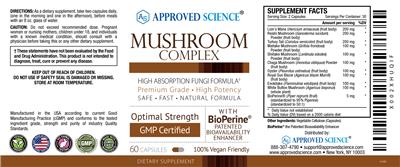
Directions: As a dietary supplement, take two capsules daily, (one in the morning and one in the afternoon), before meals with an 8 oz. glass of water.
Precautions
Caution: Do not exceed recommended dose. Do not use if safety seal is damaged or missing.
Pregnant women or nursing mothers, children under 18, and individuals with a known medical condition, should consult with a physician before taking this or any dietary supplement.
Pregnant women or nursing mothers, children under 18, and individuals with a known medical condition, should consult with a physician before taking this or any dietary supplement. Keep out of reach of children.
FDA Disclaimer Statement
These statements have not been evaluated by the Food and Drug Administration. This product is not intended to diagnose, treat, cure or prevent any disease.
Storage
Store at room temperature.
Formulation
Manufactured in the USA according to current Good Manufacturing Practice (cGMP) and conforms to the tested ingredient grade, strength and purity of industry Quality Standards.
Vegan Friendly 100% Vegan Friendly
Made with GMO Free ingredients
No animal testing High absorption fungi formula Premium Grade High potency Natural formula Optimal strength GMP Certified
Seals/Symbols
Vegan Friendly Made in USA GMP Good Manufacturing Practice Quality Product
General Statements
Safe Fast
Formula
Mushroom Complex with BioPerine Patented bioavailability enhancer
FDA Statement of Identity
Dietary Supplement
Brand IP Statement(s)
BioPerine the Patented Bioavailability Enhancer
Is this label outdated? Report a formula or label change and our pharmacy team will review it.
Mushroom Complex by Approved Science label
The label scan from the NIH Dietary Supplement Label Database. Tap to enlarge.
Label images are published by the NIH Dietary Supplement Label Database for the version of this product on file. Always read your actual product label.
View the full label (PDF)The Ingredients in Mushroom Complex by Approved Science
These are the 11 active ingredients this product is made of. Select any to open its full monograph.
Serving size1 Capsule(s) Dosage formCapsule Servings per container30 Amounts shown are per serving.
Most supplement products combine several ingredients, and a medication can interact with the product through any one of them. Each ingredient below shows whether it has known drug interactions.
BioPerine
Interacts with1,019 drugs
Black pepper is a common kitchen spice that is generally safe in the amounts used in food. Its extract, piperine, is mostly added to supplements to he...
BioPerine monograph & interactionsLion's Mane
Interacts with327 drugs
Lion's mane is an edible mushroom that is popular as a 'nootropic' for memory, focus, and nerve health, but solid human evidence is still limited and...
Lion's Mane monograph & interactionsReishi Mushroom, Powder
Interacts with375 drugs
Reishi is a traditional Asian mushroom widely used to support the immune system and overall wellness. Human evidence for most of its claimed benefits...
Reishi Mushroom, Powder monograph & interactionsTurkey Tail
Maitake Mushroom, Powder
Interacts with260 drugs
Maitake is an edible mushroom long used as food and in traditional Japanese medicine, and it is being studied for possible immune, blood sugar, and bl...
Maitake Mushroom, Powder monograph & interactionsShiitake Mushroom, Powder
Interacts with312 drugs
Shiitake is a popular edible mushroom that is nutritious and safe to eat as food for most people. Some of its extracts (like lentinan and AHCC) have b...
Shiitake Mushroom, Powder monograph & interactionsChaga Mushroom, Powder
Interacts with327 drugs
Chaga is a fungus that grows mostly on birch trees and is used as a tea or supplement, mainly for immune and antioxidant support. Human evidence for i...
Chaga Mushroom, Powder monograph & interactionsOyster
Royal Sun Blazei
Interacts with86 drugs
Agaricus mushroom (often Agaricus blazei/subrufescens) is a culinary and medicinal mushroom studied mostly for possible immune and antioxidant effects...
Royal Sun Blazei monograph & interactionsEnokitake
White Button Mushroom
Other (inactive) ingredients: Cellulose. These complete the product’s ingredient list but are not active constituents.
Mushroom Complex by Approved Science Drug Interactions
HelloPharmacist Interaction Report
Mushroom Complex by Approved Science contains several ingredients with documented interactions with medications.
The most serious concern involves BioPerine (black pepper), which can moderately increase blood levels of propranolol and several other drugs by slowing how your body eliminates them—this applies to heart medications, anti-seizure drugs, and others.
Read the full breakdown — every affected drug type, severity by severity
Lion's Mane, Maitake, Shiitake, Chaga, and Royal Sun Blazei (Agaricus) mushrooms each interact with multiple medication types. Lion's Mane may increase bleeding risk with blood thinners and raise low blood sugar risk with diabetes medications.
Maitake can lower blood pressure or blood sugar further when combined with those drugs, and may increase the blood-thinning effect of warfarin. Shiitake might reduce the effectiveness of drugs metabolized by a liver enzyme (CYP2D6), while Chaga carries similar concerns with blood thinners, blood sugar drugs, and immune suppressors.
Royal Sun Blazei adds risk of low blood sugar with diabetes medications.
Reishi Mushroom, Turkey Tail, Oyster, Enokitake, and White Button Mushroom could not be checked because we hold no data for them. Altogether, these interactions span 1,206 individual medications.
Before taking this product, run your exact medications through the checker on this page.
Check your own medications below · Editorial policy · How we use AI
Want to check YOUR meds against Mushroom Complex?
Ask about interactions with your drugs in plain English — “Can I take it with lisinopril?” — and we find you the answer in seconds, ingredient by ingredient.
Go to the checkerIngredients driving the most interactions
Individual Drug Interactions
The ingredients in Mushroom Complex interact with 1,224 drugs. Click any drug to see the details.
7 of the 11 ingredients in Mushroom Complex interact with drugs. Each result below shows which ingredient is responsible. BioPerine Reishi Mushroom, Powder Lion's Mane Chaga Mushroom, Powder Shiitake Mushroom, Powder Maitake Mushroom, Powder Royal Sun Blazei
6-mercaptopurinePurinethol
How 6-mercaptopurine interacts with Mushroom Complex — through 3 ingredients. Tap an ingredient for the detail:
Lion's ManeImmunosuppressants Moderate
Interaction Summary
Theoretically, concurrent use of lion's mane mushroom might interfere with immunosuppressive therapy.
Read the full Lion's Mane + 6-mercaptopurine interactionChaga Mushroom, PowderImmunosuppressants Moderate
Interaction Summary
Theoretically, chaga might interfere with immunosuppressive therapy.
Read the full Chaga Mushroom, Powder + 6-mercaptopurine interactionShiitake Mushroom, PowderImmunosuppressants Moderate
Interaction Summary
Theoretically, taking shiitake mushroom might decrease the effects of immunosuppressive therapy.
Read the full Shiitake Mushroom, Powder + 6-mercaptopurine interactionAdo-trastuzumab EmtansineKadcyla
How Ado-trastuzumab Emtansine interacts with Mushroom Complex — through 1 ingredient. Tap an ingredient for the detail:
BioperineCytochrome P450 3a4 (cyp3a4) Substrates Moderate
Interaction Summary
Theoretically, black pepper might increase levels of drugs metabolized by CYP3A4.
Read the full Bioperine + Ado-trastuzumab Emtansine interactionAbciximabReoPro
How Abciximab interacts with Mushroom Complex — through 4 ingredients. Tap an ingredient for the detail:
Reishi Mushroom, PowderAnticoagulant/antiplatelet Drugs Moderate
Interaction Summary
Theoretically, high doses of reishi mushroom might increase the risk of bleeding.
Read the full Reishi Mushroom, Powder + Abciximab interactionBioperineAnticoagulant/antiplatelet Drugs Moderate
Interaction Summary
Theoretically, black pepper might increase the risk of bleeding when taken with antiplatelet or anticoagulant drugs.
Read the full Bioperine + Abciximab interactionChaga Mushroom, PowderAnticoagulant/antiplatelet Drugs Moderate
Interaction Summary
Theoretically, chaga may increase the risk of bleeding if used with anticoagulant or antiplatelet drugs.
Read the full Chaga Mushroom, Powder + Abciximab interactionLion's ManeAnticoagulant/antiplatelet Drugs Moderate
Interaction Summary
Theoretically, lion's mane mushroom may increase the risk of bleeding when used with anticoagulant/antiplatelet drugs.
Read the full Lion's Mane + Abciximab interactionAbemaciclibVerzenio
How Abemaciclib interacts with Mushroom Complex — through 1 ingredient. Tap an ingredient for the detail:
BioperineCytochrome P450 3a4 (cyp3a4) Substrates Moderate
Interaction Summary
Theoretically, black pepper might increase levels of drugs metabolized by CYP3A4.
Read the full Bioperine + Abemaciclib interactionAbiraterone
How Abiraterone interacts with Mushroom Complex — through 1 ingredient. Tap an ingredient for the detail:
BioperineCytochrome P450 3a4 (cyp3a4) Substrates Moderate
Interaction Summary
Theoretically, black pepper might increase levels of drugs metabolized by CYP3A4.
Read the full Bioperine + Abiraterone interactionAbiraterone AcetateYonsa, Zytiga
How Abiraterone Acetate interacts with Mushroom Complex — through 1 ingredient. Tap an ingredient for the detail:
BioperineCytochrome P450 3a4 (cyp3a4) Substrates Moderate
Interaction Summary
Theoretically, black pepper might increase levels of drugs metabolized by CYP3A4.
Read the full Bioperine + Abiraterone Acetate interactionAbrocitinibCibinqo
How Abrocitinib interacts with Mushroom Complex — through 5 ingredients. Tap an ingredient for the detail:
Reishi Mushroom, PowderAnticoagulant/antiplatelet Drugs Moderate
Interaction Summary
Theoretically, high doses of reishi mushroom might increase the risk of bleeding.
Read the full Reishi Mushroom, Powder + Abrocitinib interactionLion's ManeAnticoagulant/antiplatelet Drugs, Immunosuppressants Moderate
Interaction Summary
Theoretically, lion's mane mushroom may increase the risk of bleeding when used with anticoagulant/antiplatelet drugs.
Read the full Lion's Mane + Abrocitinib interactionBioperineAnticoagulant/antiplatelet Drugs Moderate
Interaction Summary
Theoretically, black pepper might increase the risk of bleeding when taken with antiplatelet or anticoagulant drugs.
Read the full Bioperine + Abrocitinib interactionChaga Mushroom, PowderImmunosuppressants, Anticoagulant/antiplatelet Drugs Moderate
Interaction Summary
Theoretically, chaga might interfere with immunosuppressive therapy.
Read the full Chaga Mushroom, Powder + Abrocitinib interactionShiitake Mushroom, PowderImmunosuppressants Moderate
Interaction Summary
Theoretically, taking shiitake mushroom might decrease the effects of immunosuppressive therapy.
Read the full Shiitake Mushroom, Powder + Abrocitinib interactionAcalabrutinibCalquence
How Acalabrutinib interacts with Mushroom Complex — through 1 ingredient. Tap an ingredient for the detail:
BioperineP-glycoprotein Substrates, Cytochrome P450 3a4 (cyp3a4) Substrates Moderate
Interaction Summary
Theoretically, black pepper might increase levels of P-glycoprotein substrates.
Read the full Bioperine + Acalabrutinib interactionAcarboseGlucobay, Prandase, Precose
How Acarbose interacts with Mushroom Complex — through 6 ingredients. Tap an ingredient for the detail:
Reishi Mushroom, PowderAntidiabetes Drugs Moderate
Interaction Summary
Theoretically, reishi mushroom might have additive effects with antidiabetes drugs.
Read the full Reishi Mushroom, Powder + Acarbose interactionRoyal Sun BlazeiAntidiabetes Drugs Moderate
Interaction Summary
Theoretically, taking agaricus mushroom with antidiabetes drugs might increase the risk of hypoglycemia.
Read the full Royal Sun Blazei + Acarbose interactionMaitake Mushroom, PowderAntidiabetes Drugs Moderate
Interaction Summary
Theoretically, combining maitake mushroom with antidiabetes drugs might increase the risk of hypoglycemia.
Read the full Maitake Mushroom, Powder + Acarbose interactionBioperineAntidiabetes Drugs Moderate
Interaction Summary
Theoretically, black pepper might increase the risk of hypoglycemia when taken with antidiabetes drugs.
Read the full Bioperine + Acarbose interactionLion's ManeAntidiabetes Drugs Moderate
Interaction Summary
Theoretically, lion's mane mushroom may have additive effects when used with antidiabetes drugs.
Read the full Lion's Mane + Acarbose interactionChaga Mushroom, PowderAntidiabetes Drugs Moderate
Interaction Summary
Theoretically, taking chaga with antidiabetes drugs might increase the risk of hypoglycemia.
Read the full Chaga Mushroom, Powder + Acarbose interactionAcebutololRhotral, Sectral
How Acebutolol interacts with Mushroom Complex — through 2 ingredients. Tap an ingredient for the detail:
Reishi Mushroom, PowderAntihypertensive Drugs Moderate
Interaction Summary
Theoretically, concurrent use of reishi mushroom with antihypertensive drugs might increase the risk of hypotension.
Read the full Reishi Mushroom, Powder + Acebutolol interactionMaitake Mushroom, PowderAntihypertensive Drugs Moderate
Interaction Summary
Theoretically, combining maitake mushroom with antihypertensive drugs might increase the risk of hypotension.
Read the full Maitake Mushroom, Powder + Acebutolol interactionAcenocoumarolSintrom
How Acenocoumarol interacts with Mushroom Complex — through 4 ingredients. Tap an ingredient for the detail:
Lion's ManeAnticoagulant/antiplatelet Drugs Moderate
Interaction Summary
Theoretically, lion's mane mushroom may increase the risk of bleeding when used with anticoagulant/antiplatelet drugs.
Read the full Lion's Mane + Acenocoumarol interactionReishi Mushroom, PowderAnticoagulant/antiplatelet Drugs Moderate
Interaction Summary
Theoretically, high doses of reishi mushroom might increase the risk of bleeding.
Read the full Reishi Mushroom, Powder + Acenocoumarol interactionBioperineAnticoagulant/antiplatelet Drugs Moderate
Interaction Summary
Theoretically, black pepper might increase the risk of bleeding when taken with antiplatelet or anticoagulant drugs.
Read the full Bioperine + Acenocoumarol interactionChaga Mushroom, PowderAnticoagulant/antiplatelet Drugs Moderate
Interaction Summary
Theoretically, chaga may increase the risk of bleeding if used with anticoagulant or antiplatelet drugs.
Read the full Chaga Mushroom, Powder + Acenocoumarol interactionAcetaminophen, AspirinGemnisyn
How Acetaminophen, Aspirin interacts with Mushroom Complex — through 4 ingredients. Tap an ingredient for the detail:
BioperineCytochrome P450 1a2 (cyp1a2) Substrates, Anticoagulant/antiplatelet Drugs Moderate
Interaction Summary
Theoretically, black pepper might decrease levels and clinical effects of drugs metabolized by CYP1A2.
Read the full Bioperine + Acetaminophen, Aspirin interactionChaga Mushroom, PowderAnticoagulant/antiplatelet Drugs Moderate
Interaction Summary
Theoretically, chaga may increase the risk of bleeding if used with anticoagulant or antiplatelet drugs.
Read the full Chaga Mushroom, Powder + Acetaminophen, Aspirin interactionLion's ManeAnticoagulant/antiplatelet Drugs Moderate
Interaction Summary
Theoretically, lion's mane mushroom may increase the risk of bleeding when used with anticoagulant/antiplatelet drugs.
Read the full Lion's Mane + Acetaminophen, Aspirin interactionReishi Mushroom, PowderAnticoagulant/antiplatelet Drugs Moderate
Interaction Summary
Theoretically, high doses of reishi mushroom might increase the risk of bleeding.
Read the full Reishi Mushroom, Powder + Acetaminophen, Aspirin interactionAcetaminophen, Aspirin, CaffeineExcedrin, Excedrin Extra Strength, Excedrin Migraine
How Acetaminophen, Aspirin, Caffeine interacts with Mushroom Complex — through 4 ingredients. Tap an ingredient for the detail:
Reishi Mushroom, PowderAnticoagulant/antiplatelet Drugs Moderate
Interaction Summary
Theoretically, high doses of reishi mushroom might increase the risk of bleeding.
Read the full Reishi Mushroom, Powder + Acetaminophen, Aspirin, Caffeine interactionChaga Mushroom, PowderAnticoagulant/antiplatelet Drugs Moderate
Interaction Summary
Theoretically, chaga may increase the risk of bleeding if used with anticoagulant or antiplatelet drugs.
Read the full Chaga Mushroom, Powder + Acetaminophen, Aspirin, Caffeine interactionBioperineCytochrome P450 1a2 (cyp1a2) Substrates, Cytochrome P450 3a4 (cyp3a4) Substrates +1 Moderate
Interaction Summary
Theoretically, black pepper might decrease levels and clinical effects of drugs metabolized by CYP1A2.
Read the full Bioperine + Acetaminophen, Aspirin, Caffeine interactionLion's ManeAnticoagulant/antiplatelet Drugs Moderate
Interaction Summary
Theoretically, lion's mane mushroom may increase the risk of bleeding when used with anticoagulant/antiplatelet drugs.
Read the full Lion's Mane + Acetaminophen, Aspirin, Caffeine interactionAcetaminophen, Butalbital, CaffeineEsgic, Esgic Plus, Fiogesic, Fioricet, Repan, Tecnal +1 more
How Acetaminophen, Butalbital, Caffeine interacts with Mushroom Complex — through 1 ingredient. Tap an ingredient for the detail:
BioperineCytochrome P450 1a2 (cyp1a2) Substrates, Cytochrome P450 3a4 (cyp3a4) Substrates Moderate
Interaction Summary
Theoretically, black pepper might decrease levels and clinical effects of drugs metabolized by CYP1A2.
Read the full Bioperine + Acetaminophen, Butalbital, Caffeine interactionAcetaminophen, Butalbital, Caffeine, CodeineEsgic with Codeine, Fioricet w/ Codeine
How Acetaminophen, Butalbital, Caffeine, Codeine interacts with Mushroom Complex — through 2 ingredients. Tap an ingredient for the detail:
BioperineCytochrome P450 3a4 (cyp3a4) Substrates, Cytochrome P450 1a2 (cyp1a2) Substrates +1 Moderate
Interaction Summary
Theoretically, black pepper might increase levels of drugs metabolized by CYP3A4.
Read the full Bioperine + Acetaminophen, Butalbital, Caffeine, Codeine interactionShiitake Mushroom, PowderCytochrome P450 2d6 (cyp2d6) Substrates Moderate
Interaction Summary
Theoretically, shiitake mushroom might decrease levels of drugs metabolized by CYP2D6.
Read the full Shiitake Mushroom, Powder + Acetaminophen, Butalbital, Caffeine, Codeine interactionAcetaminophen, Butalbital, CodeineBancap w/ Codeine
How Acetaminophen, Butalbital, Codeine interacts with Mushroom Complex — through 2 ingredients. Tap an ingredient for the detail:
BioperineCytochrome P450 2d6 (cyp2d6) Substrates, Cytochrome P450 1a2 (cyp1a2) Substrates Moderate
Interaction Summary
Theoretically, black pepper might increase levels of drugs metabolized by CYP2D6.
Read the full Bioperine + Acetaminophen, Butalbital, Codeine interactionShiitake Mushroom, PowderCytochrome P450 2d6 (cyp2d6) Substrates Moderate
Interaction Summary
Theoretically, shiitake mushroom might decrease levels of drugs metabolized by CYP2D6.
Read the full Shiitake Mushroom, Powder + Acetaminophen, Butalbital, Codeine interactionAcetaminophen, Butalbital, Codeine PhosphatePhrenilin #3
How Acetaminophen, Butalbital, Codeine Phosphate interacts with Mushroom Complex — through 2 ingredients. Tap an ingredient for the detail:
BioperineCytochrome P450 1a2 (cyp1a2) Substrates, Cytochrome P450 2d6 (cyp2d6) Substrates Moderate
Interaction Summary
Theoretically, black pepper might decrease levels and clinical effects of drugs metabolized by CYP1A2.
Read the full Bioperine + Acetaminophen, Butalbital, Codeine Phosphate interactionShiitake Mushroom, PowderCytochrome P450 2d6 (cyp2d6) Substrates Moderate
Interaction Summary
Theoretically, shiitake mushroom might decrease levels of drugs metabolized by CYP2D6.
Read the full Shiitake Mushroom, Powder + Acetaminophen, Butalbital, Codeine Phosphate interactionAcetaminophen, Caffeine, Chlorpheniramine, Hydrocodone, PhenylephrineHycomine Compound
How Acetaminophen, Caffeine, Chlorpheniramine, Hydrocodone, Phenylephrine interacts with Mushroom Complex — through 2 ingredients. Tap an ingredient for the detail:
BioperineCytochrome P450 2d6 (cyp2d6) Substrates, Cytochrome P450 3a4 (cyp3a4) Substrates +1 Moderate
Interaction Summary
Theoretically, black pepper might increase levels of drugs metabolized by CYP2D6.
Read the full Bioperine + Acetaminophen, Caffeine, Chlorpheniramine, Hydrocodone, Phenylephrine interactionShiitake Mushroom, PowderCytochrome P450 2d6 (cyp2d6) Substrates Moderate
Interaction Summary
Theoretically, shiitake mushroom might decrease levels of drugs metabolized by CYP2D6.
Read the full Shiitake Mushroom, Powder + Acetaminophen, Caffeine, Chlorpheniramine, Hydrocodone, Phenylephrine interactionAcetaminophen, Caffeine, CodeineGesic C15, Gesic C30, Gesic C8, Lenoltec 1, Lenoltec 2, Lenoltec 3 +1 more
How Acetaminophen, Caffeine, Codeine interacts with Mushroom Complex — through 2 ingredients. Tap an ingredient for the detail:
BioperineCytochrome P450 1a2 (cyp1a2) Substrates, Cytochrome P450 3a4 (cyp3a4) Substrates +1 Moderate
Interaction Summary
Theoretically, black pepper might decrease levels and clinical effects of drugs metabolized by CYP1A2.
Read the full Bioperine + Acetaminophen, Caffeine, Codeine interactionShiitake Mushroom, PowderCytochrome P450 2d6 (cyp2d6) Substrates Moderate
Interaction Summary
Theoretically, shiitake mushroom might decrease levels of drugs metabolized by CYP2D6.
Read the full Shiitake Mushroom, Powder + Acetaminophen, Caffeine, Codeine interactionAcetaminophen, Caffeine, Codeine, SalicylamideCodalan No.1, Codalan No.2, Codalan No.3
How Acetaminophen, Caffeine, Codeine, Salicylamide interacts with Mushroom Complex — through 2 ingredients. Tap an ingredient for the detail:
Shiitake Mushroom, PowderCytochrome P450 2d6 (cyp2d6) Substrates Moderate
Interaction Summary
Theoretically, shiitake mushroom might decrease levels of drugs metabolized by CYP2D6.
Read the full Shiitake Mushroom, Powder + Acetaminophen, Caffeine, Codeine, Salicylamide interactionBioperineCytochrome P450 2d6 (cyp2d6) Substrates, Cytochrome P450 1a2 (cyp1a2) Substrates +1 Moderate
Interaction Summary
Theoretically, black pepper might increase levels of drugs metabolized by CYP2D6.
Read the full Bioperine + Acetaminophen, Caffeine, Codeine, Salicylamide interactionAcetaminophen, Caffeine, DihydrocodeineDHC Plus, Panlor DC, Panlor SS
How Acetaminophen, Caffeine, Dihydrocodeine interacts with Mushroom Complex — through 2 ingredients. Tap an ingredient for the detail:
BioperineCytochrome P450 3a4 (cyp3a4) Substrates, Cytochrome P450 1a2 (cyp1a2) Substrates +1 Moderate
Interaction Summary
Theoretically, black pepper might increase levels of drugs metabolized by CYP3A4.
Read the full Bioperine + Acetaminophen, Caffeine, Dihydrocodeine interactionShiitake Mushroom, PowderCytochrome P450 2d6 (cyp2d6) Substrates Moderate
Interaction Summary
Theoretically, shiitake mushroom might decrease levels of drugs metabolized by CYP2D6.
Read the full Shiitake Mushroom, Powder + Acetaminophen, Caffeine, Dihydrocodeine interactionAcetaminophen, Caffeine, IsomethepteneMigralam
How Acetaminophen, Caffeine, Isometheptene interacts with Mushroom Complex — through 1 ingredient. Tap an ingredient for the detail:
BioperineCytochrome P450 3a4 (cyp3a4) Substrates, Cytochrome P450 1a2 (cyp1a2) Substrates Moderate
Interaction Summary
Theoretically, black pepper might increase levels of drugs metabolized by CYP3A4.
Read the full Bioperine + Acetaminophen, Caffeine, Isometheptene interactionAcetaminophen, Caffeine, PyrilamineMidol Max Strength Menstrual
How Acetaminophen, Caffeine, Pyrilamine interacts with Mushroom Complex — through 1 ingredient. Tap an ingredient for the detail:
BioperineCytochrome P450 1a2 (cyp1a2) Substrates, Cytochrome P450 3a4 (cyp3a4) Substrates Moderate
Interaction Summary
Theoretically, black pepper might decrease levels and clinical effects of drugs metabolized by CYP1A2.
Read the full Bioperine + Acetaminophen, Caffeine, Pyrilamine interactionAcetaminophen, Chlorpheniramine Maleate, Dextromethorphan HbrVicks Formula 44M Cough, Cold & Flu Relief
How Acetaminophen, Chlorpheniramine Maleate, Dextromethorphan Hbr interacts with Mushroom Complex — through 2 ingredients. Tap an ingredient for the detail:
BioperineCytochrome P450 2d6 (cyp2d6) Substrates, Cytochrome P450 1a2 (cyp1a2) Substrates +1 Moderate
Interaction Summary
Theoretically, black pepper might increase levels of drugs metabolized by CYP2D6.
Read the full Bioperine + Acetaminophen, Chlorpheniramine Maleate, Dextromethorphan Hbr interactionShiitake Mushroom, PowderCytochrome P450 2d6 (cyp2d6) Substrates Moderate
Interaction Summary
Theoretically, shiitake mushroom might decrease levels of drugs metabolized by CYP2D6.
Read the full Shiitake Mushroom, Powder + Acetaminophen, Chlorpheniramine Maleate, Dextromethorphan Hbr interactionAcetaminophen, Chlorpheniramine, Codeine, PhenylephrineColrex
How Acetaminophen, Chlorpheniramine, Codeine, Phenylephrine interacts with Mushroom Complex — through 2 ingredients. Tap an ingredient for the detail:
BioperineCytochrome P450 2d6 (cyp2d6) Substrates, Cytochrome P450 3a4 (cyp3a4) Substrates +1 Moderate
Interaction Summary
Theoretically, black pepper might increase levels of drugs metabolized by CYP2D6.
Read the full Bioperine + Acetaminophen, Chlorpheniramine, Codeine, Phenylephrine interactionShiitake Mushroom, PowderCytochrome P450 2d6 (cyp2d6) Substrates Moderate
Interaction Summary
Theoretically, shiitake mushroom might decrease levels of drugs metabolized by CYP2D6.
Read the full Shiitake Mushroom, Powder + Acetaminophen, Chlorpheniramine, Codeine, Phenylephrine interactionAcetaminophen, Chlorpheniramine, DextromethorphanCoricidin II Extra Strength Cold and Flu
How Acetaminophen, Chlorpheniramine, Dextromethorphan interacts with Mushroom Complex — through 2 ingredients. Tap an ingredient for the detail:
BioperineCytochrome P450 1a2 (cyp1a2) Substrates, Cytochrome P450 3a4 (cyp3a4) Substrates +1 Moderate
Interaction Summary
Theoretically, black pepper might decrease levels and clinical effects of drugs metabolized by CYP1A2.
Read the full Bioperine + Acetaminophen, Chlorpheniramine, Dextromethorphan interactionShiitake Mushroom, PowderCytochrome P450 2d6 (cyp2d6) Substrates Moderate
Interaction Summary
Theoretically, shiitake mushroom might decrease levels of drugs metabolized by CYP2D6.
Read the full Shiitake Mushroom, Powder + Acetaminophen, Chlorpheniramine, Dextromethorphan interactionAcetaminophen, Chlorpheniramine, Dextromethorphan HydrobromideCoricidin HBP Maximum Strength Flu
How Acetaminophen, Chlorpheniramine, Dextromethorphan Hydrobromide interacts with Mushroom Complex — through 2 ingredients. Tap an ingredient for the detail:
BioperineCytochrome P450 2d6 (cyp2d6) Substrates, Cytochrome P450 1a2 (cyp1a2) Substrates +1 Moderate
Interaction Summary
Theoretically, black pepper might increase levels of drugs metabolized by CYP2D6.
Read the full Bioperine + Acetaminophen, Chlorpheniramine, Dextromethorphan Hydrobromide interactionShiitake Mushroom, PowderCytochrome P450 2d6 (cyp2d6) Substrates Moderate
Interaction Summary
Theoretically, shiitake mushroom might decrease levels of drugs metabolized by CYP2D6.
Read the full Shiitake Mushroom, Powder + Acetaminophen, Chlorpheniramine, Dextromethorphan Hydrobromide interactionAcetaminophen, Chlorpheniramine, Dextromethorphan, PhenylpropanolamineMulti Symptom Cold Relief
How Acetaminophen, Chlorpheniramine, Dextromethorphan, Phenylpropanolamine interacts with Mushroom Complex — through 2 ingredients. Tap an ingredient for the detail:
BioperineCytochrome P450 2d6 (cyp2d6) Substrates, Cytochrome P450 1a2 (cyp1a2) Substrates +1 Moderate
Interaction Summary
Theoretically, black pepper might increase levels of drugs metabolized by CYP2D6.
Read the full Bioperine + Acetaminophen, Chlorpheniramine, Dextromethorphan, Phenylpropanolamine interactionShiitake Mushroom, PowderCytochrome P450 2d6 (cyp2d6) Substrates Moderate
Interaction Summary
Theoretically, shiitake mushroom might decrease levels of drugs metabolized by CYP2D6.
Read the full Shiitake Mushroom, Powder + Acetaminophen, Chlorpheniramine, Dextromethorphan, Phenylpropanolamine interactionAcetaminophen, Chlorpheniramine, Dextromethorphan, PseudoephedrineChildren's Tylenol Cold Plus Cough, Tylenol Cold Ex Strength
How Acetaminophen, Chlorpheniramine, Dextromethorphan, Pseudoephedrine interacts with Mushroom Complex — through 2 ingredients. Tap an ingredient for the detail:
BioperineCytochrome P450 3a4 (cyp3a4) Substrates, Cytochrome P450 2d6 (cyp2d6) Substrates +1 Moderate
Interaction Summary
Theoretically, black pepper might increase levels of drugs metabolized by CYP3A4.
Read the full Bioperine + Acetaminophen, Chlorpheniramine, Dextromethorphan, Pseudoephedrine interactionShiitake Mushroom, PowderCytochrome P450 2d6 (cyp2d6) Substrates Moderate
Interaction Summary
Theoretically, shiitake mushroom might decrease levels of drugs metabolized by CYP2D6.
Read the full Shiitake Mushroom, Powder + Acetaminophen, Chlorpheniramine, Dextromethorphan, Pseudoephedrine interactionAcetaminophen, Chlorpheniramine, Guaifenesin, Phenylephrine, SalicylamideRhinogesic GG
How Acetaminophen, Chlorpheniramine, Guaifenesin, Phenylephrine, Salicylamide interacts with Mushroom Complex — through 1 ingredient. Tap an ingredient for the detail:
BioperineCytochrome P450 1a2 (cyp1a2) Substrates, Cytochrome P450 3a4 (cyp3a4) Substrates Moderate
Interaction Summary
Theoretically, black pepper might decrease levels and clinical effects of drugs metabolized by CYP1A2.
Read the full Bioperine + Acetaminophen, Chlorpheniramine, Guaifenesin, Phenylephrine, Salicylamide interactionEach ingredient & the kinds of drugs it affects
For each ingredient in Mushroom Complex with known interactions, here are the types of medications they can affect. Open any type for the detail — or search your exact drug in the checker above.
BioPerine
Anticoagulant/Antiplatelet Drugs
Theoretically, black pepper might increase the risk of bleeding when taken with antiplatelet or anticoagulant drugs.
In vitro research shows that piperine, a constituent of black pepper, seems to inhibit platelet aggregation. This has not been reported in humans.
Antidiabetes Drugs
Theoretically, black pepper might increase the risk of hypoglycemia when taken with antidiabetes drugs.
Animal research shows that piperine, a constituent of black pepper, can reduce blood glucose levels. Monitor blood glucose levels closely. Dose adjustments might be necessary.
Atorvastatin (Lipitor)
Theoretically, black pepper might increase blood levels of atorvastatin.
Animal research shows that taking piperine, a constituent of black pepper, 35 mg/kg can increase the maximum serum concentration of atorvastatin three-fold. This has not been reported in humans.
Cyclosporine (Neoral, Sandimmune)
Theoretically, black pepper might increase the effects and side effects of cyclosporine.
In vitro research shows that piperine, a constituent of black pepper, increases the bioavailability of cyclosporine. This has not been reported in humans.
Cytochrome P450 2D6 (Cyp2D6) Substrates
Theoretically, black pepper might increase levels of drugs metabolized by CYP2D6.
In vitro research suggests that some constituents of black pepper inhibit CYP2D6. This has not been reported in humans.
Cytochrome P450 3A4 (Cyp3A4) Substrates
Theoretically, black pepper might increase levels of drugs metabolized by CYP3A4.
In vitro research and pharmacokinetic simulation data suggest that piperine, a constituent of black pepper, as well as the pepper fruit seem to inhibit CYP3A4. This has not been reported in humans.
Lithium
Theoretically, black pepper might increase blood levels of lithium due to its diuretic effects. The dose of lithium might need to be reduced.
Black pepper is thought to have diuretic properties.
Nevirapine (Viramune)
Black pepper might increase blood levels of nevirapine.
Clinical research shows that piperine, a constituent of black pepper, increases the plasma concentration of nevirapine. However, no adverse effects were observed in this study.
P-Glycoprotein Substrates
Theoretically, black pepper might increase levels of P-glycoprotein substrates.
In vitro research shows that piperine, a constituent of black pepper, seems to inhibit P-glycoprotein.
Pentobarbital (Nembutal)
Theoretically, black pepper might increase the sedative effects of pentobarbital.
Animal research shows that piperine, a constituent of black pepper, increases pentobarbital-induced sleeping time.
Phenytoin (Dilantin)
Black pepper might increase blood levels of phenytoin.
Clinical research shows that piperine, a constituent of black pepper, seems to increase absorption, slow elimination, and increase levels of phenytoin. Taking a single dose of black pepper 1 gram along with phenytoin seems to double the serum concentration of phenytoin. Consuming a soup with black pepper providing piperine 44 mg/200 mL of soup along with phenytoin also seems to increase phenytoin levels when compared with consuming the same soup without black pepper.
Propranolol (Inderal)
Black pepper might increase blood levels of propranolol.
Clinical research shows that piperine, a constituent of black pepper, seems to increase absorption and slow elimination of propranolol.
Rifampin (Rifadin)
Black pepper might increase blood levels of rifampin.
Clinical research shows that piperine, a constituent of black pepper, seems to increase absorption and serum levels of rifampin.
Theophylline
Black pepper might increase blood levels of theophylline.
Clinical research shows that piperine, a constituent of black pepper, seems to increase absorption and slow elimination of theophylline.
Amoxicillin (Amoxil, Trimox)
Theoretically, black pepper might increase the effects and side effects of amoxicillin.
Animal research shows that taking piperine, a constituent of black pepper, with amoxicillin increases plasma levels of amoxicillin. This has not been reported in humans.
Carbamazepine (Tegretol)
Theoretically, black pepper might increase blood levels of carbamazepine, potentially increasing the effects and side effects of carbamazepine.
One clinical study in patients taking carbamazepine 300 mg or 500 mg twice daily shows that taking a single 20 mg dose of purified piperine, a constituent of black pepper, increases carbamazepine levels. Piperine may increase carbamazepine absorption by increasing blood flow to the GI tract, increasing the surface area of the small intestine, or inhibiting cytochrome P450 3A4 (CYP3A4) in the gut wall. Absorption was significantly increased by 7-10 mcg/mL/hour. The time to eliminate carbamazepine was also increased by 4-8 hours. Although carbamazepine levels were increased, this did not appear to increase side effects. In vitro research also shows that piperine can increase carbamazepine levels by 11% in a time-dependent manner.
Cytochrome P450 1A2 (Cyp1A2) Substrates
Theoretically, black pepper might decrease levels and clinical effects of drugs metabolized by CYP1A2.
In vitro research suggests that black pepper induces CYP1A2. This has not been reported in humans.
Reishi Mushroom, Powder
Anticoagulant/Antiplatelet Drugs
Theoretically, high doses of reishi mushroom might increase the risk of bleeding.
A dose of 1.5 grams daily of reishi mushroom does not seem to decrease platelet aggregation, but a higher dose of 3 grams daily does.
Antidiabetes Drugs
Theoretically, reishi mushroom might have additive effects with antidiabetes drugs.
Animal research suggests that reishi mushroom decreases blood sugar. However, in patients with type 2 diabetes, taking reishi mushroom does not reduce fasting glucose levels, and its effects on glycated hemoglobin are inconsistent.
Antihypertensive Drugs
Theoretically, concurrent use of reishi mushroom with antihypertensive drugs might increase the risk of hypotension.
Reishi mushroom has shown hypotensive activity in animal research. Clinical evidence suggests that reishi mushroom reduces blood pressure in some, but not all, patients with hypertension.
Lion's Mane
Anticoagulant/Antiplatelet Drugs
Theoretically, lion's mane mushroom may increase the risk of bleeding when used with anticoagulant/antiplatelet drugs.
In vitro research suggests that lion's mane mushroom extracts can inhibit platelet aggregation.
Antidiabetes Drugs
Theoretically, lion's mane mushroom may have additive effects when used with antidiabetes drugs.
Animal research suggests that an aqueous extract of lion's mane mushroom can reduce serum glucose and increase serum insulin.
Immunosuppressants
Theoretically, concurrent use of lion's mane mushroom might interfere with immunosuppressive therapy.
In animal and in vitro research, lion's mane mushroom polysaccharides stimulate the immune system.
Chaga Mushroom, Powder
Anticoagulant/Antiplatelet Drugs
Theoretically, chaga may increase the risk of bleeding if used with anticoagulant or antiplatelet drugs.
In vitro and animal research suggests that chaga extract can inhibit platelet aggregation. This effect has not been reported in humans.
Antidiabetes Drugs
Theoretically, taking chaga with antidiabetes drugs might increase the risk of hypoglycemia.
Animal research suggests that chaga might decrease blood glucose levels and increase insulin levels. This has not been reported in humans.
Immunosuppressants
Theoretically, chaga might interfere with immunosuppressive therapy.
In vitro research suggests that certain constituents of chaga stimulate immune function. This has not been reported in humans.
Shiitake Mushroom, Powder
Cytochrome P450 2D6 (Cyp2D6) Substrates
Theoretically, shiitake mushroom might decrease levels of drugs metabolized by CYP2D6.
In vitro studies suggest that the shiitake mushroom extract AHCC might induce the CYP2D6 enzyme. This effect has not been reported in humans.
Immunosuppressants
Theoretically, taking shiitake mushroom might decrease the effects of immunosuppressive therapy.
In vitro evidence suggests that shiitake mushroom extracts stimulate immune function.
Maitake Mushroom, Powder
Antidiabetes Drugs
Theoretically, combining maitake mushroom with antidiabetes drugs might increase the risk of hypoglycemia.
Clinical research shows that taking maitake mushroom polysaccharide (MMP) can lower blood glucose levels in patients with types 2 diabetes.
Antihypertensive Drugs
Theoretically, combining maitake mushroom with antihypertensive drugs might increase the risk of hypotension.
Animal research shows that maitake mushroom can lower blood pressure.
Warfarin (Coumadin)
There is limited evidence that maitake mushroom may increase the anticoagulant effects of warfarin.
In a case report, a patient previously stabilized on warfarin developed an elevated international normalized ratio (INR) of 5.1 after taking maitake mushroom (Grifron-Pro Maitake D-Fraction) 1 drop/kg daily in three divided doses for one week. The elevated INR resolved after holding warfarin for two days, then reducing the dose by 11%. It is thought that the beta-glucan constituent of maitake mushroom might cause warfarin dissociation from proteins, resulting in increased free warfarin levels and increased warfarin effects.
Royal Sun Blazei
Antidiabetes Drugs
Theoretically, taking agaricus mushroom with antidiabetes drugs might increase the risk of hypoglycemia.
In one clinical study in patients with type 2 diabetes who are stabilized on conventional oral hypoglycemic agents, 3 of 29 patients taking an agaricus mushroom extract 500 mg three times daily for 12 weeks reported hypoglycemia, compared to one of 29 patients in the placebo group.
Brand information
Manufacturer and brand details for Mushroom Complex, from the product label.
Approved Science
See all Approved Science products- Name
- Approved Science
- City
- New York
- State
- NY
- ZipCode
- 10003
- Phone Number
- 888-307-4790
- Web Address
- www.approvedscience.com
Mushroom Complex by Approved Science: Common Questions
Does Mushroom Complex by Approved Science interact with any medications?
How can one product interact with so many drugs?
Where does this information come from?
Can I take this if I'm pregnant or breastfeeding?
What side effects might I experience?
Does this product actually work?
Why is BioPerine included?
Is this safe if I have diabetes or take blood pressure medication?
What if I take other supplements or herbs?
Written and reviewed by the HelloPharmacist editorial staff. Our editorial policy
Not sure if Mushroom Complex is safe with your meds?
Our pharmacists answer your medication & supplement questions — free.
Label information is sourced from the NIH Dietary Supplement Label Database and reflects the product version on file; always read your actual product label. This page is for education only and is not a substitute for professional medical advice. Confirm with your pharmacist or doctor before combining supplements and medications.
The Full Monographs Behind Mushroom Complex’s Ingredients
Every ingredient we hold a full HelloPharmacist monograph for — uses, evidence, safety, and the complete interaction list.
Black Pepper
Interacts with 1,019 drugsBlack pepper is a common kitchen spice that is generally safe in the amounts used in food. Its extract, piperine, is mostly added to supplements to help the body absorb other ingredients (li...
Read the full Black Pepper monograph → Herb & supplement monographLion's Mane Mushroom
Interacts with 327 drugsLion's mane is an edible mushroom that is popular as a 'nootropic' for memory, focus, and nerve health, but solid human evidence is still limited and early. It is generally well tolerated as...
Read the full Lion's Mane Mushroom monograph → Herb & supplement monographReishi Mushroom
Interacts with 375 drugsReishi is a traditional Asian mushroom widely used to support the immune system and overall wellness. Human evidence for most of its claimed benefits is limited or low-quality, so it should...
Read the full Reishi Mushroom monograph → Herb & supplement monographMaitake Mushroom
Interacts with 260 drugsMaitake is an edible mushroom long used as food and in traditional Japanese medicine, and it is being studied for possible immune, blood sugar, and blood pressure effects. The human evidence...
Read the full Maitake Mushroom monograph → Herb & supplement monographShiitake Mushroom
Interacts with 312 drugsShiitake is a popular edible mushroom that is nutritious and safe to eat as food for most people. Some of its extracts (like lentinan and AHCC) have been studied as immune support, mainly al...
Read the full Shiitake Mushroom monograph → Herb & supplement monographChaga
Interacts with 327 drugsChaga is a fungus that grows mostly on birch trees and is used as a tea or supplement, mainly for immune and antioxidant support. Human evidence for its benefits is very limited, and it may...
Read the full Chaga monograph → Herb & supplement monographAgaricus Mushroom
Interacts with 86 drugsAgaricus mushroom (often Agaricus blazei/subrufescens) is a culinary and medicinal mushroom studied mostly for possible immune and antioxidant effects. The human evidence is limited and not...
Read the full Agaricus Mushroom monograph →Sources & How We Checked
Mushroom Complex's label data comes from the NIH Dietary Supplement Label Database; the ingredient interaction data is from the Natural Medicines database, reviewed by our pharmacists.
- NIH Dietary Supplement Label Database (DSLD) — The official product label on file for this supplement.
- Natural Medicines (Therapeutic Research Center) — Evidence-graded clinical reference behind the ingredient interaction data.
Content is written and reviewed by licensed HelloPharmacist pharmacists. See our data sources and editorial standards for how this information is built and checked.
The 141 references behind this product’s interaction data
Every citation that drives the interaction findings for this product’s ingredients, from the evidence-graded Natural Medicines (TRC Healthcare) database. Open an ingredient to browse its citations — links open the study on PubMed or the publisher’s site.
Black Pepper 29 references
- Leung AY, Foster S. Encyclopedia of Common Natural Ingredients Used in Food, Drugs and Cosmetics. 2nd ed. New York, NY: John Wiley & Sons, 1996.
- Brinker F. Herb Contraindications and Drug Interactions. 2nd ed. Sandy, OR: Eclectic Medical Publications, 1998.
- Bano G, Amla V, Raina RK, et al. The effect of piperine on pharmacokinetics of phenytoin in healthy volunteers. Planta Med 1987;53:568-9. PubMed
- Bano G, et al. Effect of piperine on bioavailability and pharmacokinetics of propranolol and theophylline in healthy volunteers. Eur J Clin Pharmacol 1991;41;615-7. PubMed
- Cohle SD, Trestrail JD III, Graham MA, et al. Fatal pepper aspiration. Am J Dis Child 1988;142:633-6. PubMed
- Bhardwaj RK, Glaeser H, Becquemont L, et al. Piperine, a major constituent of black pepper, inhibits human P-glycoprotein and CYP3A4. J Pharmacol Exp Ther 2002;302:645-50. PubMed
- Velpandian T, Jasuja R, Bhardwaj RK, et al. Piperine in food: interference in the pharmacokinetics of phenytoin. Eur J Drug Metab Pharmacokinet 2001;26:241-7. PubMed
- Pattanaik S, Hota D, Prabhakar S, et al. Pharmacokinetic interaction of a single dose of piperine with steady-state carbamazepine in epilepsy patients. Phytother Res 2009;23:1281-6.
- Munakata, M., Kobayashi, K., Niisato-Nezu, J., Tanaka, S., Kakisaka, Y., Ebihara, T., Ebihara, S., Haginoya, K., Tsuchiya, S., and Onuma, A. Olfactory stimulation using black pepper oil facilitates oral feeding in pediatric patients receiving long-term en
- Myers, B. M., Smith, J. L., and Graham, D. Y. Effect of red pepper and black pepper on the stomach. Am J Gastroenterol 1987;82(3):211-214.
- Raghavendra, R. H. and Naidu, K. A. Spice active principles as the inhibitors of human platelet aggregation and thromboxane biosynthesis. Prostaglandins Leukot.Essent.Fatty Acids 2009;81(1):73-78. PubMed
- Subehan, Usia, T., Kadota, S., and Tezuka, Y. Mechanism-based inhibition of human liver microsomal cytochrome P450 2D6 (CYP2D6) by alkamides of Piper nigrum. Planta Med 2006;72(6):527-532.
- Kasibhatta, R. and Naidu, M. U. Influence of piperine on the pharmacokinetics of nevirapine under fasting conditions: a randomised, crossover, placebo-controlled study. Drugs R.D. 2007;8(6):383-391. PubMed
- Usia, T., Iwata, H., Hiratsuka, A., Watabe, T., Kadota, S., and Tezuka, Y. CYP3A4 and CYP2D6 inhibitory activities of Indonesian medicinal plants. Phytomedicine. 2006;13(1-2):67-73. PubMed
- Mujumdar, A. M., Dhuley, J. N., Deshmukh, V. K., Raman, P. H., Thorat, S. L., and Naik, S. R. Effect of piperine on pentobarbitone induced hypnosis in rats. Indian J Exp.Biol. 1990;28(5):486-487.
- Panda, S. and Kar, A. Piperine lowers the serum concentrations of thyroid hormones, glucose and hepatic 5'D activity in adult male mice. Horm.Metab Res. 2003;35(9):523-526. PubMed
- Lawless, H. and Stevens, D. A. Effects of oral chemical irritation on taste. Physiol Behav. 1984;32(6):995-998. PubMed
- Hiwale, A. R., Dhuley, J. N., and Naik, S. R. Effect of co-administration of piperine on pharmacokinetics of beta-lactam antibiotics in rats. Indian J Exp.Biol. 2002;40(3):277-281.
- Han, Y., Chin Tan, T. M., and Lim, L. Y. In vitro and in vivo evaluation of the effects of piperine on P-gp function and expression. Toxicol.Appl.Pharmacol. 8-1-2008;230(3):283-289. PubMed
- Sharma, P., Varma, M. V., Chawla, H. P., and Panchagnula, R. In situ and in vivo efficacy of peroral absorption enhancers in rats and correlation to in vitro mechanistic studies. Farmaco 2005;60(11-12):874-883. PubMed
- Aher, S., Biradar, S., Gopu, C. L., and Paradkar, A. Novel pepper extract for enhanced P-glycoprotein inhibition. J Pharm.Pharmacol. 2009;61(9):1179-1186. PubMed
- Zutshi, R. K., Singh, R., Zutshi, U., Johri, R. K., and Atal, C. K. Influence of piperine on rifampicin blood levels in patients of pulmonary tuberculosis. J Assoc.Physicians India 1985;33(3):223-224.
- Marotta, R. B. and Floch, M. H. Diet and nutrition in ulcer disease. Med Clin North Am 1991;75(4):967-979. PubMed
- Subehan, Usia, T., Iwata, H., Kadota, S., and Tezuka, Y. Mechanism-based inhibition of CYP3A4 and CYP2D6 by Indonesian medicinal plants. J Ethnopharmacol. 5-24-2006;105(3):449-455. PubMed
- Gimenez L, Zacharisen M. Severe pepper allergy in a young child. WMJ. 2011 Jun;110(3):138-9.
- Ren T, Yang M, Xiao M, Zhu J, Xie W, Zuo Z. Time-dependent inhibition of carbamazepine metabolism by piperine in anti-epileptic treatment. Life Sci. 2019;218:314-323. PubMed
- Thomas AB, Choudhary DC, Raje A, Nagrik SS. Pharmacokinetics and pharmacodynamic herb-drug interaction of piperine with atorvastatin in rats. J Chromatogr Sci 2021;59(4):371-80. PubMed
- Haron MH, Dale O, Martin K, et al. Evaluation of the Herb-Drug Interaction Potential of Commonly Used Botanicals on the US Market with Regard to PXR- and AhR-Mediated Influences on CYP3A4 and CYP1A2. J Diet Suppl 2022. PubMed
- Lin F, Hu Y, Zhang Y, Zhao L, Zhong D, Liu J. Predicting Food-Drug Interactions between Piperine and CYP3A4 Substrate Drugs Using PBPK Modeling. Int J Mol Sci 2024;25(20):10955. PubMed
Lion's Mane Mushroom 6 references
- Product information for <em>Niaspan</em>. Abbott Laboratories. North Chicago, IL 60064. April 2015.
- Liang B, Guo Z, Xie F, Zhao A. Antihyperglycemic and antihyperlipidemic activities of aqueous extract of Hericium erinaceus in experimental diabetic rats. BMC Complement Altern Med. 2013;13:253. PubMed
- Mori K, Inatomi S, Ouchi K, Azumi Y, Tuchida T. Improving effects of the mushroom Yamabushitake (Hericium erinaceus) on mild cognitive impairment: a double-blind placebo-controlled clinical trial. Phytother Res. 2009;23(3):367-72.
- Mori K, Kikuchi H, Obara Y, et al. Inhibitory effect of hericenone B from Hericium erinaceus on collagen-induced platelet aggregation. Phytomedicine. 2010;17(14):1082-5. PubMed
- Li IC, Chang HH, Lin CH, et al. Prevention of early Alzheimer's disease by erinacine A-enriched Hericium erinaceus mycelia pilot double-blind placebo-controlled study. Front Aging Neurosci 2020 Jun 3;12:155. doi: 10.3389/fnagi.2020.00155. PubMed
- Tian B, Liu R, Xu T, et al. Modulating effects of Hericium erinaceus polysaccharides on the immune response by regulating gut microbiota in cyclophosphamide-treated mice. J Sci Food Agric 2023;103(6):3050-3064.
See these in context on the Lion's Mane Mushroom monograph →
Reishi Mushroom 17 references
- McGuffin M, Hobbs C, Upton R, Goldberg A, eds. American Herbal Products Association's Botanical Safety Handbook. Boca Raton, FL: CRC Press, LLC 1997.
- Tao J, Feng KY. Experimental and clinical studies on inhibitory effect of ganoderma lucidum on platelet aggregation. J Tongji Med Univ 1990;10:240-3. PubMed
- Singh AB, Gupta SK, Pereira BM, Prakash D. Sensitization to Ganoderma lucidum in patients with respiratory allergy in India. Clin Exp Allergy 1995;25:440-7.
- Lee SY, Rhee HM. Cardiovascular effects of mycelium extract of Ganoderma lucidum: inhibition of sympathetic outflow as a mechanism of its hypotensive action. Chem Pharm Bull (Tokyo) 1990;38:1359-64. PubMed
- Kwok Y, Ng KFJ, Li, CCF, et al. A prospective, randomized, double-blind, placebo-controlled study of the platelet and global hemostatic effects of Ganoderma lucidum (Ling-Zhi) in healthy volunteers. Anesth Analg 2005;101:423-6. PubMed
- Wanmuang, H., Leopairut, J., Kositchaiwat, C., Wananukul, W., and Bunyaratvej, S. Fatal fulminant hepatitis associated with Ganoderma lucidum (Lingzhi) mushroom powder. J Med Assoc Thai. 2007;90(1):179-181.
- Seto, S. W., Lam, T. Y., Tam, H. L., Au, A. L., Chan, S. W., Wu, J. H., Yu, P. H., Leung, G. P., Ngai, S. M., Yeung, J. H., Leung, P. S., Lee, S. M., and Kwan, Y. W. Novel hypoglycemic effects of Ganoderma lucidum water-extract in obese/diabetic (+db/+db
- Chu, T. T., Benzie, I. F., Lam, C. W., Fok, B. S., Lee, K. K., and Tomlinson, B. Study of potential cardioprotective effects of Ganoderma lucidum (Lingzhi): results of a controlled human intervention trial. Br.J.Nutr. 2012;107(7):1017-1027.
- Jin, X., Ruiz, Beguerie J., Sze, D. M., and Chan, G. C. Ganoderma lucidum (Reishi mushroom) for cancer treatment. Cochrane.Database.Syst.Rev. 2012;6:CD007731.
- Kabir, Y., Kimura, S., and Tamura, T. Dietary effect of Ganoderma lucidum mushroom on blood pressure and lipid levels in spontaneously hypertensive rats (SHR). J Nutr Sci Vitaminol.(Tokyo) 1988;34(4):433-438. PubMed
- Kanmatsuse, K., Kajiwara, N., Hayashi, K., Shimogaichi, S., Fukinbara, I., Ishikawa, H., and Tamura, T. [Studies on Ganoderma lucidum. I. Efficacy against hypertension and side effects]. Yakugaku Zasshi 1985;105(10):942-947. PubMed
- Gao, Y., Lan, J., Dai, X., Ye, J., and Zhou, S. A Phase I/II Study of Ling Zhi Mushroom Ganoderma lucidum(W.Curt: Fr.) Lloyd (Aphyllophoromycetideae) Extract in Patients with Type II Diabetes Mellitus. International Journal of Medicinal Mushrooms 2004;6. DOI
- Jin H, Zhang G, Cao X, and et al. Treatment of hypertension by linzhi combined with hypotensor and its effects on arterial, arteriolar and capillary pressure and microcirculation. In: Niimi H, Xiu RJ, Sawada T, and et al. Microcirculatory Approach to Asi
- Klupp NL, Chang D, Hawke F, Kiat H, Cao H, Grant SJ, Bensoussan A. Ganoderma lucidum mushroom for the treatment of cardiovascular risk factors. Cochrane Database Syst Rev. 2015 Feb 17;2:CD007259. PubMed
- Zhao H, Zhang Q, Zhao L, Huang X, Wang J, Kang X. Spore Powder of Ganoderma lucidum Improves Cancer-Related Fatigue in Breast Cancer Patients Undergoing Endocrine Therapy: A Pilot Clinical Trial. Evid Based Complement Alternat Med. 2012;2012:809614.
- Pazzi F, Adsuar JC, Domínguez-Muñoz FJ, García-Gordillo MA, Gusi N, Collado-Mateo D. Ganoderma lucidum effects on mood and health-related quality of life in women with fibromyalgia. Healthcare (Basel) 2020;8(4):520. PubMed
- Kogure T, Koiwai A, Fukushi D, et al. Hypereosinophilia with hepatic nodule formation caused by Ganoderma lucidum. Intern Med 2021;60(24):3897-3903.
Maitake Mushroom 8 references
- Kabir Y, Kimura S. Dietary mushrooms reduce blood pressure in spontaneously hypertensive rats (SHR). J Nutr Sci Vitaminol (Tokyo) 1989;35:91-4. PubMed
- Kabir Y, Yamaguchi M, Kimura S. Effect of shiitake (Lentinus edodes) and maitake (Grifola frondosa) mushrooms on blood pressure and plasma lipids of spontaneously hypertensive rats. J Nutr Sci Vitaminol (Tokyo) 1987;33:341-6. PubMed
- Konno S, Tortorelis DG, Fullerton SA, et al. A possible hypoglycaemic effect of maitake mushroom on Type 2 diabetic patients. Diabet Med 2001;18:1010. PubMed
- Chen JT, Tominaga K, Sato Y, et al. Maitake mushroom (Grifola frondosa) extract induces ovulation in patients with polycystic ovary syndrome: a possible monotherapy and a combination therapy after failure with first-line clomiphene citrate. J Altern Compl
- Hanselin MR, Vande Griend JP, Linnebur SA. INR elevation with maitake extract in combination with warfarin. Ann Pharmacother 2010;44:223-4. PubMed
- Talpur, N. A., Echard, B. W., Fan, A. Y., Jaffari, O., Bagchi, D., and Preuss, H. G. Antihypertensive and metabolic effects of whole Maitake mushroom powder and its fractions in two rat strains. Mol.Cell Biochem. 2002;237(1-2):129-136. PubMed
- Deng, G., Lin, H., Seidman, A., Fornier, M., D'Andrea, G., Wesa, K., Yeung, S., Cunningham-Rundles, S., Vickers, A. J., and Cassileth, B. A phase I/II trial of a polysaccharide extract from Grifola frondosa (Maitake mushroom) in breast cancer patients: i
- Wesa KM, Cunningham-Rundles S, Klimek VM, et al. Maitake mushroom extract in myelodysplastic syndromes (MDS): a phase II study. Cancer Immunol Immunother 2015;64(2):237-47. PubMed
Shiitake Mushroom 67 references
- Hitosugi M, Kitamura O, Takatsu A, Yoshino Y. Autopsy case of duodenal obstruction from impacted mushroom. J Gastroenterol 1998;33:562-5. PubMed
- Hanada K, Hashimoto I. Flagellate mushroom (Shiitake) dermatitis and photosensitivity. Dermatol 1998;197:255-7. PubMed
- Levy AM, Kita H, Phillips SF, et al. Eosinophilia and gastrointestinal symptoms after ingestion of shiitake mushrooms. J Allergy Clin Immunol 1998;101:613-20. PubMed
- Murakami M, Kawabe K, Hosoi Y, et al. Decreased pulmonary perfusion in hypersensitivity pneumonitis caused by Shiitake mushroom spores. J Intern Med 1997;241:85-8. PubMed
- Matsui S, Nakazawa T, Umegae Y, Mori M. Hypersensitivity pneumonitis induced by Shiitake mushroom spores. Intern Med 1992;31:1204-6.
- Nakamura T. Shiitake (Lentinus edodes) dermatitis. Contact Dermatitis 1992;27:65-70.
- Ueda A, Obama K, Aoyama K, et al. Allergic contact dermatitis in shiitake (Lentinus edodes (Berk) Sing) growers. Contact Dermatitis 1992;26:228-33.
- Burikhanov, R. B., Wakame, K., Igarashi, Y., Wang, S., and Matsuzaki, S. Suppressive effect of active hexose correlated compound (AHCC) on thymic apoptosis induced by dexamethasone in the rat. Endocr.Regul. 2000;34(4):181-188.
- Gao, Y., Zhang, D., Sun, B., Fujii, H., Kosuna, K., and Yin, Z. Active hexose correlated compound enhances tumor surveillance through regulating both innate and adaptive immune responses. Cancer Immunol.Immunother. 2006;55(10):1258-1266. PubMed
- Ritz, B. W., Nogusa, S., Ackerman, E. A., and Gardner, E. M. Supplementation with active hexose correlated compound increases the innate immune response of young mice to primary influenza infection. J Nutr. 2006;136(11):2868-2873. PubMed
- Aviles, H., O'Donnell, P., Sun, B., and Sonnenfeld, G. Active hexose correlated compound (AHCC) enhances resistance to infection in a mouse model of surgical wound infection. Surg.Infect.(Larchmt.) 2006;7(6):527-535. PubMed
- Spierings, E. L., Fujii, H., Sun, B., and Walshe, T. A Phase I study of the safety of the nutritional supplement, active hexose correlated compound, AHCC, in healthy volunteers. J Nutr Sci Vitaminol.(Tokyo) 2007;53(6):536-539. PubMed
- Aviles, H., O'Donnell, P., Orshal, J., Fujii, H., Sun, B., and Sonnenfeld, G. Active hexose correlated compound activates immune function to decrease bacterial load in a murine model of intramuscular infection. Am J Surg. 2008;195(4):537-545. PubMed
- Ritz, B. W. Supplementation with active hexose correlated compound increases survival following infectious challenge in mice. Nutr.Rev. 2008;66(9):526-531. PubMed
- Terakawa, N., Matsui, Y., Satoi, S., Yanagimoto, H., Takahashi, K., Yamamoto, T., Yamao, J., Takai, S., Kwon, A. H., and Kamiyama, Y. Immunological effect of active hexose correlated compound (AHCC) in healthy volunteers: a double-blind, placebo-controll
- Mach, C. M., Fugii, H., Wakame, K., and Smith, J. Evaluation of active hexose correlated compound hepatic metabolism and potential for drug interactions with chemotherapy agents. J Soc Integr.Oncol. 2008;6(3):105-109.
- Wang, S., Welte, T., Fang, H., Chang, G. J., Born, W. K., O'Brien, R. L., Sun, B., Fujii, H., Kosuna, K., and Wang, T. Oral administration of active hexose correlated compound enhances host resistance to West Nile encephalitis in mice. J Nutr. 2009;139(3 PubMed
- Sumiyoshi, Y., Hashine, K., Kakehi, Y., Yoshimura, K., Satou, T., Kuruma, H., Namiki, S., and Shinohara, N. Dietary administration of mushroom mycelium extracts in patients with early stage prostate cancers managed expectantly: a phase II study. Jpn.J Cl PubMed
- Yin, Z., Fujii, H., and Walshe, T. Effects of active hexose correlated compound on frequency of CD4+ and CD8+ T cells producing interferon-gamma and/or tumor necrosis factor-alpha in healthy adults. Hum.Immunol. 2010;71(12):1187-1190.
- Lee, W. W., Lee, N., Fujii, H., and Kang, I. Active Hexose Correlated Compound promotes T helper (Th) 17 and 1 cell responses via inducing IL-1beta production from monocytes in humans. Cell Immunol. 2012;275(1-2):19-23.
- Daddaoua, A., Martinez-Plata, E., Ortega-Gonzalez, M., Ocon, B., Aranda, C. J., Zarzuelo, A., Suarez, M. D., de Medina, F. S., and Martinez-Augustin, O. The nutritional supplement Active Hexose Correlated Compound (AHCC) has direct immunomodulatory actio
- Roman, B. E., Beli, E., Duriancik, D. M., and Gardner, E. M. Short-term supplementation with active hexose correlated compound improves the antibody response to influenza B vaccine. Nutr Res. 2013;33(1):12-17. PubMed
- Uno, K., Kosuna, K., Sun, B., Fujii, H., Wakame, K., Chikumaru, S., Hosokawa, G., and Ueda, Y. Active Hexose Correlated Compound (AHCC) Improves Immunological Parameters and Performance Status of Patients with Solid Tumors. Biotherapy 2000;14(3):303-309.
- Ghoneum, M., Wimbley, M., Salem, F., McKlain, A., Attallah, N., and Gill, G. Immunomodulatory and anticancer effects of active hexose correlated compound (AHCC). Int J Immunother 1995;11:23-28.
- Thaiudom, S., Piyaniran, W., and Chutaputthi, A. A study of the efficacy of Active Hexose Correlated Compound (AHCC) in the treatment of chronic Hepatitis C patients at Phramongkutklao Hospital. The Medical News (Thailand) 2010;325:13-16.
- Smith, J. A., Hunter, R. J., Fujii, H., Wakame, K., and Wolf, J. Defining Synergistic Activity ofthe Combination of Active Hexose Correlated Compound (AHCC) with Liposomal Doxorubicin (Doxil). Presented at the 18th International Congress on Nutrition and
- Sia, G. M. and Candlish, J. K. Effects of shiitake (Lentinus edodes) extract on human neutrophils and the U937 monocytic cell line. Phytother.Res. 1999;13(2):133-137. DOI
- Fujiwara, K., Sato, T., Yonei, T., Genba, K., Nogami, N., and Yamadori, I. [A case of chronic hypersensitivity pneumonitis induced by shiitake mushroom spores]. Nihon Kokyuki.Gakkai Zasshi 2000;38(12):908-913.
- Lippert, U., Martin, V., Schwertfeger, C., Junghans, V., Ellinghaus, B., and Fuchs, T. Shiitake dermatitis. Br.J Dermatol. 2003;148(1):178-179.
- Lobanok, A. G., Babitskaia, V. G., Plenina, L. V., Puchkova, T. A., and Osadchaia, O. V. [Composition and biological activity of submerged mycelium of the xylotrophic basidiomycete Lentinus edodes]. Prikl.Biokhim.Mikrobiol. 2003;39(1):69-73. DOI
- Curnow, P. and Tam, M. Contact dermatitis to Shiitake mushroom. Australas.J.Dermatol. 2003;44(2):155-157. PubMed
- Mak, R. K. and Wakelin, S. H. Shiitake dermatitis: the first case reported from a European country. Br J Dermatol 2006;154(4):800-801. PubMed
- Sastre, J., Ibanez, M. D., Lopez, M., and Lehrer, S. B. Respiratory and immunological reactions among Shiitake (Lentinus edodes) mushroom workers. Clin.Exp.Allergy 1990;20(1):13-19.
- Liu, M., Li, J., Kong, F., Lin, J., and Gao, Y. Induction of immunomodulating cytokines by a new polysaccharide-peptide complex from culture mycelia of Lentinus edodes. Immunopharmacology 1998;40(3):187-198. PubMed
- Ade R, Sukut C, Wiser HJ, Shockman S, Buescher L. Shiitake dermatitis demonstrating Köebner phenomenon. Int J Dermatol. 2015;54(5):e179-81.
- Adler MJ, Larsen WG. Clinical variability of shiitake dermatitis. J Am Acad Dermatol. 2012 Oct;67(4):e140-1. PubMed
- Adriano AR, Acosta ML, Azulay DR, Quiroz CD, Talarico SR. Shiitake dermatitis: the first case reported in Brazil. An Bras Dermatol. 2013 May-Jun;88(3):417-9. PubMed
- Ampere A, Delhaes L, Soots J, Bart F, Wallaert B. Hypersensitivity pneumonitis induced by Shiitake mushroom spores. Med Mycol. 2012 Aug;50(6):654-7. PubMed
- Baran W, Batycka-Baran A, Maj J, Szepietowski JC. Shiitake dermatitis - now also in Poland. Acta Derm Venereol. 2015 Jan;95(1):102-3. PubMed
- Boels D, Landreau A, Bruneau C, et al. Shiitake dermatitis recorded by French Poison Control Centers - new case series with clinical observations. Clin Toxicol (Phila). 2014 Jul;52(6):625-8. PubMed
- Chu EY, Anand D, Dawn A, Elenitsas R, Adler DJ. Shiitake dermatitis: a report of 3 cases and review of the literature. Cutis. 2013 Jun;91(6):287-90.
- Corazza M, Zauli S, Ricci M, et al. Shiitake dermatitis: toxic or allergic reaction? J Eur Acad Dermatol Venereol. 2015 Jul;29(7):1449-51. PubMed
- Czarnecka AB, Kreft B, Marsch WCh. Flagellate dermatitis after consumption of Shiitake mushrooms. Postepy Dermatol Alergol. 2014 Jun;31(3):187-90. PubMed
- Dai X, Stanilka JM, Rowe CA, et al. Consuming Lentinula edodes (Shiitake) Mushrooms Daily Improves Human Immunity: A Randomized Dietary Intervention in Healthy Young Adults. J Am Coll Nutr. 2015;34(6):478-87.
- Hamer SE, Kulkarni K, Cohen SN. Shiitake dermatitis with oral ulceration and pustules. Clin Exp Dermatol. 2015 Apr;40(3):332-3. PubMed
- Hiernickel C, Metz S, Elsner P. Shiitake dermatitis: an impressive case report. J Dtsch Dermatol Ges. 2015 May;13(5):455-6. PubMed
- Karanovic S, George S, Topham E. Don't miss shiitake dermatitis: a case report. Br J Gen Pract. 2014 Aug;64(625):426-7. PubMed
- Kopp T, Mastan P, Mothes N, Tzaneva S, Stingl G, Tanew A. Systemic allergic contact dermatitis due to consumption of raw shiitake mushroom. Clin Exp Dermatol. 2009 Dec;34(8):e910-3. PubMed
- Lingström P, Zaura E, Hassan H, et al. The anticaries effect of a food extract (shiitake) in a short-term clinical study. J Biomed Biotechnol. 2012;2012:217164. PubMed
- Loo HV, Oon HH. Flagellate dermatitis following consumption of shiitake mushroom. Dermatol Reports. 2011 Oct 5;3(2):e21. PubMed
- Luber AJ, Ackerman LS. Flagellate shiitake mushroom dermatitis. Dermatol Online J. 2015 Aug 15;21(8). pii: 13030/qt7rm57553. DOI
- Mendonça CN, Silva PM, Avelleira JC, Nishimori FS, Cassia Fde F. Shiitake dermatitis. An Bras Dermatol. 2015 Mar-Apr;90(2):276-8.
- Netchiporouk E, Pehr K, Ben-Shoshan M, Billick RC, Sasseville D, Singer M. Pustular flagellate dermatitis after consumption of shiitake mushrooms. JAAD Case Rep. 2015 May 2;1(3):117-9. PubMed
- Nguyen AH, Gonzaga MI, Lim VM, Adler MJ, Mitkov MV, Cappel MA. Clinical features of shiitake dermatitis: a systematic review. Int J Dermatol. 2017 Jun;56(6):610-616. PubMed
- Poppe LM, Anders D, Kneitz H, Bröcker EB, Benoit S. Flagellate dermatitis caused by shiitake mushrooms. An Bras Dermatol. 2012 May-Jun;87(3):463-5. PubMed
- Pravettoni V, Primavesi L, Piantanida M. Shiitake mushroom (Lentinus edodes): a poorly known allergen in Western countries responsible for severe work-related asthma. Int J Occup Med Environ Health. 2014 Oct;27(5):871-4. PubMed
- Ricar J, Pizinger K, Cetkovska P. Shiitake dermatitis: a distinctive clinical entity. Int J Dermatol. 2013 Dec;52(12):1620-1. PubMed
- Shozushima M, Ohata K, Nonaka K, Matsuhashi N. Shiitake mushroom-induced ileus managed using double-balloon enteroscopy. Endoscopy. 2013;45 Suppl 2 UCTN:E437. PubMed
- Uslu U, Linkner RV. Shiitake mushroom dermatitis. Cutis. 2015 May;95(5):E11-2.
- Wang AS, Barr KL, Jagdeo J. Shiitake mushroom-induced flagellate erythema: A striking case and review of the literature. Dermatol Online J. 2013 Apr 15;19(4):5. DOI
- Tan J, Yuan K, Zuo J, et al. Two cases of small bowel obstruction due to a shiitake mushroom. Gastroenterol Rep (Oxf) 2019;7(4):298-300. doi: 10.1093/gastro/gox028. PubMed
- Boels D, Greillet C, Langrand J, et al. Shiitake dermatitis: experience of the Poison Control Centre Network in France from 2014 to 2019. Clin Toxicol (Phila) 2022. PubMed
- Miyagishima D, Inoue M, Kinjo K, et al. A case of bowel obstruction due to shiitake mushrooms: Diagnostic features on computed tomography. Intern Med 2022. PubMed
- Soga K, Mukai H, Kitae H. Management of shiitake mushroom-induced ileus using balloon enteroscopy. Dig Endosc 2022;34(4):e58-e59. PubMed
- Ma JY, Liu JW. Shiitake flagellate dermatitis. Mayo Clin Proc 2022;97(12):2192-2193. PubMed
- Booms A, Rashid Z, Al-Rubaie V, Bal A. Shiitake dermatitis: a case report of a rare mushroom-induced dermatitis in the United States. Int J Dermatol 2022. PubMed
- Sudy E, Urbina F. Shiitake dermatitis: clinical forms of presentation. Int J Dermatol 2023. PubMed
Chaga 9 references
- Sun JE, Ao ZH, Lu ZM, et al. Antihyperglycemic and antilipidperoxidative effects of dry matter of culture broth of Inonotus obliquus in submerged culture on normal and alloxan-diabetes mice. J Ethnopharmacol 2008;118(1):7-13. PubMed
- Hyun KW, Jeong SC, Lee DH, et al. Isolation and characterization of a novel platelet aggregation inhibitory peptide from the medicinal mushroom, Inonotus obliquus. Peptides 2006;27(6):1173-8. PubMed
- Kim YO, Han SB, Lee HW, et al. Immuno-stimulating effect of the endo-polysaccharide produced by submerged culture of Inonotus obliquus. Life Sci 2005;77(19):2438-56. PubMed
- Kikuchi Y, Seta K, Ogawa Y, et al. Chaga mushroom-induced oxalate nephropathy. Clin Nephrol 2014;81(6):440-4. PubMed
- Lee S, Lee HY, Park Y, et al. Development of end stage renal disease after long-term ingestion of chaga mushroom: case report and review of literature. J Korean Med Sci. 2020;35(19):e122.
- Kwon O, Kim Y, Paek JH, et al. Chaga mushroom-induced oxalate nephropathy that clinically manifested as nephrotic syndrome: A case report. Medicine (Baltimore) 2022;101(10):e28997. PubMed
- Su L, Xin C, Yang J, et al. A polysaccharide from Inonotus obliquus ameliorates intestinal barrier dysfunction in mice with type 2 diabetes mellitus. Int J Biol Macromol 2022;214:312-323. PubMed
- Chen S, Ma Y, Li H, et al. Anti-diabetic e?ects of Inonotus obliquus extract in high fat diet combined streptozotocin-induced type 2 diabetic mice. Nutr Hosp 2022;39(6):1256-1263. PubMed
- Ye X, Wu K, Xu L, et al. Methanol extract of Inonotus obliquus improves type 2 diabetes mellitus through modifying intestinal flora. Front Endocrinol (Lausanne) 2023;13:1103972. PubMed
Agaricus Mushroom 5 references
- Hsu CH, Liao YL, Lin SC, et al. The mushroom Agaricus Blazei Murill in combination with metformin and gliclazide improves insulin resistance in type 2 diabetes: a randomized, double-blinded, and placebo-controlled clinical trial. J Altern Complement Med 2
- Mukai H, Watanabe T, Ando M, Katsumata N. An alternative medicine, Agaricus blazei, may have induced severe hepatic dysfunction in cancer patients. Jpn J Clin Oncol 2006;36:808-10. PubMed
- Ohno S, Sumiyoshi Y, Hashine K, et al. Phase I clinical study of the dietary supplement, Agaricus blazei Murill, in cancer patients in remission. Evid Based Complement Alternat Med 2011, doi 10.1155/2011/192381.
- Suehiro M, Katoh N, Kishimoto S. Chelitis due to Agaricus blazei Murill mushroom extract. Contact Dermatitis 2007;56(5):293-4.
- Iwai N, Okuda T, Sawada R, et al. Interstitial lung disease associated with Agaricus blazei Murill in a patient with pancreatic ductal adenocarcinoma receiving gemcitabine-based therapy. Case Rep Gastroenterol 2022;16(1):229-234.
Parts of this content are provided by the Therapeutic Research Center, LLC.
DISCLAIMER: Currently this does not check for drug-drug interactions. This is not an all-inclusive comprehensive list of potential interactions and is for informational purposes only. Not all interactions are known or well-reported in the scientific literature, and new interactions are continually being reported. Input is needed from a qualified healthcare provider including a pharmacist before starting any therapy. Application of clinical judgment is necessary.
© 2021 Therapeutic Research Center, LLC