
Prostate Support by NaturesPlus AgeLoss Ingredients, Side Effects and Drug Interactions
Dietary Supplement Capsule Other Combinations
UPC 0 97467 08007 2 Match it to the barcode on your bottle

Medically reviewed by Dr. Brian Staiger, PharmD, BCPS
Also reviewed by the HelloPharmacist Editorial Team
Updated Details about this page
- Label on file from the NIH Dietary Supplement Label Database, dated Nov 22, 2024.
- The interaction, evidence and safety records come from the Natural Medicines database, which we license, read against this label by our own system; the pharmacy team’s sections are written from those records.
- Dr. Brian Staiger, PharmD, BCPS, is a clinical pharmacist and pharmacotherapy specialist.
- Editorial policy Our sources
AI is used only to summarize verified clinical information, never the open internet. Our AI policy
Summary: The HelloPharmacist Team’s Take
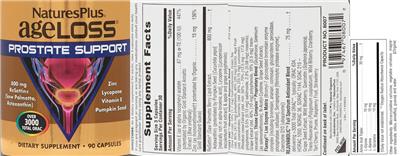
- Form
- Capsule
- Serving Size
- 3 Capsules
- Servings
- 30 per container
- Container Holds
- 90 Capsules
What’s in it, whether it interacts with your drugs, its side effects, whether it works, and what our pharmacists would want you to know before you start it.
- What is Prostate Support?A supplement from NaturesPlus AgeLoss with 26 active ingredients, in capsule form.
- Active Ingredients 1 vitamin, 1 mineral, 14 plant ingredients such as Pumpkin, Olive and Green Tea, 3 amino acids and 7 others: Vitamin E 67 mg alpha-TEZinc 15 mgPumpkinLycopeneApple PolyphenolsGrape PolyphenolsOliveGreen TeaAcai Fruit ConcentrateTurmericRhodiola rosea ExtractGrape Extract 26 active ingredients. Each one can interact with drugs or cause side effects on its own, so we check every one. And 14 more, in the Supplement Facts
- Drug Interactions 1,667 drugs have a documented interaction with this supplement; the most serious is rated major. Of those, 1,193 are single drugs and 474 are combination products (two or more drugs in one), each listed under its own name. Based on the 25 of its 26 ingredients we could check. Ask your pharmacist first if you take a drug in any of these categories, the most serious of the 117 on record:
- EphedrineMajor · 8 drugs
- Atorvastatin (Lipitor)Major · 3 drugs
- Nadolol (Corgard)Major · 2 drugs
- NitroglycerinMajor · 1 drug
- Possible Side EffectsStomach upset 13 ingredientsNausea 10 ingredientsGas 6 ingredientsBloating 5 ingredientsDiarrhea 4 ingredientsHeadache 4 ingredients +24 moreReported for 20 of its 26 active ingredients. Not studied in this exact product.
- Well documented Why
Does Prostate Support work?
What It Is Marketed For
Prostate support
From the claims on the product’s label.
The Closest Use the Research Grades
Pumpkin
Some studies support it, but the evidence isn’t conclusive.
Its ingredients have stronger research for other uses:
- Ataxia with vitamin E deficiency (AVED) Vitamin E
- Zinc deficiency Zinc
- Vitamin E deficiency Vitamin E
- Grape
- Zinc
- Vitamin E
These grades are for each ingredient, not this exact product, and never a promise it will work for you.
And 18 more graded uses, in what the research says- Low Why
- AllergensNone of its ingredient names point to a major food allergen, and the label text we have carries no allergen statement
- Barcode (UPC)0 97467 08007 2Match it to the barcode on your bottle to be sure this is your product. Not your product? Search for it here
Who Might Consider It
- People looking for prostate support, which is what it is marketed for. The closest use the research grades is benign prostatic hyperplasia (BPH), rated Possibly Effective.
- People who want it for ataxia with vitamin E deficiency (AVED), zinc deficiency, vitamin E deficiency, chronic venous insufficiency (CVI) or another graded use: the other uses with research behind them. See each grade
- This product may appeal to people looking at a multi-ingredient prostate formula who are not taking any of the medications listed above.
Who Should Be Careful
- Be especially careful if you take nitroglycerin, blood thinners, warfarin, blood pressure medicines, or diabetes medications, or if you are pregnant or breastfeeding.
- Talk it over with your own doctor or pharmacist before starting.
More Before You Take It Show both answersHide Pregnancy and Breastfeeding The Label’s Directions
-
Pregnant or breastfeeding?
- Pregnancy Zinc
- ! When used orally in doses exceeding the UL.
- Breastfeeding Zinc
- ! When used orally in doses exceeding the UL.
- Pregnancy Turmeric
- ! When used orally in medicinal amounts; turmeric might stimulate the uterus and increase menstrual flow.
- Breastfeeding Turmeric
- When used orally in amounts commonly found in food.
- Pregnancy Vitamin E
- When used orally and appropriately.
- Breastfeeding Vitamin E
- ! When used orally in amounts that exceed the UL due to increased risk of adverse effects.
-
How does the label say to take it?
“Directions: As a dietary supplement for adults, take 3 capsules once daily.”
The maker’s words. Your pharmacist or doctor may advise differently.
Everything the label says
From the label dated Nov 22, 2024: 25 of its 26 active ingredients were checked against our records; the other one is not in them yet. A summary of what is known, not a grade or a test of the product. How these ratings are computed
Ask Anything About This Supplement
Name a drug you take, or ask about side effects, ingredients or pregnancy.
AI answers come from this label and our own records, never the open internet. AI can make mistakes, so always check with your doctor or pharmacist. How we use AI
Ask the Pharmacist
A licensed pharmacist will answer your question by email — free, usually within 24 hours.
Got it — thank you!
A licensed pharmacist will answer within 24 hours. Keep an eye on your email (worth checking spam, just in case).
What’s Inside Prostate Support by NaturesPlus AgeLoss
26 Active Ingredients, Each Checked on Its Own
A supplement is often several ingredients in one bottle, and each one can interact with drugs or cause side effects on its own. We check every one of them against our records.
- Vitamin EDrug interactions on record, most serious: Moderate
- ZincDrug interactions on record, most serious: Moderate
- PumpkinDrug interactions on record, most serious: Moderate
- LycopeneDrug interactions on record, most serious: Moderate
- Apple PolyphenolsDrug interactions on record, most serious: Moderate
- Grape PolyphenolsDrug interactions on record, most serious: Moderate
- OliveNo drug interactions on record
- Green TeaDrug interactions on record, most serious: Major
And 18 more, each with its own card below.
The label gives an exact amount for 10 of its 26 active ingredients. The other 16 are inside three proprietary blends, and the label gives one total for each, not how much of each ingredient is in it.
- 10 state an exact amount
- 16 have no amount of their own
- ReSettin 800 mg in total · 4 ingredients, no amount for each
- FIRST DAY Healthy Immune Response Blend 210 mg in total · 8 ingredients, 3 with no amount of their own
- Rejuvabolic Full Spectrum Antioxidant Blend 75 mg in total · 9 ingredients, no amount for each
This rates what the label tells you, not the quality of the product.
Supplement Facts
| Amount Per Serving | % Daily Value | |
|---|---|---|
| Vitamin E | 67 mg alpha-TE | 447% |
| Zinc | 15 mg | 136% |
| ReSettin | 800 mg | † |
| Pumpkin | † | |
| Lycopene | † | |
| Apple Polyphenols | † | |
| Grape Polyphenols | † | |
| FIRST DAY Healthy Immune Response Blend | 210 mg | † |
| Olive | † | |
| Hydroxytyrosol | 1.7 mg | † |
| Green Tea | † | |
| Polyphenols | 47.5 mg | † |
| Epigallocatechin Gallate | 20 mg | † |
| Acai Fruit Concentrate | † | |
| Turmeric | † | |
| Curcumin | 23.75 mg | † |
| Rhodiola rosea Extract | † | |
| Salidrosides | 0.13 mg | † |
| Rosavins | 0.58 mg | † |
| Grape Extract | † | |
| Trans-Resveratrol | 2.5 mg | † |
| Thione Complex Proprietary Blend | † | |
| Glutathione | † | |
| Selenium | † | |
| N-Acetyl-Cysteine | † | |
| Grape seed extract | † | |
| Flamxyl Live Enzyme Matrix | † | |
| Bromyl-7 Glycosylated Bromelain Enzyme Complex | † | |
| Bromelain | † | |
| Ananain | † | |
| Comosain | † | |
| Glycoproteins | † | |
| Peroxidase | † | |
| Phosphatase | † | |
| Cellulase | † | |
| Serrapeptase | † | |
| Coenzyme Q-10 | † | |
| Rejuvabolic Full Spectrum Antioxidant Blend | 75 mg | † |
| wild Blueberry | † | |
| Quercetin | † | |
| Trans-Resveratrol | † | |
| wild Bilberry | † | |
| Cranberry | † | |
| Tart Cherry | † | |
| Prune | † | |
| Raspberry | † | |
| Strawberry | † | |
| Amino Acid Triplex | 30 mg | † |
| L-Glycine | 10 mg | † |
| L-Alanine | 10 mg | † |
| L-Glutamine | 10 mg | † |
Other ingredients: Microcrystalline Cellulose, Cellulose, Magnesium Stearate, Silica, Annatto, Guava, Water
† Daily Value not established.
Daily Values for adults and children 4 or more years of age.
As the label prints it, from the NIH Dietary Supplement Label Database.
Each Ingredient and Its Drug Interactions
Tap one for more about it and its full guide. A drug can interact with this supplement through any one of them.
Prostate Support contains 39 active ingredients.
- They range from amino acids such as L-glutamine, L-alanine, and L-glycine, to compounds such as N-acetyl cysteine, selenium, glutathione, coenzyme Q10, and trans-resveratrol, to plant-derived ingredients including grape seed extract, strawberry, cranberry, prune, bilberry, tart cherry, and curcumin from turmeric.
- Bromelain, serrapeptase, and cellulase are also on the list.
Show 1 more point
- These are not counted among the 39 active ingredients.
-
Vitamin E 67 mg alpha-TE Interacts with 766 drugs
Form on the label: D-Alpha Tocopheryl Acetate
Vitamin E is an essential fat-soluble vitamin and antioxidant that most people get in adequate amounts from a normal diet.
- Supplements can help correct a true deficiency, but high-dose vitamin E has not been clearly proven to prevent heart disease or cancer and may carry risks.
- Talk to your pharmacist or doctor before taking high doses.
The full Vitamin E guide: uses, dosage and safety Every Vitamin E drug interaction
-
Zinc 15 mg Interacts with 67 drugs
Form on the label: Zinc Monomethionine
Zinc is an essential mineral that your body needs for immune function, wound healing, taste, and smell.
- Most people get enough from food, but supplements can help correct or prevent a deficiency.
- Taking too much zinc for too long can cause harm, so check with a pharmacist or doctor before using high-dose supplements.
The full Zinc guide: uses, dosage and safety Every Zinc drug interaction
-
ReSettin 800 mg Four ingredients inside it, each checked on its own
Form on the label: Astaxanthin, Saw Palmetto berry Lipid extract
- Pumpkin 1 drug
- Lycopene 122 drugs
- Apple Polyphenols 13 drugs
- Grape Polyphenols 912 drugs
-
FIRST DAY Healthy Immune Response Blend 210 mg Eight ingredients inside it, each checked on its own
- Olive
- Green Tea 1,294 drugs
- Acai Fruit Concentrate 89 drugs
- Turmeric 1,134 drugs
- Rhodiola rosea Extract 1,271 drugs
- Grape Extract 912 drugs
- Thione Complex Proprietary Blend
- Flamxyl Live Enzyme Matrix
-
Rejuvabolic Full Spectrum Antioxidant Blend 75 mg Nine ingredients inside it, each checked on its own
- Wild Blueberry 88 drugs
- Quercetin 1,172 drugs
- Trans-Resveratrol 824 drugs
- Wild Bilberry 275 drugs
- Cranberry 714 drugs
- Tart Cherry
- Prune 122 drugs
- Raspberry
- Strawberry 317 drugs
-
Amino Acid Triplex 30 mg Three ingredients inside it, each checked on its own
- L-Glycine 10 mg 1 drug
- L-Alanine 10 mg
- L-Glutamine 10 mg 50 drugs
Other Ingredients (Inactive)
The capsule or tablet itself, fillers, coatings and flavors. Not part of the drug interaction check; the allergen check below reads them.
- Microcrystalline Cellulose
- Cellulose
- Magnesium Stearate
- Silica
- Annatto
- Guava
- Water
Allergens in Prostate Support
None of its ingredient names point to a major food allergen, and the label text we have carries no allergen statement.
Not named in the ingredients
- Milk
- Egg
- Fish
- Shellfish
- Tree nuts
- Peanuts
- Wheat or other gluten grains
- Soy
- Sesame
From the label text and ingredient names on file; we do not test products. With a serious allergy, check your bottle and ask the maker or your pharmacist.
What the Label Says
The maker’s own words, from the label. We do not verify or endorse them.
- Formulation
-
“Over 3000 total ORAC”
“800 mg ReSettin (Saw Palmetto, Astaxanthin) Zinc Lycopene Vitamin E Pumpkin Seed”
- FDA Statement of Identity
-
“Dietary Supplement”
- Brand IP Statement(s)
-
“Copyright Natural Organics”
- General statements
-
“Continued on back of label.”
The Prostate Support Label on File
The label scan on file at the NIH Dietary Supplement Label Database, dated November 2024. Always read the label on the bottle you have.
Product Facts
- Brand
- NaturesPlus AgeLoss
- Barcode (UPC)
- 097467080072
- Net contents
- 90 Capsules
- Market status
- On market
- Date entered into DSLD
- Nov 22, 2024
- DSLD ID
- 319208
- Product type
- Other Combinations
- Supplement form
- Capsule
- Dietary claims / uses
- Nutrient, All Other, Structure/Function
- Intended target group(s)
- Adult Male (18-50 Years), Seniors/Mature (>50 Years) - Men ONLY
Is this label outdated? Report a formula or label change and our pharmacy team will review it.
Prostate Support by NaturesPlus AgeLoss Side Effects
Why this rating?
We look for three kinds of safety information on each ingredient: side effects reported in studies, a pregnancy and breastfeeding rating, and a safety write-up from our pharmacy team. Of the 27 ingredients we could check, 25 have side-effect reports, all 27 have a pregnancy rating and all 27 have a safety write-up.
So this rates how much is known, not whether Prostate Support is right for you.
Reported with 22 of its ingredients
- Most often
- Stomach upset, nausea, gas, bloating, diarrhea and headache
- !Rare but serious
- Bleeding, hemorrhagic stroke and cardiovascular complications See details
HelloPharmacist Team Summary of Side Effects
Most people tolerate the ingredients in Prostate Support generally well, though it contains many ingredients and the data is mixed.
- The side effects you are most likely to notice are stomach upset, nausea, and gas or bloating, which are reported for ingredients like glutamine.
- Drowsiness, reported with glycine, is worth watching, so see how you feel before driving.
- Serious reactions are uncommon, but allergic reactions to grape products can rarely be serious, so call your doctor right away if you notice swelling, hives, or trouble breathing.
- If you have kidney or liver disease, a seizure history, a bleeding disorder, or take medicines, talk with your own doctor or pharmacist before starting.
Side Effects, Ingredient by Ingredient
A supplement’s side effects come from its ingredients. Here is what is reported with each one.
Zinc
Most reported
- Nausea
- Stomach upset
- Vomiting
- Metallic taste
Pumpkin
Most reported
- Stomach upset
- Gas
- Feeling of fullness
Apple Polyphenols
Most reported
- Stomach upset
- Gas
- Bloating
Grape
Most reported
- Headache
- Dizziness
- Upset stomach
- Nausea
Olive
Most reported
- Stomach upset
- Nausea
- Headache
Green Tea
Most reported
- Trouble sleeping or feeling jittery
- Nervousness or anxiety
- Upset stomach or nausea, especially on an empty stomach
- Headache
Acai
Most reported
- Stomach upset
- Digestive changes
Turmeric
Most reported
- Nausea
- Upset stomach
- Diarrhea
- Bloating
Rhodiola
Most reported
- Dizziness
- Dry mouth
- Trouble sleeping (especially if taken later in the day)
- Jitteriness or feeling restless
Blueberry
Most reported
- Gas
- Bloating
- Loose stools
Quercetin
Most reported
- Headache
- Upset stomach
- Tingling sensations
Resveratrol
Most reported
- Nausea
- Stomach discomfort
- Gas
- Diarrhea
Bilberry
Most reported
- Stomach upset
- Digestive discomfort
Cranberry
Most reported
- Stomach upset
- Diarrhea
- Nausea
Sour Cherry
Most reported
- Abdominal pain
- Asthenia
- Gastrointestinal upset
- Loose stools
From the Natural Medicines database, which we license.
Every reported effect, in the Sour Cherry guidePlum
Most reported
- Gas
- Bloating
- Stomach cramps
- Loose stools or diarrhea
Strawberry
Most reported
- Allergic reactions
- Digestive upset
Glycine
Most reported
- Upset stomach
- Nausea
- Soft stools
- Drowsiness
Alpha-alanine
Most reported
- Nausea
- Loose stools
Glutamine
Most reported
- Stomach upset
- Nausea
- Bloating
- Gas
Vitamin E and Lycopene have side-effect reports on file, but no list of the most common ones. Read them in each guide: Vitamin E, Lycopene.
Prostate Support Warnings: Who Should Be Careful
Prostate Support has 26 active ingredients, and each can carry warnings of its own. We checked the 23 in our ingredient guides, and each warning below names the ingredient it comes from. Thione Complex Proprietary Blend, Flamxyl Live Enzyme Matrix and Raspberry are not in our guides yet, so ask your pharmacist about them. If any of these apply to you, talk to your doctor or pharmacist before you start it.
- Vitamin E2 warnings below
- Zinc2 warnings below
- Pumpkin1 warning below
- Lycopene1 warning below
- Apple Polyphenols2 warnings below
- Grape2 warnings below
- Olive2 warnings below
- Green Tea3 warnings below
- Acai2 warnings below
- Turmeric2 warnings below
- Rhodiola3 warnings below
- Blueberry2 warnings below
- Quercetin2 warnings below
- Resveratrol3 warnings below
- Bilberry2 warnings below
- Cranberry3 warnings below
- Sour Cherry3 warnings below
- Plum2 warnings below
- Strawberry3 warnings below
- Glycine2 warnings below
- Alpha-alanine3 warnings below
- Glutamine3 warnings below
- Thione Complex Proprietary BlendNot in our guides yet
- Flamxyl Live Enzyme MatrixNot in our guides yet
- RaspberryNot in our guides yet
-
Bleeding Problems or Surgery
- Vitamin EThe concern is mainly with high-dose supplements taken over a long time, which may increase the risk of bleeding and, in some studies, has been linked to other risks.
- LycopenePeople with health conditions, those scheduled for surgery, and anyone taking medications should check with a pharmacist or doctor before starting a supplement.
- GrapeWho should be cautious: People with bleeding disorders, those taking blood-thinning medicines, and anyone scheduled for surgery should talk to a healthcare provider before using concentrated grape supplements, since some grape compounds may affect blood clotting.
- Green TeaThe same goes for people with bleeding disorders or those preparing for surgery.
Show 6 more
- TurmericPeople who have gallbladder disease or gallstones, who are prone to kidney stones, or who have bleeding disorders should be cautious and check with a healthcare provider first.
- RhodiolaPeople with low blood pressure or those undergoing surgery should also talk to a healthcare provider first.
- BlueberryIf you have a medical condition or take medicine that affects blood sugar or blood clotting, talk with your pharmacist or doctor before using blueberry supplements.
- QuercetinIf you have a medical condition, take prescription medicines, or are scheduled for surgery, check with your pharmacist or doctor before starting quercetin.
- ResveratrolPeople with bleeding disorders or who are scheduled for surgery should also use caution, since resveratrol may affect blood clotting.
- BilberryPeople with bleeding disorders, those scheduled for surgery, or people with diabetes should be cautious and speak with a healthcare provider, since bilberry may affect bleeding or blood sugar.
-
Diabetes or Low Blood Sugar
- OliveIf you have low blood pressure or take medicine that lowers blood pressure or blood sugar, use caution, since olive supplements might add to those effects.
- CranberryPeople with diabetes should choose unsweetened products, because cranberry juice cocktails can be high in added sugar.
- Sour CherryPeople with diabetes should remember that cherry juice and concentrate can contain a lot of natural sugar.
- Alpha-alaninePeople with diabetes or blood sugar problems should be especially careful, since alanine can affect blood sugar and glucagon.
-
Liver Disease
- Green TeaPeople with liver disease should be especially careful and check with a healthcare provider first.
- GlycinePeople with kidney or liver disease should be cautious and check with a doctor first, since these organs handle amino acids and protein.
- Alpha-alaninePeople with kidney or liver disease should talk to their doctor before taking any amino acid supplement, because these organs help process protein and amino acids.
- GlutamineUse extra caution if you have kidney disease or liver disease, since these organs are involved in processing amino acids and the byproducts of protein.
-
Kidney Disease or Kidney Stones
- QuercetinVery high amounts taken over long periods have raised concerns about possible effects on the kidneys, so people with kidney problems should be especially cautious and talk to a doctor first.
- CranberryUse extra caution if you have a history of kidney stones, since cranberry contains oxalate and large amounts may not be ideal for stone-prone people.
- Sour CherryThose prone to kidney stones or who must watch potassium or oxalate intake may want to check with a healthcare provider.
- PlumThose with kidney problems should be aware that plums and prunes contain potassium and may also contain oxalate, so talk to your doctor if you have been told to limit these.
-
Heart Conditions
- Green TeaBecause green tea contains caffeine, people who are sensitive to caffeine, have heart rhythm problems, anxiety, or trouble sleeping should be cautious.
-
Stomach or Bowel Problems
- ZincPeople with digestive disorders, those who drink heavily, and people on restrictive diets are more likely to be low in zinc and may need supplements.
- PlumPeople with conditions that are sensitive to high-fiber or high-sorbitol foods—such as irritable bowel syndrome—may notice more digestive symptoms.
-
Hormone-Sensitive Conditions
- ResveratrolBe cautious if you have a hormone-sensitive condition.
- ResveratrolResveratrol can act somewhat like the hormone estrogen in the body (it is sometimes called a phytoestrogen), so people with conditions such as certain breast, uterine, or ovarian concerns should talk to a doctor first.
-
Seizure Disorders
- GlutaminePeople with a history of seizures or certain mental health conditions should also talk to a doctor first, because glutamine is related to glutamate, a chemical messenger in the brain.
-
Mental Health Conditions
- RhodiolaUse extra caution if you have a mental health condition such as bipolar disorder, since stimulating herbs could potentially affect mood.
-
Allergies
- PumpkinIf you have a known allergy to pumpkin or other squash family plants, avoid it.
- Apple PolyphenolsPeople with allergies to apples should avoid these products.
- AcaiPeople with allergies to acai or related palm fruits should avoid it.
- BlueberryPeople with allergies to blueberries or related berries should avoid them.
Show 2 more
- StrawberryPeople with pollen allergies sometimes notice mouth itching when eating fresh strawberries.
- StrawberryIf you have a known allergy to strawberries or other berries, avoid them.
-
If You Take Other Drugs
- Apple PolyphenolsIf you have a medical condition or take prescription medicines, check with your pharmacist or doctor before starting a supplement.
- GrapeAlways check with your pharmacist or doctor before starting any new supplement, especially if you have a health condition or take other medicines.
- OliveAlways talk with a pharmacist or doctor before adding a new supplement, especially if you have a health condition or take regular medications.
- TurmericAlways talk to your pharmacist or doctor before starting a supplement, especially if you take other medicines or have a health condition.
- Alpha-alanineAs with any supplement, choose products from reputable brands and check with your pharmacist or doctor before starting, especially if you have a health condition or take medicines.
-
Other Cautions
- Vitamin EPeople with certain health conditions should check with a doctor first.
- ZincAnyone considering high-dose or long-term zinc should talk to a pharmacist or doctor first.
- AcaiAlways talk with your pharmacist or doctor before starting any new supplement, especially if you have a medical condition.
- RhodiolaChoose products from reputable brands, ideally with third-party testing, and always check with your pharmacist or doctor before starting.
Show 6 more
- BilberryBilberry leaf products, especially in high doses or used long-term, are not recommended because of possible toxicity.
- CranberryAs always, if you have UTI symptoms such as burning, urgency, fever, or back pain, see a healthcare provider rather than relying on cranberry alone.
- Sour CherryTo be cautious, avoid supplement-strength products unless your doctor or pharmacist approves.
- StrawberryAlways talk to your pharmacist or doctor before starting any new supplement, especially if you have a health condition.
- GlycineGetting glycine from normal foods is not a concern; this caution is about concentrated supplements.
- GlutaminePeople with these conditions should only take glutamine under the supervision of a healthcare provider.
-
What the Label Warns
- “If you are pregnant or nursing or are taking any medications, consult your health care practitioner before using any herbal product.”
The maker’s wording, from the product label.
-
Pregnant or Breastfeeding
Each ingredient’s rating for pregnancy and for breastfeeding, and what it covers.
Pregnancy
-
When used orally and appropriately.
Zinc is safe in amounts that do not exceed the tolerable upper intake level (UL) of 34 mg daily during pregnancy in those 14-18 years of age and 40 mg daily in those 19-50 years of age.
-
When used orally in doses exceeding the UL.
Breastfeeding
-
When used orally and appropriately.
Zinc is safe in amounts that do not exceed the tolerable upper intake level (UL) of 34 mg daily during lactation in those 14-18 years of age, and 40 mg daily for those 19-50 years of age.
-
When used orally in doses exceeding the UL.
Higher doses can cause zinc-induced copper deficiency in nursing infants.
Pregnancy
-
When used orally in amounts commonly found in food.
-
When used orally in medicinal amounts; turmeric might stimulate the uterus and increase menstrual flow.
Breastfeeding
-
When used orally in amounts commonly found in food.
There is insufficient reliable information available about the safety of using turmeric in medicinal amounts during lactation.
Show 20 more ingredients
Pregnancy
-
When used orally and appropriately.
The tolerable upper intake level (UL) during pregnancy is 800 mg for those 14-18 years of age and 1000 mg for those 19 years and older.
6 more points on this rating
- However, maternal supplementation is not generally recommended unless dietary vitamin E falls below the RDA.
- No serious adverse effects were reported with oral intake of 400 IU per day starting at weeks 9-22 of pregnancy in healthy patients or those at high risk for pre-eclampsia, or with 600-900 IU daily during the last two months of pregnancy.
- However, some preliminary evidence suggests that taking vitamin E supplements might be harmful when taken in early pregnancy.
- A case-control study found that taking a vitamin E supplement during the first 8 weeks of pregnancy is associated with a 1.7-9-fold increase in odds of congenital heart defects.
- However, the exact amount of vitamin E consumed during pregnancy in this study is unclear.
- Until more is known, advise patients to avoid taking a vitamin E supplement in early pregnancy unless needed for an appropriate medical indication.
Breastfeeding
-
When used orally in amounts that do not exceed the tolerable upper intake level (UL).
The UL during lactation is 800 mg for those 14-18 years of age and 1000 mg for those 19 years and older.
-
When used orally in amounts that exceed the UL due to increased risk of adverse effects.
Pregnancy
-
When used orally in moderate amounts.
Due to the caffeine content of green tea, pregnant patients should closely monitor their intake to ensure moderate consumption.
12 more points on this rating
- Fetal blood concentrations of caffeine approximate maternal concentrations.
- The use of caffeine during pregnancy is controversial; however, moderate consumption has not been associated with clinically important adverse fetal effects.
- In some studies consuming amounts over 200 mg daily is associated with a significantly increased risk of miscarriage.
- This increased risk may be most likely to occur in those with genotypes that confer a slow rate of caffeine metabolism.
- According to a review by Health Canada, and a subsequent large meta-analysis conducted in the US, most healthy pregnant patients can safely consume doses up to 300 mg daily without an increased risk of spontaneous abortion, stillbirth, preterm birth, fetal growth retardation, or congenital malformations.
- Advise keeping caffeine consumption below 300 mg daily.
- This is similar to the amount of caffeine in about 6 cups of green tea.
- Keep in mind that only the amount of ADDED caffeine must be stated on product labels.
- The amount of caffeine found in ingredients such as green tea, which naturally contains caffeine, does not need to be provided.
- This can make it difficult to determine the total amount of caffeine in a given product.
- Based on animal models, green tea extract catechins are also transferred to the fetus, but in amounts 50-100 times less than maternal concentrations.
- The potential impact of these catechins on the human fetus is not known, but animal models suggest that the catechins are not teratogenic.
-
When used orally in amounts providing more than 300 mg caffeine daily.
Caffeine from green tea crosses the placenta, producing fetal blood concentrations similar to maternal levels.
16 more points on this rating
- Consumption of caffeine in amounts over 300 mg daily is associated with a significantly increased risk of miscarriage in some studies.
- Advise keeping caffeine consumption from all sources below 300 mg daily.
- This is similar to the amount of caffeine in about 6 cups of green tea.
- High maternal doses of caffeine throughout pregnancy have also resulted in symptoms of caffeine withdrawal in newborn infants.
- High doses of caffeine have also been associated with spontaneous abortion, premature delivery, and low birth weight.
- However, some research has also found that intrauterine exposure to even modest amounts of caffeine, based on maternal blood levels during the first trimester, is associated with a shorter stature in children ages 4-8 years.
- Keep in mind that only the amount of ADDED caffeine must be stated on product labels.
- The amount of caffeine found in ingredients such as green tea, which naturally contains caffeine, does not need to be provided.
- This can make it difficult to determine the total amount of caffeine in a given product.
- There is also concern that consuming large amounts of green tea might have antifolate activity and potentially increase the risk of folic acid deficiency-related birth defects.
- Catechins in green tea inhibit the enzyme dihydrofolate reductase in vitro.
- This enzyme is responsible for converting folic acid to its active form.
- Preliminary evidence suggests that increasing maternal green tea consumption is associated with increased risk of spina bifida.
- Also, evidence from epidemiological research suggests that serum folate levels in pregnant patients with high green tea intake (57.3 mL per 1000 kcal) are decreased compared to participants who consume moderate or low amounts of green tea.
- More evidence is needed to determine the safety of using green tea during pregnancy.
- For now, advise pregnant patients to avoid consuming large quantities of green tea.
Breastfeeding
-
When used orally in moderate amounts.
Due to the caffeine content of green tea, nursing parents should closely monitor caffeine intake.
Breast milk concentrations of caffeine are thought to be approximately 50% of maternal serum concentrations.
-
When used orally in large amounts.
Consumption of green tea might cause irritability and increased bowel activity in nursing infants.
There is insufficient reliable information available about the safety of green tea extracts when applied topically during breast-feeding.
Pregnancy and Breastfeeding The record rates both the same
-
Insufficient reliable information available; avoid using amounts greater than those found in food.
Pregnancy and Breastfeeding The record rates both the same
-
Insufficient evidence; avoid using.
Pregnancy and Breastfeeding The record rates both the same
-
Insufficient reliable information available; stick with amounts commonly found in foods.
Pregnancy and Breastfeeding The record rates both the same
-
Insufficient reliable information available; avoid using.
Pregnancy and Breastfeeding The record rates both the same
-
Insufficient reliable information available; avoid using.
Pregnancy and Breastfeeding The record rates both the same
-
Insufficient reliable information available; avoid using.
Pregnancy and Breastfeeding The record rates both the same
-
Insufficient reliable information available; avoid using amounts greater than those found in food.
Pregnancy and Breastfeeding The record rates both the same
-
Insufficient reliable information available; avoid using.
Pregnancy
-
When consumed in amounts commonly found in foods.
There is insufficient reliable information available about the safety of lycopene supplements during pregnancy.
Small, low-quality clinical studies have shown conflicting results about the safety of using lycopene 2-4 mg daily during pregnancy.
Breastfeeding
-
When consumed in amounts commonly found in foods.
There is insufficient reliable information available about the safety of lycopene supplements during lactation; avoid using in amounts greater than those typically found in foods.
Pregnancy and Breastfeeding The record rates both the same
-
When used orally in amounts commonly found in foods.
There is insufficient reliable information available about the safety of medicinal amounts during pregnancy and breast-feeding; avoid using in amounts greater than what is commonly found in foods.
Pregnancy and Breastfeeding The record rates both the same
-
When used orally in amounts commonly found in foods.
There is insufficient reliable information available about the safety of blueberry for medicinal use; avoid using.
Pregnancy and Breastfeeding The record rates both the same
-
When used in amounts found in foods.
Resveratrol is found in grape skins, grape juice, wine, and other food sources.
However, wine should not be used as a source of resveratrol during pregnancy and lactation.
Pregnancy and Breastfeeding The record rates both the same
-
When used orally in the amounts commonly found in foods.
However, there is insufficient reliable information available about the safety of bilberry when used in medicinal amounts during pregnancy and lactation; avoid using.
Pregnancy and Breastfeeding The record rates both the same
-
When consumed in amounts commonly found in the diet.
There is insufficient reliable information available about the safety of cranberry when used therapeutically during pregnancy or lactation; avoid using.
Pregnancy and Breastfeeding The record rates both the same
-
When the fruit is consumed in typical food amounts.
There is insufficient reliable information available about the safety of tart cherry fruit or stem when used in medicinal amounts; avoid using.
Pregnancy and Breastfeeding The record rates both the same
-
When used orally in food amounts.
There is insufficient reliable information available about the safety of strawberry for medicinal use in pregnancy and lactation; avoid using.
Pregnancy and Breastfeeding The record rates both the same
-
When used in amounts commonly found in foods.
There is insufficient reliable information available about the safety of using larger amounts as medicine during pregnancy or lactation.
Pregnancy and Breastfeeding The record rates both the same
-
When consumed in amounts commonly found in foods.
There is insufficient reliable information available about the safety of glutamine when used in larger amounts as medicine during pregnancy or lactation.
Our pharmacy team’s notes
- L-alanine is listed as Likely Safe in pregnancy and lactation, but our pharmacists advise against supplement doses unless your doctor approves.
- For pregnancy or breastfeeding questions, talk with your own doctor or pharmacist for advice about your situation.
Ratings and the words beside them are from the Natural Medicines database, which we license.
-
Rare but Serious Side Effects
-
!
Vitamin E
The most serious concern with high doses is an increased risk of bleeding, including, in rare cases, bleeding in the brain (hemorrhagic stroke).
Orally: Bleeding, hemorrhagic stroke, cardiovascular complications.
-
!
Zinc
Very high single doses can cause more serious stomach symptoms.
Orally: There have been cases of acute renal tubular necrosis, interstitial nephritis, neurological complications, severe vomiting, and sideroblastic anemia after zinc overdose.
-
!
Pumpkin
Allergic reactions are uncommon but possible.
Orally: Anaphylaxis.
-
!
Lycopene
Serious side effects are rare.
-
!
Apple Polyphenols
Allergic reactions are possible in people sensitive to apples.
-
!
Grape
Some people may have an allergic reaction to grapes or grape products, which can rarely be serious.
Orally: Anaphylaxis to grape skin has been reported.
-
!
Olive
Allergic reactions are rare but possible, especially in people sensitive to olive tree pollen.
-
!
Green Tea
A rare but serious concern with concentrated green tea extract supplements is liver damage.
Orally: Hepatotoxicity, hypokalemia, and thrombotic thrombocytopenic purpura have been reported rarely.
-
!
Acai
Allergic reactions are rare but possible, particularly in people sensitive to similar fruits or pollens.
-
!
Turmeric
Signs that need medical attention include yellowing skin or eyes, dark urine, severe stomach pain, or an allergic reaction such as rash, swelling, or trouble breathing.
-
!
Blueberry
Allergic reactions are uncommon but possible.
-
!
Quercetin
Higher doses taken by injection (not the usual supplement form) have been linked in some reports to more serious effects, which is one reason very high doses are not recommended.
-
!
Bilberry
As with any supplement, allergic reactions are possible.
-
!
Sour Cherry
Allergic reactions are uncommon but possible in people sensitive to fruits in the rose (Rosaceae) family.
-
!
Plum
Allergic reactions to plums are uncommon but possible, especially in people allergic to other stone fruits.
Orally: Allergic reactions. Consumption of dried plums or plum pits has been reported to cause bowel obstruction and esophageal perforation.
-
!
Strawberry
Possible issues include allergic reactions (itching, hives, swelling), mild digestive upset, or mouth tingling in sensitive people.
Orally: Allergic reactions in susceptible individuals.
-
!
Glycine
Serious reactions appear to be rare.
-
!
Alpha-alanine
Serious side effects have not been well documented, but that is partly because high-quality safety studies are lacking.
-
!
Glutamine
Serious reactions are uncommon.
When to get help: a serious allergic reaction, with trouble breathing or swelling of the face, lips or throat, needs emergency care: call 911. For any other side effect that worries you, call your doctor or pharmacist.
These reports describe each ingredient, not studies of this exact product. Not medical advice: a side effect you notice after starting a supplement is worth a word with your pharmacist or doctor.
Prostate Support by NaturesPlus AgeLoss Drug Interactions
We checked all 26 active ingredients in this supplement against every drug in our records. A drug can interact with it through any one of them. Thione Complex Proprietary Blend, Flamxyl Live Enzyme Matrix and Raspberry are not in our interaction records yet.
A major interaction on record
3 of 3, on a scale from Minor or none to Major.Why this rating?
We rate this by the most serious interaction on record, not by how many there are. For Bilberry, Quercetin, Resveratrol, Strawberry and Grape, the most serious is rated major, which means the combination is best avoided, or used only under close supervision. Some involve kinds of drugs where a small change can matter, such as blood thinners, seizure drugs and transplant drugs.
1,668 drugs are on the full list. What matters is whether one you take is on it, so check yours with the interaction checker on this page.
19 of its 26 active ingredients have drug interactions on record. The ones below matter most.
- Interacts with
- 275 drugs
- Most serious
- Moderate
- The main Moderate-rated drug types are blood thinners (anticoagulants and antiplatelet drugs), where bleeding risk may rise, plus warfarin, antihypertensive drugs (blood pressure medicines), antidiabetes drugs (bilberry may raise the risk of low blood sugar, or hypoglycemia), and immunosuppressants (drugs that calm the immune system).
- Interacts with
- 1,294 drugs
- Most serious
- Major
- Most of its records involve Cytochrome P450 3A4 (CYP3A4) Substrates, Hepatotoxic Drugs and P-glycoprotein Substrates.
- Interacts with
- 1,271 drugs
- Most serious
- Moderate
- Most of its records involve Cytochrome P450 3A4 (CYP3A4) Substrates, CNS Depressants and P-glycoprotein Substrates.
Show three more ingredients
- Interacts with
- 1,172 drugs
- Most serious
- Moderate
- Most of its records involve Cytochrome P450 3A4 (CYP3A4) Substrates, P-glycoprotein Substrates and Cytochrome P450 2D6 (CYP2D6) Substrates.
- Interacts with
- 1,134 drugs
- Most serious
- Moderate
- Most of its records involve Cytochrome P450 3A4 (CYP3A4) Substrates, Hepatotoxic Drugs and P-glycoprotein Substrates.
- Interacts with
- 912 drugs
- Most serious
- Moderate
- Most of its records involve Cytochrome P450 3A4 (CYP3A4) Substrates, Cytochrome P450 2D6 (CYP2D6) Substrates and Cytochrome P450 1A2 (CYP1A2) Substrates.
And 13 more ingredients with records, each in the cards below.
From the HelloPharmacist Team
What matters most when you look at everything in the bottle at once.
- Prostate Support from NaturesPlus AgeLoss does interact with some medications.
- The most serious interaction is rated Major: its N-acetyl cysteine can increase the risk of low blood pressure (hypotension) and headaches when taken with intravenous or transdermal nitroglycerin, a heart medication.
- Interactions run through its glutamine, glycine, N-acetyl cysteine, selenium, bromelain, grape seed extract, strawberry, cranberry, prune, serrapeptase, bilberry, curcumin, coenzyme Q10, and resveratrol content.
Summarized by the HelloPharmacist pharmacy team from the interaction records below. How it is written How we use AI
Why Prostate Support Interacts, Ingredient by Ingredient
A product interacts through its ingredients. Each card: how many drugs, the most serious rating, and the kinds of drugs it affects most (tap a kind for what it means).
The ingredients driving the most interactions
-
Green Tea 1,294 drugs
Most serious: Major58 interaction records on file
The kinds of drugs it affects most
- 645 drugs
- 372 drugs
- 202 drugs
- 172 drugs
Every Green Tea drug interaction, 58 records The Green Tea records cite 219 references, listed in the Green Tea guide.
-
Rhodiola rosea Extract 1,271 drugs
Most serious: Moderate10 interaction records on file
The kinds of drugs it affects most
- 645 drugs
- 248 drugs
- 202 drugs
- 186 drugs
Every Rhodiola drug interaction, 10 records The Rhodiola records cite 13 references, listed in the Rhodiola guide.
-
Quercetin 1,172 drugs
Most serious: Moderate23 interaction records on file
The kinds of drugs it affects most
- 645 drugs
- 202 drugs
- 193 drugs
- 172 drugs
Every Quercetin drug interaction, 23 records The Quercetin records cite 30 references, listed in the Quercetin guide.
-
Turmeric 1,134 drugs
Most serious: Moderate24 interaction records on file
The kinds of drugs it affects most
- 645 drugs
- 372 drugs
- 202 drugs
- 186 drugs
Every Turmeric drug interaction, 24 records The Turmeric records cite 105 references, listed in the Turmeric guide.
-
Grape Polyphenols 912 drugs
Most serious: Moderate10 interaction records on file
The kinds of drugs it affects most
- 645 drugs
- 193 drugs
- 186 drugs
- 122 drugs
Every Grape drug interaction, 10 records The Grape records cite 35 references, listed in the Grape guide.
-
Trans-Resveratrol 824 drugs
Most serious: Moderate5 interaction records on file
The kinds of drugs it affects most
- 645 drugs
- 186 drugs
- 122 drugs
- 72 drugs
Every Resveratrol drug interaction, 5 records The Resveratrol records cite 24 references, listed in the Resveratrol guide.
-
Vitamin E 766 drugs
Most serious: Moderate8 interaction records on file
The kinds of drugs it affects most
- 645 drugs
- 122 drugs
- 24 drugs
- Antitumor Antibiotics 15 drugs
Every Vitamin E drug interaction, 8 records The Vitamin E records cite 64 references, listed in the Vitamin E guide.
-
Cranberry 714 drugs
Most serious: Moderate7 interaction records on file
The kinds of drugs it affects most
- 645 drugs
- 112 drugs
- Diclofenac (Voltaren, others) 5 drugs
- Atorvastatin (Lipitor) 3 drugs
Every Cranberry drug interaction, 7 records The Cranberry records cite 34 references, listed in the Cranberry guide.
-
Strawberry 317 drugs
Most serious: Moderate2 interaction records on file
The kinds of drugs it affects most
- 202 drugs
- 122 drugs
Every Strawberry drug interaction, 2 records The Strawberry records cite 11 references, listed in the Strawberry guide.
-
wild Bilberry 275 drugs
Most serious: Moderate4 interaction records on file
The kinds of drugs it affects most
- 122 drugs
- 86 drugs
- 70 drugs
- Erlotinib (Tarceva) 1 drug
Every Bilberry drug interaction, 4 records The Bilberry records cite 14 references, listed in the Bilberry guide.
-
Lycopene 122 drugs
Most serious: Moderate1 interaction record on file
The kinds of drugs it affects most
- 122 drugs
Every Lycopene drug interaction, 1 record The Lycopene records cite 10 references, listed in the Lycopene guide.
-
Prune 122 drugs
Most serious: Moderate1 interaction record on file
The kinds of drugs it affects most
- 122 drugs
Every Plum drug interaction, 1 record The Plum records cite 10 references, listed in the Plum guide.
-
Acai Fruit Concentrate 89 drugs
Most serious: Moderate3 interaction records on file
The kinds of drugs it affects most
- 86 drugs
- Alogliptin (Nesina) 3 drugs
- Atorvastatin (Lipitor) 3 drugs
Every Acai drug interaction, 3 records The Acai records cite 3 references, listed in the Acai guide.
-
wild Blueberry 88 drugs
Most serious: Minor3 interaction records on file
The kinds of drugs it affects most
- 86 drugs
- Buspirone (BuSpar) 1 drug
- Flurbiprofen (Ansaid, others) 1 drug
Every Blueberry drug interaction, 3 records The Blueberry records cite 7 references, listed in the Blueberry guide.
-
Zinc 67 drugs
Most serious: Moderate10 interaction records on file
The kinds of drugs it affects most
- 21 drugs
- 20 drugs
- Bictegravir/Emtricitabine/Tenofovir Alafenamide (Biktarvy) 13 drugs
- Ritonavir (Norvir) 7 drugs
Every Zinc drug interaction, 10 records The Zinc records cite 88 references, listed in the Zinc guide.
-
L-Glutamine 50 drugs
Most serious: Moderate1 interaction record on file
The kinds of drugs it affects most
- 50 drugs
Every Glutamine drug interaction, 1 record The Glutamine records cite 11 references, listed in the Glutamine guide.
-
Apple Polyphenols 13 drugs
Most serious: Moderate1 interaction record on file
The kinds of drugs it affects most
- 13 drugs
Every Apple Polyphenols drug interaction, 1 record The Apple Polyphenols records cite 10 references, listed in the Apple Polyphenols guide.
-
Pumpkin 1 drug
Most serious: Moderate1 interaction record on file
The kinds of drugs it affects most
- 1 drug
Every Pumpkin drug interaction, 1 record The Pumpkin records cite 7 references, listed in the Pumpkin guide.
-
L-Glycine 1 drug
Most serious: Moderate1 interaction record on file
The kinds of drugs it affects most
- Clozapine (Clozaril) 1 drug
Every Glycine drug interaction, 1 record The Glycine records cite 5 references, listed in the Glycine guide.
The Breakdown by Severity
Each drug counted once, at its most serious rating. Tap a tile to list those drugs.
Find Your Drug
Type a drug or brand name to see whether it is on the list.
- Only drugs with a documented interaction are listed, the most serious first.
- A drug with no known interaction is not listed, but searching its name tells you so.
- Open a drug to see which ingredient is responsible. Of those, 1,193 are single drugs and 474 are combination products (two or more drugs in one), each listed under its own name.
-
AtorvastatinAtorvaliq Major
The 9 ingredients responsible:
-
Green Tea Major Atorvastatin is in these Cytochrome P450 3A4 (CYP3A4) Substrates, Organic Anion-transporting Polypeptide Substrates (OATP), Hepatotoxic Drugs categories.
Green tea is unlikely to produce clinically significant changes in the levels and clinical effects of CYP3A4 substrates.
The full Green Tea + Atorvastatin interaction -
Grape Seed Extract Moderate Atorvastatin is in the Cytochrome P450 3A4 (CYP3A4) Substrates category.
It is unclear if grape seed extract inhibits or induces CYP3A4; research is conflicting.
The full Grape Seed Extract + Atorvastatin interaction -
Curcumin Moderate Atorvastatin is in these Organic Anion-transporting Polypeptide Substrates (OATP), Cytochrome P450 3A4 (CYP3A4) Substrates, Hepatotoxic Drugs categories.
Theoretically, turmeric might increase blood levels of OATP4C1 substrates.
The full Curcumin + Atorvastatin interaction -
Trans-resveratrol Moderate Atorvastatin is in the Cytochrome P450 3A4 (CYP3A4) Substrates category.
Theoretically, resveratrol might increase levels of drugs metabolized by CYP3A4.
The full Trans-resveratrol + Atorvastatin interaction -
Quercetin Moderate Atorvastatin is in these Cytochrome P450 3A4 (CYP3A4) Substrates, Organic Anion-transporting Polypeptide Substrates (OATP) categories.
Theoretically, concomitant use might alter the effects and adverse effects of CYP3A4 substrates.
The full Quercetin + Atorvastatin interaction -
Cranberry Moderate Atorvastatin is in the Cytochrome P450 3A4 (CYP3A4) Substrates category.
Theoretically, cranberry might increase the levels and adverse effects of CYP3A4 substrates.
The full Cranberry + Atorvastatin interaction -
Vitamin E Moderate Atorvastatin is in the Cytochrome P450 3A4 (CYP3A4) Substrates category.
Theoretically, vitamin E might induce metabolism of CYP3A4, possibly reducing the levels CYP3A4 substrates.
The full Vitamin E + Atorvastatin interaction -
Acai Fruit Concentrate Minor
Theoretically, taking acai with atorvastatin may decrease the therapeutic effects of atorvastatin.
The full Acai Fruit Concentrate + Atorvastatin interaction
And through 1 more ingredient, each with its own page:
- Rhodiola Rosea Extract Minor
-
-
Atorvastatin CalciumLipitor Major
The 9 ingredients responsible:
-
Green Tea Major Atorvastatin Calcium is in these Organic Anion-transporting Polypeptide Substrates (OATP), Cytochrome P450 3A4 (CYP3A4) Substrates, Hepatotoxic Drugs categories.
Green tea extract seems to reduce the levels and clinical effects of atorvastatin.
The full Green Tea + Atorvastatin Calcium interaction -
Vitamin E Moderate Atorvastatin Calcium is in the Cytochrome P450 3A4 (CYP3A4) Substrates category.
Theoretically, vitamin E might induce metabolism of CYP3A4, possibly reducing the levels CYP3A4 substrates.
The full Vitamin E + Atorvastatin Calcium interaction -
Curcumin Moderate Atorvastatin Calcium is in these Organic Anion-transporting Polypeptide Substrates (OATP), Cytochrome P450 3A4 (CYP3A4) Substrates, Hepatotoxic Drugs categories.
Theoretically, turmeric might increase blood levels of OATP4C1 substrates.
The full Curcumin + Atorvastatin Calcium interaction -
Quercetin Moderate Atorvastatin Calcium is in these Cytochrome P450 3A4 (CYP3A4) Substrates, Organic Anion-transporting Polypeptide Substrates (OATP) categories.
Theoretically, concomitant use might alter the effects and adverse effects of CYP3A4 substrates.
The full Quercetin + Atorvastatin Calcium interaction -
Grape Seed Extract Moderate Atorvastatin Calcium is in the Cytochrome P450 3A4 (CYP3A4) Substrates category.
It is unclear if grape seed extract inhibits or induces CYP3A4; research is conflicting.
The full Grape Seed Extract + Atorvastatin Calcium interaction -
Trans-resveratrol Moderate Atorvastatin Calcium is in the Cytochrome P450 3A4 (CYP3A4) Substrates category.
Theoretically, resveratrol might increase levels of drugs metabolized by CYP3A4.
The full Trans-resveratrol + Atorvastatin Calcium interaction -
Cranberry Moderate Atorvastatin Calcium is in the Cytochrome P450 3A4 (CYP3A4) Substrates category.
Theoretically, cranberry might increase levels and adverse effects of atorvastatin.
The full Cranberry + Atorvastatin Calcium interaction -
Rhodiola Rosea Extract Minor Atorvastatin Calcium is in the Cytochrome P450 3A4 (CYP3A4) Substrates category.
Theoretically, rhodiola might increase levels of drugs metabolized by CYP3A4.
The full Rhodiola Rosea Extract + Atorvastatin Calcium interaction
And through 1 more ingredient, each with its own page:
- Acai Fruit Concentrate Minor
-
-
NitroglycerinGonitro, Nitro Time, Nitro-Bid, Nitrocine Timecaps, Nitrogard and 8 more Major
The ingredient responsible:
-
N-Acetyl-cysteine Major
N-acetyl cysteine can increase the risk for hypotension and headaches when taken with intravenous or transdermal nitroglycerin.
The full N-Acetyl-cysteine + Nitroglycerin interaction
-
-
NadololCorgard, Nadolol Major
The 5 ingredients responsible:
-
Green Tea Major
Green tea seems to reduce the levels and clinical effects of nadolol.
The full Green Tea + Nadolol interaction -
Quercetin Moderate Nadolol is in the Antihypertensive Drugs category.
Theoretically, taking quercetin with antihypertensive drugs might increase the risk of hypotension.
The full Quercetin + Nadolol interaction -
Rhodiola Rosea Extract Moderate Nadolol is in the Antihypertensive Drugs category.
Theoretically, taking rhodiola with antihypertensive drugs might increase the risk of hypotension.
The full Rhodiola Rosea Extract + Nadolol interaction -
N-Acetyl-cysteine Moderate Nadolol is in the Antihypertensive Drugs category.
Theoretically, N-acetyl cysteine might increase the risk of hypotension when taken with antihypertensive drugs.
The full N-Acetyl-cysteine + Nadolol interaction -
Coenzyme Q-10 Minor Nadolol is in the Antihypertensive Drugs category.
Theoretically, coenzyme Q10 might have additive effects with antihypertensive drugs.
The full Coenzyme Q-10 + Nadolol interaction
-
-
Ezetimibe and AtorvastatinLiptruzet Major
The 9 ingredients responsible:
-
Green Tea Major It contains atorvastatin, the drug this record is about. Ezetimibe and Atorvastatin is in these Hepatotoxic Drugs, Organic Anion-transporting Polypeptide Substrates (OATP), Cytochrome P450 3A4 (CYP3A4) Substrates categories.
Theoretically, concomitant use might have additive adverse hepatotoxic effects.
The full Green Tea + Ezetimibe and Atorvastatin interaction -
Quercetin Moderate Ezetimibe and Atorvastatin is in these Organic Anion Transporter 1 (OAT1) Substrates, Organic Anion-transporting Polypeptide Substrates (OATP), Cytochrome P450 3A4 (CYP3A4) Substrates categories.
Theoretically, concomitant use might increase the effects and adverse effects of OAT1 substrates.
The full Quercetin + Ezetimibe and Atorvastatin interaction -
Curcumin Moderate Ezetimibe and Atorvastatin is in these Organic Anion-transporting Polypeptide Substrates (OATP), Hepatotoxic Drugs, Cytochrome P450 3A4 (CYP3A4) Substrates categories.
Theoretically, turmeric might increase blood levels of OATP4C1 substrates.
The full Curcumin + Ezetimibe and Atorvastatin interaction -
Cranberry Moderate It contains atorvastatin, the drug this record is about. Ezetimibe and Atorvastatin is in the Cytochrome P450 3A4 (CYP3A4) Substrates category.
Theoretically, cranberry might increase the levels and adverse effects of CYP3A4 substrates.
The full Cranberry + Ezetimibe and Atorvastatin interaction -
Grape Seed Extract Moderate Ezetimibe and Atorvastatin is in the Cytochrome P450 3A4 (CYP3A4) Substrates category.
It is unclear if grape seed extract inhibits or induces CYP3A4; research is conflicting.
The full Grape Seed Extract + Ezetimibe and Atorvastatin interaction -
Vitamin E Moderate Ezetimibe and Atorvastatin is in the Cytochrome P450 3A4 (CYP3A4) Substrates category.
Theoretically, vitamin E might induce metabolism of CYP3A4, possibly reducing the levels CYP3A4 substrates.
The full Vitamin E + Ezetimibe and Atorvastatin interaction -
Trans-resveratrol Moderate Ezetimibe and Atorvastatin is in the Cytochrome P450 3A4 (CYP3A4) Substrates category.
Theoretically, resveratrol might increase levels of drugs metabolized by CYP3A4.
The full Trans-resveratrol + Ezetimibe and Atorvastatin interaction -
Rhodiola Rosea Extract Minor Ezetimibe and Atorvastatin is in the Cytochrome P450 3A4 (CYP3A4) Substrates category.
Theoretically, rhodiola might increase levels of drugs metabolized by CYP3A4.
The full Rhodiola Rosea Extract + Ezetimibe and Atorvastatin interaction
And through 1 more ingredient, each with its own page:
- Acai Fruit Concentrate Minor
-
-
Aminophylline, Amobarbital, and EphedrineAmesec Major
The 4 ingredients responsible:
-
Green Tea Major Aminophylline, Amobarbital, and Ephedrine is in these Stimulant Drugs, Ephedrine categories.
Theoretically, concomitant use might increase stimulant adverse effects.
The full Green Tea + Aminophylline, Amobarbital, and Ephedrine interaction -
L-Glutamine Moderate Aminophylline, Amobarbital, and Ephedrine is in the Anticonvulsants category.
Theoretically, glutamine might antagonize the effects of anticonvulsant medications.
The full L-Glutamine + Aminophylline, Amobarbital, and Ephedrine interaction -
Selenium Moderate Aminophylline, Amobarbital, and Ephedrine is in the Barbiturates category.
Theoretically, selenium might prolong the sedating effects of barbiturates.
The full Selenium + Aminophylline, Amobarbital, and Ephedrine interaction -
Rhodiola Rosea Extract Minor Aminophylline, Amobarbital, and Ephedrine is in the CNS Depressants category.
Theoretically, rhodiola might increase the risk of adverse effects when taken with CNS depressants.
The full Rhodiola Rosea Extract + Aminophylline, Amobarbital, and Ephedrine interaction
-
-
Ephedrine, Phenobarbital, and TheophyllineTedral Major
The 4 ingredients responsible:
-
Green Tea Major It contains phenobarbital and ephedrine, the drugs these records are about. Ephedrine, Phenobarbital, and Theophylline is in these Stimulant Drugs, Theophylline categories.
Theoretically, concomitant use might increase stimulant adverse effects.
The full Green Tea + Ephedrine, Phenobarbital, and Theophylline interaction -
Selenium Moderate Ephedrine, Phenobarbital, and Theophylline is in the Barbiturates category.
Theoretically, selenium might prolong the sedating effects of barbiturates.
The full Selenium + Ephedrine, Phenobarbital, and Theophylline interaction -
L-Glutamine Moderate Ephedrine, Phenobarbital, and Theophylline is in the Anticonvulsants category.
Theoretically, glutamine might antagonize the effects of anticonvulsant medications.
The full L-Glutamine + Ephedrine, Phenobarbital, and Theophylline interaction -
Rhodiola Rosea Extract Minor Ephedrine, Phenobarbital, and Theophylline is in the CNS Depressants category.
Theoretically, rhodiola might increase the risk of adverse effects when taken with CNS depressants.
The full Rhodiola Rosea Extract + Ephedrine, Phenobarbital, and Theophylline interaction
-
-
Ephedrine, Phenobarbital, Potassium Iodide, and TheophyllineMudrane, Quadrinal Major
The 3 ingredients responsible:
-
Green Tea Major It contains phenobarbital and ephedrine, the drugs these records are about. Ephedrine, Phenobarbital, Potassium Iodide, and Theophylline is in these Stimulant Drugs, Theophylline categories.
Theoretically, green tea might reduce the effects of phenobarbital and increase the risk for convulsions.
The full Green Tea + Ephedrine, Phenobarbital, Potassium Iodide, and Theophylline interaction -
Selenium Moderate Ephedrine, Phenobarbital, Potassium Iodide, and Theophylline is in the Barbiturates category.
Theoretically, selenium might prolong the sedating effects of barbiturates.
The full Selenium + Ephedrine, Phenobarbital, Potassium Iodide, and Theophylline interaction -
Rhodiola Rosea Extract Minor Ephedrine, Phenobarbital, Potassium Iodide, and Theophylline is in the CNS Depressants category.
Theoretically, rhodiola might increase the risk of adverse effects when taken with CNS depressants.
The full Rhodiola Rosea Extract + Ephedrine, Phenobarbital, Potassium Iodide, and Theophylline interaction
-
-
Carbetapentane Tannate, Chlorpheniramine Tannate, Ephedrine Tannate, and Phenylephrine TannateQuadratuss, Ry Tuss, Rynatuss, Tri Tannate Plus Major
The 8 ingredients responsible:
-
Green Tea Major Carbetapentane Tannate, Chlorpheniramine Tannate, Ephedrine Tannate, and Phenylephrine Tannate is in these Ephedrine, Cytochrome P450 3A4 (CYP3A4) Substrates, Stimulant Drugs categories.
Theoretically, concomitant use might increase the risk for stimulant adverse effects.
The full Green Tea + Carbetapentane Tannate, Chlorpheniramine Tannate, Ephedrine Tannate, and Phenylephrine Tannate interaction -
Trans-resveratrol Moderate Carbetapentane Tannate, Chlorpheniramine Tannate, Ephedrine Tannate, and Phenylephrine Tannate is in the Cytochrome P450 3A4 (CYP3A4) Substrates category.
Theoretically, resveratrol might increase levels of drugs metabolized by CYP3A4.
The full Trans-resveratrol + Carbetapentane Tannate, Chlorpheniramine Tannate, Ephedrine Tannate, and Phenylephrine Tannate interaction -
Cranberry Moderate Carbetapentane Tannate, Chlorpheniramine Tannate, Ephedrine Tannate, and Phenylephrine Tannate is in the Cytochrome P450 3A4 (CYP3A4) Substrates category.
Theoretically, cranberry might increase the levels and adverse effects of CYP3A4 substrates.
The full Cranberry + Carbetapentane Tannate, Chlorpheniramine Tannate, Ephedrine Tannate, and Phenylephrine Tannate interaction -
Curcumin Moderate Carbetapentane Tannate, Chlorpheniramine Tannate, Ephedrine Tannate, and Phenylephrine Tannate is in the Cytochrome P450 3A4 (CYP3A4) Substrates category.
Turmeric might increase or decrease levels of drugs metabolized by CYP3A4.
The full Curcumin + Carbetapentane Tannate, Chlorpheniramine Tannate, Ephedrine Tannate, and Phenylephrine Tannate interaction -
Vitamin E Moderate Carbetapentane Tannate, Chlorpheniramine Tannate, Ephedrine Tannate, and Phenylephrine Tannate is in the Cytochrome P450 3A4 (CYP3A4) Substrates category.
Theoretically, vitamin E might induce metabolism of CYP3A4, possibly reducing the levels CYP3A4 substrates.
The full Vitamin E + Carbetapentane Tannate, Chlorpheniramine Tannate, Ephedrine Tannate, and Phenylephrine Tannate interaction -
Grape Seed Extract Moderate Carbetapentane Tannate, Chlorpheniramine Tannate, Ephedrine Tannate, and Phenylephrine Tannate is in the Cytochrome P450 3A4 (CYP3A4) Substrates category.
It is unclear if grape seed extract inhibits or induces CYP3A4; research is conflicting.
The full Grape Seed Extract + Carbetapentane Tannate, Chlorpheniramine Tannate, Ephedrine Tannate, and Phenylephrine Tannate interaction -
Quercetin Moderate Carbetapentane Tannate, Chlorpheniramine Tannate, Ephedrine Tannate, and Phenylephrine Tannate is in the Cytochrome P450 3A4 (CYP3A4) Substrates category.
Theoretically, concomitant use might alter the effects and adverse effects of CYP3A4 substrates.
The full Quercetin + Carbetapentane Tannate, Chlorpheniramine Tannate, Ephedrine Tannate, and Phenylephrine Tannate interaction -
Rhodiola Rosea Extract Minor Carbetapentane Tannate, Chlorpheniramine Tannate, Ephedrine Tannate, and Phenylephrine Tannate is in the Cytochrome P450 3A4 (CYP3A4) Substrates category.
Theoretically, rhodiola might increase levels of drugs metabolized by CYP3A4.
The full Rhodiola Rosea Extract + Carbetapentane Tannate, Chlorpheniramine Tannate, Ephedrine Tannate, and Phenylephrine Tannate interaction
-
-
Bendroflumethiazide and NadololCorzide Major
The 5 ingredients responsible:
-
Green Tea Major It contains nadolol, the drug this record is about. Bendroflumethiazide and Nadolol is in the Diuretic Drugs category.
Theoretically, using green tea with diuretic drugs might increase the risk of hypokalemia.
The full Green Tea + Bendroflumethiazide and Nadolol interaction -
Rhodiola Rosea Extract Moderate Bendroflumethiazide and Nadolol is in the Antihypertensive Drugs category.
Theoretically, taking rhodiola with antihypertensive drugs might increase the risk of hypotension.
The full Rhodiola Rosea Extract + Bendroflumethiazide and Nadolol interaction -
Quercetin Moderate Bendroflumethiazide and Nadolol is in the Antihypertensive Drugs category.
Theoretically, taking quercetin with antihypertensive drugs might increase the risk of hypotension.
The full Quercetin + Bendroflumethiazide and Nadolol interaction -
N-Acetyl-cysteine Moderate Bendroflumethiazide and Nadolol is in the Antihypertensive Drugs category.
Theoretically, N-acetyl cysteine might increase the risk of hypotension when taken with antihypertensive drugs.
The full N-Acetyl-cysteine + Bendroflumethiazide and Nadolol interaction -
Coenzyme Q-10 Minor Bendroflumethiazide and Nadolol is in the Antihypertensive Drugs category.
Theoretically, coenzyme Q10 might have additive effects with antihypertensive drugs.
The full Coenzyme Q-10 + Bendroflumethiazide and Nadolol interaction
-
-
Ephedrine, Hydroxyzine, and TheophyllineAmi Rax, Marax Major
The 5 ingredients responsible:
-
Green Tea Major It contains ephedrine, the drug this record is about. Ephedrine, Hydroxyzine, and Theophylline is in these Stimulant Drugs, Theophylline categories.
Theoretically, concomitant use might increase stimulant adverse effects.
The full Green Tea + Ephedrine, Hydroxyzine, and Theophylline interaction -
Grape Seed Extract Moderate Ephedrine, Hydroxyzine, and Theophylline is in the Cytochrome P450 1A2 (CYP1A2) Substrates category.
Theoretically, grape juice might reduce the levels of CYP1A2 substrates.
The full Grape Seed Extract + Ephedrine, Hydroxyzine, and Theophylline interaction -
Trans-resveratrol Moderate Ephedrine, Hydroxyzine, and Theophylline is in the Cytochrome P450 1A2 (CYP1A2) Substrates category.
Theoretically, resveratrol might increase levels of drugs metabolized by CYP1A2.
The full Trans-resveratrol + Ephedrine, Hydroxyzine, and Theophylline interaction -
Curcumin Minor Ephedrine, Hydroxyzine, and Theophylline is in the Cytochrome P450 1A2 (CYP1A2) Substrates category.
Theoretically, turmeric might increase levels of drugs metabolized by CYP1A2.
The full Curcumin + Ephedrine, Hydroxyzine, and Theophylline interaction -
Rhodiola Rosea Extract Minor Ephedrine, Hydroxyzine, and Theophylline is in the Cytochrome P450 1A2 (CYP1A2) Substrates category.
Theoretically, rhodiola might increase levels of drugs metabolized by CYP1A2.
The full Rhodiola Rosea Extract + Ephedrine, Hydroxyzine, and Theophylline interaction
-
-
Ephedrine, Guaifenesin, Phenobarbital, and TheophyllineMudrane GG Major
The 6 ingredients responsible:
-
Green Tea Major It contains phenobarbital and ephedrine, the drugs these records are about. Ephedrine, Guaifenesin, Phenobarbital, and Theophylline is in these Stimulant Drugs, Theophylline categories.
Theoretically, green tea might reduce the effects of phenobarbital and increase the risk for convulsions.
The full Green Tea + Ephedrine, Guaifenesin, Phenobarbital, and Theophylline interaction -
Selenium Moderate Ephedrine, Guaifenesin, Phenobarbital, and Theophylline is in the Barbiturates category.
Theoretically, selenium might prolong the sedating effects of barbiturates.
The full Selenium + Ephedrine, Guaifenesin, Phenobarbital, and Theophylline interaction -
Trans-resveratrol Moderate Ephedrine, Guaifenesin, Phenobarbital, and Theophylline is in the Cytochrome P450 1A2 (CYP1A2) Substrates category.
Theoretically, resveratrol might increase levels of drugs metabolized by CYP1A2.
The full Trans-resveratrol + Ephedrine, Guaifenesin, Phenobarbital, and Theophylline interaction -
Grape Seed Extract Moderate Ephedrine, Guaifenesin, Phenobarbital, and Theophylline is in the Cytochrome P450 1A2 (CYP1A2) Substrates category.
Theoretically, grape juice might reduce the levels of CYP1A2 substrates.
The full Grape Seed Extract + Ephedrine, Guaifenesin, Phenobarbital, and Theophylline interaction -
Rhodiola Rosea Extract Minor Ephedrine, Guaifenesin, Phenobarbital, and Theophylline is in these Cytochrome P450 1A2 (CYP1A2) Substrates, CNS Depressants categories.
Theoretically, rhodiola might increase levels of drugs metabolized by CYP1A2.
The full Rhodiola Rosea Extract + Ephedrine, Guaifenesin, Phenobarbital, and Theophylline interaction -
Curcumin Minor Ephedrine, Guaifenesin, Phenobarbital, and Theophylline is in the Cytochrome P450 1A2 (CYP1A2) Substrates category.
Theoretically, turmeric might increase levels of drugs metabolized by CYP1A2.
The full Curcumin + Ephedrine, Guaifenesin, Phenobarbital, and Theophylline interaction
-
-
Dyphylline, Ephedrine, Guaifenesin, and PhenobarbitalLufyllin-EPG Major
The 3 ingredients responsible:
-
Green Tea Major It contains phenobarbital, the drug this record is about. Dyphylline, Ephedrine, Guaifenesin, and Phenobarbital is in these Stimulant Drugs, Ephedrine categories.
Theoretically, concomitant use might increase stimulant adverse effects.
The full Green Tea + Dyphylline, Ephedrine, Guaifenesin, and Phenobarbital interaction -
Selenium Moderate Dyphylline, Ephedrine, Guaifenesin, and Phenobarbital is in the Barbiturates category.
Theoretically, selenium might prolong the sedating effects of barbiturates.
The full Selenium + Dyphylline, Ephedrine, Guaifenesin, and Phenobarbital interaction -
Rhodiola Rosea Extract Minor Dyphylline, Ephedrine, Guaifenesin, and Phenobarbital is in the CNS Depressants category.
Theoretically, rhodiola might increase the risk of adverse effects when taken with CNS depressants.
The full Rhodiola Rosea Extract + Dyphylline, Ephedrine, Guaifenesin, and Phenobarbital interaction
-
-
Ephedrine and Guaifenesin (otc Drug)Ephedrine Formula 400, Ephedrine Plus Tabs Major
The ingredient responsible:
-
Green Tea Major Ephedrine and Guaifenesin (otc Drug) is in the Stimulant Drugs category.
Theoretically, concomitant use might increase stimulant adverse effects.
The full Green Tea + Ephedrine and Guaifenesin (otc Drug) interaction
-
-
ApixabanEliquis Moderate
The 16 ingredients responsible:
-
Strawberry Moderate Apixaban is in these P-glycoprotein Substrates, Anticoagulant/Antiplatelet Drugs categories.
Theoretically, strawberry might increase levels of p-glycoprotein substrates.
The full Strawberry + Apixaban interaction -
Grape Seed Extract Moderate Apixaban is in these Cytochrome P450 3A4 (CYP3A4) Substrates, Anticoagulant/Antiplatelet Drugs categories.
It is unclear if grape seed extract inhibits or induces CYP3A4; research is conflicting.
The full Grape Seed Extract + Apixaban interaction -
Green Tea Moderate Apixaban is in these Cytochrome P450 3A4 (CYP3A4) Substrates, Anticoagulant/Antiplatelet Drugs, P-glycoprotein Substrates categories.
Green tea is unlikely to produce clinically significant changes in the levels and clinical effects of CYP3A4 substrates.
The full Green Tea + Apixaban interaction -
Vitamin E Moderate Apixaban is in these Anticoagulant/Antiplatelet Drugs, Cytochrome P450 3A4 (CYP3A4) Substrates categories.
Concomitant use of vitamin E and anticoagulant or antiplatelet agents might increase the risk of bleeding.
The full Vitamin E + Apixaban interaction -
Cranberry Moderate Apixaban is in the Cytochrome P450 3A4 (CYP3A4) Substrates category.
Theoretically, cranberry might increase the levels and adverse effects of CYP3A4 substrates.
The full Cranberry + Apixaban interaction -
Rhodiola Rosea Extract Moderate Apixaban is in these Cytochrome P450 3A4 (CYP3A4) Substrates, P-glycoprotein Substrates categories.
Theoretically, rhodiola might increase levels of drugs metabolized by CYP3A4.
The full Rhodiola Rosea Extract + Apixaban interaction -
Comosain Moderate Apixaban is in the Anticoagulant/Antiplatelet Drugs category.
Bromelain may have antiplatelet effects and may increase the risk of bleeding if used with anticoagulant or antiplatelet drugs.
The full Comosain + Apixaban interaction -
Curcumin Moderate Apixaban is in these Anticoagulant/Antiplatelet Drugs, P-glycoprotein Substrates, Cytochrome P450 3A4 (CYP3A4) Substrates categories.
Turmeric may have antiplatelet effects and may increase the risk of bleeding if used with anticoagulant or antiplatelet drugs.
The full Curcumin + Apixaban interaction
And through 8 more ingredients, each with its own page:
- Trans-resveratrol Moderate
- Quercetin Moderate
- Lycopene Moderate
- Wild Bilberry Moderate
- Selenium Moderate
- Prune Moderate
- Serrapeptase Moderate
- N-Acetyl-cysteine Moderate
-
-
WarfarinWarfarin Moderate
The 17 ingredients responsible:
-
Vitamin E Moderate Warfarin is in these Anticoagulant/Antiplatelet Drugs, Cytochrome P450 3A4 (CYP3A4) Substrates categories.
Concomitant use of vitamin E and anticoagulant or antiplatelet agents might increase the risk of bleeding.
The full Vitamin E + Warfarin interaction -
Cranberry Moderate Warfarin is in these Cytochrome P450 2C9 (CYP2C9) Substrates, Cytochrome P450 3A4 (CYP3A4) Substrates categories.
Theoretically, cranberry might increase the levels and adverse effects of CYP2C9 substrates.
The full Cranberry + Warfarin interaction -
Trans-resveratrol Moderate Warfarin is in these Anticoagulant/Antiplatelet Drugs, Cytochrome P450 2C19 (CYP2C19) Substrates, Cytochrome P450 3A4 (CYP3A4) Substrates and 1 more categories.
Resveratrol may have antiplatelet effects and may increase the risk of bleeding if used with anticoagulant or antiplatelet drugs.
The full Trans-resveratrol + Warfarin interaction -
Quercetin Moderate Warfarin is in these Cytochrome P450 3A4 (CYP3A4) Substrates, Cytochrome P450 2C8 (CYP2C8) Substrates, Cytochrome P450 2C9 (CYP2C9) Substrates categories.
Theoretically, concomitant use might alter the effects and adverse effects of CYP3A4 substrates.
The full Quercetin + Warfarin interaction -
Green Tea Moderate Warfarin is in these Anticoagulant/Antiplatelet Drugs, Cytochrome P450 3A4 (CYP3A4) Substrates categories.
Theoretically, green tea may increase the risk of bleeding if used with anticoagulant or antiplatelet drugs.
The full Green Tea + Warfarin interaction -
Wild Bilberry Moderate Warfarin is in the Anticoagulant/Antiplatelet Drugs category.
Theoretically, bilberry fruit extract might increase the risk of bleeding when taken with anticoagulant or antiplatelet drugs.
The full Wild Bilberry + Warfarin interaction -
Coenzyme Q-10 Moderate
Coenzyme Q10 is chemically similar to menaquinone and might have vitamin K-like procoagulant effects, which could decrease the effects of warfarin.
The full Coenzyme Q-10 + Warfarin interaction -
Comosain Moderate Warfarin is in the Anticoagulant/Antiplatelet Drugs category.
Bromelain may have antiplatelet effects and may increase the risk of bleeding if used with anticoagulant or antiplatelet drugs.
The full Comosain + Warfarin interaction
And through 9 more ingredients, each with its own page:
- Lycopene Moderate
- Grape Seed Extract Moderate
- Curcumin Moderate
- Strawberry Moderate
- Prune Moderate
- Selenium Moderate
- N-Acetyl-cysteine Moderate
- Serrapeptase Moderate
- Rhodiola Rosea Extract Moderate
-
-
AmlodipineNorliqva Moderate
The 10 ingredients responsible:
-
Rhodiola Rosea Extract Moderate Amlodipine is in these Cytochrome P450 3A4 (CYP3A4) Substrates, Antihypertensive Drugs categories.
Theoretically, rhodiola might increase levels of drugs metabolized by CYP3A4.
The full Rhodiola Rosea Extract + Amlodipine interaction -
Curcumin Moderate Amlodipine is in the Cytochrome P450 3A4 (CYP3A4) Substrates category.
Turmeric might increase or decrease levels of drugs metabolized by CYP3A4.
The full Curcumin + Amlodipine interaction -
Quercetin Moderate Amlodipine is in these Cytochrome P450 3A4 (CYP3A4) Substrates, Antihypertensive Drugs categories.
Theoretically, concomitant use might alter the effects and adverse effects of CYP3A4 substrates.
The full Quercetin + Amlodipine interaction -
Trans-resveratrol Moderate Amlodipine is in the Cytochrome P450 3A4 (CYP3A4) Substrates category.
Theoretically, resveratrol might increase levels of drugs metabolized by CYP3A4.
The full Trans-resveratrol + Amlodipine interaction -
N-Acetyl-cysteine Moderate Amlodipine is in the Antihypertensive Drugs category.
Theoretically, N-acetyl cysteine might increase the risk of hypotension when taken with antihypertensive drugs.
The full N-Acetyl-cysteine + Amlodipine interaction -
Vitamin E Moderate Amlodipine is in the Cytochrome P450 3A4 (CYP3A4) Substrates category.
Theoretically, vitamin E might induce metabolism of CYP3A4, possibly reducing the levels CYP3A4 substrates.
The full Vitamin E + Amlodipine interaction -
Cranberry Moderate Amlodipine is in the Cytochrome P450 3A4 (CYP3A4) Substrates category.
Theoretically, cranberry might increase the levels and adverse effects of CYP3A4 substrates.
The full Cranberry + Amlodipine interaction -
Grape Seed Extract Moderate Amlodipine is in the Cytochrome P450 3A4 (CYP3A4) Substrates category.
It is unclear if grape seed extract inhibits or induces CYP3A4; research is conflicting.
The full Grape Seed Extract + Amlodipine interaction
And through 2 more ingredients, each with its own page:
- Coenzyme Q-10 Minor
- Green Tea Minor
-
-
SertralineZoloft Moderate
The 8 ingredients responsible:
-
Quercetin Moderate Sertraline is in the Cytochrome P450 3A4 (CYP3A4) Substrates category.
Theoretically, concomitant use might alter the effects and adverse effects of CYP3A4 substrates.
The full Quercetin + Sertraline interaction -
Vitamin E Moderate Sertraline is in the Cytochrome P450 3A4 (CYP3A4) Substrates category.
Theoretically, vitamin E might induce metabolism of CYP3A4, possibly reducing the levels CYP3A4 substrates.
The full Vitamin E + Sertraline interaction -
Grape Seed Extract Moderate Sertraline is in the Cytochrome P450 3A4 (CYP3A4) Substrates category.
It is unclear if grape seed extract inhibits or induces CYP3A4; research is conflicting.
The full Grape Seed Extract + Sertraline interaction -
Trans-resveratrol Moderate Sertraline is in the Cytochrome P450 3A4 (CYP3A4) Substrates category.
Theoretically, resveratrol might increase levels of drugs metabolized by CYP3A4.
The full Trans-resveratrol + Sertraline interaction -
Curcumin Moderate Sertraline is in the Cytochrome P450 3A4 (CYP3A4) Substrates category.
Turmeric might increase or decrease levels of drugs metabolized by CYP3A4.
The full Curcumin + Sertraline interaction -
Cranberry Moderate Sertraline is in the Cytochrome P450 3A4 (CYP3A4) Substrates category.
Theoretically, cranberry might increase the levels and adverse effects of CYP3A4 substrates.
The full Cranberry + Sertraline interaction -
Green Tea Minor Sertraline is in the Cytochrome P450 3A4 (CYP3A4) Substrates category.
Green tea is unlikely to produce clinically significant changes in the levels and clinical effects of CYP3A4 substrates.
The full Green Tea + Sertraline interaction -
Rhodiola Rosea Extract Minor Sertraline is in these Antidepressant Drugs, Cytochrome P450 3A4 (CYP3A4) Substrates categories.
Theoretically, rhodiola might increase the risk of adverse effects when taken with antidepressants.
The full Rhodiola Rosea Extract + Sertraline interaction
-
-
ClopidogrelPlavix Moderate
The 16 ingredients responsible:
-
Vitamin E Moderate Clopidogrel is in these Cytochrome P450 3A4 (CYP3A4) Substrates, Anticoagulant/Antiplatelet Drugs categories.
Theoretically, vitamin E might induce metabolism of CYP3A4, possibly reducing the levels CYP3A4 substrates.
The full Vitamin E + Clopidogrel interaction -
Comosain Moderate Clopidogrel is in the Anticoagulant/Antiplatelet Drugs category.
Bromelain may have antiplatelet effects and may increase the risk of bleeding if used with anticoagulant or antiplatelet drugs.
The full Comosain + Clopidogrel interaction -
Rhodiola Rosea Extract Moderate Clopidogrel is in these Cytochrome P450 2C9 (CYP2C9) Substrates, Cytochrome P450 3A4 (CYP3A4) Substrates, Cytochrome P450 1A2 (CYP1A2) Substrates categories.
Theoretically, rhodiola might increase levels of drugs metabolized by CYP2C9.
The full Rhodiola Rosea Extract + Clopidogrel interaction -
Curcumin Moderate Clopidogrel is in these Anticoagulant/Antiplatelet Drugs, Cytochrome P450 3A4 (CYP3A4) Substrates, Cytochrome P450 1A2 (CYP1A2) Substrates categories.
Turmeric may have antiplatelet effects and may increase the risk of bleeding if used with anticoagulant or antiplatelet drugs.
The full Curcumin + Clopidogrel interaction -
Quercetin Moderate Clopidogrel is in these Cytochrome P450 3A4 (CYP3A4) Substrates, Cytochrome P450 2C9 (CYP2C9) Substrates categories.
Theoretically, concomitant use might alter the effects and adverse effects of CYP3A4 substrates.
The full Quercetin + Clopidogrel interaction -
Wild Bilberry Moderate Clopidogrel is in the Anticoagulant/Antiplatelet Drugs category.
Theoretically, bilberry fruit extract might increase the risk of bleeding when taken with anticoagulant or antiplatelet drugs.
The full Wild Bilberry + Clopidogrel interaction -
Grape Seed Extract Moderate Clopidogrel is in these Anticoagulant/Antiplatelet Drugs, Cytochrome P450 3A4 (CYP3A4) Substrates, Cytochrome P450 1A2 (CYP1A2) Substrates and 1 more categories.
Theoretically, grape extracts may have antiplatelet effects and may increase the risk of bleeding if used with anticoagulant or antiplatelet drugs.
The full Grape Seed Extract + Clopidogrel interaction -
Lycopene Moderate Clopidogrel is in the Anticoagulant/Antiplatelet Drugs category.
Theoretically, taking lycopene with anticoagulant or antiplatelet drugs might increase the risk of bleeding.
The full Lycopene + Clopidogrel interaction
And through 8 more ingredients, each with its own page:
- Trans-resveratrol Moderate
- Green Tea Moderate
- Serrapeptase Moderate
- Prune Moderate
- N-Acetyl-cysteine Moderate
- Selenium Moderate
- Strawberry Moderate
- Cranberry Moderate
-
-
RosuvastatinCrestor, Ezallor Moderate
The 3 ingredients responsible:
-
Quercetin Moderate
Theoretically, concomitant use might increase the effects and adverse effects of rosuvastatin.
The full Quercetin + Rosuvastatin interaction -
Green Tea Moderate Rosuvastatin is in the Hepatotoxic Drugs category.
Theoretically, concomitant use might have additive adverse hepatotoxic effects.
The full Green Tea + Rosuvastatin interaction -
Curcumin Moderate Rosuvastatin is in the Hepatotoxic Drugs category.
Theoretically, turmeric might increase the risk of liver damage when taken with hepatotoxic drugs.
The full Curcumin + Rosuvastatin interaction
-
-
EscitalopramLexapro Moderate
The 8 ingredients responsible:
-
Curcumin Moderate Escitalopram is in the Cytochrome P450 3A4 (CYP3A4) Substrates category.
Turmeric might increase or decrease levels of drugs metabolized by CYP3A4.
The full Curcumin + Escitalopram interaction -
Cranberry Moderate Escitalopram is in the Cytochrome P450 3A4 (CYP3A4) Substrates category.
Theoretically, cranberry might increase the levels and adverse effects of CYP3A4 substrates.
The full Cranberry + Escitalopram interaction -
Vitamin E Moderate Escitalopram is in the Cytochrome P450 3A4 (CYP3A4) Substrates category.
Theoretically, vitamin E might induce metabolism of CYP3A4, possibly reducing the levels CYP3A4 substrates.
The full Vitamin E + Escitalopram interaction -
Green Tea Moderate Escitalopram is in these Cytochrome P450 1A2 (CYP1A2) Inhibitors, Cytochrome P450 3A4 (CYP3A4) Substrates categories.
Theoretically, concomitant use might increase the levels and adverse effects of caffeine.
The full Green Tea + Escitalopram interaction -
Grape Seed Extract Moderate Escitalopram is in the Cytochrome P450 3A4 (CYP3A4) Substrates category.
It is unclear if grape seed extract inhibits or induces CYP3A4; research is conflicting.
The full Grape Seed Extract + Escitalopram interaction -
Quercetin Moderate Escitalopram is in the Cytochrome P450 3A4 (CYP3A4) Substrates category.
Theoretically, concomitant use might alter the effects and adverse effects of CYP3A4 substrates.
The full Quercetin + Escitalopram interaction -
Trans-resveratrol Moderate Escitalopram is in these Cytochrome P450 2C19 (CYP2C19) Substrates, Cytochrome P450 3A4 (CYP3A4) Substrates categories.
Theoretically, resveratrol might increase levels of drugs metabolized by CYP2C19.
The full Trans-resveratrol + Escitalopram interaction -
Rhodiola Rosea Extract Minor Escitalopram is in these Antidepressant Drugs, Cytochrome P450 3A4 (CYP3A4) Substrates categories.
Theoretically, rhodiola might increase the risk of adverse effects when taken with antidepressants.
The full Rhodiola Rosea Extract + Escitalopram interaction
-
-
AspirinAngettes 75, ASA, Asaphen, Aspirin, Caprin and 9 more Moderate
The 14 ingredients responsible:
-
Vitamin E Moderate Aspirin is in the Anticoagulant/Antiplatelet Drugs category.
Concomitant use of vitamin E and anticoagulant or antiplatelet agents might increase the risk of bleeding.
The full Vitamin E + Aspirin interaction -
Grape Seed Extract Moderate Aspirin is in the Anticoagulant/Antiplatelet Drugs category.
Theoretically, grape extracts may have antiplatelet effects and may increase the risk of bleeding if used with anticoagulant or antiplatelet drugs.
The full Grape Seed Extract + Aspirin interaction -
Lycopene Moderate Aspirin is in the Anticoagulant/Antiplatelet Drugs category.
Theoretically, taking lycopene with anticoagulant or antiplatelet drugs might increase the risk of bleeding.
The full Lycopene + Aspirin interaction -
Trans-resveratrol Moderate Aspirin is in the Anticoagulant/Antiplatelet Drugs category.
Resveratrol may have antiplatelet effects and may increase the risk of bleeding if used with anticoagulant or antiplatelet drugs.
The full Trans-resveratrol + Aspirin interaction -
Green Tea Moderate Aspirin is in the Anticoagulant/Antiplatelet Drugs category.
Theoretically, green tea may increase the risk of bleeding if used with anticoagulant or antiplatelet drugs.
The full Green Tea + Aspirin interaction -
Wild Bilberry Moderate Aspirin is in the Anticoagulant/Antiplatelet Drugs category.
Theoretically, bilberry fruit extract might increase the risk of bleeding when taken with anticoagulant or antiplatelet drugs.
The full Wild Bilberry + Aspirin interaction -
Quercetin Moderate Aspirin is in these Organic Anion Transporter 3 (OAT3) Substrates, Organic Anion Transporter 1 (OAT1) Substrates categories.
Theoretically, concomitant use might increase the effects and adverse effects of OAT3 substrates.
The full Quercetin + Aspirin interaction -
Selenium Moderate Aspirin is in the Anticoagulant/Antiplatelet Drugs category.
Selenium may have antiplatelet effects and may increase the risk of bleeding if used with anticoagulant or antiplatelet drugs.
The full Selenium + Aspirin interaction
And through 6 more ingredients, each with its own page:
- Serrapeptase Moderate
- N-Acetyl-cysteine Moderate
- Prune Moderate
- Curcumin Moderate
- Comosain Moderate
- Strawberry Moderate
-
-
Losartan PotassiumCozaar Moderate
The 10 ingredients responsible:
-
Grape Seed Extract Moderate Losartan Potassium is in these Cytochrome P450 2C9 (CYP2C9) Substrates, Cytochrome P450 3A4 (CYP3A4) Substrates categories.
It is unclear if grape juice or grape seed extract inhibits CYP2C9; research is conflicting.
The full Grape Seed Extract + Losartan Potassium interaction -
Trans-resveratrol Moderate Losartan Potassium is in the Cytochrome P450 3A4 (CYP3A4) Substrates category.
Theoretically, resveratrol might increase levels of drugs metabolized by CYP3A4.
The full Trans-resveratrol + Losartan Potassium interaction -
Quercetin Moderate Losartan Potassium is in these Cytochrome P450 3A4 (CYP3A4) Substrates, Cytochrome P450 2C9 (CYP2C9) Substrates, Antihypertensive Drugs categories.
Theoretically, concomitant use might increase the effects and adverse effects of losartan and decrease the effects of its active metabolite.
The full Quercetin + Losartan Potassium interaction -
Curcumin Moderate Losartan Potassium is in the Cytochrome P450 3A4 (CYP3A4) Substrates category.
Theoretically, turmeric might increase the effects of losartan.
The full Curcumin + Losartan Potassium interaction -
Rhodiola Rosea Extract Moderate Losartan Potassium is in these Antihypertensive Drugs, Cytochrome P450 2C9 (CYP2C9) Substrates, Cytochrome P450 3A4 (CYP3A4) Substrates categories.
Theoretically, taking rhodiola with antihypertensive drugs might increase the risk of hypotension.
The full Rhodiola Rosea Extract + Losartan Potassium interaction -
Cranberry Moderate Losartan Potassium is in these Cytochrome P450 3A4 (CYP3A4) Substrates, Cytochrome P450 2C9 (CYP2C9) Substrates categories.
Theoretically, cranberry might increase the levels and adverse effects of CYP3A4 substrates.
The full Cranberry + Losartan Potassium interaction -
Vitamin E Moderate Losartan Potassium is in the Cytochrome P450 3A4 (CYP3A4) Substrates category.
Theoretically, vitamin E might induce metabolism of CYP3A4, possibly reducing the levels CYP3A4 substrates.
The full Vitamin E + Losartan Potassium interaction -
N-Acetyl-cysteine Moderate Losartan Potassium is in the Antihypertensive Drugs category.
Theoretically, N-acetyl cysteine might increase the risk of hypotension when taken with antihypertensive drugs.
The full N-Acetyl-cysteine + Losartan Potassium interaction
And through 2 more ingredients, each with its own page:
- Green Tea Minor
- Coenzyme Q-10 Minor
-
-
RivaroxabanXarelto Moderate
The 16 ingredients responsible:
-
Vitamin E Moderate Rivaroxaban is in these Cytochrome P450 3A4 (CYP3A4) Substrates, Anticoagulant/Antiplatelet Drugs categories.
Theoretically, vitamin E might induce metabolism of CYP3A4, possibly reducing the levels CYP3A4 substrates.
The full Vitamin E + Rivaroxaban interaction -
Rhodiola Rosea Extract Moderate Rivaroxaban is in these Cytochrome P450 3A4 (CYP3A4) Substrates, P-glycoprotein Substrates categories.
Theoretically, rhodiola might increase levels of drugs metabolized by CYP3A4.
The full Rhodiola Rosea Extract + Rivaroxaban interaction -
Comosain Moderate Rivaroxaban is in the Anticoagulant/Antiplatelet Drugs category.
Bromelain may have antiplatelet effects and may increase the risk of bleeding if used with anticoagulant or antiplatelet drugs.
The full Comosain + Rivaroxaban interaction -
Green Tea Moderate Rivaroxaban is in these Cytochrome P450 3A4 (CYP3A4) Substrates, P-glycoprotein Substrates, Anticoagulant/Antiplatelet Drugs categories.
Green tea is unlikely to produce clinically significant changes in the levels and clinical effects of CYP3A4 substrates.
The full Green Tea + Rivaroxaban interaction -
Trans-resveratrol Moderate Rivaroxaban is in these Anticoagulant/Antiplatelet Drugs, Cytochrome P450 3A4 (CYP3A4) Substrates categories.
Resveratrol may have antiplatelet effects and may increase the risk of bleeding if used with anticoagulant or antiplatelet drugs.
The full Trans-resveratrol + Rivaroxaban interaction -
Quercetin Moderate Rivaroxaban is in these Cytochrome P450 3A4 (CYP3A4) Substrates, P-glycoprotein Substrates categories.
Theoretically, concomitant use might alter the effects and adverse effects of CYP3A4 substrates.
The full Quercetin + Rivaroxaban interaction -
Grape Seed Extract Moderate Rivaroxaban is in these Cytochrome P450 3A4 (CYP3A4) Substrates, Anticoagulant/Antiplatelet Drugs categories.
It is unclear if grape seed extract inhibits or induces CYP3A4; research is conflicting.
The full Grape Seed Extract + Rivaroxaban interaction -
Strawberry Moderate Rivaroxaban is in these Anticoagulant/Antiplatelet Drugs, P-glycoprotein Substrates categories.
Theoretically, strawberry might increase the risk of bleeding when used with antiplatelet or anticoagulant drugs.
The full Strawberry + Rivaroxaban interaction
And through 8 more ingredients, each with its own page:
- Curcumin Moderate
- Lycopene Moderate
- Cranberry Moderate
- Selenium Moderate
- N-Acetyl-cysteine Moderate
- Prune Moderate
- Serrapeptase Moderate
- Wild Bilberry Moderate
-
-
MetforminGlucophage, Metformin Moderate
The 7 ingredients responsible:
-
Rhodiola Rosea Extract Moderate Metformin is in the Antidiabetes Drugs category.
Theoretically, taking rhodiola with antidiabetes drugs might increase the risk of hypoglycemia.
The full Rhodiola Rosea Extract + Metformin interaction -
Quercetin Moderate Metformin is in the Antidiabetes Drugs category.
Theoretically, concomitant use of quercetin and antidiabetes drugs might increase the risk of hypoglycemia.
The full Quercetin + Metformin interaction -
Curcumin Moderate Metformin is in the Antidiabetes Drugs category.
Theoretically, taking turmeric with antidiabetes drugs might increase the risk of hypoglycemia.
The full Curcumin + Metformin interaction -
Acai Fruit Concentrate Moderate Metformin is in the Antidiabetes Drugs category.
Theoretically, taking acai with antidiabetes drugs might interfere with glycemic control.
The full Acai Fruit Concentrate + Metformin interaction -
Wild Bilberry Moderate Metformin is in the Antidiabetes Drugs category.
Theoretically, bilberry leaf or fruit extract may increase the risk of hypoglycemia when taken with antidiabetes drugs.
The full Wild Bilberry + Metformin interaction -
Green Tea Minor Metformin is in the Antidiabetes Drugs category.
Theoretically, metformin might increase the levels and adverse effects of caffeine.
The full Green Tea + Metformin interaction -
Wild Blueberry Minor Metformin is in the Antidiabetes Drugs category.
Theoretically, blueberries or blueberry leaf extracts might increase the risk of hypoglycemia when taken with antidiabetes drugs.
The full Wild Blueberry + Metformin interaction
-
-
Warfarin SodiumCoumadin, Panwarfin, Sofarin Moderate
The 17 ingredients responsible:
-
Rhodiola Rosea Extract Moderate Warfarin Sodium is in these Cytochrome P450 1A2 (CYP1A2) Substrates, Cytochrome P450 2C9 (CYP2C9) Substrates, Cytochrome P450 3A4 (CYP3A4) Substrates categories.
Theoretically, rhodiola might increase levels of drugs metabolized by CYP1A2.
The full Rhodiola Rosea Extract + Warfarin Sodium interaction -
Curcumin Moderate Warfarin Sodium is in these Anticoagulant/Antiplatelet Drugs, Cytochrome P450 1A2 (CYP1A2) Substrates, Cytochrome P450 3A4 (CYP3A4) Substrates categories.
Turmeric may have antiplatelet effects and may increase the risk of bleeding if used with anticoagulant or antiplatelet drugs.
The full Curcumin + Warfarin Sodium interaction -
Vitamin E Moderate Warfarin Sodium is in these Cytochrome P450 3A4 (CYP3A4) Substrates, Anticoagulant/Antiplatelet Drugs categories.
Theoretically, vitamin E might induce metabolism of CYP3A4, possibly reducing the levels CYP3A4 substrates.
The full Vitamin E + Warfarin Sodium interaction -
Comosain Moderate Warfarin Sodium is in the Anticoagulant/Antiplatelet Drugs category.
Bromelain may have antiplatelet effects and may increase the risk of bleeding if used with anticoagulant or antiplatelet drugs.
The full Comosain + Warfarin Sodium interaction -
Coenzyme Q-10 Moderate
Coenzyme Q10 is chemically similar to menaquinone and might have vitamin K-like procoagulant effects, which could decrease the effects of warfarin.
The full Coenzyme Q-10 + Warfarin Sodium interaction -
Green Tea Moderate Warfarin Sodium is in these Cytochrome P450 3A4 (CYP3A4) Substrates, Anticoagulant/Antiplatelet Drugs categories.
Theoretically, green tea may increase the risk of bleeding if used with warfarin.
The full Green Tea + Warfarin Sodium interaction -
Cranberry Moderate Warfarin Sodium is in these Cytochrome P450 2C9 (CYP2C9) Substrates, Cytochrome P450 3A4 (CYP3A4) Substrates categories.
Theoretically, cranberry might increase the levels and adverse effects of warfarin.
The full Cranberry + Warfarin Sodium interaction -
Trans-resveratrol Moderate Warfarin Sodium is in these Cytochrome P450 1A2 (CYP1A2) Substrates, Cytochrome P450 3A4 (CYP3A4) Substrates, Anticoagulant/Antiplatelet Drugs and 1 more categories.
Theoretically, resveratrol might increase levels of drugs metabolized by CYP1A2.
The full Trans-resveratrol + Warfarin Sodium interaction
And through 9 more ingredients, each with its own page:
- Quercetin Moderate
- Wild Bilberry Moderate
- N-Acetyl-cysteine Moderate
- Selenium Moderate
- Serrapeptase Moderate
- Prune Moderate
- Grape Seed Extract Moderate
- Lycopene Moderate
- Strawberry Moderate
-
-
TirzepatideMounjaro, Zepbound Moderate
The 7 ingredients responsible:
-
Curcumin Moderate Tirzepatide is in the Antidiabetes Drugs category.
Theoretically, taking turmeric with antidiabetes drugs might increase the risk of hypoglycemia.
The full Curcumin + Tirzepatide interaction -
Wild Bilberry Moderate Tirzepatide is in the Antidiabetes Drugs category.
Theoretically, bilberry leaf or fruit extract may increase the risk of hypoglycemia when taken with antidiabetes drugs.
The full Wild Bilberry + Tirzepatide interaction -
Rhodiola Rosea Extract Moderate Tirzepatide is in the Antidiabetes Drugs category.
Theoretically, taking rhodiola with antidiabetes drugs might increase the risk of hypoglycemia.
The full Rhodiola Rosea Extract + Tirzepatide interaction -
Quercetin Moderate Tirzepatide is in the Antidiabetes Drugs category.
Theoretically, concomitant use of quercetin and antidiabetes drugs might increase the risk of hypoglycemia.
The full Quercetin + Tirzepatide interaction -
Acai Fruit Concentrate Moderate Tirzepatide is in the Antidiabetes Drugs category.
Theoretically, taking acai with antidiabetes drugs might interfere with glycemic control.
The full Acai Fruit Concentrate + Tirzepatide interaction -
Green Tea Minor Tirzepatide is in the Antidiabetes Drugs category.
Theoretically, taking green tea with antidiabetes drugs might interfere with blood glucose control.
The full Green Tea + Tirzepatide interaction -
Wild Blueberry Minor Tirzepatide is in the Antidiabetes Drugs category.
Theoretically, blueberries or blueberry leaf extracts might increase the risk of hypoglycemia when taken with antidiabetes drugs.
The full Wild Blueberry + Tirzepatide interaction
-
-
MethylphenidateAptensio XR, Concerta, Cotempla XR-ODT, Jornay PM, Metadate and 8 more Moderate
The ingredient responsible:
-
Green Tea Moderate Methylphenidate is in the Stimulant Drugs category.
Theoretically, concomitant use might increase stimulant adverse effects.
The full Green Tea + Methylphenidate interaction
-
-
MetoprololLopressor, Toprol XL Moderate
The 5 ingredients responsible:
-
N-Acetyl-cysteine Moderate Metoprolol is in the Antihypertensive Drugs category.
Theoretically, N-acetyl cysteine might increase the risk of hypotension when taken with antihypertensive drugs.
The full N-Acetyl-cysteine + Metoprolol interaction -
Quercetin Moderate Metoprolol is in these Antihypertensive Drugs, Cytochrome P450 2D6 (CYP2D6) Substrates categories.
Theoretically, taking quercetin with antihypertensive drugs might increase the risk of hypotension.
The full Quercetin + Metoprolol interaction -
Rhodiola Rosea Extract Moderate Metoprolol is in the Antihypertensive Drugs category.
Theoretically, taking rhodiola with antihypertensive drugs might increase the risk of hypotension.
The full Rhodiola Rosea Extract + Metoprolol interaction -
Grape Seed Extract Moderate Metoprolol is in the Cytochrome P450 2D6 (CYP2D6) Substrates category.
Theoretically, grape seed extract may increase the levels of CYP2D6 substrates.
The full Grape Seed Extract + Metoprolol interaction -
Coenzyme Q-10 Minor Metoprolol is in the Antihypertensive Drugs category.
Theoretically, coenzyme Q10 might have additive effects with antihypertensive drugs.
The full Coenzyme Q-10 + Metoprolol interaction
-
-
IbuprofenAdvil, Arthrofen, Brufen, Brufen Retard, Calodor and 15 more Moderate
The 16 ingredients responsible:
-
Trans-resveratrol Moderate Ibuprofen is in the Anticoagulant/Antiplatelet Drugs category.
Resveratrol may have antiplatelet effects and may increase the risk of bleeding if used with anticoagulant or antiplatelet drugs.
The full Trans-resveratrol + Ibuprofen interaction -
Wild Bilberry Moderate Ibuprofen is in the Anticoagulant/Antiplatelet Drugs category.
Theoretically, bilberry fruit extract might increase the risk of bleeding when taken with anticoagulant or antiplatelet drugs.
The full Wild Bilberry + Ibuprofen interaction -
Quercetin Moderate Ibuprofen is in these Organic Anion Transporter 3 (OAT3) Substrates, Organic Anion Transporter 1 (OAT1) Substrates, Cytochrome P450 2C9 (CYP2C9) Substrates categories.
Theoretically, concomitant use might increase the effects and adverse effects of OAT3 substrates.
The full Quercetin + Ibuprofen interaction -
Comosain Moderate Ibuprofen is in the Anticoagulant/Antiplatelet Drugs category.
Bromelain may have antiplatelet effects and may increase the risk of bleeding if used with anticoagulant or antiplatelet drugs.
The full Comosain + Ibuprofen interaction -
Lycopene Moderate Ibuprofen is in the Anticoagulant/Antiplatelet Drugs category.
Theoretically, taking lycopene with anticoagulant or antiplatelet drugs might increase the risk of bleeding.
The full Lycopene + Ibuprofen interaction -
Strawberry Moderate Ibuprofen is in the Anticoagulant/Antiplatelet Drugs category.
Theoretically, strawberry might increase the risk of bleeding when used with antiplatelet or anticoagulant drugs.
The full Strawberry + Ibuprofen interaction -
Grape Seed Extract Moderate Ibuprofen is in these Cytochrome P450 2C9 (CYP2C9) Substrates, Anticoagulant/Antiplatelet Drugs categories.
It is unclear if grape juice or grape seed extract inhibits CYP2C9; research is conflicting.
The full Grape Seed Extract + Ibuprofen interaction -
Green Tea Moderate Ibuprofen is in the Anticoagulant/Antiplatelet Drugs category.
Theoretically, green tea may increase the risk of bleeding if used with anticoagulant or antiplatelet drugs.
The full Green Tea + Ibuprofen interaction
And through 8 more ingredients, each with its own page:
- Serrapeptase Moderate
- Prune Moderate
- Selenium Moderate
- N-Acetyl-cysteine Moderate
- Curcumin Moderate
- Rhodiola Rosea Extract Moderate
- Vitamin E Moderate
- Cranberry Minor
-
Does It Work? Prostate Support by NaturesPlus AgeLoss
How it rates in the research so far, then each ingredient on its own. A grade is the research so far, never an endorsement.
What It Is Marketed For
Prostate support
From the claims on the product’s label.
Closest match for what it is marketed for
Pumpkin for benign prostatic hyperplasia (BPH)
Some studies support it, but the evidence isn’t conclusive.
Two uses we did not count
- Prostate cancer and cancer: they are treated by a doctor or in a hospital.
Our pharmacy team’s notes on this supplement
- Ratings vary by ingredient.
- Selenium is rated Likely Effective for selenium deficiency, and coenzyme Q10 is rated Likely Effective for coenzyme Q10 deficiency.
- We do not hold an effectiveness rating for the product as a whole.
The Evidence, Ingredient by Ingredient
Each card holds our notes on one ingredient, then its uses graded effective, likely effective or possibly effective.
Vitamin E
From our Vitamin E guide
- Vitamin E is best known as an antioxidant, and many people take it for general health.
- However, the science behind most supplement uses is mixed or weak.
Research suggests a benefit for
- Ataxia with vitamin E deficiency (AVED) and vitamin E deficiency
- Dysmenorrhea, premenstrual syndrome (PMS), exercise-induced muscle damage, tardive dyskinesia, intraventricular hemorrhage and nitrate tolerance
Not counted here: two graded uses are for conditions treated by a doctor or in a hospital (Alzheimer disease and beta-thalassemia).
And 2 more graded uses, in the Vitamin E guideZinc
From our Zinc guide
- The strongest reason to take zinc is to treat or prevent a zinc deficiency.
- Deficiency is well documented and clearly responds to zinc, so this use is supported by good evidence.
Research suggests a benefit for
- Zinc deficiency
- Diabetes, coronavirus disease 2019 (COVID-19), acne, peptic ulcers, pneumonia, age-related macular degeneration (AMD) and child growth
Not counted here: three graded uses are for Zinc injected or put on the skin (gingivitis, herpes labialis (cold sores) and pressure ulcers), not for a product like this one. Five more are for conditions treated by a doctor or in a hospital (acrodermatitis enteropathica, low birth weight, sickle cell disease and others).
And 5 more graded uses, in the Zinc guidePumpkin
From our Pumpkin guide
- The most studied supplement use of pumpkin is for urinary and prostate symptoms.
- Some small studies suggest pumpkin seed or seed oil may modestly ease symptoms of an enlarged prostate (benign prostatic hyperplasia, or BPH) or an overactive bladder.
Research suggests a benefit for
- Benign prostatic hyperplasia (BPH) (the use on its label)
Lycopene
From our Lycopene guide
- People most often use lycopene hoping to support heart health and prostate health, and as a general antioxidant.
- Population studies have linked diets high in tomatoes and lycopene with a lower risk of some chronic diseases, but these studies cannot prove that lycopene itself is the reason.
Not counted here: one graded use is for a condition treated by a doctor or in a hospital (prostate cancer).
Every graded use, in the Lycopene guideApple Polyphenols
From our Apple Polyphenols guide
- Apple polyphenols are popular for several health goals, but the human evidence is still limited and far from conclusive for any of them.
No use is graded effective, likely effective or possibly effective for it yet.
Every graded use, in the Apple Polyphenols guideGrape
From our Grape guide
- People use grape and grape seed extract for many reasons, but the strength of the scientific evidence varies a lot depending on the use.
Research suggests a benefit for
- Chronic venous insufficiency (CVI)
Olive
From our Olive guide
- The strongest evidence for olive is actually for olive oil as part of a healthy diet.
- A Mediterranean-style diet rich in olive oil has been linked in many studies to better heart health, including healthier cholesterol and blood pressure.
No use is graded effective, likely effective or possibly effective for it yet.
Every graded use, in the Olive guideGreen Tea
From our Green Tea guide
- People use green tea for a wide range of reasons, but the strength of the evidence varies a lot depending on the use.
Research suggests a benefit for
- Hyperlipidemia and cardiovascular disease (CVD)
Not counted here: one graded use is for Green Tea injected or put on the skin (human papillomavirus (HPV)), not for a product like this one. Two more are for conditions treated by a doctor or in a hospital (endometrial cancer and ovarian cancer).
Every graded use, in the Green Tea guideAcai
From our Acai guide
- Acai is marketed for many purposes, but the scientific evidence behind most of these claims is limited.
- As a whole food, acai provides fiber, healthy fats, and antioxidant compounds, which can be part of a healthy diet.
No use is graded effective, likely effective or possibly effective for it yet.
Every graded use, in the Acai guideTurmeric
From our Turmeric guide
- People take turmeric for many reasons, but for most uses the scientific evidence is still limited or mixed.
- The most studied area is joint pain and osteoarthritis.
Research suggests a benefit for
- Hyperlipidemia, osteoarthritis, allergic rhinitis (hay fever), dyspepsia, metabolic dysfunction-associated steatotic liver disease (MASLD), oral mucositis and pruritus
Rhodiola
From our Rhodiola guide
- People use Rhodiola for many reasons, but the scientific evidence is mixed and most studies are small or of low quality.
No use is graded effective, likely effective or possibly effective for it yet.
Every graded use, in the Rhodiola guideBlueberry
From our Blueberry guide
- Blueberries are valued mostly as a nutrient-rich food.
- They provide vitamin C, fiber, and plant compounds called anthocyanins, which give them their deep color and antioxidant properties.
No use is graded effective, likely effective or possibly effective for it yet.
Every graded use, in the Blueberry guideQuercetin
From our Quercetin guide
- Quercetin has been studied for many conditions, but for most of them the evidence in humans is limited or preliminary.
- Much of the excitement comes from laboratory and animal research, which does not always translate into real benefits for people.
No use is graded effective, likely effective or possibly effective for it yet.
Every graded use, in the Quercetin guideResveratrol
From our Resveratrol guide
- Resveratrol has been studied for many conditions, but for most of them the human evidence is limited or mixed.
- Many of the exciting findings come from laboratory or animal studies, which do not always carry over to people.
Not counted here: one graded use is for Resveratrol injected or put on the skin (allergic rhinitis (hay fever)), not for a product like this one.
Every graded use, in the Resveratrol guideBilberry
From our Bilberry guide
- Bilberry is best known for its traditional use in supporting eye and vision health, including night vision.
- However, well-designed human studies have not clearly proven that it improves night vision or prevents eye disease.
No use is graded effective, likely effective or possibly effective for it yet.
Every graded use, in the Bilberry guideCranberry
Our pharmacy team’s notes on Cranberry
- Cranberry is rated Possibly Effective for urinary tract infections.
Research suggests a benefit for
- Urinary tract infections (UTIs)
Sour Cherry
From our Sour Cherry guide
- Sour cherry is most studied for muscle soreness and recovery after exercise.
- Several small studies suggest it may help reduce soreness and speed recovery, but the results are mixed and the studies are small, so the evidence is considered preliminary.
Research suggests a benefit for
- Athletic performance
Plum
From our Plum guide
- The most studied use of plum is for relieving constipation.
- There is reasonably good evidence from human studies that eating dried plums (prunes) can help soften stool and increase the number of bowel movements.
Research suggests a benefit for
- Constipation
Strawberry
From our Strawberry guide
- People commonly eat strawberries or take strawberry products for heart health, blood sugar support, antioxidant benefits, and skin or oral care.
- It is important to be honest about the evidence: most strong research looks at diets rich in fruits and berries overall, not at strawberry supplements by themselves.
No use is graded effective, likely effective or possibly effective for it yet.
Every graded use, in the Strawberry guideGlycine
From our Glycine guide
- The most studied use of glycine is for sleep quality.
- A few small studies suggest that taking glycine before bed may help some people fall asleep more easily and feel less tired during the day.
Research suggests a benefit for
- Schizophrenia
Alpha-alanine
From our Alpha-alanine guide
- Alanine is marketed for sports and exercise support, blood sugar balance, and general amino acid "topping up." It is important to be honest: the human evidence for these uses is limited, and for most claims there is not enough good research to say it works.
No use is graded effective, likely effective or possibly effective for it yet.
Every graded use, in the Alpha-alanine guideGlutamine
From our Glutamine guide
- People use glutamine for many reasons, but the strength of the evidence varies a lot depending on the use.
Research suggests a benefit for
- Critical illness (trauma) and pancreatitis
Not counted here: three graded uses are for conditions treated by a doctor or in a hospital (HIV/AIDS-related wasting, sickle cell disease and postoperative recovery).
Every graded use, in the Glutamine guideThe grades are the Natural Medicines database’s, which we license; tap a grade for what it means. They are about each ingredient, not this exact product.
About NaturesPlus AgeLoss
Manufacturer and brand details for Prostate Support, from the product label.
NaturesPlus AgeLoss has 16 products in our supplement database, all of them on the market, with labels on file since 2021. Our database is built from the NIH’s Dietary Supplement Label Database and our pharmacy team’s own additions, so it covers the labels filed there, not every product the brand sells.
- Name
- Natural Organics Laboratories, Inc. makers of NaturesPlus
- Street Address
- 9500 New Horizons Blvd.
- City
- Amityville
- State
- New York
- ZipCode
- 11701
- Web Address
- naturesplus.com
Prostate Support by NaturesPlus AgeLoss: Common Questions
Does Prostate Support by NaturesPlus AgeLoss interact with any drugs?
What are the side effects of Prostate Support by NaturesPlus AgeLoss?
Who should be careful taking Prostate Support by NaturesPlus AgeLoss?
Can Prostate Support by NaturesPlus AgeLoss affect the liver?
Can Prostate Support by NaturesPlus AgeLoss affect the kidneys?
How can Prostate Support by NaturesPlus AgeLoss interact with so many drugs?
Where does the information about Prostate Support by NaturesPlus AgeLoss come from?
Is Prostate Support by NaturesPlus AgeLoss okay to take during pregnancy?
Does Prostate Support by NaturesPlus AgeLoss help the prostate?
How much selenium is too much?
What are the inactive ingredients in Prostate Support by NaturesPlus AgeLoss?
Written and reviewed by the HelloPharmacist Editorial Team. Our editorial policy
Still Have a Question About Prostate Support?
Our pharmacists answer drug and supplement questions, free, by email.
Label information is sourced from the NIH Dietary Supplement Label Database and reflects the product version on file; always read your actual product label. This page is for education only and is not a substitute for professional medical advice. Confirm with your pharmacist or doctor before combining supplements and drugs.
Who Reviews This Page
The pharmacist behind it, and how it is checked.
Dr. Brian Staiger, PharmD, BCPS
Clinical pharmacist and founder of HelloPharmacist
A licensed pharmacist for more than 13 years, he built the system behind this page: it reads the label on file, matches each active ingredient to its record in the Natural Medicines database, checks those records against every drug we cover, and our pharmacy team writes the take and the interaction summary from those records.
- 13+ Years in PharmacyRetail and clinical pharmacy, medication safety and healthcare administration.
- Board Certified (BCPS)A pharmacotherapy specialist, certified by the Board of Pharmacy Specialties.
- Herbalist TrainingCertificates in medical ethnobotany, for the herbs and supplements people take.
Where This Page Comes From
Prostate Support’s label data comes from the NIH Dietary Supplement Label Database; the ingredient interaction data is from the Natural Medicines database, reviewed by our pharmacists.
- NIH Dietary Supplement Label Database (DSLD)
- The official product label on file for this supplement.
- Natural Medicines (Therapeutic Research Center)
- The evidence-graded clinical reference behind the ingredient interaction, evidence and safety records, which we license.
- HelloPharmacist Editorial Team
- Content is reviewed by the HelloPharmacist Editorial Team, the pharmacists on our staff and those we contract. See our data sources and editorial standards for how this information is built and checked.
- The Pharmacy Team’s Take and Summaries
- Generated from HelloPharmacist’s pharmacist-curated databases and editorial rules. Clinical methodology reviewed by Dr. Brian Staiger, PharmD, BCPS. Last generated Oct 31, 2026. How we use AI
- The ratings in the Quick Summary
- They summarize available label information, ingredient evidence and known drug-safety records: a summary of what is known, not a grade of the product itself. They do not verify product identity, purity, potency, contamination or manufacturing quality. How these ratings are computed
The References Behind the Interaction Records
Every citation the ingredients’ records rest on is listed in that ingredient’s guide, in context: Vitamin E, 64 references; Zinc, 88 references; Pumpkin, 7 references; Lycopene, 10 references; Apple Polyphenols, 10 references; Grape, 35 references; Olive, 2 references; Green Tea, 219 references; Acai, 3 references; Turmeric, 105 references; Rhodiola, 13 references; Resveratrol, 24 references; Glutathione, 1 reference; Selenium, 36 references; N-Acetyl Cysteine (NAC), 86 references; Bromelain, 19 references; Serrapeptase, 2 references; Coenzyme Q10, 40 references; Blueberry, 7 references; Quercetin, 30 references; Bilberry, 14 references; Cranberry, 34 references; Sour Cherry, 4 references; Plum, 10 references; Strawberry, 11 references; Glycine, 5 references; Alpha-alanine, 2 references; Glutamine, 11 references .
Parts of this content are provided by the Therapeutic Research Center, LLC.
DISCLAIMER: Currently this does not check for drug-drug interactions. This is not an all-inclusive comprehensive list of potential interactions and is for informational purposes only. Not all interactions are known or well-reported in the scientific literature, and new interactions are continually being reported. Input is needed from a qualified healthcare provider including a pharmacist before starting any therapy. Application of clinical judgment is necessary.
© 2021 Therapeutic Research Center, LLC
Keep Exploring
- Supplement interaction checkerCheck any supplement or product against your drugs
- Drug–drug interactionsCheck two or more of your drugs against each other
- Browse drugs A to ZEvery drug we have checked against herbs and supplements
- NDC and pricing lookupFind a drug’s NDCs, packaging and costs
- Ask a pharmacistA free, personal answer from our licensed team