
Urinatract Ingredients & Drug Interactions
by ProEnzol
What is this page for?
First and foremost: checking Urinatract against your medications. The heart of this page is the interaction checker and the full interaction report — how this product’s ingredients may interact with prescription and over-the-counter medicines you may be taking.
Around that, we add a pharmacist’s high-level view of the product as a whole — what’s inside, the evidence for its stated use, how transparent the label is, and what safety data exists — so you can see the full picture in one place. It’s educational information from our licensed clinical databases and the clinical staff at HelloPharmacist — not medical advice — and we don’t sell or endorse products. Our editorial policy
Urinatract is a dietary supplement by ProEnzol with 8 active ingredients. Its ingredients are commonly taken for preventing urinary tract infections (utis), treating mild utis, urinary tract health.Based on those ingredients, 1,341 medications have a known interaction with it, the most serious rated major. The ingredients most likely to interact are Berberine Hydrochloride, Chanca Piedra Whole Herb Extract, Tinospora Aerial Part Extract. Use the checker below to test your specific medication, or read the full HelloPharmacist Interaction Report.
Check Your Meds Against Urinatract by ProEnzol
Ask about any prescription or over-the-counter medication and we check it for interactions with Urinatract by ProEnzol — and tell you which ingredient is responsible.
AI summaries are generated from our interaction database for education only — always confirm with your pharmacist. How we use AI
Ask the Pharmacist
A licensed pharmacist will answer your question by email — free, usually within 24 hours.
Got it — thank you!
A licensed pharmacist will answer within 24 hours. Keep an eye on your email (worth checking spam, just in case).
HelloPharmacist Scorecard of Urinatract by ProEnzol
Our pharmacy team’s full take, with four database checks built into the cards below — a summary of what is known, not a grade of the product itself.
What’s inside
Low disclosure
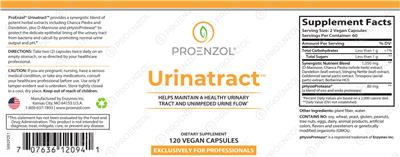
Urinatract contains eight active ingredients: D-mannose, a simple sugar; dandelion leaf extract; berberine hydrochloride, an alkaloid; stinging nettle leaf extract; chanca piedra whole herb extract; a proprietary blend labeled "Synergistic Nutrient Blend" (whose specific components aren't listed separately here); Tinospora aerial part extract; and goldenrod aerial part extract. We also could not check pHysioProtease, a proteolytic enzyme blend, because we hold no interaction data for it.
The capsule also contains plant fiber and water as inactive ingredients.
Does it work?
Moderate evidence
The evidence for this product's use is mixed. D-mannose is possibly ineffective for urinary tract infections (UTIs)—the main reason most people buy urinary products—though it is likely effective for a rare metabolic condition called carbohydrate-deficient glycoprotein syndrome type 1b.
Berberine shows some promise: it's possibly effective for high cholesterol, PCOS (polycystic ovary syndrome), type 2 diabetes, high blood pressure, and H. pylori infection. Stinging nettle and Tinospora cordifolia are each possibly effective for diabetes.
Chanca piedra is possibly effective for kidney stones. However, the evidence for dandelion, goldenrod, and most of the other ingredients in treating their traditional uses is insufficient—we simply don't have solid data on whether they work.
How safe is it?
Well-documented data
D-mannose and berberine are generally well tolerated short-term, but long-term safety data are limited. The most common side effects from D-mannose are bloating, diarrhea, and nausea—and doses over 200 mg/kg are more likely to cause osmotic diarrhea.
Berberine often causes gastrointestinal upset: abdominal pain, constipation, diarrhea, nausea, and vomiting. Dandelion and stinging nettle can cause diarrhea and stomach discomfort; dandelion also carries a rare risk of anaphylaxis in people allergic to ragweed or related plants.
Chanca piedra can cause abdominal pain, nausea, and vomiting. Tinospora is concerning for liver injury—case reports describe autoimmune hepatitis and acute liver failure in people taking it for weeks to months, and some required transplants.
Goldenrod may trigger allergic reactions in sensitive people. Pregnancy and breastfeeding data are sparse or unsafe for most ingredients: berberine is likely unsafe in both; stinging nettle is likely unsafe in pregnancy; chanca piedra is possibly unsafe in pregnancy; and dandelion, goldenrod, and Tinospora lack sufficient safety data during breastfeeding.
D-mannose's pregnancy and breastfeeding safety is not well studied.
Meds to double-check
Major interaction found
Before taking Urinatract, check with your pharmacist if you take cyclosporine (a major interaction with berberine); blood thinners or antiplatelet drugs like warfarin or aspirin; diabetes or blood pressure medications; lithium; potassium-sparing diuretics; diuretics in general; quinolone antibiotics like ciprofloxacin; immunosuppressants; or drugs metabolized through the CYP3A4, CYP2D6, CYP2C9, CYP2C19, or CYP1A2 pathways. No interactions are documented in our data for pHysioProtease.
The bottom line
Scorecard at a glanceFormula with limited ingredient disclosure with some supporting evidence for its stated purpose. Major medication interactions have been identified, and safety information is well characterized.
This product combines herbs traditionally used for urinary and kidney health, but the evidence for UTI relief is weak, and several ingredients—especially berberine—interact with common medications. If you take blood thinners, diabetes medications, blood pressure pills, cyclosporine, or lithium, check with your pharmacist first.
Anyone pregnant or breastfeeding should talk with their doctor before starting. The risk of liver injury with Tinospora means you should not use this long-term without medical oversight.
Educational only — not medical advice; always confirm with your pharmacist. Our editorial policy · How we use AI
Assessment coverage: 7 of 8 active ingredients matched to our full ingredient reviews (monographs). Based on the product label dated Dec 21, 2024.
This Scorecard evaluates available label information, ingredient evidence, and known medication-safety considerations. It does not independently verify product identity, purity, potency, contamination, or manufacturing quality. How these ratings are computed
General information
Key facts about Urinatract, straight from the product label.
| Brand | ProEnzol |
|---|---|
| Barcode (UPC) | 707636120941 |
| Net contents | 120 Vegan Capsule(s) |
| Market status | On market |
| Date entered into DSLD | Dec 21, 2024 |
| DSLD ID | 322887 |
| Product type | Other Combinations |
| Supplement form | Capsule |
| Dietary claims / uses | All Other, Structure/Function |
| Intended target group(s) | Vegan, Vegetarian, Adult (18 - 50 Years), Gluten Free, Dairy Free |
Everything in this section is reproduced from the manufacturer’s own product label — it’s the label speaking, not HelloPharmacist. We show it so you can see exactly what the maker states; we don’t verify or endorse those statements.
Supplement Facts
The label details for Urinatract by ProEnzol, sourced from the NIH Dietary Supplement Label Database.
Supplement Facts
| Ingredient | Amount | % DV |
|---|---|---|
| Total Carbohydrates | 1 Gram(s) | 1% |
| Total Sugars | 1 Gram(s) | -- |
| D-Mannose | 0 NP | -- |
| Dandelion Leaf Extract | 0 NP | -- |
| Berberine Hydrochloride | 0 NP | -- |
| Synergistic Nutrient Blend | 1050 mg | -- |
| Stinging Nettle leaf extract | 0 NP | -- |
| Chanca Piedra Whole Herb Extract | 0 NP | -- |
| pHysioProtease | 80 mg | -- |
| Tinospora Aerial Part Extract | 0 NP | -- |
| Goldenrod Aerial Part Extract | 0 NP | -- |
Other ingredients: Plant Fiber, Water
Tap any ingredient to jump to its full detail below.
These statements are the manufacturer’s wording, reproduced from the product label — the label is saying it, not HelloPharmacist. We don’t verify or endorse them.
Formula
ProEnzol Urinatract provides a synergistic blend of potent herbal extract including Chanca Piedra and Dandelion, plus D-Mannose and pHysioProtease to protect the delicate epithelial lining of the urinary tract from bacteria and calculi by promoting normal urine output and pH.
Suggested/Recommended/Usage/Directions
Directions: Take two (2) capsules twice daily on an empty stomach, or as directed by your healthcare professional.
Precautions
Caution: If you are pregnant, nursing, have a serious medical condition, or take any medications, consult your healthcare professional before use.
Use only if tamper-evident seal is unbroken.
Keep out of reach of children.
Exclusively for professionals
Storage
Store tightly closed in a cool, dry place.
FDA Disclaimer Statement
This statement has not been evaluated by the Food and Drug Administration. This product is not intended to diagnose, treat, cure, or prevent any disease.
Formulation
Helps maintain a healthy urinary tract and unimpeded urine flow
Contains no: Sugar, soy, wheat, yeast, gluten, peanuts, tree nuts, eggs, dairy, animal products, artificial colors, flavors and sweeteners or genetically modified organisms (GMOs).
FDA Statement of Identity
Dietary Supplement
Brand IP Statement(s)
pHysioProtease is a registered trademark of Enzymes Inc.
Is this label outdated? Report a formula or label change and our pharmacy team will review it.
Urinatract by ProEnzol label
The label scan from the NIH Dietary Supplement Label Database. Tap to enlarge.
Label images are published by the NIH Dietary Supplement Label Database for the version of this product on file. Always read your actual product label.
View the full label (PDF)The Ingredients in Urinatract by ProEnzol
These are the 8 active ingredients this product is made of. Select any to open its full monograph.
Serving size2 Vegan Capsule(s) Dosage formCapsule Servings per container60 Amounts shown are per serving.
Most supplement products combine several ingredients, and a medication can interact with the product through any one of them. Each ingredient below shows whether it has known drug interactions.
Synergistic Nutrient Blend
PHysioProtease
Other (inactive) ingredients: Plant Fiber, Water. These complete the product’s ingredient list but are not active constituents.
Urinatract by ProEnzol Drug Interactions
HelloPharmacist Interaction Report
Urinatract by ProEnzol contains several herbs that interact with medications, so it's worth checking before you start.
The most serious interaction is with cyclosporine (a drug used to prevent organ rejection and treat autoimmune conditions): berberine, one of the active ingredients, can raise cyclosporine levels significantly, and you'd need your doctor to adjust your dose.
Read the full breakdown — every affected drug type, severity by severity
Berberine also interacts moderately with blood thinners and antiplatelet drugs (like warfarin or aspirin), raising bleeding risk; antidiabetes drugs, which could lower your blood sugar too much; and several blood pressure medications. It also affects how your liver breaks down many other drugs—specifically those processed through CYP3A4, CYP2D6, and CYP2C9 pathways—so levels of those drugs could climb.
Dandelion leaf extract, stinging nettle, chanca piedra, and Tinospora all carry their own moderate interactions with blood thinners, blood sugar drugs, blood pressure pills, lithium, and various enzyme-processed medications.
Dandelion can theoretically interfere with quinolone antibiotics (like ciprofloxacin) and may affect potassium-sparing diuretics. Stinging nettle could reduce the effect of warfarin because it contains vitamin K.
Chanca piedra might affect how your liver clears certain drugs and could theoretically lower the effect of norepinephrine. Tinospora can inhibit several liver enzymes and may reduce the effectiveness of immunosuppressants.
D-mannose and goldenrod carry fewer documented interactions in our data. Use the medication checker on this page to look up your exact prescriptions before adding this product.
Check your own medications below · Editorial policy · How we use AI
Want to check YOUR meds against Urinatract?
Ask about interactions with your drugs in plain English — “Can I take it with lisinopril?” — and we find you the answer in seconds, ingredient by ingredient.
Go to the checkerIngredients driving the most interactions
Individual Drug Interactions
The ingredients in Urinatract interact with 1,341 drugs. Click any drug to see the details.
6 of the 8 ingredients in Urinatract interact with drugs. Each result below shows which ingredient is responsible. Berberine Hydrochloride Chanca Piedra Whole Herb Extract Tinospora Aerial Part Extract Dandelion Leaf Extract Stinging Nettle leaf extract Goldenrod Aerial Part Extract
CyclosporineCequa, Ciclosporine, Gengraf, Neoral, Sandimmune, Verkazia +1 more
How Cyclosporine interacts with Urinatract — through 3 ingredients. Tap an ingredient for the detail:
Berberine HydrochlorideCyclosporine (neoral, Sandimmune), Cytochrome P450 3a4 (cyp3a4) Substrates Major
Interaction Summary
Berberine can increase serum levels of cyclosporine.
Read the full Berberine Hydrochloride + Cyclosporine interactionTinospora Aerial Part ExtractImmunosuppressants Moderate
Interaction Summary
Theoretically, Tinospora cordifolia might reduce the effectiveness of immunosuppressants.
Read the full Tinospora Aerial Part Extract + Cyclosporine interactionChanca Piedra Whole Herb ExtractCytochrome P450 3a4 (cyp3a4) Substrates Moderate
Interaction Summary
Theoretically, use of chanca piedra might increase the levels and clinical effects of CYP3A4 substrates.
Read the full Chanca Piedra Whole Herb Extract + Cyclosporine interaction6-mercaptopurinePurinethol
How 6-mercaptopurine interacts with Urinatract — through 1 ingredient. Tap an ingredient for the detail:
Tinospora Aerial Part ExtractImmunosuppressants Moderate
Interaction Summary
Theoretically, Tinospora cordifolia might reduce the effectiveness of immunosuppressants.
Read the full Tinospora Aerial Part Extract + 6-mercaptopurine interactionAdo-trastuzumab EmtansineKadcyla
How Ado-trastuzumab Emtansine interacts with Urinatract — through 2 ingredients. Tap an ingredient for the detail:
Berberine HydrochlorideCytochrome P450 3a4 (cyp3a4) Substrates Moderate
Interaction Summary
Theoretically, berberine might increase serum levels of drugs metabolized by CYP3A4.
Read the full Berberine Hydrochloride + Ado-trastuzumab Emtansine interactionChanca Piedra Whole Herb ExtractCytochrome P450 3a4 (cyp3a4) Substrates Moderate
Interaction Summary
Theoretically, use of chanca piedra might increase the levels and clinical effects of CYP3A4 substrates.
Read the full Chanca Piedra Whole Herb Extract + Ado-trastuzumab Emtansine interactionAbciximabReoPro
How Abciximab interacts with Urinatract — through 3 ingredients. Tap an ingredient for the detail:
Berberine HydrochlorideAnticoagulant/antiplatelet Drugs Moderate
Interaction Summary
Theoretically, berberine might increase the risk of bleeding when used with anticoagulant or antiplatelet drugs.
Read the full Berberine Hydrochloride + Abciximab interactionChanca Piedra Whole Herb ExtractAnticoagulant/antiplatelet Drugs Moderate
Interaction Summary
Theoretically, chanca piedra might increase the risk of bleeding when used concomitantly with anticoagulant/antiplatelet drugs.
Read the full Chanca Piedra Whole Herb Extract + Abciximab interactionDandelion Leaf ExtractAnticoagulant/antiplatelet Drugs Moderate
Interaction Summary
Theoretically, taking dandelion root along with anticoagulant or antiplatelet drugs might increase the risk of bruising and bleeding.
Read the full Dandelion Leaf Extract + Abciximab interactionAbemaciclibVerzenio
How Abemaciclib interacts with Urinatract — through 2 ingredients. Tap an ingredient for the detail:
Berberine HydrochlorideCytochrome P450 3a4 (cyp3a4) Substrates Moderate
Interaction Summary
Theoretically, berberine might increase serum levels of drugs metabolized by CYP3A4.
Read the full Berberine Hydrochloride + Abemaciclib interactionChanca Piedra Whole Herb ExtractCytochrome P450 3a4 (cyp3a4) Substrates Moderate
Interaction Summary
Theoretically, use of chanca piedra might increase the levels and clinical effects of CYP3A4 substrates.
Read the full Chanca Piedra Whole Herb Extract + Abemaciclib interactionAbiraterone
How Abiraterone interacts with Urinatract — through 2 ingredients. Tap an ingredient for the detail:
Chanca Piedra Whole Herb ExtractCytochrome P450 3a4 (cyp3a4) Substrates Moderate
Interaction Summary
Theoretically, use of chanca piedra might increase the levels and clinical effects of CYP3A4 substrates.
Read the full Chanca Piedra Whole Herb Extract + Abiraterone interactionBerberine HydrochlorideCytochrome P450 3a4 (cyp3a4) Substrates Moderate
Interaction Summary
Theoretically, berberine might increase serum levels of drugs metabolized by CYP3A4.
Read the full Berberine Hydrochloride + Abiraterone interactionAbiraterone AcetateYonsa, Zytiga
How Abiraterone Acetate interacts with Urinatract — through 2 ingredients. Tap an ingredient for the detail:
Berberine HydrochlorideCytochrome P450 3a4 (cyp3a4) Substrates Moderate
Interaction Summary
Theoretically, berberine might increase serum levels of drugs metabolized by CYP3A4.
Read the full Berberine Hydrochloride + Abiraterone Acetate interactionChanca Piedra Whole Herb ExtractCytochrome P450 3a4 (cyp3a4) Substrates Moderate
Interaction Summary
Theoretically, use of chanca piedra might increase the levels and clinical effects of CYP3A4 substrates.
Read the full Chanca Piedra Whole Herb Extract + Abiraterone Acetate interactionAbrocitinibCibinqo
How Abrocitinib interacts with Urinatract — through 4 ingredients. Tap an ingredient for the detail:
Chanca Piedra Whole Herb ExtractAnticoagulant/antiplatelet Drugs Moderate
Interaction Summary
Theoretically, chanca piedra might increase the risk of bleeding when used concomitantly with anticoagulant/antiplatelet drugs.
Read the full Chanca Piedra Whole Herb Extract + Abrocitinib interactionDandelion Leaf ExtractAnticoagulant/antiplatelet Drugs Moderate
Interaction Summary
Theoretically, taking dandelion root along with anticoagulant or antiplatelet drugs might increase the risk of bruising and bleeding.
Read the full Dandelion Leaf Extract + Abrocitinib interactionBerberine HydrochlorideCytochrome P450 2c9 (cyp2c9) Substrates, Anticoagulant/antiplatelet Drugs Moderate
Interaction Summary
Theoretically, berberine might increase serum levels of drugs metabolized by CYP2C9.
Read the full Berberine Hydrochloride + Abrocitinib interactionTinospora Aerial Part ExtractCytochrome P450 2c19 (cyp2c19) Substrates, Cytochrome P450 2c9 (cyp2c9) Substrates +1 Moderate
Interaction Summary
Theoretically, Tinospora cordifolia might increase levels of drugs metabolized by CYP2C19.
Read the full Tinospora Aerial Part Extract + Abrocitinib interactionAcalabrutinibCalquence
How Acalabrutinib interacts with Urinatract — through 2 ingredients. Tap an ingredient for the detail:
Berberine HydrochlorideCytochrome P450 3a4 (cyp3a4) Substrates Moderate
Interaction Summary
Theoretically, berberine might increase serum levels of drugs metabolized by CYP3A4.
Read the full Berberine Hydrochloride + Acalabrutinib interactionChanca Piedra Whole Herb ExtractCytochrome P450 3a4 (cyp3a4) Substrates Moderate
Interaction Summary
Theoretically, use of chanca piedra might increase the levels and clinical effects of CYP3A4 substrates.
Read the full Chanca Piedra Whole Herb Extract + Acalabrutinib interactionAcarboseGlucobay, Prandase, Precose
How Acarbose interacts with Urinatract — through 5 ingredients. Tap an ingredient for the detail:
Stinging Nettle Leaf ExtractAntidiabetes Drugs Moderate
Interaction Summary
Theoretically, stinging nettle might have additive effects with antidiabetes drugs.
Read the full Stinging Nettle Leaf Extract + Acarbose interactionTinospora Aerial Part ExtractAntidiabetes Drugs Moderate
Interaction Summary
Theoretically, Tinospora cordifolia might increase the risk of hypoglycemia when taken with antidiabetes drugs.
Read the full Tinospora Aerial Part Extract + Acarbose interactionBerberine HydrochlorideAntidiabetes Drugs Moderate
Interaction Summary
Theoretically, berberine may increase the risk of hypoglycemia when taken with antidiabetes drugs.
Read the full Berberine Hydrochloride + Acarbose interactionDandelion Leaf ExtractAntidiabetes Drugs Moderate
Interaction Summary
Theoretically, dandelion might increase the risk for hypoglycemia when used with antidiabetes drugs.
Read the full Dandelion Leaf Extract + Acarbose interactionChanca Piedra Whole Herb ExtractAntidiabetes Drugs Minor
Interaction Summary
Theoretically, concomitant use with antidiabetes drugs might affect glucose control and increase the risk of hypoglycemia.
Read the full Chanca Piedra Whole Herb Extract + Acarbose interactionAcebutololRhotral, Sectral
How Acebutolol interacts with Urinatract — through 2 ingredients. Tap an ingredient for the detail:
Berberine HydrochlorideAntihypertensive Drugs Moderate
Interaction Summary
Theoretically, berberine might have additive effects with antihypertensive drugs.
Read the full Berberine Hydrochloride + Acebutolol interactionChanca Piedra Whole Herb ExtractAntihypertensive Drugs Minor
Interaction Summary
Theoretically, concomitant use of chanca piedra with antihypertensive drugs might have additive blood pressure lowering effects.
Read the full Chanca Piedra Whole Herb Extract + Acebutolol interactionAcenocoumarolSintrom
How Acenocoumarol interacts with Urinatract — through 3 ingredients. Tap an ingredient for the detail:
Chanca Piedra Whole Herb ExtractAnticoagulant/antiplatelet Drugs Moderate
Interaction Summary
Theoretically, chanca piedra might increase the risk of bleeding when used concomitantly with anticoagulant/antiplatelet drugs.
Read the full Chanca Piedra Whole Herb Extract + Acenocoumarol interactionDandelion Leaf ExtractAnticoagulant/antiplatelet Drugs Moderate
Interaction Summary
Theoretically, taking dandelion root along with anticoagulant or antiplatelet drugs might increase the risk of bruising and bleeding.
Read the full Dandelion Leaf Extract + Acenocoumarol interactionBerberine HydrochlorideAnticoagulant/antiplatelet Drugs Moderate
Interaction Summary
Theoretically, berberine might increase the risk of bleeding when used with anticoagulant or antiplatelet drugs.
Read the full Berberine Hydrochloride + Acenocoumarol interactionAcepromazineAtravet
How Acepromazine interacts with Urinatract — through 1 ingredient. Tap an ingredient for the detail:
Berberine HydrochlorideCns Depressants Moderate
Interaction Summary
Theoretically, berberine might increase the sedative effects of CNS depressants.
Read the full Berberine Hydrochloride + Acepromazine interactionAcetaminophenChildren's Tylenol, Children's Tylenol Meltaways, Tylenol, Tylenol Ex Strength
How Acetaminophen interacts with Urinatract — through 3 ingredients. Tap an ingredient for the detail:
Dandelion Leaf ExtractGlucuronidated Drugs, Cytochrome P450 1a2 (cyp1a2) Substrates Moderate
Interaction Summary
Theoretically, dandelion might increase the clearance of drugs that are UDP-glucuronosyltransferase substrates.
Read the full Dandelion Leaf Extract + Acetaminophen interactionChanca Piedra Whole Herb ExtractCytochrome P450 1a2 (cyp1a2) Substrates Moderate
Interaction Summary
Theoretically, chanca piedra might reduce the levels and clinical effects of CYP1A2 substrates.
Read the full Chanca Piedra Whole Herb Extract + Acetaminophen interactionTinospora Aerial Part ExtractCytochrome P450 1a2 (cyp1a2) Substrates Moderate
Interaction Summary
Theoretically, Tinospora cordifolia might increase levels of drugs metabolized by CYP1A2.
Read the full Tinospora Aerial Part Extract + Acetaminophen interactionAcetaminophen, AspirinGemnisyn
How Acetaminophen, Aspirin interacts with Urinatract — through 4 ingredients. Tap an ingredient for the detail:
Tinospora Aerial Part ExtractCytochrome P450 1a2 (cyp1a2) Substrates Moderate
Interaction Summary
Theoretically, Tinospora cordifolia might increase levels of drugs metabolized by CYP1A2.
Read the full Tinospora Aerial Part Extract + Acetaminophen, Aspirin interactionBerberine HydrochlorideAnticoagulant/antiplatelet Drugs Moderate
Interaction Summary
Theoretically, berberine might increase the risk of bleeding when used with anticoagulant or antiplatelet drugs.
Read the full Berberine Hydrochloride + Acetaminophen, Aspirin interactionDandelion Leaf ExtractGlucuronidated Drugs, Cytochrome P450 1a2 (cyp1a2) Substrates +1 Moderate
Interaction Summary
Theoretically, dandelion might increase the clearance of drugs that are UDP-glucuronosyltransferase substrates.
Read the full Dandelion Leaf Extract + Acetaminophen, Aspirin interactionChanca Piedra Whole Herb ExtractCytochrome P450 1a2 (cyp1a2) Substrates, Anticoagulant/antiplatelet Drugs Moderate
Interaction Summary
Theoretically, chanca piedra might reduce the levels and clinical effects of CYP1A2 substrates.
Read the full Chanca Piedra Whole Herb Extract + Acetaminophen, Aspirin interactionAcetaminophen, Aspirin, CaffeineExcedrin, Excedrin Extra Strength, Excedrin Migraine
How Acetaminophen, Aspirin, Caffeine interacts with Urinatract — through 4 ingredients. Tap an ingredient for the detail:
Chanca Piedra Whole Herb ExtractAnticoagulant/antiplatelet Drugs, Cytochrome P450 1a2 (cyp1a2) Substrates +1 Moderate
Interaction Summary
Theoretically, chanca piedra might increase the risk of bleeding when used concomitantly with anticoagulant/antiplatelet drugs.
Read the full Chanca Piedra Whole Herb Extract + Acetaminophen, Aspirin, Caffeine interactionDandelion Leaf ExtractCytochrome P450 1a2 (cyp1a2) Substrates, Anticoagulant/antiplatelet Drugs +1 Moderate
Interaction Summary
Theoretically, dandelion might increase levels of drugs metabolized by CYP1A2.
Read the full Dandelion Leaf Extract + Acetaminophen, Aspirin, Caffeine interactionBerberine HydrochlorideAnticoagulant/antiplatelet Drugs, Cytochrome P450 3a4 (cyp3a4) Substrates Moderate
Interaction Summary
Theoretically, berberine might increase the risk of bleeding when used with anticoagulant or antiplatelet drugs.
Read the full Berberine Hydrochloride + Acetaminophen, Aspirin, Caffeine interactionTinospora Aerial Part ExtractCytochrome P450 1a2 (cyp1a2) Substrates Moderate
Interaction Summary
Theoretically, Tinospora cordifolia might increase levels of drugs metabolized by CYP1A2.
Read the full Tinospora Aerial Part Extract + Acetaminophen, Aspirin, Caffeine interactionAcetaminophen, Brompheniramine, PhenylpropanolamineDimetapp Cold and Flu
How Acetaminophen, Brompheniramine, Phenylpropanolamine interacts with Urinatract — through 3 ingredients. Tap an ingredient for the detail:
Dandelion Leaf ExtractCytochrome P450 1a2 (cyp1a2) Substrates, Glucuronidated Drugs Moderate
Interaction Summary
Theoretically, dandelion might increase levels of drugs metabolized by CYP1A2.
Read the full Dandelion Leaf Extract + Acetaminophen, Brompheniramine, Phenylpropanolamine interactionChanca Piedra Whole Herb ExtractCytochrome P450 1a2 (cyp1a2) Substrates Moderate
Interaction Summary
Theoretically, chanca piedra might reduce the levels and clinical effects of CYP1A2 substrates.
Read the full Chanca Piedra Whole Herb Extract + Acetaminophen, Brompheniramine, Phenylpropanolamine interactionTinospora Aerial Part ExtractCytochrome P450 1a2 (cyp1a2) Substrates Moderate
Interaction Summary
Theoretically, Tinospora cordifolia might increase levels of drugs metabolized by CYP1A2.
Read the full Tinospora Aerial Part Extract + Acetaminophen, Brompheniramine, Phenylpropanolamine interactionAcetaminophen, ButalbitalAxocet, Bancap, Bucet, Butex Forte, Esgic CF, Orbivan CF +5 more
How Acetaminophen, Butalbital interacts with Urinatract — through 3 ingredients. Tap an ingredient for the detail:
Tinospora Aerial Part ExtractCytochrome P450 1a2 (cyp1a2) Substrates Moderate
Interaction Summary
Theoretically, Tinospora cordifolia might increase levels of drugs metabolized by CYP1A2.
Read the full Tinospora Aerial Part Extract + Acetaminophen, Butalbital interactionDandelion Leaf ExtractGlucuronidated Drugs, Cytochrome P450 1a2 (cyp1a2) Substrates Moderate
Interaction Summary
Theoretically, dandelion might increase the clearance of drugs that are UDP-glucuronosyltransferase substrates.
Read the full Dandelion Leaf Extract + Acetaminophen, Butalbital interactionChanca Piedra Whole Herb ExtractCytochrome P450 1a2 (cyp1a2) Substrates Moderate
Interaction Summary
Theoretically, chanca piedra might reduce the levels and clinical effects of CYP1A2 substrates.
Read the full Chanca Piedra Whole Herb Extract + Acetaminophen, Butalbital interactionAcetaminophen, Butalbital, CaffeineEsgic, Esgic Plus, Fiogesic, Fioricet, Repan, Tecnal +1 more
How Acetaminophen, Butalbital, Caffeine interacts with Urinatract — through 4 ingredients. Tap an ingredient for the detail:
Dandelion Leaf ExtractCytochrome P450 1a2 (cyp1a2) Substrates, Glucuronidated Drugs Moderate
Interaction Summary
Theoretically, dandelion might increase levels of drugs metabolized by CYP1A2.
Read the full Dandelion Leaf Extract + Acetaminophen, Butalbital, Caffeine interactionChanca Piedra Whole Herb ExtractCytochrome P450 1a2 (cyp1a2) Substrates, Cytochrome P450 3a4 (cyp3a4) Substrates Moderate
Interaction Summary
Theoretically, chanca piedra might reduce the levels and clinical effects of CYP1A2 substrates.
Read the full Chanca Piedra Whole Herb Extract + Acetaminophen, Butalbital, Caffeine interactionTinospora Aerial Part ExtractCytochrome P450 1a2 (cyp1a2) Substrates Moderate
Interaction Summary
Theoretically, Tinospora cordifolia might increase levels of drugs metabolized by CYP1A2.
Read the full Tinospora Aerial Part Extract + Acetaminophen, Butalbital, Caffeine interactionBerberine HydrochlorideCytochrome P450 3a4 (cyp3a4) Substrates Moderate
Interaction Summary
Theoretically, berberine might increase serum levels of drugs metabolized by CYP3A4.
Read the full Berberine Hydrochloride + Acetaminophen, Butalbital, Caffeine interactionAcetaminophen, Butalbital, Caffeine, CodeineEsgic with Codeine, Fioricet w/ Codeine
How Acetaminophen, Butalbital, Caffeine, Codeine interacts with Urinatract — through 4 ingredients. Tap an ingredient for the detail:
Berberine HydrochlorideCytochrome P450 3a4 (cyp3a4) Substrates, Cytochrome P450 2d6 (cyp2d6) Substrates +1 Moderate
Interaction Summary
Theoretically, berberine might increase serum levels of drugs metabolized by CYP3A4.
Read the full Berberine Hydrochloride + Acetaminophen, Butalbital, Caffeine, Codeine interactionDandelion Leaf ExtractGlucuronidated Drugs, Cytochrome P450 1a2 (cyp1a2) Substrates Moderate
Interaction Summary
Theoretically, dandelion might increase the clearance of drugs that are UDP-glucuronosyltransferase substrates.
Read the full Dandelion Leaf Extract + Acetaminophen, Butalbital, Caffeine, Codeine interactionChanca Piedra Whole Herb ExtractCytochrome P450 3a4 (cyp3a4) Substrates, Cytochrome P450 1a2 (cyp1a2) Substrates Moderate
Interaction Summary
Theoretically, use of chanca piedra might increase the levels and clinical effects of CYP3A4 substrates.
Read the full Chanca Piedra Whole Herb Extract + Acetaminophen, Butalbital, Caffeine, Codeine interactionTinospora Aerial Part ExtractCytochrome P450 1a2 (cyp1a2) Substrates, Cytochrome P450 2d6 (cyp2d6) Substrates Moderate
Interaction Summary
Theoretically, Tinospora cordifolia might increase levels of drugs metabolized by CYP1A2.
Read the full Tinospora Aerial Part Extract + Acetaminophen, Butalbital, Caffeine, Codeine interactionAcetaminophen, Butalbital, CodeineBancap w/ Codeine
How Acetaminophen, Butalbital, Codeine interacts with Urinatract — through 4 ingredients. Tap an ingredient for the detail:
Tinospora Aerial Part ExtractCytochrome P450 2d6 (cyp2d6) Substrates, Cytochrome P450 1a2 (cyp1a2) Substrates Moderate
Interaction Summary
Theoretically, Tinospora cordifolia might increase levels of drugs metabolized by CYP2D6.
Read the full Tinospora Aerial Part Extract + Acetaminophen, Butalbital, Codeine interactionBerberine HydrochlorideCns Depressants, Cytochrome P450 2d6 (cyp2d6) Substrates Moderate
Interaction Summary
Theoretically, berberine might increase the sedative effects of CNS depressants.
Read the full Berberine Hydrochloride + Acetaminophen, Butalbital, Codeine interactionDandelion Leaf ExtractGlucuronidated Drugs, Cytochrome P450 1a2 (cyp1a2) Substrates Moderate
Interaction Summary
Theoretically, dandelion might increase the clearance of drugs that are UDP-glucuronosyltransferase substrates.
Read the full Dandelion Leaf Extract + Acetaminophen, Butalbital, Codeine interactionChanca Piedra Whole Herb ExtractCytochrome P450 1a2 (cyp1a2) Substrates Moderate
Interaction Summary
Theoretically, chanca piedra might reduce the levels and clinical effects of CYP1A2 substrates.
Read the full Chanca Piedra Whole Herb Extract + Acetaminophen, Butalbital, Codeine interactionAcetaminophen, Butalbital, Codeine PhosphatePhrenilin #3
How Acetaminophen, Butalbital, Codeine Phosphate interacts with Urinatract — through 4 ingredients. Tap an ingredient for the detail:
Chanca Piedra Whole Herb ExtractCytochrome P450 1a2 (cyp1a2) Substrates Moderate
Interaction Summary
Theoretically, chanca piedra might reduce the levels and clinical effects of CYP1A2 substrates.
Read the full Chanca Piedra Whole Herb Extract + Acetaminophen, Butalbital, Codeine Phosphate interactionTinospora Aerial Part ExtractCytochrome P450 2d6 (cyp2d6) Substrates, Cytochrome P450 1a2 (cyp1a2) Substrates Moderate
Interaction Summary
Theoretically, Tinospora cordifolia might increase levels of drugs metabolized by CYP2D6.
Read the full Tinospora Aerial Part Extract + Acetaminophen, Butalbital, Codeine Phosphate interactionBerberine HydrochlorideCytochrome P450 2d6 (cyp2d6) Substrates, Cns Depressants Moderate
Interaction Summary
Theoretically, berberine might increase serum levels of drugs metabolized by CYP2D6.
Read the full Berberine Hydrochloride + Acetaminophen, Butalbital, Codeine Phosphate interactionDandelion Leaf ExtractGlucuronidated Drugs, Cytochrome P450 1a2 (cyp1a2) Substrates Moderate
Interaction Summary
Theoretically, dandelion might increase the clearance of drugs that are UDP-glucuronosyltransferase substrates.
Read the full Dandelion Leaf Extract + Acetaminophen, Butalbital, Codeine Phosphate interactionAcetaminophen, Caffeine, Chlorpheniramine, Hydrocodone, PhenylephrineHycomine Compound
How Acetaminophen, Caffeine, Chlorpheniramine, Hydrocodone, Phenylephrine interacts with Urinatract — through 4 ingredients. Tap an ingredient for the detail:
Berberine HydrochlorideCytochrome P450 2d6 (cyp2d6) Substrates, Cytochrome P450 3a4 (cyp3a4) Substrates +1 Moderate
Interaction Summary
Theoretically, berberine might increase serum levels of drugs metabolized by CYP2D6.
Read the full Berberine Hydrochloride + Acetaminophen, Caffeine, Chlorpheniramine, Hydrocodone, Phenylephrine interactionDandelion Leaf ExtractGlucuronidated Drugs, Cytochrome P450 1a2 (cyp1a2) Substrates Moderate
Interaction Summary
Theoretically, dandelion might increase the clearance of drugs that are UDP-glucuronosyltransferase substrates.
Read the full Dandelion Leaf Extract + Acetaminophen, Caffeine, Chlorpheniramine, Hydrocodone, Phenylephrine interactionChanca Piedra Whole Herb ExtractCytochrome P450 1a2 (cyp1a2) Substrates, Cytochrome P450 3a4 (cyp3a4) Substrates Moderate
Interaction Summary
Theoretically, chanca piedra might reduce the levels and clinical effects of CYP1A2 substrates.
Read the full Chanca Piedra Whole Herb Extract + Acetaminophen, Caffeine, Chlorpheniramine, Hydrocodone, Phenylephrine interactionTinospora Aerial Part ExtractCytochrome P450 2d6 (cyp2d6) Substrates, Cytochrome P450 1a2 (cyp1a2) Substrates Moderate
Interaction Summary
Theoretically, Tinospora cordifolia might increase levels of drugs metabolized by CYP2D6.
Read the full Tinospora Aerial Part Extract + Acetaminophen, Caffeine, Chlorpheniramine, Hydrocodone, Phenylephrine interactionAcetaminophen, Caffeine, CodeineGesic C15, Gesic C30, Gesic C8, Lenoltec 1, Lenoltec 2, Lenoltec 3 +1 more
How Acetaminophen, Caffeine, Codeine interacts with Urinatract — through 4 ingredients. Tap an ingredient for the detail:
Tinospora Aerial Part ExtractCytochrome P450 1a2 (cyp1a2) Substrates, Cytochrome P450 2d6 (cyp2d6) Substrates Moderate
Interaction Summary
Theoretically, Tinospora cordifolia might increase levels of drugs metabolized by CYP1A2.
Read the full Tinospora Aerial Part Extract + Acetaminophen, Caffeine, Codeine interactionBerberine HydrochlorideCns Depressants, Cytochrome P450 2d6 (cyp2d6) Substrates +1 Moderate
Interaction Summary
Theoretically, berberine might increase the sedative effects of CNS depressants.
Read the full Berberine Hydrochloride + Acetaminophen, Caffeine, Codeine interactionDandelion Leaf ExtractGlucuronidated Drugs, Cytochrome P450 1a2 (cyp1a2) Substrates Moderate
Interaction Summary
Theoretically, dandelion might increase the clearance of drugs that are UDP-glucuronosyltransferase substrates.
Read the full Dandelion Leaf Extract + Acetaminophen, Caffeine, Codeine interactionChanca Piedra Whole Herb ExtractCytochrome P450 3a4 (cyp3a4) Substrates, Cytochrome P450 1a2 (cyp1a2) Substrates Moderate
Interaction Summary
Theoretically, use of chanca piedra might increase the levels and clinical effects of CYP3A4 substrates.
Read the full Chanca Piedra Whole Herb Extract + Acetaminophen, Caffeine, Codeine interactionAcetaminophen, Caffeine, Codeine, SalicylamideCodalan No.1, Codalan No.2, Codalan No.3
How Acetaminophen, Caffeine, Codeine, Salicylamide interacts with Urinatract — through 4 ingredients. Tap an ingredient for the detail:
Chanca Piedra Whole Herb ExtractCytochrome P450 3a4 (cyp3a4) Substrates, Cytochrome P450 1a2 (cyp1a2) Substrates Moderate
Interaction Summary
Theoretically, use of chanca piedra might increase the levels and clinical effects of CYP3A4 substrates.
Read the full Chanca Piedra Whole Herb Extract + Acetaminophen, Caffeine, Codeine, Salicylamide interactionTinospora Aerial Part ExtractCytochrome P450 2d6 (cyp2d6) Substrates, Cytochrome P450 1a2 (cyp1a2) Substrates Moderate
Interaction Summary
Theoretically, Tinospora cordifolia might increase levels of drugs metabolized by CYP2D6.
Read the full Tinospora Aerial Part Extract + Acetaminophen, Caffeine, Codeine, Salicylamide interactionBerberine HydrochlorideCns Depressants, Cytochrome P450 2d6 (cyp2d6) Substrates +1 Moderate
Interaction Summary
Theoretically, berberine might increase the sedative effects of CNS depressants.
Read the full Berberine Hydrochloride + Acetaminophen, Caffeine, Codeine, Salicylamide interactionDandelion Leaf ExtractCytochrome P450 1a2 (cyp1a2) Substrates, Glucuronidated Drugs Moderate
Interaction Summary
Theoretically, dandelion might increase levels of drugs metabolized by CYP1A2.
Read the full Dandelion Leaf Extract + Acetaminophen, Caffeine, Codeine, Salicylamide interactionAcetaminophen, Caffeine, DihydrocodeineDHC Plus, Panlor DC, Panlor SS
How Acetaminophen, Caffeine, Dihydrocodeine interacts with Urinatract — through 4 ingredients. Tap an ingredient for the detail:
Berberine HydrochlorideCns Depressants, Cytochrome P450 3a4 (cyp3a4) Substrates +1 Moderate
Interaction Summary
Theoretically, berberine might increase the sedative effects of CNS depressants.
Read the full Berberine Hydrochloride + Acetaminophen, Caffeine, Dihydrocodeine interactionDandelion Leaf ExtractCytochrome P450 1a2 (cyp1a2) Substrates, Glucuronidated Drugs Moderate
Interaction Summary
Theoretically, dandelion might increase levels of drugs metabolized by CYP1A2.
Read the full Dandelion Leaf Extract + Acetaminophen, Caffeine, Dihydrocodeine interactionChanca Piedra Whole Herb ExtractCytochrome P450 1a2 (cyp1a2) Substrates, Cytochrome P450 3a4 (cyp3a4) Substrates Moderate
Interaction Summary
Theoretically, chanca piedra might reduce the levels and clinical effects of CYP1A2 substrates.
Read the full Chanca Piedra Whole Herb Extract + Acetaminophen, Caffeine, Dihydrocodeine interactionTinospora Aerial Part ExtractCytochrome P450 1a2 (cyp1a2) Substrates, Cytochrome P450 2d6 (cyp2d6) Substrates Moderate
Interaction Summary
Theoretically, Tinospora cordifolia might increase levels of drugs metabolized by CYP1A2.
Read the full Tinospora Aerial Part Extract + Acetaminophen, Caffeine, Dihydrocodeine interactionAcetaminophen, Caffeine, IsomethepteneMigralam
How Acetaminophen, Caffeine, Isometheptene interacts with Urinatract — through 4 ingredients. Tap an ingredient for the detail:
Tinospora Aerial Part ExtractCytochrome P450 1a2 (cyp1a2) Substrates Moderate
Interaction Summary
Theoretically, Tinospora cordifolia might increase levels of drugs metabolized by CYP1A2.
Read the full Tinospora Aerial Part Extract + Acetaminophen, Caffeine, Isometheptene interactionDandelion Leaf ExtractGlucuronidated Drugs, Cytochrome P450 1a2 (cyp1a2) Substrates Moderate
Interaction Summary
Theoretically, dandelion might increase the clearance of drugs that are UDP-glucuronosyltransferase substrates.
Read the full Dandelion Leaf Extract + Acetaminophen, Caffeine, Isometheptene interactionBerberine HydrochlorideCytochrome P450 3a4 (cyp3a4) Substrates Moderate
Interaction Summary
Theoretically, berberine might increase serum levels of drugs metabolized by CYP3A4.
Read the full Berberine Hydrochloride + Acetaminophen, Caffeine, Isometheptene interactionChanca Piedra Whole Herb ExtractCytochrome P450 3a4 (cyp3a4) Substrates, Cytochrome P450 1a2 (cyp1a2) Substrates Moderate
Interaction Summary
Theoretically, use of chanca piedra might increase the levels and clinical effects of CYP3A4 substrates.
Read the full Chanca Piedra Whole Herb Extract + Acetaminophen, Caffeine, Isometheptene interactionAcetaminophen, Caffeine, PyrilamineMidol Max Strength Menstrual
How Acetaminophen, Caffeine, Pyrilamine interacts with Urinatract — through 6 ingredients. Tap an ingredient for the detail:
Chanca Piedra Whole Herb ExtractDiuretic Drugs, Cytochrome P450 1a2 (cyp1a2) Substrates +1 Moderate
Interaction Summary
Theoretically, concomitant use of chanca piedra with diuretics might increase diuresis.
Read the full Chanca Piedra Whole Herb Extract + Acetaminophen, Caffeine, Pyrilamine interactionStinging Nettle Leaf ExtractDiuretic Drugs Moderate
Interaction Summary
Theoretically, combining stinging nettle with diuretic drugs may have additive effects.
Read the full Stinging Nettle Leaf Extract + Acetaminophen, Caffeine, Pyrilamine interactionGoldenrod Aerial Part ExtractDiuretic Drugs Moderate
Interaction Summary
Theoretically, goldenrod might increase the effects and adverse effects of diuretic drugs.
Read the full Goldenrod Aerial Part Extract + Acetaminophen, Caffeine, Pyrilamine interactionTinospora Aerial Part ExtractCytochrome P450 1a2 (cyp1a2) Substrates Moderate
Interaction Summary
Theoretically, Tinospora cordifolia might increase levels of drugs metabolized by CYP1A2.
Read the full Tinospora Aerial Part Extract + Acetaminophen, Caffeine, Pyrilamine interactionBerberine HydrochlorideCytochrome P450 3a4 (cyp3a4) Substrates Moderate
Interaction Summary
Theoretically, berberine might increase serum levels of drugs metabolized by CYP3A4.
Read the full Berberine Hydrochloride + Acetaminophen, Caffeine, Pyrilamine interactionDandelion Leaf ExtractGlucuronidated Drugs, Cytochrome P450 1a2 (cyp1a2) Substrates Moderate
Interaction Summary
Theoretically, dandelion might increase the clearance of drugs that are UDP-glucuronosyltransferase substrates.
Read the full Dandelion Leaf Extract + Acetaminophen, Caffeine, Pyrilamine interactionAcetaminophen, Chlorpheniramine Maleate, Dextromethorphan HbrVicks Formula 44M Cough, Cold & Flu Relief
How Acetaminophen, Chlorpheniramine Maleate, Dextromethorphan Hbr interacts with Urinatract — through 4 ingredients. Tap an ingredient for the detail:
Dandelion Leaf ExtractCytochrome P450 1a2 (cyp1a2) Substrates, Glucuronidated Drugs Moderate
Interaction Summary
Theoretically, dandelion might increase levels of drugs metabolized by CYP1A2.
Read the full Dandelion Leaf Extract + Acetaminophen, Chlorpheniramine Maleate, Dextromethorphan Hbr interactionBerberine HydrochlorideCytochrome P450 3a4 (cyp3a4) Substrates, Cytochrome P450 2d6 (cyp2d6) Substrates +1 Moderate
Interaction Summary
Theoretically, berberine might increase serum levels of drugs metabolized by CYP3A4.
Read the full Berberine Hydrochloride + Acetaminophen, Chlorpheniramine Maleate, Dextromethorphan Hbr interactionChanca Piedra Whole Herb ExtractCytochrome P450 3a4 (cyp3a4) Substrates, Cytochrome P450 1a2 (cyp1a2) Substrates Moderate
Interaction Summary
Theoretically, use of chanca piedra might increase the levels and clinical effects of CYP3A4 substrates.
Read the full Chanca Piedra Whole Herb Extract + Acetaminophen, Chlorpheniramine Maleate, Dextromethorphan Hbr interactionTinospora Aerial Part ExtractCytochrome P450 1a2 (cyp1a2) Substrates, Cytochrome P450 2d6 (cyp2d6) Substrates Moderate
Interaction Summary
Theoretically, Tinospora cordifolia might increase levels of drugs metabolized by CYP1A2.
Read the full Tinospora Aerial Part Extract + Acetaminophen, Chlorpheniramine Maleate, Dextromethorphan Hbr interactionAcetaminophen, Chlorpheniramine, Codeine, PhenylephrineColrex
How Acetaminophen, Chlorpheniramine, Codeine, Phenylephrine interacts with Urinatract — through 4 ingredients. Tap an ingredient for the detail:
Tinospora Aerial Part ExtractCytochrome P450 2d6 (cyp2d6) Substrates, Cytochrome P450 1a2 (cyp1a2) Substrates Moderate
Interaction Summary
Theoretically, Tinospora cordifolia might increase levels of drugs metabolized by CYP2D6.
Read the full Tinospora Aerial Part Extract + Acetaminophen, Chlorpheniramine, Codeine, Phenylephrine interactionBerberine HydrochlorideCytochrome P450 2d6 (cyp2d6) Substrates, Cns Depressants +1 Moderate
Interaction Summary
Theoretically, berberine might increase serum levels of drugs metabolized by CYP2D6.
Read the full Berberine Hydrochloride + Acetaminophen, Chlorpheniramine, Codeine, Phenylephrine interactionDandelion Leaf ExtractGlucuronidated Drugs, Cytochrome P450 1a2 (cyp1a2) Substrates Moderate
Interaction Summary
Theoretically, dandelion might increase the clearance of drugs that are UDP-glucuronosyltransferase substrates.
Read the full Dandelion Leaf Extract + Acetaminophen, Chlorpheniramine, Codeine, Phenylephrine interactionChanca Piedra Whole Herb ExtractCytochrome P450 3a4 (cyp3a4) Substrates, Cytochrome P450 1a2 (cyp1a2) Substrates Moderate
Interaction Summary
Theoretically, use of chanca piedra might increase the levels and clinical effects of CYP3A4 substrates.
Read the full Chanca Piedra Whole Herb Extract + Acetaminophen, Chlorpheniramine, Codeine, Phenylephrine interactionEach ingredient & the kinds of drugs it affects
For each ingredient in Urinatract with known interactions, here are the types of medications they can affect. Open any type for the detail — or search your exact drug in the checker above.
Berberine Hydrochloride
Cyclosporine (Neoral, Sandimmune)
Berberine can increase serum levels of cyclosporine.
Berberine can reduce metabolism and increase serum levels of cyclosporine. Berberine might inhibit cytochrome P450 3A4 (CYP3A4), which metabolizes cyclosporine.
Anticoagulant/Antiplatelet Drugs
Theoretically, berberine might increase the risk of bleeding when used with anticoagulant or antiplatelet drugs.
In vitro and in vivo research suggest that berberine can inhibit platelet aggregation. Theoretically, berberine might have additive effects when used with anticoagulant and antiplatelet drugs and increase the risk of bleeding.
Antidiabetes Drugs
Theoretically, berberine may increase the risk of hypoglycemia when taken with antidiabetes drugs.
Clinical research shows that berberine may lower blood glucose levels. Theoretically, berberine might have additive effects with antidiabetes drugs and increase the risk of hypoglycemia.
Antihypertensive Drugs
Theoretically, berberine might have additive effects with antihypertensive drugs.
Animal research suggests that berberine can have hypotensive effects. Also, a clinical study suggests that taking berberine in combination with amlodipine can lower systolic and diastolic blood pressure when compared with amlodipine alone.
Cns Depressants
Theoretically, berberine might increase the sedative effects of CNS depressants.
Animal research suggests that berberine may have sedative effects. Theoretically, use of berberine along with CNS depressants might produce additive therapeutic and adverse effects.
Cytochrome P450 2C9 (Cyp2C9) Substrates
Theoretically, berberine might increase serum levels of drugs metabolized by CYP2C9.
Preliminary clinical research shows that berberine can inhibit CYP2C9. Theoretically, taking berberine with drugs metabolized by CYP2C9 might increase drug levels and increase the risk of adverse effects.
Cytochrome P450 2D6 (Cyp2D6) Substrates
Theoretically, berberine might increase serum levels of drugs metabolized by CYP2D6.
In vitro research and preliminary clinical evidence show that berberine can inhibit CYP2D6. Theoretically, use of berberine with drugs metabolized by CYP2D6 might increase drug levels and increase the risk of adverse effects.
Cytochrome P450 3A4 (Cyp3A4) Substrates
Theoretically, berberine might increase serum levels of drugs metabolized by CYP3A4.
In vitro research and preliminary clinical research show that berberine moderately inhibits CYP3A4. Theoretically, use of berberine with drugs metabolized by CYP3A4 might increase drug levels and increase the risk of adverse effects.
Dextromethorphan (Robitussin Dm, Others)
Theoretically, berberine may increase serum levels of dextromethorphan.
Preliminary clinical research shows that berberine can inhibit cytochrome P450 2D6 (CYP2D6) activity and reduce the metabolism of dextromethorphan. This may increase the effects and side effects of dextromethorphan.
Losartan (Cozaar)
Berberine might reduce the therapeutic effects of losartan by decreasing its conversion to its active form.
Preliminary clinical research suggests that berberine can inhibit cytochrome P450 2C9 (CYP2C9) activity and reduce metabolism of losartan.
Metformin (Glucophage)
Theoretically, berberine might increase the therapeutic and adverse effects of metformin.
In vitro and animal studies show that berberine can increase the systemic exposure and half-life of metformin, potentially increasing metformin's effects and side effects. This interaction seems to be most apparent when berberine is administered 2 hours prior to metformin. Taking berberine and metformin at the same time does not appear to increase systemic exposure to metformin.
Midazolam (Versed)
Berberine can reduce metabolism of midazolam, which might increase the risk of severe adverse effects.
Preliminary clinical research shows that berberine can inhibit cytochrome P450 3A4 (CYP3A4) activity and reduce metabolism of midazolam.
Pentobarbital (Nembutal)
Berberine might increase the sedative effect of pentobarbital.
Evidence from animal research shows that berberine can prolong pentobarbital-induced sleeping time. Theoretically, combining berberine and pentobarbital might increase the sedative effects of pentobarbital.
Tacrolimus (Prograf)
Berberine has been associated with increased blood levels of tacrolimus.
In a 16-year-old patient with idiopathic nephrotic syndrome who was being treated with tacrolimus 6.5 mg twice daily, intake of berberine 200 mg three times daily increased the blood concentration of tacrolimus from 8 to 22 ng/mL. Following a reduction of the tacrolimus dose to 3 mg daily, blood levels of tacrolimus decreased to 12 ng/mL.
Acetazolamide
Laboratory studies and initial clinical findings suggest that berberine has the potential to increase acetazolamide concentrations in the body. More research is needed to confirm this interaction.
Chanca Piedra Whole Herb Extract
Anticoagulant/Antiplatelet Drugs
Theoretically, chanca piedra might increase the risk of bleeding when used concomitantly with anticoagulant/antiplatelet drugs.
In vitro research suggests that methyl brevifolincarboxylate, a constituent isolated from chanca piedra, can inhibit platelet aggregation. This effect has not been reported in humans.
Cytochrome P450 1A2 (Cyp1A2) Substrates
Theoretically, chanca piedra might reduce the levels and clinical effects of CYP1A2 substrates.
In vitro research shows that chanca piedra extract increases CYP1A2 activity. Theoretically, chanca piedra might increase metabolism of CYP1A2 substrates and lower serum concentrations. This interaction has not been reported in humans.
Cytochrome P450 3A4 (Cyp3A4) Substrates
Theoretically, use of chanca piedra might increase the levels and clinical effects of CYP3A4 substrates.
In vitro research shows that chanca piedra extract inhibits CYP3A4. Theoretically, chanca piedra might increase the levels of CYP3A4 substrates. This interaction has not been reported in humans.
Diuretic Drugs
Theoretically, concomitant use of chanca piedra with diuretics might increase diuresis.
Some preliminary clinical research in adults with hypertension shows that chanca piedra has diuretic properties. However, higher quality research in adults with kidney stones shows taking chanca piedra does not increase urine volume when compared with placebo. Until more is known, use cautiously in patients taking diuretic drugs.
Lithium
Theoretically, chanca piedra might reduce excretion and increase levels of lithium.
Some preliminary clinical research in adults with hypertension shows that chanca piedra has diuretic properties. However, higher quality research in adults with kidney stones shows that taking chanca piedra does not increase urine volume when compared with placebo. Until more is known, use cautiously in patients taking lithium. The dose of lithium might need to be decreased.
Norepinephrine (Levophed)
Theoretically, chanca piedra may reduce the effects of norepinephrine.
Animal research suggests that methyl brevifolincarboxylate, a constituent isolated from chanca piedra, can reverse blood vessel contraction caused by norepinephrine.
Antidiabetes Drugs
Theoretically, concomitant use with antidiabetes drugs might affect glucose control and increase the risk of hypoglycemia.
Animal research suggests that chanca piedra can have hypoglycemic effects. However, a small clinical study in adults with diabetes shows that chanca piedra extract 25 grams orally daily for 1 week does not lower fasting or postprandial blood glucose levels.
Antihypertensive Drugs
Theoretically, concomitant use of chanca piedra with antihypertensive drugs might have additive blood pressure lowering effects.
Animal research suggests that chanca piedra can decrease blood pressure. However, this effect was not observed in most hypertensive patients treated with chanca piedra for 10 days.
Tinospora Aerial Part Extract
Antidiabetes Drugs
Theoretically, Tinospora cordifolia might increase the risk of hypoglycemia when taken with antidiabetes drugs.
Clinical research in adults with type 2 diabetes shows that Tinospora cordifolia can reduce fasting blood glucose and glycated hemoglobin. Additionally, animal research shows that Tinospora cordifolia has hypoglycemic effects.
Cytochrome P450 1A2 (Cyp1A2) Substrates
Theoretically, Tinospora cordifolia might increase levels of drugs metabolized by CYP1A2.
In vitro research shows that Tinospora cordifolia extract inhibits CYP1A2 at high concentrations. However, this interaction has not been reported in humans.
Cytochrome P450 2C19 (Cyp2C19) Substrates
Theoretically, Tinospora cordifolia might increase levels of drugs metabolized by CYP2C19.
In vitro research shows that Tinospora cordifolia extract inhibits CYP2C19 at high concentrations. However, this interaction has not been reported in humans.
Cytochrome P450 2C9 (Cyp2C9) Substrates
Theoretically, Tinospora cordifolia might increase levels of drugs metabolized by CYP2C9.
In vitro research shows that Tinospora cordifolia extract inhibits CYP2C9. Animal research shows that Tinospora cordifolia extract 400 mg/kg twice daily for 14 days reduces the clearance and increases plasma levels of glyburide, a CYP2C9 substrate. However, this interaction has not been reported in humans.
Cytochrome P450 2D6 (Cyp2D6) Substrates
Theoretically, Tinospora cordifolia might increase levels of drugs metabolized by CYP2D6.
In vitro research shows that Tinospora cordifolia extract inhibits CYP2D6 at high concentrations. However, this interaction has not been reported in humans.
Immunosuppressants
Theoretically, Tinospora cordifolia might reduce the effectiveness of immunosuppressants.
In vitro and animal research shows that Tinospora cordifolia has immunostimulant effects.
Dandelion Leaf Extract
Anticoagulant/Antiplatelet Drugs
Theoretically, taking dandelion root along with anticoagulant or antiplatelet drugs might increase the risk of bruising and bleeding.
In vitro research suggests that dandelion root inhibits platelet aggregation.
Antidiabetes Drugs
Theoretically, dandelion might increase the risk for hypoglycemia when used with antidiabetes drugs.
Laboratory research suggests that dandelion extract may have moderate alpha-glucosidase inhibitor activity and might also increase insulin secretion. Also, in a case report, a 58-year-old woman with type 2 diabetes who was being treated with insulin developed hypoglycemia 2 weeks after beginning to eat salads containing dandelion.
Cytochrome P450 1A2 (Cyp1A2) Substrates
Theoretically, dandelion might increase levels of drugs metabolized by CYP1A2.
Laboratory research suggests that dandelion might inhibit CYP1A2. So far, this interaction has not been reported in humans. However, until more is known, watch for an increase in the levels of drugs metabolized by CYP1A2 in patients taking dandelion.
Glucuronidated Drugs
Theoretically, dandelion might increase the clearance of drugs that are UDP-glucuronosyltransferase substrates.
There is some preliminary evidence that dandelion might induce UDP-glucuronosyltransferase, a phase II enzyme.
Lithium
Theoretically, through diuretic effects, dandelion might reduce excretion and increase levels of lithium.
Animal research suggests that dandelion has diuretic properties. As diuretics can increase serum lithium levels, the dose of lithium might need to be decreased when taken with dandelion.
Potassium-Sparing Diuretics
Theoretically, dandelion might increase the risk of hyperkalemia when taken with potassium-sparing diuretics.
Dandelion contains significant amounts of potassium.
Quinolone Antibiotics
Theoretically, dandelion might lower fluoroquinolone levels.
Animal research shows that dandelion reduces absorption of ciprofloxacin and can lower levels by 73%. However, this effect has not been reported in humans.
Stinging Nettle leaf extract
Antidiabetes Drugs
Theoretically, stinging nettle might have additive effects with antidiabetes drugs.
Clinical research shows that stinging nettle might decrease blood glucose levels in patients with diabetes.
Diuretic Drugs
Theoretically, combining stinging nettle with diuretic drugs may have additive effects.
Animal research suggests that the above ground parts and roots of stinging nettle may have a diuretic effect.
Lithium
Theoretically, stinging nettle might reduce excretion and increase levels of lithium.
Animal research suggests that stinging nettle has diuretic and natriuretic properties, which could alter the excretion of lithium. The dose of lithium might need to be decreased.
Warfarin (Coumadin)
There is some concern that stinging nettle might decrease the effects of anticoagulant drugs such as warfarin.
Stinging nettle contains a significant amount of vitamin K. When taken in large quantities, this might interfere with the activity of warfarin.
Goldenrod Aerial Part Extract
Diuretic Drugs
Theoretically, goldenrod might increase the effects and adverse effects of diuretic drugs.
In vitro and animal research suggests that goldenrod has diuretic effects.
Brand information
Manufacturer and brand details for Urinatract, from the product label.
ProEnzol
See all ProEnzol products- Name
- Enzymes Inc.
- City
- Kansas City
- State
- MO
- ZipCode
- 64153
- Phone Number
- 1-800-637-7893
- Web Address
- www.proenzol.com
Urinatract by ProEnzol: Common Questions
Does Urinatract by ProEnzol interact with any medications?
How can one product interact with so many drugs?
Where does this information come from?
Will this help a urinary tract infection?
Is it safe to take during pregnancy?
Can I take this while breastfeeding?
What are the most common side effects?
How long is it safe to take this?
Does this product have any fillers?
Written and reviewed by the HelloPharmacist editorial staff. Our editorial policy
Not sure if Urinatract is safe with your meds?
Our pharmacists answer your medication & supplement questions — free.
Label information is sourced from the NIH Dietary Supplement Label Database and reflects the product version on file; always read your actual product label. This page is for education only and is not a substitute for professional medical advice. Confirm with your pharmacist or doctor before combining supplements and medications.
The Full Monographs Behind Urinatract’s Ingredients
Every ingredient we hold a full HelloPharmacist monograph for — uses, evidence, safety, and the complete interaction list.
D-mannose
D-mannose is a natural sugar most often used to help prevent urinary tract infections, especially those caused by E. coli. Early research is promising for prevention, but the evidence is sti...
Read the full D-mannose monograph → Herb & supplement monographDandelion
Interacts with 457 drugsDandelion is a common plant used in food and traditional medicine, often promoted as a natural 'water pill' and digestive aid. Human evidence for these uses is very limited, so its benefits...
Read the full Dandelion monograph → Herb & supplement monographBerberine
Interacts with 1,160 drugsBerberine is a yellow plant compound that has shown promise for lowering blood sugar and cholesterol in some studies, but the quality of research varies and it is not a replacement for presc...
Read the full Berberine monograph → Herb & supplement monographStinging Nettle
Interacts with 164 drugsStinging nettle is a common plant used as food and in traditional medicine, most often for prostate symptoms, allergies, and joint pain. The evidence is mixed and mostly preliminary, so it i...
Read the full Stinging Nettle monograph → Herb & supplement monographChanca Piedra
Interacts with 1,020 drugsChanca piedra is a tropical herb traditionally used as a 'stone breaker' for kidney and gallstones, and for liver and urinary health. Human evidence for these uses is limited and mostly smal...
Read the full Chanca Piedra monograph → Herb & supplement monographTinospora Cordifolia
Interacts with 612 drugsTinospora cordifolia, known as Guduchi or Giloy in Ayurvedic medicine, is a climbing plant traditionally used to support immunity and treat fevers. Early laboratory and small human studies s...
Read the full Tinospora Cordifolia monograph → Herb & supplement monographGoldenrod
Interacts with 75 drugsGoldenrod is a flowering plant traditionally used as an herbal diuretic and for urinary tract health. Human evidence is limited, and while it is generally well tolerated, people with certain...
Read the full Goldenrod monograph →Sources & How We Checked
Urinatract's label data comes from the NIH Dietary Supplement Label Database; the ingredient interaction data is from the Natural Medicines database, reviewed by our pharmacists.
- NIH Dietary Supplement Label Database (DSLD) — The official product label on file for this supplement.
- Natural Medicines (Therapeutic Research Center) — Evidence-graded clinical reference behind the ingredient interaction data.
Content is written and reviewed by licensed HelloPharmacist pharmacists. See our data sources and editorial standards for how this information is built and checked.
The 137 references behind this product’s interaction data
Every citation that drives the interaction findings for this product’s ingredients, from the evidence-graded Natural Medicines (TRC Healthcare) database. Open an ingredient to browse its citations — links open the study on PubMed or the publisher’s site.
D-mannose 6 references
- Westphal V, Kjaergaard S, Davis JA, et al. Genetic and metabolic analysis of the first adult with congenital disorder of glycosylation type Ib: long-term outcome and effects of mannose supplementation. Mol Genet Metab 2001;73:77-85. PubMed
- Kranjcec B, Papes D, Altarac S. D-mannose powder for prophylaxis of recurrent urinary tract infections in women: a randomized clinical trial. World J Urol. 2014 Feb;32(1):79-84.
- de Lonlay P, Seta N. The clinical spectrum of phosphomannose isomerase deficiency, with an evaluation of mannose treatment for CDG-Ib. Biochim Biophys Acta. 2009;1792(9):841-3. PubMed
- Harms HK, Zimmer KP, Kurnik K, Bertele-Harms RM, Weidinger S, Reiter K. Oral mannose therapy persistently corrects the severe clinical symptoms and biochemical abnormalities of phosphomannose isomerase deficiency. Acta Paediatr. 2002;91(10):1065-72. DOI
- . Damen G, de Klerk H, Huijmans J, den Hollander J, Sinaasappel M. Gastrointestinal and other clinical manifestations in 17 children with congenital disorders of glycosylation type Ia, Ib, and Ic. J Pediatr Gastroenterol Nutr. 2004;38(3):282-7. DOI
- Lenger SM, Bradley MS, Thomas DA, Bertolet MH, Lowder JL, Sutcliffe S. D-mannose vs other agents for recurrent urinary tract infection prevention in adult women: a systematic review and meta-analysis. Am J Obstet Gynecol. 2020;223(2):265.e1-265.e13. PubMed
Dandelion 27 references
- Maliakal PP, Wanwimolruk S. Effect of herbal teas on hepatic drug metabolizing enzymes in rats. J Pharm Pharmacol 2001;53:1323-9. PubMed
- Williams CA, Goldstone F, Greenham J. Flavonoids, cinnamic acids and coumarins from the different tissues and medicinal preparations of Taraxacum officinale. Phytochemistry 1996;42:121-7. PubMed
- Hussain Z, Waheed A, Qureshi RA, et al. The effect of medicinal plants of Islamabad and Murree region of Pakistan on insulin secretion from INS-1 cells. Phytother Res 2004;18:73-7. PubMed
- Racz-Kotilla E, Racz G, Solomon A. The action of Taraxacum officinale extracts on the body weight and diuresis of laboratory animals. Planta Med 1974;26:212-7. PubMed
- Zhu M, Wong PY, Li RC. Effects of taraxacum mongolicum on the bioavailability and disposition of ciprofloxacin in rats. J Pharm Sci 1999;88:632-4. PubMed
- Jovanovic M, Mimica-Dukic N, Poljacki M, Boza P. Erythema multiforme due to contact with weeds: a recurrence after patch testing. Contact Dermatitis 2003;48:17-25. PubMed
- Chivato T, Juan F, Montoro A, Laguna R. Anaphylaxis induced by ingestion of a pollen compound. J Investig Allergol Clin Immunol 1996;6:208-9.
- Cohen SH, Yunginger JW, Rosenberg N, Fink JN. Acute allergic reaction after composite pollen ingestion. J Allergy Clin Immunol 1979;64:270-4. PubMed
- Lovell CR, Rowan M. Dandelion dermatitis. Contact Dermatitis 1991;25:185-8. PubMed
- Agarwal SC, Crook JR, Pepper CB. Herbal remedies -- how safe are they? A case report of polymorphic ventricular tachycardia/ventricular fibrillation induced by herbal medication used for obesity. Int J Cardiol 2006;106:260-1. PubMed
- Martín-Muñoz MF, Bartolome B, Caminoa M, et al. Bee pollen: a dangerous food for allergic children. Identification of responsible allergens. Allergol Immunopathol (Madr) 2010;38:263-5. PubMed
- Neef H, Cilli F, Declerck PJ, et al. Platelet anti-aggregating activity of Taraxacum officinale Weber. Phytotherapy Research 1996;10:s138-s140.
- Cuzzolin L, Zaffani S, and Benoni G. Safety implications regarding use of phytomedicines. Eur.J Clin Pharmacol. 2006;62:37-42. PubMed
- Posadzki, P., Watson, L. K., and Ernst, E. Adverse effects of herbal medicines: an overview of systematic reviews. Clin Med 2013;13(1):7-12. PubMed
- Wakelin, S. H., Marren, P., Young, E., and Shaw, S. Compositae sensitivity and chronic hand dermatitis in a seven-year-old boy. Br J Dermatol 1997;137(2):289-291. PubMed
- Ingber, A. Seasonal allergic contact dermatitis from Taraxacum officinale (dandelion) in an Israeli florist. Contact Dermatitis 2000;43(1):49.
- Rodriguez, B., Rodriguez, A., de Barrio, M., Tornero, P., and Baeza, M. L. Asthma induced by canary food mix. Allergy Asthma Proc. 2003;24(4):265-268.
- Syhaieva, I. A. [Efficiency of specific immunotherapy in treatment of patients with seasonal allergic rhinitis]. Lik.Sprava. 2006;(1-2):51-53.
- Catania, M. A., Oteri, A., Caiello, P., Russo, A., Salvo, F., Giustini, E. S., Caputi, A. P., and Polimeni, G. Hemorrhagic cystitis induced by an herbal mixture. South.Med.J. 2010;103(1):90-92. PubMed
- Goksu, E., Eken, C., Karadeniz, O., and Kucukyilmaz, O. First report of hypoglycemia secondary to dandelion (Taraxacum officinale) ingestion. Am J Emerg.Med 2010;28(1):111-112. PubMed
- Fernandez-Gonzalez, D., Gonzalez-Parrado, Z., Vega-Maray, A. M., Valencia-Barrera, R. M., Camazon-Izquierdo, B., De, Nuntiis P., and Mandrioli, P. Platanus pollen allergen, Pla a 1: quantification in the atmosphere and influence on a sensitizing populati
- Liang, K. L., Su, M. C., Shiao, J. Y., Wu, S. H., Li, Y. H., and Jiang, R. S. Role of pollen allergy in Taiwanese patients with allergic rhinitis. J Formos.Med Assoc. 2010;109(12):879-885. PubMed
- Yang, Y., Zhao, Y., Wang, C. S., Wang, X. D., and Zhang, L. [Prevalence of sensitization to aeroallergens in 10 030 patients with allergic rhinitis]. Zhonghua Er.Bi Yan.Hou Tou.Jing.Wai Ke Za Zhi 2011;46(11):914-920.
- Davies, M. G. and Kersey, P. J. Contact allergy to yarrow and dandelion. Contact Dermatitis 1986;14(4):256-257. PubMed
- Collins JM and Miller DR. Dandelion green bezoar following antrectomy and vagotomy - case report. J Kansas Med Soc 1966;67(6):303-304.
- Moriarty B, Pinney JH, Owen-Casey MP, Rustin MH, Deroide F, Laing C, Davenport A. Digital necrosis from dandelion tea. Br J Dermatol. 2013 Jul;169(1):227-30. PubMed
- Onal S, Timur S, Okutucu B, Zihnioglu F. Inhibition of alphaglucosidase by aqueous extracts of some potent antidiabetic medicinal herbs. Prep Biochem Biotechnol 2005;35:29-36.
Berberine 41 references
- Chan E. Displacement of bilirubin from albumin by berberine. Biol Neonate 1993;63:201-8. PubMed
- Janbaz KH, Gilani AH. Studies on preventive and curative effects of berberine on chemical-induced hepatotoxicity in rodents. Fitoterapia 2000;71:25-33.. PubMed
- Wu X, Li Q, Xin H, Yu A, Zhong M. Effects of berberine on the blood concentration of cyclosporin A in renal transplanted recipients: clinical and pharmacokinetic study. Eur J Clin Pharmacol 2005;61:567-72. PubMed
- Zhang Y, Li X, Zou D, et al. Treatment of type 2 diabetes and dyslipidemia with the natural plant alkaloid berberine. J Clin Endocrinol Metab 2008;93:2559-65. PubMed
- Huang XS, Yang GF, Pan YC. Effect of berberin hydrochloride on blood concentration of cyclosporine A in cardiac transplanted patients. Zhongguo Zhong Xi Yi Jie He Za Zhi 2008;28:702-4.
- Budzinski JW, Foster BC, Vandenhoek S, Arnason JT. An in vitro evaluation of human cytochrome P450 3A4 inhibition by selected commercial herbal extracts and tinctures. Phytomedicine 2000;7:273-82. PubMed
- Chatterjee P, Franklin MR. Human cytochrome p450 inhibition and metabolic-intermediate complex formation by goldenseal extract and its methylenedioxyphenyl components. Drug Metab Dispos 2003;31:1391-7. PubMed
- Marin-Neto, J. A., Maciel, B. C., Secches, A. L., and Gallo, Junior L. Cardiovascular effects of berberine in patients with severe congestive heart failure. Clin.Cardiol. 1988;11(4):253-260. PubMed
- Choudhry, V. P., Sabir, M., and Bhide, V. N. Berberine in giardiasis. Indian Pediatr. 1972;9(3):143-146.
- Shanbhag, S. M., Kulkarni, H. J., and Gaitonde, B. B. Pharmacological actions of berberine on the central nervous system. Jpn.J Pharmacol 1970;20(4):482-487. PubMed
- Wu, J. F. and Liu, T. P. [Effects of berberine on platelet aggregation and plasma levels of TXB2 and 6-keto-PGF1 alpha in rats with reversible middle cerebral artery occlusion]. Yao Xue.Xue.Bao. 1995;30(2):98-102.
- Peng, W. H., Hsieh, M. T., and Wu, C. R. Effect of long-term administration of berberine on scopolamine-induced amnesia in rats. Jpn J Pharmacol 1997;74(3):261-266. DOI
- Sharda DC. Berberine in the treatment of diarrhoea of infancy and childhood. J Indian M A 1970;54(1):22-24.
- Sabir M and Bhide NK. Study of some pharmacological actions of berberine. Ind J Physiol & Pharmac 1971;15(3):111-132.
- Tripathi YB and Shukla SD. Berberis artistata inhibits PAF induced aggregation of rabbit platelets. Phytotherapy Research 1996;10:628-630.
- Seery TM and Bieter RN. A contribution to the pharmacology of berberine. J Pharmacol Exp Ther 1940;69:64-67. DOI
- Xin, H. W., Wu, X. C., Li, Q., Yu, A. R., Zhong, M. Y., and Liu, Y. Y. The effects of berberine on the pharmacokinetics of cyclosporin A in healthy volunteers. Methods Find.Exp.Clin Pharmacol 2006;28(1):25-29.
- Zhang, Y., Li, X., Zou, D., Liu, W., Yang, J., Zhu, N., Huo, L., Wang, M., Hong, J., Wu, P., Ren, G., and Ning, G. Treatment of type 2 diabetes and dyslipidemia with the natural plant alkaloid berberine. J Clin Endocrinol.Metab 2008;93(7):2559-2565. PubMed
- Yin, J., Xing, H., and Ye, J. Efficacy of berberine in patients with type 2 diabetes mellitus. Metabolism 2008;57(5):712-717. PubMed
- Zhang, H., Wei, J., Xue, R., Wu, J. D., Zhao, W., Wang, Z. Z., Wang, S. K., Zhou, Z. X., Song, D. Q., Wang, Y. M., Pan, H. N., Kong, W. J., and Jiang, J. D. Berberine lowers blood glucose in type 2 diabetes mellitus patients through increasing insulin re
- Guo, Y., Chen, Y., Tan, Z. R., Klaassen, C. D., and Zhou, H. H. Repeated administration of berberine inhibits cytochromes P450 in humans. Eur J Clin Pharmacol 2012;68(2):213-217. PubMed
- Wei, W., Zhao, H., Wang, A., Sui, M., Liang, K., Deng, H., Ma, Y., Zhang, Y., Zhang, H., and Guan, Y. A clinical study on the short-term effect of berberine in comparison to metformin on the metabolic characteristics of women with polycystic ovary syndro
- Marazzi, G., Cacciotti, L., Pelliccia, F., Iaia, L., Volterrani, M., Caminiti, G., Sposato, B., Massaro, R., Grieco, F., and Rosano, G. Long-term effects of nutraceuticals (berberine, red yeast rice, policosanol) in elderly hypercholesterolemic patients. PubMed
- Meng, S., Wang, L. S., Huang, Z. Q., Zhou, Q., Sun, Y. G., Cao, J. T., Li, Y. G., and Wang, C. Q. Berberine ameliorates inflammation in patients with acute coronary syndrome following percutaneous coronary intervention. Clin Exp.Pharmacol Physiol 2012;39 PubMed
- Hermann, R. and von, Richter O. Clinical evidence of herbal drugs as perpetrators of pharmacokinetic drug interactions. Planta Med 2012;78(13):1458-1477. PubMed
- Chun YT, Yip TT, Lau KL, and et al. A biochemical study on the hypotensive effect of berberine in rats. Gen Pharmac 1979;10:177-182. PubMed
- Saksena HC, Tomar VN, and Soangra MR. Efficacy of a new salt of Berberine Uni-Berberine in oriental sore. Current Medical Practice 1970;14:247-252.
- Abascal K, Yarnell E. Recent clinical advances with berberine. Altern Complement Ther 2010;16(5):281-7. DOI
- Dong H, Zhao Y, Zhao L, Lu F. The effects of berberine on blood lipids: a systemic review and meta-analysis of randomized controlled trials. Planta Med 2013;79(6):437-46. PubMed
- Hou Q, Han W, Fu X. Pharmacokinetic interaction between tacrolimus and berberine in a child with idiopathic nephrotic syndrome. Eur J Clin Pharmacol 2013;69(10):1861-2. PubMed
- Lan J, Zhao Y, Dong F, et al. Meta-analysis of the effect and safety of berberine in the treatment of type 2 diabetes mellitus, hyperlipemia and hypertension. J Ethnopharmacol. 2015;161:69-81. PubMed
- Li G, Zhao M, Qiu F, Sun Y, Zhao L. Pharmacokinetic interactions and tolerability of berberine chloride with simvastatin and fenofibrate: an open-label, randomized, parallel study in healthy Chinese subjects. Drug Des Devel Ther. 2018;13:129-139. PubMed
- Ju J, Li J, Lin Q, Xu H. Efficacy and safety of berberine for dyslipidaemias: A systematic review and meta-analysis of randomized clinical trials. Phytomedicine. 2018;50:25-34. PubMed
- Xu L, Zhang Y, Xue X, et al. A phase I trial of berberine in Chinese with ulcerative colitis. Cancer Prev Res (Phila). 2020;13(1):117-26. PubMed
- Lyu Y, Zhang Y, Yang M, et al. Pharmacokinetic interactions between metformin and berberine in rats: Role of oral administration sequences and microbiota. Life Sci. 2019;235:116818. PubMed
- Chen YX, Gao QY, Zou TH, et al. Berberine versus placebo for the prevention of recurrence of colorectal adenoma: a multicentre, double-blinded, randomised controlled study. Lancet Gastroenterol Hepatol. 2020;5(3):267-75. PubMed
- Zhang J, Wang Y, Jiang H, et al. Preventive effect of berberine on postoperative atrial fibrillation. Circ Arrhythm Electrophysiol 2022;15(10):e011160. PubMed
- Blais JE, Huang X, Zhao JV. Overall and Sex-Specific Effect of Berberine for the Treatment of Dyslipidemia in Adults: A Systematic Review and Meta-Analysis of Randomized Placebo-Controlled Trials. Drugs 2023;83(5):403-427. PubMed
- Panigrahi A, Mohanty S. Efficacy and safety of HIMABERB® Berberine on glycemic control in patients with prediabetes: double-blind, placebo-controlled, and randomized pilot trial. BMC Endocr Disord 2023;23(1):190. PubMed
- Nie Q, Li M, Huang C, et al. The clinical efficacy and safety of berberine in the treatment of non-alcoholic fatty liver disease: a meta-analysis and systematic review. J Transl Med 2024;22(1):225. PubMed
- Koperska A, Moszak M, Seraszek-Jaros A, Bogdanski P, Szulinska M. Does berberine impact anthropometric, hepatic, and metabolic parameters in patients with metabolic dysfunction-associated fatty liver disease? Randomized, double-blind placebo-controlled tr
Stinging Nettle 23 references
- Monographs on the medicinal uses of plant drugs. Exeter, UK: European Scientific Co-op Phytother, 1997.
- Newall CA, Anderson LA, Philpson JD. Herbal Medicine: A Guide for Healthcare Professionals. London, UK: The Pharmaceutical Press, 1996.
- The Review of Natural Products by Facts and Comparisons. St. Louis, MO: Wolters Kluwer Co., 1999.
- Schulz V, Hansel R, Tyler VE. Rational Phytotherapy: A Physician's Guide to Herbal Medicine. Terry C. Telger, transl. 3rd ed. Berlin, GER: Springer, 1998.
- Leung AY, Foster S. Encyclopedia of Common Natural Ingredients Used in Food, Drugs and Cosmetics. 2nd ed. New York, NY: John Wiley & Sons, 1996.
- Brinker F. Herb Contraindications and Drug Interactions. 2nd ed. Sandy, OR: Eclectic Medical Publications, 1998.
- Mittman P. Randomized, double-blind study of freeze-dried Urtica dioica in the treatment of allergic rhinitis. Planta Med 1990;56:44-7.
- Vontobel HP, Herzog R, Rutishauser G, Kres H. [Results of a double-blind study on the effectiveness of ERU (extractum radicis Urticae) capsules in conservative treatment of benign prostatic hyperplasia]. (Abstract). Urologe A 1985;24:49-51.
- Randall C, Randall H, Dobbs F, et al. Randomized controlled trial of nettle sting for treatment of base-of-thumb pain. J R Soc Med 2000;93:305-9. PubMed
- Caliskaner Z, Karaayvaz M, Ozturk S. Misuse of a herb: stinging nettle (Urtica urens) induced severe tongue oedema. Complement Ther Med 2004;12:57-8. PubMed
- Krzeski, T., Kazon, M., Borkowski, A., Witeska, A., and Kuczera, J. Combined extracts of Urtica dioica and Pygeum africanum in the treatment of benign prostatic hyperplasia: double-blind comparison of two doses. Clin Ther 1993;15(6):1011-1020.
- Randall, C., Meethan, K., Randall, H., and Dobbs, F. Nettle sting of Urtica dioica for joint pain--an exploratory study of this complementary therapy. Complement Ther Med 1999;7(3):126-131. PubMed
- Tahri, A., Yamani, S., Legssyer, A., Aziz, M., Mekhfi, H., Bnouham, M., and Ziyyat, A. Acute diuretic, natriuretic and hypotensive effects of a continuous perfusion of aqueous extract of Urtica dioica in the rat. J Ethnopharmacol 2000;73(1-2):95-100. PubMed
- Sahin, M., Yilmaz, H., Gursoy, A., Demirel, A. N., Tutuncu, N. B., and Guvener, N. D. Gynaecomastia in a man and hyperoestrogenism in a woman due to ingestion of nettle (Urtica dioica). N.Z.Med.J. 2007;120(1265):U2803.
- Randall, C., Dickens, A., White, A., Sanders, H., Fox, M., and Campbell, J. Nettle sting for chronic knee pain: a randomised controlled pilot study. Complement Ther.Med. 2008;16(2):66-72. PubMed
- Rayburn, K., Fleischbein, E., Song, J., Allen, B., Kundert, M., Leiter, C., and Bush, T. Stinging nettle cream for osteoarthritis. Altern.Ther.Health Med. 2009;15(4):60-61.
- Oliver, F., Amon, E. U., Breathnach, A., Francis, D. M., Sarathchandra, P., Black, A. K., and Greaves, M. W. Contact urticaria due to the common stinging nettle (Urtica dioica)-- histological, ultrastructural and pharmacological studies. Clin Exp Dermato PubMed
- Kulze, A. and Greaves, M. Contact urticaria caused by stinging nettles. Br.J Dermatol. 1988;119(2):269-270. PubMed
- Patten G. Medicinal plant review: Urtica. Aust J Med Herbalism 1993;5(1):5-13.
- Maor D, Little M. Skin contact with a stinging tree requiring intensive care unit admission. Contact Dermatitis. 2017 Nov;77(5):335-37. PubMed
- Easton L, Vaid S, Nagel AK, Venci JV, Fortuna RJ. Stinging Nettle (Urtica dioica): An Unusual Case of Galactorrhea. Am J Case Rep 2021;22:e933999. PubMed
- Niazi B, Ahmed K, Ahmed M, Ali S, Song K, Elias S. Drug-Induced Liver Injury from Herbal Liver Detoxification Tea. Case Rep Gastroenterol 2022;16(3):612-617. PubMed
- Nnamani I, Tolu-Akinnawo O, Dufera RR, Akintunde A, Maliakkal B. Tinospora cordifolia (Guduchi/Giloy)-Induced Liver Injury: A Case Review. Cureus 2023;15(5):e39793. PubMed
Chanca Piedra 18 references
- Brinker F. Herb Contraindications and Drug Interactions. 2nd ed. Sandy, OR: Eclectic Medical Publications, 1998.
- Srividya N, Periwal S. Diuretic, hypotensive and hypoglycaemic effect of Phyllanthus amarus. Indian J Exp Biol 1995; 33:861-4.
- Rao, M. V. and Alice, K. M. Contraceptive effects of Phyllanthus amarus in female mice. Phytother.Res 2001;15(3):265-267.
- Moshi, M. J., Lutale, J. J., Rimoy, G. H., Abbas, Z. G., Josiah, R. M., and Swai, A. B. The effect of Phyllanthus amarus aqueous extract on blood glucose in non-insulin dependent diabetic patients. Phytother.Res 2001;15(7):577-580.
- Nishiura, J. L., Campos, A. H., Boim, M. A., Heilberg, I. P., and Schor, N. Phyllanthus niruri normalizes elevated urinary calcium levels in calcium stone forming (CSF) patients. Urol.Res 2004;32(5):362-366. PubMed
- Iizuka, T., Moriyama, H., and Nagai, M. Vasorelaxant effects of methyl brevifolincarboxylate from the leaves of Phyllanthus niruri. Biol.Pharm.Bull. 2006;29(1):177-179. PubMed
- Adeneye, A. A., Amole, O. O., and Adeneye, A. K. Hypoglycemic and hypocholesterolemic activities of the aqueous leaf and seed extract of Phyllanthus amarus in mice. Fitoterapia 2006;77(7-8):511-514. PubMed
- Iizuka, T., Nagai, M., Taniguchi, A., Moriyama, H., and Hoshi, K. Inhibitory effects of methyl brevifolincarboxylate isolated from Phyllanthus niruri L. on platelet aggregation. Biol.Pharm.Bull. 2007;30(2):382-384. PubMed
- Amaechina, F. C. and Omogbai, E. K. Hypotensive effect of aqueous extract of the leaves of Phyllanthus amarus Schum and Thonn (Euphorbiaceae). Acta Pol.Pharm. 2007;64(6):547-552.
- Okoli, C. O., Obidike, I. C., Ezike, A. C., Akah, P. A., and Salawu, O. A. Studies on the possible mechanisms of antidiabetic activity of extract of aerial parts of Phyllanthus niruri. Pharm.Biol. 2011;49(3):248-255.
- Moshi MJ, Uiso FC Mahunnah RL et al. A study of the effect of Phyllanthus amarus extracts on blood glucose in rabbits. International Journal of Pharmacognosy 1997;35(3):167-173. DOI
- Kumar NG, Nair AN Raghunandanan VR et al. Hypoglycaemic effect of Phyllanthus niruri leaves in rabbits. Kerala Journal of Veterinary Science 1989;20(1):77-80.
- Navarro M, Coussio J Hnatyszyn O et al. Hypoglycemic Effect of an Aqueous Extract of Phyllanthus sellowianus ("sarandi blanco") in C57BL/Ks mice. Acta Farmaceutica Bonaerense 2004;23:520-523.
- Etta HE, Udoh PB Asuquo BO et al. Effect of Phyllanthus amarus on breeding efficiency of female albino rats. Global Journal of Agricultural Sciences 2007;215-217. DOI
- Etta H. Effects of Phyllanthus amarus on litter traits in albino rats. Scientific Research and Essays 2008;370-372.
- Pucci ND, Marchini GS, Mazzucchi E, et al. Effect of phyllanthus niruri on metabolic parameters of patients with kidney stone: a perspective for disease prevention. Int Braz J Urol 2018;44(4):758-64. PubMed
- Sowjanya K, Girish C, Bammigatti C, Prasanna Lakshmi NC. Efficacy of Phyllanthus niruri on improving liver functions in patients with alcoholic hepatitis: A double-blind randomized controlled trial. Indian J Pharmacol 2021;53(6):448-456. PubMed
- Husain I, Abdulrahman B, Dale OR, et al. Interaction of Phyllanthus amarus extract and its lignans with human xenobiotic receptors, drug metabolizing enzymes and drug transporters. J Ethnopharmacol 2025;339:119142. PubMed
Tinospora Cordifolia 16 references
- Stanely Mainzen Prince P, Menon VP. Hypoglycaemic and hypolipidaemic action of alcohol extract of Tinospora cordifolia roots in chemical induced diabetes in rats. Phytother Res 2003;17:410-3.
- Grover JK, Vats V, Rathi SS. Anti-hyperglycemic effect of Eugenia jambolana and Tinospora cordifolia in experimental diabetes and their effects on key metabolic enzymes involved in carbohydrate metabolism. J Ethnopharmacol 2000;73:461-70. PubMed
- Manjrekar PN, Jolly CI, Narayanan S. Comparative studies of the immunomodulatory activity of Tinospora cordifolia and Tinospora sinensis. Fitoterapia 2000;71:254-7. PubMed
- Prince PS, Menon VP. Antioxidant activity of Tinospora cordifolia roots in experimental diabetes. J Ethnopharmacol 1999;65:277-81. PubMed
- Stanely Mainzen Prince P, Menon VP, Gunasekaran G. Hypolipidaemic action of Tinospora cordifolia roots in alloxan diabetic rats. J Ethnopharmacol 1999;64:53-7. PubMed
- Badar VA, Thawani VR, Wakode PT, et al. Efficacy of Tinospora cordifolia in allergic rhinitis. J Ethnopharmacol 2005;96:445-9. PubMed
- Kapil A, Sharma S. Immunopotentiating compounds from Tinospora cordifolia. J Ethnopharmacol 1997;58:89-95. PubMed
- Nair PK, Rodriguez S, Ramachandran R, et al. Immune stimulating properties of a novel polysaccharide from the medicinal plant Tinospora cordifolia. Int Immunopharmacol 2004;4:1645-59. PubMed
- Castillo AL, Osi MO, Ramos JD, De Francia JL, Dujunco MU, Quilala PF. Efficacy and safety of Tinospora cordifolia lotion in Sarcoptes scabiei var hominis-infected pediatric patients: A single blind, randomized controlled trial. J Pharmacol Pharmacother. 2 PubMed
- Sahu R, Ahmed T, Sangana R, Punde R, Subudhi BB. Effect of Tinospora cordifolia aqua-alcoholic extract on pharmacokinetic of glibenclamide in rat: an herb-drug interaction study. J Pharm Biomed Anal. 2018;151:310-6. doi: 10.1016/j.jpba.2018.01.010. PubMed
- Patial V, Katoch S, Chhimwal J, Singh PP, Suresh PS, Padwad Y. Tinospora cordifolia activates PPAR? pathway and mitigates glomerular and tubular cell injury in diabetic kidney disease. Phytomedicine 2021;91:153663. PubMed
- Kulkarni AV, Hanchanale P, Prakash V, et al. Tinospora Cordifolia (Giloy)-Induced Liver Injury During the COVID-19 Pandemic-Multicenter Nationwide Study From India. Hepatol Commun 2022;6(6):1289-1300. PubMed
- Nagral A, Adhyaru K, Rudra OS, Gharat A, Bhandare S. Herbal Immune Booster-Induced Liver Injury in the COVID-19 Pandemic - A Case Series. J Clin Exp Hepatol. 2021;11(6):732-738. PubMed
- Chattopadhyay K, Wang H, Kaur J, et al. Effectiveness and Safety of Ayurvedic Medicines in Type 2 Diabetes Mellitus Management: A Systematic Review and Meta-Analysis. Front Pharmacol. 2022;13:821810. Published 2022 Jun 8. PubMed
- Nnamani I, Tolu-Akinnawo O, Dufera RR, Akintunde A, Maliakkal B. Tinospora cordifolia (Guduchi/Giloy)-Induced Liver Injury: A Case Review. Cureus 2023;15(5):e39793. PubMed
- May K, Jeitler M, Murthy V, Stapelfeldt E, Kessler CS. A Case Report of Acute Hepatitis Involving the Medicinal Herb Tinospora cordifolia Along with Other Variables. J Integr Complement Med 2023;29(5):327-333.
See these in context on the Tinospora Cordifolia monograph →
Goldenrod 6 references
- Robbers JE, Tyler VE. Tyler's Herbs of Choice: The Therapeutic Use of Phytomedicinals. New York, NY: The Haworth Herbal Press, 1999.
- Uter, W., Nohle, M., Randerath, B., and Schwanitz, H. J. Occupational contact urticaria and late-phase bronchial asthma caused by compositae pollen in a florist. Am J Contact Dermat. 2001;12(3):182-184. DOI
- Chodera, A., Dabrowska, K., Sloderbach, A., Skrzypczak, L., and Budzianowski, J. [Effect of flavonoid fractions of Solidago virgaurea L on diuresis and levels of electrolytes]. Acta Pol.Pharm 1991;48(5-6):35-37.
- Chodera, A., Dabrowska, K., Bobkiewicz-Kozlowska, T., Tkaczyk, J., Skrzypczak, L., and Budzianowski, J. [Effect of leiocarposide on experimental urinary calculi in rats]. Acta Pol.Pharm 1988;45(2):181-186.
- Chodera, A., Dabrowska, K., Skrzypczak, L., and Budzianowski, J. [Further studies on the diuretic effect of leiocarposide]. Acta Pol.Pharm 1986;43(5):499-503.
- Chodera, A., Dabrowska, K., Senczuk, M., Wasik-Olejnik, A., Skrzypczak, L., Budzianowski, J., and Ellnain-Wojtaszek, M. [Diuretic effect of the glycoside from a plant of the Solidago L. genus]. Acta Pol.Pharm 1985;42(2):199-204.
Parts of this content are provided by the Therapeutic Research Center, LLC.
DISCLAIMER: Currently this does not check for drug-drug interactions. This is not an all-inclusive comprehensive list of potential interactions and is for informational purposes only. Not all interactions are known or well-reported in the scientific literature, and new interactions are continually being reported. Input is needed from a qualified healthcare provider including a pharmacist before starting any therapy. Application of clinical judgment is necessary.
© 2021 Therapeutic Research Center, LLC