
Immune Pulse by Logos Nutritionals Ingredients, Side Effects and Drug Interactions
Dietary Supplement Capsule Other Combinations
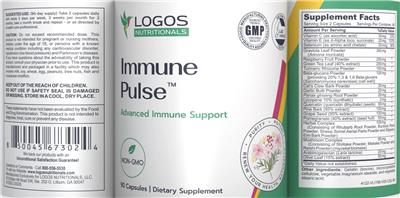
UPC 8 50045 67302 4 Match it to the barcode on your bottle

Medically reviewed by Dr. Brian Staiger, PharmD, BCPS
Also reviewed by the HelloPharmacist Editorial Team
Updated Details about this page
- Label on file from the NIH Dietary Supplement Label Database, dated Sep 25, 2025.
- The interaction, evidence and safety records come from the Natural Medicines database, which we license, read against this label by our own system; the pharmacy team’s sections are written from those records.
- Dr. Brian Staiger, PharmD, BCPS, is a clinical pharmacist and pharmacotherapy specialist.
- Editorial policy Our sources
AI is used only to summarize verified clinical information, never the open internet. Our AI policy
Summary: The HelloPharmacist Team’s Take
- Form
- Capsule
- Serving Size
- 2 Capsules
- Servings
- 45 per container
- Container Holds
- 90 Capsules
What’s in it, whether it interacts with your drugs, its side effects, whether it works, and what our pharmacists would want you to know before you start it.
- What is Immune Pulse?A supplement from Logos Nutritionals with 23 active ingredients, in capsule form.
- Active Ingredients 2 vitamins, 1 mineral, 16 plant ingredients such as Graviola, Raspberry and Green Tea Leaf, 2 sources of fiber and 2 others: Vitamin C 30 mgVitamin E 20 mgSelenium 20 mcgGraviola, Powder 300 mgRaspberry, Powder 200 mgGreen Tea Leaf Extract 200 mgTurmeric, Powder 100 mgBeta-Glucans, Powder 100 mgCat's Claw, Powder 20 mgGarlic, Powder 20 mgPanax ginseng, Powder 20 mgLycopene 2 mg 23 active ingredients. Each one can interact with drugs or cause side effects on its own, so we check every one. And 11 more, in the Supplement Facts
- Drug Interactions 2,319 drugs have a documented interaction with this supplement; the most serious is rated major. Of those, 1,760 are single drugs and 559 are combination products (two or more drugs in one), each listed under its own name. Based on the 21 of its 23 ingredients we could check. Ask your pharmacist first if you take a drug in any of these categories, the most serious of the 116 on record:
- EphedrineMajor · 8 drugs
- Atorvastatin (Lipitor)Major · 3 drugs
- Nadolol (Corgard)Major · 2 drugs
- Moderate · 2,022 drugs
- Possible Side EffectsUpset stomach 12 ingredientsNausea 10 ingredientsHeadache 8 ingredientsDiarrhea 5 ingredientsBloating 4 ingredientsDizziness 3 ingredients +25 moreReported for 18 of its 23 active ingredients. Not studied in this exact product.
- Well documented Why
Does Immune Pulse work?
What It Is Marketed For
Immune system support
From the claims on the product’s label.
The Closest Use the Research Grades
Exercise-induced respiratory infections Vitamin C
Some studies support it, but the evidence isn’t conclusive.
Its ingredients have stronger research for other uses:
- Vitamin C deficiency Vitamin C
- Ataxia with vitamin E deficiency (AVED) Vitamin E
- Vitamin E deficiency Vitamin E
- Selenium deficiency Selenium
- Green Tea
- Vitamin C
These grades are for each ingredient, not this exact product, and never a promise it will work for you.
And 16 more graded uses, in what the research says- Partial Why
- AllergensNone of its ingredient names point to a major food allergen
- Barcode (UPC)8 50045 67302 4Match it to the barcode on your bottle to be sure this is your product. Not your product? Search for it here
Who Might Consider It
- People looking for immune system support, which is what it is marketed for. The closest use the research grades is exercise-induced respiratory infections, rated Possibly Effective.
- People who want it for vitamin C deficiency, ataxia with vitamin E deficiency (AVED), vitamin E deficiency, selenium deficiency or another graded use: the other uses with research behind them. See each grade
Who Should Be Careful
- Anyone taking blood thinners, heart or blood pressure medicine, cholesterol drugs, diabetes medication, or stimulants should be especially careful.
- Talk it over with your own doctor or pharmacist before starting, particularly if you are pregnant, breastfeeding, or have kidney or liver conditions.
More Before You Take It Show both answersHide Pregnancy and Breastfeeding The Label’s Directions
-
Pregnant or breastfeeding?
- Pregnancy Turmeric
- ! When used orally in medicinal amounts; turmeric might stimulate the uterus and increase menstrual flow.
- Breastfeeding Turmeric
- When used orally in amounts commonly found in food.
- Pregnancy and Breastfeeding Vitamin C
- ! When used orally in excessive doses.
- Pregnancy Vitamin E
- When used orally and appropriately.
- Breastfeeding Vitamin E
- ! When used orally in amounts that exceed the UL due to increased risk of adverse effects.
-
How does the label say to take it?
“Suggested use: (90-day supply) Take 2 capsules daily with meals 5 days per week, 3 weeks per month for 3 months, take a month break and repeat - or as directed by a health care professional.”
The maker’s words. Your pharmacist or doctor may advise differently.
Everything the label says
From the label dated Sep 25, 2025: 21 of its 23 active ingredients were checked against our records; the other two are not in them yet. A summary of what is known, not a grade or a test of the product. How these ratings are computed
Ask Anything About This Supplement
Name a drug you take, or ask about side effects, ingredients or pregnancy.
AI answers come from this label and our own records, never the open internet. AI can make mistakes, so always check with your doctor or pharmacist. How we use AI
Ask the Pharmacist
A licensed pharmacist will answer your question by email — free, usually within 24 hours.
Got it — thank you!
A licensed pharmacist will answer within 24 hours. Keep an eye on your email (worth checking spam, just in case).
What’s Inside Immune Pulse by Logos Nutritionals
23 Active Ingredients, Each Checked on Its Own
A supplement is often several ingredients in one bottle, and each one can interact with drugs or cause side effects on its own. We check every one of them against our records.
- Vitamin CDrug interactions on record, most serious: Moderate
- Vitamin EDrug interactions on record, most serious: Moderate
- SeleniumDrug interactions on record, most serious: Moderate
- Graviola, PowderDrug interactions on record, most serious: Moderate
- Raspberry, PowderNot in our interaction records yet
- Green Tea Leaf ExtractDrug interactions on record, most serious: Major
- Turmeric, PowderDrug interactions on record, most serious: Moderate
- Beta-Glucans, PowderDrug interactions on record, most serious: Moderate
And 15 more, each with its own card below.
The label gives an exact amount for 19 of its 23 active ingredients. The other four are inside one proprietary blend, “Herbal Complex”, and the label gives one total for it, not how much of each ingredient is in it.
- 19 state an exact amount
- 4 have no amount of their own
- Herbal Complex 100 mg in total · 4 ingredients, no amount for each
This rates what the label tells you, not the quality of the product.
Supplement Facts
| Amount Per Serving | % Daily Value | |
|---|---|---|
| Vitamin C | 30 mg | 33% |
| Vitamin E | 20 mg | 133% |
| Selenium | 20 mcg | 36% |
| Graviola, Powder | 300 mg | † |
| Raspberry, Powder | 200 mg | † |
| Green Tea Leaf Extract | 200 mg | † |
| Turmeric, Powder | 100 mg | † |
| Beta-Glucans, Powder | 100 mg | † |
| Cat's Claw, Powder | 20 mg | † |
| Garlic, Powder | 20 mg | † |
| Panax ginseng, Powder | 20 mg | † |
| Lycopene | 2 mg | † |
| Quercetin | 50 mg | † |
| Pine Bark Extract | 100 mg | † |
| Grape Seed Extract | 100 mg | † |
| Pomegranate Seed Husk Extract | 50 mg | † |
| Herbal Complex | 100 mg | † |
| Rhubarb, Powder | † | |
| Burdock, Powder | † | |
| Sheep Sorrel, Powder | † | |
| Slippery Elm, Powder | † | |
| Mushroom Complex | 80 mg | † |
| Shiitake, Powder | † | |
| Maitake, Powder | † | |
| Reishi, Powder | † | |
| Arabinogalactan | 20 mg | † |
| Olive Leaf Extract | 50 mg | † |
Other ingredients: Bovine Gelatin, Microcrystalline Cellulose, Magnesium Stearate, Stearic Acid
† Daily Value not established.
Daily Values for adults and children 4 or more years of age.
As the label prints it, from the NIH Dietary Supplement Label Database.
Each Ingredient and Its Drug Interactions
Tap one for more about it and its full guide. A drug can interact with this supplement through any one of them.
Immune Pulse is a capsule made with 25 ingredients.
- Vitamin C, vitamin E, selenium, and lycopene are the nutrient-type ingredients, and the rest are plant-based and mushroom powders or extracts, including green tea, garlic, turmeric, maitake, and shiitake.
-
Vitamin C 30 mg Interacts with 207 drugs
Form on the label: Ascorbic Acid
Vitamin C (ascorbic acid) is an essential nutrient your body needs but cannot make, so you must get it from food or supplements.
- It's important for immune function, collagen, and acts as an antioxidant, but taking large doses doesn't prevent colds for most people and may cause stomach upset.
- Most people get enough from a balanced diet, so check with your pharmacist or doctor before taking high-dose supplements.
The full Vitamin C guide: uses, dosage and safety Every Vitamin C drug interaction
-
Vitamin E 20 mg Interacts with 766 drugs
Form on the label: D-Alpha-Tocopherol Succinate
Vitamin E is an essential fat-soluble vitamin and antioxidant that most people get in adequate amounts from a normal diet.
- Supplements can help correct a true deficiency, but high-dose vitamin E has not been clearly proven to prevent heart disease or cancer and may carry risks.
- Talk to your pharmacist or doctor before taking high doses.
The full Vitamin E guide: uses, dosage and safety Every Vitamin E drug interaction
-
Selenium 20 mcg Interacts with 321 drugs
Form on the label: Selenium Amino Acid Chelate
Selenium is an essential trace mineral your body needs in small amounts for thyroid function, antioxidant defense, and immune health.
- Most people who eat a varied diet get enough, and supplements are mainly useful for those who are deficient.
- Because too much selenium can be toxic, stick to recommended amounts and check with your pharmacist or doctor before supplementing.
The full Selenium guide: uses, dosage and safety Every Selenium drug interaction
-
Graviola, Powder 300 mg Interacts with 1 drug
Form on the label: Annona muricata, Powder
Graviola (soursop) is a tropical fruit tree whose leaves, fruit, and bark are used in traditional medicine, especially in parts of South America, Africa, and Asia.
- Despite popular online claims that it fights cancer, there is no reliable human evidence that it treats or cures any disease, and animal research raises concerns that it may harm nerve cells.
- Talk with your pharmacist or doctor before using it, and avoid it during pregnancy and breastfeeding.
The full Graviola guide: uses, dosage and safety Every Graviola drug interaction
-
Raspberry, Powder 200 mg We know this ingredient, but hold no drug interaction record for it yet, so it was not checked
-
Green Tea Leaf Extract 200 mg Interacts with 1,294 drugs
Green tea is a popular beverage rich in antioxidants called catechins, and drinking it in normal amounts is considered safe for most people.
- Concentrated green tea extracts are a different story—they may help modestly with weight or heart health for some, but high doses have been linked to rare liver problems.
- Talk to your pharmacist or doctor before taking green tea supplements, especially if you have liver concerns or are pregnant.
The full Green Tea guide: uses, dosage and safety Every Green Tea drug interaction
-
Turmeric, Powder 100 mg Interacts with 1,134 drugs
Turmeric is a popular spice whose main active compounds, curcuminoids, are studied mostly for inflammation and joint pain.
- Some research is promising, but quality is mixed and curcumin is poorly absorbed on its own.
- For most people, dietary amounts are safe, but talk to your pharmacist or doctor before taking concentrated supplements, especially if you are pregnant, nursing, or have a medical condition.
The full Turmeric guide: uses, dosage and safety Every Turmeric drug interaction
-
Beta-Glucans, Powder 100 mg Interacts with 293 drugs
Form on the label: Beta-1,3-Glucan, Powder, Beta-1,6-Glucan, Powder
Beta-glucans are natural fibers found in oats, barley, mushrooms, and yeast.
- The strongest evidence supports the oat and barley types for modestly lowering cholesterol and blood sugar, while immune-related claims from yeast and mushroom sources are far less proven.
- They are generally well tolerated, but check with your pharmacist before starting any supplement.
The full Beta-glucans guide: uses, dosage and safety Every Beta-glucans drug interaction
-
Cat's Claw, Powder 20 mg Interacts with 964 drugs
Cat's claw is a South American vine traditionally used for inflammation, joint pain, and immune support.
- Some small studies hint it may help with arthritis symptoms, but the overall evidence is limited and not strong enough to confirm clear benefits.
- Talk with your pharmacist or doctor before using it, and avoid it during pregnancy and breastfeeding.
The full Cat's Claw guide: uses, dosage and safety Every Cat's Claw drug interaction
-
Garlic, Powder 20 mg Interacts with 991 drugs
Garlic is a common food and supplement that may modestly help with blood pressure and cholesterol, though the evidence is mixed and effects are usually small.
- It is generally safe in food amounts, but concentrated supplements can cause stomach upset, breath and body odor, and a higher risk of bleeding.
- Talk with your pharmacist or doctor before taking garlic supplements, especially if you take other medicines.
The full Garlic guide: uses, dosage and safety Every Garlic drug interaction
-
Panax ginseng, Powder 20 mg We know this ingredient, but hold no drug interaction record for it yet, so it was not checked
-
Lycopene 2 mg Interacts with 122 drugs
Lycopene is a red plant pigment and antioxidant found mainly in tomatoes and other red fruits.
- Eating lycopene-rich foods is linked with possible heart and prostate benefits, but evidence from supplements is mixed and far from conclusive.
- For most people, getting lycopene from food is a safe and reasonable choice; talk to your pharmacist before taking high-dose supplements.
The full Lycopene guide: uses, dosage and safety Every Lycopene drug interaction
-
Quercetin 50 mg Interacts with 1,172 drugs
Form on the label: Quercetin Dihydrate
Quercetin is a plant flavonoid with antioxidant and anti-inflammatory properties found in many common foods and sold as a supplement.
- While early research is interesting for allergies, blood pressure, and inflammation, strong human evidence is limited for most uses.
- It is generally well tolerated in food amounts, but talk to your pharmacist or doctor before taking high-dose supplements.
The full Quercetin guide: uses, dosage and safety Every Quercetin drug interaction
-
Pine Bark Extract 100 mg Interacts with 327 drugs
Maritime pine bark extract (often sold as Pycnogenol) is a plant-based antioxidant most studied for circulation, vein, and skin health.
- Some research is promising, but many studies are small or industry-funded, so benefits are not firmly proven.
- It is generally well tolerated, but talk to your pharmacist or doctor before starting it.
The full Maritime Pine guide: uses, dosage and safety Every Maritime Pine drug interaction
-
Grape Seed Extract 100 mg Interacts with 912 drugs
Grapes and grape products like grape seed extract contain antioxidant compounds such as resveratrol and proanthocyanidins that may support heart and blood vessel health.
- While the food is healthy and generally safe, the supplement evidence for treating specific conditions is mostly limited or preliminary.
- Talk with your pharmacist or doctor before starting a grape supplement.
The full Grape guide: uses, dosage and safety Every Grape drug interaction
-
Pomegranate Seed Husk Extract 50 mg Interacts with 924 drugs
Pomegranate is a nutrient-rich fruit that is high in antioxidants and is widely enjoyed as food and juice.
- Early research suggests it may support heart health and blood pressure, but the evidence is still limited and not strong enough to call it a proven treatment.
- As a food it is generally safe, but talk to your pharmacist or doctor before using concentrated extracts, especially if you are pregnant, breastfeeding, or take medications.
The full Pomegranate guide: uses, dosage and safety Every Pomegranate drug interaction
-
Herbal Complex 100 mg Four ingredients inside it, each checked on its own
- Rhubarb, Powder 660 drugs
- Burdock, Powder 122 drugs
- Sheep Sorrel, Powder 169 drugs
- Slippery Elm, Powder 2,022 drugs
-
Mushroom Complex 80 mg Interacts with 260 drugs
Maitake is an edible mushroom long used as food and in traditional Japanese medicine, and it is being studied for possible immune, blood sugar, and blood pressure effects.
- The human evidence is still limited and not strong enough to recommend it as a treatment.
- It is generally well tolerated as food, but talk to your pharmacist or doctor before using concentrated supplements.
The full Maitake Mushroom guide: uses, dosage and safety Every Maitake Mushroom drug interaction
- Shiitake, Powder 312 drugs
- Maitake, Powder 260 drugs
- Reishi, Powder
-
Arabinogalactan 20 mg Interacts with 121 drugs
Form on the label: Larix laricina
Larch arabinogalactan is a soluble fiber from larch trees that is mainly used as a prebiotic and for immune support.
- Early research is interesting but limited, and most claims are not yet firmly proven.
- It is generally well tolerated, but pregnant and breastfeeding people should be cautious and check with a healthcare provider first.
The full Larch Arabinogalactan guide: uses, dosage and safety Every Larch Arabinogalactan drug interaction
-
Olive Leaf Extract 50 mg No known drug interactions
Olive comes from the same tree that gives us olives and olive oil, and its leaf and fruit contain antioxidant compounds like oleuropein and hydroxytyrosol.
- Olive oil as part of a Mediterranean diet is well-studied for heart health, but supplements made from olive leaf or fruit extract have less solid evidence.
- Talk to your pharmacist or doctor before starting any supplement, especially if you have health conditions or take medications.
Other Ingredients (Inactive)
The capsule or tablet itself, fillers, coatings and flavors. Not part of the drug interaction check; the allergen check below reads them.
- Bovine Gelatin
- Microcrystalline Cellulose
- Magnesium Stearate
- Stearic Acid
Allergens in Immune Pulse
None of its ingredient names point to a major food allergen.
Named on this label
- Gelatin (animal-derived)In the ingredients: Bovine Gelatin
Not named in the ingredients
- Milk
- Egg
- Fish
- Shellfish
- Tree nuts
- Peanuts
- Wheat or other gluten grains
- Soy
- Sesame
- The label’s allergen statement“This product is manufactured and packaged in a facility which may also process milk, soy, wheat, egg, peanuts, tree nuts, fish and crustacean shellfish.”
From the label text and ingredient names on file; we do not test products. With a serious allergy, check your bottle and ask the maker or your pharmacist.
What the Label Says
The maker’s own words, from the label. We do not verify or endorse them.
- Storage
-
“Store in a cool, dry place.”
- Formulation
-
“We back our products with an Unconditional Satisfaction Guarantee!”
“Advanced Immune Support”
“Non-GMO”
- General statements
-
“Questions or Comments - Call 800-556-5530 Or visit our Website: www.logosnutritionals.com”
- Brand IP Statement(s)
-
“Copyright 2022 LOGOS”
- Seals and symbols
-
“Sourced from a GMP Certified Facility Good Manufacturing Practice Quality Assured Lab Verified 3rd Party Test Purity Potency Renew your health, naturally”
- FDA Statement of Identity
-
“Dietary Supplement”
The Immune Pulse Label on File
The label scan on file at the NIH Dietary Supplement Label Database, dated September 2025. Always read the label on the bottle you have.
Product Facts
- Brand
- Logos Nutritionals
- Barcode (UPC)
- 850045673024
- Net contents
- 90 Capsules
- Market status
- On market
- Date entered into DSLD
- Sep 25, 2025
- DSLD ID
- 335712
- Product type
- Other Combinations
- Supplement form
- Capsule
- Dietary claims / uses
- All Other, Structure/Function
- Intended target group(s)
- Adult (18 - 50 Years), Women (not pregnant or lactating)
Is this label outdated? Report a formula or label change and our pharmacy team will review it.
Immune Pulse by Logos Nutritionals Side Effects
Why this rating?
We look for three kinds of safety information on each ingredient: side effects reported in studies, a pregnancy and breastfeeding rating, and a safety write-up from our pharmacy team. All three are on file for each of the 22 ingredients we could check.
So this rates how much is known, not whether Immune Pulse is right for you.
Reported with 22 of its ingredients
- Most often
- Upset stomach, nausea, headache, diarrhea, bloating and dizziness
- !Rare but serious
- Bleeding, hemorrhagic stroke and cardiovascular complications See details
HelloPharmacist Team Summary of Side Effects
Immune Pulse is generally well tolerated based on the data for its ingredients, but you may notice upset stomach, diarrhea, or headache, with dizziness and feeling jittery also reported.
- Rare but more serious effects include kidney stones with very high doses of vitamin C and liver damage with concentrated green tea extract, so call your doctor promptly if you notice yellowing skin or eyes, dark urine, or severe stomach pain.
- Because dizziness has been reported, see how it affects you before driving.
- Anyone with kidney disease, liver disease, bleeding disorders, or who takes blood thinners should talk with their own doctor or pharmacist before starting.
Side Effects, Ingredient by Ingredient
A supplement’s side effects come from its ingredients. Here is what is reported with each one.
Vitamin C
Most reported
- Upset stomach, nausea, or stomach cramps
- Diarrhea
- Heartburn
- Headache
Selenium
Most reported
- Gastric discomfort
- Headache
- Rash
From the Natural Medicines database, which we license.
Every reported effect, in the Selenium guideGraviola
Most reported
- Stomach upset
- Nausea
Green Tea
Most reported
- Trouble sleeping or feeling jittery
- Nervousness or anxiety
- Upset stomach or nausea, especially on an empty stomach
- Headache
Turmeric
Most reported
- Nausea
- Upset stomach
- Diarrhea
- Bloating
Beta-glucans
Most reported
- Bloating
- Gas
- Fullness
- Changes in bowel habits
Cat's Claw
Most reported
- Headache
- Dizziness
- Nausea
- Upset stomach
Garlic
Most reported
- Bad breath
- Body odor
- Heartburn
- Upset stomach
Quercetin
Most reported
- Headache
- Upset stomach
- Tingling sensations
Maritime Pine
Most reported
- Stomach upset
- Nausea
- Dizziness
- Headache
Grape
Most reported
- Headache
- Dizziness
- Upset stomach
- Nausea
Pomegranate
Most reported
- Diarrhea
- Flatulence
From the Natural Medicines database, which we license.
Every reported effect, in the Pomegranate guideRhubarb
Most reported
- Abdominal cramping
- Diarrhea
- Stomach upset
Slippery Elm
Most reported
- Nausea
- Other digestive upset
Maitake Mushroom
Most reported
- Upset stomach
- Nausea
- Digestive discomfort
Shiitake Mushroom
Most reported
- Abdominal discomfort
- Bloating
- Diarrhea
- Nausea
- Vomiting
From the Natural Medicines database, which we license.
Every reported effect, in the Shiitake Mushroom guideLarch Arabinogalactan
Most reported
- Bloating
- Gas
- Stomach discomfort
Olive
Most reported
- Stomach upset
- Nausea
- Headache
Vitamin E, Lycopene, Burdock and Sorrel have side-effect reports on file, but no list of the most common ones. Read them in each guide: Vitamin E, Lycopene, Burdock, Sorrel.
Immune Pulse Warnings: Who Should Be Careful
Immune Pulse has 23 active ingredients, and each can carry warnings of its own. We checked the 21 in our ingredient guides, and each warning below names the ingredient it comes from. Raspberry, Powder and Panax ginseng, Powder are not in our guides yet, so ask your pharmacist about them. If any of these apply to you, talk to your doctor or pharmacist before you start it.
- Vitamin C3 warnings below
- Vitamin E2 warnings below
- Selenium1 warning below
- Graviola2 warnings below
- Green Tea3 warnings below
- Turmeric2 warnings below
- Beta-glucans3 warnings below
- Cat's Claw3 warnings below
- Garlic3 warnings below
- Lycopene1 warning below
- Quercetin2 warnings below
- Maritime Pine1 warning below
- Grape2 warnings below
- Pomegranate3 warnings below
- Rhubarb3 warnings below
- Burdock3 warnings below
- Sorrel3 warnings below
- Slippery Elm3 warnings below
- Maitake Mushroom3 warnings below
- Shiitake Mushroom3 warnings below
- Larch Arabinogalactan3 warnings below
- Olive2 warnings below
- Raspberry, PowderNot in our guides yet
- Panax ginseng, PowderNot in our guides yet
-
Bleeding Problems or Surgery
- Vitamin EThe concern is mainly with high-dose supplements taken over a long time, which may increase the risk of bleeding and, in some studies, has been linked to other risks.
- Green TeaThe same goes for people with bleeding disorders or those preparing for surgery.
- TurmericPeople who have gallbladder disease or gallstones, who are prone to kidney stones, or who have bleeding disorders should be cautious and check with a healthcare provider first.
- Cat's ClawPeople with bleeding disorders, low blood pressure, or kidney problems should also use care.
Show 7 more
- Cat's ClawAlways tell your pharmacist or doctor about any supplements you take, especially before surgery or if you have a chronic health condition.
- GarlicBecause garlic may slow blood clotting, use caution if you have a bleeding disorder or are scheduled for surgery.
- GarlicIf you are taking blood thinners or other medicines, check with your pharmacist before starting a garlic supplement.
- LycopenePeople with health conditions, those scheduled for surgery, and anyone taking medications should check with a pharmacist or doctor before starting a supplement.
- QuercetinIf you have a medical condition, take prescription medicines, or are scheduled for surgery, check with your pharmacist or doctor before starting quercetin.
- GrapeWho should be cautious: People with bleeding disorders, those taking blood-thinning medicines, and anyone scheduled for surgery should talk to a healthcare provider before using concentrated grape supplements, since some grape compounds may affect blood clotting.
- Shiitake MushroomIf you have an autoimmune condition or are scheduled for surgery, talk to your healthcare provider before using shiitake supplements.
-
Diabetes or Low Blood Sugar
- GraviolaPeople with Parkinson's disease or other movement disorders should be especially cautious, and so should people with low blood pressure or diabetes, since graviola may affect blood pressure and blood sugar.
- Maritime PinePeople with autoimmune conditions or those taking medicines that affect the immune system or blood sugar should be cautious and check with a healthcare provider first.
- Maitake MushroomBecause maitake may lower blood sugar, people with diabetes or low blood sugar should use caution and monitor closely.
- OliveIf you have low blood pressure or take medicine that lowers blood pressure or blood sugar, use caution, since olive supplements might add to those effects.
-
Blood Pressure
- Maitake MushroomIt may also affect blood pressure, so those with blood pressure concerns should be careful.
-
Liver Disease
- Green TeaPeople with liver disease should be especially careful and check with a healthcare provider first.
-
Kidney Disease or Kidney Stones
- Vitamin CVery high doses (often several grams a day) are more likely to cause side effects and may raise the risk of kidney stones in some people.
- Vitamin CPeople with kidney disease, a history of kidney stones, or a condition called hemochromatosis (iron overload) should be cautious and talk to a doctor before taking high doses.
- QuercetinVery high amounts taken over long periods have raised concerns about possible effects on the kidneys, so people with kidney problems should be especially cautious and talk to a doctor first.
- RhubarbPeople who should be cautious or avoid medicinal rhubarb include those with kidney stones (because of its oxalate content), inflammatory bowel disease, intestinal blockage, or unexplained belly pain.
- SorrelPeople who should be especially careful include those with a history of kidney stones, kidney disease, gout, or rheumatoid arthritis, since oxalates may worsen these conditions.
-
Heart Conditions
- Green TeaBecause green tea contains caffeine, people who are sensitive to caffeine, have heart rhythm problems, anxiety, or trouble sleeping should be cautious.
-
Stomach or Bowel Problems
- GarlicPeople with stomach or digestive problems may find garlic irritating.
- Larch ArabinogalactanPeople with bowel conditions, those prone to bloating, or anyone with a weakened immune system should talk to a healthcare provider before starting it.
-
Autoimmune Conditions
- Cat's ClawBecause it may affect the immune system, people with autoimmune conditions (such as lupus or multiple sclerosis) and those who have had an organ transplant should be especially cautious and check with their doctor first.
-
Allergies
- Beta-glucansPeople with a known allergy to the source (such as a yeast, mushroom, or grain allergy) should avoid products made from that source.
- PomegranatePeople with allergies to pomegranate should avoid it.
- BurdockPeople who are allergic to ragweed, chrysanthemums, marigolds, daisies, or other Asteraceae plants may also react to burdock and should be cautious.
- Slippery ElmPeople with a known allergy to elm should avoid it.
Show 3 more
- Maitake MushroomPeople with mushroom allergies should avoid it.
- Shiitake MushroomPeople with mushroom allergies should avoid shiitake.
- Larch ArabinogalactanIf you have allergies to plant or tree products, introduce it cautiously.
-
Children
- RhubarbChildren should not use rhubarb laxatives without medical advice.
- SorrelChildren have become seriously ill from eating very large amounts of raw sorrel.
-
If You Take Other Drugs
- GraviolaIf you have any chronic illness or take medications, check with your pharmacist or doctor first.
- TurmericAlways talk to your pharmacist or doctor before starting a supplement, especially if you take other medicines or have a health condition.
- Beta-glucansIf you have a health condition or take medication, talk with a healthcare professional before starting a beta-glucan supplement.
- GrapeAlways check with your pharmacist or doctor before starting any new supplement, especially if you have a health condition or take other medicines.
Show 6 more
- PomegranateIf you have a chronic health condition or take prescription medications, talk with your pharmacist or doctor before using pomegranate supplements.
- BurdockBecause burdock may act as a diuretic, people who are dehydrated or taking medications that affect fluid balance should use caution.
- SorrelAlways talk with your pharmacist or doctor before using sorrel as a supplement, especially if you take other medicines or have a health condition.
- Slippery ElmAlways talk with your pharmacist or doctor before starting any herbal supplement, especially if you have a medical condition or take other medicines.
- Larch ArabinogalactanAlways check with a pharmacist or doctor before adding any new supplement, especially if you have a medical condition or take other medicines.
- OliveAlways talk with a pharmacist or doctor before adding a new supplement, especially if you have a health condition or take regular medications.
-
Other Cautions
- Vitamin CPeople with a rare condition called G6PD deficiency should also use caution with very high doses.
- Vitamin EPeople with certain health conditions should check with a doctor first.
- Beta-glucansTo be safe, avoid high-dose supplements unless your doctor or pharmacist approves.
- PomegranateThese parts should not be used in concentrated forms without professional guidance.
Show 4 more
- RhubarbEating normal amounts of cooked stalks as food is generally considered acceptable, but talk to your doctor or pharmacist if unsure.
- Slippery ElmBecause slippery elm is a thick fiber that swells in water, it is wise to take it with plenty of fluid to avoid choking or it sticking in the throat, especially in people with swallowing difficulties.
- Shiitake MushroomTo be safe, avoid supplement doses unless your doctor approves.
- For ingredients rated with insufficient information, there isn't enough data to know either way, so talk with your doctor or pharmacist for personal advice.
-
What the Label Warns
- “Caution: Do not exceed recommended dose. If you have questions about the advisability of taking this product, consult your physician prior to use. Do not use if safety seal is damaged or missing.”
- “This product is not intended for pregnant or nursing mothers, children under the age of 18, or persons with a known medical condition including any cardiovascular disorder, hypotension (low blood pressure) and Parkinson's disease.”
- “This product is not intended for pregnant or nursing mothers, children under the age of 18, or persons with a known medical condition including any cardiovascular disorder, hypotension (low blood pressure) and Parkinson's disease. Keep out of the reach of children.”
The maker’s wording, from the product label.
-
Pregnant or Breastfeeding
Each ingredient’s rating for pregnancy and for breastfeeding, and what it covers.
Pregnancy
-
When used orally in amounts commonly found in food.
-
When used orally in medicinal amounts; turmeric might stimulate the uterus and increase menstrual flow.
Breastfeeding
-
When used orally in amounts commonly found in food.
There is insufficient reliable information available about the safety of using turmeric in medicinal amounts during lactation.
Pregnancy and Breastfeeding The record rates both the same
-
When used orally and appropriately.
-
When used orally in excessive doses.
Tell patients over age 19 not to use doses exceeding the UL of 2000 mg daily when pregnant or breast-feeding and for those 14-18 years of age not to use doses exceeding 1800 mg daily when pregnant or breast-feeding.
2 more points on this rating
- Higher doses can cause osmotic diarrhea and gastrointestinal upset.
- Large doses of vitamin C during pregnancy can also cause newborn scurvy; avoid using.
Show 20 more ingredients
Pregnancy
-
When used orally and appropriately.
The tolerable upper intake level (UL) during pregnancy is 800 mg for those 14-18 years of age and 1000 mg for those 19 years and older.
6 more points on this rating
- However, maternal supplementation is not generally recommended unless dietary vitamin E falls below the RDA.
- No serious adverse effects were reported with oral intake of 400 IU per day starting at weeks 9-22 of pregnancy in healthy patients or those at high risk for pre-eclampsia, or with 600-900 IU daily during the last two months of pregnancy.
- However, some preliminary evidence suggests that taking vitamin E supplements might be harmful when taken in early pregnancy.
- A case-control study found that taking a vitamin E supplement during the first 8 weeks of pregnancy is associated with a 1.7-9-fold increase in odds of congenital heart defects.
- However, the exact amount of vitamin E consumed during pregnancy in this study is unclear.
- Until more is known, advise patients to avoid taking a vitamin E supplement in early pregnancy unless needed for an appropriate medical indication.
Breastfeeding
-
When used orally in amounts that do not exceed the tolerable upper intake level (UL).
The UL during lactation is 800 mg for those 14-18 years of age and 1000 mg for those 19 years and older.
-
When used orally in amounts that exceed the UL due to increased risk of adverse effects.
Pregnancy
-
When used orally and appropriately.
Selenium appears to be safe when used short-term in amounts that do not exceed the tolerable upper intake level (UL) of 400 mcg daily; however, there is concern that long-term use might not be safe.
-
When used orally in excessive doses.
Doses above 400 mcg daily may cause significant toxicity.
Breastfeeding
-
When used orally and appropriately.
Selenium appears to be safe when used short-term in amounts that do not exceed the tolerable upper intake level (UL) of 400 mcg daily when taken short-term; however, there is concern that long-term use might not be safe.
-
When used orally in excessive doses.
Doses above 400 mcg daily may cause significant toxicity.
-
When used orally in HIV-positive women.
Selenium supplementation in HIV-positive women not taking highly active antiretroviral therapy may increase HIV-1 levels in breast milk.
Pregnancy and Breastfeeding The record rates both the same
-
When used orally.
Pregnancy
-
When used orally in moderate amounts.
Due to the caffeine content of green tea, pregnant patients should closely monitor their intake to ensure moderate consumption.
12 more points on this rating
- Fetal blood concentrations of caffeine approximate maternal concentrations.
- The use of caffeine during pregnancy is controversial; however, moderate consumption has not been associated with clinically important adverse fetal effects.
- In some studies consuming amounts over 200 mg daily is associated with a significantly increased risk of miscarriage.
- This increased risk may be most likely to occur in those with genotypes that confer a slow rate of caffeine metabolism.
- According to a review by Health Canada, and a subsequent large meta-analysis conducted in the US, most healthy pregnant patients can safely consume doses up to 300 mg daily without an increased risk of spontaneous abortion, stillbirth, preterm birth, fetal growth retardation, or congenital malformations.
- Advise keeping caffeine consumption below 300 mg daily.
- This is similar to the amount of caffeine in about 6 cups of green tea.
- Keep in mind that only the amount of ADDED caffeine must be stated on product labels.
- The amount of caffeine found in ingredients such as green tea, which naturally contains caffeine, does not need to be provided.
- This can make it difficult to determine the total amount of caffeine in a given product.
- Based on animal models, green tea extract catechins are also transferred to the fetus, but in amounts 50-100 times less than maternal concentrations.
- The potential impact of these catechins on the human fetus is not known, but animal models suggest that the catechins are not teratogenic.
-
When used orally in amounts providing more than 300 mg caffeine daily.
Caffeine from green tea crosses the placenta, producing fetal blood concentrations similar to maternal levels.
16 more points on this rating
- Consumption of caffeine in amounts over 300 mg daily is associated with a significantly increased risk of miscarriage in some studies.
- Advise keeping caffeine consumption from all sources below 300 mg daily.
- This is similar to the amount of caffeine in about 6 cups of green tea.
- High maternal doses of caffeine throughout pregnancy have also resulted in symptoms of caffeine withdrawal in newborn infants.
- High doses of caffeine have also been associated with spontaneous abortion, premature delivery, and low birth weight.
- However, some research has also found that intrauterine exposure to even modest amounts of caffeine, based on maternal blood levels during the first trimester, is associated with a shorter stature in children ages 4-8 years.
- Keep in mind that only the amount of ADDED caffeine must be stated on product labels.
- The amount of caffeine found in ingredients such as green tea, which naturally contains caffeine, does not need to be provided.
- This can make it difficult to determine the total amount of caffeine in a given product.
- There is also concern that consuming large amounts of green tea might have antifolate activity and potentially increase the risk of folic acid deficiency-related birth defects.
- Catechins in green tea inhibit the enzyme dihydrofolate reductase in vitro.
- This enzyme is responsible for converting folic acid to its active form.
- Preliminary evidence suggests that increasing maternal green tea consumption is associated with increased risk of spina bifida.
- Also, evidence from epidemiological research suggests that serum folate levels in pregnant patients with high green tea intake (57.3 mL per 1000 kcal) are decreased compared to participants who consume moderate or low amounts of green tea.
- More evidence is needed to determine the safety of using green tea during pregnancy.
- For now, advise pregnant patients to avoid consuming large quantities of green tea.
Breastfeeding
-
When used orally in moderate amounts.
Due to the caffeine content of green tea, nursing parents should closely monitor caffeine intake.
Breast milk concentrations of caffeine are thought to be approximately 50% of maternal serum concentrations.
-
When used orally in large amounts.
Consumption of green tea might cause irritability and increased bowel activity in nursing infants.
There is insufficient reliable information available about the safety of green tea extracts when applied topically during breast-feeding.
Pregnancy
-
When used orally.
There is concern that cat's claw might be unsafe based on its traditional use as a contraceptive; avoid using.
Breastfeeding
-
Insufficient reliable information available; avoid using.
Pregnancy
-
When used orally in amounts commonly found in foods.
-
When used orally in medicinal amounts.
Garlic is reported to have abortifacient activity.
4 more points on this rating
- One study also suggests that garlic constituents are distributed to the amniotic fluid after a single dose of garlic.
- However, there are no published reports of garlic adversely affecting pregnancy.
- In clinical research, garlic 800 mg daily was used during the third trimester of pregnancy with no reported adverse outcomes.
- There is insufficient reliable information available about the safety of topical garlic during pregnancy.
Breastfeeding
-
When used orally in amounts commonly found in foods.
-
When used orally in amounts greater than those found in foods.
Several small studies suggest that garlic constituents are secreted in breast milk, and that nursing infants of mothers consuming garlic are prone to extended nursing.
There is insufficient reliable information available about the safety of topical garlic during lactation.
Pregnancy and Breastfeeding The record rates both the same
-
When used in medicinal amounts, rhubarb root is a stimulant laxative; avoid using.
Pregnancy
-
Not enough reliable safety data; some sources caution against using it during pregnancy.
Breastfeeding
-
Insufficient reliable information available; avoid using.
Slippery elm bark has historically been inserted into the cervix to induce abortion.
2 more points on this rating
- As a result, slippery elm has been reported in some sources to have abortifacient activity.
- However, there is no reliable information available about whether slippery elm has abortifacient activity when taken orally.
Pregnancy and Breastfeeding The record rates both the same
-
Insufficient reliable information available; avoid using.
Pregnancy and Breastfeeding The record rates both the same
-
Insufficient reliable information available; avoid using.
Pregnancy
-
When used orally during the third trimester of pregnancy.
In one small clinical study, a standardized extract of maritime pine bark (Pycnogenol, Horphag Research) has been used at a dose of 30 mg daily with apparent safety during the third trimester of pregnancy.
However, more evidence is needed; use cautiously or avoid using.
Breastfeeding
-
There is insufficient reliable information available regarding the safety of maritime pine when used during lactation; avoid using.
Pregnancy and Breastfeeding The record rates both the same
-
Insufficient reliable information available; avoid using.
Pregnancy and Breastfeeding The record rates both the same
-
Insufficient reliable information available; avoid using.
Pregnancy and Breastfeeding The record rates both the same
-
Insufficient reliable information available; avoid consuming greater than food amounts.
Pregnancy and Breastfeeding The record rates both the same
-
Insufficient reliable information available; avoid using.
Pregnancy and Breastfeeding The record rates both the same
-
Insufficient reliable information available; stick with amounts commonly found in foods.
Pregnancy
-
When consumed in amounts commonly found in foods.
There is insufficient reliable information available about the safety of lycopene supplements during pregnancy.
Small, low-quality clinical studies have shown conflicting results about the safety of using lycopene 2-4 mg daily during pregnancy.
Breastfeeding
-
When consumed in amounts commonly found in foods.
There is insufficient reliable information available about the safety of lycopene supplements during lactation; avoid using in amounts greater than those typically found in foods.
Pregnancy and Breastfeeding The record rates both the same
-
When used orally in amounts commonly found in foods.
There is insufficient reliable information available about the safety of medicinal amounts during pregnancy and breast-feeding; avoid using in amounts greater than what is commonly found in foods.
Pregnancy and Breastfeeding The record rates both the same
-
When the fruit or fruit juice is consumed orally and appropriately.
There is insufficient reliable information available regarding the safety of using other forms of pomegranate or other parts of the plant during pregnancy or lactation; avoid using.
Pregnancy and Breastfeeding The record rates both the same
-
When used orally in amounts commonly found in foods.
There is insufficient reliable information available about the safety of sorrel used in medicinal amounts during pregnancy and lactation; avoid using.
Our pharmacy team’s notes
- For pregnancy, the safety data advises against rhubarb, graviola, and cat's claw, which are rated possibly unsafe.
Ratings and the words beside them are from the Natural Medicines database, which we license. Where it has no rating, the rating and note are our pharmacy team’s.
-
Rare but Serious Side Effects
-
!
Vitamin C
Rare but more serious concerns with very high or long-term high doses include kidney stones and, in people with iron-overload conditions, too much iron buildup.
Orally: There have been rare case reports of carotid inner wall thickening after large doses of vitamin C.
-
!
Vitamin E
The most serious concern with high doses is an increased risk of bleeding, including, in rare cases, bleeding in the brain (hemorrhagic stroke).
Orally: Bleeding, hemorrhagic stroke, cardiovascular complications.
-
!
Selenium
In severe cases of overdose, more serious effects on the nervous system, kidneys, and heart can occur.
Orally: Excessive ingestion has led to cases of multi-organ failure and death.
-
!
Graviola
The most serious concern is the possible link between repeated, heavy intake of Annona compounds and nerve and movement problems.
Orally: Movement disorders, myeloneuropathy.
-
!
Green Tea
A rare but serious concern with concentrated green tea extract supplements is liver damage.
Orally: Hepatotoxicity, hypokalemia, and thrombotic thrombocytopenic purpura have been reported rarely.
-
!
Turmeric
Signs that need medical attention include yellowing skin or eyes, dark urine, severe stomach pain, or an allergic reaction such as rash, swelling, or trouble breathing.
-
!
Beta-glucans
Serious side effects are uncommon.
-
!
Cat's Claw
Rarely, more serious problems such as allergic reactions, kidney irritation, or changes in blood pressure have been reported.
-
!
Garlic
Some people develop skin irritation or a rash when handling raw garlic, and allergic reactions are possible.
Orally: Some case reports raise concerns about increased risk of bleeding with garlic.
-
!
Lycopene
Serious side effects are rare.
-
!
Quercetin
Higher doses taken by injection (not the usual supplement form) have been linked in some reports to more serious effects, which is one reason very high doses are not recommended.
-
!
Maritime Pine
Allergic reactions are possible, especially in people sensitive to pine or related plants.
-
!
Grape
Some people may have an allergic reaction to grapes or grape products, which can rarely be serious.
Orally: Anaphylaxis to grape skin has been reported.
-
!
Pomegranate
Allergic reactions are uncommon but can happen and may include itching, swelling, hives, or trouble breathing.
-
!
Rhubarb
Serious poisoning is associated with eating the toxic leaves, not the stalks or properly used root.
Orally: Anaphylaxis.
-
!
Burdock
Possible side effects include allergic reactions (skin rash, itching, or, rarely, more serious reactions), especially in people sensitive to daisy-family plants.
Allergic reactions, including contact dermatitis and anaphylaxis.
-
!
Sorrel
Because of its oxalate content, large or frequent doses may contribute to kidney stones or, rarely, more serious kidney problems.
-
!
Slippery Elm
Because it is mostly a soothing fiber, serious problems are uncommon.
-
!
Maitake Mushroom
Allergic reactions are possible, particularly in people sensitive to mushrooms.
-
!
Shiitake Mushroom
Allergic reactions are possible.
Orally: Consumption of raw shiitake mushroom can cause shiitake dermatitis, a skin eruption resembling whiplash marks which can be accompanied by systemic symptoms. Large pieces that have been inadequately chewed can cause intestinal blockage, occasionally requiring surgery.
-
!
Larch Arabinogalactan
Serious side effects appear to be uncommon, but allergic reactions are always possible with any supplement.
-
!
Olive
Allergic reactions are rare but possible, especially in people sensitive to olive tree pollen.
-
!
Our pharmacy team on Immune Pulse
Very high doses of vitamin C can cause side effects and raise the risk of kidney stones, and concentrated green tea extract has been linked to rare liver injury.
When to get help: a serious allergic reaction, with trouble breathing or swelling of the face, lips or throat, needs emergency care: call 911. For any other side effect that worries you, call your doctor or pharmacist.
These reports describe each ingredient, not studies of this exact product. Not medical advice: a side effect you notice after starting a supplement is worth a word with your pharmacist or doctor.
Immune Pulse by Logos Nutritionals Drug Interactions
We checked all 23 active ingredients in this supplement against every drug in our records. A drug can interact with it through any one of them. Raspberry, Powder and Panax ginseng, Powder are not in our interaction records yet.
A major interaction on record
3 of 3, on a scale from Minor or none to Major.Why this rating?
We rate this by the most serious interaction on record, not by how many there are. For Burdock, Rhubarb, Quercetin, Garlic and Pomegranate, the most serious is rated major, which means the combination is best avoided, or used only under close supervision. Some involve kinds of drugs where a small change can matter, such as blood thinners, transplant drugs and cancer treatments.
2,320 drugs are on the full list. What matters is whether one you take is on it, so check yours with the interaction checker on this page.
20 of its 23 active ingredients have drug interactions on record. The ones below matter most. We have no interaction records for Raspberry, Powder, Panax ginseng, Powder and Olive.
- Interacts with
- 1,294 drugs
- Most serious
- Major
- The most serious rating is Major: the caffeine in green tea extract can add to the effects of ephedrine (a stimulant drug), which may raise the risk of serious effects such as high blood pressure, heart attack, stroke, and seizures.
- Green tea extract also carries Major ratings for nadolol (a beta-blocker), whose levels and effects it can reduce, and for atorvastatin (a cholesterol-lowering statin), whose blood levels it can lower.
- Interacts with
- 260 drugs
- Most serious
- Moderate
- We could not check raspberry, reishi, or panax ginseng, or the Herbal Complex and Mushroom Complex blends.
- Interacts with
- 2,022 drugs
- Most serious
- Moderate
- Most of its records involve Oral Drugs.
Show three more ingredients
- Interacts with
- 1,172 drugs
- Most serious
- Moderate
- Most of its records involve Cytochrome P450 3A4 (CYP3A4) Substrates, P-glycoprotein Substrates and Cytochrome P450 2D6 (CYP2D6) Substrates.
- Interacts with
- 1,134 drugs
- Most serious
- Moderate
- Most of its records involve Cytochrome P450 3A4 (CYP3A4) Substrates, Hepatotoxic Drugs and P-glycoprotein Substrates.
- Interacts with
- 991 drugs
- Most serious
- Moderate
- Most of its records involve Cytochrome P450 3A4 (CYP3A4) Substrates, Antihypertensive Drugs and Anticoagulant/Antiplatelet Drugs.
And 14 more ingredients with records, each in the cards below.
From the HelloPharmacist Team
Here is how the interactions add up across the whole label.
- Immune Pulse from Logos Nutritionals can interact with medications through the vitamin C, selenium, lycopene, green tea, grape seed, pine bark, vitamin E, garlic, rhubarb, slippery elm, cat's claw, turmeric, arabinogalactan, graviola, sheep sorrel, maitake, shiitake, burdock, and pomegranate in it.
- Moderate interactions cover blood thinners (anticoagulants and antiplatelet drugs), warfarin (Coumadin), blood pressure medicines (antihypertensives), blood sugar medicines (antidiabetes drugs), several anti-seizure drugs, and immune-suppressing drugs such as cyclosporine and tacrolimus.
- Minor interactions involve contraceptive drugs, niacin, carbamazepine, and drugs processed by the CYP2C9 and CYP3A4 liver enzymes.
Summarized by the HelloPharmacist pharmacy team from the interaction records below. How it is written How we use AI
Why Immune Pulse Interacts, Ingredient by Ingredient
A product interacts through its ingredients. Each card: how many drugs, the most serious rating, and the kinds of drugs it affects most (tap a kind for what it means).
The ingredients driving the most interactions
-
Slippery Elm, Powder 2,022 drugs
Most serious: Moderate1 interaction record on file
The kinds of drugs it affects most
- 2,022 drugs
Every Slippery Elm drug interaction, 1 record The Slippery Elm records cite 3 references, listed in the Slippery Elm guide.
-
Green Tea Leaf Extract 1,294 drugs
Most serious: Major58 interaction records on file
The kinds of drugs it affects most
- 645 drugs
- 372 drugs
- 202 drugs
- 172 drugs
Every Green Tea drug interaction, 58 records The Green Tea records cite 219 references, listed in the Green Tea guide.
-
Quercetin 1,172 drugs
Most serious: Moderate23 interaction records on file
The kinds of drugs it affects most
- 645 drugs
- 202 drugs
- 193 drugs
- 172 drugs
Every Quercetin drug interaction, 23 records The Quercetin records cite 30 references, listed in the Quercetin guide.
-
Turmeric, Powder 1,134 drugs
Most serious: Moderate24 interaction records on file
The kinds of drugs it affects most
- 645 drugs
- 372 drugs
- 202 drugs
- 186 drugs
Every Turmeric drug interaction, 24 records The Turmeric records cite 105 references, listed in the Turmeric guide.
-
Garlic, Powder 991 drugs
Most serious: Moderate12 interaction records on file
The kinds of drugs it affects most
- 645 drugs
- 172 drugs
- 122 drugs
- 86 drugs
Every Garlic drug interaction, 12 records The Garlic records cite 154 references, listed in the Garlic guide.
-
Cat's Claw, Powder 964 drugs
Most serious: Moderate6 interaction records on file
The kinds of drugs it affects most
- 645 drugs
- 172 drugs
- 122 drugs
- 121 drugs
Every Cat's Claw drug interaction, 6 records The Cat's Claw records cite 16 references, listed in the Cat's Claw guide.
-
Pomegranate Seed Husk Extract 924 drugs
Most serious: Moderate9 interaction records on file
The kinds of drugs it affects most
- 645 drugs
- 193 drugs
- 172 drugs
- 112 drugs
Every Pomegranate drug interaction, 9 records The Pomegranate records cite 27 references, listed in the Pomegranate guide.
-
Grape Seed Extract 912 drugs
Most serious: Moderate10 interaction records on file
The kinds of drugs it affects most
- 645 drugs
- 193 drugs
- 186 drugs
- 122 drugs
Every Grape drug interaction, 10 records The Grape records cite 35 references, listed in the Grape guide.
-
Vitamin E 766 drugs
Most serious: Moderate8 interaction records on file
The kinds of drugs it affects most
- 645 drugs
- 122 drugs
- 24 drugs
- Antitumor Antibiotics 15 drugs
Every Vitamin E drug interaction, 8 records The Vitamin E records cite 64 references, listed in the Vitamin E guide.
-
Rhubarb, Powder 660 drugs
Most serious: Moderate8 interaction records on file
The kinds of drugs it affects most
- 372 drugs
- 355 drugs
- 75 drugs
- 23 drugs
Every Rhubarb drug interaction, 8 records The Rhubarb records cite 20 references, listed in the Rhubarb guide.
-
Pine Bark Extract 327 drugs
Most serious: Moderate3 interaction records on file
The kinds of drugs it affects most
- 122 drugs
- 121 drugs
- 86 drugs
Every Maritime Pine drug interaction, 3 records The Maritime Pine records cite 14 references, listed in the Maritime Pine guide.
-
Selenium 321 drugs
Most serious: Moderate6 interaction records on file
The kinds of drugs it affects most
- 122 drugs
- 121 drugs
- 49 drugs
- 30 drugs
Every Selenium drug interaction, 6 records The Selenium records cite 36 references, listed in the Selenium guide.
-
Beta-Glucans, Powder 293 drugs
Most serious: Moderate2 interaction records on file
The kinds of drugs it affects most
- 172 drugs
- 121 drugs
Every Beta-glucans drug interaction, 2 records The Beta-glucans records cite 11 references, listed in the Beta-glucans guide.
-
Mushroom Complex 260 drugs
Most serious: Moderate3 interaction records on file
The kinds of drugs it affects most
- 172 drugs
- 86 drugs
- 2 drugs
Every Maitake Mushroom drug interaction, 3 records The Maitake Mushroom records cite 8 references, listed in the Maitake Mushroom guide.
-
Vitamin C 207 drugs
Most serious: Moderate13 interaction records on file
The kinds of drugs it affects most
- 69 drugs
- 41 drugs
- 35 drugs
- 24 drugs
Every Vitamin C drug interaction, 13 records The Vitamin C records cite 51 references, listed in the Vitamin C guide.
-
Sheep Sorrel, Powder 169 drugs
Most serious: Moderate3 interaction records on file
The kinds of drugs it affects most
- 122 drugs
- 47 drugs
- Fexofenadine (Allegra) 2 drugs
Every Sorrel drug interaction, 3 records The Sorrel records cite 8 references, listed in the Sorrel guide.
-
Lycopene 122 drugs
Most serious: Moderate1 interaction record on file
The kinds of drugs it affects most
- 122 drugs
Every Lycopene drug interaction, 1 record The Lycopene records cite 10 references, listed in the Lycopene guide.
-
Burdock, Powder 122 drugs
Most serious: Moderate1 interaction record on file
The kinds of drugs it affects most
- 122 drugs
Every Burdock drug interaction, 1 record The Burdock records cite 11 references, listed in the Burdock guide.
-
Arabinogalactan 121 drugs
Most serious: Moderate1 interaction record on file
The kinds of drugs it affects most
- 121 drugs
Every Larch Arabinogalactan drug interaction, 1 record The Larch Arabinogalactan records cite 8 references, listed in the Larch Arabinogalactan guide.
-
Graviola, Powder 1 drug
Most serious: Moderate1 interaction record on file
The kinds of drugs it affects most
- Carbamazepine (Tegretol) 1 drug
Every Graviola drug interaction, 1 record The Graviola records cite 4 references, listed in the Graviola guide.
The Breakdown by Severity
Each drug counted once, at its most serious rating. Tap a tile to list those drugs.
Find Your Drug
Type a drug or brand name to see whether it is on the list.
- Only drugs with a documented interaction are listed, the most serious first.
- A drug with no known interaction is not listed, but searching its name tells you so.
- Open a drug to see which ingredient is responsible. Of those, 1,760 are single drugs and 559 are combination products (two or more drugs in one), each listed under its own name.
-
AtorvastatinAtorvaliq Major
The 11 ingredients responsible:
-
Green Tea Leaf Extract Major Atorvastatin is in these Hepatotoxic Drugs, Organic Anion-transporting Polypeptide Substrates (OATP), Cytochrome P450 3A4 (CYP3A4) Substrates categories.
Green tea extract seems to reduce the levels and clinical effects of atorvastatin.
The full Green Tea Leaf Extract + Atorvastatin interaction -
Quercetin Moderate Atorvastatin is in these Organic Anion-transporting Polypeptide Substrates (OATP), Cytochrome P450 3A4 (CYP3A4) Substrates categories.
Theoretically, concomitant use might increase the effects and adverse effects of OATP substrates.
The full Quercetin + Atorvastatin interaction -
Sheep Sorrel, Powder Moderate Atorvastatin is in the Organic Anion-transporting Polypeptide Substrates (OATP) category.
Sorrel might reduce the effectiveness of OATP substrates by reducing their absorption from the gut.
The full Sheep Sorrel, Powder + Atorvastatin interaction -
Turmeric, Powder Moderate Atorvastatin is in these Organic Anion-transporting Polypeptide Substrates (OATP), Cytochrome P450 3A4 (CYP3A4) Substrates, Hepatotoxic Drugs categories.
Theoretically, turmeric might increase blood levels of OATP4C1 substrates.
The full Turmeric, Powder + Atorvastatin interaction -
Vitamin E Moderate Atorvastatin is in the Cytochrome P450 3A4 (CYP3A4) Substrates category.
Theoretically, vitamin E might induce metabolism of CYP3A4, possibly reducing the levels CYP3A4 substrates.
The full Vitamin E + Atorvastatin interaction -
Slippery Elm, Powder Moderate Atorvastatin is in the Oral Drugs category.
Theoretically, slippery elm may slow the absorption and reduce serum levels of oral drugs.
The full Slippery Elm, Powder + Atorvastatin interaction -
Grape Seed Extract Moderate Atorvastatin is in the Cytochrome P450 3A4 (CYP3A4) Substrates category.
It is unclear if grape seed extract inhibits or induces CYP3A4; research is conflicting.
The full Grape Seed Extract + Atorvastatin interaction -
Garlic, Powder Moderate Atorvastatin is in the Cytochrome P450 3A4 (CYP3A4) Substrates category.
Theoretically, garlic products containing allicin might induce intestinal CYP3A4 and inhibit hepatic CYP3A4.
The full Garlic, Powder + Atorvastatin interaction
And through 3 more ingredients, each with its own page:
- Rhubarb, Powder Moderate
- Cat's Claw, Powder Moderate
- Pomegranate Seed Husk Extract Minor
-
-
Atorvastatin CalciumLipitor Major
The 11 ingredients responsible:
-
Green Tea Leaf Extract Major Atorvastatin Calcium is in these Hepatotoxic Drugs, Organic Anion-transporting Polypeptide Substrates (OATP), Cytochrome P450 3A4 (CYP3A4) Substrates categories.
Theoretically, concomitant use might have additive adverse hepatotoxic effects.
The full Green Tea Leaf Extract + Atorvastatin Calcium interaction -
Cat's Claw, Powder Moderate Atorvastatin Calcium is in the Cytochrome P450 3A4 (CYP3A4) Substrates category.
Theoretically, cat's claw might increase or decrease the levels and effects of drugs metabolized by CYP3A4.
The full Cat's Claw, Powder + Atorvastatin Calcium interaction -
Grape Seed Extract Moderate Atorvastatin Calcium is in the Cytochrome P450 3A4 (CYP3A4) Substrates category.
It is unclear if grape seed extract inhibits or induces CYP3A4; research is conflicting.
The full Grape Seed Extract + Atorvastatin Calcium interaction -
Garlic, Powder Moderate Atorvastatin Calcium is in the Cytochrome P450 3A4 (CYP3A4) Substrates category.
Theoretically, garlic products containing allicin might induce intestinal CYP3A4 and inhibit hepatic CYP3A4.
The full Garlic, Powder + Atorvastatin Calcium interaction -
Quercetin Moderate Atorvastatin Calcium is in these Organic Anion-transporting Polypeptide Substrates (OATP), Cytochrome P450 3A4 (CYP3A4) Substrates categories.
Theoretically, concomitant use might increase the effects and adverse effects of OATP substrates.
The full Quercetin + Atorvastatin Calcium interaction -
Turmeric, Powder Moderate Atorvastatin Calcium is in these Organic Anion-transporting Polypeptide Substrates (OATP), Cytochrome P450 3A4 (CYP3A4) Substrates, Hepatotoxic Drugs categories.
Theoretically, turmeric might increase blood levels of OATP4C1 substrates.
The full Turmeric, Powder + Atorvastatin Calcium interaction -
Sheep Sorrel, Powder Moderate Atorvastatin Calcium is in the Organic Anion-transporting Polypeptide Substrates (OATP) category.
Sorrel might reduce the effectiveness of OATP substrates by reducing their absorption from the gut.
The full Sheep Sorrel, Powder + Atorvastatin Calcium interaction -
Vitamin E Moderate Atorvastatin Calcium is in the Cytochrome P450 3A4 (CYP3A4) Substrates category.
Theoretically, vitamin E might induce metabolism of CYP3A4, possibly reducing the levels CYP3A4 substrates.
The full Vitamin E + Atorvastatin Calcium interaction
And through 3 more ingredients, each with its own page:
- Slippery Elm, Powder Moderate
- Rhubarb, Powder Moderate
- Pomegranate Seed Husk Extract Minor
-
-
NadololCorgard, Nadolol Major
The 8 ingredients responsible:
-
Green Tea Leaf Extract Major
Green tea seems to reduce the levels and clinical effects of nadolol.
The full Green Tea Leaf Extract + Nadolol interaction -
Quercetin Moderate Nadolol is in the Antihypertensive Drugs category.
Theoretically, taking quercetin with antihypertensive drugs might increase the risk of hypotension.
The full Quercetin + Nadolol interaction -
Beta-glucans, Powder Moderate Nadolol is in the Antihypertensive Drugs category.
Theoretically, taking beta-glucans with antihypertensive drugs might increase the risk of hypotension.
The full Beta-glucans, Powder + Nadolol interaction -
Maitake, Powder Moderate Nadolol is in the Antihypertensive Drugs category.
Theoretically, combining maitake mushroom with antihypertensive drugs might increase the risk of hypotension.
The full Maitake, Powder + Nadolol interaction -
Pomegranate Seed Husk Extract Moderate Nadolol is in the Antihypertensive Drugs category.
Theoretically, taking pomegranate with antihypertensive drugs might increase the risk of hypotension.
The full Pomegranate Seed Husk Extract + Nadolol interaction -
Cat's Claw, Powder Moderate Nadolol is in the Antihypertensive Drugs category.
Theoretically, taking cat's claw with antihypertensive drugs might increase the risk of hypotension.
The full Cat's Claw, Powder + Nadolol interaction -
Slippery Elm, Powder Moderate Nadolol is in the Oral Drugs category.
Theoretically, slippery elm may slow the absorption and reduce serum levels of oral drugs.
The full Slippery Elm, Powder + Nadolol interaction -
Garlic, Powder Moderate Nadolol is in the Antihypertensive Drugs category.
Theoretically, taking garlic with antihypertensive drugs might increase the risk of hypotension.
The full Garlic, Powder + Nadolol interaction
-
-
Ezetimibe and AtorvastatinLiptruzet Major
The 11 ingredients responsible:
-
Green Tea Leaf Extract Major It contains atorvastatin, the drug this record is about. Ezetimibe and Atorvastatin is in these Hepatotoxic Drugs, Organic Anion-transporting Polypeptide Substrates (OATP), Cytochrome P450 3A4 (CYP3A4) Substrates categories.
Theoretically, concomitant use might have additive adverse hepatotoxic effects.
The full Green Tea Leaf Extract + Ezetimibe and Atorvastatin interaction -
Slippery Elm, Powder Moderate Ezetimibe and Atorvastatin is in the Oral Drugs category.
Theoretically, slippery elm may slow the absorption and reduce serum levels of oral drugs.
The full Slippery Elm, Powder + Ezetimibe and Atorvastatin interaction -
Garlic, Powder Moderate Ezetimibe and Atorvastatin is in the Cytochrome P450 3A4 (CYP3A4) Substrates category.
Theoretically, garlic products containing allicin might induce intestinal CYP3A4 and inhibit hepatic CYP3A4.
The full Garlic, Powder + Ezetimibe and Atorvastatin interaction -
Quercetin Moderate Ezetimibe and Atorvastatin is in these Cytochrome P450 3A4 (CYP3A4) Substrates, Organic Anion-transporting Polypeptide Substrates (OATP), Organic Anion Transporter 1 (OAT1) Substrates categories.
Theoretically, concomitant use might alter the effects and adverse effects of CYP3A4 substrates.
The full Quercetin + Ezetimibe and Atorvastatin interaction -
Cat's Claw, Powder Moderate Ezetimibe and Atorvastatin is in the Cytochrome P450 3A4 (CYP3A4) Substrates category.
Theoretically, cat's claw might increase or decrease the levels and effects of drugs metabolized by CYP3A4.
The full Cat's Claw, Powder + Ezetimibe and Atorvastatin interaction -
Grape Seed Extract Moderate Ezetimibe and Atorvastatin is in the Cytochrome P450 3A4 (CYP3A4) Substrates category.
It is unclear if grape seed extract inhibits or induces CYP3A4; research is conflicting.
The full Grape Seed Extract + Ezetimibe and Atorvastatin interaction -
Rhubarb, Powder Moderate Ezetimibe and Atorvastatin is in the Hepatotoxic Drugs category.
Theoretically, concomitant use of rhubarb with potentially hepatotoxic drugs might increase the risk of developing liver damage.
The full Rhubarb, Powder + Ezetimibe and Atorvastatin interaction -
Turmeric, Powder Moderate Ezetimibe and Atorvastatin is in these Cytochrome P450 3A4 (CYP3A4) Substrates, Hepatotoxic Drugs, Organic Anion-transporting Polypeptide Substrates (OATP) categories.
Turmeric might increase or decrease levels of drugs metabolized by CYP3A4.
The full Turmeric, Powder + Ezetimibe and Atorvastatin interaction
And through 3 more ingredients, each with its own page:
- Vitamin E Moderate
- Sheep Sorrel, Powder Moderate
- Pomegranate Seed Husk Extract Minor
-
-
Aminophylline, Amobarbital, and EphedrineAmesec Major
The 3 ingredients responsible:
-
Green Tea Leaf Extract Major Aminophylline, Amobarbital, and Ephedrine is in these Ephedrine, Stimulant Drugs categories.
Theoretically, concomitant use might increase the risk for stimulant adverse effects.
The full Green Tea Leaf Extract + Aminophylline, Amobarbital, and Ephedrine interaction -
Slippery Elm, Powder Moderate Aminophylline, Amobarbital, and Ephedrine is in the Oral Drugs category.
Theoretically, slippery elm may slow the absorption and reduce serum levels of oral drugs.
The full Slippery Elm, Powder + Aminophylline, Amobarbital, and Ephedrine interaction -
Selenium Moderate Aminophylline, Amobarbital, and Ephedrine is in the Barbiturates category.
Theoretically, selenium might prolong the sedating effects of barbiturates.
The full Selenium + Aminophylline, Amobarbital, and Ephedrine interaction
-
-
Ephedrine, Phenobarbital, and TheophyllineTedral Major
The 3 ingredients responsible:
-
Green Tea Leaf Extract Major It contains phenobarbital and ephedrine, the drugs these records are about. Ephedrine, Phenobarbital, and Theophylline is in these Stimulant Drugs, Theophylline categories.
Theoretically, concomitant use might increase stimulant adverse effects.
The full Green Tea Leaf Extract + Ephedrine, Phenobarbital, and Theophylline interaction -
Selenium Moderate Ephedrine, Phenobarbital, and Theophylline is in the Barbiturates category.
Theoretically, selenium might prolong the sedating effects of barbiturates.
The full Selenium + Ephedrine, Phenobarbital, and Theophylline interaction -
Slippery Elm, Powder Moderate Ephedrine, Phenobarbital, and Theophylline is in the Oral Drugs category.
Theoretically, slippery elm may slow the absorption and reduce serum levels of oral drugs.
The full Slippery Elm, Powder + Ephedrine, Phenobarbital, and Theophylline interaction
-
-
Ephedrine, Phenobarbital, Potassium Iodide, and TheophyllineMudrane, Quadrinal Major
The 3 ingredients responsible:
-
Green Tea Leaf Extract Major It contains phenobarbital and ephedrine, the drugs these records are about. Ephedrine, Phenobarbital, Potassium Iodide, and Theophylline is in these Stimulant Drugs, Theophylline categories.
Theoretically, concomitant use might increase stimulant adverse effects.
The full Green Tea Leaf Extract + Ephedrine, Phenobarbital, Potassium Iodide, and Theophylline interaction -
Slippery Elm, Powder Moderate Ephedrine, Phenobarbital, Potassium Iodide, and Theophylline is in the Oral Drugs category.
Theoretically, slippery elm may slow the absorption and reduce serum levels of oral drugs.
The full Slippery Elm, Powder + Ephedrine, Phenobarbital, Potassium Iodide, and Theophylline interaction -
Selenium Moderate Ephedrine, Phenobarbital, Potassium Iodide, and Theophylline is in the Barbiturates category.
Theoretically, selenium might prolong the sedating effects of barbiturates.
The full Selenium + Ephedrine, Phenobarbital, Potassium Iodide, and Theophylline interaction
-
-
Carbetapentane Tannate, Chlorpheniramine Tannate, Ephedrine Tannate, and Phenylephrine TannateQuadratuss, Ry Tuss, Rynatuss, Tri Tannate Plus Major
The 9 ingredients responsible:
-
Green Tea Leaf Extract Major Carbetapentane Tannate, Chlorpheniramine Tannate, Ephedrine Tannate, and Phenylephrine Tannate is in these Ephedrine, Cytochrome P450 3A4 (CYP3A4) Substrates, Stimulant Drugs categories.
Theoretically, concomitant use might increase the risk for stimulant adverse effects.
The full Green Tea Leaf Extract + Carbetapentane Tannate, Chlorpheniramine Tannate, Ephedrine Tannate, and Phenylephrine Tannate interaction -
Garlic, Powder Moderate Carbetapentane Tannate, Chlorpheniramine Tannate, Ephedrine Tannate, and Phenylephrine Tannate is in the Cytochrome P450 3A4 (CYP3A4) Substrates category.
Theoretically, garlic products containing allicin might induce intestinal CYP3A4 and inhibit hepatic CYP3A4.
The full Garlic, Powder + Carbetapentane Tannate, Chlorpheniramine Tannate, Ephedrine Tannate, and Phenylephrine Tannate interaction -
Quercetin Moderate Carbetapentane Tannate, Chlorpheniramine Tannate, Ephedrine Tannate, and Phenylephrine Tannate is in the Cytochrome P450 3A4 (CYP3A4) Substrates category.
Theoretically, concomitant use might alter the effects and adverse effects of CYP3A4 substrates.
The full Quercetin + Carbetapentane Tannate, Chlorpheniramine Tannate, Ephedrine Tannate, and Phenylephrine Tannate interaction -
Vitamin E Moderate Carbetapentane Tannate, Chlorpheniramine Tannate, Ephedrine Tannate, and Phenylephrine Tannate is in the Cytochrome P450 3A4 (CYP3A4) Substrates category.
Theoretically, vitamin E might induce metabolism of CYP3A4, possibly reducing the levels CYP3A4 substrates.
The full Vitamin E + Carbetapentane Tannate, Chlorpheniramine Tannate, Ephedrine Tannate, and Phenylephrine Tannate interaction -
Turmeric, Powder Moderate Carbetapentane Tannate, Chlorpheniramine Tannate, Ephedrine Tannate, and Phenylephrine Tannate is in the Cytochrome P450 3A4 (CYP3A4) Substrates category.
Turmeric might increase or decrease levels of drugs metabolized by CYP3A4.
The full Turmeric, Powder + Carbetapentane Tannate, Chlorpheniramine Tannate, Ephedrine Tannate, and Phenylephrine Tannate interaction -
Slippery Elm, Powder Moderate Carbetapentane Tannate, Chlorpheniramine Tannate, Ephedrine Tannate, and Phenylephrine Tannate is in the Oral Drugs category.
Theoretically, slippery elm may slow the absorption and reduce serum levels of oral drugs.
The full Slippery Elm, Powder + Carbetapentane Tannate, Chlorpheniramine Tannate, Ephedrine Tannate, and Phenylephrine Tannate interaction -
Cat's Claw, Powder Moderate Carbetapentane Tannate, Chlorpheniramine Tannate, Ephedrine Tannate, and Phenylephrine Tannate is in the Cytochrome P450 3A4 (CYP3A4) Substrates category.
Theoretically, cat's claw might increase or decrease the levels and effects of drugs metabolized by CYP3A4.
The full Cat's Claw, Powder + Carbetapentane Tannate, Chlorpheniramine Tannate, Ephedrine Tannate, and Phenylephrine Tannate interaction -
Grape Seed Extract Moderate Carbetapentane Tannate, Chlorpheniramine Tannate, Ephedrine Tannate, and Phenylephrine Tannate is in the Cytochrome P450 3A4 (CYP3A4) Substrates category.
It is unclear if grape seed extract inhibits or induces CYP3A4; research is conflicting.
The full Grape Seed Extract + Carbetapentane Tannate, Chlorpheniramine Tannate, Ephedrine Tannate, and Phenylephrine Tannate interaction
And through 1 more ingredient, each with its own page:
-
-
Bendroflumethiazide and NadololCorzide Major
The 9 ingredients responsible:
-
Green Tea Leaf Extract Major It contains nadolol, the drug this record is about. Bendroflumethiazide and Nadolol is in the Diuretic Drugs category.
Theoretically, using green tea with diuretic drugs might increase the risk of hypokalemia.
The full Green Tea Leaf Extract + Bendroflumethiazide and Nadolol interaction -
Quercetin Moderate Bendroflumethiazide and Nadolol is in the Antihypertensive Drugs category.
Theoretically, taking quercetin with antihypertensive drugs might increase the risk of hypotension.
The full Quercetin + Bendroflumethiazide and Nadolol interaction -
Rhubarb, Powder Moderate Bendroflumethiazide and Nadolol is in these Diuretic Drugs, Nephrotoxic Drugs categories.
Theoretically, frequent and high doses of rhubarb might increase the risk of hypokalemia.
The full Rhubarb, Powder + Bendroflumethiazide and Nadolol interaction -
Garlic, Powder Moderate Bendroflumethiazide and Nadolol is in the Antihypertensive Drugs category.
Theoretically, taking garlic with antihypertensive drugs might increase the risk of hypotension.
The full Garlic, Powder + Bendroflumethiazide and Nadolol interaction -
Pomegranate Seed Husk Extract Moderate Bendroflumethiazide and Nadolol is in the Antihypertensive Drugs category.
Theoretically, taking pomegranate with antihypertensive drugs might increase the risk of hypotension.
The full Pomegranate Seed Husk Extract + Bendroflumethiazide and Nadolol interaction -
Maitake, Powder Moderate Bendroflumethiazide and Nadolol is in the Antihypertensive Drugs category.
Theoretically, combining maitake mushroom with antihypertensive drugs might increase the risk of hypotension.
The full Maitake, Powder + Bendroflumethiazide and Nadolol interaction -
Beta-glucans, Powder Moderate Bendroflumethiazide and Nadolol is in the Antihypertensive Drugs category.
Theoretically, taking beta-glucans with antihypertensive drugs might increase the risk of hypotension.
The full Beta-glucans, Powder + Bendroflumethiazide and Nadolol interaction -
Cat's Claw, Powder Moderate Bendroflumethiazide and Nadolol is in the Antihypertensive Drugs category.
Theoretically, taking cat's claw with antihypertensive drugs might increase the risk of hypotension.
The full Cat's Claw, Powder + Bendroflumethiazide and Nadolol interaction
And through 1 more ingredient, each with its own page:
- Slippery Elm, Powder Moderate
-
-
Ephedrine, Hydroxyzine, and TheophyllineAmi Rax, Marax Major
The 4 ingredients responsible:
-
Green Tea Leaf Extract Major It contains ephedrine, the drug this record is about. Ephedrine, Hydroxyzine, and Theophylline is in these Stimulant Drugs, Theophylline categories.
Theoretically, concomitant use might increase stimulant adverse effects.
The full Green Tea Leaf Extract + Ephedrine, Hydroxyzine, and Theophylline interaction -
Grape Seed Extract Moderate Ephedrine, Hydroxyzine, and Theophylline is in the Cytochrome P450 1A2 (CYP1A2) Substrates category.
Theoretically, grape juice might reduce the levels of CYP1A2 substrates.
The full Grape Seed Extract + Ephedrine, Hydroxyzine, and Theophylline interaction -
Slippery Elm, Powder Moderate Ephedrine, Hydroxyzine, and Theophylline is in the Oral Drugs category.
Theoretically, slippery elm may slow the absorption and reduce serum levels of oral drugs.
The full Slippery Elm, Powder + Ephedrine, Hydroxyzine, and Theophylline interaction -
Turmeric, Powder Minor Ephedrine, Hydroxyzine, and Theophylline is in the Cytochrome P450 1A2 (CYP1A2) Substrates category.
Theoretically, turmeric might increase levels of drugs metabolized by CYP1A2.
The full Turmeric, Powder + Ephedrine, Hydroxyzine, and Theophylline interaction
-
-
Ephedrine, Guaifenesin, Phenobarbital, and TheophyllineMudrane GG Major
The 5 ingredients responsible:
-
Green Tea Leaf Extract Major It contains phenobarbital and ephedrine, the drugs these records are about. Ephedrine, Guaifenesin, Phenobarbital, and Theophylline is in these Theophylline, Stimulant Drugs categories.
Theoretically, green tea might increase the levels and adverse effects of theophylline.
The full Green Tea Leaf Extract + Ephedrine, Guaifenesin, Phenobarbital, and Theophylline interaction -
Slippery Elm, Powder Moderate Ephedrine, Guaifenesin, Phenobarbital, and Theophylline is in the Oral Drugs category.
Theoretically, slippery elm may slow the absorption and reduce serum levels of oral drugs.
The full Slippery Elm, Powder + Ephedrine, Guaifenesin, Phenobarbital, and Theophylline interaction -
Grape Seed Extract Moderate Ephedrine, Guaifenesin, Phenobarbital, and Theophylline is in the Cytochrome P450 1A2 (CYP1A2) Substrates category.
Theoretically, grape juice might reduce the levels of CYP1A2 substrates.
The full Grape Seed Extract + Ephedrine, Guaifenesin, Phenobarbital, and Theophylline interaction -
Selenium Moderate Ephedrine, Guaifenesin, Phenobarbital, and Theophylline is in the Barbiturates category.
Theoretically, selenium might prolong the sedating effects of barbiturates.
The full Selenium + Ephedrine, Guaifenesin, Phenobarbital, and Theophylline interaction -
Turmeric, Powder Minor Ephedrine, Guaifenesin, Phenobarbital, and Theophylline is in the Cytochrome P450 1A2 (CYP1A2) Substrates category.
Theoretically, turmeric might increase levels of drugs metabolized by CYP1A2.
The full Turmeric, Powder + Ephedrine, Guaifenesin, Phenobarbital, and Theophylline interaction
-
-
Dyphylline, Ephedrine, Guaifenesin, and PhenobarbitalLufyllin-EPG Major
The 3 ingredients responsible:
-
Green Tea Leaf Extract Major It contains phenobarbital, the drug this record is about. Dyphylline, Ephedrine, Guaifenesin, and Phenobarbital is in these Stimulant Drugs, Ephedrine categories.
Theoretically, concomitant use might increase stimulant adverse effects.
The full Green Tea Leaf Extract + Dyphylline, Ephedrine, Guaifenesin, and Phenobarbital interaction -
Slippery Elm, Powder Moderate Dyphylline, Ephedrine, Guaifenesin, and Phenobarbital is in the Oral Drugs category.
Theoretically, slippery elm may slow the absorption and reduce serum levels of oral drugs.
The full Slippery Elm, Powder + Dyphylline, Ephedrine, Guaifenesin, and Phenobarbital interaction -
Selenium Moderate Dyphylline, Ephedrine, Guaifenesin, and Phenobarbital is in the Barbiturates category.
Theoretically, selenium might prolong the sedating effects of barbiturates.
The full Selenium + Dyphylline, Ephedrine, Guaifenesin, and Phenobarbital interaction
-
-
Ephedrine and Guaifenesin (otc Drug)Ephedrine Formula 400, Ephedrine Plus Tabs Major
The 2 ingredients responsible:
-
Green Tea Leaf Extract Major Ephedrine and Guaifenesin (otc Drug) is in the Stimulant Drugs category.
Theoretically, concomitant use might increase stimulant adverse effects.
The full Green Tea Leaf Extract + Ephedrine and Guaifenesin (otc Drug) interaction -
Slippery Elm, Powder Moderate Ephedrine and Guaifenesin (otc Drug) is in the Oral Drugs category.
Theoretically, slippery elm may slow the absorption and reduce serum levels of oral drugs.
The full Slippery Elm, Powder + Ephedrine and Guaifenesin (otc Drug) interaction
-
-
ApixabanEliquis Moderate
The 14 ingredients responsible:
-
Cat's Claw, Powder Moderate Apixaban is in these Cytochrome P450 3A4 (CYP3A4) Substrates, Anticoagulant/Antiplatelet Drugs categories.
Theoretically, cat's claw might increase or decrease the levels and effects of drugs metabolized by CYP3A4.
The full Cat's Claw, Powder + Apixaban interaction -
Garlic, Powder Moderate Apixaban is in these Cytochrome P450 3A4 (CYP3A4) Substrates, Anticoagulant/Antiplatelet Drugs categories.
Theoretically, garlic products containing allicin might induce intestinal CYP3A4 and inhibit hepatic CYP3A4.
The full Garlic, Powder + Apixaban interaction -
Green Tea Leaf Extract Moderate Apixaban is in these Cytochrome P450 3A4 (CYP3A4) Substrates, Anticoagulant/Antiplatelet Drugs, P-glycoprotein Substrates categories.
Green tea is unlikely to produce clinically significant changes in the levels and clinical effects of CYP3A4 substrates.
The full Green Tea Leaf Extract + Apixaban interaction -
Vitamin E Moderate Apixaban is in these Cytochrome P450 3A4 (CYP3A4) Substrates, Anticoagulant/Antiplatelet Drugs categories.
Theoretically, vitamin E might induce metabolism of CYP3A4, possibly reducing the levels CYP3A4 substrates.
The full Vitamin E + Apixaban interaction -
Sheep Sorrel, Powder Moderate Apixaban is in the Anticoagulant/Antiplatelet Drugs category.
Theoretically, sorrel might cause additive effects and side effects when used with anticoagulant or antiplatelet drugs.
The full Sheep Sorrel, Powder + Apixaban interaction -
Turmeric, Powder Moderate Apixaban is in these Anticoagulant/Antiplatelet Drugs, Cytochrome P450 3A4 (CYP3A4) Substrates, P-glycoprotein Substrates categories.
Turmeric may have antiplatelet effects and may increase the risk of bleeding if used with anticoagulant or antiplatelet drugs.
The full Turmeric, Powder + Apixaban interaction -
Pine Bark Extract Moderate Apixaban is in the Anticoagulant/Antiplatelet Drugs category.
Theoretically, maritime pine bark extract might increase the risk of bleeding when used with antiplatelet or anticoagulant drugs.
The full Pine Bark Extract + Apixaban interaction -
Slippery Elm, Powder Moderate Apixaban is in the Oral Drugs category.
Theoretically, slippery elm may slow the absorption and reduce serum levels of oral drugs.
The full Slippery Elm, Powder + Apixaban interaction
And through 6 more ingredients, each with its own page:
- Selenium Moderate
- Quercetin Moderate
- Grape Seed Extract Moderate
- Lycopene Moderate
- Burdock, Powder Moderate
- Pomegranate Seed Husk Extract Minor
-
-
LevothyroxineEltroxin, Estre, Euthyrox, Levo-T, Levolet and 6 more Moderate
The 2 ingredients responsible:
-
Slippery Elm, Powder Moderate Levothyroxine is in the Oral Drugs category.
Theoretically, slippery elm may slow the absorption and reduce serum levels of oral drugs.
The full Slippery Elm, Powder + Levothyroxine interaction -
Vitamin C Moderate
Vitamin C can increase levothyroxine absorption.
The full Vitamin C + Levothyroxine interaction
-
-
WarfarinWarfarin Moderate
The 17 ingredients responsible:
-
Green Tea Leaf Extract Moderate Warfarin is in these Cytochrome P450 3A4 (CYP3A4) Substrates, Anticoagulant/Antiplatelet Drugs categories.
Green tea is unlikely to produce clinically significant changes in the levels and clinical effects of CYP3A4 substrates.
The full Green Tea Leaf Extract + Warfarin interaction -
Slippery Elm, Powder Moderate Warfarin is in the Oral Drugs category.
Theoretically, slippery elm may slow the absorption and reduce serum levels of oral drugs.
The full Slippery Elm, Powder + Warfarin interaction -
Selenium Moderate Warfarin is in the Anticoagulant/Antiplatelet Drugs category.
Selenium may have antiplatelet effects and may increase the risk of bleeding if used with anticoagulant or antiplatelet drugs.
The full Selenium + Warfarin interaction -
Vitamin C Moderate
High-dose vitamin C might reduce the levels and effectiveness of warfarin.
The full Vitamin C + Warfarin interaction -
Pine Bark Extract Moderate Warfarin is in the Anticoagulant/Antiplatelet Drugs category.
Theoretically, maritime pine bark extract might increase the risk of bleeding when used with antiplatelet or anticoagulant drugs.
The full Pine Bark Extract + Warfarin interaction -
Quercetin Moderate Warfarin is in these Cytochrome P450 2C9 (CYP2C9) Substrates, Cytochrome P450 3A4 (CYP3A4) Substrates, Cytochrome P450 2C8 (CYP2C8) Substrates categories.
Theoretically, concomitant use might increase the levels and adverse effects of CYP2C9 substrates.
The full Quercetin + Warfarin interaction -
Burdock, Powder Moderate Warfarin is in the Anticoagulant/Antiplatelet Drugs category.
Theoretically, taking burdock with anticoagulant or antiplatelet drugs might increase the risk of bleeding.
The full Burdock, Powder + Warfarin interaction -
Rhubarb, Powder Moderate
Theoretically, excessive use of rhubarb might increase the risk of bleeding when taken with warfarin.
The full Rhubarb, Powder + Warfarin interaction
And through 9 more ingredients, each with its own page:
- Vitamin E Moderate
- Sheep Sorrel, Powder Moderate
- Turmeric, Powder Moderate
- Maitake, Powder Moderate
- Pomegranate Seed Husk Extract Moderate
- Cat's Claw, Powder Moderate
- Grape Seed Extract Moderate
- Lycopene Moderate
- Garlic, Powder Moderate
-
-
AmlodipineNorliqva Moderate
The 11 ingredients responsible:
-
Vitamin E Moderate Amlodipine is in the Cytochrome P450 3A4 (CYP3A4) Substrates category.
Theoretically, vitamin E might induce metabolism of CYP3A4, possibly reducing the levels CYP3A4 substrates.
The full Vitamin E + Amlodipine interaction -
Turmeric, Powder Moderate Amlodipine is in the Cytochrome P450 3A4 (CYP3A4) Substrates category.
Taking turmeric with amlodipine may increase levels of amlodipine.
The full Turmeric, Powder + Amlodipine interaction -
Pomegranate Seed Husk Extract Moderate Amlodipine is in these Antihypertensive Drugs, Cytochrome P450 3A4 (CYP3A4) Substrates categories.
Theoretically, taking pomegranate with antihypertensive drugs might increase the risk of hypotension.
The full Pomegranate Seed Husk Extract + Amlodipine interaction -
Garlic, Powder Moderate Amlodipine is in these Cytochrome P450 3A4 (CYP3A4) Substrates, Antihypertensive Drugs categories.
Theoretically, garlic products containing allicin might induce intestinal CYP3A4 and inhibit hepatic CYP3A4.
The full Garlic, Powder + Amlodipine interaction -
Beta-glucans, Powder Moderate Amlodipine is in the Antihypertensive Drugs category.
Theoretically, taking beta-glucans with antihypertensive drugs might increase the risk of hypotension.
The full Beta-glucans, Powder + Amlodipine interaction -
Slippery Elm, Powder Moderate Amlodipine is in the Oral Drugs category.
Theoretically, slippery elm may slow the absorption and reduce serum levels of oral drugs.
The full Slippery Elm, Powder + Amlodipine interaction -
Cat's Claw, Powder Moderate Amlodipine is in these Antihypertensive Drugs, Cytochrome P450 3A4 (CYP3A4) Substrates, Calcium Channel Blockers categories.
Theoretically, taking cat's claw with antihypertensive drugs might increase the risk of hypotension.
The full Cat's Claw, Powder + Amlodipine interaction -
Quercetin Moderate Amlodipine is in these Antihypertensive Drugs, Cytochrome P450 3A4 (CYP3A4) Substrates categories.
Theoretically, taking quercetin with antihypertensive drugs might increase the risk of hypotension.
The full Quercetin + Amlodipine interaction
And through 3 more ingredients, each with its own page:
- Maitake, Powder Moderate
- Grape Seed Extract Moderate
- Green Tea Leaf Extract Minor
-
-
SertralineZoloft Moderate
The 9 ingredients responsible:
-
Vitamin E Moderate Sertraline is in the Cytochrome P450 3A4 (CYP3A4) Substrates category.
Theoretically, vitamin E might induce metabolism of CYP3A4, possibly reducing the levels CYP3A4 substrates.
The full Vitamin E + Sertraline interaction -
Turmeric, Powder Moderate Sertraline is in the Cytochrome P450 3A4 (CYP3A4) Substrates category.
Turmeric might increase or decrease levels of drugs metabolized by CYP3A4.
The full Turmeric, Powder + Sertraline interaction -
Cat's Claw, Powder Moderate Sertraline is in the Cytochrome P450 3A4 (CYP3A4) Substrates category.
Theoretically, cat's claw might increase or decrease the levels and effects of drugs metabolized by CYP3A4.
The full Cat's Claw, Powder + Sertraline interaction -
Grape Seed Extract Moderate Sertraline is in the Cytochrome P450 3A4 (CYP3A4) Substrates category.
It is unclear if grape seed extract inhibits or induces CYP3A4; research is conflicting.
The full Grape Seed Extract + Sertraline interaction -
Garlic, Powder Moderate Sertraline is in the Cytochrome P450 3A4 (CYP3A4) Substrates category.
Theoretically, garlic products containing allicin might induce intestinal CYP3A4 and inhibit hepatic CYP3A4.
The full Garlic, Powder + Sertraline interaction -
Slippery Elm, Powder Moderate Sertraline is in the Oral Drugs category.
Theoretically, slippery elm may slow the absorption and reduce serum levels of oral drugs.
The full Slippery Elm, Powder + Sertraline interaction -
Quercetin Moderate Sertraline is in the Cytochrome P450 3A4 (CYP3A4) Substrates category.
Theoretically, concomitant use might alter the effects and adverse effects of CYP3A4 substrates.
The full Quercetin + Sertraline interaction -
Green Tea Leaf Extract Minor Sertraline is in the Cytochrome P450 3A4 (CYP3A4) Substrates category.
Green tea is unlikely to produce clinically significant changes in the levels and clinical effects of CYP3A4 substrates.
The full Green Tea Leaf Extract + Sertraline interaction
And through 1 more ingredient, each with its own page:
The Sertraline drug page: uses, dosage and side effects -
-
ClopidogrelPlavix Moderate
The 14 ingredients responsible:
-
Burdock, Powder Moderate Clopidogrel is in the Anticoagulant/Antiplatelet Drugs category.
Theoretically, taking burdock with anticoagulant or antiplatelet drugs might increase the risk of bleeding.
The full Burdock, Powder + Clopidogrel interaction -
Slippery Elm, Powder Moderate Clopidogrel is in the Oral Drugs category.
Theoretically, slippery elm may slow the absorption and reduce serum levels of oral drugs.
The full Slippery Elm, Powder + Clopidogrel interaction -
Grape Seed Extract Moderate Clopidogrel is in these Cytochrome P450 3A4 (CYP3A4) Substrates, Anticoagulant/Antiplatelet Drugs, Cytochrome P450 2C9 (CYP2C9) Substrates and 1 more categories.
It is unclear if grape seed extract inhibits or induces CYP3A4; research is conflicting.
The full Grape Seed Extract + Clopidogrel interaction -
Lycopene Moderate Clopidogrel is in the Anticoagulant/Antiplatelet Drugs category.
Theoretically, taking lycopene with anticoagulant or antiplatelet drugs might increase the risk of bleeding.
The full Lycopene + Clopidogrel interaction -
Green Tea Leaf Extract Moderate Clopidogrel is in these Cytochrome P450 3A4 (CYP3A4) Substrates, Anticoagulant/Antiplatelet Drugs categories.
Green tea is unlikely to produce clinically significant changes in the levels and clinical effects of CYP3A4 substrates.
The full Green Tea Leaf Extract + Clopidogrel interaction -
Turmeric, Powder Moderate Clopidogrel is in these Cytochrome P450 3A4 (CYP3A4) Substrates, Cytochrome P450 1A2 (CYP1A2) Substrates, Anticoagulant/Antiplatelet Drugs categories.
Turmeric might increase or decrease levels of drugs metabolized by CYP3A4.
The full Turmeric, Powder + Clopidogrel interaction -
Garlic, Powder Moderate Clopidogrel is in these Anticoagulant/Antiplatelet Drugs, Cytochrome P450 3A4 (CYP3A4) Substrates categories.
Garlic may have antiplatelet effects and may increase the risk of bleeding if used with anticoagulant or antiplatelet drugs.
The full Garlic, Powder + Clopidogrel interaction -
Quercetin Moderate Clopidogrel is in these Cytochrome P450 3A4 (CYP3A4) Substrates, Cytochrome P450 2C9 (CYP2C9) Substrates categories.
Theoretically, concomitant use might alter the effects and adverse effects of CYP3A4 substrates.
The full Quercetin + Clopidogrel interaction
And through 6 more ingredients, each with its own page:
- Cat's Claw, Powder Moderate
- Selenium Moderate
- Pine Bark Extract Moderate
- Vitamin E Moderate
- Sheep Sorrel, Powder Moderate
- Pomegranate Seed Husk Extract Minor
-
-
RosuvastatinCrestor, Ezallor Moderate
The 6 ingredients responsible:
-
Quercetin Moderate
Theoretically, concomitant use might increase the effects and adverse effects of rosuvastatin.
The full Quercetin + Rosuvastatin interaction -
Pomegranate Seed Husk Extract Moderate
Theoretically, taking pomegranate with rosuvastatin might increase the risk of adverse effects.
The full Pomegranate Seed Husk Extract + Rosuvastatin interaction -
Green Tea Leaf Extract Moderate Rosuvastatin is in the Hepatotoxic Drugs category.
Theoretically, concomitant use might have additive adverse hepatotoxic effects.
The full Green Tea Leaf Extract + Rosuvastatin interaction -
Rhubarb, Powder Moderate Rosuvastatin is in the Hepatotoxic Drugs category.
Theoretically, concomitant use of rhubarb with potentially hepatotoxic drugs might increase the risk of developing liver damage.
The full Rhubarb, Powder + Rosuvastatin interaction -
Slippery Elm, Powder Moderate Rosuvastatin is in the Oral Drugs category.
Theoretically, slippery elm may slow the absorption and reduce serum levels of oral drugs.
The full Slippery Elm, Powder + Rosuvastatin interaction -
Turmeric, Powder Moderate Rosuvastatin is in the Hepatotoxic Drugs category.
Theoretically, turmeric might increase the risk of liver damage when taken with hepatotoxic drugs.
The full Turmeric, Powder + Rosuvastatin interaction
-
-
EscitalopramLexapro Moderate
The 9 ingredients responsible:
-
Cat's Claw, Powder Moderate Escitalopram is in the Cytochrome P450 3A4 (CYP3A4) Substrates category.
Theoretically, cat's claw might increase or decrease the levels and effects of drugs metabolized by CYP3A4.
The full Cat's Claw, Powder + Escitalopram interaction -
Garlic, Powder Moderate Escitalopram is in the Cytochrome P450 3A4 (CYP3A4) Substrates category.
Theoretically, garlic products containing allicin might induce intestinal CYP3A4 and inhibit hepatic CYP3A4.
The full Garlic, Powder + Escitalopram interaction -
Grape Seed Extract Moderate Escitalopram is in the Cytochrome P450 3A4 (CYP3A4) Substrates category.
It is unclear if grape seed extract inhibits or induces CYP3A4; research is conflicting.
The full Grape Seed Extract + Escitalopram interaction -
Green Tea Leaf Extract Moderate Escitalopram is in these Cytochrome P450 3A4 (CYP3A4) Substrates, Cytochrome P450 1A2 (CYP1A2) Inhibitors categories.
Green tea is unlikely to produce clinically significant changes in the levels and clinical effects of CYP3A4 substrates.
The full Green Tea Leaf Extract + Escitalopram interaction -
Vitamin E Moderate Escitalopram is in the Cytochrome P450 3A4 (CYP3A4) Substrates category.
Theoretically, vitamin E might induce metabolism of CYP3A4, possibly reducing the levels CYP3A4 substrates.
The full Vitamin E + Escitalopram interaction -
Quercetin Moderate Escitalopram is in the Cytochrome P450 3A4 (CYP3A4) Substrates category.
Theoretically, concomitant use might alter the effects and adverse effects of CYP3A4 substrates.
The full Quercetin + Escitalopram interaction -
Slippery Elm, Powder Moderate Escitalopram is in the Oral Drugs category.
Theoretically, slippery elm may slow the absorption and reduce serum levels of oral drugs.
The full Slippery Elm, Powder + Escitalopram interaction -
Turmeric, Powder Moderate Escitalopram is in the Cytochrome P450 3A4 (CYP3A4) Substrates category.
Turmeric might increase or decrease levels of drugs metabolized by CYP3A4.
The full Turmeric, Powder + Escitalopram interaction
And through 1 more ingredient, each with its own page:
The Escitalopram drug page: uses, dosage and side effects -
-
AspirinAngettes 75, ASA, Asaphen, Aspirin, Caprin and 9 more Moderate
The 15 ingredients responsible:
-
Green Tea Leaf Extract Moderate Aspirin is in the Anticoagulant/Antiplatelet Drugs category.
Theoretically, green tea may increase the risk of bleeding if used with anticoagulant or antiplatelet drugs.
The full Green Tea Leaf Extract + Aspirin interaction -
Turmeric, Powder Moderate Aspirin is in the Anticoagulant/Antiplatelet Drugs category.
Turmeric may have antiplatelet effects and may increase the risk of bleeding if used with anticoagulant or antiplatelet drugs.
The full Turmeric, Powder + Aspirin interaction -
Vitamin E Moderate Aspirin is in the Anticoagulant/Antiplatelet Drugs category.
Concomitant use of vitamin E and anticoagulant or antiplatelet agents might increase the risk of bleeding.
The full Vitamin E + Aspirin interaction -
Sheep Sorrel, Powder Moderate Aspirin is in the Anticoagulant/Antiplatelet Drugs category.
Theoretically, sorrel might cause additive effects and side effects when used with anticoagulant or antiplatelet drugs.
The full Sheep Sorrel, Powder + Aspirin interaction -
Garlic, Powder Moderate Aspirin is in the Anticoagulant/Antiplatelet Drugs category.
Garlic may have antiplatelet effects and may increase the risk of bleeding if used with anticoagulant or antiplatelet drugs.
The full Garlic, Powder + Aspirin interaction -
Selenium Moderate Aspirin is in the Anticoagulant/Antiplatelet Drugs category.
Selenium may have antiplatelet effects and may increase the risk of bleeding if used with anticoagulant or antiplatelet drugs.
The full Selenium + Aspirin interaction -
Pine Bark Extract Moderate Aspirin is in the Anticoagulant/Antiplatelet Drugs category.
Theoretically, maritime pine bark extract might increase the risk of bleeding when used with antiplatelet or anticoagulant drugs.
The full Pine Bark Extract + Aspirin interaction -
Cat's Claw, Powder Moderate Aspirin is in the Anticoagulant/Antiplatelet Drugs category.
Theoretically, cat's claw may increase the risk of bleeding if used with anticoagulant or antiplatelet drugs.
The full Cat's Claw, Powder + Aspirin interaction
And through 7 more ingredients, each with its own page:
- Burdock, Powder Moderate
- Rhubarb, Powder Moderate
- Quercetin Moderate
- Slippery Elm, Powder Moderate
- Lycopene Moderate
- Grape Seed Extract Moderate
- Vitamin C Minor
-
-
Losartan PotassiumCozaar Moderate
The 11 ingredients responsible:
-
Maitake, Powder Moderate Losartan Potassium is in the Antihypertensive Drugs category.
Theoretically, combining maitake mushroom with antihypertensive drugs might increase the risk of hypotension.
The full Maitake, Powder + Losartan Potassium interaction -
Grape Seed Extract Moderate Losartan Potassium is in these Cytochrome P450 3A4 (CYP3A4) Substrates, Cytochrome P450 2C9 (CYP2C9) Substrates categories.
It is unclear if grape seed extract inhibits or induces CYP3A4; research is conflicting.
The full Grape Seed Extract + Losartan Potassium interaction -
Beta-glucans, Powder Moderate Losartan Potassium is in the Antihypertensive Drugs category.
Theoretically, taking beta-glucans with antihypertensive drugs might increase the risk of hypotension.
The full Beta-glucans, Powder + Losartan Potassium interaction -
Slippery Elm, Powder Moderate Losartan Potassium is in the Oral Drugs category.
Theoretically, slippery elm may slow the absorption and reduce serum levels of oral drugs.
The full Slippery Elm, Powder + Losartan Potassium interaction -
Quercetin Moderate Losartan Potassium is in these Antihypertensive Drugs, Cytochrome P450 3A4 (CYP3A4) Substrates, Cytochrome P450 2C9 (CYP2C9) Substrates categories.
Theoretically, taking quercetin with antihypertensive drugs might increase the risk of hypotension.
The full Quercetin + Losartan Potassium interaction -
Pomegranate Seed Husk Extract Moderate Losartan Potassium is in these Cytochrome P450 2C9 (CYP2C9) Substrates, Cytochrome P450 3A4 (CYP3A4) Substrates, Antihypertensive Drugs categories.
Theoretically, pomegranate might increase levels of drugs metabolized by CYP2C9.
The full Pomegranate Seed Husk Extract + Losartan Potassium interaction -
Garlic, Powder Moderate Losartan Potassium is in these Cytochrome P450 3A4 (CYP3A4) Substrates, Antihypertensive Drugs categories.
Theoretically, garlic products containing allicin might induce intestinal CYP3A4 and inhibit hepatic CYP3A4.
The full Garlic, Powder + Losartan Potassium interaction -
Turmeric, Powder Moderate Losartan Potassium is in the Cytochrome P450 3A4 (CYP3A4) Substrates category.
Turmeric might increase or decrease levels of drugs metabolized by CYP3A4.
The full Turmeric, Powder + Losartan Potassium interaction
And through 3 more ingredients, each with its own page:
- Vitamin E Moderate
- Cat's Claw, Powder Moderate
- Green Tea Leaf Extract Minor
-
-
RivaroxabanXarelto Moderate
The 14 ingredients responsible:
-
Sheep Sorrel, Powder Moderate Rivaroxaban is in the Anticoagulant/Antiplatelet Drugs category.
Theoretically, sorrel might cause additive effects and side effects when used with anticoagulant or antiplatelet drugs.
The full Sheep Sorrel, Powder + Rivaroxaban interaction -
Turmeric, Powder Moderate Rivaroxaban is in these Anticoagulant/Antiplatelet Drugs, Cytochrome P450 3A4 (CYP3A4) Substrates, P-glycoprotein Substrates categories.
Turmeric may have antiplatelet effects and may increase the risk of bleeding if used with anticoagulant or antiplatelet drugs.
The full Turmeric, Powder + Rivaroxaban interaction -
Vitamin E Moderate Rivaroxaban is in these Cytochrome P450 3A4 (CYP3A4) Substrates, Anticoagulant/Antiplatelet Drugs categories.
Theoretically, vitamin E might induce metabolism of CYP3A4, possibly reducing the levels CYP3A4 substrates.
The full Vitamin E + Rivaroxaban interaction -
Green Tea Leaf Extract Moderate Rivaroxaban is in these P-glycoprotein Substrates, Cytochrome P450 3A4 (CYP3A4) Substrates, Anticoagulant/Antiplatelet Drugs categories.
Green tea might increase the levels and adverse effects of P-glycoprotein (P-gp) substrates.
The full Green Tea Leaf Extract + Rivaroxaban interaction -
Grape Seed Extract Moderate Rivaroxaban is in these Anticoagulant/Antiplatelet Drugs, Cytochrome P450 3A4 (CYP3A4) Substrates categories.
Theoretically, grape extracts may have antiplatelet effects and may increase the risk of bleeding if used with anticoagulant or antiplatelet drugs.
The full Grape Seed Extract + Rivaroxaban interaction -
Lycopene Moderate Rivaroxaban is in the Anticoagulant/Antiplatelet Drugs category.
Theoretically, taking lycopene with anticoagulant or antiplatelet drugs might increase the risk of bleeding.
The full Lycopene + Rivaroxaban interaction -
Quercetin Moderate Rivaroxaban is in these Cytochrome P450 3A4 (CYP3A4) Substrates, P-glycoprotein Substrates categories.
Theoretically, concomitant use might alter the effects and adverse effects of CYP3A4 substrates.
The full Quercetin + Rivaroxaban interaction -
Garlic, Powder Moderate Rivaroxaban is in these Anticoagulant/Antiplatelet Drugs, Cytochrome P450 3A4 (CYP3A4) Substrates categories.
Garlic may have antiplatelet effects and may increase the risk of bleeding if used with anticoagulant or antiplatelet drugs.
The full Garlic, Powder + Rivaroxaban interaction
And through 6 more ingredients, each with its own page:
- Selenium Moderate
- Slippery Elm, Powder Moderate
- Pine Bark Extract Moderate
- Burdock, Powder Moderate
- Cat's Claw, Powder Moderate
- Pomegranate Seed Husk Extract Minor
-
-
MetforminGlucophage, Metformin Moderate
The 7 ingredients responsible:
-
Pine Bark Extract Moderate Metformin is in the Antidiabetes Drugs category.
Theoretically, maritime pine bark extract might increase the risk of hypoglycemia when used with antidiabetes drugs.
The full Pine Bark Extract + Metformin interaction -
Slippery Elm, Powder Moderate Metformin is in the Oral Drugs category.
Theoretically, slippery elm may slow the absorption and reduce serum levels of oral drugs.
The full Slippery Elm, Powder + Metformin interaction -
Garlic, Powder Moderate Metformin is in the Antidiabetes Drugs category.
Theoretically, taking garlic with antidiabetes drugs might increase the risk of hypoglycemia.
The full Garlic, Powder + Metformin interaction -
Turmeric, Powder Moderate Metformin is in the Antidiabetes Drugs category.
Theoretically, taking turmeric with antidiabetes drugs might increase the risk of hypoglycemia.
The full Turmeric, Powder + Metformin interaction -
Quercetin Moderate Metformin is in the Antidiabetes Drugs category.
Theoretically, concomitant use of quercetin and antidiabetes drugs might increase the risk of hypoglycemia.
The full Quercetin + Metformin interaction -
Maitake, Powder Moderate Metformin is in the Antidiabetes Drugs category.
Theoretically, combining maitake mushroom with antidiabetes drugs might increase the risk of hypoglycemia.
The full Maitake, Powder + Metformin interaction -
Green Tea Leaf Extract Minor Metformin is in the Antidiabetes Drugs category.
Theoretically, metformin might increase the levels and adverse effects of caffeine.
The full Green Tea Leaf Extract + Metformin interaction
-
-
Warfarin SodiumCoumadin, Panwarfin, Sofarin Moderate
The 17 ingredients responsible:
-
Garlic, Powder Moderate Warfarin Sodium is in these Anticoagulant/Antiplatelet Drugs, Cytochrome P450 3A4 (CYP3A4) Substrates categories.
Theoretically, garlic might increase the risk of bleeding with warfarin.
The full Garlic, Powder + Warfarin Sodium interaction -
Pomegranate Seed Husk Extract Moderate Warfarin Sodium is in these Cytochrome P450 2C9 (CYP2C9) Substrates, Cytochrome P450 3A4 (CYP3A4) Substrates categories.
Theoretically, pomegranate might increase levels of drugs metabolized by CYP2C9.
The full Pomegranate Seed Husk Extract + Warfarin Sodium interaction -
Maitake, Powder Moderate
There is limited evidence that maitake mushroom may increase the anticoagulant effects of warfarin.
The full Maitake, Powder + Warfarin Sodium interaction -
Turmeric, Powder Moderate Warfarin Sodium is in these Cytochrome P450 1A2 (CYP1A2) Substrates, Cytochrome P450 3A4 (CYP3A4) Substrates, Anticoagulant/Antiplatelet Drugs categories.
Theoretically, turmeric might increase levels of drugs metabolized by CYP1A2.
The full Turmeric, Powder + Warfarin Sodium interaction -
Quercetin Moderate Warfarin Sodium is in these Cytochrome P450 2C8 (CYP2C8) Substrates, Cytochrome P450 2C9 (CYP2C9) Substrates, Cytochrome P450 3A4 (CYP3A4) Substrates categories.
Theoretically, concomitant use might increase the levels and adverse effects of CYP2C8 substrates.
The full Quercetin + Warfarin Sodium interaction -
Green Tea Leaf Extract Moderate Warfarin Sodium is in these Anticoagulant/Antiplatelet Drugs, Cytochrome P450 3A4 (CYP3A4) Substrates categories.
Theoretically, green tea may increase the risk of bleeding if used with anticoagulant or antiplatelet drugs.
The full Green Tea Leaf Extract + Warfarin Sodium interaction -
Pine Bark Extract Moderate Warfarin Sodium is in the Anticoagulant/Antiplatelet Drugs category.
Theoretically, maritime pine bark extract might increase the risk of bleeding when used with antiplatelet or anticoagulant drugs.
The full Pine Bark Extract + Warfarin Sodium interaction -
Selenium Moderate Warfarin Sodium is in the Anticoagulant/Antiplatelet Drugs category.
Theoretically, selenium might interfere with warfarin activity.
The full Selenium + Warfarin Sodium interaction
And through 9 more ingredients, each with its own page:
- Vitamin C Moderate
- Sheep Sorrel, Powder Moderate
- Vitamin E Moderate
- Rhubarb, Powder Moderate
- Burdock, Powder Moderate
- Slippery Elm, Powder Moderate
- Grape Seed Extract Moderate
- Cat's Claw, Powder Moderate
- Lycopene Moderate
-
-
TirzepatideMounjaro, Zepbound Moderate
The 6 ingredients responsible:
-
Turmeric, Powder Moderate Tirzepatide is in the Antidiabetes Drugs category.
Theoretically, taking turmeric with antidiabetes drugs might increase the risk of hypoglycemia.
The full Turmeric, Powder + Tirzepatide interaction -
Maitake, Powder Moderate Tirzepatide is in the Antidiabetes Drugs category.
Theoretically, combining maitake mushroom with antidiabetes drugs might increase the risk of hypoglycemia.
The full Maitake, Powder + Tirzepatide interaction -
Garlic, Powder Moderate Tirzepatide is in the Antidiabetes Drugs category.
Theoretically, taking garlic with antidiabetes drugs might increase the risk of hypoglycemia.
The full Garlic, Powder + Tirzepatide interaction -
Pine Bark Extract Moderate Tirzepatide is in the Antidiabetes Drugs category.
Theoretically, maritime pine bark extract might increase the risk of hypoglycemia when used with antidiabetes drugs.
The full Pine Bark Extract + Tirzepatide interaction -
Quercetin Moderate Tirzepatide is in the Antidiabetes Drugs category.
Theoretically, concomitant use of quercetin and antidiabetes drugs might increase the risk of hypoglycemia.
The full Quercetin + Tirzepatide interaction -
Green Tea Leaf Extract Minor Tirzepatide is in the Antidiabetes Drugs category.
Theoretically, taking green tea with antidiabetes drugs might interfere with blood glucose control.
The full Green Tea Leaf Extract + Tirzepatide interaction
-
-
MethylphenidateAptensio XR, Concerta, Cotempla XR-ODT, Jornay PM, Metadate and 8 more Moderate
The 2 ingredients responsible:
-
Green Tea Leaf Extract Moderate Methylphenidate is in the Stimulant Drugs category.
Theoretically, concomitant use might increase stimulant adverse effects.
The full Green Tea Leaf Extract + Methylphenidate interaction -
Slippery Elm, Powder Moderate Methylphenidate is in the Oral Drugs category.
Theoretically, slippery elm may slow the absorption and reduce serum levels of oral drugs.
The full Slippery Elm, Powder + Methylphenidate interaction
-
-
MetoprololLopressor, Toprol XL Moderate
The 9 ingredients responsible:
-
Garlic, Powder Moderate Metoprolol is in the Antihypertensive Drugs category.
Theoretically, taking garlic with antihypertensive drugs might increase the risk of hypotension.
The full Garlic, Powder + Metoprolol interaction -
Slippery Elm, Powder Moderate Metoprolol is in the Oral Drugs category.
Theoretically, slippery elm may slow the absorption and reduce serum levels of oral drugs.
The full Slippery Elm, Powder + Metoprolol interaction -
Pomegranate Seed Husk Extract Moderate Metoprolol is in these Antihypertensive Drugs, Cytochrome P450 2D6 (CYP2D6) Substrates categories.
Theoretically, taking pomegranate with antihypertensive drugs might increase the risk of hypotension.
The full Pomegranate Seed Husk Extract + Metoprolol interaction -
Maitake, Powder Moderate Metoprolol is in the Antihypertensive Drugs category.
Theoretically, combining maitake mushroom with antihypertensive drugs might increase the risk of hypotension.
The full Maitake, Powder + Metoprolol interaction -
Grape Seed Extract Moderate Metoprolol is in the Cytochrome P450 2D6 (CYP2D6) Substrates category.
Theoretically, grape seed extract may increase the levels of CYP2D6 substrates.
The full Grape Seed Extract + Metoprolol interaction -
Beta-glucans, Powder Moderate Metoprolol is in the Antihypertensive Drugs category.
Theoretically, taking beta-glucans with antihypertensive drugs might increase the risk of hypotension.
The full Beta-glucans, Powder + Metoprolol interaction -
Quercetin Moderate Metoprolol is in these Antihypertensive Drugs, Cytochrome P450 2D6 (CYP2D6) Substrates categories.
Theoretically, taking quercetin with antihypertensive drugs might increase the risk of hypotension.
The full Quercetin + Metoprolol interaction -
Cat's Claw, Powder Moderate Metoprolol is in the Antihypertensive Drugs category.
Theoretically, taking cat's claw with antihypertensive drugs might increase the risk of hypotension.
The full Cat's Claw, Powder + Metoprolol interaction
And through 1 more ingredient, each with its own page:
- Shiitake, Powder Moderate
-
-
IbuprofenAdvil, Arthrofen, Brufen, Brufen Retard, Calodor and 15 more Moderate
The 15 ingredients responsible:
-
Lycopene Moderate Ibuprofen is in the Anticoagulant/Antiplatelet Drugs category.
Theoretically, taking lycopene with anticoagulant or antiplatelet drugs might increase the risk of bleeding.
The full Lycopene + Ibuprofen interaction -
Grape Seed Extract Moderate Ibuprofen is in these Cytochrome P450 2C9 (CYP2C9) Substrates, Anticoagulant/Antiplatelet Drugs categories.
It is unclear if grape juice or grape seed extract inhibits CYP2C9; research is conflicting.
The full Grape Seed Extract + Ibuprofen interaction -
Garlic, Powder Moderate Ibuprofen is in the Anticoagulant/Antiplatelet Drugs category.
Garlic may have antiplatelet effects and may increase the risk of bleeding if used with anticoagulant or antiplatelet drugs.
The full Garlic, Powder + Ibuprofen interaction -
Green Tea Leaf Extract Moderate Ibuprofen is in the Anticoagulant/Antiplatelet Drugs category.
Theoretically, green tea may increase the risk of bleeding if used with anticoagulant or antiplatelet drugs.
The full Green Tea Leaf Extract + Ibuprofen interaction -
Slippery Elm, Powder Moderate Ibuprofen is in the Oral Drugs category.
Theoretically, slippery elm may slow the absorption and reduce serum levels of oral drugs.
The full Slippery Elm, Powder + Ibuprofen interaction -
Pine Bark Extract Moderate Ibuprofen is in the Anticoagulant/Antiplatelet Drugs category.
Theoretically, maritime pine bark extract might increase the risk of bleeding when used with antiplatelet or anticoagulant drugs.
The full Pine Bark Extract + Ibuprofen interaction -
Selenium Moderate Ibuprofen is in the Anticoagulant/Antiplatelet Drugs category.
Selenium may have antiplatelet effects and may increase the risk of bleeding if used with anticoagulant or antiplatelet drugs.
The full Selenium + Ibuprofen interaction -
Vitamin E Moderate Ibuprofen is in the Anticoagulant/Antiplatelet Drugs category.
Concomitant use of vitamin E and anticoagulant or antiplatelet agents might increase the risk of bleeding.
The full Vitamin E + Ibuprofen interaction
And through 7 more ingredients, each with its own page:
- Sheep Sorrel, Powder Moderate
- Quercetin Moderate
- Turmeric, Powder Moderate
- Burdock, Powder Moderate
- Rhubarb, Powder Moderate
- Cat's Claw, Powder Moderate
- Pomegranate Seed Husk Extract Minor
-
Does It Work? Immune Pulse by Logos Nutritionals
How it rates in the research so far, then each ingredient on its own. A grade is the research so far, never an endorsement.
What It Is Marketed For
Immune system support
From the claims on the product’s label.
Closest match for what it is marketed for
Vitamin C for exercise-induced respiratory infections
Some studies support it, but the evidence isn’t conclusive.
One use we did not count
- Chemotherapy-related infection: it is treated by a doctor or in a hospital.
Our pharmacy team’s notes on this supplement
- Lycopene is Possibly Ineffective for diabetes, and grape seed extract is Possibly Ineffective for obesity.
- Several ingredients, including olive leaf extract, cat's claw, and burdock, have only Insufficient Reliable Evidence To Rate.
The Evidence, Ingredient by Ingredient
Each card holds our notes on one ingredient, then its uses graded effective, likely effective or possibly effective.
Vitamin C
From our Vitamin C guide
- Preventing and treating scurvy: This is the clearest, best-proven use.
- Scurvy is a disease caused by vitamin C deficiency.
Research suggests a benefit for
- Vitamin C deficiency
- Exercise-induced respiratory infections (the use on its label), hypercholesterolemia, hypertension, cataracts, anemia of chronic disease, complex regional pain syndrome and nitrate tolerance
Not counted here: two graded uses are for Vitamin C injected or put on the skin (wrinkled skin and laser skin resurfacing), not for a product like this one. Four more are for conditions treated by a doctor or in a hospital (atrial fibrillation, lead toxicity, bowel preparation and others).
Every graded use, in the Vitamin C guideVitamin E
From our Vitamin E guide
- Vitamin E is best known as an antioxidant, and many people take it for general health.
- However, the science behind most supplement uses is mixed or weak.
Research suggests a benefit for
- Ataxia with vitamin E deficiency (AVED) and vitamin E deficiency
- Dysmenorrhea, premenstrual syndrome (PMS), exercise-induced muscle damage, tardive dyskinesia, intraventricular hemorrhage and nitrate tolerance
Not counted here: two graded uses are for conditions treated by a doctor or in a hospital (Alzheimer disease and beta-thalassemia).
And 2 more graded uses, in the Vitamin E guideSelenium
Our pharmacy team’s notes on Selenium
- Selenium is Likely Effective for selenium deficiency, but Possibly Ineffective for dyslipidemia.
Research suggests a benefit for
- Selenium deficiency
- Autoimmune thyroiditis and kashin-Beck disease
Not counted here: one graded use is for a condition treated by a doctor or in a hospital (pre-eclampsia).
Every graded use, in the Selenium guideGraviola
From our Graviola guide
- Graviola is most heavily promoted online as a natural cancer remedy.
- This claim is not supported by good human evidence.
No use is graded effective, likely effective or possibly effective for it yet.
Every graded use, in the Graviola guideGreen Tea
From our Green Tea guide
- People use green tea for a wide range of reasons, but the strength of the evidence varies a lot depending on the use.
Research suggests a benefit for
- Hyperlipidemia and cardiovascular disease (CVD)
Not counted here: one graded use is for Green Tea injected or put on the skin (human papillomavirus (HPV)), not for a product like this one. Two more are for conditions treated by a doctor or in a hospital (endometrial cancer and ovarian cancer).
Every graded use, in the Green Tea guideTurmeric
From our Turmeric guide
- People take turmeric for many reasons, but for most uses the scientific evidence is still limited or mixed.
- The most studied area is joint pain and osteoarthritis.
Research suggests a benefit for
- Hyperlipidemia, osteoarthritis, allergic rhinitis (hay fever), dyspepsia, metabolic dysfunction-associated steatotic liver disease (MASLD), oral mucositis and pruritus
Beta-glucans
From our Beta-glucans guide
- Cholesterol: This is the best-supported use.
- Beta-glucans from oats and barley can modestly lower LDL ("bad") cholesterol and total cholesterol when eaten regularly as part of a healthy diet.
Research suggests a benefit for
- Dyslipidemia and coronary heart disease (CHD)
Cat's Claw
From our Cat's Claw guide
- People use cat's claw for many reasons, but the scientific evidence is limited for nearly all of them.
No use is graded effective, likely effective or possibly effective for it yet.
Every graded use, in the Cat's Claw guideGarlic
From our Garlic guide
- Garlic is one of the most studied herbal supplements, but the results are mixed and most benefits appear modest.
Research suggests a benefit for
- Diabetes, hypertension, metabolic dysfunction-associated steatotic liver disease (MASLD), periodontitis, atherosclerosis and endometriosis
Lycopene
From our Lycopene guide
- People most often use lycopene hoping to support heart health and prostate health, and as a general antioxidant.
- Population studies have linked diets high in tomatoes and lycopene with a lower risk of some chronic diseases, but these studies cannot prove that lycopene itself is the reason.
Not counted here: one graded use is for a condition treated by a doctor or in a hospital (prostate cancer).
Every graded use, in the Lycopene guideQuercetin
From our Quercetin guide
- Quercetin has been studied for many conditions, but for most of them the evidence in humans is limited or preliminary.
- Much of the excitement comes from laboratory and animal research, which does not always translate into real benefits for people.
No use is graded effective, likely effective or possibly effective for it yet.
Every graded use, in the Quercetin guideMaritime Pine
From our Maritime Pine guide
- Maritime pine bark extract has been studied for many conditions, but for most uses the evidence is limited or mixed.
- Many studies are small, short, or funded by companies that sell the product, so results should be viewed with caution.
Research suggests a benefit for
- Osteoarthritis, asthma and chronic venous insufficiency (CVI)
Grape
From our Grape guide
- People use grape and grape seed extract for many reasons, but the strength of the scientific evidence varies a lot depending on the use.
Research suggests a benefit for
- Chronic venous insufficiency (CVI)
Pomegranate
From our Pomegranate guide
- Pomegranate has been studied for several health conditions, but for most uses the evidence is limited or mixed.
- It should not be thought of as a proven treatment for any disease.
Research suggests a benefit for
- Hypertension
Rhubarb
From our Rhubarb guide
- The best-known traditional use of rhubarb root is as a laxative for short-term constipation.
- It contains natural compounds that stimulate the bowel, and this effect is well recognized, though it is not gentle and can cause cramping.
Research suggests a benefit for
- Menopausal symptoms and pancreatitis
Burdock
From our Burdock guide
- Burdock is popular in folk medicine, but solid scientific proof for most of its uses is limited.
- Much of what we know comes from laboratory and animal studies rather than well-designed human trials.
No use is graded effective, likely effective or possibly effective for it yet.
Every graded use, in the Burdock guideSorrel
From our Sorrel guide
- Traditionally, sorrel has been used for fever, sinus congestion, sore throat, digestive complaints, inflammation, and skin problems.
- It is best known today as a culinary herb.
No use is graded effective, likely effective or possibly effective for it yet.
Every graded use, in the Sorrel guideSlippery Elm
From our Slippery Elm guide
- People most often use slippery elm for throat and digestive comfort.
- It is a common ingredient in throat lozenges, and many people feel it eases the scratchy feeling of a sore throat or cough.
No use is graded effective, likely effective or possibly effective for it yet.
Every graded use, in the Slippery Elm guideMaitake Mushroom
From our Maitake Mushroom guide
- People commonly take maitake hoping to support the immune system, help control blood sugar, lower blood pressure, or improve cholesterol.
- Some of these uses come from traditional medicine, and some come from early scientific interest in mushroom beta-glucans.
No use is graded effective, likely effective or possibly effective for it yet.
Every graded use, in the Maitake Mushroom guideLarch Arabinogalactan
From our Larch Arabinogalactan guide
- Larch arabinogalactan is most often used as a source of soluble fiber and as a prebiotic, meaning it may feed helpful gut bacteria.
- Some small studies suggest it can be fermented in the colon and may increase certain beneficial bacteria, but the evidence is still limited.
No use is graded effective, likely effective or possibly effective for it yet.
Every graded use, in the Larch Arabinogalactan guideOlive
From our Olive guide
- The strongest evidence for olive is actually for olive oil as part of a healthy diet.
- A Mediterranean-style diet rich in olive oil has been linked in many studies to better heart health, including healthier cholesterol and blood pressure.
No use is graded effective, likely effective or possibly effective for it yet.
Every graded use, in the Olive guideShiitake Mushroom
From our Shiitake Mushroom guide
- Shiitake is most reliably valued as a nutritious food.
- It provides fiber, B vitamins, and other nutrients, and can be part of a healthy diet.
No use is graded effective, likely effective or possibly effective for it yet.
Every graded use, in the Shiitake Mushroom guideThe grades are the Natural Medicines database’s, which we license; tap a grade for what it means. They are about each ingredient, not this exact product.
About Logos Nutritionals
Manufacturer and brand details for Immune Pulse, from the product label.
Logos Nutritionals has 35 products in our supplement database, all of them on the market, with labels on file since 2025. Our database is built from the NIH’s Dietary Supplement Label Database and our pharmacy team’s own additions, so it covers the labels filed there, not every product the brand sells.
- Name
- Logos Nutritionals, LLC.
- Street Address
- 912 Killian Hill Road SW, Ste. 202-O
- City
- Lilburn
- State
- GA
- ZipCode
- 30047
- Phone Number
- 800-556-5530
- Web Address
- www.logosnutritionals.com
Immune Pulse by Logos Nutritionals: Common Questions
Does Immune Pulse by Logos Nutritionals interact with any drugs?
What are the side effects of Immune Pulse by Logos Nutritionals?
Who should be careful taking Immune Pulse by Logos Nutritionals?
Can Immune Pulse by Logos Nutritionals affect the liver?
Can Immune Pulse by Logos Nutritionals affect the kidneys?
How can Immune Pulse by Logos Nutritionals interact with so many drugs?
Where does the information about Immune Pulse by Logos Nutritionals come from?
Is vitamin C safe to take during pregnancy?
What is lycopene used for, and does Immune Pulse by Logos Nutritionals work?
Does selenium work for selenium deficiency?
Is there evidence that olive leaf extract works?
Written and reviewed by the HelloPharmacist Editorial Team. Our editorial policy
Still Have a Question About Immune Pulse?
Our pharmacists answer drug and supplement questions, free, by email.
Label information is sourced from the NIH Dietary Supplement Label Database and reflects the product version on file; always read your actual product label. This page is for education only and is not a substitute for professional medical advice. Confirm with your pharmacist or doctor before combining supplements and drugs.
Who Reviews This Page
The pharmacist behind it, and how it is checked.
Dr. Brian Staiger, PharmD, BCPS
Clinical pharmacist and founder of HelloPharmacist
A licensed pharmacist for more than 13 years, he built the system behind this page: it reads the label on file, matches each active ingredient to its record in the Natural Medicines database, checks those records against every drug we cover, and our pharmacy team writes the take and the interaction summary from those records.
- 13+ Years in PharmacyRetail and clinical pharmacy, medication safety and healthcare administration.
- Board Certified (BCPS)A pharmacotherapy specialist, certified by the Board of Pharmacy Specialties.
- Herbalist TrainingCertificates in medical ethnobotany, for the herbs and supplements people take.
Where This Page Comes From
Immune Pulse’s label data comes from the NIH Dietary Supplement Label Database; the ingredient interaction data is from the Natural Medicines database, reviewed by our pharmacists.
- NIH Dietary Supplement Label Database (DSLD)
- The official product label on file for this supplement.
- Natural Medicines (Therapeutic Research Center)
- The evidence-graded clinical reference behind the ingredient interaction, evidence and safety records, which we license.
- HelloPharmacist Editorial Team
- Content is reviewed by the HelloPharmacist Editorial Team, the pharmacists on our staff and those we contract. See our data sources and editorial standards for how this information is built and checked.
- The Pharmacy Team’s Take and Summaries
- Generated from HelloPharmacist’s pharmacist-curated databases and editorial rules. Clinical methodology reviewed by Dr. Brian Staiger, PharmD, BCPS. Last generated Oct 31, 2026. How we use AI
- The ratings in the Quick Summary
- They summarize available label information, ingredient evidence and known drug-safety records: a summary of what is known, not a grade of the product itself. They do not verify product identity, purity, potency, contamination or manufacturing quality. How these ratings are computed
The References Behind the Interaction Records
Every citation the ingredients’ records rest on is listed in that ingredient’s guide, in context: Vitamin C, 51 references; Vitamin E, 64 references; Selenium, 36 references; Graviola, 4 references; Green Tea, 219 references; Turmeric, 105 references; Beta-glucans, 11 references; Cat's Claw, 16 references; Garlic, 154 references; Lycopene, 10 references; Quercetin, 30 references; Maritime Pine, 14 references; Grape, 35 references; Pomegranate, 27 references; Rhubarb, 20 references; Burdock, 11 references; Sorrel, 8 references; Slippery Elm, 3 references; Maitake Mushroom, 8 references; Shiitake Mushroom, 67 references; Larch Arabinogalactan, 8 references; Olive, 2 references .
Parts of this content are provided by the Therapeutic Research Center, LLC.
DISCLAIMER: Currently this does not check for drug-drug interactions. This is not an all-inclusive comprehensive list of potential interactions and is for informational purposes only. Not all interactions are known or well-reported in the scientific literature, and new interactions are continually being reported. Input is needed from a qualified healthcare provider including a pharmacist before starting any therapy. Application of clinical judgment is necessary.
© 2021 Therapeutic Research Center, LLC
Keep Exploring
- Supplement interaction checkerCheck any supplement or product against your drugs
- Drug–drug interactionsCheck two or more of your drugs against each other
- Browse drugs A to ZEvery drug we have checked against herbs and supplements
- NDC and pricing lookupFind a drug’s NDCs, packaging and costs
- Ask a pharmacistA free, personal answer from our licensed team