
Liver Support by eXplicit Supplements Ingredients, Side Effects and Drug Interactions
Dietary Supplement Capsule Other Combinations
Liver Support by eXplicit Supplements is a dietary supplement with 23 active ingredients: 1 vitamin, 1 mineral, 17 plant ingredients such as Milk Thistle, Beetroot and Artichoke Leaf, 2 amino acids and 2 others. It is marketed for liver health support.
UPC 6 32726 18349 3 Match it to the barcode on your bottle

Medically reviewed by Dr. Brian Staiger, PharmD, BCPS
Also reviewed by the HelloPharmacist Editorial Team
Updated Details about this page
- Label on file from the NIH Dietary Supplement Label Database, dated Oct 24, 2024.
- The interaction, evidence and safety records come from the Natural Medicines database, which we license, read against this label by our own system; the pharmacy team’s sections are written from those records.
- Dr. Brian Staiger, PharmD, BCPS, is a clinical pharmacist and pharmacotherapy specialist.
- Editorial policy Our sources
AI is used only to summarize verified clinical information, never the open internet. Our AI policy
Summary: The HelloPharmacist Team’s Take
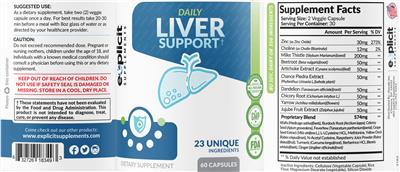
This summary is for Liver Support by eXplicit Supplements
- Form
- Capsule
- Serving Size
- 2 Veggie Capsules
- Servings
- 30 per container
- Container Holds
- 60 Capsules
- What is Liver Support?A supplement from eXplicit Supplements with 23 active ingredients, in capsule form.
- Active Ingredients 1 vitamin, 1 mineral, 17 plant ingredients such as Milk Thistle, Beetroot and Artichoke Leaf, 2 amino acids and 2 others: Zinc 30 mgCholine 12 mgMilk Thistle 200 mgBeetroot 50 mgArtichoke Leaf Extract 50 mgChanca Piedra Whole Plant Extract 50 mgDandelion 50 mgChicory 50 mgYarrow 50 mgJujube Fruit Extract 50 mgAlfalfaBurdock 23 active ingredients. Each one can interact with drugs or cause side effects on its own, so we check every one. And 11 more, in the Supplement Facts
- Drug Interactions 1,606 drugs have a documented interaction with this supplement; the most serious is rated major. Of those, 1,139 are single drugs and 467 are combination products (two or more drugs in one), each listed under its own name. Based on the 22 of its 23 ingredients we could check. Ask your pharmacist first if you take a drug in any of these categories, the most serious of the 77 on record:
- Major · 75 drugs
- Major · 2 drugs
- Major · 1 drug
- Major · 1 drug
- Possible Side EffectsStomach upset 12 ingredientsDiarrhea 11 ingredientsNausea 11 ingredientsBloating 6 ingredientsGas 6 ingredientsCramping 3 ingredients +25 moreCombined from 21 of its 23 active ingredients. Not studied in this exact product.
- Well documented Why
Does Liver Support work?
What It Is Marketed For
Liver health support
From the claims on the product’s label.
The Closest Use the Research Grades
Metabolic dysfunction-associated steatotic liver disease (MASLD) Turmeric
Some studies support it, but the evidence isn’t conclusive.
Its ingredients have research behind other uses too:
- Zinc
- Milk Thistle
- Beet
- Artichoke
- Zinc
- Exercise-induced muscle soreness Beet
These grades are for each ingredient, not this exact product, and never a promise it will work for you.
And 8 more graded uses, in what the research says- AllergensNone of its ingredient names point to a major food allergen
- Barcode (UPC)6 32726 18349 3Match it to the barcode on your bottle to be sure this is your product. Not your product? Search for it here
Who Might Consider It
- People looking for liver health support, which is what it is marketed for. The closest use the research grades is metabolic dysfunction-associated steatotic liver disease (MASLD), rated Possibly Effective.
- People who want it for diabetes, athletic performance, hyperlipidemia, coronavirus disease 2019 (COVID-19) or another graded use: the other uses with research behind them. See each grade
- This product may suit adults who are looking at ingredients like zinc and choline and have checked their medications.
Who Should Be Careful
- People taking cyclosporine, nitroglycerin, warfarin, digoxin, diuretics, diabetes medicines, lithium, or antibiotics should be especially careful.
- Anyone who is pregnant, breastfeeding, or has kidney, gallbladder, or liver problems should talk it over with their own doctor or pharmacist first.
More Before You Take It Show both answersHide Pregnancy and Breastfeeding The Label’s Directions
-
Pregnant or breastfeeding?
- Pregnancy Zinc
- ! When used orally in doses exceeding the UL.
- Breastfeeding Zinc
- ! When used orally in doses exceeding the UL.
- Pregnancy Yarrow
- ! When used orally; yarrow is believed to be an abortifacient and affect the menstrual cycle.
- Breastfeeding Yarrow
- Insufficient reliable information available; avoid use.
- Pregnancy Celery
- ! When celery oil or seeds are used orally in larger amounts; celery might have uterine stimulant or abortifacient effects.
- Breastfeeding Celery
- There is insufficient reliable information available about the safety of medicinal amounts of celery during lactation; avoid using.
-
How does the label say to take it?
“Suggested use: As a dietary supplement, take two (2) veggie capsule once a day. For best results take 20-30 min before a meal with 8oz glass of water or as directed by a healthcare provider.”
The maker’s words. Your pharmacist or doctor may advise differently.
Everything the label says
From the label dated Oct 24, 2024: 22 of its 23 active ingredients were checked against our records; the other one is not in them yet. A summary of what is known, not a grade or a test of the product. How these ratings are computed
Ask Anything About This Supplement
Name a drug you take, or ask about side effects, ingredients or pregnancy.
There’s a lot of information about this supplement on this page! Ask anything in plain English for a quick answer drawn from it.
AI answers come from this label and our own records, never the open internet. AI can make mistakes, so always check with your doctor or pharmacist. How we use AI
Ask the Pharmacist
A licensed pharmacist will answer your question by email — free, as soon as they can.
Got it — thank you!
A licensed pharmacist will answer as soon as they can. Keep an eye on your email (worth checking spam, just in case).
What’s Inside Liver Support by eXplicit Supplements
23 Active Ingredients
In the order the label lists them, each with its own card below.
- Zinc
- Choline
- Milk Thistle
- Beetroot
- Artichoke Leaf Extract
- Chanca Piedra Whole Plant Extract
- Dandelion
- Chicory
- Yarrow
- Jujube Fruit Extract
- Alfalfa
- Burdock
And 11 more, each with its own card below.
The label gives an exact amount for 10 of its 23 active ingredients. The other 13 are inside one proprietary blend, “Proprietary Blend”, and the label gives one total for it, not how much of each ingredient is in it.
- 10 state an exact amount
- 13 have no amount of their own
- Proprietary Blend 574 mg in total · 13 ingredients, no amount for each
This rates what the label tells you, not the quality of the product.
Supplement Facts
| Amount Per Serving | % Daily Value | |
|---|---|---|
| Zinc | 30 mg | 273% |
| Choline | 12 mg | 2% |
| Milk Thistle | 200 mg | † |
| Beetroot | 50 mg | † |
| Artichoke Leaf Extract | 50 mg | † |
| Chanca Piedra Whole Plant Extract | 50 mg | † |
| Dandelion | 50 mg | † |
| Chicory | 50 mg | † |
| Yarrow | 50 mg | † |
| Jujube Fruit Extract | 50 mg | † |
| Proprietary Blend | 574 mg | † |
| Alfalfa | † | |
| Burdock | † | |
| Celery | † | |
| Feverfew | † | |
| Grape Seed Extract | † | |
| L-Cysteine Hydrochloride | † | |
| Methionine | † | |
| Yellow Dock | † | |
| N-Acetyl Cysteine | † | |
| Raspberry Fruit Juice, Powder | † | |
| Turmeric | † | |
| Berberine Hydrochloride | † | |
| Ginger | † | |
Other ingredients: Cellulose, Rice Flour, Magnesium Stearate, Silicon Dioxide
† Daily Value not established.
Daily Values for adults and children 4 or more years of age.
As the label prints it, from the NIH Dietary Supplement Label Database.
Each Ingredient and Its Drug Interactions
Tap one for more about it and its full guide. A drug can interact with this supplement through any one of them.
Liver Support is a capsule built from a mix of minerals, amino acids, and plant extracts.
- Its active ingredients include zinc, choline, L-cysteine, methionine, and plant extracts such as dandelion, turmeric, ginger, milk thistle, and artichoke leaf, along with a proprietary blend whose components are listed individually on this page.
-
Zinc 30 mg Interacts with 67 drugs
Form on the label: Zinc Oxide
Zinc is an essential mineral that your body needs for immune function, wound healing, taste, and smell.
- Most people get enough from food, but supplements can help correct or prevent a deficiency.
- Taking too much zinc for too long can cause harm, so check with a pharmacist or doctor before using high-dose supplements.
The full Zinc guide: uses, dosage and safety Every Zinc drug interaction
-
Choline 12 mg Interacts with 16 drugs
Form on the label: Choline Bitartrate
Choline is an essential nutrient your body needs for liver function, brain health, and nerve signaling, and many people get enough from foods like eggs, meat, and fish.
- Supplements may help people who are deficient or who have higher needs (such as during pregnancy), but they are not proven cure-alls and very high doses can cause side effects.
- Check with your pharmacist or doctor before starting a supplement.
The full Choline guide: uses, dosage and safety Every Choline drug interaction
-
Milk Thistle 200 mg Interacts with 955 drugs
Form on the label: Silybum marianum
Milk thistle is a popular herbal supplement most often used for liver health, and its main active component is a group of compounds called silymarin.
- While it is generally well tolerated, the scientific evidence that it meaningfully improves liver disease or other conditions is mixed and far from conclusive.
- Talk with your pharmacist or doctor before using it, especially if you have a liver condition or take other medicines.
The full Milk Thistle guide: uses, dosage and safety Every Milk Thistle drug interaction
-
Beetroot 50 mg Interacts with 863 drugs
Beet, especially beetroot juice, is a nitrate-rich food that may modestly lower blood pressure and slightly improve exercise performance in some people.
- It is generally safe as a food, but supplement effects are modest and not a substitute for prescribed treatment, so talk with your pharmacist or doctor before relying on it.
The full Beet guide: uses, dosage and safety Every Beet drug interaction
-
Artichoke Leaf Extract 50 mg Interacts with 364 drugs
Form on the label: Cynara scolymus Leaf Extract
Artichoke leaf extract is a generally well-tolerated supplement that may have a mild cholesterol-lowering effect and is often used for indigestion, though the evidence is modest.
- It is not a replacement for proven treatments, so talk with your pharmacist or doctor before using it, especially if you have a medical condition.
The full Artichoke guide: uses, dosage and safety Every Artichoke drug interaction
-
Chanca Piedra Whole Plant Extract 50 mg Interacts with 1,022 drugs
Chanca piedra is a tropical herb traditionally used as a 'stone breaker' for kidney and gallstones, and for liver and urinary health.
- Human evidence for these uses is limited and mostly small or preliminary, so it should not replace proven treatments.
- Talk with your pharmacist or doctor before using it, especially if you have a medical condition or take medications.
The full Chanca Piedra guide: uses, dosage and safety Every Chanca Piedra drug interaction
-
Dandelion 50 mg Interacts with 457 drugs
Dandelion is a common plant used in food and traditional medicine, often promoted as a natural 'water pill' and digestive aid.
- Human evidence for these uses is very limited, so its benefits are not well proven.
- It is generally considered safe as a food, but talk to your pharmacist or doctor before using concentrated supplements, especially if you have allergies or take other medicines.
The full Dandelion guide: uses, dosage and safety Every Dandelion drug interaction
-
Chicory 50 mg Interacts with 86 drugs
Chicory is best known as a caffeine-free coffee substitute and as a source of inulin, a soluble prebiotic fiber that may support digestion and regularity.
- Strong human evidence for most other traditional uses (like liver, gallbladder, or skin conditions) is limited.
- It is generally well tolerated, but the inulin can cause gas and bloating, and people allergic to ragweed or related plants should be cautious.
The full Chicory guide: uses, dosage and safety Every Chicory drug interaction
-
Yarrow 50 mg Interacts with 1 drug
Form on the label: Achillea millefolium
Yarrow is a traditional herb long used for wounds, digestive complaints, and colds, but high-quality human studies are very limited, so its benefits are not well proven.
- It is generally used short-term, and people who are pregnant, breastfeeding, or allergic to ragweed and related plants should avoid it.
The full Yarrow guide: uses, dosage and safety Every Yarrow drug interaction
-
Jujube Fruit Extract 50 mg Interacts with 469 drugs
Form on the label: Ziziphus jujuba Fruit Extract
Zizyphus (jujube) is an edible fruit and traditional remedy used mainly for sleep, anxiety, and digestion.
- The fruit is a nutritious food, but human evidence for its medicinal benefits is limited and mostly preliminary.
- If you want to try a supplement form, talk with your pharmacist or doctor first, especially if you are pregnant, breastfeeding, or taking other medicines.
The full Zizyphus guide: uses, dosage and safety Every Zizyphus drug interaction
-
Proprietary Blend 574 mg 13 ingredients inside it, each checked on its own
- Alfalfa 583 drugs
- Burdock 122 drugs
- Celery 651 drugs
- Feverfew 931 drugs
- Grape Seed Extract 912 drugs
- L-Cysteine Hydrochloride 86 drugs
- Methionine
- Yellow Dock 78 drugs
- N-Acetyl Cysteine 294 drugs
- Raspberry Fruit Juice, Powder
- Turmeric 1,134 drugs
- Berberine Hydrochloride 1,162 drugs
- Ginger 1,008 drugs
Other Ingredients (Inactive)
The capsule or tablet itself, fillers, coatings and flavors. Not part of the drug interaction check; the allergen check below reads them.
- Cellulose
- Rice Flour
- Magnesium Stearate
- Silicon Dioxide
Allergens in Liver Support
None of its ingredient names point to a major food allergen.
Not named in the ingredients
- Milk
- Egg
- Fish
- Shellfish
- Tree nuts
- Peanuts
- Wheat or other gluten grains
- Soy
- Sesame
- Made without, the label says“Made with all natural ingredients · No artificial flavors · No preservatives · No soy, dairy, or egg ingredients”
From the label text and ingredient names on file; we do not test products. With a serious allergy, check your bottle and ask the maker or your pharmacist.
What the Label Says
The maker’s own words, from the label. We do not verify or endorse them.
- Storage
-
“Store in a cool, dry place.”
- General statements
-
“Please recycle this container Come check out our other products: www.explicitsupplements.com Facebook Twitter Instagram Daily”
- Formulation
-
“23 unique ingredients”
“Made with all natural ingredients No artificial flavors No preservatives No soy, dairy, or egg ingredients”
- FDA Statement of Identity
-
“Dietary Supplement”
- Seals and symbols
-
“Made with all natural ingredients No artificial flavors No preservatives GMP Good Manufacturing Practice FDA registered facility”
“Made in the USA”
The Liver Support Label on File
The label scan on file at the NIH Dietary Supplement Label Database, dated October 2024. Always read the label on the bottle you have.
Product Facts
- Brand
- eXplicit Supplements
- Barcode (UPC)
- 632726183493
- Net contents
- 60 Capsules
- Market status
- On market
- Date entered into DSLD
- Oct 24, 2024
- DSLD ID
- 310012
- Product type
- Other Combinations
- Supplement form
- Capsule
- Dietary claims / uses
- All Other, Structure/Function
- Intended target group(s)
- Adult (18 - 50 Years), Dairy Free
Is this label outdated? Report a formula or label change and our pharmacy team will review it.
HelloPharmacist Score Liver Support by eXplicit Supplements
Up to 10 points for research, amount, label and outside testing. Not a safety rating. How this one adds up
for metabolic dysfunction-associated steatotic liver disease (MASLD)
It is marketed for liver health support. There is no graded research on that exact use, so we scored the closest one: some research suggests turmeric, one of its ingredients, may help with metabolic dysfunction-associated steatotic liver disease (MASLD).
- Research3 of 5 points
- Amount0 of 2 points
- Label1 of 2 points
- Outside testing0 of 1 point
Major drug interactions. The score does not count drug interactions. Check them against any drugs you take. See them
How It Earns Its 4
Score: 4 out of 10. Preliminary for metabolic dysfunction-associated steatotic liver disease (MASLD).
Some research on turmeric for metabolic dysfunction-associated steatotic liver disease (MASLD).
Graded “Possibly Effective” in the Natural Medicines database, which we license. A related use, not the one it is marketed for, counts for at most 3 of 5 research points.
3 of 5 points
Amount
The label does not say how much turmeric is in it.
0 of 2 points
Label
It states the amount of ten of its 23 active ingredients; 13 are inside blends that give only a total.
1 of 2 points
Outside testing
We found no mark from an outside testing program, such as USP Verified or NSF Certified, on the label we have on file.
0 of 1 point
Liver Support by eXplicit Supplements Side Effects
Why this rating?
We look for three kinds of safety information on each ingredient: side effects reported in studies, a pregnancy and breastfeeding rating, and a safety write-up from our pharmacy team. Of the 22 ingredients we could check, 21 have side-effect reports, all 22 have a pregnancy rating and all 22 have a safety write-up.
So this rates how much is known, not whether Liver Support is right for you.
Reported with 22 of its ingredients
- Most often
- Stomach upset, diarrhea, nausea, bloating, gas and cramping
- !Rare but serious
- Hypocalcemia, anaphylaxis in sensitive individuals and allergic reactions See details
HelloPharmacist Team Summary: Liver Support by eXplicit Supplements Side Effects
Liver Support is generally well tolerated at typical amounts, but you are most likely to notice stomach upset, nausea, or a metallic taste, which mainly come from the zinc.
- Gas and bloating can show up from the ginger and milk thistle, and some people notice a fishy body odor from the choline.
- A rare but serious allergic reaction is possible, so call your doctor right away if you get swelling of the face or throat or trouble breathing.
- Talk with your own doctor or pharmacist before starting if you are pregnant, breastfeeding, or take any of the medications listed above.
Side Effects, Ingredient by Ingredient
A supplement’s side effects come from its ingredients. Here is what is reported with each one.
Zinc
Most reported
- Nausea
- Stomach upset
- Vomiting
- Metallic taste
Choline
Most reported
- A fishy body odor
- Nausea, stomach upset, or diarrhea
- Sweating
- Drop in blood pressure or dizziness (mainly at very high doses)
Milk Thistle
Most reported
- Nausea
- Diarrhea
- Bloating
- Gas
Beet
Most reported
- Pink urine
- Sometimes red stools after eating beets
Artichoke
Most reported
- Gas
- Bloating
- Stomach upset
- Diarrhea
Chanca Piedra
Most reported
- Stomach upset
- Nausea
- Diarrhea
Dandelion
Most reported
- Stomach upset, heartburn, or diarrhea
- Increased urination (from its possible diuretic effect)
Chicory
Most reported
- Gas
- Bloating
- Stomach rumbling
- Cramping
Yarrow
Most reported
- Stomach upset
- Drowsiness
Zizyphus
Most reported
- Bloating
- Loose stools
Alfalfa
Most reported
- Abdominal discomfort
- Diarrhea
- Flatulence
From the Natural Medicines database, which we license.
Every reported effect, in the Alfalfa guideCelery
Most reported
- Stomach upset or digestive discomfort
- Increased urination
- Skin rash or sun sensitivity
Feverfew
Most reported
- Stomach upset
- Nausea
- Bloating
- Gas
Grape
Most reported
- Headache
- Dizziness
- Upset stomach
- Nausea
L-Cysteine
Most reported
- Nausea or upset stomach
- Diarrhea or other digestive discomfort
- Headache
Methionine
Most reported
- Nausea
- Vomiting
- Drowsiness
- Irritability
Yellow Dock
Most reported
- Cramping
- Loose stools
- Diarrhea
- Nausea
N-Acetyl Cysteine (NAC)
Most reported
- Nausea
- Vomiting
- Diarrhea
- Stomach upset
Turmeric
Most reported
- Nausea
- Upset stomach
- Diarrhea
- Bloating
Berberine
Most reported
- Stomach upset
- Cramping
- Diarrhea
- Constipation
Ginger
Most reported
- Heartburn
- Stomach discomfort
- Gas
- Burping
Burdock has side-effect reports, but no list of the most common ones. Read them in the Burdock guide
Liver Support Warnings: Who Should Be Careful
Liver Support has 23 active ingredients, and each can carry warnings of its own. We checked the 22 in our ingredient guides, and each warning below names the ingredient it comes from. Raspberry Fruit Juice, Powder is not in our guides yet, so ask your pharmacist about it. If any of these apply to you, talk to your doctor or pharmacist before you start it.
- Zinc2 warnings below
- Choline2 warnings below
- Milk Thistle1 warning below
- Beet2 warnings below
- Artichoke3 warnings below
- Chanca Piedra2 warnings below
- Dandelion2 warnings below
- Chicory3 warnings below
- Yarrow3 warnings below
- Zizyphus3 warnings below
- Alfalfa3 warnings below
- Burdock3 warnings below
- Celery2 warnings below
- Feverfew3 warnings below
- Grape2 warnings below
- L-Cysteine3 warnings below
- Methionine3 warnings below
- Yellow Dock3 warnings below
- N-Acetyl Cysteine (NAC)3 warnings below
- Turmeric2 warnings below
- Berberine2 warnings below
- Ginger2 warnings below
- Raspberry Fruit Juice, PowderNot in our guides yet
-
Bleeding Problems or Surgery
- Chanca PiedraPeople with kidney disease, gallbladder disease, liver disease, or a bleeding disorder should talk to a doctor before using it.
- YarrowUse caution if you have a bleeding disorder, are scheduled for surgery, or have gallbladder or liver problems.
- GrapeWho should be cautious: People with bleeding disorders, those taking blood-thinning medicines, and anyone scheduled for surgery should talk to a healthcare provider before using concentrated grape supplements, since some grape compounds may affect blood clotting.
- N-Acetyl Cysteine (NAC)Those with a history of stomach ulcers or bleeding disorders should also use care.
Show 2 more
- TurmericPeople who have gallbladder disease or gallstones, who are prone to kidney stones, or who have bleeding disorders should be cautious and check with a healthcare provider first.
- GingerUse extra caution if you have a bleeding disorder or are scheduled for surgery, since ginger may slightly affect blood clotting.
-
Diabetes or Low Blood Sugar
- Milk ThistleIf you have a liver condition, a hormone-sensitive condition, diabetes, or any chronic illness, talk with your doctor or pharmacist before using milk thistle.
- Chanca PiedraBecause it may lower blood sugar or blood pressure in some people, those with diabetes or low blood pressure should use caution and monitor closely.
- ZizyphusPeople with diabetes should be aware that the dried fruit is high in natural sugars.
- BerberineBecause it can lower blood sugar, people with diabetes should monitor their levels closely to avoid blood sugar dropping too low.
-
Blood Pressure
- BeetPeople with low blood pressure should be aware that beets may lower it further.
- BerberinePeople with liver conditions, low blood pressure, or those taking multiple medications should talk to a pharmacist or doctor before using it.
-
Liver Disease
- CholinePeople with liver or kidney conditions, or certain rare metabolic disorders, should talk to a healthcare provider before taking choline supplements.
- MethionineThose with liver or kidney disease should also be careful and check with a doctor first.
-
Kidney Disease or Kidney Stones
- BeetPeople with a history of kidney stones may want to be careful, because beets contain oxalates, which can contribute to certain types of stones.
- DandelionWho should be cautious: People with gallbladder problems, blocked bile ducts, or kidney disease should talk to a doctor first, since dandelion may affect bile flow and fluid balance.
- CeleryKidney problems: Because of its diuretic effect and mineral content, people with kidney disease should talk to a doctor first.
- L-CysteinePeople with cystinuria (a condition causing cysteine-containing kidney stones) should be cautious, as extra cysteine intake could be a concern.
Show 2 more
- L-CysteineThose with kidney problems, a history of kidney stones, or any chronic medical condition should check with a doctor first.
- Yellow DockPeople with a history of kidney stones, kidney disease, or gout should be especially cautious or avoid it, since oxalates can contribute to certain stones.
-
Gallbladder Problems
- ArtichokeIf you have gallstones or a blocked bile duct, avoid artichoke supplements unless your doctor approves, because increased bile flow could cause problems.
- ChicoryPeople with gallstones should talk to a doctor first, because chicory may increase bile flow.
- GingerPeople with gallstones should also check with a doctor, because ginger can increase the flow of bile.
-
Stomach or Bowel Problems
- ZincPeople with digestive disorders, those who drink heavily, and people on restrictive diets are more likely to be low in zinc and may need supplements.
- Yellow DockPeople with bowel conditions such as inflammatory bowel disease, blockage, or unexplained abdominal pain should not use laxative herbs without medical advice.
-
Autoimmune Conditions
- AlfalfaPeople with autoimmune diseases such as lupus should avoid alfalfa supplements.
-
Hormone-Sensitive Conditions
- AlfalfaBecause of its phytoestrogens, people with hormone-sensitive conditions (such as certain breast, uterine, or ovarian conditions) should be cautious and talk to their doctor first.
-
Allergies
- ArtichokePeople who are allergic to plants in the daisy (Asteraceae) family — such as ragweed, marigolds, and chrysanthemums — may also react to artichoke and should be cautious.
- ChicoryPeople who are allergic to ragweed, marigolds, daisies, or related plants may also react to chicory, since it is in the same plant family.
- ChicoryAnyone with a history of these allergies should be cautious.
- YarrowPeople who are allergic to ragweed, chrysanthemums, marigolds, or other related plants may also react to yarrow and should avoid it.
Show 3 more
- ZizyphusThose with allergies to jujube or related plants should avoid it.
- BurdockPeople who are allergic to ragweed, chrysanthemums, marigolds, daisies, or other Asteraceae plants may also react to burdock and should be cautious.
- FeverfewIf you are allergic to any of these plants, you may also react to feverfew and should avoid it.
-
Children
- FeverfewFeverfew has not been well studied in children.
- Yellow DockDo not give it to children unless a healthcare provider recommends it.
-
If You Take Other Drugs
- ArtichokeAlways check with your pharmacist or doctor before starting any new supplement, especially if you have a health condition or take other medicines.
- YarrowTalk with your pharmacist or doctor before starting it, especially if you take other medicines or have a chronic health condition.
- BurdockBecause burdock may act as a diuretic, people who are dehydrated or taking medications that affect fluid balance should use caution.
- FeverfewAs always, talk to your pharmacist or doctor before starting it, especially if you take other medications or have a health condition.
Show 4 more
- L-CysteineAlways talk with a pharmacist or doctor before starting L-cysteine, especially if you take medicines or have a health condition.
- MethionineAlways talk with a pharmacist or doctor before starting methionine, especially if you take other medicines or have a health condition.
- N-Acetyl Cysteine (NAC)However, you should talk with a pharmacist or doctor before starting it, especially if you have a health condition or take other medicines.
- TurmericAlways talk to your pharmacist or doctor before starting a supplement, especially if you take other medicines or have a health condition.
-
Other Cautions
- ZincAnyone considering high-dose or long-term zinc should talk to a pharmacist or doctor first.
- CholineAnyone with a known body odor (fishy smell) reaction to choline should avoid high doses.
- DandelionBecause it may act as a mild diuretic, use caution if you are already taking water pills or have conditions affected by fluid loss.
- AlfalfaPeople who are immunosuppressed should also avoid alfalfa.
Show 4 more
- CeleryAlways check with your pharmacist or doctor before starting a celery supplement, especially if you have a medical condition.
- MethioninePeople with certain inherited disorders that affect how the body handles amino acids (such as homocystinuria) should avoid methionine supplements.
- N-Acetyl Cysteine (NAC)People with asthma should be cautious, as inhaled forms can sometimes trigger airway tightening.
- Zinc, N-acetyl cysteine, and several plant ingredients are generally well tolerated at typical amounts, but the safety notes for zinc, turmeric, and other concentrated supplements advise caution with high doses, and zinc's upper intake level is 40 mg daily for adults.
-
What the Label Warns
- “Do not exceed recommended dose.”
- “Pregnant or nursing mothers, children under the age of 18, and individuals with a known medical condition should consult a physician before using this or any dietary supplement.”
- “Pregnant or nursing mothers, children under the age of 18, and individuals with a known medical condition should consult a physician before using this or any dietary supplement. Keep out of reach of children.”
- “Do not use if safety seal is damaged or missing.”
The maker’s wording, from the product label.
-
Pregnant or Breastfeeding
Each ingredient’s rating for pregnancy and for breastfeeding, and what it covers.
Pregnancy
-
When used orally and appropriately.
Zinc is safe in amounts that do not exceed the tolerable upper intake level (UL) of 34 mg daily during pregnancy in those 14-18 years of age and 40 mg daily in those 19-50 years of age.
-
When used orally in doses exceeding the UL.
Breastfeeding
-
When used orally and appropriately.
Zinc is safe in amounts that do not exceed the tolerable upper intake level (UL) of 34 mg daily during lactation in those 14-18 years of age, and 40 mg daily for those 19-50 years of age.
-
When used orally in doses exceeding the UL.
Higher doses can cause zinc-induced copper deficiency in nursing infants.
Pregnancy
-
When used orally; yarrow is believed to be an abortifacient and affect the menstrual cycle.
Breastfeeding
-
Insufficient reliable information available; avoid use.
Show 20 more ingredients
Pregnancy
-
When celery oil or seeds are used orally in larger amounts; celery might have uterine stimulant or abortifacient effects.
Breastfeeding
-
There is insufficient reliable information available about the safety of medicinal amounts of celery during lactation; avoid using.
Pregnancy
-
When used orally in amounts commonly found in food.
-
When used orally in medicinal amounts; turmeric might stimulate the uterus and increase menstrual flow.
Breastfeeding
-
When used orally in amounts commonly found in food.
There is insufficient reliable information available about the safety of using turmeric in medicinal amounts during lactation.
Pregnancy
-
When used orally.
Berberine is thought to cross the placenta and may cause harm to the fetus.
2 more points on this rating
- Kernicterus has developed in newborn infants exposed to berberine.
- Also, berberine may stimulate uterine contractions.
Breastfeeding
-
When used orally.
Berberine can be transferred to the infant through breast milk.
Pregnancy
-
Beet as a food is fine, but concentrated supplements lack safety data, so use caution.
Breastfeeding
-
There is insufficient reliable information available about the safety of beets used medicinally during pregnancy and breast-feeding.
Pregnancy
-
When used during pregnancy or in those trying to become pregnant.
Animal research shows that chanca piedra, particularly at high doses, may have contraceptive effects or may increase the risk of low birth weight or birth defects; avoid using.
Breastfeeding
-
Insufficient reliable information available; avoid using.
Pregnancy
-
When used orally in excessive amounts.
Chicory may induce menstruation or miscarriage.
Breastfeeding
-
Insufficient reliable information available; avoid using.
Pregnancy and Breastfeeding The record rates both the same
-
When used orally in medicinal amounts.
Alfalfa contains constituents with possible estrogenic activity.
Pregnancy
-
When used orally.
Feverfew might cause uterine contractions and abortion; avoid using.
Breastfeeding
-
Insufficient reliable information available; avoid using.
Pregnancy
-
When used orally; avoid using.
Yellow dock contains anthraquinone glycosides; unstandardized laxatives are not desirable during pregnancy.
Breastfeeding
-
When used orally; avoid using.
Anthraquinones are secreted into breast milk.
Pregnancy and Breastfeeding The record rates both the same
-
While research in an animal model shows that taking milk thistle during pregnancy and lactation does not adversely impact infant development, there is insufficient reliable information available about its safety during pregnancy or lactation in humans; avoid using.
Pregnancy and Breastfeeding The record rates both the same
-
There is insufficient reliable information available about the safety of artichoke when used in medicinal amounts during pregnancy or lactation; avoid amounts greater than those found in foods.
Pregnancy and Breastfeeding The record rates both the same
-
Insufficient reliable information available; avoid using amounts greater than those in foods.
Pregnancy and Breastfeeding The record rates both the same
-
Insufficient reliable information available; avoid using.
Pregnancy
-
When used orally, intratracheally, intravenously, or by inhalation.
N-acetyl cysteine crosses the placenta, but has not been associated with adverse effects to the fetus.
However, N-acetyl cysteine should only be used in pregnancy when clearly indicated, such as in cases of acetaminophen toxicity.
Breastfeeding
-
Insufficient reliable information available; avoid using.
Pregnancy and Breastfeeding The record rates both the same
-
When used orally and appropriately.
Choline is safe when taken in doses below the tolerable upper intake level (UL), which is 3 grams daily during pregnancy and lactation in those up to 18 years of age and 3.5 grams daily for those 19 years and older.
There is insufficient reliable information available about the safety of choline used in higher doses during pregnancy and lactation.
Pregnancy and Breastfeeding The record rates both the same
-
When zizyphus fruit is consumed in the amounts typically found in foods.
There is insufficient reliable information available about the safety of zizyphus fruit in amounts greater than those found in foods; avoid using.
Pregnancy and Breastfeeding The record rates both the same
-
When used orally in amounts commonly found in foods.
There is insufficient reliable information available about the safety of medicinal amounts during pregnancy and breast-feeding; avoid using in amounts greater than what is commonly found in foods.
Pregnancy and Breastfeeding The record rates both the same
-
When used orally in amounts found in foods.
There is insufficient reliable information available about the safety of amounts greater than those found in foods; avoid use.
2 more points on this rating
- Some research suggests that taking L-cysteine during lactation increases levels of free L-cysteine in breastmilk.
- However, these levels are lower than those found in some commercial hydrolyzed protein infant formulas.
Pregnancy and Breastfeeding The record rates both the same
-
When used orally in amounts commonly found in food.
There is insufficient reliable information available about the safety of methionine in medical doses during pregnancy and lactation; avoid using.
Pregnancy
-
When consumed in the amounts typically found in foods.
Ginger is considered a first-line nonpharmacological treatment option for nausea in pregnancy by the American College of Obstetrics and Gynecology (ACOG).
However, it should not be used long-term or without medical supervision and close monitoring.
-
When used for medicinal purposes.
Despite some early reports of adverse effects and one observational study suggesting that taking dried ginger and other herbal supplements during the first 20 weeks of pregnancy marginally increased the chance of stillbirth, most research shows that ginger is unlikely to cause harm to the baby.
3 more points on this rating
- The risk for major malformations in infants of parents who took ginger when pregnant does not appear to be higher than the baseline rate of 1% to 3%.
- Also, other research suggests that ginger intake during various trimesters does not significantly affect the risk of spontaneous abortion, congenital malformations, stillbirth, perinatal death, preterm birth, low birth weight, or low Apgar scores.
- Ginger use has been associated with an increase in non-severe vaginal bleeding, including spotting, after week 17 of pregnancy.
Breastfeeding
-
When consumed in the amounts typically found in foods.
There is insufficient reliable information available about the safety of ginger when used for medicinal purposes; avoid amounts greater than those found in foods.
Our pharmacy team’s notes
- For pregnancy and breastfeeding, berberine, alfalfa, feverfew, yellow dock, and chanca piedra are rated in a way where they are best avoided.
Ratings and the words beside them are from the Natural Medicines database, which we license. Where it has no rating, the rating and note are our pharmacy team’s.
-
Rare but Serious Side Effects
-
!
Zinc
Very high single doses can cause more serious stomach symptoms.
Orally: There have been cases of acute renal tubular necrosis, interstitial nephritis, neurological complications, severe vomiting, and sideroblastic anemia after zinc overdose.
-
!
Milk Thistle
Less commonly, people may have allergic reactions, especially if they are sensitive to ragweed or related plants.
Orally: Allergic reactions, including anaphylaxis, have been reported.
-
!
Beet
Orally: Hypocalcemia and kidney damage when ingested in large amounts.
-
!
Artichoke
Less commonly, some people may have an allergic reaction, especially those sensitive to daisy-family plants.
Orally: Anaphylaxis to artichoke inulin has been reported in individuals sensitive to inulin.
-
!
Chanca Piedra
Allergic reactions are possible with any plant product.
-
!
Dandelion
Rarely, serious allergic reactions can occur.
Orally: Anaphylaxis in sensitive individuals.
-
!
Chicory
Less commonly, some people may have allergic reactions, such as skin rash, itching, or tingling in the mouth—particularly those allergic to ragweed and related plants.
-
!
Zizyphus
Allergic reactions are possible but uncommon.
-
!
Alfalfa
More serious concerns are mostly tied to supplements or large amounts.
Orally: Lupus-like syndrome after chronic ingestion of alfalfa.
-
!
Burdock
Possible side effects include allergic reactions (skin rash, itching, or, rarely, more serious reactions), especially in people sensitive to daisy-family plants.
Allergic reactions, including contact dermatitis and anaphylaxis.
-
!
Celery
Seek emergency care if you have signs of a serious allergic reaction, such as swelling of the face or throat, or difficulty breathing.
Orally: Anaphylaxis in sensitive individuals.
-
!
Feverfew
Allergic reactions are also possible, especially in people sensitive to ragweed and related plants.
-
!
Grape
Some people may have an allergic reaction to grapes or grape products, which can rarely be serious.
Orally: Anaphylaxis to grape skin has been reported.
-
!
Methionine
Cerebral edema, hepatic encephalopathy. In infants, intravenous methionine has been linked to liver toxicity.
-
!
Yellow Dock
Allergic reactions are possible but uncommon.
Orally: Raw leaves or rhizomes can cause hypocalcemia, kidney stones, and vomiting.
-
!
N-Acetyl Cysteine (NAC)
Orally: Chest tightness, hemoptysis, and palpitations have been reported.
-
!
Turmeric
Signs that need medical attention include yellowing skin or eyes, dark urine, severe stomach pain, or an allergic reaction such as rash, swelling, or trouble breathing.
-
!
Ginger
Rarely, some people may have an allergic reaction.
When to get help: a serious allergic reaction, with trouble breathing or swelling of the face, lips or throat, needs emergency care: call 911. For any other side effect that worries you, call your doctor or pharmacist.
These reports describe each ingredient, not studies of this exact product. Not medical advice: a side effect you notice after starting a supplement is worth a word with your pharmacist or doctor.
Liver Support by eXplicit Supplements Drug Interactions
We checked all 23 active ingredients in this supplement against every drug in our records. A drug can interact with it through any one of them. Raspberry Fruit Juice, Powder is not in our interaction records yet.
A major interaction on record
3 of 3, on a scale from Minor or none to Major.Why this rating?
We rate this by the most serious interaction on record, not by how many there are. For Alfalfa, Zizyphus, Chicory, Burdock and Milk Thistle, the most serious is rated major, which means the combination is best avoided, or used only under close supervision. Some involve kinds of drugs where a small change can matter, such as blood thinners, transplant drugs and cancer treatments.
1,607 drugs are on the full list. What matters is whether one you take is on it, so check yours with the interaction checker on this page.
From the HelloPharmacist Team
Put every ingredient together and a few things stand out.
- Liver Support from eXplicit Supplements does interact with some medications, through its zinc, choline, L-cysteine, dandelion, N-acetyl cysteine, turmeric, ginger, milk thistle, burdock, berberine, celery, feverfew, yellow dock, jujube, beetroot, chanca piedra, chicory, grape seed, artichoke, alfalfa, and yarrow content.
- Other Major-rated drug types are nitroglycerin, where N-acetyl cysteine can cause severe low blood pressure and intolerable headaches; diuretic drugs and digoxin, where yellow dock may lower potassium (hypokalemia) and raise the risk of digoxin toxicity; and warfarin, where alfalfa's vitamin K may reduce warfarin's effect.
- Minor-rated types include atropine (choline), acetaminophen and photosensitizing drugs (celery), and some blood pressure and diabetes medicines (beetroot and chanca piedra).
21 of its 23 active ingredients have drug interactions on record. The ones below matter most. We have no interaction records for Methionine and Raspberry Fruit Juice, Powder.
- Interacts with
- 67 drugs
- Most serious
- Moderate
- Moderate-rated types include blood thinners (anticoagulant and antiplatelet drugs), antidiabetes drugs (risk of low blood sugar, or hypoglycemia), and antibiotics such as quinolones, tetracyclines, and cephalexin, which zinc may reduce absorption of.
- Interacts with
- 1,162 drugs
- Most serious
- Major
- The most serious interaction is berberine with cyclosporine, an immune-suppressing drug, rated Major.
- Berberine can raise cyclosporine levels by slowing how the liver breaks it down.
- Interacts with
- 1,134 drugs
- Most serious
- Moderate
- Most of its records involve Cytochrome P450 3A4 (CYP3A4) Substrates, Hepatotoxic Drugs and P-glycoprotein Substrates.
Show three more ingredients
- Interacts with
- 1,022 drugs
- Most serious
- Moderate
- Most of its records involve Cytochrome P450 3A4 (CYP3A4) Substrates, Cytochrome P450 1A2 (CYP1A2) Substrates and Antihypertensive Drugs.
- Interacts with
- 1,008 drugs
- Most serious
- Moderate
- Most of its records involve Cytochrome P450 3A4 (CYP3A4) Substrates, P-glycoprotein Substrates and Cytochrome P450 1A2 (CYP1A2) Substrates.
- Interacts with
- 955 drugs
- Most serious
- Moderate
- Most of its records involve Cytochrome P450 3A4 (CYP3A4) Substrates, P-glycoprotein Substrates and Glucuronidated Drugs.
And 15 more ingredients with records, each in the cards below.
Summarized by the HelloPharmacist pharmacy team from the interaction records below. How it is written How we use AI
Why Liver Support Interacts, Ingredient by Ingredient
A product interacts through its ingredients. Each card: how many drugs, the most serious rating, and the kinds of drugs it affects most (tap a kind for what it means).
The ingredients driving the most interactions
-
Berberine Hydrochloride 1,162 drugs
Most serious: Major15 interaction records on file
The kinds of drugs it affects most
- 645 drugs
- 248 drugs
- 193 drugs
- 172 drugs
Every Berberine drug interaction, 15 records The Berberine records cite 42 references, listed in the Berberine guide.
-
Turmeric 1,134 drugs
Most serious: Moderate24 interaction records on file
The kinds of drugs it affects most
- 645 drugs
- 372 drugs
- 202 drugs
- 186 drugs
Every Turmeric drug interaction, 24 records The Turmeric records cite 105 references, listed in the Turmeric guide.
-
Chanca Piedra Whole Plant Extract 1,022 drugs
Most serious: Moderate8 interaction records on file
The kinds of drugs it affects most
- 645 drugs
- 186 drugs
- 172 drugs
- 122 drugs
Every Chanca Piedra drug interaction, 8 records The Chanca Piedra records cite 18 references, listed in the Chanca Piedra guide.
-
Ginger 1,008 drugs
Most serious: Moderate14 interaction records on file
The kinds of drugs it affects most
- 645 drugs
- 202 drugs
- 186 drugs
- 122 drugs
Every Ginger drug interaction, 14 records The Ginger records cite 65 references, listed in the Ginger guide.
-
Milk Thistle 955 drugs
Most serious: Moderate17 interaction records on file
The kinds of drugs it affects most
- 645 drugs
- 202 drugs
- 124 drugs
- 112 drugs
Every Milk Thistle drug interaction, 17 records The Milk Thistle records cite 69 references, listed in the Milk Thistle guide.
-
Feverfew 931 drugs
Most serious: Moderate7 interaction records on file
The kinds of drugs it affects most
- 645 drugs
- 193 drugs
- 186 drugs
- 122 drugs
Every Feverfew drug interaction, 7 records The Feverfew records cite 18 references, listed in the Feverfew guide.
-
Grape Seed Extract 912 drugs
Most serious: Moderate10 interaction records on file
The kinds of drugs it affects most
- 645 drugs
- 193 drugs
- 186 drugs
- 122 drugs
Every Grape drug interaction, 10 records The Grape records cite 35 references, listed in the Grape guide.
-
Beetroot 863 drugs
Most serious: Moderate3 interaction records on file
The kinds of drugs it affects most
- 645 drugs
- 186 drugs
- 172 drugs
Every Beet drug interaction, 3 records The Beet records cite 11 references, listed in the Beet guide.
-
Celery 651 drugs
Most serious: Moderate8 interaction records on file
The kinds of drugs it affects most
- 335 drugs
- 186 drugs
- 172 drugs
- 122 drugs
Every Celery drug interaction, 8 records The Celery records cite 48 references, listed in the Celery guide.
-
Alfalfa 583 drugs
Most serious: Major6 interaction records on file
The kinds of drugs it affects most
- 335 drugs
- 121 drugs
- 86 drugs
- 41 drugs
Every Alfalfa drug interaction, 6 records The Alfalfa records cite 32 references, listed in the Alfalfa guide.
-
Jujube Fruit Extract 469 drugs
Most serious: Moderate3 interaction records on file
The kinds of drugs it affects most
- 248 drugs
- 186 drugs
- 86 drugs
Every Zizyphus drug interaction, 3 records The Zizyphus records cite 15 references, listed in the Zizyphus guide.
-
Dandelion 457 drugs
Most serious: Moderate7 interaction records on file
The kinds of drugs it affects most
- 186 drugs
- 124 drugs
- 122 drugs
- 86 drugs
Every Dandelion drug interaction, 7 records The Dandelion records cite 27 references, listed in the Dandelion guide.
-
Artichoke Leaf Extract 364 drugs
Most serious: Moderate4 interaction records on file
The kinds of drugs it affects most
- 172 drugs
- 86 drugs
- 72 drugs
- 41 drugs
Every Artichoke drug interaction, 4 records The Artichoke records cite 16 references, listed in the Artichoke guide.
-
N-Acetyl Cysteine 294 drugs
Most serious: Major5 interaction records on file
The kinds of drugs it affects most
- 172 drugs
- 122 drugs
- Activated Charcoal 2 drugs
- Chloroquine (Aralen) 2 drugs
Every N-Acetyl Cysteine (NAC) drug interaction, 5 records The N-Acetyl Cysteine (NAC) records cite 86 references, listed in the N-Acetyl Cysteine (NAC) guide.
-
Burdock 122 drugs
Most serious: Moderate1 interaction record on file
The kinds of drugs it affects most
- 122 drugs
Every Burdock drug interaction, 1 record The Burdock records cite 11 references, listed in the Burdock guide.
-
Chicory 86 drugs
Most serious: Moderate1 interaction record on file
The kinds of drugs it affects most
- 86 drugs
Every Chicory drug interaction, 1 record The Chicory records cite 14 references, listed in the Chicory guide.
-
L-Cysteine Hydrochloride 86 drugs
Most serious: Moderate1 interaction record on file
The kinds of drugs it affects most
- 86 drugs
Every L-Cysteine drug interaction, 1 record The L-Cysteine records cite 2 references, listed in the L-Cysteine guide.
-
Yellow Dock 78 drugs
Most serious: Major3 interaction records on file
The kinds of drugs it affects most
- 75 drugs
- 2 drugs
- 1 drug
Every Yellow Dock drug interaction, 3 records The Yellow Dock records cite 8 references, listed in the Yellow Dock guide.
-
Zinc 67 drugs
Most serious: Moderate10 interaction records on file
The kinds of drugs it affects most
- 21 drugs
- 20 drugs
- Bictegravir/Emtricitabine/Tenofovir Alafenamide (Biktarvy) 13 drugs
- Ritonavir (Norvir) 7 drugs
Every Zinc drug interaction, 10 records The Zinc records cite 88 references, listed in the Zinc guide.
-
Choline 16 drugs
Most serious: Minor1 interaction record on file
The kinds of drugs it affects most
- Atropine 16 drugs
Every Choline drug interaction, 1 record The Choline records cite 15 references, listed in the Choline guide.
-
Yarrow 1 drug
Most serious: Moderate1 interaction record on file
The kinds of drugs it affects most
- 1 drug
Every Yarrow drug interaction, 1 record The Yarrow records cite 8 references, listed in the Yarrow guide.
The Breakdown by Severity
Each drug counted once, at its most serious rating. Tap a tile to list those drugs.
Find Your Drug
Type a drug or brand name to see whether it is on the list.
- Only drugs with a documented interaction are listed, the most serious first.
- A drug with no known interaction is not listed, but searching its name tells you so.
- Open a drug to see which ingredient is responsible. Of those, 1,139 are single drugs and 467 are combination products (two or more drugs in one), each listed under its own name.
-
WarfarinWarfarin Major
The 16 ingredients responsible:
-
Alfalfa Major
Theoretically, alfalfa might reduce the anticoagulant activity of warfarin.
The full Alfalfa + Warfarin interaction -
Grape Seed Extract Moderate Warfarin is in these Anticoagulant/Antiplatelet Drugs, Cytochrome P450 1A2 (CYP1A2) Substrates, Cytochrome P450 2C9 (CYP2C9) Substrates and 1 more categories.
Theoretically, grape extracts may have antiplatelet effects and may increase the risk of bleeding if used with anticoagulant or antiplatelet drugs.
The full Grape Seed Extract + Warfarin interaction -
Turmeric Moderate Warfarin is in these Cytochrome P450 3A4 (CYP3A4) Substrates, Cytochrome P450 1A2 (CYP1A2) Substrates, Anticoagulant/Antiplatelet Drugs categories.
Turmeric might increase or decrease levels of drugs metabolized by CYP3A4.
The full Turmeric + Warfarin interaction -
Yellow Dock Moderate
Theoretically, the laxative effects of yellow dock might increase the effects of warfarin, including the risk of bleeding.
The full Yellow Dock + Warfarin interaction -
Beetroot Moderate Warfarin is in these Cytochrome P450 3A4 (CYP3A4) Substrates, Cytochrome P450 1A2 (CYP1A2) Substrates categories.
Theoretically, beet might increase the levels of CYP3A4 substrates.
The full Beetroot + Warfarin interaction -
Chanca Piedra Whole Plant Extract Moderate Warfarin is in these Cytochrome P450 1A2 (CYP1A2) Substrates, Anticoagulant/Antiplatelet Drugs, Cytochrome P450 3A4 (CYP3A4) Substrates categories.
Theoretically, chanca piedra might reduce the levels and clinical effects of CYP1A2 substrates.
The full Chanca Piedra Whole Plant Extract + Warfarin interaction -
Feverfew Moderate Warfarin is in these Cytochrome P450 1A2 (CYP1A2) Substrates, Cytochrome P450 2C9 (CYP2C9) Substrates, Cytochrome P450 3A4 (CYP3A4) Substrates and 3 more categories.
Theoretically, feverfew might increase levels of drugs metabolized by CYP1A2.
The full Feverfew + Warfarin interaction -
Celery Moderate Warfarin is in these Anticoagulant/Antiplatelet Drugs, Cytochrome P450 1A2 (CYP1A2) Substrates categories.
Theoretically, celery root might increase the risk of bleeding when taken with anticoagulant/antiplatelet drugs.
The full Celery + Warfarin interaction
And through 8 more ingredients, each with its own page:
- Berberine Hydrochloride Moderate
- N-Acetyl Cysteine Moderate
- Ginger Moderate
- Milk Thistle Moderate
- Artichoke Leaf Extract Moderate
- Dandelion Moderate
- Jujube Fruit Extract Moderate
- Burdock Moderate
-
-
Warfarin SodiumCoumadin, Panwarfin, Sofarin Major
The 16 ingredients responsible:
-
Alfalfa Major
Theoretically, alfalfa might reduce the anticoagulant activity of warfarin.
The full Alfalfa + Warfarin Sodium interaction -
Burdock Moderate Warfarin Sodium is in the Anticoagulant/Antiplatelet Drugs category.
Theoretically, taking burdock with anticoagulant or antiplatelet drugs might increase the risk of bleeding.
The full Burdock + Warfarin Sodium interaction -
Milk Thistle Moderate Warfarin Sodium is in these Cytochrome P450 2C9 (CYP2C9) Substrates, Cytochrome P450 3A4 (CYP3A4) Substrates categories.
It is unclear if milk thistle inhibits CYP2C9; research is conflicting.
The full Milk Thistle + Warfarin Sodium interaction -
Jujube Fruit Extract Moderate Warfarin Sodium is in the Cytochrome P450 1A2 (CYP1A2) Substrates category.
Theoretically, zizyphus might decrease the levels and clinical effects of drugs metabolized by CYP1A2.
The full Jujube Fruit Extract + Warfarin Sodium interaction -
Berberine Hydrochloride Moderate Warfarin Sodium is in these Anticoagulant/Antiplatelet Drugs, Cytochrome P450 2C9 (CYP2C9) Substrates, Cytochrome P450 3A4 (CYP3A4) Substrates categories.
Theoretically, berberine might increase the risk of bleeding when used with anticoagulant or antiplatelet drugs.
The full Berberine Hydrochloride + Warfarin Sodium interaction -
Chanca Piedra Whole Plant Extract Moderate Warfarin Sodium is in these Cytochrome P450 3A4 (CYP3A4) Substrates, Anticoagulant/Antiplatelet Drugs, Cytochrome P450 1A2 (CYP1A2) Substrates categories.
Theoretically, use of chanca piedra might increase the levels and clinical effects of CYP3A4 substrates.
The full Chanca Piedra Whole Plant Extract + Warfarin Sodium interaction -
Grape Seed Extract Moderate Warfarin Sodium is in these Cytochrome P450 1A2 (CYP1A2) Substrates, Anticoagulant/Antiplatelet Drugs, Cytochrome P450 2C9 (CYP2C9) Substrates and 1 more categories.
Theoretically, grape juice might reduce the levels of CYP1A2 substrates.
The full Grape Seed Extract + Warfarin Sodium interaction -
Yellow Dock Moderate
Theoretically, the laxative effects of yellow dock might increase the effects of warfarin, including the risk of bleeding.
The full Yellow Dock + Warfarin Sodium interaction
And through 8 more ingredients, each with its own page:
- Turmeric Moderate
- N-Acetyl Cysteine Moderate
- Celery Moderate
- Feverfew Moderate
- Dandelion Moderate
- Artichoke Leaf Extract Moderate
- Ginger Moderate
- Beetroot Moderate
-
-
AcetazolamideAk-Zol, Diamox Major
The 9 ingredients responsible:
-
Yellow Dock Major Acetazolamide is in the Diuretic Drugs category.
Theoretically, yellow dock may increase the risk of hypokalemia when taken with diuretics.
The full Yellow Dock + Acetazolamide interaction -
Chanca Piedra Whole Plant Extract Moderate Acetazolamide is in these Diuretic Drugs, Antihypertensive Drugs categories.
Theoretically, concomitant use of chanca piedra with diuretics might increase diuresis.
The full Chanca Piedra Whole Plant Extract + Acetazolamide interaction -
Artichoke Leaf Extract Moderate Acetazolamide is in the Antihypertensive Drugs category.
Theoretically, artichoke leaf extract may increase the risk of hypotension when taken with antihypertensive drugs.
The full Artichoke Leaf Extract + Acetazolamide interaction -
Celery Moderate Acetazolamide is in these Photosensitizing Drugs, Antihypertensive Drugs categories.
Theoretically, celery might increase the risk of photosensitivity reactions when taken with photosensitizing drugs.
The full Celery + Acetazolamide interaction -
Berberine Hydrochloride Moderate Acetazolamide is in these CNS Depressants, Antihypertensive Drugs categories.
Theoretically, berberine might increase the sedative effects of CNS depressants.
The full Berberine Hydrochloride + Acetazolamide interaction -
N-Acetyl Cysteine Moderate Acetazolamide is in the Antihypertensive Drugs category.
Theoretically, N-acetyl cysteine might increase the risk of hypotension when taken with antihypertensive drugs.
The full N-Acetyl Cysteine + Acetazolamide interaction -
Alfalfa Moderate Acetazolamide is in the Photosensitizing Drugs category.
Theoretically, concomitant use of alfalfa with photosensitizing drugs might have additive effects.
The full Alfalfa + Acetazolamide interaction -
Jujube Fruit Extract Moderate Acetazolamide is in the CNS Depressants category.
Theoretically, zizyphus might cause additive sedative effects when taken with CNS depressants.
The full Jujube Fruit Extract + Acetazolamide interaction
And through 1 more ingredient, each with its own page:
- Beetroot Minor
-
-
SpironolactoneAldactone, Carospir, Spiroton Major
The 8 ingredients responsible:
-
Yellow Dock Major Spironolactone is in the Diuretic Drugs category.
Theoretically, yellow dock may increase the risk of hypokalemia when taken with diuretics.
The full Yellow Dock + Spironolactone interaction -
Celery Moderate Spironolactone is in the Antihypertensive Drugs category.
Theoretically, celery seed extract might have additive effects with antihypertensive drugs.
The full Celery + Spironolactone interaction -
Artichoke Leaf Extract Moderate Spironolactone is in the Antihypertensive Drugs category.
Theoretically, artichoke leaf extract may increase the risk of hypotension when taken with antihypertensive drugs.
The full Artichoke Leaf Extract + Spironolactone interaction -
Dandelion Moderate Spironolactone is in the Potassium-sparing Diuretics category.
Theoretically, dandelion might increase the risk of hyperkalemia when taken with potassium-sparing diuretics.
The full Dandelion + Spironolactone interaction -
Chanca Piedra Whole Plant Extract Moderate Spironolactone is in these Antihypertensive Drugs, Diuretic Drugs categories.
Theoretically, concomitant use of chanca piedra with antihypertensive drugs might have additive blood pressure lowering effects.
The full Chanca Piedra Whole Plant Extract + Spironolactone interaction -
Berberine Hydrochloride Moderate Spironolactone is in the Antihypertensive Drugs category.
Theoretically, berberine might have additive effects with antihypertensive drugs.
The full Berberine Hydrochloride + Spironolactone interaction -
N-Acetyl Cysteine Moderate Spironolactone is in the Antihypertensive Drugs category.
Theoretically, N-acetyl cysteine might increase the risk of hypotension when taken with antihypertensive drugs.
The full N-Acetyl Cysteine + Spironolactone interaction -
Beetroot Minor Spironolactone is in the Antihypertensive Drugs category.
Beet and beetroot contain nitrates, which can cause vasodilation, potentially leading to lower blood pressure.
The full Beetroot + Spironolactone interaction
-
-
HydrochlorothiazideAquazide, Aquazide H, Esidrix, HCTZ, Hydro and 4 more Major
The 8 ingredients responsible:
-
Yellow Dock Major Hydrochlorothiazide is in the Diuretic Drugs category.
Theoretically, yellow dock may increase the risk of hypokalemia when taken with diuretics.
The full Yellow Dock + Hydrochlorothiazide interaction -
Chanca Piedra Whole Plant Extract Moderate Hydrochlorothiazide is in these Antihypertensive Drugs, Diuretic Drugs categories.
Theoretically, concomitant use of chanca piedra with antihypertensive drugs might have additive blood pressure lowering effects.
The full Chanca Piedra Whole Plant Extract + Hydrochlorothiazide interaction -
Celery Moderate Hydrochlorothiazide is in these Antihypertensive Drugs, Photosensitizing Drugs categories.
Theoretically, celery seed extract might have additive effects with antihypertensive drugs.
The full Celery + Hydrochlorothiazide interaction -
Alfalfa Moderate Hydrochlorothiazide is in the Photosensitizing Drugs category.
Theoretically, concomitant use of alfalfa with photosensitizing drugs might have additive effects.
The full Alfalfa + Hydrochlorothiazide interaction -
N-Acetyl Cysteine Moderate Hydrochlorothiazide is in the Antihypertensive Drugs category.
Theoretically, N-acetyl cysteine might increase the risk of hypotension when taken with antihypertensive drugs.
The full N-Acetyl Cysteine + Hydrochlorothiazide interaction -
Berberine Hydrochloride Moderate Hydrochlorothiazide is in the Antihypertensive Drugs category.
Theoretically, berberine might have additive effects with antihypertensive drugs.
The full Berberine Hydrochloride + Hydrochlorothiazide interaction -
Artichoke Leaf Extract Moderate Hydrochlorothiazide is in the Antihypertensive Drugs category.
Theoretically, artichoke leaf extract may increase the risk of hypotension when taken with antihypertensive drugs.
The full Artichoke Leaf Extract + Hydrochlorothiazide interaction -
Beetroot Minor Hydrochlorothiazide is in the Antihypertensive Drugs category.
Beet and beetroot contain nitrates, which can cause vasodilation, potentially leading to lower blood pressure.
The full Beetroot + Hydrochlorothiazide interaction
-
-
DigoxinDigitek, Lanoxicaps, Lanoxin Major
The 5 ingredients responsible:
-
Yellow Dock Major
Theoretically, yellow dock may increase the risk of digoxin toxicity when used long-term or in large amounts.
The full Yellow Dock + Digoxin interaction -
Milk Thistle Moderate Digoxin is in these P-glycoprotein Substrates, Glucuronidated Drugs categories.
Theoretically, milk thistle might increase the absorption of P-glycoprotein substrates.
The full Milk Thistle + Digoxin interaction -
Dandelion Moderate Digoxin is in the Glucuronidated Drugs category.
Theoretically, dandelion might increase the clearance of drugs that are UDP-glucuronosyltransferase substrates.
The full Dandelion + Digoxin interaction -
Ginger Moderate Digoxin is in the P-glycoprotein Substrates category.
Ginger might increase the absorption and blood levels of P-glycoprotein (P-gp) substrates.
The full Ginger + Digoxin interaction -
Turmeric Minor Digoxin is in the P-glycoprotein Substrates category.
Theoretically, turmeric might increase the absorption of P-glycoprotein substrates.
The full Turmeric + Digoxin interaction
-
-
CyclosporineCequa, Ciclosporine, Gengraf, Neoral, Sandimmune and 2 more Major
The 9 ingredients responsible:
-
Berberine Hydrochloride Major Cyclosporine is in the Cytochrome P450 3A4 (CYP3A4) Substrates category.
Theoretically, berberine might increase serum levels of drugs metabolized by CYP3A4.
The full Berberine Hydrochloride + Cyclosporine interaction -
Ginger Moderate Cyclosporine is in these Cytochrome P450 3A4 (CYP3A4) Substrates, P-glycoprotein Substrates categories.
Ginger might increase or decrease the levels of CYP3A4 substrates.
The full Ginger + Cyclosporine interaction -
Chanca Piedra Whole Plant Extract Moderate Cyclosporine is in the Cytochrome P450 3A4 (CYP3A4) Substrates category.
Theoretically, use of chanca piedra might increase the levels and clinical effects of CYP3A4 substrates.
The full Chanca Piedra Whole Plant Extract + Cyclosporine interaction -
Alfalfa Moderate Cyclosporine is in the Immunosuppressants category.
Theoretically, alfalfa might decrease the efficacy of immunosuppressive therapy.
The full Alfalfa + Cyclosporine interaction -
Beetroot Moderate Cyclosporine is in the Cytochrome P450 3A4 (CYP3A4) Substrates category.
Theoretically, beet might increase the levels of CYP3A4 substrates.
The full Beetroot + Cyclosporine interaction -
Feverfew Moderate Cyclosporine is in the Cytochrome P450 3A4 (CYP3A4) Substrates category.
Theoretically, feverfew might increase levels of drugs metabolized by CYP3A4.
The full Feverfew + Cyclosporine interaction -
Turmeric Moderate Cyclosporine is in these Hepatotoxic Drugs, P-glycoprotein Substrates, Cytochrome P450 3A4 (CYP3A4) Substrates categories.
Theoretically, turmeric might increase the risk of liver damage when taken with hepatotoxic drugs.
The full Turmeric + Cyclosporine interaction -
Grape Seed Extract Moderate Cyclosporine is in the Cytochrome P450 3A4 (CYP3A4) Substrates category.
Ingesting grape juice with cyclosporine can reduce cyclosporine absorption.
The full Grape Seed Extract + Cyclosporine interaction
And through 1 more ingredient, each with its own page:
- Milk Thistle Minor
-
-
FurosemideLasix Major
The 8 ingredients responsible:
-
Yellow Dock Major Furosemide is in the Diuretic Drugs category.
Theoretically, yellow dock may increase the risk of hypokalemia when taken with diuretics.
The full Yellow Dock + Furosemide interaction -
Chanca Piedra Whole Plant Extract Moderate Furosemide is in these Antihypertensive Drugs, Diuretic Drugs categories.
Theoretically, concomitant use of chanca piedra with antihypertensive drugs might have additive blood pressure lowering effects.
The full Chanca Piedra Whole Plant Extract + Furosemide interaction -
Alfalfa Moderate Furosemide is in the Photosensitizing Drugs category.
Theoretically, concomitant use of alfalfa with photosensitizing drugs might have additive effects.
The full Alfalfa + Furosemide interaction -
Celery Moderate Furosemide is in these Antihypertensive Drugs, Photosensitizing Drugs categories.
Theoretically, celery seed extract might have additive effects with antihypertensive drugs.
The full Celery + Furosemide interaction -
N-Acetyl Cysteine Moderate Furosemide is in the Antihypertensive Drugs category.
Theoretically, N-acetyl cysteine might increase the risk of hypotension when taken with antihypertensive drugs.
The full N-Acetyl Cysteine + Furosemide interaction -
Berberine Hydrochloride Moderate Furosemide is in the Antihypertensive Drugs category.
Theoretically, berberine might have additive effects with antihypertensive drugs.
The full Berberine Hydrochloride + Furosemide interaction -
Artichoke Leaf Extract Moderate Furosemide is in the Antihypertensive Drugs category.
Theoretically, artichoke leaf extract may increase the risk of hypotension when taken with antihypertensive drugs.
The full Artichoke Leaf Extract + Furosemide interaction -
Beetroot Minor Furosemide is in the Antihypertensive Drugs category.
Beet and beetroot contain nitrates, which can cause vasodilation, potentially leading to lower blood pressure.
The full Beetroot + Furosemide interaction
-
-
MannitolBronchitol, Osmitrol Major
The 7 ingredients responsible:
-
Yellow Dock Major Mannitol is in the Diuretic Drugs category.
Theoretically, yellow dock may increase the risk of hypokalemia when taken with diuretics.
The full Yellow Dock + Mannitol interaction -
Berberine Hydrochloride Moderate Mannitol is in the Antihypertensive Drugs category.
Theoretically, berberine might have additive effects with antihypertensive drugs.
The full Berberine Hydrochloride + Mannitol interaction -
N-Acetyl Cysteine Moderate Mannitol is in the Antihypertensive Drugs category.
Theoretically, N-acetyl cysteine might increase the risk of hypotension when taken with antihypertensive drugs.
The full N-Acetyl Cysteine + Mannitol interaction -
Celery Moderate Mannitol is in the Antihypertensive Drugs category.
Theoretically, celery seed extract might have additive effects with antihypertensive drugs.
The full Celery + Mannitol interaction -
Chanca Piedra Whole Plant Extract Moderate Mannitol is in these Diuretic Drugs, Antihypertensive Drugs categories.
Theoretically, concomitant use of chanca piedra with diuretics might increase diuresis.
The full Chanca Piedra Whole Plant Extract + Mannitol interaction -
Artichoke Leaf Extract Moderate Mannitol is in the Antihypertensive Drugs category.
Theoretically, artichoke leaf extract may increase the risk of hypotension when taken with antihypertensive drugs.
The full Artichoke Leaf Extract + Mannitol interaction -
Beetroot Minor Mannitol is in the Antihypertensive Drugs category.
Beet and beetroot contain nitrates, which can cause vasodilation, potentially leading to lower blood pressure.
The full Beetroot + Mannitol interaction
-
-
IndapamideLozide, Lozol Major
The 7 ingredients responsible:
-
Yellow Dock Major Indapamide is in the Diuretic Drugs category.
Theoretically, yellow dock may increase the risk of hypokalemia when taken with diuretics.
The full Yellow Dock + Indapamide interaction -
Chanca Piedra Whole Plant Extract Moderate Indapamide is in these Diuretic Drugs, Antihypertensive Drugs categories.
Theoretically, concomitant use of chanca piedra with diuretics might increase diuresis.
The full Chanca Piedra Whole Plant Extract + Indapamide interaction -
Celery Moderate Indapamide is in the Antihypertensive Drugs category.
Theoretically, celery seed extract might have additive effects with antihypertensive drugs.
The full Celery + Indapamide interaction -
Artichoke Leaf Extract Moderate Indapamide is in the Antihypertensive Drugs category.
Theoretically, artichoke leaf extract may increase the risk of hypotension when taken with antihypertensive drugs.
The full Artichoke Leaf Extract + Indapamide interaction -
N-Acetyl Cysteine Moderate Indapamide is in the Antihypertensive Drugs category.
Theoretically, N-acetyl cysteine might increase the risk of hypotension when taken with antihypertensive drugs.
The full N-Acetyl Cysteine + Indapamide interaction -
Berberine Hydrochloride Moderate Indapamide is in the Antihypertensive Drugs category.
Theoretically, berberine might have additive effects with antihypertensive drugs.
The full Berberine Hydrochloride + Indapamide interaction -
Beetroot Minor Indapamide is in the Antihypertensive Drugs category.
Beet and beetroot contain nitrates, which can cause vasodilation, potentially leading to lower blood pressure.
The full Beetroot + Indapamide interaction
-
-
UreaUreaphil Major
The 7 ingredients responsible:
-
Yellow Dock Major Urea is in the Diuretic Drugs category.
Theoretically, yellow dock may increase the risk of hypokalemia when taken with diuretics.
The full Yellow Dock + Urea interaction -
Chanca Piedra Whole Plant Extract Moderate Urea is in these Antihypertensive Drugs, Diuretic Drugs categories.
Theoretically, concomitant use of chanca piedra with antihypertensive drugs might have additive blood pressure lowering effects.
The full Chanca Piedra Whole Plant Extract + Urea interaction -
Celery Moderate Urea is in the Antihypertensive Drugs category.
Theoretically, celery seed extract might have additive effects with antihypertensive drugs.
The full Celery + Urea interaction -
N-Acetyl Cysteine Moderate Urea is in the Antihypertensive Drugs category.
Theoretically, N-acetyl cysteine might increase the risk of hypotension when taken with antihypertensive drugs.
The full N-Acetyl Cysteine + Urea interaction -
Berberine Hydrochloride Moderate Urea is in the Antihypertensive Drugs category.
Theoretically, berberine might have additive effects with antihypertensive drugs.
The full Berberine Hydrochloride + Urea interaction -
Artichoke Leaf Extract Moderate Urea is in the Antihypertensive Drugs category.
Theoretically, artichoke leaf extract may increase the risk of hypotension when taken with antihypertensive drugs.
The full Artichoke Leaf Extract + Urea interaction -
Beetroot Minor Urea is in the Antihypertensive Drugs category.
Beet and beetroot contain nitrates, which can cause vasodilation, potentially leading to lower blood pressure.
The full Beetroot + Urea interaction
-
-
PolythiazideRenese Major
The 8 ingredients responsible:
-
Yellow Dock Major Polythiazide is in the Diuretic Drugs category.
Theoretically, yellow dock may increase the risk of hypokalemia when taken with diuretics.
The full Yellow Dock + Polythiazide interaction -
Chanca Piedra Whole Plant Extract Moderate Polythiazide is in these Antihypertensive Drugs, Diuretic Drugs categories.
Theoretically, concomitant use of chanca piedra with antihypertensive drugs might have additive blood pressure lowering effects.
The full Chanca Piedra Whole Plant Extract + Polythiazide interaction -
Alfalfa Moderate Polythiazide is in the Photosensitizing Drugs category.
Theoretically, concomitant use of alfalfa with photosensitizing drugs might have additive effects.
The full Alfalfa + Polythiazide interaction -
Celery Moderate Polythiazide is in these Photosensitizing Drugs, Antihypertensive Drugs categories.
Theoretically, celery might increase the risk of photosensitivity reactions when taken with photosensitizing drugs.
The full Celery + Polythiazide interaction -
Artichoke Leaf Extract Moderate Polythiazide is in the Antihypertensive Drugs category.
Theoretically, artichoke leaf extract may increase the risk of hypotension when taken with antihypertensive drugs.
The full Artichoke Leaf Extract + Polythiazide interaction -
N-Acetyl Cysteine Moderate Polythiazide is in the Antihypertensive Drugs category.
Theoretically, N-acetyl cysteine might increase the risk of hypotension when taken with antihypertensive drugs.
The full N-Acetyl Cysteine + Polythiazide interaction -
Berberine Hydrochloride Moderate Polythiazide is in the Antihypertensive Drugs category.
Theoretically, berberine might have additive effects with antihypertensive drugs.
The full Berberine Hydrochloride + Polythiazide interaction -
Beetroot Minor Polythiazide is in the Antihypertensive Drugs category.
Beet and beetroot contain nitrates, which can cause vasodilation, potentially leading to lower blood pressure.
The full Beetroot + Polythiazide interaction
-
-
TorsemideDemadex, Soaanz Major
The 12 ingredients responsible:
-
Yellow Dock Major Torsemide is in the Diuretic Drugs category.
Theoretically, yellow dock may increase the risk of hypokalemia when taken with diuretics.
The full Yellow Dock + Torsemide interaction -
Feverfew Moderate Torsemide is in the Cytochrome P450 2C9 (CYP2C9) Substrates category.
Theoretically, feverfew might increase levels of drugs metabolized by CYP2C9.
The full Feverfew + Torsemide interaction -
Celery Moderate Torsemide is in the Antihypertensive Drugs category.
Theoretically, celery seed extract might have additive effects with antihypertensive drugs.
The full Celery + Torsemide interaction -
Artichoke Leaf Extract Moderate Torsemide is in the Antihypertensive Drugs category.
Theoretically, artichoke leaf extract may increase the risk of hypotension when taken with antihypertensive drugs.
The full Artichoke Leaf Extract + Torsemide interaction -
Turmeric Moderate Torsemide is in the Organic Anion-transporting Polypeptide Substrates (OATP) category.
Theoretically, turmeric might increase blood levels of OATP4C1 substrates.
The full Turmeric + Torsemide interaction -
Chanca Piedra Whole Plant Extract Moderate Torsemide is in these Antihypertensive Drugs, Diuretic Drugs categories.
Theoretically, concomitant use of chanca piedra with antihypertensive drugs might have additive blood pressure lowering effects.
The full Chanca Piedra Whole Plant Extract + Torsemide interaction -
Berberine Hydrochloride Moderate Torsemide is in these Cytochrome P450 2C9 (CYP2C9) Substrates, Antihypertensive Drugs categories.
Theoretically, berberine might increase serum levels of drugs metabolized by CYP2C9.
The full Berberine Hydrochloride + Torsemide interaction -
N-Acetyl Cysteine Moderate Torsemide is in the Antihypertensive Drugs category.
Theoretically, N-acetyl cysteine might increase the risk of hypotension when taken with antihypertensive drugs.
The full N-Acetyl Cysteine + Torsemide interaction
And through 4 more ingredients, each with its own page:
- Ginger Minor
- Milk Thistle Minor
- Beetroot Minor
- Grape Seed Extract Minor
-
-
NitroglycerinGonitro, Nitro Time, Nitro-Bid, Nitrocine Timecaps, Nitrogard and 8 more Major
The ingredient responsible:
-
N-Acetyl Cysteine Major
N-acetyl cysteine can increase the risk for hypotension and headaches when taken with intravenous or transdermal nitroglycerin.
The full N-Acetyl Cysteine + Nitroglycerin interaction
-
-
BumetanideBurinex Major
The 8 ingredients responsible:
-
Yellow Dock Major Bumetanide is in the Diuretic Drugs category.
Theoretically, yellow dock may increase the risk of hypokalemia when taken with diuretics.
The full Yellow Dock + Bumetanide interaction -
N-Acetyl Cysteine Moderate Bumetanide is in the Antihypertensive Drugs category.
Theoretically, N-acetyl cysteine might increase the risk of hypotension when taken with antihypertensive drugs.
The full N-Acetyl Cysteine + Bumetanide interaction -
Berberine Hydrochloride Moderate Bumetanide is in the Antihypertensive Drugs category.
Theoretically, berberine might have additive effects with antihypertensive drugs.
The full Berberine Hydrochloride + Bumetanide interaction -
Celery Moderate Bumetanide is in these Antihypertensive Drugs, Photosensitizing Drugs categories.
Theoretically, celery seed extract might have additive effects with antihypertensive drugs.
The full Celery + Bumetanide interaction -
Chanca Piedra Whole Plant Extract Moderate Bumetanide is in these Antihypertensive Drugs, Diuretic Drugs categories.
Theoretically, concomitant use of chanca piedra with antihypertensive drugs might have additive blood pressure lowering effects.
The full Chanca Piedra Whole Plant Extract + Bumetanide interaction -
Alfalfa Moderate Bumetanide is in the Photosensitizing Drugs category.
Theoretically, concomitant use of alfalfa with photosensitizing drugs might have additive effects.
The full Alfalfa + Bumetanide interaction -
Artichoke Leaf Extract Moderate Bumetanide is in the Antihypertensive Drugs category.
Theoretically, artichoke leaf extract may increase the risk of hypotension when taken with antihypertensive drugs.
The full Artichoke Leaf Extract + Bumetanide interaction -
Beetroot Minor Bumetanide is in the Antihypertensive Drugs category.
Beet and beetroot contain nitrates, which can cause vasodilation, potentially leading to lower blood pressure.
The full Beetroot + Bumetanide interaction
-
-
Ammonium ChlorideAmmonium Chloride Major
The 7 ingredients responsible:
-
Yellow Dock Major Ammonium Chloride is in the Diuretic Drugs category.
Theoretically, yellow dock may increase the risk of hypokalemia when taken with diuretics.
The full Yellow Dock + Ammonium Chloride interaction -
Chanca Piedra Whole Plant Extract Moderate Ammonium Chloride is in these Antihypertensive Drugs, Diuretic Drugs categories.
Theoretically, concomitant use of chanca piedra with antihypertensive drugs might have additive blood pressure lowering effects.
The full Chanca Piedra Whole Plant Extract + Ammonium Chloride interaction -
Artichoke Leaf Extract Moderate Ammonium Chloride is in the Antihypertensive Drugs category.
Theoretically, artichoke leaf extract may increase the risk of hypotension when taken with antihypertensive drugs.
The full Artichoke Leaf Extract + Ammonium Chloride interaction -
Berberine Hydrochloride Moderate Ammonium Chloride is in the Antihypertensive Drugs category.
Theoretically, berberine might have additive effects with antihypertensive drugs.
The full Berberine Hydrochloride + Ammonium Chloride interaction -
N-Acetyl Cysteine Moderate Ammonium Chloride is in the Antihypertensive Drugs category.
Theoretically, N-acetyl cysteine might increase the risk of hypotension when taken with antihypertensive drugs.
The full N-Acetyl Cysteine + Ammonium Chloride interaction -
Celery Moderate Ammonium Chloride is in the Antihypertensive Drugs category.
Theoretically, celery seed extract might have additive effects with antihypertensive drugs.
The full Celery + Ammonium Chloride interaction -
Beetroot Minor Ammonium Chloride is in the Antihypertensive Drugs category.
Beet and beetroot contain nitrates, which can cause vasodilation, potentially leading to lower blood pressure.
The full Beetroot + Ammonium Chloride interaction
-
-
ChlorothiazideDiuril Major
The 8 ingredients responsible:
-
Yellow Dock Major Chlorothiazide is in the Diuretic Drugs category.
Theoretically, yellow dock may increase the risk of hypokalemia when taken with diuretics.
The full Yellow Dock + Chlorothiazide interaction -
Berberine Hydrochloride Moderate Chlorothiazide is in the Antihypertensive Drugs category.
Theoretically, berberine might have additive effects with antihypertensive drugs.
The full Berberine Hydrochloride + Chlorothiazide interaction -
N-Acetyl Cysteine Moderate Chlorothiazide is in the Antihypertensive Drugs category.
Theoretically, N-acetyl cysteine might increase the risk of hypotension when taken with antihypertensive drugs.
The full N-Acetyl Cysteine + Chlorothiazide interaction -
Celery Moderate Chlorothiazide is in these Antihypertensive Drugs, Photosensitizing Drugs categories.
Theoretically, celery seed extract might have additive effects with antihypertensive drugs.
The full Celery + Chlorothiazide interaction -
Chanca Piedra Whole Plant Extract Moderate Chlorothiazide is in these Diuretic Drugs, Antihypertensive Drugs categories.
Theoretically, concomitant use of chanca piedra with diuretics might increase diuresis.
The full Chanca Piedra Whole Plant Extract + Chlorothiazide interaction -
Alfalfa Moderate Chlorothiazide is in the Photosensitizing Drugs category.
Theoretically, concomitant use of alfalfa with photosensitizing drugs might have additive effects.
The full Alfalfa + Chlorothiazide interaction -
Artichoke Leaf Extract Moderate Chlorothiazide is in the Antihypertensive Drugs category.
Theoretically, artichoke leaf extract may increase the risk of hypotension when taken with antihypertensive drugs.
The full Artichoke Leaf Extract + Chlorothiazide interaction -
Beetroot Minor Chlorothiazide is in the Antihypertensive Drugs category.
Beet and beetroot contain nitrates, which can cause vasodilation, potentially leading to lower blood pressure.
The full Beetroot + Chlorothiazide interaction
-
-
QuinethazoneHydromox Major
The 8 ingredients responsible:
-
Yellow Dock Major Quinethazone is in the Diuretic Drugs category.
Theoretically, yellow dock may increase the risk of hypokalemia when taken with diuretics.
The full Yellow Dock + Quinethazone interaction -
Celery Moderate Quinethazone is in these Antihypertensive Drugs, Photosensitizing Drugs categories.
Theoretically, celery seed extract might have additive effects with antihypertensive drugs.
The full Celery + Quinethazone interaction -
Alfalfa Moderate Quinethazone is in the Photosensitizing Drugs category.
Theoretically, concomitant use of alfalfa with photosensitizing drugs might have additive effects.
The full Alfalfa + Quinethazone interaction -
Berberine Hydrochloride Moderate Quinethazone is in the Antihypertensive Drugs category.
Theoretically, berberine might have additive effects with antihypertensive drugs.
The full Berberine Hydrochloride + Quinethazone interaction -
N-Acetyl Cysteine Moderate Quinethazone is in the Antihypertensive Drugs category.
Theoretically, N-acetyl cysteine might increase the risk of hypotension when taken with antihypertensive drugs.
The full N-Acetyl Cysteine + Quinethazone interaction -
Artichoke Leaf Extract Moderate Quinethazone is in the Antihypertensive Drugs category.
Theoretically, artichoke leaf extract may increase the risk of hypotension when taken with antihypertensive drugs.
The full Artichoke Leaf Extract + Quinethazone interaction -
Chanca Piedra Whole Plant Extract Moderate Quinethazone is in these Antihypertensive Drugs, Diuretic Drugs categories.
Theoretically, concomitant use of chanca piedra with antihypertensive drugs might have additive blood pressure lowering effects.
The full Chanca Piedra Whole Plant Extract + Quinethazone interaction -
Beetroot Minor Quinethazone is in the Antihypertensive Drugs category.
Beet and beetroot contain nitrates, which can cause vasodilation, potentially leading to lower blood pressure.
The full Beetroot + Quinethazone interaction
-
-
BendroflumethiazideAprinox, Naturetin, Neo-NaClex Major
The 8 ingredients responsible:
-
Yellow Dock Major Bendroflumethiazide is in the Diuretic Drugs category.
Theoretically, yellow dock may increase the risk of hypokalemia when taken with diuretics.
The full Yellow Dock + Bendroflumethiazide interaction -
Celery Moderate Bendroflumethiazide is in these Antihypertensive Drugs, Photosensitizing Drugs categories.
Theoretically, celery seed extract might have additive effects with antihypertensive drugs.
The full Celery + Bendroflumethiazide interaction -
Alfalfa Moderate Bendroflumethiazide is in the Photosensitizing Drugs category.
Theoretically, concomitant use of alfalfa with photosensitizing drugs might have additive effects.
The full Alfalfa + Bendroflumethiazide interaction -
Chanca Piedra Whole Plant Extract Moderate Bendroflumethiazide is in these Antihypertensive Drugs, Diuretic Drugs categories.
Theoretically, concomitant use of chanca piedra with antihypertensive drugs might have additive blood pressure lowering effects.
The full Chanca Piedra Whole Plant Extract + Bendroflumethiazide interaction -
N-Acetyl Cysteine Moderate Bendroflumethiazide is in the Antihypertensive Drugs category.
Theoretically, N-acetyl cysteine might increase the risk of hypotension when taken with antihypertensive drugs.
The full N-Acetyl Cysteine + Bendroflumethiazide interaction -
Berberine Hydrochloride Moderate Bendroflumethiazide is in the Antihypertensive Drugs category.
Theoretically, berberine might have additive effects with antihypertensive drugs.
The full Berberine Hydrochloride + Bendroflumethiazide interaction -
Artichoke Leaf Extract Moderate Bendroflumethiazide is in the Antihypertensive Drugs category.
Theoretically, artichoke leaf extract may increase the risk of hypotension when taken with antihypertensive drugs.
The full Artichoke Leaf Extract + Bendroflumethiazide interaction -
Beetroot Minor Bendroflumethiazide is in the Antihypertensive Drugs category.
Beet and beetroot contain nitrates, which can cause vasodilation, potentially leading to lower blood pressure.
The full Beetroot + Bendroflumethiazide interaction
-
-
ChlorthalidoneHygroton, Thalitone Major
The 8 ingredients responsible:
-
Yellow Dock Major Chlorthalidone is in the Diuretic Drugs category.
Theoretically, yellow dock may increase the risk of hypokalemia when taken with diuretics.
The full Yellow Dock + Chlorthalidone interaction -
Berberine Hydrochloride Moderate Chlorthalidone is in the Antihypertensive Drugs category.
Theoretically, berberine might have additive effects with antihypertensive drugs.
The full Berberine Hydrochloride + Chlorthalidone interaction -
N-Acetyl Cysteine Moderate Chlorthalidone is in the Antihypertensive Drugs category.
Theoretically, N-acetyl cysteine might increase the risk of hypotension when taken with antihypertensive drugs.
The full N-Acetyl Cysteine + Chlorthalidone interaction -
Alfalfa Moderate Chlorthalidone is in the Photosensitizing Drugs category.
Theoretically, concomitant use of alfalfa with photosensitizing drugs might have additive effects.
The full Alfalfa + Chlorthalidone interaction -
Chanca Piedra Whole Plant Extract Moderate Chlorthalidone is in these Antihypertensive Drugs, Diuretic Drugs categories.
Theoretically, concomitant use of chanca piedra with antihypertensive drugs might have additive blood pressure lowering effects.
The full Chanca Piedra Whole Plant Extract + Chlorthalidone interaction -
Celery Moderate Chlorthalidone is in these Photosensitizing Drugs, Antihypertensive Drugs categories.
Theoretically, celery might increase the risk of photosensitivity reactions when taken with photosensitizing drugs.
The full Celery + Chlorthalidone interaction -
Artichoke Leaf Extract Moderate Chlorthalidone is in the Antihypertensive Drugs category.
Theoretically, artichoke leaf extract may increase the risk of hypotension when taken with antihypertensive drugs.
The full Artichoke Leaf Extract + Chlorthalidone interaction -
Beetroot Minor Chlorthalidone is in the Antihypertensive Drugs category.
Beet and beetroot contain nitrates, which can cause vasodilation, potentially leading to lower blood pressure.
The full Beetroot + Chlorthalidone interaction
-
-
Ethacrynic AcidEdecrin Major
The 7 ingredients responsible:
-
Yellow Dock Major Ethacrynic Acid is in the Diuretic Drugs category.
Theoretically, yellow dock may increase the risk of hypokalemia when taken with diuretics.
The full Yellow Dock + Ethacrynic Acid interaction -
Artichoke Leaf Extract Moderate Ethacrynic Acid is in the Antihypertensive Drugs category.
Theoretically, artichoke leaf extract may increase the risk of hypotension when taken with antihypertensive drugs.
The full Artichoke Leaf Extract + Ethacrynic Acid interaction -
Berberine Hydrochloride Moderate Ethacrynic Acid is in the Antihypertensive Drugs category.
Theoretically, berberine might have additive effects with antihypertensive drugs.
The full Berberine Hydrochloride + Ethacrynic Acid interaction -
N-Acetyl Cysteine Moderate Ethacrynic Acid is in the Antihypertensive Drugs category.
Theoretically, N-acetyl cysteine might increase the risk of hypotension when taken with antihypertensive drugs.
The full N-Acetyl Cysteine + Ethacrynic Acid interaction -
Celery Moderate Ethacrynic Acid is in the Antihypertensive Drugs category.
Theoretically, celery seed extract might have additive effects with antihypertensive drugs.
The full Celery + Ethacrynic Acid interaction -
Chanca Piedra Whole Plant Extract Moderate Ethacrynic Acid is in these Antihypertensive Drugs, Diuretic Drugs categories.
Theoretically, concomitant use of chanca piedra with antihypertensive drugs might have additive blood pressure lowering effects.
The full Chanca Piedra Whole Plant Extract + Ethacrynic Acid interaction -
Beetroot Minor Ethacrynic Acid is in the Antihypertensive Drugs category.
Beet and beetroot contain nitrates, which can cause vasodilation, potentially leading to lower blood pressure.
The full Beetroot + Ethacrynic Acid interaction
-
-
HydroflumethiazideSaluron Major
The 8 ingredients responsible:
-
Yellow Dock Major Hydroflumethiazide is in the Diuretic Drugs category.
Theoretically, yellow dock may increase the risk of hypokalemia when taken with diuretics.
The full Yellow Dock + Hydroflumethiazide interaction -
Berberine Hydrochloride Moderate Hydroflumethiazide is in the Antihypertensive Drugs category.
Theoretically, berberine might have additive effects with antihypertensive drugs.
The full Berberine Hydrochloride + Hydroflumethiazide interaction -
N-Acetyl Cysteine Moderate Hydroflumethiazide is in the Antihypertensive Drugs category.
Theoretically, N-acetyl cysteine might increase the risk of hypotension when taken with antihypertensive drugs.
The full N-Acetyl Cysteine + Hydroflumethiazide interaction -
Celery Moderate Hydroflumethiazide is in these Antihypertensive Drugs, Photosensitizing Drugs categories.
Theoretically, celery seed extract might have additive effects with antihypertensive drugs.
The full Celery + Hydroflumethiazide interaction -
Chanca Piedra Whole Plant Extract Moderate Hydroflumethiazide is in these Diuretic Drugs, Antihypertensive Drugs categories.
Theoretically, concomitant use of chanca piedra with diuretics might increase diuresis.
The full Chanca Piedra Whole Plant Extract + Hydroflumethiazide interaction -
Alfalfa Moderate Hydroflumethiazide is in the Photosensitizing Drugs category.
Theoretically, concomitant use of alfalfa with photosensitizing drugs might have additive effects.
The full Alfalfa + Hydroflumethiazide interaction -
Artichoke Leaf Extract Moderate Hydroflumethiazide is in the Antihypertensive Drugs category.
Theoretically, artichoke leaf extract may increase the risk of hypotension when taken with antihypertensive drugs.
The full Artichoke Leaf Extract + Hydroflumethiazide interaction -
Beetroot Minor Hydroflumethiazide is in the Antihypertensive Drugs category.
Beet and beetroot contain nitrates, which can cause vasodilation, potentially leading to lower blood pressure.
The full Beetroot + Hydroflumethiazide interaction
-
-
BenzthiazideExna Major
The 8 ingredients responsible:
-
Yellow Dock Major Benzthiazide is in the Diuretic Drugs category.
Theoretically, yellow dock may increase the risk of hypokalemia when taken with diuretics.
The full Yellow Dock + Benzthiazide interaction -
Celery Moderate Benzthiazide is in these Antihypertensive Drugs, Photosensitizing Drugs categories.
Theoretically, celery seed extract might have additive effects with antihypertensive drugs.
The full Celery + Benzthiazide interaction -
Alfalfa Moderate Benzthiazide is in the Photosensitizing Drugs category.
Theoretically, concomitant use of alfalfa with photosensitizing drugs might have additive effects.
The full Alfalfa + Benzthiazide interaction -
Berberine Hydrochloride Moderate Benzthiazide is in the Antihypertensive Drugs category.
Theoretically, berberine might have additive effects with antihypertensive drugs.
The full Berberine Hydrochloride + Benzthiazide interaction -
N-Acetyl Cysteine Moderate Benzthiazide is in the Antihypertensive Drugs category.
Theoretically, N-acetyl cysteine might increase the risk of hypotension when taken with antihypertensive drugs.
The full N-Acetyl Cysteine + Benzthiazide interaction -
Chanca Piedra Whole Plant Extract Moderate Benzthiazide is in these Antihypertensive Drugs, Diuretic Drugs categories.
Theoretically, concomitant use of chanca piedra with antihypertensive drugs might have additive blood pressure lowering effects.
The full Chanca Piedra Whole Plant Extract + Benzthiazide interaction -
Artichoke Leaf Extract Moderate Benzthiazide is in the Antihypertensive Drugs category.
Theoretically, artichoke leaf extract may increase the risk of hypotension when taken with antihypertensive drugs.
The full Artichoke Leaf Extract + Benzthiazide interaction -
Beetroot Minor Benzthiazide is in the Antihypertensive Drugs category.
Beet and beetroot contain nitrates, which can cause vasodilation, potentially leading to lower blood pressure.
The full Beetroot + Benzthiazide interaction
-
-
MethazolamideNeptazane Major
The 8 ingredients responsible:
-
Yellow Dock Major Methazolamide is in the Diuretic Drugs category.
Theoretically, yellow dock may increase the risk of hypokalemia when taken with diuretics.
The full Yellow Dock + Methazolamide interaction -
N-Acetyl Cysteine Moderate Methazolamide is in the Antihypertensive Drugs category.
Theoretically, N-acetyl cysteine might increase the risk of hypotension when taken with antihypertensive drugs.
The full N-Acetyl Cysteine + Methazolamide interaction -
Berberine Hydrochloride Moderate Methazolamide is in the Antihypertensive Drugs category.
Theoretically, berberine might have additive effects with antihypertensive drugs.
The full Berberine Hydrochloride + Methazolamide interaction -
Celery Moderate Methazolamide is in these Antihypertensive Drugs, Photosensitizing Drugs categories.
Theoretically, celery seed extract might have additive effects with antihypertensive drugs.
The full Celery + Methazolamide interaction -
Artichoke Leaf Extract Moderate Methazolamide is in the Antihypertensive Drugs category.
Theoretically, artichoke leaf extract may increase the risk of hypotension when taken with antihypertensive drugs.
The full Artichoke Leaf Extract + Methazolamide interaction -
Chanca Piedra Whole Plant Extract Moderate Methazolamide is in these Antihypertensive Drugs, Diuretic Drugs categories.
Theoretically, concomitant use of chanca piedra with antihypertensive drugs might have additive blood pressure lowering effects.
The full Chanca Piedra Whole Plant Extract + Methazolamide interaction -
Alfalfa Moderate Methazolamide is in the Photosensitizing Drugs category.
Theoretically, concomitant use of alfalfa with photosensitizing drugs might have additive effects.
The full Alfalfa + Methazolamide interaction -
Beetroot Minor Methazolamide is in the Antihypertensive Drugs category.
Beet and beetroot contain nitrates, which can cause vasodilation, potentially leading to lower blood pressure.
The full Beetroot + Methazolamide interaction
-
-
TheobromineTheobromine Major
The 2 ingredients responsible:
-
Yellow Dock Major Theobromine is in the Diuretic Drugs category.
Theoretically, yellow dock may increase the risk of hypokalemia when taken with diuretics.
The full Yellow Dock + Theobromine interaction -
Chanca Piedra Whole Plant Extract Moderate Theobromine is in the Diuretic Drugs category.
Theoretically, concomitant use of chanca piedra with diuretics might increase diuresis.
The full Chanca Piedra Whole Plant Extract + Theobromine interaction
-
-
MethyclothiazideAquatensen, Enduron Major
The 8 ingredients responsible:
-
Yellow Dock Major Methyclothiazide is in the Diuretic Drugs category.
Theoretically, yellow dock may increase the risk of hypokalemia when taken with diuretics.
The full Yellow Dock + Methyclothiazide interaction -
Berberine Hydrochloride Moderate Methyclothiazide is in the Antihypertensive Drugs category.
Theoretically, berberine might have additive effects with antihypertensive drugs.
The full Berberine Hydrochloride + Methyclothiazide interaction -
N-Acetyl Cysteine Moderate Methyclothiazide is in the Antihypertensive Drugs category.
Theoretically, N-acetyl cysteine might increase the risk of hypotension when taken with antihypertensive drugs.
The full N-Acetyl Cysteine + Methyclothiazide interaction -
Celery Moderate Methyclothiazide is in these Antihypertensive Drugs, Photosensitizing Drugs categories.
Theoretically, celery seed extract might have additive effects with antihypertensive drugs.
The full Celery + Methyclothiazide interaction -
Artichoke Leaf Extract Moderate Methyclothiazide is in the Antihypertensive Drugs category.
Theoretically, artichoke leaf extract may increase the risk of hypotension when taken with antihypertensive drugs.
The full Artichoke Leaf Extract + Methyclothiazide interaction -
Alfalfa Moderate Methyclothiazide is in the Photosensitizing Drugs category.
Theoretically, concomitant use of alfalfa with photosensitizing drugs might have additive effects.
The full Alfalfa + Methyclothiazide interaction -
Chanca Piedra Whole Plant Extract Moderate Methyclothiazide is in these Diuretic Drugs, Antihypertensive Drugs categories.
Theoretically, concomitant use of chanca piedra with diuretics might increase diuresis.
The full Chanca Piedra Whole Plant Extract + Methyclothiazide interaction -
Beetroot Minor Methyclothiazide is in the Antihypertensive Drugs category.
Beet and beetroot contain nitrates, which can cause vasodilation, potentially leading to lower blood pressure.
The full Beetroot + Methyclothiazide interaction
-
-
CyclothiazideAnhydron, Fluidil Major
The 7 ingredients responsible:
-
Yellow Dock Major Cyclothiazide is in the Diuretic Drugs category.
Theoretically, yellow dock may increase the risk of hypokalemia when taken with diuretics.
The full Yellow Dock + Cyclothiazide interaction -
Artichoke Leaf Extract Moderate Cyclothiazide is in the Antihypertensive Drugs category.
Theoretically, artichoke leaf extract may increase the risk of hypotension when taken with antihypertensive drugs.
The full Artichoke Leaf Extract + Cyclothiazide interaction -
Berberine Hydrochloride Moderate Cyclothiazide is in the Antihypertensive Drugs category.
Theoretically, berberine might have additive effects with antihypertensive drugs.
The full Berberine Hydrochloride + Cyclothiazide interaction -
N-Acetyl Cysteine Moderate Cyclothiazide is in the Antihypertensive Drugs category.
Theoretically, N-acetyl cysteine might increase the risk of hypotension when taken with antihypertensive drugs.
The full N-Acetyl Cysteine + Cyclothiazide interaction -
Chanca Piedra Whole Plant Extract Moderate Cyclothiazide is in these Antihypertensive Drugs, Diuretic Drugs categories.
Theoretically, concomitant use of chanca piedra with antihypertensive drugs might have additive blood pressure lowering effects.
The full Chanca Piedra Whole Plant Extract + Cyclothiazide interaction -
Celery Moderate Cyclothiazide is in the Antihypertensive Drugs category.
Theoretically, celery seed extract might have additive effects with antihypertensive drugs.
The full Celery + Cyclothiazide interaction -
Beetroot Minor Cyclothiazide is in the Antihypertensive Drugs category.
Beet and beetroot contain nitrates, which can cause vasodilation, potentially leading to lower blood pressure.
The full Beetroot + Cyclothiazide interaction
-
-
TrichlormethiazideAq 4B Aquazide, Marazide II, Metahydrin, Naqua Major
The 8 ingredients responsible:
-
Yellow Dock Major Trichlormethiazide is in the Diuretic Drugs category.
Theoretically, yellow dock may increase the risk of hypokalemia when taken with diuretics.
The full Yellow Dock + Trichlormethiazide interaction -
Celery Moderate Trichlormethiazide is in these Antihypertensive Drugs, Photosensitizing Drugs categories.
Theoretically, celery seed extract might have additive effects with antihypertensive drugs.
The full Celery + Trichlormethiazide interaction -
Chanca Piedra Whole Plant Extract Moderate Trichlormethiazide is in these Antihypertensive Drugs, Diuretic Drugs categories.
Theoretically, concomitant use of chanca piedra with antihypertensive drugs might have additive blood pressure lowering effects.
The full Chanca Piedra Whole Plant Extract + Trichlormethiazide interaction -
Artichoke Leaf Extract Moderate Trichlormethiazide is in the Antihypertensive Drugs category.
Theoretically, artichoke leaf extract may increase the risk of hypotension when taken with antihypertensive drugs.
The full Artichoke Leaf Extract + Trichlormethiazide interaction -
Berberine Hydrochloride Moderate Trichlormethiazide is in the Antihypertensive Drugs category.
Theoretically, berberine might have additive effects with antihypertensive drugs.
The full Berberine Hydrochloride + Trichlormethiazide interaction -
N-Acetyl Cysteine Moderate Trichlormethiazide is in the Antihypertensive Drugs category.
Theoretically, N-acetyl cysteine might increase the risk of hypotension when taken with antihypertensive drugs.
The full N-Acetyl Cysteine + Trichlormethiazide interaction -
Alfalfa Moderate Trichlormethiazide is in the Photosensitizing Drugs category.
Theoretically, concomitant use of alfalfa with photosensitizing drugs might have additive effects.
The full Alfalfa + Trichlormethiazide interaction -
Beetroot Minor Trichlormethiazide is in the Antihypertensive Drugs category.
Beet and beetroot contain nitrates, which can cause vasodilation, potentially leading to lower blood pressure.
The full Beetroot + Trichlormethiazide interaction
-
-
MetolazoneDiulo, Mykrox, Zaroxolyn Major
The 8 ingredients responsible:
-
Yellow Dock Major Metolazone is in the Diuretic Drugs category.
Theoretically, yellow dock may increase the risk of hypokalemia when taken with diuretics.
The full Yellow Dock + Metolazone interaction -
Alfalfa Moderate Metolazone is in the Photosensitizing Drugs category.
Theoretically, concomitant use of alfalfa with photosensitizing drugs might have additive effects.
The full Alfalfa + Metolazone interaction -
Celery Moderate Metolazone is in these Antihypertensive Drugs, Photosensitizing Drugs categories.
Theoretically, celery seed extract might have additive effects with antihypertensive drugs.
The full Celery + Metolazone interaction -
Chanca Piedra Whole Plant Extract Moderate Metolazone is in these Antihypertensive Drugs, Diuretic Drugs categories.
Theoretically, concomitant use of chanca piedra with antihypertensive drugs might have additive blood pressure lowering effects.
The full Chanca Piedra Whole Plant Extract + Metolazone interaction -
Berberine Hydrochloride Moderate Metolazone is in the Antihypertensive Drugs category.
Theoretically, berberine might have additive effects with antihypertensive drugs.
The full Berberine Hydrochloride + Metolazone interaction -
N-Acetyl Cysteine Moderate Metolazone is in the Antihypertensive Drugs category.
Theoretically, N-acetyl cysteine might increase the risk of hypotension when taken with antihypertensive drugs.
The full N-Acetyl Cysteine + Metolazone interaction -
Artichoke Leaf Extract Moderate Metolazone is in the Antihypertensive Drugs category.
Theoretically, artichoke leaf extract may increase the risk of hypotension when taken with antihypertensive drugs.
The full Artichoke Leaf Extract + Metolazone interaction -
Beetroot Minor Metolazone is in the Antihypertensive Drugs category.
Beet and beetroot contain nitrates, which can cause vasodilation, potentially leading to lower blood pressure.
The full Beetroot + Metolazone interaction
-
-
Hydrochlorothiazide and Losartan PotassiumHyzaar Major
The 13 ingredients responsible:
-
Yellow Dock Major Hydrochlorothiazide and Losartan Potassium is in the Diuretic Drugs category.
Theoretically, yellow dock may increase the risk of hypokalemia when taken with diuretics.
The full Yellow Dock + Hydrochlorothiazide and Losartan Potassium interaction -
N-Acetyl Cysteine Moderate Hydrochlorothiazide and Losartan Potassium is in the Antihypertensive Drugs category.
Theoretically, N-acetyl cysteine might increase the risk of hypotension when taken with antihypertensive drugs.
The full N-Acetyl Cysteine + Hydrochlorothiazide and Losartan Potassium interaction -
Berberine Hydrochloride Moderate It contains losartan, the drug this record is about. Hydrochlorothiazide and Losartan Potassium is in these Antihypertensive Drugs, Cytochrome P450 3A4 (CYP3A4) Substrates categories.
Theoretically, berberine might have additive effects with antihypertensive drugs.
The full Berberine Hydrochloride + Hydrochlorothiazide and Losartan Potassium interaction -
Celery Moderate Hydrochlorothiazide and Losartan Potassium is in these Antihypertensive Drugs, Photosensitizing Drugs categories.
Theoretically, celery seed extract might have additive effects with antihypertensive drugs.
The full Celery + Hydrochlorothiazide and Losartan Potassium interaction -
Feverfew Moderate Hydrochlorothiazide and Losartan Potassium is in the Cytochrome P450 3A4 (CYP3A4) Substrates category.
Theoretically, feverfew might increase levels of drugs metabolized by CYP3A4.
The full Feverfew + Hydrochlorothiazide and Losartan Potassium interaction -
Artichoke Leaf Extract Moderate Hydrochlorothiazide and Losartan Potassium is in the Antihypertensive Drugs category.
Theoretically, artichoke leaf extract may increase the risk of hypotension when taken with antihypertensive drugs.
The full Artichoke Leaf Extract + Hydrochlorothiazide and Losartan Potassium interaction -
Turmeric Moderate It contains losartan, the drug this record is about. Hydrochlorothiazide and Losartan Potassium is in the Cytochrome P450 3A4 (CYP3A4) Substrates category.
Theoretically, turmeric might increase the effects of losartan.
The full Turmeric + Hydrochlorothiazide and Losartan Potassium interaction -
Ginger Moderate It contains losartan, the drug this record is about. Hydrochlorothiazide and Losartan Potassium is in the Cytochrome P450 3A4 (CYP3A4) Substrates category.
Theoretically, ginger might increase levels of losartan and the risk of hypotension.
The full Ginger + Hydrochlorothiazide and Losartan Potassium interaction
And through 5 more ingredients, each with its own page:
- Beetroot Moderate
- Grape Seed Extract Moderate
- Alfalfa Moderate
- Chanca Piedra Whole Plant Extract Moderate
- Milk Thistle Minor
-
Does It Work? Liver Support by eXplicit Supplements
What the research says for what it is marketed for, then its ingredients’ other uses and each ingredient on its own. A grade is the research so far, never an endorsement.
What the Research Supports
First for what it is marketed for, then the other uses its ingredients are graded for, strongest research first.
Marketed for liver health support
- Metabolic dysfunction-associated steatotic liver disease (MASLD) Turmeric
Other uses its ingredients are graded for
- Artichoke, N-Acetyl Cysteine (NAC), Turmeric and Berberine
- Zinc, Milk Thistle and Berberine
- Artichoke and Turmeric
- Turmeric and Ginger
- Zinc
- Zinc
- Zinc
- Zinc
- Child growth Zinc
- Halitosis Zinc
- Diaper rash Zinc
- Beet
- Exercise-induced muscle soreness Beet
- Chanca Piedra
- Grape
- Neural tube birth defects Methionine
- N-Acetyl Cysteine (NAC)
- N-Acetyl Cysteine (NAC)
- N-Acetyl Cysteine (NAC)
- Contrast induced nephropathy N-Acetyl Cysteine (NAC)
- Hyperhomocysteinemia N-Acetyl Cysteine (NAC)
- Turmeric
- Pruritus Turmeric
- Berberine
- Berberine
- Helicobacter pylori Berberine
- Berberine
- Ginger
- Pregnancy-induced nausea and vomiting Ginger
HelloPharmacist Team Summary: Does Liver Support by eXplicit Supplements Work?
Several other ingredients, including turmeric (possibly effective for MASLD and hyperlipidemia), milk thistle (possibly effective for diabetes), and berberine (possibly effective for hyperlipidemia and diabetes), are rated possibly effective for specific uses.
- Choline is rated possibly ineffective for athletic performance.
- The research does not establish that the blend as a whole works for any particular purpose.
The Evidence, Ingredient by Ingredient
The detail behind the list above: our notes on each ingredient and its graded uses.
Zinc
From our Zinc guide
- The strongest reason to take zinc is to treat or prevent a zinc deficiency.
- Deficiency is well documented and clearly responds to zinc, so this use is supported by good evidence.
Research suggests a benefit for
- Zinc deficiency
- Diabetes, coronavirus disease 2019 (COVID-19), acne, peptic ulcers, age-related macular degeneration (AMD), child growth and halitosis
Not counted here: three graded uses are for Zinc injected or put on the skin (gingivitis, herpes labialis (cold sores) and pressure ulcers), not for a product like this one. Eight more are for conditions treated by a doctor or in a hospital (acrodermatitis enteropathica, leishmania lesions, leprosy and others).
And 2 more graded uses, in the Zinc guideCholine
From our Choline guide
- Choline is best understood as a nutrient your body genuinely needs.
- Getting too little over time can harm the liver and other organs.
No use is graded effective, likely effective or possibly effective for it yet.
Every graded use, in the Choline guideMilk Thistle
From our Milk Thistle guide
- People most often take milk thistle hoping to protect or support the liver.
- It has been studied in conditions such as hepatitis, cirrhosis, fatty liver disease, and liver damage from alcohol or medicines.
Research suggests a benefit for
- Diabetes
Beet
From our Beet guide
- Blood pressure: This is the most studied use.
- Some research suggests that beetroot juice may cause a small, short-term drop in blood pressure, likely from its nitrate content.
Research suggests a benefit for
- Athletic performance and exercise-induced muscle soreness
Artichoke
From our Artichoke guide
- The most studied use of artichoke leaf extract is for high cholesterol.
- Some clinical studies suggest it may modestly lower total and LDL ("bad") cholesterol, but the effect tends to be small and the studies are not all high quality.
Research suggests a benefit for
- Hyperlipidemia and dyspepsia
Chanca Piedra
From our Chanca Piedra guide
- Chanca piedra is best known for its traditional use in helping with kidney stones.
- Some small studies suggest it may affect how stones form or pass, but the research is limited, mixed, and not strong enough to prove it works.
Research suggests a benefit for
- Kidney stones (nephrolithiasis)
Dandelion
From our Dandelion guide
- Despite its long history, high-quality human evidence for dandelion is limited.
- Most claims come from traditional use, laboratory studies, or small animal experiments rather than large, well-designed trials in people.
No use is graded effective, likely effective or possibly effective for it yet.
Every graded use, in the Dandelion guideChicory
From our Chicory guide
- The most studied use of chicory is as a source of inulin, a prebiotic fiber.
- There is reasonable evidence that prebiotic fibers like inulin can support healthy gut bacteria and may help with regularity and softer stools.
No use is graded effective, likely effective or possibly effective for it yet.
Every graded use, in the Chicory guideYarrow
From our Yarrow guide
- Yarrow is popularly used for wounds and minor bleeding, digestive upset, colds and fever, skin problems, and menstrual cramps.
- Most of these uses come from long-standing tradition rather than strong scientific proof.
No use is graded effective, likely effective or possibly effective for it yet.
Every graded use, in the Yarrow guideZizyphus
From our Zizyphus guide
- People most commonly use Zizyphus for sleep, anxiety and stress, and digestion.
- It is also valued simply as a nutritious food, since the fruit contains fiber, vitamin C, and B vitamins.
No use is graded effective, likely effective or possibly effective for it yet.
Every graded use, in the Zizyphus guideAlfalfa
From our Alfalfa guide
- Overall, the human evidence for alfalfa is limited.
- Most claims come from traditional use, laboratory studies, or small or older studies that are not strong enough to draw firm conclusions.
No use is graded effective, likely effective or possibly effective for it yet.
Every graded use, in the Alfalfa guideBurdock
From our Burdock guide
- Burdock is popular in folk medicine, but solid scientific proof for most of its uses is limited.
- Much of what we know comes from laboratory and animal studies rather than well-designed human trials.
No use is graded effective, likely effective or possibly effective for it yet.
Every graded use, in the Burdock guideCelery
From our Celery guide
- Celery has a long history in traditional medicine, but strong human research on celery supplements is limited.
No use is graded effective, likely effective or possibly effective for it yet.
Every graded use, in the Celery guideFeverfew
From our Feverfew guide
- Migraine prevention is the most studied use.
- Some clinical studies suggest feverfew may help reduce how often migraines happen, but the results across studies have been mixed and not all trials found a clear benefit.
No use is graded effective, likely effective or possibly effective for it yet.
Every graded use, in the Feverfew guideGrape
From our Grape guide
- People use grape and grape seed extract for many reasons, but the strength of the scientific evidence varies a lot depending on the use.
Research suggests a benefit for
- Chronic venous insufficiency (CVI)
L-Cysteine
From our L-Cysteine guide
- L-cysteine is marketed for several purposes, but high-quality human evidence specifically for the plain L-cysteine supplement is limited for most of these uses.
No use is graded effective, likely effective or possibly effective for it yet.
Every graded use, in the L-Cysteine guideMethionine
From our Methionine guide
- People take methionine for several reasons, but the strength of the evidence varies a lot depending on the use.
Research suggests a benefit for
- Neural tube birth defects
Yellow Dock
From our Yellow Dock guide
- Yellow dock is best known in traditional herbalism as a mild laxative for constipation and as a bitter tonic to support digestion.
- It is also popularly used for skin problems and as a so-called "blood builder" because the root contains some iron.
No use is graded effective, likely effective or possibly effective for it yet.
Every graded use, in the Yellow Dock guideN-Acetyl Cysteine (NAC)
From our N-Acetyl Cysteine (NAC) guide
- The strongest evidence for NAC comes from its prescription uses.
- It is a proven, life-saving treatment for acetaminophen overdose when given quickly, and it is well established as a medicine that helps break up thick mucus in some breathing conditions.
Research suggests a benefit for
- Hyperlipidemia, influenza, chronic obstructive pulmonary disease (COPD), autism spectrum disorder, contrast induced nephropathy and hyperhomocysteinemia
Not counted here: five graded uses are for N-Acetyl Cysteine (NAC) injected or put on the skin (bronchitis, atelectasis, myocardial infarction (MI) and others), not for a product like this one. Four more are for conditions treated by a doctor or in a hospital (acetaminophen poisoning, angina, ifosfamide (Ifex) toxicity and others).
Every graded use, in the N-Acetyl Cysteine (NAC) guideTurmeric
From our Turmeric guide
- People take turmeric for many reasons, but for most uses the scientific evidence is still limited or mixed.
- The most studied area is joint pain and osteoarthritis.
Research suggests a benefit for
- Metabolic dysfunction-associated steatotic liver disease (MASLD) (the use on its label), hyperlipidemia, osteoarthritis, allergic rhinitis (hay fever), dyspepsia and pruritus
Not counted here: one graded use is for a condition treated by a doctor or in a hospital (oral mucositis).
Every graded use, in the Turmeric guideBerberine
From our Berberine guide
- Berberine is most studied for blood sugar control in people with type 2 diabetes or prediabetes.
- Several small-to-moderate studies suggest it may help lower blood sugar, but many of these studies were small or of lower quality, so the results should be viewed with caution.
Research suggests a benefit for
- Diabetes, hyperlipidemia, hypertension, polycystic ovary syndrome (PCOS), helicobacter pylori and canker sores
Ginger
From our Ginger guide
- The best-supported use of ginger is for nausea and vomiting.
- Several studies suggest it may help with motion sickness, nausea after surgery, nausea from chemotherapy (usually as an add-on to standard medicines), and morning sickness during pregnancy.
Research suggests a benefit for
- Osteoarthritis, dysmenorrhea and pregnancy-induced nausea and vomiting
The grades are the Natural Medicines database’s, which we license; tap a grade for what it means. They are about each ingredient, not this exact product.
About eXplicit Supplements
Manufacturer and brand details for Liver Support, from the product label.
eXplicit Supplements has 52 products in our supplement database, 51 of them on the market, with labels on file since 2023. Our database is built from the NIH’s Dietary Supplement Label Database and our pharmacy team’s own additions, so it covers the labels filed there, not every product the brand sells.
- Name
- iXanda Inc. dba explicit Supplements
- City
- Clarence
- State
- NY
- ZipCode
- 14032
- Phone Number
- (716)-701-4092
- Web Address
- www.explicitsupplements.com
Liver Support by eXplicit Supplements: Common Questions
How can Liver Support by eXplicit Supplements interact with so many drugs?
Can I take Liver Support by eXplicit Supplements while pregnant?
What is zinc used for?
Can Liver Support by eXplicit Supplements affect the liver?
Can Liver Support by eXplicit Supplements affect the kidneys?
What is N-acetyl cysteine used for?
Written and reviewed by the HelloPharmacist Editorial Team. Our editorial policy
Still Have a Question About Liver Support?
Our pharmacists answer drug and supplement questions, free, by email.
Label information is sourced from the NIH Dietary Supplement Label Database and reflects the product version on file; always read your actual product label. This page is for education only and is not a substitute for professional medical advice. Confirm with your pharmacist or doctor before combining supplements and drugs.
Who Reviews This Page
The pharmacist behind it, and how it is checked.
Dr. Brian Staiger, PharmD, BCPS
Clinical pharmacist and founder of HelloPharmacist
A licensed pharmacist for more than 13 years, he built the system behind this page: it reads the label on file, matches each active ingredient to its record in the Natural Medicines database, checks those records against every drug we cover, and our pharmacy team writes the take and the interaction summary from those records.
- 13+ Years in PharmacyRetail and clinical pharmacy, medication safety and healthcare administration.
- Board Certified (BCPS)A pharmacotherapy specialist, certified by the Board of Pharmacy Specialties.
- Herbalist TrainingCertificates in medical ethnobotany, for the herbs and supplements people take.
Where This Page Comes From
Liver Support’s label data comes from the NIH Dietary Supplement Label Database; the ingredient interaction data is from the Natural Medicines database, reviewed by our pharmacists.
- NIH Dietary Supplement Label Database (DSLD)
- The official product label on file for this supplement.
- Natural Medicines (Therapeutic Research Center)
- The evidence-graded clinical reference behind the ingredient interaction, evidence and safety records, which we license.
- HelloPharmacist Editorial Team
- Content is reviewed by the HelloPharmacist Editorial Team, the pharmacists on our staff and those we contract. See our data sources and editorial standards for how this information is built and checked.
- The Pharmacy Team’s Take and Summaries
- Generated from HelloPharmacist’s pharmacist-curated databases and editorial rules. Clinical methodology reviewed by Dr. Brian Staiger, PharmD, BCPS. Last generated Oct 31, 2026. How we use AI
- The ratings in the Quick Summary
- They summarize available label information, ingredient evidence and known drug-safety records: a summary of what is known, not a grade of the product itself. They do not verify product identity, purity, potency, contamination or manufacturing quality. How these ratings are computed
The References Behind the Interaction Records
Every citation the ingredients’ records rest on is listed in that ingredient’s guide, in context: Zinc, 88 references; Choline, 15 references; Milk Thistle, 69 references; Beet, 11 references; Artichoke, 16 references; Chanca Piedra, 18 references; Dandelion, 27 references; Chicory, 14 references; Yarrow, 8 references; Zizyphus, 15 references; Alfalfa, 32 references; Burdock, 11 references; Celery, 48 references; Feverfew, 18 references; Grape, 35 references; L-Cysteine, 2 references; Methionine, 12 references; Yellow Dock, 8 references; N-Acetyl Cysteine (NAC), 86 references; Turmeric, 105 references; Berberine, 42 references; Ginger, 65 references .
Parts of this content are provided by the Therapeutic Research Center, LLC.
DISCLAIMER: Currently this does not check for drug-drug interactions. This is not an all-inclusive comprehensive list of potential interactions and is for informational purposes only. Not all interactions are known or well-reported in the scientific literature, and new interactions are continually being reported. Input is needed from a qualified healthcare provider including a pharmacist before starting any therapy. Application of clinical judgment is necessary.
© 2021 Therapeutic Research Center, LLC
Keep Exploring
- Supplement interaction checkerCheck any supplement or product against your drugs
- Drug–drug interactionsCheck two or more of your drugs against each other
- Browse drugs A to ZEvery drug we have checked against herbs and supplements
- NDC and pricing lookupFind a drug’s NDCs, packaging and costs
- Ask a pharmacistA free, personal answer from our licensed team