
Veggie Superfood Ingredients & Drug Interactions
by Terra Origin
What is this page for?
First and foremost: checking Veggie Superfood against your medications. The heart of this page is the interaction checker and the full interaction report — how this product’s ingredients may interact with prescription and over-the-counter medicines you may be taking.
Around that, we add a pharmacist’s high-level view of the product as a whole — what’s inside, the evidence for its stated use, how transparent the label is, and what safety data exists — so you can see the full picture in one place. It’s educational information from our licensed clinical databases and the clinical staff at HelloPharmacist — not medical advice — and we don’t sell or endorse products. Our editorial policy
Veggie Superfood is a dietary supplement by Terra Origin with 39 active ingredients. Its ingredients are commonly taken for nerve pain (neuropathy), muscle and joint pain (arthritis), back pain.Based on those ingredients, 1,647 medications have a known interaction with it, the most serious rated major. The ingredients most likely to interact are Green Tea Leaf Extract, Quercetin, Turmeric, Powder. Use the checker below to test your specific medication, or read the full HelloPharmacist Interaction Report.
Check Your Meds Against Veggie Superfood by Terra Origin
Ask about any prescription or over-the-counter medication and we check it for interactions with Veggie Superfood by Terra Origin — and tell you which ingredient is responsible.
AI summaries are generated from our interaction database for education only — always confirm with your pharmacist. How we use AI
Ask the Pharmacist
A licensed pharmacist will answer your question by email — free, usually within 24 hours.
Got it — thank you!
A licensed pharmacist will answer within 24 hours. Keep an eye on your email (worth checking spam, just in case).
HelloPharmacist Scorecard of Veggie Superfood by Terra Origin
Our pharmacy team’s full take, with four database checks built into the cards below — a summary of what is known, not a grade of the product itself.
What’s inside
Low disclosure
Veggie Superfood contains 39 active ingredients, mostly plant powders and extracts. The key players include cayenne (capsicum), green tea leaf extract, acerola fruit extract, garlic powder, blueberry and bilberry fruit extracts, apple fruit extract, turmeric powder, cruciferous vegetables (broccoli, cabbage, spinach), leafy greens (parsley, celery), and other nutrient-dense plants like chlorella, mangosteen, and oregano.
Two inactive ingredients — hypromellose and microcrystalline cellulose — serve as a capsule shell and filler.
Does it work?
Couldn't assess
The evidence for most of these ingredients is mixed or limited. Cayenne is likely effective for nerve pain (postherpetic neuralgia and diabetic neuropathy) and possibly effective for cluster headache, back pain, and post-operative nausea.
Green tea is likely effective for HPV and possibly effective for ovarian cancer risk and cholesterol. Acerola shows possible effectiveness only for vitamin C deficiency; the data on common cold and diarrhea is insufficient.
Garlic, blueberry, bilberry, turmeric, and broccoli all carry Possibly Effective or Insufficient Reliable Evidence ratings for various conditions — meaning the science doesn't yet support strong claims. Most of the other ingredients lack established effectiveness ratings in our data.
How safe is it?
Well-documented data
These ingredients are generally well tolerated in food amounts. Orally, cayenne commonly causes belching, bloating, burning, diarrhea, and nausea — effects are more common at higher doses.
Green tea extract, while usually safe in moderate amounts, has been linked to rare liver injury at high doses and carries caffeine (which passes into breast milk). Acerola is safe in food amounts; garlic, blueberry, and turmeric are similarly well tolerated but may cause GI upset at supplement doses.
Chlorella can trigger allergic reactions (including anaphylaxis) and photosensitivity in some people. Celery and parsley carry rare but serious risks — parsley at very high doses can cause hemolytic anemia and thrombocytopenia, and celery seed has caused hypothyroidism in some cases.
Mangosteen extract has been associated with mild tiredness, headache, and GI upset in some trials, though causation is unclear.
Meds to double-check
Major interaction found
Check these medication types before taking Veggie Superfood: heart medications (especially nadolol), blood thinners and antiplatelet drugs (warfarin, aspirin, clopidogrel), diabetes medications, seizure medications (phenytoin, valproate, felbamate), cholesterol drugs (atorvastatin), blood pressure drugs, and chemotherapy drugs. Green tea's caffeine may intensify stimulant effects if you take ephedrine.
If you take lithium, talk to your pharmacist — several ingredients may affect it. For any other prescription, use the medication checker on this page with your exact drug names and doses.
The bottom line
Scorecard at a glanceFormula with limited ingredient disclosure with no assessable stated purpose. Major medication interactions have been identified, and safety information is well characterized.
This is a plant-based superfood blend aimed at general wellness — useful if you're looking to boost vegetable intake. However, if you take any prescription medications, especially for your heart, blood pressure, blood sugar, blood clotting, or seizures, you must check with your pharmacist or doctor before starting.
The green tea, apple extract, and other components can significantly interfere with how common drugs work. If you're pregnant or breastfeeding, talk to your provider first; safety data on concentrated supplement doses is sparse for most of these ingredients.
Educational only — not medical advice; always confirm with your pharmacist. Our editorial policy · How we use AI
Assessment coverage: 33 of 39 active ingredients matched to our full ingredient reviews (monographs). Based on the product label dated Jul 25, 2024.
This Scorecard evaluates available label information, ingredient evidence, and known medication-safety considerations. It does not independently verify product identity, purity, potency, contamination, or manufacturing quality. How these ratings are computed
General information
Key facts about Veggie Superfood, straight from the product label.
| Brand | Terra Origin |
|---|---|
| Barcode (UPC) | 857668007892 |
| Net contents | 90 Capsule(s) |
| Market status | On market |
| Date entered into DSLD | Jul 25, 2024 |
| DSLD ID | 313250 |
| Product type | Other Combinations |
| Supplement form | Capsule |
| Dietary claims / uses | All Other, Structure/Function |
| Intended target group(s) | Vegan, Vegetarian, Adult (18 - 50 Years), Gluten Free, Dairy Free |
Everything in this section is reproduced from the manufacturer’s own product label — it’s the label speaking, not HelloPharmacist. We show it so you can see exactly what the maker states; we don’t verify or endorse those statements.
Supplement Facts
The label details for Veggie Superfood by Terra Origin, sourced from the NIH Dietary Supplement Label Database.
Supplement Facts
Other ingredients: Hypromellose, Microcrystalline Cellulose
Tap any ingredient to jump to its full detail below.
These statements are the manufacturer’s wording, reproduced from the product label — the label is saying it, not HelloPharmacist. We don’t verify or endorse them.
Formula
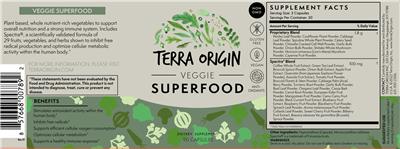
Plant based, whole nutrient-rich vegetables to support overall nutrition and a strong immune system. Includes Spectra, a scientifically validated formula of 29 fruits, vegetables, and herbs shown to inhibit free radical production and optimize cellular metabolic activity within the human body.
Antioxidants
FDA Disclaimer Statement
These statements have not been evaluated by the Food and Drug Administration. This product is not intended to diagnose, treat, cure or prevent any disease.
Formulation
Benefits Stimulates antioxidant activity within the human body Inhibits free radicals Supports efficient cellular oxygen consumption Optimizes cellular metabolism Supports a healthy immune response
Non-GMO Gluten Free
Vegan
FDA Statement of Identity
Dietary Supplement
Brand IP Statement(s)
Spectra is a trademark of Futureceuticals.
Copyright 2022 Terra Origin, Inc., www.TerraOrigin.com, 631-300-2306.
Storage
Warnings: Store in a cool. Dry place
Precautions
Do not use if safety seal is broken or missing.
Suggested/Recommended/Usage/Directions
Suggested Use: As a dietary supplement, take 1 serving (3 capsules) per day.
General Statements
For more information, please visit terraorigin.com
Is this label outdated? Report a formula or label change and our pharmacy team will review it.
Veggie Superfood by Terra Origin label
The label scan from the NIH Dietary Supplement Label Database. Tap to enlarge.
Label images are published by the NIH Dietary Supplement Label Database for the version of this product on file. Always read your actual product label.
View the full label (PDF)The Ingredients in Veggie Superfood by Terra Origin
These are the 39 active ingredients this product is made of. Select any to open its full monograph.
Serving size3 Capsule(s) Dosage formCapsule Servings per container30 Amounts shown are per serving.
Most supplement products combine several ingredients, and a medication can interact with the product through any one of them. Each ingredient below shows whether it has known drug interactions.
Proprietary Blend
- › Cayenne, Powder
- › Garlic, Powder
- › Parsley, Powder
- › Celery, Powder
- › Chlorella, Powder
- › Cabbage, Powder
- › Cauliflower, Powder
- › Spirulina, Powder
- › Onion, Powder
- › Shiitake Mushroom, Powder
- › Lion's Mane Mushroom, Powder
Spectra Blend
- › Green Tea Leaf Extract
- › Acerola Fruit Extract
- › Blueberry Fruit Extract
- › Apple fruit extract
- › Camu Camu, Powder
- › Broccoli, Powder
- › Onion bulb extract
- › Raspberry, Powder
- › Bilberry Fruit Extract
- › Blackberry, Powder
- › Black Currant fruit extract
- › Turmeric, Powder
- › Sweet cherry, Powder
- › Carrot, Powder
- › Spinach, Powder
- › Mangosteen, Powder
- › Tomato, Powder
- › Oregano, Powder
- › Cassia, Powder
- › Collards, Powder
- › Broccoli, Powder
- › Coffee Whole Fruit Extract
- › Cabbage Palm, Powder
- › Basil, Powder
- › European Elder, Powder
- › Aronia melanocarpa, Powder
- › Quercetin
- › Brussels Sprout, Powder
Other (inactive) ingredients: Hypromellose, Microcrystalline Cellulose. These complete the product’s ingredient list but are not active constituents.
Veggie Superfood by Terra Origin Drug Interactions
HelloPharmacist Interaction Report
Veggie Superfood by Terra Origin contains 39 ingredients, several of which interact with medications.
The most serious interaction we've documented is with green tea leaf extract and nadolol (Corgard), a heart medication — green tea can reduce nadolol levels by around 85%, potentially weakening its effect on your heart.
Read the full breakdown — every affected drug type, severity by severity
Green tea extract also carries Major-severity interactions with ephedrine and atorvastatin (Lipitor), raising risks of serious stimulant side effects or reducing cholesterol-drug effectiveness. Cayenne (capsicum) has Moderate interactions with blood thinners and diabetes medications, increasing bleeding and low blood sugar risk.
Apple fruit extract significantly reduces absorption of several drugs, including atenolol, fexofenadine (Allegra), and aliskiren — some by over 60%.
Additional Moderate-severity interactions span multiple drug categories: antidiabetes drugs and blood thinners (affected by garlic, bilberry, onion, and parsley); seizure medications (affected by green tea's caffeine); and chemotherapy drugs (affected by turmeric and acerola). Celery, spinach, cabbage, and chlorella all interact with warfarin (Coumadin), potentially reducing its blood-thinning effect.
Altogether, these interactions span 1,623 individual medications.
Several ingredients — raspberry powder, blackberry powder, sweet cherry powder, carrot powder, and tomato powder — could not be checked because we hold no interaction data for them. Use the medication checker below with your exact prescriptions before starting this product.
Check your own medications below · Editorial policy · How we use AI
Want to check YOUR meds against Veggie Superfood?
Ask about interactions with your drugs in plain English — “Can I take it with lisinopril?” — and we find you the answer in seconds, ingredient by ingredient.
Go to the checkerIngredients driving the most interactions
Individual Drug Interactions
The ingredients in Veggie Superfood interact with 1,647 drugs. Click any drug to see the details.
25 of the 39 ingredients in Veggie Superfood interact with drugs. Each result below shows which ingredient is responsible. Green Tea Leaf Extract Quercetin Turmeric, Powder Garlic, Powder Aronia melanocarpa, Powder Celery, Powder Coffee Whole Fruit Extract Parsley, Powder Chlorella, Powder Lion's Mane Mushroom, Powder Cabbage, Powder Apple fruit extract Basil, Powder Onion, Powder Bilberry Fruit Extract Cayenne, Powder Oregano, Powder Broccoli, Powder Cauliflower, Powder Black Currant fruit extract Acerola Fruit Extract Mangosteen, Powder Blueberry Fruit Extract Spinach, Powder Collards, Powder
Aminophylline, Amobarbital, EphedrineAmesec
How Aminophylline, Amobarbital, Ephedrine interacts with Veggie Superfood — through 2 ingredients. Tap an ingredient for the detail:
Green Tea Leaf ExtractStimulant Drugs, Ephedrine Major
Interaction Summary
Theoretically, concomitant use might increase stimulant adverse effects.
Read the full Green Tea Leaf Extract + Aminophylline, Amobarbital, Ephedrine interactionCoffee Whole Fruit ExtractStimulant Drugs, Ephedrine Major
Interaction Summary
Theoretically, concomitant use might increase stimulant adverse effects.
Read the full Coffee Whole Fruit Extract + Aminophylline, Amobarbital, Ephedrine interactionAtorvastatinAtorvaliq
How Atorvastatin interacts with Veggie Superfood — through 7 ingredients. Tap an ingredient for the detail:
Green Tea Leaf ExtractHepatotoxic Drugs, Cytochrome P450 3a4 (cyp3a4) Substrates +2 Major
Interaction Summary
Theoretically, concomitant use might have additive adverse hepatotoxic effects.
Read the full Green Tea Leaf Extract + Atorvastatin interactionApple Fruit ExtractOrganic Anion-transporting Polypeptide Substrates (oatp) Major
Interaction Summary
Concomitant consumption of apple juice can significantly decrease oral absorption and blood levels of OATP substrates.
Read the full Apple Fruit Extract + Atorvastatin interactionCabbage Palm, PowderGlucuronidated Drugs Moderate
Interaction Summary
Theoretically, cabbage might increase clearance and decrease the effects of drugs metabolized through glucuronide conjugation.
Read the full Cabbage Palm, Powder + Atorvastatin interactionTurmeric, PowderOrganic Anion-transporting Polypeptide Substrates (oatp), Cytochrome P450 3a4 (cyp3a4) Substrates +1 Moderate
Interaction Summary
Theoretically, turmeric might increase blood levels of OATP4C1 substrates.
Read the full Turmeric, Powder + Atorvastatin interactionGarlic, PowderCytochrome P450 3a4 (cyp3a4) Substrates Moderate
Interaction Summary
Theoretically, garlic products containing allicin might induce intestinal CYP3A4 and inhibit hepatic CYP3A4.
Read the full Garlic, Powder + Atorvastatin interactionAronia Melanocarpa, PowderCytochrome P450 3a4 (cyp3a4) Substrates Moderate
Interaction Summary
Theoretically, chokeberry might increase levels of drugs metabolized by CYP3A4.
Read the full Aronia Melanocarpa, Powder + Atorvastatin interactionQuercetinOrganic Anion-transporting Polypeptide Substrates (oatp), Cytochrome P450 3a4 (cyp3a4) Substrates Moderate
Interaction Summary
Theoretically, concomitant use might increase the effects and adverse effects of OATP substrates.
Read the full Quercetin + Atorvastatin interactionAtorvastatin CalciumLipitor
How Atorvastatin Calcium interacts with Veggie Superfood — through 7 ingredients. Tap an ingredient for the detail:
Green Tea Leaf ExtractHepatotoxic Drugs, Cytochrome P450 3a4 (cyp3a4) Substrates +2 Major
Interaction Summary
Theoretically, concomitant use might have additive adverse hepatotoxic effects.
Read the full Green Tea Leaf Extract + Atorvastatin Calcium interactionApple Fruit ExtractOrganic Anion-transporting Polypeptide Substrates (oatp) Major
Interaction Summary
Concomitant consumption of apple juice can significantly decrease oral absorption and blood levels of OATP substrates.
Read the full Apple Fruit Extract + Atorvastatin Calcium interactionTurmeric, PowderHepatotoxic Drugs, Cytochrome P450 3a4 (cyp3a4) Substrates +1 Moderate
Interaction Summary
Theoretically, turmeric might increase the risk of liver damage when taken with hepatotoxic drugs.
Read the full Turmeric, Powder + Atorvastatin Calcium interactionCabbage Palm, PowderGlucuronidated Drugs Moderate
Interaction Summary
Theoretically, cabbage might increase clearance and decrease the effects of drugs metabolized through glucuronide conjugation.
Read the full Cabbage Palm, Powder + Atorvastatin Calcium interactionAronia Melanocarpa, PowderCytochrome P450 3a4 (cyp3a4) Substrates Moderate
Interaction Summary
Theoretically, chokeberry might increase levels of drugs metabolized by CYP3A4.
Read the full Aronia Melanocarpa, Powder + Atorvastatin Calcium interactionQuercetinCytochrome P450 3a4 (cyp3a4) Substrates, Organic Anion-transporting Polypeptide Substrates (oatp) Moderate
Interaction Summary
Theoretically, concomitant use might alter the effects and adverse effects of CYP3A4 substrates.
Read the full Quercetin + Atorvastatin Calcium interactionGarlic, PowderCytochrome P450 3a4 (cyp3a4) Substrates Moderate
Interaction Summary
Theoretically, garlic products containing allicin might induce intestinal CYP3A4 and inhibit hepatic CYP3A4.
Read the full Garlic, Powder + Atorvastatin Calcium interactionBendroflumethiazide, NadololCorzide
How Bendroflumethiazide, Nadolol interacts with Veggie Superfood — through 9 ingredients. Tap an ingredient for the detail:
Green Tea Leaf ExtractDiuretic Drugs, Nadolol (corgard) Major
Interaction Summary
Theoretically, using green tea with diuretic drugs might increase the risk of hypokalemia.
Read the full Green Tea Leaf Extract + Bendroflumethiazide, Nadolol interactionCelery, PowderAntihypertensive Drugs, Photosensitizing Drugs Moderate
Interaction Summary
Theoretically, celery seed extract might have additive effects with antihypertensive drugs.
Read the full Celery, Powder + Bendroflumethiazide, Nadolol interactionChlorella, PowderPhotosensitizing Drugs Moderate
Interaction Summary
Theoretically, chlorella might have additive effects with photosensitizing drugs.
Read the full Chlorella, Powder + Bendroflumethiazide, Nadolol interactionQuercetinAntihypertensive Drugs Moderate
Interaction Summary
Theoretically, taking quercetin with antihypertensive drugs might increase the risk of hypotension.
Read the full Quercetin + Bendroflumethiazide, Nadolol interactionGarlic, PowderAntihypertensive Drugs Moderate
Interaction Summary
Theoretically, taking garlic with antihypertensive drugs might increase the risk of hypotension.
Read the full Garlic, Powder + Bendroflumethiazide, Nadolol interactionApple Fruit ExtractAntihypertensive Drugs Moderate
Interaction Summary
Consuming apple juice with antihypertensive drugs might interfere with blood pressure control.
Read the full Apple Fruit Extract + Bendroflumethiazide, Nadolol interactionBasil, PowderAntihypertensive Drugs Moderate
Interaction Summary
Theoretically, basil might increase the risk of hypotension when taken with antihypertensive drugs.
Read the full Basil, Powder + Bendroflumethiazide, Nadolol interactionCoffee Whole Fruit ExtractDiuretic Drugs Moderate
Interaction Summary
Theoretically, concomitant use might increase the risk of hypokalemia.
Read the full Coffee Whole Fruit Extract + Bendroflumethiazide, Nadolol interactionParsley, PowderDiuretic Drugs Moderate
Interaction Summary
Theoretically, parsley might enhance or interfere with the effects of diuretic drugs.
Read the full Parsley, Powder + Bendroflumethiazide, Nadolol interactionBosentanTracleer
How Bosentan interacts with Veggie Superfood — through 8 ingredients. Tap an ingredient for the detail:
Apple Fruit ExtractAntihypertensive Drugs, Organic Anion-transporting Polypeptide Substrates (oatp) Major
Interaction Summary
Consuming apple juice with antihypertensive drugs might interfere with blood pressure control.
Read the full Apple Fruit Extract + Bosentan interactionGreen Tea Leaf ExtractHepatotoxic Drugs, Cytochrome P450 3a4 (cyp3a4) Substrates +1 Moderate
Interaction Summary
Theoretically, concomitant use might have additive adverse hepatotoxic effects.
Read the full Green Tea Leaf Extract + Bosentan interactionCelery, PowderAntihypertensive Drugs Moderate
Interaction Summary
Theoretically, celery seed extract might have additive effects with antihypertensive drugs.
Read the full Celery, Powder + Bosentan interactionTurmeric, PowderHepatotoxic Drugs, Cytochrome P450 3a4 (cyp3a4) Substrates +1 Moderate
Interaction Summary
Theoretically, turmeric might increase the risk of liver damage when taken with hepatotoxic drugs.
Read the full Turmeric, Powder + Bosentan interactionQuercetinAntihypertensive Drugs, Cytochrome P450 2c9 (cyp2c9) Substrates +2 Moderate
Interaction Summary
Theoretically, taking quercetin with antihypertensive drugs might increase the risk of hypotension.
Read the full Quercetin + Bosentan interactionBasil, PowderAntihypertensive Drugs Moderate
Interaction Summary
Theoretically, basil might increase the risk of hypotension when taken with antihypertensive drugs.
Read the full Basil, Powder + Bosentan interactionGarlic, PowderCytochrome P450 3a4 (cyp3a4) Substrates, Antihypertensive Drugs Moderate
Interaction Summary
Theoretically, garlic products containing allicin might induce intestinal CYP3A4 and inhibit hepatic CYP3A4.
Read the full Garlic, Powder + Bosentan interactionAronia Melanocarpa, PowderCytochrome P450 3a4 (cyp3a4) Substrates Moderate
Interaction Summary
Theoretically, chokeberry might increase levels of drugs metabolized by CYP3A4.
Read the full Aronia Melanocarpa, Powder + Bosentan interactionBrincidofovirTembexa
How Brincidofovir interacts with Veggie Superfood — through 4 ingredients. Tap an ingredient for the detail:
Apple Fruit ExtractOrganic Anion-transporting Polypeptide Substrates (oatp) Major
Interaction Summary
Concomitant consumption of apple juice can significantly decrease oral absorption and blood levels of OATP substrates.
Read the full Apple Fruit Extract + Brincidofovir interactionGreen Tea Leaf ExtractOrganic Anion-transporting Polypeptide Substrates (oatp) Moderate
Interaction Summary
Theoretically, green tea might reduce the absorption of organic anion-transporting polypeptide (OATP) substrates.
Read the full Green Tea Leaf Extract + Brincidofovir interactionQuercetinOrganic Anion-transporting Polypeptide Substrates (oatp) Moderate
Interaction Summary
Theoretically, concomitant use might increase the effects and adverse effects of OATP substrates.
Read the full Quercetin + Brincidofovir interactionTurmeric, PowderOrganic Anion-transporting Polypeptide Substrates (oatp) Moderate
Interaction Summary
Theoretically, turmeric might increase blood levels of OATP4C1 substrates.
Read the full Turmeric, Powder + Brincidofovir interactionCarbetapentane Tannate, Chlorpheniramine Tannate, Ephedrine Tannate, Phenylephrine TannateQuadratuss, Ry Tuss, Rynatuss, Tri Tannate Plus
How Carbetapentane Tannate, Chlorpheniramine Tannate, Ephedrine Tannate, Phenylephrine Tannate interacts with Veggie Superfood — through 8 ingredients. Tap an ingredient for the detail:
Green Tea Leaf ExtractEphedrine, Stimulant Drugs +1 Major
Interaction Summary
Theoretically, concomitant use might increase the risk for stimulant adverse effects.
Read the full Green Tea Leaf Extract + Carbetapentane Tannate, Chlorpheniramine Tannate, Ephedrine Tannate, Phenylephrine Tannate interactionCoffee Whole Fruit ExtractEphedrine, Stimulant Drugs Major
Interaction Summary
Theoretically, concomitant use might increase the risk of stimulant adverse effects.
Read the full Coffee Whole Fruit Extract + Carbetapentane Tannate, Chlorpheniramine Tannate, Ephedrine Tannate, Phenylephrine Tannate interactionChlorella, PowderPhotosensitizing Drugs Moderate
Interaction Summary
Theoretically, chlorella might have additive effects with photosensitizing drugs.
Read the full Chlorella, Powder + Carbetapentane Tannate, Chlorpheniramine Tannate, Ephedrine Tannate, Phenylephrine Tannate interactionTurmeric, PowderCytochrome P450 3a4 (cyp3a4) Substrates Moderate
Interaction Summary
Turmeric might increase or decrease levels of drugs metabolized by CYP3A4.
Read the full Turmeric, Powder + Carbetapentane Tannate, Chlorpheniramine Tannate, Ephedrine Tannate, Phenylephrine Tannate interactionQuercetinCytochrome P450 3a4 (cyp3a4) Substrates Moderate
Interaction Summary
Theoretically, concomitant use might alter the effects and adverse effects of CYP3A4 substrates.
Read the full Quercetin + Carbetapentane Tannate, Chlorpheniramine Tannate, Ephedrine Tannate, Phenylephrine Tannate interactionGarlic, PowderCytochrome P450 3a4 (cyp3a4) Substrates Moderate
Interaction Summary
Theoretically, garlic products containing allicin might induce intestinal CYP3A4 and inhibit hepatic CYP3A4.
Read the full Garlic, Powder + Carbetapentane Tannate, Chlorpheniramine Tannate, Ephedrine Tannate, Phenylephrine Tannate interactionAronia Melanocarpa, PowderCytochrome P450 3a4 (cyp3a4) Substrates Moderate
Interaction Summary
Theoretically, chokeberry might increase levels of drugs metabolized by CYP3A4.
Read the full Aronia Melanocarpa, Powder + Carbetapentane Tannate, Chlorpheniramine Tannate, Ephedrine Tannate, Phenylephrine Tannate interactionCelery, PowderPhotosensitizing Drugs Minor
Interaction Summary
Theoretically, celery might increase the risk of photosensitivity reactions when taken with photosensitizing drugs.
Read the full Celery, Powder + Carbetapentane Tannate, Chlorpheniramine Tannate, Ephedrine Tannate, Phenylephrine Tannate interactionCeliprololCelicard
How Celiprolol interacts with Veggie Superfood — through 7 ingredients. Tap an ingredient for the detail:
Apple Fruit ExtractAntihypertensive Drugs, Organic Anion-transporting Polypeptide Substrates (oatp) Major
Interaction Summary
Consuming apple juice with antihypertensive drugs might interfere with blood pressure control.
Read the full Apple Fruit Extract + Celiprolol interactionGreen Tea Leaf ExtractCeliprolol (celicard), Organic Anion-transporting Polypeptide Substrates (oatp) +1 Moderate
Interaction Summary
Theoretically, green tea might reduce the levels and clinical effects of celiprolol.
Read the full Green Tea Leaf Extract + Celiprolol interactionQuercetinAntihypertensive Drugs, P-glycoprotein Substrates +1 Moderate
Interaction Summary
Theoretically, taking quercetin with antihypertensive drugs might increase the risk of hypotension.
Read the full Quercetin + Celiprolol interactionTurmeric, PowderOrganic Anion-transporting Polypeptide Substrates (oatp), P-glycoprotein Substrates Moderate
Interaction Summary
Theoretically, turmeric might increase blood levels of OATP4C1 substrates.
Read the full Turmeric, Powder + Celiprolol interactionBasil, PowderAntihypertensive Drugs Moderate
Interaction Summary
Theoretically, basil might increase the risk of hypotension when taken with antihypertensive drugs.
Read the full Basil, Powder + Celiprolol interactionGarlic, PowderAntihypertensive Drugs Moderate
Interaction Summary
Theoretically, taking garlic with antihypertensive drugs might increase the risk of hypotension.
Read the full Garlic, Powder + Celiprolol interactionCelery, PowderAntihypertensive Drugs Moderate
Interaction Summary
Theoretically, celery seed extract might have additive effects with antihypertensive drugs.
Read the full Celery, Powder + Celiprolol interactionCerivastatin SodiumBaycol
How Cerivastatin Sodium interacts with Veggie Superfood — through 4 ingredients. Tap an ingredient for the detail:
Apple Fruit ExtractOrganic Anion-transporting Polypeptide Substrates (oatp) Major
Interaction Summary
Concomitant consumption of apple juice can significantly decrease oral absorption and blood levels of OATP substrates.
Read the full Apple Fruit Extract + Cerivastatin Sodium interactionTurmeric, PowderHepatotoxic Drugs, Organic Anion-transporting Polypeptide Substrates (oatp) Moderate
Interaction Summary
Theoretically, turmeric might increase the risk of liver damage when taken with hepatotoxic drugs.
Read the full Turmeric, Powder + Cerivastatin Sodium interactionGreen Tea Leaf ExtractHepatotoxic Drugs, Organic Anion-transporting Polypeptide Substrates (oatp) Moderate
Interaction Summary
Theoretically, concomitant use might have additive adverse hepatotoxic effects.
Read the full Green Tea Leaf Extract + Cerivastatin Sodium interactionQuercetinOrganic Anion-transporting Polypeptide Substrates (oatp) Moderate
Interaction Summary
Theoretically, concomitant use might increase the effects and adverse effects of OATP substrates.
Read the full Quercetin + Cerivastatin Sodium interactionCinoxacinCinobac
How Cinoxacin interacts with Veggie Superfood — through 7 ingredients. Tap an ingredient for the detail:
Apple Fruit ExtractOrganic Anion-transporting Polypeptide Substrates (oatp) Major
Interaction Summary
Concomitant consumption of apple juice can significantly decrease oral absorption and blood levels of OATP substrates.
Read the full Apple Fruit Extract + Cinoxacin interactionChlorella, PowderPhotosensitizing Drugs Moderate
Interaction Summary
Theoretically, chlorella might have additive effects with photosensitizing drugs.
Read the full Chlorella, Powder + Cinoxacin interactionGreen Tea Leaf ExtractHepatotoxic Drugs, Quinolone Antibiotics +1 Moderate
Interaction Summary
Theoretically, concomitant use might have additive adverse hepatotoxic effects.
Read the full Green Tea Leaf Extract + Cinoxacin interactionCoffee Whole Fruit ExtractQuinolone Antibiotics Moderate
Interaction Summary
Theoretically, quinolone antibiotics might increase the levels and adverse effects of caffeine.
Read the full Coffee Whole Fruit Extract + Cinoxacin interactionTurmeric, PowderHepatotoxic Drugs, Organic Anion-transporting Polypeptide Substrates (oatp) Moderate
Interaction Summary
Theoretically, turmeric might increase the risk of liver damage when taken with hepatotoxic drugs.
Read the full Turmeric, Powder + Cinoxacin interactionQuercetinOrganic Anion-transporting Polypeptide Substrates (oatp), Quinolone Antibiotics Moderate
Interaction Summary
Theoretically, concomitant use might increase the effects and adverse effects of OATP substrates.
Read the full Quercetin + Cinoxacin interactionCelery, PowderPhotosensitizing Drugs Minor
Interaction Summary
Theoretically, celery might increase the risk of photosensitivity reactions when taken with photosensitizing drugs.
Read the full Celery, Powder + Cinoxacin interactionCiprofloxacinCiloxan, Cipro, Cipro IV, Cipro XR, Ciprobay, Otiprio
How Ciprofloxacin interacts with Veggie Superfood — through 8 ingredients. Tap an ingredient for the detail:
Apple Fruit ExtractOrganic Anion-transporting Polypeptide Substrates (oatp) Major
Interaction Summary
Concomitant consumption of apple juice can significantly decrease oral absorption and blood levels of OATP substrates.
Read the full Apple Fruit Extract + Ciprofloxacin interactionGreen Tea Leaf ExtractOrganic Anion-transporting Polypeptide Substrates (oatp), Quinolone Antibiotics +2 Moderate
Interaction Summary
Theoretically, green tea might reduce the absorption of organic anion-transporting polypeptide (OATP) substrates.
Read the full Green Tea Leaf Extract + Ciprofloxacin interactionQuercetinOrganic Anion-transporting Polypeptide Substrates (oatp), Quinolone Antibiotics +1 Moderate
Interaction Summary
Theoretically, concomitant use might increase the effects and adverse effects of OATP substrates.
Read the full Quercetin + Ciprofloxacin interactionCoffee Whole Fruit ExtractQuinolone Antibiotics Moderate
Interaction Summary
Theoretically, quinolone antibiotics might increase the levels and adverse effects of caffeine.
Read the full Coffee Whole Fruit Extract + Ciprofloxacin interactionChlorella, PowderPhotosensitizing Drugs Moderate
Interaction Summary
Theoretically, chlorella might have additive effects with photosensitizing drugs.
Read the full Chlorella, Powder + Ciprofloxacin interactionTurmeric, PowderHepatotoxic Drugs, Organic Anion-transporting Polypeptide Substrates (oatp) Moderate
Interaction Summary
Theoretically, turmeric might increase the risk of liver damage when taken with hepatotoxic drugs.
Read the full Turmeric, Powder + Ciprofloxacin interactionCayenne, PowderCiprofloxacin (cipro) Minor
Interaction Summary
Theoretically, taking capsicum with ciprofloxacin might increase levels and adverse effects of ciprofloxacin.
Read the full Cayenne, Powder + Ciprofloxacin interactionCelery, PowderPhotosensitizing Drugs Minor
Interaction Summary
Theoretically, celery might increase the risk of photosensitivity reactions when taken with photosensitizing drugs.
Read the full Celery, Powder + Ciprofloxacin interactionCiprofloxacin, HydrocortisoneCipro HC Otic
How Ciprofloxacin, Hydrocortisone interacts with Veggie Superfood — through 4 ingredients. Tap an ingredient for the detail:
Apple Fruit ExtractOrganic Anion-transporting Polypeptide Substrates (oatp) Major
Interaction Summary
Concomitant consumption of apple juice can significantly decrease oral absorption and blood levels of OATP substrates.
Read the full Apple Fruit Extract + Ciprofloxacin, Hydrocortisone interactionQuercetinOrganic Anion Transporter 1 (oat1) Substrates, Organic Anion-transporting Polypeptide Substrates (oatp) Moderate
Interaction Summary
Theoretically, concomitant use might increase the effects and adverse effects of OAT1 substrates.
Read the full Quercetin + Ciprofloxacin, Hydrocortisone interactionGreen Tea Leaf ExtractOrganic Anion-transporting Polypeptide Substrates (oatp) Moderate
Interaction Summary
Theoretically, green tea might reduce the absorption of organic anion-transporting polypeptide (OATP) substrates.
Read the full Green Tea Leaf Extract + Ciprofloxacin, Hydrocortisone interactionTurmeric, PowderOrganic Anion-transporting Polypeptide Substrates (oatp) Moderate
Interaction Summary
Theoretically, turmeric might increase blood levels of OATP4C1 substrates.
Read the full Turmeric, Powder + Ciprofloxacin, Hydrocortisone interactionClinafloxacinClinafloxacin
How Clinafloxacin interacts with Veggie Superfood — through 5 ingredients. Tap an ingredient for the detail:
Apple Fruit ExtractOrganic Anion-transporting Polypeptide Substrates (oatp) Major
Interaction Summary
Concomitant consumption of apple juice can significantly decrease oral absorption and blood levels of OATP substrates.
Read the full Apple Fruit Extract + Clinafloxacin interactionTurmeric, PowderOrganic Anion-transporting Polypeptide Substrates (oatp) Moderate
Interaction Summary
Theoretically, turmeric might increase blood levels of OATP4C1 substrates.
Read the full Turmeric, Powder + Clinafloxacin interactionGreen Tea Leaf ExtractOrganic Anion-transporting Polypeptide Substrates (oatp), Quinolone Antibiotics Moderate
Interaction Summary
Theoretically, green tea might reduce the absorption of organic anion-transporting polypeptide (OATP) substrates.
Read the full Green Tea Leaf Extract + Clinafloxacin interactionQuercetinOrganic Anion-transporting Polypeptide Substrates (oatp), Quinolone Antibiotics Moderate
Interaction Summary
Theoretically, concomitant use might increase the effects and adverse effects of OATP substrates.
Read the full Quercetin + Clinafloxacin interactionCoffee Whole Fruit ExtractQuinolone Antibiotics Moderate
Interaction Summary
Theoretically, quinolone antibiotics might increase the levels and adverse effects of caffeine.
Read the full Coffee Whole Fruit Extract + Clinafloxacin interactionDyphylline, Ephedrine, Guaifenesin, PhenobarbitalLufyllin-EPG
How Dyphylline, Ephedrine, Guaifenesin, Phenobarbital interacts with Veggie Superfood — through 2 ingredients. Tap an ingredient for the detail:
Green Tea Leaf ExtractStimulant Drugs, Phenobarbital (luminal) +1 Major
Interaction Summary
Theoretically, concomitant use might increase stimulant adverse effects.
Read the full Green Tea Leaf Extract + Dyphylline, Ephedrine, Guaifenesin, Phenobarbital interactionCoffee Whole Fruit ExtractStimulant Drugs, Ephedrine Major
Interaction Summary
Theoretically, concomitant use might increase stimulant adverse effects.
Read the full Coffee Whole Fruit Extract + Dyphylline, Ephedrine, Guaifenesin, Phenobarbital interactionEnoxacinPenetrex
How Enoxacin interacts with Veggie Superfood — through 7 ingredients. Tap an ingredient for the detail:
Apple Fruit ExtractOrganic Anion-transporting Polypeptide Substrates (oatp) Major
Interaction Summary
Concomitant consumption of apple juice can significantly decrease oral absorption and blood levels of OATP substrates.
Read the full Apple Fruit Extract + Enoxacin interactionGreen Tea Leaf ExtractOrganic Anion-transporting Polypeptide Substrates (oatp), Quinolone Antibiotics +1 Moderate
Interaction Summary
Theoretically, green tea might reduce the absorption of organic anion-transporting polypeptide (OATP) substrates.
Read the full Green Tea Leaf Extract + Enoxacin interactionCoffee Whole Fruit ExtractQuinolone Antibiotics Moderate
Interaction Summary
Theoretically, quinolone antibiotics might increase the levels and adverse effects of caffeine.
Read the full Coffee Whole Fruit Extract + Enoxacin interactionQuercetinOrganic Anion-transporting Polypeptide Substrates (oatp), Quinolone Antibiotics Moderate
Interaction Summary
Theoretically, concomitant use might increase the effects and adverse effects of OATP substrates.
Read the full Quercetin + Enoxacin interactionChlorella, PowderPhotosensitizing Drugs Moderate
Interaction Summary
Theoretically, chlorella might have additive effects with photosensitizing drugs.
Read the full Chlorella, Powder + Enoxacin interactionTurmeric, PowderOrganic Anion-transporting Polypeptide Substrates (oatp) Moderate
Interaction Summary
Theoretically, turmeric might increase blood levels of OATP4C1 substrates.
Read the full Turmeric, Powder + Enoxacin interactionCelery, PowderPhotosensitizing Drugs Minor
Interaction Summary
Theoretically, celery might increase the risk of photosensitivity reactions when taken with photosensitizing drugs.
Read the full Celery, Powder + Enoxacin interactionEphedrine, Guaifenesin (otc Drug)Ephedrine Formula 400, Ephedrine Plus Tabs
How Ephedrine, Guaifenesin (otc Drug) interacts with Veggie Superfood — through 2 ingredients. Tap an ingredient for the detail:
Coffee Whole Fruit ExtractEphedrine, Stimulant Drugs Major
Interaction Summary
Theoretically, concomitant use might increase the risk of stimulant adverse effects.
Read the full Coffee Whole Fruit Extract + Ephedrine, Guaifenesin (otc Drug) interactionGreen Tea Leaf ExtractStimulant Drugs, Ephedrine Major
Interaction Summary
Theoretically, concomitant use might increase stimulant adverse effects.
Read the full Green Tea Leaf Extract + Ephedrine, Guaifenesin (otc Drug) interactionEphedrine, Guaifenesin, Phenobarbital, TheophyllineMudrane GG
How Ephedrine, Guaifenesin, Phenobarbital, Theophylline interacts with Veggie Superfood — through 9 ingredients. Tap an ingredient for the detail:
Green Tea Leaf ExtractPhenobarbital (luminal), Ephedrine +2 Major
Interaction Summary
Theoretically, green tea might reduce the effects of phenobarbital and increase the risk for convulsions.
Read the full Green Tea Leaf Extract + Ephedrine, Guaifenesin, Phenobarbital, Theophylline interactionCoffee Whole Fruit ExtractStimulant Drugs, Theophylline +1 Major
Interaction Summary
Theoretically, concomitant use might increase stimulant adverse effects.
Read the full Coffee Whole Fruit Extract + Ephedrine, Guaifenesin, Phenobarbital, Theophylline interactionCauliflower, PowderCytochrome P450 1a2 (cyp1a2) Substrates Moderate
Interaction Summary
Preliminary clinical evidence suggests that eating cruciferous vegetables, including broccoli, cauliflower, daikon radish sprouts, and cabbage, can increase cytochrome P450 1A2 (CYP1A2) activity by 14% to 27%.
Read the full Cauliflower, Powder + Ephedrine, Guaifenesin, Phenobarbital, Theophylline interactionBroccoli, PowderCytochrome P450 1a2 (cyp1a2) Substrates Moderate
Interaction Summary
Theoretically, broccoli might reduce the levels and effects of drugs metabolized by CYP1A2.
Read the full Broccoli, Powder + Ephedrine, Guaifenesin, Phenobarbital, Theophylline interactionCabbage Palm, PowderCytochrome P450 1a2 (cyp1a2) Substrates Moderate
Interaction Summary
Theoretically, cabbage might decrease levels of drugs metabolized by CYP1A2.
Read the full Cabbage Palm, Powder + Ephedrine, Guaifenesin, Phenobarbital, Theophylline interactionCayenne, PowderTheophylline Moderate
Interaction Summary
Theoretically, taking capsicum with theophylline might increase the levels and adverse effects of theophylline.
Read the full Cayenne, Powder + Ephedrine, Guaifenesin, Phenobarbital, Theophylline interactionParsley, PowderCytochrome P450 1a2 (cyp1a2) Substrates Moderate
Interaction Summary
Theoretically, parsley might increase serum levels of CYP1A2 substrates.
Read the full Parsley, Powder + Ephedrine, Guaifenesin, Phenobarbital, Theophylline interactionCelery, PowderCytochrome P450 1a2 (cyp1a2) Substrates Moderate
Interaction Summary
Theoretically, celery might increase levels of drugs metabolized by CYP1A2.
Read the full Celery, Powder + Ephedrine, Guaifenesin, Phenobarbital, Theophylline interactionTurmeric, PowderCytochrome P450 1a2 (cyp1a2) Substrates Minor
Interaction Summary
Theoretically, turmeric might increase levels of drugs metabolized by CYP1A2.
Read the full Turmeric, Powder + Ephedrine, Guaifenesin, Phenobarbital, Theophylline interactionEphedrine, Hydroxyzine, TheophyllineAmi Rax, Marax
How Ephedrine, Hydroxyzine, Theophylline interacts with Veggie Superfood — through 10 ingredients. Tap an ingredient for the detail:
Green Tea Leaf ExtractStimulant Drugs, Theophylline +1 Major
Interaction Summary
Theoretically, concomitant use might increase stimulant adverse effects.
Read the full Green Tea Leaf Extract + Ephedrine, Hydroxyzine, Theophylline interactionCoffee Whole Fruit ExtractStimulant Drugs, Theophylline +1 Major
Interaction Summary
Theoretically, concomitant use might increase stimulant adverse effects.
Read the full Coffee Whole Fruit Extract + Ephedrine, Hydroxyzine, Theophylline interactionCelery, PowderCytochrome P450 1a2 (cyp1a2) Substrates, Photosensitizing Drugs Moderate
Interaction Summary
Theoretically, celery might increase levels of drugs metabolized by CYP1A2.
Read the full Celery, Powder + Ephedrine, Hydroxyzine, Theophylline interactionParsley, PowderCytochrome P450 1a2 (cyp1a2) Substrates Moderate
Interaction Summary
Theoretically, parsley might increase serum levels of CYP1A2 substrates.
Read the full Parsley, Powder + Ephedrine, Hydroxyzine, Theophylline interactionCabbage Palm, PowderCytochrome P450 1a2 (cyp1a2) Substrates Moderate
Interaction Summary
Theoretically, cabbage might decrease levels of drugs metabolized by CYP1A2.
Read the full Cabbage Palm, Powder + Ephedrine, Hydroxyzine, Theophylline interactionBroccoli, PowderCytochrome P450 1a2 (cyp1a2) Substrates Moderate
Interaction Summary
Theoretically, broccoli might reduce the levels and effects of drugs metabolized by CYP1A2.
Read the full Broccoli, Powder + Ephedrine, Hydroxyzine, Theophylline interactionCauliflower, PowderCytochrome P450 1a2 (cyp1a2) Substrates Moderate
Interaction Summary
Preliminary clinical evidence suggests that eating cruciferous vegetables, including broccoli, cauliflower, daikon radish sprouts, and cabbage, can increase cytochrome P450 1A2 (CYP1A2) activity by 14% to 27%.
Read the full Cauliflower, Powder + Ephedrine, Hydroxyzine, Theophylline interactionCayenne, PowderTheophylline Moderate
Interaction Summary
Theoretically, taking capsicum with theophylline might increase the levels and adverse effects of theophylline.
Read the full Cayenne, Powder + Ephedrine, Hydroxyzine, Theophylline interactionChlorella, PowderPhotosensitizing Drugs Moderate
Interaction Summary
Theoretically, chlorella might have additive effects with photosensitizing drugs.
Read the full Chlorella, Powder + Ephedrine, Hydroxyzine, Theophylline interactionTurmeric, PowderCytochrome P450 1a2 (cyp1a2) Substrates Minor
Interaction Summary
Theoretically, turmeric might increase levels of drugs metabolized by CYP1A2.
Read the full Turmeric, Powder + Ephedrine, Hydroxyzine, Theophylline interactionEphedrine, Phenobarbital, Potassium Iodide, TheophyllineMudrane, Quadrinal
How Ephedrine, Phenobarbital, Potassium Iodide, Theophylline interacts with Veggie Superfood — through 3 ingredients. Tap an ingredient for the detail:
Green Tea Leaf ExtractPhenobarbital (luminal), Ephedrine +2 Major
Interaction Summary
Theoretically, green tea might reduce the effects of phenobarbital and increase the risk for convulsions.
Read the full Green Tea Leaf Extract + Ephedrine, Phenobarbital, Potassium Iodide, Theophylline interactionCoffee Whole Fruit ExtractEphedrine, Stimulant Drugs +1 Major
Interaction Summary
Theoretically, concomitant use might increase the risk of stimulant adverse effects.
Read the full Coffee Whole Fruit Extract + Ephedrine, Phenobarbital, Potassium Iodide, Theophylline interactionCayenne, PowderTheophylline Moderate
Interaction Summary
Theoretically, taking capsicum with theophylline might increase the levels and adverse effects of theophylline.
Read the full Cayenne, Powder + Ephedrine, Phenobarbital, Potassium Iodide, Theophylline interactionEphedrine, Phenobarbital, TheophyllineTedral
How Ephedrine, Phenobarbital, Theophylline interacts with Veggie Superfood — through 3 ingredients. Tap an ingredient for the detail:
Coffee Whole Fruit ExtractStimulant Drugs, Theophylline +1 Major
Interaction Summary
Theoretically, concomitant use might increase stimulant adverse effects.
Read the full Coffee Whole Fruit Extract + Ephedrine, Phenobarbital, Theophylline interactionGreen Tea Leaf ExtractStimulant Drugs, Theophylline +2 Major
Interaction Summary
Theoretically, concomitant use might increase stimulant adverse effects.
Read the full Green Tea Leaf Extract + Ephedrine, Phenobarbital, Theophylline interactionCayenne, PowderTheophylline Moderate
Interaction Summary
Theoretically, taking capsicum with theophylline might increase the levels and adverse effects of theophylline.
Read the full Cayenne, Powder + Ephedrine, Phenobarbital, Theophylline interactionEtoposideEtopophos, VePesid, VP16
How Etoposide interacts with Veggie Superfood — through 6 ingredients. Tap an ingredient for the detail:
Apple Fruit ExtractOrganic Anion-transporting Polypeptide Substrates (oatp) Major
Interaction Summary
Concomitant consumption of apple juice can significantly decrease oral absorption and blood levels of OATP substrates.
Read the full Apple Fruit Extract + Etoposide interactionQuercetinP-glycoprotein Substrates, Cytochrome P450 3a4 (cyp3a4) Substrates +1 Moderate
Interaction Summary
Theoretically, concomitant use might alter the effects and adverse effects of P-glycoprotein substrates.
Read the full Quercetin + Etoposide interactionTurmeric, PowderCytochrome P450 3a4 (cyp3a4) Substrates, P-glycoprotein Substrates +1 Moderate
Interaction Summary
Turmeric might increase or decrease levels of drugs metabolized by CYP3A4.
Read the full Turmeric, Powder + Etoposide interactionGreen Tea Leaf ExtractCytochrome P450 3a4 (cyp3a4) Substrates, P-glycoprotein Substrates +1 Moderate
Interaction Summary
Green tea is unlikely to produce clinically significant changes in the levels and clinical effects of CYP3A4 substrates.
Read the full Green Tea Leaf Extract + Etoposide interactionGarlic, PowderCytochrome P450 3a4 (cyp3a4) Substrates Moderate
Interaction Summary
Theoretically, garlic products containing allicin might induce intestinal CYP3A4 and inhibit hepatic CYP3A4.
Read the full Garlic, Powder + Etoposide interactionAronia Melanocarpa, PowderCytochrome P450 3a4 (cyp3a4) Substrates Moderate
Interaction Summary
Theoretically, chokeberry might increase levels of drugs metabolized by CYP3A4.
Read the full Aronia Melanocarpa, Powder + Etoposide interactionEzetimibe, AtorvastatinLiptruzet
How Ezetimibe, Atorvastatin interacts with Veggie Superfood — through 7 ingredients. Tap an ingredient for the detail:
Green Tea Leaf ExtractOrganic Anion-transporting Polypeptide Substrates (oatp), Atorvastatin (lipitor) +2 Major
Interaction Summary
Theoretically, green tea might reduce the absorption of organic anion-transporting polypeptide (OATP) substrates.
Read the full Green Tea Leaf Extract + Ezetimibe, Atorvastatin interactionApple Fruit ExtractOrganic Anion-transporting Polypeptide Substrates (oatp) Major
Interaction Summary
Concomitant consumption of apple juice can significantly decrease oral absorption and blood levels of OATP substrates.
Read the full Apple Fruit Extract + Ezetimibe, Atorvastatin interactionTurmeric, PowderCytochrome P450 3a4 (cyp3a4) Substrates, Hepatotoxic Drugs +1 Moderate
Interaction Summary
Turmeric might increase or decrease levels of drugs metabolized by CYP3A4.
Read the full Turmeric, Powder + Ezetimibe, Atorvastatin interactionGarlic, PowderCytochrome P450 3a4 (cyp3a4) Substrates Moderate
Interaction Summary
Theoretically, garlic products containing allicin might induce intestinal CYP3A4 and inhibit hepatic CYP3A4.
Read the full Garlic, Powder + Ezetimibe, Atorvastatin interactionAronia Melanocarpa, PowderCytochrome P450 3a4 (cyp3a4) Substrates Moderate
Interaction Summary
Theoretically, chokeberry might increase levels of drugs metabolized by CYP3A4.
Read the full Aronia Melanocarpa, Powder + Ezetimibe, Atorvastatin interactionQuercetinOrganic Anion-transporting Polypeptide Substrates (oatp), Cytochrome P450 3a4 (cyp3a4) Substrates +1 Moderate
Interaction Summary
Theoretically, concomitant use might increase the effects and adverse effects of OATP substrates.
Read the full Quercetin + Ezetimibe, Atorvastatin interactionCabbage Palm, PowderGlucuronidated Drugs Moderate
Interaction Summary
Theoretically, cabbage might increase clearance and decrease the effects of drugs metabolized through glucuronide conjugation.
Read the full Cabbage Palm, Powder + Ezetimibe, Atorvastatin interactionFexofenadineAllegra
How Fexofenadine interacts with Veggie Superfood — through 6 ingredients. Tap an ingredient for the detail:
Apple Fruit ExtractOrganic Anion-transporting Polypeptide Substrates (oatp), Fexofenadine (allegra) Major
Interaction Summary
Concomitant consumption of apple juice can significantly decrease oral absorption and blood levels of OATP substrates.
Read the full Apple Fruit Extract + Fexofenadine interactionAronia Melanocarpa, PowderCytochrome P450 3a4 (cyp3a4) Substrates Moderate
Interaction Summary
Theoretically, chokeberry might increase levels of drugs metabolized by CYP3A4.
Read the full Aronia Melanocarpa, Powder + Fexofenadine interactionGarlic, PowderCytochrome P450 3a4 (cyp3a4) Substrates Moderate
Interaction Summary
Theoretically, garlic products containing allicin might induce intestinal CYP3A4 and inhibit hepatic CYP3A4.
Read the full Garlic, Powder + Fexofenadine interactionGreen Tea Leaf ExtractOrganic Anion-transporting Polypeptide Substrates (oatp), Cytochrome P450 3a4 (cyp3a4) Substrates +2 Moderate
Interaction Summary
Theoretically, green tea might reduce the absorption of organic anion-transporting polypeptide (OATP) substrates.
Read the full Green Tea Leaf Extract + Fexofenadine interactionTurmeric, PowderOrganic Anion-transporting Polypeptide Substrates (oatp), P-glycoprotein Substrates +1 Moderate
Interaction Summary
Theoretically, turmeric might increase blood levels of OATP4C1 substrates.
Read the full Turmeric, Powder + Fexofenadine interactionQuercetinCytochrome P450 3a4 (cyp3a4) Substrates, Organic Anion-transporting Polypeptide Substrates (oatp) +1 Moderate
Interaction Summary
Theoretically, concomitant use might alter the effects and adverse effects of CYP3A4 substrates.
Read the full Quercetin + Fexofenadine interactionFexofenadine, PseudoephedrineAllegra D
How Fexofenadine, Pseudoephedrine interacts with Veggie Superfood — through 7 ingredients. Tap an ingredient for the detail:
Apple Fruit ExtractOrganic Anion-transporting Polypeptide Substrates (oatp), Fexofenadine (allegra) Major
Interaction Summary
Concomitant consumption of apple juice can significantly decrease oral absorption and blood levels of OATP substrates.
Read the full Apple Fruit Extract + Fexofenadine, Pseudoephedrine interactionQuercetinP-glycoprotein Substrates, Organic Anion-transporting Polypeptide Substrates (oatp) +1 Moderate
Interaction Summary
Theoretically, concomitant use might alter the effects and adverse effects of P-glycoprotein substrates.
Read the full Quercetin + Fexofenadine, Pseudoephedrine interactionGreen Tea Leaf ExtractFexofenadine (allegra), P-glycoprotein Substrates +3 Moderate
Interaction Summary
Green tea can decrease blood levels of fexofenadine.
Read the full Green Tea Leaf Extract + Fexofenadine, Pseudoephedrine interactionGarlic, PowderCytochrome P450 3a4 (cyp3a4) Substrates Moderate
Interaction Summary
Theoretically, garlic products containing allicin might induce intestinal CYP3A4 and inhibit hepatic CYP3A4.
Read the full Garlic, Powder + Fexofenadine, Pseudoephedrine interactionAronia Melanocarpa, PowderCytochrome P450 3a4 (cyp3a4) Substrates Moderate
Interaction Summary
Theoretically, chokeberry might increase levels of drugs metabolized by CYP3A4.
Read the full Aronia Melanocarpa, Powder + Fexofenadine, Pseudoephedrine interactionCoffee Whole Fruit ExtractStimulant Drugs Moderate
Interaction Summary
Theoretically, concomitant use might increase stimulant adverse effects.
Read the full Coffee Whole Fruit Extract + Fexofenadine, Pseudoephedrine interactionTurmeric, PowderCytochrome P450 3a4 (cyp3a4) Substrates, Organic Anion-transporting Polypeptide Substrates (oatp) +1 Moderate
Interaction Summary
Turmeric might increase or decrease levels of drugs metabolized by CYP3A4.
Read the full Turmeric, Powder + Fexofenadine, Pseudoephedrine interactionFluvastatinLescol, Lescol XL
How Fluvastatin interacts with Veggie Superfood — through 4 ingredients. Tap an ingredient for the detail:
Apple Fruit ExtractOrganic Anion-transporting Polypeptide Substrates (oatp) Major
Interaction Summary
Concomitant consumption of apple juice can significantly decrease oral absorption and blood levels of OATP substrates.
Read the full Apple Fruit Extract + Fluvastatin interactionQuercetinCytochrome P450 2c8 (cyp2c8) Substrates, Organic Anion-transporting Polypeptide Substrates (oatp) +1 Moderate
Interaction Summary
Theoretically, concomitant use might increase the levels and adverse effects of CYP2C8 substrates.
Read the full Quercetin + Fluvastatin interactionTurmeric, PowderOrganic Anion-transporting Polypeptide Substrates (oatp), Hepatotoxic Drugs Moderate
Interaction Summary
Theoretically, turmeric might increase blood levels of OATP4C1 substrates.
Read the full Turmeric, Powder + Fluvastatin interactionGreen Tea Leaf ExtractHepatotoxic Drugs, Organic Anion-transporting Polypeptide Substrates (oatp) Moderate
Interaction Summary
Theoretically, concomitant use might have additive adverse hepatotoxic effects.
Read the full Green Tea Leaf Extract + Fluvastatin interactionGatifloxacinTequin, Tequin Injection
How Gatifloxacin interacts with Veggie Superfood — through 7 ingredients. Tap an ingredient for the detail:
Apple Fruit ExtractOrganic Anion-transporting Polypeptide Substrates (oatp) Major
Interaction Summary
Concomitant consumption of apple juice can significantly decrease oral absorption and blood levels of OATP substrates.
Read the full Apple Fruit Extract + Gatifloxacin interactionQuercetinOrganic Anion-transporting Polypeptide Substrates (oatp), Quinolone Antibiotics Moderate
Interaction Summary
Theoretically, concomitant use might increase the effects and adverse effects of OATP substrates.
Read the full Quercetin + Gatifloxacin interactionTurmeric, PowderHepatotoxic Drugs, Organic Anion-transporting Polypeptide Substrates (oatp) Moderate
Interaction Summary
Theoretically, turmeric might increase the risk of liver damage when taken with hepatotoxic drugs.
Read the full Turmeric, Powder + Gatifloxacin interactionChlorella, PowderPhotosensitizing Drugs Moderate
Interaction Summary
Theoretically, chlorella might have additive effects with photosensitizing drugs.
Read the full Chlorella, Powder + Gatifloxacin interactionGreen Tea Leaf ExtractHepatotoxic Drugs, Organic Anion-transporting Polypeptide Substrates (oatp) +1 Moderate
Interaction Summary
Theoretically, concomitant use might have additive adverse hepatotoxic effects.
Read the full Green Tea Leaf Extract + Gatifloxacin interactionCoffee Whole Fruit ExtractQuinolone Antibiotics Moderate
Interaction Summary
Theoretically, quinolone antibiotics might increase the levels and adverse effects of caffeine.
Read the full Coffee Whole Fruit Extract + Gatifloxacin interactionCelery, PowderPhotosensitizing Drugs Minor
Interaction Summary
Theoretically, celery might increase the risk of photosensitivity reactions when taken with photosensitizing drugs.
Read the full Celery, Powder + Gatifloxacin interactionGemifloxacinFactive
How Gemifloxacin interacts with Veggie Superfood — through 5 ingredients. Tap an ingredient for the detail:
Apple Fruit ExtractOrganic Anion-transporting Polypeptide Substrates (oatp) Major
Interaction Summary
Concomitant consumption of apple juice can significantly decrease oral absorption and blood levels of OATP substrates.
Read the full Apple Fruit Extract + Gemifloxacin interactionGreen Tea Leaf ExtractOrganic Anion-transporting Polypeptide Substrates (oatp), Quinolone Antibiotics Moderate
Interaction Summary
Theoretically, green tea might reduce the absorption of organic anion-transporting polypeptide (OATP) substrates.
Read the full Green Tea Leaf Extract + Gemifloxacin interactionCoffee Whole Fruit ExtractQuinolone Antibiotics Moderate
Interaction Summary
Theoretically, quinolone antibiotics might increase the levels and adverse effects of caffeine.
Read the full Coffee Whole Fruit Extract + Gemifloxacin interactionQuercetinOrganic Anion-transporting Polypeptide Substrates (oatp), Quinolone Antibiotics Moderate
Interaction Summary
Theoretically, concomitant use might increase the effects and adverse effects of OATP substrates.
Read the full Quercetin + Gemifloxacin interactionTurmeric, PowderOrganic Anion-transporting Polypeptide Substrates (oatp) Moderate
Interaction Summary
Theoretically, turmeric might increase blood levels of OATP4C1 substrates.
Read the full Turmeric, Powder + Gemifloxacin interactionGlyburideAlbert Glyburide, Diabeta, Glycron, Glynase, Glynase PresTab, Micronase +1 more
How Glyburide interacts with Veggie Superfood — through 19 ingredients. Tap an ingredient for the detail:
Apple Fruit ExtractAntidiabetes Drugs, Organic Anion-transporting Polypeptide Substrates (oatp) Major
Interaction Summary
Theoretically, consuming apple juice with antidiabetes drugs might interfere with blood glucose control.
Read the full Apple Fruit Extract + Glyburide interactionParsley, PowderAntidiabetes Drugs Moderate
Interaction Summary
Theoretically, parsley might increase the risk of hypoglycemia when taken with antidiabetes drugs.
Read the full Parsley, Powder + Glyburide interactionTurmeric, PowderOrganic Anion-transporting Polypeptide Substrates (oatp), Antidiabetes Drugs +2 Moderate
Interaction Summary
Theoretically, turmeric might increase blood levels of OATP4C1 substrates.
Read the full Turmeric, Powder + Glyburide interactionAronia Melanocarpa, PowderAntidiabetes Drugs Moderate
Interaction Summary
Theoretically, chokeberry might increase the risk of hypoglycemia when taken with antidiabetes drugs.
Read the full Aronia Melanocarpa, Powder + Glyburide interactionGarlic, PowderAntidiabetes Drugs Moderate
Interaction Summary
Theoretically, taking garlic with antidiabetes drugs might increase the risk of hypoglycemia.
Read the full Garlic, Powder + Glyburide interactionSpinach, PowderAntidiabetes Drugs Moderate
Interaction Summary
There are claims that spinach leaves have hypoglycemic effects.
Read the full Spinach, Powder + Glyburide interactionOnion, PowderAntidiabetes Drugs Moderate
Interaction Summary
Concomitant use of antidiabetes drugs with onion may increase the risk of hypoglycemia.
Read the full Onion, Powder + Glyburide interactionCollards, PowderAntidiabetes Drugs Moderate
Interaction Summary
In an animal study, an aqueous extract of collard leaves and stems has been shown to reduce glucose levels.
Read the full Collards, Powder + Glyburide interactionLion's Mane Mushroom, PowderAntidiabetes Drugs Moderate
Interaction Summary
Theoretically, lion's mane mushroom may have additive effects when used with antidiabetes drugs.
Read the full Lion's Mane Mushroom, Powder + Glyburide interactionBilberry Fruit ExtractAntidiabetes Drugs Moderate
Interaction Summary
Theoretically, bilberry leaf or fruit extract may increase the risk of hypoglycemia when taken with antidiabetes drugs.
Read the full Bilberry Fruit Extract + Glyburide interactionCabbage Palm, PowderAntidiabetes Drugs Moderate
Interaction Summary
Theoretically, cabbage might increase the risk of hypoglycemia when taken with antidiabetes drugs.
Read the full Cabbage Palm, Powder + Glyburide interactionQuercetinCytochrome P450 2c9 (cyp2c9) Substrates, Antidiabetes Drugs +1 Moderate
Interaction Summary
Theoretically, concomitant use might increase the levels and adverse effects of CYP2C9 substrates.
Read the full Quercetin + Glyburide interactionCayenne, PowderAntidiabetes Drugs Moderate
Interaction Summary
Theoretically, taking capsicum with antidiabetes drugs might increase the risk of hypoglycemia.
Read the full Cayenne, Powder + Glyburide interactionGreen Tea Leaf ExtractHepatotoxic Drugs, Antidiabetes Drugs +1 Moderate
Interaction Summary
Theoretically, concomitant use might have additive adverse hepatotoxic effects.
Read the full Green Tea Leaf Extract + Glyburide interactionChlorella, PowderPhotosensitizing Drugs Moderate
Interaction Summary
Theoretically, chlorella might have additive effects with photosensitizing drugs.
Read the full Chlorella, Powder + Glyburide interactionOregano, PowderAntidiabetes Drugs Moderate
Interaction Summary
Theoretically, oregano might increase the risk for hypoglycemia when taken with antidiabetes drugs.
Read the full Oregano, Powder + Glyburide interactionCelery, PowderPhotosensitizing Drugs Minor
Interaction Summary
Theoretically, celery might increase the risk of photosensitivity reactions when taken with photosensitizing drugs.
Read the full Celery, Powder + Glyburide interactionBlueberry Fruit ExtractAntidiabetes Drugs Minor
Interaction Summary
Theoretically, blueberries or blueberry leaf extracts might increase the risk of hypoglycemia when taken with antidiabetes drugs.
Read the full Blueberry Fruit Extract + Glyburide interactionCoffee Whole Fruit ExtractAntidiabetes Drugs Minor
Interaction Summary
Theoretically, concomitant use of coffee and antidiabetes drugs might interfere with blood glucose control.
Read the full Coffee Whole Fruit Extract + Glyburide interactionGlyburide, MetforminGlucovance
How Glyburide, Metformin interacts with Veggie Superfood — through 19 ingredients. Tap an ingredient for the detail:
Apple Fruit ExtractAntidiabetes Drugs, Organic Anion-transporting Polypeptide Substrates (oatp) Major
Interaction Summary
Theoretically, consuming apple juice with antidiabetes drugs might interfere with blood glucose control.
Read the full Apple Fruit Extract + Glyburide, Metformin interactionQuercetinOrganic Anion-transporting Polypeptide Substrates (oatp), Antidiabetes Drugs +1 Moderate
Interaction Summary
Theoretically, concomitant use might increase the effects and adverse effects of OATP substrates.
Read the full Quercetin + Glyburide, Metformin interactionBilberry Fruit ExtractAntidiabetes Drugs Moderate
Interaction Summary
Theoretically, bilberry leaf or fruit extract may increase the risk of hypoglycemia when taken with antidiabetes drugs.
Read the full Bilberry Fruit Extract + Glyburide, Metformin interactionCabbage Palm, PowderAntidiabetes Drugs Moderate
Interaction Summary
Theoretically, cabbage might increase the risk of hypoglycemia when taken with antidiabetes drugs.
Read the full Cabbage Palm, Powder + Glyburide, Metformin interactionOnion, PowderAntidiabetes Drugs Moderate
Interaction Summary
Concomitant use of antidiabetes drugs with onion may increase the risk of hypoglycemia.
Read the full Onion, Powder + Glyburide, Metformin interactionGarlic, PowderAntidiabetes Drugs Moderate
Interaction Summary
Theoretically, taking garlic with antidiabetes drugs might increase the risk of hypoglycemia.
Read the full Garlic, Powder + Glyburide, Metformin interactionSpinach, PowderAntidiabetes Drugs Moderate
Interaction Summary
There are claims that spinach leaves have hypoglycemic effects.
Read the full Spinach, Powder + Glyburide, Metformin interactionParsley, PowderAntidiabetes Drugs Moderate
Interaction Summary
Theoretically, parsley might increase the risk of hypoglycemia when taken with antidiabetes drugs.
Read the full Parsley, Powder + Glyburide, Metformin interactionTurmeric, PowderAntidiabetes Drugs, Glyburide (diabeta, Others) +2 Moderate
Interaction Summary
Theoretically, taking turmeric with antidiabetes drugs might increase the risk of hypoglycemia.
Read the full Turmeric, Powder + Glyburide, Metformin interactionAronia Melanocarpa, PowderAntidiabetes Drugs Moderate
Interaction Summary
Theoretically, chokeberry might increase the risk of hypoglycemia when taken with antidiabetes drugs.
Read the full Aronia Melanocarpa, Powder + Glyburide, Metformin interactionLion's Mane Mushroom, PowderAntidiabetes Drugs Moderate
Interaction Summary
Theoretically, lion's mane mushroom may have additive effects when used with antidiabetes drugs.
Read the full Lion's Mane Mushroom, Powder + Glyburide, Metformin interactionCollards, PowderAntidiabetes Drugs Moderate
Interaction Summary
In an animal study, an aqueous extract of collard leaves and stems has been shown to reduce glucose levels.
Read the full Collards, Powder + Glyburide, Metformin interactionOregano, PowderAntidiabetes Drugs Moderate
Interaction Summary
Theoretically, oregano might increase the risk for hypoglycemia when taken with antidiabetes drugs.
Read the full Oregano, Powder + Glyburide, Metformin interactionChlorella, PowderPhotosensitizing Drugs Moderate
Interaction Summary
Theoretically, chlorella might have additive effects with photosensitizing drugs.
Read the full Chlorella, Powder + Glyburide, Metformin interactionCayenne, PowderAntidiabetes Drugs Moderate
Interaction Summary
Theoretically, taking capsicum with antidiabetes drugs might increase the risk of hypoglycemia.
Read the full Cayenne, Powder + Glyburide, Metformin interactionGreen Tea Leaf ExtractHepatotoxic Drugs, Antidiabetes Drugs +2 Moderate
Interaction Summary
Theoretically, concomitant use might have additive adverse hepatotoxic effects.
Read the full Green Tea Leaf Extract + Glyburide, Metformin interactionCelery, PowderPhotosensitizing Drugs Minor
Interaction Summary
Theoretically, celery might increase the risk of photosensitivity reactions when taken with photosensitizing drugs.
Read the full Celery, Powder + Glyburide, Metformin interactionBlueberry Fruit ExtractAntidiabetes Drugs Minor
Interaction Summary
Theoretically, blueberries or blueberry leaf extracts might increase the risk of hypoglycemia when taken with antidiabetes drugs.
Read the full Blueberry Fruit Extract + Glyburide, Metformin interactionCoffee Whole Fruit ExtractAntidiabetes Drugs Minor
Interaction Summary
Theoretically, concomitant use of coffee and antidiabetes drugs might interfere with blood glucose control.
Read the full Coffee Whole Fruit Extract + Glyburide, Metformin interactionGrepafloxacinRaxar
How Grepafloxacin interacts with Veggie Superfood — through 10 ingredients. Tap an ingredient for the detail:
Apple Fruit ExtractOrganic Anion-transporting Polypeptide Substrates (oatp) Major
Interaction Summary
Concomitant consumption of apple juice can significantly decrease oral absorption and blood levels of OATP substrates.
Read the full Apple Fruit Extract + Grepafloxacin interactionTurmeric, PowderCytochrome P450 1a2 (cyp1a2) Substrates, Organic Anion-transporting Polypeptide Substrates (oatp) Moderate
Interaction Summary
Theoretically, turmeric might increase levels of drugs metabolized by CYP1A2.
Read the full Turmeric, Powder + Grepafloxacin interactionQuercetinOrganic Anion-transporting Polypeptide Substrates (oatp), Quinolone Antibiotics Moderate
Interaction Summary
Theoretically, concomitant use might increase the effects and adverse effects of OATP substrates.
Read the full Quercetin + Grepafloxacin interactionGreen Tea Leaf ExtractOrganic Anion-transporting Polypeptide Substrates (oatp), Quinolone Antibiotics Moderate
Interaction Summary
Theoretically, green tea might reduce the absorption of organic anion-transporting polypeptide (OATP) substrates.
Read the full Green Tea Leaf Extract + Grepafloxacin interactionCabbage Palm, PowderCytochrome P450 1a2 (cyp1a2) Substrates Moderate
Interaction Summary
Theoretically, cabbage might decrease levels of drugs metabolized by CYP1A2.
Read the full Cabbage Palm, Powder + Grepafloxacin interactionCelery, PowderCytochrome P450 1a2 (cyp1a2) Substrates Moderate
Interaction Summary
Theoretically, celery might increase levels of drugs metabolized by CYP1A2.
Read the full Celery, Powder + Grepafloxacin interactionParsley, PowderCytochrome P450 1a2 (cyp1a2) Substrates Moderate
Interaction Summary
Theoretically, parsley might increase serum levels of CYP1A2 substrates.
Read the full Parsley, Powder + Grepafloxacin interactionCoffee Whole Fruit ExtractQuinolone Antibiotics Moderate
Interaction Summary
Theoretically, quinolone antibiotics might increase the levels and adverse effects of caffeine.
Read the full Coffee Whole Fruit Extract + Grepafloxacin interactionCauliflower, PowderCytochrome P450 1a2 (cyp1a2) Substrates Moderate
Interaction Summary
Preliminary clinical evidence suggests that eating cruciferous vegetables, including broccoli, cauliflower, daikon radish sprouts, and cabbage, can increase cytochrome P450 1A2 (CYP1A2) activity by 14% to 27%.
Read the full Cauliflower, Powder + Grepafloxacin interactionBroccoli, PowderCytochrome P450 1a2 (cyp1a2) Substrates Moderate
Interaction Summary
Theoretically, broccoli might reduce the levels and effects of drugs metabolized by CYP1A2.
Read the full Broccoli, Powder + Grepafloxacin interactionEach ingredient & the kinds of drugs it affects
For each ingredient in Veggie Superfood with known interactions, here are the types of medications they can affect. Open any type for the detail — or search your exact drug in the checker above.
Green Tea Leaf Extract
Atorvastatin (Lipitor)
Green tea extract seems to reduce the levels and clinical effects of atorvastatin.
In healthy humans, taking green tea extract 300 mg or 600 mg along with atorvastatin reduces plasma levels of atorvastatin by approximately 24%. The elimination of atorvastatin is not affected. Atorvastatin is a substrate of organic anion-transporting polypeptides (OATPs). Research shows that two of the major catechins found in green tea, epicatechin gallate (ECG) and epigallocatechin gallate (EGCG), inhibit OATPs. Some OATPs are expressed in the small intestine and are responsible for the uptake of drugs and other compounds, which may have resulted in reduced plasma levels of atorvastatin. It is not clear if drinking green tea alters the absorption of atorvastatin.
Ephedrine
Theoretically, concomitant use might increase the risk for stimulant adverse effects.
Green tea contains caffeine. There is evidence that using ephedrine with caffeine might increase the risk of serious life-threatening or debilitating adverse effects such as hypertension, myocardial infarction, stroke, seizures, and death.
Nadolol (Corgard)
Green tea seems to reduce the levels and clinical effects of nadolol.
Preliminary clinical research shows that green tea consumption reduces plasma concentrations of nadolol. Compared to a control group, both peak levels and total drug exposure (AUC) of nadolol were reduced by approximately 85% in subjects who drank green tea daily for two weeks. Drinking green tea with nadolol also significantly reduced nadolol's systolic blood pressure lowering effect. Other clinical research shows that a single dose of green tea can affect plasma nadolol levels for at least one hour. Green tea catechins have been shown to inhibit organic anion transporting polypeptides (OATP), one of which, OATP1A2, is involved in the uptake of nadolol in the intestine The interaction is thought to be due primarily to the epigallocatechin gallate (EGCG) content of green tea.
5-Fluorouracil
Theoretically, high doses of green tea might increase the effects and side effects of 5-fluorouracil.
Animal research shows that taking green tea in amounts equivalent to about 6 cups daily in humans for 4 weeks prior to receiving a single injection of 5-fluorouracil increases the maximum plasma levels of 5-fluorouracil by about 2.5-fold and the area under the curve by 425%.
Adenosine (Adenocard)
Theoretically, green tea might decrease the vasodilatory effects of adenosine and interfere with its use prior to stress testing.
Green tea contains caffeine. Caffeine is a competitive inhibitor of adenosine at the cellular level. However, caffeine doesn't seem to affect supplemental adenosine because high interstitial levels of adenosine overcome the antagonistic effects of caffeine. It is recommended that methylxanthines and methylxanthine-containing products be stopped 24 hours prior to pharmacological stress tests. However, methylxanthines appear more likely to interfere with dipyridamole (Persantine) than adenosine-induced stress testing.
Anticoagulant/Antiplatelet Drugs
Theoretically, green tea may increase the risk of bleeding if used with anticoagulant or antiplatelet drugs.
Conflicting reports exist regarding the effect of green tea on bleeding risk when used with anticoagulant or antiplatelet drugs; however, most evidence suggests that drinking green tea in moderate amounts is unlikely to cause a significant interaction. Green tea contains small amounts of vitamin K, approximately 7 mcg per cup. Some case reports have associated the antagonism of warfarin with the vitamin K content of green tea. However, these reports are rare, and very large doses of green tea (about 8-16 cups daily) appear to be needed to cause these effects. Furthermore, the catechins and caffeine in green tea are reported to have antiplatelet activity.
Beta-Adrenergic Agonists
Green tea contains caffeine. Theoretically, concomitant use of large amounts of caffeine might increase cardiac inotropic effects of beta-agonists.
Bortezomib (Velcade)
Theoretically, green tea might interfere with the effects of bortezomib.
In vitro research shows that green tea polyphenols, such as epigallocatechin gallate (EGCG), interact with bortezomib and block its proteasome inhibitory action. This prevents the induction of cell death in multiple myeloma or glioblastoma cancer cell lines. Advise patients taking bortezomib, not to take green tea.
Carbamazepine (Tegretol)
Theoretically, green tea might reduce the effects of carbamazepine and increase the risk for convulsions.
Green tea contains caffeine. Animal research suggests that taking caffeine can lower the anticonvulsant effects of carbamazepine and can induce seizures when taken in doses above 400 mg/kg. Human research has shown that taking caffeine 300 mg in three divided doses along with carbamazepine 200 mg reduces the bioavailability of carbamazepine by 32% and prolongs the plasma half-life of carbamazepine 2-fold in healthy individuals.
Celiprolol (Celicard)
Theoretically, green tea might reduce the levels and clinical effects of celiprolol.
In a small human study, taking green tea daily for 4 days appears to decrease blood and urine levels of celiprolol by at least 98%. This interaction is possibly due to the inhibition of organic anion transporting polypeptide (OATP). Green tea catechins have been shown to inhibit organic anion transporting polypeptides (OATP), one of which, OATP1A2, is found in the intestine The interaction is thought to be due primarily to the epigallocatechin gallate (EGCG) content of green tea.
Cimetidine (Tagamet)
Theoretically, concomitant use might increase the effects and adverse effects of caffeine in green tea.
Green tea contains caffeine. Cimetidine can reduce caffeine clearance by 31% to 42%.
Clozapine (Clozaril)
Theoretically, green tea might increase the levels and adverse effects of clozapine and acutely exacerbate psychotic symptoms.
Animal research suggests that, although green tea extract does not affect the elimination of clozapine, it delays the time to reach peak concentration and reduces the peak plasma levels. Also, concomitant administration of green tea and clozapine might theoretically cause acute exacerbation of psychotic symptoms due to the caffeine in green tea. Caffeine can increase the effects and toxicity of clozapine. Caffeine doses of 400-1000 mg daily inhibit clozapine metabolism. Clozapine is metabolized by cytochrome P450 1A2 (CYP1A2). Researchers speculate that caffeine might inhibit CYP1A2. However, there is no reliable evidence that caffeine affects CYP1A2. There is also speculation that genetic factors might make some patients be more sensitive to the interaction between clozapine and caffeine.
Contraceptive Drugs
Theoretically, concomitant use might increase the effects and adverse effects of caffeine found in green tea.
Green tea contains caffeine. Oral contraceptives can decrease caffeine clearance by 40% to 65%.
Cytochrome P450 1A2 (Cyp1A2) Inhibitors
Theoretically, concomitant use might increase the levels and adverse effects of caffeine.
Green tea contains caffeine. Caffeine is metabolized by cytochrome P450 1A2 (CYP1A2),. Theoretically, drugs that inhibit CYP1A2 may decrease the clearance rate of caffeine from green tea and increase caffeine levels.
Dipyridamole (Persantine)
Theoretically, green tea might decrease the vasodilatory effects of dipyridamole and interfere with its use prior to stress testing.
Green tea contains caffeine. Caffeine might inhibit dipyridamole-induced vasodilation. It is recommended that methylxanthines and methylxanthine-containing products be stopped 24 hours prior to pharmacological stress tests. Methylxanthines appear more likely to interfere with dipyridamole (Persantine) than adenosine-induced stress testing.
Disulfiram (Antabuse)
Theoretically, disulfiram might increase the risk of adverse effects from caffeine.
In human research, disulfiram decreases the clearance and increases the half-life of caffeine.
Diuretic Drugs
Theoretically, using green tea with diuretic drugs might increase the risk of hypokalemia.
Green tea contains caffeine. In excessive amounts, caffeine can reduce potassium levels due to stimulation of the sodium-potassium pump. Diuretics can also cause lower potassium levels.
Estrogens
Theoretically, estrogens might increase the levels and adverse effects of caffeine.
Green tea contains caffeine. Estrogen inhibits caffeine metabolism.
Ethosuximide (Zarontin)
Theoretically, green tea might reduce the effects of ethosuximide and increase the risk for convulsions.
Green tea contains caffeine. Animal research suggests that caffeine 92.4 mg/kg can decrease the anticonvulsant activity of ethosuximide. However, this effect has not been reported in humans.
Felbamate (Felbatol)
Theoretically, green tea might reduce the effects of felbamate and increase the risk for convulsions.
Green tea contains caffeine. Animal research suggests that a high dose of caffeine 161.7 mg/kg can decreases the anticonvulsant activity of felbamate. However, this effect has not been reported in humans.
Fexofenadine (Allegra)
Green tea can decrease blood levels of fexofenadine.
Clinical research shows that green tea can significantly decrease blood levels and excretion of fexofenadine. Taking green tea extract with a dose of fexofenadine decreased bioavailability of fexofenadine by about 30%. In vitro, green tea inhibits the cellular accumulation of fexofenadine by inhibiting the organic anion transporting polypeptide (OATP) drug transporter. Research shows that two of the major catechins found in green tea, epicatechin gallate (ECG) and epigallocatechin gallate (EGCG), inhibit OATPs, specifically OATP1A2, OATP1B1, and OATP2B1. In addition, green tea has been shown to reduce the absorption of some drugs that are OATP substrates.
Flutamide (Eulexin)
Theoretically, green tea might increase the levels and adverse effects of flutamide.
Green tea contains caffeine. In vitro evidence suggests that caffeine can inhibit the metabolism of flutamide. Theoretically, concomitant use of caffeine and flutamide might increase serum concentrations of flutamide and increase the risk adverse effects.
Fluvoxamine (Luvox)
Theoretically, fluvoxamine might increase the levels and adverse effects of caffeine.
Green tea contains caffeine. Fluvoxamine reduces caffeine metabolism.
Hepatotoxic Drugs
Theoretically, concomitant use might have additive adverse hepatotoxic effects.
Green tea extract supplements have been linked to several cases of hepatotoxicity and might have additive hepatotoxic effects with other drugs..
Imatinib (Gleevec)
Theoretically, green tea might reduce the levels and clinical effects of imatinib.
In animal research, a single dose of green tea extract reduces the area under the curve (AUC) of imatinib by up to approximately 64% and its main metabolite N-desmethyl imatinib by up to approximately 81%. This interaction has not been shown in humans. The mechanism of action is unclear but may involve multiple pathways.
Quercetin
Antidiabetes Drugs
Theoretically, concomitant use of quercetin and antidiabetes drugs might increase the risk of hypoglycemia.
Clinical research suggests that a combination of quercetin, myricetin, and chlorogenic acid reduce levels of fasting glucose in patients with type 2 diabetes, including those already taking antidiabetes agents. The effect of quercetin alone is unknown.
Antihypertensive Drugs
Theoretically, taking quercetin with antihypertensive drugs might increase the risk of hypotension.
Quercetin can modestly decrease blood pressure in people with mild hypertension. Theoretically, it might have additive blood pressure lowering effects when used with antihypertensive drugs.
Cyclosporine (Neoral, Sandimmune)
Theoretically, concomitant use might increase the levels and adverse effects of cyclosporine.
A small study in healthy volunteers shows that pretreatment with quercetin increases plasma levels and prolongs the half-life of a single dose of cyclosporine, possibly due to inhibition of p-glycoprotein or cytochrome P450 3A4 (CYP3A4), which metabolizes cyclosporin.
Cytochrome P450 2C8 (Cyp2C8) Substrates
Theoretically, concomitant use might increase the levels and adverse effects of CYP2C8 substrates.
In vitro research shows that quercetin inhibits CYP2C8. Inhibition of paclitaxel (Taxol) metabolism via CYP2C8 has been reported in vitro. However, a small study in humans found no effect of quercetin on rosiglitazone (Avandia), which is also a CYP2C8 substrate.
Cytochrome P450 2C9 (Cyp2C9) Substrates
Theoretically, concomitant use might increase the levels and adverse effects of CYP2C9 substrates.
A small clinical study in healthy volunteers shows that taking quercetin 500 mg twice daily for 10 days prior to taking diclofenac, a CYP2C9 substrate, increases diclofenac plasma levels by 75% and prolongs the half-life by 32.5%. Animal research also shows that pretreatment with quercetin increases plasma levels and prolongs the half-life of losartan (Cozaar), a substrate of CYP2C9. Furthermore, laboratory research shows that quercetin inhibits CYP2C9.
Cytochrome P450 2D6 (Cyp2D6) Substrates
Theoretically, concomitant use might increase the levels and adverse effects of CYP2D6 substrates.
In vitro research show that quercetin inhibits CYP2D6. This effect has not been reported in humans.
Cytochrome P450 3A4 (Cyp3A4) Substrates
Theoretically, concomitant use might alter the effects and adverse effects of CYP3A4 substrates.
A small clinical study in healthy volunteers shows that pretreatment with quercetin increases plasma levels and prolongs the half-life of a single dose of cyclosporine (Neoral, Sandimmune), a substrate of CYP3A4. Animal research also shows that pretreatment with quercetin increases plasma levels and prolongs the half-life of losartan (Cozaar) and quetiapine (Seroquel), substrates of CYP3A4. Other laboratory research also shows that quercetin inhibits CYP3A4. However, one clinical study shows that quercetin can increase the metabolism of midazolam, a substrate of CYP3A4, and decrease serum concentrations of midazolam by about 24% in some healthy individuals, suggesting possible induction of CYP3A4.
Diclofenac (Voltaren, Others)
Theoretically, concomitant use might increase the levels and adverse effects of diclofenac.
A small clinical study in healthy volunteers shows that taking quercetin 500 mg twice daily for 10 days prior to taking diclofenac increases diclofenac plasma levels by 75% and prolongs the half-life by 32.5%. This is thought to be due to inhibition of CYP2C9 by quercetin.
Losartan (Cozaar)
Theoretically, concomitant use might increase the effects and adverse effects of losartan and decrease the effects of its active metabolite.
Animal research shows that pretreatment with quercetin increases plasma levels and prolongs the half-life of losartan (Cozaar) while decreasing plasma levels of losartan's active metabolite. This metabolite, which is around 10-fold more potent than losartan, is the result of cytochrome P450 (CYP) 2C9- and CYP3A4-mediated transformation of losartan. Additionally, in vitro research shows that quercetin may inhibit P-glycoprotein-mediated efflux of losartan from the intestines, resulting in increased absorption of losartan. These results suggest that concomitant use of quercetin and losartan might increase systemic exposure to losartan while also decreasing plasma concentrations of losartan's active and more potent metabolite.
Midazolam (Versed)
Theoretically, concomitant use might decrease the levels and effects of midazolam.
A small clinical study in healthy volunteers shows that quercetin can increase the metabolism of midazolam, with a decrease in AUC of about 24%.
Mitoxantrone
Theoretically, quercetin might increase the effects and adverse effects of mitoxantrone.
In vitro research shows that quercetin increases the intracellular accumulation and cytotoxicity of mitoxantrone, possibly through inhibition of breast cancer resistance protein (BCRP), of which mitoxantrone is a substrate. So far, this interaction has not been reported in humans.
Organic Anion Transporter 1 (Oat1) Substrates
Theoretically, concomitant use might increase the effects and adverse effects of OAT1 substrates.
In vitro research shows that quercetin is a strong non-competitive inhibitor of OAT1, with half-maximal inhibitory concentration (IC50) values less than 10 mcM. So far, this interaction has not been reported in humans.
Organic Anion Transporter 3 (Oat3) Substrates
Theoretically, concomitant use might increase the effects and adverse effects of OAT3 substrates.
In vitro research shows that quercetin is a strong non-competitive inhibitor of OAT3, with half-maximal inhibitory concentration (IC50) values as low as 0.75 mcM. So far, this interaction has not been reported in humans.
Organic Anion-Transporting Polypeptide Substrates (Oatp)
Theoretically, concomitant use might increase the effects and adverse effects of OATP substrates.
In vitro evidence shows that quercetin can inhibit organic anion-transporting peptide (OATP) 1B1-mediated uptake of estrone-3-sulfate and pravastatin. Furthermore, clinical research in healthy males shows that intake of quercetin along with pravastatin increases the AUC of pravastatin by 24%, prolongs its half-life by 14%, and decreases its apparent clearance by 18%, suggesting that quercetin modestly inhibits the uptake of pravastatin in hepatic cells.
P-Glycoprotein Substrates
Theoretically, concomitant use might alter the effects and adverse effects of P-glycoprotein substrates.
There is preliminary evidence that quercetin inhibits the gastrointestinal P-glycoprotein efflux pump, which might increase the bioavailability and serum levels of drugs transported by the pump. A small study in healthy volunteers reported that pretreatment with quercetin increased bioavailability and plasma levels after a single dose of cyclosporine (Neoral, Sandimmune). Also, two small studies have shown that quercetin might decrease the absorption of talinolol, a substrate transported by the gastrointestinal P-glycoprotein efflux pump. However, in another small study, several days of quercetin treatment did not significantly affect the pharmacokinetics of saquinavir (Invirase). The reason for these discrepancies is not entirely clear. Until more is known, use quercetin cautiously in combination with P-glycoprotein substrates.
Pravastatin (Pravachol)
Theoretically, concomitant use might increase the effects and adverse effects of pravastatin.
In vitro evidence shows that quercetin can inhibit OATP 1B1-mediated uptake of pravastatin. Also, preliminary clinical research in healthy males shows that intake of quercetin along with pravastatin increases the maximum concentration of pravastatin by 24%, prolongs its half-life by 14%, and decreases its apparent clearance by 18%, suggesting that quercetin modestly inhibits the uptake of pravastatin in hepatic cells.
Prazosin (Minipress)
Theoretically, quercetin might increase the effects and adverse effects of prazosin.
In vitro research shows that quercetin inhibits the transcellular efflux of prazosin, possibly through inhibition of breast cancer resistance protein (BCRP), of which prazosin is a substrate. BCRP is an ATP-binding cassette efflux transporter in the intestines, kidneys, and liver. So far, this interaction has not been reported in humans.
Quetiapine (Seroquel)
Theoretically, concomitant use might increase the effects and adverse effects of quetiapine.
Animal research shows that pretreatment with quercetin can increase plasma levels of quetiapine and prolong its clearance, possibly due to inhibition of cytochrome P450 3A4 (CYP3A4) by quercetin. Additionally, the brain-to-plasma ratio of quetiapine concentrations increased, possibly due to inhibition of P-glycoprotein at the blood-brain barrier. This interaction has not been reported in humans.
Quinolone Antibiotics
Theoretically, concomitant use might inhibit the effects of quinolone antibiotics.
In vitro, quercetin binds to the DNA gyrase site on bacteria, which may interfere with the activity of quinolone antibiotics.
Sulfasalazine (Azulfidine)
Theoretically, quercetin might increase the effects and adverse effects of sulfasalazine.
Animal research shows that quercetin increases the maximum serum concentration (Cmax) and area under the curve (AUC) of sulfasalazine, possibly through inhibition of breast cancer resistance protein (BCRP), of which sulfasalazine is a substrate. So far, this interaction has not been reported in humans.
Warfarin (Coumadin)
Theoretically, quercetin may increase the risk of bleeding if used with warfarin.
Animal and in vitro studies show that quercetin might increase serum levels of warfarin. Quercetin and warfarin have the same human serum albumin (HSA) binding site, and in vitro research shows that quercetin has stronger affinity for the HSA binding site and can theoretically displace warfarin, causing higher serum levels of warfarin. Animal research shows that taking quercetin for 2 weeks before initiating warfarin increases the maximum serum level of warfarin by 30%, the half-life by 10%, and the overall exposure by 63% when compared with control. Concomitant administration of quercetin and warfarin, without quercetin pre-treatment, also increased these measures, but to a lesser degree. Researchers theorize that inhibition of CYP3A4 by quercetin may explain these effects. So far, this interaction has not been reported in humans.
Turmeric, Powder
Alkylating Agents
Turmeric has antioxidant effects. Theoretically, this may reduce the activity of chemotherapy drugs that generate free radicals. However, research is conflicting.
In vitro research suggests that curcumin, a constituent of turmeric, inhibits mechlorethamine-induced apoptosis of breast cancer cells by up to 70%. Also, animal research shows that curcumin inhibits cyclophosphamide-induced tumor regression. However, some in vitro research shows that curcumin does not affect the apoptosis capacity of etoposide. Also, other laboratory research suggests that curcumin might augment the cytotoxic effects of alkylating agents. Reasons for the discrepancies may relate to the dose of curcumin and the specific chemotherapeutic agent. Lower doses of curcumin might have antioxidant effects while higher doses might have pro-oxidant effects. More evidence is needed to determine what effect, if any, turmeric might have on alkylating agents.
Amlodipine (Norvasc)
Taking turmeric with amlodipine may increase levels of amlodipine.
Animal research shows that giving amlodipine 1 mg/kg as a single dose following the use of turmeric extract 200 mg/kg daily for 2 weeks increases the maximum concentration and area under the curve by 53% and 56%, respectively, when compared with amlodipine alone. Additional animal research shows that taking amlodipine 1 mg/kg with a curcumin 2 mg/kg pretreatment for 10 days increases the maximum concentration and area under the curve by about 2-fold when compared with amlodipine alone.
Anticoagulant/Antiplatelet Drugs
Turmeric may have antiplatelet effects and may increase the risk of bleeding if used with anticoagulant or antiplatelet drugs. However, research is conflicting.
Curcumin, a constituent of turmeric, has demonstrated antiplatelet effects in vitro. Furthermore, two case reports have found that taking turmeric along with warfarin or fluindione was associated with an increased international normalized ratio (INR). However, one clinical study in healthy volunteers shows that taking curcumin 500 mg daily for 3 weeks, alone or with aspirin 100 mg, does not increase antiplatelet effects or bleeding risk. It is possible that the dose of turmeric used in this study was too low to produce a notable effect.
Antidiabetes Drugs
Theoretically, taking turmeric with antidiabetes drugs might increase the risk of hypoglycemia.
Animal research and case reports suggest that curcumin, a turmeric constituent, can reduce blood glucose levels in patients with diabetes. Furthermore, clinical research in adults with type 2 diabetes shows that taking curcumin 475 mg daily for 10 days prior to taking glyburide 5 mg decreased postprandial glucose levels for up to 24 hours when compared with glyburide alone, despite the lack of a significant pharmacokinetic interaction. Other clinical studies in patients with diabetes show that taking curcumin daily can reduce blood glucose levels when compared with placebo.
Antitumor Antibiotics
Turmeric has antioxidant effects. Theoretically, this may reduce the activity of chemotherapy drugs that generate free radicals. However, research is conflicting.
In vitro and animal research shows that curcumin, a constituent of turmeric, inhibits doxorubicin-induced apoptosis of breast cancer cells by up to 65%. However, curcumin does not seem to affect the apoptosis capacity of daunorubicin. In fact, some research shows that curcumin might augment the cytotoxic effects of antitumor antibiotics, increasing their effectiveness. Reasons for the discrepancies may relate to the dose of curcumin and the chemotherapeutic agent. Lower doses of curcumin might have antioxidant effects while higher doses might have pro-oxidant effects. More evidence is needed to determine what effects, if any, antioxidants such as turmeric have on antitumor antibiotics.
Cytochrome P450 3A4 (Cyp3A4) Substrates
Turmeric might increase or decrease levels of drugs metabolized by CYP3A4.
In vitro and animal research show that turmeric and its constituents curcumin and curcuminoids inhibit CYP3A4. Also, 8 case reports from the World Health Organization (WHO) adverse drug reaction database describe increased toxicity in patients taking turmeric and cancer medications that are CYP3A4 substrates, including everolimus, ruxolitinib, ibrutinib, and palbociclib, and bortezomib. In another case report, a transplant patient presented with acute nephrotoxicity and elevated tacrolimus levels after consuming turmeric powder at a dose of 15 or more spoonfuls daily for ten days prior. It was thought that turmeric increased levels of tacrolimus due to CYP3A4 inhibition.
Conversely, other in vitro research suggests that turmeric induces CYP3A4 activity, leading to reduced levels of CYP3A4 substrates. An animal model suggests that induction of CYP3A4 occurs after daily curcumin use for 1 week. However, the induction of CYP3A4 by turmeric has not been reported in humans.
Hepatotoxic Drugs
Theoretically, turmeric might increase the risk of liver damage when taken with hepatotoxic drugs.
There is concern that turmeric might cause hepatotoxicity, especially when highly bioavailable formulations are used in high doses.
Methotrexate (Trexall, Others)
Theoretically, turmeric might have additive effects when used with hepatotoxic drugs such as methotrexate.
In one case report, a 39-year-old female taking methotrexate, turmeric, and linseed oil developed hepatotoxicity.
Organic Anion-Transporting Polypeptide Substrates (Oatp)
Theoretically, turmeric might increase blood levels of OATP4C1 substrates.
In vitro research shows that the turmeric constituent curcumin competitively inhibits OATP4C1 transport. This transporter is expressed in the kidney and facilitates the renal excretion of certain drugs. Theoretically, taking turmeric might decrease renal excretion of OATP substrates.
Sulfasalazine (Azulfidine)
Turmeric might increase the effects and adverse effects of sulfasalazine.
Clinical research shows that taking the turmeric constituent, curcumin, can increase blood levels of sulfasalazine by 3.2-fold.
Tacrolimus (Prograf)
Turmeric might increase the effects and adverse effects of tacrolimus.
In one case report, a transplant patient presented with acute nephrotoxicity and elevated tacrolimus levels of 29 ng/mL. The patient previously had tacrolimus levels within the therapeutic range at 9.7 ng/mL. Ten days prior to presenting at the emergency room the patient started consumption of turmeric powder at a dose of 15 or more spoonfuls daily. It was thought that turmeric increased levels of tacrolimus due to cytochrome P450 3A4 (CYP3A4) inhibition. In vitro and animal research show that turmeric and its constituent curcumin inhibit CYP3A4.
Talinolol
Turmeric may reduce the absorption of talinolol in some situations.
Clinical research shows that taking curcumin for 6 days decreases the bioavailability of talinolol when taken together on the seventh day. The clinical significance of this effect is unclear.
Tamoxifen (Nolvadex)
Theoretically, turmeric might reduce the levels and clinical effects of tamoxifen.
In a small clinical trial in patients with breast cancer taking tamoxifen 20-30 mg daily, adding curcumin 1200 mg plus piperine 10 mg three times daily reduces the 24-hour area under the curve of tamoxifen and the active metabolite endoxifen by 12.8% and 12.4%, respectively, as well as the maximum concentrations of tamoxifen, when compared with tamoxifen alone. However, in the absence of piperine, the area under the curve for endoxifen and the maximum concentration of tamoxifen were not significantly reduced. Effects were most pronounced in patients who were extensive cytochrome P450 (CYP) 2D6 metabolizers.
Topoisomerase I Inhibitors
Turmeric has antioxidant effects. There is some concern that this may reduce the activity of chemotherapy drugs that generate free radicals. However, research is conflicting.
In vitro research shows that curcumin, a constituent of turmeric, inhibits camptothecin-induced apoptosis of breast cancer cells by up to 71%. However, other in vitro research shows that curcumin augments the cytotoxic effects of camptothecin. Reasons for the discrepancies may relate to the dose of curcumin and the chemotherapeutic agents. Lower doses of curcumin might have antioxidant effects while higher doses might have pro-oxidant effects. More evidence is needed to determine what effect, if any, turmeric might have.
Tramadol (Ultram)
Theoretically, turmeric might increase or decrease levels of tramadol.
Animal research suggests that a single dose of curcumin, a constituent of turmeric, may increase tramadol's maximum concentration (Cmax) by inhibiting metabolism, while continued daily use for 7 days may reduce the area under the curve (AUC) due to the induction of drug-metabolizing enzymes such as cytochrome P450 3A4 (CYP3A4). However, this interaction has not been reported in humans.
Warfarin (Coumadin)
Turmeric might increase the risk of bleeding with warfarin.
One case of increased international normalized ratio (INR) has been reported for a patient taking warfarin who began taking turmeric. Prior to taking turmeric, the patient had stable INR measurements. Within a few weeks of starting turmeric supplementation, the patient's INR increased to 10. Additionally, curcumin, the active constituent in turmeric, has demonstrated antiplatelet effects in vitro, which may produce additive effects when taken with warfarin.
Cytochrome P450 1A2 (Cyp1A2) Substrates
Theoretically, turmeric might increase levels of drugs metabolized by CYP1A2. However, research is conflicting.
In vitro and animal research show that the turmeric constituent, curcumin, inhibits CYP1A2. However, other in vitro research suggests that curcumin does not significantly affect CYP1A2.
Docetaxel (Taxotere)
Theoretically, turmeric might increase blood levels of oral docetaxel.
Animal research suggests that the turmeric constituent, curcumin, enhances the oral bioavailability of docetaxel. However, the significance of this interaction is unclear, as this drug is typically administered intravenously in clinical settings.
Estrogens
Theoretically, large amounts of turmeric might interfere with hormone replacement therapy through competition for estrogen receptors.
In vitro research shows that curcumin, a constituent of turmeric, displaces the binding of estrogen to its receptors.
Glyburide (Diabeta, Others)
Theoretically, taking turmeric and glyburide in combination might increase the risk of hypoglycemia.
Clinical research shows that taking curcumin 475 mg daily for 10 days prior to taking glyburide 5 mg increases blood levels of glyburide by 12% at 2 hours after the dose in patients with type 2 diabetes. While maximal blood concentrations of glyburide were not affected, turmeric modestly decreased postprandial glucose levels for up to 24 hours when compared to glyburide alone, possibly due to the hypoglycemic effect of turmeric demonstrated in animal research.
Losartan (Cozaar)
Theoretically, turmeric might increase the effects of losartan.
Research in hypertensive rats shows that taking turmeric can increase the hypotensive effects of losartan.
Norfloxacin (Noroxin)
Theoretically, turmeric might increase the effects and adverse effects of norfloxacin.
Animal research shows that taking curcumin, a turmeric constituent, can increase blood levels of orally administered norfloxacin.
P-Glycoprotein Substrates
Theoretically, turmeric might increase the absorption of P-glycoprotein substrates.
In vitro and animal research shows that curcuminoids and other constituents found in turmeric can inhibit P-glycoprotein expression and activity.
Paclitaxel (Abraxane, Onxol)
Theoretically, turmeric might alter blood levels of paclitaxel, although any effect may not be clinically relevant.
Clinical research in adults with breast cancer receiving intravenous paclitaxel suggests that taking turmeric may modestly alter paclitaxel pharmacokinetics. Patients received paclitaxel on day 1, followed by either no treatment or turmeric 2 grams daily from days 2-22. Pharmacokinetic modeling suggests that turmeric reduces the maximum concentration and area under the curve of paclitaxel by 12.1% and 7.7%, respectively. However, these changes are not likely to be considered clinically relevant. Conversely, animal research suggests that curcumin, a constituent of turmeric, enhances the oral bioavailability of paclitaxel. However, the significance of this interaction is unclear, as this drug is typically administered intravenously in clinical settings.
Garlic, Powder
Anticoagulant/Antiplatelet Drugs
Garlic may have antiplatelet effects and may increase the risk of bleeding if used with anticoagulant or antiplatelet drugs.
Raw garlic and a variety of garlic extracts have antiplatelet activity and can increase prothrombin time.
Antidiabetes Drugs
Theoretically, taking garlic with antidiabetes drugs might increase the risk of hypoglycemia.
Clinical research suggests that garlic and garlic extract lower blood glucose levels in healthy and diabetic individuals.
Antihypertensive Drugs
Theoretically, taking garlic with antihypertensive drugs might increase the risk of hypotension.
In human research, both garlic and garlic extracts have blood pressure-lowering effects.
Atazanavir (Reyataz)
Theoretically, garlic might decrease levels and effects of atazanavir.
In a case report, a patient consuming six stir-fried garlic cloves three times weekly developed suboptimal atazanavir levels and increases in HIV viral load. While the exact cause of this interaction is unclear, there is speculation that garlic might decrease the intestinal absorption of atazanavir or increase its metabolism by inducing cytochrome P450 3A4 (CYP3A4). Until more is known, advise patients not to consume large amounts of garlic while taking atazanavir.
Cytochrome P450 2E1 (Cyp2E1) Substrates
Garlic might increase levels of drugs metabolized by CYP2E1.
Clinical research suggests garlic oil can inhibit the activity of CYP2E1 by 39%. Use garlic oil cautiously in patients taking drugs metabolized by these enzymes.
Cytochrome P450 3A4 (Cyp3A4) Substrates
Theoretically, garlic products containing allicin might induce intestinal CYP3A4 and inhibit hepatic CYP3A4. This may increase or decrease levels of drugs metabolized by CYP3A4.
Some human research suggests that garlic may induce INTESTINAL CYP3A4, reducing levels of drugs metabolized by this enzyme. This is primarily based on a study showing that taking a specific allicin-containing garlic product (GarliPure Maximum Allicin Formula, Natrol Inc.) twice daily for 3 days reduces saquinavir levels by approximately 50%. It is speculated that the allicin constituent induced CYP3A4 in the gut mucosa. Another study shows that giving docetaxel intravenously, bypassing the CYP3A4 enzymes in the gut mucosa, along with the same specific garlic product for 12 consecutive days, does not affect docetaxel levels. Conversely, there is concern that garlic may inhibit HEPATIC CYP3A4. In a single case report, increased tacrolimus levels and liver injury occurred in a liver transplant patient after taking a specific garlic supplement (Garlicin Cardio, Nature's Way) at up to three times the manufacturer recommended dose for 7 days. Several other studies have evaluated the impact of other garlic formulations on CYP3A4 substrates and have found no effect. Most of the products in these studies provided little or no allicin.
Isoniazid
Theoretically, garlic might decrease levels of isoniazid.
Animal research suggests that an aqueous extract of garlic reduces isoniazid levels by about 65%. Garlic reduced the maximum concentration (Cmax) and area under the curve (AUC), but not the half-life, of isoniazid. This suggests that garlic extract might inhibit isoniazid absorption across the intestinal mucosa; however, the exact mechanism of this potential interaction is not known.
Protease Inhibitors (Pis)
Theoretically, garlic products containing allicin might decrease levels of PIs.
Protease inhibitors are metabolized by cytochrome P450 3A4 (CYP3A4) isoenzymes. There is concern that garlic products containing allicin might induce intestinal CYP3A4, reducing plasma levels of protease inhibitors. This is primarily based on a study showing that taking a specific garlic product (GarliPure Maximum Allicin Formula, Natrol Inc.) twice daily for 3 days reduces levels of saquinavir, a PI, by approximately 50%. It is speculated that the allicin constituent induce CYP3A4 in the gut mucosa. Several studies have evaluated the impact of other garlic formulations on CYP3A4 substrates and have found no effect. Most of the products in these studies provided little or no allicin.
Saquinavir (Fortovase, Invirase)
Theoretically, garlic containing allicin might decrease levels of saquinavir.
Saquinavir is a substrate of cytochrome P450 3A4 (CYP3A4) isoenzymes. There is concern that garlic products containing allicin might induce intestinal CYP3A4 and cause subtherapeutic levels of saquinavir. This is primarily based on a pharmacokinetic study showing that taking a specific garlic product (GarliPure Maximum Allicin Formula, Natrol Inc.) twice daily for 3 days reduces saquinavir levels by approximately 50%. It is speculated that the allicin constituent induces CYP3A4 in the gut mucosa. Several pharmacokinetic studies have evaluated the impact of other garlic formulations on CYP3A4 substrates and have found no effect. Most of the products in these studies provided little or no allicin. Until more is known about this potential interaction, use garlic containing allicin cautiously in patients taking saquinavir.
Sofosbuvir (Sovaldi)
Theoretically, taking garlic with sofosbuvir might decrease its effectiveness.
Animal research in rats shows that giving aged garlic extract 120 mg/kg orally daily for 14 days decreases the area under the concentration time curve (AUC) after a single sofosbuvir dose of 40 mg/kg by 36%, increases the clearance by 63%, and decreases the plasma concentrations at 1 and 8 hours by 35% and 58%, respectively. This interaction is hypothesized to be due to induction of intestinal P-glycoprotein expression by garlic.
Tacrolimus (Prograf)
Theoretically, garlic might increase levels of tacrolimus.
In one case report, a liver transplant patient taking tacrolimus experienced increased tacrolimus levels and liver injury after taking a specific garlic supplement (Garlicin Cardio, Nature's Way) at up to three times the manufacturer recommended dose for 7 days. It is speculated that garlic inhibited hepatic cytochrome P450 3A4 (CYP3A4), which increased plasma levels of tacrolimus.
Warfarin (Coumadin)
Theoretically, garlic might increase the risk of bleeding with warfarin.
Raw garlic and a variety of garlic extracts have antiplatelet activity and can increase prothrombin time. In addition, there is a report of two patients who experienced an increase in a previously stabilized international normalized ratio (INR) with concomitant garlic and warfarin use. However, this report has been subsequently debated due to limited clinical information. Other clinical studies have not identified an effect of garlic on INR, warfarin pharmacokinetics, or bleeding risk. More evidence is needed to determine the safety of using garlic with warfarin.
Aronia melanocarpa, Powder
Anticoagulant/Antiplatelet Drugs
Theoretically, chokeberry might increase the risk of bleeding when taken with anticoagulant or antiplatelet drugs.
Clinical and in vitro research suggests that chokeberry extract can temporarily inhibit platelet aggregation and decrease clot formation.
Antidiabetes Drugs
Theoretically, chokeberry might increase the risk of hypoglycemia when taken with antidiabetes drugs.
Some clinical research shows that chokeberry decreases levels of blood glucose in some patients with diabetes. However, other clinical research suggests that chokeberry has no significant effect on blood glucose levels.
Cytochrome P450 3A4 (Cyp3A4) Substrates
Theoretically, chokeberry might increase levels of drugs metabolized by CYP3A4.
In vitro research shows that chokeberry inhibits CYP3A4. In humans, there is one case report of a drug interaction with trabectedin, a CYP3A4 substrate, which is hypothesized to have been caused by chokeberry inhibition of CYP3A4.
Trabectedin (Yondelis)
Theoretically, chokeberry might increase the effects and adverse effects of trabectedin.
In one case report, a patient drinking chokeberry juice developed rhabdomyolysis induced by trabectedin, a cytochrome P450 3A4 (CYP3A4) substrate. It is possible that inhibition of CYP3A4 by chokeberry juice might have inhibited the metabolism of trabectedin and increased trabectedin levels in this patient.
Celery, Powder
Anticoagulant/Antiplatelet Drugs
Theoretically, celery root might increase the risk of bleeding when taken with anticoagulant/antiplatelet drugs.
Celery root contains the constituents falcarinol and falcarindiol. Laboratory research suggests that these constituents can inhibit platelet aggregation. This effect has not been reported in humans.
Antihypertensive Drugs
Theoretically, celery seed extract might have additive effects with antihypertensive drugs.
Clinical research suggests that taking celery seed extract may reduce daytime systolic blood pressure by about 12 mmHg compared to less than 1 mmHg with placebo.
Cytochrome P450 1A2 (Cyp1A2) Substrates
Theoretically, celery might increase levels of drugs metabolized by CYP1A2.
In vitro and animal research suggests that constituents of celery can inhibit CYP1A2. This effect has not been reported in humans.
Levothyroxine (Synthroid, Others)
Theoretically, celery seed might decrease the effects of levothyroxine.
Several cases of hypothyroidism with low T4 levels have been reported in people who were previously stabilized on levothyroxine and then started taking celery seed tablets. They presented with symptoms such as lethargy, bloating, and dry skin, and recovered when celery seed was stopped. However, celery stem and leaf has been associated with case reports of hyperthyroidism in patients with no pre-existing thyroid disorders.
Lithium
Theoretically, celery might reduce excretion and increase levels of lithium due to potential diuretic effects.
Celery is thought to have diuretic properties. However, this effect has not been confirmed in humans.
Venlafaxine (Effexor)
Theoretically, celery root extract might increase blood levels of venlafaxine.
There is one case report of a patient who experienced medication-induced bipolar disorder after beginning to take celery root extract 1000 mg daily along with venlafaxine 75 mg and St. John's wort 600 mg daily. Symptoms included confusion, speech abnormalities, manic affect, and visual hallucinations. The plasma level of venlafaxine was 476.8 ng/mL (normal range 195-400 ng/mL). It is theorized that celery root increased venlafaxine levels by inhibiting cytochrome P450 2D6.
Acetaminophen (Tylenol, Others)
Theoretically, celery juice might increase the effects and side effects of acetaminophen.
Animal research suggests that concomitant use of celery juice plus acetaminophen prolongs the effects of acetaminophen. This effect has been attributed to a decrease in hepatic cytochrome P450 activity. However, other animal research shows that pretreatment with celery root extract protects against acetaminophen-induced acute liver failure. These effects have not been reported in humans.
Photosensitizing Drugs
Theoretically, celery might increase the risk of photosensitivity reactions when taken with photosensitizing drugs.
Laboratory research shows that celery contains photosensitizing agents such as phenols and psoralens.
Coffee Whole Fruit Extract
Ephedrine
Theoretically, concomitant use might increase the risk of stimulant adverse effects.
Coffee contains caffeine. There is evidence that using ephedrine with caffeine might increase the risk of serious life-threatening or debilitating adverse effects such as hypertension, myocardial infarction, stroke, seizures, and death. Tell patients to avoid taking caffeine with ephedrine and other stimulants.
Adenosine (Adenocard)
Theoretically, coffee might decrease the vasodilatory effects of adenosine and interfere with its use prior to stress testing.
Coffee contains caffeine. Caffeine is a competitive inhibitor of adenosine at the cellular level. However, caffeine does not seem to affect supplemental adenosine because high interstitial levels of adenosine overcome the antagonistic effects of caffeine. It is recommended that methylxanthines such as caffeine, as well as methylxanthine-containing products, be stopped 24 hours prior to pharmacological stress tests. However, methylxanthines appear more likely to interfere with dipyridamole (Persantine) than adenosine-induced stress testing.
Alendronate (Fosamax)
Coffee reduces alendronate bioavailability.
Separate coffee ingestion and alendronate administration by two hours. Coffee reduces alendronate bioavailability by 60%.
Anticoagulant/Antiplatelet Drugs
Theoretically, coffee may increase the risk of bleeding if used with anticoagulant or antiplatelet drugs.
Coffee contains caffeine. Caffeine is reported to have antiplatelet activity. Theoretically, the caffeine in coffee might increase the risk of bleeding when used concomitantly with these agents. However, this interaction has not been reported in humans. There is some evidence that caffeinated coffee might increase the fibrinolytic activity in blood.
Beta-Adrenergic Agonists
Theoretically, concomitant use of large amounts of coffee might increase cardiac inotropic effects of beta-agonists.
Coffee contains caffeine. Caffeine can increase cardiac inotropic effects of beta-agonists.
Cimetidine (Tagamet)
Theoretically, cimetidine might increase the effects and adverse effects of caffeine in coffee.
Coffee contains caffeine. Cimetidine can reduce caffeine clearance by 31% to 42%.
Clozapine (Clozaril)
Theoretically, coffee might increase the levels and adverse effects of clozapine and acutely exacerbate psychotic symptoms.
Coffee contains caffeine. Caffeine can increase the effects and toxicity of clozapine. Caffeine doses of 400-1000 mg daily inhibit clozapine metabolism. Clozapine is metabolized by cytochrome P450 1A2 (CYP1A2). Researchers speculate that caffeine might inhibit CYP1A2. However, there is no reliable evidence that caffeine affects CYP1A2. There is also speculation that genetic factors might make some patients be more sensitive to the interaction between clozapine and caffeine.
Contraceptive Drugs
Theoretically, concomitant use might increase the effects and adverse effects of caffeine found in coffee.
Coffee contains caffeine. Oral contraceptive drugs can decrease caffeine clearance by 40% to 65%.
Dipyridamole (Persantine)
Theoretically, coffee might decrease the vasodilatory effects of dipyridamole and interfere with its use prior to stress testing.
Coffee contains caffeine. Caffeine is a methylxyanthine that may inhibit dipyridamole-induced vasodilation. It is recommended that methylxanthines such as caffeine, as well as methylxanthine-containing products such as coffee, be stopped 24 hours prior to pharmacological stress tests. Methylxanthines appear more likely to interfere with dipyridamole (Persantine) than adenosine-induced stress testing.
Disulfiram (Antabuse)
Theoretically, disulfiram might increase the risk of adverse effects from caffeine.
Coffee contains caffeine. In human research, disulfiram decreases the clearance and increases the half-life of caffeine.
Diuretic Drugs
Theoretically, concomitant use might increase the risk of hypokalemia.
Coffee contains caffeine. Caffeine, especially in excessive amounts, can reduce potassium levels due to stimulation of the sodium-potassium pump. Diuretics can also cause lower potassium levels.
Estrogens
Theoretically, estrogens might increase the levels and adverse effects of caffeine.
Coffee contains caffeine. Estrogen inhibits caffeine metabolism.
Fluvoxamine (Luvox)
Theoretically, fluvoxamine might increase the levels and adverse effects of caffeine.
Coffee contains caffeine. Fluvoxamine reduces caffeine metabolism.
Lamotrigine (Lamictal)
Coffee consumption can decrease the levels and clinical effects of lamotrigine.
A pharmacokinetic study in patients taking lamotrigine shows that consumption of coffee, both caffeinated and decaffeinated, can decrease the area under the concentration-time curve (AUC) and the peak plasma level (Cmax) of lamotrigine. Each additional cup of coffee reduced the AUC and Cmax by 4% and 3%, respectively. It is unclear whether this interaction is due to induction of lamotrigine metabolism or inhibition of lamotrigine absorption.
Levothyroxine (Synthroid, Others)
Coffee can reduce the absorption of levothyroxine.
In some patients, coffee can reduce levothyroxine absorption, possibly through the formation of non-absorbable complexes. A pharmacokinetic study in these patients found that 25-30 mL of espresso coffee consumed with levothyroxine tablets delayed the time to peak plasma levels by 38-43 minutes, reduced the peak plasma level (Cmax) by 19% to 36%, and reduced the area under the curve (AUC) by 27% to 36%. Coffee consumed one hour after levothyroxine did not affect absorption. It is not known whether this interaction occurs with other types of coffee. Tell patients to avoid drinking coffee at the same time that they take their levothyroxine, and for up to an hour afterwards.
Lithium
Theoretically, abrupt coffee withdrawal might increase the levels and adverse effects of lithium.
Coffee contains caffeine. Abrupt caffeine withdrawal can increase serum lithium levels. Two cases of lithium tremor that worsened with abrupt coffee withdrawal have been reported. There is also one case of a 2.8-fold increase in blood lithium levels after a patient taking lithium reduced his coffee consumption from 13-20 cups daily to 10 cups daily.
Monoamine Oxidase Inhibitors (Maois)
Theoretically, concomitant use might increase the risk of a hypertensive crisis.
Coffee contains caffeine. Caffeine has been shown to inhibit monoamine oxidase (MAO) A and B in laboratory studies. Concomitant intake of large amounts of caffeine with MAOIs might precipitate a hypertensive crisis. In a case report, a patient that consumed 10-12 cups of caffeinated coffee and took the MAOI tranylcypromine presented with severe hypertension. Hypertension was resolved after the patient switched to drinking decaffeinated coffee.
Nicotine
Theoretically, concomitant use might increase the risk of hypertension.
Coffee contains caffeine. Concomitant use of caffeine and nicotine has been shown to have additive cardiovascular effects, including increased heart rate and blood pressure. Blood pressure was increased by 10.8/12.4 mmHg when the agents were used concomitantly.
Pentobarbital (Nembutal)
Theoretically, coffee might reduce the effects of pentobarbital.
Coffee contains caffeine. Theoretically, caffeine might negate the hypnotic effects of pentobarbital.
Phenylpropanolamine
Theoretically, phenylpropanolamine might increase the risk of hypertension, as well as the levels and adverse effects of caffeine.
Coffee contains caffeine. Concomitant use of phenylpropanolamine and caffeine might cause an additive increase in blood pressure. Phenylpropanolamine also seems to increase caffeine serum levels.
Pioglitazone (Actos)
Theoretically, coffee might increase the levels and clinical effects of pioglitazone.
Coffee contains caffeine. Animal research suggests that caffeine can modestly increase the maximum concentration, area under the curve, and half-life of pioglitazone, and also reduce its clearance. This increased the antidiabetic effects of pioglitazone. However, the exact mechanism of this interaction is unclear.
Quinolone Antibiotics
Theoretically, quinolone antibiotics might increase the levels and adverse effects of caffeine.
Coffee contains caffeine. Concomitant use of caffeine and quinolones can decrease caffeine clearance and increase effects and risk of adverse effects.
Riluzole (Rilutek)
Theoretically, concomitant use might increase the levels and adverse effects of both caffeine and riluzole.
Coffee contains caffeine. Caffeine and riluzole are both metabolized by cytochrome P450 1A2 (CYP1A2), and concomitant use might reduce metabolism of one or both agents.
Stimulant Drugs
Theoretically, concomitant use might increase stimulant adverse effects.
Coffee contains caffeine. Due to the central nervous system (CNS) stimulant effects of caffeine, concomitant use with stimulant drugs can increase the risk of adverse effects.
Theophylline
Theoretically, coffee might increase the levels and adverse effects of theophylline.
Coffee contains caffeine, which can increase theophylline levels.
Parsley, Powder
Anticoagulant/Antiplatelet Drugs
Theoretically, parsley might increase the risk of bleeding when taken with anticoagulant or antiplatelet drugs.
Animal research suggests that parsley has antiplatelet effects.
Antidiabetes Drugs
Theoretically, parsley might increase the risk of hypoglycemia when taken with antidiabetes drugs.
Animal research suggests that parsley might decrease blood glucose. Monitor blood glucose levels closely. Dose adjustments might be necessary.
Cytochrome P450 1A2 (Cyp1A2) Substrates
Theoretically, parsley might increase serum levels of CYP1A2 substrates.
Laboratory research suggests that parsley can inhibit CYP1A2.
Diuretic Drugs
Theoretically, parsley might enhance or interfere with the effects of diuretic drugs.
Animal research suggests that parsley seed extract increases urine elimination. Parsley leaf and root might also interfere with diuretic therapy due their purported aquaretic effects.
Pentobarbital (Nembutal)
Theoretically, parsley might increase the duration of pentobarbital effects.
Animal research suggests that parsley juice prolongs the action of pentobarbital, perhaps by decreasing cytochrome P450 levels. It is not known if this occurs in humans or if this applies to other barbiturates or sedatives.
Sirolimus (Rapamune)
Theoretically, large quantities of parsley might increase sirolimus levels.
In one case report, an adult female with a history of kidney transplant presented with elevated blood sirolimus levels, approximately 4-7 times greater than previous measures, after daily consumption of a juice containing approximately 30 grams of parsley for 7 days. Sirolimus levels returned to normal a week after the parsley juice was discontinued.
Warfarin (Coumadin)
Theoretically, large amounts of parsley leaf and root might decrease the effects of warfarin.
Parlsey contains vitamin K.
Aspirin
Theoretically, aspirin might increase the severity of allergic reactions to parsley.
In one case, severe urticaria and swelling were reported after taking aspirin with parsley in an individual with a known mild parsley allergy.
Chlorella, Powder
Photosensitizing Drugs
Theoretically, chlorella might have additive effects with photosensitizing drugs.
Chlorella has been reported to cause photosensitization. In five case reports, patients who had ingested chlorella exhibited swelling followed by erythematopurpuric lesions on sun-exposed areas of the body. Theoretically, concomitant use with photosensitizing drugs may exacerbate effects.
Warfarin (Coumadin)
Theoretically, chlorella might reduce the clinical effects of warfarin.
Chlorella contains significant amounts of vitamin K. There is at least one case report of warfarin therapy becoming sub-therapeutic after initiation of chlorella supplements.
Lion's Mane Mushroom, Powder
Anticoagulant/Antiplatelet Drugs
Theoretically, lion's mane mushroom may increase the risk of bleeding when used with anticoagulant/antiplatelet drugs.
In vitro research suggests that lion's mane mushroom extracts can inhibit platelet aggregation.
Antidiabetes Drugs
Theoretically, lion's mane mushroom may have additive effects when used with antidiabetes drugs.
Animal research suggests that an aqueous extract of lion's mane mushroom can reduce serum glucose and increase serum insulin.
Immunosuppressants
Theoretically, concurrent use of lion's mane mushroom might interfere with immunosuppressive therapy.
In animal and in vitro research, lion's mane mushroom polysaccharides stimulate the immune system.
Cabbage, Powder
Acetaminophen (Tylenol, Others)
Cabbage might increase clearance and reduce the effects of acetaminophen.
A small clinical study shows that daily consumption of cabbage and Brussels sprout decreases acetaminophen levels by as much as 16%, with some evidence suggesting that this effect is due to increased elimination through glucuronide conjugation.
Antidiabetes Drugs
Theoretically, cabbage might increase the risk of hypoglycemia when taken with antidiabetes drugs.
Animal and in vivo research suggests that cabbage might have hypoglycemic effects.
Cytochrome P450 1A2 (Cyp1A2) Substrates
Theoretically, cabbage might decrease levels of drugs metabolized by CYP1A2.
Some animal research suggests that cabbage or its constituent indole-3-carbinol might increase drug metabolism and elimination by stimulating CYP1A2 activity.
Glucuronidated Drugs
Theoretically, cabbage might increase clearance and decrease the effects of drugs metabolized through glucuronide conjugation.
A small clinical study shows that daily consumption of cabbage and Brussels sprout decreases levels of some drugs metabolized through glucuronide conjugation.
Oxazepam (Serax)
Cabbage might increase clearance and reduce the effects of oxazepam.
A small clinical study shows that daily consumption of cabbage and brussels sprout decreases oxazepam levels by as much as 17%, with some evidence suggesting that this effect is due to increased elimination through glucuronide conjugation.
Warfarin (Coumadin)
Theoretically, cabbage might decrease the anticoagulant effects of warfarin.
Cabbage contains vitamin K. If consumed in large quantities, cabbage might decrease the anticoagulant effects of warfarin.
Apple fruit extract
Organic Anion-Transporting Polypeptide Substrates (Oatp)
Concomitant consumption of apple juice can significantly decrease oral absorption and blood levels of OATP substrates.
Research shows that consuming apple juice inhibits OATP, which reduces bioavailability of oral drugs that are substrates of OATP. Fexofenadine, atenolol, and aliskiren are substrates of OATP. Clinical research shows that coadministration of apple juice decreases bioavailability of fexofenadine by up to 78%, aliskiren by 63%, and atenolol by up to 82%. These effects appear to increase with larger quantities of apple juice. It is thought that apple juice might affect OATP for only a short time. Therefore, separating drug administration and consumption of apple juice by at least 4 hours might avoid this interaction.
Aliskiren (Tekturna, Rasilez)
Concomitant consumption of apple juice can significantly decrease oral absorption and blood levels of aliskiren.
Pharmacokinetic research shows that coadministration of apple juice 200 mL along with aliskiren 150 mg decreases the bioavailability of aliskiren by 63%. Apple juice seems to inhibit organic anion transporting polypeptide (OATP), which is involved in drug uptake in the gut, liver, and kidney. It is thought that apple juice might affect OATP for only a short time. Therefore, separating drug administration and consumption of apple juice by at least 4 hours might avoid this interaction.
Antidiabetes Drugs
Theoretically, consuming apple juice with antidiabetes drugs might interfere with blood glucose control.
Clinical research suggests that consuming apples or drinking apple juice can raise blood glucose levels, with the effects of drinking apple juice being more significant than consuming apples.
Antihypertensive Drugs
Consuming apple juice with antihypertensive drugs might interfere with blood pressure control.
Some clinical evidence suggests that consuming apple and cherry juice can increase blood pressure in elderly patients.
Atenolol (Tenormin)
Concomitant consumption of apple juice can significantly decrease oral absorption and blood levels of atenolol.
Pharmacokinetic research shows that coadministration of apple juice 600-1200 mL decreases levels of atenolol by 58% to 82% in a dose-dependent manner. Apple juice seems to inhibit organic anion transporting polypeptide (OATP), which is involved in drug uptake in the gut, liver, and kidney. It is thought that apple juice might affect OATP for only a short time. Therefore, separating drug administration and consumption of apple juice by at least 4 hours might avoid this interaction.
Fexofenadine (Allegra)
Concomitant consumption of apple juice can significantly decrease oral absorption and blood levels of fexofenadine.
Pharmacokinetic research shows that coadministration of apple juice 400-1200 mL along with fexofenadine 60-120 mg decreases bioavailability of fexofenadine by up to 78%. Coadministration with smaller quantities of apple juice (150 mL or less) does not appear to affect the bioavailability of fexofenadine. Apple juice seems to inhibit organic anion transporting polypeptide (OATP), which is involved in drug uptake in the gut, liver, and kidney. It is thought that apple juice might affect OATP for only a short time. Therefore, separating drug administration and consumption of apple juice by at least 4 hours might avoid this interaction.
Lithium
There is some concern that concomitant consumption of apple juice might decrease oral absorption and blood levels of lithium.
In one case report, a patient had an undetectable serum lithium level when lithium citrate was administered with apple juice. When lithium was administered with an alternative beverage, the lithium level became detectable and the patient demonstrated clinical improvement.
Basil, Powder
Anticoagulant/Antiplatelet Drugs
Theoretically, basil might increase the risk of bleeding when taken with anticoagulant or antiplatelet drugs.
In vitro and animal studies suggest that basil oils and extracts inhibit platelet aggregation.
Antihypertensive Drugs
Theoretically, basil might increase the risk of hypotension when taken with antihypertensive drugs.
Animal research suggests that basil extract can reduce systolic and diastolic blood pressure.
Onion, Powder
Anticoagulant/Antiplatelet Drugs
Theoretically, concomitant use of anticoagulant or antiplatelet drugs with onion might increase the risk of bleeding.
In vitro research shows that onion inhibits platelet aggregation.
Antidiabetes Drugs
Concomitant use of antidiabetes drugs with onion may increase the risk of hypoglycemia.
Animal research and clinical research shows that taking onion can lower blood glucose levels. Monitor blood glucose levels closely.
Aspirin
Concomitant use of aspirin with onion may worsen onion allergy.
In one case report, a patient with a mild onion allergy reported worsening allergy, including swelling and severe urticaria, after taking aspirin.
Cytochrome P450 2E1 (Cyp2E1) Substrates
Theoretically, taking onion might increase the levels and clinical effects of drugs metabolized by CYP2E1.
Animal research shows that taking onion powder inhibits CYP2E1. However, this interaction has not been reported in humans.
Lithium
Onion is thought to have diuretic properties. Theoretically, due to these potential diuretic effects, onion might reduce excretion and increase levels of lithium. The dose of lithium might need to be decreased.
Bilberry Fruit Extract
Anticoagulant/Antiplatelet Drugs
Theoretically, bilberry fruit extract might increase the risk of bleeding when taken with anticoagulant or antiplatelet drugs.
In vitro, animal, and clinical research suggest that anthocyanidin extracts from bilberry can inhibit platelet aggregation.
Antidiabetes Drugs
Theoretically, bilberry leaf or fruit extract may increase the risk of hypoglycemia when taken with antidiabetes drugs.
Animal research suggests that bilberry leaf extract might have blood glucose-lowering activity. Also, one small clinical trial in patients with type 2 diabetes shows that taking bilberry fruit extract 470 mg as a single dose prior to an oral glucose tolerance test lowers plasma glucose levels when compared with placebo.
Cytochrome P450 2E1 (Cyp2E1) Substrates
Theoretically, bilberry fruit extract might decrease levels of drugs metabolized by CYP2E1.
Animal research shows that exposure to small concentrations of bilberry extract in drinking water for around one month increased CYP2E1 activity by 31%. However, exposure over a 2-month period did not increase CYP2E1 activity. This effect has not been reported in humans.
Erlotinib (Tarceva)
Theoretically, bilberry fruit extract might reduce the efficacy of erlotinib.
In vitro research suggests that bilberry fruit extract and its constituents, delphinidin and delphinidin-3-O-glucoside, inhibit the activity of erlotinib. This interaction has not been reported in humans.
Cayenne, Powder
Anticoagulant/Antiplatelet Drugs
Theoretically, capsicum may increase the risk of bleeding if used with anticoagulant or antiplatelet drugs.
In vitro research shows that capsicum might increase the effects of antiplatelet drugs. Also, population research shows that capsicum is associated with an increased risk of self-reported bleeding in patients taking warfarin. However, clinical research shows that taking a single dose of capsaicin (Asian Herbex Ltd.), the active ingredient in capsicum, 400-800 mcg orally in combination with aspirin 500 mg does not decrease platelet aggregation when compared with taking aspirin 500 mg alone. Also, there was no notable effect on measures of platelet aggregation with capsaicin. It is unclear whether capsaicin must be used in more than a single dose to affect platelet aggregation.
Antidiabetes Drugs
Theoretically, taking capsicum with antidiabetes drugs might increase the risk of hypoglycemia.
Preliminary clinical research shows that consuming capsicum 5 grams along with a glucose drink attenuates the rise in plasma glucose after 30 minutes by 21%, decreases the 2-hour postprandial area under the curve of plasma glucose by 11%, and increases the 2-hour postprandial area under the curve of plasma insulin by 58% in healthy individuals when compared with placebo. Other clinical research shows that taking capsicum 5 mg daily for 28 days significantly reduces postprandial blood glucose and insulin levels, but not fasting blood glucose and insulin levels, in patients with gestational diabetes.
Aspirin
Theoretically, taking capsicum with aspirin might reduce the bioavailability of aspirin.
Animal research shows that acute or chronic intake of capsicum pepper reduces oral aspirin bioavailability. This has not been shown in humans.
Theophylline
Theoretically, taking capsicum with theophylline might increase the levels and adverse effects of theophylline.
In animal research, oral administration of capsicum reduced excretion of theophylline. However, capsicum does not seem to affect the pharmacokinetics of theophylline when administered intravenously.
Ace Inhibitors (Aceis)
Theoretically, using topical capsaicin may increase the risk of ACE inhibitor-induced cough.
There is one case report of a topically applied capsaicin cream contributing to the cough reflex in a patient using an ACEI. However, it is unclear if this interaction is clinically significant.
Ciprofloxacin (Cipro)
Theoretically, taking capsicum with ciprofloxacin might increase levels and adverse effects of ciprofloxacin.
Animal research shows that concomitant use of capsaicin, the active constituent of capsicum, and ciprofloxacin increases the bioavailability of ciprofloxacin by up to 70%.
Oregano, Powder
Anticoagulant/Antiplatelet Drugs
Theoretically, oregano might increase the risk of bleeding when taken with anticoagulant or antiplatelet drugs.
In vitro research shows that aristolochic acid isolated from oregano leaves has antithrombin activity. It has also been reported that oregano oil inhibits arachidonic acid-induced, and ADP-induced, platelet aggregation.
Antidiabetes Drugs
Theoretically, oregano might increase the risk for hypoglycemia when taken with antidiabetes drugs.
In vitro and animal research shows that oregano extracts might lower blood glucose levels.
Broccoli, Powder
Cytochrome P450 1A2 (Cyp1A2) Substrates
Theoretically, broccoli might reduce the levels and effects of drugs metabolized by CYP1A2.
Pharmacokinetic research in humans shows that eating 500 grams of fresh broccoli daily for 6-12 days can increase CYP1A2 activity by 10% to 200%. Induction of CYP1A2 activity by broccoli is attributed to its glucosinolate constituents.
Cytochrome P450 2A6 (Cyp2A6) Substrates
Theoretically, broccoli might reduce the levels and effects of drugs metabolized by CYP2A6.
Pharmacokinetic research in humans shows that eating 500 grams of broccoli daily for 6 days increases CYP2A6 activity by 135% to 550%. Induction of CYP2A6 activity is attributed to its glucosinolate constituents.
Cauliflower, Powder
Cytochrome P450 1A2 (Cyp1A2) Substrates
Preliminary clinical evidence suggests that eating cruciferous vegetables, including broccoli, cauliflower, daikon radish sprouts, and cabbage, can increase cytochrome P450 1A2 (CYP1A2) activity by 14% to 27%. Theoretically, cauliflower might increase the clearance and decrease the effects of drugs metabolized by CYP1A2. Some drugs metabolized by CYP1A2 include clozapine (Clozaril), cyclobenzaprine (Flexeril), fluvoxamine (Luvox), haloperidol (Haldol), imipramine (Tofranil), mexiletine (Mexitil), olanzapine (Zyprexa), pentazocine (Talwin), propranolol (Inderal), tacrine (Cognex), theophylline, zileuton (Zyflo), zolmitriptan (Zomig), and others.
Black Currant fruit extract
Anticoagulant/Antiplatelet Drugs
Theoretically, black currant seed oil might increase the risk of bleeding if used in combination with anticoagulant or antiplatelet drugs.
Gamma-linolenic acid (GLA), a constituent of black currant seed oil, appears to have antiplatelet effects.
Phenothiazines
Theoretically, black currant seed oil might increase the risk of seizure in patients receiving phenothiazines.
Black currant seed oil contains gamma-linolenic acid (GLA). There is some concern that taking supplements containing GLA might cause seizures, or lower the seizure threshold, when taken with phenothiazines, although there is no evidence that black currant seed oil causes seizures. In one report, three patients with schizophrenia who had received phenothiazines developed EEG changes suggestive of temporal lobe epilepsy after starting treatment with GLA, although none experienced an actual seizure. In another report, two patients with schizophrenia who were stabilized on phenothiazines developed seizures when evening primrose 4 grams daily, which contains GLA, was added. One of these patients had a prior history of seizures.
Acerola Fruit Extract
Alkylating Agents
Theoretically, the antioxidant effects of acerola might reduce the effectiveness of alkylating agents.
Acerola contains vitamin C, an antioxidant. There is concern that antioxidants might reduce the activity of chemotherapy drugs that generate free radicals, such as alkylating agents. In contrast, other researchers theorize that antioxidants might make alkylating chemotherapy more effective by reducing oxidative stress that could interfere with apoptosis (cell death) of cancer cells. More evidence is needed to determine what effect, if any, antioxidants such as vitamin C have on chemotherapy.
Antitumor Antibiotics
Theoretically, the antioxidant effects of acerola might reduce the effectiveness of antitumor antibiotics.
Acerola contains vitamin C, an antioxidant. There is concern that antioxidants might reduce the activity of chemotherapy drugs that generate free radicals, such as antitumor antibiotics. In contrast, other researchers theorize that antioxidants might make antitumor antibiotic chemotherapy more effective by reducing oxidative stress that could interfere with apoptosis (cell death) of cancer cells. More evidence is needed to determine what effects, if any, antioxidants such as vitamin C have on antitumor antibiotic chemotherapy.
Aluminum
Theoretically, concomitant use of acerola with aluminum salts might increase the amount of aluminum absorbed.
Acerola contains vitamin C. It is thought that vitamin C chelates aluminum, keeping it in solution and available for absorption. In people with normal renal function, urinary excretion of aluminum likely increases, making aluminum retention and toxicity unlikely. However, patients with renal failure who take aluminum-containing compounds, such as phosphate binders, should avoid acerola in doses that provide more vitamin C than the recommended dietary allowances.
Aspirin
Theoretically, acerola might reduce the clearance of aspirin; however, its vitamin C content is likely too low to produce clinically significant effects.
Acerola contains vitamin C. It has been suggested that acidification of the urine by vitamin C can decrease the urinary excretion of salicylates, increasing plasma salicylate levels. However, short-term use of up to 6 grams daily of vitamin C does not seem to affect urinary pH or salicylate excretion. The vitamin C content of acerola is typically about 2000 mg per 100 grams. Thus, a clinically significant interaction between acerola and aspirin is unlikely.
Estrogens
Theoretically, concomitant use of acerola with estrogens might increase estrogenic effects.
Acerola contains vitamin C. Increases in plasma estrogen levels of up to 55% have occurred under some circumstances when vitamin C is taken concurrently with oral contraceptives or hormone replacement therapy, including topical products. It is suggested that vitamin C prevents oxidation of estrogen in the tissues, regenerates oxidized estrogen, and reduces sulfate conjugation of estrogen in the gut wall. When tissue levels of vitamin C are high, these processes are already maximized and supplemental vitamin C does not have any effect on estrogen levels. However, increases in plasma estrogen levels may occur when women who are deficient in vitamin C take supplements.
Warfarin (Coumadin)
Theoretically, acerola might reduce the effectiveness of warfarin; however, its vitamin C content is likely too low to produce clinically significant effects.
Acerola contains vitamin C. High doses of vitamin C may reduce the response to warfarin, possibly by causing diarrhea and reducing warfarin absorption. This occurred in two people who took up to 16 grams daily of vitamin C, and resulted in decreased prothrombin time. Lower doses of 5-10 grams daily of vitamin C can also reduce warfarin absorption, but this does not seem to be clinically significant. The vitamin C content of acerola is typically about 2000 mg per 100 grams. Thus, a clinically significant interaction between acerola and warfarin is unlikely.
Mangosteen, Powder
Anticoagulant/Antiplatelet Drugs
Theoretically, concomitant use of mangosteen with anticoagulant or antiplatelet drugs may increase the risk of bleeding.
In vitro and animal research shows that gamma-mangostin, a constituent of mangosteen, is a potent and competitive antagonist of the serotonin 2A (5-HT2A) receptor. Antagonism of the 5-HT2A receptor is believed to reduce platelet aggregation.
Donepezil (Aricept)
Theoretically, concomitant use of mangosteen with donepezil might increase the effects of donepezil.
Animal research shows that concomitant use of an aqueous extract of mangosteen pericarp with donepezil increases brain concentrations of donepezil at 4 hours by 64% without associated effects on systemic exposure.
Blueberry Fruit Extract
Antidiabetes Drugs
Theoretically, blueberries or blueberry leaf extracts might increase the risk of hypoglycemia when taken with antidiabetes drugs.
Animal and in vitro research suggests that blueberry and/or blueberry leaf extracts can lower blood glucose levels.
Buspirone (Buspar)
Theoretically, blueberry juice might increase blood levels of buspirone.
In vitro research shows that blueberry juice can inhibit the metabolism of buspirone, possibly by inhibiting cytochrome P450 3A (CYP3A) enzymes. However, pharmacokinetic research in humans shows that drinking 300 mL of blueberry juice 30 minutes before taking buspirone hydrochloride 10 mg does not significantly affect the concentration or clearance of buspirone.
Flurbiprofen (Ansaid, Others)
Theoretically, blueberry juice might increase blood levels of flurbiprofen.
In vitro research shows that blueberry juice can inhibit the metabolism of flurbiprofen, possibly by inhibiting cytochrome P450 2C9 (CYP2C9) enzymes. However, pharmacokinetic research in humans shows that drinking 300 mL of blueberry juice 30 minutes before taking flurbiprofen 100 mg does not significantly affect the concentration or clearance of flurbiprofen.
Spinach, Powder
Antidiabetes Drugs
There are claims that spinach leaves have hypoglycemic effects. Evidence from clinical research suggests that consumption of a spinach-rich meal reduces post-meal blood glucose levels. Theoretically, spinach might have additive effects with antidiabetes drugs and increase the risk of hypoglycemia. Monitor blood glucose levels closely. Dose adjustments might be necessary. Some antidiabetes drugs include glimepiride (Amaryl), glyburide (DiaBeta, Glynase PresTab, Micronase), insulin, pioglitazone (Actos), rosiglitazone (Avandia), and others.
Warfarin (Coumadin)
Spinach contains vitamin K, which can interfere with the activity of warfarin.
In human research, although eating spinach with one meal does not result in coagulation test results outside the therapeutic range, daily consumption for one week necessitates dose adjustment of warfarin. Individuals using anticoagulants should consume a consistent daily amount of spinach to maintain the effect of anticoagulant therapy.
Collards, Powder
Antidiabetes Drugs
In an animal study, an aqueous extract of collard leaves and stems has been shown to reduce glucose levels. Collard extract 60 mg/kg lowers blood glucose levels in a rat model of diabetes after both single- and multi-dose oral administration similarly to glibenclamide 5 mg/kg. Theoretically, collard extract might have additive effects when used concomitantly with antidiabetes drugs and may increase the risk of hypoglycemia. Monitor blood glucose levels closely. Dose adjustments may be necessary. Some antidiabetes drugs include glimepiride (Amaryl), glyburide (DiaBeta, Glynase PresTab, Micronase), insulin, pioglitazone (Actos), rosiglitazone (Avandia), chlorpropamide (Diabinese), glipizide (Glucotrol), and tolbutamide (Orinase).
Brand information
Manufacturer and brand details for Veggie Superfood, from the product label.
Terra Origin
See all Terra Origin products- Name
- Terra Origin Inc
- Street Address
- 330 Oser Avenue
- City
- Hauppauge
- State
- NY
- ZipCode
- 11788
- Phone Number
- (631)300-2306
- Web Address
- www.TerraOrigin.com
Veggie Superfood by Terra Origin: Common Questions
Does Veggie Superfood by Terra Origin interact with any medications?
How can one product interact with so many drugs?
Where does this information come from?
Will this help me lose weight or feel more energetic?
What kind of side effects might I get from taking this?
Is it safe to take this while pregnant or breastfeeding?
How much of this should I take?
Is this a substitute for a multivitamin?
Can I take this with my blood thinner or heart medication?
Written and reviewed by the HelloPharmacist editorial staff. Our editorial policy
Not sure if Veggie Superfood is safe with your meds?
Our pharmacists answer your medication & supplement questions — free.
Label information is sourced from the NIH Dietary Supplement Label Database and reflects the product version on file; always read your actual product label. This page is for education only and is not a substitute for professional medical advice. Confirm with your pharmacist or doctor before combining supplements and medications.
The Full Monographs Behind Veggie Superfood’s Ingredients
Every ingredient we hold a full HelloPharmacist monograph for — uses, evidence, safety, and the complete interaction list.
Capsicum
Interacts with 239 drugsCapsicum (chili pepper) contains capsaicin, which is best known and best studied as a topical treatment for certain types of pain. Topical capsaicin products are supported by reasonable evid...
Read the full Capsicum monograph → Herb & supplement monographGarlic
Interacts with 990 drugsGarlic is a common food and supplement that may modestly help with blood pressure and cholesterol, though the evidence is mixed and effects are usually small. It is generally safe in food am...
Read the full Garlic monograph → Herb & supplement monographParsley
Interacts with 443 drugsParsley is a popular culinary herb that is safe to eat in normal food amounts and is a good source of vitamins K and C. It is traditionally used as a diuretic and for digestion, but solid hu...
Read the full Parsley monograph → Herb & supplement monographCelery
Interacts with 651 drugsCelery is a common vegetable that is also taken as a seed extract or oil supplement, mainly for blood pressure, fluid retention, and joint discomfort. Human evidence for these supplement use...
Read the full Celery monograph → Herb & supplement monographChlorella
Interacts with 337 drugsChlorella is a nutrient-rich freshwater green algae taken as a supplement for general wellness, immune support, and 'detox.' Some small studies suggest possible benefits for cholesterol, blo...
Read the full Chlorella monograph → Herb & supplement monographCabbage
Interacts with 325 drugsCabbage is a nutritious, low-calorie vegetable that is safe to eat as food and is sometimes applied to the skin as a leaf wrap for breast engorgement or sore joints. Most medicinal claims ar...
Read the full Cabbage monograph → Herb & supplement monographCauliflower
Interacts with 186 drugsCauliflower is a nutritious cruciferous vegetable that provides vitamin C, fiber, and plant compounds called glucosinolates. As a food it is healthy and safe for most people, but there is no...
Read the full Cauliflower monograph → Herb & supplement monographOnion
Interacts with 275 drugsOnion is a common food with a long history in traditional medicine, and it contains antioxidants like quercetin and sulfur compounds. Eating onion as part of a balanced diet is safe for most...
Read the full Onion monograph → Herb & supplement monographLion's Mane Mushroom
Interacts with 327 drugsLion's mane is an edible mushroom that is popular as a 'nootropic' for memory, focus, and nerve health, but solid human evidence is still limited and early. It is generally well tolerated as...
Read the full Lion's Mane Mushroom monograph → Herb & supplement monographGreen Tea
Interacts with 1,293 drugsGreen tea is a popular beverage rich in antioxidants called catechins, and drinking it in normal amounts is considered safe for most people. Concentrated green tea extracts are a different s...
Read the full Green Tea monograph → Herb & supplement monographAcerola
Interacts with 128 drugsAcerola is a small tropical fruit prized for its very high natural vitamin C content, and it is mostly used as a food-based source of vitamin C and antioxidants. While vitamin C itself has w...
Read the full Acerola monograph → Herb & supplement monographBlueberry
Interacts with 88 drugsBlueberries are a nutritious fruit rich in antioxidants called anthocyanins, and eating them as part of a balanced diet is healthy and safe for most people. Concentrated supplements are mark...
Read the full Blueberry monograph → Herb & supplement monographApple
Interacts with 300 drugsApples are a nutritious whole food that provides fiber, vitamins, and antioxidant plant compounds, and eating them regularly fits well into a healthy diet. While research suggests apples may...
Read the full Apple monograph → Herb & supplement monographCamu Camu
Camu camu is an Amazonian berry that is very high in vitamin C and plant antioxidants, which is why it is popular as an immune and antioxidant supplement. Human research is still limited, so...
Read the full Camu Camu monograph → Herb & supplement monographBroccoli
Interacts with 187 drugsBroccoli is a nutritious cruciferous vegetable rich in fiber, vitamins, and plant compounds like sulforaphane that have drawn scientific interest for health benefits. Eating broccoli as food...
Read the full Broccoli monograph → Herb & supplement monographBilberry
Interacts with 275 drugsBilberry is a blueberry-like fruit rich in antioxidant plant compounds called anthocyanins, and it has a long history of traditional use for eye health, circulation, and mild diarrhea. While...
Read the full Bilberry monograph → Herb & supplement monographBlackberry
Blackberry is a common edible berry that is safe and nutritious as a food, rich in vitamin C, fiber, and antioxidant plant compounds. The leaves and root have a long history of traditional u...
Read the full Blackberry monograph → Herb & supplement monographBlack Currant
Interacts with 140 drugsBlack currant is a nutritious berry that is rich in vitamin C and antioxidants, and its seed oil contains the omega-6 fatty acid GLA. While it is enjoyed safely as a food and is popular as a...
Read the full Black Currant monograph → Herb & supplement monographTurmeric
Interacts with 1,134 drugsTurmeric is a popular spice whose main active compounds, curcuminoids, are studied mostly for inflammation and joint pain. Some research is promising, but quality is mixed and curcumin is po...
Read the full Turmeric monograph → Herb & supplement monographSweet Cherry
Sweet cherry (Prunus avium) is a popular fruit rich in antioxidants and natural plant pigments, and it is sometimes used as a supplement for gout, sore muscles, and sleep. The research that...
Read the full Sweet Cherry monograph → Herb & supplement monographCarrot
Carrot is a common food vegetable that is a rich source of beta-carotene (which the body turns into vitamin A) and other nutrients. Eating carrots is safe and nutritious for most people, but...
Read the full Carrot monograph → Herb & supplement monographSpinach
Interacts with 88 drugsSpinach is a nutrient-dense leafy green that is a healthy part of a balanced diet, providing vitamins, minerals, fiber, and antioxidants. While it is very safe as a food, concentrated supple...
Read the full Spinach monograph → Herb & supplement monographMangosteen
Interacts with 125 drugsMangosteen is a tropical fruit whose rind is rich in plant compounds called xanthones that act as antioxidants. While it is popular in juices and supplements for inflammation, immune support...
Read the full Mangosteen monograph → Herb & supplement monographTomato
Tomato is a common food rich in vitamins, potassium, and the antioxidant lycopene, and eating it as part of a balanced diet is healthy for most people. Concentrated tomato or lycopene supple...
Read the full Tomato monograph → Herb & supplement monographOregano
Interacts with 208 drugsOregano is a common Mediterranean cooking herb that is also sold as a concentrated oil or supplement, often standardized for a compound called carvacrol. While lab studies suggest it may hav...
Read the full Oregano monograph → Herb & supplement monographCollard
Interacts with 86 drugsCollard is a leafy green vegetable in the cabbage family that is rich in vitamins, minerals, and fiber, and is best thought of as a nutritious food rather than a medicine. Eating it as part...
Read the full Collard monograph → Herb & supplement monographCoffee
Interacts with 591 drugsCoffee is a widely consumed beverage made from roasted coffee beans, valued mainly for its caffeine, which boosts alertness and energy. For most healthy adults, moderate coffee intake is gen...
Read the full Coffee monograph → Herb & supplement monographBasil
Interacts with 289 drugsBasil is a popular cooking herb that is generally safe in the amounts used in food. While it has a long history of traditional medicinal use and contains antioxidant compounds, strong human...
Read the full Basil monograph → Herb & supplement monographChokeberry
Interacts with 812 drugsChokeberry (aronia) is a dark berry rich in antioxidants called polyphenols, and it's widely eaten as juice, jam, and supplements. Early research hints it may support heart health, blood pre...
Read the full Chokeberry monograph → Herb & supplement monographQuercetin
Interacts with 1,170 drugsQuercetin is a plant flavonoid with antioxidant and anti-inflammatory properties found in many common foods and sold as a supplement. While early research is interesting for allergies, blood...
Read the full Quercetin monograph →Sources & How We Checked
Veggie Superfood's label data comes from the NIH Dietary Supplement Label Database; the ingredient interaction data is from the Natural Medicines database, reviewed by our pharmacists.
- NIH Dietary Supplement Label Database (DSLD) — The official product label on file for this supplement.
- Natural Medicines (Therapeutic Research Center) — Evidence-graded clinical reference behind the ingredient interaction data.
Content is written and reviewed by licensed HelloPharmacist pharmacists. See our data sources and editorial standards for how this information is built and checked.
The 1,037 references behind this product’s interaction data
Every citation that drives the interaction findings for this product’s ingredients, from the evidence-graded Natural Medicines (TRC Healthcare) database. Open an ingredient to browse its citations — links open the study on PubMed or the publisher’s site.
Capsicum 89 references
- Covington TR, et al. Handbook of Nonprescription Drugs. 11th ed. Washington, DC: American Pharmaceutical Association, 1996.
- Cooper RL, Cooper MM. Red pepper-induced dermatitis in breast-fed infants. Dermatol 1996;93:61-2. PubMed
- Millqvist E. Cough provocation with capsaicin is an objective way to test sensory hyperreactivity in patients with asthma-like symptoms. Allergy 2000;55:546-50. DOI
- Locock RA. Capsicum. Can Pharm J 1985;118:517-9.
- Mason L, Moore RA, Derry S, et al. Systematic review of topical capsaicin for the treatment of chronic pain. BMJ 2004;328:991. PubMed
- Schmulson MJ, Valdovinos MA, Milke P. Chili pepper and rectal hyperalgesia in irritable bowel syndrome. Am J Gastroenterol 2003;98:1214-5. PubMed
- Surh YJ, Lee SS. Capsaicin in hot chili pepper: carcinogen, co-carcinogen or anticarcinogen? Food Chem Toxicol 1996;34:313-6. PubMed
- Bouraoui A, Brazier JL, Zouaghi H, Rousseau M. Theophylline pharmacokinetics and metabolism in rabbits following single and repeated administration of Capsicum fruit. Eur J Drug Metab Pharmacokinet 1995;20:173-8.
- Hogaboam CM, Wallace JL. Inhibition of platelet aggregation by capsaicin. An effect unrelated to actions on sensory afferent neurons. Eur J Pharmacol 1991;202:129-31. PubMed
- Wang JP, Hsu MF, Teng CM. Antiplatelet effect of capsaicin. Thromb Res 1984;36:497-507. PubMed
- Williams SR, Clark RF, Dunford JV. Contact dermatitis associated with capsaicin: Hunan hand syndrome. Ann Emerg Med 1995;25:713-5. PubMed
- Zollman TM, Bragg RM, Harrison DA. Clinical effects of oleoresin capsicum (pepper spray) on the human cornea and conjunctiva. Ophthalmology 2000;107:2186-9. PubMed
- Bortolotti M, Coccia G, Grossi G, Miglioli M. The treatment of functional dyspepsia with red pepper. Aliment Pharmacol Ther 2002;16:1075-82. PubMed
- Hakas JF Jr. Topical capsaicin induces cough in patient receiving ACE inhibitor. Ann Allergy 1990;65:322-3.
- Rapoport AM, Bigal ME, Tepper SJ, Sheftell FD. Intranasal medications for the treatment of migraine and cluster headache. CNS Drugs 2004;18:671-85. PubMed
- Stjarne P, Rinder J, Heden-Blomquist E, et al. Capsaicin desensitization of the nasal mucosa reduces symptoms upon allergen challenge in patients with allergic rhinitis. Acta Otolaryngol 1998;118:235-9. PubMed
- Levy RL. Intranasal capsaicin for acute abortive treatment of migraine without aura. Headache 1995;35:277.
- Fusco BM, Marabini S, Maggi CA, et al. Preventative effect of repeated nasal applications of capsaicin in cluster headache. Pain 1994;59:321-5. PubMed
- Sicuteri F, Fusco BM, Marabini S, et al. Beneficial effect of capsaicin application to the nasal mucosa in cluster headache. Clin J Pain 1989;5:49-53. PubMed
- Marabini S, Ciabatti PG, Polli G, et al. Beneficial effects of intranasal applications of capsaicin in patients with vasomotor rhinitis. Eur Arch Otorhinolaryngol 1991;248:191-4. PubMed
- Frerick H, Keitel W, Kuhn U, et al. Topical treatment of chronic low back pain with a capsicum plaster. Pain 2003;106:59-64. PubMed
- Keitel W, Frerick H, Kuhn U, et al. Capsicum pain plaster in chronic non-specific low back pain. Arzneimittelforschung 2001;51:896-903. PubMed
- Shalansky S, Lynd L, Richardson K, et al. Risk of warfarin-related bleeding events and supratherapeutic international normalized ratios associated with complementary and alternative medicine: a longitudinal analysis. Pharmacotherapy. 2007;27:1237-47. PubMed
- Sumano-López H, Gutiérrez-Olvera L, Aguilera-Jiménez R, et al. Administration of ciprofloxacin and capsaicin in rats to achieve higher maximal serum concentrations. Arzneimittelforschung. 2007;57(5):286-90. PubMed
- Wanwimolruk S, Nyika S, Kepple M, et al. Effects of capsaicin on the pharmacokinetics of antipyrine, theophylline and quinine in rats. J Pharm Pharmacol. 1993;45(7):618-21. PubMed
- Cruz L, Castañeda-Hernández G, Navarrete A. Ingestion of chilli pepper (Capsicum annuum) reduces salicylate bioavailability after oral asprin administration in the rat. Can J Physiol Pharmacol.
- Rodriguez-Stanley, S., Collings, K. L., Robinson, M., Owen, W., and Miner, P. B., Jr. The effects of capsaicin on reflux, gastric emptying and dyspepsia. Aliment.Pharmacol.Ther. 2000;14(1):129-134. PubMed
- Brown, L., Takeuchi, D., and Challoner, K. Corneal abrasions associated with pepper spray exposure. Am.J.Emerg.Med. 2000;18(3):271-272. PubMed
- Vesaluoma, M., Muller, L., Gallar, J., Lambiase, A., Moilanen, J., Hack, T., Belmonte, C., and Tervo, T. Effects of oleoresin capsicum pepper spray on human corneal morphology and sensitivity. Invest Ophthalmol.Vis.Sci. 2000;41(8):2138-2147.
- Stam, C., Bonnet, M. S., and van Haselen, R. A. The efficacy and safety of a homeopathic gel in the treatment of acute low back pain: a multi-centre, randomised, double-blind comparative clinical trial. Br Homeopath J 2001;90(1):21-28. PubMed
- Olajos, E. J. and Salem, H. Riot control agents: pharmacology, toxicology, biochemistry and chemistry. J.Appl.Toxicol. 2001;21(5):355-391. PubMed
- Fett, D. D. Botanical briefs: Capsicum peppers. Cutis 2003;72(1):21-23.
- McCarthy, G. M. and McCarty, D. J. Effect of topical capsaicin in the therapy of painful osteoarthritis of the hands. J.Rheumatol. 1992;19(4):604-607.
- Chaiyata, P., Puttadechakum, S., and Komindr, S. Effect of chili pepper (Capsicum frutescens) ingestion on plasma glucose response and metabolic rate in Thai women. J.Med.Assoc.Thai. 2003;86(9):854-860.
- Petruzzi, M., Lauritano, D., De Benedittis, M., Baldoni, M., and Serpico, R. Systemic capsaicin for burning mouth syndrome: short-term results of a pilot study. J.Oral Pathol.Med. 2004;33(2):111-114. PubMed
- Misra, M. N., Pullani, A. J., and Mohamed, Z. U. Prevention of PONV by acustimulation with capsicum plaster is comparable to ondansetron after middle ear surgery: [La prevention des NVPO par acustimulation avec un emplatre de Capsicum est comparable a ce PubMed
- Milke, P., Diaz, A., Valdovinos, M. A., and Moran, S. Gastroesophageal reflux in healthy subjects induced by two different species of chilli (Capsicum annum). Dig.Dis. 2006;24(1-2):184-188.
- de Jong, N. W., van der Steen, J. J., Smeekens, C. C., Blacquiere, T., Mulder, P. G., van Wijk, R. G., and de Groot, H. Honeybee interference as a novel aid to reduce pollen exposure and nasal symptoms among greenhouse workers allergic to sweet bell pepp
- Final report on the safety assessment of capsicum annuum extract, capsicum annuum fruit extract, capsicum annuum resin, capsicum annuum fruit powder, capsicum frutescens fruit, capsicum frutescens fruit extract, capsicum frutescens resin, and capsaicin.
- Tandan, R., Lewis, G. A., Krusinski, P. B., Badger, G. B., and Fries, T. J. Topical capsaicin in painful diabetic neuropathy. Controlled study with long-term follow-up. Diabetes Care 1992;15(1):8-14. PubMed
- Gupta, P. J. Red hot chilli consumption is harmful in patients operated for anal fissure - a randomized, double-blind, controlled study. Dig.Surg. 2007;24(5):354-357. PubMed
- Patane, S., Marte, F., Di Bella, G., Cerrito, M., and Coglitore, S. Capsaicin, arterial hypertensive crisis and acute myocardial infarction associated with high levels of thyroid stimulating hormone. Int.J Cardiol. 5-1-2009;134(1):130-132. PubMed
- Gupta, P. J. Consumption of red-hot chili pepper increases symptoms in patients with acute anal fissures. A prospective, randomized, placebo-controlled, double blind, crossover trial. Arq Gastroenterol. 2008;45(2):124-127. PubMed
- Gupta, P. J. Consumption of red-hot chili pepper increases symptoms in patients with acute anal fissures. Ann.Ital.Chir 2008;79(5):347-351.
- Patane, S., Marte, F., La Rosa, F. C., and La, Rocca R. Capsaicin and arterial hypertensive crisis. Int J Cardiol. 10-8-2010;144(2):e26-e27. PubMed
- Chaiyasit, K., Khovidhunkit, W., and Wittayalertpanya, S. Pharmacokinetic and the effect of capsaicin in Capsicum frutescens on decreasing plasma glucose level. J Med.Assoc.Thai. 2009;92(1):108-113.
- Blanc, P., Liu, D., Juarez, C., and Boushey, H. A. Cough in hot pepper workers. Chest 1991;99(1):27-32. PubMed
- Akcay, A. B., Ozcan, T., Seyis, S., and Acele, A. Coronary vasospasm and acute myocardial infarction induced by a topical capsaicin patch. Turk.Kardiyol.Dern.Ars 2009;37(7):497-500.
- van Boxel, O. S., ter Linde, J. J., Siersema, P. D., and Smout, A. J. Role of chemical stimulation of the duodenum in dyspeptic symptom generation. Am J Gastroenterol. 2010;105(4):803-811. PubMed
- Niemcunowicz-Janica, A., Ptaszynska-Sarosiek, I., and Wardaszka, Z. [Sudden death caused by an oleoresin capsicum spray]. Arch.Med.Sadowej.Kryminol. 2009;59(3):252-254.
- Reuter, J., Merfort, I., and Schempp, C. M. Botanicals in dermatology: an evidence-based review. Am J Clin Dermatol 2010;11(4):247-267. PubMed
- McCormack, P. L. Capsaicin dermal patch: in non-diabetic peripheral neuropathic pain. Drugs 10-1-2010;70(14):1831-1842. PubMed
- Bortolotti, M. and Porta, S. Effect of red pepper on symptoms of irritable bowel syndrome: preliminary study. Dig.Dis.Sci 2011;56(11):3288-3295. PubMed
- Webster, L. R., Peppin, J. F., Murphy, F. T., Lu, B., Tobias, J. K., and Vanhove, G. F. Efficacy, safety, and tolerability of NGX-4010, capsaicin 8% patch, in an open-label study of patients with peripheral neuropathic pain. Diabetes Res Clin Pract. 2011 PubMed
- Gerber, S., Frueh, B. E., and Tappeiner, C. Conjunctival proliferation after a mild pepper spray injury in a young child. Cornea 2011;30(9):1042-1044. PubMed
- Lim, L. G., Tay, H., and Ho, K. Y. Curry induces acid reflux and symptoms in gastroesophageal reflux disease. Dig.Dis.Sci 2011;56(12):3546-3550. PubMed
- Ludy, M. J., Moore, G. E., and Mattes, R. D. The effects of capsaicin and capsiate on energy balance: critical review and meta-analyses of studies in humans. Chem Senses 2012;37(2):103-121. PubMed
- Sayin, M. R., Karabag, T., Dogan, S. M., Akpinar, I., and Aydin, M. A case of acute myocardial infarction due to the use of cayenne pepper pills. Wien.Klin.Wochenschr. 2012;124(7-8):285-287. PubMed
- Bley, K., Boorman, G., Mohammad, B., McKenzie, D., and Babbar, S. A comprehensive review of the carcinogenic and anticarcinogenic potential of capsaicin. Toxicol.Pathol. 2012;40(6):847-873. PubMed
- Derry, S. and Moore, R. A. Topical capsaicin (low concentration) for chronic neuropathic pain in adults. Cochrane.Database.Syst.Rev. 2012;9:CD010111. PubMed
- Tominack, R. L. and Spyker, D. A. Capsicum and capsaicin--a review: case report of the use of hot peppers in child abuse. J.Toxicol.Clin.Toxicol. 1987;25(7):591-601. PubMed
- Schuurs, A. H., Abraham-Inpijn, L., van Straalen, J. P., and Sastrowijoto, S. H. An unusual case of black teeth. Oral Surg.Oral Med.Oral Pathol. 1987;64(4):427-431. PubMed
- Kumar, N., Vij, J. C., Sarin, S. K., and Anand, B. S. Do chillies influence healing of duodenal ulcer? Br.Med.J.(Clin.Res.Ed) 6-16-1984;288(6433):1803-1804. PubMed
- Steffee, C. H., Lantz, P. E., Flannagan, L. M., Thompson, R. L., and Jason, D. R. Oleoresin capsicum (pepper) spray and "in-custody deaths". Am.J.Forensic Med.Pathol. 1995;16(3):185-192. PubMed
- Knight, T. E. and Hayashi, T. Solar (brachioradial) pruritus--response to capsaicin cream. Int.J.Dermatol. 1994;33(3):206-209. DOI
- Watson, W. A., Stremel, K. R., and Westdorp, E. J. Oleoresin capsicum (Cap-Stun) toxicity from aerosol exposure. Ann.Pharmacother. 1996;30(7-8):733-735. PubMed
- Busker, R. W. and van Helden, H. P. Toxicologic evaluation of pepper spray as a possible weapon for the Dutch police force: risk assessment and efficacy. Am.J.Forensic Med.Pathol. 1998;19(4):309-316. PubMed
- Sausenthaler, S., Koletzko, S., Schaaf, B., Lehmann, I., Borte, M., Herbarth, O., von Berg, A., Wichmann, H. E., and Heinrich, J. Maternal diet during pregnancy in relation to eczema and allergic sensitization in the offspring at 2 y of age. Am J Clin Nu PubMed
- Bleuel I, Zinkernagel M, Tschopp M, Tappeiner C. Association of bilateral acute anterior uveitis with a capsaicin patch. Ocul Immunol Inflamm 2013;21(5):394-5. PubMed
- Casanueva B, Rodero B, Quintial C, Llorca J, González-Gay MA. Short-term efficacy of topical capsaicin therapy in severely affected fibromyalgia patients. Rheumatol Int 2013;33(10):2665-70. PubMed
- Copeland S, Nugent K. Persistent respiratory symptoms following prolonged capsaicin exposure. Int J Occup Environ Med. 2013;4(4):211-5.
- García-Menaya JM, Cordobés -Durán C, Bobadilla-González P, et al. Anaphylactic reaction to bell pepper (Capsicum annuum) in a patient with a latex-fruit syndrome. Allergol Immunopathol (Madr). 2014;42(3):263-5. PubMed
- Kim DH, Yoon KB, Park S, et al. Comparison of NSAID patch given as monotherapy and NSAID patch in combination with transcutaneous electric nerve stimulation, a heating pad, or topical capsaicin in the treatment of patients with myofascial pain syndrome o
- Kulkantrakorn K, Lorsuwansiri C, Meesawatsom P. 0.025% capsaicin gel for the treatment of painful diabetic neuropathy: a randomized, double-blind, crossover, placebo-controlled trial. Pain Pract. 2013;13(6):497-503. PubMed
- Pabalan N, Jarjanazi H, Ozcelik H. The impact of capsaicin intake on risk of developing gastric cancers: a meta-analysis. J Gastrointest Cancer. 2014;45(3):334-41. PubMed
- Sandor B, Papp J, Mozsik G, et al. Orally given gastroprotective capsaicin does not modify aspirin-induced platelet aggregation in healthy male volunteers (human phase I examination). Acta Physiol Hung. 2014 Dec;101(4):429-37. PubMed
- Van Nooten F, Treur M, Pantiri K, Stoker M, Charokopou M. Capsaicin 8% patch versus oral neuropathic pain medications for the treatment of painful diabetic peripheral neuropathy: a systematic literature review and network meta-analysis. Clin Ther. 2017 Ap PubMed
- Simpson DM, Robinson-Papp J, Van J, et al. Capsaicin 8% patch in painful diabetic peripheral neuropathy: a randomized, double-blind, placebo-controlled study. J Pain. 2017 Jan;18(1):42-53. PubMed
- Campbell CM, Diamond E, Schmidt WK, et al. A randomized, double-blind, placebo-controlled trial of injected capsaicin for pain in Morton's neuroma. Pain. 2016 Jun;157(6):1297-304. PubMed
- Jorgensen MR, Pedersen AM. Analgesic effect of topical oral capsaicin gel in burning mouth syndrome. Acta Odontol Scand. 2017 Mar;75(2):130-6.
- Yuan LJ, Qin Y, Wang L, et al. Capsaicin-containing chili improved postprandial hyperglycemia, hyperinsulinemia, and fasting lipid disorders in women with gestational diabetes mellitus and lowered the incidence of large-for-gestational-age newborns. Clin PubMed
- Dean DJ, Sabagha N, Rose K, et al. A pilot trial of topical capsaicin cream for treatment of cannabinoid hyperemesis syndrome. Acad Emerg Med. 2020;27(11):1166-1172. PubMed
- Jang HH, Lee J, Lee SH, Lee YM. Effects of Capsicum annuum supplementation on the components of metabolic syndrome: a systematic review and meta-analysis. Sci Rep. 2020;10(1):20912. PubMed
- Joseph MSc A, John PhD F, Thomas MSc JV, Sivadasan SDP, Maliakel PhD B, Mohan PhD R, I M K. Influence of a novel food-grade formulation of red chili extract (Capsicum annum) on overweight subjects: Randomized, double-blinded, placebo-controlled study. J D
- Kocak AO, Dogruyol S, Akbas I, et al. Comparison of topical capsaicin and topical piroxicam in the treatment of acute trauma-induced pain: A randomized double-blind trial. Am J Emerg Med. 2020;38(9):1767-1771. PubMed
- Lassen CL, Meyer K, Bredthauer A, Klier TW. Facial and oral cross-contamination of a 3-year-old child with high concentration capsaicin: A case report. A A Pract. 2020;14(9):e01258. PubMed
- Predel HG, Ebel-Bitoun C, Peil B, Weiser TW, Lange R. Efficacy and safety of diclofenac?+?capsaicin gel in patients with acute back/neck pain: A multicenter randomized controlled study. Pain Ther. 2020;9(1):279-296. PubMed
- Umigai N, Kozai Y, Saito T, Takara T. Effects of paprika carotenoid supplementation on bone turnover in postmenopausal women: a randomized, double-blind, placebo-controlled, parallel-group comparison study. Food Nutr Res. 2020;64. PubMed
- Trin K, Perino J, Allouchery M, Géniaux H, Miremont G, Salvo F. Second-degree burn induced by high-concentration topical capsaicin with mobility sequelae: A case report. Pain Pract 2023;23(2):216-219. PubMed
Green Tea 219 references
- McEvoy GK, ed. AHFS Drug Information. Bethesda, MD: American Society of Health-System Pharmacists, 1998.
- Harder S, Fuhr U, Staib AH, Wolff T. Ciprofloxacin-caffeine: a drug interaction established using in vivo and in vitro investigations. Am J Med 1989;87:89S-91S. PubMed
- Carbo M, Segura J, De la Torre R, et al. Effect of quinolones on caffeine disposition. Clin Pharmacol Ther 1989;45:234-40. PubMed
- Healy DP, Polk RE, Kanawati L, et al. Interaction between oral ciprofloxacin and caffeine in normal volunteers. Antimicrob Agents Chemother 1989;33:474-8. PubMed
- Mester R, Toren P, Mizrachi I, et al. Caffeine withdrawal increases lithium blood levels. Biol Psychiatry 1995;37:348-50. PubMed
- Jefferson JW. Lithium tremor and caffeine intake: two cases of drinking less and shaking more. J Clin Psychiatry 1988;49:72-3.
- Mitscher LA, Mitscher LA, Jung M, Shankel D, et al. Chemoprotection: a review of the potential therapeutic antioxidant properties of green tea (Camellia sinensis) and certain of its constituents. Med Res Rev 1997;17:327-65.
- Joeres R, Klinker H, Heusler H, et al. Influence of mexiletine on caffeine elimination. Pharmacol Ther 1987;33:163-9. PubMed
- Vahedi K, Domingo V, Amarenco P, Bousser MG. Ischemic stroke in a sportsman who consumed MaHuang extract and creatine monohydrate for bodybuilding. J Neurol Neurosurg Psychiatr 2000;68:112-3.
- Wakabayashi K, Kono S, Shinchi K, et al. Habitual coffee consumption and blood pressure: A study of self-defense officials in Japan. Eur J Epidemiol 1998;14:669-73. PubMed
- Hodgson JM, Puddey IB, Burke V, et al. Effects on blood pressure of drinking green and black tea. J Hypertens 1999;17:457-63. PubMed
- Booth SL, Madabushi HT, Davidson KW, et al. Tea and coffee brews are not dietary sources of vitamin K-1 (phylloquinone). J Am Diet Assoc 1995;95:82-3. PubMed
- Lou FQ, Zhang MF, Zhang XG, et al. A study on tea-pigment in prevention of atherosclerosis. Chin Med J (Engl) 1989;102:579-83.
- Graham HN. Green tea composition, consumption, and polyphenol chemistry. Prev Med 1992;21:334-50. PubMed
- Rapuri PB, Gallagher JC, Kinyamu HK, Ryschon KL. Caffeine intake increases the rate of bone loss in elderly women and interacts with vitamin D receptor genotypes. Am J Clin Nutr 2001;74:694-700. PubMed
- The National Toxicology Program (NTP). Caffeine. Center for the Evaluation of Risks to Human Reproduction (CERHR). Available at: http://cerhr.niehs.nih.gov/common/caffeine.html.
- Klebanoff MA, Levine RJ, DerSimonian R, et al. Maternal serum paraxanthine, a caffeine metabolite, and the risk of spontaneous abortion. N Engl J Med 1999;341:1639-44. PubMed
- Eskenazi B. Caffeine—filtering the facts. N Engl J Med 1999;341:1688-9. PubMed
- Fernandes O, Sabharwal M, Smiley T, et al. Moderate to heavy caffeine consumption during pregnancy and relationship to spontaneous abortion and abnormal fetal growth: a meta-analysis. Reprod Toxicol 1998;12:435-44. PubMed
- Pollock BG, Wylie M, Stack JA, et al. Inhibition of caffeine metabolism by estrogen replacement therapy in postmenopausal women. J Clin Pharmacol 1999;39:936-40. PubMed
- Dews PB, Curtis GL, Hanford KJ, O'Brien CP. The frequency of caffeine withdrawal in a population-based survey and in a controlled, blinded pilot experiment. J Clin Pharmacol 1999;39:1221-32. PubMed
- FDA. Proposed rule: dietary supplements containing ephedrine alkaloids. Available at: www.verity.fda.gov (Accessed 25 January 2000).
- Weisburger JH. Tea and health: the underlying mechanisms. Proc Soc Exp Biol Med 1999;220:271-5. PubMed
- Taylor JR, Wilt VM. Probable antagonism of warfarin by green tea. Ann Pharmacother 1999;33:426-8. PubMed
- Briggs GB, Freeman RK, Yaffe SJ. Drugs in Pregnancy and Lactation. 5th ed. Philadelphia, PA: Lippincott Williams & Wilkins; 1998.
- Hagg S, Spigset O, Mjorndal T, Dahlqvist R. Effect of caffeine on clozapine pharmacokinetics in healthy volunteers. Br J Clin Pharmacol 2000;49:59-63. PubMed
- Watson JM, Jenkins EJ, Hamilton P, et al. Influence of caffeine on the frequency and perception of hypoglycemia in free-living patients with type 1 diabetes. Diabetes Care 2000;23:455-9. PubMed
- Lloyd T, Johnson-Rollings N, Eggli DF, et al. Bone status among postmenopausal women with different habitual caffeine intakes: a longitudinal investigation. J Am Coll Nutr 2000;19:256-61. PubMed
- American Academy of Pediatrics. The transfer of drugs and other chemicals into human milk. Pediatrics 2001;108:776-89. PubMed
- Heck AM, DeWitt BA, Lukes AL. Potential interactions between alternative therapies and warfarin. Am J Health Syst Pharm 2000;57:1221-7. DOI
- Sinclair CJ, Geiger JD. Caffeine use in sports. A pharmacological review. J Sports Med Phys Fitness 2000;40:71-9.
- Haller CA, Benowitz NL. Adverse cardiovascular and central nervous system events associated with dietary supplements containing ephedra alkaloids. N Engl J Med 2000;343:1833-8. PubMed
- Ali M, Afzal M. A potent inhibitor of thrombin stimulated platelet thromboxane formation from unprocessed tea. Prostaglandins Leukot Med 1987;27:9-13. PubMed
- Ardlie NG, Glew G, Schultz BG, Schwartz CJ. Inhibition and reversal of platelet aggregation by methyl xanthines. Thromb Diath Haemorrh 1967;18:670-3. DOI
- Ferrini RL, Barrett-Connor E. Caffeine intake and endogenous sex steroid levels in postmenopausal women. The Rancho Bernardo Study. Am J Epidemiol 1996:144:642-4. PubMed
- Pisters KM, Newman RA, Coldman B, et al. Phase I trial of oral green tea extract in adult patients with solid tumors. J Clin Oncol 2001;19:1830-8. PubMed
- Haller CA, Jacob P 3rd, Benowitz NL. Pharmacology of ephedra alkaloids and caffeine after single-dose dietary supplement use. Clin Pharmacol Ther 2002;71:421-32. PubMed
- Bell DG, Jacobs I, Ellerington K. Effect of caffeine and ephedrine ingestion on anaerobic exercise performance. Med Sci Sports Exerc 2001;33:1399-403. PubMed
- Horner NK, Lampe JW. Potential mechanisms of diet therapy for fibrocystic breast conditions show inadequate evidence of effectiveness. J Am Diet Assoc 2000;100:1368-80. PubMed
- Bracken MB, Triche EW, Belanger K, et al. Association of maternal caffeine consumption with decrements in fetal growth. Am J Epidemiol 2003;157:456-66.. PubMed
- McGowan JD, Altman RE, Kanto WP Jr. Neonatal withdrawal symptoms after chronic maternal ingestion of caffeine. South Med J 1988;81:1092-4.. PubMed
- Nehlig A, Debry G. Consequences on the newborn of chronic maternal consumption of coffee during gestation and lactation: a review. J Am Coll Nutr 1994;13:6-21.. PubMed
- Massey LK. Is caffeine a risk factor for bone loss in the elderly? Am J Clin Nutr 2001;74:569-70. PubMed
- Kockler DR, McCarthy MW, Lawson CL. Seizure activity and unresponsiveness after hydroxycut ingestion. Pharmacotherapy 2001;21:647-51.. PubMed
- Nix D, Zelenitsky S, Symonds W, et al. The effect of fluconazole on the pharmacokinetics of caffeine in young and elderly subjects. Clin Pharmacol Ther 1992;51:183. DOI
- Ahn WS, Yoo J, Huh SW, et al. Protective effects of green tea extracts (polyphenon E and EGCG) on human cervical lesions. Eur J Cancer Prev 2003;12:383-90. PubMed
- Infante S, Baeza ML, Calvo M, et al. Anaphylaxis due to caffeine. Allergy 2003;58:681-2. PubMed
- Massey LK, Whiting SJ. Caffeine, urinary calcium, calcium metabolism and bone. J Nutr 1993;123:1611-4. PubMed
- Shirai T, Hayakawa H, Akiyama J, et al. Food allergy to green tea. J Allergy Clin Immunol 2003;112:805-6. PubMed
- Jatoi A, Ellison N, Burch PA, et al. A phase II trial of green tea in the treatment of patients with androgen independent metastatic prostate carcinoma. Cancer 2003;97:1442-6.. PubMed
- Nawrot P, Jordan S, Eastwood J, et al. Effects of caffeine on human health. Food Addit Contam 2003;20:1-30. PubMed
- May DC, Jarboe CH, VanBakel AB, Williams WM. Effects of cimetidine on caffeine disposition in smokers and nonsmokers. Clin Pharmacol Ther 1982;31:656-61. PubMed
- Brown NJ, Ryder D, Branch RA. A pharmacodynamic interaction between caffeine and phenylpropanolamine. Clin Pharmacol Ther 1991;50:363-71. PubMed
- Sanderink GJ, Bournique B, Stevens J, et al. Involvement of human CYP1A isoenzymes in the metabolism and drug interactions of riluzole in vitro. Pharmacol Exp Ther 1997;282:1465-72. DOI
- Wahllander A, Paumgartner G. Effect of ketoconazole and terbinafine on the pharmacokinetics of caffeine in healthy volunteers. Eur J Clin Pharmacol 1989;37:279-83. PubMed
- Carrillo JA, Benitez J. Clinically significant pharmacokinetic interactions between dietary caffeine and medications. Clin Pharmacokinet 2000;39:127-53. PubMed
- Underwood DA. Which medications should be held before a pharmacologic or exercise stress test? Cleve Clin J Med 2002;69:449-50. PubMed
- Aqel RA, Zoghbi GJ, Trimm JR, et al. Effect of caffeine administered intravenously on intracoronary-administered adenosine-induced coronary hemodynamics in patients with coronary artery disease. Am J Cardiol 2004;93:343-6. PubMed
- Zheng XM, Williams RC. Serum caffeine levels after 24-hour abstention: clinical implications on dipyridamole (201)Tl myocardial perfusion imaging. J Nucl Med Technol 2002;30:123-7.
- Institute of Medicine. Caffeine for the Sustainment of Mental Task Performance: Formulations for Military Operations. Washington, DC: National Academy Press, 2001. Available at: http://books.nap.edu/books/0309082587/html/index.html. DOI
- Dews PB, O'Brien CP, Bergman J. Caffeine: behavioral effects of withdrawal and related issues. Food Chem Toxicol 2002;40:1257-61. PubMed
- Beach CA, Mays DC, Guiler RC, et al. Inhibition of elimination of caffeine by disulfiram in normal subjects and recovering alcoholics. Clin Pharmacol Ther 1986;39:265-70. PubMed
- Yang YC, Lu FH, Wu JS, et al. The protective effect of habitual tea consumption on hypertension. Arch Intern Med 2004 26;164:1534-40. PubMed
- Son DJ, Cho MR, Jin YR, et al. Antiplatelet effect of green tea catechins: a possible mechanism through arachidonic acid pathway. Prostaglandins Leukot Essent Fatty Acids 2004;71:25-31. PubMed
- Juliano LM, Griffiths RR. A critical review of caffeine withdrawal: empirical validation of symptoms and signs, incidence, severity, and associated features. Psychopharmacology (Berl) 2004;176:1-29. PubMed
- Winkelmayer WC, Stampfer MJ, Willett WC, Curhan GC. Habitual caffeine intake and the risk of hypertension in women. JAMA 2005;294:2330-5. PubMed
- Raaska K, Raitasuo V, Laitila J, Neuvonen PJ. Effect of caffeine-containing versus decaffeinated coffee on serum clozapine concentrations in hospitalised patients. Basic Clin Pharmacol Toxicol 2004;94:13-8. DOI
- Forrest WH Jr, Bellville JW, Brown BW Jr. The interaction of caffeine with pentobarbital as a nighttime hypnotic. Anesthesiology 1972;36:37-41. PubMed
- Lake CR, Rosenberg DB, Gallant S, et al. Phenylpropanolamine increases plasma caffeine levels. Clin Pharmacol Ther 1990;47:675-85. PubMed
- Bonkovsky HL. Hepatotoxicity associated with supplements containing Chinese green tea (Camellia sinensis). Ann Intern Med 2006;144:68-71.
- Gloro R, Hourmand-Ollivier I, Mosquet B, et al. Fulminant hepatitis during self-medication with hydroalcoholic extract of green tea. Eur J Gastroenterol Hepatol 2005;17:1135-7. PubMed
- Donovan JL, Chavin KD, Devane CL, et al. Green tea (Camellia sinensis) extract does not alter cytochrome P450 3A4 or 2D6 activity in healthy volunteers. Drug Metab Dispos 2004;32:906-8. PubMed
- Chu KO, Wang CC, Chu CY, et al. Pharmacokinetic studies of green tea catechins in maternal plasma and fetuses in rats. J Pharm Sci 2006;95:1372-81. PubMed
- Isbrucker RA, Edwards JA, Wolz E, et al. Safety studies on epigallocatechin gallate (EGCG) preparations. Part 3: teratogenicity and reproductive toxicity studies in rats. Food Chem Toxicol 2006;44:651-61. PubMed
- Navarro-Peran E, Cabezas-Herrera J, Garcia-Canovas F, et al. The antifolate activity of tea catechins. Cancer Res 2005;65:2059-64. PubMed
- Jimenez-Saenz M, Martinez-Sanchez, MDC. Acute hepatitis associated with the use of green tea infusions. J Hepatol 2006;44:616-9. PubMed
- Bradley Pharmaceuticals. Veregen Prescribing Information. October 2006.
- Correa A, Stolley A, Liu Y. Prenatal tea consumption and risks of anencephaly and spina bifida. Ann Epidemiol 2000;10:476-7. PubMed
- Weng X, Odouli R, Li DK. Maternal caffeine consumption during pregnancy and the risk of miscarriage: a prospective cohort study. Am J Obstet Gynecol 2008;198:279.e1-8. PubMed
- Savitz DA, Chan RL, Herring AH, et al. Caffeine and miscarriage risk. Epidemiology 2008;19:55-62. PubMed
- Golden ED, Lam PY, Kardosh A, et al. Green tea polyphenols block the anticancer effects of bortezomib and other boronic acid-based proteasome inhibitors. Blood 2009;113:5927-37. PubMed
- Misaka S, Yatabe J, Muller F, et al. Green Tea Ingestion Greatly Reduces Plasma Concentrations of Nadolol in Healthy Subjects. Clin Pharmacol Ther 2014. [Epub ahead of print]. PubMed
- Roth M, Timmermann BN, Hagenbuch B. Interactions of green tea catechins with organic anion-transporting polypeptides. Drug Metab Dispos 2011;39:920-6. PubMed
- Kato Y, Miyazaki T, Kano T, et al. Involvement of influx and efflux transport systems in gastrointestinal absorption of celiprolol. J Pharm Sci 2009;98:2529-39. PubMed
- Chan, H. T., So, L. T., Li, S. W., Siu, C. W., Lau, C. P., and Tse, H. F. Effect of herbal consumption on time in therapeutic range of warfarin therapy in patients with atrial fibrillation. J.Cardiovasc.Pharmacol. 2011;58(1):87-90. PubMed
- Nishikawa, M., Ariyoshi, N., Kotani, A., Ishii, I., Nakamura, H., Nakasa, H., Ida, M., Nakamura, H., Kimura, N., Kimura, M., Hasegawa, A., Kusu, F., Ohmori, S., Nakazawa, K., and Kitada, M. Effects of continuous ingestion of green tea or grape seed extrac
- Shet, M. S., McPhaul, M., Fisher, C. W., Stallings, N. R., and Estabrook, R. W. Metabolism of the antiandrogenic drug (Flutamide) by human CYP1A2. Drug Metab Dispos. 1997;25(11):1298-1303.
- Staib, A. H., Stille, W., Dietlein, G., Shah, P. M., Harder, S., Mieke, S., and Beer, C. Interaction between quinolones and caffeine. Drugs 1987;34 Suppl 1:170-174. PubMed
- Stille, W., Harder, S., Mieke, S., Beer, C., Shah, P. M., Frech, K., and Staib, A. H. Decrease of caffeine elimination in man during co-administration of 4-quinolones. J.Antimicrob.Chemother. 1987;20(5):729-734. PubMed
- Fuhr, U., Strobl, G., Manaut, F., Anders, E. M., Sorgel, F., Lopez-de-Brinas, E., Chu, D. T., Pernet, A. G., Mahr, G., Sanz, F., and . Quinolone antibacterial agents: relationship between structure and in vitro inhibition of the human cytochrome P450 isof
- Kot, M. and Daniel, W. A. Effect of diethyldithiocarbamate (DDC) and ticlopidine on CYP1A2 activity and caffeine metabolism: an in vitro comparative study with human cDNA-expressed CYP1A2 and liver microsomes. Pharmacol Rep. 2009;61(6):1216-1220. PubMed
- Gasior, M., Borowicz, K., Buszewicz, G., Kleinrok, Z., and Czuczwar, S. J. Anticonvulsant activity of phenobarbital and valproate against maximal electroshock in mice during chronic treatment with caffeine and caffeine discontinuation. Epilepsia 1996;37(3 PubMed
- Jankiewicz, K., Chroscinska-Krawczyk, M., Blaszczyk, B., and Czuczwar, S. J. [Caffeine and antiepileptic drugs: experimental and clinical data]. Przegl.Lek. 2007;64(11):965-967.
- Luszczki, J. J., Zuchora, M., Sawicka, K. M., Kozinska, J., and Czuczwar, S. J. Acute exposure to caffeine decreases the anticonvulsant action of ethosuximide, but not that of clonazepam, phenobarbital and valproate against pentetrazole-induced seizures i
- Chroscinska-Krawczyk, M., Jargiello-Baszak, M., Walek, M., Tylus, B., and Czuczwar, S. J. Caffeine and the anticonvulsant potency of antiepileptic drugs: experimental and clinical data. Pharmacol.Rep. 2011;63(1):12-18. PubMed
- Vaz, J., Kulkarni, C., David, J., and Joseph, T. Influence of caffeine on pharmacokinetic profile of sodium valproate and carbamazepine in normal human volunteers. Indian J.Exp.Biol. 1998;36(1):112-114.
- Gasior, M., Swiader, M., Przybylko, M., Borowicz, K., Turski, W. A., Kleinrok, Z., and Czuczwar, S. J. Felbamate demonstrates low propensity for interaction with methylxanthines and Ca2+ channel modulators against experimental seizures in mice. Eur.J Phar PubMed
- Mohiuddin, M., Azam, A. T., Amran, M. S., and Hossain, M. A. In vive effects of gliclazide and metformin on the plasma concentration of caffeine in healthy rats. Pak.J Biol Sci 5-1-2009;12(9):734-737.
- Mays, D. C., Camisa, C., Cheney, P., Pacula, C. M., Nawoot, S., and Gerber, N. Methoxsalen is a potent inhibitor of the metabolism of caffeine in humans. Clin.Pharmacol.Ther. 1987;42(6):621-626. PubMed
- Wojcikowski, J. and Daniel, W. A. Perazine at therapeutic drug concentrations inhibits human cytochrome P450 isoenzyme 1A2 (CYP1A2) and caffeine metabolism--an in vitro study. Pharmacol Rep. 2009;61(5):851-858. PubMed
- Daniel, W. A., Syrek, M., Rylko, Z., and Kot, M. Effects of phenothiazine neuroleptics on the rate of caffeine demethylation and hydroxylation in the rat liver. Pol.J Pharmacol 2001;53(6):615-621.
- Norager, C. B., Jensen, M. B., Weimann, A., and Madsen, M. R. Metabolic effects of caffeine ingestion and physical work in 75-year old citizens. A randomized, double-blind, placebo-controlled, cross-over study. Clin Endocrinol (Oxf) 2006;65(2):223-228. PubMed
- Wang, X. and Yeung, J. H. Effects of the aqueous extract from Salvia miltiorrhiza Bunge on caffeine pharmacokinetics and liver microsomal CYP1A2 activity in humans and rats. J Pharm Pharmacol 2010;62(8):1077-1083.
- Kot M, Daniel WA. Caffeine as a marker substrate for testing cytochrome P450 activity in human and rat. Pharmacol Rep 2008;60:789-97.
- Kjaerstad MB, Nielsen F, Nohr-Jensen L, et al. Systemic uptake of miconazole during vaginal suppository use and effect on CYP1A2 and CYP3A4 associated enzyme activities in women. Eur J Clin Pharmacol 2010;66:1189-97. PubMed
- Goh BC, Reddy NJ, Dandamudi UB, et al. An evaluation of the drug interaction potential of pazopanib, an oral vascular endothelial growth factor receptor tyrosine kinase inhibitor, using a modified Cooperstown 5+1 cocktail in patients with advanced solid t
- Chen Y, Kang Z, Yan J, et al. Liu wei di huang wan, a well-known traditional Chinese medicine induces CYP1A2 while suppressing CYP2A6 and N-acetyltransferase 2 acivities in man. J Ethnopharmacol 2010;132:213-8.
- Suzuki S, Murayama Y, Sugiyama E, et al. Estimating pediatric doses of drugs metabolized by cytochrome P450 (CYP) isozymes, based on physiological liver development and serum protein levels. Yakugaku Zasshi 2010;130:613-20. PubMed
- Chien CF, Wu YT, Lee WC, et al. Herb-drug interaction of Andrographis paniculata extract and andrographolide on the pharmacokinetics of theophylline in rats. Chem Biol Interact 2010;184:458-65. PubMed
- Mills BM, Zaya MJ, Walters RR, et al. Current cytochrome P450 phenotyping methods applied to metabolic drug -drug interaction prediction in dogs. Drug Metab Dispos 2010;38:396-404. PubMed
- Turpault S, Brian W, Van Horn R, et al. Pharmacokinetic assessment of a five-probe cocktail for CYPs 1A2, 2C9, 2C19, 2D6, and 3A. Br J Clin Pharmacol 2009;68:928-35. PubMed
- Filimonova AA, Ziganshina LE, Ziganshin AU, Chichirov AA. On the possibility of patient phenotyping on the basis of cytochrome p-450 1A2 isoenzyme activity using caffeine as the test substrate. Eksp Klin Farmakol 2009;72:61-5.
- Jenkins J, Williams D, Deng Y, et al. Eltrombopag, an oral thrombopoietin receptor agonist, has no impact on the pharmacokinetic profile of probe drugs for cytochrome P450 isoenzymes CYP3A4, CYP1A2, CYP2C9 and CYP2C19 in healthy men: a cocktail analysis.
- Chow, H. H., Cai, Y., Hakim, I. A., Crowell, J. A., Shahi, F., Brooks, C. A., Dorr, R. T., Hara, Y., and Alberts, D. S. Pharmacokinetics and safety of green tea polyphenols after multiple-dose administration of epigallocatechin gallate and polyphenon E i
- Gross, G., Meyer, K. G., Pres, H., Thielert, C., Tawfik, H., and Mescheder, A. A randomized, double-blind, four-arm parallel-group, placebo-controlled Phase II/III study to investigate the clinical efficacy of two galenic formulations of Polyphenon E in
- Stockfleth, E., Beti, H., Orasan, R., Grigorian, F., Mescheder, A., Tawfik, H., and Thielert, C. Topical Polyphenon E in the treatment of external genital and perianal warts: a randomized controlled trial. Br.J Dermatol. 2008;158(6):1329-1338.
- Smits, P., Temme, L., and Thien, T. The cardiovascular interaction between caffeine and nicotine in humans. Clin Pharmacol Ther 1993;54(2):194-204. PubMed
- MacKenzie, T., Comi, R., Sluss, P., Keisari, R., Manwar, S., Kim, J., Larson, R., and Baron, J. A. Metabolic and hormonal effects of caffeine: randomized, double-blind, placebo-controlled crossover trial. Metabolism 2007;56(12):1694-1698. PubMed
- Lopez-Garcia, E., Rodriguez-Artalejo, F., Rexrode, K. M., Logroscino, G., Hu, F. B., and van Dam, R. M. Coffee consumption and risk of stroke in women. Circulation 3-3-2009;119(8):1116-1123. PubMed
- Zhang, W., Lopez-Garcia, E., Li, T. Y., Hu, F. B., and van Dam, R. M. Coffee consumption and risk of cardiovascular diseases and all-cause mortality among men with type 2 diabetes. Diabetes Care 2009;32(6):1043-1045. PubMed
- Moisey, L. L., Robinson, L. E., and Graham, T. E. Consumption of caffeinated coffee and a high carbohydrate meal affects postprandial metabolism of a subsequent oral glucose tolerance test in young, healthy males. Br.J Nutr. 2010;103(6):833-841. PubMed
- Chroscinska-Krawczyk, M., Ratnaraj, N., Patsalos, P. N., and Czuczwar, S. J. Effect of caffeine on the anticonvulsant effects of oxcarbazepine, lamotrigine and tiagabine in a mouse model of generalized tonic-clonic seizures. Pharmacol Rep. 2009;61(5):819 PubMed
- Simmonds, M. J., Minahan, C. L., and Sabapathy, S. Caffeine improves supramaximal cycling but not the rate of anaerobic energy release. Eur.J Appl Physiol 2010;109(2):287-295. PubMed
- Buscemi, S., Verga, S., Batsis, J. A., Donatelli, M., Tranchina, M. R., Belmonte, S., Mattina, A., Re, A., and Cerasola, G. Acute effects of coffee on endothelial function in healthy subjects. Eur.J Clin Nutr. 2010;64(5):483-489. PubMed
- Rigato, I., Blarasin, L., and Kette, F. Severe hypokalemia in 2 young bicycle riders due to massive caffeine intake. Clin J Sport Med. 2010;20(2):128-130. PubMed
- Ernest, D., Chia, M., and Corallo, C. E. Profound hypokalaemia due to Nurofen Plus and Red Bull misuse. Crit Care Resusc. 2010;12(2):109-110. DOI
- Conen, D., Chiuve, S. E., Everett, B. M., Zhang, S. M., Buring, J. E., and Albert, C. M. Caffeine consumption and incident atrial fibrillation in women. Am J Clin Nutr 2010;92(3):509-514. PubMed
- Reis, J. P., Loria, C. M., Steffen, L. M., Zhou, X., van, Horn L., Siscovick, D. S., Jacobs, D. R., Jr., and Carr, J. J. Coffee, decaffeinated coffee, caffeine, and tea consumption in young adulthood and atherosclerosis later in life: the CARDIA study. A PubMed
- Clausen, T. Hormonal and pharmacological modification of plasma potassium homeostasis. Fundam.Clin Pharmacol 2010;24(5):595-605. PubMed
- Gronroos, N. N. and Alonso, A. Diet and risk of atrial fibrillation - epidemiologic and clinical evidence -. Circ.J 2010;74(10):2029-2038. PubMed
- Perera, V., Gross, A. S., and McLachlan, A. J. Caffeine and paraxanthine HPLC assay for CYP1A2 phenotype assessment using saliva and plasma. Biomed.Chromatogr. 2010;24(10):1136-1144. PubMed
- Orozco-Gregorio, H., Mota-Rojas, D., Bonilla-Jaime, H., Trujillo-Ortega, M. E., Becerril-Herrera, M., Hernandez-Gonzalez, R., and Villanueva-Garcia, D. Effects of administration of caffeine on metabolic variables in neonatal pigs with peripartum asphyxia PubMed
- Izzo, A. A. and Ernst, E. Interactions between herbal medicines and prescribed drugs: an updated systematic review. Drugs 2009;69(13):1777-1798. PubMed
- Laurie, S. A., Miller, V. A., Grant, S. C., Kris, M. G., and Ng, K. K. Phase I study of green tea extract in patients with advanced lung cancer. Cancer Chemother.Pharmacol. 2005;55(1):33-38. PubMed
- Chiu, A. E., Chan, J. L., Kern, D. G., Kohler, S., Rehmus, W. E., and Kimball, A. B. Double-blinded, placebo-controlled trial of green tea extracts in the clinical and histologic appearance of photoaging skin. Dermatol Surg. 2005;31(7 Pt 2):855-860. PubMed
- Javaid, A. and Bonkovsky, H. L. Hepatotoxicity due to extracts of Chinese green tea (Camellia sinensis): a growing concern. J Hepatol 2006;45(2):334-335. PubMed
- Martinez-Sierra, C., Rendon, Unceta P., and Martin, Herrera L. [Acute hepatitis after green tea ingestion]. Med Clin (Barc.) 6-17-2006;127(3):119.
- Molinari, M., Watt, K. D., Kruszyna, T., Nelson, R., Walsh, M., Huang, W. Y., Nashan, B., and Peltekian, K. Acute liver failure induced by green tea extracts: case report and review of the literature. Liver Transpl. 2006;12(12):1892-1895. PubMed
- Chow, H. H., Hakim, I. A., Vining, D. R., Crowell, J. A., Cordova, C. A., Chew, W. M., Xu, M. J., Hsu, C. H., Ranger-Moore, J., and Alberts, D. S. Effects of repeated green tea catechin administration on human cytochrome P450 activity. Cancer Epidemiol.B PubMed
- Federico, A., Tiso, A., and Loguercio, C. A case of hepatotoxicity caused by green tea. Free Radic.Biol Med 8-1-2007;43(3):474. PubMed
- Sarma, D. N., Barrett, M. L., Chavez, M. L., Gardiner, P., Ko, R., Mahady, G. B., Marles, R. J., Pellicore, L. S., Giancaspro, G. I., and Low, Dog T. Safety of green tea extracts : a systematic review by the US Pharmacopeia. Drug Saf 2008;31(6):469-484. PubMed
- Engdal, S. and Nilsen, O. G. In vitro inhibition of CYP3A4 by herbal remedies frequently used by cancer patients. Phytother.Res. 2009;23(7):906-912.
- Bergman, J. and Schjott, J. Hepatitis caused by Lotus-f3? Basic Clin Pharmacol.Toxicol. 2009;104(5):414-416. PubMed
- Kalus, U., Kiesewetter, H., and Radtke, H. Effect of CYSTUS052 and green tea on subjective symptoms in patients with infection of the upper respiratory tract. Phytother.Res. 2010;24(1):96-100.
- Tatti, S., Stockfleth, E., Beutner, K. R., Tawfik, H., Elsasser, U., Weyrauch, P., and Mescheder, A. Polyphenon E: a new treatment for external anogenital warts. Br.J Dermatol. 2010;162(1):176-184.
- Tsao, A. S., Liu, D., Martin, J., Tang, X. M., Lee, J. J., El-Naggar, A. K., Wistuba, I., Culotta, K. S., Mao, L., Gillenwater, A., Sagesaka, Y. M., Hong, W. K., and Papadimitrakopoulou, V. Phase II randomized, placebo-controlled trial of green tea extra
- Liatsos, G. D., Moulakakis, A., Ketikoglou, I., and Klonari, S. Possible green tea-induced thrombotic thrombocytopenic purpura. Am.J Health Syst.Pharm. 4-1-2010;67(7):531-534. PubMed
- Josic, J., Olsson, A. T., Wickeberg, J., Lindstedt, S., and Hlebowicz, J. Does green tea affect postprandial glucose, insulin and satiety in healthy subjects: a randomized controlled trial. Nutr.J. 2010;9:63. PubMed
- Miller, R. J., Jackson, K. G., Dadd, T., Mayes, A. E., Brown, A. L., and Minihane, A. M. The impact of the catechol-O-methyltransferase genotype on the acute responsiveness of vascular reactivity to a green tea extract. Br.J.Nutr. 2011;105(8):1138-1144.
- Rohde, J., Jacobsen, C., and Kromann-Andersen, H. [Toxic hepatitis triggered by green tea]. Ugeskr.Laeger 1-17-2011;173(3):205-206.
- Tzellos, T. G., Sardeli, C., Lallas, A., Papazisis, G., Chourdakis, M., and Kouvelas, D. Efficacy, safety and tolerability of green tea catechins in the treatment of external anogenital warts: a systematic review and meta-analysis. J.Eur.Acad.Dermatol.Ve PubMed
- Otera, H., Tada, K., Sakurai, T., Hashimoto, K., and Ikeda, A. Hypersensitivity pneumonitis associated with inhalation of catechin-rich green tea extracts. Respiration 2011;82(4):388-392. PubMed
- Yellapu, R. K., Mittal, V., Grewal, P., Fiel, M., and Schiano, T. Acute liver failure caused by 'fat burners' and dietary supplements: a case report and literature review. Can.J.Gastroenterol. 2011;25(3):157-160. PubMed
- Karth, A., Holoshitz, N., Kavinsky, C. J., Trohman, R., and McBride, B. F. A case report of atrial fibrillation potentially induced by hydroxycut: a multicomponent dietary weight loss supplement devoid of sympathomimetic amines. J.Pharm.Pract. 2010;23(3) PubMed
- Hsu, C. H., Liao, Y. L., Lin, S. C., Tsai, T. H., Huang, C. J., and Chou, P. Does supplementation with green tea extract improve insulin resistance in obese type 2 diabetics? A randomized, double-blind, and placebo-controlled clinical trial. Altern.Med.R
- Zheng XX, Xu YL, Li SH, et al. Green tea intake lowers fasting serum total and LDL cholesterol in adults: a meta-analysis of 14 randomized controlled trials. Am.J.Clin.Nutr. 2011;94:601-610. PubMed
- Miller, R. J., Jackson, K. G., Dadd, T., Mayes, A. E., Brown, A. L., Lovegrove, J. A., and Minihane, A. M. The impact of the catechol-O-methyltransferase genotype on vascular function and blood pressure after acute green tea ingestion. Mol.Nutr.Food Res.
- Bogdanski, P., Suliburska, J., Szulinska, M., Stepien, M., Pupek-Musialik, D., and Jablecka, A. Green tea extract reduces blood pressure, inflammatory biomarkers, and oxidative stress and improves parameters associated with insulin resistance in obese, h
- Jurgens, T. M., Whelan, A. M., Killian, L., Doucette, S., Kirk, S., and Foy, E. Green tea for weight loss and weight maintenance in overweight or obese adults. Cochrane.Database.Syst.Rev. 2012;12:CD008650. PubMed
- Sakamoto, O., Saita, N., Yamasaki, H., Tamanoi, M., and Ando, M. Pulmonary granulomatosis caused by aspirated green tea. Chest 1994;106(1):308-309. PubMed
- Jiménez-Encarnación E, Ríos G, Muñoz-Mirabal A, Vilá LM. Euforia-induced acute hepatitis in a patient with scleroderma. BMJ Case Rep 2012;2012. PubMed
- Choi JS, Burm JP. Effects of oral epigallocatechin gallate on the pharmacokinetics of nicardipine in rats. Arch Pharm Res. 2009 Dec;32(12):1721-5. PubMed
- Chung JH, Choi DH, Choi JS. Effects of oral epigallocatechin gallate on the oral pharmacokinetics of verapamil in rats. Biopharm Drug Dispos. 2009 Mar;30(2):90-3. PubMed
- Crew KD, Brown P, Greenlee H, Bevers TB, Arun B, Hudis C, McArthur HL, Chang J, Rimawi M, Vornik L, Cornelison TL, Wang A, Hibshoosh H, Ahmed A, Terry MB, Santella RM, Lippman SM, Hershman DL. Phase IB randomized, double-blinded, placebo-controlled, dose
- Dryden GW, Lam A, Beatty K, Qazzaz HH, McClain CJ. A pilot study to evaluate the safety and efficacy of an oral dose of (-)-epigallocatechin-3-gallate-rich polyphenon E in patients with mild to moderate ulcerative colitis. Inflamm Bowel Dis. 2013 Aug;19(9 PubMed
- Gallo E, Maggini V, Berardi M, Pugi A, Notaro R, Talini G, Vannozzi G, Bagnoli S, Forte P, Mugelli A, Annese V, Firenzuoli F, Vannacci A. Is green tea a potential trigger for autoimmune hepatitis? Phytomedicine. 2013 Oct 15;20(13):1186-9. PubMed
- Liu K, Zhou R, Wang B, Chen K, Shi LY, Zhu JD, Mi MT. Effect of green tea on glucose control and insulin sensitivity: a meta-analysis of 17 randomized controlled trials. Am J Clin Nutr. 2013 Aug;98(2):340-8. PubMed
- Onakpoya I, Spencer E, Heneghan C, Thompson M. The effect of green tea on blood pressure and lipid profile: a systematic review and meta-analysis of randomized clinical trials. Nutr Metab Cardiovasc Dis. 2014 Aug;24:823-36. PubMed
- Patel SS, Beer S, Kearney DL, Phillips G, Carter BA. Green tea extract: a potential cause of acute liver failure. World J Gastroenterol. 2013 Aug 21;19(31):5174-7. PubMed
- Pillukat MH, Bester C, Hensel A, Lechtenberg M, Petereit F, Beckebaum S, Müller KM, Schmidt HH. Concentrated green tea extract induces severe acute hepatitis in a 63-year-old woman--a case report with pharmaceutical analysis. J Ethnopharmacol. 2014 Aug 8; PubMed
- Schönthal AH. Adverse effects of concentrated green tea extracts. Mol Nutr Food Res. 2011 Jun;55(6):874-85. PubMed
- Shiraishi M, Haruna M, Matsuzaki M, Ota E, Murayama R, Murashima S. Association between the serum folate levels and tea consumption during pregnancy. Biosci Trends. 2010 Oct;4(5):225-30.
- Jang EH, Choi JY, Park CS, Lee SK, Kim CE, Park HJ, Kang JS, Lee JW, Kang JH. Effects of green tea extract administration on the pharmacokinetics of clozapine in rats. J Pharm Pharmacol. 2005 Mar;57(3):311-6. PubMed
- Trudel D, Labbé DP, Araya-Farias M, Doyen A, Bazinet L, Duchesne T, Plante M, Grégoire J, Renaud MC, Bachvarov D, Têtu B, Bairati I. A two-stage, single-arm, phase II study of EGCG-enriched green tea drink as a maintenance therapy in women with advanced s
- Zheng XX, Xu YL, Li SH, Hui R, Wu YJ, Huang XH. Effects of green tea catechins with or without caffeine on glycemic control in adults: a meta-analysis of randomized controlled trials. Am J Clin Nutr. 2013 Apr;97(4):750-62. PubMed
- Caldeira D, Martins C, Alves LB, Pereira H, Ferreira JJ, Costa J. Caffeine does not increase the risk of atrial fibrillation: a systematic review and meta-analysis of observational studies. Heart. 2013;99(19):1383-9. doi: 10.1136/heartjnl-2013-303950. Re PubMed
- Cheng M, Hu Z, Lu X, Huang J, Gu D. Caffeine intake and atrial fibrillation incidence: dose response meta-analysis of prospective cohort studies. Can J Cardiol. 2014 Apr;30(4):448-54. doi: 10.1016/j.cjca.2013.12.026. Epub 2014 2. Review. PubMed
- van der Hoeven N, Visser I, Schene A, van den Born BJ. Severe hypertension related to caffeinated coffee and tranylcypromine: a case report. Ann Intern Med. 2014 May 6;160(9):657-8. doi: 10.7326/L14-5009-8. No abstract available. PubMed
- Dixit S, Stein PK, Dewland TA, Dukes JW, Vittinghoff E, Heckbert SR, Marcus GM. Consumption of Caffeinated Products and Cardiac Ectopy. J Am Heart Assoc. 2016 26;5(1). pii: e002503. doi: 10.1161/JAHA.115.002503. PubMed
- Health Canada. Health Product Info Watch. October 2016; 5-6. Available at: http://www.hc-sc.gc.ca/dhp-mps/medeff/bulletin/hpiw-ivps_2016-10-eng.php#a15.
- Green Tea Extract-Containing Natural Health Products - Rare Risk of Serious Liver Injury. Recalls & alerts. November 15, 2017. http://healthycanadians.gc.ca/recall-alert-rappel-avis/hc-sc/2017/65100a-eng.php. Accessed November 10, 2017.
- Mazzanti G, Di Sotto A, Vitalone A. Hepatotoxicity of green tea: an update. Arch Toxicol. 2015;89(8):1175-91. PubMed
- Isomura T, Suzuki S, Origasa H, et al. Liver-related safety assessment of green tea extracts in humans: a systematic review of randomized controlled trials. Eur J Clin Nutr. 2016;70(11):1221-1229. PubMed
- Drug Record: Green Tea (Camellia Sinesis). LiverTox: National Institutes of Health, U.S. Department of Health & Human Services, March 2014. https://livertox.nlm.nih.gov//GreenTea.htm. Accessed November 20, 2017.
- Yates AA, Erdman JW Jr, Shao A, Dolan LC, Griffiths JC. Bioactive nutrients - Time for tolerable upper intake levels to address safety. Regul Toxicol Pharmacol. 2017;84:94-101. PubMed
- Younes M, Aggett P, Aguilar F, et al. EFSA Panel on Food Additives and Nutrient Sources added to Food (ANS). Scientific opinion on the safety of green tea catechins. EFSA Journal 2018;16(4):5239. PubMed
- Zuchinali P, Riberio PA, Pimentel M, da Rosa PR, Zimerman LI, Rohde LE. Effect of caffeine on ventricular arrhythmia: a systematic review and meta-analysis of experimental and clinical studies. Europace 2016 Feb;18(2):257-66. PubMed
- Dostal AM, Samavat H, Bedell S, et al. The safety of green tea extract supplementation in postmenopausal women at risk for breast cancer: results of the Minnesota Green Tea Trial. Food Chem Toxicol. 2015 Sep;83:26-35. PubMed
- Shamekhi Z, Amani R, Habibagahi Z, Namjoyan F, Ghadiri A, Saki Malehi A. A Randomized, Double-blind, Placebo-controlled Clinical Trial Examining the Effects of Green Tea Extract on Systemic Lupus Erythematosus Disease Activity and Quality of Life. Phytoth PubMed
- Lagier D, Nee L, Guieu R, et al. Peri-operative oral caffeine does not prevent postoperative atrial fibrillation after heart valve surgery with cardiopulmonary bypass: a randomized controlled clinical trial. Eur J Anaesthesiol. 2018 Apr 26. [Epub ahead of DOI
- Voskoboinik A, Kalman JM, Kistler PM. Caffeine and arrhythmias: time to grind the data. JACC: Clin Electrophysiol. 2018;4(4):425-32. PubMed
- Chong SJ, Howard KA, Knox C. Hypokalaemia and drinking green tea: a literature review and report of 2 cases. BMJ Case Rep. 2016;2016. pii: bcr2016214425. PubMed
- Qiao J, Gu C, Shang W, et al. Effect of green tea on pharmacokinetics of 5-fluorouracil in rats and pharmacodynamics in human cell lines in vitro. Food Chem Toxicol. 2011;49(6):1410-5. PubMed
- Abe O, Ono T, Sato H, et al. Role of (-)-epigallocatechin gallate in the pharmacokinetic interaction between nadolol and green tea in healthy volunteers. Eur J Clin Pharmacol 2018;74(6):775-83. doi: 10.1007/s00228-018-2436-2. PubMed
- Wikoff D, Welsh BT, Henderson R, et al. Systematic review of the potential adverse effects of caffeine consumption in healthy adults, pregnant women, adolescents, and children. Food Chem Toxicol 2017;109:585-648. PubMed
- Nutescu EA, Shapiro NL, Ibrahim S, et al. Warfarin and its interactions with foods, herbs and other dietary supplements. Expert Opin Drug Saf. 2006;5(3):433-51. PubMed
- Abdelkawy KS, Abdelaziz RM, Abdelmageed AM, Donia AM, El-Khodary NM. Effects of green tea extract on atorvastatin pharmacokinetics in healthy volunteers. Eur J Drug Metab Pharmacokinet. 2020;45(3):351-360. PubMed
- Filippini T, Malavolti M, Borrelli F, et al. Green tea (Camellia sinensis) for the prevention of cancer. Cochrane Database Syst Rev. 2020;3(3):CD005004. PubMed
- Huang S, Xu Q, Liu L, et al. Effect of green tea and (-)-epigallocatechin gallate on the pharmacokinetics of rosuvastatin. Curr Drug Metab. 2020. PubMed
- Mahmoodi M, Hosseini R, Kazemi A, Ofori-Asenso R, Mazidi M, Mazloomi SM. Effects of green tea or green tea catechin on liver enzymes in healthy individuals and people with nonalcoholic fatty liver disease: A systematic review and meta-analysis of randomiz
- Misaka S, Abe O, Ono T, et al. Effects of single green tea ingestion on pharmacokinetics of nadolol in healthy volunteers. Br J Clin Pharmacol. 2020. PubMed
- Oketch-Rabah HA, Roe AL, Rider CV, et al. United States Pharmacopeia (USP) comprehensive review of the hepatotoxicity of green tea extracts. Toxicol Rep. 2020;7:386-402. PubMed
- Kim TE, Ha N, Kim Y, et al. Effect of epigallocatechin-3-gallate, major ingredient of green tea, on the pharmacokinetics of rosuvastatin in healthy volunteers. Drug Des Devel Ther. 2017;11:1409-1416. PubMed
- Misaka S, Ono Y, Uchida A, et al. Impact of green tea catechin ingestion on the pharmacokinetics of lisinopril in healthy volunteers. Clin Transl Sci. 2020. PubMed
- Darweesh RS, El-Elimat T, Zayed A, et al. The effect of grape seed and green tea extracts on the pharmacokinetics of imatinib and its main metabolite, N-desmethyl imatinib, in rats. BMC Pharmacol Toxicol. 2020;21(1):77. PubMed
- Sonoda J, Ogata K, Yoshikawa N, Sato K, Ikeda R, Shimodozono Y. Impact of green tea intake on the pharmacokinetics of celiprolol in healthy subjects. Int J Clin Pharmacol Ther. 2020. PubMed
- Kim S, Park TH, Kim WI, Park S, Kim JH, Cho MK. The effects of green tea on acne vulgaris: A systematic review and meta-analysis of randomized clinical trials. Phytother Res. 2021;35(1):374-383. PubMed
- Percevault S, Charpiat B, Lebossé F, Mabrut JY, Vial T, Colom M. Green tea and hepatoxicity: Two case reports. Therapie 2021. PubMed
- Kajita N, Miyama S, Kinoshita K, Yoshida K, Narita M. Green tea-induced anaphylaxis: The first pediatric case report. Allergol Int 2021;70(4):507-508. PubMed
- Zheng KH, Zhu K, Wactawski-Wende J, et al. Caffeine intake from coffee and tea and invasive breast cancer incidence among postmenopausal women in the Women's Health Initiative. Int J Cancer 2021;149(12):2032-2044. PubMed
- Wang S, Li X, Yang Y, et al. Does coffee, tea and caffeine consumption reduce the risk of incident breast cancer? A systematic review and network meta-analysis. Public Health Nutr 2021;24(18):6377-6389. PubMed
- Alshabi AM, Alkahtani SA, Shaikh IA, Habeeb MS. Caffeine modulates pharmacokinetic and pharmacodynamic profiles of pioglitazone in diabetic rats: Impact on therapeutics. Saudi Med J 2021;42(2):151-160. PubMed
- Gleason JL, Sundaram R, Mitro SD, et al. Association of maternal caffeine consumption during pregnancy with child growth. JAMA Netw Open. 2022;5(10):e2239609. PubMed
- Seufferlein T, Ettrich TJ, Menzler S, et al. Green tea extract to prevent colorectal adenomas, results of a randomized, placebo-controlled clinical trial. Am J Gastroenterol 2022;117(6):884-894. PubMed
- Teramoto M, Yamagishi K, Muraki I, Tamakoshi A, Iso H. Coffee and green tea consumption and cardiovascular disease mortality among people with and without hypertension. J Am Heart Assoc 2023;12(2):e026477. PubMed
- Veerman GDM, van der Werff SC, Koolen SLW, et al. The influence of green tea extract on nintedanib's bioavailability in patients with pulmonary fibrosis. Biomed Pharmacother 2022;151:113101. PubMed
- Misaka S, Ono Y, Taudte RV, et al. Exposure of fexofenadine, but not pseudoephedrine, is markedly decreased by green tea extract in healthy volunteers. Clin Pharmacol Ther 2022;112(3):627-634. PubMed
- Zhao H, Zhu W, Zhao X, et al. Efficacy of epigallocatechin-3-gallate in preventing dermatitis in patients with breast cancer receiving postoperative radiotherapy: A double-blind, placebo-controlled, phase 2 randomized clinical trial. JAMA Dermatol 2022;15 PubMed
- Pochet S, Lechon AS, Lescrainier C, et al. Herb-anticancer drug interactions in real life based on VigiBase, the WHO global database. Sci Rep 2022;12(1):14178. PubMed
Acerola 20 references
- Back DJ, Breckenridge AM, MacIver M, et al. Interaction of ethinyloestradiol with ascorbic acid in man. Br Med J (Clin Res Ed) 1981;282:1516.
- Morris JC, Beeley L, Ballantine N. Interaction of ethinyloestradiol with ascorbic acid in man [letter]. Br Med J (Clin Res Ed) 1981;283:503.
- Labriola D, Livingston R. Possible interactions between dietary antioxidants and chemotherapy. Oncology 1999;13:1003-8.
- Hansten PD, Horn JR. Drug Interactions Analysis and Management. Vancouver, WA: Applied Therapeutics Inc., 1997 and updates.
- Food and Nutrition Board, Institute of Medicine. Dietary Reference Intakes for Vitamin C, Vitamin E, Selenium, and Carotenoids. Washington, DC: National Academy Press, 2000. Available at: http://www.nap.edu/books/0309069351/html/.
- Rosenthal G. Interaction of ascorbic acid and warfarin. JAMA 1971;215:1671. DOI
- Hume R, Johnstone JM, Weyers E. Interaction of ascorbic acid and warfarin. JAMA 1972;219:1479. DOI
- Smith EC, Skalski RJ, Johnson GC, Rossi GV. Interaction of ascorbic acid and warfarin. JAMA 1972;221:1166. DOI
- Domingo JL, Gomez M, Llobet JM, Richart C. Effect of ascorbic acid on gastrointestinal aluminum absorption (letter). Lancet 1991;338:1467.
- Domingo JL, Gomez M, Llobet JM, Corbella J. Influence of some dietary constituents on aluminum absorption and retention in rats. Kidney Int 1991;39:598-601. PubMed
- Partridge NA, Regnier FE, White JL, Hem SL. Influence of dietary constituents on intestinal absorption of aluminum. Kidney Int 1989;35:1413-7. PubMed
- Mc Leod DC, Nahata MC. Inefficacy of ascorbic acid as a urinary acidifier (letter). N Engl J Med 1977;296:1413. DOI
- Hansten PD, Hayton WL. Effect of antacid and ascorbic acid on serum salicylate concentration. J Clin Pharmacol 1980;20:326-31. PubMed
- Vihtamaki T, Parantainen J, Koivisto AM, et al. Oral ascorbic acid increases plasma oestradiol during postmenopausal hormone replacement therapy. Maturitas 2002;42:129-35. PubMed
- Feetam CL, Leach RH, Meynell MJ. Lack of a clinically important interaction between warfarin and ascorbic acid. Toxicol Appl Pharmacol 1975;31:544-7. PubMed
- Weintraub M, Griner PF. Warfarin and ascorbic acid: lack of evidence for a drug interaction. Toxicol Appl Pharmacol 1974;28:53-6. PubMed
- Prasad KN. Rationale for using high-dose multiple dietary antioxidants as an adjunct to radiation therapy and chemotherapy. J Nutr 2004;134:3182S-3S. PubMed
- Conklin KA. Cancer chemotherapy and antioxidants. J Nutr 2004;134:3201S-3204S. PubMed
- Denadai R, Souza FM, Valle MR. Fecal impaction by rectal acerola bezoar. Indian J Pediatr 2013;80(5):432-3. PubMed
- Raulf-Heimsoth M, Stark R, Sander I, et al. Anaphylactic reaction to apple juice containing acerola: cross-reactivity to latex due to prohevein. J Allergy Clin Immunol 2002;109(4):715-6. PubMed
Garlic 154 references
- Silagy CA, Neil HA. A meta-analysis of the effect of garlic on blood pressure. J Hypertens 1994;12:463-8. DOI
- McMahon FG, Vargas R. Can garlic lower blood pressure? A pilot study. Pharmacotherapy 1993;13:406-7. DOI
- Auer W, Eiber A, Hertkorn E, et al. Hypertension and hyperlipidaemia: garlic helps in mild cases. Br J Clin Pract Suppl 1990;69:3-6.
- Garty BZ. Garlic burns. Pediatrics 1993;91:658-9.
- Rose KD, Croissant PD, Parliament CF, Levin MB. Spontaneous spinal epidural hematoma with associated platelet dysfunction from excessive garlic ingestion: a case report. Neurosurg 1990;26:880-2. PubMed
- Burnham BE. Garlic as a possible risk for postoperative bleeding. Plast Reconstr Surg 1995;95:213.
- Sunter WH. Warfarin and garlic. Pharm J 1991;246:722.
- Berthold HK, Sudhop T, von Bergmann K. Effect of a garlic oil preparation on serum lipoproteins and cholesterol metabolism. JAMA 1998;279:1900-2.
- Steiner M, Khan AH, Holbert D, Lin RI. A double-blind crossover study in moderately hypercholesterolemic men that compared the effect of aged garlic extract and placebo administration on blood lipids. Am J Clin Nutr 1996;64:866-70. PubMed
- Steiner M, Lin RS. Changes in platelet function and susceptibility of lipoproteins to oxidation associated with administration of aged garlic extract. J Cardiovasc Pharmacol 1998;31:904-8. PubMed
- Gwilt PR, Lear CL, Tempero MA, et al. The effect of garlic extract on human metabolism of acetaminophen. Cancer Epidemiol Biomarkers Prev 1994;3:155-60.
- Rahman K, Billington D. Dietary supplementation with aged garlic extract inhibits ADP-induced platelet aggregation in humans. J Nutr 2000;130:2662-5. PubMed
- Bloch AS. Pushing the Envelope of Nutrition Support: Complementary Therapies. Nutrition 2000;16:236-9. PubMed
- Steiner M, Li W. Aged garlic extract, a modulator of cardiovascular risk factors: a dose-finding study on the effects of AGE on platelet functions. J Nutr 2001;131:980S-4S. PubMed
- Mader FH. Treatment of hyperlipidaemia with garlic-powder tablets. Evidence from the German Association of General Practitioners' multicentric placebo-controlled double-blind study. Arzneimittelforschung 1990;40:1111-6.
- Vorberg G, Schneider B. Therapy with garlic: results of a placebo-controlled, double-blind study. Br J Clin Pract Symp Suppl 1990;69:7-11.
- Simons LA, Balasubramaniam S, von Konigsmark M, et al. On the effect of garlic on plasma lipids and lipoproteins in mild hypercholesterolaemia. Atherosclerosis 1995;113:219-25. PubMed
- Neil HA, Silagy CA, Lancaster T, et al. Garlic powder in the treatment of moderate hyperlipidaemia: a controlled trial and meta-analysis. J R Coll Physicians Lond 1996;30:329-34. DOI
- Koscielny J, Klussendorf D, Latza R, et al. The antiatherosclerotic effect of Allium sativum. Atherosclerosis 1999;144:237-49. PubMed
- Kiesewetter H, Jung F, Jung EM, et al. Effects of garlic coated tablets in peripheral arterial occlusive disease. Clin Investig 1993;71:383-6. PubMed
- Kiesewetter H, Jung F, Jung EM, et al. Effect of garlic on platelet aggregation in patients with increased risk of juvenile ischaemic attack. Eur J Clin Pharmacol 1993;45:333-6. PubMed
- Legnani C, Frascaro M, Guazzaloca G, et al. Effects of a dried garlic preparation on fibrinolysis and platelet aggregation in healthy subjects. Arzneimittelforschung 1993;43:119-22.
- Mennella JA, Johnson A, Beauchamp GK. Garlic ingestion by pregnant women alters the odor of amniotic fluid. Chem Senses 1995;20:207-9. PubMed
- Mennella JA, Beauchamp GK. Maternal diet alters the sensory qualities of human milk and the nursling's behavior. Pediatrics 1991;88:737-44. DOI
- Mennella JA, Beauchamp GK. The effects of repeated exposure to garlic-flavored milk on the nursling's behavior. Pediatr Res 1993;34:805-8. PubMed
- Cronin E. Dermatitis of the hands in caterers. Contact Dermatitis 1987;17:265-9. PubMed
- Lee TY, Lam TH. Contact dermatitis due to topical treatment with garlic in Hong Kong. Contact Dermatitis 1991;24:193-6. PubMed
- Bruynzeel DP. Bulb dermatitis. Dermatological problems in the flower bulb industries. Contact Dermatitis 1997;37:70-7.
- Stevinson C, Pittler MH, Ernst E. Garlic for treating hypercholesterolemia: a meta-analysis of randomized clinical trials. Ann Intern Med 2000;133:420-9. PubMed
- Ackermann RT, Mulrow CD, Ramirez G, et al. Garlic shows promise for improving some cardiovascular risk factors. Arch Intern Med 2001;161:813-24. PubMed
- Piscitelli SC, Burstein AH, Welden N, et al. The effect of garlic supplements on the pharmacokinetics of saquinavir. Clin Infect Dis 2002;34:234-8. PubMed
- Ziaei S, Hantoshzadeh S, Rezasoltani P, Lamyian M. The effect of garlic tablet on plasma lipids and platelet aggregation in nulliparous pregnants at high risk of preeclampsia. Eur J Obstet Gynecol Reprod Biol 2001;99:201-6.. PubMed
- Markowitz JS, Devane CL, Chavin KD, et al. Effects of garlic (Allium sativum L.) supplementation on cytochrome P450 2D6 and 3A4 activity in healthy volunteers. Clin Pharmacol Ther 2003;74:170-7.. PubMed
- Josling P. Preventing the common cold with a garlic supplement: a double-blind, placebo-controlled survey. Adv Ther 2001;18:189-93. PubMed
- Gurley BJ, Gardner SF, Hubbard MA, et al. Cytochrome P450 phenotypic ratios for predicting herb-drug interactions in humans. Clin Pharmacol Ther 2002;72:276-87.. PubMed
- Farnsworth N, Bingel A, Cordell G, et al. Potential value of plants as sources of new antifertility agents I. J Pharm Sci 1975;64:535-98. DOI
- Carden SM, Good WV, Carden PA, Good RM. Garlic and the strabismus surgeon. Clin Experiment Ophthalmol 2002;30:303-4. PubMed
- Kanerva L, Estlander T, Jolanki R. Occupational allergic contact dermatitis from spices. Contact Dermatitis 1996;35:157-62. PubMed
- Dehghani F, Merat A, Panjehshahin MR, Handjani F. Healing effect of garlic extract on warts and corns. Int J Dermatol 2005;44:612-5. PubMed
- Dhamija P, Malhotra S, Pandhi P. Effect of oral administration of crude aqueous extract of garlic on pharmacokinetic parameters of isoniazid and rifampicin in rabbits. Pharmacology 2006;77:100-4. PubMed
- Macan H, Uykimpang R, Alconcel M, et al. Aged garlic extract may be safe for patients on warfarin therapy. J Nutr 2006;136(3 Suppl):793S-795S. PubMed
- Hubbard VG, Goldsmith P. Garlic-fingered chefs. Contact Dermatitis 2005;52:165-6. PubMed
- Mohammed Abdul MI, Jiang X, Williams KM, et al. Pharmacodynamic interaction of warfarin with cranberry but not with garlic in healthy subjects. Br J Pharmacol 2008;154:1691-700. PubMed
- Ried K, Frank OR, Stocks NP, et al. Effect of garlic on blood pressure: A systematic review and meta-analysis. BMC Cardiovasc Disord 2008;8:13. PubMed
- Cox MC, Low J, Lee J, et al. Influence of garlic (Allium sativum) on the pharmacokinetics of docetaxel. Clin Cancer Res 2006;12:4636-40.
- van der Walt, A., Lopata, A. L., Nieuwenhuizen, N. E., and Jeebhay, M. F. Work-related allergy and asthma in spice mill workers - The impact of processing dried spices on IgE reactivity patterns. Int Arch.Allergy Immunol. 2010;152(3):271-278. PubMed
- Huang, J., Frohlich, J., and Ignaszewski, A. P. The impact of dietary changes and dietary supplements on lipid profile. Can J Cardiol 2011;27(4):488-505. PubMed
- Hasani-Ranjbar, S., Nayebi, N., Moradi, L., Mehri, A., Larijani, B., and Abdollahi, M. The efficacy and safety of herbal medicines used in the treatment of hyperlipidemia; a systematic review. Curr.Pharm.Des 2010;16(26):2935-2947. PubMed
- Eming, S. A., Piontek, J. O., Hunzelmann, N., Rasokat, H., and Scharffetter-Kachanek, K. Severe toxic contact dermatitis caused by garlic. Br J Dermatol. 1999;141(2):391-392. PubMed
- Seuri, M., Taivanen, A., Ruoppi, P., and Tukiainen, H. Three cases of occupational asthma and rhinitis caused by garlic. Clin Exp.Allergy 1993;23(12):1011-1014. PubMed
- Rafaat, M. and Leung, A. K. Garlic burns. Pediatr Dermatol. 2000;17(6):475-476.
- Vaes, L. P. and Chyka, P. A. Interactions of warfarin with garlic, ginger, ginkgo, or ginseng: nature of the evidence. Ann Pharmacother 2000;34(12):1478-1482. PubMed
- Hviid, K. and Alsbjorn, B. ["Burns" caused by local application of garlic]. Ugeskr.Laeger 12-11-2000;162(50):6853-6854.
- Baruchin, A. M., Sagi, A., Yoffe, B., and Ronen, M. Garlic burns. Burns 2001;27(7):781-782.
- Pereira, F., Hatia, M., and Cardoso, J. Systemic contact dermatitis from diallyl disulfide. Contact Dermatitis 2002;46(2):124. PubMed
- Hughes, T. M., Varma, S., and Stone, N. M. Occupational contact dermatitis from a garlic and herb mixture. Contact Dermatitis 2002;47(1):48. PubMed
- Dillon, S. A., Burmi, R. S., Lowe, G. M., Billington, D., and Rahman, K. Antioxidant properties of aged garlic extract: an in vitro study incorporating human low density lipoprotein. Life Sci. 2-21-2003;72(14):1583-1594. PubMed
- Groppo, F. C., Ramacciato, J. C., Simoes, R. P., Florio, F. M., and Sartoratto, A. Antimicrobial activity of garlic, tea tree oil, and chlorhexidine against oral microorganisms. Int.Dent.J. 2002;52(6):433-437. PubMed
- Lachter, J., Babich, J. P., Brookman, J. C., and Factor, A. Y. Garlic: a way out of work. Mil.Med 2003;168(6):499-500. DOI
- Hjorth, N. and Roed-Petersen, J. Occupational protein contact dermatitis in food handlers. Contact Dermatitis 1976;2(1):28-42. PubMed
- van Ketel, W. G. and de Haan, P. Occupational eczema from garlic and onion. Contact Dermatitis 1978;4(1):53-54. PubMed
- McFadden, J. P., White, I. R., and Rycroft, R. J. Allergic contact dermatitis from garlic. Contact Dermatitis 1992;27(5):333-334. PubMed
- Tanamai, J., Veeramanomai, S., and Indrakosas, N. The efficacy of cholesterol-lowering action and side effects of garlic enteric coated tablets in man. J Med Assoc.Thai. 2004;87(10):1156-1161.
- Ashraf, R., Aamir, K., Shaikh, A. R., and Ahmed, T. Effects of garlic on dyslipidemia in patients with type 2 diabetes mellitus. J Ayub.Med Coll.Abbottabad. 2005;17(3):60-64.
- Laing, M. E., Barry, J., Buckley, A. M., and Murphy, G. M. Immediate and delayed hypersensitivity reactions to food and latex in a chef. Contact Dermatitis 2006;55(3):193-194. PubMed
- Friedman, T., Shalom, A., and Westreich, M. Self-inflicted garlic burns: our experience and literature review. Int.J Dermatol. 2006;45(10):1161-1163. PubMed
- van Doorn, M. B., Espirito Santo, S. M., Meijer, P., Kamerling, I. M., Schoemaker, R. C., Dirsch, V., Vollmar, A., Haffner, T., Gebhardt, R., Cohen, A. F., Princen, H. M., and Burggraaf, J. Effect of garlic powder on C-reactive protein and plasma lipids
- Ekeowa-Anderson, A. L., Shergill, B., and Goldsmith, P. Allergic contact cheilitis to garlic. Contact Dermatitis 2007;56(3):174-175. PubMed
- Gadkari JV, Joshi VD. Effect of ingestion of raw garlic on serum cholesterol level, clotting time and fibrinolytic activity in normal subjects. J Postgrad.Med 1991;37:128-131.
- McFadden, J. P., White, J. M., Basketter, D. A., and Kimber, I. Reduced allergy rates in atopic eczema to contact allergens used in both skin products and foods: atopy and the 'hapten-atopy hypothesis'. Contact Dermatitis 2008;58(3):156-158. PubMed
- Lembo, G., Balato, N., Patruno, C., Auricchio, L., and Ayala, F. Allergic contact dermatitis due to garlic (Allium sativum). Contact Dermatitis 1991;25(5):330-331.
- Bordel-Gomez, M. T. and Miranda-Romero, A. Sensitivity to diallyl disulfide in a Spanish population. Contact Dermatitis 2008;59(2):125-126. PubMed
- Reinhart, K. M., Coleman, C. I., Teevan, C., Vachhani, P., and White, C. M. Effects of garlic on blood pressure in patients with and without systolic hypertension: a meta-analysis. Ann.Pharmacother. 2008;42(12):1766-1771. PubMed
- Bagga, S., Thomas, B. S., and Bhat, M. Garlic burn as self-inflicted mucosal injury--a case report and review of the literature. Quintessence.Int. 2008;39(6):491-494.
- Shakeel, M., Trinidade, A., McCluney, N., and Clive, B. Complementary and alternative medicine in epistaxis: a point worth considering during the patient's history. Eur.J.Emerg.Med. 2010;17(1):17-19. PubMed
- Smyth, A. R., Cifelli, P. M., Ortori, C. A., Righetti, K., Lewis, S., Erskine, P., Holland, E. D., Givskov, M., Williams, P., Camara, M., Barrett, D. A., and Knox, A. Garlic as an inhibitor of Pseudomonas aeruginosa quorum sensing in cystic fibrosis--a p
- Russell, J. E. Chinese complementary therapy for stress causing bilateral chemical burns to the feet. Emerg.Med.J. 2010;27(10):787. PubMed
- Adachi, A. [Two cases of eosinophilic gastroenteritis whose causative allergens are usefully diagnosed by patch test]. Arerugi 2010;59(5):545-551.
- Ried, K., Frank, O. R., and Stocks, N. P. Aged garlic extract lowers blood pressure in patients with treated but uncontrolled hypertension: a randomised controlled trial. Maturitas 2010;67(2):144-150. PubMed
- Hansanugrum, A. and Barringer, S. A. Effect of milk on the deodorization of malodorous breath after garlic ingestion. J.Food Sci. 8-1-2010;75(6):C549-C558. PubMed
- Hurley, M. N., Forrester, D. L., and Smyth, A. R. Antibiotic adjuvant therapy for pulmonary infection in cystic fibrosis. Cochrane.Database.Syst.Rev. 2010;(10):CD008037. PubMed
- Nahas, R. and Balla, A. Complementary and alternative medicine for prevention and treatment of the common cold. Can.Fam.Physician 2011;57(1):31-36.
- Takeuchi, S., Matsuzaki, Y., Ikenaga, S., Nishikawa, Y., Kimura, K., Nakano, H., and Sawamura, D. Garlic-induced irritant contact dermatitis mimicking nail psoriasis. J.Dermatol. 2011;38(3):280-282. PubMed
- Davis, L. E., Shen, J. K., and Cai, Y. Antifungal activity in human cerebrospinal fluid and plasma after intravenous administration of Allium sativum. Antimicrob.Agents Chemother. 1990;34(4):651-653. PubMed
- Ashraf, R., Khan, R. A., and Ashraf, I. Garlic (Allium sativum) supplementation with standard antidiabetic agent provides better diabetic control in type 2 diabetes patients. Pak.J.Pharm.Sci. 2011;24(4):565-570.
- Bakhshi, M., Taheri, J. B., Shabestari, S. B., Tanik, A., and Pahlevan, R. Comparison of therapeutic effect of aqueous extract of garlic and nystatin mouthwash in denture stomatitis. Gerodontology. 2012;29(2):e680-e684. PubMed
- Kianoush, S., Balali-Mood, M., Mousavi, S. R., Moradi, V., Sadeghi, M., Dadpour, B., Rajabi, O., and Shakeri, M. T. Comparison of therapeutic effects of garlic and d-Penicillamine in patients with chronic occupational lead poisoning. Basic Clin.Pharmacol
- Filobbos, G., Chapman, T., and Gesakis, K. Iatrogenic burns from garlic. J.Burn Care Res. 2012;33(1):e21. PubMed
- Nantz, M. P., Rowe, C. A., Muller, C. E., Creasy, R. A., Stanilka, J. M., and Percival, S. S. Supplementation with aged garlic extract improves both NK and gammadelta-T cell function and reduces the severity of cold and flu symptoms: a randomized, double
- Fedder, S. L. Spinal epidural hematoma and garlic ingestion. Neurosurgery 1990;27(4):659. DOI
- Lissiman, E., Bhasale, A. L., and Cohen, M. Garlic for the common cold. Cochrane.Database.Syst.Rev. 2012;3:CD006206. PubMed
- Kaplan, B., Schewach-Millet, M., and Yorav, S. Factitial dermatitis induced by application of garlic. Int J Dermatol. 1990;29(1):75-76. PubMed
- Harenberg, J., Giese, C., and Zimmermann, R. Effect of dried garlic on blood coagulation, fibrinolysis, platelet aggregation and serum cholesterol levels in patients with hyperlipoproteinemia. Atherosclerosis 1988;74(3):247-249. PubMed
- Parish, R. A., McIntire, S., and Heimbach, D. M. Garlic burns: a naturopathic remedy gone awry. Pediatr.Emerg.Care 1987;3(4):258-260.
- Bojs, G. and Svensson, A. Contact allergy to garlic used for wound healing. Contact Dermatitis 1988;18(3):179-181. PubMed
- Bleumink, E. and Nater, J. P. Contact dermatitis to garlic; crossreactivity between garlic, onion and tulip. Arch.Dermatol.Forsch 8-15-1973;247(2):117-124. PubMed
- Yoshikawa, K., Hadame, K., Saitoh, K., and Hijikata, T. Patch tests with common vegetables in hand dermatitis patients. Contact Dermatitis 1979;5(4):274-275. PubMed
- Bleumink, E., Doeglas, H. M., Klokke, A. H., and Nater, J. P. Allergic contact dermatitis to garlic. Br.J Dermatol. 1972;87(1):6-9. PubMed
- Papageorgiou, C., Corbet, J. P., Menezes-Brandao, F., Pecegueiro, M., and Benezra, C. Allergic contact dermatitis to garlic (Allium sativum L.). Identification of the allergens: the role of mono-, di-, and trisulfides present in garlic. A comparative stu DOI
- anonymous. Garlic in cryptococcal meningitis: a preliminary report of 21 cases. Chin Med J (Engl.) 1980;93(2):123-126.
- Szybejko, J., Zukowski, A., and Herbec, R. [Unusual cause of obturation of the small intestine]. Wiad.Lek. 4-15-1982;35(2):163-164.
- Mitchell, J. C. Contact sensitivity to garlic (Allium). Contact Dermatitis 1980;6(5):356-357. PubMed
- German, K., Kumar, U., and Blackford, H. N. Garlic and the risk of TURP bleeding. Br J Urol 1995;76(4):518. PubMed
- Petry, J. J. Garlic and postoperative bleeding. Plast.Reconstr.Surg 1995;96(2):483-484. PubMed
- Canduela, V., Mongil, I., Carrascosa, M., Docio, S., and Cagigas, P. Garlic: always good for the health? Br J Dermatol. 1995;132(1):161-162. PubMed
- Farrell, A. M. and Staughton, R. C. Garlic burns mimicking herpes zoster. Lancet 4-27-1996;347(9009):1195. PubMed
- Delaney, T. A. and Donnelly, A. M. Garlic dermatitis. Austr J Dermatol 1996;37(2):109-110.
- Ruocco, V., Brenner, S., and Lombardi, M. L. A case of diet-related pemphigus. Dermatology 1996;192(4):373-374. PubMed
- Jain, R. C. Effect of garlic on serum lipids, coagulability and fibrinolytic activity of blood. Am J Clin Nutr 1977;30(9):1380-1381. PubMed
- Rance, F. and Dutau, G. Labial food challenge in children with food allergy. Pediatr Allergy Immunol. 1997;8(1):41-44. PubMed
- Roberge, R. J., Leckey, R., Spence, R., and Krenzelok, E. J. Garlic burns of the breast. Am J Emerg.Med 1997;15(5):548. PubMed
- Kumar, M. and Berwal, J. S. Sensitivity of food pathogens to garlic (Allium sativum). J Appl.Microbiol. 1998;84(2):213-215. PubMed
- Bimmermann A, Weingart K, and Schwartzkopff W. Allium sativum: Studie zur Wirksamkeit bei Hyperlipoproteinamie. Therapiewoche 1988;38:3885-3890.
- Czerny B and Samochowiec J. Klinische Untersuchungen mit einem Knoblauch-Lezithin-Präparat. Arztezeitschr Naturheilverf 1996;37:126-129.
- Yeh YY, Lin RI, Yeh SM, and et al. Garlic reduces plasma cholesterol in hypercholesterolemic men maintaining habitual diets. In: Ohigashi H, Osawa T, Terao J, and et al. Food Factors for Cancer Prevention. Tokyo, Japan: Springer-Verlag;1997. DOI
- Edelstein AJ and Johnstown PA. Dermatitis caused by garlic. Arch Dermatol 1950;61:111. PubMed
- Fleischer S, Bayerl C, and Jung EG. [Occupational allergic hand dermatitis to garlic in a pizza baker]. Aktuelle Dermatol 1996;22:278-279.
- Gaddoni G, Selvi M, Resta F, and et al. Allergic contact dermatitis to garlic in a cook. Ann Ital Dermatol Clin Sperimentale 1994;48:120-121.
- Ince DI, Sonmez GT, and Ince ML. Effects garlic on aerobic performance. Turkish Journal of Medical Sciences 2000;30(6):557-561.
- Soltani PR. Preecampisia [sic] is an important complication of pregnancy which can result in morbidity and mortality in mother, fetus and the neonate. Journal of Medical Council of Islamic Republic of Iran (J MED COUNC ISLAMIC REPUB IRAN) 2005;23(3):319.
- Gravas S, Tzortzis V Rountas C Melekos MD. Extracorporeal shock-wave lithotripsy and garlic consumption: a lesson to learn. Urol Res. 2010;38(1):61-63. PubMed
- Sunter WH. Warfarin and garlic. Pharm J 1991;246:722.
- Jeyaraj S, Shivaji G, and Jeyaraj SD. Effect of a combined supplementation of fish oil (MEGA-3) with garlic pearls on the serum lipid profile, blood pressure and body mass index of hypercholesterolemic subjects. Heart 2000;83(suppl 2):A4.
- Ashraf R, Khan RA, Ashraf I, Qureshi AA. Effects of Allium sativum (garlic) on systolic and diastolic blood pressure in patients with essential hypertension. Pak J Pharm Sci 2013;26(5):859-63.
- Duncan A, Mills J. An unusual case of HIV virologic failure during treatment with boosted atazanavir. AIDS 2013;27:1361-2. PubMed
- Ergul B, Cakal B. Dysphagia caused by garlic induced esophagitis. Clin Res Hepatol Gastroenterol 2012;36(6):e134. PubMed
- Karabacak E, Aydin E, Kutlu A, Dogan B. An unusual garlic burn occurring on an unexpected area. BMJ Case Rep 2014. PubMed
- Ma S, Yin J. Anaphylaxis induced by ingestion of raw garlic. Foodborne Pathog Dis 2012;9(8):773-5. PubMed
- Mane SK, Jordan PA, Bahna SL. Eosinophilic esophagitis to unsuspected rare food allergen. Ann Allergy Asthma Immunol 2013;111(1):64-5. PubMed
- Ried K, Frank OR, Stocks NP. Aged garlic extract reduces blood pressure in hypertensives: a dose-response trial. Eur J Clin Nutr 2013;67(1):64-70. PubMed
- Roussos AP, Hirsch AR. Alliaceous migraines. Headache 2014;54(2):378-82. PubMed
- Watson CJ, Grando D, Fairley CK, et al. The effects of oral garlic on vaginal candida colony counts: a randomised placebo controlled double-blind trial. BJOG 2014;121(4):498-506. PubMed
- Xu S, Heller M, Wu PA, Nambudri VE. Chemical burn caused by topical application of garlic under occlusion. Dermatol Online J 2014;20(1):21261. DOI
- Jalloh MA, Gregory PJ, Hein D, et al. Dietary supplement interactions with antiretrovirals: a systematic review. Int J STD AIDS. 2017 Jan;28(1):4-15. PubMed
- Gallicano K, Foster B, Choudhri S. Effect of short-term administration of garlic supplements on single-dose ritonavir pharmacokinetics in healthy volunteers. Br J Clin Pharmacol. 2003;55(2):199-202. PubMed
- Hou LQ, Liu YH, Zhang YY. Garlic intake lowers fasting blood glucose: meta-analysis of randomized controlled trials. Asia Pac J Clin Nutr. 2015;24(4):575-82.
- Oberle M, Wachs T, Brisson P. Garlic burn to the face. J Spec Oper Med. Winter 2016;16(4):80-81. PubMed
- Ried K. Garlic lowers blood pressure in hypertensive individuals, regulates serum cholesterol, and stimulates immunity: An updated meta-analysis and review. J Nutr. 2016;146(2):389S-396S. PubMed
- Shaikh SA, Tischer S, Choi EK, Fontana RJ. Good for the lung but bad for the liver? Garlic-induced hepatotoxicity following liver transplantation. J Clin Pharm Ther. 2017;42(5):646-648. PubMed
- Suzuki Y, Saito J, Misa K, Fukuhara N, Fukuhara A, Munakata M. A case of black garlic-induced pneumonia as an adverse reaction. Allergol Int. 2016;65(3):353-5. PubMed
- Treudler R, Reuter A, Engin AM, Simon JC. A case of anaphylaxis after garlic ingestion: Is alliinase the only culprit allergen? J Investig Allergol Clin Immunol. 2015;25(5):374-5.
- Woodbury A, Sniecinski R. Garlic-induced surgical bleeding: How much is too much? A Case Rep. 2016;7(12):266-269. PubMed
- Yagami A, Suzuki K, Sano A, et al. Immediate allergy due to raw garlic (Allium sativum L.). J Dermatol. 2015;42(10):1026-7.
- Gandomkar H, Mahmoodzadeh H, Tavakoli H, Fazeli M, Rezaei J. Garlic-induced esophageal perforation: A case series. Asian J Surg. 2020;43(6):696-697. PubMed
- Dev T, Bharti P, Patel U, Bhari N. Chronic paronychia and nail dystrophy: an atypical presentation of allergic contact dermatitis to garlic. Int J Dermatol 2021 Feb 11. doi: 10.1111/ijd.15430. PubMed
- Jafari F, Tabarrai M, Abbassian A, Jafari F, Ayati MH. Effect of Garlic (Allium sativum) Supplementation on Premenstrual Disorders: A Randomized, Double-Blind, Placebo-Controlled Trial. Evid Based Complement Alternat Med 2021;2021:9965064. PubMed
- Tomo S, Santos IDS, Cruz TMD, Miyahara GI, Simonato LE. Garlic burn trauma of the oral mucosa in a patient with trigeminal neuralgia: A case report. Dent Traumatol 2022. PubMed
- Wasef AK, Wahdan SA, Saeed NM, El-Demerdash E. Effects of aged garlic and ginkgo biloba extracts on the pharmacokinetics of sofosbuvir in rats. Biopharm Drug Dispos. 2022;43(4):152-62. PubMed
- Sangouni AA, Alizadeh M, Jamalzehi A, Hosseinzadeh M, Parastouei K. Garlic supplementation improves intestinal transit time, lipid accumulation product and cardiometabolic indices in subjects with metabolic syndrome: A randomized controlled trial. Phytoth PubMed
- Taghavi MR, Tavanaei Tamanaei T, Oghazian MB, et al. Effectiveness of fortified garlic extract oral capsules as adjuvant therapy in hospitalized patients with coronavirus disease 2019: A triple-blind randomized controlled clinical trial. Curr Ther Res Cli PubMed
- Jamaluddin J, Jamil SN. An unexpected reaction to topical garlic medicament - A case report of irritant contact dermatitis successfully managed in primary care. Cureus 2023;15(1):e33657. PubMed
- Nair A, Abdelqader B, Sureshkumar S, Katmawai-Sabbagh S. Hematuria and dietary supplements - A case report on pronounced bleeding following a minimally invasive urological intervention in a patient on long term garlic supplements. Urol Case Rep 2023;50:10 PubMed
- Zhao X, Cheng T, Xia H, Yang Y, Wang S. Effects of Garlic on Glucose Parameters and Lipid Profile: A Systematic Review and Meta-Analysis on Randomized Controlled Trials. Nutrients 2024;16(11):1692. PubMed
- Bhat GS, Shastry A. Prospective, randomized, placebo-controlled, two-arm study to evaluate the efficacy of coadministration of garlic as a hydrogen sulfide donor and tadalafil in patients with erectile dysfunction not responding to tadalafil alone - A pil
Blueberry 7 references
- Cignarella A, Nastasi M, Cavalli E, Puglisi L. Novel lipid-lowering properties of Vaccinium myrtillus L. leaves, a traditional antidiabetic treatment, in several models of rat dyslipidaemia: a comparison with ciprofibrate. Thromb Res 1996;84:311-22. PubMed
- Wang SY, Lin HS. Antioxidant activity in fruits and leaves of blackberry, raspberry, and strawberry varies with cultivar and developmental stage. J Agric Food Chem 2000;48:140-6.. PubMed
- Martineau, L. C., Couture, A., Spoor, D., Benhaddou-Andaloussi, A., Harris, C., Meddah, B., Leduc, C., Burt, A., Vuong, T., Mai, Le P., Prentki, M., Bennett, S. A., Arnason, J. T., and Haddad, P. S. Anti-diabetic properties of the Canadian lowbush bluebe
- Vuong, T., Martineau, L. C., Ramassamy, C., Matar, C., and Haddad, P. S. Fermented Canadian lowbush blueberry juice stimulates glucose uptake and AMP-activated protein kinase in insulin-sensitive cultured muscle cells and adipocytes. Can J Physiol Pharma
- Hanley MJ, Masse G, Harmatz JS, Cancalon PF, Dolnikowski GG, Court MH, Greenblatt DJ. Effect of blueberry juice on clearance of buspirone and flurbiprofen in human volunteers. Br J Clin Pharmacol. 2013 Apr;75(4):1041-52. PubMed
- Basu A, Du M, Leyva MJ, et al. Blueberries decrease cardiovascular risk factors in obese men and women with metabolic syndrome. J Nutr 2010;140(9):1582-7. PubMed
- Basu A, Feng D, Planinic P, Ebersole JL, Lyons TJ, Alexander JM. Dietary blueberry and soluble fiber supplementation reduces risk of gestational diabetes in women with obesity in a randomized controlled trial. J Nutr 2021;151(5):1128-38. PubMed
Apple 16 references
- The Review of Natural Products by Facts and Comparisons. St. Louis, MO: Wolters Kluwer Co., 1999.
- Bailey DG, Dresser GK, Munoz C, et al. Reduction of fexofenadine bioavailability by fruit juices. Clin Pharmacol Ther 2001;69:P21.
- Rodriguez J, Crespo JF, Lopez-Rubio A, et al. Clinical cross-reactivity among foods of the Rosaceae family. J Allergy Clin Immunol 2000;106:183-189. PubMed
- Greenblatt DJ. Analysis of drug interactions involving fruit beverages and organic anion-transporting polypeptides. J Clin Pharmacol 2009;49:1403-7. PubMed
- Bailey DG. Fruit juice inhibition of uptake transport: a new type of food-drug interaction. Br J Clin Pharmacol 2010;70:645-55. PubMed
- Kamath AV, Yao M, Zhang Y, Chong S. Effect of fruit juices on the oral bioavailability of fexofenadine in rats. J Pharm Sci 2005;94:233-9. PubMed
- Tapaninen T, Neuvonen PJ, Niemi M. Orange and apple juice greatly reduce the plasma concentrations of the OATP2B1 substrate aliskiren. Br J Clin Pharmacol 2011;71:718-26. PubMed
- Jeon H, Jang IJ, Lee S, et al. Apple juice greatly reduces systemic exposure to atenolol. Br J Clin Pharmacol 2012 May 11. doi: 10.1111/j.1365-2125.2012.04324.x. [Epub ahead of print]. PubMed
- Visvanathan, R., Chen, R., Horowitz, M., and Chapman, I. Blood pressure responses in healthy older people to 50 g carbohydrate drinks with differing glycaemic effects. Br J Nutr 2004;92(2):335-340. PubMed
- Asp, N. G., Agardh, C. D., Ahren, B., Dencker, I., Johansson, C. G., Lundquist, I., Nyman, M., Sartor, G., and Schersten, B. Dietary fibre in type II diabetes. Acta Med Scand Suppl 1981;656:47-50. PubMed
- Akamine Y, Miura M, Komori H, et al. Effects of one-time apple juice ingestion on the pharmacokinetics of fexofenadine enantiomers. Eur J Clin Pharmacol. 2014 Sep;70(9):1087-95. PubMed
- Luo J, Imai H, Ohyama T, et al. The Pharmacokinetic Exposure to Fexofenadine is Volume-Dependently Reduced in Healthy Subjects Following Oral Administration With Apple Juice. Clin Transl Sci. 2016 Aug;9(4):201-6. PubMed
- Tsiougkos N, Vovolis V. Repeated anaphylactic episodes to orange and apple. Eur Ann Allergy Clin Immunol. 2013 May;45(3):113-5.
- Rubido S, García-Caballero L, Abeleira MT, Limeres J, García M, Diz P. Effect of chewing an apple on dental plaque removal and on salivary bacterial viability. PLoS One. 2018;13(7):e0199812. PubMed
- Krishnasamy S, Lomer MCE, Marciani L, et al. Processing apples to puree or juice speeds gastric emptying and reduces postprandial intestinal volumes and satiety in healthy adults. J Nutr 2020;150(11):2890-9. PubMed
- Awan S, Abelleira A, Khehra L, Hieber R. Undetectable serum lithium concentrations after coadministration of liquid lithium citrate and apple juice: A case report. Ment Health Clin. 2021;11(1):27-30. PubMed
Camu Camu 2 references
Broccoli 5 references
- Kristal AR, Lampe JW. Brassica vegetables and prostate cancer risk: a review of the epidemiological evidence. Nutr Cancer 2002;42:1-9. PubMed
- Chakrabarti A, Prais L, Foulds IS. Allergic contact dermatitis to broccoli. Br J Dermatol 2003;148:172-3. PubMed
- Hakooz, N. and Hamdan, I. Effects of dietary broccoli on human in vivo caffeine metabolism: a pilot study on a group of Jordanian volunteers. Curr Drug Metab 2007;8(1):9-15. PubMed
- Kall MA, Vang O, Clausen J. Effects of dietary broccoli on human drug metabolising activity. Cancer Lett. 1997;114(1-2):169-70. PubMed
- Bauman JE, Hsu CH, Centuori S, et al. Randomized Crossover Trial Evaluating Detoxification of Tobacco Carcinogens by Broccoli Seed and Sprout Extract in Current Smokers. Cancers (Basel). 2022;14(9):2129. Published 2022 Apr 24. PubMed
Onion 26 references
- Gruenwald J, Brendler T, Jaenicke C. PDR for Herbal Medicines. 1st ed. Montvale, NJ: Medical Economics Company, Inc., 1998.
- Brinker F. Herb Contraindications and Drug Interactions. 2nd ed. Sandy, OR: Eclectic Medical Publications, 1998.
- Bruynzeel DP. Bulb dermatitis. Dermatological problems in the flower bulb industries. Contact Dermatitis 1997;37:70-7.
- Eberhard P, Gall HM, Muller I, Moller R. Dramatic augmentation of a food allergy by acetylsalicylic acid. J Allergy Clin Immunol 2000;105:844 PubMed
- Teyssier, C., Amiot, M. J., Mondy, N., Auger, J., Kahane, R., and Siess, M. H. Effect of onion consumption by rats on hepatic drug-metabolizing enzymes. Food Chem.Toxicol. 2001;39(10):981-987. PubMed
- Moneret-Vautrin, D. A., Morisset, M., Lemerdy, P., Croizier, A., and Kanny, G. Food allergy and IgE sensitization caused by spices: CICBAA data (based on 589 cases of food allergy). Allerg.Immunol.(Paris) 2002;34(4):135-140.
- van Ketel, W. G. and de Haan, P. Occupational eczema from garlic and onion. Contact Dermatitis 1978;4(1):53-54. PubMed
- Mathew, P. T. and Augusti, K. T. Hypoglycaemic effects of onion, Allium cepa Linn. on diabetes mellitus - a preliminary report. Indian J.Physiol Pharmacol. 1975;19(4):213-217.
- Campos, K. E., Diniz, Y. S., Cataneo, A. C., Faine, L. A., Alves, M. J., and Novelli, E. L. Hypoglycaemic and antioxidant effects of onion, Allium cepa: dietary onion addition, antioxidant activity and hypoglycaemic effects on diabetic rats. Int J Food S
- Bajaj, J. S., Shaker, R., and Hogan, W. J. Esophageal veggie spasms: a food-specific cause of chest distress. Am.J Gastroenterol. 2004;99(7):1396-1398. PubMed
- El Demerdash, F. M., Yousef, M. I., and El Naga, N. I. Biochemical study on the hypoglycemic effects of onion and garlic in alloxan-induced diabetic rats. Food Chem.Toxicol. 2005;43(1):57-63. PubMed
- Hubbard, G. P., Wolffram, S., de Vos, R., Bovy, A., Gibbins, J. M., and Lovegrove, J. A. Ingestion of onion soup high in quercetin inhibits platelet aggregation and essential components of the collagen-stimulated platelet activation pathway in man: a pil
- Kook, S., Kim, G. H., and Choi, K. The antidiabetic effect of onion and garlic in experimental diabetic rats: meta-analysis. J Med Food 2009;12(3):552-560. PubMed
- Sharma, K. K., Gupta, R. K., Gupta, S., and Samuel, K. C. Antihyperglycemic effect of onion: effect on fasting blood sugar and induced hyperglycemia in man. Indian J.Med.Res. 1977;65(3):422-429.
- Jain, R. C., Vyas, C. R., and Mahatma, O. P. Letter: Hypoglycaemic action of onion and garlic. Lancet 12-29-1973;2(7844):1491.
- Jain, R. C. and Vyas, C. R. Letter: Hypoglycaemia action of onion on rabbits. Br.Med.J. 6-29-1974;2(5921):730. PubMed
- Veien, N. K., Hattel, T., Justesen, O., and Norholm, A. Causes of eczema in the food industry. Derm.Beruf.Umwelt. 1983;31(3):84-86.
- Tjokroprawiro, A., Pikir, B. S., Budhiarta, A. A., Pranawa, Soewondo, H., Donosepoetro, M., Budhianto, F. X., Wibowo, J. A., Tanuwidjaja, S. J., Pangemanan, M., and . Metabolic effects of onion and green beans on diabetic patients. Tohoku J Exp Med 1983; PubMed
- Brenner, S. and Wolf, R. Possible nutritional factors in induced pemphigus. Dermatology 1994;189(4):337-339. PubMed
- Roussos AP, Hirsch AR. Alliaceous migraines. Headache 2014;54(2):378-82. PubMed
- Akash MS, Rehman K, Chen S. Spice plant Allium cepa: dietary supplement for treatment of type 2 diabetes mellitus. Nutrition 2014;30(10):1128-37. PubMed
- Ebrahimi-Mamaghani M, Saghafi-Asl M, Pirouzpanah S, Asghari-Jafarabadi M. Effects of raw red onion consumption on metabolic features in overweight or obese women with polycystic ovary syndrome: a randomized controlled clinical trial. J Obstet Gynaecol Res PubMed
- Eldin IM, Ahmed EM, HM AE. Preliminary study of the clinical hypoglycemic effects of Allium cepa (red onion) in type 1 and type 2 diabetic patients. Environmental health insights 2010;4:71. PubMed
- Albanesi M, Pasculli C, Giliberti L, et al. Immunological characterization of onion (Allium cepa) allergy. Postepy Dermatol Alergol. 2019;36(1):98-103. PubMed
- Armentia A, Martín-Armentia S, Pineda F, et al. Allergic hypersensitivity to garlic and onion in children and adults. Allergol Immunopathol (Madr). 2019. pii: S0301-0546(19)30091-6. PubMed
- Nishimura M, Muro T, Kobori M, Nishihira J. Effect of daily ingestion of quercetin-rich onion powder for 12 weeks on visceral fat: A randomised, double-Blind, placebo-controlled, parallel-group study. Nutrients. 2019 Dec 28;12(1):91. PubMed
Bilberry 14 references
- Cignarella A, Nastasi M, Cavalli E, Puglisi L. Novel lipid-lowering properties of Vaccinium myrtillus L. leaves, a traditional antidiabetic treatment, in several models of rat dyslipidaemia: a comparison with ciprofibrate. Thromb Res 1996;84:311-22. PubMed
- Morazzoni P, Magistretti MJ. Activity of Myrtocyan, an anthosyanoside complex from Vaccinium myrtillus (VMA), on platelet aggregation and adhesiveness. Fitoterapia 1990;61:13-21.
- Erlund, I., Koli, R., Alfthan, G., Marniemi, J., Puukka, P., Mustonen, P., Mattila, P., and Jula, A. Favorable effects of berry consumption on platelet function, blood pressure, and HDL cholesterol. Am J Clin Nutr 2008;87(2):323-331. PubMed
- Hawrelak, J. A. and Myers, S. P. Effects of two natural medicine formulations on irritable bowel syndrome symptoms: a pilot study. J Altern Complement Med 2010;16(10):1065-1071. PubMed
- Morazzoni P and Magistretti MJ. Effects of Vaccinium myrtillus anthocyanosides on prostacyclin-like activity in rat arterial issue. Fitoterapia 1986;57:11-14.
- Pulliero G, Montin S, Bettini V, and et al. Ex vivo study of the inhibitory effects of Vaccinium myrtillus anthocyanosides on human platelet aggregation. Fitoterapia 1989;60:69-75.
- Bottecchia D. Preliminary report on the inhibitory effect of vaccinium myrtillus anthocyanosides on platelet aggregation and clot retraction. Fitoterapia 1987;48:3-8.
- Fdez, M., Zaragoza, F., and Alvarez, P. In vitro platelet aggregation effects of anthocyanosides of vaccinium myrtilus L. Anales de la Real Academia de Farmacia 1983;49:79-90.
- Biedermann L, Mwinyi J, Scharl M, Frei P, Zeitz J, Kullak-Ublick GA, et al. Bilberry ingestion improves disease activity in mild to moderate ulcerative colitis-an open pilot study. 2013 May;7(4):271-9. PubMed
- Hoggard N, Cruickshank M, Moar KM, Bestwick C, Holst J, Russell W, et al. A single supplement of a standardized bilberry (Vaccinium myrtillus L.) extract (36% wet weight anthocyanins) modifies glycaemic response in individuals with type 2 diabetes control
- Aichinger G, Pahlke G, Nagel LJ, Berger W, Marko D. Bilberry extract, its major phenolic compounds, and soy isoflavone genistein antagonize the cytostatic drug erlotinib in human epithelial cells. Food Funct 2016;7(8):3628-36.
- Prokop J, Lněničková K, Cibicek N, et al. Effect of bilberry extract (Vaccinium myrtillus L.) on drug-metabolizing enzymes in rats. Food Chem Toxicol 2019;129:382-90. PubMed
- Chan SW, Chu TTW, Choi SW, Benzie IFF, Tomlinson B. Impact of short-term bilberry supplementation on glycemic control, cardiovascular disease risk factors, and antioxidant status in Chinese patients with type 2 diabetes. Phytother Res 2021. Online ahead o PubMed
- Bøhn SK, Myhrstad MCW, Thoresen M, et al. Bilberry/red grape juice decreases plasma biomarkers of inflammation and tissue damage in aged men with subjective memory impairment -a randomized clinical trial. BMC Nutr 2021;7(1):75. PubMed
Blackberry 1 reference
- Antioxidants: In Depth — NIH NCCIH Source
Parsley 21 references
- Newall CA, Anderson LA, Philpson JD. Herbal Medicine: A Guide for Healthcare Professionals. London, UK: The Pharmaceutical Press, 1996.
- Leung AY, Foster S. Encyclopedia of Common Natural Ingredients Used in Food, Drugs and Cosmetics. 2nd ed. New York, NY: John Wiley & Sons, 1996.
- McGuffin M, Hobbs C, Upton R, Goldberg A, eds. American Herbal Products Association's Botanical Safety Handbook. Boca Raton, FL: CRC Press, LLC 1997.
- Brinker F. Herb Contraindications and Drug Interactions. 2nd ed. Sandy, OR: Eclectic Medical Publications, 1998.
- Robbers JE, Tyler VE. Tyler's Herbs of Choice: The Therapeutic Use of Phytomedicinals. New York, NY: The Haworth Herbal Press, 1999.
- Foster S, Tyler VE. Tyler's Honest Herbal, 4th ed., Binghamton, NY: Haworth Herbal Press, 1999. DOI
- Eberhard P, Gall HM, Muller I, Moller R. Dramatic augmentation of a food allergy by acetylsalicylic acid. J Allergy Clin Immunol 2000;105:844 PubMed
- Tunali T, Yarat A, Yanardag R, et al. Effect of parsley (Petroselinum crispum) on the skin of STZ induced diabetic rats. Phytother Res 1999;13:138-41.. DOI
- Chuang CH, Doyle P, Wang JD, et al. Herbal medicines used during the first trimester and major congenital malformations: an analysis of data from a pregnancy cohort study. Drug Saf 2006;29:537-48. PubMed
- Ciganda C, and Laborde A. Herbal infusions used for induced abortion. J Toxicol.Clin Toxicol. 2003;41:235-239. PubMed
- Jakovljevic, V., Raskovic, A., Popovic, M., and Sabo, J. The effect of celery and parsley juices on pharmacodynamic activity of drugs involving cytochrome P450 in their metabolism. Eur.J Drug Metab Pharmacokinet. 2002;27(3):153-156. PubMed
- Kreydiyyeh, S. I. and Usta, J. Diuretic effect and mechanism of action of parsley. J Ethnopharmacol 2002;79(3):353-357. PubMed
- Yanardag, R., Bolkent, S., Tabakoglu-Oguz, A., and Ozsoy-Sacan, O. Effects of Petroselinum crispum extract on pancreatic B cells and blood glucose of streptozotocin-induced diabetic rats. Biol Pharm Bull. 2003;26(8):1206-1210. PubMed
- Bolkent, S., Yanardag, R., Ozsoy-Sacan, O., and Karabulut-Bulan, O. Effects of parsley (Petroselinum crispum) on the liver of diabetic rats: a morphological and biochemical study. Phytother.Res 2004;18(12):996-999.
- Ozsoy-Sacan, O., Yanardag, R., Orak, H., Ozgey, Y., Yarat, A., and Tunali, T. Effects of parsley (Petroselinum crispum) extract versus glibornuride on the liver of streptozotocin-induced diabetic rats. J Ethnopharmacol 3-8-2006;104(1-2):175-181. PubMed
- Peterson, S., Lampe, J. W., Bammler, T. K., Gross-Steinmeyer, K., and Eaton, D. L. Apiaceous vegetable constituents inhibit human cytochrome P-450 1A2 (hCYP1A2) activity and hCYP1A2-mediated mutagenicity of aflatoxin B1. Food Chem.Toxicol. 2006;44(9):147 PubMed
- Gadi, D., Bnouham, M., Aziz, M., Ziyyat, A., Legssyer, A., Legrand, C., Lafeve, F. F., and Mekhfi, H. Parsley extract inhibits in vitro and ex vivo platelet aggregation and prolongs bleeding time in rats. J Ethnopharmacol 8-17-2009;125(1):170-174. PubMed
- Arslan S, Ucar R, Caliskaner AZ. A Cases of Near-fatal Anaphylaxis: Parsley "Over-use" as an Herbal Remedy. Med Arch. 2014;68(6):426-7.
- Foti C, Cassano N, Mistrello G, Amato S, Romita P, Vena GA. Contact urticaria to raw arugula and parsley. Ann Allergy Asthma Immunol. 2011 May;106(5):447-8. PubMed
- Farzaei MH, Abbasabadi Z, Ardekani MR, Rahimi R, Farzaei F. Parsley: a review of ethnopharmacology, phytochemistry and biological activities. J Tradit Chin Med. 2013;33(6):815-26. PubMed
- Kurtaran M, Koc NS, Aksun MS, Yildirim T, Yilmaz SR, Erdem Y. Petroselinum crispum, a commonly consumed food, affects sirolimus level in a renal transplant recipient: a case report. Ther Adv Drug Saf 2021;12:20420986211009358.
Black Currant 6 references
- Guivernau M, Meza N, Barja P, Roman O. Clinical and experimental study on the long-term effect of dietary gamma-linolenic acid on plasma lipids, platelet aggregation, thromboxane formation, and prostacyclin production. Prostaglandins Leukot Essent Fatty A PubMed
- Fa-lin Z, Zhen-yu W, Yan H, et al. Efficacy of blackcurrant oil soft capsule, a Chinese herbal drug, in hyperlipidemia treatment. Phytother Res 2010;24 Suppl 2:S209-13. PubMed
- Holman CP and Bell AF. A trial of evening primrose oil in the treatment of chronic schizophrenia. J Orhtomolecular Psych 1983;12:302-304.
- Vaddadi KS. The use of gamma-linolenic acid and linoleic acid to differentiate between temporal lobe epilepsy and schizophrenia. Prostaglandins Med 1981;6(4):375-379. PubMed
- Norred, C. L. and Brinker, F. Potential coagulation effects of preoperative complementary and alternative medicines. Alt Ther 2001;7(6):58-67.
- Puri BK. The safety of evening primrose oil in epilepsy. Prostaglandins Leukotrienes Essential Fatty Acids 2007;77:101-3. PubMed
Turmeric 102 references
- McGuffin M, Hobbs C, Upton R, Goldberg A, eds. American Herbal Products Association's Botanical Safety Handbook. Boca Raton, FL: CRC Press, LLC 1997.
- Sharma RA, McLelland HR, Hill KA, et al. Pharmacodynamic and pharmacokinetic study of oral Curcuma extract in patients with colorectal cancer. Clin Cancer Res 2001;7:1894-900..
- Shah BH, Nawaz Z, Pertani SA. Inhibitory effect of curcumin, a food spice from turmeric, on platelet-activating factor- and arachidonic acid-mediated platelet aggregation through inhibition of thromboxane formation and Ca2+ signaling. Biochem Pharmacol 1 PubMed
- Hata M, Sasaki E, Ota M, et al . Allergic contact dermatitis from curcumin (turmeric). Contact Dermatitis 1997;36:107-8. PubMed
- Kuttan R, Sudheeran PC, Josph CD. Turmeric and curcumin as topical agents in cancer therapy. Tumori 1987;73:29-31.. PubMed
- Thapliyal R, Deshpande SS, Maru GB. Mechanism(s) of turmeric-mediated protective effects against benzo(a)pyrene-derived DNA adducts. Cancer Lett 2002;175:79-88. PubMed
- Lee SW, Nah SS, Byon JS, et al. Transient complete atrioventricular block associated with curcumin intake. Int J Cardiol 2011;150:e50-2. PubMed
- Kuptniratsaikul V, Thanakhumtorn S, Chinswangwatanakul P, et al. Efficacy and safety of Curcuma domestica extracts in patients with knee osteoarthritis. J Altern Complement Med 2009;15:891-7.
- Carroll RE, Benya RV, Turgeon DK, et al. Phase IIa clinical trial of curcumin for the prevention of colorectal neoplasia. Cancer Prev Res (Phila) 2011;4:354-64. PubMed
- Junyaprasert, V. B., Soonthornchareonnon, N., Thongpraditchote, S., Murakami, T., and Takano, M. Inhibitory effect of Thai plant extracts on P-glycoprotein mediated efflux. Phytother.Res 2006;20(1):79-81. PubMed
- Ampasavate, C., Sotanaphun, U., Phattanawasin, P., and Piyapolrungroj, N. Effects of Curcuma spp. on P-glycoprotein function. Phytomedicine. 2010;17(7):506-512. PubMed
- Hou, X. L., Takahashi, K., Tanaka, K., Tougou, K., Qiu, F., Komatsu, K., Takahashi, K., and Azuma, J. Curcuma drugs and curcumin regulate the expression and function of P-gp in Caco-2 cells in completely opposite ways. Int.J Pharm 6-24-2008;358(1-2):224-2 PubMed
- Choi, B. H., Kim, C. G., Lim, Y., Shin, S. Y., and Lee, Y. H. Curcumin down-regulates the multidrug-resistance mdr1b gene by inhibiting the PI3K/Akt/NF kappa B pathway. Cancer Lett. 1-18-2008;259(1):111-118.
- Zhang, W., Tan, T. M., and Lim, L. Y. Impact of curcumin-induced changes in P-glycoprotein and CYP3A expression on the pharmacokinetics of peroral celiprolol and midazolam in rats. Drug Metab Dispos. 2007;35(1):110-115. PubMed
- Limtrakul, P., Chearwae, W., Shukla, S., Phisalphong, C., and Ambudkar, S. V. Modulation of function of three ABC drug transporters, P-glycoprotein (ABCB1), mitoxantrone resistance protein (ABCG2) and multidrug resistance protein 1 (ABCC1) by tetrahydrocu
- Holland, M. L., Panetta, J. A., Hoskins, J. M., Bebawy, M., Roufogalis, B. D., Allen, J. D., and Arnold, J. C. The effects of cannabinoids on P-glycoprotein transport and expression in multidrug resistant cells. Biochem.Pharmacol 4-14-2006;71(8):1146-1154 PubMed
- Tang, X. Q., Bi, H., Feng, J. Q., and Cao, J. G. Effect of curcumin on multidrug resistance in resistant human gastric carcinoma cell line SGC7901/VCR. Acta Pharmacol Sin. 2005;26(8):1009-1016. PubMed
- Nabekura, T., Kamiyama, S., and Kitagawa, S. Effects of dietary chemopreventive phytochemicals on P-glycoprotein function. Biochem.Biophys.Res Commun. 2-18-2005;327(3):866-870. PubMed
- Romiti, N., Tongiani, R., Cervelli, F., and Chieli, E. Effects of curcumin on P-glycoprotein in primary cultures of rat hepatocytes. Life Sci. 1998;62(25):2349-2358. PubMed
- Yue, G. G., Cheng, S. W., Yu, H., Xu, Z. S., Lee, J. K., Hon, P. M., Lee, M. Y., Kennelly, E. J., Deng, G., Yeung, S. K., Cassileth, B. R., Fung, K. P., Leung, P. C., and Lau, C. B. The role of turmerones on curcumin transportation and P-glycoprotein acti
- Shenouda, N. S., Zhou, C., Browning, J. D., Ansell, P. J., Sakla, M. S., Lubahn, D. B., and MacDonald, R. S. Phytoestrogens in common herbs regulate prostate cancer cell growth in vitro. Nutr.Cancer 2004;49(2):200-208. PubMed
- Appiah-Opong, R., Commandeur, J. N., Vugt-Lussenburg, B., and Vermeulen, N. P. Inhibition of human recombinant cytochrome P450s by curcumin and curcumin decomposition products. Toxicology 6-3-2007;235(1-2):83-91. PubMed
- Hou, X. L., Takahashi, K., Kinoshita, N., Qiu, F., Tanaka, K., Komatsu, K., Takahashi, K., and Azuma, J. Possible inhibitory mechanism of Curcuma drugs on CYP3A4 in 1alpha,25 dihydroxyvitamin D3 treated Caco-2 cells. Int.J Pharm 6-7-2007;337(1-2):169-177.
- Valentine, S. P., Le Nedelec, M. J., Menzies, A. R., Scandlyn, M. J., Goodin, M. G., and Rosengren, R. J. Curcumin modulates drug metabolizing enzymes in the female Swiss Webster mouse. Life Sci. 4-11-2006;78(20):2391-2398. PubMed
- Price, R. J., Scott, M. P., Giddings, A. M., Walters, D. G., Stierum, R. H., Meredith, C., and Lake, B. G. Effect of butylated hydroxytoluene, curcumin, propyl gallate and thiabendazole on cytochrome P450 forms in cultured human hepatocytes. Xenobiotica 2 PubMed
- Ganta, S., Devalapally, H., and Amiji, M. Curcumin enhances oral bioavailability and anti-tumor therapeutic efficacy of paclitaxel upon administration in nanoemulsion formulation. J Pharm Sci 2010;99(11):4630-4641. PubMed
- Lamb, S. R. and Wilkinson, S. M. Contact allergy to tetrahydrocurcumin. Contact Dermatitis 2003;48(4):227. PubMed
- Joshi, J., Ghaisas, S., Vaidya, A., Vaidya, R., Kamat, D. V., Bhagwat, A. N., and Bhide, S. Early human safety study of turmeric oil (Curcuma longa oil) administered orally in healthy volunteers. J Assoc.Physicians India 2003;51:1055-1060.
- Mahesh, T., Balasubashini, M. S., and Menon, V. P. Effect of photo-irradiated curcumin treatment against oxidative stress in streptozotocin-induced diabetic rats. J Med.Food 2005;8(2):251-255. PubMed
- Thompson, D. A. and Tan, B. B. Tetrahydracurcumin-related allergic contact dermatitis. Contact Dermatitis 2006;55(4):254-255. PubMed
- Patumraj, S., Wongeakin, N., Sridulyakul, P., Jariyapongskul, A., Futrakul, N., and Bunnag, S. Combined effects of curcumin and vitamin C to protect endothelial dysfunction in the iris tissue of STZ-induced diabetic rats. Clin Hemorheol.Microcirc. 2006;3
- Liddle, M., Hull, C., Liu, C., and Powell, D. Contact urticaria from curcumin. Dermatitis 2006;17(4):196-197. PubMed
- Juan, H., Terhaag, B., Cong, Z., Bi-Kui, Z., Rong-Hua, Z., Feng, W., Fen-Li, S., Juan, S., Jing, T., and Wen-Xing, P. Unexpected effect of concomitantly administered curcumin on the pharmacokinetics of talinolol in healthy Chinese volunteers. Eur.J Clin PubMed
- Murugan, P. and Pari, L. Influence of tetrahydrocurcumin on erythrocyte membrane bound enzymes and antioxidant status in experimental type 2 diabetic rats. J Ethnopharmacol. 9-25-2007;113(3):479-486. PubMed
- Seo, K. I., Choi, M. S., Jung, U. J., Kim, H. J., Yeo, J., Jeon, S. M., and Lee, M. K. Effect of curcumin supplementation on blood glucose, plasma insulin, and glucose homeostasis related enzyme activities in diabetic db/db mice. Mol.Nutr.Food Res 2008;5
- Weisberg, S. P., Leibel, R., and Tortoriello, D. V. Dietary curcumin significantly improves obesity-associated inflammation and diabetes in mouse models of diabesity. Endocrinology 2008;149(7):3549-3558. PubMed
- Jain, S. K., Rains, J., Croad, J., Larson, B., and Jones, K. Curcumin supplementation lowers TNF-alpha, IL-6, IL-8, and MCP-1 secretion in high glucose-treated cultured monocytes and blood levels of TNF-alpha, IL-6, MCP-1, glucose, and glycosylated hemog
- Yu, Y., Hu, S. K., and Yan, H. [The study of insulin resistance and leptin resistance on the model of simplicity obesity rats by curcumin]. Zhonghua Yu Fang Yi.Xue.Za Zhi. 2008;42(11):818-822.
- Pavithra, B. H., Prakash, N., and Jayakumar, K. Modification of pharmacokinetics of norfloxacin following oral administration of curcumin in rabbits. J Vet.Sci. 2009;10(4):293-297. PubMed
- Yan, Y. D., Kim, D. H., Sung, J. H., Yong, C. S., and Choi, H. G. Enhanced oral bioavailability of docetaxel in rats by four consecutive days of pre-treatment with curcumin. Int J Pharm 10-31-2010;399(1-2):116-120. PubMed
- Epelbaum, R., Schaffer, M., Vizel, B., Badmaev, V., and Bar-Sela, G. Curcumin and gemcitabine in patients with advanced pancreatic cancer. Nutr Cancer 2010;62(8):1137-1141. PubMed
- Madkor, H. R., Mansour, S. W., and Ramadan, G. Modulatory effects of garlic, ginger, turmeric and their mixture on hyperglycaemia, dyslipidaemia and oxidative stress in streptozotocin-nicotinamide diabetic rats. Br J Nutr 2011;105(8):1210-1217. PubMed
- Pungcharoenkul, K. and Thongnopnua, P. Effect of different curcuminoid supplement dosages on total in vivo antioxidant capacity and cholesterol levels of healthy human subjects. Phytother Res 2011;25(11):1721-1726.
- Kusuhara, H., Furuie, H., Inano, A., Sunagawa, A., Yamada, S., Wu, C., Fukizawa, S., Morimoto, N., Ieiri, I., Morishita, M., Sumita, K., Mayahara, H., Fujita, T., Maeda, K., and Sugiyama, Y. Pharmacokinetic interaction study of sulphasalazine in healthy
- Mohammadi, A., Sahebkar, A., Iranshahi, M., Amini, M., Khojasteh, R., Ghayour-Mobarhan, M., and Ferns, G. A. Effects of supplementation with curcuminoids on dyslipidemia in obese patients: a randomized crossover trial. Phytother Res 2013;27(3):374-379. PubMed
- Chuengsamarn, S., Rattanamongkolgul, S., Luechapudiporn, R., Phisalaphong, C., and Jirawatnotai, S. Curcumin extract for prevention of type 2 diabetes. Diabetes Care 2012;35(11):2121-2127. PubMed
- Goh, C. L. and Ng, S. K. Allergic contact dermatitis to Curcuma longa (turmeric). Contact Dermatitis 1987;17(3):186. PubMed
- Srivastava, R., Puri, V., Srimal, R. C., and Dhawan, B. N. Effect of curcumin on platelet aggregation and vascular prostacyclin synthesis. Arzneimittelforschung. 1986;36(4):715-717.
- Srinivasan, M. Effect of curcumin on blood sugar as seen in a diabetic subject. Indian J Med Sci 1972;26(4):269-270.
- Srivastava, K. C., Bordia, A., and Verma, S. K. Curcumin, a major component of food spice turmeric (Curcuma longa) inhibits aggregation and alters eicosanoid metabolism in human blood platelets. Prostaglandins Leukot.Essent.Fatty Acids 1995;52(4):223-227 PubMed
- Oetari, S., Sudibyo, M., Commandeur, J. N., Samhoedi, R., and Vermeulen, N. P. Effects of curcumin on cytochrome P450 and glutathione S-transferase activities in rat liver. Biochem Pharmacol 1-12-1996;51(1):39-45. PubMed
- Kiec-Swierczynska, M. and Krecisz, B. Occupational allergic contact dermatitis due to curcumin food colour in a pasta factory worker. Contact Dermatitis 1998;39(1):30-31. PubMed
- Van Dau N, Ngoc Ham N, Huy Khac D, and et al. The effects of a traditional drug, tumeric (Curcuma longa), and placebo on the healing of duodenal ulcer. Phytomed 1998;5(1):29-34.
- Daveluy A, Géniaux H, Thibaud L, Mallaret M, Miremont-Salamé G, Haramburu F. Probable interaction between an oral vitamin K antagonist and turmeric (Curcuma longa). Therapie. 2014 Nov-Dec;69(6):519-20. PubMed
- Kuptniratsaikul V, Dajpratham P, Taechaarpornkul W, Buntragulpoontawee M, Lukkanapichonchut P, Chootip C, Saengsuwan J, Tantayakom K, Laongpech S. Efficacy and safety of Curcuma domestica extracts compared with ibuprofen in patients with knee osteoarthrit
- Madhu K, Chanda K, Saji MJ. Safety and efficacy of Curcuma longa extract in the treatment of painful knee osteoarthritis: a randomized placebo-controlled trial. Inflammopharmacology 2013;21(2):129-36. PubMed
- Mali AM, Behal R, Gilda SS. Comparative evaluation of 0.1% turmeric mouthwash with 0.2% chlorhexidine gluconate in prevention of plaque and gingivitis: A clinical and microbiological study. J Indian Soc Periodontol 2012;16(3):386-91. PubMed
- Sanmukhani J, Satodia V, Trivedi J, Patel T, Tiwari D, Panchal B, Goel A, Tripathi CB. Efficacy and safety of curcumin in major depressive disorder: a randomized controlled trial. Phytother Res 2014;28(4):579-85. PubMed
- Nayeri A, Wu S, Adams E, et al. Acute Calcineurin Inhibitor Nephrotoxicity Secondary to Turmeric Intake: A Case Report. Transplant Proc. 2017;49(1):198-200. PubMed
- Mitchell TM. Correspondence re: Somasundaram et al., Dietary curcumin inhibits chemotherapy-induced apoptosis in models of human breast cancer. Cancer Res. 2003;63(16):5165-6; author reply 5166-7.
- Somasundaram S, Edmund NA, Moore DT, Small GW, Shi YY, Orlowski RZ. Dietary curcumin inhibits chemotherapy-induced apoptosis in models of human breast cancer. Cancer Res. 2002;62(13):3868-75.
- Haroyan A, Mukuchyan V, Mkrtchyan N, et al. Efficacy and safety of curcumin and its combination with boswellic acid in osteoarthritis: a comparative, randomized, double-blind, placebo-controlled study. BMC Complement Altern Med. 2018;18(1):7. PubMed
- Al-Karawi D, Al Mamoori DA, Tayyar Y. The role of curcumin administration in patients with major depressive disorder: Mini meta-analysis of clinical trials. Phytother Res. 2016;30(2):175-83. PubMed
- Neerati P, Devde R, Gangi AK. Evaluation of the effect of curcumin capsules on glyburide therapy in patients with type-2 diabetes mellitus. Phytother Res. 2014;28(12):1796-800. PubMed
- Simental-Mendía LE, Pirro M, Gotto AM Jr, et al. Lipid-modifying activity of curcuminoids: A systematic review and meta-analysis of randomized controlled trials. Crit Rev Food Sci Nutr. 2017:1-10. PubMed
- Fung FY, Wong WH, Ang SK, et al. A randomized, double-blind, placebo- controlled study on the anti-haemostatic effects of Curcuma longa, Angelica sinensis and Panax ginseng. Phytomedicine. 2017;32:88-96. PubMed
- Small GW, Siddarth P, Li Z, et al. Memory and brain amyloid and tau effects of a bioavailable form of curcumin in non-demented adults: A double-blind, placebo-controlled 18-month trial. Am J Geriatr Psychiatry. 2018;26(3):266-277.
- Cruz-Correa M, Hylind LM, Marrero JH, et al. Efficacy and safety of curcumin in treatment of intestinal adenomas in patients with familial adenomatous polyposis. Gastroenterology. 2018 May 23. Pii:S0016-5085(18)34564-5. [Epub ahead of print] PubMed
- Rahmani S, Asgary S, Askari G, et al. Treatment of non-alcoholic fatty liver disease with curcumin: a randomized placebo-controlled trial. Phytother Res. 2016 Sep;30(9):1540-8. PubMed
- Lopez-Villafuerte L, CLores KH. Contact dermatitis caused by turmeric in a massage oil. Contact Dermatitis. 2016 Jul;75(1):52-3. PubMed
- Lukefahr AL, McEvoy S, Alfafara C, Funk JL. Drug-induced autoimmune hepatitis associated with turmeric dietary supplement use. BMJ Case Rep. 2018. pii: bcr-2018-224611. PubMed
- Medsafe Safety Communication- Turmeric/Curcumin Interaction with Warfarin. April 30, 2018. Accessed at: https://medsafe.govt.nz/safety/EWS/2018/Turmeric.asp.
- Imam Z, Khasawneh M, Jomaa D, Iftikhar H, Sayedahmad Z. Drug induced liver injury attributed to a curcumin supplement. Case Rep Gastrointest Med 2019 Oct 20;2019:6029403. doi: 10.1155/2019/6029403. PubMed
- Chand S, Hair C, Beswick L. A rare case of turmeric-induced hepatotoxicity. Intern Med J. 2020;50(2):258-259. PubMed
- Jiang N, Zhang M, Meng X, Sun B. Effects of Curcumin on the Pharmacokinetics of Amlodipine in Rats and Its Potential Mechanism. Pharm Biol. 2020;58(1):465-468. PubMed
- Lee BS, Bhatia T, Chaya CT, Wen R, Taira MT, Lim BS. Autoimmune Hepatitis Associated With Turmeric Consumption. ACG Case Rep J. 2020;7(3):e00320. PubMed
- Lombardi N, Crescioli G, Maggini V, et al. Acute liver injury following turmeric use in Tuscany: an analysis of the Italian Phytovigilance database and systematic review of case reports. Br J Clin Pharmacol. 2020. PubMed
- Suhail FK, Masood U, Sharma A, John S, Dhamoon A. Turmeric supplement induced hepatotoxicity: a rare complication of a poorly regulated substance. Clin Toxicol (Phila). 2020;58(3):216-217. PubMed
- Nakagawa Y, Mukai S, Yamada S, et al. The efficacy and safety of highly-bioavailable curcumin for treating knee osteoarthritis: a 6-month open-labeled prospective study. Clin Med Insights Arthritis Musculoskelet Disord. 2020;13:1179544120948471. PubMed
- Shafabakhsh R, Asemi Z, Reiner Z, Soleimani A, Aghadavod E, Bahmani F. The effects of nano-curcumin on metabolic status in patients with diabetes on hemodialysis, a randomized, double blind, placebo-controlled trial. Iran J Kidney Dis. 2020;14(4):290-9.
- Allegri P, Rosa R, Masala A, et al. Clinical effectiveness of a new oral curcumin formulation in acute non-infectious uveitic macular edema: a 12-month observational study. Eur Rev Med Pharmacol Sci 2022;26(1):46-53.
- Tsai IC, Hsu CW, Chang CH, Tseng PT, Chang KV. The effect of curcumin differs on individual cognitive domains across different patient populations: A systematic review and meta-analysis. Pharmaceuticals (Basel) 2021;14(12):1235. PubMed
- Alam MA, Bin Jardan YA, Raish M, Al-Mohizea AM, Ahad A, Al-Jenoobi FI. Herb-drug interaction: Pharmacokinetics and pharmacodynamics of anti-hypertensive drug amlodipine besylate in presence of lepidium sativum and curcuma longa. Xenobiotica 2022;1-9.
- Sohal A, Alhankawi D, Sandhu S, Chintanaboina J. Turmeric-induced hepatotoxicity: Report of 2 cases. Int Med Case Rep J 2021;14:849-852. PubMed
- Hussaarts KGAM, Hurkmans DP, Oomen-de Hoop E, et al. Impact of curcumin (with or without piperine) on the pharmacokinetics of tamoxifen. Cancers (Basel). 2019;11(3):403. PubMed
- Kalluru H, Mallayasamy SR, Kondaveeti SS, Chandrasekhar V, Kalachaveedu M. Effect of turmeric supplementation on the pharmacokinetics of paclitaxel in breast cancer patients: A study with population pharmacokinetics approach. Phytother Res 2022;36(4):1761 PubMed
- 109288 Halegoua-DeMarzio D, Navarro V, Ahmad J, et al. Liver injury associated with turmeric-A growing problem: Ten cases from the drug-induced liver injury network [DILIN]. Am J Med. 2022:S0002-9343(22)00740-9. PubMed
- Arzallus T, Izagirre A, Castiella A, Torrente S, Garmendia M, Zapata EM. Drug induced autoimmune hepatitis after turmeric intake. Gastroenterol Hepatol 2023. PubMed
- Gilad O, Rosner G, Ivancovsky-Wajcman D, et al. Efficacy of wholistic turmeric supplement on adenomatous polyps in patients with familial adenomatous polyposis-A randomized, double-blinded, placebo-controlled study. Genes (Basel) 2022;13(12):2182. PubMed
- Ahad A, Raish M, Abdelrahman IA, et al. Changes in pharmacokinetics and pharmacodynamics of losartan in experimental diseased rats treated with Curcuma longa and Lepidium sativum. Pharmaceuticals (Basel) 2022;16(1):33. PubMed
- Haron MH, Dale O, Martin K, et al. Evaluation of the Herb-Drug Interaction Potential of Commonly Used Botanicals on the US Market with Regard to PXR- and AhR-Mediated Influences on CYP3A4 and CYP1A2. J Diet Suppl 2022. PubMed
- Pochet S, Lechon AS, Lescrainier C, et al. Herb-anticancer drug interactions in real life based on VigiBase, the WHO global database. Sci Rep 2022;12(1):14178. PubMed
- Kou H, Huang L, Jin M, He Q, Zhang R, Ma J. Effect of curcumin on rheumatoid arthritis: a systematic review and meta-analysis. Front Immunol 2023;14:1121655. PubMed
- Qiu L, Gao C, Wang H, et al. Effects of dietary polyphenol curcumin supplementation on metabolic, inflammatory, and oxidative stress indices in patients with metabolic syndrome: a systematic review and meta-analysis of randomized controlled trials. Front PubMed
- Sato T, Yagi A, Yamauchi M, et al. The use of an antioxidant enables accurate evaluation of the interaction of curcumin on organic anion-transporting polypeptides 4C1 by preventing auto-oxidation. Int J Mol Sci 2024;25(2):991. PubMed
- Washington O, Robinson E, Simh D, et al. Oxalate nephropathy and chronic turmeric supplementation: a case report. J Bras Nefrol 2024;46(1):99-106. PubMed
- Munshi R, Karande-Patil S, Kumbhar D, Deshmukh A, Hingorani L. A randomized, controlled, comparative, proof-of-concept study to evaluate the efficacy and safety of Nisha-Amalaki capsules in prediabetic patients for preventing progression to diabetes. J Ay PubMed
- Sharifi Razavi A, Mohajerani F, Niksolat F, Karimi N. Efficacy of topical curcumin on mild to moderate carpal tunnel syndrome: a randomized double-blind, placebo-controlled clinical trial. Pain Med 2024;25(5):327-333. PubMed
- Yaikwawong M, Jansarikit L, Jirawatnotai S, Chuengsamarn S. Curcumin Reduces Depression in Obese Patients with Type 2 Diabetes: A Randomized Controlled Trial. Nutrients 2024;16(15):2414. PubMed
- Tehrani SD, Hosseini A, Shahzamani M, et al. Evaluation of the effectiveness of curcumin and piperine co-supplementation on inflammatory factors, cardiac biomarkers, atrial fibrillation, and clinical outcomes after coronary artery bypass graft surgery. Cl PubMed
- Yaikwawong M, Jansarikit L, Jirawatnotai S, Chuengsamarn S. The Effect of Curcumin on Reducing Atherogenic Risks in Obese Patients with Type 2 Diabetes: A Randomized Controlled Trial. Nutrients 2024;16(15):2441. PubMed
- Dibaei M, Hosseini A, Lavasani H, Kiani-Dehkordi B, Rouini M. Assessment of metabolic interaction between curcumin and tramadol using the isolated perfused rat liver. Heliyon 2024;10(15):e35070. PubMed
Celery 48 references
- Newall CA, Anderson LA, Philpson JD. Herbal Medicine: A Guide for Healthcare Professionals. London, UK: The Pharmaceutical Press, 1996.
- The Review of Natural Products by Facts and Comparisons. St. Louis, MO: Wolters Kluwer Co., 1999.
- Brinker F. Herb Contraindications and Drug Interactions. 2nd ed. Sandy, OR: Eclectic Medical Publications, 1998.
- Heck AM, DeWitt BA, Lukes AL. Potential interactions between alternative therapies and warfarin. Am J Health Syst Pharm 2000;57:1221-7. DOI
- Gral N, Beani JC, Bonnot D, et al. [Plasma levels of psoralens after celery ingestion]. Ann Dermatol Venereol 1993;120:599-603.
- Moses, G. Thyroxine interacts with celery seed tablets? Australian Prescriber 2001;24:6-7. DOI
- Ciganda C, and Laborde A. Herbal infusions used for induced abortion. J Toxicol.Clin Toxicol. 2003;41:235-239. PubMed
- Jakovljevic, V., Raskovic, A., Popovic, M., and Sabo, J. The effect of celery and parsley juices on pharmacodynamic activity of drugs involving cytochrome P450 in their metabolism. Eur.J Drug Metab Pharmacokinet. 2002;27(3):153-156. PubMed
- Wang, L., Sterling, B., and Don, P. Berloque dermatitis induced by "Florida water". Cutis 2002;70(1):29-30.
- Weber, I. C., Davis, C. P., and Greeson, D. M. Phytophotodermatitis: the other "lime" disease. J Emerg.Med 1999;17(2):235-237. PubMed
- Rueff, F., Eberlein-Konig, B., and Przybilla, B. Oral hyposensitization with celery juice. Allergy 2001;56(1):82-83. PubMed
- Lombaert, G. A., Siemens, K. H., Pellaers, P., Mankotia, M., and Ng, W. Furanocoumarins in celery and parsnips: method and multiyear Canadian survey. J AOAC Int 2001;84(4):1135-1143. DOI
- Ballmer-Weber, B. K., Hoffmann, A., Wuthrich, B., Luttkopf, D., Pompei, C., Wangorsch, A., Kastner, M., and Vieths, S. Influence of food processing on the allergenicity of celery: DBPCFC with celery spice and cooked celery in patients with celery allergy PubMed
- Hoerler, S. and Ukiwe, J. Laryngeal edema from celery allergic reaction. Am.J.Emerg.Med. 1992;10(6):613. PubMed
- DeLeo, V. A. Photocontact dermatitis. Dermatol Ther 2004;17(4):279-288. PubMed
- Groot, B. J., Belinfante-van Gelder, M. E., and Jans, H. W. [An epidemic of dermatitis caused by blanched celery]. Ned.Tijdschr.Geneeskd. 6-20-1992;136(25):1210-1213.
- Erdmann, S. M., Sachs, B., Schmidt, A., Merk, H. F., Scheiner, O., Moll-Slodowy, S., Sauer, I., Kwiecien, R., Maderegger, B., and Hoffmann-Sommergruber, K. In vitro analysis of birch-pollen-associated food allergy by use of recombinant allergens in the b
- Jeanmougin, M., Varroud-Vial, C., and Dubertret, L. [Phototoxic side-effect following celery ingestion during puvatherapy]. Ann.Dermatol Venereol 2005;132(6-7 Pt 1):566-567.
- Christensen, L. P. and Brandt, K. Bioactive polyacetylenes in food plants of the Apiaceae family: occurrence, bioactivity and analysis. J Pharm.Biomed.Anal. 6-7-2006;41(3):683-693. PubMed
- Gorgus, E., Lohr, C., Raquet, N., Guth, S., and Schrenk, D. Limettin and furocoumarins in beverages containing citrus juices or extracts. Food Chem.Toxicol. 2010;48(1):93-98. PubMed
- Maso, M. J., Ruszkowski, A. M., Bauerle, J., DeLeo, V. A., and Gasparro, F. P. Celery phytophotodermatitis in a chef. Arch.Dermatol. 1991;127(6):912-913. DOI
- Ljunggren, B. Severe phototoxic burn following celery ingestion. Arch.Dermatol. 1990;126(10):1334-1336. DOI
- Held, J. L. Phytophotodermatitis. Am Fam.Physician 1989;39(4):143-146.
- Silverstein, S. R., Frommer, D. A., Dobozin, B., and Rosen, P. Celery-dependent exercise-induced anaphylaxis. J.Emerg.Med. 1986;4(3):195-199. PubMed
- Rose, M. H. and Altman, L. C. Anaphylaxis after ingestion of raw celery. Ann.Allergy 1985;54(2):166.
- Forsbeck, M. and Ros, A. M. Anaphylactoid reaction to celery. Contact Dermatitis 1979;5(3):191. PubMed
- DeChamp, C., Michel, J., Deviller, P., and Perrin, L. F. [Anaphylactic shock to celery and sensitization to ragweed and mugwort. Crossed or concomitant allergy?]. Presse Med. 3-31-1984;13(14):871-874.
- Johansson, S. G., Dannaeus, A., and Lilja, G. The relevance of anti-food antibodies for the diagnosis of food allergy. Ann.Allergy 1984;53(6 Pt 2):665-672.
- Beier, R. C., Ivie, G. W., Oertli, E. H., and Holt, D. L. HPLC analysis of linear furocoumarins (psoralens) in healthy celery (Apium graveolens). Food Chem.Toxicol. 1983;21(2):163-165. PubMed
- Kidd, J. M., III, Cohen, S. H., Sosman, A. J., and Fink, J. N. Food-dependent exercise-induced anaphylaxis. J Allergy Clin Immunol 1983;71(4):407-411. PubMed
- Moneret-Vautrin, D. A. and Kanny, G. [Food-induced anaphylaxis. A new French multicenter survey]. Ann.Gastroenterol Hepatol (Paris) 1995;31(4):256-263.
- Bonnin, J. P., Grezard, P., Colin, L., and Perrot, H. [A very significant case of allergy to celery]. Allerg.Immunol.(Paris) 1995;27(6):209.
- Bonnin, J. P., Grezard, P., Colin, L., and Perrot, H. [A very significant case of allergy to celery cross-reacting with ragweed]. Allerg.Immunol.(Paris) 1995;27(3):91-93.
- Moneret-Vautrin, D. A. and Kanny, G. [Food-induced anaphylaxis. A new French multicenter study]. Bull.Acad.Natl.Med 1995;179(1):161-184.
- Puig, L. and de Moragas, J. M. Enhancement of PUVA phototoxic effects following celery ingestion: cool broth also can burn. Arch.Dermatol. 1994;130(6):809-810. DOI
- Egan, C. L. and Sterling, G. Phytophotodermatitis: a visit to Margaritaville. Cutis 1993;51(1):41-42.
- Boffa, M. J., Gilmour, E., and Ead, R. D. Celery soup causing severe phototoxicity during PUVA therapy. Br.J.Dermatol. 1996;135(2):334.
- Wuthrich, B., Borga, A., and Yman, L. Oral allergy syndrome to a jackfruit (Artocarpus integrifolia). Allergy 1997;52(4):428-431.
- Peterson, S., Lampe, J. W., Bammler, T. K., Gross-Steinmeyer, K., and Eaton, D. L. Apiaceous vegetable constituents inhibit human cytochrome P-450 1A2 (hCYP1A2) activity and hCYP1A2-mediated mutagenicity of aflatoxin B1. Food Chem.Toxicol. 2006;44(9):147 PubMed
- Baek CH, Bae YJ, Cho YS, Moon HB, Kim TB. Food-dependent exercise-induced anaphylaxis in the celery-mugwort-birch-spice syndrome. Allergy. 2010;65(6):792-3. PubMed
- Khalid Z, Osuagwu FC, Shah B, Roy N, Dillon JE, Bradley R. Celery root extract as an inducer of mania induction in a patient on venlafaxine and St John's Wort. Postgrad Med. 2016;128(7):682-3. PubMed
- Palgan K, Götz-Zbikowska M, Tykwinska M, Napiórkowska K, Bartuzi Z. Celery-cause of severe anaphylactic shock. Postepy Hig Med Dosw (Online). 2012;66:132-4.
- Maljaei MB, Moosavian SP, Mirmosayyeb O, Rouhani MH, Namjoo I, Bahreini A. Effect of celery extract on thyroid function; is herbal therapy safe in obesity? Int J Prev Med 2019;10:55. doi: 10.4103/ijpvm.IJPVM_209_17. PubMed
- Rouhi-Boroujeni H, Hosseini M, Gharipour M, Rouhi-Boroujeni H. Is herbal therapy safe in obesity? A case of Apium graveolens (Celery) induced hyperthyroidism. ARYA Atheroscler 2016;12(5):248-9.
- Emad AM, Ali SF, Abdel-Rahman EA, et al. Anti-inflammatory and antioxidant effects of Apium graveolens L. extracts mitigate against fatal acetaminophen-induced acute liver toxicity. J Food Biochem 2020:e13399. Online ahead of print.
- Shayani Rad M, Moohebati M, Mohajeri SA. Effect of celery (Apium graveolens) seed extract on hypertension: A randomized, triple-blind, placebo-controlled, cross-over, clinical trial. Phytother Res 2022.
- Azimi M, Zahedi MJ, Raeiszadeh M, Iraji A, Cramer H, Pasalar M. Efficacy and Safety of a Persian Medicine Formula on Functional Dyspepsia Symptoms: A Randomized Double-Blind Active-Control Clinical Trial. Complement Med Res 2023;30(3):238-247. PubMed
- Ukleja-Sokolowska N, Lis K, Graczyk M, Bartuzi M, Bartuzi Z. The use of inhibition assay in Api g 7 suspected allergy in a female patient with anaphylaxis: A case report. Int J Immunopathol Pharmacol 2024;38:3946320231223004. PubMed
Chlorella 13 references
- Peirce A. The American Pharmaceutical Association Practical Guide to Natural Medicines. New York, NY: William Morrow and Co., 1999.
- Ng TP, Tan WC, Lee YK. Occupational asthma in a pharmacist induced by chlorella, a unicellular algae preparation. Resp Med 1994;88:555-7. PubMed
- Jitsukawa K, Suizu R, Hidano A. Chlorella photosensitization. New phytophotodermatosis. Int J Dermatol 1984;23:263-8. PubMed
- Merchant RE, Carmack CA, Wise CM. Nutritional supplementation with Chlorella pyrenoidosa for patients with fibromyalgia syndrome: a pilot study. Phytother Res 2000;14:167-73.
- Merchant RE, Rice CD, Young HF. Dietary Chlorella pyrenoidosa for patients with malignant glioma: effects on immunocompetence, quality of life, and survival. Phytother Res 1990;4:220-31.
- Halperin SA, Smith B, Nolan C, et al. Safety and immunoenhancing effect of a Chlorella-derived dietary supplement in healthy adults undergoing influenza vaccination: randomized, double-blind, placebo-controlled trial. CMAJ 2003;169:111-7..
- Ohtake, T., Negishi, K., Okamoto, K., Oka, M., Maesato, K., Moriya, H., and Kobayashi, S. Manganese-induced Parkinsonism in a patient undergoing maintenance hemodialysis. Am J Kidney Dis 2005;46(4):749-753. PubMed
- Ng, T. P., Tan, W. C., and Lee, Y. K. Occupational asthma in a pharmacist induced by Chlorella, a unicellular algae preparation. Respir.Med. 1994;88(7):555-557. PubMed
- Ohkawa, S., Yoneda, Y., Ohsumi, Y., and Tabuchi, M. [Warfarin therapy and chlorella]. Rinsho Shinkeigaku 1995;35(7):806-807.
- Azocar J, Diaz A. Efficacy and safety of chlorella supplementation in adults with chronic hepatitis C virus infection. World J Gastroenterol 2013;19(7):1085-90. PubMed
- Panahi Y, Badeli R, Karami GR, Badeli Z, Sahebkar A. A randomized controlled trial of 6-week Chlorella vulgaris supplementation in patients with major depressive disorder. Complement Ther Med 2015;23(4):598-602. PubMed
- Nakano S, Takekoshi H, Nakano M. Chlorella pyrenoidosa supplementation reduces the risk of anemia, proteinuria and edema in pregnant women. Plant Foods Hum Nutr 2010;65(1):25-30. PubMed
- Yavasoglu I, Turgutkaya A, Bolaman Z. Chlorella-induced thrombocytopenia. Sao Paulo Med J 2018;136(6):602-3. PubMed
Sweet Cherry 3 references
- Serrano M, Guillen F, Martinez-Romero D, et al. Chemical constiuents and antioxidant activity of sweet cherry at different ripening stages. J Agric Food Chem 2005;53:2741-5.
- Ballmer-Weber BK, Scheurer S, Fritsche P, et al. Component-resolved diagnosis with recombinant allergens in patients with cherry allergy. J Allergy Clin Immunol 2002;110:167-73. PubMed
- Goncalves B, Landbo AK, Knudsen D, et al. Effect of ripeness and postharvest storage on the phenolic profiles of Cherries (Prunus avium L.). J Agric Food Chem 2004;52:523-30.
Carrot 14 references
- Electronic Code of Federal Regulations. Title 21. Part 182 -- Substances Generally Recognized As Safe. Available at: https://www.accessdata.fda.gov/scripts/cdrh/cfdocs/cfcfr/CFRSearch.cfm?CFRPart=182
- Wetzel WE, Lehn W, Grieb A. [Carotene jaundice in infants with "sugar nursing bottle syndrome"]. Monatsschr Kinderheilkd 1989;137(10):659-61.
- el-Arab AE, Khalil F, Hussein L. Vitamin A deficiency among preschool children in a rural area of Egypt: the results of dietary assessment and biochemical assay. Int J Food Sci Nutr 2002;53(6):465-74. PubMed
- Helbling A. [Food allergy]. Ther Umsch 1994;51(1):31-7.
- Kaplan R. Carrot addiction. Aust N Z J Psychiatry 1996;30(5):698-700.
- Ncube, T. N., Greiner, T., Malaba, L. C., and Gebre-Medhin, M. Supplementing lactating women with puréed papaya and grated carrots improved vitamin A status in a placebo-controlled trial. J Nutr 2001;131(5):1497-1502. PubMed
- Mullins M, Froelke BR, Rivera MR. Effect of delayed activated charcoal on acetaminophen concentration after simulated overdose of oxycodone and acetaminophen. Clin Toxicol (Phila) 2009;47(2):112-5. PubMed
- Kawai M, Tamagawa-Mineoka R, Hagura A, Masuda K, Katoh N. Allergic contact dermatitis due to carrots. J Dermatol 2014;41(8):753-4. PubMed
- Xu X, Cheng Y, Li S, et al. Dietary carrot consumption and the risk of prostate cancer. Eur J Nutr 2014;53(8):1615-23. PubMed
- Donaldson MS, Speight N, Loomis S. Fibromyalgia syndrome improved using a mostly raw vegetarian diet: an observational study. BMC Complement Altern Med. 2001;1:7. PubMed
- Chen H, Shao F, Zhang F, Miao Q. Association between dietary carrot intake and breast cancer: A meta-analysis. Medicine (Baltimore). 2018;97(37):e12164. PubMed
- Bosanac SS, Clark AK, Sivamani RK. Phytophotodermatitis related to carrot extract-containing sunscreen. Dermatol Online J. 2018;24(1). pii: 13030/qt2nv2d1n0. DOI
- Deding U, Baatrup G, Christensen LP, Kobaek-Larsen M. Carrot Intake and Risk of Colorectal Cancer: A Prospective Cohort Study of 57,053 Danes. Nutrients 2020;12(2):332. PubMed
- Sánchez-Guerrero IM, Nieto A, Meseguer J, et al. Occupational Rhinoconjunctivitis Induced by Unusual Allergens of Carrot. J Investig Allergol Clin Immunol 2020;30(3):204-206. PubMed
Spinach 6 references
- Brinker F. Herb Contraindications and Drug Interactions. 2nd ed. Sandy, OR: Eclectic Medical Publications, 1998.
- Karlson, B., Leijd, B., and Hellstrom, K. On the influence of vitamin K-rich vegetables and wine on the effectiveness of warfarin treatment. Acta Med Scand. 1986;220(4):347-350. PubMed
- Roller, E., Meller, S., Homey, B., Ruzicka, T., and Neumann, N. J. [Contact dermatitis caused by spinach, hedge mustard and chives]. Hautarzt 2003;54(4):374-375.
- Schuller, A., Morisset, M., Maadi, F., Kolopp Sarda, M. N., Fremont, S., Parisot, L., Kanny, G., and Moneret-Vautrin, D. A. Occupational asthma due to allergy to spinach powder in a pasta factory. Allergy 2005;60(3):408-409. PubMed
- Gustafsson, K., Asp, N. G., Hagander, B., and Nyman, M. Satiety effects of spinach in mixed meals: comparison with other vegetables. Int.J.Food Sci.Nutr. 1995;46(4):327-334. PubMed
- Schreiber, J., Muller, E., Becker, W. M., Zabel, P., Schlaak, M., and Amthor, M. [Spinach powder-induced exogenous allergic alveolitis]. Pneumologie 1998;52(1):61-65.
Mangosteen 6 references
- Chairungsrilerd N, Furukawa K, Ohta T, et al. Histaminergic and serotonergic receptor blocking substances from the medicinal plant Garcinia mangostana. Planta Med 1996;62:471-2.
- Wong LP, Klemmer PJ. Severe lactic acidosis associated with juice of the mangosteen fruit Garcinia mangostana. Am J Kidney Dis 2008;51:829-33. PubMed
- Furukawa, K., Chairungsrilerd, N., Ohta, T., Nozoe, S., and Ohizumi, Y. [Novel types of receptor antagonists from the medicinal plant Garcinia mangostana]. Nippon Yakurigaku Zasshi 1997;110 Suppl 1:153P-158P. PubMed
- Chairungsrilerd, N., Furukawa, K., Tadano, T., Kisara, K., and Ohizumi, Y. Effect of gamma-mangostin through the inhibition of 5-hydroxy-tryptamine2A receptors in 5-fluoro-alpha-methyltryptamine-induced head-twitch responses of mice. Br J Pharmacol. 1998
- Suthammarak W, Numpraphrut P, Charoensakdi R, et al. Antioxidant-enhancing property of the polar fraction of mangosteen pericarp extract and evaluation of its safety in humans. Oxid Med Cell Longev 2016;2016:1293036. PubMed
- Bae M, Han SY, Kim ES, et al. Effect of Water Extract of Mangosteen Pericarp on Donepezil Pharmacokinetics in Mice. Molecules 2021;26(17):5246. PubMed
Tomato 3 references
- Gruenwald J, Brendler T, Jaenicke C. PDR for Herbal Medicines. 1st ed. Montvale, NJ: Medical Economics Company, Inc., 1998.
- Asero R, Mistrello G, Amato S. Airborne allergy to tomato proteins. Allergy. 2010;65(12):1626-7. PubMed
- Friedman M. Tomato Glycoalkaloids: Role in the Plant and in the Diet. J Agric Food Chem. 2002;50(21):5751-80. PubMed
Cabbage 15 references
- Brinker F. Herb Contraindications and Drug Interactions. 2nd ed. Sandy, OR: Eclectic Medical Publications, 1998.
- Pantuck EJ, Pantuck CB, Anderson KE, et al. Effect of brussels sprouts and cabbage on drug conjugation. Clin Pharmacol Ther 1984;35:161-9. PubMed
- Roberts KL. A comparison of chilled cabbage leaves and chilled gelpaks in reducing breast engorgement. J Hum Lact 1995;11:17-20. PubMed
- Roberts KL, Reiter M, Schuster D. A comparison of chilled and room temperature cabbage leaves in treating breast engorgement. J Hum Lact 1995;11:191-4. PubMed
- Roberts KL, Reiter M, Schuster D. Effects of cabbage leaf extract on breast engorgement. J Hum Lact 1998;14:231-6. PubMed
- Nikodem VC, Danziger D, Gebka N, et al. Do cabbage leaves prevent breast engorgement? A randomized, controlled study. Birth 1993;20:61-4. PubMed
- Balk JL. Indole-3-carbinol for cancer prevention. Altern Med Alert 2000; 3:105-7.
- He YH, Friesen MD, Ruch RJ, Schut HA. Indole-3-carbinol as a chemopreventive agent in 2-amino-1-methyl-6-phenylimidazo[4,5-b]pyridine (PhIP) carcinogenesis: inhibition of PhIP-DNA adduct formation, acceleration of PhIP metabolism, and induction of cytoch
- Platel, K. and Srinivasan, K. Plant foods in the management of diabetes mellitus: vegetables as potential hypoglycaemic agents. Nahrung 1997;41(2):68-74. PubMed
- Steinkellner, H., Rabot, S., Freywald, C., Nobis, E., Scharf, G., Chabicovsky, M., Knasmuller, S., and Kassie, F. Effects of cruciferous vegetables and their constituents on drug metabolizing enzymes involved in the bioactivation of DNA-reactive dietary c
- Dolle S, Hompes S, Lange L, Worm M. Cabbage allergy: a rare cause of food-induced anaphylaxis. Acta Derm Venereol 2013;93(4):485-6. PubMed
- Lauche R, Graf N, Cramer H, Al-Abtah J, Dobos G, Saha FJ. Efficacy of cabbage leaf wraps in the treatment of symptomatic osteoarthritis of the knee: a randomized controlled trial. Clin J Pain 2016;32(11):961-71. PubMed
- Lim AR, Song JA, Hur MH, Lee MK, Lee MS. Cabbage compression early breast care on breast engorgement in primiparous women after cesarean birth: a controlled trial. Int J Clin Exp Med 2015;8(11):21335-42.
- Milanesi N, Gola M. Irritant contact dermatitis caused by Savoy cabbage. Contact Dermatitis 2016;74(1):60-1. PubMed
- Saini P, Saini R. Cabbage leaves and breast engorgement. Indian J Public Health 2014;58(4):291-2. PubMed
Oregano 12 references
- Brinker F. Herb Contraindications and Drug Interactions. 2nd ed. Sandy, OR: Eclectic Medical Publications, 1998.
- Benito M, Jorro G, Morales C, et al. Labiatae allergy: systemic reactions due to ingestion of oregano and thyme. Ann Allergy Asthma Immunol 1996;76:416-8. PubMed
- Chevallier A. Encyclopedia of Herbal Medicine. 2nd ed. New York, NY: DK Publ, Inc., 2000.
- Ciganda C, and Laborde A. Herbal infusions used for induced abortion. J Toxicol.Clin Toxicol. 2003;41:235-239. PubMed
- Futrell, J. M. and Rietschel, R. L. Spice allergy evaluated by results of patch tests. Cutis 1993;52(5):288-290.
- Tognolini, M., Barocelli, E., Ballabeni, V., Bruni, R., Bianchi, A., Chiavarini, M., and Impicciatore, M. Comparative screening of plant essential oils: phenylpropanoid moiety as basic core for antiplatelet activity. Life Sci. 2-23-2006;78(13):1419-1432. PubMed
- Goun, E., Cunningham, G., Solodnikov, S., Krasnykch, O., and Miles, H. Antithrombin activity of some constituents from Origanum vulgare. Fitoterapia 2002;73(7-8):692-694. PubMed
- Lemhadri, A., Zeggwagh, N. A., Maghrani, M., Jouad, H., and Eddouks, M. Anti-hyperglycaemic activity of the aqueous extract of Origanum vulgare growing wild in Tafilalet region. J Ethnopharmacol. 2004;92(2-3):251-256. PubMed
- McCue, P., Vattem, D., and Shetty, K. Inhibitory effect of clonal oregano extracts against porcine pancreatic amylase in vitro. Asia Pac.J Clin.Nutr. 2004;13(4):401-408.
- Ragi, J., Pappert, A., Rao, B., Havkin-Frenkel, D., and Milgraum, S. Oregano extract ointment for wound healing: a randomized, double-blind, petrolatum-controlled study evaluating efficacy. J.Drugs Dermatol. 2011;10(10):1168-1172.
- Singletary K. Oregano: overview of the literature on health benefits. Nutrition Today 2010;45(3):129-38.
- Silva MLAE, Lucarini R, Dos Santos FF, et al. Hypoglycemic effect of rosmarinic acid-rich infusion (RosCE) from Origanum vulgare in alloxan-induced diabetic rats. Nat Prod Res 2022;36(17):4525-4531.
Cauliflower 9 references
- Joshipura KJ, Ascherio A, Manson JE, et al. Fruit and vegetable intake in relation to risk of ischemic stroke. JAMA 1999;282:1233-39. PubMed
- Zhao H, Lin J, Grossman HB, et al. Dietary isothiocyanates, GSTM1, GSTT1, NAT2 polymorphisms and bladder cancer risk. Int J Cancer 2007;120:2208-13.
- Cohen, J. H., Kristal, A. R., and Stanford, J. L. Fruit and vegetable intakes and prostate cancer risk. J Natl.Cancer Inst. 1-5-2000;92(1):61-68. PubMed
- Michaud DS, Spiegelman D, Clinton SK, et al. Fruit and vegetable intake and incidence of bladder cancer in a male prospective cohort. J Natl Cancer Inst 1999;91(7):605-13. PubMed
- Feskanich D, Ziegler RG, Michaud DS, et al. Prospective study of fruit and vegetable consumption and risk of lung cancer among men and women. J Natl Cancer Inst 2000;92(22):1812-23. PubMed
- Chang ET, Smedby KE, Zhang SM, et al. Dietary factors and risk of non-Hodgkin lymphoma in men and women. Cancer Epidemiol Biomarkers Prev 2005;14(2):512-20. PubMed
- Liu S, Serdula M, Janket SJ, et al. A prospective study of fruit and vegetable intake and the risk of type 2 diabetes in women. Diabetes Care 2004;27(12):2993-6. PubMed
- Gaudet MM, Britton JA, Kabat GC, et al. Fruits, vegetables, and micronutrients in relation to breast cancer modified by menopause and hormone receptor status. Cancer Epidemiol Biomarkers Prev 2004;13(9):1485-94. DOI
- Peterson S, Schwarz Y, Li SS, et al. CYP1A2, GSTM1, and GSTT1 polymorphisms and diet effects on CYP1A2 activity in a crossover feeding trial. Cancer Epidemiol Biomarkers Prev 2009;18(11):3118-25.
Collard 4 references
- Zhao H, Lin J, Grossman HB, et al. Dietary isothiocyanates, GSTM1, GSTT1, NAT2 polymorphisms and bladder cancer risk. Int J Cancer 2007;120:2208-13.
- Cohen, J. H., Kristal, A. R., and Stanford, J. L. Fruit and vegetable intakes and prostate cancer risk. J Natl.Cancer Inst. 1-5-2000;92(1):61-68. PubMed
- Gaudet MM, Britton JA, Kabat GC, et al. Fruits, vegetables, and micronutrients in relation to breast cancer modified by menopause and hormone receptor status. Cancer Epidemiol Biomarkers Prev 2004;13(9):1485-94. DOI
- Amssayef A, Eddouks M. Antihyperglycemic Effect of the Moroccan Collard Green (Brassica oleracea var. viridis) in Streptozotocin-Induced Diabetic Rats. Endocr Metab Immune Disord Drug Targets 2020. PubMed
Coffee 175 references
- McEvoy GK, ed. AHFS Drug Information. Bethesda, MD: American Society of Health-System Pharmacists, 1998.
- Harder S, Fuhr U, Staib AH, Wolff T. Ciprofloxacin-caffeine: a drug interaction established using in vivo and in vitro investigations. Am J Med 1989;87:89S-91S. PubMed
- Carbo M, Segura J, De la Torre R, et al. Effect of quinolones on caffeine disposition. Clin Pharmacol Ther 1989;45:234-40. PubMed
- Healy DP, Polk RE, Kanawati L, et al. Interaction between oral ciprofloxacin and caffeine in normal volunteers. Antimicrob Agents Chemother 1989;33:474-8. PubMed
- Mester R, Toren P, Mizrachi I, et al. Caffeine withdrawal increases lithium blood levels. Biol Psychiatry 1995;37:348-50. PubMed
- Jefferson JW. Lithium tremor and caffeine intake: two cases of drinking less and shaking more. J Clin Psychiatry 1988;49:72-3.
- Lasswell WL Jr, Weber SS, Wilkins JM. In vitro interaction of neuroleptics and tricylic antidepressants with coffee, tea, and gallotannic acid. J Pharm Sci 1984;73:1056-8. PubMed
- Kulhanek F, Linde OK, Meisenberg G. Precipitation of antipsychotic drugs in interaction with coffee or tea. Lancet 1979;2:1130.
- Joeres R, Klinker H, Heusler H, et al. Influence of mexiletine on caffeine elimination. Pharmacol Ther 1987;33:163-9. PubMed
- Vahedi K, Domingo V, Amarenco P, Bousser MG. Ischemic stroke in a sportsman who consumed MaHuang extract and creatine monohydrate for bodybuilding. J Neurol Neurosurg Psychiatr 2000;68:112-3.
- Grubben MJ, Boers GH, Blom HJ, et al. Unfiltered coffee increases plasma homocysteine concentrations in healthy volunteers: a randomized trial. Am J Clin Nutr 2000;71:480-4. PubMed
- Wakabayashi K, Kono S, Shinchi K, et al. Habitual coffee consumption and blood pressure: A study of self-defense officials in Japan. Eur J Epidemiol 1998;14:669-73. PubMed
- Hodgson JM, Puddey IB, Burke V, et al. Effects on blood pressure of drinking green and black tea. J Hypertens 1999;17:457-63. PubMed
- Rapuri PB, Gallagher JC, Kinyamu HK, Ryschon KL. Caffeine intake increases the rate of bone loss in elderly women and interacts with vitamin D receptor genotypes. Am J Clin Nutr 2001;74:694-700. PubMed
- The National Toxicology Program (NTP). Caffeine. Center for the Evaluation of Risks to Human Reproduction (CERHR). Available at: http://cerhr.niehs.nih.gov/common/caffeine.html.
- Klebanoff MA, Levine RJ, DerSimonian R, et al. Maternal serum paraxanthine, a caffeine metabolite, and the risk of spontaneous abortion. N Engl J Med 1999;341:1639-44. PubMed
- Eskenazi B. Caffeine—filtering the facts. N Engl J Med 1999;341:1688-9. PubMed
- Fernandes O, Sabharwal M, Smiley T, et al. Moderate to heavy caffeine consumption during pregnancy and relationship to spontaneous abortion and abnormal fetal growth: a meta-analysis. Reprod Toxicol 1998;12:435-44. PubMed
- Pollock BG, Wylie M, Stack JA, et al. Inhibition of caffeine metabolism by estrogen replacement therapy in postmenopausal women. J Clin Pharmacol 1999;39:936-40. PubMed
- Nurminen ML, Niittynen L, Korpela R, Vapaatalo H. Coffee, caffeine and blood pressure: a critical review. Eur J Clin Nutr 1999;53:831-9. PubMed
- Dews PB, Curtis GL, Hanford KJ, O'Brien CP. The frequency of caffeine withdrawal in a population-based survey and in a controlled, blinded pilot experiment. J Clin Pharmacol 1999;39:1221-32. PubMed
- FDA. Proposed rule: dietary supplements containing ephedrine alkaloids. Available at: www.verity.fda.gov (Accessed 25 January 2000).
- Margolin KA, Green MR. Polymicrobial enteric septicemia from coffee enemas. West J Med 1984;140:460.
- Urgert R, Vliet TV, Zock PL, et al. Heavy coffee consumption and plasma homocysteine: a randomized controlled trial in healthy volunteers. Am J Clin Nutr 2000;72:1107-10. PubMed
- Green S. A critique of the rationale for cancer treatment with coffee enemas and diet. JAMA 1992;268:3224-7. DOI
- Shils ME, Herman MG. Unproved dietary claims in the treatment of patients with cancer. Bull N Y Acad Med 1982;58:323-39.
- Boozer CN, Nasser JA, Heymsfield SB, et al. An herbal supplement containing Ma Huang-Guarana for weight loss: a randomized, double-blind trial. Int J Obes Relat Metab Disord 2001;25:316-24. PubMed
- Bak AA, Grobbee DE. The effect of serum cholesterol levels of coffee brewed by filtering or boiling. N Engl J Med 1989;321:1432-7.
- Briggs GB, Freeman RK, Yaffe SJ. Drugs in Pregnancy and Lactation. 5th ed. Philadelphia, PA: Lippincott Williams & Wilkins; 1998.
- Hagg S, Spigset O, Mjorndal T, Dahlqvist R. Effect of caffeine on clozapine pharmacokinetics in healthy volunteers. Br J Clin Pharmacol 2000;49:59-63. PubMed
- Watson JM, Jenkins EJ, Hamilton P, et al. Influence of caffeine on the frequency and perception of hypoglycemia in free-living patients with type 1 diabetes. Diabetes Care 2000;23:455-9. PubMed
- Lloyd T, Johnson-Rollings N, Eggli DF, et al. Bone status among postmenopausal women with different habitual caffeine intakes: a longitudinal investigation. J Am Coll Nutr 2000;19:256-61. PubMed
- American Academy of Pediatrics. The transfer of drugs and other chemicals into human milk. Pediatrics 2001;108:776-89. PubMed
- Sinclair CJ, Geiger JD. Caffeine use in sports. A pharmacological review. J Sports Med Phys Fitness 2000;40:71-9.
- Heliovaara M, Aho K, Knekt P, et al. Coffee consumption, rheumatoid factor, and the risk of rheumatoid arthritis. Ann Rheum Dis 2000;59:631-5. PubMed
- Haller CA, Benowitz NL. Adverse cardiovascular and central nervous system events associated with dietary supplements containing ephedra alkaloids. N Engl J Med 2000;343:1833-8. PubMed
- Brown BT. Treating cancer with coffee enemas and diet. JAMA 1993;269:1635-6. DOI
- Ali M, Afzal M. A potent inhibitor of thrombin stimulated platelet thromboxane formation from unprocessed tea. Prostaglandins Leukot Med 1987;27:9-13. PubMed
- Ardlie NG, Glew G, Schultz BG, Schwartz CJ. Inhibition and reversal of platelet aggregation by methyl xanthines. Thromb Diath Haemorrh 1967;18:670-3. DOI
- Samarrae WA, Truswell AS. Short-term effect of coffee on blood fibrinolytic activity in healthy adults. Atherosclerosis 1977;26:255-60. PubMed
- Klag MJ, Wang NY, Meoni LA, et al. Coffee intake and risk of hypertension: The John Hopkins precursors study. Arch Intern Med 2002;162:657-62. DOI
- Brenner H, Rothenbacher D, Bode G, Adler G. Relation of smoking and alcohol and coffee consumption to active Helicobacter pylori infection: cross sectional study. BMJ 1997;315:1489-92.
- Jee SH, He J, Appel LJ, et al. Coffee consumption and serum lipids: a meta-analysis of randomized controlled clinical trials. Am J Epidemiol 2001:153:353-62. PubMed
- Michaud DS, Giovannucci E, Willett WC, et al. Coffee and alcohol consumption and risk of pancreatic cancer in two prospective United States cohorts. Cancer Epidemiol Biomarkers Prev 2001;10:429-37.
- Tavani A, Pregnolato A, La Vecchia C, et al. Coffee consumption and the risk of breast cancer. Eur J Cancer Prev 1998;7:77-82.
- Tavani A, La Vecchia C. Coffee and cancer: a review of epidemiological studies, 1990-1999. Eur J Cancer Prev 2000;9:241-56.
- Hartman TJ, Tangrea JA, Pietinen P, et al. Tea and coffee consumption and risk of colon and rectal cancer in middle-aged Finnish men. Nutr Cancer 1998;31:41-8. PubMed
- Anon. Filtering the news about coffee. University of California, Berkeley Wellness Letter 2001:17:1-2.
- Ferrini RL, Barrett-Connor E. Caffeine intake and endogenous sex steroid levels in postmenopausal women. The Rancho Bernardo Study. Am J Epidemiol 1996:144:642-4. PubMed
- Jacobsen BK, Heuch I. Coffee, K-ras mutations and pancreatic cancer: a heterogeneous aetiology or an artefact? J Epidemiol Community Health 2000;54:654-5.
- Porta M, Malats N, Alguacil J, et al. Coffee, pancreatic cancer, and K-ras mutations: updating the research agenda. J Epidemiol Community Health 2000;54:656-9.
- Kuper HE, Mucci LA, Trichopoulos D. Coffee, pancreatic cancer, and the question of causation. J Epidemiol Community Health 2000;54:650-1.
- Urgert R, Meyboom S, Kuilman M, et al. Comparison of effect of cafetiere and filtered coffee on serum concentrations of liver aminotransferases and lipids: six month randomised controlled trial. BMJ 1996;313:1362-6.. DOI
- Bell DG, Jacobs I, Ellerington K. Effect of caffeine and ephedrine ingestion on anaerobic exercise performance. Med Sci Sports Exerc 2001;33:1399-403. PubMed
- Horner NK, Lampe JW. Potential mechanisms of diet therapy for fibrocystic breast conditions show inadequate evidence of effectiveness. J Am Diet Assoc 2000;100:1368-80. PubMed
- Bracken MB, Triche EW, Belanger K, et al. Association of maternal caffeine consumption with decrements in fetal growth. Am J Epidemiol 2003;157:456-66.. PubMed
- Shekelle PG, Hardy ML, Morton SC, et al. Efficacy and safety of ephedra and ephedrine for weight loss and athletic performance: a meta-analysis. JAMA 2003;289:1537-45.. PubMed
- McGowan JD, Altman RE, Kanto WP Jr. Neonatal withdrawal symptoms after chronic maternal ingestion of caffeine. South Med J 1988;81:1092-4.. PubMed
- Massey LK. Is caffeine a risk factor for bone loss in the elderly? Am J Clin Nutr 2001;74:569-70. PubMed
- Kockler DR, McCarthy MW, Lawson CL. Seizure activity and unresponsiveness after hydroxycut ingestion. Pharmacotherapy 2001;21:647-51.. PubMed
- Wisborg K, Kesmodel U, Bech BH, et al. Maternal consumption of coffee during pregnancy and stillbirth and infant death in first year of life: prospective study. BMJ 2003;326:420.. PubMed
- Nix D, Zelenitsky S, Symonds W, et al. The effect of fluconazole on the pharmacokinetics of caffeine in young and elderly subjects. Clin Pharmacol Ther 1992;51:183. DOI
- Infante S, Baeza ML, Calvo M, et al. Anaphylaxis due to caffeine. Allergy 2003;58:681-2. PubMed
- Massey LK, Whiting SJ. Caffeine, urinary calcium, calcium metabolism and bone. J Nutr 1993;123:1611-4. PubMed
- Panagiotakos DB, Pitsavos C, Chrysohoou C, et al. The J-shaped effect of coffee consumption on the risk of developing acute coronary syndromes: the CARDIO2000 case-control study. J Nutr 2003;133:3228-32. PubMed
- Nawrot P, Jordan S, Eastwood J, et al. Effects of caffeine on human health. Food Addit Contam 2003;20:1-30. PubMed
- Food and Nutrition Board, Institute of Medicine. Nutrition during lactation. Washington, DC: National Academy Press, 1991. Available at: http://books.nap.edu/books/0309043913/html.
- Gertz BJ, Holland SD, Kline WF, et al. Studies of the oral bioavailability of alendronate. Clin Pharmacol Ther 1995;58:288-98. PubMed
- May DC, Jarboe CH, VanBakel AB, Williams WM. Effects of cimetidine on caffeine disposition in smokers and nonsmokers. Clin Pharmacol Ther 1982;31:656-61. PubMed
- Abernethy DR, Todd EL. Impairment of caffeine clearance by chronic use of low-dose oestrogen-containing oral contraceptives. Eur J Clin Pharmacol 1985;28:425-8. PubMed
- Brown NJ, Ryder D, Branch RA. A pharmacodynamic interaction between caffeine and phenylpropanolamine. Clin Pharmacol Ther 1991;50:363-71. PubMed
- Sanderink GJ, Bournique B, Stevens J, et al. Involvement of human CYP1A isoenzymes in the metabolism and drug interactions of riluzole in vitro. Pharmacol Exp Ther 1997;282:1465-72. DOI
- Wahllander A, Paumgartner G. Effect of ketoconazole and terbinafine on the pharmacokinetics of caffeine in healthy volunteers. Eur J Clin Pharmacol 1989;37:279-83. PubMed
- Carrillo JA, Benitez J. Clinically significant pharmacokinetic interactions between dietary caffeine and medications. Clin Pharmacokinet 2000;39:127-53. PubMed
- Underwood DA. Which medications should be held before a pharmacologic or exercise stress test? Cleve Clin J Med 2002;69:449-50. PubMed
- Aqel RA, Zoghbi GJ, Trimm JR, et al. Effect of caffeine administered intravenously on intracoronary-administered adenosine-induced coronary hemodynamics in patients with coronary artery disease. Am J Cardiol 2004;93:343-6. PubMed
- Zheng XM, Williams RC. Serum caffeine levels after 24-hour abstention: clinical implications on dipyridamole (201)Tl myocardial perfusion imaging. J Nucl Med Technol 2002;30:123-7.
- Institute of Medicine. Caffeine for the Sustainment of Mental Task Performance: Formulations for Military Operations. Washington, DC: National Academy Press, 2001. Available at: http://books.nap.edu/books/0309082587/html/index.html. DOI
- Holmgren P, Norden-Pettersson L, Ahlner J. Caffeine fatalities--four case reports. Forensic Sci Int 2004;139:71-3. PubMed
- Dews PB, O'Brien CP, Bergman J. Caffeine: behavioral effects of withdrawal and related issues. Food Chem Toxicol 2002;40:1257-61. PubMed
- Beach CA, Mays DC, Guiler RC, et al. Inhibition of elimination of caffeine by disulfiram in normal subjects and recovering alcoholics. Clin Pharmacol Ther 1986;39:265-70. PubMed
- Sato J, Nakata H, Owada E, et al. Influence of usual intake of dietary caffeine on single-dose kinetics of theophylline in healthy human subjects. Eur J Clin Pharmacol 1993;44:295-8. PubMed
- Baker JA, McCann SE, Reid ME, et al. Associations between black tea and coffee consumption and risk of lung cancer among current and former smokers. Nutr Cancer 2005;52:15-21. PubMed
- Benowitz NL, Osterloh J, Goldschlager N, et al. Massive catecholamine release from caffeine poisoning. JAMA 1982;248:1097-8. DOI
- Leson CL, McGuigan MA, Bryson SM. Caffeine overdose in an adolescent male. J Toxicol Clin Toxicol 1988;26:407-15. PubMed
- Juliano LM, Griffiths RR. A critical review of caffeine withdrawal: empirical validation of symptoms and signs, incidence, severity, and associated features. Psychopharmacology (Berl) 2004;176:1-29. PubMed
- Winkelmayer WC, Stampfer MJ, Willett WC, Curhan GC. Habitual caffeine intake and the risk of hypertension in women. JAMA 2005;294:2330-5. PubMed
- Raaska K, Raitasuo V, Laitila J, Neuvonen PJ. Effect of caffeine-containing versus decaffeinated coffee on serum clozapine concentrations in hospitalised patients. Basic Clin Pharmacol Toxicol 2004;94:13-8. DOI
- Forrest WH Jr, Bellville JW, Brown BW Jr. The interaction of caffeine with pentobarbital as a nighttime hypnotic. Anesthesiology 1972;36:37-41. PubMed
- Lake CR, Rosenberg DB, Gallant S, et al. Phenylpropanolamine increases plasma caffeine levels. Clin Pharmacol Ther 1990;47:675-85. PubMed
- Lopez-Garcia E, van Dam RM, Willett WC, et al. Coffee consumption and coronary heart disease in men and women: a prospective cohort study. Circulation 2006;113:2045-53. PubMed
- Baylin A, Hernandez-Diaz S, Kabagambe EK, et al. Transient exposure to coffee as a trigger of a first nonfatal myocardial infarction. Epidemiology 2006;17:506-11. PubMed
- Weng X, Odouli R, Li DK. Maternal caffeine consumption during pregnancy and the risk of miscarriage: a prospective cohort study. Am J Obstet Gynecol 2008;198:279.e1-8. PubMed
- Savitz DA, Chan RL, Herring AH, et al. Caffeine and miscarriage risk. Epidemiology 2008;19:55-62. PubMed
- Benvenga S. Bartolone L, Pappalardo MA, et al. Altered intestinal absorption of L-thyroxine caused by coffee. Thyroid 2008;18:293-301. PubMed
- Stille, W., Harder, S., Mieke, S., Beer, C., Shah, P. M., Frech, K., and Staib, A. H. Decrease of caffeine elimination in man during co-administration of 4-quinolones. J.Antimicrob.Chemother. 1987;20(5):729-734. PubMed
- Wojcikowski, J. and Daniel, W. A. Perazine at therapeutic drug concentrations inhibits human cytochrome P450 isoenzyme 1A2 (CYP1A2) and caffeine metabolism--an in vitro study. Pharmacol Rep. 2009;61(5):851-858. PubMed
- Daniel, W. A., Syrek, M., Rylko, Z., and Kot, M. Effects of phenothiazine neuroleptics on the rate of caffeine demethylation and hydroxylation in the rat liver. Pol.J Pharmacol 2001;53(6):615-621.
- Norager, C. B., Jensen, M. B., Weimann, A., and Madsen, M. R. Metabolic effects of caffeine ingestion and physical work in 75-year old citizens. A randomized, double-blind, placebo-controlled, cross-over study. Clin Endocrinol (Oxf) 2006;65(2):223-228. PubMed
- Azcona O, Barbanoi MJ, Torrent J, Jane F. Evaluation of the central effects of alcohol and caffeine interaction. Br J Clin Pharmacol 1995;40:393-400. PubMed
- Harder S, Staib AH, Beer C, et al. 4-quinolones inhibit biotransformation of caffeine. Eur J Clin Pharmacol 1988;35:651-6. PubMed
- Zhang LL, Zhang JR, Guo K, et al. Effects of fluoroquinolones on CYP4501A and 3A in male broilers. Res Vet Sci 2011;90:99-105. PubMed
- Cesana M, Broccali G, Imbimbo BP, Crema A. Effect of single doses of rufloxacin on the disposition of theophylline and caffeine after single administration. Int J Clin Pharmacol Ther Toxicol 1991:29:133-8.
- Broughton LJ, Rogers HJ. Decreased systemic clearance of caffeine due to cimetidine. Br J Clin Pharmacol 1981;12:155-9. PubMed
- Smits P, Straatman C, Pijpers E, Thien T. Dose-dependent inhibition of the hemodynamic response to dipyridamole by caffeine. Clin Pharmacol Ther 1991;50:529-37. PubMed
- Zelenitsky SA, Norman A, Nix DE. The effects of fluconazole on the pharmacokinetics of caffeine in young and elderly subjects. J Infect Dis Pharmacother 1995;1:1-11.
- Joeres R, Richter E. Mexiletine and caffeine elimination. N Engl J Med 1987;317:117. PubMed
- Jonkman JH, Sollie FA, Sauter R, Steinijans VW. The influence of caffeine on the steady-state pharmacokinetics of theophylline. Clin Pharmacol Ther 1991;49:248-55. PubMed
- Smits, P., Temme, L., and Thien, T. The cardiovascular interaction between caffeine and nicotine in humans. Clin Pharmacol Ther 1993;54(2):194-204. PubMed
- MacKenzie, T., Comi, R., Sluss, P., Keisari, R., Manwar, S., Kim, J., Larson, R., and Baron, J. A. Metabolic and hormonal effects of caffeine: randomized, double-blind, placebo-controlled crossover trial. Metabolism 2007;56(12):1694-1698. PubMed
- Lopez-Garcia, E., Rodriguez-Artalejo, F., Rexrode, K. M., Logroscino, G., Hu, F. B., and van Dam, R. M. Coffee consumption and risk of stroke in women. Circulation 3-3-2009;119(8):1116-1123. PubMed
- Zhang, W., Lopez-Garcia, E., Li, T. Y., Hu, F. B., and van Dam, R. M. Coffee consumption and risk of cardiovascular diseases and all-cause mortality among men with type 2 diabetes. Diabetes Care 2009;32(6):1043-1045. PubMed
- Hashim, H. and Al, Mousa R. Management of fluid intake in patients with overactive bladder. Curr.Urol.Rep. 2009;10(6):428-433. PubMed
- Moisey, L. L., Robinson, L. E., and Graham, T. E. Consumption of caffeinated coffee and a high carbohydrate meal affects postprandial metabolism of a subsequent oral glucose tolerance test in young, healthy males. Br.J Nutr. 2010;103(6):833-841. PubMed
- Simmonds, M. J., Minahan, C. L., and Sabapathy, S. Caffeine improves supramaximal cycling but not the rate of anaerobic energy release. Eur.J Appl Physiol 2010;109(2):287-295. PubMed
- Buscemi, S., Verga, S., Batsis, J. A., Donatelli, M., Tranchina, M. R., Belmonte, S., Mattina, A., Re, A., and Cerasola, G. Acute effects of coffee on endothelial function in healthy subjects. Eur.J Clin Nutr. 2010;64(5):483-489. PubMed
- Rigato, I., Blarasin, L., and Kette, F. Severe hypokalemia in 2 young bicycle riders due to massive caffeine intake. Clin J Sport Med. 2010;20(2):128-130. PubMed
- Mevcha, A., Gulur, D. M., and Gillatt, D. Diagnosing urological disorders in ageing men. Practitioner 2010;254(1726):25-9, 2.
- Banko, L. T., Haq, S. A., Rainaldi, D. A., Klem, I., Siegler, J., Fogel, J., Sacchi, T. J., and Heitner, J. F. Incidence of caffeine in serum of patients undergoing dipyridamole myocardial perfusion stress test by an intensive versus routine caffeine his
- Ernest, D., Chia, M., and Corallo, C. E. Profound hypokalaemia due to Nurofen Plus and Red Bull misuse. Crit Care Resusc. 2010;12(2):109-110. DOI
- Conen, D., Chiuve, S. E., Everett, B. M., Zhang, S. M., Buring, J. E., and Albert, C. M. Caffeine consumption and incident atrial fibrillation in women. Am J Clin Nutr 2010;92(3):509-514. PubMed
- Reis, J. P., Loria, C. M., Steffen, L. M., Zhou, X., van, Horn L., Siscovick, D. S., Jacobs, D. R., Jr., and Carr, J. J. Coffee, decaffeinated coffee, caffeine, and tea consumption in young adulthood and atherosclerosis later in life: the CARDIA study. A PubMed
- Clausen, T. Hormonal and pharmacological modification of plasma potassium homeostasis. Fundam.Clin Pharmacol 2010;24(5):595-605. PubMed
- Gronroos, N. N. and Alonso, A. Diet and risk of atrial fibrillation - epidemiologic and clinical evidence -. Circ.J 2010;74(10):2029-2038. PubMed
- Mostofsky, E., Schlaug, G., Mukamal, K. J., Rosamond, W. D., and Mittleman, M. A. Coffee and acute ischemic stroke onset: the Stroke Onset Study. Neurology 11-2-2010;75(18):1583-1588. PubMed
- Orozco-Gregorio, H., Mota-Rojas, D., Bonilla-Jaime, H., Trujillo-Ortega, M. E., Becerril-Herrera, M., Hernandez-Gonzalez, R., and Villanueva-Garcia, D. Effects of administration of caffeine on metabolic variables in neonatal pigs with peripartum asphyxia PubMed
- Li, G. Z., Zhang, N., Du, P., Yang, Y., Wu, S. L., Xiao, Y. X., Jin, R., Liu, L., Shen, H., and Dai, Y. Risk factors for interstitial cystitis/painful bladder syndrome in patients with lower urinary tract symptoms: a Chinese multi-center study. Chin Med
- Smits, P., Lenders, J. W., and Thien, T. Caffeine and theophylline attenuate adenosine-induced vasodilation in humans. Clin.Pharmacol.Ther. 1990;48(4):410-418. PubMed
- Rossignol, A. M. and Bonnlander, H. Caffeine-containing beverages, total fluid consumption, and premenstrual syndrome. Am.J.Public Health 1990;80(9):1106-1110. PubMed
- Jeppesen, U., Loft, S., Poulsen, H. E., and Brsen, K. A fluvoxamine-caffeine interaction study. Pharmacogenetics 1996;6(3):213-222. PubMed
- Smits, P., Corstens, F. H., Aengevaeren, W. R., Wackers, F. J., and Thien, T. False-negative dipyridamole-thallium-201 myocardial imaging after caffeine infusion. J Nucl.Med. 1991;32(8):1538-1541. DOI
- Wang Y, Yu X, Wu Y, Zhang D. Coffee and tea consumption and risk of lung cancer: a dose-response analysis of observational studies. Lung Cancer. 2012;78(2):169-70. PubMed
- Caldeira D, Martins C, Alves LB, Pereira H, Ferreira JJ, Costa J. Caffeine does not increase the risk of atrial fibrillation: a systematic review and meta-analysis of observational studies. Heart. 2013;99(19):1383-9. doi: 10.1136/heartjnl-2013-303950. Re PubMed
- Cheng M, Hu Z, Lu X, Huang J, Gu D. Caffeine intake and atrial fibrillation incidence: dose response meta-analysis of prospective cohort studies. Can J Cardiol. 2014 Apr;30(4):448-54. doi: 10.1016/j.cjca.2013.12.026. Epub 2014 2. Review. PubMed
- Chiaffarino F, Bravi F, Cipriani S, Parazzini F, Ricci E, Viganò P, La Vecchia C. Coffee and caffeine intake and risk of endometriosis: a meta-analysis. Eur J Nutr. 2014 Oct;53(7):1573-9. doi: 10.1007/s00394-014-0662-7. Epub 2014 31. PubMed
- Jiang W, Wu Y, Jiang X. Coffee and caffeine intake and breast cancer risk: an updated dose-response meta-analysis of 37 published studies. Gynecol Oncol. 2013 Jun;129(3):620-9. doi: 10.1016/j.ygyno.2013.03.014. Epub 2013 25. Review. PubMed
- Sanikini H, Dik VK, Siersema PD, Bhoo-Pathy N, Uiterwaal CS, Peeters PH, González CA, Zamora-Ros R, Overvad K, Tjønneland A, Roswall N, Boutron-Ruault MC, Fagherazzi G, Racine A, Kühn T, Katzke V, Boeing H, Trichopoulou A, Trichopoulos D, Lagiou P, Palli
- van der Hoeven N, Visser I, Schene A, van den Born BJ. Severe hypertension related to caffeinated coffee and tranylcypromine: a case report. Ann Intern Med. 2014 May 6;160(9):657-8. doi: 10.7326/L14-5009-8. No abstract available. PubMed
- Dixit S, Stein PK, Dewland TA, Dukes JW, Vittinghoff E, Heckbert SR, Marcus GM. Consumption of Caffeinated Products and Cardiac Ectopy. J Am Heart Assoc. 2016 26;5(1). pii: e002503. doi: 10.1161/JAHA.115.002503. PubMed
- Turati F, Galeone C, Talamini R, et al. Coffee, decaffeinated coffee, tea, and pancreatic cancer risk: a pooled-analysis of two Italian case-control studies. Eur J Cancer Prev 2011;20(4):287-92. PubMed
- Zuchinali P, Riberio PA, Pimentel M, da Rosa PR, Zimerman LI, Rohde LE. Effect of caffeine on ventricular arrhythmia: a systematic review and meta-analysis of experimental and clinical studies. Europace 2016 Feb;18(2):257-66. PubMed
- Acosta RD, Cash BD. Clinical effects of colonic cleansing for general health promotion: a systematic review. Am J Gastroenterol. 2009;104(11):2830-6. PubMed
- Kunitake Y, Mizoguchi Y, Sogawa R, et al. Effect of excessive coffee consumption on the clinical course of a patient with bipolar disorder: a case report and literature review. Clin Neuropharmacol. 2017 Jul/Aug;40(4):160-162. doi: 10.1097/WNF.00000000 PubMed
- Crippa A, Discacciati A, Larsson SC, Wolk A, Orsini N. Coffee consumption and mortality from all causes, cardiovascular disease, and cancer: a dose-response meta-analysis. Am J Epidemiol. 2014 Oct 15;180(8):763-75. doi: 10.1093/aje/kwu194. PubMed
- Loftfield E, Cornelis MC, Caporaso N, Yu K, Sinha R, Freedman N. Association of coffee drinking With mortality by genetic variation in caffeine metabolism: findings from the UK biobank. JAMA Intern Med. 2018 Aug 1;178(8):1086-1097. doi: 10.1001/jamaintern PubMed
- Lagier D, Nee L, Guieu R, et al. Peri-operative oral caffeine does not prevent postoperative atrial fibrillation after heart valve surgery with cardiopulmonary bypass: a randomized controlled clinical trial. Eur J Anaesthesiol. 2018 Apr 26. [Epub ahead of DOI
- Voskoboinik A, Kalman JM, Kistler PM. Caffeine and arrhythmias: time to grind the data. JACC: Clin Electrophysiol. 2018;4(4):425-32. PubMed
- Wikoff D, Welsh BT, Henderson R, et al. Systematic review of the potential adverse effects of caffeine consumption in healthy adults, pregnant women, adolescents, and children. Food Chem Toxicol 2017;109:585-648. PubMed
- Lee AH, Kabashneh S, Tsouvalas CP, et al. Proctocolitis from coffee enema. ACG Case Rep J. 2020;7(1):e00292. PubMed
- Tverdal A, Selmer R, Cohen JM, Thelle DS. Coffee consumption and mortality from cardiovascular diseases and total mortality: Does the brewing method matter? Eur J Prev Cardiol. 2020:2047487320914443. PubMed
- Yamakawa M, Wada K, Goto Y, et al. Associations between coffee consumption and all-cause and cause-specific mortality in a Japanese city: the Takayama study. Public Health Nutr. 2019;22(14):2561-2568. PubMed
- Zhou CD, Kuan AS, Reeves GK, et al. Coffee and pancreatic cancer risk among never-smokers in the UK prospective Million Women Study. Int J Cancer. 2019;145(6):1484-1492. PubMed
- Stojanovic E, Scanlan AT, Milanovic Z, Fox JL, Stankovic R, Dalbo VJ. Acute caffeine supplementation improves jumping, sprinting, and change-of-direction performance in basketball players when ingested in the morning but not evening. Eur J Sport Sci. 2021 PubMed
- Ruggiero E, Di Castelnuovo A, Costanzo S, et al. Daily coffee drinking is associated with lower risks of cardiovascular and total mortality in a general Italian population: Results from the Moli-sani study. J Nutr. 2020:nxaa365. PubMed
- Kim Y, Je Y, Giovannucci E. Coffee consumption and all-cause and cause-specific mortality: a meta-analysis by potential modifiers. Eur J Epidemiol. 2019 Aug;34(8):731-752. doi: 10.1007/s10654-019-00524-3. Epub 2019 May 4. PubMed
- Stevens LM, Linstead E, Hall JL, Kao DP. Association between coffee intake and incident heart failure risk: A machine learning analysis of the FHS, the ARIC Study, and the CHS. Circ Heart Fail. 2021:CIRCHEARTFAILURE119006799. PubMed
- Ribeiro EM, Alves M, Costa J, Ferreira JJ, Pinto FJ, Caldeira D. Safety of coffee consumption after myocardial infarction: A systematic review and meta-analysis. Nutr Metab Cardiovasc Dis. 2020;30(12):2146-2158. PubMed
- Grosso G, Micek A, Godos J, ET AL. Coffee consumption and risk of all-cause, cardiovascular, and cancer mortality in smokers and non-smokers: a dose-response meta-analysis. Eur J Epidemiol. 2016;31(12):1191-1205. PubMed
- Kim EJ, Hoffmann TJ, Nah G, Vittinghoff E, Delling F, Marcus GM. Coffee consumption and incident tachyarrhythmias: Reported behavior, mendelian randomization, and their interactions. JAMA Intern Med. 2021. PubMed
- Loftfield E, Freedman ND, Graubard BI, et al. Association of coffee consumption with overall and cause-specific mortality in a large US prospective cohort study. Am J Epidemiol. 2015;182(12):1010-22. PubMed
- Mesas AE, Leon-Muñoz LM, Rodriguez-Artalejo F, Lopez-Garcia E. The effect of coffee on blood pressure and cardiovascular disease in hypertensive individuals: a systematic review and meta-analysis. Am J Clin Nutr. 2011;94(4):1113-26. PubMed
- Miranda AM, Goulart AC, Benseñor IM, Lotufo PA, Marchioni DM. Moderate coffee consumption is associated with lower risk of mortality in prior Acute Coronary Syndrome patients: a prospective analysis in the ERICO cohort. Int J Food Sci Nutr. 2020:1-11.
- Nordestgaard AT, Nordestgaard BG. Coffee intake, cardiovascular disease and all-cause mortality: observational and Mendelian randomization analyses in 95?000-223?000 individuals. Int J Epidemiol. 2016;45(6):1938-1952. PubMed
- Zhang Y, Yang H, Li S, Li WD, Wang Y. Consumption of coffee and tea and risk of developing stroke, dementia, and poststroke dementia: A cohort study in the UK Biobank. PLoS Med 2021;18(11):e1003830. PubMed
- Chan L, Hong CT, Bai CH. Coffee consumption and the risk of cerebrovascular disease: a meta-analysis of prospective cohort studies. BMC Neurol 2021;21(1):380. PubMed
- Welty TE, Gidal BE, Duan J, et al. Coffee and cigarette smoking interactions with lamotrigine. Epilepsy Behav 2021;116:107741. PubMed
- Zheng KH, Zhu K, Wactawski-Wende J, et al. Caffeine intake from coffee and tea and invasive breast cancer incidence among postmenopausal women in the Women's Health Initiative. Int J Cancer 2021;149(12):2032-2044. PubMed
- Wang S, Li X, Yang Y, et al. Does coffee, tea and caffeine consumption reduce the risk of incident breast cancer? A systematic review and network meta-analysis. Public Health Nutr 2021;24(18):6377-6389. PubMed
- Alshabi AM, Alkahtani SA, Shaikh IA, Habeeb MS. Caffeine modulates pharmacokinetic and pharmacodynamic profiles of pioglitazone in diabetic rats: Impact on therapeutics. Saudi Med J 2021;42(2):151-160. PubMed
- Gleason JL, Sundaram R, Mitro SD, et al. Association of maternal caffeine consumption during pregnancy with child growth. JAMA Netw Open. 2022;5(10):e2239609. PubMed
- Teramoto M, Yamagishi K, Muraki I, Tamakoshi A, Iso H. Coffee and green tea consumption and cardiovascular disease mortality among people with and without hypertension. J Am Heart Assoc 2023;12(2):e026477. PubMed
- Han M, Oh Y, Myung SK. Coffee intake and risk of hypertension: A meta-analysis of cohort studies. J Korean Med Sci 2022;37(45):e332. PubMed
- Sehrawat O, Mehra NS, Kowlgi NG, et al. Association between coffee consumption and incident atrial fibrillation (from the Multi-Ethnic Study of Atherosclerosis [MESA]). Am J Cardiol 2023;186:5-10. PubMed
- Marcus GM, Rosenthal DG, Nah G, et al. Acute effects of coffee consumption on health among ambulatory adults. N Engl J Med. 2023;388(12):1092-1100. PubMed
- Abtan J, Ducrocq G, Elbez Y, et al. Association between coffee or tea consumption and cardiovascular outcomes in patients with stable coronary artery disease: Analysis from the CLARIFY registry. Arch Cardiovasc Dis 2023;116(8-9):382-389. PubMed
Basil 7 references
- Blumenthal M, ed. The Complete German Commission E Monographs: Therapeutic Guide to Herbal Medicines. Trans. S. Klein. Boston, MA: American Botanical Council, 1998.
- McGuffin M, Hobbs C, Upton R, Goldberg A, eds. American Herbal Products Association's Botanical Safety Handbook. Boca Raton, FL: CRC Press, LLC 1997.
- Tognolini, M., Barocelli, E., Ballabeni, V., Bruni, R., Bianchi, A., Chiavarini, M., and Impicciatore, M. Comparative screening of plant essential oils: phenylpropanoid moiety as basic core for antiplatelet activity. Life Sci. 2-23-2006;78(13):1419-1432. PubMed
- Tohti, I., Tursun, M., Umar, A., Turdi, S., Imin, H., and Moore, N. Aqueous extracts of Ocimum basilicum L. (sweet basil) decrease platelet aggregation induced by ADP and thrombin in vitro and rats arterio--venous shunt thrombosis in vivo. Thromb.Res 200 PubMed
- Amrani, S., Harnafi, H., Gadi, D., Mekhfi, H., Legssyer, A., Aziz, M., Martin-Nizard, F., and Bosca, L. Vasorelaxant and anti-platelet aggregation effects of aqueous Ocimum basilicum extract. J Ethnopharmacol. 8-17-2009;125(1):157-162. PubMed
- Umar, A., Imam, G., Yimin, W., Kerim, P., Tohti, I., Berke, B., and Moore, N. Antihypertensive effects of Ocimum basilicum L. (OBL) on blood pressure in renovascular hypertensive rats. Hypertens.Res 5-7-2010; PubMed
- Kiec-Swierczynska M, Krecisz B, Chomiczewska D, et al. Occupational allergic contact dermatitis caused by basil (Ocimum basilicum). Contact Dermatitis 2010;63(6):365-7.
Chokeberry 8 references
- Sikora J, Broncel M, Markowicz M, Chalubinski M, Wojdan K, Mikiciuk-Olasik E. Short-term supplementation with Aronia melanocarpa extract improves platelet aggregation, clotting, and fibrinolysis in patients with metabolic syndrome. Eur J Nutr. 2012 Aug;51 PubMed
- Simeonov SB, Botushanov NP, Karahanian EB, Pavlova MB, Husianitis HK, Troev DM. Effects of Aronia melanocarpa juice as part of the dietary regimen in patients with diabetes mellitus. Folia Med (Plovdiv). 2002;44(3):20-3.
- Savikin K, Menkovic N, Zdunic G, Pljevljakusic D, Spasic S, Kardum N, Konic-Ristic A. Dietary supplementation with polyphenol-rich chokeberry juice improves skin morphology in cellulite. J Med Food. 2014 May;17(5):582-7. PubMed
- Bräunlich M, Christensen H, Johannesen S, Slimestad R, Wangensteen H, Malterud KE, Barsett H. In vitro inhibition of cytochrome P450 3A4 by Aronia melanocarpa constituents. Planta Med. 2013 Jan;79(2):137-41. PubMed
- Strippoli S, Lorusso V, Albano A, Guida M. Herbal-drug interaction induced rhabdomyolysis in a liposarcoma patient receiving trabectedin. BMC Complement Altern Med. 2013 Jul 30;13:199. PubMed
- Ryszawa N, Kawczynska-Drózdz A, Pryjma J, Czesnikiewicz-Guzik M, Adamek-Guzik T, Naruszewicz M, Korbut R, Guzik TJ. Effects of novel plant antioxidants on platelet superoxide production and aggregation in atherosclerosis. J Physiol Pharmacol. 2006 Dec;57(
- Milutinovic M, Velickovic Radovanovic R, Savikin K, et al. Chokeberry juice supplementation in type 2 diabetic patients - impact on health status. J Appl Biomed 2019;17(4):218-224. PubMed
- Lackner S, Sconocchia T, Ziegler T, et al. Immunomodulatory effects of aronia juice polyphenols-results of a randomized placebo-controlled human intervention study and cell culture experiments. Antioxidants (Basel) 2022;11(7):1283. PubMed
Quercetin 26 references
- Shoskes DA, Zeitlin SI, Shahed A, Rajfer J. Quercetin in men with category III chronic prostatitis: A preliminary prospective, double-blind, placebo-controlled trial. Urol 1999;54:960-3. PubMed
- Starvic B. Quercetin in our diet: from potent mutagen to probable anticarcinogen. Clin Biochem 1994;27:245-8. PubMed
- Ferry DR, Smith A, Malkhandi J, et al. Phase I clinical trial of the flavonoid quercetin: Pharmacokinetics and evidence for in vivo tyrosine kinase inhibition. Clin Cancer Res 1996;2:659-67..
- Obach RS. Inhibition of human cytochrome P450 enzymes by constituents of St. John's wort, an herbal preparation used in the treatment of depression. J Pharmacol Exp Ther 2000;294:88-95. DOI
- Edwards RL, Lyon T, Litwin SE, et al. Quercetin reduces blood pressure in hypertensive subjects. J Nutr 2007;137:2405-11.
- Kim KA, Park PW, Kim HK, et al. Effect of quercetin on the pharmacokinetics of rosiglitazone, a CYP2C8 substrate, in healthy subjects. J Clin Pharmacol 2005;45:941-6. PubMed
- DiCenzo R, Frerichs V, Larppanichpoonphol P, et al. Effect of quercetin on the plasma and intracellular concentrations of saquinavir in healthy adults. Pharmacotherapy 2006;26:1255-61. PubMed
- Choi JS, Choi BC, Choi KE. Effect of quercetin on the pharmacokinetics of oral cyclosporine. Am J Health Syst Pharm 2004;61:2406-9. PubMed
- Choi JS, Jo BW, Kim YC. Enhanced paclitaxel bioavailability after oral administration of paclitaxel or prodrug to rats pretreated with quercetin. Eur J Pharm Biopharm 2004;57:313-8. PubMed
- Vaclavikova R, Horsky S, Simek P, Gut I. Paclitaxel metabolism in rat and human liver microsomes is inhibited by phenolic antioxidants. Naunyn Schmiedebergs Arch Pharmacol 2003;368:200-9. PubMed
- Di Bari L, Ripoli S, Pradhan S, Salvadori P. Interactions between quercetin and warfarin for albumin binding: A new eye on food/drug interference. Chirality 2010;22:593-6. PubMed
- Lamson, D. W. and Brignall, M. S. Antioxidants and cancer, part 3: quercetin. Altern.Med.Rev. 2000;5(3):196-208.
- Duan KM, Wang SY, Ouyang W, Mao YM, Yang LJ. Effect of quercetin on CYP3A activity in Chinese healthy participants. J Clin Pharmacol 2012;52(6):940-6. PubMed
- Wang SY, Duan KM, Li Y, et al. Effect of quercetin on P-glycoprotein transport ability in Chinese healthy subjects. Eur J Clin Nutr 2013;67(4):390-4. PubMed
- Nguyen MA, Staubach P, Wolffram S, Langguth P. Effect of single-dose and short-term administration of quercetin on the pharmacokinetics of talinolol in humans - Implications for the evaluation of transporter-mediated flavonoid-drug interactions. Eur J Pha PubMed
- Wu LX, Guo CX, Chen WQ, et al. Inhibition of the organic anion-transporting polypeptide 1B1 by quercetin: an in vitro and in vivo assessment. Br J Clin Pharmacol 2012;73(5):750-7.
- Ahrens MJ, Thompson DL. Effect of emulin on blood glucose in type 2 diabetics. J Med Food. 2013;16(3):211-5. PubMed
- Larson A, Witman MA, Guo Y, et al. Acute, quercetin-induced reductions in blood pressure in hypertensive individuals are not secondary to lower plasma angiotensin-converting enzyme activity or endothelin-1: nitric oxide. Nutr Res. 2012;32(8):557-64. PubMed
- Bedada SK, Neerati P. Evaluation of the effect of quercetin treatment on CYP2C9 enzyme activity of diclofenac in healthy human volunteers. Phytother Res. 2018 Feb;32(2):305-311. doi: 10.1002/ptr.5978. PubMed
- Zhao Q, Wei J, Zhang H. Effects of quercetin on the pharmacokinetics of losartan and its metabolite EXP3174 in rats. Xenobiotica 2019;49(5):563-8. PubMed
- Bhutani P, Rajanna PK, Paul AT. Impact of quercetin on pharmacokinetics of quetiapine: insights from in-vivo studies in wistar rats. Xenobiotica. 2020:1-7.
- Li C, Wang X, Bi Y, et al. Potent Inhibitors of Organic Anion Transporters 1 and 3 From Natural Compounds and Their Protective Effect on Aristolochic Acid Nephropathy. Toxicol Sci. 2020;175(2):279-291. PubMed
- Ni Y, Duan Z, Zhou D, et al. Identification of Structural Features for the Inhibition of OAT3-Mediated Uptake of Enalaprilat by Selected Drugs and Flavonoids. Front Pharmacol. 2020;11:802. PubMed
- Song YK, Yoon JH, Woo JK, et al. Quercetin is a flavonoid breast cancer resistance protein inhibitor with an impact on the oral pharmacokinetics of sulfasalazine in rats. Pharmaceutics 2020;12(5):397. PubMed
- Ahmad E, Jahangir M, Ismail MA, et al. Influence of quercetin pretreatment on pharmacokinetics of warfarin in rats. Curr Drug Saf 2022. PubMed
- Nambiar A, Kellogg D 3rd, Justice J, et al. Senolytics dasatinib and quercetin in idiopathic pulmonary fibrosis: results of a phase I, single-blind, single-center, randomized, placebo-controlled pilot trial on feasibility and tolerability. EBioMedicine 20 PubMed
Lion's Mane Mushroom 6 references
- Product information for <em>Niaspan</em>. Abbott Laboratories. North Chicago, IL 60064. April 2015.
- Liang B, Guo Z, Xie F, Zhao A. Antihyperglycemic and antihyperlipidemic activities of aqueous extract of Hericium erinaceus in experimental diabetic rats. BMC Complement Altern Med. 2013;13:253. PubMed
- Mori K, Inatomi S, Ouchi K, Azumi Y, Tuchida T. Improving effects of the mushroom Yamabushitake (Hericium erinaceus) on mild cognitive impairment: a double-blind placebo-controlled clinical trial. Phytother Res. 2009;23(3):367-72.
- Mori K, Kikuchi H, Obara Y, et al. Inhibitory effect of hericenone B from Hericium erinaceus on collagen-induced platelet aggregation. Phytomedicine. 2010;17(14):1082-5. PubMed
- Li IC, Chang HH, Lin CH, et al. Prevention of early Alzheimer's disease by erinacine A-enriched Hericium erinaceus mycelia pilot double-blind placebo-controlled study. Front Aging Neurosci 2020 Jun 3;12:155. doi: 10.3389/fnagi.2020.00155. PubMed
- Tian B, Liu R, Xu T, et al. Modulating effects of Hericium erinaceus polysaccharides on the immune response by regulating gut microbiota in cyclophosphamide-treated mice. J Sci Food Agric 2023;103(6):3050-3064.
See these in context on the Lion's Mane Mushroom monograph →
Parts of this content are provided by the Therapeutic Research Center, LLC.
DISCLAIMER: Currently this does not check for drug-drug interactions. This is not an all-inclusive comprehensive list of potential interactions and is for informational purposes only. Not all interactions are known or well-reported in the scientific literature, and new interactions are continually being reported. Input is needed from a qualified healthcare provider including a pharmacist before starting any therapy. Application of clinical judgment is necessary.
© 2021 Therapeutic Research Center, LLC