
Pre-Kaged Cherry Bomb Ingredients, Side Effects and Drug Interactions
by Kaged Dietary Supplement Powder Other Combinations
Pre-Kaged Cherry Bomb is a dietary supplement with 45 active ingredients: 3 vitamins, 29 plant ingredients such as Coconut Water, Coffee Whole Fruit and Green Tea leaf, 6 amino acids and 7 others. It is marketed for pre-workout energy, focus, endurance and strength.
UPC 8 50006 41495 6 Match it to the barcode on your bottle

Medically reviewed by Dr. Brian Staiger, PharmD, BCPS
Also reviewed by the HelloPharmacist Editorial Team
Updated Details about this page
- Label on file from the NIH Dietary Supplement Label Database, dated Jan 23, 2025.
- The interaction, evidence and safety records come from the Natural Medicines database, which we license, read against this label by our own system; the pharmacy team’s sections are written from those records.
- Dr. Brian Staiger, PharmD, BCPS, is a clinical pharmacist and pharmacotherapy specialist.
- Editorial policy Our sources
AI is used only to summarize verified clinical information, never the open internet. Our AI policy
Summary: The HelloPharmacist Team’s Take
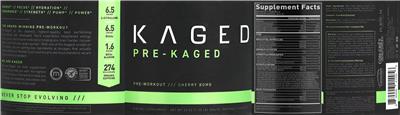
This summary is for Pre-Kaged Cherry Bomb by Kaged
- Form
- Powder
- Serving Size
- 28.3 g
- Servings
- 20 per container
- Container Holds
- 20 Ounces; 1.25 Pounds; 566 g
- What is Pre-Kaged Cherry Bomb?A supplement from Kaged with 45 active ingredients, in powder form.
- Active Ingredients 3 vitamins, 29 plant ingredients such as Coconut Water, Coffee Whole Fruit and Green Tea leaf, 6 amino acids and 7 others: Niacin 30 mgVitamin B6 25 mgVitamin B12 500 mcgL-Citrulline 6.5 gL-Leucine 1750 mgL-Isoleucine 875 mgL-Valine 875 mgAnabolic ActivatorBetaPower 2.5 gCarnoSyn 1.6 gPatented Creatine HCl 1.5 gCoconut Water, Powder 500 mg 45 active ingredients. Each one can interact with drugs or cause side effects on its own, so we check every one. And 33 more, in the Supplement Facts
- Drug Interactions 1,627 drugs have a documented interaction with this supplement; the most serious is rated major. Of those, 1,146 are single drugs and 481 are combination products (two or more drugs in one), each listed under its own name. Based on the 39 of its 45 ingredients we could check. Ask your pharmacist first if you take a drug in any of these categories, the most serious of the 124 on record:
- Major · 47 drugs
- EphedrineMajor · 8 drugs
- Atorvastatin (Lipitor)Major · 3 drugs
- Nadolol (Corgard)Major · 2 drugs
- Possible Side EffectsStomach upset 16 ingredientsNausea 10 ingredientsBloating 8 ingredientsDiarrhea 7 ingredientsHeadache 6 ingredientsHeartburn 6 ingredients +53 moreCombined from 29 of its 45 active ingredients. Not studied in this exact product.
- Well documented Why
Does Pre-Kaged Cherry Bomb work?
What It Is Marketed For
- Pre-workout energy
- Focus
- Endurance
- Strength
From the claims on the product’s label.
The Closest Use the Research Grades
Caffeine
Good studies support it.
Its ingredients have research behind other uses too:
- Hyperhomocysteinemia Vitamin B6
- Niacin
- Vitamin B12
- L-Citrulline
- Vitamin B6
- Hyperhomocysteinemia Vitamin B12
These grades are for each ingredient, not this exact product, and never a promise it will work for you.
And 2 more graded uses, in what the research says- AllergensThe label says it contains tree nuts
- Barcode (UPC)8 50006 41495 6Match it to the barcode on your bottle to be sure this is your product. Not your product? Search for it here
Who Might Consider It
- People looking for pre-workout energy, focus, endurance and strength, which is what it is marketed for. The closest use the research grades is athletic performance, rated Likely Effective.
- People who want it for hyperhomocysteinemia, metabolic syndrome, canker sores, athletic performance or another graded use: the other uses with research behind them. See each grade
- This supplement may interest adults looking for a caffeine and amino acid blend with fruit and plant extracts, but the evidence behind it is mixed.
Who Should Be Careful
- If you take blood thinners, blood pressure medicines, diabetes drugs, seizure medicines, or lithium, or have heart problems or high blood pressure, be careful.
- Talk it over with your own doctor or pharmacist before starting.
More Before You Take It Show both answersHide Pregnancy and Breastfeeding The Label’s Directions
-
Pregnant or breastfeeding?
- Pregnancy Turmeric
- ! When used orally in medicinal amounts; turmeric might stimulate the uterus and increase menstrual flow.
- Breastfeeding Turmeric
- When used orally in amounts commonly found in food.
- Pregnancy Vitamin B6
- ! When used orally in excessive doses.
- Breastfeeding Vitamin B6
- When used orally in doses not exceeding the tolerable upper intake level (UL) of vitamin B6 in the form of pyridoxine 80 mg daily for those aged 14-18 years and 100 mg daily for those 19 years and older.
- Pregnancy Betaine Anhydrous
- ! There is not enough reliable safety data, so it is best to avoid unless a doctor advises otherwise.
- Breastfeeding Betaine Anhydrous
- Insufficient reliable information available; avoid using.
-
How does the label say to take it?
“Directions: Mix 1 scoop in 10-12 ounces of cold water. Consume 20-30 minutes before your workout.”
The maker’s words. Your pharmacist or doctor may advise differently.
Everything the label says
From the label dated Jan 23, 2025: 39 of its 45 active ingredients were checked against our records; the other six are not in them yet. A summary of what is known, not a grade or a test of the product. How these ratings are computed
Ask Anything About This Supplement
Name a drug you take, or ask about side effects, ingredients or pregnancy.
There’s a lot of information about this supplement on this page! Ask anything in plain English for a quick answer drawn from it.
AI answers come from this label and our own records, never the open internet. AI can make mistakes, so always check with your doctor or pharmacist. How we use AI
Ask the Pharmacist
A licensed pharmacist will answer your question by email — free, as soon as they can.
Got it — thank you!
A licensed pharmacist will answer as soon as they can. Keep an eye on your email (worth checking spam, just in case).
What’s Inside Pre-Kaged Cherry Bomb
45 Active Ingredients
In the order the label lists them, each with its own card below.
- Niacin
- Vitamin B6
- Vitamin B12
- L-Citrulline
- L-Leucine
- L-Isoleucine
- L-Valine
- Anabolic Activator
- BetaPower
- CarnoSyn
- Patented Creatine HCl
- Coconut Water, Powder
And 33 more, each with its own card below.
The label gives an exact amount for 15 of its 45 active ingredients. 29 are inside one proprietary blend, “Spectra Total ORAC Blend”, and the label gives one total for it, not how much of each ingredient is in it. Anabolic Activator is listed with no amount at all.
- 15 state an exact amount
- 30 have no amount of their own
- Spectra Total ORAC Blend 100 mg in total · 29 ingredients, no amount for each
This rates what the label tells you, not the quality of the product.
Supplement Facts
Other ingredients: Malic Acid, Natural Flavors, Citric Acid, Tartaric Acid, Silicon Dioxide, Calcium Silicate, Steviol Glycosides, Sucralose, Beet juice
† Daily Value not established.
Daily Values for adults and children 4 or more years of age.
As the label prints it, from the NIH Dietary Supplement Label Database.
Each Ingredient and Its Drug Interactions
Tap one for more about it and its full guide. A drug can interact with this supplement through any one of them.
Pre-Kaged Cherry Bomb contains 45 active ingredients, a mix of B vitamins, amino acids, caffeine, and fruit and plant extracts.
- The B vitamins are vitamin B6, niacin, and vitamin B12, and the amino acids include L-leucine, L-isoleucine, L-citrulline, L-tyrosine, L-valine, and N-acetyl-L-tyrosine.
- These are non-active additives that help with flavor, sweetness, and processing.
-
Niacin 30 mg Interacts with 729 drugs
Form on the label: Niacinamide
Niacin (vitamin B3) is an essential nutrient your body needs for energy and metabolism, and deficiency is uncommon in most developed countries.
- Prescription-strength niacin has been used to adjust cholesterol levels, but high doses can cause flushing and other side effects and should only be taken under medical supervision.
- Always talk with a pharmacist or doctor before using high-dose niacin supplements.
The full Niacin guide: uses, dosage and safety Every Niacin drug interaction
-
Vitamin B6 25 mg Interacts with 210 drugs
Form on the label: Pyridoxine Hydrochloride
Vitamin B6 (pyridoxine) is an essential water-soluble vitamin that your body needs for metabolism, brain function, and making red blood cells.
- It is best known for helping with pregnancy-related nausea and may help some people with PMS, but taking very high doses for long periods can cause nerve damage.
- Get most of your B6 from food, and check with a pharmacist or doctor before taking high-dose supplements.
The full Vitamin B6 guide: uses, dosage and safety Every Vitamin B6 drug interaction
-
Vitamin B12 500 mcg Interacts with 20 drugs
Form on the label: Methylcobalamin
Vitamin B12 (cobalamin) is an essential nutrient your body needs to make red blood cells, keep nerves healthy, and support DNA.
- Supplements are very helpful for people who are deficient — such as vegans, older adults, and those with absorption problems — but taking extra B12 when you are not deficient is unlikely to boost energy or health.
- Talk to your pharmacist or doctor if you think you may be low.
The full Vitamin B12 guide: uses, dosage and safety Every Vitamin B12 drug interaction
-
Pump One ingredient inside it, each checked on its own
- L-Citrulline 6.5 g 178 drugs
-
Muscle Fuel Matrix 3.5 g Three ingredients inside it, each checked on its own
- L-Leucine 1750 mg
- L-Isoleucine 875 mg
- L-Valine 875 mg
-
Anabolic Activator Other actives include taurine, beta-alanine (CarnoSyn), betaine (BetaPower), caffeine (PurCaf), and extracts from acerola, blueberry, broccoli sprout, apple, onion, tomato, bilberry, blackcurrant, coconut water, turmeric, and mangosteen, along with an Anabolic Activator blend. A blend: its ingredients are checked one by one where the label lists them
-
Strength & Power Matrix Three ingredients inside it, each checked on its own
- BetaPower 2.5 g
- CarnoSyn 1.6 g
- Patented Creatine HCl 1.5 g
-
Hydrate & Defend One ingredient inside it, each checked on its own
- Coconut Water, Powder 500 mg 86 drugs
-
Spectra Total ORAC Blend 100 mg 29 ingredients inside it, each checked on its own
- Coffee Whole Fruit Extract 591 drugs
- Green Tea leaf extract 1,294 drugs
- Broccoli sprout concentrate 187 drugs
- Onion bulb extract 275 drugs
- Apple fruit extract 300 drugs
- Acerola Fruit Extract 128 drugs
- Camu Camu Fruit Concentrate
- Quercetin 1,172 drugs
- Tomato fruit concentrate
- Broccoli Floret, Stem Concentrate 187 drugs
- Acai Fruit Concentrate 89 drugs
- Basil Leaf Concentrate 289 drugs
- Cinnamon Concentrate 444 drugs
- Garlic Clove Concentrate 991 drugs
- Oregano Leaf Concentrate 881 drugs
- Turmeric Rhizome Extract 1,134 drugs
- Carrot Root Concentrate
- Elderberry Fruit Concentrate 121 drugs
- Mangosteen fruit concentrate 125 drugs
- Blackberry Fruit Concentrate
- Blackcurrant fruit extract 140 drugs
- Blueberry Fruit Extract 88 drugs
- Chokeberry Fruit Concentrate 813 drugs
- Raspberry Fruit Concentrate
- Sweet Cherry Fruit Concentrate
- Spinach Leaf Concentrate 88 drugs
- Kale Leaf Concentrate
- Bilberry Fruit Extract 275 drugs
- Brussels Sprout Concentrate 241 drugs
-
Neuro-Focus Matrix Four ingredients inside it, each checked on its own
- Taurine 2 g 173 drugs
- N-Acetyl-L-Tyrosine 1 g
- L-Tyrosine 850 mg 21 drugs
- PurCaf 274 mg 655 drugs
Other Ingredients (Inactive)
The capsule or tablet itself, fillers, coatings and flavors. Not part of the drug interaction check; the allergen check below reads them.
- Malic Acid
- Natural Flavors
- Citric Acid
- Tartaric Acid
- Silicon Dioxide
- Calcium Silicate
- Steviol Glycosides
- Sucralose
- Beet juice
Allergens in Pre-Kaged Cherry Bomb
The label says it contains tree nuts.
Named on this label
- Tree nutsThe label says it contains it
Not named in the ingredients
- Milk
- Egg
- Fish
- Shellfish
- Peanuts
- Wheat or other gluten grains
- Soy
- Sesame
- The label’s allergen statement“Contains: Tree nuts (coconut)”
From the label text and ingredient names on file; we do not test products. With a serious allergy, check your bottle and ask the maker or your pharmacist.
What the Label Says
The maker’s own words, from the label. We do not verify or endorse them.
- Formulation
-
“Energy Focus Hydration Endurance Strength Pump Power”
“The award-winning pre-workout Pre-Kaged is the cleanest, highest-quality, best preforming pre-workout ever developed. You'll experience heightened energy, focus, pump, and muscle endurance helping you train harder, recover faster, and reach your goals quicker.”
6 more from the label
“Manufactured in the USA from domestic and international ingredients.”
“Informed Sport We Test- You Trust Banned substance tested every batch”
“Pre-workout”
“6.5 grams L-Citrulline 6.5 grams BCAAs 1.6 grams Beta-Alanine 274 milligrams Organic Caffeine”
“Cherry Bomb Naturally flavored”
“CarnoSyn Carnosine Synthesizer Con-Cret Reinforced PurCaf Organic Caffiene”
- General statements
-
“With one of the biggest scoops on the market, you are getting key ingredients at dosages that actually make a difference. We didn't just raise the pre-workout standard, we are the pre-workout standard. We are Kaged We are Kaged, the elite supplement brand. We provide you with the highest quality formulas in the world to help you lift heavier, be healthier, and evolve into the strongest version of yourself.”
“Never stop evolving”
“33.659485,-117.998802 Instagram Facebook Twitter YouTube Kaged”
- Seals and symbols
-
“Micropure Quality Guarantee”
“Informed Sport We Test- You Trust Banned substance tested every batch”
- FDA Statement of Identity
-
“Dietary Supplement”
- Storage
-
“Exposure to moisture or heat may cause powder to clump or harden. Store in a cool, dry place, avoid direct sunlight, humidity and high temperatures. Replace lid securely after use. Contents may settle during shipping. Sold by weight, not volume.”
- Brand IP Statement(s)
-
“Copyright 2021 Kaged Muscle LLC. BetaPower is a registered trademark of DuPont or its affiliates. PurCaf is a registered trademark of Applied Food Sciences, Inc. Spectra is a registered trademark of VDF FutureCeuticals, Inc. Patented Creatine HCl is covered by one or more or Vireo systems Inc. U.S. Patent Nos. 8,962,685 and/or 8,354,450 and/or 8,026,385 and/pr 7,608,641. Natural Alternatives International (NAI) is the owner of patents as listed on Carnosyn and registered trademark CarnoSyn.”
The Pre-Kaged Cherry Bomb Label on File
The label scan on file at the NIH Dietary Supplement Label Database, dated January 2025. Always read the label on the bottle you have.
Product Facts
- Brand
- Kaged
- Barcode (UPC)
- 850006414956
- Net contents
- 20 Ounces; 1.25 Pounds; 566 g
- Market status
- On market
- Date entered into DSLD
- Jan 23, 2025
- DSLD ID
- 323462
- Product type
- Other Combinations
- Supplement form
- Powder
- Dietary claims / uses
- Nutrient, All Other, Structure/Function
- Intended target group(s)
- Adult (18 - 50 Years)
Is this label outdated? Report a formula or label change and our pharmacy team will review it.
HelloPharmacist Score Pre-Kaged Cherry Bomb
Up to 10 points for research, amount, label and outside testing. Not a safety rating. How this one adds up
for athletic performance
It is marketed for pre-workout energy, focus, endurance and strength. There is no graded research on that exact use, but 6 of its ingredients have research for uses close to it: caffeine and coffee have good research, and creatine, Beta-alanine and 2 more have some.
- Research4 of 5 points
- Amount2 of 2 points
- Label0 of 2 points
- Outside testing1 of 1 point
Major drug interactions. The score does not count drug interactions. Check them against any drugs you take. See them
How It Earns Its 7
Score: 7 out of 10. Supported for athletic performance.
6 of its ingredients have research for uses close to what it is marketed for. The best graded use of each:
- Caffeine: Likely Effective for athletic performance
- Coffee: Likely Effective for mental alertness
- Creatine: Possibly Effective for athletic performance
- Beta-alanine: Possibly Effective for athletic performance
- L-citrulline: Possibly Effective for athletic performance
- Tyrosine: Possibly Effective for cognitive function
Grades come from the Natural Medicines database, which we license. A related use, not the one it is marketed for, counts for at most 4 of 5 research points, because 6 of its ingredients have research for uses close to it.
4 of 5 points
Amount
Its 274 mg is a normal amount: most of the 380 caffeine products in our database that state an amount hold 50 mg to 350 mg.
2 of 2 points
Label
It states the amount of 15 of its 45 active ingredients; 29 are inside blends that give only a total; the rest give no amount.
0 of 2 points
Outside testing
Its label carries the Informed Sport mark. Programs like this test supplements on their own, and you can look the product up on the program’s website.
1 of 1 point
Pre-Kaged Cherry Bomb Side Effects
Why this rating?
We look for three kinds of safety information on each ingredient: side effects reported in studies, a pregnancy and breastfeeding rating, and a safety write-up from our pharmacy team. Of the 38 ingredients we could check, 34 have side-effect reports, all 38 have a pregnancy rating and all 38 have a safety write-up.
So this rates how much is known, not whether Pre-Kaged Cherry Bomb is right for you.
Reported with 38 of its ingredients
- Most often
- Stomach upset, nausea, bloating, diarrhea, headache and heartburn
- !Rare but serious
- Liver injury, myopathy and low platelets See details
HelloPharmacist Team Summary: Pre-Kaged Cherry Bomb Side Effects
You are most likely to notice upset stomach, bloating or gas, and jitteriness, racing heartbeat, or trouble sleeping, mostly from the caffeine in PurCaf, while the upset stomach and bloating also reflect the fruit and plant extracts.
- Tingling and flushing are reported with beta-alanine and niacin.
- Serious reactions are described as rare, but signs of an allergic reaction such as rash, swelling, or trouble breathing need emergency care, and anything else unusual should go to your doctor.
- If you have heart problems, high blood pressure, kidney conditions, or are pregnant, talk with your own doctor or pharmacist before you start.
Side Effects, Ingredient by Ingredient
A supplement’s side effects come from its ingredients. Here is what is reported with each one.
Niacin
Most reported
- Red
- Tingling
Vitamin B6
Most reported
- Abdominal pain
- Allergic reactions
- Headache
- Heartburn
- Loss of appetite
- Nausea
- Somnolence
- Vomiting
From the Natural Medicines database, which we license.
Every reported effect, in the Vitamin B6 guideL-Citrulline
Most reported
- Stomach upset
- Bloating
- Headache
Betaine Anhydrous
Most reported
- Nausea
- Stomach upset
- Diarrhea
- Noticeable body odor
Beta-alanine
Most reported
- Flushing
- Prickling sensation
- Neck
- Scalp
Creatine
Most reported
- Water retention
- Bloating
- Stomach upset
Coconut
Most reported
- Diarrhea
- Cramping
- Nausea
Coffee
Most reported
- Jitteriness
- Nervousness
- Fast or pounding heartbeat
- Trouble sleeping
Green Tea
Most reported
- Trouble sleeping or feeling jittery
- Nervousness or anxiety
- Upset stomach or nausea, especially on an empty stomach
- Headache
Onion
Most reported
- Abdominal pain
- Heartburn
From the Natural Medicines database, which we license.
Every reported effect, in the Onion guideApple
Most reported
- Bloating
- Flatulence
From the Natural Medicines database, which we license.
Every reported effect, in the Apple guideAcerola
Most reported
- Stomach upset
- Nausea
- Diarrhea
- Cramping
Camu Camu
Most reported
- Stomach upset
- Nausea
- Diarrhea
Quercetin
Most reported
- Headache
- Upset stomach
- Tingling sensations
Tomato
Most reported
- Heartburn or acid reflux due to acidity
- Digestive upset with very large amounts
Acai
Most reported
- Stomach upset
- Digestive changes
Garlic
Most reported
- Bad breath
- Body odor
- Heartburn
- Upset stomach
Oregano
Most reported
- Stomach upset, nausea, or heartburn
- Mouth or throat irritation
- Skin irritation or rash if applied undiluted to the skin
Turmeric
Most reported
- Nausea
- Upset stomach
- Diarrhea
- Bloating
Mangosteen
Most reported
- Stomach upset
- Diarrhea
- Constipation
Black Currant
Most reported
- Upset stomach, gas, or diarrhea, particularly with the seed oil.
- Mild gas or bloating.
- Allergic reactions in people sensitive to the plant (rare).
Blueberry
Most reported
- Gas
- Bloating
- Loose stools
Chokeberry
Most reported
- Mouth
- Throat discomfort
Sweet Cherry
Most reported
- Stomach upset, gas, or bloating
- Loose stools or diarrhea from eating large quantities
- Extra sugar and calories from juice or concentrate
Bilberry
Most reported
- Stomach upset
- Digestive discomfort
Brussels Sprout
Most reported
- Gas
- Bloating
- Stomach discomfort
Taurine
Most reported
- Stomach upset
- Nausea
- Headache
Tyrosine
Most reported
- Nausea
- Upset stomach
- Headache
- Fatigue
Caffeine
Most reported
- Feeling jittery, nervous, or anxious
- Racing or pounding heartbeat
- Trouble sleeping
- Upset stomach or heartburn
Vitamin B12, Broccoli, Basil, Cassia Cinnamon, Carrot, Elderberry and Spinach have side-effect reports, but no list of the most common ones. Read them in each guide: Vitamin B12, Broccoli, Basil, Cassia Cinnamon, Carrot, Elderberry, Spinach.
Pre-Kaged Cherry Bomb Warnings: Who Should Be Careful
Pre-Kaged Cherry Bomb has 45 active ingredients, and each can carry warnings of its own. We checked the 39 in our ingredient guides, and each warning below names the ingredient it comes from. L-Leucine, L-Isoleucine and L-Valine and three more are not in our guides yet, so ask your pharmacist about them. If any of these apply to you, talk to your doctor or pharmacist before you start it.
- Niacin2 warnings below
- Vitamin B62 warnings below
- Vitamin B121 warning below
- L-Citrulline1 warning below
- Betaine Anhydrous3 warnings below
- Beta-alanine2 warnings below
- Creatine3 warnings below
- Coconut3 warnings below
- Coffee3 warnings below
- Green Tea3 warnings below
- Broccoli3 warnings below
- Onion3 warnings below
- Apple2 warnings below
- Acerola3 warnings below
- Camu Camu3 warnings below
- Quercetin2 warnings below
- Tomato1 warning below
- Acai2 warnings below
- Basil2 warnings below
- Cassia Cinnamon2 warnings below
- Garlic3 warnings below
- Oregano2 warnings below
- Turmeric2 warnings below
- Carrot2 warnings below
- Elderberry2 warnings below
- Mangosteen2 warnings below
- Blackberry2 warnings below
- Black Currant2 warnings below
- Blueberry2 warnings below
- Chokeberry2 warnings below
- Sweet Cherry3 warnings below
- Spinach1 warning below
- Kale3 warnings below
- Bilberry2 warnings below
- Brussels Sprout3 warnings below
- Taurine1 warning below
- Tyrosine2 warnings below
- Caffeine3 warnings below
- L-LeucineNot in our guides yet
- L-IsoleucineNot in our guides yet
- L-ValineNot in our guides yet
- Anabolic ActivatorNot in our guides yet
- Raspberry Fruit ConcentrateNot in our guides yet
- N-Acetyl-L-TyrosineNot in our guides yet
-
Bleeding Problems or Surgery
- Vitamin B12Older adults, people with stomach or bowel conditions, those who have had weight-loss or stomach surgery, and people on long-term acid-reducing medicines may absorb B12 poorly and should ask about testing.
- Green TeaThe same goes for people with bleeding disorders or those preparing for surgery.
- OnionPeople scheduled for surgery may want to limit large medicinal doses beforehand because of possible effects on bleeding.
- QuercetinIf you have a medical condition, take prescription medicines, or are scheduled for surgery, check with your pharmacist or doctor before starting quercetin.
Show 10 more
- BasilUse caution if you have a bleeding disorder or are scheduled for surgery, and never swallow undiluted essential oil.
- GarlicBecause garlic may slow blood clotting, use caution if you have a bleeding disorder or are scheduled for surgery.
- GarlicIf you are taking blood thinners or other medicines, check with your pharmacist before starting a garlic supplement.
- OreganoPeople with bleeding disorders or those scheduled for surgery should be cautious and tell their healthcare team.
- TurmericPeople who have gallbladder disease or gallstones, who are prone to kidney stones, or who have bleeding disorders should be cautious and check with a healthcare provider first.
- MangosteenPeople with kidney problems, bleeding disorders, or who are scheduled for surgery should be especially cautious and check with a healthcare provider first.
- BlueberryIf you have a medical condition or take medicine that affects blood sugar or blood clotting, talk with your pharmacist or doctor before using blueberry supplements.
- KalePeople who take certain blood thinners need to keep their vitamin K intake steady rather than suddenly eating much more or less (your pharmacist or doctor can guide you on this).
- BilberryPeople with bleeding disorders, those scheduled for surgery, or people with diabetes should be cautious and speak with a healthcare provider, since bilberry may affect bleeding or blood sugar.
- Brussels SproutBrussels sprouts are high in vitamin K, which can affect certain blood-thinning medicines, so keep your intake fairly steady and ask your pharmacist if this applies to you.
-
Diabetes or Low Blood Sugar
- NiacinPeople with liver disease, stomach ulcers, gout, diabetes, low blood pressure, or a history of heart problems should be especially careful and talk to a healthcare provider first.
- Cassia CinnamonPeople with diabetes who take blood-sugar-lowering medicine should monitor their levels and check with a pharmacist before adding cinnamon supplements.
- ChokeberryPeople with low blood pressure or low blood sugar, or those taking medicines for these conditions, should be cautious, since chokeberry may add to those effects.
- Sweet CherryPeople with diabetes should be aware that cherry juice and concentrate can be high in natural sugar.
-
Blood Pressure
- L-CitrullineBecause it can lower blood pressure and affect blood flow, people who take blood pressure medicines, have low blood pressure, or have heart or kidney problems should talk with a healthcare provider before using it.
- CoffeeBe cautious if you have heart problems, high blood pressure, anxiety disorders, acid reflux, or trouble sleeping.
- CaffeineBe cautious if you: have heart problems, high blood pressure, an irregular heartbeat, anxiety, panic attacks, trouble sleeping, stomach ulcers, or seizure disorders.
- CaffeineCaffeine can cause jitteriness, nervousness, racing heartbeat, and trouble sleeping, and its notes call for caution with heart problems, high blood pressure, anxiety, or seizure disorders.
-
Liver Disease
- Green TeaPeople with liver disease should be especially careful and check with a healthcare provider first.
- Cassia CinnamonPeople with liver disease should be especially careful and should talk to a healthcare provider before using cinnamon supplements.
-
Kidney Disease or Kidney Stones
- Vitamin B6People with kidney problems or other chronic conditions should talk to a clinician before using supplements.
- Betaine AnhydrousPeople with kidney disease or other chronic health conditions should talk to a healthcare provider before using betaine.
- Beta-alaninePeople with kidney problems or other chronic health conditions should talk to a doctor or pharmacist before using it, since long-term safety and effects in these groups are not well studied.
- CreatinePeople with kidney disease or reduced kidney function should be cautious and talk to a doctor first, since the kidneys process creatine and its by-products.
Show 6 more
- AcerolaVery large amounts of vitamin C can cause stomach upset and, in some people, may increase the risk of kidney stones.
- AcerolaPeople with a history of kidney stones, kidney disease, or conditions involving iron overload (such as hemochromatosis) should be cautious, since high vitamin C can affect these conditions.
- Camu CamuBecause the fruit is high in vitamin C, taking large amounts could lead to vitamin C side effects, especially in people prone to kidney stones or with kidney problems.
- QuercetinVery high amounts taken over long periods have raised concerns about possible effects on the kidneys, so people with kidney problems should be especially cautious and talk to a doctor first.
- KaleKale also contains oxalates, which can contribute to kidney stones in people who are prone to them.
- TaurinePeople with kidney problems, heart conditions, or other health issues should check with a doctor first, since their bodies may handle taurine differently.
-
Heart Conditions
- Betaine AnhydrousOne concern is that betaine can raise blood levels of cholesterol (including LDL) in some people, which may matter for those with heart disease risk factors.
- CoconutPeople with high cholesterol or heart disease should talk with their doctor.
- Green TeaBecause green tea contains caffeine, people who are sensitive to caffeine, have heart rhythm problems, anxiety, or trouble sleeping should be cautious.
-
Stomach or Bowel Problems
- GarlicPeople with stomach or digestive problems may find garlic irritating.
-
Thyroid Conditions
- BroccoliPeople with thyroid problems may want to be mindful, since very large amounts of cruciferous vegetables contain compounds (goitrogens) that could affect the thyroid, especially if iodine intake is low.
- KaleKale is a goitrogenic vegetable, meaning very large amounts—especially raw—may affect thyroid function in people who are prone to thyroid problems or are low in iodine.
- Brussels SproutCruciferous vegetables also contain compounds that, in very large amounts, may affect the thyroid, which can matter for people with thyroid problems.
- TyrosineBe extra cautious if you have a thyroid condition (such as overactive thyroid or Graves' disease), because tyrosine is used to make thyroid hormones and could in theory affect thyroid levels.
-
Autoimmune Conditions
- ElderberryPeople with autoimmune conditions should talk to their doctor before use, since elderberry may affect the immune system.
-
Allergies
- CoconutIn the U.S., coconut is classified as a tree nut for food-labeling purposes, though most people with tree nut allergies can still tolerate coconut.
- CoconutIf you have a known allergy, check with your doctor first.
- OnionPeople who are allergic to onion or other allium plants (like garlic) should avoid it.
- ApplePeople with a known apple or birch pollen allergy should be careful, as apples can trigger oral allergy symptoms in sensitive individuals.
Show 6 more
- AcaiPeople with allergies to acai or related palm fruits should avoid it.
- OreganoPeople who are allergic to other plants in the mint family (such as basil, sage, mint, lavender, or marjoram) may also react to oregano.
- CarrotPeople who are allergic to plants in the carrot family (such as celery, parsley, or mugwort pollen) may also react to carrots.
- BlackberryPeople with known allergies to berries or to other plants in the rose family should be cautious.
- BlueberryPeople with allergies to blueberries or related berries should avoid them.
- Sweet CherryAnyone with a known allergy to cherries or other stone fruits (like plums, peaches, or apricots) should avoid them.
-
Children
- Beta-alanineChildren and teens have not been well studied either.
- CreatineIt is also best to be cautious in children and teens, since most studies have been done in adults.
- CoffeeChildren and teens should also limit caffeine.
- ElderberryAlways check with a pharmacist or doctor before giving elderberry to children or before starting it if you have a health condition or take other medicines.
- CaffeineChildren and teens should limit caffeine.
-
Older Adults
- CoffeeOlder adults and people taking certain medications should also be careful.
-
If You Take Other Drugs
- NiacinAlways check with a pharmacist or doctor before starting high-dose niacin, especially if you take other medicines or have a chronic health condition.
- CreatineAnyone with a medical condition or who takes regular medications should check with a pharmacist or doctor before starting.
- Camu CamuAlways tell your pharmacist or doctor about any supplement you are taking, especially if you have a medical condition or take medications.
- TomatoIf you have a medical condition or take medications, check with a healthcare professional before using supplements.
Show 5 more
- TurmericAlways talk to your pharmacist or doctor before starting a supplement, especially if you take other medicines or have a health condition.
- MangosteenAlways tell your pharmacist or doctor about any supplement you take, especially if you have a health condition or take medications.
- Black CurrantAlways tell your pharmacist or doctor about any supplements you are taking, especially if you have a health condition or take prescription medicines.
- Sweet CherryAs with any supplement, talk to a pharmacist or doctor before starting, especially if you have a chronic health condition or take prescription medicines.
- TyrosinePeople with a history of migraines or those taking medications that affect brain chemicals should also check with a professional first.
-
Other Cautions
- Vitamin B6Avoid high doses.
- Betaine AnhydrousHowever, people with certain conditions should be cautious.
- BroccoliThe safety of concentrated extracts is not established, so caution is advised.
- OnionConcentrated supplement doses have not been well studied, so it is safest to avoid them unless your doctor or pharmacist approves.
Show 10 more
- AppleSwallowing a few whole seeds by accident is generally harmless, but you should not chew or eat large amounts of apple seeds.
- AcerolaIf you have these issues, talk to your doctor first.
- Camu CamuPeople with these conditions should be cautious.
- AcaiAlways talk with your pharmacist or doctor before starting any new supplement, especially if you have a medical condition.
- Black CurrantConcentrated supplements, such as seed oil capsules and leaf extracts, are less well studied, so it is wise to use caution.
- ChokeberryIf you have a medical condition, check with your pharmacist or doctor first.
- SpinachConcentrated supplements and extracts are less studied, so use them with more caution and follow product labels.
- BilberryBilberry leaf products, especially in high doses or used long-term, are not recommended because of possible toxicity.
- Brussels SproutA few people should be a little more careful.
- Most ingredients are described as generally well tolerated, though caution notes vary.
-
What the Label Warns
- “Do not exceed more than 1 scoop per day.”
- “Warning: Contains 274 mg of caffeine per serving or about as much caffeine as 2.5 cups of coffee. Avoid using with other caffeinated products or if you are sensitive to caffeine because caffeine may cause nervousness, irritability, sleeplessness and occasionally, rapid heartbeat.”
- “Consult your physician prior to using this product if you are pregnant, nursing, under 18 years of age, taking medication or have a medical condition.”
- “Consult your physician prior to using this product if you are pregnant, nursing, under 18 years of age, taking medication or have a medical condition. Keep out of reach of children.”
- “Immediately discontinue use and contact your physician if any adverse reactions occur. This product contains a silica gel pack. Do not eat.”
- “For California Consumers: Warning: Consuming this product can expose you to chemicals including lead, which is known to the State of California to cause cancer and birth defects or other reproductive harm. For more information go to www.P65Warnings.ca.gov/food.”
The maker’s wording, from the product label.
-
Pregnant or Breastfeeding
Each ingredient’s rating for pregnancy and for breastfeeding, and what it covers.
Pregnancy
-
When used orally in amounts commonly found in food.
-
When used orally in medicinal amounts; turmeric might stimulate the uterus and increase menstrual flow.
Breastfeeding
-
When used orally in amounts commonly found in food.
There is insufficient reliable information available about the safety of using turmeric in medicinal amounts during lactation.
Pregnancy
-
When used orally and appropriately.
A special sustained-release product providing vitamin B6 (pyridoxine) 75 mg daily is FDA-approved for use in pregnancy.
3 more points on this rating
- Vitamin B6 (pyridoxine) is also considered a first-line treatment for nausea and vomiting in pregnancy by the American College of Obstetrics and Gynecology.
- However, it should not be used long-term or without medical supervision and close monitoring.
- The tolerable upper intake level (UL) refers to vitamin B6 in the form of pyridoxine and is 80 mg daily for those aged 14-18 years and 100 mg daily for 19 years and older.
-
When used orally in excessive doses.
There is some concern that high-dose maternal vitamin B6 (pyridoxine) can cause neonatal seizures.
Breastfeeding
-
When used orally in doses not exceeding the tolerable upper intake level (UL) of vitamin B6 in the form of pyridoxine 80 mg daily for those aged 14-18 years and 100 mg daily for those 19 years and older.
The recommended dietary allowance (RDA) in lactating women is 2 mg daily.
There is insufficient reliable information available about the safety of vitamin B6 when used in higher doses in breast-feeding women.
Show 36 more ingredients
Pregnancy
-
There is not enough reliable safety data, so it is best to avoid unless a doctor advises otherwise.
Breastfeeding
-
Insufficient reliable information available; avoid using.
Pregnancy
-
When used orally in moderate amounts.
Intake of caffeine from coffee and other sources should be monitored during pregnancy.
12 more points on this rating
- Caffeine crosses the human placenta, but is not considered a teratogen.
- Fetal blood and tissue levels are similar to maternal concentrations.
- The use of caffeine during pregnancy is controversial; however, moderate consumption has not been associated with clinically important adverse fetal effects.
- However, some research has also found that intrauterine exposure to even modest amounts of caffeine, based on maternal blood levels during the first trimester, is associated with a shorter stature in children ages 4-8 years.
- In some studies, consuming amounts over 200 mg daily has been associated with a significantly increased risk of miscarriage.
- This increased risk may be most likely to occur in people with genotypes that confer a slow rate of caffeine metabolism.
- According to a review by Health Canada, and a subsequent large meta-analysis conducted in the US, most healthy pregnant patients can safely consume caffeine in doses up to 300 mg daily without an increased risk of spontaneous abortion, stillbirth, preterm birth, fetal growth retardation, or congenital malformations.
- Advise patients to keep caffeine consumption below 300 mg daily during pregnancy.
- This is similar to the amount of caffeine in about 3 cups of coffee.
- Keep in mind that only the amount of ADDED caffeine must be stated on product labels.
- The amount of caffeine found in ingredients such as coffee, which naturally contains caffeine, does not need to be provided.
- This can make it difficult to determine the total amount of caffeine in a given product.
-
When caffeinated coffee providing more than 300 mg of caffeine daily is consumed orally.
Caffeine from coffee crosses the placenta, producing fetal blood concentrations similar to maternal levels.
7 more points on this rating
- Consumption of caffeine in amounts over 300 mg daily is associated with a significantly increased risk of miscarriage in some studies.
- Advise patients to keep caffeine consumption from all sources below 300 mg daily during pregnancy.
- This is similar to the amount of caffeine in about 3 cups of coffee.
- High doses of caffeine throughout pregnancy have resulted in symptoms of caffeine withdrawal in newborn infants.
- High doses of caffeine have also been associated with spontaneous abortion, premature delivery, and low birth weight.
- Drinking more than 6 cups of coffee daily increases the risk of spontaneous abortion.
- Drinking 8 or more cups of coffee daily doubles the risk of stillbirth when compared with those who do not drink coffee during pregnancy.
Breastfeeding
-
When used orally.
Drinking one or two caffeine-containing beverages daily during lactation is not associated with unacceptable levels of caffeine in human milk.
-
When used orally in large amounts.
Caffeine from coffee can cause wakefulness or irritability in breast-fed infants.
Caffeine can also cause feeding intolerance and gastrointestinal irritation in infants.
Pregnancy
-
When used orally in moderate amounts.
Due to the caffeine content of green tea, pregnant patients should closely monitor their intake to ensure moderate consumption.
12 more points on this rating
- Fetal blood concentrations of caffeine approximate maternal concentrations.
- The use of caffeine during pregnancy is controversial; however, moderate consumption has not been associated with clinically important adverse fetal effects.
- In some studies consuming amounts over 200 mg daily is associated with a significantly increased risk of miscarriage.
- This increased risk may be most likely to occur in those with genotypes that confer a slow rate of caffeine metabolism.
- According to a review by Health Canada, and a subsequent large meta-analysis conducted in the US, most healthy pregnant patients can safely consume doses up to 300 mg daily without an increased risk of spontaneous abortion, stillbirth, preterm birth, fetal growth retardation, or congenital malformations.
- Advise keeping caffeine consumption below 300 mg daily.
- This is similar to the amount of caffeine in about 6 cups of green tea.
- Keep in mind that only the amount of ADDED caffeine must be stated on product labels.
- The amount of caffeine found in ingredients such as green tea, which naturally contains caffeine, does not need to be provided.
- This can make it difficult to determine the total amount of caffeine in a given product.
- Based on animal models, green tea extract catechins are also transferred to the fetus, but in amounts 50-100 times less than maternal concentrations.
- The potential impact of these catechins on the human fetus is not known, but animal models suggest that the catechins are not teratogenic.
-
When used orally in amounts providing more than 300 mg caffeine daily.
Caffeine from green tea crosses the placenta, producing fetal blood concentrations similar to maternal levels.
16 more points on this rating
- Consumption of caffeine in amounts over 300 mg daily is associated with a significantly increased risk of miscarriage in some studies.
- Advise keeping caffeine consumption from all sources below 300 mg daily.
- This is similar to the amount of caffeine in about 6 cups of green tea.
- High maternal doses of caffeine throughout pregnancy have also resulted in symptoms of caffeine withdrawal in newborn infants.
- High doses of caffeine have also been associated with spontaneous abortion, premature delivery, and low birth weight.
- However, some research has also found that intrauterine exposure to even modest amounts of caffeine, based on maternal blood levels during the first trimester, is associated with a shorter stature in children ages 4-8 years.
- Keep in mind that only the amount of ADDED caffeine must be stated on product labels.
- The amount of caffeine found in ingredients such as green tea, which naturally contains caffeine, does not need to be provided.
- This can make it difficult to determine the total amount of caffeine in a given product.
- There is also concern that consuming large amounts of green tea might have antifolate activity and potentially increase the risk of folic acid deficiency-related birth defects.
- Catechins in green tea inhibit the enzyme dihydrofolate reductase in vitro.
- This enzyme is responsible for converting folic acid to its active form.
- Preliminary evidence suggests that increasing maternal green tea consumption is associated with increased risk of spina bifida.
- Also, evidence from epidemiological research suggests that serum folate levels in pregnant patients with high green tea intake (57.3 mL per 1000 kcal) are decreased compared to participants who consume moderate or low amounts of green tea.
- More evidence is needed to determine the safety of using green tea during pregnancy.
- For now, advise pregnant patients to avoid consuming large quantities of green tea.
Breastfeeding
-
When used orally in moderate amounts.
Due to the caffeine content of green tea, nursing parents should closely monitor caffeine intake.
Breast milk concentrations of caffeine are thought to be approximately 50% of maternal serum concentrations.
-
When used orally in large amounts.
Consumption of green tea might cause irritability and increased bowel activity in nursing infants.
There is insufficient reliable information available about the safety of green tea extracts when applied topically during breast-feeding.
Pregnancy and Breastfeeding The record rates both the same
-
When the above ground parts are used in amounts commonly found in foods.
-
When used in larger amounts due to the estragole constituent of the essential oil.
Estragole might have mutagenic effects.
Pregnancy
-
When used orally in amounts commonly found in foods.
-
When used orally in medicinal amounts.
Garlic is reported to have abortifacient activity.
4 more points on this rating
- One study also suggests that garlic constituents are distributed to the amniotic fluid after a single dose of garlic.
- However, there are no published reports of garlic adversely affecting pregnancy.
- In clinical research, garlic 800 mg daily was used during the third trimester of pregnancy with no reported adverse outcomes.
- There is insufficient reliable information available about the safety of topical garlic during pregnancy.
Breastfeeding
-
When used orally in amounts commonly found in foods.
-
When used orally in amounts greater than those found in foods.
Several small studies suggest that garlic constituents are secreted in breast milk, and that nursing infants of mothers consuming garlic are prone to extended nursing.
There is insufficient reliable information available about the safety of topical garlic during lactation.
Pregnancy
-
When used orally in medicinal amounts.
Oregano is thought to have abortifacient and emmenagogue effects.
Breastfeeding
-
There is insufficient reliable information available about the safety of oregano when used in medicinal amounts; avoid amounts greater than those found in food.
Pregnancy
-
Food amounts are likely fine, but concentrated supplements have not been studied, so avoid them.
Breastfeeding
-
Insufficient reliable information available; avoid using in medicinal amounts.
Pregnancy
-
When used orally in amounts commonly found in foods.
Intakes of caffeine should be monitored during pregnancy.
10 more points on this rating
- Caffeine crosses the human placenta, but is not considered a teratogen.
- Fetal blood and tissue levels are similar to maternal concentrations.
- The use of caffeine during pregnancy is controversial; however, moderate consumption has not been associated with clinically important adverse fetal effects.
- In some studies consuming amounts over 200 mg daily is associated with a significantly increased risk of miscarriage.
- This increased risk seems to occur in those with genotypes that confer a slow rate of caffeine metabolism.
- According to a review by Health Canada, and a subsequent large meta-analysis conducted in the US, up to 300 mg daily can be consumed during pregnancy without an increased risk of spontaneous abortion, stillbirth, preterm birth, fetal growth retardation, or congenital malformations.
- However, observational research in a Norwegian cohort found that caffeine consumption is associated with a 16% increased odds of the baby being born small for gestational age when compared with no consumption.
- The same Norwegian cohort found that low to moderate caffeine consumption during pregnancy is not associated with changes in neurodevelopment in children up to 8 years of age.
- Advise patients to keep caffeine consumption below 300 mg daily during pregnancy.
- This is similar to the amount of caffeine in about 3 cups of coffee or tea.
-
When used orally in amounts over 300 mg daily.
Caffeine crosses the placenta, producing fetal blood concentrations similar to maternal levels.
8 more points on this rating
- Consumption of caffeine in amounts over 300 mg daily is associated with a significantly increased risk of miscarriage in some studies.
- Advise patients to keep caffeine consumption below 300 mg daily during pregnancy.
- This is similar to the amount of caffeine in about 3 cups of coffee or tea.
- Additionally, high doses of caffeine throughout pregnancy have resulted in symptoms of caffeine withdrawal in newborn infants.
- High doses of caffeine have also been associated with spontaneous abortion, premature delivery, and low birth weight.
- In a cohort of mother/infant pairs with a median maternal plasma caffeine level of 168.5 ng/mL (range 29.5-650.5 ng/mL) during pregnancy, birth weights and lengths were lower in the 4th quartile of caffeine intake compared with the 1st.
- By age 7, heights and weights were lower by 1.5 cm and 1.1 kg respectively.
- In another cohort of mother/infant pairs with higher maternal pregnancy plasma caffeine levels, median 625.5 ng/mL (range 86.2 to 1994.7 ng/mL), heights at age 8 were 2.2 cm lower, but there was no difference in weights.
Breastfeeding
-
When used orally in amounts commonly found in foods.
Caffeine intake should be closely monitored while breast-feeding.
During lactation, breast milk concentrations of caffeine are thought to be approximately 50% of serum concentrations and caffeine peaks in breastmilk approximately 1-2 hours after consumption.
-
When used orally in large amounts.
Caffeine is excreted slowly in infants and may accumulate.
Caffeine can cause sleep disturbances, irritability, and increased bowel activity in breast-fed infants exposed to caffeine.
Pregnancy and Breastfeeding The record rates both the same
-
Insufficient reliable information available; avoid using.
Pregnancy and Breastfeeding The record rates both the same
-
Insufficient reliable information available; avoid using in medicinal amounts.
Pregnancy and Breastfeeding The record rates both the same
-
Insufficient reliable information available; avoid using.
Pregnancy and Breastfeeding The record rates both the same
-
Insufficient reliable information available; avoid using in amounts greater than used in foods.
Pregnancy and Breastfeeding The record rates both the same
-
There is insufficient reliable information available about the safety of apple in amounts greater than those found in foods during pregnancy and lactation; avoid using.
Pregnancy and Breastfeeding The record rates both the same
-
Insufficient reliable information available; avoid using in amounts greater than found in foods.
Pregnancy and Breastfeeding The record rates both the same
-
Insufficient reliable information available; avoid using.
Pregnancy and Breastfeeding The record rates both the same
-
Insufficient reliable information available; avoid using.
Pregnancy and Breastfeeding The record rates both the same
-
Insufficient reliable information available; avoid using.
Pregnancy and Breastfeeding The record rates both the same
-
Insufficient reliable information available; avoid using.
Pregnancy and Breastfeeding The record rates both the same
-
Insufficient reliable information available; avoid using in amounts greater than those found in foods.
Pregnancy and Breastfeeding The record rates both the same
-
Insufficient reliable information available; avoid using.
Pregnancy and Breastfeeding The record rates both the same
-
Insufficient reliable information available; avoid amounts in excess of those found in foods.
Pregnancy and Breastfeeding The record rates both the same
-
There is insufficient reliable information available about the safety of tyrosine during pregnancy and lactation when used in medicinal amounts.
Some pharmacokinetic research shows that taking a single dose of tyrosine 2-10 grams orally can modestly increase levels of free tyrosine in breast milk.
2 more points on this rating
- However, total levels are not affected, and levels remain within the range found in infant formulas.
- Therefore, it is not clear if the increase in free tyrosine is a concern.
Pregnancy and Breastfeeding The record rates both the same
-
When used orally in amounts that do not exceed the tolerable upper intake level (UL).
The UL of niacin during pregnancy and lactation is 30 mg daily for 14-18 years of age and 35 mg daily for 19 years and older.
There is insufficient reliable information available about the safety of larger oral doses of niacin during pregnancy or lactation; avoid using.
Pregnancy
-
When used orally in amounts that do not exceed the recommended dietary allowance (RDA).
The RDA for vitamin B12 during pregnancy is 2.6 mcg daily.
There is insufficient reliable information available about the safety of larger amounts of vitamin B12 during pregnancy.
Breastfeeding
-
When used orally in amounts that do not exceed the recommended dietary allowance (RDA).
The RDA of vitamin B12 during lactation is 2.8 mcg daily.
There is insufficient reliable information available about the safety of larger amounts of vitamin B12 while breastfeeding.
Pregnancy and Breastfeeding The record rates both the same
-
When used orally in food amounts.
There is insufficient reliable information available about the safety of coconut when used in medicinal amounts during pregnancy and lactation; avoid use.
Pregnancy and Breastfeeding The record rates both the same
-
When used orally in food amounts.
There is insufficient reliable information available about the safety of broccoli when used in medicinal amounts during pregnancy and lactation; avoid using.
Pregnancy and Breastfeeding The record rates both the same
-
When the tomato fruit or its products are consumed in typical food amounts.
There is insufficient reliable information available about the safety of tomato extracts when used during pregnancy or lactation; avoid using.
Pregnancy and Breastfeeding The record rates both the same
-
When consumed in amounts commonly found in foods.
There is insufficient reliable information available about the safety of cassia cinnamon when used in medicinal amounts during pregnancy and breast-feeding.
Stay on the safe side and stick to food amounts.
Pregnancy and Breastfeeding The record rates both the same
-
When used orally in amounts commonly found in food.
Carrot essential oil, extracts, and food additives have Generally Recognized as Safe (GRAS) status in the US.
There is insufficient reliable information available about the safety of carrot when used in medicinal amounts during pregnancy and lactation.
Pregnancy and Breastfeeding The record rates both the same
-
When consumed in the amounts typically found in foods.
There is insufficient reliable information available about the safety of elderberry when used for medicinal purposes; avoid using in amounts greater than those found in foods.
Pregnancy and Breastfeeding The record rates both the same
-
When used orally in amounts commonly found in foods.
There is insufficient reliable information available about the safety of blueberry for medicinal use; avoid using.
Pregnancy and Breastfeeding The record rates both the same
-
When the fruit is consumed in amounts commonly found in foods.
There is insufficient reliable information available about the safety of sweet cherry when used in medicinal amounts during pregnancy or lactation.
Pregnancy and Breastfeeding The record rates both the same
-
When used in amounts commonly found in foods; avoid medicinal amounts.
Pregnancy and Breastfeeding The record rates both the same
-
When used orally in amounts commonly found in foods.
There is insufficient reliable information available about the safety of kale when used orally in medicinal amounts; avoid use.
Pregnancy and Breastfeeding The record rates both the same
-
When used orally in the amounts commonly found in foods.
However, there is insufficient reliable information available about the safety of bilberry when used in medicinal amounts during pregnancy and lactation; avoid using.
Pregnancy and Breastfeeding The record rates both the same
-
When used in amounts found in foods.
There is insufficient reliable information available about the safety of taurine when used in medicinal amounts during pregnancy and lactation; avoid using.
Our pharmacy team’s notes
- Caffeine (possibly unsafe) and turmeric (likely unsafe) carry ratings that mean they are best avoided during pregnancy, so please talk with your own doctor or pharmacist.
- Pregnancy data isn’t available for L-tyrosine or acerola, and L-citrulline and beta-alanine safety notes advise avoiding supplement amounts during pregnancy.
Ratings and the words beside them are from the Natural Medicines database, which we license. Where it has no rating, the rating and note are our pharmacy team’s.
-
Rare but Serious Side Effects
-
!
Niacin
Higher doses can sometimes cause more serious problems, such as liver injury, increased blood sugar, gout flares, and changes in vision.
Orally: Hepatotoxicity, myopathy, thrombocytopenia, and vision changes.
-
!
Vitamin B6
Orally or by injection: Sensory neuropathy (high doses).
Orally: Liver cirrhosis, hepatocellular carcinoma (high doses of pyridoxal-5'-phosphate).
-
!
Vitamin B12
Serious allergic reactions are rare but possible; signs include rash, swelling, or trouble breathing, which need emergency care.
-
!
L-Citrulline
Serious side effects appear to be rare.
-
!
Betaine Anhydrous
A more serious but rare concern, mostly reported with high-dose prescription use in people with homocystinuria, is brain swelling (cerebral edema).
Orally: Cerebral edema.
-
!
Beta-alanine
Serious side effects have not been clearly reported in healthy users, but long-term, high-dose use has not been thoroughly studied.
-
!
Creatine
It is one of the most studied supplements, and long-term use in healthy people has not been clearly linked to serious harm.
Orally: Case reports have raised concerns about interstitial nephritis, renal insufficiency, rhabdomyolysis, and venous thrombosis.
-
!
Coffee
Very high doses of caffeine, especially from concentrated supplements or energy products, can cause more serious problems such as a very rapid or irregular heartbeat, vomiting, and in rare cases dangerous reactions.
-
!
Green Tea
A rare but serious concern with concentrated green tea extract supplements is liver damage.
Orally: Hepatotoxicity, hypokalemia, and thrombotic thrombocytopenic purpura have been reported rarely.
-
!
Broccoli
Allergic reactions to broccoli are uncommon but possible.
-
!
Onion
True onion allergy is uncommon but possible, and serious allergic reactions are rare.
Anaphylaxis in sensitive individuals.
-
!
Apple
Serious allergic reactions are rare but possible.
Orally: Allergic reactions, including anaphylaxis. Ingestion of large amounts of apple seeds may cause cyanide poisoning, leading to death.
-
!
Camu Camu
Some people may have an allergic reaction.
-
!
Quercetin
Higher doses taken by injection (not the usual supplement form) have been linked in some reports to more serious effects, which is one reason very high doses are not recommended.
-
!
Tomato
Orally: Bradycardia, diarrhea, respiratory disturbances, spasms, vomiting, and death with excessive consumption of tomatine, a glycoalkaloid found in tomato leaves and unripe green tomatoes.
-
!
Acai
Allergic reactions are rare but possible, particularly in people sensitive to similar fruits or pollens.
-
!
Basil
Some people may have an allergic reaction, especially if they are sensitive to other plants in the mint family.
-
!
Cassia Cinnamon
Some people may have mouth or lip irritation, an allergic reaction, or stomach upset.
-
!
Garlic
Some people develop skin irritation or a rash when handling raw garlic, and allergic reactions are possible.
Orally: Some case reports raise concerns about increased risk of bleeding with garlic.
-
!
Oregano
Allergic reactions are possible, especially in people sensitive to mint-family plants.
Orally: Systemic allergic reactions, including anaphylaxis, in sensitive individuals.
-
!
Turmeric
Signs that need medical attention include yellowing skin or eyes, dark urine, severe stomach pain, or an allergic reaction such as rash, swelling, or trouble breathing.
-
!
Carrot
Some people may have an allergic reaction, especially those sensitive to related plants or certain pollens.
-
!
Elderberry
More serious symptoms—such as significant nausea, vomiting, weakness, or dizziness—can occur if someone consumes raw or unripe berries or other parts of the plant.
-
!
Mangosteen
Some people may have an allergic reaction, with symptoms like rash, itching, or swelling.
-
!
Blackberry
Allergic reactions are uncommon but possible.
-
!
Black Currant
Serious side effects are uncommon.
-
!
Blueberry
Allergic reactions are uncommon but possible.
-
!
Chokeberry
Serious side effects have not been commonly reported, but high-concentration supplements have not been thoroughly studied.
-
!
Sweet Cherry
Rarely, people who are allergic to cherries or other stone fruits may have an allergic reaction, which can include itching, swelling, or trouble breathing.
-
!
Spinach
Orally: In infants under 4 months of age, methemoglobinemia has been reported.
Allergies in sensitive individuals.
-
!
Kale
Allergic reactions are rare.
-
!
Bilberry
As with any supplement, allergic reactions are possible.
-
!
Brussels Sprout
Serious reactions are rare.
-
!
Taurine
Serious side effects are uncommon with taurine alone.
Orally: Hypersensitivity reactions in sensitive individuals. Case reports raise concerns for serious cardiovascular adverse effects, but these reports have involved energy drinks containing taurine and other ingredients. It is unclear if these adverse effects are due to taurine, other ingredients, or the combination.
-
!
Tyrosine
Serious side effects are uncommon at typical supplement doses.
-
!
Caffeine
Serious effects are rare but can happen with very high doses.
Orally: Stroke has been reported rarely.
-
!
Our pharmacy team on Pre-Kaged Cherry Bomb
L-citrulline and niacin notes advise caution, and high-dose niacin is linked to flushing and liver problems.
When to get help: a serious allergic reaction, with trouble breathing or swelling of the face, lips or throat, needs emergency care: call 911. For any other side effect that worries you, call your doctor or pharmacist.
These reports describe each ingredient, not studies of this exact product. Not medical advice: a side effect you notice after starting a supplement is worth a word with your pharmacist or doctor.
Pre-Kaged Cherry Bomb Drug Interactions
We checked all 45 active ingredients in this supplement against every drug in our records. A drug can interact with it through any one of them. Six of them are not in our interaction records yet.
A major interaction on record
3 of 3, on a scale from Minor or none to Major.Why this rating?
We rate this by the most serious interaction on record, not by how many there are. For Bilberry, Quercetin, Apple, Garlic and Basil, the most serious is rated major, which means the combination is best avoided, or used only under close supervision. Some involve kinds of drugs where a small change can matter, such as blood thinners, transplant drugs and cancer treatments.
1,628 drugs are on the full list. What matters is whether one you take is on it, so check yours with the interaction checker on this page.
From the HelloPharmacist Team
What matters most when you look at everything in the bottle at once.
- Pre-Kaged Cherry Bomb from Kaged can interact with several medications, through its vitamin B6, L-citrulline, L-tyrosine, niacin, vitamin B12, taurine, acerola, blueberry, broccoli sprout, apple, onion, caffeine (PurCaf), turmeric, bilberry, blackcurrant, mangosteen, and coconut content.
- Moderate interactions cover blood pressure medicines (antihypertensives, from B6, L-citrulline, niacin, taurine, and apple), erectile dysfunction drugs (PDE-5 inhibitors, from L-citrulline), blood thinners (anticoagulant and antiplatelet drugs, from niacin, onion, bilberry, blackcurrant, and mangosteen), diabetes medicines (from several ingredients), and seizure medicines such as phenobarbital, phenytoin, and carbamazepine.
- Lithium, statins, gout drugs, thyroid hormone, and several chemotherapy drugs also appear at Moderate severity.
29 of its 45 active ingredients have drug interactions on record. The ones below matter most.
- Interacts with
- 300 drugs
- Most serious
- Major
- Apple fruit extract carries the other Major interaction: apple juice can significantly reduce absorption of certain drugs called OATP substrates, including fexofenadine, atenolol, and aliskiren.
- Interacts with
- 21 drugs
- Most serious
- Moderate
- We could not check several ingredients, including L-leucine, L-isoleucine, L-valine, N-acetyl-L-tyrosine, and Anabolic Activator.
- Interacts with
- 655 drugs
- Most serious
- Major
- The most serious is the caffeine in PurCaf combined with ephedrine (a Major interaction), a stimulant pairing that can raise the risk of serious effects such as high blood pressure and heart attack.
Show three more ingredients
- Interacts with
- 1,294 drugs
- Most serious
- Major
- Most of its records involve Cytochrome P450 3A4 (CYP3A4) Substrates, Hepatotoxic Drugs and P-glycoprotein Substrates.
- Interacts with
- 1,172 drugs
- Most serious
- Moderate
- Most of its records involve Cytochrome P450 3A4 (CYP3A4) Substrates, P-glycoprotein Substrates and Cytochrome P450 2D6 (CYP2D6) Substrates.
- Interacts with
- 1,134 drugs
- Most serious
- Moderate
- Most of its records involve Cytochrome P450 3A4 (CYP3A4) Substrates, Hepatotoxic Drugs and P-glycoprotein Substrates.
And 23 more ingredients with records, each in the cards below.
Summarized by the HelloPharmacist pharmacy team from the interaction records below. How it is written How we use AI
Why Pre-Kaged Cherry Bomb Interacts, Ingredient by Ingredient
A product interacts through its ingredients. Each card: how many drugs, the most serious rating, and the kinds of drugs it affects most (tap a kind for what it means).
The ingredients driving the most interactions
-
Green Tea leaf extract 1,294 drugs
Most serious: Major58 interaction records on file
The kinds of drugs it affects most
- 645 drugs
- 372 drugs
- 202 drugs
- 172 drugs
Every Green Tea drug interaction, 58 records The Green Tea records cite 219 references, listed in the Green Tea guide.
-
Quercetin 1,172 drugs
Most serious: Moderate23 interaction records on file
The kinds of drugs it affects most
- 645 drugs
- 202 drugs
- 193 drugs
- 172 drugs
Every Quercetin drug interaction, 23 records The Quercetin records cite 30 references, listed in the Quercetin guide.
-
Turmeric Rhizome Extract 1,134 drugs
Most serious: Moderate24 interaction records on file
The kinds of drugs it affects most
- 645 drugs
- 372 drugs
- 202 drugs
- 186 drugs
Every Turmeric drug interaction, 24 records The Turmeric records cite 105 references, listed in the Turmeric guide.
-
Garlic Clove Concentrate 991 drugs
Most serious: Moderate12 interaction records on file
The kinds of drugs it affects most
- 645 drugs
- 172 drugs
- 122 drugs
- 86 drugs
Every Garlic drug interaction, 12 records The Garlic records cite 155 references, listed in the Garlic guide.
-
Oregano Leaf Concentrate 881 drugs
Most serious: Moderate4 interaction records on file
The kinds of drugs it affects most
- 645 drugs
- 186 drugs
- 122 drugs
- 86 drugs
Every Oregano drug interaction, 4 records The Oregano records cite 13 references, listed in the Oregano guide.
-
Chokeberry Fruit Concentrate 813 drugs
Most serious: Moderate4 interaction records on file
The kinds of drugs it affects most
- 645 drugs
- 122 drugs
- 86 drugs
- Trabectedin (Yondelis) 1 drug
Every Chokeberry drug interaction, 4 records The Chokeberry records cite 8 references, listed in the Chokeberry guide.
-
Niacin 729 drugs
Most serious: Moderate15 interaction records on file
The kinds of drugs it affects most
- 372 drugs
- 172 drugs
- 122 drugs
- 86 drugs
Every Niacin drug interaction, 15 records The Niacin records cite 66 references, listed in the Niacin guide.
-
PurCaf 655 drugs
Most serious: Major41 interaction records on file
The kinds of drugs it affects most
- 172 drugs
- 122 drugs
- 90 drugs
- 86 drugs
Every Caffeine drug interaction, 41 records The Caffeine records cite 235 references, listed in the Caffeine guide.
-
Coffee Whole Fruit Extract 591 drugs
Most serious: Major33 interaction records on file
The kinds of drugs it affects most
- 172 drugs
- 122 drugs
- 86 drugs
- 75 drugs
Every Coffee drug interaction, 33 records The Coffee records cite 174 references, listed in the Coffee guide.
-
Cinnamon Concentrate 444 drugs
Most serious: Moderate2 interaction records on file
The kinds of drugs it affects most
- 372 drugs
- 86 drugs
Every Cassia Cinnamon drug interaction, 2 records The Cassia Cinnamon records cite 20 references, listed in the Cassia Cinnamon guide.
-
Apple fruit extract 300 drugs
Most serious: Major7 interaction records on file
The kinds of drugs it affects most
- 172 drugs
- 86 drugs
- 47 drugs
- Atenolol (Tenormin) 3 drugs
Every Apple drug interaction, 7 records The Apple records cite 16 references, listed in the Apple guide.
-
Basil Leaf Concentrate 289 drugs
Most serious: Moderate2 interaction records on file
The kinds of drugs it affects most
- 172 drugs
- 122 drugs
Every Basil drug interaction, 2 records The Basil records cite 7 references, listed in the Basil guide.
-
Onion bulb extract 275 drugs
Most serious: Moderate5 interaction records on file
The kinds of drugs it affects most
- 122 drugs
- 86 drugs
- 70 drugs
- 35 drugs
Every Onion drug interaction, 5 records The Onion records cite 26 references, listed in the Onion guide.
-
Bilberry Fruit Extract 275 drugs
Most serious: Moderate4 interaction records on file
The kinds of drugs it affects most
- 122 drugs
- 86 drugs
- 70 drugs
- Erlotinib (Tarceva) 1 drug
Every Bilberry drug interaction, 4 records The Bilberry records cite 14 references, listed in the Bilberry guide.
-
Brussels Sprout Concentrate 241 drugs
Most serious: Moderate5 interaction records on file
The kinds of drugs it affects most
- 186 drugs
- 124 drugs
- 69 drugs
- 2 drugs
Every Brussels Sprout drug interaction, 5 records The Brussels Sprout records cite 19 references, listed in the Brussels Sprout guide.
-
Vitamin B6 210 drugs
Most serious: Moderate5 interaction records on file
The kinds of drugs it affects most
- 172 drugs
- Phenobarbital (Luminal) 28 drugs
- Phenytoin (Dilantin) 5 drugs
- 5 drugs
Every Vitamin B6 drug interaction, 5 records The Vitamin B6 records cite 33 references, listed in the Vitamin B6 guide.
-
Broccoli sprout concentrate 187 drugs
Most serious: Moderate2 interaction records on file
The kinds of drugs it affects most
- 186 drugs
- 1 drug
Every Broccoli drug interaction, 2 records The Broccoli records cite 5 references, listed in the Broccoli guide.
-
L-Citrulline 178 drugs
Most serious: Moderate2 interaction records on file
The kinds of drugs it affects most
- 172 drugs
- PHOSPHODIESTERASE-5 Inhibitors 7 drugs
Every L-Citrulline drug interaction, 2 records The L-Citrulline records cite 9 references, listed in the L-Citrulline guide.
-
Taurine 173 drugs
Most serious: Moderate2 interaction records on file
The kinds of drugs it affects most
- 172 drugs
- 1 drug
Every Taurine drug interaction, 2 records The Taurine records cite 21 references, listed in the Taurine guide.
-
Blackcurrant fruit extract 140 drugs
Most serious: Moderate2 interaction records on file
The kinds of drugs it affects most
- 122 drugs
- Phenothiazines 18 drugs
Every Black Currant drug interaction, 2 records The Black Currant records cite 6 references, listed in the Black Currant guide.
-
Acerola Fruit Extract 128 drugs
Most serious: Moderate6 interaction records on file
The kinds of drugs it affects most
- 41 drugs
- 35 drugs
- 24 drugs
- Antitumor Antibiotics 15 drugs
Every Acerola drug interaction, 6 records The Acerola records cite 20 references, listed in the Acerola guide.
-
Mangosteen fruit concentrate 125 drugs
Most serious: Moderate2 interaction records on file
The kinds of drugs it affects most
- 122 drugs
- Donepezil (Aricept) 3 drugs
Every Mangosteen drug interaction, 2 records The Mangosteen records cite 6 references, listed in the Mangosteen guide.
-
Elderberry Fruit Concentrate 121 drugs
Most serious: Moderate2 interaction records on file
The kinds of drugs it affects most
- 121 drugs
- Pazopanib (Votrient) 1 drug
Every Elderberry drug interaction, 2 records The Elderberry records cite 6 references, listed in the Elderberry guide.
-
Acai Fruit Concentrate 89 drugs
Most serious: Moderate3 interaction records on file
The kinds of drugs it affects most
- 86 drugs
- Alogliptin (Nesina) 3 drugs
- Atorvastatin (Lipitor) 3 drugs
Every Acai drug interaction, 3 records The Acai records cite 3 references, listed in the Acai guide.
-
Blueberry Fruit Extract 88 drugs
Most serious: Minor3 interaction records on file
The kinds of drugs it affects most
- 86 drugs
- Buspirone (BuSpar) 1 drug
- Flurbiprofen (Ansaid, others) 1 drug
Every Blueberry drug interaction, 3 records The Blueberry records cite 7 references, listed in the Blueberry guide.
-
Spinach Leaf Concentrate 88 drugs
Most serious: Moderate2 interaction records on file
The kinds of drugs it affects most
- 86 drugs
- 2 drugs
Every Spinach drug interaction, 2 records The Spinach records cite 6 references, listed in the Spinach guide.
-
Coconut Water, Powder 86 drugs
Most serious: Minor1 interaction record on file
The kinds of drugs it affects most
- 86 drugs
Every Coconut drug interaction, 1 record The Coconut records cite 10 references, listed in the Coconut guide.
-
L-Tyrosine 21 drugs
Most serious: Moderate2 interaction records on file
The kinds of drugs it affects most
- 16 drugs
- 5 drugs
Every Tyrosine drug interaction, 2 records The Tyrosine records cite 4 references, listed in the Tyrosine guide.
-
Vitamin B12 20 drugs
Most serious: Minor1 interaction record on file
The kinds of drugs it affects most
- 20 drugs
Every Vitamin B12 drug interaction, 1 record The Vitamin B12 records cite 34 references, listed in the Vitamin B12 guide.
The Breakdown by Severity
Each drug counted once, at its most serious rating. Tap a tile to list those drugs.
Find Your Drug
Type a drug or brand name to see whether it is on the list.
- Only drugs with a documented interaction are listed, the most serious first.
- A drug with no known interaction is not listed, but searching its name tells you so.
- Open a drug to see which ingredient is responsible. Of those, 1,146 are single drugs and 481 are combination products (two or more drugs in one), each listed under its own name.
-
AtorvastatinAtorvaliq Major
The 11 ingredients responsible:
-
Green Tea Leaf Extract Major Atorvastatin is in these Hepatotoxic Drugs, Cytochrome P450 3A4 (CYP3A4) Substrates, Organic Anion-transporting Polypeptide Substrates (OATP) categories.
Theoretically, concomitant use might have additive adverse hepatotoxic effects.
The full Green Tea Leaf Extract + Atorvastatin interaction -
Apple Fruit Extract Major Atorvastatin is in the Organic Anion-transporting Polypeptide Substrates (OATP) category.
Concomitant consumption of apple juice can significantly decrease oral absorption and blood levels of OATP substrates.
The full Apple Fruit Extract + Atorvastatin interaction -
Turmeric Rhizome Extract Moderate Atorvastatin is in these Hepatotoxic Drugs, Cytochrome P450 3A4 (CYP3A4) Substrates, Organic Anion-transporting Polypeptide Substrates (OATP) categories.
Theoretically, turmeric might increase the risk of liver damage when taken with hepatotoxic drugs.
The full Turmeric Rhizome Extract + Atorvastatin interaction -
Niacin Moderate Atorvastatin is in these Hepatotoxic Drugs, HMG-CoA REDUCTASE INHIBITORS ("Statins") categories.
Theoretically, concomitant use of niacin and hepatotoxic drugs might increase the risk of hepatotoxicity.
The full Niacin + Atorvastatin interaction -
Garlic Clove Concentrate Moderate Atorvastatin is in the Cytochrome P450 3A4 (CYP3A4) Substrates category.
Theoretically, garlic products containing allicin might induce intestinal CYP3A4 and inhibit hepatic CYP3A4.
The full Garlic Clove Concentrate + Atorvastatin interaction -
Chokeberry Fruit Concentrate Moderate Atorvastatin is in the Cytochrome P450 3A4 (CYP3A4) Substrates category.
Theoretically, chokeberry might increase levels of drugs metabolized by CYP3A4.
The full Chokeberry Fruit Concentrate + Atorvastatin interaction -
Brussels Sprout Concentrate Moderate Atorvastatin is in the Glucuronidated Drugs category.
A cabbage and Brussels sprout-containing diet seems to boost elimination through glucuronide conjugation.
The full Brussels Sprout Concentrate + Atorvastatin interaction -
Cinnamon Concentrate Moderate Atorvastatin is in the Hepatotoxic Drugs category.
Theoretically, large doses of cassia cinnamon might cause additive effects when used with hepatotoxic drugs.
The full Cinnamon Concentrate + Atorvastatin interaction
And through 3 more ingredients, each with its own page:
- Quercetin Moderate
- Oregano Leaf Concentrate Minor
- Acai Fruit Concentrate Minor
-
-
MethotrexateOtrexup, Rasuvo, Reditrex, Rheumatrex Major
The 6 ingredients responsible:
-
Apple Fruit Extract Major Methotrexate is in the Organic Anion-transporting Polypeptide Substrates (OATP) category.
Concomitant consumption of apple juice can significantly decrease oral absorption and blood levels of OATP substrates.
The full Apple Fruit Extract + Methotrexate interaction -
Cinnamon Concentrate Moderate Methotrexate is in the Hepatotoxic Drugs category.
Theoretically, large doses of cassia cinnamon might cause additive effects when used with hepatotoxic drugs.
The full Cinnamon Concentrate + Methotrexate interaction -
Green Tea Leaf Extract Moderate Methotrexate is in these Hepatotoxic Drugs, Organic Anion-transporting Polypeptide Substrates (OATP) categories.
Theoretically, concomitant use might have additive adverse hepatotoxic effects.
The full Green Tea Leaf Extract + Methotrexate interaction -
Turmeric Rhizome Extract Moderate Methotrexate is in these Hepatotoxic Drugs, Organic Anion-transporting Polypeptide Substrates (OATP) categories.
Theoretically, turmeric might increase the risk of liver damage when taken with hepatotoxic drugs.
The full Turmeric Rhizome Extract + Methotrexate interaction -
Quercetin Moderate Methotrexate is in these Organic Anion Transporter 3 (OAT3) Substrates, Organic Anion-transporting Polypeptide Substrates (OATP) categories.
Theoretically, concomitant use might increase the effects and adverse effects of OAT3 substrates.
The full Quercetin + Methotrexate interaction -
Niacin Moderate Methotrexate is in the Hepatotoxic Drugs category.
Theoretically, concomitant use of niacin and hepatotoxic drugs might increase the risk of hepatotoxicity.
The full Niacin + Methotrexate interaction
-
-
CiprofloxacinCiloxan, Cipro, Cipro IV, Cipro XR, Ciprobay and 1 more Major
The 8 ingredients responsible:
-
Apple Fruit Extract Major Ciprofloxacin is in the Organic Anion-transporting Polypeptide Substrates (OATP) category.
Concomitant consumption of apple juice can significantly decrease oral absorption and blood levels of OATP substrates.
The full Apple Fruit Extract + Ciprofloxacin interaction -
Turmeric Rhizome Extract Moderate Ciprofloxacin is in these Hepatotoxic Drugs, Organic Anion-transporting Polypeptide Substrates (OATP) categories.
Theoretically, turmeric might increase the risk of liver damage when taken with hepatotoxic drugs.
The full Turmeric Rhizome Extract + Ciprofloxacin interaction -
Quercetin Moderate Ciprofloxacin is in these Organic Anion-transporting Polypeptide Substrates (OATP), Quinolone Antibiotics, Organic Anion Transporter 1 (OAT1) Substrates categories.
Theoretically, concomitant use might increase the effects and adverse effects of OATP substrates.
The full Quercetin + Ciprofloxacin interaction -
Coffee Whole Fruit Extract Moderate Ciprofloxacin is in the Quinolone Antibiotics category.
Theoretically, quinolone antibiotics might increase the levels and adverse effects of caffeine.
The full Coffee Whole Fruit Extract + Ciprofloxacin interaction -
Cinnamon Concentrate Moderate Ciprofloxacin is in the Hepatotoxic Drugs category.
Theoretically, large doses of cassia cinnamon might cause additive effects when used with hepatotoxic drugs.
The full Cinnamon Concentrate + Ciprofloxacin interaction -
Purcaf Moderate Ciprofloxacin is in these Quinolone Antibiotics, Cytochrome P450 1A2 (CYP1A2) Inhibitors categories.
Theoretically, quinolone antibiotics might increase the levels and adverse effects of caffeine.
The full Purcaf + Ciprofloxacin interaction -
Green Tea Leaf Extract Moderate Ciprofloxacin is in these Organic Anion-transporting Polypeptide Substrates (OATP), Quinolone Antibiotics, Hepatotoxic Drugs and 1 more categories.
Theoretically, green tea might reduce the absorption of organic anion-transporting polypeptide (OATP) substrates.
The full Green Tea Leaf Extract + Ciprofloxacin interaction -
Niacin Moderate Ciprofloxacin is in the Hepatotoxic Drugs category.
Theoretically, concomitant use of niacin and hepatotoxic drugs might increase the risk of hepatotoxicity.
The full Niacin + Ciprofloxacin interaction
-
-
Atorvastatin CalciumLipitor Major
The 11 ingredients responsible:
-
Apple Fruit Extract Major Atorvastatin Calcium is in the Organic Anion-transporting Polypeptide Substrates (OATP) category.
Concomitant consumption of apple juice can significantly decrease oral absorption and blood levels of OATP substrates.
The full Apple Fruit Extract + Atorvastatin Calcium interaction -
Green Tea Leaf Extract Major Atorvastatin Calcium is in these Cytochrome P450 3A4 (CYP3A4) Substrates, Hepatotoxic Drugs, Organic Anion-transporting Polypeptide Substrates (OATP) categories.
Green tea is unlikely to produce clinically significant changes in the levels and clinical effects of CYP3A4 substrates.
The full Green Tea Leaf Extract + Atorvastatin Calcium interaction -
Garlic Clove Concentrate Moderate Atorvastatin Calcium is in the Cytochrome P450 3A4 (CYP3A4) Substrates category.
Theoretically, garlic products containing allicin might induce intestinal CYP3A4 and inhibit hepatic CYP3A4.
The full Garlic Clove Concentrate + Atorvastatin Calcium interaction -
Quercetin Moderate Atorvastatin Calcium is in these Organic Anion-transporting Polypeptide Substrates (OATP), Cytochrome P450 3A4 (CYP3A4) Substrates categories.
Theoretically, concomitant use might increase the effects and adverse effects of OATP substrates.
The full Quercetin + Atorvastatin Calcium interaction -
Niacin Moderate Atorvastatin Calcium is in these HMG-CoA REDUCTASE INHIBITORS ("Statins"), Hepatotoxic Drugs categories.
Theoretically, concomitant use of niacin and statins might increase the risk of myopathy and rhabdomyolysis in some patients.
The full Niacin + Atorvastatin Calcium interaction -
Turmeric Rhizome Extract Moderate Atorvastatin Calcium is in these Organic Anion-transporting Polypeptide Substrates (OATP), Cytochrome P450 3A4 (CYP3A4) Substrates, Hepatotoxic Drugs categories.
Theoretically, turmeric might increase blood levels of OATP4C1 substrates.
The full Turmeric Rhizome Extract + Atorvastatin Calcium interaction -
Cinnamon Concentrate Moderate Atorvastatin Calcium is in the Hepatotoxic Drugs category.
Theoretically, large doses of cassia cinnamon might cause additive effects when used with hepatotoxic drugs.
The full Cinnamon Concentrate + Atorvastatin Calcium interaction -
Brussels Sprout Concentrate Moderate Atorvastatin Calcium is in the Glucuronidated Drugs category.
A cabbage and Brussels sprout-containing diet seems to boost elimination through glucuronide conjugation.
The full Brussels Sprout Concentrate + Atorvastatin Calcium interaction
And through 3 more ingredients, each with its own page:
- Chokeberry Fruit Concentrate Moderate
- Oregano Leaf Concentrate Minor
- Acai Fruit Concentrate Minor
-
-
SimvastatinZocor Major
The 10 ingredients responsible:
-
Apple Fruit Extract Major Simvastatin is in the Organic Anion-transporting Polypeptide Substrates (OATP) category.
Concomitant consumption of apple juice can significantly decrease oral absorption and blood levels of OATP substrates.
The full Apple Fruit Extract + Simvastatin interaction -
Green Tea Leaf Extract Moderate Simvastatin is in these Cytochrome P450 3A4 (CYP3A4) Substrates, Hepatotoxic Drugs, Organic Anion-transporting Polypeptide Substrates (OATP) categories.
Green tea is unlikely to produce clinically significant changes in the levels and clinical effects of CYP3A4 substrates.
The full Green Tea Leaf Extract + Simvastatin interaction -
Niacin Moderate Simvastatin is in these HMG-CoA REDUCTASE INHIBITORS ("Statins"), Hepatotoxic Drugs categories.
Theoretically, concomitant use of niacin and statins might increase the risk of myopathy and rhabdomyolysis in some patients.
The full Niacin + Simvastatin interaction -
Brussels Sprout Concentrate Moderate Simvastatin is in the Glucuronidated Drugs category.
A cabbage and Brussels sprout-containing diet seems to boost elimination through glucuronide conjugation.
The full Brussels Sprout Concentrate + Simvastatin interaction -
Chokeberry Fruit Concentrate Moderate Simvastatin is in the Cytochrome P450 3A4 (CYP3A4) Substrates category.
Theoretically, chokeberry might increase levels of drugs metabolized by CYP3A4.
The full Chokeberry Fruit Concentrate + Simvastatin interaction -
Quercetin Moderate Simvastatin is in these Cytochrome P450 3A4 (CYP3A4) Substrates, Organic Anion Transporter 1 (OAT1) Substrates, Organic Anion-transporting Polypeptide Substrates (OATP) categories.
Theoretically, concomitant use might alter the effects and adverse effects of CYP3A4 substrates.
The full Quercetin + Simvastatin interaction -
Turmeric Rhizome Extract Moderate Simvastatin is in these Organic Anion-transporting Polypeptide Substrates (OATP), Cytochrome P450 3A4 (CYP3A4) Substrates, Hepatotoxic Drugs categories.
Theoretically, turmeric might increase blood levels of OATP4C1 substrates.
The full Turmeric Rhizome Extract + Simvastatin interaction -
Cinnamon Concentrate Moderate Simvastatin is in the Hepatotoxic Drugs category.
Theoretically, large doses of cassia cinnamon might cause additive effects when used with hepatotoxic drugs.
The full Cinnamon Concentrate + Simvastatin interaction
And through 2 more ingredients, each with its own page:
- Garlic Clove Concentrate Moderate
- Oregano Leaf Concentrate Minor
-
-
Methotrexate SodiumXatmep Major
The 6 ingredients responsible:
-
Apple Fruit Extract Major Methotrexate Sodium is in the Organic Anion-transporting Polypeptide Substrates (OATP) category.
Concomitant consumption of apple juice can significantly decrease oral absorption and blood levels of OATP substrates.
The full Apple Fruit Extract + Methotrexate Sodium interaction -
Quercetin Moderate Methotrexate Sodium is in these Organic Anion-transporting Polypeptide Substrates (OATP), Organic Anion Transporter 3 (OAT3) Substrates categories.
Theoretically, concomitant use might increase the effects and adverse effects of OATP substrates.
The full Quercetin + Methotrexate Sodium interaction -
Turmeric Rhizome Extract Moderate Methotrexate Sodium is in these Hepatotoxic Drugs, Organic Anion-transporting Polypeptide Substrates (OATP) categories.
Theoretically, turmeric might increase the risk of liver damage when taken with hepatotoxic drugs.
The full Turmeric Rhizome Extract + Methotrexate Sodium interaction -
Green Tea Leaf Extract Moderate Methotrexate Sodium is in these Hepatotoxic Drugs, Organic Anion-transporting Polypeptide Substrates (OATP) categories.
Theoretically, concomitant use might have additive adverse hepatotoxic effects.
The full Green Tea Leaf Extract + Methotrexate Sodium interaction -
Cinnamon Concentrate Moderate Methotrexate Sodium is in the Hepatotoxic Drugs category.
Theoretically, large doses of cassia cinnamon might cause additive effects when used with hepatotoxic drugs.
The full Cinnamon Concentrate + Methotrexate Sodium interaction -
Niacin Moderate Methotrexate Sodium is in the Hepatotoxic Drugs category.
Theoretically, concomitant use of niacin and hepatotoxic drugs might increase the risk of hepatotoxicity.
The full Niacin + Methotrexate Sodium interaction
-
-
GlyburideAlbert Glyburide, Diabeta, Glycron, Glynase, Glynase PresTab and 2 more Major
The 17 ingredients responsible:
-
Apple Fruit Extract Major Glyburide is in these Antidiabetes Drugs, Organic Anion-transporting Polypeptide Substrates (OATP) categories.
Theoretically, consuming apple juice with antidiabetes drugs might interfere with blood glucose control.
The full Apple Fruit Extract + Glyburide interaction -
Niacin Moderate Glyburide is in these Antidiabetes Drugs, Hepatotoxic Drugs categories.
Niacin can increase blood glucose levels and may diminish the effects of antidiabetes drugs.
The full Niacin + Glyburide interaction -
Green Tea Leaf Extract Moderate Glyburide is in these Hepatotoxic Drugs, Antidiabetes Drugs, Organic Anion-transporting Polypeptide Substrates (OATP) categories.
Theoretically, concomitant use might have additive adverse hepatotoxic effects.
The full Green Tea Leaf Extract + Glyburide interaction -
Spinach Leaf Concentrate Moderate Glyburide is in the Antidiabetes Drugs category.
There are claims that spinach leaves have hypoglycemic effects.
The full Spinach Leaf Concentrate + Glyburide interaction -
Oregano Leaf Concentrate Moderate Glyburide is in the Antidiabetes Drugs category.
Theoretically, oregano might increase the risk for hypoglycemia when taken with antidiabetes drugs.
The full Oregano Leaf Concentrate + Glyburide interaction -
Garlic Clove Concentrate Moderate Glyburide is in the Antidiabetes Drugs category.
Theoretically, taking garlic with antidiabetes drugs might increase the risk of hypoglycemia.
The full Garlic Clove Concentrate + Glyburide interaction -
Onion Bulb Extract Moderate Glyburide is in the Antidiabetes Drugs category.
Concomitant use of antidiabetes drugs with onion may increase the risk of hypoglycemia.
The full Onion Bulb Extract + Glyburide interaction -
Turmeric Rhizome Extract Moderate Glyburide is in these Antidiabetes Drugs, Organic Anion-transporting Polypeptide Substrates (OATP), Hepatotoxic Drugs categories.
Theoretically, taking turmeric with antidiabetes drugs might increase the risk of hypoglycemia.
The full Turmeric Rhizome Extract + Glyburide interaction
And through 9 more ingredients, each with its own page:
- Cinnamon Concentrate Moderate
- Acai Fruit Concentrate Moderate
- Chokeberry Fruit Concentrate Moderate
- Bilberry Fruit Extract Moderate
- Quercetin Moderate
- Blueberry Fruit Extract Minor
- Coffee Whole Fruit Extract Minor
- Coconut Water, Powder Minor
- Purcaf Minor
-
-
LevofloxacinLeva-pak, Levaquin, Levaquin Injection Major
The 8 ingredients responsible:
-
Apple Fruit Extract Major Levofloxacin is in the Organic Anion-transporting Polypeptide Substrates (OATP) category.
Concomitant consumption of apple juice can significantly decrease oral absorption and blood levels of OATP substrates.
The full Apple Fruit Extract + Levofloxacin interaction -
Green Tea Leaf Extract Moderate Levofloxacin is in these Hepatotoxic Drugs, Quinolone Antibiotics, Organic Anion-transporting Polypeptide Substrates (OATP) categories.
Theoretically, concomitant use might have additive adverse hepatotoxic effects.
The full Green Tea Leaf Extract + Levofloxacin interaction -
Turmeric Rhizome Extract Moderate Levofloxacin is in these Hepatotoxic Drugs, Organic Anion-transporting Polypeptide Substrates (OATP) categories.
Theoretically, turmeric might increase the risk of liver damage when taken with hepatotoxic drugs.
The full Turmeric Rhizome Extract + Levofloxacin interaction -
Quercetin Moderate Levofloxacin is in these Organic Anion-transporting Polypeptide Substrates (OATP), Quinolone Antibiotics categories.
Theoretically, concomitant use might increase the effects and adverse effects of OATP substrates.
The full Quercetin + Levofloxacin interaction -
Purcaf Moderate Levofloxacin is in the Quinolone Antibiotics category.
Theoretically, quinolone antibiotics might increase the levels and adverse effects of caffeine.
The full Purcaf + Levofloxacin interaction -
Cinnamon Concentrate Moderate Levofloxacin is in the Hepatotoxic Drugs category.
Theoretically, large doses of cassia cinnamon might cause additive effects when used with hepatotoxic drugs.
The full Cinnamon Concentrate + Levofloxacin interaction -
Coffee Whole Fruit Extract Moderate Levofloxacin is in the Quinolone Antibiotics category.
Theoretically, quinolone antibiotics might increase the levels and adverse effects of caffeine.
The full Coffee Whole Fruit Extract + Levofloxacin interaction -
Niacin Moderate Levofloxacin is in the Hepatotoxic Drugs category.
Theoretically, concomitant use of niacin and hepatotoxic drugs might increase the risk of hepatotoxicity.
The full Niacin + Levofloxacin interaction
-
-
TorsemideDemadex, Soaanz Major
The 12 ingredients responsible:
-
Apple Fruit Extract Major Torsemide is in these Antihypertensive Drugs, Organic Anion-transporting Polypeptide Substrates (OATP) categories.
Consuming apple juice with antihypertensive drugs might interfere with blood pressure control.
The full Apple Fruit Extract + Torsemide interaction -
Coffee Whole Fruit Extract Moderate Torsemide is in the Diuretic Drugs category.
Theoretically, concomitant use might increase the risk of hypokalemia.
The full Coffee Whole Fruit Extract + Torsemide interaction -
Garlic Clove Concentrate Moderate Torsemide is in the Antihypertensive Drugs category.
Theoretically, taking garlic with antihypertensive drugs might increase the risk of hypotension.
The full Garlic Clove Concentrate + Torsemide interaction -
Quercetin Moderate Torsemide is in these Organic Anion-transporting Polypeptide Substrates (OATP), Cytochrome P450 2C9 (CYP2C9) Substrates, Antihypertensive Drugs categories.
Theoretically, concomitant use might increase the effects and adverse effects of OATP substrates.
The full Quercetin + Torsemide interaction -
Taurine Moderate Torsemide is in the Antihypertensive Drugs category.
Theoretically, taurine might increase the risk of hypotension when taken with antihypertensive drugs.
The full Taurine + Torsemide interaction -
L-Citrulline Moderate Torsemide is in the Antihypertensive Drugs category.
Theoretically, concomitant use of L-citrulline with antihypertensive drugs might have additive effects and increase the chance of hypotension.
The full L-Citrulline + Torsemide interaction -
Basil Leaf Concentrate Moderate Torsemide is in the Antihypertensive Drugs category.
Theoretically, basil might increase the risk of hypotension when taken with antihypertensive drugs.
The full Basil Leaf Concentrate + Torsemide interaction -
Vitamin B6 Moderate Torsemide is in the Antihypertensive Drugs category.
Theoretically, vitamin B6 may have additive effects when used with antihypertensive drugs.
The full Vitamin B6 + Torsemide interaction
And through 4 more ingredients, each with its own page:
- Niacin Moderate
- Turmeric Rhizome Extract Moderate
- Green Tea Leaf Extract Moderate
- Purcaf Moderate
-
-
Simvastatin/ezetimibeVytorin Major
The 10 ingredients responsible:
-
Apple Fruit Extract Major Simvastatin/ezetimibe is in the Organic Anion-transporting Polypeptide Substrates (OATP) category.
Concomitant consumption of apple juice can significantly decrease oral absorption and blood levels of OATP substrates.
The full Apple Fruit Extract + Simvastatin/ezetimibe interaction -
Turmeric Rhizome Extract Moderate Simvastatin/ezetimibe is in these Hepatotoxic Drugs, Organic Anion-transporting Polypeptide Substrates (OATP), Cytochrome P450 3A4 (CYP3A4) Substrates categories.
Theoretically, turmeric might increase the risk of liver damage when taken with hepatotoxic drugs.
The full Turmeric Rhizome Extract + Simvastatin/ezetimibe interaction -
Niacin Moderate Simvastatin/ezetimibe is in these HMG-CoA REDUCTASE INHIBITORS ("Statins"), Hepatotoxic Drugs categories.
Theoretically, concomitant use of niacin and statins might increase the risk of myopathy and rhabdomyolysis in some patients.
The full Niacin + Simvastatin/ezetimibe interaction -
Green Tea Leaf Extract Moderate Simvastatin/ezetimibe is in these Hepatotoxic Drugs, Cytochrome P450 3A4 (CYP3A4) Substrates, Organic Anion-transporting Polypeptide Substrates (OATP) categories.
Theoretically, concomitant use might have additive adverse hepatotoxic effects.
The full Green Tea Leaf Extract + Simvastatin/ezetimibe interaction -
Chokeberry Fruit Concentrate Moderate Simvastatin/ezetimibe is in the Cytochrome P450 3A4 (CYP3A4) Substrates category.
Theoretically, chokeberry might increase levels of drugs metabolized by CYP3A4.
The full Chokeberry Fruit Concentrate + Simvastatin/ezetimibe interaction -
Brussels Sprout Concentrate Moderate Simvastatin/ezetimibe is in the Glucuronidated Drugs category.
A cabbage and Brussels sprout-containing diet seems to boost elimination through glucuronide conjugation.
The full Brussels Sprout Concentrate + Simvastatin/ezetimibe interaction -
Quercetin Moderate Simvastatin/ezetimibe is in these Cytochrome P450 3A4 (CYP3A4) Substrates, Organic Anion-transporting Polypeptide Substrates (OATP), Organic Anion Transporter 1 (OAT1) Substrates categories.
Theoretically, concomitant use might alter the effects and adverse effects of CYP3A4 substrates.
The full Quercetin + Simvastatin/ezetimibe interaction -
Garlic Clove Concentrate Moderate Simvastatin/ezetimibe is in the Cytochrome P450 3A4 (CYP3A4) Substrates category.
Theoretically, garlic products containing allicin might induce intestinal CYP3A4 and inhibit hepatic CYP3A4.
The full Garlic Clove Concentrate + Simvastatin/ezetimibe interaction
And through 2 more ingredients, each with its own page:
- Cinnamon Concentrate Moderate
- Oregano Leaf Concentrate Minor
-
-
FexofenadineAllegra Major
The 7 ingredients responsible:
-
Apple Fruit Extract Major Fexofenadine is in the Organic Anion-transporting Polypeptide Substrates (OATP) category.
Concomitant consumption of apple juice can significantly decrease oral absorption and blood levels of OATP substrates.
The full Apple Fruit Extract + Fexofenadine interaction -
Turmeric Rhizome Extract Moderate Fexofenadine is in these Cytochrome P450 3A4 (CYP3A4) Substrates, Organic Anion-transporting Polypeptide Substrates (OATP), P-glycoprotein Substrates categories.
Turmeric might increase or decrease levels of drugs metabolized by CYP3A4.
The full Turmeric Rhizome Extract + Fexofenadine interaction -
Garlic Clove Concentrate Moderate Fexofenadine is in the Cytochrome P450 3A4 (CYP3A4) Substrates category.
Theoretically, garlic products containing allicin might induce intestinal CYP3A4 and inhibit hepatic CYP3A4.
The full Garlic Clove Concentrate + Fexofenadine interaction -
Quercetin Moderate Fexofenadine is in these Organic Anion-transporting Polypeptide Substrates (OATP), P-glycoprotein Substrates, Cytochrome P450 3A4 (CYP3A4) Substrates categories.
Theoretically, concomitant use might increase the effects and adverse effects of OATP substrates.
The full Quercetin + Fexofenadine interaction -
Green Tea Leaf Extract Moderate Fexofenadine is in these Cytochrome P450 3A4 (CYP3A4) Substrates, Organic Anion-transporting Polypeptide Substrates (OATP), P-glycoprotein Substrates categories.
Green tea is unlikely to produce clinically significant changes in the levels and clinical effects of CYP3A4 substrates.
The full Green Tea Leaf Extract + Fexofenadine interaction -
Chokeberry Fruit Concentrate Moderate Fexofenadine is in the Cytochrome P450 3A4 (CYP3A4) Substrates category.
Theoretically, chokeberry might increase levels of drugs metabolized by CYP3A4.
The full Chokeberry Fruit Concentrate + Fexofenadine interaction -
Oregano Leaf Concentrate Minor Fexofenadine is in the Cytochrome P450 3A4 (CYP3A4) Substrates category.
Theoretically, oregano might decrease the levels and clinical effects of CYP3A4 substrates.
The full Oregano Leaf Concentrate + Fexofenadine interaction
-
-
CeliprololCelicard Major
The 10 ingredients responsible:
-
Apple Fruit Extract Major Celiprolol is in these Antihypertensive Drugs, Organic Anion-transporting Polypeptide Substrates (OATP) categories.
Consuming apple juice with antihypertensive drugs might interfere with blood pressure control.
The full Apple Fruit Extract + Celiprolol interaction -
L-Citrulline Moderate Celiprolol is in the Antihypertensive Drugs category.
Theoretically, concomitant use of L-citrulline with antihypertensive drugs might have additive effects and increase the chance of hypotension.
The full L-Citrulline + Celiprolol interaction -
Taurine Moderate Celiprolol is in the Antihypertensive Drugs category.
Theoretically, taurine might increase the risk of hypotension when taken with antihypertensive drugs.
The full Taurine + Celiprolol interaction -
Garlic Clove Concentrate Moderate Celiprolol is in the Antihypertensive Drugs category.
Theoretically, taking garlic with antihypertensive drugs might increase the risk of hypotension.
The full Garlic Clove Concentrate + Celiprolol interaction -
Quercetin Moderate Celiprolol is in these Organic Anion-transporting Polypeptide Substrates (OATP), Antihypertensive Drugs, P-glycoprotein Substrates categories.
Theoretically, concomitant use might increase the effects and adverse effects of OATP substrates.
The full Quercetin + Celiprolol interaction -
Basil Leaf Concentrate Moderate Celiprolol is in the Antihypertensive Drugs category.
Theoretically, basil might increase the risk of hypotension when taken with antihypertensive drugs.
The full Basil Leaf Concentrate + Celiprolol interaction -
Turmeric Rhizome Extract Moderate Celiprolol is in these P-glycoprotein Substrates, Organic Anion-transporting Polypeptide Substrates (OATP) categories.
Theoretically, turmeric might increase the absorption of P-glycoprotein substrates.
The full Turmeric Rhizome Extract + Celiprolol interaction -
Niacin Moderate Celiprolol is in the Antihypertensive Drugs category.
Theoretically, niacin may increase the risk of hypotension when used with antihypertensive drugs.
The full Niacin + Celiprolol interaction
And through 2 more ingredients, each with its own page:
- Green Tea Leaf Extract Moderate
- Vitamin B6 Moderate
-
-
Pravastatin SodiumPravachol Major
The 6 ingredients responsible:
-
Apple Fruit Extract Major Pravastatin Sodium is in the Organic Anion-transporting Polypeptide Substrates (OATP) category.
Concomitant consumption of apple juice can significantly decrease oral absorption and blood levels of OATP substrates.
The full Apple Fruit Extract + Pravastatin Sodium interaction -
Turmeric Rhizome Extract Moderate Pravastatin Sodium is in these Organic Anion-transporting Polypeptide Substrates (OATP), Hepatotoxic Drugs categories.
Theoretically, turmeric might increase blood levels of OATP4C1 substrates.
The full Turmeric Rhizome Extract + Pravastatin Sodium interaction -
Niacin Moderate Pravastatin Sodium is in these Hepatotoxic Drugs, HMG-CoA REDUCTASE INHIBITORS ("Statins") categories.
Theoretically, concomitant use of niacin and hepatotoxic drugs might increase the risk of hepatotoxicity.
The full Niacin + Pravastatin Sodium interaction -
Green Tea Leaf Extract Moderate Pravastatin Sodium is in these Hepatotoxic Drugs, Organic Anion-transporting Polypeptide Substrates (OATP) categories.
Theoretically, concomitant use might have additive adverse hepatotoxic effects.
The full Green Tea Leaf Extract + Pravastatin Sodium interaction -
Quercetin Moderate Pravastatin Sodium is in these Organic Anion-transporting Polypeptide Substrates (OATP), Organic Anion Transporter 1 (OAT1) Substrates categories.
Theoretically, concomitant use might increase the effects and adverse effects of OATP substrates.
The full Quercetin + Pravastatin Sodium interaction -
Cinnamon Concentrate Moderate Pravastatin Sodium is in the Hepatotoxic Drugs category.
Theoretically, large doses of cassia cinnamon might cause additive effects when used with hepatotoxic drugs.
The full Cinnamon Concentrate + Pravastatin Sodium interaction
-
-
BosentanTracleer Major
The 13 ingredients responsible:
-
Apple Fruit Extract Major Bosentan is in these Antihypertensive Drugs, Organic Anion-transporting Polypeptide Substrates (OATP) categories.
Consuming apple juice with antihypertensive drugs might interfere with blood pressure control.
The full Apple Fruit Extract + Bosentan interaction -
Green Tea Leaf Extract Moderate Bosentan is in these Organic Anion-transporting Polypeptide Substrates (OATP), Hepatotoxic Drugs, Cytochrome P450 3A4 (CYP3A4) Substrates categories.
Theoretically, green tea might reduce the absorption of organic anion-transporting polypeptide (OATP) substrates.
The full Green Tea Leaf Extract + Bosentan interaction -
Niacin Moderate Bosentan is in these Hepatotoxic Drugs, Antihypertensive Drugs categories.
Theoretically, concomitant use of niacin and hepatotoxic drugs might increase the risk of hepatotoxicity.
The full Niacin + Bosentan interaction -
Turmeric Rhizome Extract Moderate Bosentan is in these Organic Anion-transporting Polypeptide Substrates (OATP), Cytochrome P450 3A4 (CYP3A4) Substrates, Hepatotoxic Drugs categories.
Theoretically, turmeric might increase blood levels of OATP4C1 substrates.
The full Turmeric Rhizome Extract + Bosentan interaction -
Garlic Clove Concentrate Moderate Bosentan is in these Antihypertensive Drugs, Cytochrome P450 3A4 (CYP3A4) Substrates categories.
Theoretically, taking garlic with antihypertensive drugs might increase the risk of hypotension.
The full Garlic Clove Concentrate + Bosentan interaction -
Quercetin Moderate Bosentan is in these Organic Anion-transporting Polypeptide Substrates (OATP), Cytochrome P450 2C9 (CYP2C9) Substrates, Antihypertensive Drugs and 1 more categories.
Theoretically, concomitant use might increase the effects and adverse effects of OATP substrates.
The full Quercetin + Bosentan interaction -
Basil Leaf Concentrate Moderate Bosentan is in the Antihypertensive Drugs category.
Theoretically, basil might increase the risk of hypotension when taken with antihypertensive drugs.
The full Basil Leaf Concentrate + Bosentan interaction -
Taurine Moderate Bosentan is in the Antihypertensive Drugs category.
Theoretically, taurine might increase the risk of hypotension when taken with antihypertensive drugs.
The full Taurine + Bosentan interaction
And through 5 more ingredients, each with its own page:
- L-Citrulline Moderate
- Chokeberry Fruit Concentrate Moderate
- Cinnamon Concentrate Moderate
- Vitamin B6 Moderate
- Oregano Leaf Concentrate Minor
-
-
LovastatinAltocor, Mevacor Major
The 10 ingredients responsible:
-
Apple Fruit Extract Major Lovastatin is in the Organic Anion-transporting Polypeptide Substrates (OATP) category.
Concomitant consumption of apple juice can significantly decrease oral absorption and blood levels of OATP substrates.
The full Apple Fruit Extract + Lovastatin interaction -
Quercetin Moderate Lovastatin is in these Organic Anion-transporting Polypeptide Substrates (OATP), Cytochrome P450 3A4 (CYP3A4) Substrates categories.
Theoretically, concomitant use might increase the effects and adverse effects of OATP substrates.
The full Quercetin + Lovastatin interaction -
Garlic Clove Concentrate Moderate Lovastatin is in the Cytochrome P450 3A4 (CYP3A4) Substrates category.
Theoretically, garlic products containing allicin might induce intestinal CYP3A4 and inhibit hepatic CYP3A4.
The full Garlic Clove Concentrate + Lovastatin interaction -
Niacin Moderate Lovastatin is in these HMG-CoA REDUCTASE INHIBITORS ("Statins"), Hepatotoxic Drugs categories.
Theoretically, concomitant use of niacin and statins might increase the risk of myopathy and rhabdomyolysis in some patients.
The full Niacin + Lovastatin interaction -
Green Tea Leaf Extract Moderate Lovastatin is in these Hepatotoxic Drugs, Cytochrome P450 3A4 (CYP3A4) Substrates, Organic Anion-transporting Polypeptide Substrates (OATP) categories.
Theoretically, concomitant use might have additive adverse hepatotoxic effects.
The full Green Tea Leaf Extract + Lovastatin interaction -
Turmeric Rhizome Extract Moderate Lovastatin is in these Organic Anion-transporting Polypeptide Substrates (OATP), Cytochrome P450 3A4 (CYP3A4) Substrates, Hepatotoxic Drugs categories.
Theoretically, turmeric might increase blood levels of OATP4C1 substrates.
The full Turmeric Rhizome Extract + Lovastatin interaction -
Brussels Sprout Concentrate Moderate Lovastatin is in the Glucuronidated Drugs category.
A cabbage and Brussels sprout-containing diet seems to boost elimination through glucuronide conjugation.
The full Brussels Sprout Concentrate + Lovastatin interaction -
Chokeberry Fruit Concentrate Moderate Lovastatin is in the Cytochrome P450 3A4 (CYP3A4) Substrates category.
Theoretically, chokeberry might increase levels of drugs metabolized by CYP3A4.
The full Chokeberry Fruit Concentrate + Lovastatin interaction
And through 2 more ingredients, each with its own page:
- Cinnamon Concentrate Moderate
- Oregano Leaf Concentrate Minor
-
-
NadololCorgard, Nadolol Major
The 9 ingredients responsible:
-
Green Tea Leaf Extract Major
Green tea seems to reduce the levels and clinical effects of nadolol.
The full Green Tea Leaf Extract + Nadolol interaction -
Quercetin Moderate Nadolol is in the Antihypertensive Drugs category.
Theoretically, taking quercetin with antihypertensive drugs might increase the risk of hypotension.
The full Quercetin + Nadolol interaction -
L-Citrulline Moderate Nadolol is in the Antihypertensive Drugs category.
Theoretically, concomitant use of L-citrulline with antihypertensive drugs might have additive effects and increase the chance of hypotension.
The full L-Citrulline + Nadolol interaction -
Taurine Moderate Nadolol is in the Antihypertensive Drugs category.
Theoretically, taurine might increase the risk of hypotension when taken with antihypertensive drugs.
The full Taurine + Nadolol interaction -
Garlic Clove Concentrate Moderate Nadolol is in the Antihypertensive Drugs category.
Theoretically, taking garlic with antihypertensive drugs might increase the risk of hypotension.
The full Garlic Clove Concentrate + Nadolol interaction -
Apple Fruit Extract Moderate Nadolol is in the Antihypertensive Drugs category.
Consuming apple juice with antihypertensive drugs might interfere with blood pressure control.
The full Apple Fruit Extract + Nadolol interaction -
Niacin Moderate Nadolol is in the Antihypertensive Drugs category.
Theoretically, niacin may increase the risk of hypotension when used with antihypertensive drugs.
The full Niacin + Nadolol interaction -
Basil Leaf Concentrate Moderate Nadolol is in the Antihypertensive Drugs category.
Theoretically, basil might increase the risk of hypotension when taken with antihypertensive drugs.
The full Basil Leaf Concentrate + Nadolol interaction
And through 1 more ingredient, each with its own page:
- Vitamin B6 Moderate
-
-
RifampinRifadin, Rifadin Injection, Rimactane, Rofactor Major
The 9 ingredients responsible:
-
Apple Fruit Extract Major Rifampin is in the Organic Anion-transporting Polypeptide Substrates (OATP) category.
Concomitant consumption of apple juice can significantly decrease oral absorption and blood levels of OATP substrates.
The full Apple Fruit Extract + Rifampin interaction -
Quercetin Moderate Rifampin is in these Cytochrome P450 3A4 (CYP3A4) Substrates, Organic Anion-transporting Polypeptide Substrates (OATP) categories.
Theoretically, concomitant use might alter the effects and adverse effects of CYP3A4 substrates.
The full Quercetin + Rifampin interaction -
Green Tea Leaf Extract Moderate Rifampin is in these Cytochrome P450 3A4 (CYP3A4) Substrates, Hepatotoxic Drugs, Organic Anion-transporting Polypeptide Substrates (OATP) categories.
Green tea is unlikely to produce clinically significant changes in the levels and clinical effects of CYP3A4 substrates.
The full Green Tea Leaf Extract + Rifampin interaction -
Turmeric Rhizome Extract Moderate Rifampin is in these Cytochrome P450 3A4 (CYP3A4) Substrates, Organic Anion-transporting Polypeptide Substrates (OATP), Hepatotoxic Drugs categories.
Turmeric might increase or decrease levels of drugs metabolized by CYP3A4.
The full Turmeric Rhizome Extract + Rifampin interaction -
Niacin Moderate Rifampin is in the Hepatotoxic Drugs category.
Theoretically, concomitant use of niacin and hepatotoxic drugs might increase the risk of hepatotoxicity.
The full Niacin + Rifampin interaction -
Cinnamon Concentrate Moderate Rifampin is in the Hepatotoxic Drugs category.
Theoretically, large doses of cassia cinnamon might cause additive effects when used with hepatotoxic drugs.
The full Cinnamon Concentrate + Rifampin interaction -
Chokeberry Fruit Concentrate Moderate Rifampin is in the Cytochrome P450 3A4 (CYP3A4) Substrates category.
Theoretically, chokeberry might increase levels of drugs metabolized by CYP3A4.
The full Chokeberry Fruit Concentrate + Rifampin interaction -
Garlic Clove Concentrate Moderate Rifampin is in the Cytochrome P450 3A4 (CYP3A4) Substrates category.
Theoretically, garlic products containing allicin might induce intestinal CYP3A4 and inhibit hepatic CYP3A4.
The full Garlic Clove Concentrate + Rifampin interaction
And through 1 more ingredient, each with its own page:
- Oregano Leaf Concentrate Minor
-
-
MoxifloxacinAvelox Major
The 8 ingredients responsible:
-
Apple Fruit Extract Major Moxifloxacin is in the Organic Anion-transporting Polypeptide Substrates (OATP) category.
Concomitant consumption of apple juice can significantly decrease oral absorption and blood levels of OATP substrates.
The full Apple Fruit Extract + Moxifloxacin interaction -
Niacin Moderate Moxifloxacin is in the Hepatotoxic Drugs category.
Theoretically, concomitant use of niacin and hepatotoxic drugs might increase the risk of hepatotoxicity.
The full Niacin + Moxifloxacin interaction -
Turmeric Rhizome Extract Moderate Moxifloxacin is in these Organic Anion-transporting Polypeptide Substrates (OATP), Hepatotoxic Drugs categories.
Theoretically, turmeric might increase blood levels of OATP4C1 substrates.
The full Turmeric Rhizome Extract + Moxifloxacin interaction -
Green Tea Leaf Extract Moderate Moxifloxacin is in these Quinolone Antibiotics, Organic Anion-transporting Polypeptide Substrates (OATP), Hepatotoxic Drugs categories.
Theoretically, quinolone antibiotics might increase the levels and adverse effects of caffeine.
The full Green Tea Leaf Extract + Moxifloxacin interaction -
Quercetin Moderate Moxifloxacin is in these Organic Anion-transporting Polypeptide Substrates (OATP), Quinolone Antibiotics categories.
Theoretically, concomitant use might increase the effects and adverse effects of OATP substrates.
The full Quercetin + Moxifloxacin interaction -
Coffee Whole Fruit Extract Moderate Moxifloxacin is in the Quinolone Antibiotics category.
Theoretically, quinolone antibiotics might increase the levels and adverse effects of caffeine.
The full Coffee Whole Fruit Extract + Moxifloxacin interaction -
Purcaf Moderate Moxifloxacin is in the Quinolone Antibiotics category.
Theoretically, quinolone antibiotics might increase the levels and adverse effects of caffeine.
The full Purcaf + Moxifloxacin interaction -
Cinnamon Concentrate Moderate Moxifloxacin is in the Hepatotoxic Drugs category.
Theoretically, large doses of cassia cinnamon might cause additive effects when used with hepatotoxic drugs.
The full Cinnamon Concentrate + Moxifloxacin interaction
-
-
Nalidixic AcidNegGram Major
The 8 ingredients responsible:
-
Apple Fruit Extract Major Nalidixic Acid is in the Organic Anion-transporting Polypeptide Substrates (OATP) category.
Concomitant consumption of apple juice can significantly decrease oral absorption and blood levels of OATP substrates.
The full Apple Fruit Extract + Nalidixic Acid interaction -
Niacin Moderate Nalidixic Acid is in the Hepatotoxic Drugs category.
Theoretically, concomitant use of niacin and hepatotoxic drugs might increase the risk of hepatotoxicity.
The full Niacin + Nalidixic Acid interaction -
Turmeric Rhizome Extract Moderate Nalidixic Acid is in these Organic Anion-transporting Polypeptide Substrates (OATP), Hepatotoxic Drugs categories.
Theoretically, turmeric might increase blood levels of OATP4C1 substrates.
The full Turmeric Rhizome Extract + Nalidixic Acid interaction -
Cinnamon Concentrate Moderate Nalidixic Acid is in the Hepatotoxic Drugs category.
Theoretically, large doses of cassia cinnamon might cause additive effects when used with hepatotoxic drugs.
The full Cinnamon Concentrate + Nalidixic Acid interaction -
Purcaf Moderate Nalidixic Acid is in these Quinolone Antibiotics, Cytochrome P450 1A2 (CYP1A2) Inhibitors categories.
Theoretically, quinolone antibiotics might increase the levels and adverse effects of caffeine.
The full Purcaf + Nalidixic Acid interaction -
Coffee Whole Fruit Extract Moderate Nalidixic Acid is in the Quinolone Antibiotics category.
Theoretically, quinolone antibiotics might increase the levels and adverse effects of caffeine.
The full Coffee Whole Fruit Extract + Nalidixic Acid interaction -
Green Tea Leaf Extract Moderate Nalidixic Acid is in these Quinolone Antibiotics, Organic Anion-transporting Polypeptide Substrates (OATP), Hepatotoxic Drugs and 1 more categories.
Theoretically, quinolone antibiotics might increase the levels and adverse effects of caffeine.
The full Green Tea Leaf Extract + Nalidixic Acid interaction -
Quercetin Moderate Nalidixic Acid is in these Organic Anion-transporting Polypeptide Substrates (OATP), Quinolone Antibiotics categories.
Theoretically, concomitant use might increase the effects and adverse effects of OATP substrates.
The full Quercetin + Nalidixic Acid interaction
-
-
EtoposideEtopophos, VePesid, VP16 Major
The 7 ingredients responsible:
-
Apple Fruit Extract Major Etoposide is in the Organic Anion-transporting Polypeptide Substrates (OATP) category.
Concomitant consumption of apple juice can significantly decrease oral absorption and blood levels of OATP substrates.
The full Apple Fruit Extract + Etoposide interaction -
Turmeric Rhizome Extract Moderate Etoposide is in these Organic Anion-transporting Polypeptide Substrates (OATP), P-glycoprotein Substrates, Cytochrome P450 3A4 (CYP3A4) Substrates categories.
Theoretically, turmeric might increase blood levels of OATP4C1 substrates.
The full Turmeric Rhizome Extract + Etoposide interaction -
Green Tea Leaf Extract Moderate Etoposide is in these Cytochrome P450 3A4 (CYP3A4) Substrates, P-glycoprotein Substrates, Organic Anion-transporting Polypeptide Substrates (OATP) categories.
Green tea is unlikely to produce clinically significant changes in the levels and clinical effects of CYP3A4 substrates.
The full Green Tea Leaf Extract + Etoposide interaction -
Garlic Clove Concentrate Moderate Etoposide is in the Cytochrome P450 3A4 (CYP3A4) Substrates category.
Theoretically, garlic products containing allicin might induce intestinal CYP3A4 and inhibit hepatic CYP3A4.
The full Garlic Clove Concentrate + Etoposide interaction -
Quercetin Moderate Etoposide is in these Organic Anion-transporting Polypeptide Substrates (OATP), Cytochrome P450 3A4 (CYP3A4) Substrates, P-glycoprotein Substrates categories.
Theoretically, concomitant use might increase the effects and adverse effects of OATP substrates.
The full Quercetin + Etoposide interaction -
Chokeberry Fruit Concentrate Moderate Etoposide is in the Cytochrome P450 3A4 (CYP3A4) Substrates category.
Theoretically, chokeberry might increase levels of drugs metabolized by CYP3A4.
The full Chokeberry Fruit Concentrate + Etoposide interaction -
Oregano Leaf Concentrate Minor Etoposide is in the Cytochrome P450 3A4 (CYP3A4) Substrates category.
Theoretically, oregano might decrease the levels and clinical effects of CYP3A4 substrates.
The full Oregano Leaf Concentrate + Etoposide interaction
-
-
FluvastatinLescol, Lescol XL Major
The 6 ingredients responsible:
-
Apple Fruit Extract Major Fluvastatin is in the Organic Anion-transporting Polypeptide Substrates (OATP) category.
Concomitant consumption of apple juice can significantly decrease oral absorption and blood levels of OATP substrates.
The full Apple Fruit Extract + Fluvastatin interaction -
Quercetin Moderate Fluvastatin is in these Cytochrome P450 2C8 (CYP2C8) Substrates, Organic Anion-transporting Polypeptide Substrates (OATP), Cytochrome P450 2C9 (CYP2C9) Substrates categories.
Theoretically, concomitant use might increase the levels and adverse effects of CYP2C8 substrates.
The full Quercetin + Fluvastatin interaction -
Turmeric Rhizome Extract Moderate Fluvastatin is in these Hepatotoxic Drugs, Organic Anion-transporting Polypeptide Substrates (OATP) categories.
Theoretically, turmeric might increase the risk of liver damage when taken with hepatotoxic drugs.
The full Turmeric Rhizome Extract + Fluvastatin interaction -
Green Tea Leaf Extract Moderate Fluvastatin is in these Hepatotoxic Drugs, Organic Anion-transporting Polypeptide Substrates (OATP) categories.
Theoretically, concomitant use might have additive adverse hepatotoxic effects.
The full Green Tea Leaf Extract + Fluvastatin interaction -
Niacin Moderate Fluvastatin is in these HMG-CoA REDUCTASE INHIBITORS ("Statins"), Hepatotoxic Drugs categories.
Theoretically, concomitant use of niacin and statins might increase the risk of myopathy and rhabdomyolysis in some patients.
The full Niacin + Fluvastatin interaction -
Cinnamon Concentrate Moderate Fluvastatin is in the Hepatotoxic Drugs category.
Theoretically, large doses of cassia cinnamon might cause additive effects when used with hepatotoxic drugs.
The full Cinnamon Concentrate + Fluvastatin interaction
-
-
PaclitaxelAbraxane, Taxol Major
The 7 ingredients responsible:
-
Apple Fruit Extract Major Paclitaxel is in the Organic Anion-transporting Polypeptide Substrates (OATP) category.
Concomitant consumption of apple juice can significantly decrease oral absorption and blood levels of OATP substrates.
The full Apple Fruit Extract + Paclitaxel interaction -
Quercetin Moderate Paclitaxel is in these Cytochrome P450 2C8 (CYP2C8) Substrates, Organic Anion-transporting Polypeptide Substrates (OATP), P-glycoprotein Substrates and 1 more categories.
Theoretically, concomitant use might increase the levels and adverse effects of CYP2C8 substrates.
The full Quercetin + Paclitaxel interaction -
Garlic Clove Concentrate Moderate Paclitaxel is in the Cytochrome P450 3A4 (CYP3A4) Substrates category.
Theoretically, garlic products containing allicin might induce intestinal CYP3A4 and inhibit hepatic CYP3A4.
The full Garlic Clove Concentrate + Paclitaxel interaction -
Turmeric Rhizome Extract Moderate Paclitaxel is in these P-glycoprotein Substrates, Cytochrome P450 3A4 (CYP3A4) Substrates, Organic Anion-transporting Polypeptide Substrates (OATP) categories.
Theoretically, turmeric might increase the absorption of P-glycoprotein substrates.
The full Turmeric Rhizome Extract + Paclitaxel interaction -
Green Tea Leaf Extract Moderate Paclitaxel is in these Cytochrome P450 3A4 (CYP3A4) Substrates, P-glycoprotein Substrates, Organic Anion-transporting Polypeptide Substrates (OATP) categories.
Green tea is unlikely to produce clinically significant changes in the levels and clinical effects of CYP3A4 substrates.
The full Green Tea Leaf Extract + Paclitaxel interaction -
Chokeberry Fruit Concentrate Moderate Paclitaxel is in the Cytochrome P450 3A4 (CYP3A4) Substrates category.
Theoretically, chokeberry might increase levels of drugs metabolized by CYP3A4.
The full Chokeberry Fruit Concentrate + Paclitaxel interaction -
Oregano Leaf Concentrate Minor Paclitaxel is in the Cytochrome P450 3A4 (CYP3A4) Substrates category.
Theoretically, oregano might decrease the levels and clinical effects of CYP3A4 substrates.
The full Oregano Leaf Concentrate + Paclitaxel interaction
-
-
EnoxacinPenetrex Major
The 6 ingredients responsible:
-
Apple Fruit Extract Major Enoxacin is in the Organic Anion-transporting Polypeptide Substrates (OATP) category.
Concomitant consumption of apple juice can significantly decrease oral absorption and blood levels of OATP substrates.
The full Apple Fruit Extract + Enoxacin interaction -
Purcaf Moderate Enoxacin is in these Cytochrome P450 1A2 (CYP1A2) Inhibitors, Quinolone Antibiotics categories.
Theoretically, concomitant use might increase the levels and adverse effects of caffeine.
The full Purcaf + Enoxacin interaction -
Green Tea Leaf Extract Moderate Enoxacin is in these Organic Anion-transporting Polypeptide Substrates (OATP), Quinolone Antibiotics, Cytochrome P450 1A2 (CYP1A2) Inhibitors categories.
Theoretically, green tea might reduce the absorption of organic anion-transporting polypeptide (OATP) substrates.
The full Green Tea Leaf Extract + Enoxacin interaction -
Quercetin Moderate Enoxacin is in these Organic Anion-transporting Polypeptide Substrates (OATP), Quinolone Antibiotics categories.
Theoretically, concomitant use might increase the effects and adverse effects of OATP substrates.
The full Quercetin + Enoxacin interaction -
Turmeric Rhizome Extract Moderate Enoxacin is in the Organic Anion-transporting Polypeptide Substrates (OATP) category.
Theoretically, turmeric might increase blood levels of OATP4C1 substrates.
The full Turmeric Rhizome Extract + Enoxacin interaction -
Coffee Whole Fruit Extract Moderate Enoxacin is in the Quinolone Antibiotics category.
Theoretically, quinolone antibiotics might increase the levels and adverse effects of caffeine.
The full Coffee Whole Fruit Extract + Enoxacin interaction
-
-
OfloxacinFloxin, Floxin Injection, Floxin Otic, Oflox Major
The 8 ingredients responsible:
-
Apple Fruit Extract Major Ofloxacin is in the Organic Anion-transporting Polypeptide Substrates (OATP) category.
Concomitant consumption of apple juice can significantly decrease oral absorption and blood levels of OATP substrates.
The full Apple Fruit Extract + Ofloxacin interaction -
Niacin Moderate Ofloxacin is in the Hepatotoxic Drugs category.
Theoretically, concomitant use of niacin and hepatotoxic drugs might increase the risk of hepatotoxicity.
The full Niacin + Ofloxacin interaction -
Turmeric Rhizome Extract Moderate Ofloxacin is in these Organic Anion-transporting Polypeptide Substrates (OATP), Hepatotoxic Drugs categories.
Theoretically, turmeric might increase blood levels of OATP4C1 substrates.
The full Turmeric Rhizome Extract + Ofloxacin interaction -
Green Tea Leaf Extract Moderate Ofloxacin is in these Organic Anion-transporting Polypeptide Substrates (OATP), Quinolone Antibiotics, Hepatotoxic Drugs categories.
Theoretically, green tea might reduce the absorption of organic anion-transporting polypeptide (OATP) substrates.
The full Green Tea Leaf Extract + Ofloxacin interaction -
Quercetin Moderate Ofloxacin is in these Organic Anion-transporting Polypeptide Substrates (OATP), Quinolone Antibiotics categories.
Theoretically, concomitant use might increase the effects and adverse effects of OATP substrates.
The full Quercetin + Ofloxacin interaction -
Coffee Whole Fruit Extract Moderate Ofloxacin is in the Quinolone Antibiotics category.
Theoretically, quinolone antibiotics might increase the levels and adverse effects of caffeine.
The full Coffee Whole Fruit Extract + Ofloxacin interaction -
Cinnamon Concentrate Moderate Ofloxacin is in the Hepatotoxic Drugs category.
Theoretically, large doses of cassia cinnamon might cause additive effects when used with hepatotoxic drugs.
The full Cinnamon Concentrate + Ofloxacin interaction -
Purcaf Moderate Ofloxacin is in the Quinolone Antibiotics category.
Theoretically, quinolone antibiotics might increase the levels and adverse effects of caffeine.
The full Purcaf + Ofloxacin interaction
-
-
IrinotecanCamptosar, Onivyde Major
The 8 ingredients responsible:
-
Apple Fruit Extract Major Irinotecan is in the Organic Anion-transporting Polypeptide Substrates (OATP) category.
Concomitant consumption of apple juice can significantly decrease oral absorption and blood levels of OATP substrates.
The full Apple Fruit Extract + Irinotecan interaction -
Green Tea Leaf Extract Moderate Irinotecan is in these Organic Anion-transporting Polypeptide Substrates (OATP), Cytochrome P450 3A4 (CYP3A4) Substrates categories.
Theoretically, green tea might reduce the absorption of organic anion-transporting polypeptide (OATP) substrates.
The full Green Tea Leaf Extract + Irinotecan interaction -
Turmeric Rhizome Extract Moderate Irinotecan is in these Cytochrome P450 3A4 (CYP3A4) Substrates, Topoisomerase I Inhibitors, Organic Anion-transporting Polypeptide Substrates (OATP) categories.
Turmeric might increase or decrease levels of drugs metabolized by CYP3A4.
The full Turmeric Rhizome Extract + Irinotecan interaction -
Garlic Clove Concentrate Moderate Irinotecan is in the Cytochrome P450 3A4 (CYP3A4) Substrates category.
Theoretically, garlic products containing allicin might induce intestinal CYP3A4 and inhibit hepatic CYP3A4.
The full Garlic Clove Concentrate + Irinotecan interaction -
Quercetin Moderate Irinotecan is in these Organic Anion-transporting Polypeptide Substrates (OATP), Cytochrome P450 3A4 (CYP3A4) Substrates categories.
Theoretically, concomitant use might increase the effects and adverse effects of OATP substrates.
The full Quercetin + Irinotecan interaction -
Chokeberry Fruit Concentrate Moderate Irinotecan is in the Cytochrome P450 3A4 (CYP3A4) Substrates category.
Theoretically, chokeberry might increase levels of drugs metabolized by CYP3A4.
The full Chokeberry Fruit Concentrate + Irinotecan interaction -
Brussels Sprout Concentrate Moderate Irinotecan is in the Glucuronidated Drugs category.
A cabbage and Brussels sprout-containing diet seems to boost elimination through glucuronide conjugation.
The full Brussels Sprout Concentrate + Irinotecan interaction -
Oregano Leaf Concentrate Minor Irinotecan is in the Cytochrome P450 3A4 (CYP3A4) Substrates category.
Theoretically, oregano might decrease the levels and clinical effects of CYP3A4 substrates.
The full Oregano Leaf Concentrate + Irinotecan interaction
-
-
SparfloxacinZagam Major
The 8 ingredients responsible:
-
Apple Fruit Extract Major Sparfloxacin is in the Organic Anion-transporting Polypeptide Substrates (OATP) category.
Concomitant consumption of apple juice can significantly decrease oral absorption and blood levels of OATP substrates.
The full Apple Fruit Extract + Sparfloxacin interaction -
Niacin Moderate Sparfloxacin is in the Hepatotoxic Drugs category.
Theoretically, concomitant use of niacin and hepatotoxic drugs might increase the risk of hepatotoxicity.
The full Niacin + Sparfloxacin interaction -
Turmeric Rhizome Extract Moderate Sparfloxacin is in these Organic Anion-transporting Polypeptide Substrates (OATP), P-glycoprotein Substrates, Hepatotoxic Drugs categories.
Theoretically, turmeric might increase blood levels of OATP4C1 substrates.
The full Turmeric Rhizome Extract + Sparfloxacin interaction -
Green Tea Leaf Extract Moderate Sparfloxacin is in these Hepatotoxic Drugs, Quinolone Antibiotics, P-glycoprotein Substrates and 1 more categories.
Theoretically, concomitant use might have additive adverse hepatotoxic effects.
The full Green Tea Leaf Extract + Sparfloxacin interaction -
Quercetin Moderate Sparfloxacin is in these Organic Anion-transporting Polypeptide Substrates (OATP), Quinolone Antibiotics, P-glycoprotein Substrates categories.
Theoretically, concomitant use might increase the effects and adverse effects of OATP substrates.
The full Quercetin + Sparfloxacin interaction -
Coffee Whole Fruit Extract Moderate Sparfloxacin is in the Quinolone Antibiotics category.
Theoretically, quinolone antibiotics might increase the levels and adverse effects of caffeine.
The full Coffee Whole Fruit Extract + Sparfloxacin interaction -
Cinnamon Concentrate Moderate Sparfloxacin is in the Hepatotoxic Drugs category.
Theoretically, large doses of cassia cinnamon might cause additive effects when used with hepatotoxic drugs.
The full Cinnamon Concentrate + Sparfloxacin interaction -
Purcaf Moderate Sparfloxacin is in the Quinolone Antibiotics category.
Theoretically, quinolone antibiotics might increase the levels and adverse effects of caffeine.
The full Purcaf + Sparfloxacin interaction
-
-
CinoxacinCinobac Major
The 8 ingredients responsible:
-
Apple Fruit Extract Major Cinoxacin is in the Organic Anion-transporting Polypeptide Substrates (OATP) category.
Concomitant consumption of apple juice can significantly decrease oral absorption and blood levels of OATP substrates.
The full Apple Fruit Extract + Cinoxacin interaction -
Green Tea Leaf Extract Moderate Cinoxacin is in these Quinolone Antibiotics, Organic Anion-transporting Polypeptide Substrates (OATP), Hepatotoxic Drugs categories.
Theoretically, quinolone antibiotics might increase the levels and adverse effects of caffeine.
The full Green Tea Leaf Extract + Cinoxacin interaction -
Cinnamon Concentrate Moderate Cinoxacin is in the Hepatotoxic Drugs category.
Theoretically, large doses of cassia cinnamon might cause additive effects when used with hepatotoxic drugs.
The full Cinnamon Concentrate + Cinoxacin interaction -
Purcaf Moderate Cinoxacin is in the Quinolone Antibiotics category.
Theoretically, quinolone antibiotics might increase the levels and adverse effects of caffeine.
The full Purcaf + Cinoxacin interaction -
Coffee Whole Fruit Extract Moderate Cinoxacin is in the Quinolone Antibiotics category.
Theoretically, quinolone antibiotics might increase the levels and adverse effects of caffeine.
The full Coffee Whole Fruit Extract + Cinoxacin interaction -
Niacin Moderate Cinoxacin is in the Hepatotoxic Drugs category.
Theoretically, concomitant use of niacin and hepatotoxic drugs might increase the risk of hepatotoxicity.
The full Niacin + Cinoxacin interaction -
Turmeric Rhizome Extract Moderate Cinoxacin is in these Organic Anion-transporting Polypeptide Substrates (OATP), Hepatotoxic Drugs categories.
Theoretically, turmeric might increase blood levels of OATP4C1 substrates.
The full Turmeric Rhizome Extract + Cinoxacin interaction -
Quercetin Moderate Cinoxacin is in these Organic Anion-transporting Polypeptide Substrates (OATP), Quinolone Antibiotics categories.
Theoretically, concomitant use might increase the effects and adverse effects of OATP substrates.
The full Quercetin + Cinoxacin interaction
-
-
SaquinavirFortovase, Invirase Major
The 7 ingredients responsible:
-
Apple Fruit Extract Major Saquinavir is in the Organic Anion-transporting Polypeptide Substrates (OATP) category.
Concomitant consumption of apple juice can significantly decrease oral absorption and blood levels of OATP substrates.
The full Apple Fruit Extract + Saquinavir interaction -
Quercetin Moderate Saquinavir is in these Cytochrome P450 3A4 (CYP3A4) Substrates, P-glycoprotein Substrates, Organic Anion-transporting Polypeptide Substrates (OATP) categories.
Theoretically, concomitant use might alter the effects and adverse effects of CYP3A4 substrates.
The full Quercetin + Saquinavir interaction -
Green Tea Leaf Extract Moderate Saquinavir is in these Cytochrome P450 3A4 (CYP3A4) Substrates, P-glycoprotein Substrates, Organic Anion-transporting Polypeptide Substrates (OATP) categories.
Green tea is unlikely to produce clinically significant changes in the levels and clinical effects of CYP3A4 substrates.
The full Green Tea Leaf Extract + Saquinavir interaction -
Chokeberry Fruit Concentrate Moderate Saquinavir is in the Cytochrome P450 3A4 (CYP3A4) Substrates category.
Theoretically, chokeberry might increase levels of drugs metabolized by CYP3A4.
The full Chokeberry Fruit Concentrate + Saquinavir interaction -
Turmeric Rhizome Extract Moderate Saquinavir is in these Cytochrome P450 3A4 (CYP3A4) Substrates, P-glycoprotein Substrates, Organic Anion-transporting Polypeptide Substrates (OATP) categories.
Turmeric might increase or decrease levels of drugs metabolized by CYP3A4.
The full Turmeric Rhizome Extract + Saquinavir interaction -
Garlic Clove Concentrate Moderate Saquinavir is in these Protease Inhibitors (PIs), Cytochrome P450 3A4 (CYP3A4) Substrates categories.
Theoretically, garlic products containing allicin might decrease levels of PIs.
The full Garlic Clove Concentrate + Saquinavir interaction -
Oregano Leaf Concentrate Minor Saquinavir is in the Cytochrome P450 3A4 (CYP3A4) Substrates category.
Theoretically, oregano might decrease the levels and clinical effects of CYP3A4 substrates.
The full Oregano Leaf Concentrate + Saquinavir interaction
-
-
GatifloxacinTequin, Tequin Injection Major
The 8 ingredients responsible:
-
Apple Fruit Extract Major Gatifloxacin is in the Organic Anion-transporting Polypeptide Substrates (OATP) category.
Concomitant consumption of apple juice can significantly decrease oral absorption and blood levels of OATP substrates.
The full Apple Fruit Extract + Gatifloxacin interaction -
Quercetin Moderate Gatifloxacin is in these Organic Anion-transporting Polypeptide Substrates (OATP), Quinolone Antibiotics categories.
Theoretically, concomitant use might increase the effects and adverse effects of OATP substrates.
The full Quercetin + Gatifloxacin interaction -
Niacin Moderate Gatifloxacin is in the Hepatotoxic Drugs category.
Theoretically, concomitant use of niacin and hepatotoxic drugs might increase the risk of hepatotoxicity.
The full Niacin + Gatifloxacin interaction -
Turmeric Rhizome Extract Moderate Gatifloxacin is in these Organic Anion-transporting Polypeptide Substrates (OATP), Hepatotoxic Drugs categories.
Theoretically, turmeric might increase blood levels of OATP4C1 substrates.
The full Turmeric Rhizome Extract + Gatifloxacin interaction -
Purcaf Moderate Gatifloxacin is in the Quinolone Antibiotics category.
Theoretically, quinolone antibiotics might increase the levels and adverse effects of caffeine.
The full Purcaf + Gatifloxacin interaction -
Cinnamon Concentrate Moderate Gatifloxacin is in the Hepatotoxic Drugs category.
Theoretically, large doses of cassia cinnamon might cause additive effects when used with hepatotoxic drugs.
The full Cinnamon Concentrate + Gatifloxacin interaction -
Coffee Whole Fruit Extract Moderate Gatifloxacin is in the Quinolone Antibiotics category.
Theoretically, quinolone antibiotics might increase the levels and adverse effects of caffeine.
The full Coffee Whole Fruit Extract + Gatifloxacin interaction -
Green Tea Leaf Extract Moderate Gatifloxacin is in these Hepatotoxic Drugs, Organic Anion-transporting Polypeptide Substrates (OATP), Quinolone Antibiotics categories.
Theoretically, concomitant use might have additive adverse hepatotoxic effects.
The full Green Tea Leaf Extract + Gatifloxacin interaction
-
-
GemifloxacinFactive Major
The 6 ingredients responsible:
-
Apple Fruit Extract Major Gemifloxacin is in the Organic Anion-transporting Polypeptide Substrates (OATP) category.
Concomitant consumption of apple juice can significantly decrease oral absorption and blood levels of OATP substrates.
The full Apple Fruit Extract + Gemifloxacin interaction -
Turmeric Rhizome Extract Moderate Gemifloxacin is in the Organic Anion-transporting Polypeptide Substrates (OATP) category.
Theoretically, turmeric might increase blood levels of OATP4C1 substrates.
The full Turmeric Rhizome Extract + Gemifloxacin interaction -
Quercetin Moderate Gemifloxacin is in these Organic Anion-transporting Polypeptide Substrates (OATP), Quinolone Antibiotics categories.
Theoretically, concomitant use might increase the effects and adverse effects of OATP substrates.
The full Quercetin + Gemifloxacin interaction -
Green Tea Leaf Extract Moderate Gemifloxacin is in these Quinolone Antibiotics, Organic Anion-transporting Polypeptide Substrates (OATP) categories.
Theoretically, quinolone antibiotics might increase the levels and adverse effects of caffeine.
The full Green Tea Leaf Extract + Gemifloxacin interaction -
Coffee Whole Fruit Extract Moderate Gemifloxacin is in the Quinolone Antibiotics category.
Theoretically, quinolone antibiotics might increase the levels and adverse effects of caffeine.
The full Coffee Whole Fruit Extract + Gemifloxacin interaction -
Purcaf Moderate Gemifloxacin is in the Quinolone Antibiotics category.
Theoretically, quinolone antibiotics might increase the levels and adverse effects of caffeine.
The full Purcaf + Gemifloxacin interaction
-
Does It Work? Pre-Kaged Cherry Bomb
What the research says for what it is marketed for, then its ingredients’ other uses and each ingredient on its own. A grade is the research so far, never an endorsement.
What the Research Supports
First for what it is marketed for, then the other uses its ingredients are graded for, strongest research first.
Marketed for pre-workout energy, focus, endurance and strength
- Mental alertness Coffee
- L-Citrulline, Beta-alanine, Creatine and Coffee
- Physical performance Beta-alanine
- Creatine
Other uses its ingredients are graded for
- Hyperhomocysteinemia Vitamin B6
- Coffee and Garlic
- Green Tea and Turmeric
- Metabolic dysfunction-associated steatotic liver disease (MASLD) Garlic and Turmeric
- Garlic and Mangosteen
- Niacin
- Vitamin B6
- Vitamin B6
- Pregnancy-induced nausea and vomiting Vitamin B6
- Vitamin B12
- Creatine
- Overall mortality Coffee
- Cardiovascular disease (CVD) Green Tea
- Garlic
- Garlic
- Endometriosis Garlic
- Turmeric
- Turmeric
- Turmeric
- Pruritus Turmeric
HelloPharmacist Team Summary: Does Pre-Kaged Cherry Bomb Work?
Ratings differ by ingredient.
- Niacin is rated likely effective for pellagra, and vitamin B12 is rated effective for vitamin B12 deficiency.
- Beta-alanine (CarnoSyn) is rated possibly effective for athletic performance, while L-citrulline is rated possibly ineffective for sarcopenia.
- Several other ratings are insufficient reliable evidence to rate, and we have no ratings at all for some ingredients, such as L-leucine.
- The evidence for the product as a whole is not established.
The Evidence, Ingredient by Ingredient
The detail behind the list above: our notes on each ingredient and its graded uses.
Niacin
From our Niacin guide
- Preventing and treating deficiency: Niacin clearly works to prevent and treat its deficiency disease, called pellagra.
- This is its most well-established use.
Research suggests a benefit for
- Pellagra
- Metabolic syndrome
Not counted here: one graded use is for a condition treated by a doctor or in a hospital (HIV/AIDS-related dyslipidemia).
Every graded use, in the Niacin guideVitamin B6
From our Vitamin B6 guide
- Morning sickness (nausea and vomiting in pregnancy): This is one of the better-supported uses.
- Vitamin B6 is commonly recommended by doctors, sometimes combined with the medication doxylamine, to help reduce nausea.
Research suggests a benefit for
- Vitamin B6 deficiency
- Hyperhomocysteinemia
- Premenstrual syndrome (PMS), kidney stones (nephrolithiasis) and pregnancy-induced nausea and vomiting
Not counted here: one graded use is for Vitamin B6 injected or put on the skin (pyridoxine-dependent epilepsy), not for a product like this one. Two more are for conditions treated by a doctor or in a hospital (sideroblastic anemia and antipsychotic-induced hyperprolactinemia).
Every graded use, in the Vitamin B6 guideVitamin B12
From our Vitamin B12 guide
- The strongest and clearest use of B12 is to treat and prevent B12 deficiency.
- When a person is truly low, replacing B12 can correct anemia, reverse certain nerve symptoms (like tingling or numbness), and improve fatigue caused by the deficiency.
Research suggests a benefit for
- Vitamin B12 deficiency
- Canker sores and hyperhomocysteinemia
Not counted here: three graded uses are for Vitamin B12 injected or put on the skin (imerslund-Grasbeck disease, cyanide poisoning and postherpetic neuralgia), not for a product like this one.
Every graded use, in the Vitamin B12 guideL-Citrulline
From our L-Citrulline guide
- L-citrulline is best known as a workout supplement.
- Some studies suggest it may modestly improve exercise performance and reduce muscle soreness after intense activity, but results are mixed and the effects tend to be small.
Research suggests a benefit for
- Athletic performance
Betaine Anhydrous
From our Betaine Anhydrous guide
- The strongest evidence is for lowering homocysteine.
Research suggests a benefit for
- Hyperhomocysteinemia
Not counted here: one graded use is for a condition treated by a doctor or in a hospital (homocystinuria).
Every graded use, in the Betaine Anhydrous guideBeta-alanine
From our Beta-alanine guide
- The most studied use of beta-alanine is to improve exercise performance, especially during short, intense efforts lasting roughly one to several minutes (such as sprinting, rowing, or repeated high-effort sets).
- Several studies suggest it may give a small benefit in these kinds of activities by raising muscle carnosine over time.
Research suggests a benefit for
- Athletic performance and physical performance
Creatine
From our Creatine guide
- The strongest evidence supports creatine for improving performance during short, high-intensity exercise such as weightlifting, sprinting, and repeated bursts of effort.
- Many studies suggest it can help increase muscle strength and power, and may support gains in muscle size when paired with resistance training.
Research suggests a benefit for
- Athletic performance, muscle strength, sarcopenia and cerebral creatine deficiency syndromes
Coconut
From our Coconut guide
- People use coconut products for many reasons, but the strength of the evidence varies a lot depending on the use.
No use is graded effective, likely effective or possibly effective for it yet.
Every graded use, in the Coconut guideCoffee
From our Coffee guide
- The most well-established effect of coffee comes from its caffeine, which can improve alertness, reduce tiredness, and help with mental focus.
- Many people also report that caffeine helps with certain headaches, and it is found in some over-the-counter headache products.
Research suggests a benefit for
- Mental alertness
- Diabetes, athletic performance and overall mortality
Not counted here: three graded uses are for conditions treated by a doctor or in a hospital (heart failure, Parkinson disease and postoperative ileus).
Every graded use, in the Coffee guideGreen Tea
From our Green Tea guide
- People use green tea for a wide range of reasons, but the strength of the evidence varies a lot depending on the use.
Research suggests a benefit for
- Hyperlipidemia and cardiovascular disease (CVD)
Not counted here: one graded use is for Green Tea injected or put on the skin (human papillomavirus (HPV)), not for a product like this one. Two more are for conditions treated by a doctor or in a hospital (endometrial cancer and ovarian cancer).
Every graded use, in the Green Tea guideBroccoli
From our Broccoli guide
- Broccoli is a healthy food that provides fiber, vitamin C, vitamin K, folate, and beneficial plant compounds.
- Diets high in vegetables, including cruciferous vegetables like broccoli, are linked with better overall health.
Not counted here: one graded use is for a condition treated by a doctor or in a hospital (colorectal cancer).
Every graded use, in the Broccoli guideOnion
From our Onion guide
- Onion is popularly used for colds, coughs, heart health, blood sugar, and skin care.
- It is important to know that popular use does not mean proven.
Not counted here: one graded use is for Onion injected or put on the skin (scarring), not for a product like this one.
Every graded use, in the Onion guideApple
From our Apple guide
- People eat apples and take apple-based products for many reasons, but it is important to separate the benefits of apples as a healthy food from claims made about concentrated supplements.
No use is graded effective, likely effective or possibly effective for it yet.
Every graded use, in the Apple guideAcerola
From our Acerola guide
- Acerola is most popular as a natural source of vitamin C.
- Vitamin C plays well-established roles in the body, such as supporting the immune system, helping make collagen, and acting as an antioxidant.
Research suggests a benefit for
- Vitamin C deficiency
Camu Camu
From our Camu Camu guide
- People take camu camu most often for immune support, antioxidant benefits, and as a natural source of vitamin C.
- It is also promoted for inflammation and general wellness.
No use is graded effective, likely effective or possibly effective for it yet.
Every graded use, in the Camu Camu guideQuercetin
From our Quercetin guide
- Quercetin has been studied for many conditions, but for most of them the evidence in humans is limited or preliminary.
- Much of the excitement comes from laboratory and animal research, which does not always translate into real benefits for people.
No use is graded effective, likely effective or possibly effective for it yet.
Every graded use, in the Quercetin guideTomato
From our Tomato guide
- People use tomato and tomato-based supplements for several reasons, but the strength of the evidence varies a lot.
No use is graded effective, likely effective or possibly effective for it yet.
Every graded use, in the Tomato guideAcai
From our Acai guide
- Acai is marketed for many purposes, but the scientific evidence behind most of these claims is limited.
- As a whole food, acai provides fiber, healthy fats, and antioxidant compounds, which can be part of a healthy diet.
No use is graded effective, likely effective or possibly effective for it yet.
Every graded use, in the Acai guideBasil
From our Basil guide
- People use basil for a wide range of reasons, including digestive upset, gas, stomach cramps, the common cold, cough, headache, and as a general antioxidant.
- It is also used traditionally for stress, constipation, diarrhea, and minor infections.
No use is graded effective, likely effective or possibly effective for it yet.
Every graded use, in the Basil guideCassia Cinnamon
From our Cassia Cinnamon guide
- The most studied use is blood sugar support in people with type 2 diabetes or prediabetes.
- Some small studies suggest cinnamon may slightly lower fasting blood sugar, but results are inconsistent and the effect, when present, is usually modest.
No use is graded effective, likely effective or possibly effective for it yet.
Every graded use, in the Cassia Cinnamon guideGarlic
From our Garlic guide
- Garlic is one of the most studied herbal supplements, but the results are mixed and most benefits appear modest.
Research suggests a benefit for
- Diabetes, hypertension, metabolic dysfunction-associated steatotic liver disease (MASLD), periodontitis, atherosclerosis and endometriosis
Oregano
From our Oregano guide
- People use oregano and oregano oil for many reasons, but it is important to understand that most of the evidence is preliminary.
- A lot of the research has been done in test tubes or on animals rather than in well-designed human studies.
No use is graded effective, likely effective or possibly effective for it yet.
Every graded use, in the Oregano guideTurmeric
From our Turmeric guide
- People take turmeric for many reasons, but for most uses the scientific evidence is still limited or mixed.
- The most studied area is joint pain and osteoarthritis.
Research suggests a benefit for
- Hyperlipidemia, osteoarthritis, allergic rhinitis (hay fever), dyspepsia, metabolic dysfunction-associated steatotic liver disease (MASLD) and pruritus
Not counted here: one graded use is for a condition treated by a doctor or in a hospital (oral mucositis).
Every graded use, in the Turmeric guideCarrot
From our Carrot guide
- The strongest reason to eat carrots is simply good nutrition.
- They reliably provide beta-carotene, fiber, potassium, and other nutrients as part of a healthy diet.
No use is graded effective, likely effective or possibly effective for it yet.
Every graded use, in the Carrot guideElderberry
From our Elderberry guide
- Elderberry is most often used in hopes of preventing or shortening colds and the flu and for general immune support.
- Some small studies have suggested that elderberry products might modestly reduce the length or severity of cold and flu symptoms when started early.
No use is graded effective, likely effective or possibly effective for it yet.
Every graded use, in the Elderberry guideMangosteen
From our Mangosteen guide
- People take mangosteen for many reasons, including inflammation, immune support, skin health, and general wellness.
- Much of the excitement comes from laboratory studies showing that mangosteen xanthones have antioxidant and anti-inflammatory effects in test tubes and animals.
No use is graded effective, likely effective or possibly effective for it yet.
Every graded use, in the Mangosteen guideBlackberry
From our Blackberry guide
- Blackberry is best known and valued as a nutritious food.
- The fruit is a good source of vitamin C, fiber, vitamin K, manganese, and antioxidant pigments called anthocyanins.
No use is graded effective, likely effective or possibly effective for it yet.
Every graded use, in the Blackberry guideBlack Currant
From our Black Currant guide
- Black currant is used for many purposes, but for most of them the human evidence is limited or preliminary.
- It is fair to say that more good-quality studies are needed before we can call it "proven" for any specific condition.
No use is graded effective, likely effective or possibly effective for it yet.
Every graded use, in the Black Currant guideBlueberry
From our Blueberry guide
- Blueberries are valued mostly as a nutrient-rich food.
- They provide vitamin C, fiber, and plant compounds called anthocyanins, which give them their deep color and antioxidant properties.
No use is graded effective, likely effective or possibly effective for it yet.
Every graded use, in the Blueberry guideChokeberry
From our Chokeberry guide
- Chokeberry is one of the richest natural sources of polyphenols, plant compounds that act as antioxidants.
- This is the main reason it has attracted scientific interest.
No use is graded effective, likely effective or possibly effective for it yet.
Every graded use, in the Chokeberry guideSweet Cherry
From our Sweet Cherry guide
- Sweet cherry is rich in natural antioxidants, which is why it is studied for several health uses.
- However, the overall evidence is limited, and much of it comes from tart cherry rather than sweet cherry.
No use is graded effective, likely effective or possibly effective for it yet.
Every graded use, in the Sweet Cherry guideSpinach
From our Spinach guide
- Spinach is most valued as a nutritious food.
- As part of a diet high in vegetables, it can contribute to overall health.
No use is graded effective, likely effective or possibly effective for it yet.
Every graded use, in the Spinach guideKale
From our Kale guide
- Most of the interest in kale comes from it being a very nutrient-dense food.
- It is a good source of vitamin K, vitamin C, vitamin A (as beta-carotene), folate, fiber, calcium, and potassium.
No use is graded effective, likely effective or possibly effective for it yet.
Every graded use, in the Kale guideBilberry
From our Bilberry guide
- Bilberry is best known for its traditional use in supporting eye and vision health, including night vision.
- However, well-designed human studies have not clearly proven that it improves night vision or prevents eye disease.
No use is graded effective, likely effective or possibly effective for it yet.
Every graded use, in the Bilberry guideBrussels Sprout
From our Brussels Sprout guide
- Brussels sprouts are mainly used as a healthy food rather than a treatment for any specific condition.
- As part of a diet rich in vegetables, they may support heart health, digestion, and overall nutrition.
No use is graded effective, likely effective or possibly effective for it yet.
Every graded use, in the Brussels Sprout guideTaurine
From our Taurine guide
- Taurine is popular, but the science behind many of its uses is still developing.
Not counted here: two graded uses are for conditions treated by a doctor or in a hospital (congestive heart failure (CHF) and hepatitis).
Every graded use, in the Taurine guideTyrosine
From our Tyrosine guide
- People commonly take tyrosine for mental sharpness, focus, mood, and stress.
- The most promising research looks at situations where the brain is under physical or mental strain, such as sleep deprivation, cold exposure, or demanding multitasking.
No use is graded effective, likely effective or possibly effective for it yet.
Every graded use, in the Tyrosine guideCaffeine
From our Caffeine guide
- Alertness and fatigue: There is good evidence that caffeine can help you feel more awake and reduce the feeling of being tired, at least for a while.
- This is its most well-known and supported use.
Not counted here: one graded use is for Caffeine injected or put on the skin (bronchopulmonary dysplasia), not for a product like this one. Three more are for conditions treated by a doctor or in a hospital (neonatal apnea, postdural puncture headache and postoperative headache).
Every graded use, in the Caffeine guideThe grades are the Natural Medicines database’s, which we license; tap a grade for what it means. They are about each ingredient, not this exact product.
About Kaged
Manufacturer and brand details for Pre-Kaged Cherry Bomb, from the product label.
Kaged has 47 products in our supplement database, 46 of them on the market, with labels on file since 2022. Our database is built from the NIH’s Dietary Supplement Label Database and our pharmacy team’s own additions, so it covers the labels filed there, not every product the brand sells.
- Name
- Kaged
- Street Address
- 101 Main Street, Suite 360
- City
- Huntington Beach
- State
- CA
- ZipCode
- 92648
- Phone Number
- 844.445.2433
- Web Address
- Kaged.com
Pre-Kaged Cherry Bomb: Common Questions
Does Pre-Kaged Cherry Bomb interact with any drugs?
What are the side effects of Pre-Kaged Cherry Bomb?
Who should be careful taking Pre-Kaged Cherry Bomb?
Can Pre-Kaged Cherry Bomb affect the liver?
Can Pre-Kaged Cherry Bomb affect the kidneys?
Does Pre-Kaged Cherry Bomb contain any common allergens?
How can Pre-Kaged Cherry Bomb interact with so many drugs?
Where does the information about Pre-Kaged Cherry Bomb come from?
Does the caffeine in Pre-Kaged Cherry Bomb help with alertness?
What does beta-alanine do in Pre-Kaged Cherry Bomb?
Can I take Pre-Kaged Cherry Bomb while pregnant?
What is vitamin B12 used for?
Written and reviewed by the HelloPharmacist Editorial Team. Our editorial policy
Still Have a Question About Pre-Kaged Cherry Bomb?
Our pharmacists answer drug and supplement questions, free, by email.
Label information is sourced from the NIH Dietary Supplement Label Database and reflects the product version on file; always read your actual product label. This page is for education only and is not a substitute for professional medical advice. Confirm with your pharmacist or doctor before combining supplements and drugs.
Who Reviews This Page
The pharmacist behind it, and how it is checked.
Dr. Brian Staiger, PharmD, BCPS
Clinical pharmacist and founder of HelloPharmacist
A licensed pharmacist for more than 13 years, he built the system behind this page: it reads the label on file, matches each active ingredient to its record in the Natural Medicines database, checks those records against every drug we cover, and our pharmacy team writes the take and the interaction summary from those records.
- 13+ Years in PharmacyRetail and clinical pharmacy, medication safety and healthcare administration.
- Board Certified (BCPS)A pharmacotherapy specialist, certified by the Board of Pharmacy Specialties.
- Herbalist TrainingCertificates in medical ethnobotany, for the herbs and supplements people take.
Where This Page Comes From
Pre-Kaged Cherry Bomb’s label data comes from the NIH Dietary Supplement Label Database; the ingredient interaction data is from the Natural Medicines database, reviewed by our pharmacists.
- NIH Dietary Supplement Label Database (DSLD)
- The official product label on file for this supplement.
- Natural Medicines (Therapeutic Research Center)
- The evidence-graded clinical reference behind the ingredient interaction, evidence and safety records, which we license.
- HelloPharmacist Editorial Team
- Content is reviewed by the HelloPharmacist Editorial Team, the pharmacists on our staff and those we contract. See our data sources and editorial standards for how this information is built and checked.
- The Pharmacy Team’s Take and Summaries
- Generated from HelloPharmacist’s pharmacist-curated databases and editorial rules. Clinical methodology reviewed by Dr. Brian Staiger, PharmD, BCPS. Last generated Oct 30, 2026. How we use AI
- The ratings in the Quick Summary
- They summarize available label information, ingredient evidence and known drug-safety records: a summary of what is known, not a grade of the product itself. They do not verify product identity, purity, potency, contamination or manufacturing quality. How these ratings are computed
The References Behind the Interaction Records
Every citation the ingredients’ records rest on is listed in that ingredient’s guide, in context: Niacin, 66 references; Vitamin B6, 33 references; Vitamin B12, 34 references; L-Citrulline, 9 references; Betaine Anhydrous, 11 references; Beta-alanine, 13 references; Creatine, 83 references; Coconut, 10 references; Coffee, 174 references; Green Tea, 219 references; Broccoli, 5 references; Onion, 26 references; Apple, 16 references; Acerola, 20 references; Camu Camu, 2 references; Quercetin, 30 references; Tomato, 3 references; Acai, 3 references; Basil, 7 references; Cassia Cinnamon, 20 references; Garlic, 155 references; Oregano, 13 references; Turmeric, 105 references; Carrot, 14 references; Elderberry, 6 references; Mangosteen, 6 references; Blackberry, 1 reference; Black Currant, 6 references; Blueberry, 7 references; Chokeberry, 8 references; Sweet Cherry, 3 references; Spinach, 6 references; Kale, 2 references; Bilberry, 14 references; Brussels Sprout, 19 references; Taurine, 21 references; Tyrosine, 4 references; Caffeine, 235 references .
Parts of this content are provided by the Therapeutic Research Center, LLC.
DISCLAIMER: Currently this does not check for drug-drug interactions. This is not an all-inclusive comprehensive list of potential interactions and is for informational purposes only. Not all interactions are known or well-reported in the scientific literature, and new interactions are continually being reported. Input is needed from a qualified healthcare provider including a pharmacist before starting any therapy. Application of clinical judgment is necessary.
© 2021 Therapeutic Research Center, LLC
Keep Exploring
- Supplement interaction checkerCheck any supplement or product against your drugs
- Drug–drug interactionsCheck two or more of your drugs against each other
- Browse drugs A to ZEvery drug we have checked against herbs and supplements
- NDC and pricing lookupFind a drug’s NDCs, packaging and costs
- Ask a pharmacistA free, personal answer from our licensed team