
Cajeput Oil Drug Interactions, Uses, Safety & More
What is this page for?
First and foremost: how Cajeput Oil interacts with medications. The heart of this page is the interaction list — every drug Cajeput Oil is known to interact with, and how serious each one is.
But these pages have grown well beyond that into a full monograph — what Cajeput Oil is, what people use it for and how strong the evidence is, its safety and side effects, and answers to the questions we’re asked most — written and reviewed by the clinical staff at HelloPharmacist. It’s educational information from our licensed clinical databases, not medical advice, and we don’t sell or endorse products. Our editorial policy
Check Cajeput Oil against your medication
Add one medicationCajeput Oil Drug Interactions: The Bottom Line
From the HelloPharmacist Editorial Team · Updated July 2026Based on the available evidence, the overall risk of a clinically significant Cajeput Oil drug interaction appears low for most people. None of the listed interactions are rated major, and none have been confirmed in human studies; all rest on animal or lab research.
The pairing most worth watching involves diabetes medications such as glimepiride, glyburide, or insulin. Animal research hints that cajeput oil may lower blood sugar, so combining them could add to that effect, and blood glucose is worth watching closely. The other concern is broader but weaker: lab research suggests cajeput may partly block an enzyme the body uses to clear many medicines, which could raise levels of drugs like codeine, amitriptyline, or clozapine. Neither effect has been shown to happen in people.
The long list of interacting medications looks alarming, but nearly all of it traces back to that single enzyme finding from lab research. A predicted enzyme effect does not mean every combination causes harm, and no clinically meaningful changes have been documented in humans. For most people taking most medications, these remain theoretical possibilities rather than proven problems.
Based on HelloPharmacist’s Cajeput Oil interaction data and reviewed under our editorial standards.
Drugs that interact with Cajeput Oil
278 medications have a known interaction with Cajeput Oil, graded by severity. Select any drug for the full evidence-based detail.
Don’t want to scroll the list? Just ask.
Tell us the medications you take and we’ll check each one against Cajeput Oil using our pharmacist-reviewed interaction data.
AI summaries are generated from our Cajeput Oil interaction data for education only — always confirm with your pharmacist. How we use AI
No drugs match “”.
What Severity, Likelihood & Evidence Mean
Severity — How Serious It Can Be
- Major. Clinically significant; generally best avoided, or used only under direct professional supervision.
- Moderate. May need monitoring, a dose adjustment, or separating the times you take each one.
- Minor. Generally not clinically significant, but still worth noting and mentioning to your pharmacist.
- No known interaction. Checked against our sources with nothing documented — not the same as proven safety.
Likelihood — How Well It’s Documented
- Likely. Well-controlled human studies have demonstrated the likely existence of this interaction
- Probable. Interaction has not been documented in well-controlled studies, however, the interaction has been demonstrated in some small human studies or in controlled animal studies in conjunction with multiple case reports.
- Possible. Interaction has been documented in animal or in lab research, or the interaction has been documented in humans but is limited to case reports or conflicting clinical research exists
- Unlikely. Interaction has been demonstrated in animal or in lab research but has been shown not to occur in humans.
Where This Data Comes From
- Interaction records are evidence-graded and sourced from the Natural Medicines database (TRC Healthcare), the same reference used by pharmacists and hospitals.
- Each drug listed above links to the full report for that exact Cajeput Oil combination — clinical detail, likelihood, evidence level, and citations.
- Content is reviewed by licensed HelloPharmacist pharmacists — see our data sources and editorial standards.
The kinds of drugs Cajeput Oil affects
Every type of medication (drug category) Cajeput Oil is known to interact with. Open any category for the detail — or search your exact drug in the checker above.
Antidiabetes Drugs
Animal studies suggest that cajeput oil might have hypoglycemic effects. Theoretically, taking cajeput oil with antidiabetes drugs could increase the risk for additive hypoglycemia. Monitor blood glucose levels closely. Some antidiabetes drugs include glimepiride (Amaryl), glyburide (DiaBeta, Glynase PresTab, Micronase), insulin, and others.
Cytochrome P450 2D6 (Cyp2D6) Substrates
Evidence from in vitro research suggests that cajeput leaf extract can inhibit cytochrome P450 2D6 (CYP2D6) by approximately 30%. Theoretically, cajeput oil may increase levels of drugs metabolized by CYP2D6. Some drugs metabolized by CYP2D6 include amitriptyline (Elavil), clozapine (Clozaril), codeine, desipramine (Norpramin), donepezil (Aricept), fentanyl (Duragesic), flecainide (Tambocor), fluoxetine (Prozac), meperidine (Demerol), methadone (Dolophine), metoprolol (Lopressor, Toprol XL), olanzapine (Zyprexa), ondansetron (Zofran), tramadol (Ultram), trazodone (Desyrel), and others.
Cajeput Oil: Uses, Safety & Side Effects
Cajeput oil is an aromatic essential oil traditionally used for aches, congestion, and minor skin complaints, but solid human evidence for these uses is limited. Like other essential oils, it should never be swallowed and should be diluted before applying to skin; consult a pharmacist or doctor before use, especially in children, pregnancy, or breastfeeding.
- Scientific name
- Melaleuca cajuputi
- Family
- Myrtaceae
- Part used
- Essential oil distilled from the leaves and twigs
- Common forms
- Essential oil, diluted topical rubs, inhalants/balms, aromatherapy blends
- Muscle and joint aches
- Cough and congestion
- Minor skin irritation
- Insect repellent
- Aromatherapy
Popular and traditional uses — not proof it works. See “Uses & effectiveness” below for the evidence.
Generally used topically or for inhalation in diluted form; it can irritate skin and should not be swallowed.
Insufficient reliable information available; avoid using.
Read the full pregnancy detailInsufficient reliable information available; avoid using.
Read the full breastfeeding detailPregnancy & breastfeeding ratings are from Natural Medicines (Therapeutic Research Center). Safety guidance is general; always confirm with your pharmacist or doctor for your situation.
Overview
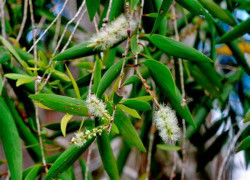
Cajeput oil is an essential oil made by steam-distilling the leaves and twigs of the cajeput tree (Melaleuca cajuputi), a tree in the myrtle family that is native to Southeast Asia and parts of Australia. It is closely related to the tree that gives us tea tree oil and eucalyptus, and it has a sharp, camphor-like, medicinal smell.
People have used cajeput oil for a long time in traditional remedies. It is most often found in chest rubs, balms, inhalants, and massage blends. Because it is a concentrated essential oil, it is almost always used on the skin (after diluting) or breathed in as a vapor rather than taken by mouth.
Uses & effectiveness
Cajeput oil is popularly used for muscle and joint aches, coughs and stuffy noses, minor skin irritation, and as a natural insect repellent. These uses come mostly from tradition and from laboratory studies, not from strong human research.
Some test-tube studies suggest cajeput oil and its main compounds may slow the growth of certain bacteria, fungi, and insects. However, this kind of early research does not prove that the oil works for any specific health problem in people. Well-designed human studies are lacking for most of its common uses.
In short, the evidence is limited and preliminary. If you choose to try cajeput oil, think of it as a comfort or aromatherapy aid rather than a proven treatment, and do not use it to replace care for infections or other medical conditions.
How it works
Cajeput oil is a mix of natural plant chemicals. Its main active compound is usually 1,8-cineole (also called eucalyptol), the same compound found in eucalyptus oil. This is thought to give the oil its cooling sensation and to help loosen mucus when inhaled.
In laboratory and animal studies, compounds in cajeput oil have shown possible antimicrobial, anti-inflammatory, and pain-soothing effects. The strong smell may also help repel insects. Keep in mind that most of this is based on lab or animal research, and results in a test tube do not always carry over to the human body.
Safety & precautions
Like all essential oils, cajeput oil is very concentrated. It should never be swallowed, as essential oils high in cineole can be dangerous if taken by mouth, especially in children. Always keep it out of reach of children and pets.
Before putting it on the skin, dilute it in a carrier oil (such as coconut or almond oil) to lower the risk of irritation. Do a small patch test first, and avoid the eyes, inside of the nose, broken skin, and sensitive areas.
Infants and young children should not have cineole-containing oils applied near the face or nose, as this can cause breathing problems. People with asthma or sensitive airways should be cautious with inhaled oils. Because safety is not established, pregnant and breastfeeding women should avoid cajeput oil. If you have any health condition or are unsure, talk to a pharmacist or doctor first.
Side effects
The most common side effects are skin reactions such as redness, burning, itching, or rash, especially if the oil is used undiluted. Inhaling it may irritate the nose, throat, or airways in some people.
More serious problems can happen if the oil is swallowed, including stomach upset, drowsiness, and trouble breathing. In young children, exposure to cineole oils near the face can trigger dangerous breathing spasms. If a serious reaction occurs or the oil is accidentally swallowed, seek medical help right away.
Dosing
There is no official, standardized dose for cajeput oil, and no proven safe amount for taking it internally. For topical or aromatherapy use, the general practice is to dilute a small amount of the essential oil in a carrier oil before applying to the skin.
Because products differ in strength, follow the directions on the label and do not exceed them. When in doubt, ask a pharmacist for guidance, and never assume that 'natural' means it is safe to use in large amounts.
Cajeput Oil & Pregnancy
Cajeput Oil & Breastfeeding
© 2026 Therapeutic Research Center
Pregnancy & lactation ratings: Natural Medicines, Therapeutic Research Center
References & further reading
The 2 references that drive our Cajeput Oil monograph and interaction data, from the evidence-graded Natural Medicines (TRC Healthcare) database. Citations with a link open the study on PubMed or the publisher’s site.
- Moharram, F. A., Marzouk, M. S., El Toumy, S. A., Ahmed, A. A., and Aboutabl, E. A. Polyphenols of Melaleuca quinquenervia leaves--pharmacological studies of grandinin. Phytother Res 2003;17(7):767-773.
- Subehan, Usia, T., Iwata, H., Kadota, S., and Tezuka, Y. Mechanism-based inhibition of CYP3A4 and CYP2D6 by Indonesian medicinal plants. J Ethnopharmacol. 5-24-2006;105(3):449-455. PubMed
This information is for education only and is not a substitute for professional medical advice. Always check with your pharmacist or doctor before starting, stopping, or combining supplements and medications.
Parts of this content are provided by the Therapeutic Research Center, LLC.
DISCLAIMER: Currently this does not check for drug-drug interactions. This is not an all-inclusive comprehensive list of potential interactions and is for informational purposes only. Not all interactions are known or well-reported in the scientific literature, and new interactions are continually being reported. Input is needed from a qualified healthcare provider including a pharmacist before starting any therapy. Application of clinical judgment is necessary.
© 2021 Therapeutic Research Center, LLC
Cajeput Oil: Common Questions
Does Cajeput Oil interact with prescription medications?
How are Cajeput Oil interactions rated?
Is it safe to take Cajeput Oil with my medications?
Where does this Cajeput Oil interaction information come from?
What is Cajeput Oil used for?
Can I swallow Cajeput Oil?
Is Cajeput Oil safe during pregnancy or breastfeeding?
How is Cajeput Oil different from tea tree oil?
Written and reviewed by the HelloPharmacist editorial staff. Our editorial policy
Have a question about Cajeput Oil?
Our pharmacists answer your medication & supplement questions — free.