
Phellodendron Drug Interactions, Uses, Effectiveness, Safety & More
What is this page for?
First and foremost: how Phellodendron interacts with medications. The heart of this page is the interaction list — every drug Phellodendron is known to interact with, and how serious each one is.
But these pages have grown well beyond that into a full monograph — what Phellodendron is, what people use it for and how strong the evidence is, its safety and side effects, and answers to the questions we’re asked most — written and reviewed by the clinical staff at HelloPharmacist. It’s educational information from our licensed clinical databases, not medical advice, and we don’t sell or endorse products. Our editorial policy
Check Phellodendron against your medication
Add one medicationPhellodendron Drug Interactions: The Bottom Line
From the HelloPharmacist Editorial Team · Updated July 2026Based on the available evidence, the overall risk of a clinically significant Phellodendron drug interaction appears low for most people, even though the list of possible interactions is long. None of the listed interactions are rated major, and nearly all are theoretical concerns tied to berberine, a compound in phellodendron bark.
The best-supported concerns involve transplant medicines: in one reported patient, berberine sharply raised blood levels of tacrolimus, and early human research suggests it may also slow the clearance of cyclosporine. Because berberine has lowered blood sugar in human studies, phellodendron could add to the effect of diabetes medications, including metformin. Additive effects on blood pressure, bleeding risk, and sedation are also possible, but these are based mostly on lab or animal findings.
Most of this long list comes from one shared idea: berberine may slow enzymes the body uses to clear many common medications, which could raise their levels. Almost all of these interactions are predicted from lab, animal, or small preliminary studies rather than proven in people, so appearing on the list does not mean a combination will actually cause harm.
Based on HelloPharmacist’s Phellodendron interaction data and reviewed under our editorial standards.
Drugs that interact with Phellodendron
1162 medications have a known interaction with Phellodendron, graded by severity. Select any drug for the full evidence-based detail.
Don’t want to scroll the list? Just ask.
Tell us the medications you take and we’ll check each one against Phellodendron using our pharmacist-reviewed interaction data.
AI summaries are generated from our Phellodendron interaction data for education only — always confirm with your pharmacist. How we use AI
No drugs match “”.
What Severity, Likelihood & Evidence Mean
Severity — How Serious It Can Be
- Major. Clinically significant; generally best avoided, or used only under direct professional supervision.
- Moderate. May need monitoring, a dose adjustment, or separating the times you take each one.
- Minor. Generally not clinically significant, but still worth noting and mentioning to your pharmacist.
- No known interaction. Checked against our sources with nothing documented — not the same as proven safety.
Likelihood — How Well It’s Documented
- Likely. Well-controlled human studies have demonstrated the likely existence of this interaction
- Probable. Interaction has not been documented in well-controlled studies, however, the interaction has been demonstrated in some small human studies or in controlled animal studies in conjunction with multiple case reports.
- Possible. Interaction has been documented in animal or in lab research, or the interaction has been documented in humans but is limited to case reports or conflicting clinical research exists
- Unlikely. Interaction has been demonstrated in animal or in lab research but has been shown not to occur in humans.
Where This Data Comes From
- Interaction records are evidence-graded and sourced from the Natural Medicines database (TRC Healthcare), the same reference used by pharmacists and hospitals.
- Each drug listed above links to the full report for that exact Phellodendron combination — clinical detail, likelihood, evidence level, and citations.
- Content is reviewed by licensed HelloPharmacist pharmacists — see our data sources and editorial standards.
The kinds of drugs Phellodendron affects
Every type of medication (drug category) Phellodendron is known to interact with. Open any category for the detail — or search your exact drug in the checker above.
Anticoagulant/Antiplatelet Drugs
Theoretically, phellodendron might increase the risk of bleeding when used with anticoagulant or antiplatelet drugs.
Phellodendron contains berberine. In vitro and in vivo research suggest that berberine can inhibit platelet aggregation. Theoretically, phellodendron might also inhibit platelet aggregation.
Antidiabetes Drugs
Theoretically, phellodendron may increase the risk of hypoglycemia when taken with antidiabetes drugs.
Phellodendron contains berberine. Clinical research shows that berberine may lower blood glucose levels. Theoretically, phellodendron might also lower blood glucose levels.
Antihypertensive Drugs
Theoretically, phellodendron might have additive effects with antihypertensive drugs.
Phellodendron contains berberine. Animal research suggests that berberine can have hypotensive effects. Also, a clinical study suggests that taking berberine in combination with amlodipine can lower systolic and diastolic blood pressure when compared with amlodipine alone. Theoretically, phellodendron might also reduce blood pressure.
Cns Depressants
Theoretically, phellodendron might increase the sedative effects of CNS depressants.
Phellodendron contains berberine. Animal research suggests that berberine may have sedative effects. Theoretically, phellodendron might also have CNS depressants effects.
Cyclosporine (Neoral, Sandimmune)
Theoretically, phellodendron might increase blood levels of cyclosporine.
Phellodendron contains berberine. Preliminary clinical research shows that berberine can reduce metabolism of cyclosporine and increase serum levels, likely through inhibition of cytochrome P450 3A4 (CYP3A4), which metabolizes cyclosporine. Theoretically, phellodendron might also reduce the metabolism of cyclosporine.
Cytochrome P450 2C9 (Cyp2C9) Substrates
Theoretically, phellodendron might increase serum levels of drugs metabolized by CYP2C9.
Phellodendron contains berberine. Preliminary clinical research shows that berberine can inhibit CYP2C9. Theoretically, phellodendron might also inhibit CYP2C9.
Cytochrome P450 2D6 (Cyp2D6) Substrates
Theoretically, phellodendron might increase serum levels of drugs metabolized by CYP2D6.
Phellodendron contains berberine. In vitro research and preliminary clinical evidence show that berberine can inhibit CYP2D6. Theoretically, phellodendron might also inhibit CYP2D6.
Cytochrome P450 3A4 (Cyp3A4) Substrates
Theoretically, phellodendron might increase serum levels of drugs metabolized by CYP3A4.
Phellodendron contains berberine. In vitro research and preliminary clinical research show that berberine moderately inhibits CYP3A4. Theoretically, phellodendron might also inhibit CYP3A4.
Dextromethorphan (Robitussin Dm, Others)
Theoretically, phellodendron may increase serum levels of dextromethorphan.
Phellodendron contains berberine. Preliminary clinical research shows that berberine can inhibit cytochrome P450 2D6 (CYP2D6) activity and reduce the metabolism of dextromethorphan. Theoretically, phellodendron may also inhibit the metabolism of dextromethorphan.
Losartan (Cozaar)
Theoretically, phellodendron might reduce the therapeutic effects of losartan by decreasing its conversion to its active form.
Phellodendron contains berberine. Preliminary clinical research suggests that berberine can inhibit cytochrome P450 2C9 (CYP2C9) activity and reduce metabolism of losartan. Theoretically, phellodendron might also inhibit the metabolism of losartan.
Metformin (Glucophage)
Theoretically, phellodendron might increase the therapeutic and adverse effects of metformin.
Phellodendron contains berberine. In vitro and animal studies show that berberine can increase the systemic exposure and half-life of metformin, potentially increasing metformin's effects and side effects. This interaction seems to be most apparent when berberine is administered 2 hours prior to metformin. Taking berberine and metformin at the same time does not appear to increase systemic exposure to metformin. It is unclear if phellodendron might have this same effect.
Midazolam (Versed)
Theoretically, phellodendron might reduce metabolism of midazolam, which might increase the risk of severe adverse effects.
Phellodendron contains berberine. Preliminary clinical research shows that berberine can inhibit cytochrome P450 3A4 (CYP3A4) activity and reduce metabolism of midazolam. Theoretically, phellodendron might also inhibit the metabolism of midazolam.
Pentobarbital (Nembutal)
Theoretically, phellodendron might increase the sedative effect of pentobarbital.
Phellodendron contains berberine. Animal research shows that berberine can prolong pentobarbital-induced sleeping time. Theoretically, phellodendron might increase the sedative effects of pentobarbital.
Tacrolimus (Prograf)
Theoretically, phellodendron might increase blood levels of tacrolimus.
Phellodendron contains berberine. In a 16-year-old patient with idiopathic nephrotic syndrome who was being treated with tacrolimus 6.5 mg twice daily, intake of berberine 200 mg three times daily increased the blood concentration of tacrolimus from 8 to 22 ng/mL. Following a reduction of the tacrolimus dose to 3 mg daily, blood levels of tacrolimus decreased to 12 ng/mL. It is unclear if phellodendron might have this same effect.
Phellodendron: Uses, Safety & Side Effects
Phellodendron is a traditional Chinese medicine bark (Huang Bai) that contains berberine and other plant compounds with antimicrobial and anti-inflammatory activity in lab studies. Human evidence for most uses is limited, and it is often sold in combination with other herbs, making its individual effects hard to judge. Talk with your pharmacist or doctor before using it, and avoid it during pregnancy and breastfeeding.
- Scientific name
- Phellodendron amurense
- Family
- Rutaceae
- Part used
- Bark (cortex)
- Common forms
- Capsules, tablets, powders, tinctures, and dried bark used in teas or decoctions; often combined with other herbs
- Digestive complaints and diarrhea
- Inflammation and joint discomfort
- Stress and weight management (in combination products)
- Skin conditions (topical, traditional)
- Antimicrobial support
Popular and traditional uses — not proof it works. See “Uses & effectiveness” below for the evidence.
Generally used short-term in traditional medicine, but human safety data are limited.
Berberine-containing herbs may not be safe in pregnancy, so avoid use.
When used orally. The berberine constituent of phellodendron and other harmful constituents can be transferred to the infant through breast milk.
Read the full breastfeeding detailPregnancy & breastfeeding ratings are from Natural Medicines (Therapeutic Research Center). Safety guidance is general; always confirm with your pharmacist or doctor for your situation.
Overview
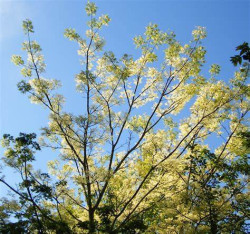
Phellodendron comes from the bark of the Amur cork tree (Phellodendron amurense), a deciduous tree native to China, Korea, and Japan. In traditional Chinese medicine the bark is known as Huang Bai and has been used for hundreds of years.
The bark is usually dried and made into teas, powders, tinctures, capsules, or tablets. It is often combined with other herbs in formulas rather than used alone. Some modern supplements pair Phellodendron with magnolia bark and market the blend for stress or weight management.
How it works
Phellodendron bark contains plant alkaloids, most notably berberine, along with compounds such as palmatine and jatrorrhizine. In laboratory studies, berberine shows antimicrobial, anti-inflammatory, and antioxidant activity, and it may affect blood sugar and fat metabolism.
It is important to understand that these mechanisms are mostly based on test-tube and animal research. The amounts and effects seen in a lab dish do not always match what happens in the human body, so these proposed actions should be viewed as possible rather than proven.
Does Phellodendron work?
How to read these evidence grades
Natural Medicines’ 7-point scale. We show each rating’s label word-for-word.
For Phellodendron, current evidence isn’t strong enough to rate any specific use. The conditions it has been studied for are listed below.
Also studied for 10 conditions — evidence insufficient to rate
Insufficient Reliable Evidence To Rate Acne
It is unclear if topical phellodendron is beneficial in patients with acne.
Insufficient Reliable Evidence To Rate Benign prostatic hyperplasia (BPH)
Oral phellodendron has only been evaluated in combination with other ingredients; its effect when used alone is unclear.
Insufficient Reliable Evidence To Rate Diabetes
Although there has been interest in using oral phellodendron for diabetes, there is insufficient reliable information about the clinical effects of phellodendron for this purpose.
Insufficient Reliable Evidence To Rate Diabetic foot ulcers
Topical phellodendron has only been evaluated in combination with other ingredients; its effect when used alone is unclear.
Insufficient Reliable Evidence To Rate Obesity
Oral phellodendron has only been evaluated in combination with other ingredients; its effect when used alone is unclear.
Insufficient Reliable Evidence To Rate Osteoarthritis
Oral phellodendron has only been evaluated in combination with other ingredients; its effect when used alone is unclear.
Insufficient Reliable Evidence To Rate Peptic ulcers
Although there has been interest in using oral phellodendron for peptic ulcers, there is insufficient reliable information about the clinical effects of phellodendron for this purpose.
Insufficient Reliable Evidence To Rate Stress
Oral phellodendron has only been evaluated in combination with other ingredients; its effect when used alone is unclear.
Insufficient Reliable Evidence To Rate Tuberculosis
Although there has been interest in using oral phellodendron for tuberculosis, there is insufficient reliable information about the clinical effects of phellodendron for this purpose.
Insufficient Reliable Evidence To Rate Wound healing
Topical phellodendron has only been evaluated in combination with other ingredients; its effect when used alone is unclear.
Source & disclaimer. Effectiveness ratings and evidence summaries are provided by Natural Medicines (Therapeutic Research Center) and shown as licensed. Where Natural Medicines hasn’t rated a use, HelloPharmacist’s pharmacists may add their own reviewed rating and evidence (each such entry is labeled). This is educational information, not medical advice — talk with your pharmacist or doctor before starting, stopping, or changing a supplement.
Safety & precautions
Phellodendron has a long history of traditional use, but rigorous human safety data are limited. Because it contains berberine, people with certain health conditions should be careful and check with a healthcare professional first.
There have been reports linking some Phellodendron-containing combination products to liver problems. People with liver disease, those taking medicines processed by the liver, and anyone with low blood sugar or blood pressure concerns should use caution.
Pregnancy: Avoid. Berberine-containing herbs are generally not considered safe during pregnancy. Breastfeeding: Avoid. Berberine can transfer to infants and may cause harm, so do not use while nursing. Always speak with your pharmacist or doctor before starting Phellodendron, especially if you take other medications.
Side effects
Reported side effects are not well documented but may include stomach upset, nausea, diarrhea, or cramping, especially at higher amounts. Some people may have allergic reactions.
A more serious concern is the possibility of liver injury, which has been reported with some products containing Phellodendron. Stop using it and seek medical care if you notice yellowing of the skin or eyes, dark urine, severe stomach pain, or unusual tiredness.
Phellodendron: Reported Adverse Effects
Documented safety reports on Phellodendron from the evidence-graded Natural Medicines (TRC Healthcare) database, shown word-for-word from the licensed record.
Reports by conditionAntidepressant-induced sexual dysfunction Genitourinary
Orally, a combination product containing extracts of phellodendron plus magnolia has been associated with one report of sexual dysfunction in one clinical trial. However, it is unknown if this is related to phellodendron or some other factor.
- Garrison R, Chambliss WG. Effect of a proprietary Magnolia and Phellodendron extract on weight management: a pilot, double-blind, placebo-controlled clinical trial. Altern Ther Health Med 2006;12:50-4.
- Kalman DS, Feldman S, Feldman R, et al. Effect of a proprietary magnolia and phellodendron extract on stress levels in healthy women: a pilot, double-blind, placebo-controlled clinical trial. Nutr J 2008;7:11.
Cluster headache Neurologic/CNS
Orally, a combination product containing extracts of phellodendron plus magnolia has been associated with single reports of shaking hands, perilabial numbness, fatigue, and headache in clinical research. However, it is unknown if this is related to phellodendron or some other factor.
- Garrison R, Chambliss WG. Effect of a proprietary Magnolia and Phellodendron extract on weight management: a pilot, double-blind, placebo-controlled clinical trial. Altern Ther Health Med 2006;12:50-4.
- Kalman DS, Feldman S, Feldman R, et al. Effect of a proprietary magnolia and phellodendron extract on stress levels in healthy women: a pilot, double-blind, placebo-controlled clinical trial. Nutr J 2008;7:11.
Dyspepsia Gastrointestinal
Orally, a combination product containing extracts of phellodendron plus magnolia has been associated with one report of heartburn in one clinical trial. However, it is unknown if this is related to phellodendron or some other factor.
- Garrison R, Chambliss WG. Effect of a proprietary Magnolia and Phellodendron extract on weight management: a pilot, double-blind, placebo-controlled clinical trial. Altern Ther Health Med 2006;12:50-4.
- Kalman DS, Feldman S, Feldman R, et al. Effect of a proprietary magnolia and phellodendron extract on stress levels in healthy women: a pilot, double-blind, placebo-controlled clinical trial. Nutr J 2008;7:11.
Adverse-effects data: Natural Medicines, Therapeutic Research Center
Dosing
There is no well-established, standardized dose of Phellodendron for any health condition. Products vary widely in strength and may contain other herbs, which makes general dosing advice difficult.
If you choose to use it, follow the directions on the product label and do not exceed the recommended amount. Because quality and content can differ between brands, it is best to talk with a pharmacist or doctor before starting, and to choose products from reputable manufacturers.
Phellodendron & Breastfeeding
© 2026 Therapeutic Research Center
Pregnancy & lactation ratings: Natural Medicines, Therapeutic Research Center
References & further reading
The 22 references that drive our Phellodendron monograph and interaction data, from the evidence-graded Natural Medicines (TRC Healthcare) database. Citations with a link open the study on PubMed or the publisher’s site.
- Chan E. Displacement of bilirubin from albumin by berberine. Biol Neonate 1993;63:201-8. PubMed
- Janbaz KH, Gilani AH. Studies on preventive and curative effects of berberine on chemical-induced hepatotoxicity in rodents. Fitoterapia 2000;71:25-33.. PubMed
- Wu X, Li Q, Xin H, Yu A, Zhong M. Effects of berberine on the blood concentration of cyclosporin A in renal transplanted recipients: clinical and pharmacokinetic study. Eur J Clin Pharmacol 2005;61:567-72. PubMed
- Garrison R, Chambliss WG. Effect of a proprietary Magnolia and Phellodendron extract on weight management: a pilot, double-blind, placebo-controlled clinical trial. Altern Ther Health Med 2006;12:50-4.
- Zhang Y, Li X, Zou D, et al. Treatment of type 2 diabetes and dyslipidemia with the natural plant alkaloid berberine. J Clin Endocrinol Metab 2008;93:2559-65. PubMed
- Budzinski JW, Foster BC, Vandenhoek S, Arnason JT. An in vitro evaluation of human cytochrome P450 3A4 inhibition by selected commercial herbal extracts and tinctures. Phytomedicine 2000;7:273-82. PubMed
- Chatterjee P, Franklin MR. Human cytochrome p450 inhibition and metabolic-intermediate complex formation by goldenseal extract and its methylenedioxyphenyl components. Drug Metab Dispos 2003;31:1391-7. PubMed
- Shanbhag, S. M., Kulkarni, H. J., and Gaitonde, B. B. Pharmacological actions of berberine on the central nervous system. Jpn.J Pharmacol 1970;20(4):482-487. PubMed
- Wu, J. F. and Liu, T. P. [Effects of berberine on platelet aggregation and plasma levels of TXB2 and 6-keto-PGF1 alpha in rats with reversible middle cerebral artery occlusion]. Yao Xue.Xue.Bao. 1995;30(2):98-102.
- Peng, W. H., Hsieh, M. T., and Wu, C. R. Effect of long-term administration of berberine on scopolamine-induced amnesia in rats. Jpn J Pharmacol 1997;74(3):261-266. DOI
- Sabir M and Bhide NK. Study of some pharmacological actions of berberine. Ind J Physiol & Pharmac 1971;15(3):111-132.
- Tripathi YB and Shukla SD. Berberis artistata inhibits PAF induced aggregation of rabbit platelets. Phytotherapy Research 1996;10:628-630.
- Yin, J., Xing, H., and Ye, J. Efficacy of berberine in patients with type 2 diabetes mellitus. Metabolism 2008;57(5):712-717. PubMed
- Zhang, H., Wei, J., Xue, R., Wu, J. D., Zhao, W., Wang, Z. Z., Wang, S. K., Zhou, Z. X., Song, D. Q., Wang, Y. M., Pan, H. N., Kong, W. J., and Jiang, J. D. Berberine lowers blood glucose in type 2 diabetes mellitus patients through increasing insulin re
- Guo, Y., Chen, Y., Tan, Z. R., Klaassen, C. D., and Zhou, H. H. Repeated administration of berberine inhibits cytochromes P450 in humans. Eur J Clin Pharmacol 2012;68(2):213-217. PubMed
- Wei, W., Zhao, H., Wang, A., Sui, M., Liang, K., Deng, H., Ma, Y., Zhang, Y., Zhang, H., and Guan, Y. A clinical study on the short-term effect of berberine in comparison to metformin on the metabolic characteristics of women with polycystic ovary syndro
- Hermann, R. and von, Richter O. Clinical evidence of herbal drugs as perpetrators of pharmacokinetic drug interactions. Planta Med 2012;78(13):1458-1477. PubMed
- Chun YT, Yip TT, Lau KL, and et al. A biochemical study on the hypotensive effect of berberine in rats. Gen Pharmac 1979;10:177-182. PubMed
- Hou Q, Han W, Fu X. Pharmacokinetic interaction between tacrolimus and berberine in a child with idiopathic nephrotic syndrome. Eur J Clin Pharmacol 2013;69(10):1861-2. PubMed
- Lan J, Zhao Y, Dong F, et al. Meta-analysis of the effect and safety of berberine in the treatment of type 2 diabetes mellitus, hyperlipemia and hypertension. J Ethnopharmacol. 2015;161:69-81. PubMed
- Kalman DS, Feldman S, Feldman R, et al. Effect of a proprietary magnolia and phellodendron extract on stress levels in healthy women: a pilot, double-blind, placebo-controlled clinical trial. Nutr J 2008;7:11.
- Lyu Y, Zhang Y, Yang M, et al. Pharmacokinetic interactions between metformin and berberine in rats: Role of oral administration sequences and microbiota. Life Sci. 2019;235:116818. PubMed
This information is for education only and is not a substitute for professional medical advice. Always check with your pharmacist or doctor before starting, stopping, or combining supplements and medications.
Parts of this content are provided by the Therapeutic Research Center, LLC.
DISCLAIMER: Currently this does not check for drug-drug interactions. This is not an all-inclusive comprehensive list of potential interactions and is for informational purposes only. Not all interactions are known or well-reported in the scientific literature, and new interactions are continually being reported. Input is needed from a qualified healthcare provider including a pharmacist before starting any therapy. Application of clinical judgment is necessary.
© 2021 Therapeutic Research Center, LLC
Brands that make products with Phellodendron
114 brands in our database make a supplement containing Phellodendron.
Supplement products with Phellodendron
393 products in our database contain Phellodendron. Open any to see its full ingredient list and every drug interaction we check.
Phellodendron: Common Questions
What is Phellodendron used for, and does it work?
Does Phellodendron interact with prescription medications?
How are Phellodendron interactions rated?
Is it safe to take Phellodendron with my medications?
Where does this Phellodendron interaction information come from?
What is Phellodendron used for?
Is Phellodendron the same as berberine?
Is Phellodendron safe to take?
Can I take Phellodendron while pregnant or breastfeeding?
Written and reviewed by the HelloPharmacist editorial staff. Our editorial policy
Products that contain Phellodendron
A rotating sample of real supplements in our database that list Phellodendron — open any to see its full ingredients and every drug interaction we check.
- Zhi Bai Di Huang Pian YinVive Cool 200 mg by Guang Ci Tang
- Eight Flavor Rehmannia Teapills by Plum Flower
- Huang Lian Shang Qing Tablets by Plum Flower
- Seirogan by Trumpet Brand
- ProstateEssence by Pure Essence
- Relaxation Support by Vitabase
- Relora by Pure Encapsulations
- Myelin Sheath Support 820 mg by Planetary Herbals
- Sleep Well by Healthy Choice Naturals
- Red Rooster by Bioray
Have a question about Phellodendron?
Our pharmacists answer your medication & supplement questions — free.