
Kratom Drug Interactions, Uses, Effectiveness, Safety & More
What is this page for?
First and foremost: how Kratom interacts with medications. The heart of this page is the interaction list — every drug Kratom is known to interact with, and how serious each one is.
But these pages have grown well beyond that into a full monograph — what Kratom is, what people use it for and how strong the evidence is, its safety and side effects, and answers to the questions we’re asked most — written and reviewed by the clinical staff at HelloPharmacist. It’s educational information from our licensed clinical databases, not medical advice, and we don’t sell or endorse products. Our editorial policy
Check Kratom against your medication
Add one medicationKratom Drug Interactions: The Bottom Line
From the HelloPharmacist Editorial Team · Updated July 2026Because nearly all documented Kratom drug interactions are rated moderate, we consider the overall risk of a clinically significant interaction to be moderate, especially with sedating or mood-related medications. None of the listed interactions are rated major, but almost all carry a moderate rating, based mainly on lab findings and individual case reports.
CNS depressants such as opioids and sedatives deserve the most caution, since kratom acts on the same brain receptors and deaths have been reported when it was combined with these drugs. Serotonergic drugs, including many antidepressants, are also a concern, with case reports describing serotonin syndrome. One fatal case involved quetiapine, where kratom may have slowed the drug's breakdown and raised it to a dangerous level.
Most of the remaining interactions reflect kratom's possible effect on enzymes the body uses to clear many medications. That concern comes largely from lab research, and in one human study kratom tea only modestly raised levels of a test drug. So many of these predicted interactions remain theoretical, though they could matter more for medicines with a narrow safety margin.
Based on HelloPharmacist’s Kratom interaction data and reviewed under our editorial standards.
Drugs that interact with Kratom
995 medications have a known interaction with Kratom, graded by severity. Select any drug for the full evidence-based detail.
Don’t want to scroll the list? Just ask.
Tell us the medications you take and we’ll check each one against Kratom using our pharmacist-reviewed interaction data.
AI summaries are generated from our Kratom interaction data for education only — always confirm with your pharmacist. How we use AI
No drugs match “”.
Ado-trastuzumab EmtansineKadcyla
Kratom might increase the levels and clinical effects of drugs metabolized by CYP3A4.
Read the full Kratom + Ado-trastuzumab Emtansine interaction Ado-trastuzumab Emtansine drug page: uses, dosage & side effectsAbametapirXeglyze
CYP3A4 inhibitors might increase the concentrations and clinical effects of kratom's primary active alkaloid mitragynine.
Read the full Kratom + Abametapir interactionAbemaciclibVerzenio
Kratom might increase the levels and clinical effects of drugs metabolized by CYP3A4.
Read the full Kratom + Abemaciclib interaction Abemaciclib drug page: uses, dosage & side effectsAbiraterone
CYP3A4 inhibitors might increase the concentrations and clinical effects of kratom's primary active alkaloid mitragynine.
Read the full Kratom + Abiraterone interaction Abiraterone drug page: uses, dosage & side effectsAbiraterone AcetateYonsa, Zytiga
Kratom might increase the levels and clinical effects of drugs metabolized by CYP3A4.
Read the full Kratom + Abiraterone Acetate interaction Abiraterone Acetate drug page: uses, dosage & side effectsAcalabrutinibCalquence
Kratom might increase the levels and clinical effects of drugs metabolized by CYP3A4.
Read the full Kratom + Acalabrutinib interaction Acalabrutinib drug page: uses, dosage & side effectsAcepromazineAtravet
Theoretically, concomitant use might increase the risk for adverse CNS depressant effects.
Read the full Kratom + Acepromazine interactionAcetaminophenChildren's Tylenol, Children's Tylenol Meltaways, Tylenol, Tylenol Ex Strength
Theoretically, kratom might increase the levels and clinical effects of drugs metabolized by CYP1A2.
Read the full Kratom + Acetaminophen interaction Acetaminophen drug page: uses, dosage & side effectsAcetaminophen, AspirinGemnisyn
Theoretically, kratom might increase the levels and clinical effects of drugs metabolized by CYP1A2.
Read the full Kratom + Acetaminophen, Aspirin interactionAcetaminophen, Aspirin, CaffeineExcedrin, Excedrin Extra Strength, Excedrin Migraine
Theoretically, kratom might increase the levels and clinical effects of drugs metabolized by CYP1A2.
Read the full Kratom + Acetaminophen, Aspirin, Caffeine interactionAcetaminophen, Brompheniramine, PhenylpropanolamineDimetapp Cold and Flu
Theoretically, kratom might increase the levels and clinical effects of drugs metabolized by CYP1A2.
Read the full Kratom + Acetaminophen, Brompheniramine, Phenylpropanolamine interactionAcetaminophen, ButalbitalAxocet, Bancap, Bucet, Butex Forte, Esgic CF, Orbivan CF +5 more
Theoretically, kratom might increase the levels and clinical effects of drugs metabolized by CYP1A2.
Read the full Kratom + Acetaminophen, Butalbital interactionAcetaminophen, Butalbital, CaffeineEsgic, Esgic Plus, Fiogesic, Fioricet, Repan, Tecnal +1 more
Theoretically, kratom might increase the levels and clinical effects of drugs metabolized by CYP1A2.
Read the full Kratom + Acetaminophen, Butalbital, Caffeine interaction Acetaminophen, Butalbital, Caffeine drug page: uses, dosage & side effectsAcetaminophen, Butalbital, Caffeine, CodeineEsgic with Codeine, Fioricet w/ Codeine
Theoretically, kratom might increase the levels and clinical effects of drugs metabolized by CYP1A2.
Read the full Kratom + Acetaminophen, Butalbital, Caffeine, Codeine interactionAcetaminophen, Butalbital, CodeineBancap w/ Codeine
Theoretically, kratom might increase the levels and clinical effects of drugs metabolized by CYP1A2.
Read the full Kratom + Acetaminophen, Butalbital, Codeine interactionAcetaminophen, Butalbital, Codeine PhosphatePhrenilin #3
Theoretically, concomitant use might increase the risk for adverse CNS depressant effects.
Read the full Kratom + Acetaminophen, Butalbital, Codeine Phosphate interactionAcetaminophen, Caffeine, Chlorpheniramine, Hydrocodone, PhenylephrineHycomine Compound
Theoretically, kratom might increase the levels and clinical effects of drugs metabolized by CYP2D6.
Read the full Kratom + Acetaminophen, Caffeine, Chlorpheniramine, Hydrocodone, Phenylephrine interactionAcetaminophen, Caffeine, CodeineGesic C15, Gesic C30, Gesic C8, Lenoltec 1, Lenoltec 2, Lenoltec 3 +1 more
Theoretically, kratom might increase the levels and clinical effects of drugs metabolized by CYP1A2.
Read the full Kratom + Acetaminophen, Caffeine, Codeine interactionAcetaminophen, Caffeine, Codeine, SalicylamideCodalan No.1, Codalan No.2, Codalan No.3
Theoretically, concomitant use might increase the risk for adverse CNS depressant effects.
Read the full Kratom + Acetaminophen, Caffeine, Codeine, Salicylamide interactionAcetaminophen, Caffeine, DihydrocodeineDHC Plus, Panlor DC, Panlor SS
Theoretically, concomitant use might increase the risk for adverse CNS depressant effects.
Read the full Kratom + Acetaminophen, Caffeine, Dihydrocodeine interactionAcetaminophen, Caffeine, IsomethepteneMigralam
Kratom might increase the levels and clinical effects of drugs metabolized by CYP3A4.
Read the full Kratom + Acetaminophen, Caffeine, Isometheptene interactionAcetaminophen, Caffeine, PyrilamineMidol Max Strength Menstrual
Theoretically, kratom might increase the levels and clinical effects of drugs metabolized by CYP1A2.
Read the full Kratom + Acetaminophen, Caffeine, Pyrilamine interactionAcetaminophen, Chlorpheniramine Maleate, Dextromethorphan HbrVicks Formula 44M Cough, Cold & Flu Relief
Kratom might increase the levels and clinical effects of drugs metabolized by CYP3A4.
Read the full Kratom + Acetaminophen, Chlorpheniramine Maleate, Dextromethorphan Hbr interactionAcetaminophen, Chlorpheniramine, Codeine, PhenylephrineColrex
Theoretically, kratom might increase the levels and clinical effects of drugs metabolized by CYP2D6.
Read the full Kratom + Acetaminophen, Chlorpheniramine, Codeine, Phenylephrine interactionAcetaminophen, Chlorpheniramine, DextromethorphanCoricidin II Extra Strength Cold and Flu
Kratom might increase the levels and clinical effects of drugs metabolized by CYP3A4.
Read the full Kratom + Acetaminophen, Chlorpheniramine, Dextromethorphan interactionAcetaminophen, Chlorpheniramine, Dextromethorphan HydrobromideCoricidin HBP Maximum Strength Flu
Theoretically, kratom might increase the levels and clinical effects of drugs metabolized by CYP1A2.
Read the full Kratom + Acetaminophen, Chlorpheniramine, Dextromethorphan Hydrobromide interactionAcetaminophen, Chlorpheniramine, Dextromethorphan, PhenylpropanolamineMulti Symptom Cold Relief
Kratom might increase the levels and clinical effects of drugs metabolized by CYP3A4.
Read the full Kratom + Acetaminophen, Chlorpheniramine, Dextromethorphan, Phenylpropanolamine interactionAcetaminophen, Chlorpheniramine, Dextromethorphan, PseudoephedrineChildren's Tylenol Cold Plus Cough, Tylenol Cold Ex Strength
Theoretically, taking kratom in combination with serotonergic drugs may increase levels of serotonin, increasing the risk of serotonin syndrome.
Read the full Kratom + Acetaminophen, Chlorpheniramine, Dextromethorphan, Pseudoephedrine interactionAcetaminophen, Chlorpheniramine, Guaifenesin, Phenylephrine, SalicylamideRhinogesic GG
Theoretically, kratom might increase the levels and clinical effects of drugs metabolized by CYP1A2.
Read the full Kratom + Acetaminophen, Chlorpheniramine, Guaifenesin, Phenylephrine, Salicylamide interactionAcetaminophen, Chlorpheniramine, PhenylephrineAlka-Seltzer PLUS, Histex SR, Protid
Theoretically, kratom might increase the levels and clinical effects of drugs metabolized by CYP1A2.
Read the full Kratom + Acetaminophen, Chlorpheniramine, Phenylephrine interactionAcetaminophen, Chlorpheniramine, Phenylephrine, SalicylamideRhinogesic, Rhinogesic JR
Kratom might increase the levels and clinical effects of drugs metabolized by CYP3A4.
Read the full Kratom + Acetaminophen, Chlorpheniramine, Phenylephrine, Salicylamide interactionAcetaminophen, Chlorpheniramine, PhenylpropanolamineAlumadrine, Conex, Sinadrin Max Strength, Sinulin
Theoretically, kratom might increase the levels and clinical effects of drugs metabolized by CYP1A2.
Read the full Kratom + Acetaminophen, Chlorpheniramine, Phenylpropanolamine interactionAcetaminophen, Chlorpheniramine, Phenylpropanolamine, OpiumHista-Derfule
Theoretically, taking kratom in combination with serotonergic drugs may increase levels of serotonin, increasing the risk of serotonin syndrome.
Read the full Kratom + Acetaminophen, Chlorpheniramine, Phenylpropanolamine, Opium interactionAcetaminophen, Chlorpheniramine, Phenylpropanolamine, PhenyltoloxamineNorel Plus
Theoretically, kratom might increase the levels and clinical effects of drugs metabolized by CYP1A2.
Read the full Kratom + Acetaminophen, Chlorpheniramine, Phenylpropanolamine, Phenyltoloxamine interactionAcetaminophen, Chlorpheniramine, PseudoephedrineAlka-Seltzer PLUS Liquid Gels, Children's Tylenol Cold, Codimal, Comtrex, Extra Strength Tylenol Allergy Sinus, Lorsin +3 more
Kratom might increase the levels and clinical effects of drugs metabolized by CYP3A4.
Read the full Kratom + Acetaminophen, Chlorpheniramine, Pseudoephedrine interactionAcetaminophen, ChlorzoxazoneAcetazone Forte, Extra Strength Tylenol Aches & Strains, Parafon Forte
Theoretically, kratom might increase the levels and clinical effects of drugs metabolized by CYP1A2.
Read the full Kratom + Acetaminophen, Chlorzoxazone interactionAcetaminophen, Chlorzoxazone, CodeineAcetazone Forte C8, Parafon Forte C8
Theoretically, kratom might increase the levels and clinical effects of drugs metabolized by CYP1A2.
Read the full Kratom + Acetaminophen, Chlorzoxazone, Codeine interactionAcetaminophen, CodeineTylenol No.3, Tylenol w/ Codeine
Theoretically, concomitant use might increase the risk for adverse CNS depressant effects.
Read the full Kratom + Acetaminophen, Codeine interactionAcetaminophen, Codeine, DoxylamineMersyndol
Theoretically, kratom might increase the levels and clinical effects of drugs metabolized by CYP2D6.
Read the full Kratom + Acetaminophen, Codeine, Doxylamine interactionAcetaminophen, Codeine, MethocarbamolAcetaminophen, Codeine, Methocarbamol, Robaxacet 8
Theoretically, kratom might increase the levels and clinical effects of drugs metabolized by CYP1A2.
Read the full Kratom + Acetaminophen, Codeine, Methocarbamol interactionAcetaminophen, Dexbrompheniramine, PseudoephedrineSinadrin Plus
Theoretically, kratom might increase the levels and clinical effects of drugs metabolized by CYP1A2.
Read the full Kratom + Acetaminophen, Dexbrompheniramine, Pseudoephedrine interactionAcetaminophen, DextromethorphanTylenol Cough Ex Strength
Kratom might increase the levels and clinical effects of drugs metabolized by CYP3A4.
Read the full Kratom + Acetaminophen, Dextromethorphan interactionAcetaminophen, Dextromethorphan, Doxylamine, PseudoephedrineVicks NyQuil
Theoretically, kratom might increase the levels and clinical effects of drugs metabolized by CYP1A2.
Read the full Kratom + Acetaminophen, Dextromethorphan, Doxylamine, Pseudoephedrine interactionAcetaminophen, Dextromethorphan, Guaifenesin, PhenylephrineConar-A
Theoretically, taking kratom in combination with serotonergic drugs may increase levels of serotonin, increasing the risk of serotonin syndrome.
Read the full Kratom + Acetaminophen, Dextromethorphan, Guaifenesin, Phenylephrine interactionAcetaminophen, Dextromethorphan, Guaifenesin, PhenylpropanolamineAnatuss
Kratom might increase the levels and clinical effects of drugs metabolized by CYP3A4.
Read the full Kratom + Acetaminophen, Dextromethorphan, Guaifenesin, Phenylpropanolamine interactionAcetaminophen, Dextromethorphan, Guaifenesin, PseudoephedrineRobitussin Cold, Severe Cold, Suphedrine Cold/Cough
Theoretically, taking kratom in combination with serotonergic drugs may increase levels of serotonin, increasing the risk of serotonin syndrome.
Read the full Kratom + Acetaminophen, Dextromethorphan, Guaifenesin, Pseudoephedrine interactionAcetaminophen, Dextromethorphan, Phenylpropanolamine, PyrilamineTheracaps
Kratom might increase the levels and clinical effects of drugs metabolized by CYP3A4.
Read the full Kratom + Acetaminophen, Dextromethorphan, Phenylpropanolamine, Pyrilamine interactionAcetaminophen, Dextromethorphan, PseudoephedrineAlka-Seltzer PLUS Flu Liquid Gels, Non Aspirin Cold Caps, Tylenol Cold, Tylenol Flu Daytime Ex Strength, Tylenol Flu Ex Strength
Theoretically, kratom might increase the levels and clinical effects of drugs metabolized by CYP1A2.
Read the full Kratom + Acetaminophen, Dextromethorphan, Pseudoephedrine interactionAcetaminophen, Dichloralantipyrine, IsomethepteneAmidrine, Midchlor, Migquin, Migratine
Theoretically, kratom might increase the levels and clinical effects of drugs metabolized by CYP1A2.
Read the full Kratom + Acetaminophen, Dichloralantipyrine, Isometheptene interactionAcetaminophen, Dichloralphenazone, IsomethepteneMidrin
Theoretically, concomitant use might increase the risk for adverse CNS depressant effects.
Read the full Kratom + Acetaminophen, Dichloralphenazone, Isometheptene interactionAcetaminophen, Dichlorophenazone, IsometheptaneIsocom
Theoretically, kratom might increase the levels and clinical effects of drugs metabolized by CYP1A2.
Read the full Kratom + Acetaminophen, Dichlorophenazone, Isometheptane interactionAcetaminophen, DiphenhydramineTylenol PM, Tylenol PM Ex Strength
Theoretically, concomitant use might increase the risk for adverse CNS depressant effects.
Read the full Kratom + Acetaminophen, Diphenhydramine interactionAcetaminophen, Diphenhydramine, PseudoephedrineChildren's Tylenol Allergy, Cold Control, Contac Night Allergy Relief
Theoretically, concomitant use might increase the risk for adverse CNS depressant effects.
Read the full Kratom + Acetaminophen, Diphenhydramine, Pseudoephedrine interactionAcetaminophen, Doxylamine, PseudoephedrineEx Strength Tylenol Sinus Nighttime
Theoretically, kratom might increase the levels and clinical effects of drugs metabolized by CYP1A2.
Read the full Kratom + Acetaminophen, Doxylamine, Pseudoephedrine interactionAcetaminophen, HydrocodoneAnexsia, Anodynos DHC, Azdone, Co-Gesic, Doucet, Lorcet +9 more
Theoretically, kratom might increase the levels and clinical effects of drugs metabolized by CYP1A2.
Read the full Kratom + Acetaminophen, Hydrocodone interactionAcetaminophen, IbuprofenCombogesic
Theoretically, kratom might increase the levels and clinical effects of drugs metabolized by CYP1A2.
Read the full Kratom + Acetaminophen, Ibuprofen interactionAcetaminophen, MeperidineDemerol APAP
Theoretically, kratom might increase the levels and clinical effects of drugs metabolized by CYP1A2.
Read the full Kratom + Acetaminophen, Meperidine interactionAcetaminophen, MethocarbamolRobaxacet
Theoretically, kratom might increase the levels and clinical effects of drugs metabolized by CYP1A2.
Read the full Kratom + Acetaminophen, Methocarbamol interactionAcetaminophen, OrphenadrineOrfenagesic
Theoretically, kratom might increase the levels and clinical effects of drugs metabolized by CYP1A2.
Read the full Kratom + Acetaminophen, Orphenadrine interactionAcetaminophen, OxycodonePercocet, Roxicet, Tylox, Xartemis XR
Theoretically, kratom might increase the levels and clinical effects of drugs metabolized by CYP1A2.
Read the full Kratom + Acetaminophen, Oxycodone interactionAcetaminophen, Pamabrom, PyrilamineMidol Max Strength PMS, Pamprin, Pamprin ES
Theoretically, kratom might increase the levels and clinical effects of drugs metabolized by CYP1A2.
Read the full Kratom + Acetaminophen, Pamabrom, Pyrilamine interactionAcetaminophen, PentazocineTalacen
Theoretically, kratom might increase the levels and clinical effects of drugs metabolized by CYP1A2.
Read the full Kratom + Acetaminophen, Pentazocine interactionAcetaminophen, Phenylephrine, ChlorpheniramineSuper Cold Tabs
Kratom might increase the levels and clinical effects of drugs metabolized by CYP3A4.
Read the full Kratom + Acetaminophen, Phenylephrine, Chlorpheniramine interactionAcetaminophen, PhenylpropanolamineTetra Caps
Theoretically, kratom might increase the levels and clinical effects of drugs metabolized by CYP1A2.
Read the full Kratom + Acetaminophen, Phenylpropanolamine interactionAcetaminophen, Phenylpropanolamine, PhenyltoloxamineSinubid
Theoretically, kratom might increase the levels and clinical effects of drugs metabolized by CYP1A2.
Read the full Kratom + Acetaminophen, Phenylpropanolamine, Phenyltoloxamine interactionAcetaminophen, PhenyltoloxaminePercogesic, Relagesic
Theoretically, kratom might increase the levels and clinical effects of drugs metabolized by CYP1A2.
Read the full Kratom + Acetaminophen, Phenyltoloxamine interactionAcetaminophen, Phenyltoloxamine, SalicylamideLobac
Theoretically, kratom might increase the levels and clinical effects of drugs metabolized by CYP1A2.
Read the full Kratom + Acetaminophen, Phenyltoloxamine, Salicylamide interactionAcetaminophen, PropoxypheneDarvocet-N 100, Darvocet-N 50, E-Lor, Wygesic
Theoretically, kratom might increase the levels and clinical effects of drugs metabolized by CYP1A2.
Read the full Kratom + Acetaminophen, Propoxyphene interactionAcetaminophen, PseudoephedrineChildren's Tylenol Sinus, Dristan N.D., Non-Aspirin Sinus, Ornex, Ornex-Max, Sinutab +5 more
Theoretically, kratom might increase the levels and clinical effects of drugs metabolized by CYP1A2.
Read the full Kratom + Acetaminophen, Pseudoephedrine interactionAcetaminophen, Pseudoephedrine, TriprolidineActifed Plus ES
Theoretically, kratom might increase the levels and clinical effects of drugs metabolized by CYP1A2.
Read the full Kratom + Acetaminophen, Pseudoephedrine, Triprolidine interactionAcetazolamideAk-Zol, Diamox
Theoretically, concomitant use might increase the risk for adverse CNS depressant effects.
Read the full Kratom + Acetazolamide interaction Acetazolamide drug page: uses, dosage & side effectsAcitretinSoriatane
CYP3A4 inhibitors might increase the concentrations and clinical effects of kratom's primary active alkaloid mitragynine.
Read the full Kratom + Acitretin interaction Acitretin drug page: uses, dosage & side effectsAdagrasibKrazati
Kratom might increase the levels and clinical effects of drugs metabolized by CYP3A4.
Read the full Kratom + Adagrasib interaction Adagrasib drug page: uses, dosage & side effectsAerosphere Budesonide, Formoterol Fumarate, GlycopyrrolateBreztri
Theoretically, kratom might increase the levels and clinical effects of drugs metabolized by CYP2D6.
Read the full Kratom + Aerosphere Budesonide, Formoterol Fumarate, Glycopyrrolate interactionAgomelatineValdoxan
Theoretically, kratom might increase the levels and clinical effects of drugs metabolized by CYP1A2.
Read the full Kratom + Agomelatine interactionAlfentanilAlfenta
Kratom might increase the levels and clinical effects of drugs metabolized by CYP3A4.
Read the full Kratom + Alfentanil interactionAlfuzosinUroxatral
Kratom might increase the levels and clinical effects of drugs metabolized by CYP3A4.
Read the full Kratom + Alfuzosin interaction Alfuzosin drug page: uses, dosage & side effectsAliskirenTekturna
Kratom might increase the levels and clinical effects of drugs metabolized by CYP3A4.
Read the full Kratom + Aliskiren interaction Aliskiren drug page: uses, dosage & side effectsAlmotriptanAlmogran, Axert
Theoretically, taking kratom in combination with serotonergic drugs may increase levels of serotonin, increasing the risk of serotonin syndrome.
Read the full Kratom + Almotriptan interaction Almotriptan drug page: uses, dosage & side effectsAlogliptinNesina
Kratom might increase the levels and clinical effects of drugs metabolized by CYP3A4.
Read the full Kratom + Alogliptin interaction Alogliptin drug page: uses, dosage & side effectsAlogliptin, PioglitazoneOseni
Kratom might increase the levels and clinical effects of drugs metabolized by CYP3A4.
Read the full Kratom + Alogliptin, Pioglitazone interactionAlosetronLotronex
Theoretically, taking kratom in combination with serotonergic drugs may increase levels of serotonin, increasing the risk of serotonin syndrome.
Read the full Kratom + Alosetron interaction Alosetron drug page: uses, dosage & side effectsAlpelisibPiqray
Kratom might increase the levels and clinical effects of drugs metabolized by CYP3A4.
Read the full Kratom + Alpelisib interaction Alpelisib drug page: uses, dosage & side effectsAlprazolamNiravam, Xanax
Kratom might increase the levels and clinical effects of drugs metabolized by CYP3A4.
Read the full Kratom + Alprazolam interaction Alprazolam drug page: uses, dosage & side effectsAluminum Hydroxide, Aspirin, Codeine Phosphate, Magnesium HydroxideAscriptin Codeine #2
Theoretically, concomitant use might increase the risk for adverse CNS depressant effects.
Read the full Kratom + Aluminum Hydroxide, Aspirin, Codeine Phosphate, Magnesium Hydroxide interactionAmbrisentanLetairis, Volibris
Kratom might increase the levels and clinical effects of drugs metabolized by CYP3A4.
Read the full Kratom + Ambrisentan interaction Ambrisentan drug page: uses, dosage & side effectsAminoglutethimideCytadren
Theoretically, concomitant use might increase the risk for adverse CNS depressant effects.
Read the full Kratom + Aminoglutethimide interactionAminophylline, Amobarbital, EphedrineAmesec
Theoretically, concomitant use might increase the risk for adverse CNS depressant effects.
Read the full Kratom + Aminophylline, Amobarbital, Ephedrine interactionAmiodaroneCordarone, Pacerone
CYP3A4 inhibitors might increase the concentrations and clinical effects of kratom's primary active alkaloid mitragynine.
Read the full Kratom + Amiodarone interaction Amiodarone drug page: uses, dosage & side effectsAmitriptylineElavil
Kratom might increase the levels and clinical effects of drugs metabolized by CYP3A4.
Read the full Kratom + Amitriptyline interaction Amitriptyline drug page: uses, dosage & side effectsAmitriptyline, ChlordiazepoxideLimbitrol DS
Theoretically, taking kratom in combination with serotonergic drugs may increase levels of serotonin, increasing the risk of serotonin syndrome.
Read the full Kratom + Amitriptyline, Chlordiazepoxide interactionAmitriptyline, PerphenazineEtrafon, Etrafon-A, Etrafon-Forte, Triavil
Theoretically, kratom might increase the levels and clinical effects of drugs metabolized by CYP1A2.
Read the full Kratom + Amitriptyline, Perphenazine interactionAmlodipineNorliqva
Kratom might increase the levels and clinical effects of drugs metabolized by CYP3A4.
Read the full Kratom + Amlodipine interaction Amlodipine drug page: uses, dosage & side effectsAmlodipine BenzoateKaterzia
Kratom might increase the levels and clinical effects of drugs metabolized by CYP3A4.
Read the full Kratom + Amlodipine Benzoate interaction Amlodipine Benzoate drug page: uses, dosage & side effectsAmlodipine BesilateIstin
Kratom might increase the levels and clinical effects of drugs metabolized by CYP3A4.
Read the full Kratom + Amlodipine Besilate interactionAmlodipine BesylateNorvasc
Kratom might increase the levels and clinical effects of drugs metabolized by CYP3A4.
Read the full Kratom + Amlodipine Besylate interaction Amlodipine Besylate drug page: uses, dosage & side effectsAmlodipine Besylate, BenazeprilLotrel
Kratom might increase the levels and clinical effects of drugs metabolized by CYP3A4.
Read the full Kratom + Amlodipine Besylate, Benazepril interactionAmlodipine, CelecoxibConsensi
Kratom might increase the levels and clinical effects of drugs metabolized by CYP3A4.
Read the full Kratom + Amlodipine, Celecoxib interactionAmobarbitalAmytal
Theoretically, concomitant use might increase the risk for adverse CNS depressant effects.
Read the full Kratom + Amobarbital interactionAmobarbital, Ephedrine SulfateEphedrine & Amytal
Theoretically, concomitant use might increase the risk for adverse CNS depressant effects.
Read the full Kratom + Amobarbital, Ephedrine Sulfate interactionAmobarbital, SecobarbitalTuinal
Theoretically, concomitant use might increase the risk for adverse CNS depressant effects.
Read the full Kratom + Amobarbital, Secobarbital interactionAmoxapineAsendin
Theoretically, taking kratom in combination with serotonergic drugs may increase levels of serotonin, increasing the risk of serotonin syndrome.
Read the full Kratom + Amoxapine interaction Amoxapine drug page: uses, dosage & side effectsAmoxicillin, Omeprazole Magnesium, RifabutinTalicia
Kratom might increase the levels and clinical effects of drugs metabolized by CYP3A4.
Read the full Kratom + Amoxicillin, Omeprazole Magnesium, Rifabutin interactionAmphetamineAdensys XR-ODT, Adzenys ER, Dyanavel XR, Mydayis
Theoretically, kratom might increase the levels and clinical effects of drugs metabolized by CYP2D6.
Read the full Kratom + Amphetamine interaction Amphetamine drug page: uses, dosage & side effectsAmphetamine Aspartate, Amphetamine Sulfate, Dextroamphetamine Saccharate, Dextroamphetamine SulfateAdderall, Adderall XR
Theoretically, taking kratom in combination with serotonergic drugs may increase levels of serotonin, increasing the risk of serotonin syndrome.
Read the full Kratom + Amphetamine Aspartate, Amphetamine Sulfate, Dextroamphetamine Saccharate, Dextroamphetamine Sulfate interactionAmphetamine SulfateBenzedrine, Evekeo ODT
Theoretically, kratom might increase the levels and clinical effects of drugs metabolized by CYP2D6.
Read the full Kratom + Amphetamine Sulfate interactionAmprenavirAgenerase
Kratom might increase the levels and clinical effects of drugs metabolized by CYP3A4.
Read the full Kratom + Amprenavir interactionAnagrelideAgrylin
Theoretically, kratom might increase the levels and clinical effects of drugs metabolized by CYP1A2.
Read the full Kratom + Anagrelide interaction Anagrelide drug page: uses, dosage & side effectsAntidiabetes, Dipeptidyl Peptidase-4 (dpp-iv) InhibitorGlyxambi
CYP3A4 inhibitors might increase the concentrations and clinical effects of kratom's primary active alkaloid mitragynine.
Read the full Kratom + Antidiabetes, Dipeptidyl Peptidase-4 (dpp-iv) Inhibitor interactionApalutamideErleada
Kratom might increase the levels and clinical effects of drugs metabolized by CYP3A4.
Read the full Kratom + Apalutamide interaction Apalutamide drug page: uses, dosage & side effectsApixabanEliquis
Kratom might increase the levels and clinical effects of drugs metabolized by CYP3A4.
Read the full Kratom + Apixaban interaction Apixaban drug page: uses, dosage & side effectsApremilastOtezla
Kratom might increase the levels and clinical effects of drugs metabolized by CYP3A4.
Read the full Kratom + Apremilast interaction Apremilast drug page: uses, dosage & side effectsAprepitantCinvanti, Emend
CYP3A4 inhibitors might increase the concentrations and clinical effects of kratom's primary active alkaloid mitragynine.
Read the full Kratom + Aprepitant interaction Aprepitant drug page: uses, dosage & side effectsAprobarbital, Butabarbital, PhenobarbitalTriple Barbital
Theoretically, concomitant use might increase the risk for adverse CNS depressant effects.
Read the full Kratom + Aprobarbital, Butabarbital, Phenobarbital interactionAprocitentanTryvio
CYP3A4 inhibitors might increase the concentrations and clinical effects of kratom's primary active alkaloid mitragynine.
Read the full Kratom + Aprocitentan interaction Aprocitentan drug page: uses, dosage & side effectsAripiprazoleAbilify, Abilify Maintena, Abilify Mycite
Theoretically, kratom might increase the levels and clinical effects of drugs metabolized by CYP2D6.
Read the full Kratom + Aripiprazole interaction Aripiprazole drug page: uses, dosage & side effectsAripiprazole LauroxilAristada, Aristada Initio Kit
Theoretically, concomitant use might increase the risk for adverse CNS depressant effects.
Read the full Kratom + Aripiprazole Lauroxil interaction Aripiprazole Lauroxil drug page: uses, dosage & side effectsArmodafinilNuvigil
Kratom might increase the levels and clinical effects of drugs metabolized by CYP3A4.
Read the full Kratom + Armodafinil interaction Armodafinil drug page: uses, dosage & side effectsAsciminibScemblix
CYP3A4 inhibitors might increase the concentrations and clinical effects of kratom's primary active alkaloid mitragynine.
Read the full Kratom + Asciminib interaction Asciminib drug page: uses, dosage & side effectsAsenapineSaphris, Secuado
Theoretically, kratom might increase the levels and clinical effects of drugs metabolized by CYP1A2.
Read the full Kratom + Asenapine interaction Asenapine drug page: uses, dosage & side effectsAspirin, Aluminum Hydroxide, Codeine Phosphate, Magnesium HydroxideAscriptin Codeine #3
Theoretically, kratom might increase the levels and clinical effects of drugs metabolized by CYP2D6.
Read the full Kratom + Aspirin, Aluminum Hydroxide, Codeine Phosphate, Magnesium Hydroxide interactionAspirin, Butalbital, CaffeineFiorinal
Theoretically, kratom might increase the levels and clinical effects of drugs metabolized by CYP1A2.
Read the full Kratom + Aspirin, Butalbital, Caffeine interaction Aspirin, Butalbital, Caffeine drug page: uses, dosage & side effectsAspirin, Butalbital, Caffeine, Codeine PhosphateFiorinal w/ Codeine
Kratom might increase the levels and clinical effects of drugs metabolized by CYP3A4.
Read the full Kratom + Aspirin, Butalbital, Caffeine, Codeine Phosphate interactionAspirin, Butalbital, Caffeine, PhenacetinMarnal
Kratom might increase the levels and clinical effects of drugs metabolized by CYP3A4.
Read the full Kratom + Aspirin, Butalbital, Caffeine, Phenacetin interactionAspirin, CaffeineAnacin
Theoretically, kratom might increase the levels and clinical effects of drugs metabolized by CYP1A2.
Read the full Kratom + Aspirin, Caffeine interactionAspirin, Caffeine, Codeine PhosphateAnacin w/ Codeine
Kratom might increase the levels and clinical effects of drugs metabolized by CYP3A4.
Read the full Kratom + Aspirin, Caffeine, Codeine Phosphate interactionAspirin, Caffeine, Dihydrocodeine BitartrateSynalgos DC
Theoretically, kratom might increase the levels and clinical effects of drugs metabolized by CYP2D6.
Read the full Kratom + Aspirin, Caffeine, Dihydrocodeine Bitartrate interactionAspirin, Caffeine, Dover's PwdAcedoval, Dovacet
Theoretically, kratom might increase the levels and clinical effects of drugs metabolized by CYP1A2.
Read the full Kratom + Aspirin, Caffeine, Dover's Pwd interactionAspirin, Caffeine, HydrocodoneDamason-P
Kratom might increase the levels and clinical effects of drugs metabolized by CYP3A4.
Read the full Kratom + Aspirin, Caffeine, Hydrocodone interactionAspirin, Caffeine, Isobutylallylbarbituric Acid, PhenacetinLanorinal
Theoretically, kratom might increase the levels and clinical effects of drugs metabolized by CYP1A2.
Read the full Kratom + Aspirin, Caffeine, Isobutylallylbarbituric Acid, Phenacetin interaction Aspirin, Caffeine, Isobutylallylbarbituric Acid, Phenacetin drug page: uses, dosage & side effectsAspirin, Caffeine, OrphenadrineInvagesic, Invagesic Forte, Norgesic, Norgesic Forte, Orphengesic, Orphengesic Forte
Theoretically, kratom might increase the levels and clinical effects of drugs metabolized by CYP1A2.
Read the full Kratom + Aspirin, Caffeine, Orphenadrine interactionAspirin, Caffeine, Phenacetin, PropoxypheneMargesic Comp. 65
Kratom might increase the levels and clinical effects of drugs metabolized by CYP3A4.
Read the full Kratom + Aspirin, Caffeine, Phenacetin, Propoxyphene interactionAspirin, Carisoprodol, Codeine PhosphateSoma Compound w/ Codeine
Theoretically, concomitant use might increase the risk for adverse CNS depressant effects.
Read the full Kratom + Aspirin, Carisoprodol, Codeine Phosphate interactionAspirin, Chlorpheniramine, PhenylpropanolamineAlka-Seltzer Plus Cold
Kratom might increase the levels and clinical effects of drugs metabolized by CYP3A4.
Read the full Kratom + Aspirin, Chlorpheniramine, Phenylpropanolamine interactionAspirin, Codeine PhosphateAspirin w/ Codeine
Theoretically, kratom might increase the levels and clinical effects of drugs metabolized by CYP2D6.
Read the full Kratom + Aspirin, Codeine Phosphate interactionAspirin, Codeine Phosphate, MethocarbamolRobaxisal C
Theoretically, kratom might increase the levels and clinical effects of drugs metabolized by CYP2D6.
Read the full Kratom + Aspirin, Codeine Phosphate, Methocarbamol interactionAspirin, Codeine Phosphate, PhenobarbitalPhenaphen
Theoretically, concomitant use might increase the risk for adverse CNS depressant effects.
Read the full Kratom + Aspirin, Codeine Phosphate, Phenobarbital interactionAspirin, Diphenhydramine, PhenylpropanolamineAlka Seltzer Plus Night Time Effervescent
Theoretically, concomitant use might increase the risk for adverse CNS depressant effects.
Read the full Kratom + Aspirin, Diphenhydramine, Phenylpropanolamine interactionAspirin, Ethoheptazine, MeprobamateEquagesic
Theoretically, concomitant use might increase the risk for adverse CNS depressant effects.
Read the full Kratom + Aspirin, Ethoheptazine, Meprobamate interactionAspirin, HydrocodoneAlor 5 500, Lortab ASA
Theoretically, concomitant use might increase the risk for adverse CNS depressant effects.
Read the full Kratom + Aspirin, Hydrocodone interactionAspirin, OmeprazoleYosprala
Kratom might increase the levels and clinical effects of drugs metabolized by CYP3A4.
Read the full Kratom + Aspirin, Omeprazole interactionAspirin, OxycodonePercodan
Theoretically, kratom might increase the levels and clinical effects of drugs metabolized by CYP2D6.
Read the full Kratom + Aspirin, Oxycodone interactionAspirin, PentazocineTalwin Compound
Theoretically, concomitant use might increase the risk for adverse CNS depressant effects.
Read the full Kratom + Aspirin, Pentazocine interactionAtazanavirReyataz
CYP3A4 inhibitors might increase the concentrations and clinical effects of kratom's primary active alkaloid mitragynine.
Read the full Kratom + Atazanavir interaction Atazanavir drug page: uses, dosage & side effectsAtazanavir, CobicistatEvotaz
CYP3A4 inhibitors might increase the concentrations and clinical effects of kratom's primary active alkaloid mitragynine.
Read the full Kratom + Atazanavir, Cobicistat interaction Atazanavir, Cobicistat drug page: uses, dosage & side effectsAtogepantQulipta
Kratom might increase the levels and clinical effects of drugs metabolized by CYP3A4.
Read the full Kratom + Atogepant interaction Atogepant drug page: uses, dosage & side effectsAtomoxetineStrattera
Theoretically, kratom might increase the levels and clinical effects of drugs metabolized by CYP2D6.
Read the full Kratom + Atomoxetine interaction Atomoxetine drug page: uses, dosage & side effectsAtorvastatinAtorvaliq
Kratom might increase the levels and clinical effects of drugs metabolized by CYP3A4.
Read the full Kratom + Atorvastatin interaction Atorvastatin drug page: uses, dosage & side effectsAtorvastatin CalciumLipitor
Kratom might increase the levels and clinical effects of drugs metabolized by CYP3A4.
Read the full Kratom + Atorvastatin Calcium interaction Atorvastatin Calcium drug page: uses, dosage & side effectsAtropine, Benzoic Acid, Hyoscyamine, Methenamine, Methylene Blue, PhenylAtrosept
Theoretically, taking kratom in combination with serotonergic drugs may increase levels of serotonin, increasing the risk of serotonin syndrome.
Read the full Kratom + Atropine, Benzoic Acid, Hyoscyamine, Methenamine, Methylene Blue, Phenyl interactionAtropine, Benzoic Acid, Hyoscyamine, Methenamine, Methylene Blue, Phenyl SalicylateUrinary Antiseptic 2, Urised
Theoretically, taking kratom in combination with serotonergic drugs may increase levels of serotonin, increasing the risk of serotonin syndrome.
Read the full Kratom + Atropine, Benzoic Acid, Hyoscyamine, Methenamine, Methylene Blue, Phenyl Salicylate interactionAtropine, Chlorpheniramine, Hyoscyamine, Phenylephrine, Phenylpropanolamine, ScopolamineAtrohist Plus, Pro Tuss, Ru-tuss, Stahist
Kratom might increase the levels and clinical effects of drugs metabolized by CYP3A4.
Read the full Kratom + Atropine, Chlorpheniramine, Hyoscyamine, Phenylephrine, Phenylpropanolamine, Scopolamine interactionAtropine, Hyoscyamine, PhenobarbitalHypnaldyne
Theoretically, concomitant use might increase the risk for adverse CNS depressant effects.
Read the full Kratom + Atropine, Hyoscyamine, Phenobarbital interactionAtropine, Hyoscyamine, Phenobarbital, ScopolamineBarbidonna No. 2, Belladonna Phenobarbital
Theoretically, concomitant use might increase the risk for adverse CNS depressant effects.
Read the full Kratom + Atropine, Hyoscyamine, Phenobarbital, Scopolamine interactionAtropine, Hyoscyamine, Scopolamine, PhenobarbitalBarbeloid, Donnatal #2, Donphen
Theoretically, concomitant use might increase the risk for adverse CNS depressant effects.
Read the full Kratom + Atropine, Hyoscyamine, Scopolamine, Phenobarbital interactionAtropine, PhenobarbitalAnthrocol
Theoretically, concomitant use might increase the risk for adverse CNS depressant effects.
Read the full Kratom + Atropine, Phenobarbital interactionAtropine, MeperidineAtropine, Meperidine
Theoretically, taking kratom in combination with serotonergic drugs may increase levels of serotonin, increasing the risk of serotonin syndrome.
Read the full Kratom + Atropine, Meperidine interactionAtropine, Morphine SulfateAtropine, Morphine Sulfate
Theoretically, kratom might increase the levels and clinical effects of drugs metabolized by CYP2D6.
Read the full Kratom + Atropine, Morphine Sulfate interactionAvacopanTavneos
Kratom might increase the levels and clinical effects of drugs metabolized by CYP3A4.
Read the full Kratom + Avacopan interaction Avacopan drug page: uses, dosage & side effectsAvanafilStendra
Kratom might increase the levels and clinical effects of drugs metabolized by CYP3A4.
Read the full Kratom + Avanafil interaction Avanafil drug page: uses, dosage & side effectsAvapritinibAyvakit
Kratom might increase the levels and clinical effects of drugs metabolized by CYP3A4.
Read the full Kratom + Avapritinib interaction Avapritinib drug page: uses, dosage & side effectsAxitinibInlyta
Kratom might increase the levels and clinical effects of drugs metabolized by CYP3A4.
Read the full Kratom + Axitinib interaction Axitinib drug page: uses, dosage & side effectsAzelastine Hydrochloride, Fluticasone PropionateDymista
Kratom might increase the levels and clinical effects of drugs metabolized by CYP3A4.
Read the full Kratom + Azelastine Hydrochloride, Fluticasone Propionate interactionBazedoxifene Acetate, Conjugated EstrogensDuavee
Kratom might increase the levels and clinical effects of drugs metabolized by CYP3A4.
Read the full Kratom + Bazedoxifene Acetate, Conjugated Estrogens interaction Bazedoxifene Acetate, Conjugated Estrogens drug page: uses, dosage & side effectsBeclometasone DipropionateBecotide
Kratom might increase the levels and clinical effects of drugs metabolized by CYP3A4.
Read the full Kratom + Beclometasone Dipropionate interactionBeclomethasoneBeclovent, Vanceril
Kratom might increase the levels and clinical effects of drugs metabolized by CYP3A4.
Read the full Kratom + Beclomethasone interaction Beclomethasone drug page: uses, dosage & side effectsBeclomethasone DipropionateQNASL, Qvar
Kratom might increase the levels and clinical effects of drugs metabolized by CYP3A4.
Read the full Kratom + Beclomethasone Dipropionate interaction Beclomethasone Dipropionate drug page: uses, dosage & side effectsBedaquilineSirturo
Kratom might increase the levels and clinical effects of drugs metabolized by CYP3A4.
Read the full Kratom + Bedaquiline interaction Bedaquiline drug page: uses, dosage & side effectsBelladona Extract, PhenobarbitalChardonna-2
Theoretically, concomitant use might increase the risk for adverse CNS depressant effects.
Read the full Kratom + Belladona Extract, Phenobarbital interactionBelladonna Alkaloids, Chlorpheniramine, Phenylephrine, PhenylpropanolamineRespa ARM
Kratom might increase the levels and clinical effects of drugs metabolized by CYP3A4.
Read the full Kratom + Belladonna Alkaloids, Chlorpheniramine, Phenylephrine, Phenylpropanolamine interactionBelladonna Alkaloids, Ergotamine Tartrate, PhenobarbitalBel Tabs, Bellamine-S, Bellaphen-S, Duragal S, Phenarbal S, Spastrin
Theoretically, concomitant use might increase the risk for adverse CNS depressant effects.
Read the full Kratom + Belladonna Alkaloids, Ergotamine Tartrate, Phenobarbital interactionBelladonna Alkaloids, PhenobarbitalBarbidonna, Donnatal
Theoretically, concomitant use might increase the risk for adverse CNS depressant effects.
Read the full Kratom + Belladonna Alkaloids, Phenobarbital interactionBelladonna Extract, PhenobarbitalBelap
Theoretically, concomitant use might increase the risk for adverse CNS depressant effects.
Read the full Kratom + Belladonna Extract, Phenobarbital interactionBelladonna, Caffeine, Ergotamine, PentobarbitalMicomp PB
Theoretically, concomitant use might increase the risk for adverse CNS depressant effects.
Read the full Kratom + Belladonna, Caffeine, Ergotamine, Pentobarbital interactionBelladonna, Ergotamine Tartrate, Phenobarbital
Kratom might increase the levels and clinical effects of drugs metabolized by CYP3A4.
Read the full Kratom + Belladonna, Ergotamine Tartrate, Phenobarbital interactionBelladonna, Ergotamine, PhenobarbitalBellergal-S
Theoretically, concomitant use might increase the risk for adverse CNS depressant effects.
Read the full Kratom + Belladonna, Ergotamine, Phenobarbital interactionBelladonna, OpiumB & O Supprettes
Theoretically, concomitant use might increase the risk for adverse CNS depressant effects.
Read the full Kratom + Belladonna, Opium interactionBelladonna, PhenobarbitalBellophen, Susano
Theoretically, concomitant use might increase the risk for adverse CNS depressant effects.
Read the full Kratom + Belladonna, Phenobarbital interactionBellafoline, Caffeine, Ergotamine Tartrate, PentobarbitalCafergot PB
Theoretically, concomitant use might increase the risk for adverse CNS depressant effects.
Read the full Kratom + Bellafoline, Caffeine, Ergotamine Tartrate, Pentobarbital interactionBellafoline, PhenobarbitalBelladenal, Belladenal-S
Theoretically, concomitant use might increase the risk for adverse CNS depressant effects.
Read the full Kratom + Bellafoline, Phenobarbital interactionBelumosudil MesylateRezurock
Kratom might increase the levels and clinical effects of drugs metabolized by CYP3A4.
Read the full Kratom + Belumosudil Mesylate interaction Belumosudil Mesylate drug page: uses, dosage & side effectsBenactyzine, MeprobamateDeprol
Theoretically, concomitant use might increase the risk for adverse CNS depressant effects.
Read the full Kratom + Benactyzine, Meprobamate interactionBendamustineBelrapzo, Treanda, Vivimusta
Theoretically, kratom might increase the levels and clinical effects of drugs metabolized by CYP1A2.
Read the full Kratom + Bendamustine interaction Bendamustine drug page: uses, dosage & side effectsBendamustine HydrochlorideBendeka
Theoretically, kratom might increase the levels and clinical effects of drugs metabolized by CYP1A2.
Read the full Kratom + Bendamustine Hydrochloride interaction Bendamustine Hydrochloride drug page: uses, dosage & side effectsBenzhydrocodone, AcetaminophenApadaz
Theoretically, kratom might increase the levels and clinical effects of drugs metabolized by CYP1A2.
Read the full Kratom + Benzhydrocodone, Acetaminophen interaction Benzhydrocodone, Acetaminophen drug page: uses, dosage & side effectsBenzocaine, DextromethorphanTetra-Formula
Theoretically, taking kratom in combination with serotonergic drugs may increase levels of serotonin, increasing the risk of serotonin syndrome.
Read the full Kratom + Benzocaine, Dextromethorphan interactionBepridilVascor
Kratom might increase the levels and clinical effects of drugs metabolized by CYP3A4.
Read the full Kratom + Bepridil interactionBerotralstat HydrochlorideOrladeyo
CYP3A4 inhibitors might increase the concentrations and clinical effects of kratom's primary active alkaloid mitragynine.
Read the full Kratom + Berotralstat Hydrochloride interactionBexaroteneTargretin
Kratom might increase the levels and clinical effects of drugs metabolized by CYP3A4.
Read the full Kratom + Bexarotene interaction Bexarotene drug page: uses, dosage & side effectsBictegravir, Emtricitabine, Tenofovir AlafenamideBiktarvy
Kratom might increase the levels and clinical effects of drugs metabolized by CYP3A4.
Read the full Kratom + Bictegravir, Emtricitabine, Tenofovir Alafenamide interaction Bictegravir, Emtricitabine, Tenofovir Alafenamide drug page: uses, dosage & side effectsBismuth Subsalicylate, Metronidazole, TetracyclineHelidac
CYP3A4 inhibitors might increase the concentrations and clinical effects of kratom's primary active alkaloid mitragynine.
Read the full Kratom + Bismuth Subsalicylate, Metronidazole, Tetracycline interaction Bismuth Subsalicylate, Metronidazole, Tetracycline drug page: uses, dosage & side effectsBisoprololZebeta
Theoretically, kratom might increase the levels and clinical effects of drugs metabolized by CYP2D6.
Read the full Kratom + Bisoprolol interaction Bisoprolol drug page: uses, dosage & side effectsBisoprolol, HydrochlorothiazideZiac
Theoretically, kratom might increase the levels and clinical effects of drugs metabolized by CYP2D6.
Read the full Kratom + Bisoprolol, Hydrochlorothiazide interactionBoceprevirVictrelis
Kratom might increase the levels and clinical effects of drugs metabolized by CYP3A4.
Read the full Kratom + Boceprevir interactionBosentanTracleer
Kratom might increase the levels and clinical effects of drugs metabolized by CYP3A4.
Read the full Kratom + Bosentan interaction Bosentan drug page: uses, dosage & side effectsBosutinibBosulif
Kratom might increase the levels and clinical effects of drugs metabolized by CYP3A4.
Read the full Kratom + Bosutinib interaction Bosutinib drug page: uses, dosage & side effectsBrentuximab VedotinAdcetris
Kratom might increase the levels and clinical effects of drugs metabolized by CYP3A4.
Read the full Kratom + Brentuximab Vedotin interaction Brentuximab Vedotin drug page: uses, dosage & side effectsBrexanoloneZulresso
Theoretically, concomitant use might increase the risk for adverse CNS depressant effects.
Read the full Kratom + Brexanolone interaction Brexanolone drug page: uses, dosage & side effectsBrexpiprazoleRexulti
Kratom might increase the levels and clinical effects of drugs metabolized by CYP3A4.
Read the full Kratom + Brexpiprazole interaction Brexpiprazole drug page: uses, dosage & side effectsBrigatinibAlunbrig
Kratom might increase the levels and clinical effects of drugs metabolized by CYP3A4.
Read the full Kratom + Brigatinib interaction Brigatinib drug page: uses, dosage & side effectsBromazepamLectopam
Theoretically, concomitant use might increase the risk for adverse CNS depressant effects.
Read the full Kratom + Bromazepam interactionBromocriptineParlodel
Kratom might increase the levels and clinical effects of drugs metabolized by CYP3A4.
Read the full Kratom + Bromocriptine interaction Bromocriptine drug page: uses, dosage & side effectsBrompheniramine, Dextromethorphan, PhenylephrineDimetapp DM
Theoretically, kratom might increase the levels and clinical effects of drugs metabolized by CYP2D6.
Read the full Kratom + Brompheniramine, Dextromethorphan, Phenylephrine interactionBudenosidePulmicort Flexhaler, Pulmicort Turbuhaler
Kratom might increase the levels and clinical effects of drugs metabolized by CYP3A4.
Read the full Kratom + Budenoside interactionBudesonideEntocort EC, Eohilia, Pulmicort, Tarpeyo, Uceris
Kratom might increase the levels and clinical effects of drugs metabolized by CYP3A4.
Read the full Kratom + Budesonide interaction Budesonide drug page: uses, dosage & side effectsBudesonide, FormoterolSymbicort
Theoretically, kratom might increase the levels and clinical effects of drugs metabolized by CYP2D6.
Read the full Kratom + Budesonide, Formoterol interactionBuprenorphineBrixadi, Butrans, Sublocade, Subutex
Theoretically, concomitant use might increase the risk for adverse CNS depressant effects.
Read the full Kratom + Buprenorphine interactionBuprenorphine HydrochlorideBelbuca, Probuphine
Kratom might increase the levels and clinical effects of drugs metabolized by CYP3A4.
Read the full Kratom + Buprenorphine Hydrochloride interactionBuprenorphine Hydrochloride, Naloxone HydrochlorideBunavail
Theoretically, concomitant use might increase the risk for adverse CNS depressant effects.
Read the full Kratom + Buprenorphine Hydrochloride, Naloxone Hydrochloride interactionBuprenorphine, NaloxoneCassipa, Zubsolv
Kratom might increase the levels and clinical effects of drugs metabolized by CYP3A4.
Read the full Kratom + Buprenorphine, Naloxone interactionBuprenorphine/naloxoneSuboxone
Theoretically, concomitant use might increase the risk for adverse CNS depressant effects.
Read the full Kratom + Buprenorphine/naloxone interactionBupropion, NaltrexoneContrave
Taking kratom in combination with naltrexone might precipitate withdrawal.
Read the full Kratom + Bupropion, Naltrexone interaction Bupropion, Naltrexone drug page: uses, dosage & side effectsBuproprion, DextromethorphanAuvelity
Kratom might increase the levels and clinical effects of drugs metabolized by CYP3A4.
Read the full Kratom + Buproprion, Dextromethorphan interaction Buproprion, Dextromethorphan drug page: uses, dosage & side effectsBuspironeBuSpar
Theoretically, taking kratom in combination with serotonergic drugs may increase levels of serotonin, increasing the risk of serotonin syndrome.
Read the full Kratom + Buspirone interaction Buspirone drug page: uses, dosage & side effectsBusulfanBusulfex, Myleran
Kratom might increase the levels and clinical effects of drugs metabolized by CYP3A4.
Read the full Kratom + Busulfan interaction Busulfan drug page: uses, dosage & side effectsButabarbital SodiumButisol Sodium, Sarisol #2
Theoretically, concomitant use might increase the risk for adverse CNS depressant effects.
Read the full Kratom + Butabarbital Sodium interactionButabarbital, Phenobarbital, SecobarbitalS.B.P.
Theoretically, concomitant use might increase the risk for adverse CNS depressant effects.
Read the full Kratom + Butabarbital, Phenobarbital, Secobarbital interactionButalbital, Phenobarbital, SecobarbitalTribarb
Theoretically, concomitant use might increase the risk for adverse CNS depressant effects.
Read the full Kratom + Butalbital, Phenobarbital, Secobarbital interactionButorphanolStadol
Theoretically, concomitant use might increase the risk for adverse CNS depressant effects.
Read the full Kratom + Butorphanol interaction Butorphanol drug page: uses, dosage & side effectsCabazitaxelCabazitaxel, Jetvana
Kratom might increase the levels and clinical effects of drugs metabolized by CYP3A4.
Read the full Kratom + Cabazitaxel interaction Cabazitaxel drug page: uses, dosage & side effectsCabotegravir, RilpivirineCabenuva
Kratom might increase the levels and clinical effects of drugs metabolized by CYP3A4.
Read the full Kratom + Cabotegravir, Rilpivirine interaction Cabotegravir, Rilpivirine drug page: uses, dosage & side effectsCabozantinibCometriq
Kratom might increase the levels and clinical effects of drugs metabolized by CYP3A4.
Read the full Kratom + Cabozantinib interaction Cabozantinib drug page: uses, dosage & side effectsCabozantinib S-malateCabometyx
Kratom might increase the levels and clinical effects of drugs metabolized by CYP3A4.
Read the full Kratom + Cabozantinib S-malate interaction Cabozantinib S-malate drug page: uses, dosage & side effectsCaffeine (otc Drug)Molie, Overtime, Vivarin
Theoretically, kratom might increase the levels and clinical effects of drugs metabolized by CYP1A2.
Read the full Kratom + Caffeine (otc Drug) interactionCaffeine (prescription Drug)Caffeine, Dextrophin
Kratom might increase the levels and clinical effects of drugs metabolized by CYP3A4.
Read the full Kratom + Caffeine (prescription Drug) interaction Caffeine (prescription Drug) drug page: uses, dosage & side effectsCaffeine , Sodium BenzoateCaffeine and Sodium Benzoate
Kratom might increase the levels and clinical effects of drugs metabolized by CYP3A4.
Read the full Kratom + Caffeine , Sodium Benzoate interactionCaffeine, Diphenhydramine, Ergotamine (prescription Drug)Ergodryl
Theoretically, kratom might increase the levels and clinical effects of drugs metabolized by CYP1A2.
Read the full Kratom + Caffeine, Diphenhydramine, Ergotamine (prescription Drug) interactionCaffeine, Ergotamine (prescription Drug)Migergot
Theoretically, kratom might increase the levels and clinical effects of drugs metabolized by CYP1A2.
Read the full Kratom + Caffeine, Ergotamine (prescription Drug) interactionCaffeine, Ergotamine Tartrate (prescription Drug)Cafergot, Wigraine
Theoretically, kratom might increase the levels and clinical effects of drugs metabolized by CYP1A2.
Read the full Kratom + Caffeine, Ergotamine Tartrate (prescription Drug) interaction Caffeine, Ergotamine Tartrate (prescription Drug) drug page: uses, dosage & side effectsCaffeine, Potassium Salicylate, SalicylamideTrim-Elim
Kratom might increase the levels and clinical effects of drugs metabolized by CYP3A4.
Read the full Kratom + Caffeine, Potassium Salicylate, Salicylamide interactionCalcifediolRayaldee
Kratom might increase the levels and clinical effects of drugs metabolized by CYP3A4.
Read the full Kratom + Calcifediol interaction Calcifediol drug page: uses, dosage & side effectsCamphor, Hyoscyamine, Passif, Phenobarbital, Scopolamine, ValerianNevrotose #3
Theoretically, concomitant use might increase the risk for adverse CNS depressant effects.
Read the full Kratom + Camphor, Hyoscyamine, Passif, Phenobarbital, Scopolamine, Valerian interactionCannabidiol (prescription Drug)Epidiolex
Kratom might increase the levels and clinical effects of drugs metabolized by CYP3A4.
Read the full Kratom + Cannabidiol (prescription Drug) interaction Cannabidiol (prescription Drug) drug page: uses, dosage & side effectsCapivasertibTruqap
Kratom might increase the levels and clinical effects of drugs metabolized by CYP3A4.
Read the full Kratom + Capivasertib interactionCapmatinib HydrochlorideTabrecta
Kratom might increase the levels and clinical effects of drugs metabolized by CYP3A4.
Read the full Kratom + Capmatinib Hydrochloride interaction Capmatinib Hydrochloride drug page: uses, dosage & side effectsCarbamazepineCarbatrol, Carnexiv, Equetro, Tegretol, Tegretol XR
Theoretically, concomitant use might increase the risk for adverse CNS depressant effects.
Read the full Kratom + Carbamazepine interaction Carbamazepine drug page: uses, dosage & side effectsCarbetapentane Tannate, Chlorpheniramine TannateTussi-12
Kratom might increase the levels and clinical effects of drugs metabolized by CYP3A4.
Read the full Kratom + Carbetapentane Tannate, Chlorpheniramine Tannate interactionCarbetapentane Tannate, Chlorpheniramine Tannate, Ephedrine Tannate, Phenylephrine TannateQuadratuss, Ry Tuss, Rynatuss, Tri Tannate Plus
Theoretically, taking kratom in combination with serotonergic drugs may increase levels of serotonin, increasing the risk of serotonin syndrome.
Read the full Kratom + Carbetapentane Tannate, Chlorpheniramine Tannate, Ephedrine Tannate, Phenylephrine Tannate interactionCarbetapentane, Chlorpheniramine, PhenylephrineRicotuss
Kratom might increase the levels and clinical effects of drugs metabolized by CYP3A4.
Read the full Kratom + Carbetapentane, Chlorpheniramine, Phenylephrine interactionCarbetapentane, Chlorpheniramine, Phenylephrine, Phenylpropanolamine, Potassium GuaiacolsulfonateCophene-X
Theoretically, taking kratom in combination with serotonergic drugs may increase levels of serotonin, increasing the risk of serotonin syndrome.
Read the full Kratom + Carbetapentane, Chlorpheniramine, Phenylephrine, Phenylpropanolamine, Potassium Guaiacolsulfonate interactionCariprazine HydrochlorideVraylar
Kratom might increase the levels and clinical effects of drugs metabolized by CYP3A4.
Read the full Kratom + Cariprazine Hydrochloride interaction Cariprazine Hydrochloride drug page: uses, dosage & side effectsCarvedilolCoreg, Coreg CR
Theoretically, kratom might increase the levels and clinical effects of drugs metabolized by CYP2D6.
Read the full Kratom + Carvedilol interaction Carvedilol drug page: uses, dosage & side effectsCelecoxib, TramadolSeglentis
Kratom might increase the levels and clinical effects of drugs metabolized by CYP3A4.
Read the full Kratom + Celecoxib, Tramadol interactionCenobamateXcopri
Theoretically, concomitant use might increase the risk for adverse CNS depressant effects.
Read the full Kratom + Cenobamate interaction Cenobamate drug page: uses, dosage & side effectsCetirizineCetirizine, Quzyttir, Zyrtec
Theoretically, concomitant use might increase the risk for adverse CNS depressant effects.
Read the full Kratom + Cetirizine interaction Cetirizine drug page: uses, dosage & side effectsCevimelineEvoxac
Kratom might increase the levels and clinical effects of drugs metabolized by CYP3A4.
Read the full Kratom + Cevimeline interaction Cevimeline drug page: uses, dosage & side effectsChloral HydrateChloral Hydrate
Theoretically, concomitant use might increase the risk for adverse CNS depressant effects.
Read the full Kratom + Chloral Hydrate interactionChlordiazepoxideLibrium
Theoretically, concomitant use might increase the risk for adverse CNS depressant effects.
Read the full Kratom + Chlordiazepoxide interaction Chlordiazepoxide drug page: uses, dosage & side effectsChlordiazepoxide, Clidinium BromideLibrax
Theoretically, kratom might increase the levels and clinical effects of drugs metabolized by CYP1A2.
Read the full Kratom + Chlordiazepoxide, Clidinium Bromide interaction Chlordiazepoxide, Clidinium Bromide drug page: uses, dosage & side effectsChlorpheniramineChlor-Trimeton, Teldrin
Kratom might increase the levels and clinical effects of drugs metabolized by CYP3A4.
Read the full Kratom + Chlorpheniramine interaction Chlorpheniramine drug page: uses, dosage & side effectsChlorpheniramine Maleate, Dextromethorphan HydrobromideCoricidin HBP Cough & Cold, Coricidin II Cough & Cold, Pediatric Vicks Formula 44m Cough & Cold Relief
Kratom might increase the levels and clinical effects of drugs metabolized by CYP3A4.
Read the full Kratom + Chlorpheniramine Maleate, Dextromethorphan Hydrobromide interactionChlorpheniramine Maleate, Hydrocodone BitartrateVituz
Theoretically, taking kratom in combination with serotonergic drugs may increase levels of serotonin, increasing the risk of serotonin syndrome.
Read the full Kratom + Chlorpheniramine Maleate, Hydrocodone Bitartrate interactionChlorpheniramine Polistirex, Codeine PolistirexTuzistra XR
Theoretically, concomitant use might increase the risk for adverse CNS depressant effects.
Read the full Kratom + Chlorpheniramine Polistirex, Codeine Polistirex interactionChlorpheniramine Tannate, Phenylephrine TannateRicobid
Kratom might increase the levels and clinical effects of drugs metabolized by CYP3A4.
Read the full Kratom + Chlorpheniramine Tannate, Phenylephrine Tannate interactionChlorpheniramine Tannate, Phenylephrine Tannate, Pyrilamine TannateHistatan, R Tannamine, R-Tannate, Rhinatate, Tri Tannate, Triotann +1 more
Theoretically, taking kratom in combination with serotonergic drugs may increase levels of serotonin, increasing the risk of serotonin syndrome.
Read the full Kratom + Chlorpheniramine Tannate, Phenylephrine Tannate, Pyrilamine Tannate interactionChlorpheniramine, Hydrocodone, PseudoephedrineTussend
Kratom might increase the levels and clinical effects of drugs metabolized by CYP3A4.
Read the full Kratom + Chlorpheniramine, Hydrocodone, Pseudoephedrine interactionChlorpheniramine, MethscopolamineAllerx
Theoretically, taking kratom in combination with serotonergic drugs may increase levels of serotonin, increasing the risk of serotonin syndrome.
Read the full Kratom + Chlorpheniramine, Methscopolamine interactionChlorpheniramine, Methscopolamine, PhenylephrineAH Chew, DA, DA II, Dallergy, Dallergy ER, Dura Vent DA +9 more
Theoretically, taking kratom in combination with serotonergic drugs may increase levels of serotonin, increasing the risk of serotonin syndrome.
Read the full Kratom + Chlorpheniramine, Methscopolamine, Phenylephrine interactionChlorpheniramine, Methscopolamine, PhenylpropanolaminePannaz
Kratom might increase the levels and clinical effects of drugs metabolized by CYP3A4.
Read the full Kratom + Chlorpheniramine, Methscopolamine, Phenylpropanolamine interactionChlorpheniramine, Methscopolamine, PseudoephedrineMescolor, Rescon-Mx, Xiral
Theoretically, taking kratom in combination with serotonergic drugs may increase levels of serotonin, increasing the risk of serotonin syndrome.
Read the full Kratom + Chlorpheniramine, Methscopolamine, Pseudoephedrine interactionChlorpheniramine, Phenindamine, PhenylpropanolamineNolamine
Theoretically, taking kratom in combination with serotonergic drugs may increase levels of serotonin, increasing the risk of serotonin syndrome.
Read the full Kratom + Chlorpheniramine, Phenindamine, Phenylpropanolamine interactionChlorpheniramine, PhenylephrineDallergy JR, Ed A Hist, Histatab Plus, Rynatan
Theoretically, taking kratom in combination with serotonergic drugs may increase levels of serotonin, increasing the risk of serotonin syndrome.
Read the full Kratom + Chlorpheniramine, Phenylephrine interactionChlorpheniramine, Phenylephrine, PhenylpropanolamineRutuss
Theoretically, taking kratom in combination with serotonergic drugs may increase levels of serotonin, increasing the risk of serotonin syndrome.
Read the full Kratom + Chlorpheniramine, Phenylephrine, Phenylpropanolamine interactionChlorpheniramine, Phenylephrine, Phenylpropanolamine, PhenyltoloxamineDe Con, Decongest, Naldecon, Nalspan SR, Tri Phen Mine Sr, Uni Decon +1 more
Theoretically, taking kratom in combination with serotonergic drugs may increase levels of serotonin, increasing the risk of serotonin syndrome.
Read the full Kratom + Chlorpheniramine, Phenylephrine, Phenylpropanolamine, Phenyltoloxamine interactionChlorpheniramine, Phenylephrine, Phenylpropanolamine, PyrilamineHistalet Forte, Poly Hist Forte, Vanex Forte
Kratom might increase the levels and clinical effects of drugs metabolized by CYP3A4.
Read the full Kratom + Chlorpheniramine, Phenylephrine, Phenylpropanolamine, Pyrilamine interactionChlorpheniramine, Phenylephrine, PhenyltoloxamineCom Time, Comhist, Comhist LA, Linhist LA, Q Hist LA
Theoretically, taking kratom in combination with serotonergic drugs may increase levels of serotonin, increasing the risk of serotonin syndrome.
Read the full Kratom + Chlorpheniramine, Phenylephrine, Phenyltoloxamine interactionChlorpheniramine, Phenylephrine, PyrilamineTanamine
Theoretically, taking kratom in combination with serotonergic drugs may increase levels of serotonin, increasing the risk of serotonin syndrome.
Read the full Kratom + Chlorpheniramine, Phenylephrine, Pyrilamine interactionChlorpheniramine, PhenylpropanolamineAler-Releaf, Conex DA, Contac, Dehist, Histabid Duracaps, Ornade +1 more
Kratom might increase the levels and clinical effects of drugs metabolized by CYP3A4.
Read the full Kratom + Chlorpheniramine, Phenylpropanolamine interactionChlorpheniramine, Pheylephrine, PyrilaminePhena-Plus
Theoretically, taking kratom in combination with serotonergic drugs may increase levels of serotonin, increasing the risk of serotonin syndrome.
Read the full Kratom + Chlorpheniramine, Pheylephrine, Pyrilamine interactionChlorpheniramine, PseudoephedrineA.R.M., Anamine TD, Atrohist, Atrohist Ped, Brexin LA, Children's Deconamine +26 more
Theoretically, taking kratom in combination with serotonergic drugs may increase levels of serotonin, increasing the risk of serotonin syndrome.
Read the full Kratom + Chlorpheniramine, Pseudoephedrine interactionChlorpheniramine, Pyrilamine, PhenylephrineDuphrene
Kratom might increase the levels and clinical effects of drugs metabolized by CYP3A4.
Read the full Kratom + Chlorpheniramine, Pyrilamine, Phenylephrine interactionChlorpromazineThorazine, Thorazine Spansules
Theoretically, concomitant use might increase the risk for adverse CNS depressant effects.
Read the full Kratom + Chlorpromazine interaction Chlorpromazine drug page: uses, dosage & side effectsChlorpropamideChlorpropam, Diabinese
Theoretically, kratom might increase the levels and clinical effects of drugs metabolized by CYP2D6.
Read the full Kratom + Chlorpropamide interactionCiclesonideAlvesco, Omnaris, Zetonna
Kratom might increase the levels and clinical effects of drugs metabolized by CYP3A4.
Read the full Kratom + Ciclesonide interaction Ciclesonide drug page: uses, dosage & side effectsCilostazolPletal
Kratom might increase the levels and clinical effects of drugs metabolized by CYP3A4.
Read the full Kratom + Cilostazol interaction Cilostazol drug page: uses, dosage & side effectsCimetidineCimetidine Injection, Tagamet, Tagamet HB
CYP3A4 inhibitors might increase the concentrations and clinical effects of kratom's primary active alkaloid mitragynine.
Read the full Kratom + Cimetidine interaction Cimetidine drug page: uses, dosage & side effectsCiprofloxacinCiloxan, Cipro, Cipro IV, Cipro XR, Ciprobay, Otiprio
CYP3A4 inhibitors might increase the concentrations and clinical effects of kratom's primary active alkaloid mitragynine.
Read the full Kratom + Ciprofloxacin interaction Ciprofloxacin drug page: uses, dosage & side effectsCisapridePropulsid
Kratom might increase the levels and clinical effects of drugs metabolized by CYP3A4.
Read the full Kratom + Cisapride interactionCitalopramCelexa
Kratom might increase the levels and clinical effects of drugs metabolized by CYP3A4.
Read the full Kratom + Citalopram interaction Citalopram drug page: uses, dosage & side effectsClarithromycinBiaxin, Biaxin XL
Kratom might increase the levels and clinical effects of drugs metabolized by CYP3A4.
Read the full Kratom + Clarithromycin interaction Clarithromycin drug page: uses, dosage & side effectsClindamycinCleocin, Cleocin T Gel, ClindaMax, Clindesse, Dalacin C
Kratom might increase the levels and clinical effects of drugs metabolized by CYP3A4.
Read the full Kratom + Clindamycin interaction Clindamycin drug page: uses, dosage & side effectsClobazamFrisium, Onfi, Sympazan
Theoretically, concomitant use might increase the risk for adverse CNS depressant effects.
Read the full Kratom + Clobazam interaction Clobazam drug page: uses, dosage & side effectsClomipramineAnafranil, Anafranil SR
Theoretically, kratom might increase the levels and clinical effects of drugs metabolized by CYP2D6.
Read the full Kratom + Clomipramine interaction Clomipramine drug page: uses, dosage & side effectsClonazepamCeberclon, Klonopin, Rivotril
Theoretically, concomitant use might increase the risk for adverse CNS depressant effects.
Read the full Kratom + Clonazepam interaction Clonazepam drug page: uses, dosage & side effectsClopidogrelPlavix
Kratom might increase the levels and clinical effects of drugs metabolized by CYP3A4.
Read the full Kratom + Clopidogrel interaction Clopidogrel drug page: uses, dosage & side effectsClorazepateTranxene, Tranxene SD, Tranxene T-Tab
Theoretically, concomitant use might increase the risk for adverse CNS depressant effects.
Read the full Kratom + Clorazepate interaction Clorazepate drug page: uses, dosage & side effectsClozapineClozaril, Versacloz
Theoretically, taking kratom in combination with serotonergic drugs may increase levels of serotonin, increasing the risk of serotonin syndrome.
Read the full Kratom + Clozapine interaction Clozapine drug page: uses, dosage & side effectsCobicistatTybost
CYP3A4 inhibitors might increase the concentrations and clinical effects of kratom's primary active alkaloid mitragynine.
Read the full Kratom + Cobicistat interaction Cobicistat drug page: uses, dosage & side effectsCobicistat, Elvitegravir, Emtricitabine, Tenofovir Alafenamide FumarateGenvoya
Kratom might increase the levels and clinical effects of drugs metabolized by CYP3A4.
Read the full Kratom + Cobicistat, Elvitegravir, Emtricitabine, Tenofovir Alafenamide Fumarate interactionCobimetinib FumarateCotellic
Kratom might increase the levels and clinical effects of drugs metabolized by CYP3A4.
Read the full Kratom + Cobimetinib Fumarate interaction Cobimetinib Fumarate drug page: uses, dosage & side effectsCocaine Hydrochloride (prescription Drug)Goprelto, Numbrin
Kratom might increase the levels and clinical effects of drugs metabolized by CYP3A4.
Read the full Kratom + Cocaine Hydrochloride (prescription Drug) interactionCodeine PhosphateCodeine
Theoretically, concomitant use might increase the risk for adverse CNS depressant effects.
Read the full Kratom + Codeine Phosphate interaction Codeine Phosphate drug page: uses, dosage & side effectsCodeine Phosphate, GuaifenesinBrontex, Robitussin AC
Theoretically, kratom might increase the levels and clinical effects of drugs metabolized by CYP2D6.
Read the full Kratom + Codeine Phosphate, Guaifenesin interactionCodeine Phosphate, PseudoephedrineKg Fed, Nucofed
Theoretically, concomitant use might increase the risk for adverse CNS depressant effects.
Read the full Kratom + Codeine Phosphate, Pseudoephedrine interactionCodeine Phosphate, Pseudoephedrine, TriprolidineCoActifed
Theoretically, kratom might increase the levels and clinical effects of drugs metabolized by CYP2D6.
Read the full Kratom + Codeine Phosphate, Pseudoephedrine, Triprolidine interactionCodeine SulfateCodeine Sulfate
Theoretically, kratom might increase the levels and clinical effects of drugs metabolized by CYP2D6.
Read the full Kratom + Codeine Sulfate interactionCodeine, PapaverineCopavin
Theoretically, concomitant use might increase the risk for adverse CNS depressant effects.
Read the full Kratom + Codeine, Papaverine interactionCodeine, ParacetamolCo-codamol
Theoretically, concomitant use might increase the risk for adverse CNS depressant effects.
Read the full Kratom + Codeine, Paracetamol interactionColchicineColchicine, Colcrys, Colsalide Improved, Gloperba, Lodoco, Mitigare
Kratom might increase the levels and clinical effects of drugs metabolized by CYP3A4.
Read the full Kratom + Colchicine interaction Colchicine drug page: uses, dosage & side effectsColchicine, ProbenecidColBenemid
Kratom might increase the levels and clinical effects of drugs metabolized by CYP3A4.
Read the full Kratom + Colchicine, Probenecid interactionConjugated EstrogensCenestin, Enjuvia, Premarin, Premarin Vaginal Cream
Kratom might increase the levels and clinical effects of drugs metabolized by CYP3A4.
Read the full Kratom + Conjugated Estrogens interactionConjugated Estrogens, Medroxyprogesterone AcetatePremplus, Prempro
Kratom might increase the levels and clinical effects of drugs metabolized by CYP3A4.
Read the full Kratom + Conjugated Estrogens, Medroxyprogesterone Acetate interactionConjugated Estrogens, MeprobamatePMB 200, PMB 400
Kratom might increase the levels and clinical effects of drugs metabolized by CYP3A4.
Read the full Kratom + Conjugated Estrogens, Meprobamate interactionConjugated Estrogens, MethyltestosteronePremarin with Methyltestosterone
Kratom might increase the levels and clinical effects of drugs metabolized by CYP3A4.
Read the full Kratom + Conjugated Estrogens, Methyltestosterone interactionCopanlisibAliqopa
Kratom might increase the levels and clinical effects of drugs metabolized by CYP3A4.
Read the full Kratom + Copanlisib interactionCrinecerfontCrenessity
Kratom might increase the levels and clinical effects of drugs metabolized by CYP3A4.
Read the full Kratom + Crinecerfont interactionCrizotinibXalkori
CYP3A4 inhibitors might increase the concentrations and clinical effects of kratom's primary active alkaloid mitragynine.
Read the full Kratom + Crizotinib interaction Crizotinib drug page: uses, dosage & side effectsCyamemazineTercian
Theoretically, concomitant use might increase the risk for adverse CNS depressant effects.
Read the full Kratom + Cyamemazine interactionCyclobenzaprineCyclobenzaprine, Cycloprine, Flexeril
Kratom might increase the levels and clinical effects of drugs metabolized by CYP3A4.
Read the full Kratom + Cyclobenzaprine interaction Cyclobenzaprine drug page: uses, dosage & side effectsCyclophosphamideCytoxan, Neosar
Kratom might increase the levels and clinical effects of drugs metabolized by CYP3A4.
Read the full Kratom + Cyclophosphamide interaction Cyclophosphamide drug page: uses, dosage & side effectsCyclosporineCequa, Ciclosporine, Gengraf, Neoral, Sandimmune, Verkazia +1 more
CYP3A4 inhibitors might increase the concentrations and clinical effects of kratom's primary active alkaloid mitragynine.
Read the full Kratom + Cyclosporine interaction Cyclosporine drug page: uses, dosage & side effectsCyproterone Acetate, Ethinyl EstradiolDiane-35, Dianette
CYP3A4 inhibitors might increase the concentrations and clinical effects of kratom's primary active alkaloid mitragynine.
Read the full Kratom + Cyproterone Acetate, Ethinyl Estradiol interactionDabrafenibTafinlar
Kratom might increase the levels and clinical effects of drugs metabolized by CYP3A4.
Read the full Kratom + Dabrafenib interaction Dabrafenib drug page: uses, dosage & side effectsDaclatasvir DihydrochlorideDaklinza
Kratom might increase the levels and clinical effects of drugs metabolized by CYP3A4.
Read the full Kratom + Daclatasvir Dihydrochloride interactionDanazolCyclomen, Danocrine
CYP3A4 inhibitors might increase the concentrations and clinical effects of kratom's primary active alkaloid mitragynine.
Read the full Kratom + Danazol interaction Danazol drug page: uses, dosage & side effectsDapagliflozin, Metformin Hydrochloride, Saxagliptin HydrochlorideQternmet XR
Kratom might increase the levels and clinical effects of drugs metabolized by CYP3A4.
Read the full Kratom + Dapagliflozin, Metformin Hydrochloride, Saxagliptin Hydrochloride interactionDapsoneAczone, Avlosulfon, Dapsone
Kratom might increase the levels and clinical effects of drugs metabolized by CYP3A4.
Read the full Kratom + Dapsone interaction Dapsone drug page: uses, dosage & side effectsDaridorexantQuviviq
Theoretically, concomitant use might increase the risk for adverse CNS depressant effects.
Read the full Kratom + Daridorexant interaction Daridorexant drug page: uses, dosage & side effectsDarolutamideNubeqa
Kratom might increase the levels and clinical effects of drugs metabolized by CYP3A4.
Read the full Kratom + Darolutamide interaction Darolutamide drug page: uses, dosage & side effectsDarunavirPrezista
CYP3A4 inhibitors might increase the concentrations and clinical effects of kratom's primary active alkaloid mitragynine.
Read the full Kratom + Darunavir interaction Darunavir drug page: uses, dosage & side effectsDarunavir, CobicistatPrezcobix
Kratom might increase the levels and clinical effects of drugs metabolized by CYP3A4.
Read the full Kratom + Darunavir, Cobicistat interaction Darunavir, Cobicistat drug page: uses, dosage & side effectsDarunavir, Cobicistat, Emtricitabine, Tenofovir AlafenamideSymtuza
CYP3A4 inhibitors might increase the concentrations and clinical effects of kratom's primary active alkaloid mitragynine.
Read the full Kratom + Darunavir, Cobicistat, Emtricitabine, Tenofovir Alafenamide interaction Darunavir, Cobicistat, Emtricitabine, Tenofovir Alafenamide drug page: uses, dosage & side effectsDarunavir, RitonavirDarunavir, Ritonavir
CYP3A4 inhibitors might increase the concentrations and clinical effects of kratom's primary active alkaloid mitragynine.
Read the full Kratom + Darunavir, Ritonavir interactionDasabuvir Sodium, Ombitasvir, Paritaprevir, RitonavirViekira XR
CYP3A4 inhibitors might increase the concentrations and clinical effects of kratom's primary active alkaloid mitragynine.
Read the full Kratom + Dasabuvir Sodium, Ombitasvir, Paritaprevir, Ritonavir interactionDasatinibPhyrago, Sprycel
Kratom might increase the levels and clinical effects of drugs metabolized by CYP3A4.
Read the full Kratom + Dasatinib interaction Dasatinib drug page: uses, dosage & side effectsDeflazacortEmflaza
Kratom might increase the levels and clinical effects of drugs metabolized by CYP3A4.
Read the full Kratom + Deflazacort interaction Deflazacort drug page: uses, dosage & side effectsDehydrocholic Acid, Homatropine Methylbromide, PhenobarbitalG.B.S.
Theoretically, concomitant use might increase the risk for adverse CNS depressant effects.
Read the full Kratom + Dehydrocholic Acid, Homatropine Methylbromide, Phenobarbital interactionDelavirdine MesylateRescriptor
Kratom might increase the levels and clinical effects of drugs metabolized by CYP3A4.
Read the full Kratom + Delavirdine Mesylate interactionDesipramineDesipramine, Norpramin, Pertofrane
Theoretically, concomitant use might increase the risk for adverse CNS depressant effects.
Read the full Kratom + Desipramine interaction Desipramine drug page: uses, dosage & side effectsDesogestrelCerazette
Kratom might increase the levels and clinical effects of drugs metabolized by CYP3A4.
Read the full Kratom + Desogestrel interactionDesogestrel, Ethinyl EstradiolDesogen, Marvelon, Marvelon 21, Marvelon 28, Mircette, Ortho-Cept +2 more
CYP3A4 inhibitors might increase the concentrations and clinical effects of kratom's primary active alkaloid mitragynine.
Read the full Kratom + Desogestrel, Ethinyl Estradiol interactionDesvenlafaxineKhedezla, Pristiq
Theoretically, kratom might increase the levels and clinical effects of drugs metabolized by CYP2D6.
Read the full Kratom + Desvenlafaxine interaction Desvenlafaxine drug page: uses, dosage & side effectsDeutetrabenazineAustedo
Theoretically, concomitant use might increase the risk for adverse CNS depressant effects.
Read the full Kratom + Deutetrabenazine interaction Deutetrabenazine drug page: uses, dosage & side effectsDexamethasoneDecadron, Dexone, Dextenza, Dexycu, Hemady, Hexadrol +1 more
Kratom might increase the levels and clinical effects of drugs metabolized by CYP3A4.
Read the full Kratom + Dexamethasone interaction Dexamethasone drug page: uses, dosage & side effectsDexamfetamineDexamfetamine
Theoretically, taking kratom in combination with serotonergic drugs may increase levels of serotonin, increasing the risk of serotonin syndrome.
Read the full Kratom + Dexamfetamine interactionDexchlorpheniraminePolaramine, Polaramine Repetabs
Theoretically, taking kratom in combination with serotonergic drugs may increase levels of serotonin, increasing the risk of serotonin syndrome.
Read the full Kratom + Dexchlorpheniramine interaction Dexchlorpheniramine drug page: uses, dosage & side effectsDexfenfluramineRedux
Theoretically, kratom might increase the levels and clinical effects of drugs metabolized by CYP2D6.
Read the full Kratom + Dexfenfluramine interactionDexlansoprazoleDexilant Solutab
Kratom might increase the levels and clinical effects of drugs metabolized by CYP3A4.
Read the full Kratom + Dexlansoprazole interaction Dexlansoprazole drug page: uses, dosage & side effectsDexmedetomidineIgalmi, Precedex
Theoretically, concomitant use might increase the risk for adverse CNS depressant effects.
Read the full Kratom + Dexmedetomidine interactionDexmethylphenidateFocalin
Theoretically, taking kratom in combination with serotonergic drugs may increase levels of serotonin, increasing the risk of serotonin syndrome.
Read the full Kratom + Dexmethylphenidate interaction Dexmethylphenidate drug page: uses, dosage & side effectsDextroamphetamineDexedrine
Theoretically, taking kratom in combination with serotonergic drugs may increase levels of serotonin, increasing the risk of serotonin syndrome.
Read the full Kratom + Dextroamphetamine interaction Dextroamphetamine drug page: uses, dosage & side effectsDextroamphetamine (patch)Xelstrym
Theoretically, kratom might increase the levels and clinical effects of drugs metabolized by CYP2D6.
Read the full Kratom + Dextroamphetamine (patch) interactionDextroamphetamine SulphateDexedrine Spansule
Theoretically, taking kratom in combination with serotonergic drugs may increase levels of serotonin, increasing the risk of serotonin syndrome.
Read the full Kratom + Dextroamphetamine Sulphate interactionDextromethorphanBenylin Adult, Benylin Pediatric, Hold, Neo Citran Thin Strips Cough, Theraflu Thin Strips Long Acting Cough
Kratom might increase the levels and clinical effects of drugs metabolized by CYP3A4.
Read the full Kratom + Dextromethorphan interaction Dextromethorphan drug page: uses, dosage & side effectsDextromethorphan HbrVicks Formula 44 Cough Relief
Theoretically, taking kratom in combination with serotonergic drugs may increase levels of serotonin, increasing the risk of serotonin syndrome.
Read the full Kratom + Dextromethorphan Hbr interactionDextromethorphan Hbr, GuaifenesinPediatric Vicks Formula 44e Cough & Chest Congesti, Vicks Formula 44E Cough & Chest Congestion Relief
Kratom might increase the levels and clinical effects of drugs metabolized by CYP3A4.
Read the full Kratom + Dextromethorphan Hbr, Guaifenesin interactionDextromethorphan Hbr, Phenylephrine HclVicks Formula 44D Cough & Head Congestion Relief
Theoretically, taking kratom in combination with serotonergic drugs may increase levels of serotonin, increasing the risk of serotonin syndrome.
Read the full Kratom + Dextromethorphan Hbr, Phenylephrine Hcl interactionDextromethorphan, GuaifenesinAmibid DM, Aquatab DM, Benylin Expectorant, Bidex DM, Fenesin DM, GFN 500 DTMH 30 +17 more
Theoretically, taking kratom in combination with serotonergic drugs may increase levels of serotonin, increasing the risk of serotonin syndrome.
Read the full Kratom + Dextromethorphan, Guaifenesin interactionDextromethorphan, Guaifenesin, PhenylephrineAlbatussin Sr, Giltuss
Kratom might increase the levels and clinical effects of drugs metabolized by CYP3A4.
Read the full Kratom + Dextromethorphan, Guaifenesin, Phenylephrine interactionDextromethorphan, Guaifenesin, PhenylpropanolamineProfen LA
Theoretically, kratom might increase the levels and clinical effects of drugs metabolized by CYP2D6.
Read the full Kratom + Dextromethorphan, Guaifenesin, Phenylpropanolamine interactionDextromethorphan, Guaifenesin, PseudoephedrineMaxifed DM, Med Rx DM, Medent DM, Panmist DM, Profen Forte DM, Profen II DM +4 more
Theoretically, kratom might increase the levels and clinical effects of drugs metabolized by CYP2D6.
Read the full Kratom + Dextromethorphan, Guaifenesin, Pseudoephedrine interactionDextromethorphan, Guaifenesin, PseudophedrineAnatuss DM, Organidin NR
Theoretically, kratom might increase the levels and clinical effects of drugs metabolized by CYP2D6.
Read the full Kratom + Dextromethorphan, Guaifenesin, Pseudophedrine interactionDextromethorphan, Guaifenesin, PsuedoephedrineAquatab C
Kratom might increase the levels and clinical effects of drugs metabolized by CYP3A4.
Read the full Kratom + Dextromethorphan, Guaifenesin, Psuedoephedrine interactionDextromethorphan, Methscopolamine, PhenylephrineDA Chewable
Theoretically, taking kratom in combination with serotonergic drugs may increase levels of serotonin, increasing the risk of serotonin syndrome.
Read the full Kratom + Dextromethorphan, Methscopolamine, Phenylephrine interactionDextromethorphan, PseudoephedrineSudafed Cold/Flu
Theoretically, taking kratom in combination with serotonergic drugs may increase levels of serotonin, increasing the risk of serotonin syndrome.
Read the full Kratom + Dextromethorphan, Pseudoephedrine interactionDextromethorphan, Pseudoephedrine, TriprolidineActifed DM
Kratom might increase the levels and clinical effects of drugs metabolized by CYP3A4.
Read the full Kratom + Dextromethorphan, Pseudoephedrine, Triprolidine interactionDiazepamDiastat AcuDial, Valium, Valium injection, Valtoco
Theoretically, concomitant use might increase the risk for adverse CNS depressant effects.
Read the full Kratom + Diazepam interaction Diazepam drug page: uses, dosage & side effectsDicyclomine, PhenobarbitalBentyl w/ Pb
Theoretically, concomitant use might increase the risk for adverse CNS depressant effects.
Read the full Kratom + Dicyclomine, Phenobarbital interactionDienogestVisanne
Kratom might increase the levels and clinical effects of drugs metabolized by CYP3A4.
Read the full Kratom + Dienogest interactionDihydroergotamineDHE-45, Migranal
Theoretically, taking kratom in combination with serotonergic drugs may increase levels of serotonin, increasing the risk of serotonin syndrome.
Read the full Kratom + Dihydroergotamine interaction Dihydroergotamine drug page: uses, dosage & side effectsDihydroergotamine MesylateTrudhesa
Theoretically, taking kratom in combination with serotonergic drugs may increase levels of serotonin, increasing the risk of serotonin syndrome.
Read the full Kratom + Dihydroergotamine Mesylate interactionDiltiazemAdizem-SR, Adizem-XL, Angitil SR, Angitil XL, Calcicard CR, Cardizem +23 more
CYP3A4 inhibitors might increase the concentrations and clinical effects of kratom's primary active alkaloid mitragynine.
Read the full Kratom + Diltiazem interaction Diltiazem drug page: uses, dosage & side effectsDiltiazem, EnalaprilTeczem
Kratom might increase the levels and clinical effects of drugs metabolized by CYP3A4.
Read the full Kratom + Diltiazem, Enalapril interactionDiphenhydramineAllerdryl, Benadryl, Benadryl cream, Benadryl spray, Compoz, Dermamycin cream +9 more
Theoretically, concomitant use might increase the risk for adverse CNS depressant effects.
Read the full Kratom + Diphenhydramine interaction Diphenhydramine drug page: uses, dosage & side effectsDiphenhydramine Hydrochloride, Naproxen SodiumAleve PM
Theoretically, kratom might increase the levels and clinical effects of drugs metabolized by CYP1A2.
Read the full Kratom + Diphenhydramine Hydrochloride, Naproxen Sodium interactionDiphenhydramine, PseudoephedrineActifed Allergy
Theoretically, concomitant use might increase the risk for adverse CNS depressant effects.
Read the full Kratom + Diphenhydramine, Pseudoephedrine interactionDisopyramide PhosphateNorpace, Norpace CR
Kratom might increase the levels and clinical effects of drugs metabolized by CYP3A4.
Read the full Kratom + Disopyramide Phosphate interaction Disopyramide Phosphate drug page: uses, dosage & side effectsDivalproex SodiumDepakote
Theoretically, concomitant use might increase the risk for adverse CNS depressant effects.
Read the full Kratom + Divalproex Sodium interaction Divalproex Sodium drug page: uses, dosage & side effectsDocetaxelTaxotere
Kratom might increase the levels and clinical effects of drugs metabolized by CYP3A4.
Read the full Kratom + Docetaxel interaction Docetaxel drug page: uses, dosage & side effectsDofetilideTikosyn
Kratom might increase the levels and clinical effects of drugs metabolized by CYP3A4.
Read the full Kratom + Dofetilide interaction Dofetilide drug page: uses, dosage & side effectsDolasetronAnzemet
Theoretically, kratom might increase the levels and clinical effects of drugs metabolized by CYP2D6.
Read the full Kratom + Dolasetron interaction Dolasetron drug page: uses, dosage & side effectsDolutegravir, RilpivirineJuluca
Kratom might increase the levels and clinical effects of drugs metabolized by CYP3A4.
Read the full Kratom + Dolutegravir, Rilpivirine interactionDonepezilAricept
Kratom might increase the levels and clinical effects of drugs metabolized by CYP3A4.
Read the full Kratom + Donepezil interaction Donepezil drug page: uses, dosage & side effectsDonepezil (patch)Adlarity
Theoretically, kratom might increase the levels and clinical effects of drugs metabolized by CYP2D6.
Read the full Kratom + Donepezil (patch) interactionDoravirinePifeltro
Kratom might increase the levels and clinical effects of drugs metabolized by CYP3A4.
Read the full Kratom + Doravirine interaction Doravirine drug page: uses, dosage & side effectsDoravirine, Lamivudine, Tenofovir Disoproxil FumarateDelstrigo
Kratom might increase the levels and clinical effects of drugs metabolized by CYP3A4.
Read the full Kratom + Doravirine, Lamivudine, Tenofovir Disoproxil Fumarate interaction Doravirine, Lamivudine, Tenofovir Disoproxil Fumarate drug page: uses, dosage & side effectsDorzolamide Hydrochloride, Timolol MaleateCosopt PF
Theoretically, kratom might increase the levels and clinical effects of drugs metabolized by CYP2D6.
Read the full Kratom + Dorzolamide Hydrochloride, Timolol Maleate interactionDorzolamide, TimololCosopt
Theoretically, kratom might increase the levels and clinical effects of drugs metabolized by CYP2D6.
Read the full Kratom + Dorzolamide, Timolol interaction Dorzolamide, Timolol drug page: uses, dosage & side effectsDoxepinDoxepin, Sinequan, Zonalon
Theoretically, kratom might increase the levels and clinical effects of drugs metabolized by CYP2D6.
Read the full Kratom + Doxepin interaction Doxepin drug page: uses, dosage & side effectsDoxorubicinAdriamycin, Caelyx, Doxil, Myocet, Rubex
Kratom might increase the levels and clinical effects of drugs metabolized by CYP3A4.
Read the full Kratom + Doxorubicin interaction Doxorubicin drug page: uses, dosage & side effectsDronabinolMarinol, Syndros
Kratom might increase the levels and clinical effects of drugs metabolized by CYP3A4.
Read the full Kratom + Dronabinol interaction Dronabinol drug page: uses, dosage & side effectsDronedaroneMultaq
Kratom might increase the levels and clinical effects of drugs metabolized by CYP3A4.
Read the full Kratom + Dronedarone interaction Dronedarone drug page: uses, dosage & side effectsDrospirenoneDrospirenone
Kratom might increase the levels and clinical effects of drugs metabolized by CYP3A4.
Read the full Kratom + Drospirenone interactionDrospirenone, EstetrolNextstellis
CYP3A4 inhibitors might increase the concentrations and clinical effects of kratom's primary active alkaloid mitragynine.
Read the full Kratom + Drospirenone, Estetrol interactionDrospirenone, Ethinyl EstradiolAngeliq, Gianvi, Yasmin
Theoretically, kratom might increase the levels and clinical effects of drugs metabolized by CYP1A2.
Read the full Kratom + Drospirenone, Ethinyl Estradiol interactionDuloxetineCymbalta, Drizalma Sprinkle, Irenka
Theoretically, kratom might increase the levels and clinical effects of drugs metabolized by CYP2D6.
Read the full Kratom + Duloxetine interaction Duloxetine drug page: uses, dosage & side effectsDutasterideAvodart
Kratom might increase the levels and clinical effects of drugs metabolized by CYP3A4.
Read the full Kratom + Dutasteride interaction Dutasteride drug page: uses, dosage & side effectsDutasteride, TamsulosinJalyn
Kratom might increase the levels and clinical effects of drugs metabolized by CYP3A4.
Read the full Kratom + Dutasteride, Tamsulosin interactionDuvelisibCopiktra
Kratom might increase the levels and clinical effects of drugs metabolized by CYP3A4.
Read the full Kratom + Duvelisib interaction Duvelisib drug page: uses, dosage & side effectsDyphylline, Ephedrine, Guaifenesin, PhenobarbitalLufyllin-EPG
Theoretically, concomitant use might increase the risk for adverse CNS depressant effects.
Read the full Kratom + Dyphylline, Ephedrine, Guaifenesin, Phenobarbital interactionEfavirenzSustiva
Kratom might increase the levels and clinical effects of drugs metabolized by CYP3A4.
Read the full Kratom + Efavirenz interaction Efavirenz drug page: uses, dosage & side effectsEfavirenz, Lamivudine, Tenofovir Disoproxil FumarateSymfi
CYP3A4 inhibitors might increase the concentrations and clinical effects of kratom's primary active alkaloid mitragynine.
Read the full Kratom + Efavirenz, Lamivudine, Tenofovir Disoproxil Fumarate interaction Efavirenz, Lamivudine, Tenofovir Disoproxil Fumarate drug page: uses, dosage & side effectsEffientPrasugrel
Kratom might increase the levels and clinical effects of drugs metabolized by CYP3A4.
Read the full Kratom + Effient interaction Effient drug page: uses, dosage & side effectsElagolix SodiumOrilissa
Kratom might increase the levels and clinical effects of drugs metabolized by CYP3A4.
Read the full Kratom + Elagolix Sodium interaction Elagolix Sodium drug page: uses, dosage & side effectsElagolix, Estradiol Norethindrone Acetate, ElagolixOriahnn
Kratom might increase the levels and clinical effects of drugs metabolized by CYP3A4.
Read the full Kratom + Elagolix, Estradiol Norethindrone Acetate, Elagolix interaction Elagolix, Estradiol Norethindrone Acetate, Elagolix drug page: uses, dosage & side effectsElbasvir, GrazoprevirZepatier
Kratom might increase the levels and clinical effects of drugs metabolized by CYP3A4.
Read the full Kratom + Elbasvir, Grazoprevir interaction Elbasvir, Grazoprevir drug page: uses, dosage & side effectsEletriptanRelpax
Theoretically, taking kratom in combination with serotonergic drugs may increase levels of serotonin, increasing the risk of serotonin syndrome.
Read the full Kratom + Eletriptan interaction Eletriptan drug page: uses, dosage & side effectsElexacaftor, Tezacaftor, IvacaftorTrikafta
Kratom might increase the levels and clinical effects of drugs metabolized by CYP3A4.
Read the full Kratom + Elexacaftor, Tezacaftor, Ivacaftor interaction Elexacaftor, Tezacaftor, Ivacaftor drug page: uses, dosage & side effectsEliglustatCerdelga
Kratom might increase the levels and clinical effects of drugs metabolized by CYP3A4.
Read the full Kratom + Eliglustat interaction Eliglustat drug page: uses, dosage & side effectsElvitegravirVitekta
Kratom might increase the levels and clinical effects of drugs metabolized by CYP3A4.
Read the full Kratom + Elvitegravir interactionElvitegravir, Cobicistat, Emtricitabine, Tenofovir Disoproxil FumarateStribild
Kratom might increase the levels and clinical effects of drugs metabolized by CYP3A4.
Read the full Kratom + Elvitegravir, Cobicistat, Emtricitabine, Tenofovir Disoproxil Fumarate interactionEmpagliflozin, Linagliptin, Metformin HydrochlorideTrijardy XR
CYP3A4 inhibitors might increase the concentrations and clinical effects of kratom's primary active alkaloid mitragynine.
Read the full Kratom + Empagliflozin, Linagliptin, Metformin Hydrochloride interactionEmtricitabine, Rilpivirine, TenofovirComplera
Kratom might increase the levels and clinical effects of drugs metabolized by CYP3A4.
Read the full Kratom + Emtricitabine, Rilpivirine, Tenofovir interactionEmtricitabine, Rilpivirine, Tenofovir AlafenamideOdefsey
Kratom might increase the levels and clinical effects of drugs metabolized by CYP3A4.
Read the full Kratom + Emtricitabine, Rilpivirine, Tenofovir Alafenamide interactionEnalapril Maleate, FelodipineLexxel
Kratom might increase the levels and clinical effects of drugs metabolized by CYP3A4.
Read the full Kratom + Enalapril Maleate, Felodipine interactionEnasidenibIdhifa
Kratom might increase the levels and clinical effects of drugs metabolized by CYP3A4.
Read the full Kratom + Enasidenib interaction Enasidenib drug page: uses, dosage & side effectsEncainideEnkaid
Theoretically, kratom might increase the levels and clinical effects of drugs metabolized by CYP2D6.
Read the full Kratom + Encainide interactionEncorafenibBraftovi
Kratom might increase the levels and clinical effects of drugs metabolized by CYP3A4.
Read the full Kratom + Encorafenib interaction Encorafenib drug page: uses, dosage & side effectsEnfortumab Vedotin-ejfvPadcev
Kratom might increase the levels and clinical effects of drugs metabolized by CYP3A4.
Read the full Kratom + Enfortumab Vedotin-ejfv interaction Enfortumab Vedotin-ejfv drug page: uses, dosage & side effectsEnsartinibEnsacove
Kratom might increase the levels and clinical effects of drugs metabolized by CYP3A4.
Read the full Kratom + Ensartinib interactionEntrectinibRozlytrek
Kratom might increase the levels and clinical effects of drugs metabolized by CYP3A4.
Read the full Kratom + Entrectinib interaction Entrectinib drug page: uses, dosage & side effectsEphedrine Sulfate, Hydroxyzine, TheophyllineHydroxy Compound
Theoretically, kratom might increase the levels and clinical effects of drugs metabolized by CYP1A2.
Read the full Kratom + Ephedrine Sulfate, Hydroxyzine, Theophylline interactionEphedrine, Guaifenesin, Phenobarbital, TheophyllineMudrane GG
Theoretically, kratom might increase the levels and clinical effects of drugs metabolized by CYP1A2.
Read the full Kratom + Ephedrine, Guaifenesin, Phenobarbital, Theophylline interactionEphedrine, Hydroxyzine, TheophyllineAmi Rax, Marax
Theoretically, kratom might increase the levels and clinical effects of drugs metabolized by CYP1A2.
Read the full Kratom + Ephedrine, Hydroxyzine, Theophylline interactionEphedrine, Phenobarbital, Potassium Iodide, TheophyllineMudrane, Quadrinal
Theoretically, concomitant use might increase the risk for adverse CNS depressant effects.
Read the full Kratom + Ephedrine, Phenobarbital, Potassium Iodide, Theophylline interactionEphedrine, Phenobarbital, TheophyllineTedral
Theoretically, concomitant use might increase the risk for adverse CNS depressant effects.
Read the full Kratom + Ephedrine, Phenobarbital, Theophylline interactionEravacyclineXerava
Kratom might increase the levels and clinical effects of drugs metabolized by CYP3A4.
Read the full Kratom + Eravacycline interaction Eravacycline drug page: uses, dosage & side effectsErdafitinibBalversa
Kratom might increase the levels and clinical effects of drugs metabolized by CYP3A4.
Read the full Kratom + Erdafitinib interaction Erdafitinib drug page: uses, dosage & side effectsErgotamine Tartrate (prescription Drug)Ergomar Sublingual, Ergostat SL
Kratom might increase the levels and clinical effects of drugs metabolized by CYP3A4.
Read the full Kratom + Ergotamine Tartrate (prescription Drug) interactionErgotamine, Belladonna, PhenobarbitalBellamine, Bellaspas, Eperbel-S
Theoretically, concomitant use might increase the risk for adverse CNS depressant effects.
Read the full Kratom + Ergotamine, Belladonna, Phenobarbital interactionErythromycinE-Mycin, Ery-Tab, Eryc, EryPed Chewable, Erythro Base, Erythro E-C +6 more
Kratom might increase the levels and clinical effects of drugs metabolized by CYP3A4.
Read the full Kratom + Erythromycin interaction Erythromycin drug page: uses, dosage & side effectsErythromycin EthylsuccinateE.E.S. 400, E.E.S. Chewable, Wyamycin S
CYP3A4 inhibitors might increase the concentrations and clinical effects of kratom's primary active alkaloid mitragynine.
Read the full Kratom + Erythromycin Ethylsuccinate interactionErythromycin Ethylsuccinate, SulfisoxazolePediazole
Kratom might increase the levels and clinical effects of drugs metabolized by CYP3A4.
Read the full Kratom + Erythromycin Ethylsuccinate, Sulfisoxazole interactionErythromycin GluceptateErythromycin Gluceptate
CYP3A4 inhibitors might increase the concentrations and clinical effects of kratom's primary active alkaloid mitragynine.
Read the full Kratom + Erythromycin Gluceptate interactionErythromycin LactobionateErythromycin Lactobionate
Kratom might increase the levels and clinical effects of drugs metabolized by CYP3A4.
Read the full Kratom + Erythromycin Lactobionate interactionErythromycin StearateErythro-S, Erythrocin, Ethril
CYP3A4 inhibitors might increase the concentrations and clinical effects of kratom's primary active alkaloid mitragynine.
Read the full Kratom + Erythromycin Stearate interaction Erythromycin Stearate drug page: uses, dosage & side effectsErythromycin, SulfisoxazoleEryzole
CYP3A4 inhibitors might increase the concentrations and clinical effects of kratom's primary active alkaloid mitragynine.
Read the full Kratom + Erythromycin, Sulfisoxazole interactionEscitalopramLexapro
Theoretically, taking kratom in combination with serotonergic drugs may increase levels of serotonin, increasing the risk of serotonin syndrome.
Read the full Kratom + Escitalopram interaction Escitalopram drug page: uses, dosage & side effectsEsomeprazoleNexium
Kratom might increase the levels and clinical effects of drugs metabolized by CYP3A4.
Read the full Kratom + Esomeprazole interaction Esomeprazole drug page: uses, dosage & side effectsEsomeprazole MagnesiumNexium 24hr
Kratom might increase the levels and clinical effects of drugs metabolized by CYP3A4.
Read the full Kratom + Esomeprazole Magnesium interactionEsomeprazole StrontiumEsomeprazole Strontium
Kratom might increase the levels and clinical effects of drugs metabolized by CYP3A4.
Read the full Kratom + Esomeprazole Strontium interactionEsomeprazole, NaproxenVimovo
Theoretically, kratom might increase the levels and clinical effects of drugs metabolized by CYP1A2.
Read the full Kratom + Esomeprazole, Naproxen interactionEstazolamProsom
Theoretically, concomitant use might increase the risk for adverse CNS depressant effects.
Read the full Kratom + Estazolam interaction Estazolam drug page: uses, dosage & side effectsEsterified EstrogensEstratab, Menest
Kratom might increase the levels and clinical effects of drugs metabolized by CYP3A4.
Read the full Kratom + Esterified Estrogens interaction Esterified Estrogens drug page: uses, dosage & side effectsEsterified Estrogens, MethyltestosteroneEstratest
Kratom might increase the levels and clinical effects of drugs metabolized by CYP3A4.
Read the full Kratom + Esterified Estrogens, Methyltestosterone interactionEstradiolDivigel, Elestrin, Estrace, Estraderm, Estring, Evamist +6 more
Kratom might increase the levels and clinical effects of drugs metabolized by CYP3A4.
Read the full Kratom + Estradiol interactionEstradiol, MedroxyprogesteroneDivitren
Theoretically, kratom might increase the levels and clinical effects of drugs metabolized by CYP1A2.
Read the full Kratom + Estradiol, Medroxyprogesterone interactionEstradiol, Norethindrone AcetateActivella
Theoretically, kratom might increase the levels and clinical effects of drugs metabolized by CYP1A2.
Read the full Kratom + Estradiol, Norethindrone Acetate interactionEstradiol, NorgestimateOrtho-Prefest
Theoretically, kratom might increase the levels and clinical effects of drugs metabolized by CYP1A2.
Read the full Kratom + Estradiol, Norgestimate interactionEstradiol, ProgesteroneBijuvanda
Theoretically, kratom might increase the levels and clinical effects of drugs metabolized by CYP1A2.
Read the full Kratom + Estradiol, Progesterone interactionEstrogenEstrogen
Theoretically, kratom might increase the levels and clinical effects of drugs metabolized by CYP1A2.
Read the full Kratom + Estrogen interaction Estrogen drug page: uses, dosage & side effectsEszopicloneLunesta
Kratom might increase the levels and clinical effects of drugs metabolized by CYP3A4.
Read the full Kratom + Eszopiclone interaction Eszopiclone drug page: uses, dosage & side effectsEthiny Estradiol, LevonorgestrelLogynon, Microgynon 30 ED
Kratom might increase the levels and clinical effects of drugs metabolized by CYP3A4.
Read the full Kratom + Ethiny Estradiol, Levonorgestrel interactionEthinyl EstradiolEstinyl
CYP3A4 inhibitors might increase the concentrations and clinical effects of kratom's primary active alkaloid mitragynine.
Read the full Kratom + Ethinyl Estradiol interactionEthinyl Estradiol, DesogestrelApri, Cesia, Cyclessa, Gedarel, Kariva, Linessa +4 more
Theoretically, kratom might increase the levels and clinical effects of drugs metabolized by CYP1A2.
Read the full Kratom + Ethinyl Estradiol, Desogestrel interactionEthinyl Estradiol, DrospirenoneYaz
Kratom might increase the levels and clinical effects of drugs metabolized by CYP3A4.
Read the full Kratom + Ethinyl Estradiol, Drospirenone interactionEthinyl Estradiol, Ethynodiol DiacetateDemulen 1/35, Demulen 1/50, Demulen Compack, Kelnor 1/35, Zovia, Zovia 1/35 +1 more
Theoretically, kratom might increase the levels and clinical effects of drugs metabolized by CYP1A2.
Read the full Kratom + Ethinyl Estradiol, Ethynodiol Diacetate interactionEthinyl Estradiol, LevonorgestrelAlesse, Alesse 21, Alesse 28, Aviane, Enpresse, Jolessa +18 more
Kratom might increase the levels and clinical effects of drugs metabolized by CYP3A4.
Read the full Kratom + Ethinyl Estradiol, Levonorgestrel interactionEthinyl Estradiol, NorethindroneAranelle, Brevicon, Brevicon .5/35 21 day, Brevicon .5/35 28 day, Brevicon 1/35 21 day, Brevicon 1/35 28 day +50 more
CYP3A4 inhibitors might increase the concentrations and clinical effects of kratom's primary active alkaloid mitragynine.
Read the full Kratom + Ethinyl Estradiol, Norethindrone interactionEthinyl Estradiol, Norethindrone, Ferrous FumarateEstrostep Fe, Femcon FE, Junel Fe 1.5/30, Loestrin Fe, Loestrin Fe 1.5/30, Loestrin Fe 1/20 +3 more
Theoretically, kratom might increase the levels and clinical effects of drugs metabolized by CYP1A2.
Read the full Kratom + Ethinyl Estradiol, Norethindrone, Ferrous Fumarate interactionEthinyl Estradiol, NorgestimateCilest, Mononessa, Ortho Tri-Cyclen 28, Ortho Tri-Cyclen Lo, Ortho Tri-Cylcen, Ortho-Cyclen +5 more
CYP3A4 inhibitors might increase the concentrations and clinical effects of kratom's primary active alkaloid mitragynine.
Read the full Kratom + Ethinyl Estradiol, Norgestimate interactionEthinyl Estradiol, NorgestrelCryselle, Lo/Ovral, Low-Ogestrel, Ogestrel 0.5/50, Ovral
Kratom might increase the levels and clinical effects of drugs metabolized by CYP3A4.
Read the full Kratom + Ethinyl Estradiol, Norgestrel interactionEthinyl Estradiol, LevonogestrelLybrel
CYP3A4 inhibitors might increase the concentrations and clinical effects of kratom's primary active alkaloid mitragynine.
Read the full Kratom + Ethinyl Estradiol, Levonogestrel interactionEthosuximideZarontin
Theoretically, concomitant use might increase the risk for adverse CNS depressant effects.
Read the full Kratom + Ethosuximide interaction Ethosuximide drug page: uses, dosage & side effectsEthotoinPaganone
Theoretically, concomitant use might increase the risk for adverse CNS depressant effects.
Read the full Kratom + Ethotoin interactionEthynodiol Diacetate, MestranolOvulen
Kratom might increase the levels and clinical effects of drugs metabolized by CYP3A4.
Read the full Kratom + Ethynodiol Diacetate, Mestranol interactionEtonogestrelImplanon
CYP3A4 inhibitors might increase the concentrations and clinical effects of kratom's primary active alkaloid mitragynine.
Read the full Kratom + Etonogestrel interactionEtonogestrel, Ethinyl EstradiolNuvaRing
Theoretically, kratom might increase the levels and clinical effects of drugs metabolized by CYP1A2.
Read the full Kratom + Etonogestrel, Ethinyl Estradiol interactionEtoposideEtopophos, VePesid, VP16
Kratom might increase the levels and clinical effects of drugs metabolized by CYP3A4.
Read the full Kratom + Etoposide interaction Etoposide drug page: uses, dosage & side effectsEtoricoxibArcoxia
Kratom might increase the levels and clinical effects of drugs metabolized by CYP3A4.
Read the full Kratom + Etoricoxib interactionEtrasimodVelsipity
Kratom might increase the levels and clinical effects of drugs metabolized by CYP3A4.
Read the full Kratom + Etrasimod interactionEtravirineIntelence
Kratom might increase the levels and clinical effects of drugs metabolized by CYP3A4.
Read the full Kratom + Etravirine interaction Etravirine drug page: uses, dosage & side effectsEverolimusAfinitor, Afinitor Disperz, Certican, Zortress
Kratom might increase the levels and clinical effects of drugs metabolized by CYP3A4.
Read the full Kratom + Everolimus interaction Everolimus drug page: uses, dosage & side effectsExemestaneAromasin
Kratom might increase the levels and clinical effects of drugs metabolized by CYP3A4.
Read the full Kratom + Exemestane interaction Exemestane drug page: uses, dosage & side effectsEzetimibe, AtorvastatinLiptruzet
Kratom might increase the levels and clinical effects of drugs metabolized by CYP3A4.
Read the full Kratom + Ezetimibe, Atorvastatin interactionFedratinib HydrochlorideInrebic
Kratom might increase the levels and clinical effects of drugs metabolized by CYP3A4.
Read the full Kratom + Fedratinib Hydrochloride interaction Fedratinib Hydrochloride drug page: uses, dosage & side effectsFelbamateFelbatol
Theoretically, concomitant use might increase the risk for adverse CNS depressant effects.
Read the full Kratom + Felbamate interaction Felbamate drug page: uses, dosage & side effectsFelodipinePlendil, Renedil
Kratom might increase the levels and clinical effects of drugs metabolized by CYP3A4.
Read the full Kratom + Felodipine interaction Felodipine drug page: uses, dosage & side effectsFenfluamineFintepla
Theoretically, kratom might increase the levels and clinical effects of drugs metabolized by CYP1A2.
Read the full Kratom + Fenfluamine interaction Fenfluamine drug page: uses, dosage & side effectsFenfluraminePondimin
Theoretically, kratom might increase the levels and clinical effects of drugs metabolized by CYP2D6.
Read the full Kratom + Fenfluramine interaction Fenfluramine drug page: uses, dosage & side effectsFentanylAbstral, Duragesic, Fentora, Lazanda, Sublimaze, Subsys
Theoretically, concomitant use might increase the risk for adverse CNS depressant effects.
Read the full Kratom + Fentanyl interaction Fentanyl drug page: uses, dosage & side effectsFentanyl Citrate, Oral Transmucosal Fentanyl CitrateActiq
Kratom might increase the levels and clinical effects of drugs metabolized by CYP3A4.
Read the full Kratom + Fentanyl Citrate, Oral Transmucosal Fentanyl Citrate interaction Fentanyl Citrate, Oral Transmucosal Fentanyl Citrate drug page: uses, dosage & side effectsFentanyl CitrateInnovar
Theoretically, concomitant use might increase the risk for adverse CNS depressant effects.
Read the full Kratom + Fentanyl Citrate interactionFesoterodine FumarateToviaz
Theoretically, concomitant use might increase the risk for adverse CNS depressant effects.
Read the full Kratom + Fesoterodine Fumarate interaction Fesoterodine Fumarate drug page: uses, dosage & side effectsFexofenadineAllegra
Kratom might increase the levels and clinical effects of drugs metabolized by CYP3A4.
Read the full Kratom + Fexofenadine interaction Fexofenadine drug page: uses, dosage & side effectsFexofenadine, PseudoephedrineAllegra D
Kratom might increase the levels and clinical effects of drugs metabolized by CYP3A4.
Read the full Kratom + Fexofenadine, Pseudoephedrine interactionFezolinetantVeozah
Theoretically, kratom might increase the levels and clinical effects of drugs metabolized by CYP1A2.
Read the full Kratom + Fezolinetant interactionFinasteridePropecia, Proscar
Kratom might increase the levels and clinical effects of drugs metabolized by CYP3A4.
Read the full Kratom + Finasteride interaction Finasteride drug page: uses, dosage & side effectsFinasteride, TadalafilEntadfi
Kratom might increase the levels and clinical effects of drugs metabolized by CYP3A4.
Read the full Kratom + Finasteride, Tadalafil interactionFinerenoneKerendia
Kratom might increase the levels and clinical effects of drugs metabolized by CYP3A4.
Read the full Kratom + Finerenone interaction Finerenone drug page: uses, dosage & side effectsFlecainideTambocor
Theoretically, kratom might increase the levels and clinical effects of drugs metabolized by CYP2D6.
Read the full Kratom + Flecainide interaction Flecainide drug page: uses, dosage & side effectsFlibanserinAddyi
Kratom might increase the levels and clinical effects of drugs metabolized by CYP3A4.
Read the full Kratom + Flibanserin interaction Flibanserin drug page: uses, dosage & side effectsFluconazoleDiflucan, Diflucan Injection
CYP3A4 inhibitors might increase the concentrations and clinical effects of kratom's primary active alkaloid mitragynine.
Read the full Kratom + Fluconazole interaction Fluconazole drug page: uses, dosage & side effectsFluoxetineProzac, Sarafem
CYP3A4 inhibitors might increase the concentrations and clinical effects of kratom's primary active alkaloid mitragynine.
Read the full Kratom + Fluoxetine interaction Fluoxetine drug page: uses, dosage & side effectsFlupenthixolFluanxol
Theoretically, concomitant use might increase the risk for adverse CNS depressant effects.
Read the full Kratom + Flupenthixol interactionFluphenazineFluphenazine, Permitil, Prolixin
Theoretically, kratom might increase the levels and clinical effects of drugs metabolized by CYP2D6.
Read the full Kratom + Fluphenazine interaction Fluphenazine drug page: uses, dosage & side effectsFlurazepamApo-Flurazepam, Bio-Flurazepam, Dalmane, Novo-Flurazepam, PMS-Flurazepam, Som Pam +1 more
Theoretically, concomitant use might increase the risk for adverse CNS depressant effects.
Read the full Kratom + Flurazepam interaction Flurazepam drug page: uses, dosage & side effectsFlutamideEuflex, Eulexin
Kratom might increase the levels and clinical effects of drugs metabolized by CYP3A4.
Read the full Kratom + Flutamide interaction Flutamide drug page: uses, dosage & side effectsFluticasoneFlixotide, Flonase, Flovent, Seretide, Veramyst
Kratom might increase the levels and clinical effects of drugs metabolized by CYP3A4.
Read the full Kratom + Fluticasone interactionFluticasone Furoate, Umeclidinium, VilanterolTrelegy Ellipta
Kratom might increase the levels and clinical effects of drugs metabolized by CYP3A4.
Read the full Kratom + Fluticasone Furoate, Umeclidinium, Vilanterol interaction Fluticasone Furoate, Umeclidinium, Vilanterol drug page: uses, dosage & side effectsFluticasone Furoate, Vilanterol TrifenatateBreo Ellipta
Kratom might increase the levels and clinical effects of drugs metabolized by CYP3A4.
Read the full Kratom + Fluticasone Furoate, Vilanterol Trifenatate interaction Fluticasone Furoate, Vilanterol Trifenatate drug page: uses, dosage & side effectsFluticasone PropionateArmonair Respiclick, Flonase Allergy Relief, Xhance
Kratom might increase the levels and clinical effects of drugs metabolized by CYP3A4.
Read the full Kratom + Fluticasone Propionate interactionFluticasone Proprionate, SalmeterolAirduo Respiclick
Kratom might increase the levels and clinical effects of drugs metabolized by CYP3A4.
Read the full Kratom + Fluticasone Proprionate, Salmeterol interactionFluticasone FuroateArnuity Ellipta, Avamys
Kratom might increase the levels and clinical effects of drugs metabolized by CYP3A4.
Read the full Kratom + Fluticasone Furoate interactionFluticasone, SalmeterolAdvair Diskus
Kratom might increase the levels and clinical effects of drugs metabolized by CYP3A4.
Read the full Kratom + Fluticasone, Salmeterol interactionFluvoxamineLuvox
Theoretically, kratom might increase the levels and clinical effects of drugs metabolized by CYP1A2.
Read the full Kratom + Fluvoxamine interaction Fluvoxamine drug page: uses, dosage & side effectsFomoterolForadil
Theoretically, kratom might increase the levels and clinical effects of drugs metabolized by CYP2D6.
Read the full Kratom + Fomoterol interaction Fomoterol drug page: uses, dosage & side effectsFormoterolAtimos Modulite, Foradil Aerolizer, Foradil Certihaler, Oxis Turbohaler, Perforomist
Theoretically, kratom might increase the levels and clinical effects of drugs metabolized by CYP2D6.
Read the full Kratom + Formoterol interaction Formoterol drug page: uses, dosage & side effectsFormoterol Fumarate, GlycopyrrolateBevespi Aerosphere
Theoretically, kratom might increase the levels and clinical effects of drugs metabolized by CYP2D6.
Read the full Kratom + Formoterol Fumarate, Glycopyrrolate interactionFosamprenavirLexiva, Telzir
Kratom might increase the levels and clinical effects of drugs metabolized by CYP3A4.
Read the full Kratom + Fosamprenavir interaction Fosamprenavir drug page: uses, dosage & side effectsFosaprepitantEmend Injection, Focinvez
CYP3A4 inhibitors might increase the concentrations and clinical effects of kratom's primary active alkaloid mitragynine.
Read the full Kratom + Fosaprepitant interactionFosnetupitant, Palonosetron (iv)Akynzeo
Theoretically, taking kratom in combination with serotonergic drugs may increase levels of serotonin, increasing the risk of serotonin syndrome.
Read the full Kratom + Fosnetupitant, Palonosetron (iv) interaction Fosnetupitant, Palonosetron (iv) drug page: uses, dosage & side effectsFosphenytoinCerebyx
Theoretically, concomitant use might increase the risk for adverse CNS depressant effects.
Read the full Kratom + Fosphenytoin interaction Fosphenytoin drug page: uses, dosage & side effectsFosphenytoin SodiumSesquient
Theoretically, concomitant use might increase the risk for adverse CNS depressant effects.
Read the full Kratom + Fosphenytoin Sodium interactionFostamatinibTavalisse
Kratom might increase the levels and clinical effects of drugs metabolized by CYP3A4.
Read the full Kratom + Fostamatinib interaction Fostamatinib drug page: uses, dosage & side effectsFostemsavir TromethamineRukobia
Kratom might increase the levels and clinical effects of drugs metabolized by CYP3A4.
Read the full Kratom + Fostemsavir Tromethamine interaction Fostemsavir Tromethamine drug page: uses, dosage & side effectsFrovatriptanFrova
Theoretically, taking kratom in combination with serotonergic drugs may increase levels of serotonin, increasing the risk of serotonin syndrome.
Read the full Kratom + Frovatriptan interaction Frovatriptan drug page: uses, dosage & side effectsFruquintinibFruzaqla
Kratom might increase the levels and clinical effects of drugs metabolized by CYP3A4.
Read the full Kratom + Fruquintinib interaction Fruquintinib drug page: uses, dosage & side effectsFutibatinibLytgobi
Kratom might increase the levels and clinical effects of drugs metabolized by CYP3A4.
Read the full Kratom + Futibatinib interaction Futibatinib drug page: uses, dosage & side effectsGabapentinGralise, Neurontin
Theoretically, concomitant use might increase the risk for adverse CNS depressant effects.
Read the full Kratom + Gabapentin interaction Gabapentin drug page: uses, dosage & side effectsGabapentin EnacarbilHorizant
Theoretically, concomitant use might increase the risk for adverse CNS depressant effects.
Read the full Kratom + Gabapentin Enacarbil interaction Gabapentin Enacarbil drug page: uses, dosage & side effectsGalantamineRazadyne, Reminyl
Kratom might increase the levels and clinical effects of drugs metabolized by CYP3A4.
Read the full Kratom + Galantamine interaction Galantamine drug page: uses, dosage & side effectsGalantamine Extended ReleaseRazadyne ER
Kratom might increase the levels and clinical effects of drugs metabolized by CYP3A4.
Read the full Kratom + Galantamine Extended Release interactionGamma Hydroxybutyrate (prescription Drug)GHB
Theoretically, concomitant use might increase the risk for adverse CNS depressant effects.
Read the full Kratom + Gamma Hydroxybutyrate (prescription Drug) interactionGanaxoloneZtalmy
Theoretically, concomitant use might increase the risk for adverse CNS depressant effects.
Read the full Kratom + Ganaxolone interaction Ganaxolone drug page: uses, dosage & side effectsGefitinibIressa
Kratom might increase the levels and clinical effects of drugs metabolized by CYP3A4.
Read the full Kratom + Gefitinib interaction Gefitinib drug page: uses, dosage & side effectsGepironeExxua
Kratom might increase the levels and clinical effects of drugs metabolized by CYP3A4.
Read the full Kratom + Gepirone interactionGestodeneMinesse
CYP3A4 inhibitors might increase the concentrations and clinical effects of kratom's primary active alkaloid mitragynine.
Read the full Kratom + Gestodene interactionGilteritinib FumarateXospata
Kratom might increase the levels and clinical effects of drugs metabolized by CYP3A4.
Read the full Kratom + Gilteritinib Fumarate interaction Gilteritinib Fumarate drug page: uses, dosage & side effectsGlasdegibDaurismo
Kratom might increase the levels and clinical effects of drugs metabolized by CYP3A4.
Read the full Kratom + Glasdegib interaction Glasdegib drug page: uses, dosage & side effectsGlecaprevir, PibrentasvirMavyret
Kratom might increase the levels and clinical effects of drugs metabolized by CYP3A4.
Read the full Kratom + Glecaprevir, Pibrentasvir interaction Glecaprevir, Pibrentasvir drug page: uses, dosage & side effectsGlofitamab-gxbmColumvi
CYP3A4 inhibitors might increase the concentrations and clinical effects of kratom's primary active alkaloid mitragynine.
Read the full Kratom + Glofitamab-gxbm interactionGlutethimideDoriden
Theoretically, concomitant use might increase the risk for adverse CNS depressant effects.
Read the full Kratom + Glutethimide interactionGlycopyrrolate, Indacaterol MaleateUtibron
Kratom might increase the levels and clinical effects of drugs metabolized by CYP3A4.
Read the full Kratom + Glycopyrrolate, Indacaterol Maleate interactionGranisetronKytril, Sustol
Theoretically, taking kratom in combination with serotonergic drugs may increase levels of serotonin, increasing the risk of serotonin syndrome.
Read the full Kratom + Granisetron interaction Granisetron drug page: uses, dosage & side effectsGrepafloxacinRaxar
Theoretically, kratom might increase the levels and clinical effects of drugs metabolized by CYP1A2.
Read the full Kratom + Grepafloxacin interactionGuaifenesin, HydrocodoneEntuss, Pneumotussin
Theoretically, kratom might increase the levels and clinical effects of drugs metabolized by CYP2D6.
Read the full Kratom + Guaifenesin, Hydrocodone interactionGuaifenesin, Hydrocodone BitartrateFlowtuss, Obredon
Theoretically, kratom might increase the levels and clinical effects of drugs metabolized by CYP2D6.
Read the full Kratom + Guaifenesin, Hydrocodone Bitartrate interactionGuaifenesin, Hydrocodone Bitartrate, Pseudoephedrine HydrochlorideHycofenix
Kratom might increase the levels and clinical effects of drugs metabolized by CYP3A4.
Read the full Kratom + Guaifenesin, Hydrocodone Bitartrate, Pseudoephedrine Hydrochloride interactionGuaifenesin, Hydrocodone, PseudoephedrineEntuss-D, Tussi-Organidin DM NR
Kratom might increase the levels and clinical effects of drugs metabolized by CYP3A4.
Read the full Kratom + Guaifenesin, Hydrocodone, Pseudoephedrine interactionGuaifenesin, TheophyllineBronchial, Mudrane GG-2, Quibron, Quibron-300, Theolair-Plus
Theoretically, kratom might increase the levels and clinical effects of drugs metabolized by CYP1A2.
Read the full Kratom + Guaifenesin, Theophylline interactionHaloperidolHaldol
Theoretically, kratom might increase the levels and clinical effects of drugs metabolized by CYP1A2.
Read the full Kratom + Haloperidol interaction Haloperidol drug page: uses, dosage & side effectsHeroinHeroin
Theoretically, concomitant use might increase the risk for adverse CNS depressant effects.
Read the full Kratom + Heroin interactionHexobarbitalHexobarbital, Sombulex
Theoretically, concomitant use might increase the risk for adverse CNS depressant effects.
Read the full Kratom + Hexobarbital interactionHomatropine Methylbromide, HydrocodoneHycodan, Tussigon
Kratom might increase the levels and clinical effects of drugs metabolized by CYP3A4.
Read the full Kratom + Homatropine Methylbromide, Hydrocodone interactionHydrochlorothiazide, Losartan PotassiumHyzaar
Kratom might increase the levels and clinical effects of drugs metabolized by CYP3A4.
Read the full Kratom + Hydrochlorothiazide, Losartan Potassium interactionHydrochlorothiazide, MetoprololLopressor HCT
Theoretically, kratom might increase the levels and clinical effects of drugs metabolized by CYP2D6.
Read the full Kratom + Hydrochlorothiazide, Metoprolol interactionHydrochlorothiazide, PindololViskazide
Theoretically, kratom might increase the levels and clinical effects of drugs metabolized by CYP2D6.
Read the full Kratom + Hydrochlorothiazide, Pindolol interactionHydrochlorothiazide, PropranololInderide
Theoretically, kratom might increase the levels and clinical effects of drugs metabolized by CYP2D6.
Read the full Kratom + Hydrochlorothiazide, Propranolol interactionHydrochlorothiazide, TimololTimolide
Theoretically, kratom might increase the levels and clinical effects of drugs metabolized by CYP2D6.
Read the full Kratom + Hydrochlorothiazide, Timolol interactionHydrocodoneHydrocodone, Zohydro ER
Theoretically, kratom might increase the levels and clinical effects of drugs metabolized by CYP2D6.
Read the full Kratom + Hydrocodone interaction Hydrocodone drug page: uses, dosage & side effectsHydrocodone BitartrateHysingla, Vantrela ER
Theoretically, concomitant use might increase the risk for adverse CNS depressant effects.
Read the full Kratom + Hydrocodone Bitartrate interaction Hydrocodone Bitartrate drug page: uses, dosage & side effectsHydrocodone, IbuprofenVicoprofen
Theoretically, kratom might increase the levels and clinical effects of drugs metabolized by CYP2D6.
Read the full Kratom + Hydrocodone, Ibuprofen interactionHydrocodone, PseudoephedrineP-V-Tussin, Rezira
Theoretically, concomitant use might increase the risk for adverse CNS depressant effects.
Read the full Kratom + Hydrocodone, Pseudoephedrine interactionHydrocodone, Pseudoephedrine, ChlorpheniramineZutripro
Theoretically, kratom might increase the levels and clinical effects of drugs metabolized by CYP2D6.
Read the full Kratom + Hydrocodone, Pseudoephedrine, Chlorpheniramine interactionHydrocodone/chlorpheniramineTussionex
Kratom might increase the levels and clinical effects of drugs metabolized by CYP3A4.
Read the full Kratom + Hydrocodone/chlorpheniramine interactionHydrocortisoneAlkindi Sprinkle, Alphaderm, Calmurid HC, Carmol HC cream, Cortef, Dioderm +8 more
Kratom might increase the levels and clinical effects of drugs metabolized by CYP3A4.
Read the full Kratom + Hydrocortisone interaction Hydrocortisone drug page: uses, dosage & side effectsHydromorphoneDilaudid, Hydromorph Contin, Palladone
Theoretically, concomitant use might increase the risk for adverse CNS depressant effects.
Read the full Kratom + Hydromorphone interaction Hydromorphone drug page: uses, dosage & side effectsHydroxyzineAtarax, Ucerax, Vistaril
Kratom might increase the levels and clinical effects of drugs metabolized by CYP3A4.
Read the full Kratom + Hydroxyzine interaction Hydroxyzine drug page: uses, dosage & side effectsHyoscyamine, Methenamine, Methylene Blue, Monobasic, Phenyl Salicylate, Sodium PhosphateDisurex DS, Urimar T, Uro Blue, Urogesic Blue
Theoretically, taking kratom in combination with serotonergic drugs may increase levels of serotonin, increasing the risk of serotonin syndrome.
Read the full Kratom + Hyoscyamine, Methenamine, Methylene Blue, Monobasic, Phenyl Salicylate, Sodium Phosphate interactionHyoscyamine, Methenamine, Methylene Blue, Phenyl Salicylate, Sodium BiphosphateUretron DS
Theoretically, taking kratom in combination with serotonergic drugs may increase levels of serotonin, increasing the risk of serotonin syndrome.
Read the full Kratom + Hyoscyamine, Methenamine, Methylene Blue, Phenyl Salicylate, Sodium Biphosphate interactionHyoscyamine, PhenobarbitalLevsin Pb, Levsinex Pb Timecaps
Theoretically, concomitant use might increase the risk for adverse CNS depressant effects.
Read the full Kratom + Hyoscyamine, Phenobarbital interactionIbrexafungerp CitrateBrexafemme
Kratom might increase the levels and clinical effects of drugs metabolized by CYP3A4.
Read the full Kratom + Ibrexafungerp Citrate interaction Ibrexafungerp Citrate drug page: uses, dosage & side effectsIbrutinibImbruvica
Kratom might increase the levels and clinical effects of drugs metabolized by CYP3A4.
Read the full Kratom + Ibrutinib interaction Ibrutinib drug page: uses, dosage & side effectsIbuprofen, AcetaminophenAdvil Dual Action
Theoretically, kratom might increase the levels and clinical effects of drugs metabolized by CYP1A2.
Read the full Kratom + Ibuprofen, Acetaminophen interactionIbuprofen, HydrocodoneIbucodone
Theoretically, concomitant use might increase the risk for adverse CNS depressant effects.
Read the full Kratom + Ibuprofen, Hydrocodone interactionIbuprofen, OxycodoneCombunox
Theoretically, kratom might increase the levels and clinical effects of drugs metabolized by CYP2D6.
Read the full Kratom + Ibuprofen, Oxycodone interactionIdelalisibZydelig
Kratom might increase the levels and clinical effects of drugs metabolized by CYP3A4.
Read the full Kratom + Idelalisib interaction Idelalisib drug page: uses, dosage & side effectsIfosfamideIfex
Kratom might increase the levels and clinical effects of drugs metabolized by CYP3A4.
Read the full Kratom + Ifosfamide interaction Ifosfamide drug page: uses, dosage & side effectsImatinibGleevec
Kratom might increase the levels and clinical effects of drugs metabolized by CYP3A4.
Read the full Kratom + Imatinib interaction Imatinib drug page: uses, dosage & side effectsImipramineTofranil, Tofranil PM
Theoretically, kratom might increase the levels and clinical effects of drugs metabolized by CYP1A2.
Read the full Kratom + Imipramine interaction Imipramine drug page: uses, dosage & side effectsIndacaterolArcapta Neohaler, Onbrez Breezhaler
Kratom might increase the levels and clinical effects of drugs metabolized by CYP3A4.
Read the full Kratom + Indacaterol interactionIndinavirCrixivan
CYP3A4 inhibitors might increase the concentrations and clinical effects of kratom's primary active alkaloid mitragynine.
Read the full Kratom + Indinavir interaction Indinavir drug page: uses, dosage & side effectsIndiplonIndiplon
Theoretically, concomitant use might increase the risk for adverse CNS depressant effects.
Read the full Kratom + Indiplon interactionInfigratinibTruseltiq
Kratom might increase the levels and clinical effects of drugs metabolized by CYP3A4.
Read the full Kratom + Infigratinib interaction Infigratinib drug page: uses, dosage & side effectsIrinotecanCamptosar, Onivyde
Kratom might increase the levels and clinical effects of drugs metabolized by CYP3A4.
Read the full Kratom + Irinotecan interaction Irinotecan drug page: uses, dosage & side effectsIrinotecan Hydrochloride
Kratom might increase the levels and clinical effects of drugs metabolized by CYP3A4.
Read the full Kratom + Irinotecan Hydrochloride interaction Irinotecan Hydrochloride drug page: uses, dosage & side effectsIsavuconazonium Sulfate
Kratom might increase the levels and clinical effects of drugs metabolized by CYP3A4.
Read the full Kratom + Isavuconazonium Sulfate interaction Isavuconazonium Sulfate drug page: uses, dosage & side effectsIsavuconazonium Sulfate (iv)Cresemba
Kratom might increase the levels and clinical effects of drugs metabolized by CYP3A4.
Read the full Kratom + Isavuconazonium Sulfate (iv) interaction Isavuconazonium Sulfate (iv) drug page: uses, dosage & side effectsIsavuconazonium Sulfate (oral)Cresemba
Kratom might increase the levels and clinical effects of drugs metabolized by CYP3A4.
Read the full Kratom + Isavuconazonium Sulfate (oral) interaction Isavuconazonium Sulfate (oral) drug page: uses, dosage & side effectsIsocarboxazidMarplan
Theoretically, taking kratom in combination with serotonergic drugs may increase levels of serotonin, increasing the risk of serotonin syndrome.
Read the full Kratom + Isocarboxazid interaction Isocarboxazid drug page: uses, dosage & side effectsIsoniazidINH, Laniazid, Nydrazid
CYP3A4 inhibitors might increase the concentrations and clinical effects of kratom's primary active alkaloid mitragynine.
Read the full Kratom + Isoniazid interaction Isoniazid drug page: uses, dosage & side effectsIsoniazid, Pyrazinamide, RifampinRifater
CYP3A4 inhibitors might increase the concentrations and clinical effects of kratom's primary active alkaloid mitragynine.
Read the full Kratom + Isoniazid, Pyrazinamide, Rifampin interactionIsoniazid, RifampinRifamate
CYP3A4 inhibitors might increase the concentrations and clinical effects of kratom's primary active alkaloid mitragynine.
Read the full Kratom + Isoniazid, Rifampin interactionIsradipineDynacirc CR
Kratom might increase the levels and clinical effects of drugs metabolized by CYP3A4.
Read the full Kratom + Isradipine interaction Isradipine drug page: uses, dosage & side effectsIstradefyllineNourianz
Kratom might increase the levels and clinical effects of drugs metabolized by CYP3A4.
Read the full Kratom + Istradefylline interaction Istradefylline drug page: uses, dosage & side effectsItraconazoleSporanox, Sporanox Injection, Tolsura
Kratom might increase the levels and clinical effects of drugs metabolized by CYP3A4.
Read the full Kratom + Itraconazole interaction Itraconazole drug page: uses, dosage & side effectsIvabradineCoralan, Corlanor, Corlentor, Procoralan
Kratom might increase the levels and clinical effects of drugs metabolized by CYP3A4.
Read the full Kratom + Ivabradine interaction Ivabradine drug page: uses, dosage & side effectsIvacaftorKalydeco
Kratom might increase the levels and clinical effects of drugs metabolized by CYP3A4.
Read the full Kratom + Ivacaftor interaction Ivacaftor drug page: uses, dosage & side effectsIvacaftor, LumacaftorOrkambi
Kratom might increase the levels and clinical effects of drugs metabolized by CYP3A4.
Read the full Kratom + Ivacaftor, Lumacaftor interaction Ivacaftor, Lumacaftor drug page: uses, dosage & side effectsIvosidenibTibsovo
Kratom might increase the levels and clinical effects of drugs metabolized by CYP3A4.
Read the full Kratom + Ivosidenib interaction Ivosidenib drug page: uses, dosage & side effectsIxazomib CitrateNinlaro
Kratom might increase the levels and clinical effects of drugs metabolized by CYP3A4.
Read the full Kratom + Ixazomib Citrate interaction Ixazomib Citrate drug page: uses, dosage & side effectsKetazolamLoftran
Theoretically, concomitant use might increase the risk for adverse CNS depressant effects.
Read the full Kratom + Ketazolam interactionKetoconazoleNizoral
CYP3A4 inhibitors might increase the concentrations and clinical effects of kratom's primary active alkaloid mitragynine.
Read the full Kratom + Ketoconazole interaction Ketoconazole drug page: uses, dosage & side effectsLacosamideMotpoly XR, Vimpat
Kratom might increase the levels and clinical effects of drugs metabolized by CYP3A4.
Read the full Kratom + Lacosamide interaction Lacosamide drug page: uses, dosage & side effectsLamotrigineLamictal
Theoretically, concomitant use might increase the risk for adverse CNS depressant effects.
Read the full Kratom + Lamotrigine interaction Lamotrigine drug page: uses, dosage & side effectsLanreotideSomatuline
CYP3A4 inhibitors might increase the concentrations and clinical effects of kratom's primary active alkaloid mitragynine.
Read the full Kratom + Lanreotide interaction Lanreotide drug page: uses, dosage & side effectsLansoprazolePrevacid
Kratom might increase the levels and clinical effects of drugs metabolized by CYP3A4.
Read the full Kratom + Lansoprazole interaction Lansoprazole drug page: uses, dosage & side effectsLansoprazole, Amoxicillin, ClarithromycinPrevpac
Kratom might increase the levels and clinical effects of drugs metabolized by CYP3A4.
Read the full Kratom + Lansoprazole, Amoxicillin, Clarithromycin interactionLapatinibTykerb
CYP3A4 inhibitors might increase the concentrations and clinical effects of kratom's primary active alkaloid mitragynine.
Read the full Kratom + Lapatinib interaction Lapatinib drug page: uses, dosage & side effectsLarotrectinibVitrakvi
Kratom might increase the levels and clinical effects of drugs metabolized by CYP3A4.
Read the full Kratom + Larotrectinib interaction Larotrectinib drug page: uses, dosage & side effectsLasmiditan SuccinateReyvow
Theoretically, concomitant use might increase the risk for adverse CNS depressant effects.
Read the full Kratom + Lasmiditan Succinate interaction Lasmiditan Succinate drug page: uses, dosage & side effectsLefamulin AcetateXenleta
CYP3A4 inhibitors might increase the concentrations and clinical effects of kratom's primary active alkaloid mitragynine.
Read the full Kratom + Lefamulin Acetate interaction Lefamulin Acetate drug page: uses, dosage & side effectsLemborexantDayvigo
Kratom might increase the levels and clinical effects of drugs metabolized by CYP3A4.
Read the full Kratom + Lemborexant interaction Lemborexant drug page: uses, dosage & side effectsLenacapavirSunlenca
Kratom might increase the levels and clinical effects of drugs metabolized by CYP3A4.
Read the full Kratom + Lenacapavir interaction Lenacapavir drug page: uses, dosage & side effectsLeniolisibJoenja
Kratom might increase the levels and clinical effects of drugs metabolized by CYP3A4.
Read the full Kratom + Leniolisib interaction Leniolisib drug page: uses, dosage & side effectsLercanidipine HydrochlorideZanidip
Kratom might increase the levels and clinical effects of drugs metabolized by CYP3A4.
Read the full Kratom + Lercanidipine Hydrochloride interactionLetrozoleFemara
Kratom might increase the levels and clinical effects of drugs metabolized by CYP3A4.
Read the full Kratom + Letrozole interaction Letrozole drug page: uses, dosage & side effectsLetrozole, Ribociclib SuccinateKisqali Femara Co-Pack
CYP3A4 inhibitors might increase the concentrations and clinical effects of kratom's primary active alkaloid mitragynine.
Read the full Kratom + Letrozole, Ribociclib Succinate interactionLeuprolide Acetate, Norethindrone AcetateLupaneta Pack
CYP3A4 inhibitors might increase the concentrations and clinical effects of kratom's primary active alkaloid mitragynine.
Read the full Kratom + Leuprolide Acetate, Norethindrone Acetate interactionLevamlodipineConjupri
Kratom might increase the levels and clinical effects of drugs metabolized by CYP3A4.
Read the full Kratom + Levamlodipine interactionLevetiracetamElepsia XR, Keppra, Spritam
Theoretically, concomitant use might increase the risk for adverse CNS depressant effects.
Read the full Kratom + Levetiracetam interaction Levetiracetam drug page: uses, dosage & side effectsLevobupivacaineChirocaine
Theoretically, kratom might increase the levels and clinical effects of drugs metabolized by CYP1A2.
Read the full Kratom + Levobupivacaine interactionLevomethadylOrlaam
Theoretically, concomitant use might increase the risk for adverse CNS depressant effects.
Read the full Kratom + Levomethadyl interactionLevomilnacipranFetzima
Theoretically, taking kratom in combination with serotonergic drugs may increase levels of serotonin, increasing the risk of serotonin syndrome.
Read the full Kratom + Levomilnacipran interaction Levomilnacipran drug page: uses, dosage & side effectsLevonorgestrelKyleena, Levonelle 1500, Levonelle One Step, Liletta, Mirena, Norgeston +2 more
Kratom might increase the levels and clinical effects of drugs metabolized by CYP3A4.
Read the full Kratom + Levonorgestrel interaction Levonorgestrel drug page: uses, dosage & side effectsLevonorgestrel, Ethinyl EstradiolLogynon ED, Microgynon 30, Nordette, Ovranette, Quartette, Trinordiol +1 more
Kratom might increase the levels and clinical effects of drugs metabolized by CYP3A4.
Read the full Kratom + Levonorgestrel, Ethinyl Estradiol interactionLevorphanolLevo-Dromoran
Theoretically, concomitant use might increase the risk for adverse CNS depressant effects.
Read the full Kratom + Levorphanol interaction Levorphanol drug page: uses, dosage & side effectsLidocaineDilocaine, Duo-Trach Kit, Lidoderm, Lidoject-1, Lidoject-2, Nervocaine +4 more
Theoretically, kratom might increase the levels and clinical effects of drugs metabolized by CYP2D6.
Read the full Kratom + Lidocaine interaction Lidocaine drug page: uses, dosage & side effectsLinagliptinTradjenta
CYP3A4 inhibitors might increase the concentrations and clinical effects of kratom's primary active alkaloid mitragynine.
Read the full Kratom + Linagliptin interaction Linagliptin drug page: uses, dosage & side effectsLinagliptin, Metformin HydrochlorideJentadueto XR
CYP3A4 inhibitors might increase the concentrations and clinical effects of kratom's primary active alkaloid mitragynine.
Read the full Kratom + Linagliptin, Metformin Hydrochloride interactionLinezolidZyvox, Zyvox Injection
Theoretically, taking kratom in combination with serotonergic drugs may increase levels of serotonin, increasing the risk of serotonin syndrome.
Read the full Kratom + Linezolid interaction Linezolid drug page: uses, dosage & side effectsLisdexamfetamineVyvanse
Theoretically, taking kratom in combination with serotonergic drugs may increase levels of serotonin, increasing the risk of serotonin syndrome.
Read the full Kratom + Lisdexamfetamine interaction Lisdexamfetamine drug page: uses, dosage & side effectsLithium Carbonate (prescription Drug)Eskalith, Lithium Carbonate
Theoretically, concomitant use might increase the risk for adverse CNS depressant effects.
Read the full Kratom + Lithium Carbonate (prescription Drug) interaction Lithium Carbonate (prescription Drug) drug page: uses, dosage & side effectsLofepramineFeprapax, Gamanil, Lomont, Tymelyt
Theoretically, kratom might increase the levels and clinical effects of drugs metabolized by CYP1A2.
Read the full Kratom + Lofepramine interactionLofexidine HydrochlorideLucemyra
Kratom might increase the levels and clinical effects of drugs metabolized by CYP3A4.
Read the full Kratom + Lofexidine Hydrochloride interaction Lofexidine Hydrochloride drug page: uses, dosage & side effectsLomitapideJuxtapid
Kratom might increase the levels and clinical effects of drugs metabolized by CYP3A4.
Read the full Kratom + Lomitapide interaction Lomitapide drug page: uses, dosage & side effectsLonafarnibZokinvy
Kratom might increase the levels and clinical effects of drugs metabolized by CYP3A4.
Read the full Kratom + Lonafarnib interaction Lonafarnib drug page: uses, dosage & side effectsLopinavir, RitonavirKaletra
CYP3A4 inhibitors might increase the concentrations and clinical effects of kratom's primary active alkaloid mitragynine.
Read the full Kratom + Lopinavir, Ritonavir interactionLoratadineClaritin
Kratom might increase the levels and clinical effects of drugs metabolized by CYP3A4.
Read the full Kratom + Loratadine interaction Loratadine drug page: uses, dosage & side effectsLoratadine, PseudoephedrineClaritin D, Claritin D 24 Hr
Kratom might increase the levels and clinical effects of drugs metabolized by CYP3A4.
Read the full Kratom + Loratadine, Pseudoephedrine interactionLorazepamAtivan
Theoretically, concomitant use might increase the risk for adverse CNS depressant effects.
Read the full Kratom + Lorazepam interaction Lorazepam drug page: uses, dosage & side effectsLorcaserinBelviq
Theoretically, taking kratom in combination with serotonergic drugs may increase levels of serotonin, increasing the risk of serotonin syndrome.
Read the full Kratom + Lorcaserin interaction Lorcaserin drug page: uses, dosage & side effectsLorcaserin HydrochlorideBelviq XR
Theoretically, taking kratom in combination with serotonergic drugs may increase levels of serotonin, increasing the risk of serotonin syndrome.
Read the full Kratom + Lorcaserin Hydrochloride interactionLorlatinibLorbrena
Kratom might increase the levels and clinical effects of drugs metabolized by CYP3A4.
Read the full Kratom + Lorlatinib interaction Lorlatinib drug page: uses, dosage & side effectsLosartan PotassiumCozaar
Kratom might increase the levels and clinical effects of drugs metabolized by CYP3A4.
Read the full Kratom + Losartan Potassium interaction Losartan Potassium drug page: uses, dosage & side effectsLovastatinAltocor, Mevacor
Kratom might increase the levels and clinical effects of drugs metabolized by CYP3A4.
Read the full Kratom + Lovastatin interaction Lovastatin drug page: uses, dosage & side effectsLoxapineAdasuve, Loxitane
Theoretically, concomitant use might increase the risk for adverse CNS depressant effects.
Read the full Kratom + Loxapine interaction Loxapine drug page: uses, dosage & side effectsLumateperoneCaplyta
Kratom might increase the levels and clinical effects of drugs metabolized by CYP3A4.
Read the full Kratom + Lumateperone interaction Lumateperone drug page: uses, dosage & side effectsLurasidoneLatuda
Kratom might increase the levels and clinical effects of drugs metabolized by CYP3A4.
Read the full Kratom + Lurasidone interaction Lurasidone drug page: uses, dosage & side effectsLurbinectedinZepzelca
Kratom might increase the levels and clinical effects of drugs metabolized by CYP3A4.
Read the full Kratom + Lurbinectedin interaction Lurbinectedin drug page: uses, dosage & side effectsMacimorelin AcetateMacrilen
Kratom might increase the levels and clinical effects of drugs metabolized by CYP3A4.
Read the full Kratom + Macimorelin Acetate interactionMacitentanOpsumit
Kratom might increase the levels and clinical effects of drugs metabolized by CYP3A4.
Read the full Kratom + Macitentan interaction Macitentan drug page: uses, dosage & side effectsMacitentan, TadalafilOpsynvi
Kratom might increase the levels and clinical effects of drugs metabolized by CYP3A4.
Read the full Kratom + Macitentan, Tadalafil interactionMagnesium Sulfate (prescription Drug)Bilagog, Magnesium Sulfate
Theoretically, concomitant use might increase the risk for adverse CNS depressant effects.
Read the full Kratom + Magnesium Sulfate (prescription Drug) interactionMaprotilineLudiomil
Theoretically, taking kratom in combination with serotonergic drugs may increase levels of serotonin, increasing the risk of serotonin syndrome.
Read the full Kratom + Maprotiline interaction Maprotiline drug page: uses, dosage & side effectsMaravirocCelsentri, Selzentry
Kratom might increase the levels and clinical effects of drugs metabolized by CYP3A4.
Read the full Kratom + Maraviroc interaction Maraviroc drug page: uses, dosage & side effectsMaribavirLivtencity
CYP3A4 inhibitors might increase the concentrations and clinical effects of kratom's primary active alkaloid mitragynine.
Read the full Kratom + Maribavir interactionMavacamtenCamzyos
Kratom might increase the levels and clinical effects of drugs metabolized by CYP3A4.
Read the full Kratom + Mavacamten interaction Mavacamten drug page: uses, dosage & side effectsMedroxyprogesteroneAmen, Depo-Provera, Depo-subQ Provera 104, Provera
Kratom might increase the levels and clinical effects of drugs metabolized by CYP3A4.
Read the full Kratom + Medroxyprogesterone interaction Medroxyprogesterone drug page: uses, dosage & side effectsMedroxyprogesterone AcetateCurretab, Cycrin, Depo-Provera CI, Proclim
Kratom might increase the levels and clinical effects of drugs metabolized by CYP3A4.
Read the full Kratom + Medroxyprogesterone Acetate interaction Medroxyprogesterone Acetate drug page: uses, dosage & side effectsMedroxyprogesterone Acetate, Oestrogens, ConjugatedPremique
Kratom might increase the levels and clinical effects of drugs metabolized by CYP3A4.
Read the full Kratom + Medroxyprogesterone Acetate, Oestrogens, Conjugated interactionMemantine, DonepezilNamzaric
Theoretically, kratom might increase the levels and clinical effects of drugs metabolized by CYP2D6.
Read the full Kratom + Memantine, Donepezil interactionMeperidineCytospaz, Pethadol
Theoretically, kratom might increase the levels and clinical effects of drugs metabolized by CYP2D6.
Read the full Kratom + Meperidine interaction Meperidine drug page: uses, dosage & side effectsMeperidine, PromethazineMepergan, Meprozine
Theoretically, kratom might increase the levels and clinical effects of drugs metabolized by CYP2D6.
Read the full Kratom + Meperidine, Promethazine interactionMephenytoinMesantoin
Theoretically, concomitant use might increase the risk for adverse CNS depressant effects.
Read the full Kratom + Mephenytoin interactionMephobarbitalMebaral
Theoretically, concomitant use might increase the risk for adverse CNS depressant effects.
Read the full Kratom + Mephobarbital interactionMeprobamateEquanil, Meprospan, Miltown, Neuramate
Theoretically, concomitant use might increase the risk for adverse CNS depressant effects.
Read the full Kratom + Meprobamate interaction Meprobamate drug page: uses, dosage & side effectsMestranol, NorethindroneNecon 1/50, Nelova 1/50M, Norethin 1/50, Norethin 1/50M, Norinyl 1 50 21 Day, Ortho Novum 1 Plus 50 +2 more
Kratom might increase the levels and clinical effects of drugs metabolized by CYP3A4.
Read the full Kratom + Mestranol, Norethindrone interactionMestranol, NorethynodrelEnovid-E
Kratom might increase the levels and clinical effects of drugs metabolized by CYP3A4.
Read the full Kratom + Mestranol, Norethynodrel interactionMetformin, LinagliptinJentadueto
CYP3A4 inhibitors might increase the concentrations and clinical effects of kratom's primary active alkaloid mitragynine.
Read the full Kratom + Metformin, Linagliptin interactionMethadoneDolophine
Theoretically, concomitant use might increase the risk for adverse CNS depressant effects.
Read the full Kratom + Methadone interaction Methadone drug page: uses, dosage & side effectsMethamphetamineDesoxyn
Theoretically, taking kratom in combination with serotonergic drugs may increase levels of serotonin, increasing the risk of serotonin syndrome.
Read the full Kratom + Methamphetamine interaction Methamphetamine drug page: uses, dosage & side effectsMethaqualoneQuaalude
Theoretically, concomitant use might increase the risk for adverse CNS depressant effects.
Read the full Kratom + Methaqualone interactionMetharbitalGemonil
Theoretically, concomitant use might increase the risk for adverse CNS depressant effects.
Read the full Kratom + Metharbital interactionMethenamine, Phenyl Salicylate, Methylene BlueProsed DS
Theoretically, taking kratom in combination with serotonergic drugs may increase levels of serotonin, increasing the risk of serotonin syndrome.
Read the full Kratom + Methenamine, Phenyl Salicylate, Methylene Blue interactionMethoxyamphetaminePMA
Theoretically, kratom might increase the levels and clinical effects of drugs metabolized by CYP2D6.
Read the full Kratom + Methoxyamphetamine interactionMethsuximideCelontin
Theoretically, concomitant use might increase the risk for adverse CNS depressant effects.
Read the full Kratom + Methsuximide interaction Methsuximide drug page: uses, dosage & side effectsMethylene BlueProvayblue, Urolene Blue
Theoretically, taking kratom in combination with serotonergic drugs may increase levels of serotonin, increasing the risk of serotonin syndrome.
Read the full Kratom + Methylene Blue interactionMethylphenidateAptensio XR, Concerta, Cotempla XR-ODT, Jornay PM, Metadate, Metadate CD +7 more
Theoretically, taking kratom in combination with serotonergic drugs may increase levels of serotonin, increasing the risk of serotonin syndrome.
Read the full Kratom + Methylphenidate interaction Methylphenidate drug page: uses, dosage & side effectsMethylphenidate HydrochlorideAdhansia XR, Quillichew
Theoretically, taking kratom in combination with serotonergic drugs may increase levels of serotonin, increasing the risk of serotonin syndrome.
Read the full Kratom + Methylphenidate Hydrochloride interaction Methylphenidate Hydrochloride drug page: uses, dosage & side effectsMethylprednisoloneMedrol, Medrol Dosepak
CYP3A4 inhibitors might increase the concentrations and clinical effects of kratom's primary active alkaloid mitragynine.
Read the full Kratom + Methylprednisolone interaction Methylprednisolone drug page: uses, dosage & side effectsMetoclopramideMetoclopramide Injection, Octamide, Reglan
Theoretically, taking kratom in combination with serotonergic drugs may increase levels of serotonin, increasing the risk of serotonin syndrome.
Read the full Kratom + Metoclopramide interaction Metoclopramide drug page: uses, dosage & side effectsMetoclopramide HydrochlorideGimoti
Theoretically, taking kratom in combination with serotonergic drugs may increase levels of serotonin, increasing the risk of serotonin syndrome.
Read the full Kratom + Metoclopramide Hydrochloride interaction Metoclopramide Hydrochloride drug page: uses, dosage & side effectsMetoprololLopressor, Toprol XL
Theoretically, kratom might increase the levels and clinical effects of drugs metabolized by CYP2D6.
Read the full Kratom + Metoprolol interaction Metoprolol drug page: uses, dosage & side effectsMetronidazoleAnabact, Flagyl, Flagyl IV, Flagyl IV RTU, Likmez, Metro IV +12 more
CYP3A4 inhibitors might increase the concentrations and clinical effects of kratom's primary active alkaloid mitragynine.
Read the full Kratom + Metronidazole interaction Metronidazole drug page: uses, dosage & side effectsMetronidazole, Tetracyline, Bismuth Subcitrate PotassiumPylera
CYP3A4 inhibitors might increase the concentrations and clinical effects of kratom's primary active alkaloid mitragynine.
Read the full Kratom + Metronidazole, Tetracyline, Bismuth Subcitrate Potassium interaction Metronidazole, Tetracyline, Bismuth Subcitrate Potassium drug page: uses, dosage & side effectsMexiletineMexitil
Theoretically, kratom might increase the levels and clinical effects of drugs metabolized by CYP2D6.
Read the full Kratom + Mexiletine interaction Mexiletine drug page: uses, dosage & side effectsMiconazoleAcorvio, Daktarin, Micatin, Monistat, Zeasorb-AF
CYP3A4 inhibitors might increase the concentrations and clinical effects of kratom's primary active alkaloid mitragynine.
Read the full Kratom + Miconazole interactionMiconazole, Zinc Oxide, PetrolatumVusion
CYP3A4 inhibitors might increase the concentrations and clinical effects of kratom's primary active alkaloid mitragynine.
Read the full Kratom + Miconazole, Zinc Oxide, Petrolatum interactionMidazolamNayzilam, Seizalam, Versed
Kratom might increase the levels and clinical effects of drugs metabolized by CYP3A4.
Read the full Kratom + Midazolam interaction Midazolam drug page: uses, dosage & side effectsMidostaurinRydapt
Kratom might increase the levels and clinical effects of drugs metabolized by CYP3A4.
Read the full Kratom + Midostaurin interaction Midostaurin drug page: uses, dosage & side effectsMifepristoneKorlym, Mifeprex
Kratom might increase the levels and clinical effects of drugs metabolized by CYP3A4.
Read the full Kratom + Mifepristone interaction Mifepristone drug page: uses, dosage & side effectsMirtazapineRemeron
Theoretically, kratom might increase the levels and clinical effects of drugs metabolized by CYP2D6.
Read the full Kratom + Mirtazapine interaction Mirtazapine drug page: uses, dosage & side effectsMitapivatPyrukynd
Kratom might increase the levels and clinical effects of drugs metabolized by CYP3A4.
Read the full Kratom + Mitapivat interaction Mitapivat drug page: uses, dosage & side effectsMobocertinib SuccinateExkivity
Kratom might increase the levels and clinical effects of drugs metabolized by CYP3A4.
Read the full Kratom + Mobocertinib Succinate interaction Mobocertinib Succinate drug page: uses, dosage & side effectsModafinilAlertec, Provigil, Sparlon
Theoretically, taking kratom in combination with modafinil may increase the risk of seizures.
Read the full Kratom + Modafinil interaction Modafinil drug page: uses, dosage & side effectsMometasoneAsmanex, Elocon
Kratom might increase the levels and clinical effects of drugs metabolized by CYP3A4.
Read the full Kratom + Mometasone interaction Mometasone drug page: uses, dosage & side effectsMometasone FuroateAsmanex HFA, Sinuva
Kratom might increase the levels and clinical effects of drugs metabolized by CYP3A4.
Read the full Kratom + Mometasone Furoate interactionMometasone, FormoterolZenhale
Kratom might increase the levels and clinical effects of drugs metabolized by CYP3A4.
Read the full Kratom + Mometasone, Formoterol interactionMorphine SulfateArymo ER, Avinza, Kadian, Morphabond, MS Contin
Theoretically, kratom might increase the levels and clinical effects of drugs metabolized by CYP2D6.
Read the full Kratom + Morphine Sulfate interaction Morphine Sulfate drug page: uses, dosage & side effectsNalbuphineNubain
Theoretically, concomitant use might increase the risk for adverse CNS depressant effects.
Read the full Kratom + Nalbuphine interaction Nalbuphine drug page: uses, dosage & side effectsNaldemedine TosylateSymproic
Kratom might increase the levels and clinical effects of drugs metabolized by CYP3A4.
Read the full Kratom + Naldemedine Tosylate interaction Naldemedine Tosylate drug page: uses, dosage & side effectsNaloxegolMovantik
Kratom might increase the levels and clinical effects of drugs metabolized by CYP3A4.
Read the full Kratom + Naloxegol interaction Naloxegol drug page: uses, dosage & side effectsNaloxone, PentazocineTalwin Nx
Theoretically, concomitant use might increase the risk for adverse CNS depressant effects.
Read the full Kratom + Naloxone, Pentazocine interactionNaltrexoneDepade, Trexan, Vivitrol
Taking kratom in combination with naltrexone might precipitate withdrawal.
Read the full Kratom + Naltrexone interaction Naltrexone drug page: uses, dosage & side effectsNaltrexone HydrochlorideRevia
Taking kratom in combination with naltrexone might precipitate withdrawal.
Read the full Kratom + Naltrexone Hydrochloride interaction Naltrexone Hydrochloride drug page: uses, dosage & side effectsNaltrexone Hydrochloride, Oxycodone HydrochlorideTroxyca ER
Taking kratom in combination with naltrexone might precipitate withdrawal.
Read the full Kratom + Naltrexone Hydrochloride, Oxycodone Hydrochloride interactionNaproxenAleve, Anaprox, Anaprox DS, Arthroxen, EC-Naprosyn, Naprelan +7 more
Theoretically, kratom might increase the levels and clinical effects of drugs metabolized by CYP1A2.
Read the full Kratom + Naproxen interaction Naproxen drug page: uses, dosage & side effectsNaproxen SodiumMidol Extended Relief
Theoretically, kratom might increase the levels and clinical effects of drugs metabolized by CYP1A2.
Read the full Kratom + Naproxen Sodium interactionNaproxen, PseudoephedrineAleve Cold and Sinus
Theoretically, kratom might increase the levels and clinical effects of drugs metabolized by CYP1A2.
Read the full Kratom + Naproxen, Pseudoephedrine interactionNaproxen, SumatriptanTreximet
Theoretically, kratom might increase the levels and clinical effects of drugs metabolized by CYP1A2.
Read the full Kratom + Naproxen, Sumatriptan interactionNaratriptanAmerge
Theoretically, taking kratom in combination with serotonergic drugs may increase levels of serotonin, increasing the risk of serotonin syndrome.
Read the full Kratom + Naratriptan interaction Naratriptan drug page: uses, dosage & side effectsNebivololBystolic, Nebilet
Theoretically, kratom might increase the levels and clinical effects of drugs metabolized by CYP2D6.
Read the full Kratom + Nebivolol interaction Nebivolol drug page: uses, dosage & side effectsNebivolol Hydrochloride, ValsartanByvalson
Theoretically, kratom might increase the levels and clinical effects of drugs metabolized by CYP2D6.
Read the full Kratom + Nebivolol Hydrochloride, Valsartan interactionNelarabineAtriance
Theoretically, concomitant use might increase the risk for adverse CNS depressant effects.
Read the full Kratom + Nelarabine interaction Nelarabine drug page: uses, dosage & side effectsNelfinavir MesylateViracept
Kratom might increase the levels and clinical effects of drugs metabolized by CYP3A4.
Read the full Kratom + Nelfinavir Mesylate interaction Nelfinavir Mesylate drug page: uses, dosage & side effectsNeratinib MaleateNerlynx
Kratom might increase the levels and clinical effects of drugs metabolized by CYP3A4.
Read the full Kratom + Neratinib Maleate interaction Neratinib Maleate drug page: uses, dosage & side effectsNetupitant, Palonosetron (oral)Akynzeo
Kratom might increase the levels and clinical effects of drugs metabolized by CYP3A4.
Read the full Kratom + Netupitant, Palonosetron (oral) interaction Netupitant, Palonosetron (oral) drug page: uses, dosage & side effectsNevirapineViramune, Viramune XR
Kratom might increase the levels and clinical effects of drugs metabolized by CYP3A4.
Read the full Kratom + Nevirapine interaction Nevirapine drug page: uses, dosage & side effectsNiacin, LovastatinAdvicor
Kratom might increase the levels and clinical effects of drugs metabolized by CYP3A4.
Read the full Kratom + Niacin, Lovastatin interactionNiacin, SimvastatinSimcor
Kratom might increase the levels and clinical effects of drugs metabolized by CYP3A4.
Read the full Kratom + Niacin, Simvastatin interactionNicardipineCardene, Cardene IV, Cardene SR
Kratom might increase the levels and clinical effects of drugs metabolized by CYP3A4.
Read the full Kratom + Nicardipine interaction Nicardipine drug page: uses, dosage & side effectsNifedipineAdalat, Adalat CC, Adalat LA, Adalat PA, Adalat Retard, Adalat XL +15 more
CYP3A4 inhibitors might increase the concentrations and clinical effects of kratom's primary active alkaloid mitragynine.
Read the full Kratom + Nifedipine interaction Nifedipine drug page: uses, dosage & side effectsNimodipineNimotop, Nymalize
Kratom might increase the levels and clinical effects of drugs metabolized by CYP3A4.
Read the full Kratom + Nimodipine interaction Nimodipine drug page: uses, dosage & side effectsNintedanib EsylateOfev
Kratom might increase the levels and clinical effects of drugs metabolized by CYP3A4.
Read the full Kratom + Nintedanib Esylate interaction Nintedanib Esylate drug page: uses, dosage & side effectsNiraparib, AbirateroneAkeega
Kratom might increase the levels and clinical effects of drugs metabolized by CYP3A4.
Read the full Kratom + Niraparib, Abiraterone interactionNirmatrelvir, RitonavirPaxlovid
Kratom might increase the levels and clinical effects of drugs metabolized by CYP3A4.
Read the full Kratom + Nirmatrelvir, Ritonavir interaction Nirmatrelvir, Ritonavir drug page: uses, dosage & side effectsNirogacestatOgsiveo
Kratom might increase the levels and clinical effects of drugs metabolized by CYP3A4.
Read the full Kratom + Nirogacestat interaction Nirogacestat drug page: uses, dosage & side effectsNisoldipineSular
Kratom might increase the levels and clinical effects of drugs metabolized by CYP3A4.
Read the full Kratom + Nisoldipine interaction Nisoldipine drug page: uses, dosage & side effectsNitrazepamApo-Nitrazepam, Mogadon, Nitrazadon, Rho-Nitrazepam, Rhoxal-Nitrazepam
Theoretically, concomitant use might increase the risk for adverse CNS depressant effects.
Read the full Kratom + Nitrazepam interactionNitrendipineCardif
Kratom might increase the levels and clinical effects of drugs metabolized by CYP3A4.
Read the full Kratom + Nitrendipine interactionNorelgestromin, Ethinyl EstradiolEvra, Ortho Evra
Kratom might increase the levels and clinical effects of drugs metabolized by CYP3A4.
Read the full Kratom + Norelgestromin, Ethinyl Estradiol interactionNorethindroneAygestin, Camila, Errin, Jolivette, Micronor, Nor-QD +3 more
CYP3A4 inhibitors might increase the concentrations and clinical effects of kratom's primary active alkaloid mitragynine.
Read the full Kratom + Norethindrone interaction Norethindrone drug page: uses, dosage & side effectsNorethindrone Acetate, Ethinyl Estradiol, Ferrous FumarateLoMinastrin FE, Minastrin 24 FE
CYP3A4 inhibitors might increase the concentrations and clinical effects of kratom's primary active alkaloid mitragynine.
Read the full Kratom + Norethindrone Acetate, Ethinyl Estradiol, Ferrous Fumarate interactionNorfloxacinNorflox, Noroxin
CYP3A4 inhibitors might increase the concentrations and clinical effects of kratom's primary active alkaloid mitragynine.
Read the full Kratom + Norfloxacin interactionNorgestrelOrval 21, Ovrette
Kratom might increase the levels and clinical effects of drugs metabolized by CYP3A4.
Read the full Kratom + Norgestrel interaction Norgestrel drug page: uses, dosage & side effectsNortriptylineAllegron, Aventyl, Nortriptyline, Pamelor
Theoretically, kratom might increase the levels and clinical effects of drugs metabolized by CYP2D6.
Read the full Kratom + Nortriptyline interaction Nortriptyline drug page: uses, dosage & side effectsOctreotideMycapssa, Sandostatin
CYP3A4 inhibitors might increase the concentrations and clinical effects of kratom's primary active alkaloid mitragynine.
Read the full Kratom + Octreotide interaction Octreotide drug page: uses, dosage & side effectsOctreotide AcetateBynfezia Pen
CYP3A4 inhibitors might increase the concentrations and clinical effects of kratom's primary active alkaloid mitragynine.
Read the full Kratom + Octreotide Acetate interactionOestrogenOestrogen
CYP3A4 inhibitors might increase the concentrations and clinical effects of kratom's primary active alkaloid mitragynine.
Read the full Kratom + Oestrogen interactionOlanzapineZyprexa
Theoretically, kratom might increase the levels and clinical effects of drugs metabolized by CYP1A2.
Read the full Kratom + Olanzapine interaction Olanzapine drug page: uses, dosage & side effectsOlaparibLynparza
Kratom might increase the levels and clinical effects of drugs metabolized by CYP3A4.
Read the full Kratom + Olaparib interaction Olaparib drug page: uses, dosage & side effectsOliceridineOlinvyk
Kratom might increase the levels and clinical effects of drugs metabolized by CYP3A4.
Read the full Kratom + Oliceridine interaction Oliceridine drug page: uses, dosage & side effectsOlodaterol HydrochlorideStriverdi Respimat
Kratom might increase the levels and clinical effects of drugs metabolized by CYP3A4.
Read the full Kratom + Olodaterol Hydrochloride interactionOlodaterol Hydrochloride, Tiotropium BromideStiolto Respimat
Kratom might increase the levels and clinical effects of drugs metabolized by CYP3A4.
Read the full Kratom + Olodaterol Hydrochloride, Tiotropium Bromide interactionOlopatadine Hydrochloride, Mometasone FuroateRyaltris
Kratom might increase the levels and clinical effects of drugs metabolized by CYP3A4.
Read the full Kratom + Olopatadine Hydrochloride, Mometasone Furoate interactionOlutasidenibRezlidihia
Kratom might increase the levels and clinical effects of drugs metabolized by CYP3A4.
Read the full Kratom + Olutasidenib interaction Olutasidenib drug page: uses, dosage & side effectsOmbitasvir, Paritaprevir RitonavirTechnivie
CYP3A4 inhibitors might increase the concentrations and clinical effects of kratom's primary active alkaloid mitragynine.
Read the full Kratom + Ombitasvir, Paritaprevir Ritonavir interaction Ombitasvir, Paritaprevir Ritonavir drug page: uses, dosage & side effectsOmbitasvir, Paritaprevir, Ritonavir, DasabuvirViekira Pak
Kratom might increase the levels and clinical effects of drugs metabolized by CYP3A4.
Read the full Kratom + Ombitasvir, Paritaprevir, Ritonavir, Dasabuvir interactionOmeprazoleLosec, Prilosec, Zegerid
Kratom might increase the levels and clinical effects of drugs metabolized by CYP3A4.
Read the full Kratom + Omeprazole interaction Omeprazole drug page: uses, dosage & side effectsOmeprazole, Sodium BicarbonateKonvomep
Kratom might increase the levels and clinical effects of drugs metabolized by CYP3A4.
Read the full Kratom + Omeprazole, Sodium Bicarbonate interactionOndansetronZofran
Theoretically, taking kratom in combination with serotonergic drugs may increase levels of serotonin, increasing the risk of serotonin syndrome.
Read the full Kratom + Ondansetron interaction Ondansetron drug page: uses, dosage & side effectsOpium TinctureParegoric
Theoretically, concomitant use might increase the risk for adverse CNS depressant effects.
Read the full Kratom + Opium Tincture interaction Opium Tincture drug page: uses, dosage & side effectsOsilodrostat PhosphateIsturisa
Kratom might increase the levels and clinical effects of drugs metabolized by CYP3A4.
Read the full Kratom + Osilodrostat Phosphate interactionOsimertinib MesylateTagrisso
CYP3A4 inhibitors might increase the concentrations and clinical effects of kratom's primary active alkaloid mitragynine.
Read the full Kratom + Osimertinib Mesylate interaction Osimertinib Mesylate drug page: uses, dosage & side effectsOspemifeneOsphena
Kratom might increase the levels and clinical effects of drugs metabolized by CYP3A4.
Read the full Kratom + Ospemifene interaction Ospemifene drug page: uses, dosage & side effectsOxazepamSerax
Theoretically, concomitant use might increase the risk for adverse CNS depressant effects.
Read the full Kratom + Oxazepam interaction Oxazepam drug page: uses, dosage & side effectsOxcarbazepineOxtellar XR, Trileptal
Theoretically, concomitant use might increase the risk for adverse CNS depressant effects.
Read the full Kratom + Oxcarbazepine interaction Oxcarbazepine drug page: uses, dosage & side effectsOxybutyninAnturol, Ditropan, Ditropan XL, Gelnique, Oxybutynin, Oxytrol
Kratom might increase the levels and clinical effects of drugs metabolized by CYP3A4.
Read the full Kratom + Oxybutynin interaction Oxybutynin drug page: uses, dosage & side effectsOxycodoneOxecta, OxyContin, OxyIR, OxyNeo, Percolone, Roxicodone
Theoretically, kratom might increase the levels and clinical effects of drugs metabolized by CYP2D6.
Read the full Kratom + Oxycodone interaction Oxycodone drug page: uses, dosage & side effectsOxycodone HydrochlorideRoxybond, Xtampza ER
Theoretically, concomitant use might increase the risk for adverse CNS depressant effects.
Read the full Kratom + Oxycodone Hydrochloride interactionOxycodone, NaloxoneTarginiq ER
Theoretically, kratom might increase the levels and clinical effects of drugs metabolized by CYP2D6.
Read the full Kratom + Oxycodone, Naloxone interactionOxymorphoneNumorphan, Opana, Opana ER, Opana Injection
Theoretically, concomitant use might increase the risk for adverse CNS depressant effects.
Read the full Kratom + Oxymorphone interaction Oxymorphone drug page: uses, dosage & side effectsPaclitaxelAbraxane, Taxol
Kratom might increase the levels and clinical effects of drugs metabolized by CYP3A4.
Read the full Kratom + Paclitaxel interaction Paclitaxel drug page: uses, dosage & side effectsPacritinibVonjo
Kratom might increase the levels and clinical effects of drugs metabolized by CYP3A4.
Read the full Kratom + Pacritinib interaction Pacritinib drug page: uses, dosage & side effectsPalbociclibIbrance
CYP3A4 inhibitors might increase the concentrations and clinical effects of kratom's primary active alkaloid mitragynine.
Read the full Kratom + Palbociclib interaction Palbociclib drug page: uses, dosage & side effectsPalonosetronAloxi
Theoretically, taking kratom in combination with serotonergic drugs may increase levels of serotonin, increasing the risk of serotonin syndrome.
Read the full Kratom + Palonosetron interaction Palonosetron drug page: uses, dosage & side effectsPalovaroteneSohonos
Kratom might increase the levels and clinical effects of drugs metabolized by CYP3A4.
Read the full Kratom + Palovarotene interaction Palovarotene drug page: uses, dosage & side effectsPanobinostatFarydak
Kratom might increase the levels and clinical effects of drugs metabolized by CYP3A4.
Read the full Kratom + Panobinostat interaction Panobinostat drug page: uses, dosage & side effectsPantoprazolePantoloc, Protonix, Protonix IV
Kratom might increase the levels and clinical effects of drugs metabolized by CYP3A4.
Read the full Kratom + Pantoprazole interaction Pantoprazole drug page: uses, dosage & side effectsParacetamolPanadol
Theoretically, kratom might increase the levels and clinical effects of drugs metabolized by CYP1A2.
Read the full Kratom + Paracetamol interaction Paracetamol drug page: uses, dosage & side effectsParicalcitolParicalcitol
Kratom might increase the levels and clinical effects of drugs metabolized by CYP3A4.
Read the full Kratom + Paricalcitol interactionParoxetineBrisdelle, Paxil, Paxil CR
Theoretically, taking kratom in combination with serotonergic drugs may increase levels of serotonin, increasing the risk of serotonin syndrome.
Read the full Kratom + Paroxetine interaction Paroxetine drug page: uses, dosage & side effectsPazopanibVotrient
CYP3A4 inhibitors might increase the concentrations and clinical effects of kratom's primary active alkaloid mitragynine.
Read the full Kratom + Pazopanib interaction Pazopanib drug page: uses, dosage & side effectsPemigatinibPemazyre
Kratom might increase the levels and clinical effects of drugs metabolized by CYP3A4.
Read the full Kratom + Pemigatinib interaction Pemigatinib drug page: uses, dosage & side effectsPentazocineTalwin
Theoretically, kratom might increase the levels and clinical effects of drugs metabolized by CYP1A2.
Read the full Kratom + Pentazocine interaction Pentazocine drug page: uses, dosage & side effectsPentobarbitalNembutal
Theoretically, concomitant use might increase the risk for adverse CNS depressant effects.
Read the full Kratom + Pentobarbital interactionPentobarbitonePentobarbitone
Theoretically, concomitant use might increase the risk for adverse CNS depressant effects.
Read the full Kratom + Pentobarbitone interactionPerampanelFycompa
Theoretically, concomitant use might increase the risk for adverse CNS depressant effects.
Read the full Kratom + Perampanel interaction Perampanel drug page: uses, dosage & side effectsPerindopril Arginine, AmlodipinePrestalia
Kratom might increase the levels and clinical effects of drugs metabolized by CYP3A4.
Read the full Kratom + Perindopril Arginine, Amlodipine interactionPerphenazineTrilafon
Theoretically, kratom might increase the levels and clinical effects of drugs metabolized by CYP2D6.
Read the full Kratom + Perphenazine interaction Perphenazine drug page: uses, dosage & side effectsPexidartinib HydrochlorideTuralio
Kratom might increase the levels and clinical effects of drugs metabolized by CYP3A4.
Read the full Kratom + Pexidartinib Hydrochloride interaction Pexidartinib Hydrochloride drug page: uses, dosage & side effectsPhenacemidePhenurone
Theoretically, concomitant use might increase the risk for adverse CNS depressant effects.
Read the full Kratom + Phenacemide interactionPhenelzine SulfateNardil
Theoretically, concomitant use might increase the risk for adverse CNS depressant effects.
Read the full Kratom + Phenelzine Sulfate interaction Phenelzine Sulfate drug page: uses, dosage & side effectsPhenobarbitalLuminal, Phenobarbital, Solfoton
Theoretically, concomitant use might increase the risk for adverse CNS depressant effects.
Read the full Kratom + Phenobarbital interaction Phenobarbital drug page: uses, dosage & side effectsPhenobarbital, PhenytoinDilantin with PB
Theoretically, concomitant use might increase the risk for adverse CNS depressant effects.
Read the full Kratom + Phenobarbital, Phenytoin interactionPhenobarbital, Sodium NitrateSoniphen
Theoretically, concomitant use might increase the risk for adverse CNS depressant effects.
Read the full Kratom + Phenobarbital, Sodium Nitrate interactionPhensuximideMilontin
Theoretically, concomitant use might increase the risk for adverse CNS depressant effects.
Read the full Kratom + Phensuximide interactionPhentermine, TopiramateQsymia
Theoretically, concomitant use might increase the risk for adverse CNS depressant effects.
Read the full Kratom + Phentermine, Topiramate interactionPhenylephrineAH Chew D, Biorphen, Gilchew, Gilchew IR, Sudafed PE
Theoretically, taking kratom in combination with serotonergic drugs may increase levels of serotonin, increasing the risk of serotonin syndrome.
Read the full Kratom + Phenylephrine interaction Phenylephrine drug page: uses, dosage & side effectsPhenytoinDi-Phen, Dilantin, Dilantin Infatabs, Dilantin injection, Dilantin Kapseals, Phenytek
Theoretically, concomitant use might increase the risk for adverse CNS depressant effects.
Read the full Kratom + Phenytoin interaction Phenytoin drug page: uses, dosage & side effectsPimavanserin TartrateNuplazid
Kratom might increase the levels and clinical effects of drugs metabolized by CYP3A4.
Read the full Kratom + Pimavanserin Tartrate interaction Pimavanserin Tartrate drug page: uses, dosage & side effectsPimozideOrap
Kratom might increase the levels and clinical effects of drugs metabolized by CYP3A4.
Read the full Kratom + Pimozide interaction Pimozide drug page: uses, dosage & side effectsPindololPindol, Visken
Theoretically, kratom might increase the levels and clinical effects of drugs metabolized by CYP2D6.
Read the full Kratom + Pindolol interaction Pindolol drug page: uses, dosage & side effectsPioglitazoneActos
Kratom might increase the levels and clinical effects of drugs metabolized by CYP3A4.
Read the full Kratom + Pioglitazone interaction Pioglitazone drug page: uses, dosage & side effectsPirfenidoneEsbriet
Theoretically, kratom might increase the levels and clinical effects of drugs metabolized by CYP1A2.
Read the full Kratom + Pirfenidone interaction Pirfenidone drug page: uses, dosage & side effectsPitolisant HydrochlorideWakix
CYP3A4 inhibitors might increase the concentrations and clinical effects of kratom's primary active alkaloid mitragynine.
Read the full Kratom + Pitolisant Hydrochloride interaction Pitolisant Hydrochloride drug page: uses, dosage & side effectsPolatuzumab Vedotin-piiqPolivy
Kratom might increase the levels and clinical effects of drugs metabolized by CYP3A4.
Read the full Kratom + Polatuzumab Vedotin-piiq interaction Polatuzumab Vedotin-piiq drug page: uses, dosage & side effectsPomalidomidePomalyst
Theoretically, kratom might increase the levels and clinical effects of drugs metabolized by CYP1A2.
Read the full Kratom + Pomalidomide interaction Pomalidomide drug page: uses, dosage & side effectsPonatinibIclusig
Kratom might increase the levels and clinical effects of drugs metabolized by CYP3A4.
Read the full Kratom + Ponatinib interaction Ponatinib drug page: uses, dosage & side effectsPonesimodPonvory
Kratom might increase the levels and clinical effects of drugs metabolized by CYP3A4.
Read the full Kratom + Ponesimod interaction Ponesimod drug page: uses, dosage & side effectsPralsetinibGavreto
Kratom might increase the levels and clinical effects of drugs metabolized by CYP3A4.
Read the full Kratom + Pralsetinib interaction Pralsetinib drug page: uses, dosage & side effectsPrazepamCentrax
Theoretically, concomitant use might increase the risk for adverse CNS depressant effects.
Read the full Kratom + Prazepam interactionPrednisoloneCortalone, Delta Cortef, Pred Forte, Prednisolone, Solupred, Sterane
Kratom might increase the levels and clinical effects of drugs metabolized by CYP3A4.
Read the full Kratom + Prednisolone interaction Prednisolone drug page: uses, dosage & side effectsPrednisoneCortan, Deltasone, Meticorten, Orasone, Prednicen-M, Prednisone +2 more
Kratom might increase the levels and clinical effects of drugs metabolized by CYP3A4.
Read the full Kratom + Prednisone interaction Prednisone drug page: uses, dosage & side effectsPregabalinLyrica, Lyrica CR
Theoretically, concomitant use might increase the risk for adverse CNS depressant effects.
Read the full Kratom + Pregabalin interaction Pregabalin drug page: uses, dosage & side effectsPrimidoneMysoline
Theoretically, concomitant use might increase the risk for adverse CNS depressant effects.
Read the full Kratom + Primidone interaction Primidone drug page: uses, dosage & side effectsProgesteroneMilprosa
Kratom might increase the levels and clinical effects of drugs metabolized by CYP3A4.
Read the full Kratom + Progesterone interaction Progesterone drug page: uses, dosage & side effectsProgesterone (prescription Drug)Endometrin, Prometrium, Utrogestan
Kratom might increase the levels and clinical effects of drugs metabolized by CYP3A4.
Read the full Kratom + Progesterone (prescription Drug) interaction Progesterone (prescription Drug) drug page: uses, dosage & side effectsProgestin, Oral ContraceptiveSlynd
Kratom might increase the levels and clinical effects of drugs metabolized by CYP3A4.
Read the full Kratom + Progestin, Oral Contraceptive interaction Progestin, Oral Contraceptive drug page: uses, dosage & side effectsPropafenoneArythmol, Rythmol
Theoretically, kratom might increase the levels and clinical effects of drugs metabolized by CYP2D6.
Read the full Kratom + Propafenone interaction Propafenone drug page: uses, dosage & side effectsPropiomazineLargon
Theoretically, concomitant use might increase the risk for adverse CNS depressant effects.
Read the full Kratom + Propiomazine interactionPropoxypheneDarvon, Davon, Margesic, Prophene-65
Theoretically, concomitant use might increase the risk for adverse CNS depressant effects.
Read the full Kratom + Propoxyphene interaction Propoxyphene drug page: uses, dosage & side effectsPropoxyphene NapsylateDarvon N
Theoretically, kratom might increase the levels and clinical effects of drugs metabolized by CYP2D6.
Read the full Kratom + Propoxyphene Napsylate interactionPropranololAngilol, Bedranol SR, Beta Prograne, Half Beta Prograne, Half-Inderal LA, Inderal +6 more
Theoretically, kratom might increase the levels and clinical effects of drugs metabolized by CYP2D6.
Read the full Kratom + Propranolol interaction Propranolol drug page: uses, dosage & side effectsPropranolol HydrochlorideHemangeol
Theoretically, kratom might increase the levels and clinical effects of drugs metabolized by CYP2D6.
Read the full Kratom + Propranolol Hydrochloride interaction Propranolol Hydrochloride drug page: uses, dosage & side effectsProtriptylineVivactil
Theoretically, taking kratom in combination with serotonergic drugs may increase levels of serotonin, increasing the risk of serotonin syndrome.
Read the full Kratom + Protriptyline interaction Protriptyline drug page: uses, dosage & side effectsPrucaloprideMotegrity, Resolor, Resotran
Theoretically, taking kratom in combination with serotonergic drugs may increase levels of serotonin, increasing the risk of serotonin syndrome.
Read the full Kratom + Prucalopride interaction Prucalopride drug page: uses, dosage & side effectsQuazepamDoral
Theoretically, concomitant use might increase the risk for adverse CNS depressant effects.
Read the full Kratom + Quazepam interactionQuetiapineDopaquel, Seroquel
Theoretically, kratom might increase the levels and clinical effects of drugs metabolized by CYP2D6.
Read the full Kratom + Quetiapine interaction Quetiapine drug page: uses, dosage & side effectsQuinidineCardioquin, Cin-Quin, Duraquin, Lin-Qin, Quinova, Quinaglute, Quinaglute Duratabs +2 more
Kratom might increase the levels and clinical effects of drugs metabolized by CYP3A4.
Read the full Kratom + Quinidine interaction Quinidine drug page: uses, dosage & side effectsQuinineQualaquin
CYP3A4 inhibitors might increase the concentrations and clinical effects of kratom's primary active alkaloid mitragynine.
Read the full Kratom + Quinine interaction Quinine drug page: uses, dosage & side effectsQuinine SulfateQuinamm, Quinine Sulfate
Kratom might increase the levels and clinical effects of drugs metabolized by CYP3A4.
Read the full Kratom + Quinine Sulfate interactionQuinupristin, DalfopristinSynercid
CYP3A4 inhibitors might increase the concentrations and clinical effects of kratom's primary active alkaloid mitragynine.
Read the full Kratom + Quinupristin, Dalfopristin interaction Quinupristin, Dalfopristin drug page: uses, dosage & side effectsQuizartinibVanflyta
Kratom might increase the levels and clinical effects of drugs metabolized by CYP3A4.
Read the full Kratom + Quizartinib interactionRabeprazolePariet
Kratom might increase the levels and clinical effects of drugs metabolized by CYP3A4.
Read the full Kratom + Rabeprazole interaction Rabeprazole drug page: uses, dosage & side effectsRabeprazole SodiumAciphex, Aciphex Sprinkle
Kratom might increase the levels and clinical effects of drugs metabolized by CYP3A4.
Read the full Kratom + Rabeprazole Sodium interaction Rabeprazole Sodium drug page: uses, dosage & side effectsRamelteonRozerem
Theoretically, concomitant use might increase the risk for adverse CNS depressant effects.
Read the full Kratom + Ramelteon interaction Ramelteon drug page: uses, dosage & side effectsRanolazineAspruzyo, Ranexa
Kratom might increase the levels and clinical effects of drugs metabolized by CYP3A4.
Read the full Kratom + Ranolazine interaction Ranolazine drug page: uses, dosage & side effectsRasagilineAzilect
Theoretically, taking kratom in combination with serotonergic drugs may increase levels of serotonin, increasing the risk of serotonin syndrome.
Read the full Kratom + Rasagiline interaction Rasagiline drug page: uses, dosage & side effectsRegorafenibStivarga
Kratom might increase the levels and clinical effects of drugs metabolized by CYP3A4.
Read the full Kratom + Regorafenib interaction Regorafenib drug page: uses, dosage & side effectsRelugolixOrgovyx
Kratom might increase the levels and clinical effects of drugs metabolized by CYP3A4.
Read the full Kratom + Relugolix interaction Relugolix drug page: uses, dosage & side effectsRelugolix, Estradiol, Norethindrone AcetateMyfembree
Kratom might increase the levels and clinical effects of drugs metabolized by CYP3A4.
Read the full Kratom + Relugolix, Estradiol, Norethindrone Acetate interaction Relugolix, Estradiol, Norethindrone Acetate drug page: uses, dosage & side effectsRemdesivirVeklury
CYP3A4 inhibitors might increase the concentrations and clinical effects of kratom's primary active alkaloid mitragynine.
Read the full Kratom + Remdesivir interaction Remdesivir drug page: uses, dosage & side effectsRemifentanilUltiva
Theoretically, concomitant use might increase the risk for adverse CNS depressant effects.
Read the full Kratom + Remifentanil interactionRemimazolam BesylateByfavo
Theoretically, concomitant use might increase the risk for adverse CNS depressant effects.
Read the full Kratom + Remimazolam Besylate interactionRepotrectinibAugtyro
Kratom might increase the levels and clinical effects of drugs metabolized by CYP3A4.
Read the full Kratom + Repotrectinib interactionRibociclib SuccinateKisqali
Kratom might increase the levels and clinical effects of drugs metabolized by CYP3A4.
Read the full Kratom + Ribociclib Succinate interaction Ribociclib Succinate drug page: uses, dosage & side effectsRifabutinMycobutin
Kratom might increase the levels and clinical effects of drugs metabolized by CYP3A4.
Read the full Kratom + Rifabutin interaction Rifabutin drug page: uses, dosage & side effectsRifampinRifadin, Rifadin Injection, Rimactane, Rofactor
Kratom might increase the levels and clinical effects of drugs metabolized by CYP3A4.
Read the full Kratom + Rifampin interaction Rifampin drug page: uses, dosage & side effectsRilpivirineEdurant, Edurant Ped
Kratom might increase the levels and clinical effects of drugs metabolized by CYP3A4.
Read the full Kratom + Rilpivirine interaction Rilpivirine drug page: uses, dosage & side effectsRiluzoleExservan, Rilutek, Tiglutik
Theoretically, kratom might increase the levels and clinical effects of drugs metabolized by CYP1A2.
Read the full Kratom + Riluzole interaction Riluzole drug page: uses, dosage & side effectsRimegepantNurtec ODT
Kratom might increase the levels and clinical effects of drugs metabolized by CYP3A4.
Read the full Kratom + Rimegepant interaction Rimegepant drug page: uses, dosage & side effectsRiociguatAdempas
Kratom might increase the levels and clinical effects of drugs metabolized by CYP3A4.
Read the full Kratom + Riociguat interaction Riociguat drug page: uses, dosage & side effectsRipretinibQinlock
Kratom might increase the levels and clinical effects of drugs metabolized by CYP3A4.
Read the full Kratom + Ripretinib interaction Ripretinib drug page: uses, dosage & side effectsRisperidonePerseris, Risperdal
Kratom might increase the levels and clinical effects of drugs metabolized by CYP3A4.
Read the full Kratom + Risperidone interaction Risperidone drug page: uses, dosage & side effectsRitlecitinibLitfulo
Kratom might increase the levels and clinical effects of drugs metabolized by CYP3A4.
Read the full Kratom + Ritlecitinib interactionRitonavirNorvir
CYP3A4 inhibitors might increase the concentrations and clinical effects of kratom's primary active alkaloid mitragynine.
Read the full Kratom + Ritonavir interaction Ritonavir drug page: uses, dosage & side effectsRivaroxabanXarelto
Kratom might increase the levels and clinical effects of drugs metabolized by CYP3A4.
Read the full Kratom + Rivaroxaban interaction Rivaroxaban drug page: uses, dosage & side effectsRizatriptanRizafilm
Theoretically, taking kratom in combination with serotonergic drugs may increase levels of serotonin, increasing the risk of serotonin syndrome.
Read the full Kratom + Rizatriptan interaction Rizatriptan drug page: uses, dosage & side effectsRizatriptan BenzoateMaxalt, Maxalt-MLT
Theoretically, taking kratom in combination with serotonergic drugs may increase levels of serotonin, increasing the risk of serotonin syndrome.
Read the full Kratom + Rizatriptan Benzoate interaction Rizatriptan Benzoate drug page: uses, dosage & side effectsRoflumilastDaliresp, Zoryve
Kratom might increase the levels and clinical effects of drugs metabolized by CYP3A4.
Read the full Kratom + Roflumilast interaction Roflumilast drug page: uses, dosage & side effectsRolapitant HydrochlorideVarubi
Kratom might increase the levels and clinical effects of drugs metabolized by CYP3A4.
Read the full Kratom + Rolapitant Hydrochloride interactionRomidepsinIstodax
Kratom might increase the levels and clinical effects of drugs metabolized by CYP3A4.
Read the full Kratom + Romidepsin interaction Romidepsin drug page: uses, dosage & side effectsRopiniroleAdartrel, Requip
Theoretically, kratom might increase the levels and clinical effects of drugs metabolized by CYP1A2.
Read the full Kratom + Ropinirole interaction Ropinirole drug page: uses, dosage & side effectsRopivacaineNaropin
Theoretically, kratom might increase the levels and clinical effects of drugs metabolized by CYP1A2.
Read the full Kratom + Ropivacaine interactionRoxithromycinRoxithromycin
CYP3A4 inhibitors might increase the concentrations and clinical effects of kratom's primary active alkaloid mitragynine.
Read the full Kratom + Roxithromycin interactionRucaparib CamsylateRubraca
Theoretically, kratom might increase the levels and clinical effects of drugs metabolized by CYP2D6.
Read the full Kratom + Rucaparib Camsylate interaction Rucaparib Camsylate drug page: uses, dosage & side effectsRufinamideBanzel
Theoretically, concomitant use might increase the risk for adverse CNS depressant effects.
Read the full Kratom + Rufinamide interaction Rufinamide drug page: uses, dosage & side effectsRuxolitinibJakafi, Opzelura
Kratom might increase the levels and clinical effects of drugs metabolized by CYP3A4.
Read the full Kratom + Ruxolitinib interaction Ruxolitinib drug page: uses, dosage & side effectsSafinamide MesylateXadago
Theoretically, taking kratom in combination with serotonergic drugs may increase levels of serotonin, increasing the risk of serotonin syndrome.
Read the full Kratom + Safinamide Mesylate interaction Safinamide Mesylate drug page: uses, dosage & side effectsSalmeterolSerevent
Kratom might increase the levels and clinical effects of drugs metabolized by CYP3A4.
Read the full Kratom + Salmeterol interaction Salmeterol drug page: uses, dosage & side effectsSaquinavirFortovase, Invirase
Kratom might increase the levels and clinical effects of drugs metabolized by CYP3A4.
Read the full Kratom + Saquinavir interaction Saquinavir drug page: uses, dosage & side effectsSecobarbital SodiumSeconal
Theoretically, concomitant use might increase the risk for adverse CNS depressant effects.
Read the full Kratom + Secobarbital Sodium interaction Secobarbital Sodium drug page: uses, dosage & side effectsSegesterone Acetate, Ethinyl EstradiolAnnovera
Theoretically, kratom might increase the levels and clinical effects of drugs metabolized by CYP1A2.
Read the full Kratom + Segesterone Acetate, Ethinyl Estradiol interactionSelegilineCarbex, Eldepryl, Emsam, Zelapar
Theoretically, taking kratom in combination with serotonergic drugs may increase levels of serotonin, increasing the risk of serotonin syndrome.
Read the full Kratom + Selegiline interaction Selegiline drug page: uses, dosage & side effectsSelinexorXpovio
Kratom might increase the levels and clinical effects of drugs metabolized by CYP3A4.
Read the full Kratom + Selinexor interaction Selinexor drug page: uses, dosage & side effectsSelpercatinibRetevmo
Kratom might increase the levels and clinical effects of drugs metabolized by CYP3A4.
Read the full Kratom + Selpercatinib interaction Selpercatinib drug page: uses, dosage & side effectsSelumetinib SulfateKoselugo
Kratom might increase the levels and clinical effects of drugs metabolized by CYP3A4.
Read the full Kratom + Selumetinib Sulfate interaction Selumetinib Sulfate drug page: uses, dosage & side effectsSerdexmethylphenidate Chloride, Dexmethylphenidate HydrochlorideAzstarys
Theoretically, taking kratom in combination with serotonergic drugs may increase levels of serotonin, increasing the risk of serotonin syndrome.
Read the full Kratom + Serdexmethylphenidate Chloride, Dexmethylphenidate Hydrochloride interaction Serdexmethylphenidate Chloride, Dexmethylphenidate Hydrochloride drug page: uses, dosage & side effectsSertralineZoloft
Theoretically, taking kratom in combination with serotonergic drugs may increase levels of serotonin, increasing the risk of serotonin syndrome.
Read the full Kratom + Sertraline interaction Sertraline drug page: uses, dosage & side effectsSibutramineMeridia
Theoretically, taking kratom in combination with serotonergic drugs may increase levels of serotonin, increasing the risk of serotonin syndrome.
Read the full Kratom + Sibutramine interactionSildenafilRevatio
Kratom might increase the levels and clinical effects of drugs metabolized by CYP3A4.
Read the full Kratom + Sildenafil interaction Sildenafil drug page: uses, dosage & side effectsSildenafil CitrateViagra
Kratom might increase the levels and clinical effects of drugs metabolized by CYP3A4.
Read the full Kratom + Sildenafil Citrate interaction Sildenafil Citrate drug page: uses, dosage & side effectsSilodosinRapaflo
Kratom might increase the levels and clinical effects of drugs metabolized by CYP3A4.
Read the full Kratom + Silodosin interaction Silodosin drug page: uses, dosage & side effectsSiltuximabSylvant
Kratom might increase the levels and clinical effects of drugs metabolized by CYP3A4.
Read the full Kratom + Siltuximab interaction Siltuximab drug page: uses, dosage & side effectsSimeprevir SodiumOlysio
Kratom might increase the levels and clinical effects of drugs metabolized by CYP3A4.
Read the full Kratom + Simeprevir Sodium interaction Simeprevir Sodium drug page: uses, dosage & side effectsSimvastatinZocor
Kratom might increase the levels and clinical effects of drugs metabolized by CYP3A4.
Read the full Kratom + Simvastatin interaction Simvastatin drug page: uses, dosage & side effectsSimvastatin, SitagliptinJuvisync
Kratom might increase the levels and clinical effects of drugs metabolized by CYP3A4.
Read the full Kratom + Simvastatin, Sitagliptin interactionSiponimodMayzent
Kratom might increase the levels and clinical effects of drugs metabolized by CYP3A4.
Read the full Kratom + Siponimod interaction Siponimod drug page: uses, dosage & side effectsSirolimusRapamune
Kratom might increase the levels and clinical effects of drugs metabolized by CYP3A4.
Read the full Kratom + Sirolimus interaction Sirolimus drug page: uses, dosage & side effectsSirolimus (albumin Bound)Fyarro
Kratom might increase the levels and clinical effects of drugs metabolized by CYP3A4.
Read the full Kratom + Sirolimus (albumin Bound) interaction Sirolimus (albumin Bound) drug page: uses, dosage & side effectsSodium ValproateEpilim
Theoretically, concomitant use might increase the risk for adverse CNS depressant effects.
Read the full Kratom + Sodium Valproate interactionSofosbuvir, VelpatasvirEpclusa
Kratom might increase the levels and clinical effects of drugs metabolized by CYP3A4.
Read the full Kratom + Sofosbuvir, Velpatasvir interaction Sofosbuvir, Velpatasvir drug page: uses, dosage & side effectsSofosbuvir, Velpatasvir, VoxilaprevirVosevi
Kratom might increase the levels and clinical effects of drugs metabolized by CYP3A4.
Read the full Kratom + Sofosbuvir, Velpatasvir, Voxilaprevir interaction Sofosbuvir, Velpatasvir, Voxilaprevir drug page: uses, dosage & side effectsSolifenacin SuccinateVesicare
Kratom might increase the levels and clinical effects of drugs metabolized by CYP3A4.
Read the full Kratom + Solifenacin Succinate interaction Solifenacin Succinate drug page: uses, dosage & side effectsSonidegib PhosphateOdomzo
Kratom might increase the levels and clinical effects of drugs metabolized by CYP3A4.
Read the full Kratom + Sonidegib Phosphate interaction Sonidegib Phosphate drug page: uses, dosage & side effectsSorafenibNexavar
Kratom might increase the levels and clinical effects of drugs metabolized by CYP3A4.
Read the full Kratom + Sorafenib interaction Sorafenib drug page: uses, dosage & side effectsSotorasibLumakras
Kratom might increase the levels and clinical effects of drugs metabolized by CYP3A4.
Read the full Kratom + Sotorasib interaction Sotorasib drug page: uses, dosage & side effectsSparsentanFilspari
Kratom might increase the levels and clinical effects of drugs metabolized by CYP3A4.
Read the full Kratom + Sparsentan interactionSufentanil CitrateDsuvia
Kratom might increase the levels and clinical effects of drugs metabolized by CYP3A4.
Read the full Kratom + Sufentanil Citrate interactionSumatriptanTosymra
Theoretically, taking kratom in combination with serotonergic drugs may increase levels of serotonin, increasing the risk of serotonin syndrome.
Read the full Kratom + Sumatriptan interaction Sumatriptan drug page: uses, dosage & side effectsSumatriptan SuccinateImitrex, Onzetra Xsail, Zecuity, Zembrace Symtouch
Theoretically, taking kratom in combination with serotonergic drugs may increase levels of serotonin, increasing the risk of serotonin syndrome.
Read the full Kratom + Sumatriptan Succinate interactionSunitinibSutent
Kratom might increase the levels and clinical effects of drugs metabolized by CYP3A4.
Read the full Kratom + Sunitinib interaction Sunitinib drug page: uses, dosage & side effectsSuvorexantBelsomra
Kratom might increase the levels and clinical effects of drugs metabolized by CYP3A4.
Read the full Kratom + Suvorexant interaction Suvorexant drug page: uses, dosage & side effectsTacrineCognex
Theoretically, kratom might increase the levels and clinical effects of drugs metabolized by CYP1A2.
Read the full Kratom + Tacrine interactionTacrolimusAstagraf XL, Envarsus XR, Prograf (capsule), Prograf (injectable), Prograf XL, Protopic
Kratom might increase the levels and clinical effects of drugs metabolized by CYP3A4.
Read the full Kratom + Tacrolimus interaction Tacrolimus drug page: uses, dosage & side effectsTadalafilCialis, Tadliq
Kratom might increase the levels and clinical effects of drugs metabolized by CYP3A4.
Read the full Kratom + Tadalafil interaction Tadalafil drug page: uses, dosage & side effectsTamoxifen CitrateNolvadex, Soltamox
Theoretically, kratom might increase the levels and clinical effects of drugs metabolized by CYP2D6.
Read the full Kratom + Tamoxifen Citrate interaction Tamoxifen Citrate drug page: uses, dosage & side effectsTapentadolNucynta, Nucynta ER
Theoretically, taking kratom in combination with serotonergic drugs may increase levels of serotonin, increasing the risk of serotonin syndrome.
Read the full Kratom + Tapentadol interaction Tapentadol drug page: uses, dosage & side effectsTasimelteonHetlioz, Hetlioz Lq
Theoretically, concomitant use might increase the risk for adverse CNS depressant effects.
Read the full Kratom + Tasimelteon interaction Tasimelteon drug page: uses, dosage & side effectsTazemetostat HydrobromideTazverik
Kratom might increase the levels and clinical effects of drugs metabolized by CYP3A4.
Read the full Kratom + Tazemetostat Hydrobromide interaction Tazemetostat Hydrobromide drug page: uses, dosage & side effectsTegaserodZelnorm
Theoretically, taking kratom in combination with serotonergic drugs may increase levels of serotonin, increasing the risk of serotonin syndrome.
Read the full Kratom + Tegaserod interaction Tegaserod drug page: uses, dosage & side effectsTelaprevirIncivek
Kratom might increase the levels and clinical effects of drugs metabolized by CYP3A4.
Read the full Kratom + Telaprevir interaction Telaprevir drug page: uses, dosage & side effectsTelithromycinKetek
CYP3A4 inhibitors might increase the concentrations and clinical effects of kratom's primary active alkaloid mitragynine.
Read the full Kratom + Telithromycin interaction Telithromycin drug page: uses, dosage & side effectsTelmisartan, AmlodipineTwynsta
Kratom might increase the levels and clinical effects of drugs metabolized by CYP3A4.
Read the full Kratom + Telmisartan, Amlodipine interactionTemazepamApo-Temazepam, Dom-Temazepam, Gen-Temazepam, Novo-Temazepam, Restoril, Temazepam Gelthix
Kratom might increase the levels and clinical effects of drugs metabolized by CYP3A4.
Read the full Kratom + Temazepam interaction Temazepam drug page: uses, dosage & side effectsTemsirolimusTorisel
Kratom might increase the levels and clinical effects of drugs metabolized by CYP3A4.
Read the full Kratom + Temsirolimus interaction Temsirolimus drug page: uses, dosage & side effectsTenapanor HydrochlorideIbsrela
Kratom might increase the levels and clinical effects of drugs metabolized by CYP3A4.
Read the full Kratom + Tenapanor Hydrochloride interaction Tenapanor Hydrochloride drug page: uses, dosage & side effectsTenofovir, Emtricitabine, EfavirenzAtripla
Kratom might increase the levels and clinical effects of drugs metabolized by CYP3A4.
Read the full Kratom + Tenofovir, Emtricitabine, Efavirenz interactionTepotinibTepmetko
Kratom might increase the levels and clinical effects of drugs metabolized by CYP3A4.
Read the full Kratom + Tepotinib interaction Tepotinib drug page: uses, dosage & side effectsTestosteroneAndrogel, Andropatch, Delatestryl, Intrinsa, Natesto, Nebido +3 more
Kratom might increase the levels and clinical effects of drugs metabolized by CYP3A4.
Read the full Kratom + Testosterone interaction Testosterone drug page: uses, dosage & side effectsTestosterone EnanthateXyosted
Kratom might increase the levels and clinical effects of drugs metabolized by CYP3A4.
Read the full Kratom + Testosterone Enanthate interaction Testosterone Enanthate drug page: uses, dosage & side effectsTestosterone UndecanoateAndriol, Aveed, Jatenzo, Kyzatrex
Kratom might increase the levels and clinical effects of drugs metabolized by CYP3A4.
Read the full Kratom + Testosterone Undecanoate interaction Testosterone Undecanoate drug page: uses, dosage & side effectsTezacaftor, IvacaftorSymdeko
Kratom might increase the levels and clinical effects of drugs metabolized by CYP3A4.
Read the full Kratom + Tezacaftor, Ivacaftor interaction Tezacaftor, Ivacaftor drug page: uses, dosage & side effectsTheophyllineAerolate III, Aerolate JR, Aerolate SR, Bronkodyl, Constant-T, Duraphyl +18 more
Theoretically, kratom might increase the levels and clinical effects of drugs metabolized by CYP1A2.
Read the full Kratom + Theophylline interaction Theophylline drug page: uses, dosage & side effectsThioridazineMellaril
Theoretically, kratom might increase the levels and clinical effects of drugs metabolized by CYP2D6.
Read the full Kratom + Thioridazine interaction Thioridazine drug page: uses, dosage & side effectsThiotepaTepadina, Thioplex
Kratom might increase the levels and clinical effects of drugs metabolized by CYP3A4.
Read the full Kratom + Thiotepa interaction Thiotepa drug page: uses, dosage & side effectsTiagabineGabitril
Kratom might increase the levels and clinical effects of drugs metabolized by CYP3A4.
Read the full Kratom + Tiagabine interaction Tiagabine drug page: uses, dosage & side effectsTicagrelorBrilinta
CYP3A4 inhibitors might increase the concentrations and clinical effects of kratom's primary active alkaloid mitragynine.
Read the full Kratom + Ticagrelor interaction Ticagrelor drug page: uses, dosage & side effectsTimololBlocadren, Timol, Timoptic
Theoretically, kratom might increase the levels and clinical effects of drugs metabolized by CYP2D6.
Read the full Kratom + Timolol interaction Timolol drug page: uses, dosage & side effectsTinidazoleTindamax
Kratom might increase the levels and clinical effects of drugs metabolized by CYP3A4.
Read the full Kratom + Tinidazole interaction Tinidazole drug page: uses, dosage & side effectsTisotumab Vedotin-tftvTivdak
Kratom might increase the levels and clinical effects of drugs metabolized by CYP3A4.
Read the full Kratom + Tisotumab Vedotin-tftv interaction Tisotumab Vedotin-tftv drug page: uses, dosage & side effectsTivozanib HydrochlorideFotivda
Kratom might increase the levels and clinical effects of drugs metabolized by CYP3A4.
Read the full Kratom + Tivozanib Hydrochloride interaction Tivozanib Hydrochloride drug page: uses, dosage & side effectsTizanidineOntralfy, Zanaflex
Theoretically, kratom might increase the levels and clinical effects of drugs metabolized by CYP1A2.
Read the full Kratom + Tizanidine interaction Tizanidine drug page: uses, dosage & side effectsTofacitinibXeljanz, Xeljanz XR
Kratom might increase the levels and clinical effects of drugs metabolized by CYP3A4.
Read the full Kratom + Tofacitinib interaction Tofacitinib drug page: uses, dosage & side effectsTolterodineDetrol, Detrol LA
Kratom might increase the levels and clinical effects of drugs metabolized by CYP3A4.
Read the full Kratom + Tolterodine interaction Tolterodine drug page: uses, dosage & side effectsTolvaptanJynarque, Samsca
Kratom might increase the levels and clinical effects of drugs metabolized by CYP3A4.
Read the full Kratom + Tolvaptan interaction Tolvaptan drug page: uses, dosage & side effectsTopiramateEprontia, Qudexy XR, Topamax, Trokendi XR
Theoretically, concomitant use might increase the risk for adverse CNS depressant effects.
Read the full Kratom + Topiramate interaction Topiramate drug page: uses, dosage & side effectsToremifene CitrateFareston
Kratom might increase the levels and clinical effects of drugs metabolized by CYP3A4.
Read the full Kratom + Toremifene Citrate interaction Toremifene Citrate drug page: uses, dosage & side effectsTrabectedinYondelis
Kratom might increase the levels and clinical effects of drugs metabolized by CYP3A4.
Read the full Kratom + Trabectedin interaction Trabectedin drug page: uses, dosage & side effectsTramadolQdolo, Ultram, Zytram XL
Theoretically, concomitant use might increase the risk for adverse CNS depressant effects.
Read the full Kratom + Tramadol interaction Tramadol drug page: uses, dosage & side effectsTramadol, AcetaminophenTramacet
Theoretically, kratom might increase the levels and clinical effects of drugs metabolized by CYP2D6.
Read the full Kratom + Tramadol, Acetaminophen interactionTrandolapril, VerapamilTarka
Theoretically, kratom might increase the levels and clinical effects of drugs metabolized by CYP1A2.
Read the full Kratom + Trandolapril, Verapamil interactionTranylcypromineParnate
Theoretically, taking kratom in combination with serotonergic drugs may increase levels of serotonin, increasing the risk of serotonin syndrome.
Read the full Kratom + Tranylcypromine interaction Tranylcypromine drug page: uses, dosage & side effectsTrazodoneDesyrel, Oleptro
Theoretically, taking kratom in combination with serotonergic drugs may increase levels of serotonin, increasing the risk of serotonin syndrome.
Read the full Kratom + Trazodone interaction Trazodone drug page: uses, dosage & side effectsTrazodone HclTrazorel
Theoretically, kratom might increase the levels and clinical effects of drugs metabolized by CYP2D6.
Read the full Kratom + Trazodone Hcl interactionTriazolamApo-Triazo, Gen-Triazolam, Halcion, Mylan-Triazolam, Novo-Triolam, Nu-Triazo +1 more
Kratom might increase the levels and clinical effects of drugs metabolized by CYP3A4.
Read the full Kratom + Triazolam interaction Triazolam drug page: uses, dosage & side effectsTriclabendazoleEgaten
Theoretically, kratom might increase the levels and clinical effects of drugs metabolized by CYP1A2.
Read the full Kratom + Triclabendazole interaction Triclabendazole drug page: uses, dosage & side effectsTrimethadioneTridione
Theoretically, concomitant use might increase the risk for adverse CNS depressant effects.
Read the full Kratom + Trimethadione interaction Trimethadione drug page: uses, dosage & side effectsTrimetrexate GlucuronateNeutrexin
Kratom might increase the levels and clinical effects of drugs metabolized by CYP3A4.
Read the full Kratom + Trimetrexate Glucuronate interactionTrimipramineRhotrimine, Surmontil, Trimip, Trimp, Tripramine
Theoretically, taking kratom in combination with serotonergic drugs may increase levels of serotonin, increasing the risk of serotonin syndrome.
Read the full Kratom + Trimipramine interaction Trimipramine drug page: uses, dosage & side effectsTrofinetideDaybue
CYP3A4 inhibitors might increase the concentrations and clinical effects of kratom's primary active alkaloid mitragynine.
Read the full Kratom + Trofinetide interaction Trofinetide drug page: uses, dosage & side effectsTroleandomycinTao
CYP3A4 inhibitors might increase the concentrations and clinical effects of kratom's primary active alkaloid mitragynine.
Read the full Kratom + Troleandomycin interactionTucatinibTukysa
CYP3A4 inhibitors might increase the concentrations and clinical effects of kratom's primary active alkaloid mitragynine.
Read the full Kratom + Tucatinib interaction Tucatinib drug page: uses, dosage & side effectsUbrogepantUbrelvy
Kratom might increase the levels and clinical effects of drugs metabolized by CYP3A4.
Read the full Kratom + Ubrogepant interaction Ubrogepant drug page: uses, dosage & side effectsUlipristal AcetateElla
Kratom might increase the levels and clinical effects of drugs metabolized by CYP3A4.
Read the full Kratom + Ulipristal Acetate interaction Ulipristal Acetate drug page: uses, dosage & side effectsUmeclidinium Bromide, Vilanterol TrifenatateAnoro Ellipta
Kratom might increase the levels and clinical effects of drugs metabolized by CYP3A4.
Read the full Kratom + Umeclidinium Bromide, Vilanterol Trifenatate interactionUpadacitinib HemihydrateRinvoq
Kratom might increase the levels and clinical effects of drugs metabolized by CYP3A4.
Read the full Kratom + Upadacitinib Hemihydrate interaction Upadacitinib Hemihydrate drug page: uses, dosage & side effectsValbenazine TosylateIngrezza
Kratom might increase the levels and clinical effects of drugs metabolized by CYP3A4.
Read the full Kratom + Valbenazine Tosylate interaction Valbenazine Tosylate drug page: uses, dosage & side effectsValdecoxibBextra
Kratom might increase the levels and clinical effects of drugs metabolized by CYP3A4.
Read the full Kratom + Valdecoxib interactionValproic AcidDepacon, Depakene, Valproate
Theoretically, concomitant use might increase the risk for adverse CNS depressant effects.
Read the full Kratom + Valproic Acid interaction Valproic Acid drug page: uses, dosage & side effectsVamoroloneAgamree
Kratom might increase the levels and clinical effects of drugs metabolized by CYP3A4.
Read the full Kratom + Vamorolone interactionVandetanibCaprelsa
Kratom might increase the levels and clinical effects of drugs metabolized by CYP3A4.
Read the full Kratom + Vandetanib interaction Vandetanib drug page: uses, dosage & side effectsVanzacaftor, Tezacaftor, DeutivacaftorAlyftrek
Kratom might increase the levels and clinical effects of drugs metabolized by CYP3A4.
Read the full Kratom + Vanzacaftor, Tezacaftor, Deutivacaftor interactionVardenafilLevitra, Staxyn
Kratom might increase the levels and clinical effects of drugs metabolized by CYP3A4.
Read the full Kratom + Vardenafil interaction Vardenafil drug page: uses, dosage & side effectsVemurafenibZelboraf
Kratom might increase the levels and clinical effects of drugs metabolized by CYP3A4.
Read the full Kratom + Vemurafenib interaction Vemurafenib drug page: uses, dosage & side effectsVenetoclaxVenclexta
Kratom might increase the levels and clinical effects of drugs metabolized by CYP3A4.
Read the full Kratom + Venetoclax interaction Venetoclax drug page: uses, dosage & side effectsVenlafaxineEffexor, Effexor XR
Theoretically, taking kratom in combination with venlafaxine may increase levels and clinical effects of venlafaxine.
Read the full Kratom + Venlafaxine interaction Venlafaxine drug page: uses, dosage & side effectsVerapamilCalan, Calan SR, Covera HS, Isoptin, Isoptin SR, Veramil +3 more
CYP3A4 inhibitors might increase the concentrations and clinical effects of kratom's primary active alkaloid mitragynine.
Read the full Kratom + Verapamil interaction Verapamil drug page: uses, dosage & side effectsVibegronGemtesa
Kratom might increase the levels and clinical effects of drugs metabolized by CYP3A4.
Read the full Kratom + Vibegron interaction Vibegron drug page: uses, dosage & side effectsVigabatrinSabril
Theoretically, concomitant use might increase the risk for adverse CNS depressant effects.
Read the full Kratom + Vigabatrin interaction Vigabatrin drug page: uses, dosage & side effectsVilazodoneViibryd
Theoretically, kratom might increase the levels and clinical effects of drugs metabolized by CYP2D6.
Read the full Kratom + Vilazodone interaction Vilazodone drug page: uses, dosage & side effectsViloxazine HydrochlorideQelbreenda
CYP3A4 inhibitors might increase the concentrations and clinical effects of kratom's primary active alkaloid mitragynine.
Read the full Kratom + Viloxazine Hydrochloride interactionVinblastineVelban
Kratom might increase the levels and clinical effects of drugs metabolized by CYP3A4.
Read the full Kratom + Vinblastine interaction Vinblastine drug page: uses, dosage & side effectsVincristineVincasar
Kratom might increase the levels and clinical effects of drugs metabolized by CYP3A4.
Read the full Kratom + Vincristine interaction Vincristine drug page: uses, dosage & side effectsVincristine SulfateMarqibo Kit
Kratom might increase the levels and clinical effects of drugs metabolized by CYP3A4.
Read the full Kratom + Vincristine Sulfate interactionVinorelbineNavelbine
Kratom might increase the levels and clinical effects of drugs metabolized by CYP3A4.
Read the full Kratom + Vinorelbine interaction Vinorelbine drug page: uses, dosage & side effectsVoclosporinLupkynis
Kratom might increase the levels and clinical effects of drugs metabolized by CYP3A4.
Read the full Kratom + Voclosporin interaction Voclosporin drug page: uses, dosage & side effectsVonoprazan, AmoxicillinVoquezna Dual
Kratom might increase the levels and clinical effects of drugs metabolized by CYP3A4.
Read the full Kratom + Vonoprazan, Amoxicillin interactionVonoprazan, Amoxicillin, ClarithromycinVoquezna Triple
Kratom might increase the levels and clinical effects of drugs metabolized by CYP3A4.
Read the full Kratom + Vonoprazan, Amoxicillin, Clarithromycin interactionVorapaxarZontivity
Kratom might increase the levels and clinical effects of drugs metabolized by CYP3A4.
Read the full Kratom + Vorapaxar interaction Vorapaxar drug page: uses, dosage & side effectsVoriconazoleVfend
Kratom might increase the levels and clinical effects of drugs metabolized by CYP3A4.
Read the full Kratom + Voriconazole interaction Voriconazole drug page: uses, dosage & side effectsVortioxetineBrintellix, Sehippy, Trintellix
Theoretically, taking kratom in combination with serotonergic drugs may increase levels of serotonin, increasing the risk of serotonin syndrome.
Read the full Kratom + Vortioxetine interaction Vortioxetine drug page: uses, dosage & side effectsVoxelotorOxbryta
CYP3A4 inhibitors might increase the concentrations and clinical effects of kratom's primary active alkaloid mitragynine.
Read the full Kratom + Voxelotor interaction Voxelotor drug page: uses, dosage & side effectsWarfarinWarfarin
Kratom might increase the levels and clinical effects of drugs metabolized by CYP3A4.
Read the full Kratom + Warfarin interaction Warfarin drug page: uses, dosage & side effectsWarfarin SodiumCoumadin, Panwarfin, Sofarin
Kratom might increase the levels and clinical effects of drugs metabolized by CYP3A4.
Read the full Kratom + Warfarin Sodium interaction Warfarin Sodium drug page: uses, dosage & side effectsZafirlukastAccolate
CYP3A4 inhibitors might increase the concentrations and clinical effects of kratom's primary active alkaloid mitragynine.
Read the full Kratom + Zafirlukast interaction Zafirlukast drug page: uses, dosage & side effectsZaleplonSonata, Starnoc
Theoretically, concomitant use might increase the risk for adverse CNS depressant effects.
Read the full Kratom + Zaleplon interaction Zaleplon drug page: uses, dosage & side effectsZanubrutinibBrukinsa
Kratom might increase the levels and clinical effects of drugs metabolized by CYP3A4.
Read the full Kratom + Zanubrutinib interaction Zanubrutinib drug page: uses, dosage & side effectsZiconotidePrialt
Theoretically, concomitant use might increase the risk for adverse CNS depressant effects.
Read the full Kratom + Ziconotide interactionZileutonZyflo, Zyflo CR
Kratom might increase the levels and clinical effects of drugs metabolized by CYP3A4.
Read the full Kratom + Zileuton interaction Zileuton drug page: uses, dosage & side effectsZiprasidoneGeodon
Theoretically, taking kratom in combination with serotonergic drugs may increase levels of serotonin, increasing the risk of serotonin syndrome.
Read the full Kratom + Ziprasidone interaction Ziprasidone drug page: uses, dosage & side effectsZolmitriptanZomig
Theoretically, taking kratom in combination with serotonergic drugs may increase levels of serotonin, increasing the risk of serotonin syndrome.
Read the full Kratom + Zolmitriptan interaction Zolmitriptan drug page: uses, dosage & side effectsZolpidemAmbien CR, Intermezzo, Sublinox
Theoretically, concomitant use might increase the risk for adverse CNS depressant effects.
Read the full Kratom + Zolpidem interaction Zolpidem drug page: uses, dosage & side effectsZolpidem TartrateAmbien
Theoretically, concomitant use might increase the risk for adverse CNS depressant effects.
Read the full Kratom + Zolpidem Tartrate interaction Zolpidem Tartrate drug page: uses, dosage & side effectsZonisamideZonegran, Zonisade
Theoretically, concomitant use might increase the risk for adverse CNS depressant effects.
Read the full Kratom + Zonisamide interaction Zonisamide drug page: uses, dosage & side effectsZopicloneApo-Zopiclone, Co Zopiclone, Dom-Zopiclone, Imovane, Mylan-Zopiclone, Rhovane +1 more
Kratom might increase the levels and clinical effects of drugs metabolized by CYP3A4.
Read the full Kratom + Zopiclone interactionZuclopenthizolClopixol
Theoretically, concomitant use might increase the risk for adverse CNS depressant effects.
Read the full Kratom + Zuclopenthizol interactionZuranoloneZurzuvae
Kratom might increase the levels and clinical effects of drugs metabolized by CYP3A4.
Read the full Kratom + Zuranolone interactionAcetaminophen, Dextromethorphan, DoxylamineNyQuil
Theoretically, concomitant use might increase the risk for adverse CNS depressant effects.
Read the full Kratom + Acetaminophen, Dextromethorphan, Doxylamine interactionDroperidolInapsine
Theoretically, concomitant use might increase the risk for adverse CNS depressant effects.
Read the full Kratom + Droperidol interactionDrospirenone, Ethinyl Estradiol, LevomefolateBeyaz
CYP3A4 inhibitors might increase the concentrations and clinical effects of kratom's primary active alkaloid mitragynine.
Read the full Kratom + Drospirenone, Ethinyl Estradiol, Levomefolate interactionGivinostatDuvyzat
CYP3A4 inhibitors might increase the concentrations and clinical effects of kratom's primary active alkaloid mitragynine.
Read the full Kratom + Givinostat interactionHydrocortisone, Pyrilamine, ChlorpheniramineHC Derma-Pax Liquid
Theoretically, taking kratom in combination with serotonergic drugs may increase levels of serotonin, increasing the risk of serotonin syndrome.
Read the full Kratom + Hydrocortisone, Pyrilamine, Chlorpheniramine interactionMethylphenidate Transdermal SystemDaytrana
Theoretically, taking kratom in combination with serotonergic drugs may increase levels of serotonin, increasing the risk of serotonin syndrome.
Read the full Kratom + Methylphenidate Transdermal System interaction Methylphenidate Transdermal System drug page: uses, dosage & side effectsNefazodoneSerzone
Kratom might increase the levels and clinical effects of drugs metabolized by CYP3A4.
Read the full Kratom + Nefazodone interaction Nefazodone drug page: uses, dosage & side effectsNilotinibTasigna
Kratom might increase the levels and clinical effects of drugs metabolized by CYP3A4.
Read the full Kratom + Nilotinib interaction Nilotinib drug page: uses, dosage & side effectsPioglitazone, MetforminActoPlus Met
Kratom might increase the levels and clinical effects of drugs metabolized by CYP3A4.
Read the full Kratom + Pioglitazone, Metformin interactionPyrilamine, ChlorpheniramineDerma-Pax
Theoretically, taking kratom in combination with serotonergic drugs may increase levels of serotonin, increasing the risk of serotonin syndrome.
Read the full Kratom + Pyrilamine, Chlorpheniramine interactionSimvastatin/ezetimibeVytorin
Kratom might increase the levels and clinical effects of drugs metabolized by CYP3A4.
Read the full Kratom + Simvastatin/ezetimibe interactionTipranavirAptivus
Kratom might increase the levels and clinical effects of drugs metabolized by CYP3A4.
Read the full Kratom + Tipranavir interaction Tipranavir drug page: uses, dosage & side effectsAbrocitinibCibinqo
Theoretically, kratom might increase the levels of drugs metabolized by CYP2C19.
Read the full Kratom + Abrocitinib interaction Abrocitinib drug page: uses, dosage & side effectsAspirin, CarisoprodolSoma Compound
Theoretically, kratom might increase the levels of drugs metabolized by CYP2C19.
Read the full Kratom + Aspirin, Carisoprodol interactionAtovaquone, ProguanilMalarone
Theoretically, kratom might increase the levels of drugs metabolized by CYP2C19.
Read the full Kratom + Atovaquone, Proguanil interaction Atovaquone, Proguanil drug page: uses, dosage & side effectsBelzutifanWelireg
Theoretically, kratom might increase the levels of drugs metabolized by CYP2C19.
Read the full Kratom + Belzutifan interaction Belzutifan drug page: uses, dosage & side effectsBrivaracetamBriviact
Theoretically, kratom might increase the levels of drugs metabolized by CYP2C19.
Read the full Kratom + Brivaracetam interaction Brivaracetam drug page: uses, dosage & side effectsCarisoprodolRela, Soma
Theoretically, kratom might increase the levels of drugs metabolized by CYP2C19.
Read the full Kratom + Carisoprodol interaction Carisoprodol drug page: uses, dosage & side effectsGliclazideDiamicron
Theoretically, kratom might increase the levels of drugs metabolized by CYP2C19.
Read the full Kratom + Gliclazide interactionMoclobemideManerix, Moclobemide
Theoretically, kratom might increase the levels of drugs metabolized by CYP2C19.
Read the full Kratom + Moclobemide interactionNilutamideAnandron, Nilandron
Theoretically, kratom might increase the levels of drugs metabolized by CYP2C19.
Read the full Kratom + Nilutamide interaction Nilutamide drug page: uses, dosage & side effectsPentamidinePentam 300
Theoretically, kratom might increase the levels of drugs metabolized by CYP2C19.
Read the full Kratom + Pentamidine interaction Pentamidine drug page: uses, dosage & side effectsProguanilPaludrine
Theoretically, kratom might increase the levels of drugs metabolized by CYP2C19.
Read the full Kratom + Proguanil interactionTeniposideVumon
Theoretically, kratom might increase the levels of drugs metabolized by CYP2C19.
Read the full Kratom + Teniposide interaction Teniposide drug page: uses, dosage & side effectsWhat Severity, Likelihood & Evidence Mean
Severity — How Serious It Can Be
- Major. Clinically significant; generally best avoided, or used only under direct professional supervision.
- Moderate. May need monitoring, a dose adjustment, or separating the times you take each one.
- Minor. Generally not clinically significant, but still worth noting and mentioning to your pharmacist.
- No known interaction. Checked against our sources with nothing documented — not the same as proven safety.
Likelihood — How Well It’s Documented
- Likely. Well-controlled human studies have demonstrated the likely existence of this interaction
- Probable. Interaction has not been documented in well-controlled studies, however, the interaction has been demonstrated in some small human studies or in controlled animal studies in conjunction with multiple case reports.
- Possible. Interaction has been documented in animal or in lab research, or the interaction has been documented in humans but is limited to case reports or conflicting clinical research exists
- Unlikely. Interaction has been demonstrated in animal or in lab research but has been shown not to occur in humans.
Where This Data Comes From
- Interaction records are evidence-graded and sourced from the Natural Medicines database (TRC Healthcare), the same reference used by pharmacists and hospitals.
- Each drug listed above links to the full report for that exact Kratom combination — clinical detail, likelihood, evidence level, and citations.
- Content is reviewed by licensed HelloPharmacist pharmacists — see our data sources and editorial standards.
The kinds of drugs Kratom affects
Every type of medication (drug category) Kratom is known to interact with. Open any category for the detail — or search your exact drug in the checker above.
Cns Depressants
Theoretically, concomitant use might increase the risk for adverse CNS depressant effects.
Kratom contains mitragynine, a mu-receptor agonist that may cause respiratory depression. Although results from animal research suggest that mitragynine causes less respiratory depression than the CNS depressant codeine, fatalities have been reported for patients who ingested a combination of kratom and O-desmethyltramadol, another mu-receptor agonist. Additionally, observational research suggests that adverse effects such as drowsiness and coma are more likely to occur in individuals taking kratom in combination with agents such as opioids and sedatives. Theoretically, ingesting kratom along with other CNS depressants can increase the risk of adverse effects, including drowsiness, coma, and/or severe or fatal respiratory depression.
Cytochrome P450 1A2 (Cyp1A2) Substrates
Theoretically, kratom might increase the levels and clinical effects of drugs metabolized by CYP1A2.
In vitro research suggests that kratom extract inhibits the activity of CYP1A2. In one case report, a 63-year-old male presented with possible serotonin syndrome after taking an unknown dose of kratom for up to 3 months along with serotonergic prescription medications bupropion, buspirone, desvenlafaxine, trazodone, and ziprasidone. It was hypothesized that kratom inhibited CYP1A2-mediaed metabolism of ziprasidone which consequently increased systemic exposure to serotonin.
Cytochrome P450 2D6 (Cyp2D6) Substrates
Theoretically, kratom might increase the levels and clinical effects of drugs metabolized by CYP2D6.
In vitro research suggests that kratom extract inhibits CYP2D6 enzyme activity. However, human research shows that a single low dose of kratom tea 2 grams does not inhibit CYP2D6 activity. However, this kratom dose is lower than what is normally taken for psychoactive effects. In one case report, a 63-year-old male presented with possible serotonin syndrome after taking an unknown dose of kratom for up to 3 months along with serotonergic prescription medications bupropion, buspirone, desvenlafaxine, trazodone, and ziprasidone. It was hypothesized that kratom inhibited CYP2D6-mediated metabolism of buspirone and consequently increased systemic exposure to serotonin. In another case, a 37-year-old male stable for 15 years on amitriptyline presented with anticholinergic symptoms including xerostomia, dry eyes, and constipation, along with mildly elevated bilirubin and liver enzymes after taking progressively higher doses of up to 14 grams of kratom daily for 12 weeks. It was hypothesized that the adverse effects of amitriptyline were precipitated by CYP2D6 inhibition by kratom.
Cytochrome P450 3A4 (Cyp3A4) Inhibitors
CYP3A4 inhibitors might increase the concentrations and clinical effects of kratom's primary active alkaloid mitragynine.
A pharmacokinetic study in healthy adults suggests that CYP3A4 inhibition with itraconazole increases the peak plasma concentration (Cmax) of mitragynine by about 1.5-fold. However, CYP3A4 inhibition reduces the Cmax and area under the plasma concentration time curve (AUC) over 72 hours of 7-hydroxymitragynine, one of kratom's active constituents, by about 3-fold, possibly by decreasing the metabolism of mitragynine to 7-hydroxymitragynin.
Animal research suggests that CYP3A4 inhibition with ketoconazole reduces the metabolism and clearance of kratom, increasing the Cmax of the active metabolite mitragynine by 130%, time to reach maximum plasma concentration (Tmax) from 1 to 2.6 hours, and AUC by 120%. Additionally, CYP3A4-mediated conversion of mitragynine into 7-hydroxymitragynine increases systematic exposure by 130%. However, other CYP isoforms are likely involved in this conversion. CYP3A4 inhibition could lead to increased adverse effects and mu-opioid-receptor-mediated behavioral effects associated with kratom and its metabolites.
Cytochrome P450 3A4 (Cyp3A4) Substrates
Kratom might increase the levels and clinical effects of drugs metabolized by CYP3A4.
In vitro research shows that kratom extract inhibits CYP3A4 enzyme activity. A pharmacokinetic study in adults shows that taking kratom tea 2 grams modestly increases the plasma concentration time-curve (AUC) and maximum concentration (Cmax) of CYP3A4 probe midazolam by 40-50% and its CYP3A4-mediated metabolites 18-27%. However, a lack of change in the half-life of midazolam and a simulation of the kratom-midazolam interaction suggest that kratom inhibits CYP3A4 enzymes in the small intestine but not the liver. Additionally, there is one case report of a 27-year-old male who died from neuroleptic malignant-like symptoms after concomitant use of kratom and quetiapine, a CYP3A4 substrate. Although it did not appear that the patient had consumed large quantities of quetiapine, postmortem plasma levels were in the lethal range, indicating possible inhibition of CYP3A4 by kratom. In another case report, a 63-year-old male presented with possible serotonin syndrome after taking an unknown dose of kratom for up to 3 months along with serotonergic prescription medications bupropion, buspirone, desvenlafaxine, trazodone, and ziprasidone. It is hypothesized that CYP3A4 inhibition by kratom reduced metabolism of desvenlafaxine, trazodone, and ziprasidone and consequently increased systemic exposure to serotonin.
Modafinil (Provigil)
Theoretically, taking kratom in combination with modafinil may increase the risk of seizures.
A 43-year-old male patient experienced generalized tonic-clonic seizures after adding modafinil 100 mg to his chronic ingestion of kratom tea four times daily to further improve alertness and as a self-treatment for opioid withdrawal. The exact mechanism by which this interaction may occur is unknown.
Naltrexone (Vivitrol)
Taking kratom in combination with naltrexone might precipitate withdrawal.
Animal research shows that, while naltrexone does not antagonize the primary kratom alkaloid mitragynine, it does inhibit the behavioral effects of the metabolite 7-hyroxymitragynine by antagonizing its binding at the mu-opioid receptor. In humans, taking naltrexone has precipitated withdrawal from kratom. In one case, a patient chronically consuming kratom developed agitation, hallucinations, and delirium within about 2 hours of beginning oral naltrexone therapy. In another case, a 38-year-old male who was admitted to a residential rehabilitation treatment program for polysubstance abuse experienced opioid withdrawal after administration of intramuscular naltrexone. Although the patient reported discontinuing kratom, continued use was confirmed through positive urine mitragynine tests. Manufacturer guidance states that patients should be opioid-free for a minimum of 7-10 days prior to initiating treatment with naltrexone; this case report suggests that kratom use should be given similar consideration.
Quetiapine (Seroquel)
Theoretically, taking kratom in combination with quetiapine may increase levels and adverse effects of quetiapine.
A 27-year-old male was found deceased due to neuroleptic malignant-like symptoms after concomitant consumption of quetiapine and kratom. Although it did not appear that he had consumed large quantities of the medication, he was found to have a lethal plasma level of quetiapine. It is hypothesized that kratom inhibited cytochrome P450 (CYP) 3A4, the primary metabolic pathway for quetiapine. Also, a 36-year-old male presented to the emergency department with serotonin syndrome and QT interval prolongation after concomitant use of quetiapine, venlafaxine, and kratom. It is hypothesized that kratom may have inhibited the metabolism of both venlafaxine and quetiapine.
Serotonergic Drugs
Theoretically, taking kratom in combination with serotonergic drugs may increase levels of serotonin, increasing the risk of serotonin syndrome.
A 63-year-old male presented with possible serotonin syndrome after taking an unknown dose of kratom for up to 3 months along with serotonergic prescription medications bupropion, buspirone, desvenlafaxine, trazodone, and ziprasidone. It was hypothesized that kratom inhibited the cytochrome P450 3A4-, 2C9-, 2D6-, and 1A2-mediated metabolism of several of these serotonergic medications, consequently increasing systemic exposure to serotonin.
Venlafaxine (Effexor)
Theoretically, taking kratom in combination with venlafaxine may increase levels and clinical effects of venlafaxine.
A 36-year-old male presented to the emergency department with serotonin syndrome and QT interval prolongation after concomitant use of venlafaxine, quetiapine, and kratom. It is hypothesized that kratom may have inhibited the cytochrome P450 (CYP) metabolism of both venlafaxine and quetiapine.
Cytochrome P450 2C19 (Cyp2C19) Substrates
Theoretically, kratom might increase the levels of drugs metabolized by CYP2C19.
In vitro research shows that kratom extract weakly inhibits CYP2C19 enzyme activity.
Kratom: Uses, Safety & Side Effects
Kratom is a Southeast Asian plant whose leaves act on the brain's opioid receptors and can produce both stimulant-like and opioid-like effects. It is not approved or proven safe by health regulators, carries real risks of dependence and serious harm, and its legal status varies widely. Talk to a pharmacist or doctor before considering it.
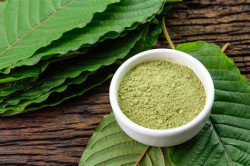
- Scientific name
- Mitragyna speciosa
- Family
- Rubiaceae
- Part used
- Leaves
- Common forms
- Dried leaf powder, capsules, tablets, brewed tea, liquid extracts, and concentrated gummies
- Pain relief
- Opioid withdrawal symptoms
- Anxiety and stress
- Low energy or fatigue
- Mood enhancement
Popular and traditional uses — not proof it works. See “Uses & effectiveness” below for the evidence.
Kratom carries risks of dependence, serious side effects, and contaminated products, and is not regulated as a safe supplement.
When used orally. There have been multiple case reports of neonatal abstinence syndrome in the infants of those who used kratom during pregnancy. Anim...
Read the full pregnancy detailInsufficient reliable information available; avoid using.
Read the full breastfeeding detailPregnancy & breastfeeding ratings are from Natural Medicines (Therapeutic Research Center). Safety guidance is general; always confirm with your pharmacist or doctor for your situation.
Overview
Kratom comes from the leaves of a tropical tree called Mitragyna speciosa, which grows in Southeast Asia in countries like Thailand, Malaysia, and Indonesia. For many years, workers in this region chewed the fresh leaves or brewed them into tea to fight tiredness and ease pain.
Today kratom is sold in many countries as a powder, capsule, tablet, tea, liquid extract, or concentrated gummy. People often take it for pain, low energy, anxiety, or to help with opioid withdrawal. Interestingly, it can act like a stimulant at lower amounts and more like an opioid sedative at higher amounts.
It is important to know that kratom is not approved as a medicine in the United States, and the U.S. Food and Drug Administration (FDA) has warned about its risks. Product quality varies a lot, and some products have been found to be contaminated.
How it works
Kratom leaves contain natural compounds called alkaloids. The two studied most are mitragynine and 7-hydroxymitragynine. These compounds interact with the brain's opioid receptors, which is why kratom can produce pain relief, relaxation, and a feeling of well-being.
At lower amounts, kratom tends to act more like a stimulant, giving a sense of energy and alertness. At higher amounts, it tends to act more like an opioid, causing sedation and stronger pain relief. Because it touches the same brain pathways as opioids, it can also lead to tolerance, dependence, and withdrawal.
Much of this understanding is based on laboratory and animal research, so the full picture of how kratom works in people is still not completely clear.
Does Kratom work?
How to read these evidence grades
Natural Medicines’ 7-point scale. We show each rating’s label word-for-word.
For Kratom, current evidence isn’t strong enough to rate any specific use. The conditions it has been studied for are listed below.
Also studied for 12 conditions — evidence insufficient to rate
Insufficient Reliable Evidence To Rate Anxiety
Although there has been interest in using oral kratom for anxiety, there is insufficient reliable information about the clinical effects of kratom for this condition.
Insufficient Reliable Evidence To Rate Athletic performance
Although there has been interest in using oral kratom for athletic performance, there is insufficient reliable information about the clinical effects of kratom for this condition.
Insufficient Reliable Evidence To Rate Cough
Although there has been interest in using oral kratom for cough, there is insufficient reliable information about the clinical effects of kratom for this condition.
Insufficient Reliable Evidence To Rate Depression
Although there has been interest in using oral kratom for depression, there is insufficient reliable information about the clinical effects of kratom for this condition.
Insufficient Reliable Evidence To Rate Diabetes
Although there has been interest in using oral kratom for diabetes, there is insufficient reliable information about the clinical effects of kratom for this condition.
Insufficient Reliable Evidence To Rate Diarrhea
Although there has been interest in using oral kratom for diarrhea, there is insufficient reliable information about the clinical effects of kratom for this condition.
Insufficient Reliable Evidence To Rate Erectile dysfunction (ED)
It is unclear if oral kratom is beneficial for ED.
Insufficient Reliable Evidence To Rate Fatigue
Although there has been interest in using oral kratom for fatigue, there is insufficient reliable information about the clinical effects of kratom for this condition.
Insufficient Reliable Evidence To Rate Hypertension
Although there has been interest in using oral kratom for hypertension, there is insufficient reliable information about the clinical effects of kratom for this condition.
Insufficient Reliable Evidence To Rate Opioid withdrawal
Although there has been interest in using oral kratom for opioid withdrawal, there is insufficient reliable information about the clinical effects of kratom for this condition.
Insufficient Reliable Evidence To Rate Pain (acute)
It is unclear if oral kratom is beneficial for acute pain.
Insufficient Reliable Evidence To Rate Sexual dysfunction
Although there has been interest in using oral kratom for sexual dysfunction, there is insufficient reliable information about the clinical effects of kratom for this condition.
Source & disclaimer. Effectiveness ratings and evidence summaries are provided by Natural Medicines (Therapeutic Research Center) and shown as licensed. Where Natural Medicines hasn’t rated a use, HelloPharmacist’s pharmacists may add their own reviewed rating and evidence (each such entry is labeled). This is educational information, not medical advice — talk with your pharmacist or doctor before starting, stopping, or changing a supplement.
Safety & precautions
Kratom is not considered a safe supplement by major health authorities. The FDA has not approved it for any use and has raised concerns about its risks. It can cause dependence and withdrawal symptoms similar to opioids, especially with regular or heavy use.
People with heart problems, liver disease, mental health conditions, or a history of substance use should be especially cautious. Because kratom products are not tightly regulated, they may contain contaminants such as heavy metals or bacteria, or be mixed with other substances.
Pregnancy and breastfeeding: Kratom should be avoided. Use during pregnancy has been linked to withdrawal symptoms in newborns, and its compounds may pass into breast milk. Anyone who is pregnant, planning to become pregnant, or nursing should not use kratom.
Always talk with a pharmacist or doctor before using kratom, particularly if you take other medicines or have ongoing health conditions.
Side effects
Common side effects include nausea, vomiting, constipation, dry mouth, itching, sweating, dizziness, and drowsiness. Some people also feel restless, anxious, or irritable, and frequent use can lead to dependence.
More serious harms have been reported, including liver injury, seizures, high blood pressure, fast heartbeat, confusion, and trouble breathing. In rare cases, kratom has been linked to deaths, often when combined with other drugs or in contaminated products.
Stopping kratom after regular use can cause withdrawal symptoms such as muscle aches, irritability, runny nose, trouble sleeping, and mood changes. Seek medical help right away for severe symptoms like difficulty breathing, chest pain, or seizures.
Kratom: Reported Adverse Effects
Documented safety reports on Kratom from the evidence-graded Natural Medicines (TRC Healthcare) database, shown word-for-word from the licensed record.
Orally, kratom is possibly unsafe. Topically, no adverse effects have been reported; however, a thorough evaluation of safety outcomes has not been conducted.
Most Common Adverse Effects:
Orally: Constipation, dependence (chronic use), dry mouth, frequent urination, nausea, tongue numbness, and vomiting.
Serious Adverse Effects (Rare):
Orally: Cardiac arrest, death, encephalopathy syndrome, hallucinations, hypertension, hypothyroidism, insomnia, liver damage, rhabdomyolysis, respiratory depression, seizures, serotonin syndrome, and tachycardia. However, a definite causal link between kratom and most of these serious adverse effects has not yet been confirmed.
Acute respiratory distress syndrome (ARDS) Pulmonary/Respiratory
Orally, kratom has been linked to respiratory depression, particularly when used in combination with other mu-opioid agonists. In one case report, a 36-year-old male with a history of substance abuse and smoking was diagnosed with kratom-induced acute respiratory distress syndrome (ARDS) after presenting with progressive respiratory failure, hypoxemia, and bilateral lung infiltrates. The patient was treated with mechanical ventilation, intravenous methylprednisolone, and supplemental oxygen. Additionally, a 32-year-old male with a history of substance abuse, depression, and obesity presented after collapsing due to seizure with acute mitragynine intoxication. The patient was found to have pulmonary edema along with cardiomegaly with left ventricular hypertrophy, hepatomegaly, and cerebral edema. Postmortem toxicology analysis of blood, organs, and gastric contents were negative for all illicit and prescription drugs except for the kratom components mitragynine and 7-hydroxymitragynine.
- Backstrom BG, Classon G, Lowenhielm P, Thelander G. [Krypton--new, deadly Internet drug. Since October 2009 have nine young persons died in Sweden]. Lakartidningen 2010;107(50):3196-3197.
- Kronstrand R, Roman M, Thelander G, Eriksson A. Unintentional fatal intoxications with mitragynine and O-desmethyltramadol from the herbal blend Krypton. J Anal Toxicol 2011;35(4):242-247.
- US Food and Drug Administration (2014). SNI National is Voluntarily recalling Kratom XL 4 Pack, Maeng Da Kratom 10 Pack, Max Kratom 20 Pack, and Bali Kratom 40 pack Due to Undeclared Drug Ingredients [Press Release].
- Davidson C, Cao D, King T, et al. A comparative analysis of kratom exposure cases in Thailand and the United States from 2010-2017. Am J Drug Alcohol Abuse. 2020:1-10.
- Graves JM, Dilley JA, Terpak L, et al. Kratom exposures among older adults reported to U.S. poison centers, 2014-2019. J Am Geriatr Soc 2021;69(8):2176-2184.
- Peran D, Stern M, Cernohorsky P, Sykora R, Popela S, Duska F. Mitragyna speciosa (Kratom) poisoning: Findings from ten cases. Toxicon 2023;225:107054.
- Ahmed S, Tran QV, McLean M. The Great Imitator: A Case of Accidental Kratom Overdose. Cureus 2023;15(8):e43144.
- Chinnappan J, Navari Y, Casini D, Palanisamy N, Parikh N, Seedahmed E. Kratom-Induced Acute Respiratory Distress Syndrome (ARDS). Eur J Case Rep Intern Med 2023;10(4):003835.
- Mata DC, Chang HH. Postmortem Mitragynine Distribution in a Single Drug Fatality Case. Acad Forensic Pathol 2023;13(1):34-40.
Alcohol-related liver disease Neurologic/CNS
In one Poison Control Center report of 3484 exposures to kratom, the majority of which involved oral single-substance exposures, 75% of cases reported neurologic effects, including agitation, coma, confusion, dizziness, drowsiness, hallucinations, seizures, and tremor. Other reports of calls to poison control centers related to kratom use and data from the US Food and Drug Administration (FDA) Adverse Events Reporting System show that 5% to 25% of cases included reports of seizures, coma, headache, or confusion.
Multiple cases of kratom-induced new-onset or recurrent generalized tonic-clonic seizures have been reported in regular users of kratom. One case series describes two patients with prior epilepsy who developed breakthrough seizures associated with kratom use and one patient who developed a diagnosis of epilepsy after continued use of kratom. Seizures generally occurred within 1 month of initiation of kratom and ceased with discontinuation of kratom and continuation of an effective antiepileptic drug regimen.
Most case reports of seizure often involve use of multiple active agents, including diphenhydramine, methamphetamine, and other medications not normally associated with seizures. A case of seizure and coma has been reported for a 64-year-old habitual kratom user who had ingested a tea containing an undetermined quantity of kratom and jimson weed 30 minutes prior to the event. This patient had also been taking amitriptyline and oxycodone chronically, although neither of these drugs is typically associated with increased seizure risk. Additionally, a case of generalized tonic-clonic seizures has been reported for a 43-year-old male patient who added modafinil 100 mg to his chronic ingestion of kratom tea four times daily as self-treatment for opioid withdrawal. Modafinil is not generally associated with increased seizures; however, it is speculated that the combination of modafinil with kratom may have contributed to the adverse event. Finally, there is a case report of a 22-year-old male who presented to the emergency room with severe headache, confusion, hypertension, and visual disturbances due to posterior reversible encephalopathy syndrome (PRES) after taking an undisclosed amount of dextroamphetamine and kratom. It is believed that the combination with kratom resulted in increased blood pressure and neurotoxicity that caused PRES.
Orally, kratom has been linked to respiratory depression, particularly when used in combination with other mu-opioid agonists. In reviews of kratom-associated adverse events reported to the National Poison Data System, up to 12% of cases experienced respiratory effects, including respiratory depression. There were 9 reports of deaths most likely due to respiratory depression in patients who ingested a combination product (Krypton) containing kratom and O-desmethyltramadol, another mu-receptor agonist. Serum concentrations of O-desmethyltramadol ranged from 0.4 to 4.3 mcg/gram. Tramadol concentrations >1 mcg/gram are considered toxic, and O-desmethyltramadol is considered to be a more potent metabolite of tramadol. Therefore, it is believed that O-desmethyltramadol probably contributed to the toxicity, but kratom possibly had an additive effect. Nearly all of these patients had brain edema and lung edema or congestion and some also had liver steatosis during autopsy. Many of these patients had a history of drug abuse and also had detectable serum concentrations of antidepressants, benzodiazepines, alcohol, amphetamines, zopiclone, alimemazine, or other drugs.
Kratom was implicated in a case of serotonin syndrome in a patient taking multiple serotonergic prescription medications. In the case report, a 63-year-old male was stable for 2 years on bupropion, buspirone, desvenlafaxine, trazodone, and ziprasidone when he started taking kratom 3 times daily for 3 months. The patient presented with aphasia, spontaneous clonus, confusion, diaphoresis, dysarthria, facial droop, fever, flushing, hyperreflexia, and tremors with elevated creatine phosphokinase and lactic acid. Symptoms improved after discontinuing kratom and supportive care with cyproheptadine, lorazepam, intravenous fluids, and cooling blankets.
Observational research has found that habitual intake of kratom is associated with withdrawal symptoms, including hot flashes and fever.
- Graves JM, Dilley JA, Terpak L, et al. Kratom exposures among older adults reported to U.S. poison centers, 2014-2019. J Am Geriatr Soc 2021;69(8):2176-2184.
- Cumpston KL, Carter M, Wills BK. Clinical outcomes after Kratom exposures: A poison center case series. Am J Emerg Med. 2018;36(1):166-168.
- Eggleston W, Stoppacher R, Suen K, Marraffa JM, Nelson LS. Kratom Use and Toxicities in the United States. Pharmacotherapy. 2019 Jul;39(7):775-777. doi: 10.1002/phar.2280. Epub 2019 Jun 13.
- Davidson C, Cao D, King T, et al. A comparative analysis of kratom exposure cases in Thailand and the United States from 2010-2017. Am J Drug Alcohol Abuse. 2020:1-10.
- Peran D, Stern M, Cernohorsky P, Sykora R, Popela S, Duska F. Mitragyna speciosa (Kratom) poisoning: Findings from ten cases. Toxicon 2023;225:107054.
- Afzal H, Esang M, Rahman S. A case of kratom-induced seizures. Cureus. 2020;12(1):e6588.
- Halim SA, Low JH, Chee YC, Alias MR. Seizures among young adults consuming kratom beverages in Malaysia: A case series. Epilepsy Behav 2021;121(Pt A):108057.
- Mata DC, Chang HH. Postmortem Mitragynine Distribution in a Single Drug Fatality Case. Acad Forensic Pathol 2023;13(1):34-40.
- Burke DJ, Mahonski SG, Van Cott AC. Breakthrough Seizure Associated With Kratom Use in Patients With Epilepsy. Neurol Clin Pract 2021;11(1):78-84.
- Nelsen JL, Lapoint J, Hodgman MJ, Aldous KM. Seizure and coma following Kratom (Mitragynina speciosa Korth) exposure. J Med Toxicol 2010;6(4):424-426.
- Boyer EW, Babu KM, Adkins JE, McCurdy CR, Halpern JH. Self-treatment of opioid withdrawal using kratom (Mitragynia speciosa korth). Addiction 2008;103(6):1048-1050.
- Castillo A, Payne JD, Nugent K. Posterior reversible leukoencephalopathy syndrome after kratom ingestion. Proc (Bayl Univ Med Cent). 2017;30(3):355-357.
- Backstrom BG, Classon G, Lowenhielm P, Thelander G. [Krypton--new, deadly Internet drug. Since October 2009 have nine young persons died in Sweden]. Lakartidningen 2010;107(50):3196-3197.
- Kronstrand R, Roman M, Thelander G, Eriksson A. Unintentional fatal intoxications with mitragynine and O-desmethyltramadol from the herbal blend Krypton. J Anal Toxicol 2011;35(4):242-247.
- US Food and Drug Administration (2014). SNI National is Voluntarily recalling Kratom XL 4 Pack, Maeng Da Kratom 10 Pack, Max Kratom 20 Pack, and Bali Kratom 40 pack Due to Undeclared Drug Ingredients [Press Release].
- Reich N, Salvo G, Leong D, Wan V, Kosatsky T. Kratom exposures managed by the British Columbia poison centre, 2012-2019: a descriptive analysis. CMAJ Open 2022;10(3):E755-E761.
- Ahmed S, Tran QV, McLean M. The Great Imitator: A Case of Accidental Kratom Overdose. Cureus 2023;15(8):e43144.
- Eudaley ST, Brooks SP, Hamilton LA. Case Report: Possible Serotonin Syndrome in a Patient Taking Kratom and Multiple Serotonergic Agents. J Pharm Pract 2022.
- Singh D, Müller CP, Vicknasingam BK. Kratom (Mitragyna speciosa) dependence, withdrawal symptoms and craving in regular users. Drug Alcohol Depend 2014 Jun 1;139:132-7.
Alcohol-related liver disease Hepatic
Orally, kratom has been associated with cases of liver damage. Between 2003 and 2019, there were 11 cases of liver injury reported in the Drug-Induced Liver Injury Network (DILIN) with definite, highly likely, or probable causality attributed to kratom. Of these cases, 8 were reported between 2017 and 2019. The median time from kratom use to the onset of symptoms was 14 days. Just over half of the patients had evidence of mixed liver injury, including both hepatocellular and cholestatic injury. In addition, published case reports, the FDA adverse event databases, DILIN, and the British Columbia poison control center identified 72 reports of kratom-induced liver injury, although it's possible some duplication of reporting occurred across the databases.
Multiple detailed case reports of liver injury have been published. One case of intrahepatic cholestasis has been reported for a 25-year-old healthy male who consumed kratom powder, starting at 1-2 teaspoons (2.3-7 grams) daily and increasing to 4-6 teaspoons (9-21 grams) daily over 2 weeks. In another case report, a 40-year-old female presented with symptoms of mixed cholestatic and hepatocellular liver injury after consuming kratom once weekly for the past month. Her symptoms resolved upon discontinuation of kratom. Cases of transaminitis, with or without bilirubin elevation, also have been described. In one such case, a 60-year-old patient presented with elevated transaminases and bilirubin after ingesting kratom one teaspoon three times daily for one month. The liver enzymes normalized after discontinuing kratom and receiving supportive treatment with N-acetylcysteine. In another case, a patient with a several-year history of kratom use and a history of hepatic steatosis, choledocholithiasis, and cholecystectomy presented with worsening jaundice, scleral icterus, ascites, and pitting edema. The patient was found to have cholestatic hepatitis consistent with drug-induced liver injury, as well as steatohepatitis with marked fibrosis and scarring. A third case also reported a mixed cholestatic and hepatocellular liver injury in a 23-year-old male who had consumed a cocktail containing kratom leaves, caffeinated soda, and diphenhydramine syrup daily for 2 weeks. Liver function tests normalized after supportive care and discontinuation of the kratom-containing product. In one case of chronic kratom abuse, an adult presented with acute liver failure with hyperbilirubinemia and acute kidney injury. The patient recovered after plasma exchange treatment daily for 4 days in addition to supportive care.
- Ahmad J, Odin JA, Hayashi PH, et al. Liver injury associated with kratom, a popular opioid-like product: Experience from the U.S. drug induced liver injury network and a review of the literature. Drug Alcohol Depend. 2021;218:108426.
- Schimmel J, Dart RC. Kratom (Mitragyna speciosa) liver injury: a comprehensive review. Drugs. 2020;80(3):263-83.
- Reich N, Salvo G, Leong D, Wan V, Kosatsky T. Kratom exposures managed by the British Columbia poison centre, 2012-2019: a descriptive analysis. CMAJ Open 2022;10(3):E755-E761.
- Kapp FG, Maurer HH, Auwarter V, Winkelmann M, Hermanns-Clausen M. Intrahepatic cholestasis following abuse of powdered kratom (Mitragyna speciosa). J Med Toxicol 2011;7(3):227-231.
- Cumpston KL, Carter M, Wills BK. Clinical outcomes after Kratom exposures: A poison center case series. Am J Emerg Med. 2018;36(1):166-168.
- Aldyab M, Ells PF, Bui R, Chapman TD, Lee H. Kratom-Induced Cholestatic Liver Injury Mimicking Anti-Mitochondrial Antibody-Negative Primary Biliary Cholangitis: A Case Report and Review of Literature. Gastroenterology Res. 2019 Aug;12(4):211-215.
- Jensen AN, Truong QN, Jameson M, Nadal CN. Kratom-induced transaminitis with subsequent precipitated opioid withdrawal following naltrexone. Ment Health Clin 2021;11(3):220-224.
- Botejue M, Walia G, Shahin O, Sharma J, Zackria R. Kratom-Induced Liver Injury: A Case Series and Clinical Implications. Cureus 2021;13(4):e14679.
- Roma K, Mohammed S, Sieck B, Naik K, Wahid S. Kratom-induced acute liver injury: A case study and the importance of herbal supplement regulation. J Hepatol 2023.
- Thewjitcharoen Y, Krittiyawong S, Nakasatien S, Himathongkam T. Kratom-Associated Mixed Cholestatic-Hepatocellular Liver Injury in a Patient With Long COVID: A case Report. Clin Med Insights Case Rep 2022;15:11795476221132824.
- Smith KE, Feldman JD, Dunn KE, et al. Examining the paradoxical effects of kratom: a narrative inquiry. Front Pharmacol 2023;14:1174139.
- Vanani NB, Stevanovic SG, Stevanovic N. Adverse Drug Interaction Between Kratom and Amitriptyline With Gastrointestinal and Mild Hepatic Effects. Cureus 2023;15(1):e33809.
- Dasgupta A, Ye Z. Severe jaundice with life-threatening liver failure after Kratom use: Reversed by plasma exchange. Transfus Apher Sci 2024.
Anxiety Psychiatric
Orally, kratom has been associated with aggression, agitation, altered mental status, anxiety, delusions, depression, hallucinations, insomnia, irritability, paranoia, restlessness, sedation, and suicidal ideation, in case reports and case series. In a review of kratom-associated adverse events reported to the National Poison Data System, 18.6% of users reported agitation, 13.6% reported drowsiness, 8.1% reported confusion, and 4.8% reported hallucinations. In an analysis of kratom abuse cases in Thailand and the United States from 2010-2017, agitation/irritability, drowsiness/lethargy, confusion, and hallucinations were reported in approximately 26%, 21%, 16%, and 7%, respectively. Additionally, data from the US Food and Drug Administration (FDA) Adverse Event Reporting System from 2004 to 2021 shows that kratom use was linked to dependence, anxiety, withdrawal syndrome, and drug abuse in 11%, 6%, 5%, and 5% of total adverse events reported.
A cross-sectional study in approximately 400 adults with regular kratom use suggests that kratom dose and frequency of use are positively associated with symptoms of kratom use disorder and withdrawal. Additionally, multiple case reports of patients who habitually ingest kratom at high doses report physical tolerance, dependence, and subsequent withdrawal upon discontinuation that is consistent with DSM-5 diagnostic criteria for kratom use disorder. Some cases of dependence and/or withdrawal have been successfully treated with buprenorphine/naloxone. One case of acute withdrawal symptoms was managed with intravenous lorazepam and dexmedetomidine. Additionally, in a case of acute mania due to kratom withdrawal, aripiprazole was used to manage symptoms.
There have been multiple case reports of neonatal abstinence syndrome (NAS) occurring in the infants of patients who used kratom throughout pregnancy. Daily kratom doses in these cases ranged from 15-60 grams daily; self-directed attempts to discontinue use during pregnancy failed due to symptoms of withdrawal. The affected infants were successfully treated with standard NAS monitoring and care. The absence of kratom identification by standard urine toxicology tests can make detection of kratom use challenging. However, specialized umbilical cord testing can identify kratom analytes mitragynine and speciociliatine as biomarkers for in-utero kratom exposure. In some patients, prenatal screening with questionnaires specifically inquiring about kratom use has led to early detection and successful transition to buprenorphine for the remainder of the pregnancy.
- US Food and Drug Administration (2014). SNI National is Voluntarily recalling Kratom XL 4 Pack, Maeng Da Kratom 10 Pack, Max Kratom 20 Pack, and Bali Kratom 40 pack Due to Undeclared Drug Ingredients [Press Release].
- Cumpston KL, Carter M, Wills BK. Clinical outcomes after Kratom exposures: A poison center case series. Am J Emerg Med. 2018;36(1):166-168.
- Li X, Ndungu P, Taneja SB, et al. An evaluation of adverse drug reactions and outcomes attributed to kratom in the US Food and Drug Administration Adverse Event Reporting System from January 2004 through September 2021. Clin Transl Sci 2023.
- Peran D, Stern M, Cernohorsky P, Sykora R, Popela S, Duska F. Mitragyna speciosa (Kratom) poisoning: Findings from ten cases. Toxicon 2023;225:107054.
- Settle AG, Yang C. A Case of Severe Kratom Addiction Contributing to a Suicide Attempt. Cureus 2022;14(9):e29698.
- Smith KE, Feldman JD, Dunn KE, et al. Examining the paradoxical effects of kratom: a narrative inquiry. Front Pharmacol 2023;14:1174139.
- Ahmed S, Tran QV, McLean M. The Great Imitator: A Case of Accidental Kratom Overdose. Cureus 2023;15(8):e43144.
- Awad M, Burke HH, Oakman SA. Kratom-Induced Psychiatric Decompensation and Paranoid Delusions. Cureus 2024;16(2):e54626.
- Eggleston W, Stoppacher R, Suen K, Marraffa JM, Nelson LS. Kratom Use and Toxicities in the United States. Pharmacotherapy. 2019 Jul;39(7):775-777. doi: 10.1002/phar.2280. Epub 2019 Jun 13.
- Davidson C, Cao D, King T, et al. A comparative analysis of kratom exposure cases in Thailand and the United States from 2010-2017. Am J Drug Alcohol Abuse. 2020:1-10.
- Rogers JM, Weiss ST, Epstein DH, Grundmann O, Hill K, Smith KE. Kratom addiction per DSM-5 SUD criteria, and kratom physical dependence: Insights from dosing amount versus frequency. Drug Alcohol Depend 2024;260:111329.
- Lei J, Butz A, Valentino N. Management of kratom dependence with buprenorphine/naloxone in a veteran population. Subst Abus 2021;42(4):497-502.
- Brogdon HD, McPhee MM, Paine MF, Cox EJ, Burns AG. A Case of Potential Pharmacokinetic Kratom-drug Interactions Resulting in Toxicity and Subsequent Treatment of Kratom Use Disorder With Buprenorphine/Naloxone. J Addict Med 2022.
- Hong S, Zimmerman PE, Rao V, Markwalter DW. Buprenorphine-Naloxone in the Setting of Kratom Withdrawal, Opioid Use Disorder, and Stage IV Lung Adenocarcinoma. J Palliat Med 2023;26(5):734-736.
- Jarka C, Gregoire K. Precipitated withdrawal with kratom use following naltrexone administration. Ment Health Clin 2023;13(3):155-158.
- Swart BB, Reznikoff C, Steen K. Isolated Kratom Use Disorder Treated with Extended-Release Buprenorphine Taper. J Addict Med 2024.
- Abidali M, St Victor G, Mashaly S, Dahal P. Red kratom and red corvette: A case of mania induced by kratom withdrawal. Int J Psychiatry Med 2025;60(2):221-225.
- Mackay L, Abrahams R. Novel case of maternal and neonatal kratom dependence and withdrawal. Can Fam Physician. 2018 Feb;64(2):121-122.
- Davidson L, Rawat M, Stojanovski S, Chandrasekharan P. Natural drugs, not so natural effects: Neonatal abstinence syndrome secondary to 'kratom'. J Neonatal Perinatal Med. 2019;12(1):109-112.
- Smid MC, Charles JE, Gordon AJ, Wright TE. Use of Kratom, an Opioid-like Traditional Herb, in Pregnancy. Obstet Gynecol. 2018 Oct;132(4):926-928.
- Hughs M, Kish-Trier E, O'Brien A, McMillin GA. Analysis of Mitragynine and Speciociliatine in Umbilical Cord by LC-MS-MS for Detecting Prenatal Exposure to Kratom. J Anal Toxicol 2023;46(9):957-964.
Arrhythmia Cardiovascular
Orally, kratom can cause tachycardia and changes in blood pressure, especially when used in doses of 8 grams or more. In one Poison Control Center report of 3484 exposures to kratom, the majority of which involved oral single-substance exposures, 45% of cases reported cardiovascular effects. Patients who have called poison control centers in the United States, Thailand, and British Columbia report stimulant effects including tachycardia and hypertension after chronic and acute kratom use.
Additionally, a large analysis of adverse effect reporting databases suggests that mitragynine, a constituent of kratom, is associated with an increased risk of ventricular arrhythmias and cardiac arrest, but not QTc prolongation. The validity of this study is limited by voluntary reports and potential for multiple co-ingestions or co-exposures in individual reports.
One observational study reported that regular kratom use, with an estimated daily intake of mitragynine 7.06 mg/kg/day, was associated with at least an 8-fold increase in the odds of presenting with sinus tachycardia when compared with non-kratom users. However, there was no difference in the odds of having other ECG abnormalities. In this study, kratom use was associated with an increased odds of borderline QTc intervals, but not prolonged QTc intervals. The highest odds occurred in those who started using kratom after age 18, had used kratom for more than 6 years, or those who had used kratom within 3 hours of the ECG. In regular kratom users, a case series conducted to analyze serum mitragynine levels with respect to cardiovascular functioning found that higher serum mitragynine levels (i.e., at least 9.6 mg/L) were associated with prolongation of the QT interval and such effects were found to be dose-dependent.
In one case report, an otherwise healthy, 35-year-old male with a history of opioid use disorder presented with cardiac arrest after recently consuming kratom tea multiple times per day. No other substance use was identified on toxicology screening or via patient report.
Another case of cardiac arrest with ventricular fibrillation has been reported in a 24-year-old male who reported long-term use of kratom (dose and frequency unknown). While the patient had a history of polysubstance abuse, his serum and urine drug screens were negative for opiates, benzodiazepines, amphetamines, and cocaine. Similarly, cardiac arrest with ventricular fibrillation was reported in an 18-year-old male during football training following the consumption of 2 grams of kratom and an energy drink. Blood tests were positive for kratom and caffeine. It is unclear if the cardiac event was related to kratom, caffeine, exercise, or other factors. A 32-year-old male with a history of substance abuse, depression, and obesity presented after collapsing due to seizure with acute mitragynine intoxication. The patient also presented with cardiomegaly with left ventricular hypertrophy, hepatomegaly, cerebral edema, and pulmonary edema. Postmortem toxicology analysis of blood, organs, and gastric contents were negative for all illicit and prescription drugs except for the kratom components mitragynine and 7-hydroxymitragynine.
There have been two case reports of 54-year-old adults using kratom regularly for one year who developed stimulatory effects and a large hemorrhagic stroke. In both cases, the development of these adverse effects occurred immediately after the transition to a different kratom product. In one case, the product was found to be adulterated with phenethylamine (PEA), an amphetamine-like chemical, which was considered the likely cause of these effects.
- Kruegel AC, Grundmann O. The medicinal chemistry and neuropharmacology of kratom: A preliminary discussion of a promising medicinal plant and analysis of its potential for abuse.Neuropharmacology. 2017. pii: S0028-3908(17)30393-3.
- Graves JM, Dilley JA, Terpak L, et al. Kratom exposures among older adults reported to U.S. poison centers, 2014-2019. J Am Geriatr Soc 2021;69(8):2176-2184.
- Krantz MJ, Rudo TJ, Haigney MCP, et al. Ventricular Arrhythmias Associated With Over-the-Counter and Recreational Opioids. J Am Coll Cardiol 2023;81(23):2258-2268.
- Leong Abdullah MFI, Tan KL, Narayanan S, et al. Is kratom (Mitragyna speciosa Korth.) use associated with ECG abnormalities? Electrocardiogram comparisons between regular kratom users and controls. Clin Toxicol (Phila). 2020:1-9.
- Leong Bin Abdullah MFI, Singh D. Assessment of Cardiovascular Functioning Among Regular Kratom (Mitragyna speciosa Korth) Users: A Case Series. Front Pharmacol 2021;12:723567.
- Abdullah HMA, Haq I, Lamfers R. Cardiac arrest in a young healthy male patient secondary to kratom ingestion: is this 'legal high' substance more dangerous than initially thought ? BMJ Case Rep. 2019 Jul 19;12(7). pii: e229778.
- ELJack A, Beasley M, Ibrahim H, Taha M, Werns S. Kratom-associated ventricular fibrillation. Am J Ther. 2020. Online ahead of print.
- Dodulík J, Plášek J, Handlos P, Gřegořová A, Václavík J Jr. Ventricular fibrillation during football training as a consequence of kratom and caffeine use in an adolescent: case report. Eur Heart J Case Rep 2024;8(8):ytae364.
- Mata DC, Chang HH. Postmortem Mitragynine Distribution in a Single Drug Fatality Case. Acad Forensic Pathol 2023;13(1):34-40.
- Nacca N, Schult RF, Li L, Spink DC, Ginsberg G, Navarette K, Marraffa J. Kratom Adulterated with Phenylethylamine and Associated Intracerebral Hemorrhage: Linking Toxicologists and Public Health Officials to Identify Dangerous Adulterants. J Med Toxicol.
- Regan GA, Papadakos PJ. Intracerebral hemorrhage after kratom ingestion. JAAPA 2021;34(4):33-36.
Constipation Gastrointestinal
Kratom ingestion has been associated with nausea, vomiting, dry mouth, tongue numbness, increased appetite, and constipation. In one Poison Control Center report of 3484 exposures to kratom, the majority of which involved oral single-substance exposures, 25% of cases reported gastrointestinal effects. Observational research, data from the British Columbia poison control center, and a report from the US Food and Drug Administration (FDA) Adverse Event Reporting System have found that habitual intake of kratom is associated with withdrawal symptoms, including decreased appetite and diarrhea.
- Jansen KL, Prast CJ. Ethnopharmacology of kratom and the Mitragyna alkaloids. J Ethnopharmacol 1988;23(1):115-119.
- US Food and Drug Administration (2014). SNI National is Voluntarily recalling Kratom XL 4 Pack, Maeng Da Kratom 10 Pack, Max Kratom 20 Pack, and Bali Kratom 40 pack Due to Undeclared Drug Ingredients [Press Release].
- Castillo A, Payne JD, Nugent K. Posterior reversible leukoencephalopathy syndrome after kratom ingestion. Proc (Bayl Univ Med Cent). 2017;30(3):355-357.
- Trakulsrichai S, Sathirakul K, Auparakkitanon S, et al. Pharmacokinetics of mitragynine in man. Drug Des Devel Ther. 2015;9:2421-9.
- Davidson C, Cao D, King T, et al. A comparative analysis of kratom exposure cases in Thailand and the United States from 2010-2017. Am J Drug Alcohol Abuse. 2020:1-10.
- Li X, Ndungu P, Taneja SB, et al. An evaluation of adverse drug reactions and outcomes attributed to kratom in the US Food and Drug Administration Adverse Event Reporting System from January 2004 through September 2021. Clin Transl Sci 2023.
- Smith KE, Feldman JD, Dunn KE, et al. Examining the paradoxical effects of kratom: a narrative inquiry. Front Pharmacol 2023;14:1174139.
- Mongar P, Jaisi A, Inkviya T, Wungsintaweekul J, Wiwattanawongsa K. Effects of Itraconazole on Pharmacokinetics of Mitragynine and 7-Hydroxymitragynine in Healthy Volunteers. ACS Pharmacol Transl Sci 2024;7(3):823-833.
- Graves JM, Dilley JA, Terpak L, et al. Kratom exposures among older adults reported to U.S. poison centers, 2014-2019. J Am Geriatr Soc 2021;69(8):2176-2184.
- Singh D, Müller CP, Vicknasingam BK. Kratom (Mitragyna speciosa) dependence, withdrawal symptoms and craving in regular users. Drug Alcohol Depend 2014 Jun 1;139:132-7.
- Reich N, Salvo G, Leong D, Wan V, Kosatsky T. Kratom exposures managed by the British Columbia poison centre, 2012-2019: a descriptive analysis. CMAJ Open 2022;10(3):E755-E761.
Epilepsy Musculoskeletal
Observational research has found that habitual intake of kratom is associated with withdrawal symptoms, including arthralgias, lower extremity hyperreflexia, muscle pain, rigidity, spasms, and tremors.
In a case report, a 45-year-old adult who had used kratom intermittently for 10 months experienced mild rhabdomyolysis and generalized seizures. Several cases of severe rhabdomyolysis and associated kidney injury necessitating hemodialysis have been described.
In another case report, a 39-year-old adult experienced transient paralysis, with full awareness but an inability to move or speak, within 1 hour of using kratom. The patient reported a recent history of kratom use over the past few months, but that the paralysis occurred immediately after the use of a different kratom product.
- Singh D, Müller CP, Vicknasingam BK. Kratom (Mitragyna speciosa) dependence, withdrawal symptoms and craving in regular users. Drug Alcohol Depend 2014 Jun 1;139:132-7.
- Jansen KL, Prast CJ. Ethnopharmacology of kratom and the Mitragyna alkaloids. J Ethnopharmacol 1988;23(1):115-119.
- Davidson C, Cao D, King T, et al. A comparative analysis of kratom exposure cases in Thailand and the United States from 2010-2017. Am J Drug Alcohol Abuse. 2020:1-10.
- Hong S, Zimmerman PE, Rao V, Markwalter DW. Buprenorphine-Naloxone in the Setting of Kratom Withdrawal, Opioid Use Disorder, and Stage IV Lung Adenocarcinoma. J Palliat Med 2023;26(5):734-736.
- Smith KE, Feldman JD, Dunn KE, et al. Examining the paradoxical effects of kratom: a narrative inquiry. Front Pharmacol 2023;14:1174139.
- Cumpston KL, Carter M, Wills BK. Clinical outcomes after Kratom exposures: A poison center case series. Am J Emerg Med. 2018;36(1):166-168.
- Sangani V, Sunnoqrot N, Gargis K, Ranabhotu A, Mubasher A, Pokal M. Unusual Presentation of Kratom Overdose With Rhabdomyolysis, Transient Hearing Loss, and Heart Failure. J Investig Med High Impact Case Rep 2021;9:23247096211005069.
- Patel P, Aknouk M, Keating S, et al. Cheating Death: A Rare Case Presentation of Kratom Toxicity. Cureus 2021;13(7):e16582.
- Matos-Casano HA, Nanduri S. Transient Paralysis: A Novel Expression of Kratom Toxicity in Humans. Neurol Clin Pract 2021;11(1):e28-e29.
Epilepsy Other
Data from the US Food and Drug Administration (FDA) Adverse Event Reporting System shows that from 2004 to 2021, out of 489 kratom-related adverse reaction reports, 102 deaths and 34 accidental deaths were reported, accounting for 21% and 7% of total adverse events reported. However, only 45% of reported adverse events listed kratom as the only drug ingested. In February 2018, the FDA reported at least 44 deaths associated with kratom use. This number was based on information from academic research, poison control centers, medical examiner reports, social science research, and adverse event reports. The exact cause of death was not determined in most cases. More recently, the Centers for Disease Control and Prevention (CDC) analyzed data from the State Unintentional Drug Overdose Reporting System (SUDORS) to determine what percentage of kratom-positive deaths reported between July 2016 and December 2017 were caused by kratom. Of 27,338 overdose deaths reported, 152 of the decedents tested positive for kratom in a postmortem analysis. Of these cases in which the decedents were kratom-positive, 91 of the deaths were considered to be kratom-involved. In one Poison Control Center report of 3484 exposures to kratom, the majority of which involved oral single-substance exposures, 8 deaths occurred in cases where kratom was the only substance involved. Adverse effects prior to kratom-related death have included pulmonary edema and congestion, pulmonary embolism, encephalopathy, cardiorespiratory arrest, cardiomegaly, hemorrhagic stroke, and seizures.
In almost all cases, kratom was used along with other drugs, so it is unclear if kratom was the primary causal agent or a contributing factor. Furthermore, in an analysis of deaths attributed to kratom in Colorado, re-testing of residual blood from decedents found that all cases of kratom-related death involved other drugs, including those that were initially reported as not involving other drugs. Concomitant drugs included fentanyl, benzodiazepines, opioids, stimulants, antidepressants, antihistamines, antitussives, sedatives, antihypertensives, antidiarrheals, anticonvulsants, and other medications. Additionally, samples of commercially available kratom products may contain high levels of lead which pose significant health risks to consumers, especially at high doses. There is significant overlap in adverse effects in the central nervous system, liver, gastrointestinal tract, and cardiovascular system between kratom and lead toxicity, which raises the possibility that toxic effects attributed to kratom may actually be due to lead contaminants in kratom products.
Long-term, heavy kratom intake does not appear to be associated with abnormalities in standard hematological and clinical chemistry blood tests.
- Li X, Ndungu P, Taneja SB, et al. An evaluation of adverse drug reactions and outcomes attributed to kratom in the US Food and Drug Administration Adverse Event Reporting System from January 2004 through September 2021. Clin Transl Sci 2023.
- FDA Adverse Event Reporting System: Kratom Deaths. February 6, 2018. https://www.fda.gov/downloads/Drugs/GuidanceComplianceRegulatoryInformation/CDERFOIAElectronicReadingRoom/UCM595575.pdf. Accessed March 6, 2018.
- Olsen EO, O'Donnell J, Mattson CL, Schier JG, Wilson N. Notes from the field: Unintentional drug overdose deaths with kratom detected - 27 States, July 2016-December 2017. MMWR Morb Mortal Wkly Rep. 2019;68(14):326-327.
- Graves JM, Dilley JA, Terpak L, et al. Kratom exposures among older adults reported to U.S. poison centers, 2014-2019. J Am Geriatr Soc 2021;69(8):2176-2184.
- Mata DC, Chang HH. Postmortem Mitragynine Distribution in a Single Drug Fatality Case. Acad Forensic Pathol 2023;13(1):34-40.
- Gershman K, Timm K, Frank M, et al. Deaths in Colorado Attributed to Kratom. N Engl J Med. 2019 Jan 3;380(1):97-98.
- Matson M, Schenk N. Fatality of 33-year-old man involving kratom toxicity. J Forensic Sci. 2019;64(6):1933-5.
- Prozialeck W, Fowler A, Edwards J. Public Health Implications and Possible Sources of Lead (Pb) as a Contaminant of Poorly Regulated Kratom Products in the United States. Toxics 2022;10(7):398.
- Singh D, Murugaiyah V, Hamid SBS, et al. Assessment of gonadotropins and testosterone hormone levels in regular Mitragyna speciosa (Korth.) users. J Ethnopharmacol 2018;221:30-6. doi: 10.1016/j.jep.2018.04.005.
- Singh D, Müller CP, Murugaiyah V, et al. Evaluating the hematological and clinical-chemistry parameters of kratom (Mitragyna speciosa) users in Malaysia. J Ethnopharmacol 2018;214:197-206. doi: 10.1016/j.jep.2017.12.017.
Hypothyroidism Endocrine
A case of primary hypothyroidism has been reported for an individual who regularly consumed kratom. However, a causal link between kratom use and thyroid dysfunction has not yet been determined.
Nausea and vomiting Renal
Orally, kratom has been associated with frequent urination, electrolyte abnormalities, and renal insufficiency,. In one case report, a 61-year-old male with no significant past medical history experienced persistent asymptomatic hyperkalemia after 4 months of regular, nearly daily use of kratom. Potassium levels normalized upon discontinuation of kratom. In another case, a 62-year-old male with severe hyponatremia presented with altered mental status, restlessness, and minimal fluid intake after consuming large doses of kratom. The hyponatremia was treated with fluids and discontinuation of kratom.
In another case report, a 21-year-old female was diagnosed with acute renal insufficiency after presenting with nausea, vomiting, left flank pain, elevated serum creatinine, proteinuria, and bilateral enlarged kidneys after consuming kratom tea. Testing of the kratom leaf sample revealed the presence of hydrocodone, morphine, and mitragynine which all contributed to acute renal insufficiency. The symptoms resolved following discontinuation of the kratom product and supportive care with intravenous fluids. It is unclear whether the renal insufficiency was due to kratom or the other adulterants in the tested sample.
- Jansen KL, Prast CJ. Ethnopharmacology of kratom and the Mitragyna alkaloids. J Ethnopharmacol 1988;23(1):115-119.
- US Food and Drug Administration (2014). SNI National is Voluntarily recalling Kratom XL 4 Pack, Maeng Da Kratom 10 Pack, Max Kratom 20 Pack, and Bali Kratom 40 pack Due to Undeclared Drug Ingredients [Press Release].
- Castillo A, Payne JD, Nugent K. Posterior reversible leukoencephalopathy syndrome after kratom ingestion. Proc (Bayl Univ Med Cent). 2017;30(3):355-357.
- Torres-Ortiz A, Al Zein S, Alqudsi M. A Case of Hyperkalemia Induced by Kratom (Mitragyna speciosa). Cureus 2022;14(4):e24036.
- LeSaint KT, Yin S, Sharma A, Avery BA, McCurdy CR, Waksman JC. Acute Renal Insufficiency Associated With Consumption of Hydrocodone- and Morphine-Adulterated Kratom (Mitragyna Speciosa). J Emerg Med 2022;63(1):e28-e30.
- Martin G, Collins DP, Valenzuela H. Life-Threatening Hyponatremia Secondary to Chronic Kratom Use: A Case Presentation. Cureus 2022;14(9):e29073.
Adverse-effects data: Natural Medicines, Therapeutic Research Center
Dosing
There is no established safe or standardized dose for kratom. The strength of products varies widely, and the amount of active compounds can differ greatly from one batch to another, even within the same brand.
Because of these unknowns and the real risks of dependence and harm, we cannot recommend a specific amount. If you are considering kratom despite the risks, follow the product label and speak with a pharmacist or doctor first. Avoid mixing it with alcohol, opioids, sedatives, or other substances.
Kratom & Pregnancy
Kratom & Breastfeeding
© 2026 Therapeutic Research Center
Pregnancy & lactation ratings: Natural Medicines, Therapeutic Research Center
References & further reading
The 77 references that drive our Kratom monograph and interaction data, from the evidence-graded Natural Medicines (TRC Healthcare) database. Citations with a link open the study on PubMed or the publisher’s site.
- Singh D, Müller CP, Vicknasingam BK. Kratom (Mitragyna speciosa) dependence, withdrawal symptoms and craving in regular users. Drug Alcohol Depend 2014 Jun 1;139:132-7. PubMed
- Backstrom BG, Classon G, Lowenhielm P, Thelander G. [Krypton--new, deadly Internet drug. Since October 2009 have nine young persons died in Sweden]. Lakartidningen 2010;107(50):3196-3197.
- Kronstrand R, Roman M, Thelander G, Eriksson A. Unintentional fatal intoxications with mitragynine and O-desmethyltramadol from the herbal blend Krypton. J Anal Toxicol 2011;35(4):242-247. PubMed
- Boyer EW, Babu KM, Adkins JE, McCurdy CR, Halpern JH. Self-treatment of opioid withdrawal using kratom (Mitragynia speciosa korth). Addiction 2008;103(6):1048-1050.
- Jansen KL, Prast CJ. Ethnopharmacology of kratom and the Mitragyna alkaloids. J Ethnopharmacol 1988;23(1):115-119. PubMed
- Nelsen JL, Lapoint J, Hodgman MJ, Aldous KM. Seizure and coma following Kratom (Mitragynina speciosa Korth) exposure. J Med Toxicol 2010;6(4):424-426. PubMed
- Sheleg SV, Collins GB. A coincidence of addiction to "Kratom" and severe primary hypothyroidism. J Addict Med 2011;5(4):300-301. PubMed
- Kapp FG, Maurer HH, Auwarter V, Winkelmann M, Hermanns-Clausen M. Intrahepatic cholestasis following abuse of powdered kratom (Mitragyna speciosa). J Med Toxicol 2011;7(3):227-231. PubMed
- Kong WM, Chik Z, Ramachandra M, et al. Evaluation of the effects of Mitragyna speciosa alkaloid extract on cytochrome P450 enzymes using a high throughput assay. Molecules. 2011;16(9):7344-7356. PubMed
- US Food and Drug Administration (2014). SNI National is Voluntarily recalling Kratom XL 4 Pack, Maeng Da Kratom 10 Pack, Max Kratom 20 Pack, and Bali Kratom 40 pack Due to Undeclared Drug Ingredients [Press Release].
- Castillo A, Payne JD, Nugent K. Posterior reversible leukoencephalopathy syndrome after kratom ingestion. Proc (Bayl Univ Med Cent). 2017;30(3):355-357. PubMed
- Cumpston KL, Carter M, Wills BK. Clinical outcomes after Kratom exposures: A poison center case series. Am J Emerg Med. 2018;36(1):166-168. PubMed
- FDA Adverse Event Reporting System: Kratom Deaths. February 6, 2018. https://www.fda.gov/downloads/Drugs/GuidanceComplianceRegulatoryInformation/CDERFOIAElectronicReadingRoom/UCM595575.pdf. Accessed March 6, 2018.
- Trakulsrichai S, Sathirakul K, Auparakkitanon S, et al. Pharmacokinetics of mitragynine in man. Drug Des Devel Ther. 2015;9:2421-9. PubMed
- Kruegel AC, Grundmann O. The medicinal chemistry and neuropharmacology of kratom: A preliminary discussion of a promising medicinal plant and analysis of its potential for abuse.Neuropharmacology. 2017. pii: S0028-3908(17)30393-3. PubMed
- Singh D, Murugaiyah V, Hamid SBS, et al. Assessment of gonadotropins and testosterone hormone levels in regular Mitragyna speciosa (Korth.) users. J Ethnopharmacol 2018;221:30-6. doi: 10.1016/j.jep.2018.04.005. PubMed
- Singh D, Müller CP, Murugaiyah V, et al. Evaluating the hematological and clinical-chemistry parameters of kratom (Mitragyna speciosa) users in Malaysia. J Ethnopharmacol 2018;214:197-206. doi: 10.1016/j.jep.2017.12.017. PubMed
- Olsen EO, O'Donnell J, Mattson CL, Schier JG, Wilson N. Notes from the field: Unintentional drug overdose deaths with kratom detected - 27 States, July 2016-December 2017. MMWR Morb Mortal Wkly Rep. 2019;68(14):326-327.
- Hughes RL. Fatal combination of mitragynine and quetiapine - a case report with discussion of a potential herb-drug interaction. Forensic Sci Med Pathol. 2019 Mar;15(1):110-113. PubMed
- Gershman K, Timm K, Frank M, et al. Deaths in Colorado Attributed to Kratom. N Engl J Med. 2019 Jan 3;380(1):97-98. PubMed
- Mackay L, Abrahams R. Novel case of maternal and neonatal kratom dependence and withdrawal. Can Fam Physician. 2018 Feb;64(2):121-122.
- Davidson L, Rawat M, Stojanovski S, Chandrasekharan P. Natural drugs, not so natural effects: Neonatal abstinence syndrome secondary to 'kratom'. J Neonatal Perinatal Med. 2019;12(1):109-112. PubMed
- Smid MC, Charles JE, Gordon AJ, Wright TE. Use of Kratom, an Opioid-like Traditional Herb, in Pregnancy. Obstet Gynecol. 2018 Oct;132(4):926-928. PubMed
- Muhammad BY, Abdullahi AD, Kadir, SS, Abdul Razak TB, Ahmed QU. In-utero effects of the crude ethanolic extract of the leaves of Mitragyna speciose on neural tube formation in rats. Asian J Exp Biol Sci. 2010;1(2):404-408.
- Aldyab M, Ells PF, Bui R, Chapman TD, Lee H. Kratom-Induced Cholestatic Liver Injury Mimicking Anti-Mitochondrial Antibody-Negative Primary Biliary Cholangitis: A Case Report and Review of Literature. Gastroenterology Res. 2019 Aug;12(4):211-215. PubMed
- Nacca N, Schult RF, Li L, Spink DC, Ginsberg G, Navarette K, Marraffa J. Kratom Adulterated with Phenylethylamine and Associated Intracerebral Hemorrhage: Linking Toxicologists and Public Health Officials to Identify Dangerous Adulterants. J Med Toxicol. PubMed
- Abdullah HMA, Haq I, Lamfers R. Cardiac arrest in a young healthy male patient secondary to kratom ingestion: is this 'legal high' substance more dangerous than initially thought ? BMJ Case Rep. 2019 Jul 19;12(7). pii: e229778. PubMed
- Eggleston W, Stoppacher R, Suen K, Marraffa JM, Nelson LS. Kratom Use and Toxicities in the United States. Pharmacotherapy. 2019 Jul;39(7):775-777. doi: 10.1002/phar.2280. Epub 2019 Jun 13. PubMed
- Afzal H, Esang M, Rahman S. A case of kratom-induced seizures. Cureus. 2020;12(1):e6588. PubMed
- ELJack A, Beasley M, Ibrahim H, Taha M, Werns S. Kratom-associated ventricular fibrillation. Am J Ther. 2020. Online ahead of print. PubMed
- Schimmel J, Dart RC. Kratom (Mitragyna speciosa) liver injury: a comprehensive review. Drugs. 2020;80(3):263-83. PubMed
- Matson M, Schenk N. Fatality of 33-year-old man involving kratom toxicity. J Forensic Sci. 2019;64(6):1933-5. PubMed
- Ahmad J, Odin JA, Hayashi PH, et al. Liver injury associated with kratom, a popular opioid-like product: Experience from the U.S. drug induced liver injury network and a review of the literature. Drug Alcohol Depend. 2021;218:108426. PubMed
- Leong Abdullah MFI, Tan KL, Narayanan S, et al. Is kratom (Mitragyna speciosa Korth.) use associated with ECG abnormalities? Electrocardiogram comparisons between regular kratom users and controls. Clin Toxicol (Phila). 2020:1-9.
- Davidson C, Cao D, King T, et al. A comparative analysis of kratom exposure cases in Thailand and the United States from 2010-2017. Am J Drug Alcohol Abuse. 2020:1-10. PubMed
- Graves JM, Dilley JA, Terpak L, et al. Kratom exposures among older adults reported to U.S. poison centers, 2014-2019. J Am Geriatr Soc 2021;69(8):2176-2184. PubMed
- Leong Bin Abdullah MFI, Singh D. Assessment of Cardiovascular Functioning Among Regular Kratom (Mitragyna speciosa Korth) Users: A Case Series. Front Pharmacol 2021;12:723567. PubMed
- Lei J, Butz A, Valentino N. Management of kratom dependence with buprenorphine/naloxone in a veteran population. Subst Abus 2021;42(4):497-502. PubMed
- Burke DJ, Mahonski SG, Van Cott AC. Breakthrough Seizure Associated With Kratom Use in Patients With Epilepsy. Neurol Clin Pract 2021;11(1):78-84. PubMed
- Regan GA, Papadakos PJ. Intracerebral hemorrhage after kratom ingestion. JAAPA 2021;34(4):33-36. PubMed
- Halim SA, Low JH, Chee YC, Alias MR. Seizures among young adults consuming kratom beverages in Malaysia: A case series. Epilepsy Behav 2021;121(Pt A):108057. PubMed
- Jensen AN, Truong QN, Jameson M, Nadal CN. Kratom-induced transaminitis with subsequent precipitated opioid withdrawal following naltrexone. Ment Health Clin 2021;11(3):220-224. PubMed
- Torres-Ortiz A, Al Zein S, Alqudsi M. A Case of Hyperkalemia Induced by Kratom (Mitragyna speciosa). Cureus 2022;14(4):e24036. PubMed
- Sangani V, Sunnoqrot N, Gargis K, Ranabhotu A, Mubasher A, Pokal M. Unusual Presentation of Kratom Overdose With Rhabdomyolysis, Transient Hearing Loss, and Heart Failure. J Investig Med High Impact Case Rep 2021;9:23247096211005069. PubMed
- Botejue M, Walia G, Shahin O, Sharma J, Zackria R. Kratom-Induced Liver Injury: A Case Series and Clinical Implications. Cureus 2021;13(4):e14679. PubMed
- Patel P, Aknouk M, Keating S, et al. Cheating Death: A Rare Case Presentation of Kratom Toxicity. Cureus 2021;13(7):e16582. PubMed
- Brogdon HD, McPhee MM, Paine MF, Cox EJ, Burns AG. A Case of Potential Pharmacokinetic Kratom-drug Interactions Resulting in Toxicity and Subsequent Treatment of Kratom Use Disorder With Buprenorphine/Naloxone. J Addict Med 2022. PubMed
- Matos-Casano HA, Nanduri S. Transient Paralysis: A Novel Expression of Kratom Toxicity in Humans. Neurol Clin Pract 2021;11(1):e28-e29.
- Chinnappan J, Navari Y, Casini D, Palanisamy N, Parikh N, Seedahmed E. Kratom-Induced Acute Respiratory Distress Syndrome (ARDS). Eur J Case Rep Intern Med 2023;10(4):003835. PubMed
- Eudaley ST, Brooks SP, Hamilton LA. Case Report: Possible Serotonin Syndrome in a Patient Taking Kratom and Multiple Serotonergic Agents. J Pharm Pract 2022. PubMed
- Hong S, Zimmerman PE, Rao V, Markwalter DW. Buprenorphine-Naloxone in the Setting of Kratom Withdrawal, Opioid Use Disorder, and Stage IV Lung Adenocarcinoma. J Palliat Med 2023;26(5):734-736. PubMed
- Hughs M, Kish-Trier E, O'Brien A, McMillin GA. Analysis of Mitragynine and Speciociliatine in Umbilical Cord by LC-MS-MS for Detecting Prenatal Exposure to Kratom. J Anal Toxicol 2023;46(9):957-964. PubMed
- Kamble SH, Obeng S, León F, et al. Pharmacokinetic and Pharmacodynamic Consequences of Cytochrome P450 3A Inhibition on Mitragynine Metabolism in Rats. J Pharmacol Exp Ther 2023;385(3):180-192. PubMed
- LeSaint KT, Yin S, Sharma A, Avery BA, McCurdy CR, Waksman JC. Acute Renal Insufficiency Associated With Consumption of Hydrocodone- and Morphine-Adulterated Kratom (Mitragyna Speciosa). J Emerg Med 2022;63(1):e28-e30. PubMed
- Li X, Ndungu P, Taneja SB, et al. An evaluation of adverse drug reactions and outcomes attributed to kratom in the US Food and Drug Administration Adverse Event Reporting System from January 2004 through September 2021. Clin Transl Sci 2023.
- Martin G, Collins DP, Valenzuela H. Life-Threatening Hyponatremia Secondary to Chronic Kratom Use: A Case Presentation. Cureus 2022;14(9):e29073. PubMed
- Mata DC, Chang HH. Postmortem Mitragynine Distribution in a Single Drug Fatality Case. Acad Forensic Pathol 2023;13(1):34-40. PubMed
- Obeng S, Leon F, Patel A, et al. Interactive Effects of µ-Opioid and Adrenergic-a (2) Receptor Agonists in Rats: Pharmacological Investigation of the Primary Kratom Alkaloid Mitragynine and Its Metabolite 7-Hydroxymitragynine. J Pharmacol Exp Ther 2022;38
- Peran D, Stern M, Cernohorsky P, Sykora R, Popela S, Duska F. Mitragyna speciosa (Kratom) poisoning: Findings from ten cases. Toxicon 2023;225:107054. PubMed
- Prozialeck W, Fowler A, Edwards J. Public Health Implications and Possible Sources of Lead (Pb) as a Contaminant of Poorly Regulated Kratom Products in the United States. Toxics 2022;10(7):398. PubMed
- Reich N, Salvo G, Leong D, Wan V, Kosatsky T. Kratom exposures managed by the British Columbia poison centre, 2012-2019: a descriptive analysis. CMAJ Open 2022;10(3):E755-E761. PubMed
- Roma K, Mohammed S, Sieck B, Naik K, Wahid S. Kratom-induced acute liver injury: A case study and the importance of herbal supplement regulation. J Hepatol 2023. PubMed
- Settle AG, Yang C. A Case of Severe Kratom Addiction Contributing to a Suicide Attempt. Cureus 2022;14(9):e29698. PubMed
- Smith KE, Feldman JD, Dunn KE, et al. Examining the paradoxical effects of kratom: a narrative inquiry. Front Pharmacol 2023;14:1174139. PubMed
- Tanna RS, Nguyen JT, Hadi DL, et al. Clinical Assessment of the Drug Interaction Potential of the Psychotropic Natural Product Kratom. Clin Pharmacol Ther 2023;113(6):1315-1325. PubMed
- Thewjitcharoen Y, Krittiyawong S, Nakasatien S, Himathongkam T. Kratom-Associated Mixed Cholestatic-Hepatocellular Liver Injury in a Patient With Long COVID: A case Report. Clin Med Insights Case Rep 2022;15:11795476221132824. PubMed
- Vanani NB, Stevanovic SG, Stevanovic N. Adverse Drug Interaction Between Kratom and Amitriptyline With Gastrointestinal and Mild Hepatic Effects. Cureus 2023;15(1):e33809. PubMed
- Dasgupta A, Ye Z. Severe jaundice with life-threatening liver failure after Kratom use: Reversed by plasma exchange. Transfus Apher Sci 2024. PubMed
- Krantz MJ, Rudo TJ, Haigney MCP, et al. Ventricular Arrhythmias Associated With Over-the-Counter and Recreational Opioids. J Am Coll Cardiol 2023;81(23):2258-2268. PubMed
- Jarka C, Gregoire K. Precipitated withdrawal with kratom use following naltrexone administration. Ment Health Clin 2023;13(3):155-158. PubMed
- Ahmed S, Tran QV, McLean M. The Great Imitator: A Case of Accidental Kratom Overdose. Cureus 2023;15(8):e43144. PubMed
- Awad M, Burke HH, Oakman SA. Kratom-Induced Psychiatric Decompensation and Paranoid Delusions. Cureus 2024;16(2):e54626. PubMed
- Rogers JM, Weiss ST, Epstein DH, Grundmann O, Hill K, Smith KE. Kratom addiction per DSM-5 SUD criteria, and kratom physical dependence: Insights from dosing amount versus frequency. Drug Alcohol Depend 2024;260:111329. PubMed
- Swart BB, Reznikoff C, Steen K. Isolated Kratom Use Disorder Treated with Extended-Release Buprenorphine Taper. J Addict Med 2024. PubMed
- Mongar P, Jaisi A, Inkviya T, Wungsintaweekul J, Wiwattanawongsa K. Effects of Itraconazole on Pharmacokinetics of Mitragynine and 7-Hydroxymitragynine in Healthy Volunteers. ACS Pharmacol Transl Sci 2024;7(3):823-833. PubMed
- Dodulík J, Plášek J, Handlos P, Gřegořová A, Václavík J Jr. Ventricular fibrillation during football training as a consequence of kratom and caffeine use in an adolescent: case report. Eur Heart J Case Rep 2024;8(8):ytae364. PubMed
- Abidali M, St Victor G, Mashaly S, Dahal P. Red kratom and red corvette: A case of mania induced by kratom withdrawal. Int J Psychiatry Med 2025;60(2):221-225. PubMed
This information is for education only and is not a substitute for professional medical advice. Always check with your pharmacist or doctor before starting, stopping, or combining supplements and medications.
Parts of this content are provided by the Therapeutic Research Center, LLC.
DISCLAIMER: Currently this does not check for drug-drug interactions. This is not an all-inclusive comprehensive list of potential interactions and is for informational purposes only. Not all interactions are known or well-reported in the scientific literature, and new interactions are continually being reported. Input is needed from a qualified healthcare provider including a pharmacist before starting any therapy. Application of clinical judgment is necessary.
© 2021 Therapeutic Research Center, LLC
Brands that make products with Kratom
5 brands in our database make a supplement containing Kratom.
Supplement products with Kratom
9 products in our database contain Kratom. Open any to see its full ingredient list and every drug interaction we check.
Kratom: Common Questions
What is Kratom used for, and does it work?
Does Kratom interact with prescription medications?
How are Kratom interactions rated?
Is it safe to take Kratom with my medications?
Where does this Kratom interaction information come from?
Is Kratom legal?
Can Kratom be addictive?
Is Kratom safe to use during pregnancy or breastfeeding?
Is Kratom a proven treatment for opioid withdrawal?
Written and reviewed by the HelloPharmacist editorial staff. Our editorial policy
Products that contain Kratom
A rotating sample of real supplements in our database that list Kratom — open any to see its full ingredients and every drug interaction we check.
- KBomb Multi-Strain White Kratom Blend by KBomb
- KBomb Multi-Strain Red Kratom Blend by KBomb
- KBomb Kratom Extract Softgels by KBomb
- Zenith NANO 250 Liquid Kratom Extract by Kraken Kratom
- KBomb Kratom Extract Softgel by KBomb
- Dream N Grow by IML IronMag Labs
- KBomb Multi-Strain Red Kratom Blend by KBomb
- Feel Free by Botanic Tonics
- Dragon Fire by KBomb Signature Series
Have a question about Kratom?
Our pharmacists answer your medication & supplement questions — free.